July 16, 2026
F
Filmmaker Commentary
  • Home
  • About
  • Episodes
  • Film
  • TV
  • Home
  • About
  • Episodes
  • Film
  • TV
Podcast

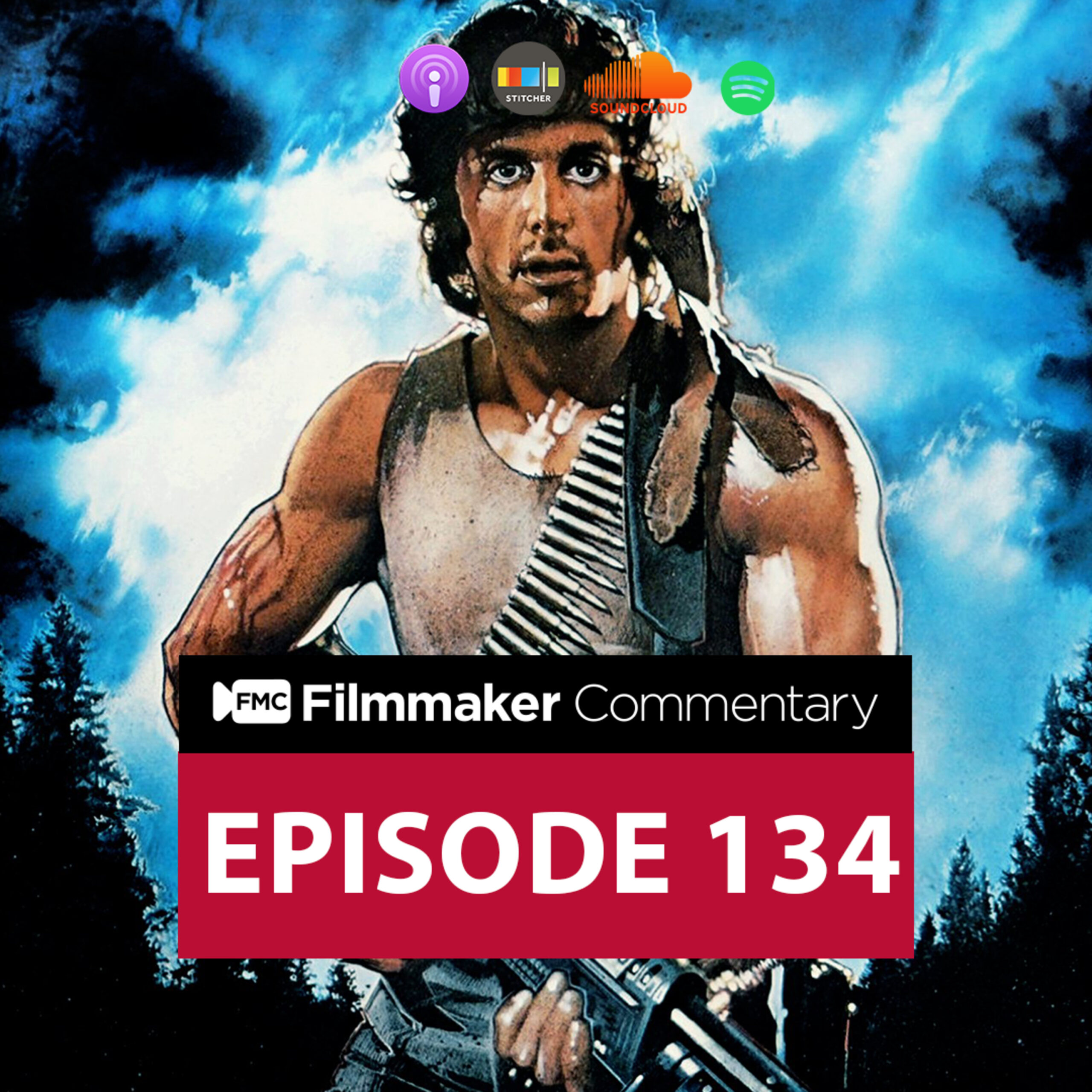
FMC 134: First Blood Directed by Ted Kotcheff Co-Written by Sylvester Stallone

June 21, 2022
Listen on Apple Spotify YouTube
Listen to this episode
Your browser does not support the audio element.
Also on Apple Spotify YouTube

Get ready for a deep dive into the 1982 action classic that launched a legendary franchise! On this episode of Filmmaker Commentary, Reginald Titus Jr. and Casey G. Smith unpack the filmmaking choices behind “First Blood,” directed by Ted Kotcheff and co-written by Sylvester Stallone. They share insights from their own viewing experiences and Stallone’s commentary, offering a fresh perspective on this iconic film.

What We Cover

  • The unique, stripped-down tone of “First Blood” compared to its more bombastic sequels.
  • Sylvester Stallone’s surprising performance as Rambo, driven by body language and raw emotion over dialogue.
  • How the film’s gritty, realistic cinematography, featuring natural lighting and anamorphic lenses, shapes its melancholic atmosphere.
  • The stark differences between David Morrell’s original “First Blood” novel and the film adaptation, particularly regarding Rambo’s character and body count.
  • Behind-the-scenes stories, including the dangerous stunts, the creative use of practical effects, and the collaborative nature of the production.
  • How a focus on character perspective and subtle cutaway shots effectively convey Rambo’s trauma and strategic thinking.

Key Moments

  • 01:49 – Dive into the film’s box office success and surprising budget relative to its impactful production.
  • 04:25 – Casey G. Smith shares his take on the impactful miniseries “Under the Banner of Heaven,” exploring its portrayal of the Mormon Church.
  • 10:18 – Reginald Titus Jr. breaks down recent developments in “The Boys” Season 3, including Compound V’s impact and the setup for A-Train’s poignant arc.
  • 20:41 – Discover “Diabolical,” the animated anthology series set in “The Boys” universe, and its unique storytelling styles.
  • 35:10 – Hear Stallone’s incredible dedication to the role, including performing dangerous stunts and enduring physical pain to bring Rambo to life.
  • 38:08 – The hosts discuss the novel’s original bleak ending and how test audiences influenced the film’s more sympathetic portrayal of Rambo.

Gear & Films Mentioned

  • Physical (Apple TV)
  • Young Rock
  • Young Justice
  • The Boys
  • Pam & Tommy (Hulu)
  • Under the Banner of Heaven (Hulu)
  • Toy Story 2 & 3
  • A Web of Make Believe (Netflix)
  • TJ Hooker (Tubi)
  • Star Trek (original series)
  • Diabolical (Amazon Prime)
  • Ms. Marvel (Disney+)
  • Marvel’s Avengers (Xbox Game Pass)
  • Stranger Things (Netflix)
  • Natural Hair the Movie by Grind Over Matter Films

Listener Questions

  • What makes “First Blood” stand out as a foundation for the Rambo franchise, especially when considering its budget and original novel?
  • How did Sylvester Stallone’s personal dedication to the role influence his performance and the authenticity of Rambo’s character?
  • What are some key examples of how unique filmmaking techniques, like natural lighting and specific camera angles, were used to convey Rambo’s emotional state without extensive dialogue?

Join us on Filmmaker Commentary next time as we dive into the 90s with “The Crow,” exploring its lasting impact and the tragic legacy of Brandon Lee.

Full Transcript

Read the full transcript

Full Episode Transcript
In this episode, Reginald Titus Jr. and Casey G. Smith discuss the 1982 film *First Blood*, directed by Ted Kotcheff and co-written by Sylvester Stallone, alongside their recent media consumption.

Episode Introduction and Film Details
Reginald Titus Jr.: Filmmaker Commentary, episode 134. Welcome to Filmmaker Commentary, where we give you insights from our favorite filmmaking commentaries. These commentaries can be heard on your DVD and Blu-rays of your favorite movies. We'll show you how you can use these commentaries and apply them to improve your video production and filmmaking techniques. All of this here on Filmmaker Commentary. I'm your host, Reginald Titus Jr.
Reginald Titus Jr.: Yo, yo, welcome to Filmmaker Commentary. I'm Reginald Titus Jr. I'm joined with...
Casey G. Smith: Casey G. Smith. Welcome back, sir.
Reginald Titus Jr.: Good to be back, sir.
Casey G. Smith: And today's Juneteenth. Ha ha.
Reginald Titus Jr.: Oh, we we decided to record on a Monday. Yeah, Sunday was kind of busy. It was Father's Day.
Casey G. Smith: Hey, shout out to all the fathers out there.
Reginald Titus Jr.: Yes, indeed.
Casey G. Smith.: Keep holding it down.
Reginald Titus Jr.: You know. So, uh, I hope y'all had a good weekend. Um, today we're going over *First Blood*.
Casey G. Smith.: Yes.
Reginald Titus Jr.: 1982, starring Sylvester Stallone, directed by Ted Kotcheff. Hopefully I'm saying your name correctly. All right. Um, screenplay was with Michael Kozoll, William Sackheim, and Sylvester Stallone. Yeah, and music by Jerry Goldsmith. And they, uh, one of the production companies, I saw it like at the beginning of the titles, it said "Anabasis Investments." Did you see that at the very, like the title at the bottom? I was like, what is I'm going to look this up?
Casey G. Smith.: Anabasis. That's what it was.
Reginald Titus Jr.: I'm I'm saying that right? Anabasis, Anabasis?
Casey G. Smith.: I I didn't, uh, pronounce it out loud, so your guess is as good as mine.
Reginald Titus Jr.: Okay. Um, release date came out October 22nd, 1982. Perfect time. Running time minutes, 93 minutes. What was the what was the budget and box office for this film?
Casey G. Smith.: On a $15 million estimated budget, according to IMDb, it grossed worldwide $125 million.
Reginald Titus Jr.: That's a win.
Casey G. Smith.: Indeed. Indeed.
Reginald Titus Jr.: I looked up awards, but I didn't see anything that was worth. Yeah, that was worth mentioning.
Casey G. Smith.: No, indeed. Yeah. It no.
Reginald Titus Jr.: Maybe it was too political, I don't know, but they, uh,
Casey G. Smith.: I'm sure there were some mixed some mixed feelings about it. It's interesting to see where it ultimately landed in the cultural zeitgeist based on the, you know, what the original novel was about, which we'll dive more into all of that.
Reginald Titus Jr.: Yes. But, before we talk further about *First Blood*, let's talk about TV and movies watched.

What We're Watching
Reginald Titus Jr.: What have you been diving into over this past week?
Casey G. Smith.: All right, I have been swimming in content. Uh, so against, still still on, uh, various shows. I'm still rocking with *Physical* on, uh, Apple TV. Uh, a lot of a lot of shows have been wrapping up and had their finales, right? *Young Rock* wrapped up. Uh, *Young Justice*, uh, wrapped up their fourth season. You know, still on *The Boys* season three. This episode was a little calmer.
Reginald Titus Jr.: Yeah, it was a little bit calmer.
Casey G. Smith.: Not as not as wild as the previous, uh, couple episodes. I did I did wrap up both on Hulu, uh, *Pam & Tommy*.
Reginald Titus Jr.: Yeah.
Casey G. Smith.: Which is I thought really, really good.
Reginald Titus Jr.: It was good.
Casey G. Smith.: Yeah. Like we, you know, there's there's some craziness, some some some wildness, but like they really I thought the show itself did a good job of giving you kind of insight to each of the each of the characters, gives you some background on them. In particular with with Pam, she gets a nice kind of spotlight and and it highlights some things. It kind of it it surprised me kind of where it went and kind of where it lands, but it's ultimately it's it was quite entertaining. Uh, and then also, uh, a film or a series, I should say that's on Hulu called *Under the Banner of Heaven* with Andrew Garfield.
Reginald Titus Jr.: Okay.
Casey G. Smith.: He plays a a Mormon, uh, detective police officer in investigating a murder that begins to dive into elements in some of the some of the the different aspects of the Mormon Church and some of the fundamentalist stuff and some things that I had studied before when I was kind of heavy into apologetics. I I had researched some of these things. And it was fascinating to see them kind of portrayed. I was like, whoa, that's they actually went. I didn't I I was surprised that they went there, but I think one of the screenwriters was also, maybe I think, formerly of a part of the the, uh, Latter-day Saints, uh, organization. But anyway, it was it was it was pretty well done. It's called *Under the Banner of Heaven*, about seven episodes, I think.
Reginald Titus Jr.: Okay.
Casey G. Smith.: Also, uh, checked out, uh, *Toy Story 2* and *3*.
Reginald Titus Jr.: Wow, you're diving deep.
Casey G. Smith.: Yeah, but you know, they're the the films are relatively short.
Reginald Titus Jr.: Oh, really?
Casey G. Smith.: Yeah, you you yeah, they they fly by when you watch those. And also on Netflix, came across a show called *A Web of Make Believe*.
Reginald Titus Jr.: Dude, I saw the trailer for that. I was like, I put that in the list. I was like, I'm going to come back to you.
Casey G. Smith.: Yeah, it the first episode, uh, was based on something called swatting. Have you heard of that before?
Reginald Titus Jr.: Oh, I have not.
Casey G. Smith.: So, swatting is something that is unfortunately common in the in the in the online gaming space. Like people will be online playing games, playing *Call of Duty* or *Halo*, what whatever whatever your poison is, and somebody will lose, get mad, look up one of the players' like IP address or find their address, and then call the police and have a SWAT team sent to that person's house. And so there are people who have like, all of a sudden, like SWAT teams breaking down their doors, coming in and and and so there's a there's in the first episode, there's a guy who learns how to do this early on and then graduates from that to like calling in bomb threats. It's it's it's a wild episode.
Reginald Titus Jr.: And this is real documentary.
Casey G. Smith.: Yeah, this is a docu-series, bro. Docu-series.
Reginald Titus Jr.: Oh, Lord.
Casey G. Smith.: Yeah, man.
Reginald Titus Jr.: So what's the repercussion of calling the SWAT team on an innocent person? Do you go to jail for this?
Casey G. Smith.: Yeah, you get caught, yes. Yeah.
Reginald Titus Jr.: Okay.
Casey G. Smith.: You absolutely can. It's it's the episode's interesting. There's some other episodes, yeah, we won't give any spoilers, but so far, yeah, it's quite quite interesting. Um, about three episodes in. I I had to take breaks in between.
Reginald Titus Jr.: It's kind of humanity is depressing sometimes.
Casey G. Smith.: It it gets kind of heavy like, oh, these jokers. It really really pissed me off. Like the swatting thing, like, oh, yeah. Like, yo, there are people out there who who really need some help, and you're wasting these resources because they say for a SWAT team to be deployed, that's about $40,000, that's like a $40,000 deal.
Reginald Titus Jr.: That's a paycheck. $40,000, boom.
Casey G. Smith.: That's a salary, you know, that's somebody's salary, but that's a big waste of of resources to have a a SWAT team go out somewhere for nothing. And then calling in like bomb threats, he was doing it at schools, he did it to a a whole like news, uh, building, like cleared it out, just and all for like just notoriety and laughs. And then he would brag about it on Twitter under different aliases.
Reginald Titus Jr.: Wow.
Casey G. Smith.: Yeah, not, uh, not okay. Not not okay.
Reginald Titus Jr.: You know, gaming is supposed to be a place you go to escape, you know, have some fun, you know, yeah, compete, great, you know?
Casey G. Smith.: But, um, yeah, this dude just
Reginald Titus Jr.: Yeah, it's you just took it up a level, right? He just has a motive, right? Like we some of it's crazy like over the, you know, the pandemic, you know, we've had the viral Karens and all that that's been calling, that's been exposed, basically. He's like, uh, this has been going on, you know?
Casey G. Smith.: Yeah, this dude like had been doing this stuff like this is well before, it's like 2015, 2016, somewhere around there. It had been going on for a while.
Reginald Titus Jr.: And it's crazy cuz specifically for gamers.
Casey G. Smith.: Well, I mean, it's not not just gamers who do it, but it in the gaming community, you know, people are, you know, streaming whatever and like they'll, you can see people they've shown footage of people who were streaming live and somebody had swatted them, and you saw and see the police like showing up like on camera, and they're like, "What what's going on?"
Reginald Titus Jr.: That's horrible.
Casey G. Smith.: Yeah, really, really bad. Uh, and then lastly, I watched I I just came across on, you know, on Tubi, a show called *TJ Hooker*. You you ever heard of that show before?
Reginald Titus Jr.: Mm-hm.
Casey G. Smith.: I remember as a kid like seeing the intro a time or two, but I never actually watched an episode, to my recollection. And, uh, I was like, yo, *TJ Hooker*. I was like, okay, I I always thought the name was cool before I knew what a hooker was. I thought I just thought the name *TJ Hooker* was was really cool.
Reginald Titus Jr.: Yeah.
Casey G. Smith.: Um, so, I, uh, pop popped in the first episode and kind of commenting a lot of initial pilots, like it almost runs like a miniature movie where it was just like about a two-hour like pilot episode. And it's got William Shatner in it, and cuz, you know, I'm also watching the original *Star Trek* episodes, which have been actually quite quite fascinating. I was like, man, I didn't know *Star Trek* was this deep, no offense anybody who watch *Star Trek*. I I I didn't expect the episodes that I'm seeing, like the the the range of of content and stories. I'm like, huh? But it's cool to see William Shatner now like 20 years older, still in really good shape.
Reginald Titus Jr.: Okay, well, he's doing it still.
Casey G. Smith.: Still charismatic as ever. Still still charismatic as ever. He's still he's still still still got it. He's got got the chops, but, but yeah, so, I watched a little bit of *TJ Hooker*.
Reginald Titus Jr.: Okay. Uh, for me, I watched the newest episode of *The Boys*. Um, yeah, it was a little bit lighter. Um, what did they do this time? They they got Soldier Boy, um, to kind of work with the team like, hey, I'm on the team now. Yeah, they tracked him. Spoiler alert. If you haven't watched the latest episode of *The Boys*.
Casey G. Smith.: Spoiler alert.
Reginald Titus Jr.: About that. You already know.
Casey G. Smith.: If I was would've been about a minute and a half or so.
Reginald Titus Jr.: Mm-hm. Uh, so they got him, right? So he's with the team. Uh, who's our the like the supporting maybe he's our main character. The guy that has no powers, the nerd that's, uh, the boyfriend to Starlight.
Casey G. Smith.: Oh, that's not Billy.
Reginald Titus Jr.: Is it Billy? He's not Billy.
Casey G. Smith.: Is he Billy? Maybe he is Billy.
Reginald Titus Jr.: Cuz you got Butcher. Yeah, it's Billy. Is Billy? Okay. Yeah. So he's all excited about having these powers cuz he can protect his girl now.
Casey G. Smith.: Right, he gets he he he catches Butcher taking the V and is V, is that what it's called?
Reginald Titus Jr.: Temporary V. Compound.
Casey G. Smith.: Compound, okay, yeah, yeah, Compound. And so he convinces Butcher to give him some, which we saw from the last episode. We already saw. Yeah, we already knew that. But he he
Reginald Titus Jr.: Yeah, he had stole it the first time and this time.
Casey G. Smith.: Yeah, he convinces him to, uh, allow him to do it again when they go to because they're trying to track down Soldier Boy. They don't know where he's at. But they figure he's going to go see his his ex-girlfriend. And we find out that she actually set set him up, not sold him out to the Russians, not for money because she hated him, she says.
Reginald Titus Jr.: Oh, and the other people. Just hated him. And he came off as a jerk, pricky in the flashback sequences.
Casey G. Smith.: But that's but that's a pretty big ass deal, like to say, it's not that I don't like you, I'm I'm going to let the Russians kidnap you. Like, and this we're talking in the midst of the Cold War. That's not going to be anything nice. And he and he he was tortured. I mean, they're pouring acid on him and
Reginald Titus Jr.: Oh, that's right.
Casey G. Smith.: Yeah, they're doing everything.
Reginald Titus Jr.: Let's see if I can put a blade on his eyeball, and is he just as resistant?
Casey G. Smith.: Like, you know, they're putting stuff, I'm sure they're putting stuff inside him. I mean, obviously they did to make him
Reginald Titus Jr.: They put the machine. Remember, they opened his mouth and shot a machine gun in his throat.
Casey G. Smith.: You know, it it's a fascinating thing about like these superpowered individuals. There's a comic book called *The American Way*.
Reginald Titus Jr.: Mm-hm.
Casey G. Smith.: Um, pretty awesome read, but basically the premise is this, like there's a team of superheroes and they're they're manufactured by the government, they're given superpowers. But some have, you know, invincibility and flight and strength and all that kind of stuff. But they have their pain receptors dialed down because while they may still be like invincible, they could still feel the pain. Your skin may stay intact, but your sensors are still receiving and registering, ouch. And so, but they turn their pain receptors down. But then they they they recruit one Black hero. And he he wears a costume, kind of like Black Noir. Like he's got
Reginald Titus Jr.: So he's got to be one.
Casey G. Smith.: He's got a mask on, so the public doesn't know he's Black. He's like almost like an astronaut suit. So his face is covered.
Reginald Titus Jr.: Did we know Black Noir was already Black before this season?
Casey G. Smith.: I don't I didn't.
Reginald Titus Jr.: Okay. I I thought so. I was like, hmm, okay, go ahead.
Casey G. Smith.: I I had seen an interview a couple of weeks ago because his figure was coming out, and and Neca, the toy company Neca, interviewed the actor. And they were saying, how do you feel? You know, you're going to, you know, you have a toy out, this and that. And the guy was talking about it. So that's how I found out. But then, of course, on the show, they they showed him. But, uh, but anyway, so in the comments, you know, this this the Black character, they don't turn his pain receptors down, so they can potentially be able to control him. So he can still feel pain. And, um, anyway, it's just it's fascinating to to to see.
Reginald Titus Jr.: There's always a caveat.
Casey G. Smith.: Yeah. But, um, but yeah, so with these heroes, I mean, I I I I wonder if, you know, with Soldier Boy, I mean, clearly his pain receptors are still registering pain. Um, you know, I don't know if if it's the same with Homelander because he's fully manufactured, totally manufactured, genetically manufactured.
Reginald Titus Jr.: Yeah. And then we, uh, in this in this episode, there's a new CEO, um, at Vought, who was the puppet relations person. Now she's, you know, top boss.
Casey G. Smith.: She had that moment where I thought she would like that. It was good acting on her part because she played her facial expressions. She went through this, I'm CEO, to I'm scared for my life. Should I should I find should I get out of this hellish nightmare? Cuz she knows it can't end well for her. Like she's like she's she's trapped. She's between a rock and a hard place. And this moment where maybe, okay, her humanity, maybe, is going to shine through and she's like, you should have made an appointment.
Reginald Titus Jr.: Oh, it's not. Yeah. Starlight was trying to convince her to join, you know, the opposite end, but when you have Superman murdering people around you and can hear, you just stay in line, right?
Casey G. Smith.: That see, that that hearing that super hearing is a is a killer, man. But then we also get A-Train actually trying to do some good in the community. sets up the conversation to happen with, uh, Blue whatever. Blue Hawk, the local vigilante who is
Reginald Titus Jr.: Oh, goodness. That's right.
Casey G. Smith.: He swears he's not racist, but he's like, I'm a troll.
Reginald Titus Jr.: That guy that guy nailed it. That guy, he he nailed it. It was a passive aggressive, no, not even passive aggressive, the guy's hella aggressive. But, hey, you know, some of my some of my best friends are, he doesn't even want to say like, he's like, African-American, you know, it's like, oh, this guy.
Casey G. Smith.: He doesn't even know what to say. And then he gets up to read his statement, and he just reads like, no feeling, nothing. I'm like, oh, this jerk. You're going to get up here, read your statement. So you know, sorry about that. Here's $10,000.
Reginald Titus Jr.: Yeah, and then they get, well, what about my brother? He's like, he just gets pissed and imagine a a a superpowered person going to a wreck center to apologize for being overly aggressive within the Black community, people getting upset and and airing their grievances at him, and then him flipping out and he's superhumanly strong. So just like grabbing somebody and throwing them against a wall, like breaking their back. You know, and that's what happens. And even, uh, A-Train's brother gets his like spinal column like damaged.
Casey G. Smith.: Yeah. Yeah, he's basically wheelchair bound now.
Reginald Titus Jr.: Para or quadriplegic, unfortunately. It's like, man. So now, I mean, I'm going to be very fascinated to see where A-Train ends up because he he did he didn't do anything. Like he's he really can't use his power, he's cuz it can mean death for him, right? His heart could could explode.
Casey G. Smith.: Yep. But, yeah, I think he's going to we're going to see A-Train come back some kind of way.
Reginald Titus Jr.: I think he's going to sacrifice. He's going to have to say he's his he's going to he's going to eventually do one heroic act that's going to cost his life. He's going to run and stop either start to stop Homelander or somebody and when he does it, his heart's going to explode. Like he's he's going to have a he's going to have a heroic but tragic end.
Casey G. Smith.: Casey's a writer.
Reginald Titus Jr.: I mean, that's just I mean you can see that arc. That's that's where he's going because he's he's having these he's he's kind of unredeemable at this point, you know?
Casey G. Smith.: Oh, yeah, he's got he's he's getting these conflicts of of conscious, this crisis of conscious, and and he there's something inside him that is stirring where he wanted to do something good to address an issue, and now he has more more encouragement because now he's got his brother. Now he wants to avenge his brother. Now it's personal. So, yeah, eventually he's going to cross the line. Yeah, eventually he's going to he's going to be pushed where he's going to have to do something. But, but yeah, man, that guy that guy nailed that role. I was like, oh, this guy.
Reginald Titus Jr.: Yeah, he's right. Super racist. That's in the film. Like just hated him. Like, you piece of trash.
Casey G. Smith.: Yeah, he did do that. But then also, uh, the the the the young Asian lady on that who's who's with the the the French dude. Frenchie, yeah. Uh, Lily, that's not her name. Is it Lily? No, Lily's the other lady who's like running things that who who's like the the gangster. Oh, yeah, yeah, yeah. But the, uh, man, it's the same. I don't know who their characters' names. But she actually, because of what Soldier Boy did to her, like her she's not healing anymore like normally. She doesn't doesn't have the healing factor that she did. And her super strength also is is gone. She's like normal. At least for now. Who knows if if it's permanent? But also her voice is coming back. We actually get treated to a small little like musical like dance. That was like, I was like, ah, that was unexpected.
Reginald Titus Jr.: I can't think of her name. It's all good. Yeah, true. I don't know if you saw it, like she spoke in one episode when she was on the chair and she was upside down talking to Frenchie. Uh, she had spoken one word and I was like, whoa, what is that? I thought I thought she had. I was like, I thought I remember hearing her say, yo.
Casey G. Smith.: Yeah. It was just one word. Okay, cool, cuz I was like, I thought she had spoken before like she was.
Reginald Titus Jr.: All you mean in the last episode? Yes, it was the episode when, uh, yeah, the dildo episode. Butcher was convincing her, you know, not even convincing, like, I do what I tell you to do. Uh-huh. And she was like complaining to Frenchie that, hey, we're not his, you know, don't be using us like that. After this, let's go do something. Frenchie was like, okay, after this mission, let's go do something. Yeah, I saw her signing and all that. But then what did she what did she say?
Casey G. Smith.: She was signing and, oh, I don't remember what she said, but it was just one word out of everything. And I was like, was that an accident? Hmm.
Reginald Titus Jr.: I have to go back and check that out. Yeah. It was she was upside down. She was on the chair and she was talking to him.
Casey G. Smith.: Like she was signing, yeah, signing upside down. Hmm. But yeah, but now she can apparently talk, talk normally. Got her voice back.
Reginald Titus Jr.: Oh, man, it was kind of it was kind of heartbreaking, too, cuz like she kisses Frenchie. And he didn't know what to do. He's like, I'm going to go get coffee. Right. And then we see Lily, I think I'm sure I think her name is Lily. Yeah, she's like, you got this job to do, you got to do it now. Go and kill this whoever. And he didn't do it, and now he goes to get coffee. The day has gone by, it's now evening, and he didn't do what he's supposed to do, and they're there to end his life. And he cannot be saved by his girlfriend because her powers are gone.
Casey G. Smith.: Yep.
Reginald Titus Jr.: It is bad. Next episode, it's going to be interesting.
Casey G. Smith.: Yep, man, it's it's a good season so far, man. The dynamics have shifted a lot shifted, and there's a lot of uncertainty.
Reginald Titus Jr.: Yeah. Even with Billy and and Starlight, like they've got, you know, mad drama because it's supposed to be no more secrets, but Billy is, you know, getting more and more pulled into this thing and and he's definitely getting addicted to that Compound V and just having those powers cuz it's been torturing.
Casey G. Smith.: Yeah. He's drunk on that power.
Reginald Titus Jr.: We've been pushed around so much and he's been been bullied by everybody.
Casey G. Smith.: Yeah, he's been powerless. I mean, not not to forget that in the very beginning, you know, A-Train literally running through his girlfriend.
Reginald Titus Jr.: True.
Casey G. Smith.: Leaving him holding her arms.
Reginald Titus Jr.: Yikes.
Casey G. Smith.: So, yeah, he's wanted to, you know, not not be the low man on the totem pole.
Reginald Titus Jr.: Facts. As we're talking about *The Boys*, there is, uh, a show on Amazon Prime called *Diabolical*. Have you seen that? Like the like
Casey G. Smith.: Oh, yeah. Spinoff of *The Boys*. I've been I've been I've been binged that.
Reginald Titus Jr.: Did you really? You didn't talk about this.
Casey G. Smith.: My bad.
Reginald Titus Jr.: Yeah. Um, what would I would like to say? It's like they're it's an anthology series that reminds me of like *Black Mirror* in a way, but animated in *The Boys* universe.
Casey G. Smith.: Yes. And there are characters from from *The Boys*. Like there's there's an interesting one with Homelander and Black Noir where we get
Reginald Titus Jr.: Ooh, almost like the early
Casey G. Smith.: Oh, have you watched the whole thing?
Reginald Titus Jr.: No, no, I'm on episode five. Oh, I'm glad I asked. I was about to spoil the heck out of that for you, bro. So I'll go through the first episode cuz I just watched it today. Sure. So one is called "Laser Babies Day Out." And it's basically in the style, the animated is in the style of like *The Bugs Bunny* where they call *The Bugs Bunny*.
Casey G. Smith.: Merry Melodies. Looney Tunes.
Reginald Titus Jr.: Yes, Looney Tunes. And it's not not that much dialogue. Most of it is action and then the musicians are composing the action. So like when someone silently goes across, you know? So I love that style, but it's a little basically, it's a guy that's taking care of, who's responsible for raising babies with superpowers and to get them on the track in a certain amount of time. And if they don't get on track with the superpowers, they are terminated. And then he's built a bond with his baby and he finds out she's going to be terminated cuz her she keeps sneezing, and when she sneezes, her laser eyes work and kill people. But she cannot control it. And so she's going to be terminated. So he works on letting her escape. And mayhem breaks out. So that's the first episode. That one was well done. And I'm watching this with my wife, and she's like getting sucked in like just the nostalgia of *The Looney Tunes*, the style, like, what? So I wasn't sure if like every every short was going to be in this style or if every short was going to be its own style.
Casey G. Smith.: Each one is its own style. Very different. Cool.
Reginald Titus Jr.: Man. Yeah, cool.
Casey G. Smith.: Have you gotten to the one with the with the with the cup the next door neighbors that are like they they
Reginald Titus Jr.: Yes, that's episode four. Season one, episode four, it's called "Boyd in 3D." And basically, they go to Vought Corporation. Uh-huh. Uh, it's this guy, you know, he wants to be better. He gets a call. I guess he was like streaming on his phone or something like that. And he gets this advertisement, hey, do you want we're accepting, you know, people to test our products. Do you want to come in? And so he comes in. He gets this miracle makeup. He puts it on his face, and you basically become who you think you are on the inside. So he becomes this beautiful handsome man. And attracts his neighbor, and they just kind of, you know, hit it off. And then eventually she gets access to to the same cream, this makeup.
Casey G. Smith.: She finds it in his bathroom, right? Is that when she
Reginald Titus Jr.: Yeah, that's right.
Casey G. Smith.: Yeah, she ends up, uh, putting it on her, and then she all of a sudden, boom, becomes even like more attractive. And she starts getting like these like feline, right?
Reginald Titus Jr.: Yeah, she she has she sees herself as a cat. And she basically grows a tail, has ears like a cat.
Casey G. Smith.: She's a furry.
Reginald Titus Jr.: Yeah. Yeah, real life. And so so you follow them as they become more popular online, you know, taking pictures.
Casey G. Smith.: They become the it couple.
Reginald Titus Jr.: Man. So they they are trending, they're influencers, as we know them as today. They're the influencers, and we just kind of see the the rise and fall of that situation of having a world that's all artificial in that way.
Casey G. Smith.: And what happens when you run out of that, uh, that that wonderful, um, chemical to keep to keep up their appearances?
Reginald Titus Jr.: Man. So that was a good one as well. And, um, so there's another one, it's an animated short where, um, these are all of the kids that went through the program at Vought. Yeah. And their powers are basically useless.
Casey G. Smith.: Yeah, they got crappy crappy powers.
Reginald Titus Jr.: You got one guy whose head is a speaker and all it plays is Hootie & the Blowfish. Ah, wow, I'd forgotten about that one. So, he plays it up loud and it explodes people's head. It's pretty terrible. Um, so any how, these this group of people finds out that their parents have basically given them up. Yeah, like sold them out. They didn't amount to anything what they thought was going to happen. And so they gave them back to Vought. And so they find this out from Flashback Man. All he can pull up is flashbacks. The one that's the hilarious is a Black character. And he superpower is slow motion. And so all these kids, they basically they they want to get revenge once they find out what happened to them, that they basically their parents sold them out. So now they're going they're all going to like, we're going to go kill our parents, basically. And so there's a scene with the Black kid, strangling, I'm strangling you. He's strangling you. Yeah.
Casey G. Smith.: Oh my God, you're right. I'm going to have to go and rewatch that one. Oh, man. Oh, slow motion, man. I'm strangling you. Oh, wow. Oh, so yeah, so there's more, but, uh, that was like kind of like a surprise. I was just like, I didn't expect that. But it like it plays automatically when you're, um, the episode. Yeah, you're done with the episode. So he's like, here's a suggestion. And I'm like, wow, this is pretty cool. I like this. It tapped into my fifth grade version of myself.
Reginald Titus Jr.: Oh, man.
Casey G. Smith.: Nice. I'm glad glad you had a chance to, uh, come across that and and catch that. Oh, one more other thing I've been watching is, uh, the new *Ms. Marvel* show on Disney Plus. Yes. I've been pleasantly surprised.
Reginald Titus Jr.: Really?
Casey G. Smith.: Yeah. I I I I really enjoy it. The the young actress who's playing it, she is she is she is very, very, uh, charismatic. Like when she's on screen, she's doing her thing. And it's it's cool to see, uh, you know, Ms. Marvel, a.k.a. Kamala Khan is a Pakistani American, uh, character. Came out in the comics about, almost, maybe almost like 10 years ago now. But, you know, I I enjoyed her in the comics and her rise there. And so, I was excited to see her translated, but I heard a earlier review from one guy who didn't think it was quite for him, and it's guy like, you know, I I've listened to quite a bit of his content. So I was like, oh, man, but I checked it out for myself, and I was like, yo, this is this is a lot of fun. Especially like the second the second episode. It really, uh, took off even more. I I enjoyed it more so than the first episode. So yeah, *Ms. Marvel*, Disney Plus. And it's it's different. It's way different from like the other, uh, Disney Plus shows so far. The vibe is different. It you can tell it's made to kind of bring in a a younger audience, but also a different audience. But still, uh, still well done.
Reginald Titus Jr.: My my kids started watching that. My wife was watching it with them, just to kind of observe, see what's going on. She was like, uh, don't treat your parents like she's treating her parents, you know? She had to kind of step in and be like, nah, that ain't happening in real life. Like, um, but I think I played, um, a video game with Ms. Marvel, if it's not if I'm not mistaken. Um, like it's the setting starts out, this is probably about three or four months ago when I first got the Xbox S. And I got the Game Pass, and I was able to access some Marvel stuff. And it starts out like a some kind of comic book convention where she's like kind of going around and like discovering stuff.
Casey G. Smith.: Really?
Reginald Titus Jr.: Mm-hm. Huh. And like you can I was I was got kind of far in that game, too.
Casey G. Smith.: And you
Reginald Titus Jr.: This was over this was like over the Christmas break.
Casey G. Smith.: Really? What I'm super curious, what what game? Cuz I know she's in
Reginald Titus Jr.: Cuz is is one of her powers like she can stretch out? Yeah. Yeah. So that's so you can stretch out all over the city. So yeah, yes, I remember this. Um, but I didn't.
Casey G. Smith.: Hmm. You say, mm. Cuz I'm thinking, okay, was that Marvel's Avengers?
Reginald Titus Jr.: Maybe it was. And then but this is like kind of like a story mode.
Casey G. Smith.: Yeah, cuz Marvel's Marvel's Avengers starts with with Kamala. Does she have her own kind of room within like a tower?
Reginald Titus Jr.: I can't. It's been a while. I can't.
Casey G. Smith.: A water tower? She has her own. That's that's that's like the start of Marvel's Avengers where you're playing she's in, you know, Jersey City, of course. Um, yeah, I just remember her being able to stretch and pull herself across and but I was getting put a far in the game and I don't know what happened, you know, I was in a game hole for about a week and a half and then I didn't escape.
Reginald Titus Jr.: That sounds like the start of Marvel's Avengers. That's like how the how the opening oh, does it start with her on the Avengers' Helicarrier? Like kind of touring around different displays of uh of
Casey G. Smith.: Yeah, so cuz like you can get more backstories of all the different characters when you go into their little different stations.
Reginald Titus Jr.: Yeah, that's just yeah, that's Marvel's Avengers. Really? So you're playing so you're playing that as her. So I was playing Marvel Avengers as her character. Yeah, that's where it starts. It started off with her and then and then eventually you get to play as the Hulk, and then it opens up opens up more and more. I see. Marvel's Avengers, my friend.
Casey G. Smith.: That was it was it was fun.
Reginald Titus Jr.: Yeah, it's it's it's a cool game.
Casey G. Smith.: Okay. Um, so yes, I sucked in for about a week and a half. But it's cool to see like, oh, this turned into a a thing. This was a thing already. Yes, sir. It was planned.
Reginald Titus Jr.: Yes, sir. And then the fact that you're able to play and then see and like, all right. Well done, Marvel.
Casey G. Smith.: Man, they they are they are they are they are on it from a marketing standpoint. They did with that game they've had all the pieces to make like something like historic. The gameplay is awesome. But the story. The story was good, too. Like the story mode was good, but they mess up where you they don't allow you to replay the story or go to different chapters and replay them. Like if they had that that would give a Yeah, which is weird. I agreed. I'm like, why wouldn't you do that? But the gameplay is so, so solid. Um, and they've released other characters and, uh, you know, they've dropped Spider-Man exclusively on PlayStation. They've dropped Black Panther. But there's they need more content, but they've they've lost they lost Square Enix lost a lot of money on the game because they they botched how they handled it from a marketing standpoint or other areas. But anyway, that's a that's another another thing.
Reginald Titus Jr.: Really?
Casey G. Smith.: Yeah, seems like that game should make all the money.
Reginald Titus Jr.: Yeah, they got they again, and the gameplay, like the same guy who did *God of War*, which was like Game of the Year, the *God of War 3* on the PlayStation. Game of the Year. Like that guy designed the fighting mechanics in the game and it's on point. All the characters feel really good. Hulk, maybe the exception, he feels okay. But everybody else is does what exactly what you would expect them to do. Cap plays just like Cap. Thor does what Thor should do. I mean, the characters who who who who should be able to fly are able to fly. Um, and there's so many options like it's deep. The game is deep mechanically, and there's a lot of ways to, you know, when you build your people up and a lot of costumes. They they want to get you on the microtransactions of buying cosmetic costumes. But, um, and they give the other content away, but they should have they should have just done a season pass that would have gotten them more funds to then be able to build out additional content sooner. It's kind of suffered from kind of becoming repetitive after a while of just fighting a lot of robots. And people got kind of tired of that. But, uh, but yeah, so they kind of messed up there, and they've they've, you know, spiked their numbers and then dropped off and, yeah, it's been a a big, big botch with what potentially could have should have been the biggest one of the biggest games, I think, of all time because
Casey G. Smith.: Yeah, they got everything you need.
Reginald Titus Jr.: Yeah, I mean, really, except they just they made some some key mistakes, which is a real shame.
Casey G. Smith.: Cuz that one that one game that was on Xbox that you let me borrow a while back. *The Ascent*.
Reginald Titus Jr.: Mm-hm.
Casey G. Smith.: That one you just keep playing that forever.
Reginald Titus Jr.: Exactly, right? And with this game, there there are, I mean, once you get into the the maps, there's a lot of different maps and areas you can go to. But you're finding the same kind of villains over and over again.
Casey G. Smith.: Nah.
Reginald Titus Jr.: Which I don't I don't mind so much. I I'll go into the harm room, which is like the danger room, and just fight. I can fight those robots cuz I I would play it sporadically. But, uh, but yeah, they they they dropped the ball, unfortunately. And, uh, another company is like purchased the game. And so it's going to be curious to see if they expand, yeah, actually expand it more and turn it around. Uh,
Casey G. Smith.: Yeah, it would be sad to see all that work go away. I wonder how much they lost on that.
Reginald Titus Jr.: I mean, it was millions. Like millions. It was yeah, I saw the article the other day. Nonetheless, we're Yeah.
Casey G. Smith.: Big tangent.
Reginald Titus Jr.: Yeah, it is a tangent. Um, one last thing that I've watched was I finally got we finally got to watch *Stranger Things*. Ah, the first the first half of the season. What a great show this is. What? I don't know what to say. And the kids have, uh, they've basically they're in their teen years. The older ones, they're out of high school or on their way out. But man, it's it's cool to literally see these kids grow up, man. They they shot this perfect timing because you get them right when they're at that awkward stage versus like kind of grown into adult. So it's it's cool to see them grow right before our eyes. Especially when you see, uh, Eleven, Millie Bobby Brown. When you think back to the first episode, she was a little girl, man. Like 10-year-old girl, you know, going through the the forest and stealing Eggo waffles. Yeah. Uh, and then, you know, young young woman now, and you see them juxtaposed like, where she's at now with the her memories at this place and discovering, you know, who number, you know, man. Spoiler alert. Yeah. Discovering who number one is. I was like, I was like, what? Like, I I kind of caught on by halfway through the episode. I was like, hmm, he's number one. Like something just like, I'm like, oh, The way he was playing it was like kind of on the nose, like, hmm, what's going on here? He's number one. He played it well. Um, yeah, well done. Some stuff is kind of ridiculous like when, um, who who's Winona's, uh, boyfriend, what's his name, that's in Russia right now? Oh, David, uh, um, I can't think of his character's name. Uh, He's on a chain gang trying to get free. Uh, Hopper. Hopper. I don't know. Yeah, IMDb time. But like certain things like he's on a chain gang, they're hitting these hammers on the railroad in the cold. He's barefoot running around in probably one of the coldest countries in the world. Your feet are done. Like you're not running anywhere. And you you you're like hitting it with a hammer. Dude, a sledgehammer. To side to side Hopper. Hopper. Hopper. Just to get your your slide your foot through. Again, like you would be cutting your foot up, especially with that cold. That skin that skin is going to cut through. And I thought you're you're slamming it on his foot with a hammer. I'm like, and you're still standing on it? No, not especially he's a he's a big guy. So there's no way that weight is holding on that foot. I don't believe it. That was like that was one of the things like, we could have worked on another situation.
Casey G. Smith.: Yeah. But it's also, I mean, the chances of of them getting to Russia, getting kidnapped and and landing a plane. They don't know how to fly like, you're dead. Yeah, you are you are dead. I was like, that's too much trope. And getting to the well, and then and getting to the the prison, like getting that guy to agree to I was like, that's the timing is is you can have a certain number of coincidences, but too many coincidences will kind of put you like, okay, come on. That's that's a hell of a coincidence.
Reginald Titus Jr.: Yeah, it's like pretty convenient too. I'm like, I don't know. So yeah, certain things like that, but I just let it slide. It's like, okay, this is this first off, it's make believe, right? So let me be too hard. Let's wrap this up, though. It's getting when stuff like that starts happening, it's like, all right, it's let's wrap this series up.
Casey G. Smith.: Indeed. Indeed. Oh, yeah. Yeah. Ideas literally thin out there.
Reginald Titus Jr.: They're we're backing it upside down. But it was in I tell you what was interesting was seeing the when you the guy who was in prison, the father who was in prison, him telling his story from his perspective. Oh, yeah. And then finding out that that his kid was the one, number one. Like, oh, that was a cool reveal. I'm like, Yeah, cuz you see that one perspective and then you see the ones like, oh, I had them tricked. And I'm like, ah, it's all about perspective. Dude, yeah, I was like, that's dark. It is. Um, and then like kind of coincidence talking about the movie that we are today, you know, um, Hopper's talking about when he went to Vietnam, and he got exposed to Agent Orange, and people died, and or he like had kids, but they were like sterile or born with their organs on the inside out. And that's part of the reason why he didn't have kids cuz of Agent Orange and Vietnam. Which we which we talk about in *First Blood* with Rambo. Yes, sir. But, uh, any how, with today's show is sponsored by Natural Hair the Movie by Grind Over Matter Films, available to stream on All Black TV as well as for free on Tubi. Check it out. Leave a review. We are also, of course, available, you can find us on Spotify now. And if you're interested in supporting the podcast, you can do so at anchor.fm/filmmakercommentary. We appreciate you. And let's jump back into the show. Thank you for tuning in to Filmmaker Commentary. Today, we're talking about *First Blood*. Yeah. 1982, directed by Ted Kotcheff. And let's jump into the synopsis. A veteran Green Beret is forced by a cruel sheriff and his deputies to flee into the mountains and wage an escalating one-man war against his pursuers. *First Blood*. Stallone. Rated R.

Analyzing the Film's Visual Language
Casey G. Smith.: Yes. Should be. Yeah.
Reginald Titus Jr.: What what did you um, what did you what did you watch this film first off?
Casey G. Smith.: You know, I I watched it a few years ago. Again, there was this kind of confusion with Rambo and it has to do with the name now. I'm I'm sure I'm not the only one. Yeah. Where the sequel to this film is *First Blood*, no, the sequel to this film is called *Rambo: First Blood Part 2*. Ooh. Yeah. Which I think most people at least in the time of the 80s saw that or or *Rambo 3* or or the other Rambos. But I think that that one was the one that gives us the iconic look of Rambo. I didn't know about *First Blood* until I don't know, I came across something and I heard that that was like, oh, really? Like, okay, I want I want to check this out. And it may have been during my Netflix binge of the the mid-2000s or it may have been just streaming somewhere. I don't remember exactly. But I remember watching it, and I was like, whoa. Because this film it it's it feels like an indie an independent film. And it's it's stripped down. And yes, there are special effects, and if this is your first time listening to Filmmaker Commentary, please know that there will be spoilers. You've been forewarned. And so while there are special effects and explosions, it's it's not the over-the-top blockbuster Rambo that that most people know. This is this is the Genesis, this is a man coming into a a small town who's a Vietnam veteran, who gets harassed and pushed, and goes over the edge. Yeah. But it's all and this is it's all in self-defense. Just to be honest, it's all in self-defense. Yeah. Uh, this is based on an original novel written by David Morrell, called *First Blood*, that was released in 1968, if I'm not mistaken. Whoa. That was based upon him being he obviously him being an author. But it's a combination of students that he was teaching at the university who were Vietnam veterans, who would come back from war, and they were like, who are you to they they had trouble accepting him as authority figure because they had been, you know, risking their lives overseas, you know, and in the chain of command and all that. And now they've got a a professor telling them what to do. Like, who who the hell is the professor to to these guys? Nobody, that's who. Yeah. Yeah. You're just a guy that reads books. But then also there were some there were two news reports he watched on TV, one about riots about the Vietnam War, and another about, uh, about actual Vietnam Vietnam soldiers, you know, uh, soldiers fighting in Vietnam. And those things kind of spark something in him to to write a book about a soldier who comes home and brings the war to home. What happens like when Vietnam comes to the country? And he wrote this in '68, and the script, uh, you know, the book was optioned for a script like in the in the 70s and was passed around for years. Um, but yeah, so when I actually watched the film, I was I was really taken by it because, you know, the Rambo was such a sympathetic character in the film. But if you, like I'm very interested in like listen I'm I'm going to download the audiobook in the weeks to come. I I I do a book on Audible every month. And this is going to be my next book. Like *First Blood* because in the book, Yeah. The book it it's it's different. Like he's he's not the same sympathetic character. In the book, it's he said he he kills about 200 people.
Reginald Titus Jr.: Oh, okay. Bogeys.
Casey G. Smith.: At least in the book. Whereas in this film, there's there are four people that he's potentially responsible for their deaths. That's it, just only only only four people. Like he lets like all the other people live. Yeah. When he easily could have killed them.
Reginald Titus Jr.: He basically just does destruction to buildings.
Casey G. Smith.: Yeah, guerrilla warfare. Yeah, you know, property damage. But yeah, in the book, like he's massacring people. Like, off the edge, yeah, and very, very different ending, which we'll touch on. But, uh, yeah, that was the first time I watched it, and this time around, I just went ahead and bought this Rambo Stallone set, and, uh, it's got four of the Rambo movies, even though there are five, I believe now, in total. Mm-hm. And I'm just, uh, I'm going to watch *Rambo 3* in the weeks to come, and then the fourth Rambo, and the fifth one is streaming on, uh, Amazon or somewhere or maybe Netflix. So I'll eventually finish that one, too. But, uh, but yeah, I I I enjoy it. Uh, yeah, very subdued, kind of semi-subdued performance by Stallone. He does not have a lot of dialogue. And Brian Dennehy is is awesome as the local sheriff. Mm-hm. And, uh, yeah, man, how about you?
Reginald Titus Jr.: I have never watched this film.
Casey G. Smith.: Ha-ha. Yeah. Okay.
Reginald Titus Jr.: I think I've seen it a couple scenes. So there's a couple scenes that stick out. One is when Stallone, or his stunt man, jumps off the ledge when he's on the rocks. Jumps off, and that's an actual person, right? Yeah. Dude, how dangerous is that?
Casey G. Smith.: He's three three three different people they use for that shot.
Reginald Titus Jr.: Dude, I remember seeing a body back towards the camera just falling towards us. I'm like, what is this?
Casey G. Smith.: I was like you're you're dead in real life. You're dead. You hit those trees the way that he was falling. Well, Stallone broke his broke his rib. Broke a rib.
Reginald Titus Jr.: Yeah. cuz he's he's the last one they show that when he lands, he literally did break a rib.
Casey G. Smith.: And he probably fell a few feet, you know, versus 50 feet. Yeah. A flight into a tree. Free falling. Yeah. Into a bush. A tree with hard branches. Yeah. Um, I remember that shot. And then I remember, this is all we got to deal with pain. And then him kind of bandaging up his bicep, sewing it up. Yeah, sewing. Yeah. Like just like weaving a needle and through his skin. No worries. I don't think he even yelled. I think he was just Yeah. Just like he was tying up his shoes, just I'm going to go ahead and tie this up real quick cuz I got more people. Um, so I remember that. But I've never watched this film. Um, I watched it earlier today. And I wish I could have separated watching the film and the commentary and the commentary because sometimes it feels like more like a chore when I'm doing it, like back to back like that. So I wish I had separate days, so I could like really enjoy the commentary. Um, but, uh, this time but yeah, so I just went to to Movie Trading Company, purchased the Blu-ray, $5.99, and popped it in. So, uh, , I liked it. I just wish I could have kind of dove a little bit more into it. Sure, sure. Uh, did you have any like likes or dislikes in regards to the film?

Filmmaker Tips and Production Insights
Casey G. Smith.: Uh, yeah, man. I I I like I like the pacing of it. This this film like once you get past the initial introduction of of Rambo kind of going to visit a old friend, who was like, what one of the last friends he had in the war. Mm-hm. He's he's just traveling. And he was he's like a, you know, a drifter, if you will, that when he was referred to as he's just walking along and he goes to find a friend who gave him his his address, his address book, he goes to track him down and say hi. And he's like, and his his wife tells him that he's dead. Dead. That he died of cancer that he got from speaking of that, you know, that that Agent Orange, uh, from the chemicals in the war. Yeah. And he's dead. And you see, you know, Rambo then take, you know, give the photo he had of of of his friend to her and throw his throw his address book away. Yeah. It's like it's his only friend. I mean, I mean, that's left from the war, you know, he's a brother. You know, it's like. Yeah. And so that's the last we saw the brothers in this film, if I'm not mistaken. People of color. But, um, also kind of say something about like the character of Rambo is kind of like a neutral character, you know, it's not necessarily taking sides in that way. But he's he's got the loyalty there, though. Cuz I mean, I don't know where he's where Rambo's from, but he the fact that he walked to where this guy was at. Like, he walked to Wow, he had nothing but time on his hands, you know, in essence. But so, you know, he he does that. And so, I so I I like the pacing of the film because once it happens, then all of a sudden you're in you boom, him interacting with the sheriff, you know, driven to town, told not to come back. It's almost like you treated like a brother, isn't it? Like he's like took on that persona or something.
Reginald Titus Jr.: Well, I mean, Vietnam veterans, man, were they were when they came back from war, they were treated poorly. Yeah, really, really bad. Yeah, treated really, really bad.
Casey G. Smith.: Uh, and you see that a lot in the cinema in in films, like, um, what's the one with, uh, Chris Tucker when he was they coming back from Vietnam and Dead Presidents. Man. You know, how they how the Black soldiers are coming back and how they're being treated. Yeah, man. And things they got to pick up and trying to be adjusted to society with the civilians. Exactly. And so there's a a history of that, and this was, you know, this has portrayed that. So, but once he interacts with with with, uh, Sheriff, uh, Teasel. Teasel. I know. I keep wanting to say Tesla. Teasel. Teasel. Yeah, there you go. Yeah, Teasel. We we interacts with with Sheriff Teasel. And it's driven to the other side of town and let out like, hey, you know, like, okay, go on your way. Yeah. Cut your hair and take a shower. Yeah. And those things, that's kind of where you see the age of the book because in the 80s, like, you know, look fine. Like his some's hair is long. Yeah, look fine. But that's, you know, it's set in the 60s when so he would have been considered like a hippie or whatever. Um, but yeah, and then he makes that decision to come back into town, and then he's immediately arrested. And then from there, once he gets processed and they try to shave him with the razor and he flips out, it's just really all actually from there. He's triggered. Yeah, it just goes from there. And that that's Yeah, I like that pacing cuz it's like, boom, boom, boom, boom, like, we're in it now. Okay. I liked, um, I actually liked Stallone's performance cuz we seen Stallone's performance in *Cobra*. Um, I like this. I don't know if this is more of the director of like his style. Number one, Stallone has less dialogue. Um, but you see a lot of like the director's style and like kind of like the cutaway shots, you know, he's telling a lot of how he's feeling by how he's looking at. If there's a gun, he's looking at the gun, but we hang onto his face a little bit longer to see his reaction. So, um, I actually liked Stallone's performance, and I mean towards the end, he just lets it all out on the table, right?
Reginald Titus Jr.: Yeah, man. It's man, it's I thought it was a a fantastic performance because he is doing so much with his his body and and not with dialogue. And you you get an idea of exactly what he is what he's feeling, what you're going through with him, whether it's, you know, him in the cave with the rats, you know, jumping on them and having that's horrible. That was a gross scene.
Casey G. Smith.: Yeah, they said like, you know, people in the theater were like, you know, kind of freaking out when they when they saw that. In the book, it's actually it's bats. He's in a cave with the bats. And he's knee deep in bat guano. And there's beetles crawling up on him and in his armpits. And it's like, it's like pitch black, you know, like super super super dark in that cave. But, uh, and then at the end, yeah, I mean that speech that he gives and he talks talking about his friend, you know, had been blown up and he's like, I can't find his legs. He's like, oh, man, it's just pretty heartbreaking when you hear that. Yeah. He even touched the heart of the lieutenant or sergeant or whatever his rank is.
Reginald Titus Jr.: Yeah. Yeah. And it's like, you know, over there, you know, the chain of command, he's he's operating, you know, million dollar equipment. And then now he comes back here, and he said, he can't even get hired to like drive a car or something like that. Yeah. It's like, wow. It's, uh, yeah, it really makes you really makes you makes you think because I mean, we're I think we're old enough. We may have had some family members that maybe have served in Vietnam or something like that. And maybe some of you viewers out there may may have. But, you know, we had Desert Storm in the in the 90s and things like that. And, you know, soldiers were were welcomed back home. So, maybe that's partly people learning from how they treat the Vietnam vets. Or maybe it's the perception of it being a different kind of war. But, you know, people coming home, even from Afghanistan. I mean, they're, you know, they were being welcomed.
Casey G. Smith.: Also, remember, it was like the first time where we were seeing actual footage from war. Um, and we're seeing, uh, in the Vietnam War, people being executed, and you've seen this like all drawn out. I'm like, they saw the realities. Our whole country saw the realities of war. Kind of like when you saw the, uh, um, the, uh, during the Martin Luther King's time seeing like the Black people, how they're being treated. People around the world for the first time saw America's racism on TV displayed. These guys being showered down by water hoses. So it's like, like, whoa, what's going on here? But also Vietnam, I think, was was the start of that that break away from the traditional kind of war where you had guerrilla warfare. Excuse me, guerrilla warfare happening where the tactics and the rules of engagement kind of went out the window, and it got a lot uglier and and messier. Yep. And also again, I I like like you said, Stallone and Brian Dennehy, uh, as, uh, Teasel. Teasel. I know. I keep wanting to say Tesler. Teasel. T T Teasel. And and I like the changes that some of the changes they made from the book. And in the book at the end, Rambo dies. Oh. He gets he gets killed by probably rightfully so, 200 people. Come on. Yeah. Yeah, there was no coming back for for for him. Yeah, in the book, he actually gets killed by Trautman. Like Trautman like hunts him down and like shoots him with a shotgun. Like, just like, blows his head off, I think.
Reginald Titus Jr.: That actually makes sense.
Casey G. Smith.: I think that would actually more more sense.
Reginald Titus Jr.: They shot a scene where Trautman kills him, in a deleted scene, like they they recorded that. But they they when they showed that with test audiences, they like the film was like rating real high with them. But then like when they when they yeah, but then when they killed him, they were like, what the hell? You know, we've been rooting for this guy for 90 minutes and you and then you you ace him. So they they they went back and they filmed him living.
Casey G. Smith.: Cuz yeah, I was like they're coming for him. Yeah, the rest of the money. Yeah.
Reginald Titus Jr.: Sorry about that, guys.
Casey G. Smith.: Yeah. But but they made him more sympathetic. Like he wasn't he wasn't as sympathetic in the book. So I so I like I like the changes that they made. Yeah, it made you. Honestly, it's when I think about like *Avengers: Endgame*, and how they handle Thanos, they they did the they did they kind of made Thanos somewhat of a a semi-sympathetic character. Even though he murked a lot of folks in the comics, he was not sympathetic. He was an absolute sociopath.
Reginald Titus Jr.: But he felt developed, though, as a character. Like he was felt real rounded. Like, okay, I don't I mean, I may not agree with it, but I can see his point of view.
Casey G. Smith.: He's he's not like that in the comics. He doesn't give a crap about balancing anything. He he literally worships death and wants to murk as many people as possible in the comics. But in the movies, he they Yeah, again, you make those choices in the film, and it and it and it and it makes him like you like, I don't agree with you. But he might have a point.
Reginald Titus Jr.: Yeah. I like that version better.
Casey G. Smith.: Yeah, again, you make those choices in the film, and it and it and it makes him like you like. Yeah. It was it was it was funny. But the the second one, again, takes us back overseas. And there are there are two specific things that happen. I may have mentioned this last last podcast. But that that that make the Rambo iconography like the way the character looks like the the headband.
Reginald Titus Jr.: The headband happens in part two.
Casey G. Smith.: Yeah, there's a I don't know if you want me to spoil it for you or not, like some of that. Probably not. Okay, I won't spoil it for you. But there's there's a specific reason why why why and where he gets the headband. Maybe the blood on it, therefore it's red. Hmm. Vietnam, I'm sorry. Speculate all you want, my friend.
Reginald Titus Jr.: But then but the second one is, was was good. I I enjoyed it. I I I After watching, I was like, oh, yeah, okay, I I did see this one as a kid. Now that was the one that that I that I that I knew initially. Oh, hey, that's Rambo. That's where that's where the cartoons and the toys came out of that that film. Okay. Um, and then, you know, Rambo 3 came along. And I watched that I saw that one in in theaters, my aunt and uncle took took me to see that one. In theaters. Yes, sir. Um, next time, what are we watching? We are diving into the 90s. Okay. And we are visiting. We might hang out there for a while. Rightfully so. We're going to give y'all some 90s love. But we are diving into the doc world of *The Crow*. Okay. With the late great Brandon Lee. That's definitely dark. Um, and you can catch us where? facebook.com/filmmakercommentary. You can also like and subscribe on iTunes, Soundcloud, and Stitcher Radio, but definitely check us out on Spotify. Leave a review there. Uh what's again if you're interested in supporting the podcast, you can do so at anchor.fm/filmmakercommentary. We're also on Twitter. You can find him at Reggie Titus. Come on, Ta'li, that's Reggie Titus. Yeah. Sorry, my tablet is slow right now. He's on at Reggie Titus. I'm at Casey G Smith 32. Also on Instagram, uh, at Filmmaker Commentary. Again, he is at Reggie Titus Jr., that's JR. I'm at Casey G Smith 32. And until next time. Peace. Respect.

About Filmmaker Commentary

Reginald Titus Jr.

Apple Spotify YouTube Subscribe Free
Continue Listening

FMC 244 : The Karate Kid Directed by John G. Avildsen

June 20, 2026

What We’ve Been Watching Episode 008

June 12, 2026

FMC 243 : Love and Basketball Written and Directed by Gina Prince Bythewood

June 9, 2026

Leave a Response Cancel reply

This site uses Akismet to reduce spam. Learn how your comment data is processed.

Never Miss an Episode

New episodes every week — free.

Listen on Spotify Apple Podcasts

Recent Episodes

  • FMC 244 : The Karate Kid Directed by John G. Avildsen
  • What We’ve Been Watching Episode 008
  • FMC 243 : Love and Basketball Written and Directed by Gina Prince Bythewood
  • What We’ve Been Watching Episode 007

Archives

  • June 2026
  • May 2026
  • April 2026
  • March 2026
  • February 2026
  • January 2026
  • October 2022
  • August 2022
  • July 2022
  • June 2022
  • May 2022
  • April 2022
  • September 2021
  • August 2021
  • July 2021
  • March 2021
  • November 2020
  • October 2020
  • September 2020
  • August 2020
  • July 2020
  • May 2020
  • April 2020
  • March 2020
  • February 2020
  • January 2020
  • November 2019
  • October 2019
  • September 2019
  • August 2019
  • July 2019
  • June 2019
  • May 2019
  • April 2019
  • March 2019
  • February 2019
  • January 2019
  • December 2018
  • October 2018
  • September 2018
  • August 2018
  • July 2018
  • June 2018
  • May 2018
  • April 2018
  • March 2018
  • February 2018
  • January 2018
  • December 2017

Categories

  • Film
  • Podcast
  • TV
© 2026 Filmmaker Commentary. All rights reserved.
  • About
  • Episodes
  • Privacy Policy
  • Disclaimer
  • Terms of Service