July 16, 2026
F
Filmmaker Commentary
  • Home
  • About
  • Episodes
  • Film
  • TV
  • Home
  • About
  • Episodes
  • Film
  • TV
Podcast

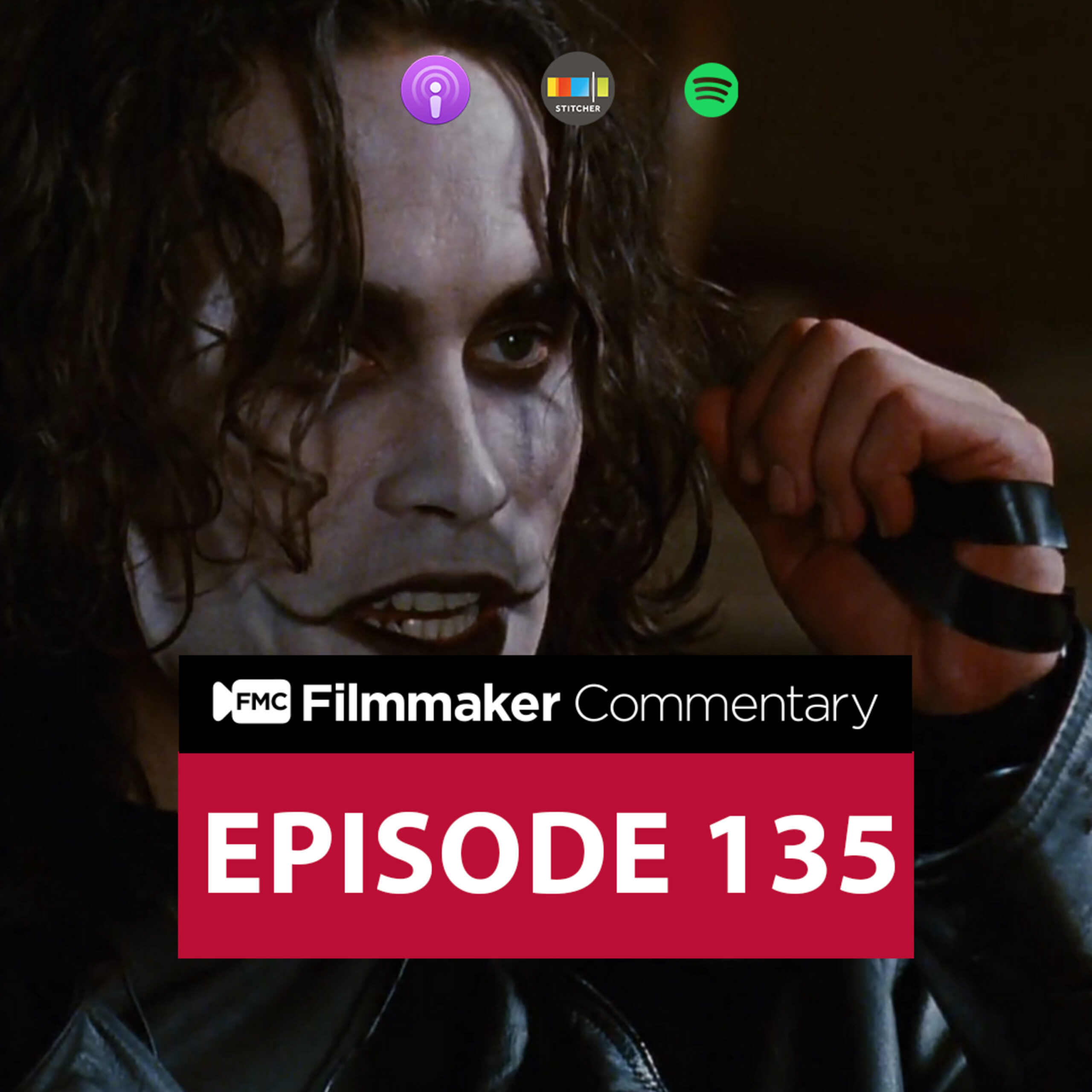
FMC 135: The Crow Directed by Alex Proyas

June 28, 2022
Listen on Apple Spotify YouTube
Listen to this episode
Your browser does not support the audio element.
Also on Apple Spotify YouTube

Episode 135 of Filmmaker Commentary Alex Proyas’s 1994 cult classic, The Crow, offering a poignant look at its dark aesthetic and the tragic events surrounding its production. Join hosts Reginald Titus Jr. and Casey G. Smith as they dissect the film’s lasting influence on cinema and the heartbreaking story of its star, Brandon Lee. This episode is essential for understanding how a film can transcend its initial box office performance to become a beloved piece of cinematic history, shaped by both artistic vision and profound loss.

The hosts begin by recounting the film’s modest box office performance against its budget, highlighting how strong home video sales ultimately cemented its status as a cult classic. Casey G. Smith shares his experience with the less successful sequel, The Crow: City of Angels, emphasizing the irreplaceable presence of Brandon Lee. They discuss the various awards the film received, including honors for its music, soundtrack, and a posthumous Best Actor award for Lee.

Beyond The Crow, Reginald and Casey catch up on film and TV news, celebrating Reginald’s birthday and milestones like Top Gun: Maverick‘s box office success. Casey recommends Star Trek: Strange New Worlds for its fresh and vibrant take on the franchise, contrasting it with the more muted aesthetics of previous iterations. He also praises Zendaya’s powerful performance in Euphoria Season 2, Episode 5, and shares his unexpected enjoyment of the Obi-Wan series. Reginald recounts revisiting the original Teenage Mutant Ninja Turtles movie, noting its unique charm.

A significant portion of the discussion is dedicated to Brandon Lee’s incredible talent and the profound tragedy of his on-set death. The hosts detail the horrific accident involving a prop gun, explaining how a lodged projectile combined with a blank round fatally wounded Lee. This leads to a broader conversation about the challenges and dangers of filmmaking, including other accidents on The Crow‘s set and the director’s decision to downplay these events in the official commentary. They compare Lee’s potential to Heath Ledger’s impactful portrayal of the Joker, cut short by untimely demise.

Alex Proyas’s distinctive visual style, previously explored in Dark City, is a focal point, with discussions on the deliberate use of limited color palettes, stylized sets, and atmospheric rain to create the film’s haunting mood. The director’s auteur approach, favoring unique creations over franchise development, is examined. The episode concludes by revisiting the initial thoughts on the film’s powerful, dark “presence” and its enduring legacy as a visually striking and emotionally resonant piece of cinema. Join us on Filmmaker Commentary each week!

What We Cover

  • The Crow’s box office performance and its ascent to cult classic status through home video sales.
  • The tragic on-set death of Brandon Lee, the circumstances of the accident, and its profound impact on the film and cast.
  • Director Alex Proyas’s unique dark aesthetic and filmmaking philosophy, including his approach to color and world-building.
  • The film’s influence on later Gothic and superhero cinema, particularly its visual style and narrative themes.
  • In-depth discussion of method acting, film set accidents, and the role of genre influences in shaping The Crow.
  • Current film and TV releases, including reviews of new Star Trek, Star Wars, and HBO series.

Key Moments

  • 0:42: Discussion on The Crow’s initial box office, its path to cult status, and unexpected award wins.
  • 6:37: A detailed account of Brandon Lee’s tragic on-set accident and his dedication to the role.
  • 3:43: Casey G. Smith’s enthusiastic recommendation for Star Trek: Strange New Worlds as a fresh take on the franchise.
  • 4:33: Exploration of Alex Proyas’s unique dark aesthetic, comparing The Crow to Dark City and other visually driven films.

Gear & Films Mentioned

  • The Crow graphic novel by James O’Barr
  • Rapid Fire
  • Dark City
  • Top Gun: Maverick
  • Toy Story 4
  • G.I. Joe The Movie
  • Transformers The Movie
  • Teenage Mutant Ninja Turtles (1990 movie)
  • The Wraith
  • Obi-Wan (Disney+)
  • Star Trek: Strange New Worlds (Paramount+)
  • Star Trek: The Next Generation
  • Original Star Trek
  • Physical (Apple TV+)
  • The Boys (Amazon Prime Video)
  • Euphoria (HBO)
  • Under the Banner of Heaven (Hulu)
  • Blu-ray, VHS, DVD

Listener Questions

  • How did the tragic on-set death of Brandon Lee impact the production of The Crow and its enduring legacy?
  • What unique visual style did director Alex Proyas employ in The Crow, and how has it influenced later dark fantasy and superhero films?
  • Was The Crow a box office success, and how did home video sales contribute to its status as a cult classic?

Full Transcript

Read the full transcript

Full Episode Transcript
This episode of Filmmaker Commentary dives into the 1994 cult classic "The Crow," directed by Alex Proyas, exploring its box office journey, tragic production, lasting influence, and unique visual style, alongside discussions of industry news and recent film/TV watches.

Opening Discussion & Film Overview
Reginald Titus Jr.: Filmmaker Commentary, episode 135. Welcome to Filmmaker Commentary, where we give you insights from our favorite filmmaker commentaries. These commentaries can be heard on your DVD and Blu-rays of your favorite movies. We'll show you how you can use these commentaries and apply them to improve your video production and filmmaking techniques. All of this here on Filmmaker Commentary. I'm your host, Reginald Titus Jr. Welcome to another episode of Filmmaker Commentary. I'm Reginald Titus Jr. I'm joined with...
Casey G. Smith: Casey G. Smith. Welcome back, sir.
Reginald Titus Jr.: Good to be back, sir.
Casey G. Smith: And today, we're talking about The Crow! 1994, directed by Alex Proyas. And this film had a box office of approximately $23 million.
Reginald Titus Jr.: What was the budget for this film?
Casey G. Smith: $23 million. Box office of $51 million.
Reginald Titus Jr.: Ooh. What's up with that?
Casey G. Smith.: I think home releases and videos probably did this one very well.
Reginald Titus Jr.: Mm-hmm.
Casey G. Smith: Yeah, I think it became like a cult classic. So I think it made a lot of its money at the box office. It was a little bit ahead of its time, especially with the look of the character and things of that nature. So, yeah, it didn't burn up the box office.
Reginald Titus Jr.: It didn't burn it up? No worries. Yeah, that's surprising. I expected it to do more.
Casey G. Smith: Initially, I did too. I, yeah, I thought that number would be much, much larger. But I think again, in, you know, VHS, DVD and Blu-ray sales, I think that's where this has lived on, because there's been, I mean, multiple, multiple sequels.
Reginald Titus Jr.: I've not seen any of them.
Casey G. Smith: I've seen Crow: City of Angels.
Reginald Titus Jr.: Is that the second one?
Casey G. Smith: I think that was the second one. And after that, I was just like, "Eh." Because again, it wasn't, it wasn't Brandon Lee after that, so I lost, yeah, what's the point? Lost interest. Because the second one was like, "Eh." It was, it was okay, but I was like, "No, I'm not, I'm not attached to this other, this other person," you know, doing, doing this. But, you know, it's not right. It's not right.
Reginald Titus Jr.: Yeah.
Casey G. Smith: Yeah, but it's kind of tough to bring back, you know, Eric Draven yet again. So, yeah, there's no point. Yeah, so it's like, "Eh."
Reginald Titus Jr.: Yeah, he, there's no, there's no need for him to come back. But The Crow could come back as a different story, right? It could be a different person.
Casey G. Smith: And that's, that's what the sequel is. Yeah, it's different people. But still, it's not Eric Draven?
Reginald Titus Jr.: No, it's not Eric Draven? Oh. Different, different person. He's like, "Eh." But, uh, hmm, yeah, ho-hum. I wonder how that one did at the box office. Did this film, any awards? Did it get any awards for this one?
Casey G. Smith: Uh, no major awards of note, but it did win a BMI Film & TV Award for music by Graeme Revell. Likewise, an MTV Movie Award for Best Movie Song, "Big Empty." And then also from the Fangoria Chainsaw Awards, it won Best Soundtrack. It also won Best Actor by Brandon Lee, posthumously. And also, Best Wide Release Film.
Reginald Titus Jr.: Okay. I didn't know that was a category.
Casey G. Smith: Nor did I. I never even heard of that awards before.

Industry News & Personal Watches
Reginald Titus Jr.: Um, but before we dive further into The Crow, let's talk about News, TV, Movies Watched.
Casey G. Smith: Yes, and before we dive into this as far as news go, I want to let all of our listeners know, today we celebrate the birth of our very own Reginald Titus Jr. So, big birthday shout-out to you, brother.
Reginald Titus Jr.: Thank you, sir. Appreciate it, brother. Absolutely.
Casey G. Smith: In addition to that great news, according to Deadline, Top Gun: Maverick has crossed the $1 billion box office mark.
Reginald Titus Jr.: I'd buy that for a dollar.
Casey G. Smith: Plenty of people did, and more. In addition to that, according to IndieWire, Martin Sheen, who we made mention of when we referred to Charlie Sheen and their roles played in Wall Street. Wall Street, yes. We had questions about, "Well, what took, you know, what brought about that, that name change?" And we asked about, you know, Emilio Estevez, right, the other brother, who kept his surname, right? That that's the surname, the Estevez surname. And recently, Martin Sheen and IndieWire, true, in an IndieWire article said that he regrets not going by his birth name, Ramon Estevez.
Reginald Titus Jr.: Oh, that's a cool name.
Casey G. Smith: Ramon. Right. It's different from Martin Sheen. It's a different person.
Reginald Titus Jr.: Very much so. Martin Sheen is very, when you hear like Antonio Banderas is... what is it? Desperado? El Mariachi? Puss in Boots.
Casey G. Smith: Oh, yeah.
Reginald Titus Jr.: You know, it's just a different, it's like it brings his culture into it, but like...
Casey G. Smith: Flavor.
Reginald Titus Jr.: Flavor. But when you just, when you're Martin Sheen, it's like it's, it's cool for, it makes sense for a Hollywood name, but there's no culture with it.
Casey G. Smith: I am Martin Sheen. Fear me.
Reginald Titus Jr.: But, you know, I think that within itself is a cool story, like you just created this brand, and like one of your your sons picks that up too, another one doesn't. Let's see how this thing pans out.
Casey G. Smith: It is very interesting, but you also see that sometimes with different actors and actresses, especially within like family relations, sometimes making those changes. Like you have, I believe it's Jon Voight, and then, um, Brad Pitt's former wife, oh, Angelina Jolie. There we go, Angelina. I was going to say. Yeah, Angelina Jolie. Right, going by a slightly different last name. I don't know what all the details are there, but...
Reginald Titus Jr.: Yeah, I know they had issues with their, no, yeah. Some some family stuff. Yeah. Yeah.
Casey G. Smith: But it's also, it's also fascinating when you see that that, you know, it being in the family still. And then we have a prime example of that, of course, as we talk about The Crow with with Bruce Lee and then, of course, his son, Brandon Lee. Yeah, man. And some of the, uh...
Reginald Titus Jr.: And when you have a, when you have a positive image of your father, you know, that you can bring over, there's a legacy there. There's like, okay, you know, it gives kind of like a, not necessarily a shortcut, you still got to do the hard work, but it's like, you know, there's a respect there already. You know, it's like a, it's a family thing. It's like, okay, there's respect. Francis Ford Coppola, his daughter, Sofia Coppola. It's like, you know, you bring that, like, okay, I see you, you know, let's see what you got, you know what I mean?
Casey G. Smith: Exactly. But I'll tell you what's, what's interesting, you know, as we, you know, we'll dive deep into The Crow in a moment, but it's interesting just as far as the the the person of Brandon Lee and then Bruce Lee, that the kind of haunting tragedy that both, both died, you know, what what many would consider well before their their time. And then shortly after some of the, you know, their their their some of their biggest kind of breakthroughs. I mean, Bruce Lee had a number of hits, obviously, and revolutionized the the genre of martial arts films. And then, you know, Brandon Lee with, you know, he unfortunately passed on the, you know, died while filming The Crow. And actually, I watched a video because I, I knew that, I knew it happened, but it's not really broken down or really covered at all in the in the commentary or anything like that. Yeah, it's just briefly mentioned.
Reginald Titus Jr.: And I was kind of getting a little concerned, you know, maybe we'll dive in that a little bit later, but, yeah. We'll get back into The Crow. Yes, sir.
Casey G. Smith: But yeah, it's just, uh, yeah, a tragic thing because Brandon Lee, he had major, not only charisma, but potential. Have you ever seen his movie, Rapid Fire?
Reginald Titus Jr.: I didn't. Is that the one where he, um, he runs, slides on his back and kicks a kicks a table up?
Casey G. Smith: Yeah.
Reginald Titus Jr.: Yeah, I remember some of the martial arts stuff, but I didn't watch the actual film.
Casey G. Smith: Dude, that, I'm I'm I'm I I tried to check it out this weekend, but it's on like Stars Encore or something like that. But I remember my dad and I, like we saw the trailers for that. We went, we may have watched that, either we watched it in the theater or we or we rented it on videotape, but we both watched it together. And we're like, "Crap." This dude...
Reginald Titus Jr.: He's legit.
Casey G. Smith: Yeah, his martial arts were legit, but also his acting. I, he, he actually went to an acting school in New York. Like he was...
Reginald Titus Jr.: Oh, he was dedicated. Okay.
Casey G. Smith: He was, and it wasn't his goal to be a martial arts, you know, actor. He just wanted to be a good actor.
Reginald Titus Jr.: Can't have to be. Sorry. Comes with the name.
Casey G. Smith: Ah, that's the expectation, right? If you want to be a curry, you got to shoot something. Mm. But yeah, I think he had the charisma, uh, and the potential talent to to to go further.
Reginald Titus Jr.: For sure. Yeah. Most definitely. And he had a, um, what is it? Uh, racially ambiguous kind of look to where he can kind of play more ethnicities. True, true. And so he can cross over, for sure. Yeah, but yeah, rest in peace and power.
Casey G. Smith: Yes, indeed.
Reginald Titus Jr.: Brandon Lee. Uh, did you watch any television or films this week?
Casey G. Smith: I did. The pool wasn't as deep, I was more so waiting in the the water of of media content. Uh, of course, still on my my my normal Hill Street Blues run, still working through the last season of of that show. Um, also there's a show on Paramount Plus called Star Trek: Strange New Worlds, which I've really enjoyed. It is a a take on the Star Trek theme that's the most like fresh and inviting that I've ever that I've ever seen, because typically, you know, a lot of Star Trek shows are they the colors are kind of muted, and it might be, you know, especially when they're like, like, you know, certain kind of uniforms, it looks just drab and unattractive. I'm going to be frank. No offense to the Trekkies out there, but some of it just didn't look inviting. This show is inviting. Like if you don't know anything about Star Trek, no interest, this just this show will grab you and bring you in. It's bright, it's colorful, it's fun. The cast is crazy diverse. Uh, I didn't realize it, but Rebecca Romijn, uh, she's on the show. I didn't realize it was her, because her face is a little bit fuller than I'm used to. And I happened to, I was like, wait a minute. That that is Rebecca Romijn. Uh, and then Chris, uh, no, Anson, Anson Adams. He's on the show. He plays Captain Pike. He's like kind of the the head dude, but he's funny, got all the charm and all that kind of stuff. Just all the other members on the on the show. It's a lot of fun, so I I really, uh, I enjoyed that show. It drops every Thursday on Paramount Plus. But yeah, Star Trek: Strange New Worlds.
Reginald Titus Jr.: What did you, uh, continue watching the Star Trek, the one with Whoopi Goldberg on it? Which one was that?
Casey G. Smith: That's the that's Next Generation. So I I paused that so I could go back to the original Star Trek, which I'm still working through. I usually watch that in the mornings. So I'm still working through that, which I I do enjoy. Like original Star Trek is is pretty fun. It's some wild stuff, but it's it's yeah, it's uh, enjoyable. See William Shatner and, um, Leonard Nimoy in their respective Captain Kirk and Mr. Spock roles.
Reginald Titus Jr.: I remember the Next Generation. I talked about this on a previous podcast. It's just it always came on at night, so I always associated with, it's time to go to bed.
Casey G. Smith: Ah. And it and it has its own look. Yeah, definitely. And that's see, that's when it got it got darker. And to me, it's more everything's more muted.
Reginald Titus Jr.: It's the colors, because they were they weren't like blue, aren't they, or darker?
Casey G. Smith: A lot of like maroon and black. Maroon and black or mustard. But it's also kind of a product of late 80s, early 90s kind of coloring. But yeah, a lot of the uniforms are either maroon and black or like this mustard, dark mustard and black.
Reginald Titus Jr.: On the Next Generation when they were...
Casey G. Smith: Where is in the original Star Trek, I mean, they're rocking, I mean, they're still that mustard color. And there's there's red. But everything's a little bit brighter, though. Everything is much brighter on, uh, that one. But it also came out in the 60s, too.
Reginald Titus Jr.: It just seemed the Next Generation seemed calm.
Casey G. Smith: Yeah, it it does. It comes across that way. It's like, okay, you know, it's even the hum of the ship. You can hear when the when they're, you know, on on the deck or whatever. It's yeah, it's got a different a different vibe to it. But, uh, but yeah, I mean, you know, there there's some excitement that happens here and there, but yeah, the first one is definitely more dramatic.
Reginald Titus Jr.: Okay.
Casey G. Smith: Way more dramatic. The lighting, the sound, all that is just is just drama, there's like drama continually. So we're watching that, finished the season finale of the Obi-Wan, uh, show on Disney Plus.
Reginald Titus Jr.: Good.
Casey G. Smith: That was yeah, that was. Again, I'm not a huge Star Trek fan, but I like to kind of keep up with the lore. And I didn't think I would have any interest in Obi-Wan. I was like, oh, I didn't I didn't care if he was coming back or they were going to do. I knew it was going to be a prequel. Yeah. But it was charming. And the the little girl on there, the little girl who who plays Princess Leia, and she is fantastic. She really she's got she's got a bright future ahead of her. She's very, very charming and, uh, yeah, very good. And Ewan McGregor, he, you know, he does his thing as, uh, Obi-Wan or reluctant Obi-Wan. But, uh, but yeah, it ties it all in. And I think it kind of, I saw somebody put a quote that it increased their love for the prequels after seeing after seeing this, uh, this show. Okay. So, it does, it does kind of tie in some things. And then, you know, Vader, spoiler alert, you know, Vader appears, but he's, I think he's in the trailers.
Reginald Titus Jr.: And James Earl Jones, of course, is voicing Vader in the show. One of the hardest working men in the business.
Casey G. Smith: Yes, sir. And he's still working. Shoot. Akeem. My son has a job. Put a trap in it. But yeah, he's doing his thing.
Reginald Titus Jr.: Sock, you said sock.
Casey G. Smith: Oh, lord. But yeah, so finished that. Also, uh, Physical on Apple Plus, Apple TV Plus, Physical on, uh, that platform, season two, I've been working through that. That's been still really good. Boys, you know, season three, the most recent episode, which we won't touch on, since Reginald hasn't seen it yet, but we'll cover it next go 'round. And then, there's a show called Euphoria on HBO that's just one of them. It's like season two, right? Yeah, that's one of the wildest shows. Like it's...
Reginald Titus Jr.: You told me to watch that one, because I have kids and stuff.
Casey G. Smith: Yeah, not for kids. That one's definitely not for kids, but man, it's but there is season two, episode five.
Reginald Titus Jr.: Features kids. Not for kids.
Casey G. Smith: Yes, season two, episode five, Zendaya gives a performance that's just like, holy crap. It's pretty, pretty incredible. You know, she's in the show. She's she's a she's a drug addict. And she is addicted. And there's a an episode that kind of deals with that. And her and her family and, oh, man, she is, it's a powerhouse performance. I'm like, how in the world? And I kind of paused watching the show for a while, because it's it's it's out there. Uh, it's heavy. This was some heavy stuff. But I saw a video clip of her and and Andrew Garfield on a on Actors on Actors. I love watching those things and hearing them talk and that's how I ended up watching the Under the Banner of God on Hulu, because they were discussing that. And then, of course, her and Euphoria, she was talking about the process she went through to prepare for that, for that scene. She shot like all day. And it's man, it's intense, man. So intense, but she she crushes it, dude. Like she is a powerhouse. And I'm sure she'll get some Emmy nods for that. Because I think she may have won for last season in of the first season of Euphoria. I think she, I think she got something for this.
Reginald Titus Jr.: Yeah, they had a lot of buzz in it, that the first season. It was like breaking, groundbreaking show.
Casey G. Smith: Yeah, it's it's no holds barred, man. Anyway. Yeah.
Reginald Titus Jr.: Kira looks good.
Casey G. Smith: Yes, sir.
Reginald Titus Jr.: I didn't watch anything.
Casey G. Smith: So. I got two more things that I that I watched. Actual movies. Toy Story 4. Going to be in this Toy Story world.
Reginald Titus Jr.: No, you aren't. Is that the one with the fork, Spork?
Casey G. Smith: Yeah. I hadn't seen it before. That one, I'd seen all the other ones before, but I hadn't seen Toy Story 4 before. Because I saw I saw, I'd seen the trailers. And I saw that, once I saw that fork, I was like, I'm out. I'm done. I don't want to see this stupid thing.
Reginald Titus Jr.: Ended up being very charming.
Casey G. Smith: Yeah, it was. I was wrong. I'll admit it. I was wrong. It was very, very charming, very fun. And, uh, yeah, nice, nice little, little ending. I was like, oh, this is, oh, why did I doubt? Why did I doubt, right? Why did I doubt? I was in a different place. I was like, And then, as a special treat, me and a buddy of mine, we went to see the 35th anniversary of G.I. Joe: The Movie.
Reginald Titus Jr.: What?
Casey G. Smith: In a theater. Now, I own it on Blu-ray, but...
Reginald Titus Jr.: Texas theater, Angelica, who did this? Studio Movie Group?
Casey G. Smith: Through Fathom Events. We went to the the the AMC at the Parks Mall. And you guys, I'm still recovering from from my stroke, and so, you know, walks that I used to make before are very, very challenging for me. And so we we we we got there. And again, I hadn't been there in months. Because usually we go to a theater that's much, much closer. But we we got there. We got out. And you had to walk across the food court. Yeah, when I got there, I was like, oh, gosh, this this is this is far. But, you know, I was able I was able to make it. But man, it it's it's considerable effort for me. But, you know, but I'm I'm glad my endurance come back. I was able to make the walk. But...
Reginald Titus Jr.: It's pretty long.
Casey G. Smith: Iish. Yeah, yeah. I was like, oh, man, I forgot it was that far away. But, you know, we got through, got there. And there was only like maybe like five people in the theater total. Which is fine, is what it is. Again, most people who would want to see it probably own it, like I do. But I was like, oh, you know, I just want to see it in the theater, see if it would, you know, just to see it, because it never came out in the theaters because of controversy of when they did Transformers: The Movie. And they, spoiler alert, killed Optimus Prime in that film. Traumatized a lot of kids. Because, you know, I mean, this was these movies came out in the 80s, height of popularity of these shows.
Reginald Titus Jr.: Kids are not ready to talk about death and you're forcing this on them.
Casey G. Smith: You kill, you kill the, like, the, like, most popular, like, leader of, uh, of a cartoon. Optimus Prime. Like that's the guy. And you murk him brutally in front of all these kids. So, yeah, kids flipped out. And, you know, Hasbro panicked, I guess, rightfully so. And so they ended up changing the ending of G.I. Joe: The Movie, because they were going to kill their lead guy there. So, we'll see.
Reginald Titus Jr.: It's the thing we do.
Casey G. Smith: Yeah. And they, they ended up putting in the movie on TV. So when I first watched as a kid, it was on TV. But, um, but it's weird, because in Transformers: The Movie, they murder, they murder a lot of Autobots, a lot of Decepticons. There's a lot of death. But they're robots, so it's like, uh, but they did it to then replace with new replace them with new toys. In G.I. Joe: The Movie, it's really kind of the opposite, spoiler alert. Like almost, like, nobody dies. And if if there was going to be a death, it was only going to be one guy.
Reginald Titus Jr.: Who had the the question is, who had the better sales?
Casey G. Smith: That's a good that's a good question. I don't know, because Transformers definitely would have been more expensive than G.I. Joe. So I don't I don't know. It's a very good question. Hmm. Very good question. Yeah, I I don't know who had the...
Reginald Titus Jr.: See what strategy worked based on their propaganda.
Casey G. Smith: Because they're they're both right there neck and neck rocking it out. But, um, and do kids want people to keep dying? You know, do you want toys where they keep dying? Well, this is the the the exception. This is the only time when they when they were like really biting the dust. And because I mean, the Transformers movie is unrelenting. I mean, a lot there's deaths on screen, and there's deaths off screen, you got to just assume that. But they were making way. But in G.I. Joe: The Movie, they didn't. I mean, only one person was going to die. And I'm like, but they're they're going to release, they can always say, oh, we got new recruits. They could have done that with Transformers. Oh, we got new people coming, you know, to the planet, whatever. And it's and it's also Transformers: The Movie is set in the future. Like it jumps ahead almost 20 years in the future. G.I. Joe: The Movie is like moving right along. And it introduces characters that they make toys of that you then never hear from again. Like they're never brought up in the cartoons or anything.
Reginald Titus Jr.: That's beautiful.
Casey G. Smith: It's weird. I'm like, these strategies are very different, because Transformers: The Movie afterwards, all those new toys, they were out. And that was the the the show changed. Like this is the new number. We are 20 years in the future. Optimus is dead. Rodimus Prime is the new guy. We we're living on Cybertron. We're not on Earth anymore. All that's changed. Megatron's dead, you know, uh, Galvatron's the main guy. But G.I. Joe picked up right where it left off, and doesn't really even reference the movie. It's just, Plots right along. Brings in some new characters. I'm like, anyways, these things are I didn't really realize at the time till I watched it there. I was I was much more critical watching it in the theater. I was like, hmm. Those guys would have been dead. That yeah, it was just certain things I I saw. Me me and my buddy were kind of laughing at some of these things. I was like, no, they they would have they would not have made it out. Like there's a scene where there's a bomb that's down to one second. And these and these guys who are infiltrating the Cobra base, they are deep in the heart of the base. And they had set a bomb to go off. It's down to one second. And the base starts to explode, but all of a sudden these guys are on the outside making that dash. I'm like, no, you guys would have died. You guys don't move at the speed of light. You don't you guys have no superpowers. One second. You are dead. Oh, you are dead.
Reginald Titus Jr.: We're just really, really fast.
Casey G. Smith: Anyway, it was, but it was fun, though. It was fun to watch. And, uh, you know, they're always bringing some big, bigger names to, you know, do some of the voice acting, like Don Johnson. He voiced a guy named Falcon, who's like, he's the main protagonist kind of of the show. He, you know, the screw-up that then becomes a leader, which is the same thing they did with Rodimus with Hot Rod. So that formula was still there. And even, uh, Burgess Meredith, who plays Mick in the Rocky films, you know, the the trainer, coach. And also the Penguin on the old Batman '66 show.
Reginald Titus Jr.: Boom.
Casey G. Smith: But, uh, but yeah, that's what I've been watching.
Reginald Titus Jr.: So that movie, so was it two movies or that was the only movie?
Casey G. Smith: That was the only movie.
Reginald Titus Jr.: Okay, got it. Best part about it is the intro, when they kind of they redo the G.I. Joe intros. It's it's it's expanded. And it's it's it's a nice. It's a nice, very, very nice intro.
Casey G. Smith: Wow.
Reginald Titus Jr.: Um, I did, a few weeks ago, I, I don't know if I brought this up on another episode, but I was skimming through Ninja, Teenage Mutant Ninja Turtles, the first one. The movie? Yeah, the movie. The movie. The movie. Live action. Yeah. Just, yeah, the martial arts is solid in there. Yeah, it was just nostalgic. Just to kind of I was just skimming through it, just like, okay, But I went through the whole film. Yeah, just kind of skimming through the parts of the scenes that I like the most. They're like, Shredder. You know, when they go back to April O'Neil's house and, "We got Shredder. They got Shredder." You know, and just how his mouth like move. "They got Shredder."
Casey G. Smith: He says, "Splinter."
Reginald Titus Jr.: Oh, duh, Splinter. My brain isn't working right now, dude.
Casey G. Smith: It's all good. I need water or something. Uh, "Splinter." Yeah, Splinter. Yeah. They got the rat. Yeah, they got the rat. They got the rat. Yeah, I, uh, just it was a nostalgic moment. Just to kind of, it holds, it, it holds up in this unique kind of way. The the live action. It really is kind of unique in the way that it that it holds up. It's still, you know, pretty charming and a lot of fun.
Reginald Titus Jr.: It just holds up.
Casey G. Smith: Was that our guy, um, Corey that did the voice for Michelangelo on that one? He's Donatello. Yeah. Who's I wonder who's the guy, who's Michelangelo on that one? I thought Corey did one, but I guess not. Uh, but just as fun.
Reginald Titus Jr.: He's Donatello.
Casey G. Smith: Corey Corey did Donatello on that film. I don't know who did Michelangelo, but the guy who does Mike is a lot of fun. He's hilarious.
Reginald Titus Jr.: The energy is just coming through on that, on his performance. He's doing the impressions at April's apartment. And, yeah, that's right. He's doing Cagney and then, "You dirty rat."
Casey G. Smith: Yeah.
Reginald Titus Jr.: "You killed my brother." Um, and then, then Raphael, the guy, the voice actor that played him, like just upset all the time.
Casey G. Smith: And see, that's the that characterization then carried over because in the in the in the cartoon, he's just, you know, a wise cracker and he, you know, making jokes. But in that that film, it showed off that that rage that Raphael has. And every other cartoon since then, they always make Raphael angry. And then in a lot of directions, they make him bigger and stronger. He's physically bigger and stronger than all the other turtles. And that and that partially comes from the the comics as well. But, uh, but yeah, the movie really kind of put that in play. But then, when they make the sequel movie, you know, the first movie is, is kind of dark, right? It's got some dark undertones. Then they go in the sequel, they go totally opposite. They make it like the the even the look of the turtles is totally different, the eyes are bigger, and they're they they lean into the comedy. Yeah. But the first one, Go Ninja, Go Ninja, Go. But the first one is solid. And yeah, I I dig I dig it a lot.
Reginald Titus Jr.: First one.
Casey G. Smith: I do wish they would have kept that franchise going from that standpoint. They turned into CGI. Yeah, I didn't really like that one too much. Yeah.
Reginald Titus Jr.: Agreed.
Casey G. Smith: Keep the animation what it is and then. Anyhow. But yeah, that's from weeks ago. Hey, but thanks for letting us know.
Reginald Titus Jr.: Yes, indeed. And, uh, today's show is sponsored by Natural Hair: The Movie by Grainer and Matter Films, available to stream on All Black TV and now for free on Tubi. Check it out and leave a review. And let's jump back into the show. Thank you for tuning in to Filmmaker Commentary. We're talking about The Crow, starring Brandon Lee, 1994. A man, brutally murdered, comes back to life as an undead avenger of his and his fiancée's murder. Rated R. Oh, man, how did you watch this film?

The Crow: Production, Tragedy, and Visuals
Casey G. Smith: Well, before I watch this, I'd want to know that if this is your first time listening to Filmmaker Commentary, please know that there will be spoilers. You've been forewarned. I first watched this actually in the theaters. What? Yep, in junior high, this was coming out again. I was huge in the comic books at that time period. Man, I was all my...
Reginald Titus Jr.: So you read this?
Casey G. Smith: Um, no, my dad did have the graphic novel, which actually right now, uh, if if we were on video, you would see, I've actually got a a figure of the Brandon Lee Crow sitting in a in a in a chair by Diamond Select on top of my dad's original graphic novel. Boom. And so I remember flipping through the pages of it. And it the graphic novel is is different from the movie, which of course is always the case. But man, it the graphic novel always creeped me out. Like the the the the art by, uh, James O'Barr is...
Reginald Titus Jr.: Now I must look into it.
Casey G. Smith: Yeah, check it out. The the art by James O'Barr is haunting. His his anatomy is great. Yeah, and when you see how the the the body of the character looks, you'll see that Brandon Lee tried to emulate that in different ways. Um, but yeah, even like the the smell of it, it's just like, man, it always, it always gave me the creeps as a kid. But I watched this film in a theater. I remember my dad taking me and my friends, dropping us off at the movie theater. And, uh, yeah, we watched this on. I'm not sure how we got in, actually, because it was a rated R film. We were only in junior high.
Reginald Titus Jr.: Really?
Casey G. Smith: You came who who came with you again?
Reginald Titus Jr.: My I think my dad's the one that dropped us off. Oh, dropped you off. You didn't watch it with.
Casey G. Smith: Yeah. So it was like four of us. Maybe my dad was there. I don't know, it's just like, it's like over 30 years ago. But, uh, but I know I watched it in the theaters with my buddies. And, uh, yeah. It does, it looks very interesting.
Reginald Titus Jr.: Yeah, man. The art is I haven't flicked through it in a while, but yeah, he is it's he's uh, he's hella creepy in the uh, in the graphic novel. Yeah. He looks he looks almost like the Joker, like the Joker's cousin or something. Sure. Yeah, that that influence is pretty strong there. But yeah, he's dark. And uh, yeah, and then the graphic novel was in black and white. But yeah, there's something about the way that the way it smelled and the pages, however it was printed, I was like, it always. It does have a smell to it. It's like, what was. Yeah, I've read a lot of graphic novels, but none of them smelled like that. But there's also a different publisher. This is not Marvel or DC, it's a independent.
Reginald Titus Jr.: It's in the basement.
Casey G. Smith: Independent publisher. Basement Comics presents The Crow. Do you want your comic books to smell like the author? Sign this up.
Reginald Titus Jr.: What what did I I didn't watch this film, um, when it first came out. I don't even remember. When I watched this film, maybe I was one of the people that watched it when it came on, uh, VHS at the time. Um, but I just, man, I it felt haunting watching the film. You know, because I did follow Brandon Lee and was kind of looking forward to him coming on the scene as the next. You know, that's that's Bruce Lee's son. Like, come on. We we're waiting on this guy. Mm-hmm. And so, yeah, I was anticipating, you know, his his stardom to start popping. But, you know, you know, unfortunately, it was tragic events happened. Passing away literally like while filming, while filming this. I watched a video before you came through just kind of looking to get a little more.
Casey G. Smith: Yeah, I took the hat off, that's why I did it.
Reginald Titus Jr.: Sure. Yeah. No, I understand. I understand. Uh, just give a little more insight on how he how he passed away. I get it. But, you know, it took place while they were filming inside like the loft area where, you know, where or where they both get killed. Yeah. But one of the performers had, you know, had their gun and it's where they they're shooting him. Yeah. You know, me a blank's in the gun, but as we've kind of discovered and talked about before, you know, blanks can be dangerous. But there was there was something else lodged in the the shaft of the gun, in the barrel of the gun. Uh, projectile that was that was lodged in there between that and the blank. So when they fired it, that projectile came out, pierced Brandon Lee in the abdomen and it got lodged in his spine. Yeah. And then after six hours of surgery, they weren't able to save him and he ended up passing away. Yeah, that's horrible. And it's that scene when, uh, Funboy is with old girl and they're like doing drugs. It's that scene. Uh, where that happens. When he's like shooting, you know, he shoots him in the hand and he looks like, ah, shoot me again. He shoots him. That's the scene that it happened in. Mm. And, um, that actor, um, Michael Massee. I think hopefully I'm saying his name correctly. He wouldn't watch The Crow at all after. Mm, sure. He was scarred. Yeah, didn't took a break from acting, didn't vowed not to watch the film. He he passed like in 2016, I believe. There were multiple accidents that happened also throughout the film. Um, somebody like running something in a power lines and getting like electrocuted. One guy on set, a set designer like stapling his hand or drilling something through his hand. Uh, some people were wondering, oh, was the set cursed or whatever. And even like with, you know, there there apparently there were even like hurricanes that came. They were shooting in the Carolinas. Like hurricanes that came through and destroyed some of the set and had to be rebuilt. Uh, and even from the video that I watched, it was saying that Brandon Lee was because he was constantly being exposed to to water and rain, like trying not to get sick and potentially like he even filed like a a formal complaint with on the production itself. But that was that wasn't these things weren't covered at all during the commentary of the film. It's very much so kind of glazed over and and the director takes the approach of being, you know, close friends with with Brandon. I'm not doubting any of that. Uh, but he doesn't address really any of the negative aspects. Like like none of it gets touched on, which is, I don't know, it's it's odd to me that he wouldn't touch on any of that. He's just kind of and maybe that's an approach he wanted to take, kind of keeping it focused on Brandon's love for the film and wanting to to really be a part of it. And then and the other thing's covered that too, how how he was he was, I mean, he even like brought his weight down to kind of match the body type of of Eric Draven in the in the graphic novel. And he, yeah, he's very close to it. Uh, no, not, you know, he he does emulate that. Maybe it was cursed. Maybe the set was cursed. I mean, just because you're saying like the from the vibe of the comic, you know what I mean? Like, yeah, it's it's uh, it is, it is, it is dark. And one of those differences is that, you know, seeing on the on the cover here, and again, the graphic novel was in black and white. Um, but even on the cover, that we're looking at here, the cover is in color. But his whole body is the same color as his face. Like he's all white, like through and through and just in just that that facial makeup, um, on him, those those markings, uh, he's pale. He's pale. Like someone you would expect that comes from the dead, you know, having no melanin, no blood pumping through or anything like that. That's a pale, gray look. Yuck. Yeah. Um, but anyhow, I didn't watch it, but I do remember the feeling I got from the film, which was like, it felt like, like I said, there's a presence with the film. Presence kind of like more on the darker side. You know, in certain films just have that. Uh, I was trying to see if there's one that we've watched that have that like kind of darker, um, feel. Like you feel like, you know, there's something else going on here. Um, like if there's like a spirit attached to it. Um, I would probably say like, um, one of the scary movies, uh, like the Polter, not Poltergeist. What's the, maybe Poltergeist, but, uh, we haven't covered that one. Um, The Exorcist. Um, that's one that kind of I feel like has a vibe attached to it. A certain kind of energy. Um, yeah. It's a vibe. It's a vibe. Yeah, certain films just have the energy like, ah, never mind. Let's move that one. Let's move that one. That's what I felt about The Crow. But, um,

Filmmaker Commentary Analysis
Casey G. Smith: Did you feel that this time around?
Reginald Titus Jr.: Yes, it's still there.
Casey G. Smith: See, I didn't I didn't I didn't feel that. Again, the graphic novel gives me those vibes, but the movie doesn't. Yeah, yeah.
Reginald Titus Jr.: The the movie is, now that I'm more mature, and I'm watching it, you know, I'm not as, um, I, I'm kind of desensitized to certain things. And, but it's still there. It's definitely still there. But I'm wasn't really into it, you know, as this I wasn't really into it this time around as before. More I'm more into it to how they were able to create that look. That's how I looked at it this time. And I was like, oh, I can appreciate that. They kind of went out their way to to create this look.
Casey G. Smith: Speaking of the look, when I was watching, I was like, man, this looks like this reminds me of Dark City. Yeah. And sure enough, this is the same director. Yeah. I was like, huh? That makes I mean, the look is is dead on. I'm like, well, look at that. Okay. Yeah, that that's, uh, that shocked me. I was like, man, I was thinking that. And then when I when I listened to the commentary, he said that, and I was like, wait a minute.
Reginald Titus Jr.: When did you watch Dark City?
Casey G. Smith: Hmm. It was last year sometime. Okay. I think I think you had you had recommended it to me or mentioned it, I think. And I I I caught it. Nice. Yeah. I did watch it. I was like, that film is great. It is. Interview with a vampire. That's 90s, for sure. Yeah. That film is great. It it's it's um. Okay. That makes sense. I can see that. That's how the Western kind of like literally is giving like, hey, yeah, it's for I love my influence from. Very cool. That is for trivia. That's it. Well, well, well. It is time for filmmaker tips. What do you got?
Reginald Titus Jr.: I think that one's, uh, better executed from the style than this one.
Casey G. Smith: This was the first run. Yeah, it was the guinea pig, for sure.
Reginald Titus Jr.: Trial run. Uh, what did you like or not like about this film?
Casey G. Smith: Uh, I like Brandon's, uh, his charisma. Because while he's playing this this dark avenger, though, there's this warmth that comes through and, um, the expressions that he uses at different times. Uh, yeah, where he's warm but dark.
Reginald Titus Jr.: But dark. So, his energy that I get is, when I say there's an energy attached, Dark Knight, what's our actor's name that played the Joker?
Casey G. Smith: Heath Ledger.
Reginald Titus Jr.: It's the same energy. That's all. Um, I think the transfer, the Blu-ray transfer looks great. I like that about it. I was like, man, this is almost, it's almost timeless in a way. Uh, the only thing that kind of gives away is like some of the computer graphics.
Casey G. Smith: Yeah, and in a couple of moments you can in a couple of shots you can see that. But also, I mean, because Brandon passed away while they were in the midst of filming, you know, they had to digitally, uh, you know, or superimpose his face on the the the actor that filled in for him the rest of the time. And it's...
Reginald Titus Jr.: Oh. Yeah, I didn't see that. Um, it was more where's glaring is like the opening scene when we're flying into the city. Oh, yeah. And then you. And then you see the fire and there's like CGI. I'm like, ah. Yeah. Yikes.
Casey G. Smith: Yeah, that that you can tell.
Reginald Titus Jr.: Yeah. But also, I mean, budget wise. Excuse me. There were there were definitely some constraints budget wise. And the the director said they were in the early days of digital, but they you know, they use some models and things like that. Uh. But yeah, I thought that when you think about again, the superimposing Brandon's face onto the other actor, it's you can't even tell like where that.
Casey G. Smith: Well, did he mention what parts that was on, because...
Reginald Titus Jr.: It's I don't know how much there was still a decent amount of the film left. I my assumption is, there was a decent amount left where they had to, you know, replace, you know, replace, uh, Brandon. Wow. So. That's wild. Um, I think it's a great, what I did like is just like we were talking about the dark shots and like the style. I definitely think it is a film that to be studied in order to, um, to to develop that look. If you're looking for like, how to shoot dark, uh, from an art direction standpoint, everything, um, to pull that off. This is a film to look at to study. Mm-hmm. One dislike I had was the freeze frames. Like when you kind of, it's almost like, uh, they're almost like timestamps or dissolves to to go to the next act, I guess. Mm-hmm. But they do these like, like freeze frames for a moment and then dissolve into another scene. I know about, I didn't really care for that. Yeah. Yeah. Um, now I do like it was made in his memory. And, you know, his, uh, fiancée was able to give them, you know, yes. You can go ahead and finish this film. Yeah, green light. Yeah. Yeah, agreed. I'm glad that they finished him because he was very, very invested in in the character. And then completing the, obviously completing the film. And it was, like you said, it's one of those things where he was, he was on, he was on the rise. Like he was about to, he was about to blow up. Yeah. And then be big time. And he, he could have, I mean, he yeah, the world was going to be his his his oyster. He I think he would have had, I think he, yeah, beyond action, I think he would have had some great dramatic roles to come his way. Yeah, it's unfortunately. That's why I was like, yeah, automatically remind me of Heath Ledger, you know, where he was about to go. And him playing a character that was dark. And, you know, untimely demise. It's like, man, it's strange. But, you know, I listened to an interview by Michael Jai White, and he said that when Heath Ledger was playing the Joker, like in between takes, like he was normal, laughing and I heard that one. I was like, hmm. But, but yeah, it's, uh, unfortunate. True. Um, did you hear Jack Nicholson what he was saying about Heath Ledger? Mm-hmm. I told him not to play it. I told him not to play that character. Hmm. I was like, dang. Good thing, Jack. Um, the commentary. What did you feel about the actual commentary with Alex?

Themes, Style, and Filmmaking Techniques
Casey G. Smith: Excuse me, it was it was it was solid. You know, it wasn't, uh, anything out of the ordinary. He he gave some technical advice. He's kind of talks through some scenes a little bit. But explains how certain things are done. But nothing overly glaring. Like I didn't get a whole lot of tips from him. So, yeah, it was it was okay. Yeah, he has an interesting point of view. And I started kind of like diving through interviews of the director on YouTube, kind of doing some research like this guy. Um, but he kind of follows that auteur, you know, philosophy. So he doesn't, he's not really interested in franchises and things like that. Sure. But I didn't I did appreciate his insight, you know. Um, he's insightful and he has kind of like an energy to make you listen. It's like, okay, this guy knows what he's talking about. Um, at first when I started writing notes for it, I was like, man, he's not talking about like the death of Brandon. Like, I think that would have been a little bit more important. As soon as I said that, he's he mentions it. But it's like towards the end of the film when he mentions when he's mentioning, um, Brandon's death. Um, and I that's kind of weird. He talks to me, he talks more about their relationship that they had as friends and Brandon's dedication to the project. And he gives a lot of praise and credit to Brandon as far as what he brought to the film and the character. And kind of keeps it, keeps it there. Yeah, he very, very loosely refers to Brandon's death in general. And if you didn't know that he died on set, this commentary wouldn't let you know that. You wouldn't you wouldn't you wouldn't know that he died while filming The Crow. It's yeah, very kind of glazed over. And maybe that's the vibe he wanted to give. He maybe wanted to honor his life more so than the passing. But but yeah, towards the end, he kind of gives up the game a little bit more. Yeah, um, and the reason I would like to hear about that is because there are directors and Mike Marvin talked about it in when we the Wraith, when we covered the Wraith. Um, he says when you're a director, somebody dies on your set, uh, he said you basically become like a pariah to the industry in a way. And you're kind of set off to the side a little bit. And I wonder like for Alex, like how how was it career wise when someone dies on your watch, basically, on your production, the star of the film at that. Yeah. And where because in Mike Marvin's case, it was a camera operator that died during a stunt. That cart had flipped over. And, but it was just like people still kind of talk about that. If, you know, the person died on the set, they know about it. And so they don't know what to say or how to recommend you for a job. Um, but yeah, I just I wanted him to kind of be a little bit more open about his experience with that. I think, I don't know. I wonder if if his experience was maybe not so much that, so he didn't maybe experienced director prison. I I don't know. I'm just making an assumption. Where because the other guy did, he kind of had more to discuss around that. But it is he did note that once Brandon had passed away, he he, I think he mentioned that he wasn't really for or against releasing the film at that point. He was kind of he said he wasn't really in a position to make the decision to release the film or not. Mm-hmm. But Brandon's fiancée gave the green light and said, no, this Brandon would have wanted this to to be finished. He said, even the other actors also were like, you know, Brandon would have wanted this to be finished. And so that kind of gave him the, you know, the, umption, uh, the motivation to go ahead and finish it and and release it. Because you have the most recent production, what was that? Rust with Alec Baldwin. Um, they shot shot at the film and end up killing the DP, the lady DP. Right. That was like last year. That was like last. Yeah, that was last year. Um, basically shot directly to the camera, hit the DP, bullet bounced, and actually nicked the director as well. Killed her. She dies. Um, so like that production, like the people are done. The people that were there, they're just like, we're over. We're out. But there were multiple complaints about safety on the set as well. Those things came out. Um, but Alec but he's one he's one of the people that wanted to to put the movie out still. You heard like, hey, let's go ahead and put this out. But other people like, no, we're done. You know, so you have a a situation where people are split on it. Where it seems with The Crow, everybody's like, okay, let's do it in memory of. Sure. You know, whereas that that production, the Rust production, they're like, I ain't touching this. You know what I mean? That's a tough, uh, it's a tough call to make, I think, when you when you have those different factors to consider. Yeah. But that comes down to just how people felt either about the leadership or whatever, where they the whole vibe on the on the set. I mean, because I mean, with Rambo, I mean, First Blood, I should say, there were a lot of accidents on that set, but sure. Excuse me. Obviously, no deaths. That's that that that's the main point. See the different direction. Someone he dies. It's like the stunt guys kind of use those like those accidents as like, you know, badge of honor, you know, like, yeah, man, I broke my knee on this one. Yeah, we're placed on that one. Got 58 stitches. You know what I mean? It's like they're kind of proving like, all right, man. That's a good run. Yeah. Haley Berry made mention of that when she was filming John Wick 3. Oh. She was doing a lot of her own stunts, and she ended up either having she had to get stitches for something, or she maybe broke or did something. She did something, she got injured. And she was talking about the other. She said, yeah, it goes down. Now now I'm one of the stunt people now, because I now I've got I got a scar or whatever to to, uh, to prove it. Wow. That's like a thing amongst the stunt people. Like, hey, you get your your your first badge or whatever. That is, man, that's fun. What a way to make a living. Uh, did you check like any of the special features on the Blu-ray and what like what your thoughts on those?

Closing Thoughts & Next Episode
Casey G. Smith: I did. So on this particular Blu-ray, I think we have the same, same copy. Yep. So there is, obviously the audio commentary, there is the behind-the-scenes featurette, where you do get some some insights from both Brandon, as well as the director, talking about the the making the making of the film. It's only like 16 minutes long, it's pretty short. The longest thing is the a profile of James O'Barr. I did not watch that one. Yeah, I I did. And he is the author of the original graphic novel of The Crow. And he starts off by talking about his life. He grew up as, uh, an orphan. His he he he grew up originally, I think, with with his parents, but at a young age, his mother gave him up for adoption. I think his father, his father may have committed suicide. So, however, he ended up being an orphan. At a young age. He was an orphan at a young age. He was in orphanage for a number of years. Finally got adopted by two parents in the south. And he was he was drawing from an early, early age. We're talking like, you know, let's say, you know, uh, five, six, seven, he started drawing. So, so he's the author and he's also drawing. Yeah, the whole thing. And that's the thing. He does his his creations are are he has to feel it. It's based upon his his his feelings. And he's the the crow is autobiographical. When he got into high school, he met a young lady. He was he was he was very cynical and kind of dark. And then he met this young lady who was like just she was so light and loving and just like, like she was everything to him. And they were engaged to be married after high school. And then she got killed by a drunk driver. And when that happened, he was just devastated. And he he he fought on. He had he still had a will to live. And in the 80s, he started drawing and and writing out this story. And basically, this is this is cathartic for him and kind of autobiographical, because he felt that like, uh, Sherry in the in the book is is like his like his his girlfriend who got lost. That's why in the in the book, you'll see the way she's drawn, she's very, very light, almost ethereal. She's got blonde hair, but she's very, very, very light in the way that she's drawn and portrayed. And that was kind of what she represented to him. And so, it took him years to, like he worked on this for like nine years to create this. And it was it was primarily for him. And he was going to a Yeah. He was going to a local comic shop in Detroit. And one of the guys there, uh, he had happened to show his work one day. He was like, you ever thought about actually like publishing this? And the guy ended up starting a publishing company, the comic book owner. And that's how this got published and kind of got out there. And within a couple of years, people saw it and wanted to option it to make a movie. Like it happened fast. Interesting. And there were a lot of a lot of potential iterations of the of the script. And at one point, they were talking about like making it a musical and bringing like Michael Jackson in and things like that. And he was like, He he wasn't he wasn't down for any of that, because he it was changing the original vision of the character so much. Like in the book, Eric Draven is like a handyman.
Reginald Titus Jr.: That could work.
Casey G. Smith: But then for the movie, they changed him into a, you know, a guitarist.
Reginald Titus Jr.: Which is more cool for the 90s.
Casey G. Smith: I agree. I agree that it is. And it's I remember there's I remember there's one one scene in the in the graphic novel where he like the crow kills this guy with a hammer. Like beats him to death with a hammer. Yikes. Yeah, like he like one of the guys is running away and gets in a car and thinks he's safe. And all of a sudden the crow just comes up from the back seat. He's like, "It's hammer time." And then it kind of like fades black. I was like, oh, dear. Who dear. Whom I in. Oh, my. Oh, did you see, uh, I sent you a link to the Thor, uh, the Miles Morales version of the Thor. Yeah. Did you did you play the video? Yeah, I watched it. I was like, ooh. And I'd seen a a clip on Google earlier that week with a caption to an article that says, you know, Miles what if Miles Morales became Thor, is one of the worst comic books. And I was like, I was like, I said, no, I don't want to check. I don't want to see that now. But but I watched your video. And that guy was pointing out all these this these racist stereotypical tropes. And I was like, oh, that is bad. That is bad. Like...
Reginald Titus Jr. : Yeah, I played it. I was like, "Oh."
Casey G. Smith: Like you said that. He raises up Mjolnir and says, "Hammer time." I'm like, oh no. Yeah, all that is again, if they know Miles Morales as a character, that's that's not that's not Miles. Yeah. Miles is anyway, but that's a tangent. But yeah, I I did check that out. Yeah. I was like, oh. 100%. But like when the character's been around for a while, they and it always comes down to who's writing them. And it is it is a what if tale. So they can take those kinds of liberties and take certain characters out of their normal characterization. Anyway, so but yeah, but anyway, but that feature is is very is actually very interesting, very telling. And it it's at the end, it's very, it's he he's he's a more melancholy kind of guy. He's not sunshine and rainbows. It now like the vibe of The Crow, his energy is in the book. His energy is in the movie. 100%. Yeah. And I get depressed looking at it. Yeah, you you get it. But like, yeah, this is his, this is his story. Anybody that touches it. And he says, he says that he can't write or create stuff that is not that he's not that he doesn't feel that it's not connected to his emotions. Like I can't be a DC or a Marvel writer. I can't write, you know, X-Men. It has to be part of me. That that's what I write, that's what I create. And he's self-taught. When I look at the like the art, it feels that way. It when I look at the art, it feels like, uh, like some of the drawings that me and my friends used to do back in like junior high, going into high school. As you're developing the style of like, oh, this is a symmetrical way to draw eyes or the head and things like that. You can see things that are off a little bit. But that's okay, because that's his style. His style. But his anatomy, man, when you get into see some of the anatomy that he does is it's it's it's not your typical superhero anatomy. Like like it's just like, Like a long gate. Like yeah, and this guy is he's he's he's very svelt. He's he's trim, he's lean, he's he's cut up. And that's what Brandon looked to emulate in the in the film. So that that feature was very interesting. And yeah, little on the darker side, but it gives you insight to who the artist is. But at the end, on a happy note, on a lighter note, I'll say, he says, he's he's the guy's married now. And then and just just had his first kid. And he says, I finally feel like I've I've arrived that I'm not, you know, fighting. He said he felt for he said he felt for like a while that he was like like he felt like he was being punished in life. But now he feels like he's it's all, you know, for a reason why he's gotten where he's gotten now. And he's he seems more he seems he's content.
Reginald Titus Jr.: Good thing it's Miles Morales. Yeah. I was like, oh.
Casey G. Smith: I was like, oh no. All that is again, if they know Miles Morales is a character, that's that's not that's not Miles. Yeah. Miles is anyway, but that's a tangent. But yeah, I I did check that out. Yeah. I was like, oh. 100%. But like when the character's been around for a while, they and it always comes down to who's writing them. And it is it is a what if tale. So they can take those kinds of liberties and take certain characters out of their normal characterization. Anyway, so but yeah, but anyway, but that feature is is very is actually very interesting, very telling. And it it's at the end, it's very, it's he he's he's a more melancholy kind of guy. He's not sunshine and rainbows. It now like the vibe of The Crow, his energy is in the book. His energy is in the movie. 100%. Yeah. And I get depressed looking at it. Yeah, you you get it. But like, yeah, this is his, this is his story. Anybody that touches it. And he says, he says that he can't write or create stuff that is not that he's not that he doesn't feel that it's not connected to his emotions. Like I can't be a DC or a Marvel writer. I can't write, you know, X-Men. It has to be part of me. That that's what I write, that's what I create. And he's self-taught. When I look at the like the art, it feels that way. It when I look at the art, it feels like, uh, like some of the drawings that me and my friends used to do back in like junior high, going into high school. As you're developing the style of like, oh, this is a symmetrical way to draw eyes or the head and things like that. You can see things that are off a little bit. But that's okay, because that's his style. His style. But his anatomy, man, when you get into see some of the anatomy that he does is it's it's it's not your typical superhero anatomy. Like like it's just like, Like a long gate. Like yeah, and this guy is he's he's he's very svelt. He's he's trim, he's lean, he's he's cut up. And that's what Brandon looked to emulate in the in the film. So that that feature was very interesting. And yeah, little on the darker side, but it gives you insight to who the artist is. But at the end, on a happy note, on a lighter note, I'll say, he says, he's he's the guy's married now. And then and just just had his first kid. And he says, I finally feel like I've I've arrived that I'm not, you know, fighting. He said he felt for he said he felt for like a while that he was like like he felt like he was being punished in life. But now he feels like he's it's all, you know, for a reason why he's gotten where he's gotten now. And he's he seems more he seems he's content.
Reginald Titus Jr.: I'm glad he's gotten out of his dark place. He's no longer riding with his dark passenger. She Dexter?
Casey G. Smith: Did you ever see Dexter?
Reginald Titus Jr.: Oh, the show, no. When you say Dexter, my mind always goes to Dexter's Laboratory. The cartoon. Oh, no, D. D. Get out of my room. Laboratory. My latest invention. Oh, my goodness. So Dexter always kind of like referred to that side of him as his dark passenger. So I'm glad Joe Barr was able to get rid of his dark passenger. James O'Barr, yes, sir. Okay, man. Uh, other features, there's a couple of extended scenes, but honestly, like the extended scenes and the deleted scenes, I feel like they've been put back into the film. Because when I when I watched those, I'm like, uh, that's already kind of there. So, yeah, those those aren't anything of note. Oh, in the trailers, I think, uh, did you notice like, uh, Mimic, the movie Mimic? Was that in the trailers on your Blu-ray? Should have been.
Casey G. Smith: I skipped past those. I'm like, cuz like nine of them. I'm like, skip, skip, skip. So So Mimic, and this is a Miramax film. So, um, around that time, there was a film called Mimic that came out, directed by Guillermo del Toro. And he, he has publicly said, like, it was the, it was the worst time dealing with Harvey Weinstein in trying to get that movie made. And it was a nightmare for him. You know, they wouldn't give him director's cut or anything. And like, that movie had potential. But I watched that one in the theaters. Did you really? Yeah, I was still, I was still, you know, feeling some some horror stuff. But I just remember like it it being kind of gross. Yeah. And, uh, who's the actress that's in it? She's she was also in in, uh, in a, uh, what's that famous director of the time? Film. They make mention of him. John Woo. Ah, yes. She was in a John Woo film. Okay. I can't think of her name, though. Me neither. It's, uh, But she's she's in this film. Oh, she's in Mimic. Yeah, she's in Mimic. So there's there's now a director's cut of Mimic. Ooh. And I'm interested in watching it. Nice. I've never seen it. I've never seen Mimic. 90s. Yeah, because that was one point when I was studying Guillermo del Toro and seeing how his influences come into the film. Very interesting. how he from from the art, bringing that in and making sure that that stuff is being handled. That's beautiful. I've never seen it. So that's how I thought that it was like, okay, but uh, yeah, but the director, you know, he's like. I can see that. I could see that. Uh, what did you like or not like about this film? It's just style, but I think he would have made a better movie. Oh, absolutely. Yeah, so I think that it's good in terms of visual style. Uh, I think it's one that I think for sure I would love to watch that. That's the one I'm excited about. Uh, any other tips? Uh, no, no, that's it. Well, well, well, it is time for filmmaker tips. What do you got? All right, so casting, instant and likability with humanity equals casting. Wow. Boom. Okay. Um, yeah. It just seemed like a good thing. And then he said, you know, yeah, you had to learn how to work with actors. So he said that he used to be very adamant about when he had a vision of how where he wanted the actors to be or how many steps he wanted them to take, that if they came with a different idea, he was kind of resistant to that initially. He later learned that's not really the way you work with actors. So he started to figure out other techniques, like sizing a room or designing the set in a way that would force an actor to be only able to move in a certain kind of way. Mm-hmm. And then you got better results from that. So using psychology instead of bullying them around. There you go. Um, and we mentioned this a little bit earlier, but like using art direction to guide your color scheme, like we were just talking about, no greens or no blues or anything like that. But specifically, the person that's responsible for the art direction, making sure that, um, that color scheme that you're going with is being, uh, handled through them. Because they really wanted to shoot black and white. And Brandon Lee even mentions like, he would have preferred the whole film be black and white. And whenever they did flashbacks, the flashbacks were actually in color. Color. Yep. That would be actually cool to see. I agree. Um, it definitely gives a different perspective on and, um, how Draven is experiencing the world and how strong when he touches something and goes back, like, how vivid that is when he's when he's experiencing that. And it's almost like the spiritual world is more real than our real world to him. Sure. Yeah, that's that's where he's at now. Like he's not quite a ghost, but he's not fully connected to this this world. He's only here for a season and a mission. Speaking of influence of genre, the Western genre had an influence on this film. The director actually saw this as a Western. And he's not the first to say that. There have been some other films we've covered where the directors say, you know, there's a real, you know, this is kind of like a Western or the influence is like that of a Western. I think Cobra, it's mentioned. And maybe even Beverly Hills Cop, maybe to some degree, but I've heard it mentioned a couple of times of late. Uh, initially, I was I would not have thought Western, but, you know, the person coming into town and coming to take out, you know, take revenge. That that, yeah, those are Western themes. Those aren't those are not uncommon. You know, with a trench coat, man. So, yeah, that's all I got for tips. Same here. And what do we watching next time? Next time, we are diving into Rounders. If you're into poker and games, you probably already watched this film. It's a staple. But come and join us anyway. And you can catch us where?
Casey G. Smith: facebook.com/filmmakercommentary. Also, iTunes, SoundCloud, Stitcher Radio, and of course, Spotify. Subscribe, give us a like, and leave a review. Also, you can find us on Twitter. He is @ReggieTitus. Go ahead and wish him happy birthday.
Reginald Titus Jr.: Appreciate that. I'm @KCGSmith32. We're also on the Gram at Filmmaker Commentary. He is @ReginaldTitusJr, that's JR. Again, I'm at KCGSmith32. Until next time, peace. Respect.

About Filmmaker Commentary

Reginald Titus Jr.

Apple Spotify YouTube Subscribe Free
Continue Listening

FMC 244 : The Karate Kid Directed by John G. Avildsen

June 20, 2026

What We’ve Been Watching Episode 008

June 12, 2026

FMC 243 : Love and Basketball Written and Directed by Gina Prince Bythewood

June 9, 2026

Leave a Response Cancel reply

This site uses Akismet to reduce spam. Learn how your comment data is processed.

Never Miss an Episode

New episodes every week — free.

Listen on Spotify Apple Podcasts

Recent Episodes

  • FMC 244 : The Karate Kid Directed by John G. Avildsen
  • What We’ve Been Watching Episode 008
  • FMC 243 : Love and Basketball Written and Directed by Gina Prince Bythewood
  • What We’ve Been Watching Episode 007

Archives

  • June 2026
  • May 2026
  • April 2026
  • March 2026
  • February 2026
  • January 2026
  • October 2022
  • August 2022
  • July 2022
  • June 2022
  • May 2022
  • April 2022
  • September 2021
  • August 2021
  • July 2021
  • March 2021
  • November 2020
  • October 2020
  • September 2020
  • August 2020
  • July 2020
  • May 2020
  • April 2020
  • March 2020
  • February 2020
  • January 2020
  • November 2019
  • October 2019
  • September 2019
  • August 2019
  • July 2019
  • June 2019
  • May 2019
  • April 2019
  • March 2019
  • February 2019
  • January 2019
  • December 2018
  • October 2018
  • September 2018
  • August 2018
  • July 2018
  • June 2018
  • May 2018
  • April 2018
  • March 2018
  • February 2018
  • January 2018
  • December 2017

Categories

  • Film
  • Podcast
  • TV
© 2026 Filmmaker Commentary. All rights reserved.
  • About
  • Episodes
  • Privacy Policy
  • Disclaimer
  • Terms of Service