July 16, 2026
F
Filmmaker Commentary
  • Home
  • About
  • Episodes
  • Film
  • TV
  • Home
  • About
  • Episodes
  • Film
  • TV
Podcast

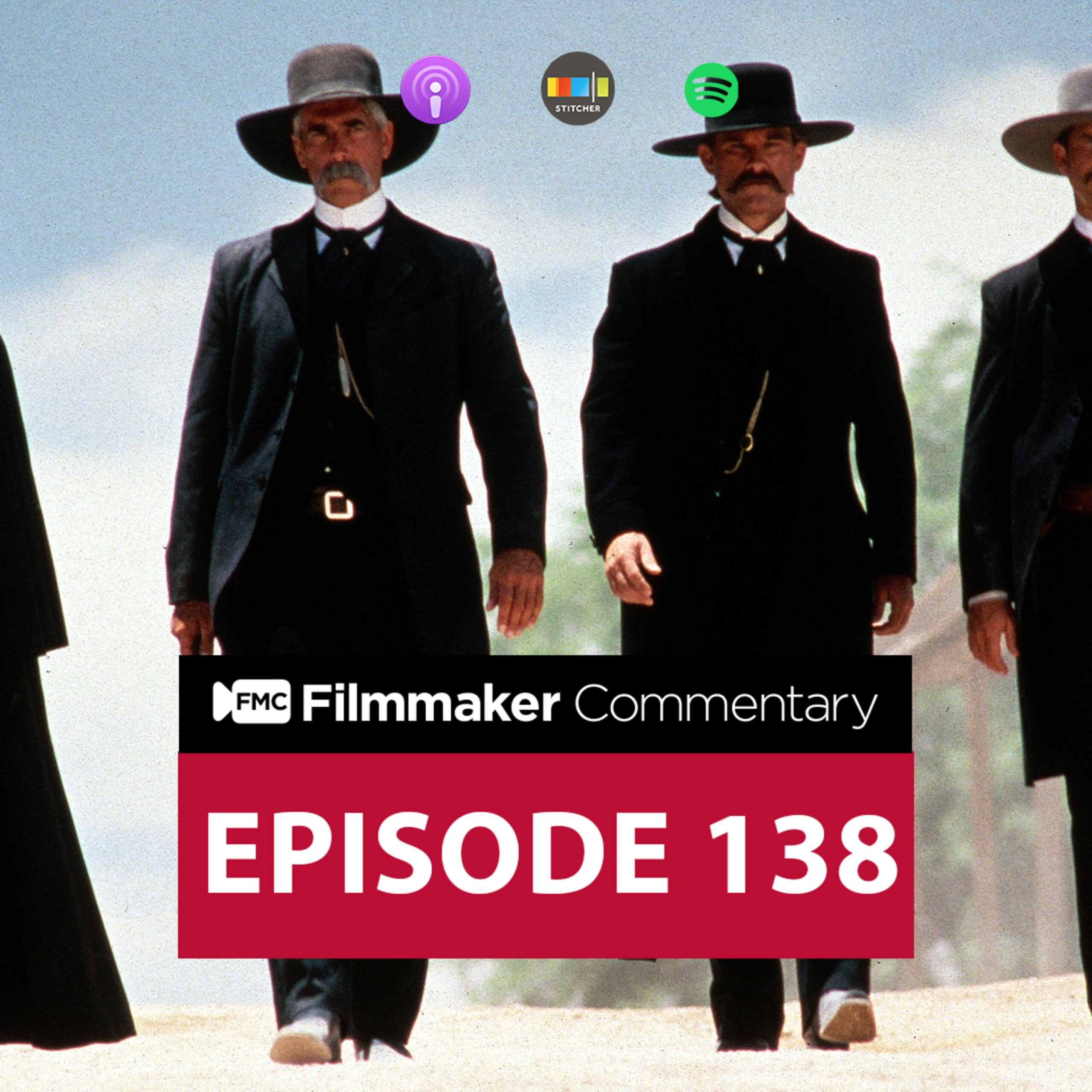
FMC 138: Tombstone Directed by George P. Cosmatos

July 29, 2022
Listen on Apple Spotify YouTube
Listen to this episode
Your browser does not support the audio element.
Also on Apple Spotify YouTube

This episode of Filmmaker Commentary takes a deep dive into the 1993 Western classic, Tombstone, directed by George P. Cosmatos. Join Reginald Titus Jr. and Casey G. Smith as they unravel the film’s impressive visual storytelling, examine its memorable characters, and explore why it remains a fan favorite over two decades later. They discuss the historical accuracy behind the legendary Wyatt Earp and the infamous O.K. Corral shootout, offering insights into how Tombstone transcends the typical Western genre through its meticulous attention to detail and powerful performances.

What We Cover

  • The filmmaking style of director George P. Cosmatos, including his signature shot techniques.
  • A behind-the-scenes look at the historical recreation of the Wild West and the famous O.K. Corral.
  • In-depth character analysis of Wyatt Earp, Doc Holliday, and their iconic portrayals by Kurt Russell and Val Kilmer.
  • Why Tombstone resonated as a classic despite its unique Christmas Day release and modest box office compared to today’s blockbusters.
  • Reflections on the quality of older films versus modern productions, and the impact of digital filmmaking.
  • The importance of authentic props, costumes, and even animal wrangling in creating a convincing period piece.

Key Moments

  • 00:41: Discussion on Tombstone‘s surprising box office performance for a 1993 Christmas release.
  • 01:25: Analyzing Val Kilmer’s memorable MTV Movie Award nominations for his role as Doc Holliday.
  • 20:20: A breakdown of George P. Cosmatos’s signature character introduction shots for Wyatt Earp.
  • 26:22: Examining the nuanced portrayal of Wyatt Earp’s first wife and her struggles with addiction.

Gear & Films Mentioned

  • Thor: Love and Thunder (2022)
  • Gigli (2003)
  • Sleepless in Seattle (1993)
  • You’ve Got Mail (1998)
  • Overboard (1987)
  • Spectacular Spider-Man (TV series)
  • Hill Street Blues (TV series)
  • Star Trek: Strange New Worlds (TV series)
  • Bob’s Burgers (TV series)
  • Rick and Morty (TV series)
  • Natural Hair: The Movie
  • Bram Stoker’s Dracula (1992)
  • Posse (1993)
  • Young Guns (1988)
  • La Bamba (1987)
  • The Lost Boys (1987)
  • Tangerine (2015)
  • Dexter (TV series)
  • The Crow (1994)
  • Cobra (1986)
  • Big Trouble in Little China (1986)
  • DVD, Blu-ray, VHS
  • Smartphones

Listener Questions

  • What makes Tombstone stand out as a Western, even for those who typically don’t enjoy the genre?
  • How did the digital age change filmmaking, and did it impact the perceived quality of films?
  • How historically accurate is Tombstone, particularly regarding figures like Wyatt Earp and the O.K. Corral shootout?

Full Transcript

Read the full transcript

Full Episode Transcript
This episode of Filmmaker Commentary the 1993 Western classic, "Tombstone," directed by George P. Cosmatos, with hosts Reginald Titus Jr. and Casey G. Smith sharing their insights and experiences with the film.

Opening Discussion and Current Events
Reginald Titus Jr.: Filmmaker Commentary episode 138. Welcome to Filmmaker Commentary, where we give you insights from our favorite filmmaking commentaries. These commentaries can be heard on your DVD and Blu-rays of your favorite movies. We'll show you how you can use these commentaries and apply them to improve your video production and filmmaking techniques. All of this here on Filmmaker Commentary. I'm your host, Reginald Titus Jr.
Reginald Titus Jr.: Yo, yo, yo. Welcome to Filmmaker Commentary. I'm Reginald Titus Jr. I'm joined with...
Casey G. Smith: Casey G. Smith.
Reginald Titus Jr.: Welcome back, sir.
Casey G. Smith: Good to be back, sir.
Reginald Titus Jr.: Today, we're talking about Tombstone, directed by George Cosmatos. And this was uh 1993's Tombstone.
Casey G. Smith: That's right.
Reginald Titus Jr.: Now, what was the budget for this film?
Casey G. Smith: Budget of $25 million and a box office total of $57 million worldwide.
Reginald Titus Jr.: $57?
Casey G. Smith: $57.
Reginald Titus Jr.: Really? Yeah. I don't know why I had 75.
Reginald Titus Jr.: They're lying to me again. Ah, they said 70, I have 73.2 million.
Reginald Titus Jr.: But, uh, you know how that is.
Casey G. Smith: I had on IMDb, yeah, what I had on on IMDb was, um, 57.
Reginald Titus Jr.: I don't remember. But, um, it came out what, December 24th, 1993 in the U.S. That's when it debuted or premiered.
Casey G. Smith: Man, right around Christmas time. So that's uh, back in those days, Christmas films typically didn't do all that well.
Reginald Titus Jr.: No awards, really? It was nominated for the MTV Movie Award, which, I remember that back in the day. The MTV Movie Awards, I mean, that was it. You know, that's like the fans' award for you.
Casey G. Smith: Exactly. That's like the, like Teen's Choice but it's more like early 20s. You know, early 20s choice.
Reginald Titus Jr.: Yeah, it was like it was one of those things you can actually be a little bit more proud of sometimes.
Casey G. Smith: Oh, yeah, you get the little astronaut, Astronaut Award.
Reginald Titus Jr.: Yeah, the Oscars a flex, you know, they asked for my money. Uh, but, you know, getting the MTV Award back then was a was a situation.
Casey G. Smith: It was it was a fun award show, too. It was just, yeah, a lot of fun.
Reginald Titus Jr.: Mm-hm. Uh, Val Kilmer got a nominee, nominated for Best Male Performance.
Casey G. Smith: And Most Desirable Male, even though he was pale as all get out in this film.
Reginald Titus Jr.: Well, he was sweaty, sickly.
Reginald Titus Jr.: I'm feeling just fine.
Reginald Titus Jr.: Uh, before we talk further about Tombstone, 1993, directed by George Cosmatos, let's talk about TV news and movies. Why?
Casey G. Smith: All right, so according to the news and Deadline specifically, Thor: Love and Thunder has continued to reign thunder at the box office with another estimated $46 million this weekend. Approximately uh, a little over 60% drop, which is, you know, not not too bad. But also, according to Variety, one Jennifer Lopez and Ben Affleck have officially gotten married in Las Vegas. So, yes, Bennifer is back, back and official. I can remember then back when I was in college, they were, they were a thing.
Reginald Titus Jr.: Mm-hm.
Casey G. Smith: Um, but now they are uh, tied the knot after all these years. And Ben Affleck, man, let me tell you, man, when you see like the women he's dated...
Reginald Titus Jr.: I ain't even mad at him.
Casey G. Smith: Yo, Ben Ben has game. I don't know what Ben's doing.
Reginald Titus Jr.: Ooh-wee!
Casey G. Smith: Yes. Yes, indeed. Ooh-wee. I mean, J.Lo, uh, obviously he he married um...
Reginald Titus Jr.: Jennifer Garner?
Casey G. Smith: Yeah, who who's who's beautiful in and of herself. Then he he was dating, uh, girl from um, the Who Done It film.
Reginald Titus Jr.: Knives Out. Yeah.
Casey G. Smith: Knives Out. Yes. Miss, oh man, I can't believe I'm blanking on her name. But she's absolutely gorgeous. But was dating her. I'm like, dude, Ben, and he's and yeah, Ben, Ben got game. There's some others in between, but then then comes back to to J.Lo.
Reginald Titus Jr.: Was like, it's a circle back around. Um, you know, some we don't know about. Uh, but, you know, Lopez, when she like married twice? She got married twice in between that time because, you know, the big thing was she was marrying Puff Daddy, I mean, dating Puff Daddy at that time. Remember? That whole debacle went down on her rise. And then, um, when she got with Ben Affleck, remember they did that movie together, uh, Gigli or Gigli, something like that.
Casey G. Smith: I don't remember the name, but yeah, I think they may have done one or two films together.
Reginald Titus Jr.: They only did, well, yeah, I don't know the other one. But I remember I remember specifically because Kevin Smith directed it. Didn't he direct this film? And it was just, uh, a box office bomb. Like from never before. Like people hated them as a couple, just like just to like the a couple you love to hate kind of thing from a pop culture standpoint. You know, they're always poking fun at them. Um, but that movie was such a bomb that it just left it residue throughout, you know, and I think it kind of affected their relationship a little bit. But then, you know, she goes to she did she married a singer. Then married a professional baseball player.
Casey G. Smith: Oh, right. She was with uh...
Reginald Titus Jr.: A-Rod? What's that? Aaron Rodriguez or?
Casey G. Smith: Or Jeter.
Reginald Titus Jr.: It was A-Rod. She was with A-Rod. Okay.
Casey G. Smith: Well, I think she may have. My mind I think she married a dancer for some reason for a while.
Reginald Titus Jr.: She did, that was like one of her first marriages. He was a young guy.
Casey G. Smith: Was a dancer, right. And then and then she married, uh, Marc Marc, uh, yeah, the lead singer, um, I am I am just dead on names today. Uh, Marc Anthony. There we go. Marc Anthony.
Reginald Titus Jr.: Yeah, yeah. Yeah.
Casey G. Smith: Cause they had that song, uh, "No Me Ames" on her, uh, on "On the 6," her first CD. I actually I actually love that first CD, man. It was it was it was nice.
Reginald Titus Jr.: Spouse. I'm looking at all her the spouse. Okay, these might be wrong. Anyhow. Was it? Ben Affleck, Marc Anthony, Cris Judd, Ojani Noa. I don't know. And I guess her situation with the baseball player...
Casey G. Smith: I think they may have been just dating. I don't know I don't know if they got married.
Reginald Titus Jr.: She said she said her past two marriages don't really count.
Casey G. Smith: Oof. Yikes.
Reginald Titus Jr.: That sucks. All right, what else is new?
Casey G. Smith: That's about enough. Get it?
Reginald Titus Jr.: That's enough of that. Alex Rodriguez, it was Alex Rodriguez. I want to make sure I got his name right cause I don't want to you know, put somebody in there and be like, we. But anyhow, um, what uh, have you been watching like any movies or TV or anything like that? Cause uh for me, uh for me, it's been it's been kind of vacant.
Casey G. Smith: A couple.
Casey G. Smith: A little bit of a dry spell.
Reginald Titus Jr.: Yeah, it was a it was a real busy weekend, man. I barely got Tombstone in.
Casey G. Smith: Well, I'm glad you did.
Reginald Titus Jr.: Yes, me too. And and yeah, go ahead.
Casey G. Smith: So, for me, actually, I've I've queued up a couple of different romantic comedies, some rom-coms in my my HBO Max list. One of them being Sleepless in Seattle. I'd never watched it before. Of course, I'd heard of it, but never actually watched it before. So, you know what? I said, I'm going to check out some of these older 90s romantic comedies just to to fill that blind spot that I have. Of course, you know, Tom Hanks was everywhere in the 90s. Meg Ryan as well. Those two in particular together. I always remember them in Joe Versus the Volcano back in the 80s. And so, I said, you know, let me check out Sleepless in Seattle. Very, very charming film. I see why it's it it was heralded the way that it was. It's a very very charming, very it's very very cute and and and romantic. But it's not like it's not like super, I guess mushy, if you know?
Reginald Titus Jr.: The Notebook. Have you ever seen The Notebook?
Casey G. Smith: I have seen The Notebook.
Reginald Titus Jr.: No, that's like the pinnacle of mushy.
Casey G. Smith: Yes, it is. Yes, I've seen The Notebook. I was like, whoa, this is this is heavy. But, I mean, hey, that's that's it takes all kinds of films. But, you know, this was this was it is truly a romantic comedy and I think it walks the line very well. So, uh, yeah, the uh, Sleepless in Seattle. If you haven't seen it, check it out.
Reginald Titus Jr.: Check it out. Um, Rent it. 20 20 years later. Yeah.
Casey G. Smith: Streaming on HBO Max.
Reginald Titus Jr.: Okay. I don't know why I think about You've Got Mail. Remember that one?
Casey G. Smith: Yeah, that's the other one. That's the next one I'm going to watch. You've Got Mail.
Reginald Titus Jr.: That's what that one, you think when I think Sleepless in Seattle, that's what I think about You've Got Mail.
Casey G. Smith: I think cause the the commercials kind of, and plus the old AOL, "You've got mail," the the actual sound is is a thing of the of the 90s that a lot of people were familiar with in in hearing.
Reginald Titus Jr.: Yeah. And so like, yeah, Sleepless in Seattle, cause Meg is in both, right?
Casey G. Smith: Yeah, Meg and Tom. Again, they're rocking that that duo.
Reginald Titus Jr.: What? Okay.
Casey G. Smith: Yeah, so it's like three movies together where they're playing a couple of. And I feel like there's a, uh, yeah.
Reginald Titus Jr.: Yeah, they got all of the money out of that situation, right? They milk that.
Casey G. Smith: Smart. I mean, they did I think You've Got Mail is '93, or maybe that's the next movie. You've Got Mail was whenever uh, I mean, Sleepless in Seattle is obviously the '90s but then You've Got Mail is in '98. It's when that dropped. I'm also looking at watching Overboard. It's another one that I queued up. I've seen Overboard before, but yeah.
Reginald Titus Jr.: That one's good. That's a good one.
Casey G. Smith: Oh, yeah. I remember my sister and I watched it as a kid with good old Kurt Russell and in his real-life wife, Goldie Hawn.
Reginald Titus Jr.: Yeah, man. It's crazy they're still together like after all this time, you know, you don't hear about that in Hollywood at all, you know.
Casey G. Smith: But they don't live in Hollywood, either. I think they live like in Colorado, like in the in the more of a, like a wilderness kind of thing.
Reginald Titus Jr.: Shout out to them. Well, done.
Reginald Titus Jr.: I like it. I think that saves a lot of people's marriages, like getting away from the fabricated world of Hollywood.
Casey G. Smith: Yes, sir. I've also, okay. I've also been watching on Netflix Spectacular Spider-Man. Some of y'all may recall that show from back in the early 2000s and it's one of the best Spider-Man animated series out there with one of the best theme songs as well. So, I've been revisiting that. And, uh, I'm also again, you guys know I've been watching Hill Street Blues now for for months, and I'm on the last season. I only have two episodes left. I watch it during my lunch break for for work. It's been awesome. But yeah, one of the last two episodes of Hill Street Blues. I'll be saying goodbye to Captain Furillo and Washington and LaRue and, um, Renko and Hill and just Bates, Bates and Coffee.
Reginald Titus Jr.: Please, since you're bingeing stuff, please watch Dexter. Have you seen it?
Casey G. Smith: Ah, no.
Reginald Titus Jr.: Please watch it.
Casey G. Smith: Okay. I will, uh, look at, look at that.
Reginald Titus Jr.: Since you're in the bingeing mood.
Casey G. Smith: Adding adding it in. Yeah, cause I need I need that next that next what I'm going to watch during my lunch break. I also finished the last, uh, episode of this first season of Star Trek: Strange New Worlds, which has been one of the nicest surprises as far as content, uh, especially being Star Trek, which yeah, it's I think it's the most welcoming version of Star Trek that I've that I've seen. So, I've really enjoyed that. So, I wrapped up that season as well. And then, of course, I'm still on my Bob's Burgers binge. I'm on I'm on I'm in season six right now. I just pop those episodes like like candy. Just like, boop boop boop. I'm gonna do it. I just, you know, they're so they're so quick. It's quick and easy. But yeah, that's what I've been watching.
Reginald Titus Jr.: Yikes. I can't wait for Rick and Morty to come back.
Casey G. Smith: Oh, yeah.
Reginald Titus Jr.: That's one of those, you know, just guilty pleasures.
Casey G. Smith: You always you feel a little good. Oh, man, I got I I watched it and I laughed at some things. And I did. That I shouldn't have been I'm not I don't feel comfortable with, but it was in the moment. Yes, they suck you in with that.
Reginald Titus Jr.: That I shouldn't have been. True. So true. Um, what uh, today show, what is it? Who's sponsoring today's show?
Casey G. Smith: We are sponsored by Natural Hair the movie by Grind of a Matter Films, available to stream on All Black TV and now for free on Tubi. Please check it out and leave a review.
Reginald Titus Jr.: Now, let's jump back into the show.
Reginald Titus Jr.: Thank you for tuning in to Filmmaker Commentary. We're talking about Tombstone, 1993, directed by George Cosmatos. Let's jump into the synopsis.
Reginald Titus Jr.: Wyatt Earp and his brothers, Morgan and Virgil, have left their gunslinger ways behind them to settle down and start a business in the town of Tombstone, Arizona. While they aren't looking to find trouble, trouble soon finds them when they become targets of the ruthless cowboy gang. Now, together with Wyatt's best friend, Doc Holiday, the brothers pick up their guns once more to restore order to the lawless land. Tombstone.
Casey G. Smith: And if this is your first time listening to Filmmaker Commentary, please know that there will be spoilers. You've been forewarned.
Reginald Titus Jr.: Yes, indeed. Tombstone. Who wants to move there? How did you watch this film and was this your first time watching it? Let's talk about this Western.

Initial Reactions and Film Details
Casey G. Smith: All right, no, this was not my first time watching Tombstone. I watched this over 20 years ago.
Reginald Titus Jr.: Oh.
Casey G. Smith: At home. My dad had it on VHS. My dad has always been a fan of Westerns. I've always been kind of mixed mixed on them, but...
Reginald Titus Jr.: I think our generation is like, I don't know about these horses.
Reginald Titus Jr.: But I was like, you know what? There's something about it. It looked it looked different. I mean, the the the case, you know, with the all black and these dudes all in black, it just looks they look intimidating. It's like, hmm, okay, what's going on here? And I said, all right, you know what, let me let me go in and let me check it out. Let me see what it's about. Cause I think some I think one of my friends had said, oh, it's pretty awesome. So, all right, let me pop this in and check this out. And I did. I was like, this is pretty awesome. But I hadn't I hadn't watched it since. It's one of those things you see, you're like, all right, that's cool, but I hadn't revisited it. So, revisiting it now all these years later, I was like, this is still, yeah, this is still pretty fantastic. Some of the the lines in this film, some great great quotes, some cool action, just some cool moments the way it all unfolds. So, yeah, how about you, Reginald?
Reginald Titus Jr.: Never. Never. Never. But I think I remember it in VHS. I remember the key art, and I remember going to a friend's house seeing it on there. Also, like with like Bram Stoker's Dracula, for whatever reason, I remember that VHS being on people's little situation on their VHS. Didn't they have like the little cabinets where you hold the VHS tapes? So, I remember it being around on there, but it was like one of the one of those ones where same like what Michael and some of these other films that were out around that time. I was like, ah, it seems a little too like deep, you know. I'll come back some other time. Um, and just like you like with Westerns, I don't know. I was like, ah, I don't think I'll the only Western I remember watching is like Posse. Yes.
Casey G. Smith: That's how I was going too. Yes, sir. That's it. Posse.
Reginald Titus Jr.: Uh, as a youngster, you know. That's the only one I remember. Um, uh, what do we hear about Tombstone? I didn't hear anything about Tombstone. Yeah, it wasn't even for whatever reason, I'm thinking about, uh, what's, um, the Estevez. Was he in the?
Casey G. Smith: Young Guns. That's what you're talking about.
Reginald Titus Jr.: Ah, that's it.
Casey G. Smith: The first Young Guns, that's '88. That was a big in what where I was at in North North Dakota. Yeah. Young Guns was a big deal. I remember coming to school the next day and people were seeing there like, oh man, I'm I'm I'm Billy the Kid. Like, they were like, like in in recess. People were playing Young Guns, playing the different roles of the characters.
Reginald Titus Jr.: So, yeah, that for whatever reason that's floating in my brain. And I was expecting Estevez to pop up in this film, even though he's not in the key art. I was expecting him to pop up some kind of way.
Casey G. Smith: Emilio, where are you at?
Reginald Titus Jr.: Wrong movie? Okay.
Casey G. Smith: Where Emilio? All the Westerns were the same. I thought they were.
Reginald Titus Jr.: But I mean, cowboys really kind of had they had a little bit of a run in the in well, I guess late '80s, early '90s. They they'd pop up. There were some here that kind of would pop off, but yeah, Young Guns was definitely a popular one enough to get a a sequel. Uh, you know, with Emilio Estevez, Kiefer Sutherland, Lou Diamond Phillips. And all those, those were young, I mean, obviously, young actors that they were on fire at the time, you know, you had Lou Diamond Phillips, you know, doing the La Bamba thing and...
Reginald Titus Jr.: Ah, that's right.
Casey G. Smith: Yeah. So, it was and then Kiefer Sutherland then doing, um, The Vampire film that we covered, uh, the vampire. Which one? Uh, Lord, my brain's not working.
Reginald Titus Jr.: Interview Not Interview With a Vampire. We didn't cover that.
Casey G. Smith: No, no, no. It's the same it's the same director from one of the Batman movies that directed it, but it's uh...
Reginald Titus Jr.: Oh, The Boys. The Boys.
Casey G. Smith: The the something boys.
Reginald Titus Jr.: Lost Boys. Lost Boys. Ha ha!
Casey G. Smith: We we found it. We were digging around in our brains.
Reginald Titus Jr.: My memory is like, it's somewhere in here.
Casey G. Smith: I'm not ready. Where's the file? Where is the file?
Reginald Titus Jr.: Here it is. I'm on the fifth grade memories.
Casey G. Smith: Oh, man. But yeah, I'm glad you had a chance to, uh, to see did you watch it by yourself, you watch it with the misses?
Reginald Titus Jr.: Watched it with the misses this time around. I mean this time, just in general. Uh, bought a Blu-ray and I saw the DVDs there and it's like, I was like, huh, these are the same special features that are on the Blu-ray. I wasn't quite sure. On the DVD, it said commentary, but it didn't say it on the Blu-ray. So, I was kind of confused. I was like, uh, I'm still going to take the Blu-ray. Uh, but the transfer, man, looked good.
Casey G. Smith: Uh-huh.
Reginald Titus Jr.: The Blu-ray transfer. I was like, there's a few scenes where it's like real grainy, but , you couldn't tell what year this was.
Casey G. Smith: Just a heads-up, ladies and gentlemen, with this particular episode of Filmmaker Commentary, obviously, normally we cover films that have the commentary track. This situation with this Blu-ray and DVD release, there was a very special edition of the DVD that has the commentary. That edition goes for more money than what we wanted to pay. This like like $40 plus dollars.
Reginald Titus Jr.: Yeah.
Casey G. Smith: It's like, whoa, and it's just the DVD. It's like, yeah.
Reginald Titus Jr.: Yeah, and I'm kind of more reluctant now, even with Blu-rays, it's like cause now we got the technology with the 4K and all that stuff. So, I'm like, man, should I be buying these Blu-rays? But, uh, but I still need them cause they have the commentaries on them. That's true. And if I want to study, this is probably the best way to do it. Um, and like to see the actual quality. You know, sometimes with streaming it doesn't everything isn't coming through. That's true. Compressed. Yeah, they they say that you're getting high quality, but are, you know, they can compress it even more.
Casey G. Smith: Yeah. Especially with I mean, with so many people watching it, having them be instant, it's like, uh, I don't know if I trust it. Yeah.
Reginald Titus Jr.: Yeah, and so they they say that you're getting high quality, but are, you know, they can compress it even more. Yeah. Especially with I mean, with so many people watching it, having them be instant, it's like, uh, I don't know if I trust it. Yeah. Um, and if you just lower the quality just a little bit, then you get more people to stream it. Um, what I do miss about the '90s is even though I did not watch Tombstone and some of these films back then, um, it felt like art. It felt like you're watching something that people spent time, you know, it doesn't feel like just random it felt like a meal. Like you're just not getting a snack. You know what I mean?
Casey G. Smith: Yeah.
Reginald Titus Jr.: These days it feels like the movies we're watching sometimes aren't people don't they're just doing it for money, of course. And it's cheap as possible. You know, not even even if the cheap is not necessarily the production budget, but the time put into it and the thought put into it. You know, let's just create a formula, put that together, let's throw this throw some money at it, throw a star in there, we got it. That's the formula.
Casey G. Smith: Well, part of that has come from the digital age. The the barrier to injury, the barrier of entry to making films has been reduced dramatically.
Reginald Titus Jr.: To zero.
Casey G. Smith: Yeah, I mean, well I mean, the barrier to enter anything media-wise has been drastically reduced. Technology is less with the digital age gives access. When you had to go and buy film, you better get it together. No, yeah, no way you got to get it processed. It's a different a different beast. But and even where you go and rent a camera from where, I mean, again, we got you know, what's in our pocket can shoot 4K.
Reginald Titus Jr.: You better get it together.
Reginald Titus Jr.: Yep. You can get out there and do some things. Yeah, I think it was Tangerine, something Tangerine. That one uh Sundance Award for that for that film. Um, shot on the phone. Yeah, just modified a little bit, put some you can put lenses on your phone, that's what he that's what he did. I wish I could think of the filmmaker's name. Sorry about that. All right. But uh, but yeah, this is a it's a it's quite enjoyable film if you even if you're not into Westerns. Like this is one of those films, I think that just transcends the genre. It's just a it's a a well-laid out movie. Yeah. And you you get you get drawn in and it's not slow. It's like there's undertone and there's relationships and connections and it just kind of builds up and even in a part where you think it might end and it's like, boom, no, there's more. And then the finale.
Reginald Titus Jr.: Shot on the phone. Yeah.
Reginald Titus Jr.: It was yeah, it was a box office bomb. But yeah, this is a it's a it's quite enjoyable film if you even if you're not into Westerns. Like this is one of those films, I think that just transcends the genre. It's just a it's a a well-laid out movie. Yeah. And you you get you get drawn in and it's not slow. It's like there's undertone and there's relationships and connections and it just kind of builds up and even in a part where you think it might end and it's like, boom, no, there's more. And then the finale. It was two hours and 10 minutes. So they had a little bit more movie in there. Um, now we watched Rounders last time or was it time before last? I think it was last time. We watched Rounders.
Casey G. Smith: Rounders.
Reginald Titus Jr.: Um.
Casey G. Smith: Edward Scissorhands was last time.
Reginald Titus Jr.: Oh, the time before Edward Scissorhands.
Casey G. Smith: Haha! I only know cause I just deleted the note to to type in this. That's why I remember.
Reginald Titus Jr.: Good catch. After watching Rounders, did you appreciate the poker a little bit more?
Casey G. Smith: They they barely talked I mean, yes. Yes, cause this doesn't really cover anything about poker.
Reginald Titus Jr.: It does Yeah, it does. Um, when we, uh, Doc Holiday, like the first setup, he's playing poker. And then makes a reference later about poker.
Casey G. Smith: Yes. I have seen the Notebook. No, that's like the pinnacle of mushy. Yeah, so it's like three movies together where they're playing a couple of. And I feel like there's a, uh, yeah. Yeah, they got all of the money out of that situation, right? They milk that. Smart. I mean, they did I think You've Got Mail is '93, or maybe that's the next movie. You've Got Mail was whenever uh, I mean, Sleepless in Seattle is obviously the '90s but then You've Got Mail is in '98. It's when that dropped. I'm also looking at watching Overboard. It's another one that I queued up. I've seen Overboard before, but yeah. That one's good. That's a good one. Oh, yeah. I remember my sister and I watched it as a kid with good old Kurt Russell and in his real-life wife, Goldie Hawn. Yeah, man. It's crazy they're still together like after all this time, you know, you don't hear about that in Hollywood at all, you know. But they don't live in Hollywood, either. I think they live like in Colorado, like in the in the more of a, like a wilderness kind of thing. Shout out to them. Well, done. I like it. I think that saves a lot of people's marriages, like getting away from the fabricated world of Hollywood. Yes, sir. I've also, okay. I've also been watching on Netflix Spectacular Spider-Man. Some of y'all may recall that show from back in the early 2000s and it's one of the best Spider-Man animated series out there with one of the best theme songs as well. So, I've been revisiting that. And, uh, I'm also again, you guys know I've been watching Hill Street Blues now for for months, and I'm on the last season. I only have two episodes left. I watch it during my lunch break for for work. It's been awesome. But yeah, one of the last two episodes of Hill Street Blues. I'll be saying goodbye to Captain Furillo and Washington and LaRue and, um, Renko and Hill and just Bates, Bates and Coffee. Please, since you're bingeing stuff, please watch Dexter. Have you seen it? Ah, no. Please watch it. Okay. I will, uh, look at, look at that. Since you're in the bingeing mood. Adding adding it in. Yeah, cause I need I need that next that next what I'm going to watch during my lunch break. I also finished the last, uh, episode of this first season of Star Trek: Strange New Worlds, which has been one of the nicest surprises as far as content, uh, especially being Star Trek, which yeah, it's I think it's the most welcoming version of Star Trek that I've that I've seen. So, I've really enjoyed that. So, I wrapped up that season as well. And then, of course, I'm still on my Bob's Burgers binge. I'm on I'm on I'm in season six right now. I just pop those episodes like like candy. Just like, boop boop boop. I'm gonna do it. I just, you know, they're so they're so quick. It's quick and easy. But yeah, that's what I've been watching. Yikes. I can't wait for Rick and Morty to come back. Oh, yeah. That's one of those, you know, just guilty pleasures. You always you feel a little good. Oh, man, I got I I watched it and I laughed at some things. And I did. That I shouldn't have been I'm not I don't feel comfortable with, but it was in the moment. Yes, they suck you in with that. That I shouldn't have been. True. So true. Um, what uh, today show, what is it? Who's sponsoring today's show? We are sponsored by Natural Hair the movie by Grind of a Matter Films, available to stream on All Black TV and now for free on Tubi. Please check it out and leave a review. Now, let's jump back into the show. Thank you for tuning in to Filmmaker Commentary. We're talking about Tombstone, 1993, directed by George Cosmatos. Let's jump into the synopsis. Wyatt Earp and his brothers, Morgan and Virgil, have left their gunslinger ways behind them to settle down and start a business in the town of Tombstone, Arizona. While they aren't looking to find trouble, trouble soon finds them when they become targets of the ruthless cowboy gang. Now, together with Wyatt's best friend, Doc Holiday, the brothers pick up their guns once more to restore order to the lawless land. Tombstone. And if this is your first time listening to Filmmaker Commentary, please know that there will be spoilers. You've been forewarned. Yes, indeed. Tombstone. Who wants to move there? How did you watch this film and was this your first time watching it? Let's talk about this Western. All right, no, this was not my first time watching Tombstone. I watched this over 20 years ago. Oh. At home. My dad had it on VHS. My dad has always been a fan of Westerns. I've always been kind of mixed mixed on them, but... I think our generation is like, I don't know about these horses. But I was like, you know what? There's something about it. It looked it looked different. I mean, the the the case, you know, with the all black and these dudes all in black, it just looks they look intimidating. It's like, hmm, okay, what's going on here? And I said, all right, you know what, let me let me go in and let me check it out. Let me see what it's about. Cause I think some I think one of my friends had said, oh, it's pretty awesome. So, all right, let me pop this in and check this out. And I did. I was like, this is pretty awesome. But I hadn't I hadn't watched it since. It's one of those things you see, you're like, all right, that's cool, but I hadn't revisited it. So, revisiting it now all these years later, I was like, this is still, yeah, this is still pretty fantastic. Some of the the lines in this film, some great great quotes, some cool action, just some cool moments the way it all unfolds. So, yeah, how about you, Reginald? Never. Never. Never. But I think I remember it in VHS. I remember the key art, and I remember going to a friend's house seeing it on there. Also, like with like Bram Stoker's Dracula, for whatever reason, I remember that VHS being on people's little situation on their VHS. Didn't they have like the little cabinets where you hold the VHS tapes? So, I remember it being around on there, but it was like one of the one of those ones where same like what Michael and some of these other films that were out around that time. I was like, ah, it seems a little too like deep, you know. I'll come back some other time. Um, and just like you like with Westerns, I don't know. I was like, ah, I don't think I'll the only Western I remember watching is like Posse. Yes. That's how I was going too. Yes, sir. That's it. Posse. Uh, as a youngster, you know. That's the only one I remember. Um, uh, what do we hear about Tombstone? I didn't hear anything about Tombstone. Yeah, it wasn't even for whatever reason, I'm thinking about, uh, what's, um, the Estevez. Was he in the? Young Guns. That's what you're talking about. Ah, that's it. The first Young Guns, that's '88. That was a big in what where I was at in North North Dakota. Yeah. Young Guns was a big deal. I remember coming to school the next day and people were seeing there like, oh man, I'm I'm I'm Billy the Kid. Like, they were like, like in in recess. People were playing Young Guns, playing the different roles of the characters. So, yeah, that for whatever reason that's floating in my brain. And I was expecting Estevez to pop up in this film, even though he's not in the key art. I was expecting him to pop up some kind of way. Emilio, where are you at? Wrong movie? Okay. Where Emilio? All the Westerns were the same. I thought they were. But I mean, cowboys really kind of had they had a little bit of a run in the in well, I guess late '80s, early '90s. They they'd pop up. There were some here that kind of would pop off, but yeah, Young Guns was definitely a popular one enough to get a a sequel. Uh, you know, with Emilio Estevez, Kiefer Sutherland, Lou Diamond Phillips. And all those, those were young, I mean, obviously, young actors that they were on fire at the time, you know, you had Lou Diamond Phillips, you know, doing the La Bamba thing and... Ah, that's right. So, it was and then Kiefer Sutherland then doing, um, The Vampire film that we covered, uh, the vampire. Which one? Uh, Lord, my brain's not working. Interview Not Interview With a Vampire. We didn't cover that. No, no, no. It's the same it's the same director from one of the Batman movies that directed it, but it's uh... Oh, The Boys. The Boys. The the something boys. Lost Boys. Lost Boys. Ha ha! We we found it. We were digging around in our brains. My memory is like, it's somewhere in here. I'm not ready. Where's the file? Where is the file? Here it is. I'm on the fifth grade memories. Oh, man. But yeah, I'm glad you had a chance to, uh, to see did you watch it by yourself, you watch it with the misses? Watched it with the misses this time around. I mean this time, just in general. Uh, bought a Blu-ray and I saw the DVDs there and it's like, I was like, huh, these are the same special features that are on the Blu-ray. I wasn't quite sure. On the DVD, it said commentary, but it didn't say it on the Blu-ray. So, I was kind of confused. I was like, uh, I'm still going to take the Blu-ray. Uh, but the transfer, man, looked good. Uh-huh. The Blu-ray transfer. I was like, there's a few scenes where it's like real grainy, but , you couldn't tell what year this was. Just a heads-up, ladies and gentlemen, with this particular episode of Filmmaker Commentary, obviously, normally we cover films that have the commentary track. This situation with this Blu-ray and DVD release, there was a very special edition of the DVD that has the commentary. That edition goes for more money than what we wanted to pay. This like like $40 plus dollars. Yeah. It's like, whoa, and it's just the DVD. It's like, yeah. Yeah, and I'm kind of more reluctant now, even with Blu-rays, it's like cause now we got the technology with the 4K and all that stuff. So, I'm like, man, should I be buying these Blu-rays? But, uh, but I still need them cause they have the commentaries on them. That's true. And if I want to study, this is probably the best way to do it. Um, and like to see the actual quality. You know, sometimes with streaming it doesn't everything isn't coming through. That's true. Compressed. Yeah, they they say that you're getting high quality, but are, you know, they can compress it even more. Yeah. Especially with I mean, with so many people watching it, having them be instant, it's like, uh, I don't know if I trust it. Yeah. Um, and if you just lower the quality just a little bit, then you get more people to stream it. Um, what I do miss about the '90s is even though I did not watch Tombstone and some of these films back then, um, it felt like art. It felt like you're watching something that people spent time, you know, it doesn't feel like just random it felt like a meal. Like you're just not getting a snack. You know what I mean? Yeah. These days it feels like the movies we're watching sometimes aren't people don't they're just doing it for money, of course. And it's cheap as possible. You know, not even even if the cheap is not necessarily the production budget, but the time put into it and the thought put into it. You know, let's just create a formula, put that together, let's throw this throw some money at it, throw a star in there, we got it. That's the formula. Well, part of that has come from the digital age. The the barrier to injury, the barrier of entry to making films has been reduced dramatically. To zero. Yeah, I mean, well I mean, the barrier to enter anything media-wise has been drastically reduced. Technology is less with the digital age gives access. When you had to go and buy film, you better get it together. No, yeah, no way you got to get it processed. It's a different a different beast. But and even where you go and rent a camera from where, I mean, again, we got you know, what's in our pocket can shoot 4K. Yep. You can get out there and do some things. Yeah, I think it was Tangerine, something Tangerine. That one uh Sundance Award for that for that film. Um, shot on the phone. Yeah, just modified a little bit, put some you can put lenses on your phone, that's what he that's what he did. I wish I could think of the filmmaker's name. Sorry about that. All right. But uh, but yeah, this is a it's a it's quite enjoyable film if you even if you're not into Westerns. Like this is one of those films, I think that just transcends the genre. It's just a it's a a well-laid out movie. Yeah. And you you get you get drawn in and it's not slow. It's like there's undertone and there's relationships and connections and it just kind of builds up and even in a part where you think it might end and it's like, boom, no, there's more. And then the finale. It was two hours and 10 minutes. So they had a little bit more movie in there. Um, now we watched Rounders last time or was it time before last? I think it was last time. We watched Rounders. Um. Edward Scissorhands was last time. Oh, the time before Edward Scissorhands. Haha! I only know cause I just deleted the note to to type in this. That's why I remember. Good catch. After watching Rounders, did you appreciate the poker a little bit more? They they barely talked I mean, yes. Yes, cause this doesn't really cover anything about poker. It does Yeah, it does. Um, when we, uh, Doc Holiday, like the first setup, he's playing poker. And then makes a reference later about poker. Yes. I have seen the Notebook. No, that's like the pinnacle of mushy. Yeah, so it's like three movies together where they're playing a couple of. And I feel like there's a, uh, yeah. Yeah, they got all of the money out of that situation, right? They milk that. Smart. I mean, they did I think You've Got Mail is '93, or maybe that's the next movie. You've Got Mail was whenever uh, I mean, Sleepless in Seattle is obviously the '90s but then You've Got Mail is in '98. It's when that dropped. I'm also looking at watching Overboard. It's another one that I queued up. I've seen Overboard before, but yeah. That one's good. That's a good one. Oh, yeah. I remember my sister and I watched it as a kid with good old Kurt Russell and in his real-life wife, Goldie Hawn. Yeah, man. It's crazy they're still together like after all this time, you know, you don't hear about that in Hollywood at all, you know. But they don't live in Hollywood, either. I think they live like in Colorado, like in the in the more of a, like a wilderness kind of thing. Shout out to them. Well, done. I like it. I think that saves a lot of people's marriages, like getting away from the fabricated world of Hollywood. Yes, sir. I've also, okay. I've also been watching on Netflix Spectacular Spider-Man. Some of y'all may recall that show from back in the early 2000s and it's one of the best Spider-Man animated series out there with one of the best theme songs as well. So, I've been revisiting that. And, uh, I'm also again, you guys know I've been watching Hill Street Blues now for for months, and I'm on the last season. I only have two episodes left. I watch it during my lunch break for for work. It's been awesome. But yeah, one of the last two episodes of Hill Street Blues. I'll be saying goodbye to Captain Furillo and Washington and LaRue and, um, Renko and Hill and just Bates, Bates and Coffee. Please, since you're bingeing stuff, please watch Dexter. Have you seen it? Ah, no. Please watch it. Okay. I will, uh, look at, look at that. Since you're in the bingeing mood. Adding adding it in. Yeah, cause I need I need that next that next what I'm going to watch during my lunch break. I also finished the last, uh, episode of this first season of Star Trek: Strange New Worlds, which has been one of the nicest surprises as far as content, uh, especially being Star Trek, which yeah, it's I think it's the most welcoming version of Star Trek that I've that I've seen. So, I've really enjoyed that. So, I wrapped up that season as well. And then, of course, I'm still on my Bob's Burgers binge. I'm on I'm on I'm in season six right now. I just pop those episodes like like candy. Just like, boop boop boop. I'm gonna do it. I just, you know, they're so they're so quick. It's quick and easy. But yeah, that's what I've been watching. Yikes. I can't wait for Rick and Morty to come back. Oh, yeah. That's one of those, you know, just guilty pleasures. You always you feel a little good. Oh, man, I got I I watched it and I laughed at some things. And I did. That I shouldn't have been I'm not I don't feel comfortable with, but it was in the moment. Yes, they suck you in with that. That I shouldn't have been. True. So true. Um, what uh, today show, what is it? Who's sponsoring today's show? We are sponsored by Natural Hair the movie by Grind of a Matter Films, available to stream on All Black TV and now for free on Tubi. Please check it out and leave a review. Now, let's jump back into the show. Thank you for tuning in to Filmmaker Commentary. We're talking about Tombstone, 1993, directed by George Cosmatos. Let's jump into the synopsis. Wyatt Earp and his brothers, Morgan and Virgil, have left their gunslinger ways behind them to settle down and start a business in the town of Tombstone, Arizona. While they aren't looking to find trouble, trouble soon finds them when they become targets of the ruthless cowboy gang. Now, together with Wyatt's best friend, Doc Holiday, the brothers pick up their guns once more to restore order to the lawless land. Tombstone. And if this is your first time listening to Filmmaker Commentary, please know that there will be spoilers. You've been forewarned. Yes, indeed. Tombstone. Who wants to move there? How did you watch this film and was this your first time watching it? Let's talk about this Western. All right, no, this was not my first time watching Tombstone. I watched this over 20 years ago. Oh. At home. My dad had it on VHS. My dad has always been a fan of Westerns. I've always been kind of mixed mixed on them, but... I think our generation is like, I don't know about these horses. But I was like, you know what? There's something about it. It looked it looked different. I mean, the the the case, you know, with the all black and these dudes all in black, it just looks they look intimidating. It's like, hmm, okay, what's going on here? And I said, all right, you know what, let me let me go in and let me check it out. Let me see what it's about. Cause I think some I think one of my friends had said, oh, it's pretty awesome. So, all right, let me pop this in and check this out. And I did. I was like, this is pretty awesome. But I hadn't I hadn't watched it since. It's one of those things you see, you're like, all right, that's cool, but I hadn't revisited it. So, revisiting it now all these years later, I was like, this is still, yeah, this is still pretty fantastic. Some of the the lines in this film, some great great quotes, some cool action, just some cool moments the way it all unfolds. So, yeah, how about you, Reginald? Never. Never. Never. But I think I remember it in VHS. I remember the key art, and I remember going to a friend's house seeing it on there. Also, like with like Bram Stoker's Dracula, for whatever reason, I remember that VHS being on people's little situation on their VHS. Didn't they have like the little cabinets where you hold the VHS tapes? So, I remember it being around on there, but it was like one of the one of those ones where same like what Michael and some of these other films that were out around that time. I was like, ah, it seems a little too like deep, you know. I'll come back some other time. Um, and just like you like with Westerns, I don't know. I was like, ah, I don't think I'll the only Western I remember watching is like Posse. Yes. That's how I was going too. Yes, sir. That's it. Posse. Uh, as a youngster, you know. That's the only one I remember. Um, uh, what do we hear about Tombstone? I didn't hear anything about Tombstone. Yeah, it wasn't even for whatever reason, I'm thinking about, uh, what's, um, the Estevez. Was he in the? Young Guns. That's what you're talking about. Ah, that's it. The first Young Guns, that's '88. That was a big in what where I was at in North North Dakota. Yeah. Young Guns was a big deal. I remember coming to school the next day and people were seeing there like, oh man, I'm I'm I'm Billy the Kid. Like, they were like, like in in recess. People were playing Young Guns, playing the different roles of the characters. So, yeah, that for whatever reason that's floating in my brain. And I was expecting Estevez to pop up in this film, even though he's not in the key art. I was expecting him to pop up some kind of way. Emilio, where are you at? Wrong movie? Okay. Where Emilio? All the Westerns were the same. I thought they were. But I mean, cowboys really kind of had they had a little bit of a run in the in well, I guess late '80s, early '90s. They they'd pop up. There were some here that kind of would pop off, but yeah, Young Guns was definitely a popular one enough to get a a sequel. Uh, you know, with Emilio Estevez, Kiefer Sutherland, Lou Diamond Phillips. And all those, those were young, I mean, obviously, young actors that they were on fire at the time, you know, you had Lou Diamond Phillips, you know, doing the La Bamba thing and... Ah, that's right. So, it was and then Kiefer Sutherland then doing, um, The Vampire film that we covered, uh, the vampire. Which one? Uh, Lord, my brain's not working. Interview Not Interview With a Vampire. We didn't cover that. No, no, no. It's the same it's the same director from one of the Batman movies that directed it, but it's uh... Oh, The Boys. The Boys. The the something boys. Lost Boys. Lost Boys. Ha ha! We we found it. We were digging around in our brains. My memory is like, it's somewhere in here. I'm not ready. Where's the file? Where is the file? Here it is. I'm on the fifth grade memories. Oh, man. But yeah, I'm glad you had a chance to, uh, to see did you watch it by yourself, you watch it with the misses? Watched it with the misses this time around. I mean this time, just in general. Uh, bought a Blu-ray and I saw the DVDs there and it's like, I was like, huh, these are the same special features that are on the Blu-ray. I wasn't quite sure. On the DVD, it said commentary, but it didn't say it on the Blu-ray. So, I was kind of confused. I was like, uh, I'm still going to take the Blu-ray. Uh, but the transfer, man, looked good. Uh-huh. The Blu-ray transfer. I was like, there's a few scenes where it's like real grainy, but , you couldn't tell what year this was. Just a heads-up, ladies and gentlemen, with this particular episode of Filmmaker Commentary, obviously, normally we cover films that have the commentary track. This situation with this Blu-ray and DVD release, there was a very special edition of the DVD that has the commentary. That edition goes for more money than what we wanted to pay. This like like $40 plus dollars. Yeah. It's like, whoa, and it's just the DVD. It's like, yeah. Yeah, and I'm kind more reluctant now, even with Blu-rays, it's like cause now we got the technology with the 4K and all that stuff. So, I'm like, man, should I be buying these Blu-rays? But, uh, but I still need them cause they have the commentaries on them. That's true. And if I want to study, this is probably the best way to do it. Um, and like to see the actual quality. You know, sometimes with streaming it doesn't everything isn't coming through. That's true. Compressed. Yeah, they they say that you're getting high quality, but are, you know, they can compress it even more. Yeah. Especially with I mean, with so many people watching it, having them be instant, it's like, uh, I don't know if I trust it. Yeah. Um, and if you just lower the quality just a little bit, then you get more people to stream it. Um, what I do miss about the '90s is even though I did not watch Tombstone and some of these films back then, um, it felt like art. It felt like you're watching something that people spent time, you know, it doesn't feel like just random it felt like a meal. Like you're just not getting a snack. You know what I mean? Yeah. These days it feels like the movies we're watching sometimes aren't people don't they're just doing it for money, of course. And it's cheap as possible. You know, not even even if the cheap is not necessarily the production budget, but the time put into it and the thought put into it. You know, let's just create a formula, put that together, let's throw this throw some money at it, throw a star in there, we got it. That's the formula. Well, part of that has come from the digital age. The the barrier to injury, the barrier of entry to making films has been reduced dramatically. To zero. Yeah, I mean, well I mean, the barrier to enter anything media-wise has been drastically reduced. Technology is less with the digital age gives access. When you had to go and buy film, you better get it together. No, yeah, no way you got to get it processed. It's a different a different beast. But and even where you go and rent a camera from where, I mean, again, we got you know, what's in our pocket can shoot 4K. Yep. You can get out there and do some things. Yeah, I think it was Tangerine, something Tangerine. That one uh Sundance Award for that for that film. Um, shot on the phone. Yeah, just modified a little bit, put some you can put lenses on your phone, that's what he that's what he did. I wish I could think of the filmmaker's name. Sorry about that. All right. But uh, but yeah, this is a it's a it's quite enjoyable film if you even if you're not into Westerns. Like this is one of those films, I think that just transcends the genre. It's just a it's a a well-laid out movie. Yeah. And you you get you get drawn in and it's not slow. It's like there's undertone and there's relationships and connections and it just kind of builds up and even in a part where you think it might end and it's like, boom, no, there's more. And then the finale. It was two hours and 10 minutes. So they had a little bit more movie in there. Um, now we watched Rounders last time or was it time before last? I think it was last time. We watched Rounders. Um. Edward Scissorhands was last time. Oh, the time before Edward Scissorhands. Haha! I only know cause I just deleted the note to to type in this. That's why I remember. Good catch. After watching Rounders, did you appreciate the poker a little bit more? They they barely talked I mean, yes. Yes, cause this doesn't really cover anything about poker. It does Yeah, it does. Um, when we, uh, Doc Holiday, like the first setup, he's playing poker. And then makes a reference later about poker. Yes. I have seen the Notebook. No, that's like the pinnacle of mushy. Yeah, so it's like three movies together where they're playing a couple of. And I feel like there's a, uh, yeah. Yeah, they got all of the money out of that situation, right? They milk that. Smart. I mean, they did I think You've Got Mail is '93, or maybe that's the next movie. You've Got Mail was whenever uh, I mean, Sleepless in Seattle is obviously the '90s but then You've Got Mail is in '98. It's when that dropped. I'm also looking at watching Overboard. It's another one that I queued up. I've seen Overboard before, but yeah. That one's good. That's a good one. Oh, yeah. I remember my sister and I watched it as a kid with good old Kurt Russell and in his real-life wife, Goldie Hawn. Yeah, man. It's crazy they're still together like after all this time, you know, you don't hear about that in Hollywood at all, you know. But they don't live in Hollywood, either. I think they live like in Colorado, like in the in the more of a, like a wilderness kind of thing. Shout out to them. Well, done. I like it. I think that saves a lot of people's marriages, like getting away from the fabricated world of Hollywood. Yes, sir. I've also, okay. I've also been watching on Netflix Spectacular Spider-Man. Some of y'all may recall that show from back in the early 2000s and it's one of the best Spider-Man animated series out there with one of the best theme songs as well. So, I've been revisiting that. And, uh, I'm also again, you guys know I've been watching Hill Street Blues now for for months, and I'm on the last season. I only have two episodes left. I watch it during my lunch break for for work. It's been awesome. But yeah, one of the last two episodes of Hill Street Blues. I'll be saying goodbye to Captain Furillo and Washington and LaRue and, um, Renko and Hill and just Bates, Bates and Coffee. Please, since you're bingeing stuff, please watch Dexter. Have you seen it? Ah, no. Please watch it. Okay. I will, uh, look at, look at that. Since you're in the bingeing mood. Adding adding it in. Yeah, cause I need I need that next that next what I'm going to watch during my lunch break. I also finished the last, uh, episode of this first season of Star Trek: Strange New Worlds, which has been one of the nicest surprises as far as content, uh, especially being Star Trek, which yeah, it's I think it's the most welcoming version of Star Trek that I've that I've seen. So, I've really enjoyed that. So, I wrapped up that season as well. And then, of course, I'm still on my Bob's Burgers binge. I'm on I'm on I'm in season six right now. I just pop those episodes like like candy. Just like, boop boop boop. I'm gonna do it. I just, you know, they're so they're so quick. It's quick and easy. But yeah, that's what I've been watching. Yikes. I can't wait for Rick and Morty to come back. Oh, yeah. That's one of those, you know, just guilty pleasures. You always you feel a little good. Oh, man, I got I I watched it and I laughed at some things. And I did. That I shouldn't have been I'm not I don't feel comfortable with, but it was in the moment. Yes, they suck you in with that. That I shouldn't have been. True. So true. Um, what uh, today show, what is it? Who's sponsoring today's show? We are sponsored by Natural Hair the movie by Grind of a Matter Films, available to stream on All Black TV and now for free on Tubi. Please check it out and leave a review. Now, let's jump back into the show. Thank you for tuning in to Filmmaker Commentary. We're talking about Tombstone, 1993, directed by George Cosmatos. Let's jump into the synopsis. Wyatt Earp and his brothers, Morgan and Virgil, have left their gunslinger ways behind them to settle down and start a business in the town of Tombstone, Arizona. While they aren't looking to find trouble, trouble soon finds them when they become targets of the ruthless cowboy gang. Now, together with Wyatt's best friend, Doc Holiday, the brothers pick up their guns once more to restore order to the lawless land. Tombstone. And if this is your first time listening to Filmmaker Commentary, please know that there will be spoilers. You've been forewarned. Yes, indeed. Tombstone. Who wants to move there? How did you watch this film and was this your first time watching it? Let's talk about this Western. All right, no, this was not my first time watching Tombstone. I watched this over 20 years ago. Oh. At home. My dad had it on VHS. My dad has always been a fan of Westerns. I've always been kind of mixed mixed on them, but... I think our generation is like, I don't know about these horses. But I was like, you know what? There's something about it. It looked it looked different. I mean, the the the case, you know, with the all black and these dudes all in black, it just looks they look intimidating. It's like, hmm, okay, what's going on here? And I said, all right, you know what, let me let me go in and let me check it out. Let me see what it's about. Cause I think some I think one of my friends had said, oh, it's pretty awesome. So, all right, let me pop this in and check this out. And I did. I was like, this is pretty awesome. But I hadn't I hadn't watched it since. It's one of those things you see, you're like, all right, that's cool, but I hadn't revisited it. So, revisiting it now all these years later, I was like, this is still, yeah, this is still pretty fantastic. Some of the the lines in this film, some great great quotes, some cool action, just some cool moments the way it all unfolds. So, yeah, how about you, Reginald? Never. Never. Never. But I think I remember it in VHS. I remember the key art, and I remember going to a friend's house seeing it on there. Also, like with like Bram Stoker's Dracula, for whatever reason, I remember that VHS being on people's little situation on their VHS. Didn't they have like the little cabinets where you hold the VHS tapes? So, I remember it being around on there, but it was like one of the one of those ones where same like what Michael and some of these other films that were out around that time. I was like, ah, it seems a little too like deep, you know. I'll come back some other time. Um, and just like you like with Westerns, I don't know. I was like, ah, I don't think I'll the only Western I remember watching is like Posse. Yes. That's how I was going too. Yes, sir. That's it. Posse. Uh, as a youngster, you know. That's the only one I remember. Um, uh, what do we hear about Tombstone? I didn't hear anything about Tombstone. Yeah, it wasn't even for whatever reason, I'm thinking about, uh, what's, um, the Estevez. Was he in the? Young Guns. That's what you're talking about. Ah, that's it. The first Young Guns, that's '88. That was a big in what where I was at in North North Dakota. Yeah. Young Guns was a big deal. I remember coming to school the next day and people were seeing there like, oh man, I'm I'm I'm Billy the Kid. Like, they were like, like in in recess. People were playing Young Guns, playing the different roles of the characters. So, yeah, that for whatever reason that's floating in my brain. And I was expecting Estevez to pop up in this film, even though he's not in the key art. I was expecting him to pop up some kind of way. Emilio, where are you at? Wrong movie? Okay. Where Emilio? All the Westerns were the same. I thought they were. But I mean, cowboys really kind of had they had a little bit of a run in the in well, I guess late '80s, early '90s. They they'd pop up. There were some here that kind of would pop off, but yeah, Young Guns was definitely a popular one enough to get a a sequel. Uh, you know, with Emilio Estevez, Kiefer Sutherland, Lou Diamond Phillips. And all those, those were young, I mean, obviously, young actors that they were on fire at the time, you know, you had Lou Diamond Phillips, you know, doing the La Bamba thing and... Ah, that's right. So, it was and then Kiefer Sutherland then doing, um, The Vampire film that we covered, uh, the vampire. Which one? Uh, Lord, my brain's not working. Interview Not Interview With a Vampire. We didn't cover that. No, no, no. It's the same it's the same director from one of the Batman movies that directed it, but it's uh... Oh, The Boys. The Boys. The the something boys. Lost Boys. Lost Boys. Ha ha! We we found it. We were digging around in our brains. My memory is like, it's somewhere in here. I'm not ready. Where's the file? Where is the file? Here it is. I'm on the fifth grade memories. Oh, man. But yeah, I'm glad you had a chance to, uh, to see did you watch it by yourself, you watch it with the misses? Watched it with the misses this time around. I mean this time, just in general. Uh, bought a Blu-ray and I saw the DVDs there and it's like, I was like, huh, these are the same special features that are on the Blu-ray. I wasn't quite sure. On the DVD, it said commentary, but it didn't say it on the Blu-ray. So, I was kind of confused. I was like, uh, I'm still going to take the Blu-ray. Uh, but the transfer, man, looked good. Uh-huh. The Blu-ray transfer. I was like, there's a few scenes where it's like real grainy, but , you couldn't tell what year this was. Just a heads-up, ladies and gentlemen, with this particular episode of Filmmaker Commentary, obviously, normally we cover films that have the commentary track. This situation with this Blu-ray and DVD release, there was a very special edition of the DVD that has the commentary. That edition goes for more money than what we wanted to pay. This like like $40 plus dollars. Yeah. It's like, whoa, and it's just the DVD. It's like, yeah. Yeah, and I'm kind more reluctant now, even with Blu-rays, it's like cause now we got the technology with the 4K and all that stuff. So, I'm like, man, should I be buying these Blu-rays? But, uh, but I still need them cause they have the commentaries on them. That's true. And if I want to study, this is probably the best way to do it. Um, and like to see the actual quality. You know, sometimes with streaming it doesn't everything isn't coming through. That's true. Compressed. Yeah, they they say that you're getting high quality, but are, you know, they can compress it even more. Yeah. Especially with I mean, with so many people watching it, having them be instant, it's like, uh, I don't know if I trust it. Yeah. Um, and if you just lower the quality just a little bit, then you get more people to stream it. Um, what I do miss about the '90s is even though I did not watch Tombstone and some of these films back then, um, it felt like art. It felt like you're watching something that people spent time, you know, it doesn't feel like just random it felt like a meal. Like you're just not getting a snack. You know what I mean? Yeah. These days it feels like the movies we're watching sometimes aren't people don't they're just doing it for money, of course. And it's cheap as possible. You know, not even even if the cheap is not necessarily the production budget, but the time put into it and the thought put into it. You know, let's just create a formula, put that together, let's throw this throw some money at it, throw a star in there, we got it. That's the formula. Well, part of that has come from the digital age. The the barrier to injury, the barrier of entry to making films has been reduced dramatically. To zero. Yeah, I mean, well I mean, the barrier to enter anything media-wise has been drastically reduced. Technology is less with the digital age gives access. When you had to go and buy film, you better get it together. No, yeah, no way you got to get it processed. It's a different a different beast. But and even where you go and rent a camera from where, I mean, again, we got you know, what's in our pocket can shoot 4K. Yep. You can get out there and do some things. Yeah, I think it was Tangerine, something Tangerine. That one uh Sundance Award for that for that film. Um, shot on the phone. Yeah, just modified a little bit, put some you can put lenses on your phone, that's what he that's what he did. I wish I could think of the filmmaker's name. Sorry about that. All right. But uh, but yeah, this is a it's a it's quite enjoyable film if you even if you're not into Westerns. Like this is one of those films, I think that just transcends the genre. It's just a it's a a well-laid out movie. Yeah. And you you get you get drawn in and it's not slow. It's like there's undertone and there's relationships and connections and it just kind of builds up and even in a part where you think it might end and it's like, boom, no, there's more. And then the finale. It was two hours and 10 minutes. So they had a little bit more movie in there. Um, now we watched Rounders last time or was it time before last? I think it was last time. We watched Rounders. Um. Edward Scissorhands was last time. Oh, the time before Edward Scissorhands. Haha! I only know cause I just deleted the note to to type in this. That's why I remember. Good catch. After watching Rounders, did you appreciate the poker a little bit more? They they barely talked I mean, yes. Yes, cause this doesn't really cover anything about poker. It does Yeah, it does. Um, when we, uh, Doc Holiday, like the first setup, he's playing poker. And then makes a reference later about poker. Yes. There's a lot of card play, but they don't get into the details of how to play cards. It's more like, you son of a bitch, you're cheating. Oh, so that's why they were talking about, all right. We'll do a calendar step outside and I'll shoot you in the face. You know, there's a lot of There's a lot of did you threaten me? They could take any else. Quit smoking in my face. There's a lot of violence within the gambling situation. So, I didn't see too much strategy. Just a lot of threats. You're checking, you're checking, you're checking. Imagine if he had his gun right there, right? Yeah, nobody's playing cool. It's like, you are you threatening my honor? Are you smoking in my face? You SOB. Pow pow pow. Uh, but yeah, I can appreciate Rounders' more reserved approach to the game. Uh, what did you like about this film? Or what did you what are there anything that you didn't like about this film? I like the the the period it's a period piece, obviously being a Western. But everything is is is pristine. Like you are living in this world. All the details are there. Yeah. And in the behind-the-scenes feature, they dive into some of that. Like this the the the steps they took to recreate this world. Even where they shot it was actually close by the actual town. They're very close by it. If if not, maybe um, in parts of it. So, it's, yeah, so I I enjoyed the the recreation of that time period. Got the spirits. Yeah. One of the things I do like is how the characters are built up like right away. Like we we understand visually, too. It's not like, uh, well, during the intro, we do kind of get a background of what Tombstone was and we kind of get like a little history lesson. And it kind of brings us up to speed and I really do appreciate that. I don't want to watch a whole bunch of horses for about 30, 45 minutes. They they tell us a story in like a minute. Got a narrator and then we go right into it. Um, and then we're introduced to, um, Earp. What's his first name? Wyatt. Wyatt Earp. We get introduced to him, played by Kurt Russell. And the way they shot him, coming off the train, feet, we see the boots, rise up to him and then the the camera rotates to his left, which is frame right for us. And while it's rotating in that same shot, we see like the long vast land of where he has just arrived. And then he does a hero shot. He looks to his left shoulder, to us and the camera's like, okay, he's the hero. He's the man. Now if you if you'll remember George Cosmatos, his style, he likes to shoot the feet, right? And then and then and then come up. Remember from Cobra. He he made mention of that. That's right. Yes, his thing. Again, the same way when Cobra opens with the first the first baddy who takes over the store. That's right. Show the shoes. I forgot him as a director for a little bit. That's what he does. Well done, George. Uh, that was a great great description of of the the intro of one Wyatt Earp, who is, um, a historical figure. I mean, a real this is a real-life lawman that that that existed and and and lived and there've been a number of films, um, and actors who have portrayed Wyatt Earp. And that shootout that happens later on in the film, that's called the the OK Cor It happened at the OK Corral. Okay. And I'm sure you maybe heard of the title, a shootout at the OK Corral. Have you heard of that before? No. All right, well it's it's it's a Western film. I don't know anything about Westerns. Well, that's it's it this this particular character, this this real-life individual and that particular shootout has been replicated multiple times in film. Uh, it makes me think of a story. Um, remember me and Casey, we're in the film business. And, uh, one film we were just kind of brought on to kind of like, kind of like be sort of consultants in a way, just kind of like potential producers and yeah, and we did some consulting. And it so happened to be a Western. Very true. Do you want to elaborate a little bit on that one? Without dropping any names. That's right. Uh, well, actually, one of one of our one of our our our colleagues and confidants was was being pursued to potentially play a starring role in in this Western. And so, I had been sent the script. I'm sure you were sent the script as well. I was sent the script. Okay. We read read over it and and we had, you know, come off doing our short films. We're kind of feeling ourselves. We were feeling ourselves. Feeling pretty pretty rootin' tootin'. Pretty confident. Made our money back. Yes, sir. So, we're at we're through our we're through the script, you know, had had had questions, ideas, we were curious how this production was going to unfold and so we we all made the trek to my old stomping grounds of San Antonio, Texas. Mhm. And, uh, to talk to, you know, the powers that be, the the writer, the producer, all this the the potential director. And I I want to chime in a little bit, um, you know, we read the script, you know, we both read it, read through the script. In the back of my brain while reading it, I'm like, I forgot where I got this from, but in my brain, it says, do not do a Western. Like, this is like a thing, you know what I mean, for a movie producer, especially like first-time film, all this stuff. In the back of my brain, I know this is a like a statement that has been said from a professional. Ooh. Do not do a Western. You can do anything, just don't do a Western. They don't make money. You know what I mean? Like, you got your exceptions. Of course. But for a lot of reasons, because it's basically like a Western situation, it's not international in that way. Uh, however, Tombstone did make some money, right? But again, exceptions. Uh, so, that's in the back of my brain on top of that. What's the film script too much. Okay, that's it. That's what I want to tell. Well, and that's the thing once once we got to the into the weeds of it, we you know, we talked with people. They were looking at doing test shots. This was I mean, everybody was amateurs at the end of the day. Everybody was was trying to jump-start and get this thing rolling, but here's the biggest takeaway that I had from the writer. The writer was so tied into his script. He wasn't really open to advice or thoughts. It was like his baby and he'd been trying to get this thing made for years. Yeah. Maybe like 10 years or something like that. It was a was a lifetime project. Yeah. And the financing hadn't been fully secured and it was ultimately we got our guy out of there cause it didn't seem like it was going to be a good situation. I don't know if the film was ever made. Hey, I I hope I hope it can fruition. I don't wish any ill will, but it was one of those things the writer was just so he was like just had a death grip on this thing. When making films is a collaborative process and the writer ultimately has to do something like go, unless you are going to direct it and fund it and all that kind of stuff, all the best to you. But, um, yeah, and it would be a Western. I think about, you know, making films is difficult, but making something that's a period piece where nothing is modern. And you have to find all those resources, all that kind of dress and and find people who can access that. On top of that, you have to deal with animals. You have to deal with with horses and horse wranglers. We were shocked that our our buddy actually knew how to ride a horse. I saw him mount a steed. That was like, whoa, I didn't know you could do that. Right. He just riding around like like no big deal. I was like, oh, that's impressive. But how many people can do that and do that safely? And so, you got handling the animals. Way up there, too. Oh, yeah, people on the animals. So, you got all kinds of need for insurances and things like that. And then you have, of course, the Western, probably going to be a gunfight. So, now you got to deal with gun safety and how people on set who can handle that and we've all heard of some of the recent tragedies involving firearms on different sets. So, of course, when we cover the crow, right, Brandon Lee's untimely death onset with firearms. Rust. So, you have all these different different aspects and dangers dealing with. And imagine that being your first film. Yeah. Um, from the yeah, we can jump out of that, but yeah, it was just a little quick story. I remember one time the writer was like, so, so we were all sitting down at the table eating food in my brain, like, I hope no one asks me about this. Because it's kind of hard for me to like, I think I remember this. It was hard for me to hide how I think you over to me. So, I was like, I think you over to me. So, the writer looks me dead in the eyes and over dinner, you know, was like, we're, you know, just enjoying Chad and stuff like that. So, Reginald, um, what do you think about the script? I'm like, why, why you going to do that? Why you going to go, I couldn't Why you going to do that? Why you going to do that? Um, because like, you don't know if somebody really wants your opinion or they're just like, hey, it's good. You know, like, the fade in. You know what I mean? I don't know. Like, you know what I'm saying, sometimes you don't know what people really want. So, you don't know if you want to be honest, cause we didn't really have that rapport. So, like, sure. I tend to be on the filmmaker side and say, hey, you know, I'm going to tell you the truth, if that's what you want. If you don't want the truth, then I'll just give you, you know, the parts that are good. Hey, hey, constructive. Yeah, and I didn't know what to do. So, what I did was like, uh, Casey, me and Casey, we both read it. Casey, what do you think? Come again? He trips. Yeah, he trips in his mount. So, like, with that, and then we, you know, cut to, we see, uh, Doc Holiday, he's passing away, you know, at the sanitarium center. I'm messing that word up. Sanitarium. That's what I want to say. Sure. He's in the hospital. It's a lot of there's, you know, there's nurses and everything around him. Basically preparing him to die. You know, this is a place you go to like a hospice. Yeah, you're going here to die. You know, and he's on his deathbed. And then as he's passing away, he's looking up and he's like, well, I'll be damned. And it's like, it's almost like a inside joke, you know what I mean? So, it was like, whoa, this is that was a I like the way this paid off. It's yeah, it's pretty pretty smart. Pretty pretty smart. Uh, another scene I had is also with with Wyatt. Uh, when he arrests Curly Bill, played by the the the great late Powers Boothe, which is one of the coolest names. I don't know. I love the name. Powers Boothe. Powers, nice to meet you. Like, wow. Um, you know, he's in the streets just like, pow pow, like shooting the street streets up. Oh, that's his name. And, um, you know, they come out and again, like Wyatt's like just trying to like to diffuse things and kind of keep things calm. And, uh, some of his other crew try to try to get in the way and Wyatt's just like, I'm trying to figure out why was he doing it? Was he just drunk? Was he he said, I feel, what did he say? I feel great or something like that. He said, capital. I feel capital, you're right. He said, capital. I'm like, dang, that's big. You know, that's big. You know. He's he was coming out of an opioid spot. Oh. So, he was on a maybe a different kind of high than he'd ever experienced before. Yeah. He was coming out of an opioid spot. Oh. So, he was on a maybe a different kind of high than he'd ever experienced before. Yeah. He was coming out of an opioid spot. Oh. So, he was on a maybe a different kind of high than he'd ever experienced before. Yeah. He was coming out of an opioid spot. Oh. So, he was on a maybe a different kind of high than he'd ever experienced before. Yeah. He was coming out of an opioid spot. Oh. So, he was on a maybe a different kind of high than he'd ever experienced before. Yeah. He was coming out of an opioid spot. Oh. So, he was on a maybe a different kind of high than he'd ever experienced before. Yeah. He was coming out of an opioid spot. Oh. So, he was on a maybe a different kind of high than he'd ever experienced before. Yeah. He was coming out of an opioid spot. Oh. So, he was on a maybe a different kind of high than he'd ever experienced before. Yeah. He was coming out of an opioid spot. Oh. So, he was on a maybe a different kind of high than he'd ever experienced before. Yeah. He was coming out of an opioid spot. Oh. So, he was on a maybe a different kind of high than he'd ever experienced before. Yeah. He was coming out of an opioid spot. Oh. So, he was on a maybe a different kind of high than he'd ever experienced before. Yeah. He was coming out of an opioid spot. Oh. So, he was on a maybe a different kind of high than he'd ever experienced before. Yeah. He was coming out of an opioid spot. Oh. So, he was on a maybe a different kind of high than he'd ever experienced before. Yeah. He was coming out of an opioid spot. Oh. So, he was on a maybe a different kind of high than he'd ever experienced before. Yeah. He was coming out of an opioid spot. Oh. So, he was on a maybe a different kind of high than he'd ever experienced before. Yeah. He was coming out of an opioid spot. Oh. So, he was on a maybe a different kind of high than he'd ever experienced before. Yeah. He was coming out of an opioid spot. Oh. So, he was on a maybe a different kind of high than he'd ever experienced before. Yeah. He was coming out of an opioid spot. Oh. So, he was on a maybe a different kind of high than he'd ever experienced before. Yeah. He was coming out of an opioid spot. Oh. So, he was on a maybe a different kind of high than he'd ever experienced before. Yeah. He was coming out of an opioid spot. Oh. So, he was on a maybe a different kind of high than he'd ever experienced before. Yeah. He was coming out of an opioid spot. Oh. So, he was on a maybe a different kind of high than he'd ever experienced before. Yeah. He was coming out of an opioid spot. Oh. So, he was on a maybe a different kind of high than he'd ever experienced before. Yeah. He was coming out of an opioid spot. Oh. So, he was on a maybe a different kind of high than he'd ever experienced before. Yeah. He was coming out of an opioid spot. Oh. So, he was on a maybe a different kind of high than he'd ever experienced before. Yeah. He was coming out of an opioid spot. Oh. So, he was on a maybe a different kind of high than he'd ever experienced before. Yeah. He was coming out of an opioid spot. Oh. So, he was on a maybe a different kind of high than he'd ever experienced before. Yeah. He was coming out of an opioid spot. Oh. So, he was on a maybe a different kind of high than he'd ever experienced before. Yeah. He was coming out of an opioid spot. Oh. So, he was on a maybe a different kind of high than he'd ever experienced before. Yeah. He was coming out of an opioid spot. Oh. So, he was on a maybe a different kind of high than he'd ever experienced before. Yeah. He was coming out of an opioid spot. Oh. So, he was on a maybe a different kind of high than he'd ever experienced before. Yeah. He was coming out of an opioid spot. Oh. So, he was on a maybe a different kind of high than he'd ever experienced before. Yeah. He was coming out of an opioid spot. Oh. So, he was on a maybe a different kind of high than he'd ever experienced before. Yeah. He was coming out of an opioid spot. Oh. So, he was on a maybe a different kind of high than he'd ever experienced before. Yeah. He was coming out of an opioid spot. Oh. So, he was on a maybe a different kind of high than he'd ever experienced before. Yeah. He was coming out of an opioid spot. Oh. So, he was on a maybe a different kind of high than he'd ever experienced before. Yeah. He was coming out of an opioid spot. Oh. So, he was on a maybe a different kind of high than he'd ever experienced before. Yeah. He was coming out of an opioid spot. Oh. So, he was on a maybe a different kind of high than he'd ever experienced before. Yeah. He was coming out of an opioid spot. Oh. So, he was on a maybe a different kind of high than he'd ever experienced before. Yeah. He was coming out of an opioid spot. Oh. So, he was on a maybe a different kind of high than he'd ever experienced before. Yeah. He was coming out of an opioid spot. Oh. So, he was on a maybe a different kind of high than he'd ever experienced before. Yeah. He was coming out of an opioid spot. Oh. So, he was on a maybe a different kind of high than he'd ever experienced before. Yeah. He was coming out of an opioid spot. Oh. So, he was on a maybe a different kind of high than he'd ever experienced before. Yeah. He was coming out of an opioid spot. Oh. So, he was on a maybe a different kind of high than he'd ever experienced before. Yeah. He was coming out of an opioid spot. Oh. So, he was on a maybe a different kind of high than he'd ever experienced before. Yeah. He was coming out of an opioid spot. Oh. So, he was on a maybe a different kind of high than he'd ever experienced before. Yeah. He was coming out of an opioid spot. Oh. So, he was on a maybe a different kind of high than he'd ever experienced before. Yeah. He was coming out of an opioid spot. Oh. So, he was on a maybe a different kind of high than he'd ever experienced before. Yeah. He was coming out of an opioid spot. Oh. So, he was on a maybe a different kind of high than he'd ever experienced before. Yeah. He was coming out of an opioid spot. Oh. So, he was on a maybe a different kind of high than he'd ever experienced before. Yeah. He was coming out of an opioid spot. Oh. So, he was on a maybe a different kind of high than he'd ever experienced before. Yeah. He was coming out of an opioid spot. Oh. So, he was on a maybe a different kind of high than he'd ever experienced before. Yeah. He was coming out of an opioid spot. Oh. So, he was on a maybe a different kind of high than he'd ever experienced before. Yeah. He was coming out of an opioid spot. Oh. So, he was on a maybe a different kind of high than he'd ever experienced before. Yeah. He was coming out of an opioid spot. Oh. So, he was on a maybe a different kind of high than he'd ever experienced before. Yeah. He was coming out of an opioid spot. Oh. So, he was on a maybe a different kind of high than he'd ever experienced before. Yeah. He was coming out of an opioid spot. Oh. So, he was on a maybe a different kind of high than he'd ever experienced before. Yeah. He was coming out of an opioid spot. Oh. So, he was on a maybe a different kind of high than he'd ever experienced before. Yeah. He was coming out of an opioid spot. Oh. So, he was on a maybe a different kind of high than he'd ever experienced before. Yeah. He was coming out of an opioid spot. Oh. So, he was on a maybe a different kind of high than he'd ever experienced before. Yeah. He was coming out of an opioid spot. Oh. So, he was on a maybe a different kind of high than he'd ever experienced before. Yeah. He was coming out of an opioid spot. Oh. So, he was on a maybe a different kind of high than he'd ever experienced before. Yeah. He was coming out of an opioid spot. Oh. So, he was on a maybe a different kind of high than he'd ever experienced before. Yeah. He was coming out of an opioid spot. Oh. So, he was on a maybe a different kind of high than he'd ever experienced before. Yeah. He was coming out of an opioid spot. Oh. So, he was on a maybe a different kind of high than he'd ever experienced before. Yeah. He was coming out of an opioid spot. Oh. So, he was on a maybe a different kind of high than he'd ever experienced before. Yeah. He was coming out of an opioid spot. Oh. So, he was on a maybe a different kind of high than he'd ever experienced before. Yeah. He was coming out of an opioid spot. Oh. So, he was on a maybe a different kind of high than he'd ever experienced before. Yeah. He was coming out of an opioid spot. Oh. So, he was on a maybe a different kind of high than he'd ever experienced before. Yeah. He was coming out of an opioid spot. Oh. So, he was on a maybe a different kind of high than he'd ever experienced before. Yeah. He was coming out of an opioid spot. Oh. So, he was on a maybe a different kind of high than he'd ever experienced before. Yeah. He was coming out of an opioid spot. Oh. So, he was on a maybe a different kind of high than he'd ever experienced before. Yeah. He was coming out of an opioid spot. Oh. So, he was on a maybe a different kind of high than he'd ever experienced before. Yeah. He was coming out of an opioid spot. Oh. So, he was on a maybe a different kind of high than he'd ever experienced before. Yeah. He was coming out of an opioid spot. Oh. So, he was on a maybe a different kind of high than he'd ever experienced before. Yeah. He was coming out of an opioid spot. Oh. So, he was on a maybe a different kind of high than he'd ever experienced before. Yeah. He was coming out of an opioid spot. Oh. So, he was on a maybe a different kind of high than he'd ever experienced before. Yeah. He was coming out of an opioid spot. Oh. So, he was on a maybe a different kind of high than he'd ever experienced before. Yeah. He was coming out of an opioid spot. Oh. So, he was on a maybe a different kind of high than he'd ever experienced before. Yeah. He was coming out of an opioid spot. Oh. So, he was on a maybe a different kind of high than he'd ever experienced before. Yeah. He was coming out of an opioid spot. Oh. So, he was on a maybe a different kind of high than he'd ever experienced before. Yeah. He was coming out of an opioid spot. Oh. So, he was on a maybe a different kind of high than he'd ever experienced before. Yeah. He was coming out of an opioid spot. Oh. So, he was on a maybe a different kind of high than he'd ever experienced before. Yeah. He was coming out of an opioid spot. Oh. So, he was on a maybe a different kind of high than he'd ever experienced before. Yeah. He was coming out of an opioid spot. Oh. So, he was on a maybe a different kind of high than he'd ever experienced before. Yeah. He was coming out of an opioid spot. Oh. So, he was on a maybe a different kind of high than he'd ever experienced before. Yeah. He was coming out of an opioid spot. Oh. So, he was on a maybe a different kind of high than he'd ever experienced before. Yeah. He was coming out of an opioid spot. Oh. So, he was on a maybe a different kind of high than he'd ever experienced before. Yeah. He was coming out of an opioid spot. Oh. So, he was on a maybe a different kind of high than he'd ever experienced before. Yeah. He was coming out of an opioid spot. Oh. So, he was on a maybe a different kind of high than he'd ever experienced before. Yeah. He was coming out of an opioid spot. Oh. So, he was on a maybe a different kind of high than he'd ever experienced before. Yeah. He was coming out of an opioid spot. Oh. So, he was on a maybe a different kind of high than he'd ever experienced before. Yeah. He was coming out of an opioid spot. Oh. So, he was on a maybe a different kind of high than he'd ever experienced before. Yeah. He was coming out of an opioid spot. Oh. So, he was on a maybe a different kind of high than he'd ever experienced before. Yeah. He was coming out of an opioid spot. Oh. So, he was on a maybe a different kind of high than he'd ever experienced before. Yeah. He was coming out of an opioid spot. Oh. So, he was on a maybe a different kind of high than he'd ever experienced before. Yeah. He was coming out of an opioid spot. Oh. So, he was on a maybe a different kind of high than he'd ever experienced before. Yeah. He was coming out of an opioid spot. Oh. So, he was on a maybe a different kind of high than he'd ever experienced before. Yeah. He was coming out of an opioid spot. Oh. So, he was on a maybe a different kind of high than he'd ever experienced before. Yeah. He was coming out of an opioid spot. Oh. So, he was on a maybe a different kind of high than he'd ever experienced before. Yeah. He was coming out of an opioid spot. Oh. So, he was on a maybe a different kind of high than he'd ever experienced before. Yeah. He was coming out of an opioid spot. Oh. So, he was on a maybe a different kind of high than he'd ever experienced before. Yeah. He was coming out of an opioid spot. Oh. So, he was on a maybe a different kind of high than he'd ever experienced before. Yeah. He was coming out of an opioid spot. Oh. So, he was on a maybe a different kind of high than he'd ever experienced before. Yeah. He was coming out of an opioid spot. Oh. So, he was on a maybe a different kind of high than he'd ever experienced before. Yeah. He was coming out of an opioid spot. Oh. So, he was on a maybe a different kind of high than he'd ever experienced before. Yeah. He was coming out of an opioid spot. Oh. So, he was on a maybe a different kind of high than he'd ever experienced before. Yeah. He was coming out of an opioid spot. Oh. So, he was on a maybe a different kind of high than he'd ever experienced before. Yeah. He was coming out of an opioid spot. Oh. So, he was on a maybe a different kind of high than he'd ever experienced before. Yeah. He was coming out of an opioid spot. Oh. So, he was on a maybe a different kind of high than he'd ever experienced before. Yeah. He was coming out of an opioid spot. Oh. So, he was on a maybe a different kind of high than he'd ever experienced before. Yeah. He was coming out of an opioid spot. Oh. So, he was on a maybe a different kind of high than he'd ever experienced before. Yeah. He was coming out of an opioid spot. Oh. So, he was on a maybe a different kind of high than he'd ever experienced before. Yeah. He was coming out of an opioid spot. Oh. So, he was on a maybe a different kind of high than he'd ever experienced before. Yeah. He was coming out of an opioid spot. Oh. So, he was on a maybe a different kind of high than he'd ever experienced before. Yeah. He was coming out of an opioid spot. Oh. So, he was on a maybe a different kind of high than he'd ever experienced before. Yeah. He was coming out of an opioid spot. Oh. So, he was on a maybe a different kind of high than he'd ever experienced before. Yeah. He was coming out of an opioid spot. Oh. So, he was on a maybe a different kind of high than he'd ever experienced before. Yeah. He was coming out of an opioid spot. Oh. So, he was on a maybe a different kind of high than he'd ever experienced before. Yeah. He was coming out of an opioid spot. Oh. So, he was on a maybe a different kind of high than he'd ever experienced before. Yeah. He was coming out of an opioid spot. Oh. So, he was on a maybe a different kind of high than he'd ever experienced before. Yeah. He was coming out of an opioid spot. Oh. So, he was on a maybe a different kind of high than he'd ever experienced before. Yeah. He was coming out of an opioid spot. Oh. So, he was on a maybe a different kind of high than he'd ever experienced before. Yeah. He was coming out of an opioid spot. Oh. So, he was on a maybe a different kind of high than he'd ever experienced before. Yeah. He was coming out of an opioid spot. Oh. So, he was on a maybe a different kind of high than he'd ever experienced before. Yeah. He was coming out of an opioid spot. Oh. So, he was on a maybe a different kind of high than he'd ever experienced before. Yeah. He was coming out of an opioid spot. Oh. So, he was on a maybe a different kind of high than he'd ever experienced before. Yeah. He was coming out of an opioid spot. Oh. So, he was on a maybe a different kind of high than he'd ever experienced before. Yeah. He was coming out of an opioid spot. Oh. So, he was on a maybe a different kind of high than he'd ever experienced before. Yeah. He was coming out of an opioid spot. Oh. So, he was on a maybe a different kind of high than he'd ever experienced before. Yeah. He was coming out of an opioid spot. Oh. So, he was on a maybe a different kind of high than he'd ever experienced before. Yeah. He was coming out of an opioid spot. Oh. So, he was on a maybe a different kind of high than he'd ever experienced before. Yeah. He was coming out of an opioid spot. Oh. So, he was on a maybe a different kind of high than he'd ever experienced before. Yeah. He was coming out of an opioid spot. Oh. So, he was on a maybe a different kind of high than he'd ever experienced before. Yeah. He was coming out of an opioid spot. Oh. So, he was on a maybe a different kind of high than he'd ever experienced before. Yeah. He was coming out of an opioid spot. Oh. So, he was on a maybe a different kind of high than he'd ever experienced before. Yeah. He was coming out of an opioid spot. Oh. So, he was on a maybe a different kind of high than he'd ever experienced before. Yeah. He was coming out of an opioid spot. Oh. So, he was on a maybe a different kind of high than he'd ever experienced before. Yeah. He was coming out of an opioid spot. Oh. So, he was on a maybe a different kind of high than he'd ever experienced before. Yeah. He was coming out of an opioid spot. Oh. So, he was on a maybe a different kind of high than he'd ever experienced before. Yeah. He was coming out of an opioid spot. Oh. So, he was on a maybe a different kind of high than he'd ever experienced before. Yeah. He was coming out of an opioid spot. Oh. So, he was on a maybe a different kind of high than he'd ever experienced before. Yeah. He was coming out of an opioid spot. Oh. So, he was on a maybe a different kind of high than he'd ever experienced before. Yeah. He was coming out of an opioid spot. Oh. So, he was on a maybe a different kind of high than he'd ever experienced before. Yeah. He was coming out of an opioid spot. Oh. So, he was on a maybe a different kind of high than he'd ever experienced before. Yeah. He was coming out of an opioid spot. Oh. So, he was on a maybe a different kind of high than he'd ever experienced before. Yeah. He was coming out of an opioid spot. Oh. So, he was on a maybe a different kind of high than he'd ever experienced before. Yeah. He was coming out of an opioid spot. Oh. So, he was on a maybe a different kind of high than he'd ever experienced before. Yeah. He was coming out of an opioid spot. Oh. So, he was on a maybe a different kind of high than he'd ever experienced before. Yeah. He was coming out of an opioid spot. Oh. So, he was on a maybe a different kind of high than he'd ever experienced before. Yeah. He was coming out of an opioid spot. Oh. So, he was on a maybe a different kind of high than he'd ever experienced before. Yeah. He was coming out of an opioid spot. Oh. So, he was on a maybe a different kind of high than he'd ever experienced before. Yeah. He was coming out of an opioid spot. Oh. So, he was on a maybe a different kind of high than he'd ever experienced before. Yeah. He was coming out of an opioid spot. Oh. So, he was on a maybe a different kind of high than he'd ever experienced before. Yeah. He was coming out of an opioid spot. Oh. So, he was on a maybe a different kind of high than he'd ever experienced before. Yeah. He was coming out of an opioid spot. Oh. So, he was on a maybe a different kind of high than he'd ever experienced before. Yeah. He was coming out of an opioid spot. Oh. So, he was on a maybe a different kind of high than he'd ever experienced before. Yeah. He was coming out of an opioid spot. Oh. So, he was on a maybe a different kind of high than he'd ever experienced before. Yeah. He was coming out of an opioid spot. Oh. So, he was on a maybe a different kind of high than he'd ever experienced before. Yeah. He was coming out of an opioid spot. Oh. So, he was on a maybe a different kind of high than he'd ever experienced before. Yeah. He was coming out of an opioid spot. Oh. So, he was on a maybe a different kind of high than he'd ever experienced before. Yeah. He was coming out of an opioid spot. Oh. So, he was on a maybe a different kind of high than he'd ever experienced before. Yeah. He was coming out of an opioid spot. Oh. So, he was on a maybe a different kind of high than he'd ever experienced before. Yeah. He was coming out of an opioid spot. Oh. So, he was on a maybe a different kind of high than he'd ever experienced before. Yeah. He was coming out of an opioid spot. Oh. So, he was on a maybe a different kind of high than he'd ever experienced before. Yeah. He was coming out of an opioid spot. Oh. So, he was on a maybe a different kind of high than he'd ever experienced before. Yeah. He was coming out of an opioid spot. Oh. So, he was on a maybe a different kind of high than he'd ever experienced before. Yeah. He was coming out of an opioid spot. Oh. So, he was on a maybe a different kind of high than he'd ever experienced before. Yeah. He was coming out of an opioid spot. Oh. So, he was on a maybe a different kind of high than he'd ever experienced before. Yeah. He was coming out of an opioid spot. Oh. So, he was on a maybe a different kind of high than he'd ever experienced before. Yeah. He was coming out of an opioid spot. Oh. So, he was on a maybe a different kind of high than he'd ever experienced before. Yeah. He was coming out of an opioid spot. Oh. So, he was on a maybe a different kind of high than he'd ever experienced before. Yeah. He was coming out of an opioid spot. Oh. So, he was on a maybe a different kind of high than he'd ever experienced before. Yeah. He was coming out of an opioid spot. Oh. So, he was on a maybe a different kind of high than he'd ever experienced before. Yeah. He was coming out of an opioid spot. Oh. So, he was on a maybe a different kind of high than he'd ever experienced before. Yeah. He was coming out of an opioid spot. Oh. So, he was on a maybe a different kind of high than he'd ever experienced before. Yeah. He was coming out of an opioid spot. Oh. So, he was on a maybe a different kind of high than he'd ever experienced before. Yeah. He was coming out of an opioid spot. Oh. So, he was on a maybe a different kind of high than he'd ever experienced before. Yeah. He was coming out of an opioid spot. Oh. So, he was on a maybe a different kind of high than he'd ever experienced before. Yeah. He was coming out of an opioid spot. Oh. So, he was on a maybe a different kind of high than he'd ever experienced before. Yeah. He was coming out of an opioid spot. Oh. So, he was on a maybe a different kind of high than he'd ever experienced before. Yeah. He was coming out of an opioid spot. Oh. So, he was on a maybe a different kind of high than he'd ever experienced before. Yeah. He was coming out of an opioid spot. Oh. So, he was on a maybe a different kind of high than he'd ever experienced before. Yeah. He was coming out of an opioid spot. Oh. So, he was on a maybe a different kind of high than he'd ever experienced before. Yeah. He was coming out of an opioid spot. Oh. So, he was on a maybe a different kind of high than he'd ever experienced before. Yeah. He was coming out of an opioid spot. Oh. So, he was on a maybe a different kind of high than he'd ever experienced before. Yeah. He was coming out of an opioid spot. Oh. So, he was on a maybe a different kind of high than he'd ever experienced before. Yeah. He was coming out of an opioid spot. Oh. So, he was on a maybe a different kind of high than he'd ever experienced before. Yeah. He was coming out of an opioid spot. Oh. So, he was on a maybe a different kind of high than he'd ever experienced before. Yeah. He was coming out of an opioid spot. Oh. So, he was on a maybe a different kind of high than he'd ever experienced before. Yeah. He was coming out of an opioid spot. Oh. So, he was on a maybe a different kind of high than he'd ever experienced before. Yeah. He was coming out of an opioid spot. Oh. So, he was on a maybe a different kind of high than he'd ever experienced before. Yeah. He was coming out of an opioid spot. Oh. So, he was on a maybe a different kind of high than he'd ever experienced before. Yeah. He was coming out of an opioid spot. Oh. So, he was on a maybe a different kind of high than he'd ever experienced before. Yeah. He was coming out of an opioid spot. Oh. So, he was on a maybe a different kind of high than he'd ever experienced before. Yeah. He was coming out of an opioid spot. Oh. So, he was on a maybe a different kind of high than he'd ever experienced before. Yeah. He was coming out of an opioid spot. Oh. So, he was on a maybe a different kind of high than he'd ever experienced before. Yeah. He was coming out of an opioid spot. Oh. So, he was on a maybe a different kind of high than he'd ever experienced before. Yeah. He was coming out of an opioid spot. Oh. So, he was on a maybe a different kind of high than he'd ever experienced before. Yeah. He was coming out of an opioid spot. Oh. So, he was on a maybe a different kind of high than he'd ever experienced before. Yeah. He was coming out of an opioid spot. Oh. So, he was on a maybe a different kind of high than he'd ever experienced before. Yeah. He was coming out of an opioid spot. Oh. So, he was on a maybe a different kind of high than he'd ever experienced before. Yeah. He was coming out of an opioid spot. Oh. So, he was on a maybe a different kind of high than he'd ever experienced before. Yeah. He was coming out of an opioid spot. Oh. So, he was on a maybe a different kind of high than he'd ever experienced before. Yeah. He was coming out of an opioid spot. Oh. So, he was on a maybe a different kind of high than he'd ever experienced before. Yeah. He was coming out of an opioid spot. Oh. So, he was on a maybe a different kind of high than he'd ever experienced before. Yeah. He was coming out of an opioid spot. Oh. So, he was on a maybe a different kind of high than he'd ever experienced before. Yeah. He was coming out of an opioid spot. Oh. So, he was on a maybe a different kind of high than he'd ever experienced before. Yeah. He was coming out of an opioid spot. Oh. So, he was on a maybe a different kind of high than he'd ever experienced before. Yeah. He was coming out of an opioid spot. Oh. So, he was on a maybe a different kind of high than he'd ever experienced before. Yeah. He was coming out of an opioid spot. Oh. So, he was on a maybe a different kind of high than he'd ever experienced before. Yeah. He was coming out of an opioid spot. Oh. So, he was on a maybe a different kind of high than he'd ever experienced before. Yeah. He was coming out of an opioid spot. Oh. So, he was on a maybe a different kind of high than he'd ever experienced before. Yeah. He was coming out of an opioid spot. Oh. So, he was on a maybe a different kind of high than he'd ever experienced before. Yeah. He was coming out of an opioid spot. Oh. So, he was on a maybe a different kind of high than he'd ever experienced before. Yeah. He was coming out of an opioid spot. Oh. So, he was on a maybe a different kind of high than he'd ever experienced before. Yeah. He was coming out of an opioid spot. Oh. So, he was on a maybe a different kind of high than he'd ever experienced before. Yeah. He was coming out of an opioid spot. Oh. So, he was on a maybe a different kind of high than he'd ever experienced before. Yeah. He was coming out of an opioid spot. Oh. So, he was on a maybe a different kind of high than he'd ever experienced before. Yeah. He was coming out of an opioid spot. Oh. So, he was on a maybe a different kind of high than he'd ever experienced before. Yeah. He was coming out of an opioid spot. Oh. So, he was on a maybe a different kind of high than he'd ever experienced before. Yeah. He was coming out of an opioid spot. Oh. So, he was on a maybe a different kind of high than he'd ever experienced before. Yeah. He was coming out of an opioid spot. Oh. So, he was on a maybe a different kind of high than he'd ever experienced before. Yeah. He was coming out of an opioid spot. Oh. So, he was on a maybe a different kind of high than he'd ever experienced before. Yeah. He was coming out of an opioid spot. Oh. So, he was on a maybe a different kind of high than he'd ever experienced before. Yeah. He was coming out of an opioid spot. Oh. So, he was on a maybe a different kind of high than he'd ever experienced before. Yeah. He was coming out of an opioid spot. Oh. So, he was on a maybe a different kind of high than he'd ever experienced before. Yeah. He was coming out of an opioid spot. Oh. So, he was on a maybe a different kind of high than he'd ever experienced before. Yeah. He was coming out of an opioid spot. Oh. So, he was on a maybe a different kind of high than he'd ever experienced before. Yeah. He was coming out of an opioid spot. Oh. So, he was on a maybe a different kind of high than he'd ever experienced before. Yeah. He was coming out of an opioid spot. Oh. So, he was on a maybe a different kind of high than he'd ever experienced before. Yeah. He was coming out of an opioid spot. Oh. So, he was on a maybe a different kind of high than he'd ever experienced before. Yeah. He was coming out of an opioid spot. Oh. So, he was on a maybe a different kind of high than he'd ever experienced before. Yeah. He was coming out of an opioid spot. Oh. So, he was on a maybe a different kind of high than he'd ever experienced before. Yeah. He was coming out of an opioid spot. Oh. So, he was on a maybe a different kind of high than he'd ever experienced before. Yeah. He was coming out of an opioid spot. Oh. So, he was on a maybe a different kind of high than he'd ever experienced before. Yeah. He was coming out of an opioid spot. Oh. So, he was on a maybe a different kind of high than he'd ever experienced before. Yeah. He was coming out of an opioid spot. Oh. So, he was on a maybe a different kind of high than he'd ever experienced before. Yeah. He was coming out of an opioid spot. Oh. So, he was on a maybe a different kind of high than he'd ever experienced before. Yeah. He was coming out of an opioid spot. Oh. So, he was on a maybe a different kind of high than he'd ever experienced before. Yeah. He was coming out of an opioid spot. Oh. So, he was on a maybe a different kind of high than he'd ever experienced before. Yeah. He was coming out of an opioid spot. Oh. So, he was on a maybe a different kind of high than he'd ever experienced before. Yeah. He was coming out of an opioid spot. Oh. So, he was on a maybe a different kind of high than he'd ever experienced before. Yeah. He was coming out of an opioid spot. Oh. So, he was on a maybe a different kind of high than he'd ever experienced before. Yeah. There's a lot of card play, but they don't get into the details of how to play cards. It's more like, you son of a bitch, you're cheating. Oh, so that's why they were talking about, all right. We'll do a calendar step outside and I'll shoot you in the face. You know, there's a lot of There's a lot of did you threaten me? They could take any else. Quit smoking in my face. There's a lot of violence within the gambling situation. So, I didn't see too much strategy. Just a lot of threats. You're checking, you're checking, you're checking. Imagine if he had his gun right there, right? Yeah, nobody's playing cool. It's like, you are you threatening my honor? Are you smoking in my face? You SOB. Pow pow pow. Uh, but yeah, I can appreciate Rounders' more reserved approach to the game. Uh, what did you like about this film? Or what did you what are there anything that you didn't like about this film? I like the the the period it's a period piece, obviously being a Western. But everything is is is pristine. Like you are living in this world. All the details are there. Yeah. And in the behind-the-scenes feature, they dive into some of that. Like this the the the steps they took to recreate this world. Even where they shot it was actually close by the actual town. They're very close by it. If if not, maybe um, in parts of it. So, it's, yeah, so I I enjoyed the the recreation of that time period. Got the spirits. Yeah. One of the things I do like is how the characters are built up like right away. Like we we understand visually, too. It's not like, uh, well, during the intro, we do kind of get a background of what Tombstone was and we kind of get like a little history lesson. And it kind of brings us up to speed and I really do appreciate that. I don't want to watch a whole bunch of horses for about 30, 45 minutes. They they tell us a story in like a minute. Got a narrator and then we go right into it. Um, and then we're introduced to, um, Earp. What's his first name? Wyatt. Wyatt Earp. We get introduced to him, played by Kurt Russell. And the way they shot him, coming off the train, feet, we see the boots, rise up to him and then the the camera rotates to his left, which is frame right for us. And while it's rotating in that same shot, we see like the long vast land of where he has just arrived. And then he does a hero shot. He looks to his left shoulder, to us and the camera's like, okay, he's the hero. He's the man. Now if you if you'll remember George Cosmatos, his style, he likes to shoot the feet, right? And then and then and then come up. Remember from Cobra. He he made mention of that. That's right. Yes, his thing. Again, the same way when Cobra opens with the first the first baddy who takes over the store. That's right. Show the shoes. I forgot him as a director for a little bit. That's what he does. Well done, George. Uh, that was a great great description of of the the intro of one Wyatt Earp, who is, um, a historical figure. I mean, a real this is a real-life lawman that that that existed and and and lived and there've been a number of films, um, and actors who have portrayed Wyatt Earp. And that shootout that happens later on in the film, that's called the the OK Cor It happened at the OK Corral. Okay. And I'm sure you maybe heard of the title, a shootout at the OK Corral. Have you heard of that before? No. All right, well it's it's it's a Western film. I don't know anything about Westerns. Well, that's it's it this this particular character, this this real-life individual and that particular shootout has been replicated multiple times in film. Uh, it makes me think of a story. Um, remember me and Casey, we're in the film business. And, uh, one film we were just kind of brought on to kind of like, kind of like be sort of consultants in a way, just kind of like potential producers and yeah, and we did some consulting. And it so happened to be a Western. Very true. Do you want to elaborate a little bit on that one? Without dropping any names. That's right. Uh, well, actually, one of one of our one of our our our colleagues and confidants was was being pursued to potentially play a starring role in in this Western. And so, I had been sent the script. I'm sure you were sent the script as well. I was sent the script. Okay. We read read over it and and we had, you know, come off doing our short films. We're kind of feeling ourselves. We were feeling ourselves. Feeling pretty pretty rootin' tootin'. Pretty confident. Made our money back. Yes, sir. So, we're at we're through our we're through the script, you know, had had had questions, ideas, we were curious how this production was going to unfold and so we we all made the trek to my old stomping grounds of San Antonio, Texas. Mhm. And, uh, to talk to, you know, the powers that be, the the writer, the producer, all this the the potential director. And I I want to chime in a little bit, um, you know, we read the script, you know, we both read it, read through the script. In the back of my brain while reading it, I'm like, I forgot where I got this from, but in my brain, it says, do not do a Western. Like, this is like a thing, you know what I mean, for a movie producer, especially like first-time film, all this stuff. In the back of my brain, I know this is a like a statement that has been said from a professional. Ooh. Do not do a Western. You can do anything, just don't do a Western. They don't make money. You know what I mean? Like, you got your exceptions. Of course. But for a lot of reasons, because it's basically like a Western situation, it's not international in that way. Uh, however, Tombstone did make some money, right? But again, exceptions. Uh, so, that's in the back of my brain on top of that. What's the film script too much. Okay, that's it. That's what I want to tell. Well, and that's the thing once once we got to the into the weeds of it, we you know, we talked with people. They were looking at doing test shots. This was I mean, everybody was amateurs at the end of the day. Everybody was was trying to jump-start and get this thing rolling, but here's the biggest takeaway that I had from the writer. The writer was so tied into his script. He wasn't really open to advice or thoughts. It was like his baby and he'd been trying to get this thing made for years. Yeah. Maybe like 10 years or something like that. It was a was a lifetime project. Yeah. And the financing hadn't been fully secured and it was ultimately we got our guy out of there cause it didn't seem like it was going to be a good situation. I don't know if the film was ever made. Hey, I I hope I hope it can fruition. I don't wish any ill will, but it was one of those things the writer was just so he was like just had a death grip on this thing. When making films is a collaborative process and the writer ultimately has to do something like go, unless you are going to direct it and fund it and all that kind of stuff, all the best to you. But, um, yeah, and it would be a Western. I think about, you know, making films is difficult, but making something that's a period piece where nothing is modern. And you have to find all those resources, all that kind of dress and and find people who can access that. On top of that, you have to deal with animals. You have to deal with with horses and horse wranglers. We were shocked that our our buddy actually knew how to ride a horse. I saw him mount a steed. That was like, whoa, I didn't know you could do that. Right. He just riding around like like no big deal. I was like, oh, that's impressive. But how many people can do that and do that safely? And so, you got handling the animals. Way up there, too. Oh, yeah, people on the animals. So, you got all kinds of need for insurances and things like that. And then you have, of course, the Western, probably going to be a gunfight. So, now you got to deal with gun safety and how people on set who can handle that and we've all heard of some of the recent tragedies involving firearms on different sets. So, of course, when we cover the crow, right, Brandon Lee's untimely death onset with firearms. Rust. So, you have all these different different aspects and dangers dealing with. And imagine that being your first film. Yeah. Um, from the yeah, we can jump out of that, but yeah, it was just a little quick story. I remember one time the writer was like, so, so we were all sitting down at the table eating food in my brain, like, I hope no one asks me about this. Because it's kind of hard for me to like, I think I remember this. It was hard for me to hide how I think you over to me. So, I was like, I think you over to me. So, the writer looks me dead in the eyes and over dinner, you know, was like, we're, you know, just enjoying Chad and stuff like that. So, Reginald, um, what do you think about the script? I'm like, why, why you going to do that? Why you going to go, I couldn't Why you going to do that? Why you going to do that? Um, because like, you don't know if somebody really wants your opinion or they're just like, hey, it's good. You know, like, the fade in. You know what I mean? I don't know. Like, you know what I'm saying, sometimes you don't know what people really want. So, you don't know if you want to be honest, cause we didn't really have that rapport. So, like, sure. I tend to be on the filmmaker side and say, hey, you know, I'm going to tell you the truth, if that's what you want. If you don't want the truth, then I'll just give you, you know, the parts that are good. Hey, hey, constructive. Yeah, and I didn't know what to do. So, what I did was like, uh, Casey, me and Casey, we both read it. Casey, what do you think? Come again? He trips. Yeah, he trips in his mount. So, like, with that, and then we, you know, cut to, we see, uh, Doc Holiday, he's passing away, you know, at the sanitarium center. I'm messing that word up. Sanitarium. That's what I want to say. Sure. He's in the hospital. It's a lot of there's, you know, there's nurses and everything around him. Basically preparing him to die. You know, this is a place you go to like a hospice. Yeah, you're going here to die. You know, and he's on his deathbed. And then as he's passing away, he's looking up and he's like, well, I'll be damned. And it's like, it's almost like a inside joke, you know what I mean? So, it was like, whoa, this is that was a I like the way this paid off. It's yeah, it's pretty pretty smart. Pretty pretty smart. Uh, another scene I had is also with with Wyatt. Uh, when he arrests Curly Bill, played by the the the great late Powers Boothe, which is one of the coolest names. I don't know. I love the name. Powers Boothe. Powers, nice to meet you. Like, wow. Um, you know, he's in the streets just like, pow pow, like shooting the street streets up. Oh, that's his name. And, um, you know, they come out and again, like Wyatt's like just trying to like to diffuse things and kind of keep things calm. And, uh, some of his other crew try to try to get in the way and Wyatt's just like, I'm trying to figure out why was he doing it? Was he just drunk? Was he he said, I feel, what did he say? I feel great or something like that. He said, capital. I feel capital, you're right. He said, capital. I'm like, dang, that's big. You know, that's big. You know. He's he was coming out of an opioid spot. Oh. So, he was on a maybe a different kind of high than he'd ever experienced before. Yeah. He was coming out of an opioid spot. Oh. So, he was on a maybe a different kind of high than he'd ever experienced before. Yeah. He was coming out of an opioid spot. Oh. So, he was on a maybe a different kind of high than he'd ever experienced before. Yeah. He was coming out of an opioid spot. Oh. So, he was on a maybe a different kind of high than he'd ever experienced before. Yeah. He was coming out of an opioid spot. Oh. So, he was on a maybe a different kind of high than he'd ever experienced before. Yeah. He was coming out of an opioid spot. Oh. So, he was on a maybe a different kind of high than he'd ever experienced before. Yeah. He was coming out of an opioid spot. Oh. So, he was on a maybe a different kind of high than he'd ever experienced before. Yeah. He was coming out of an opioid spot. Oh. So, he was on a maybe a different kind of high than he'd ever experienced before. Yeah. He was coming out of an opioid spot. Oh. So, he was on a maybe a different kind of high than he'd ever experienced before. Yeah. He was coming out of an opioid spot. Oh. So, he was on a maybe a different kind of high than he'd ever experienced before. Yeah. He was coming out of an opioid spot. Oh. So, he was on a maybe a different kind of high than he'd ever experienced before. Yeah. He was coming out of an opioid spot. Oh. So, he was on a maybe a different kind of high than he'd ever experienced before. Yeah. He was coming out of an opioid spot. Oh. So, he was on a maybe a different kind of high than he'd ever experienced before. Yeah. He was coming out of an opioid spot. Oh. So, he was on a maybe a different kind of high than he'd ever experienced before. Yeah. He was coming out of an opioid spot. Oh. So, he was on a maybe a different kind of high than he'd ever experienced before. Yeah. He was coming out of an opioid spot. Oh. So, he was on a maybe a different kind of high than he'd ever experienced before. Yeah. He was coming out of an opioid spot. Oh. So, he was on a maybe a different kind of high than he'd ever experienced before. Yeah. He was coming out of an opioid spot. Oh. So, he was on a maybe a different kind of high than he'd ever experienced before. Yeah. He was coming out of an opioid spot. Oh. So, he was on a maybe a different kind of high than he'd ever experienced before. Yeah. He was coming out of an opioid spot. Oh. So, he was on a maybe a different kind of high than he'd ever experienced before. Yeah. He was coming out of an opioid spot. Oh. So, he was on a maybe a different kind of high than he'd ever experienced before. Yeah. He was coming out of an opioid spot. Oh. So, he was on a maybe a different kind of high than he'd ever experienced before. Yeah. He was coming out of an opioid spot. Oh. So, he was on a maybe a different kind of high than he'd ever experienced before. Yeah. He was coming out of an opioid spot. Oh. So, he was on a maybe a different kind of high than he'd ever experienced before. Yeah. He was coming out of an opioid spot. Oh. So, he was on a maybe a different kind of high than he'd ever experienced before. Yeah. He was coming out of an opioid spot. Oh. So, he was on a maybe a different kind of high than he'd ever experienced before. Yeah. He was coming out of an opioid spot. Oh. So, he was on a maybe a different kind of high than he'd ever experienced before. Yeah. He was coming out of an opioid spot. Oh. So, he was on a maybe a different kind of high than he'd ever experienced before. Yeah. He was coming out of an opioid spot. Oh. So, he was on a maybe a different kind of high than he'd ever experienced before. Yeah. He was coming out of an opioid spot. Oh. So, he was on a maybe a different kind of high than he'd ever experienced before. Yeah. He was coming out of an opioid spot. Oh. So, he was on a maybe a different kind of high than he'd ever experienced before. Yeah. He was coming out of an opioid spot. Oh. So, he was on a maybe a different kind of high than he'd ever experienced before. Yeah. He was coming out of an opioid spot. Oh. So, he was on a maybe a different kind of high than he'd ever experienced before. Yeah. He was coming out of an opioid spot. Oh. So, he was on a maybe a different kind of high than he'd ever experienced before. Yeah. He was coming out of an opioid spot. Oh. So, he was on a maybe a different kind of high than he'd ever experienced before. Yeah. He was coming out of an opioid spot. Oh. So, he was on a maybe a different kind of high than he'd ever experienced before. Yeah. He was coming out of an opioid spot. Oh. So, he was on a maybe a different kind of high than he'd ever experienced before. Yeah. He was coming out of an opioid spot. Oh. So, he was on a maybe a different kind of high than he'd ever experienced before. Yeah. He was coming out of an opioid spot. Oh. So, he was on a maybe a different kind of high than he'd ever experienced before. Yeah. He was coming out of an opioid spot. Oh. So, he was on a maybe a different kind of high than he'd ever experienced before. Yeah. He was coming out of an opioid spot. Oh. So, he was on a maybe a different kind of high than he'd ever experienced before. Yeah. He was coming out of an opioid spot. Oh. So, he was on a maybe a different kind of high than he'd ever experienced before. Yeah. He was coming out of an opioid spot. Oh. So, he was on a maybe a different kind of high than he'd ever experienced before. Yeah. He was coming out of an opioid spot. Oh. So, he was on a maybe a different kind of high than he'd ever experienced before. Yeah. He was coming out of an opioid spot. Oh. So, he was on a maybe a different kind of high than he'd ever experienced before. Yeah. He was coming out of an opioid spot. Oh. So, he was on a maybe a different kind of high than he'd ever experienced before. Yeah. He was coming out of an opioid spot. Oh. So, he was on a maybe a different kind of high than he'd ever experienced before. Yeah. He was coming out of an opioid spot. Oh. So, he was on a maybe a different kind of high than he'd ever experienced before. Yeah. He was coming out of an opioid spot. Oh. So, he was on a maybe a different kind of high than he'd ever experienced before. Yeah. He was coming out of an opioid spot. Oh. So, he was on a maybe a different kind of high than he'd ever experienced before. Yeah. He was coming out of an opioid spot. Oh. So, he was on a maybe a different kind of high than he'd ever experienced before. Yeah. He was coming out of an opioid spot. Oh. So, he was on a maybe a different kind of high than he'd ever experienced before. Yeah. He was coming out of an opioid spot. Oh. So, he was on a maybe a different kind of high than he'd ever experienced before. Yeah. There's a lot of card play, but they don't get into the details of how to play cards. It's more like, you son of a bitch, you're cheating. Oh, so that's why they were talking about, all right. We'll do a calendar step outside and I'll shoot you in the face. You know, there's a lot of There's a lot of did you threaten me? They could take any else. Quit smoking in my face. There's a lot of violence within the gambling situation. So, I didn't see too much strategy. Just a lot of threats. You're checking, you're checking, you're checking. Imagine if he had his gun right there, right? Yeah, nobody's playing cool. It's like, you are you threatening my honor? Are you smoking in my face? You SOB. Pow pow pow. Uh, but yeah, I can appreciate Rounders' more reserved approach to the game. Uh, what did you like about this film? Or what did you what are there anything that you didn't like about this film? I like the the the period it's a period piece, obviously being a Western. But everything is is is pristine. Like you are living in this world. All the details are there. Yeah. And in the behind-the-scenes feature, they dive into some of that. Like this the the the steps they took to recreate this world. Even where they shot it was actually close by the actual town. They're very close by it. If if not, maybe um, in parts of it. So, it's, yeah, so I I enjoyed the the recreation of that time period. Got the spirits. Yeah. One of the things I do like is how the characters are built up like right away. Like we we understand visually, too. It's not like, uh, well, during the intro, we do kind of get a background of what Tombstone was and we kind of get like a little history lesson. And it kind of brings us up to speed and I really do appreciate that. I don't want to watch a whole bunch of horses for about 30, 45 minutes. They they tell us a story in like a minute. Got a narrator and then we go right into it. Um, and then we're introduced to, um, Earp. What's his first name? Wyatt. Wyatt Earp. We get introduced to him, played by Kurt Russell. And the way they shot him, coming off the train, feet, we see the boots, rise up to him and then the the camera rotates to his left, which is frame right for us. And while it's rotating in that same shot, we see like the long vast land of where he has just arrived. And then he does a hero shot. He looks to his left shoulder, to us and the camera's like, okay, he's the hero. He's the man. Now if you if you'll remember George Cosmatos, his style, he likes to shoot the feet, right? And then and then and then come up. Remember from Cobra. He he made mention of that. That's right. Yes, his thing. Again, the same way when Cobra opens with the first the first baddy who takes over the store. That's right. Show the shoes. I forgot him as a director for a little bit. That's what he does. Well done, George. Uh, that was a great great description of of the the intro of one Wyatt Earp, who is, um, a historical figure. I mean, a real this is a real-life lawman that that that existed and and and lived and there've been a number of films, um, and actors who have portrayed Wyatt Earp. And that shootout that happens later on in the film, that's called the the OK Cor It happened at the OK Corral. Okay. And I'm sure you maybe heard of the title, a shootout at the OK Corral. Have you heard of that before? No. All right, well it's it's it's a Western film. I don't know anything about Westerns. Well, that's it's it this this particular character, this this real-life individual and that particular shootout has been replicated multiple times in film. Uh, it makes me think of a story. Um, remember me and Casey, we're in the film business. And, uh, one film we were just kind of brought on to kind of like, kind of like be sort of consultants in a way, just kind of like potential producers and yeah, and we did some consulting. And it so happened to be a Western. Very true. Do you want to elaborate a little bit on that one? Without dropping any names. That's right. Uh, well, actually, one of one of our one of our our our colleagues and confidants was was being pursued to potentially play a starring role in in this Western. And so, I had been sent the script. I'm sure you were sent the script as well. I was sent the script. Okay. We read read over it and and we had, you know, come off doing our short films. We're kind of feeling ourselves. We were feeling ourselves. Feeling pretty pretty rootin' tootin'. Pretty confident. Made our money back. Yes, sir. So, we're at we're through our we're through the script, you know, had had had questions, ideas, we were curious how this production was going to unfold and so we we all made the trek to my old stomping grounds of San Antonio, Texas. Mhm. And, uh, to talk to, you know, the powers that be, the the writer, the producer, all this the the potential director. And I I want to chime in a little bit, um, you know, we read the script, you know, we both read it, read through the script. In the back of my brain while reading it, I'm like, I forgot where I got this from, but in my brain, it says, do not do a Western. Like, this is like a thing, you know what I mean, for a movie producer, especially like first-time film, all this stuff. In the back of my brain, I know this is a like a statement that has been said from a professional. Ooh. Do not do a Western. You can do anything, just don't do a Western. They don't make money. You know what I mean? Like, you got your exceptions. Of course. But for a lot of reasons, because it's basically like a Western situation, it's not international in that way. Uh, however, Tombstone did make some money, right? But again, exceptions. Uh, so, that's in the back of my brain on top of that. What's the film script too much. Okay, that's it. That's what I want to tell. Well, and that's the thing once once we got to the into the weeds of it, we you know, we talked with people. They were looking at doing test shots. This was I mean, everybody was amateurs at the end of the day. Everybody was was trying to jump-start and get this thing rolling, but here's the biggest takeaway that I had from the writer. The writer was so tied into his script. He wasn't really open to advice or thoughts. It was like his baby and he'd been trying to get this thing made for years. Yeah. Maybe like 10 years or something like that. It was a was a lifetime project. Yeah. And the financing hadn't been fully secured and it was ultimately we got our guy out of there cause it didn't seem like it was going to be a good situation. I don't know if the film was ever made. Hey, I I hope I hope it can fruition. I don't wish any ill will, but it was one of those things the writer was just so he was like just had a death grip on this thing. When making films is a collaborative process and the writer ultimately has to do something like go, unless you are going to direct it and fund it and all that kind of stuff, all the best to you. But, um, yeah, and it would be a Western. I think about, you know, making films is difficult, but making something that's a period piece where nothing is modern. And you have to find all those resources, all that kind of dress and and find people who can access that. On top of that, you have to deal with animals. You have to deal with with horses and horse wranglers. We were shocked that our our buddy actually knew how to ride a horse. I saw him mount a steed. That was like, whoa, I didn't know you could do that. Right. He just riding around like like no big deal. I was like, oh, that's impressive. But how many people can do that and do that safely? And so, you got handling the animals. Way up there, too. Oh, yeah, people on the animals. So, you got all kinds of need for insurances and things like that. And then you have, of course, the Western, probably going to be a gunfight. So, now you got to deal with gun safety and how people on set who can handle that and we've all heard of some of the recent tragedies involving firearms on different sets. So, of course, when we cover the crow, right, Brandon Lee's untimely death onset with firearms. Rust. So, you have all these different different aspects and dangers dealing with. And imagine that being your first film. Yeah. Um, from the yeah, we can jump out of that, but yeah, it was just a little quick story. I remember one time the writer was like, so, so we were all sitting down at the table eating food in my brain, like, I hope no one asks me about this. Because it's kind of hard for me to like, I think I remember this. It was hard for me to hide how I think you over to me. So, I was like, I think you over to me. So, the writer looks me dead in the eyes and over dinner, you know, was like, we're, you know, just enjoying Chad and stuff like that. So, Reginald, um, what do you think about the script? I'm like, why, why you going to do that? Why you going to go, I couldn't Why you going to do that? Why you going to do that? Um, because like, you don't know if somebody really wants your opinion or they're just like, hey, it's good. You know, like, the fade in. You know what I mean? I don't know. Like, you know what I'm saying, sometimes you don't know what people really want. So, you don't know if you want to be honest, cause we didn't really have that rapport. So, like, sure. I tend to be on the filmmaker side and say, hey, you know, I'm going to tell you the truth, if that's what you want. If you don't want the truth, then I'll just give you, you know, the parts that are good. Hey, hey, constructive. Yeah, and I didn't know what to do. So, what I did was like, uh, Casey, me and Casey, we both read it. Casey, what do you think? Come again? He trips. Yeah, he trips in his mount. So, like, with that, and then we, you know, cut to, we see, uh, Doc Holiday, he's passing away, you know, at the sanitarium center. I'm messing that word up. Sanitarium. That's what I want to say. Sure. He's in the hospital. It's a lot of there's, you know, there's nurses and everything around him. Basically preparing him to die. You know, this is a place you go to like a hospice. Yeah, you're going here to die. You know, and he's on his deathbed. And then as he's passing away, he's looking up and he's like, well, I'll be damned. And it's like, it's almost like a inside joke, you know what I mean? So, it was like, whoa, this is that was a I like the way this paid off. It's yeah, it's pretty pretty smart. Pretty pretty smart. Uh, another scene I had is also with with Wyatt. Uh, when he arrests Curly Bill, played by the the the great late Powers Boothe, which is one of the coolest names. I don't know. I love the name. Powers Boothe. Powers, nice to meet you. Like, wow. Um, you know, he's in the streets just like, pow pow, like shooting the street streets up. Oh, that's his name. And, um, you know, they come out and again, like Wyatt's like just trying to like to diffuse things and kind of keep things calm. And, uh, some of his other crew try to try to get in the way and Wyatt's just like, I'm trying to figure out why was he doing it? Was he just drunk? Was he he said, I feel, what did he say? I feel great or something like that. He said, capital. I feel capital, you're right. He said, capital. I'm like, dang, that's big. You know, that's big. You know. He's he was coming out of an opioid spot. Oh. So, he was on a maybe a different kind of high than he'd ever experienced before. Yeah. He was coming out of an opioid spot. Oh. So, he was on a maybe a different kind of high than he'd ever experienced before. Yeah. He was coming out of an opioid spot. Oh. So, he was on a maybe a different kind of high than he'd ever experienced before. Yeah. He was coming out of an opioid spot. Oh. So, he was on a maybe a different kind of high than he'd ever experienced before. Yeah. He was coming out of an opioid spot. Oh. So, he was on a maybe a different kind of high than he'd ever experienced before. Yeah. He was coming out of an opioid spot. Oh. So, he was on a maybe a different kind of high than he'd ever experienced before. Yeah. He was coming out of an opioid spot. Oh. So, he was on a maybe a different kind of high than he'd ever experienced before. Yeah. He was coming out of an opioid spot. Oh. So, he was on a maybe a different kind of high than he'd ever experienced before. Yeah. He was coming out of an opioid spot. Oh. So, he was on a maybe a different kind of high than he'd ever experienced before. Yeah. He was coming out of an opioid spot. Oh. So, he was on a maybe a different kind of high than he'd ever experienced before. Yeah. He was coming out of an opioid spot. Oh. So, he was on a maybe a different kind of high than he'd ever experienced before. Yeah. He was coming out of an opioid spot. Oh. So, he was on a maybe a different kind of high than he'd ever experienced before. Yeah. He was coming out of an opioid spot. Oh. So, he was on a maybe a different kind of high than he'd ever experienced before. Yeah. He was coming out of an opioid spot. Oh. So, he was on a maybe a different kind of high than he'd ever experienced before. Yeah. He was coming out of an opioid spot. Oh. So, he was on a maybe a different kind of high than he'd ever experienced before. Yeah. He was coming out of an opioid spot. Oh. So, he was on a maybe a different kind of high than he'd ever experienced before. Yeah. He was coming out of an opioid spot. Oh. So, he was on a maybe a different kind of high than he'd ever experienced before. Yeah. He was coming out of an opioid spot. Oh. So, he was on a maybe a different kind of high than he'd ever experienced before. Yeah. He was coming out of an opioid spot. Oh. So, he was on a maybe a different kind of high than he'd ever experienced before. Yeah. He was coming out of an opioid spot. Oh. So, he was on a maybe a different kind of high than he'd ever experienced before. Yeah. He was coming out of an opioid spot. Oh. So, he was on a maybe a different kind of high than he'd ever experienced before. Yeah. He was coming out of an opioid spot. Oh. So, he was on a maybe a different kind of high than he'd ever experienced before. Yeah. He was coming out of an opioid spot. Oh. So, he was on a maybe a different kind of high than he'd ever experienced before. Yeah. He was coming out of an opioid spot. Oh. So, he was on a maybe a different kind of high than he'd ever experienced before. Yeah. He was coming out of an opioid spot. Oh. So, he was on a maybe a different kind of high than he'd ever experienced before. Yeah. He was coming out of an opioid spot. Oh. So, he was on a maybe a different kind of high than he'd ever experienced before. Yeah. He was coming out of an opioid spot. Oh. So, he was on a maybe a different kind of high than he'd ever experienced before. Yeah. He was coming out of an opioid spot. Oh. So, he was on a maybe a different kind of high than he'd ever experienced before. Yeah. He was coming out of an opioid spot. Oh. So, he was on a maybe a different kind of high than he'd ever experienced before. Yeah. He was coming out of an opioid spot. Oh. So, he was on a maybe a different kind of high than he'd ever experienced before. Yeah. He was coming out of an opioid spot. Oh. So, he was on a maybe a different kind of high than he'd ever experienced before. Yeah. He was coming out of an opioid spot. Oh. So, he was on a maybe a different kind of high than he'd ever experienced before. Yeah. He was coming out of an opioid spot. Oh. So, he was on a maybe a different kind of high than he'd ever experienced before. Yeah. He was coming out of an opioid spot. Oh. So, he was on a maybe a different kind of high than he'd ever experienced before. Yeah. He was coming out of an opioid spot. Oh. So, he was on a maybe a different kind of high than he'd ever experienced before. Yeah. He was coming out of an opioid spot. Oh. So, he was on a maybe a different kind of high than he'd ever experienced before. Yeah. He was coming out of an opioid spot. Oh. So, he was on a maybe a different kind of high than he'd ever experienced before. Yeah. He was coming out of an opioid spot. Oh. So, he was on a maybe a different kind of high than he'd ever experienced before. Yeah. He was coming out of an opioid spot. Oh. So, he was on a maybe a different kind of high than he'd ever experienced before. Yeah. He was coming out of an opioid spot. Oh. So, he was on a maybe a different kind of high than he'd ever experienced before. Yeah. He was coming out of an opioid spot. Oh. So, he was on a maybe a different kind of high than he'd ever experienced before. Yeah. He was coming out of an opioid spot. Oh. So, he was on a maybe a different kind of high than he'd ever experienced before. Yeah. He was coming out of an opioid spot. Oh. So, he was on a maybe a different kind of high than he'd ever experienced before. Yeah. He was coming out of an opioid spot. Oh. So, he was on a maybe a different kind of high than he'd ever experienced before. Yeah. He was coming out of an opioid spot. Oh. So, he was on a maybe a different kind of high than he'd ever experienced before. Yeah. He was coming out of an opioid spot. Oh. So, he was on a maybe a different kind of high than he'd ever experienced before. Yeah. He was coming out of an opioid spot. Oh. So, he was on a maybe a different kind of high than he'd ever experienced before. Yeah. There's a lot of card play, but they don't get into the details of how to play cards. It's more like, you son of a bitch, you're cheating. Oh, so that's why they were talking about, all right. We'll do a calendar step outside and I'll shoot you in the face. You know, there's a lot of There's a lot of did you threaten me? They could take any else. Quit smoking in my face. There's a lot of violence within the gambling situation. So, I didn't see too much strategy. Just a lot of threats. You're checking, you're checking, you're checking. Imagine if he had his gun right there, right? Yeah, nobody's playing cool. It's like, you are you threatening my honor? Are you smoking in my face? You SOB. Pow pow pow. Uh, but yeah, I can appreciate Rounders' more reserved approach to the game. Uh, what did you like about this film? Or what did you what are there anything that you didn't like about this film? I like the the the period it's a period piece, obviously being a Western. But everything is is is pristine. Like you are living in this world. All the details are there. Yeah. And in the behind-the-scenes feature, they dive into some of that. Like this the the the steps they took to recreate this world. Even where they shot it was actually close by the actual town. They're very close by it. If if not, maybe um, in parts of it. So, it's, yeah, so I I enjoyed the the recreation of that time period. Got the spirits. Yeah. One of the things I do like is how the characters are built up like right away. Like we we understand visually, too. It's not like, uh, well, during the intro, we do kind of get a background of what Tombstone was and we kind of get like a little history lesson. And it kind of brings us up to speed and I really do appreciate that. I don't want to watch a whole bunch of horses for about 30, 45 minutes. They they tell us a story in like a minute. Got a narrator and then we go right into it. Um, and then we're introduced to, um, Earp. What's his first name? Wyatt. Wyatt Earp. We get introduced to him, played by Kurt Russell. And the way they shot him, coming off the train, feet, we see the boots, rise up to him and then the the camera rotates to his left, which is frame right for us. And while it's rotating in that same shot, we see like the long vast land of where he has just arrived. And then he does a hero shot. He looks to his left shoulder, to us and the camera's like, okay, he's the hero. He's the man. Now if you if you'll remember George Cosmatos, his style, he likes to shoot the feet, right? And then and then and then come up. Remember from Cobra. He he made mention of that. That's right. Yes, his thing. Again, the same way when Cobra opens with the first the first baddy who takes over the store. That's right. Show the shoes. I forgot him as a director for a little bit. That's what he does. Well done, George. Uh, that was a great great description of of the the intro of one Wyatt Earp, who is, um, a historical figure. I mean, a real this is a real-life lawman that that that existed and and and lived and there've been a number of films, um, and actors who have portrayed Wyatt Earp. And that shootout that happens later on in the film, that's called the the OK Cor It happened at the OK Corral. Okay. And I'm sure you maybe heard of the title, a shootout at the OK Corral. Have you heard of that before? No. All right, well it's it's it's a Western film. I don't know anything about Westerns. Well, that's it's it this this particular character, this this real-life individual and that particular shootout has been replicated multiple times in film. Uh, it makes me think of a story. Um, remember me and Casey, we're in the film business. And, uh, one film we were just kind of brought on to kind of like, kind of like be sort of consultants in a way, just kind of like potential producers and yeah, and we did some consulting. And it so happened to be a Western. Very true. Do you want to elaborate a little bit on that one? Without dropping any names. That's right. Uh, well, actually, one of one of our one of our our our colleagues and confidants was was being pursued to potentially play a starring role in in this Western. And so, I had been sent the script. I'm sure you were sent the script as well. I was sent the script. Okay. We read read over it and and we had, you know, come off doing our short films. We're kind of feeling ourselves. We were feeling ourselves. Feeling pretty pretty rootin' tootin'. Pretty confident. Made our money back. Yes, sir. So, we're at we're through our we're through the script, you know, had had had questions, ideas, we were curious how this production was going to unfold and so we we all made the trek to my old stomping grounds of San Antonio, Texas. Mhm. And, uh, to talk to, you know, the powers that be, the the writer, the producer, all this the the potential director. And I I want to chime in a little bit, um, you know, we read the script, you know, we both read it, read through the script. In the back of my brain while reading it, I'm like, I forgot where I got this from, but in my brain, it says, do not do a Western. Like, this is like a thing, you know what I mean, for a movie producer, especially like first-time film, all this stuff. In the back of my brain, I know this is a like a statement that has been said from a professional. Ooh. Do not do a Western. You can do anything, just don't do a Western. They don't make money. You know what I mean? Like, you got your exceptions. Of course. But for a lot of reasons, because it's basically like a Western situation, it's not international in that way. Uh, however, Tombstone did make some money, right? But again, exceptions. Uh, so, that's in the back of my brain on top of that. What's the film script too much. Okay, that's it. That's what I want to tell. Well, and that's the thing once once we got to the into the weeds of it, we you know, we talked with people. They were looking at doing test shots. This was I mean, everybody was amateurs at the end of the day. Everybody was was trying to jump-start and get this thing rolling, but here's the biggest takeaway that I had from the writer. The writer was so tied into his script. He wasn't really open to advice or thoughts. It was like his baby and he'd been trying to get this thing made for years. Yeah. Maybe like 10 years or something like that. It was a was a lifetime project. Yeah. And the financing hadn't been fully secured and it was ultimately we got our guy out of there cause it didn't seem like it was going to be a good situation. I don't know if the film was ever made. Hey, I I hope I hope it can fruition. I don't wish any ill will, but it was one of those things the writer was just so he was like just had a death grip on this thing. When making films is a collaborative process and the writer ultimately has to do something like go, unless you are going to direct it and fund it and all that kind of stuff, all the best to you. But, um, yeah, and it would be a Western. I think about, you know, making films is difficult, but making something that's a period piece where nothing is modern. And you have to find all those resources, all that kind of dress and and find people who can access that. On top of that, you have to deal with animals. You have to deal with with horses and horse wranglers. We were shocked that our our buddy actually knew how to ride a horse. I saw him mount a steed. That was like, whoa, I didn't know you could do that. Right. He just riding around like like no big deal. I was like, oh, that's impressive. But how many people can do that and do that safely? And so, you got handling the animals. Way up there, too. Oh, yeah, people on the animals. So, you got all kinds of need for insurances and things like that. And then you have, of course, the Western, probably going to be a gunfight. So, now you got to deal with gun safety and how people on set who can handle that and we've all heard of some of the recent tragedies involving firearms on different sets. So, of course, when we cover the crow, right, Brandon Lee's untimely death onset with firearms. Rust. So, you have all these different different aspects and dangers dealing with. And imagine that being your first film. Yeah. Um, from the yeah, we can jump out of that, but yeah, it was just a little quick story. I remember one time the writer was like, so, so we were all sitting down at the table eating food in my brain, like, I hope no one asks me about this. Because it's kind of hard for me to like, I think I remember this. It was hard for me to hide how I think you over to me. So, I was like, I think you over to me. So, the writer looks me dead in the eyes and over dinner, you know, was like, we're, you know, just enjoying Chad and stuff like that. So, Reginald, um, what do you think about the script? I'm like, why, why you going to do that? Why you going to go, I couldn't Why you going to do that? Why you going to do that? Um, because like, you don't know if somebody really wants your opinion or they're just like, hey, it's good. You know, like, the fade in. You know what I mean? I don't know. Like, you know what I'm saying, sometimes you don't know what people really want. So, you don't know if you want to be honest, cause we didn't really have that rapport. So, like, sure. I tend to be on the filmmaker side and say, hey, you know, I'm going to tell you the truth, if that's what you want. If you don't want the truth, then I'll just give you, you know, the parts that are good. Hey, hey, constructive. Yeah, and I didn't know what to do. So, what I did was like, uh, Casey, me and Casey, we both read it. Casey, what do you think? Come again? He trips. Yeah, he trips in his mount. So, like, with that, and then we, you know, cut to, we see, uh, Doc Holiday, he's passing away, you know, at the sanitarium center. I'm messing that word up. Sanitarium. That's what I want to say. Sure. He's in the hospital. It's a lot of there's, you know, there's nurses and everything around him. Basically preparing him to die. You know, this is a place you go to like a hospice. Yeah, you're going here to die. You know, and he's on his deathbed. And then as he's passing away, he's looking up and he's like, well, I'll be damned. And it's like, it's almost like a inside joke, you know what I mean? So, it was like, whoa, this is that was a I like the way this paid off. It's yeah, it's pretty pretty smart. Pretty pretty smart. Uh, another scene I had is also with with Wyatt. Uh, when he arrests Curly Bill, played by the the the great late Powers Boothe, which is one of the coolest names. I don't know. I love the name. Powers Boothe. Powers, nice to meet you. Like, wow. Um, you know, he's in the streets just like, pow pow, like shooting the street streets up. Oh, that's his name. And, um, you know, they come out and again, like Wyatt's like just trying to like to diffuse things and kind of keep things calm. And, uh, some of his other crew try to try to get in the way and Wyatt's just like, I'm trying to figure out why was he doing it? Was he just drunk? Was he he said, I feel, what did he say? I feel great or something like that. He said, capital. I feel capital, you're right. He said, capital. I'm like, dang, that's big. You know, that's big. You know. He's he was coming out of an opioid spot. Oh. So, he was on a maybe a different kind of high than he'd ever experienced before. Yeah. He was coming out of an opioid spot. Oh. So, he was on a maybe a different kind of high than he'd ever experienced before. Yeah. He was coming out of an opioid spot. Oh. So, he was on a maybe a different kind of high than he'd ever experienced before. Yeah. He was coming out of an opioid spot. Oh. So, he was on a maybe a different kind of high than he'd ever experienced before. Yeah. He was coming out of an opioid spot. Oh. So, he was on a maybe a different kind of high than he'd ever experienced before. Yeah. He was coming out of an opioid spot. Oh. So, he was on a maybe a different kind of high than he'd ever experienced before. Yeah. He was coming out of an opioid spot. Oh. So, he was on a maybe a different kind of high than he'd ever experienced before. Yeah. He was coming out of an opioid spot. Oh. So, he was on a maybe a different kind of high than he'd ever experienced before. Yeah. He was coming out of an opioid spot. Oh. So, he was on a maybe a different kind of high than he'd ever experienced before. Yeah. He was coming out of an opioid spot. Oh. So, he was on a maybe a different kind of high than he'd ever experienced before. Yeah. He was coming out of an opioid spot. Oh. So, he was on a maybe a different kind of high than he'd ever experienced before. Yeah. He was coming out of an opioid spot. Oh. So, he was on a maybe a different kind of high than he'd ever experienced before. Yeah. He was coming out of an opioid spot. Oh. So, he was on a maybe a different kind of high than he'd ever experienced before. Yeah. He was coming out of an opioid spot. Oh. So, he was on a maybe a different kind of high than he'd ever experienced before. Yeah. He was coming out of an opioid spot. Oh. So, he was on a maybe a different kind of high than he'd ever experienced before. Yeah. He was coming out of an opioid spot. Oh. So, he was on a maybe a different kind of high than he'd ever experienced before. Yeah. He was coming out of an opioid spot. Oh. So, he was on a maybe a different kind of high than he'd ever experienced before. Yeah. He was coming out of an opioid spot. Oh. So, he was on a maybe a different kind of high than he'd ever experienced before. Yeah. He was coming out of an opioid spot. Oh. So, he was on a maybe a different kind of high than he'd ever experienced before. Yeah. He was coming out of an opioid spot. Oh. So, he was on a maybe a different kind of high than he'd ever experienced before. Yeah. He was coming out of an opioid spot. Oh. So, he was on a maybe a different kind of high than he'd ever experienced before. Yeah. He was coming out of an opioid spot. Oh. So, he was on a maybe a different kind of high than he'd ever experienced before. Yeah. There's a lot of card play, but they don't get into the details of how to play cards. It's more like, you son of a bitch, you're cheating. Oh, so that's why they were talking about, all right. We'll do a calendar step outside and I'll shoot you in the face. You know, there's a lot of There's a lot of did you threaten me? They could take any else. Quit smoking in my face. There's a lot of violence within the gambling situation. So, I didn't see too much strategy. Just a lot of threats. You're checking, you're checking, you're checking. Imagine if he had his gun right there, right? Yeah, nobody's playing cool. It's like, you are you threatening my honor? Are you smoking in my face? You SOB. Pow pow pow. Uh, but yeah, I can appreciate Rounders' more reserved approach to the game. Uh, what did you like about this film? Or what did you what are there anything that you didn't like about this film? I like the the the period it's a period piece, obviously being a Western. But everything is is is pristine. Like you are living in this world. All the details are there. Yeah. And in the behind-the-scenes feature, they dive into some of that. Like this the the the steps they took to recreate this world. Even where they shot it was actually close by the actual town. They're very close by it. If if not, maybe um, in parts of it. So, it's, yeah, so I I enjoyed the the recreation of that time period. Got the spirits. Yeah. One of the things I do like is how the characters are built up like right away. Like we we understand visually, too. It's not like, uh, well, during the intro, we do kind of get a background of what Tombstone was and we kind of get like a little history lesson. And it kind of brings us up to speed and I really do appreciate that. I don't want to watch a whole bunch of horses for about 30, 45 minutes. They they tell us a story in like a minute. Got a narrator and then we go right into it. Um, and then we're introduced to, um, Earp. What's his first name? Wyatt. Wyatt Earp. We get introduced to him, played by Kurt Russell. And the way they shot him, coming off the train, feet, we see the boots, rise up to him and then the the camera rotates to his left, which is frame right for us. And while it's rotating in that same shot, we see like the long vast land of where he has just arrived. And then he does a hero shot. He looks to his left shoulder, to us and the camera's like, okay, he's the hero. He's the man. Now if you if you'll remember George Cosmatos, his style, he likes to shoot the feet, right? And then and then and then come up. Remember from Cobra. He he made mention of that. That's right. Yes, his thing. Again, the same way when Cobra opens with the first the first baddy who takes over the store. That's right. Show the shoes. I forgot him as a director for a little bit. That's what he does. Well done, George. Uh, that was a great great description of of the the intro of one Wyatt Earp, who is, um, a historical figure. I mean, a real this is a real-life lawman that that that existed and and and lived and there've been a number of films, um, and actors who have portrayed Wyatt Earp. And that shootout that happens later on in the film, that's called the the OK Cor It happened at the OK Corral. Okay. And I'm sure you maybe heard of the title, a shootout at the OK Corral. Have you heard of that before? No. All right, well it's it's it's a Western film. I don't know anything about Westerns. Well, that's it's it this this particular character, this this real-life individual and that particular shootout has been replicated multiple times in film. Uh, it makes me think of a story. Um, remember me and Casey, we're in the film business. And, uh, one film we were just kind of brought on to kind of like, kind of like be sort of consultants in a way, just kind of like potential producers and yeah, and we did some consulting. And it so happened to be a Western. Very true. Do you want to elaborate a little bit on that one? Without dropping any names. That's right. Uh, well, actually, one of one of our one of our our our colleagues and confidants was was being pursued to potentially play a starring role in in this Western. And so, I had been sent the script. I'm sure you were sent the script as well. I was sent the script. Okay. We read read over it and and we had, you know, come off doing our short films. We're kind of feeling ourselves. We were feeling ourselves. Feeling pretty pretty rootin' tootin'. Pretty confident. Made our money back. Yes, sir. So, we're at we're through our we're through the script, you know, had had had questions, ideas, we were curious how this production was going to unfold and so we we all made the trek to my old stomping grounds of San Antonio, Texas. Mhm. And, uh, to talk to, you know, the powers that be, the the writer, the producer, all this the the potential director. And I I want to chime in a little bit, um, you know, we read the script, you know, we both read it, read through the script. In the back of my brain while reading it, I'm like, I forgot where I got this from, but in my brain, it says, do not do a Western. Like, this is like a thing, you know what I mean, for a movie producer, especially like first-time film, all this stuff. In the back of my brain, I know this is a like a statement that has been said from a professional. Ooh. Do not do a Western. You can do anything, just don't do a Western. They don't make money. You know what I mean? Like, you got your exceptions. Of course. But for a lot of reasons, because it's basically like a Western situation, it's not international in that way. Uh, however, Tombstone did make some money, right? But again, exceptions. Uh, so, that's in the back of my brain on top of that. What's the film script too much. Okay, that's it. That's what I want to tell. Well, and that's the thing once once we got to the into the weeds of it, we you know, we talked with people. They were looking at doing test shots. This was I mean, everybody was amateurs at the end of the day. Everybody was was trying to jump-start and get this thing rolling, but here's the biggest takeaway that I had from the writer. The writer was so tied into his script. He wasn't really open to advice or thoughts. It was like his baby and he'd been trying to get this thing made for years. Yeah. Maybe like 10 years or something like that. It was a was a lifetime project. Yeah. And the financing hadn't been fully secured and it was ultimately we got our guy out of there cause it didn't seem like it was going to be a good situation. I don't know if the film was ever made. Hey, I I hope I hope it can fruition. I don't wish any ill will, but it was one of those things the writer was just so he was like just had a death grip on this thing. When making films is a collaborative process and the writer ultimately has to do something like go, unless you are going to direct it and fund it and all that kind of stuff, all the best to you. But, um, yeah, and it would be a Western. I think about, you know, making films is difficult, but making something that's a period piece where nothing is modern. And you have to find all those resources, all that kind of dress and and find people who can access that. On top of that, you have to deal with animals. You have to deal with with horses and horse wranglers. We were shocked that our our buddy actually knew how to ride a horse. I saw him mount a steed. That was like, whoa, I didn't know you could do that. Right. He just riding around like like no big deal. I was like, oh, that's impressive. But how many people can do that and do that safely? And so, you got handling the animals. Way up there, too. Oh, yeah, people on the animals. So, you got all kinds of need for insurances and things like that. And then you have, of course, the Western, probably going to be a gunfight. So, now you got to deal with gun safety and how people on set who can handle that and we've all heard of some of the recent tragedies involving firearms on different sets. So, of course, when we cover the crow, right, Brandon Lee's untimely death onset with firearms. Rust. So, you have all these different different aspects and dangers dealing with. And imagine that being your first film. Yeah. Um, from the yeah, we can jump out of that, but yeah, it was just a little quick story. I remember one time the writer was like, so, so we were all sitting down at the table eating food in my brain, like, I hope no one asks me about this. Because it's kind kind of hard for me to like, I think I remember this. It was hard for me to hide how I think you over to me. So, I was like, I think you over to me. So, the writer looks me dead in the eyes and over dinner, you know, was like, we're, you know, just enjoying Chad and stuff like that. So, Reginald, um, what do you think about the script? I'm like, why, why you going to do that? Why you going to go, I couldn't Why you going to do that? Why you going to do that? Um, because like, you don't know if somebody really wants your opinion or they're just like, hey, it's good. You know, like, the fade in. You know what I mean? I don't know. Like, you know what I'm saying, sometimes you don't know what people really want. So, you don't know if you want to be honest, cause we didn't really have that rapport. So, like, sure. I tend to be on the filmmaker side and say, hey, you know, I'm going to tell you the truth, if that's what you want. If you don't want the truth, then I'll just give you, you know, the parts that are good. Hey, hey, constructive. Yeah, and I didn't know what to do. So, what I did was like, uh, Casey, me and Casey, we both read it. Casey, what do you think? Come again? He trips. Yeah, he trips in his mount. So, like, with that, and then we, you know, cut to, we see, uh, Doc Holiday, he's passing away, you know, at the sanitarium center. I'm messing that word up. Sanitarium. That's what I want to say. Sure. He's in the hospital. It's a lot of there's, you know, there's nurses and everything around him. Basically preparing him to die. You know, this is a place you go to like a hospice. Yeah, you're going here to die. You know, and he's on his deathbed. And then as he's passing away, he's looking up and he's like, well, I'll be damned. And it's like, it's almost like a inside joke, you know what I mean? So, it was like, whoa, this is that was a I like the way this paid off. It's yeah, it's pretty pretty smart. Pretty pretty smart. Uh, another scene I had is also with with Wyatt. Uh, when he arrests Curly Bill, played by the the the great late Powers Boothe, which is one of the coolest names. I don't know. I love the name. Powers Boothe. Powers, nice to meet you. Like, wow. Um, you know, he's in the streets just like, pow pow, like shooting the street streets up. Oh, that's his name. And, um, you know, they come out and again, like Wyatt's like just trying to like to diffuse things and kind kind of keep things calm. And, uh, some of his other crew try to try to get in the way and Wyatt's just like, I'm trying to figure out why was he doing it? Was he just drunk? Was he he said, I feel, what did he say? I feel great or something like that. He said, capital. I feel capital, you're right. He said, capital. I'm like, dang, that's big. You know, that's big. You know. He's he was coming out of an opioid spot. Oh. So, he was on a maybe a different kind of high than he'd ever experienced before. Yeah. He was coming out of an opioid spot. Oh. So, he was on a maybe a different kind of high than he'd ever experienced before. Yeah. He was coming out of an opioid spot. Oh. So, he was on a maybe a different kind of high than he'd ever experienced before. Yeah. He was coming out of an opioid spot. Oh. So, he was on a maybe a different kind of high than he'd ever experienced before. Yeah. He was coming out of an opioid spot. Oh. So, he was on a maybe a different kind of high than he'd ever experienced before. Yeah. He was coming out of an opioid spot. Oh. So, he was on a maybe a different kind of high than he'd ever experienced before. Yeah. He was coming out of an opioid spot. Oh. So, he was on a maybe a different kind of high than he'd ever experienced before. Yeah. He was coming out of an opioid spot. Oh. So, he was on a maybe a different kind of high than he'd ever experienced before. Yeah. He was coming out of an opioid spot. Oh. So, he was on a maybe a different kind of high than he'd ever experienced before. Yeah. He was coming out of an opioid spot. Oh. So, he was on a maybe a different kind of high than he'd ever experienced before. Yeah. He was coming out of an opioid spot. Oh. So, he was on a maybe a different kind of high than he'd ever experienced before. Yeah. He was coming out of an opioid spot. Oh. So, he was on a maybe a different kind of high than he'd ever experienced before. Yeah. He was coming out of an opioid spot. Oh. So, he was on a maybe a different kind of high than he'd ever experienced before. Yeah. He was coming out of an opioid spot. Oh. So, he was on a maybe a different kind of high than he'd ever experienced before. Yeah. He was coming out of an opioid spot. Oh. So, he was on a maybe a different kind of high than he'd ever experienced before. Yeah. He was coming out of an opioid spot. Oh. So, he was on a maybe a different kind of high than he'd ever experienced before. Yeah. There's a lot of card play, but they don't get into the details of how to play cards. It's more like, you son of a bitch, you're cheating. Oh, so that's why they were talking about, all right. We'll do a calendar step outside and I'll shoot you in the face. You know, there's a lot of There's a lot of did you threaten me? They could take any else. Quit smoking in my face. There's a lot of violence within the gambling situation. So, I didn't see too much strategy. Just a lot of threats. You're checking, you're checking, you're checking. Imagine if he had his gun right there, right? Yeah, nobody's playing cool. It's like, you are you threatening my honor? Are you smoking in my face? You SOB. Pow pow pow. Uh, but yeah, I can appreciate Rounders' more reserved approach to the game. Uh, what did you like about this film? Or what did you what are there anything that you didn't like about this film? I like the the the period it's a period piece, obviously being a Western. But everything is is is pristine. Like you are living in this world. All the details are there. Yeah. And in the behind-the-scenes feature, they dive into some of that. Like this the the the steps they took to recreate this world. Even where they shot it was actually close by the actual town. They're very close by it. If if not, maybe um, in parts of it. So, it's, yeah, so I I enjoyed the the recreation of that time period. Got the spirits. Yeah. One of the things I do like is how the characters are built up like right away. Like we we understand visually, too. It's not like, uh, well, during the intro, we do kind of get a background of what Tombstone was and we kind of get like a little history lesson. And it kind of brings us up to speed and I really do appreciate that. I don't want to watch a whole bunch of horses for about 30, 45 minutes. They they tell us a story in like a minute. Got a narrator and then we go right into it. Um, and then we're introduced to, um, Earp. What's his first name? Wyatt. Wyatt Earp. We get introduced to him, played by Kurt Russell. And the way they shot him, coming off the train, feet, we see the boots, rise up to him and then the the camera rotates to his left, which is frame right for us. And while it's rotating in that same shot, we see like the long vast land of where he has just arrived. And then he does a hero shot. He looks to his left shoulder, to us and the camera's like, okay, he's the hero. He's the man. Now if you if you'll remember George Cosmatos, his style, he likes to shoot the feet, right? And then and then and then come up. Remember from Cobra. He he made mention of that. That's right. Yes, his thing. Again, the same way when Cobra opens with the first the first baddy who takes over the store. That's right. Show the shoes. I forgot him as a director for a little bit. That's what he does. Well done, George. Uh, that was a great great description of of the the intro of one Wyatt Earp, who is, um, a historical figure. I mean, a real this is a real-life lawman that that that existed and and and lived and there've been a number of films, um, and actors who have portrayed Wyatt Earp. And that shootout that happens later on in the film, that's called the the OK Cor It happened at the OK Corral. Okay. And I'm sure you maybe heard of the title, a shootout at the OK Corral. Have you heard of that before? No. All right, well it's it's it's a Western film. I don't know anything about Westerns. Well, that's it's it this this particular character, this this real-life individual and that particular shootout has been replicated multiple times in film. Uh, it makes me think of a story. Um, remember me and Casey, we're in the film business. And, uh, one film we were just kind of brought on to kind of like, kind of like be sort of consultants in a way, just kind of like potential producers and yeah, and we did some consulting. And it so happened to be a Western. Very true. Do you want to elaborate a little bit on that one? Without dropping any names. That's right. Uh, well, actually, one of one of our one of our our our colleagues and confidants was was being pursued to potentially play a starring role in in this Western. And so, I had been sent the script. I'm sure you were sent the script as well. I was sent the script. Okay. We read read over it and and we had, you know, come off doing our short films. We're kind of feeling ourselves. We were feeling ourselves. Feeling pretty pretty rootin' tootin'. Pretty confident. Made our money back. Yes, sir. So, we're at we're through our we're through the script, you know, had had had questions, ideas, we were curious how this production was going to unfold and so we we all made the trek to my old stomping grounds of San Antonio, Texas. Mhm. And, uh, to talk to, you know, the powers that be, the the writer, the producer, all this the the potential director. And I I want to chime in a little bit, um, you know, we read the script, you know, we both read it, read through the script. In the back of my brain while reading it, I'm like, I forgot where I got this from, but in my brain, it says, do not do a Western. Like, this is like a thing, you know what I mean, for a movie producer, especially like first-time film, all this stuff. In the back of my brain, I know this is a like a statement that has been said from a professional. Ooh. Do not do a Western. You can do anything, just don't do a Western. They don't make money. You know what I mean? Like, you got your exceptions. Of course. But for a lot of reasons, because it's basically like a Western situation, it's not international in that way. Uh, however, Tombstone did make some money, right? But again, exceptions. Uh, so, that's in the back of my brain on top of that. What's the film script too much. Okay, that's it. That's what I want to tell. Well, and that's the thing once once we got to the into the weeds of it, we you know, we talked with people. They were looking at doing test shots. This was I mean, everybody was amateurs at the end of the day. Everybody was was trying to jump-start and get this thing rolling, but here's the biggest takeaway that I had from the writer. The writer was so tied into his script. He wasn't really open to advice or thoughts. It was like his baby and he'd been trying to get this thing made for years. Yeah. Maybe like 10 years or something like that. It was a was a lifetime project. Yeah. And the financing hadn't been fully secured and it was ultimately we got our guy out of there cause it didn't seem like it was going to be a good situation. I don't know if the film was ever made. Hey, I I hope I hope it can fruition. I don't wish any ill will, but it was one of those things the writer was just so he was like just had a death grip on this thing. When making films is a collaborative process and the writer ultimately has to do something like go, unless you are going to direct it and fund it and all that kind of stuff, all the best to you. But, um, yeah, and it would be a Western. I think about, you know, making films is difficult, but making something that's a period piece where nothing is modern. And you have to find all those resources, all that kind of dress and and find people who can access that. On top of that, you have to deal with animals. You have to deal with with horses and horse wranglers. We were shocked that our our buddy actually knew how to ride a horse. I saw him mount a steed. That was like, whoa, I didn't know you could do that. Right. He just riding around like like no big deal. I was like, oh, that's impressive. But how many people can do that and do that safely? And so, you got handling the animals. Way up there, too. Oh, yeah, people on the animals. So, you got all kinds of need for insurances and things like that. And then you have, of course, the Western, probably going to be a gunfight. So, now you got to deal with gun safety and how people on set who can handle that and we've all heard of some of the recent tragedies involving firearms on different sets. So, of course, when we cover the crow, right, Brandon Lee's untimely death onset with firearms. Rust. So, you have all these different different aspects and dangers dealing with. And imagine that being your first film. Yeah. Um, from the yeah, we can jump out of that, but yeah, it was just a little quick story. I remember one time the writer was like, so, so we were all sitting down at the table eating food in my brain, like, I hope no one asks me about this. Because it's kind of hard for me to like, I think I remember this. It was hard for me to hide how I think you over to me. So, I was like, I think you over to me. So, the writer looks me dead in the eyes and over dinner, you know, was like, we're, you know, just enjoying Chad and stuff like that. So, Reginald, um, what do you think about the script? I'm like, why, why you going to do that? Why you going to go, I couldn't Why you going to do that? Why you going to do that? Um, because like, you don't know if somebody really wants your opinion or they're just like, hey, it's good. You know, like, the fade in. You know what I mean? I don't know. Like, you know what I'm saying, sometimes you don't know what people really want. So, you don't know if you want to be honest, cause we didn't really have that rapport. So, like, sure. I tend to be on the filmmaker side and say, hey, you know, I'm going to tell you the truth, if that's what you want. If you don't want the truth, then I'll just give you, you know, the parts that are good. Hey, hey, constructive. Yeah, and I didn't know what to do. So, what I did was like, uh, Casey, me and Casey, we both read it. Casey, what do you think? Come again? He trips. Yeah, he trips in his mount. So, like, with that, and then we, you know, cut to, we see, uh, Doc Holiday, he's passing away, you know, at the sanitarium center. I'm messing that word up. Sanitarium. That's what I want to say. Sure. He's in the hospital. It's a lot of there's, you know, there's nurses and everything around him. Basically preparing him to die. You know, this is a place you go to like a hospice. Yeah, you're going here to die. You know, and he's on his deathbed. And then as he's passing away, he's looking up and he's like, well, I'll be damned. And it's like, it's almost like a inside joke, you know what I mean? So, it was like, whoa, this is that was a I like the way this paid off. It's yeah, it's pretty pretty smart. Pretty pretty smart. Uh, another scene I had is also with with Wyatt. Uh, when he arrests Curly Bill, played by the the the great late Powers Boothe, which is one of the coolest names. I don't know. I love the name. Powers Boothe. Powers, nice to meet you. Like, wow. Um, you know, he's in the streets just like, pow pow, like shooting the street streets up. Oh, that's his name. And, um, you know, they come out and again, like Wyatt's like just trying to like to diffuse things and kind of keep things calm. And, uh, some of his other crew try to try to get in the way and Wyatt's just like, I'm trying to figure out why was he doing it? Was he just drunk? Was he he said, I feel, what did he say? I feel great or something like that. He said, capital. I feel capital, you're right. He said, capital. I'm like, dang, that's big. You know, that's big. You know. He's he was coming out of an opioid spot. Oh. So, he was on a maybe a different kind of high than he'd ever experienced before. Yeah. He was coming out of an opioid spot. Oh. So, he was on a maybe a different kind of high than he'd ever experienced before. Yeah. He was coming out of an opioid spot. Oh. So, he was on a maybe a different kind of high than he'd ever experienced before. Yeah. He was coming out of an opioid spot. Oh. So, he was on a maybe a different kind of high than he'd ever experienced before. Yeah. He was coming out of an opioid spot. Oh. So, he was on a maybe a different kind of high than he'd ever experienced before. Yeah. He was coming out of an opioid spot. Oh. So, he was on a maybe a different kind of high than he'd ever experienced before. Yeah. He was coming out of an opioid spot. Oh. So, he was on a maybe a different kind of high than he'd ever experienced before. Yeah. There's a lot of card play, but they don't get into the details of how to play cards. It's more like, you son of a bitch, you're cheating. Oh, so that's why they were talking about, all right. We'll do a calendar step outside and I'll shoot you in the face. You know, there's a lot of There's a lot of did you threaten me? They could take any else. Quit smoking in my face. There's a lot of violence within the gambling situation. So, I didn't see too much strategy. Just a lot of threats. You're checking, you're checking, you're checking. Imagine if he had his gun right there, right? Yeah, nobody's playing cool. It's like, you are you threatening my honor? Are you smoking in my face? You SOB. Pow pow pow. Uh, but yeah, I can appreciate Rounders' more reserved approach to the game. Uh, what did you like about this film? Or what did you what are there anything that you didn't like about this film? I like the the the period it's a period piece, obviously being a Western. But everything is is is pristine. Like you are living in this world. All the details are there. Yeah. And in the behind-the-scenes feature, they dive into some of that. Like this the the the steps they took to recreate this world. Even where they shot it was actually close by the actual town. They're very close by it. If if not, maybe um, in parts of it. So, it's, yeah, so I I enjoyed the the recreation of that time period. Got the spirits. Yeah. One of the things I do like is how the characters are built up like right away. Like we we understand visually, too. It's not like, uh, well, during the intro, we do kind kind of get a background of what Tombstone was and we kind of get like a little history lesson. And it kind of brings us up to speed and I really do appreciate that. I don't want to watch a whole bunch of horses for about 30, 45 minutes. They they tell us a story in like a minute. Got a narrator and then we go right into it. Um, and then we're introduced to, um, Earp. What's his first name? Wyatt. Wyatt Earp. We get introduced to him, played by Kurt Russell. And the way they shot him, coming off the train, feet, we see the boots, rise up to him and then the the camera rotates to his left, which is frame right for us. And while it's rotating in that same shot, we see like the long vast land of where he has just arrived. And then he does a hero shot. He looks to his left shoulder, to us and the camera's like, okay, he's the hero. He's the man. Now if you if you'll remember George Cosmatos, his style, he likes to shoot the feet, right? And then and then and then come up. Remember from Cobra. He he made mention of that. That's right. Yes, his thing. Again, the same way when Cobra opens with the first the first baddy who takes over the store. That's right. Show the shoes. I forgot him as a director for a little bit. That's what he does. Well done, George. Uh, that was a great great description of of the the intro of one Wyatt Earp, who is, um, a historical figure. I mean, a real this is a real-life lawman that that that existed and and and lived and there've been a number of films, um, and actors who have portrayed Wyatt Earp. And that shootout that happens later on in the film, that's called the the OK Cor It happened at the OK Corral. Okay. And I'm sure you maybe heard of the title, a shootout at the OK Corral. Have you heard of that before? No. All right, well it's it's it's a Western film. I don't know anything about Westerns. Well, that's it's it this this particular character, this this real-life individual and that particular shootout has been replicated multiple times in film. Uh, it makes me think of a story. Um, remember me and Casey, we're in the film business. And, uh, one film we were just kind of brought on to kind of like, kind of like be sort of consultants in a way, just kind of like potential producers and yeah, and we did some consulting. And it so happened to be a Western. Very true. Do you want to elaborate a little bit on that one? Without dropping any names. That's right. Uh, well, actually, one of one of our one of our our our colleagues and confidants was was being pursued to potentially play a starring role in in this Western. And so, I had been sent the script. I'm sure you were sent the script as well. I was sent the script. Okay. We read read over it and and we had, you know, come off doing our short films. We're kind of feeling ourselves. We were feeling ourselves. Feeling pretty pretty rootin' tootin'. Pretty confident. Made our money back. Yes, sir. So, we're at we're through our we're through the script, you know, had had had questions, ideas, we were curious how this production was going to unfold and so we we all made the trek to my old stomping grounds of San Antonio, Texas. Mhm. And, uh, to talk to, you know, the powers that be, the the writer, the producer, all this the the potential director. And I I want to chime in a little bit, um, you know, we read the script, you know, we both read it, read through the script. In the back of my brain while reading it, I'm like, I forgot where I got this from, but in my brain, it says, do not do a Western. Like, this is like a thing, you know what I mean, for a movie producer, especially like first-time film, all this stuff. In the back of my brain, I know this is a like a statement that has been said from a professional. Ooh. Do not do a Western. You can do anything, just don't do a Western. They don't make money. You know what I mean? Like, you got your exceptions. Of course. But for a lot of reasons, because it's basically like a Western situation, it's not international in that way. Uh, however, Tombstone did make some money, right? But again, exceptions. Uh, so, that's in the back of my brain on top of that. What's the film script too much. Okay, that's it. That's what I want to tell. Well, and that's the thing once once we got to the into the weeds of it, we you know, we talked with people. They were looking at doing test shots. This was I mean, everybody was amateurs at the end of the day. Everybody was was trying to jump-start and get this thing rolling, but here's the biggest takeaway that I had from the writer. The writer was so tied into his script. He wasn't really open to advice or thoughts. It was like his baby and he'd been trying to get this thing made for years. Yeah. Maybe like 10 years or something like that. It was a was a lifetime project. Yeah. And the financing hadn't been fully secured and it was ultimately we got our guy out of there cause it didn't seem like it was going to be a good situation. I don't know if the film was ever made. Hey, I I hope I hope it can fruition. I don't wish any ill will, but it was one of those things the writer was just so he was like just had a death grip on this thing. When making films is a collaborative process and the writer ultimately has to do something like go, unless you are going to direct it and fund it and all that kind of stuff, all the best to you. But, um, yeah, and it would be a Western. I think about, you know, making films is difficult, but making something that's a period piece where nothing is modern. And you have to find all those resources, all that kind of dress and and find people who can access that. On top of that, you have to deal with animals. You have to deal with with horses and horse wranglers. We were shocked that our our buddy actually knew how to ride a horse. I saw him mount a steed. That was like, whoa, I didn't know you could do that. Right. He just riding around like like no big deal. I was like, oh, that's impressive. But how many people can do that and do that safely? And so, you got handling the animals. Way up there, too. Oh, yeah, people on the animals. So, you got all kinds of need for insurances and things like that. And then you have, of course, the Western, probably going to be a gunfight. So, now you got to deal with gun safety and how people on set who can handle that and we've all heard of some of the recent tragedies involving firearms on different sets. So, of course, when we cover the crow, right, Brandon Lee's untimely death onset with firearms. Rust. So, you have all these different different aspects and dangers dealing with. And imagine that being your first film. Yeah. Um, from the yeah, we can jump out of that, but yeah, it was just a little quick story. I remember one time the writer was like, so, so we were all sitting down at the table eating food in my brain, like, I hope no one asks me about this. Because it's kind of hard for me to like, I think I remember this. It was hard for me to hide how I think you over to me. So, I was like, I think you over to me. So, the writer looks me dead in the eyes and over dinner, you know, was like, we're, you know, just enjoying Chad and stuff like that. So, Reginald, um, what do you think about the script? I'm like, why, why you going to do that? Why you going to go, I couldn't Why you going to do that? Why you going to do that? Um, because like, you don't know if somebody really wants your opinion or they're just like, hey, it's good. You know, like, the fade in. You know what I mean? I don't know. Like, you know what I'm saying, sometimes you don't know what people really want. So, you don't know if you want to be honest, cause we didn't really have that rapport. So, like, sure. I tend to be on the filmmaker side and say, hey, you know, I'm going to tell you the truth, if that's what you want. If you don't want the truth, then I'll just give you, you know, the parts that are good. Hey, hey, constructive. Yeah, and I didn't know what to do. So, what I did was like, uh, Casey, me and Casey, we both read it. Casey, what do you think? Come again? He trips. Yeah, he trips in his mount. So, like, with that, and then we, you know, cut to, we see, uh, Doc Holiday, he's passing away, you know, at the sanitarium center. I'm messing that word up. Sanitarium. That's what I want to say. Sure. He's in the hospital. It's a lot of there's, you know, there's nurses and everything around him. Basically preparing him to die. You know, this is a place you go to like a hospice. Yeah, you're going here to die. You know, and he's on his deathbed. And then as he's passing away, he's looking up and he's like, well, I'll be damned. And it's like, it's almost like a inside joke, you know what I mean? So, it was like, whoa, this is that was a I like the way this paid off. It's yeah, it's pretty pretty smart. Pretty pretty smart. Uh, another scene I had is also with with Wyatt. Uh, when he arrests Curly Bill, played by the the the great late Powers Boothe, which is one of the coolest names. I don't know. I love the name. Powers Boothe. Powers, nice to meet you. Like, wow. Um, you know, he's in the streets just like, pow pow, like shooting the street streets up. Oh, that's his name. And, um, you know, they come out and again, like Wyatt's like just trying to like to diffuse things and kind of keep things calm. And, uh, some of his other crew try to try to get in the way and Wyatt's just like, I'm trying to figure out why was he doing it? Was he just drunk? Was he he said, I feel, what did he say? I feel great or something like that. He said, capital. I feel capital, you're right. He said, capital. I'm like, dang, that's big. You know, that's big. You know. He's he was coming out of an opioid spot. Oh. So, he was on a maybe a different kind of high than he'd ever experienced before. Yeah. He was coming out of an opioid spot. Oh. So, he was on a maybe a different kind of high than he'd ever experienced before. Yeah. He was coming out of an opioid spot. Oh. So, he was on a maybe a different kind of high than he'd ever experienced before. Yeah. He was coming out of an opioid spot. Oh. So, he was on a maybe a different kind of high than he'd ever experienced before. Yeah. He was coming out of an opioid spot. Oh. So, he was on a maybe a different kind of high than he'd ever experienced before. Yeah. He was coming out of an opioid spot. Oh. So, he was on a maybe a different kind of high than he'd ever experienced before. Yeah. There's a lot of card play, but they don't get into the details of how to play cards. It's more like, you son of a bitch, you're cheating. Oh, so that's why they were talking about, all right. We'll do a calendar step outside and I'll shoot you in the face. You know, there's a lot of There's a lot of did you threaten me? They could take any else. Quit smoking in my face. There's a lot of violence within the gambling situation. So, I didn't see too much strategy. Just a lot of threats. You're checking, you're checking, you're checking. Imagine if he had his gun right there, right? Yeah, nobody's playing cool. It's like, you are you threatening my honor? Are you smoking in my face? You SOB. Pow pow pow. Uh, but yeah, I can appreciate Rounders' more reserved approach to the game. Uh, what did you like about this film? Or what did you what are there anything that you didn't like about this film? I like the the the period it's a period piece, obviously being a Western. But everything is is is pristine. Like you are living in this world. All the details are there. Yeah. And in the behind-the-scenes feature, they dive into some of that. Like this the the the steps they took to recreate this world. Even where they shot it was actually close by the actual town. They're very close by it. If if not, maybe um, in parts of it. So, it's, yeah, so I I enjoyed the the recreation of that time period. Got the spirits. Yeah. One of the things I do like is how the characters are built up like right away. Like we we understand visually, too. It's not like, uh, well, during the intro, we do kind of get a background of what Tombstone was and we kind of get like a little history lesson. And it kind of brings us up to speed and I really do appreciate that. I don't want to watch a whole bunch of horses for about 30, 45 minutes. They they tell us a story in like a minute. Got a narrator and then we go right into it. Um, and then we're introduced to, um, Earp. What's his first name? Wyatt. Wyatt Earp. We get introduced to him, played by Kurt Russell. And the way they shot him, coming off the train, feet, we see the boots, rise up to him and then the the camera rotates to his left, which is frame right for us. And while it's rotating in that same shot, we see like the long vast land of where he has just arrived. And then he does a hero shot. He looks to his left shoulder, to us and the camera's like, okay, he's the hero. He's the man. Now if you if you'll remember George Cosmatos, his style, he likes to shoot the feet, right? And then and then and then come up. Remember from Cobra. He he made mention of that. That's right. Yes, his thing. Again, the same way when Cobra opens with the first the first baddy who takes over the store. That's right. Show the shoes. I forgot him as a director for a little bit. That's what he does. Well done, George. Uh, that was a great great description of of the the intro of one Wyatt Earp, who is, um, a historical figure. I mean, a real this is a real-life lawman that that that existed and and and lived and there've been a number of films, um, and actors who have portrayed Wyatt Earp. And that shootout that happens later on in the film, that's called the the OK Cor It happened at the OK Corral. Okay. And I'm sure you maybe heard of the title, a shootout at the OK Corral. Have you heard of that before? No. All right, well it's it's it's a Western film. I don't know anything about Westerns. Well, that's it's it this this particular character, this this real-life individual and that particular shootout has been replicated multiple times in film. Uh, it makes me think of a story. Um, remember me and Casey, we're in the film business. And, uh, one film we were just kind of brought on to kind of like, kind of like be sort of consultants in a way, just kind of like potential producers and yeah, and we did some consulting. And it so happened to be a Western. Very true. Do you want to elaborate a little bit on that one? Without dropping any names. That's right. Uh, well, actually, one of one of our one of our our our colleagues and confidants was was being pursued to potentially play a starring role in in this Western. And so, I had been sent the script. I'm sure you were sent the script as well. I was sent the script. Okay. We read read over it and and we had, you know, come off doing our short films. We're kind of feeling ourselves. We were feeling ourselves. Feeling pretty pretty rootin' tootin'. Pretty confident. Made our money back. Yes, sir. So, we're at we're through our we're through the script, you know, had had had questions, ideas, we were curious how this production was going to unfold and so we we all made the trek to my old stomping grounds of San Antonio, Texas. Mhm. And, uh, to talk to, you know, the powers that be, the the writer, the producer, all this the the potential director. And I I want to chime in a little bit, um, you know, we read the script, you know, we both read it, read through the script. In the back of my brain while reading it, I'm like, I forgot where I got this from, but in my brain, it says, do not do a Western. Like, this is like a thing, you know what I mean, for a movie producer, especially like first-time film, all this stuff. In the back of my brain, I know this is a like a statement that has been said from a professional. Ooh. Do not do a Western. You can do anything, just don't do a Western. They don't make money. You know what I mean? Like, you got your exceptions. Of course. But for a lot of reasons, because it's basically like a Western situation, it's not international in that way. Uh, however, Tombstone did make some money, right? But again, exceptions. Uh, so, that's in the back of my brain on top of that. What's the film script too much. Okay, that's it. That's what I want to tell. Well, and that's the thing once once we got to the into the weeds of it, we you know, we talked with people. They were looking at doing test shots. This was I mean, everybody was amateurs at the end of the day. Everybody was was trying to jump-start and get this thing rolling, but here's the biggest takeaway that I had from the writer. The writer was so tied into his script. He wasn't really open to advice or thoughts. It was like his baby and he'd been trying to get this thing made for years. Yeah. Maybe like 10 years or something like that. It was a was a lifetime project. Yeah. And the financing hadn't been fully secured and it was ultimately we got our guy out of there cause it didn't seem like it was going to be a good situation. I don't know if the film was ever made. Hey, I I hope I hope it can fruition. I don't wish any ill will, but it was one of those things the writer was just so he was like just had a death grip on this thing. When making films is a collaborative process and the writer ultimately has to do something like go, unless you are going to direct it and fund it and all that kind of stuff, all the best to you. But, um, yeah, and it would be a Western. I think about, you know, making films is difficult, but making something that's a period piece where nothing is modern. And you have to find all those resources, all that kind of dress and and find people who can access that. On top of that, you have to deal with animals. You have to deal with with horses and horse wranglers. We were shocked that our our buddy actually knew how to ride a horse. I saw him mount a steed. That was like, whoa, I didn't know you could do that. Right. He just riding around like like no big deal. I was like, oh, that's impressive. But how many people can do that and do that safely? And so, you got handling the animals. Way up there, too. Oh, yeah, people on the animals. So, you got all kinds of need for insurances and things like that. And then you have, of course, the Western, probably going to be a gunfight. So, now you got to deal with gun safety and how people on set who can handle that and we've all heard of some of the recent tragedies involving firearms on different sets. So, of course, when we cover the crow, right, Brandon Lee's untimely death onset with firearms. Rust. So, you have all these different different aspects and dangers dealing with. And imagine that being your first film. Yeah. Um, from the yeah, we can jump out of that, but yeah, it was just a little quick story. I remember one time the writer was like, so, so we were all sitting down at the table eating food in my brain, like, I hope no one asks me about this. Because it's kind of hard for me to like, I think I remember this. It was hard for me to hide how I think you over to me. So, I was like, I think you over to me. So, the writer looks me dead in the eyes and over dinner, you know, was like, we're, you know, just enjoying Chad and stuff like that. So, Reginald, um, what do you think about the script? I'm like, why, why you going to do that? Why you going to go, I couldn't Why you going to do that? Why you going to do that? Um, because like, you don't know if somebody really wants your opinion or they're just like, hey, it's good. You know, like, the fade in. You know what I mean? I don't know. Like, you know what I'm saying, sometimes you don't know what people really want. So, you don't know if you want to be honest, cause we didn't really have that rapport. So, like, sure. I tend to be on the filmmaker side and say, hey, you know, I'm going to tell you the truth, if that's what you want. If you don't want the truth, then I'll just give you, you know, the parts that are good. Hey, hey, constructive. Yeah, and I didn't know what to do. So, what I did was like, uh, Casey, me and Casey, we both read it. Casey, what do you think? Come again? He trips. Yeah, he trips in his mount. So, like, with that, and then we, you know, cut to, we see, uh, Doc Holiday, he's passing away, you know, at the sanitarium center. I'm messing that word up. Sanitarium. That's what I want to say. Sure. He's in the hospital. It's a lot of there's, you know, there's nurses and everything around him. Basically preparing him to die. You know, this is a place you go to like a hospice. Yeah, you're going here to die. You know, and he's on his deathbed. And then as he's passing away, he's looking up and he's like, well, I'll be damned. And it's like, it's almost like a inside joke, you know what I mean? So, it was like, whoa, this is that was a I like the way this paid off. It's yeah, it's pretty pretty smart. Pretty pretty smart. Uh, another scene I had is also with with Wyatt. Uh, when he arrests Curly Bill, played by the the the great late Powers Boothe, which is one of the coolest names. I don't know. I love the name. Powers Boothe. Powers, nice to meet you. Like, wow. Um, you know, he's in the streets just like, pow pow, like shooting the street streets up. Oh, that's his name. And, um, you know, they come out and again, like Wyatt's like just trying to like to diffuse things and kind of keep things calm. And, uh, some of his other crew try to try to get in the way and Wyatt's just like, I'm trying to figure out why was he doing it? Was he just drunk? Was he he said, I feel, what did he say? I feel great or something like that. He said, capital. I feel capital, you're right. He said, capital. I'm like, dang, that's big. You know, that's big. You know. He's he was coming out of an opioid spot. Oh. So, he was on a maybe a different kind of high than he'd ever experienced before. Yeah. He was coming out of an opioid spot. Oh. So, he was on a maybe a different kind of high than he'd ever experienced before. Yeah. He was coming out of an opioid spot. Oh. So, he was on a maybe a different kind of high than he'd ever experienced before. Yeah. He was coming out of an opioid spot. Oh. So, he was on a maybe a different kind of high than he'd ever experienced before. Yeah. He was coming out of an opioid spot. Oh. So, he was on a maybe a different kind of high than he'd ever experienced before. Yeah. There's a lot of card play, but they don't get into the details of how to play cards. It's more like, you son of a bitch, you're cheating. Oh, so that's why they were talking about, all right. We'll do a calendar step outside and I'll shoot you in the face. You know, there's a lot of There's a lot of did you threaten me? They could take any else. Quit smoking in my face. There's a lot of violence within the gambling situation. So, I didn't see too much strategy. Just a lot of threats. You're checking, you're checking, you're checking. Imagine if he had his gun right there, right? Yeah, nobody's playing cool. It's like, you are you threatening my honor? Are you smoking in my face? You SOB. Pow pow pow. Uh, but yeah, I can appreciate Rounders' more reserved approach to the game. Uh, what did you like about this film? Or what did you what are there anything that you didn't like about this film? I like the the the period it's a period piece, obviously being a Western. But everything is is is pristine. Like you are living in this world. All the details are there. Yeah. And in the behind-the-scenes feature, they dive into some of that. Like this the the the steps they took to recreate this world. Even where they shot it was actually close by the actual town. They're very close by it. If if not, maybe um, in parts of it. So, it's, yeah, so I I enjoyed the the recreation of that time period. Got the spirits. Yeah. One of the things I do like is how the characters are built up like right away. Like we we understand visually, too. It's not like, uh, well, during the intro, we do kind of get a background of what Tombstone was and we kind of get like a little history lesson. And it kind of brings us up to speed and I really do appreciate that. I don't want to watch a whole bunch of horses for about 30, 45 minutes. They they tell us a story in like a minute. Got a narrator and then we go right into it. Um, and then we're introduced to, um, Earp. What's his first name? Wyatt. Wyatt Earp. We get introduced to him, played by Kurt Russell. And the way they shot him, coming off the train, feet, we see the boots, rise up to him and then the the camera rotates to his left, which is frame right for us. And while it's rotating in that same shot, we see like the long vast land of where he has just arrived. And then he does a hero shot. He looks to his left shoulder, to us and the camera's like, okay, he's the hero. He's the man. Now if you if you'll remember George Cosmatos, his style, he likes to shoot the feet, right? And then and then and then come up. Remember from Cobra. He he made mention of that. That's right. Yes, his thing. Again, the same way when Cobra opens with the first the first baddy who takes over the store. That's right. Show the shoes. I forgot him as a director for a little bit. That's what he does. Well done, George. Uh, that was a great great description of of the the intro of one Wyatt Earp, who is, um, a historical figure. I mean, a real this is a real-life lawman that that that existed and and and lived and there've been a number of films, um, and actors who have portrayed Wyatt Earp. And that shootout that happens later on in the film, that's called the the OK Cor It happened at the OK Corral. Okay. And I'm sure you maybe heard of the title, a shootout at the OK Corral. Have you heard of that before? No. All right, well it's it's it's a Western film. I don't know anything about Westerns. Well, that's it's it this this particular character, this this real-life individual and that particular shootout has been replicated multiple times in film. Uh, it makes me think of a story. Um, remember me and Casey, we're in the film business. And, uh, one film we were just kind of brought on to kind of like, kind of like be sort of consultants in a way, just kind of like potential producers and yeah, and we did some consulting. And it so happened to be a Western. Very true. Do you want to elaborate a little bit on that one? Without dropping any names. That's right. Uh, well, actually, one of one of our one of our our our colleagues and confidants was was being pursued to potentially play a starring role in in this Western. And so, I had been sent the script. I'm sure you were sent the script as well. I was sent the script. Okay. We read read over it and and we had, you know, come off doing our short films. We're kind of feeling ourselves. We were feeling ourselves. Feeling pretty pretty rootin' tootin'. Pretty confident. Made our money back. Yes, sir. So, we're at we're through our we're through the script, you know, had had had questions, ideas, we were curious how this production was going to unfold and so we we all made the trek to my old stomping grounds of San Antonio, Texas. Mhm. And, uh, to talk to, you know, the powers that be, the the writer, the producer, all this the the potential director. And I I want to chime in a little bit, um, you know, we read the script, you know, we both read it, read through the script. In the back of my brain while reading it, I'm like, I forgot where I got this from, but in my brain, it says, do not do a Western. Like, this is like a thing, you know what I mean, for a movie producer, especially like first-time film, all this stuff. In the back of my brain, I know this is a like a statement that has been said from a professional. Ooh. Do not do a Western. You can do anything, just don't do a Western. They don't make money. You know what I mean? Like, you got your exceptions. Of course. But for a lot of reasons, because it's basically like a Western situation, it's not international in that way. Uh, however, Tombstone did make some money, right? But again, exceptions. Uh, so, that's in the back of my brain on top of that. What's the film script too much. Okay, that's it. That's what I want to tell. Well, and that's the thing once once we got to the into the weeds of it, we you know, we talked with people. They were looking at doing test shots. This was I mean, everybody was amateurs at the end of the day. Everybody was was trying to jump-start and get this thing rolling, but here's the biggest takeaway that I had from the writer. The writer was so tied into his script. He wasn't really open to advice or thoughts. It was like his baby and he'd been trying to get this thing made for years. Yeah. Maybe like 10 years or something like that. It was a was a lifetime project. Yeah. And the financing hadn't been fully secured and it was ultimately we got our guy out of there cause it didn't seem like it was going to be a good situation. I don't know if the film was ever made. Hey, I I hope I hope it can fruition. I don't wish any ill will, but it was one of those things the writer was just so he was like just had a death grip on this thing. When making films is a collaborative process and the writer ultimately has to do something like go, unless you are going to direct it and fund it and all that kind of stuff, all the best to you. But, um, yeah, and it would be a Western. I think about, you know, making films is difficult, but making something that's a period piece where nothing is modern. And you have to find all those resources, all that kind of dress and and find people who can access that. On top of that, you have to deal with animals. You have to deal with with horses and horse wranglers. We were shocked that our our buddy actually knew how to ride a horse. I saw him mount a steed. That was like, whoa, I didn't know you could do that. Right. He just riding around like like no big deal. I was like, oh, that's impressive. But how many people can do that and do that safely? And so, you got handling the animals. Way up there, too. Oh, yeah, people on the animals. So, you got all kinds of need for insurances and things like that. And then you have, of course, the Western, probably going to be a gunfight. So, now you got to deal with gun safety and how people on set who can handle that and we've all heard of some of the recent tragedies involving firearms on different sets. So, of course, when we cover the crow, right, Brandon Lee's untimely death onset with firearms. Rust. So, you have all these different different aspects and dangers dealing with. And imagine that being your first film. Yeah. Um, from the yeah, we can jump out of that, but yeah, it was just a little quick story. I remember one time the writer was like, so, so we were all sitting down at the table eating food in my brain, like, I hope no one asks me about this. Because it's kind of hard for me to like, I think I remember this. It was hard for me to hide how I think you over to me. So, I was like, I think you over to me. So, the writer looks me dead in the eyes and over dinner, you know, was like, we're, you know, just enjoying Chad and stuff like that. So, Reginald, um, what do you think about the script? I'm like, why, why you going to do that? Why you going to go, I couldn't Why you going to do that? Why you going to do that? Um, because like, you don't know if somebody really wants your opinion or they're just like, hey, it's good. You know, like, the fade in. You know what I mean? I don't know. Like, you know what I'm saying, sometimes you don't know what people really want. So, you don't know if you want to be honest, cause we didn't really have that rapport. So, like, sure. I tend to be on the filmmaker side and say, hey, you know, I'm going to tell you the truth, if that's what you want. If you don't want the truth, then I'll just give you, you know, the parts that are good. Hey, hey, constructive. Yeah, and I didn't know what to do. So, what I did was like, uh, Casey, me and Casey, we both read it. Casey, what do you think? Come again? He trips. Yeah, he trips in his mount. So, like, with that, and then we, you know, cut to, we see, uh, Doc Holiday, he's passing away, you know, at the sanitarium center. I'm messing that word up. Sanitarium. That's what I want to say. Sure. He's in the hospital. It's a lot of there's, you know, there's nurses and everything around him. Basically preparing him to die. You know, this is a place you go to like a hospice. Yeah, you're going here to die. You know, and he's on his deathbed. And then as he's passing away, he's looking up and he's like, well, I'll be damned. And it's like, it's almost like a inside joke, you know what I mean? So, it was like, whoa, this is that was a I like the way this paid off. It's yeah, it's pretty pretty smart. Pretty pretty smart. Uh, another scene I had is also with with Wyatt. Uh, when he arrests Curly Bill, played by the the the great late Powers Boothe, which is one of the coolest names. I don't know. I love the name. Powers Boothe. Powers, nice to meet you. Like, wow. Um, you know, he's in the streets just like, pow pow, like shooting the street streets up. Oh, that's his name. And, um, you know, they come out and again, like Wyatt's like just trying to like to diffuse things and kind of keep things calm. And, uh, some of his other crew try to try to get in the way and Wyatt's just like, I'm trying to figure out why was he doing it? Was he just drunk? Was he he said, I feel, what did he say? I feel great or something like that. He said, capital. I feel capital, you're right. He said, capital. I'm like, dang, that's big. You know, that's big. You know. He's he was coming out of an opioid spot. Oh. So, he was on a maybe a different kind of high than he'd ever experienced before. Yeah. He was coming out of an opioid spot. Oh. So, he was on a maybe a different kind of high than he'd ever experienced before. Yeah. He was coming out of an opioid spot. Oh. So, he was on a maybe a different kind of high than he'd ever experienced before. Yeah. He was coming out of an opioid spot. Oh. So, he was on a maybe a different kind of high than he'd ever experienced before. Yeah. He was coming out of an opioid spot. Oh. So, he was on a maybe a different kind of high than he'd ever experienced before. Yeah. There's a lot of card play, but they don't get into the details of how to play cards. It's more like, you son of a bitch, you're cheating. Oh, so that's why they were talking about, all right. We'll do a calendar step outside and I'll shoot you in the face. You know, there's a lot of There's a lot of did you threaten me? They could take any else. Quit smoking in my face. There's a lot of violence within the gambling situation. So, I didn't see too much strategy. Just a lot of threats. You're checking, you're checking, you're checking. Imagine if he had his gun right there, right? Yeah, nobody's playing cool. It's like, you are you threatening my honor? Are you smoking in my face? You SOB. Pow pow pow. Uh, but yeah, I can appreciate Rounders' more reserved approach to the game. Uh, what did you like about this film? Or what did you what are there anything that you didn't like about this film? I like the the the period it's a period piece, obviously being a Western. But everything is is is pristine. Like you are living in this world. All the details are there. Yeah. And in the behind-the-scenes feature, they dive into some of that. Like this the the the steps they took to recreate this world. Even where they shot it was actually close by the actual town. They're very close by it. If if not, maybe um, in parts of it. So, it's, yeah, so I I enjoyed the the recreation of that time period. Got the spirits. Yeah. One of the things I do like is how the characters are built up like right away. Like we we understand visually, too. It's not like, uh, well, during the intro, we do kind of get a background of what Tombstone was and we kind of get like a little history lesson. And it kind of brings us up to speed and I really do appreciate that. I don't want to watch a whole bunch of horses for about 30, 45 minutes. They they tell us a story in like a minute. Got a narrator and then we go right into it. Um, and then we're introduced to, um, Earp. What's his first name? Wyatt. Wyatt Earp. We get introduced to him, played by Kurt Russell. And the way they shot him, coming off the train, feet, we see the boots, rise up to him and then the the camera rotates to his left, which is frame right for us. And while it's rotating in that same shot, we see like the long vast land of where he has just arrived. And then he does a hero shot. He looks to his left shoulder, to us and the camera's like, okay, he's the hero. He's the man. Now if you if you'll remember George Cosmatos, his style, he likes to shoot the feet, right? And then and then and then come up. Remember from Cobra. He he made mention of that. That's right. Yes, his thing. Again, the same way when Cobra opens with the first the first baddy who takes over the store. That's right. Show the shoes. I forgot him as a director for a little bit. That's what he does. Well done, George. Uh, that was a great great description of of the the intro of one Wyatt Earp, who is, um, a historical figure. I mean, a real this is a real-life lawman that that that existed and and and lived and there've been a number of films, um, and actors who have portrayed Wyatt Earp. And that shootout that happens later on in the film, that's called the the OK Cor It happened at the OK Corral. Okay. And I'm sure you maybe heard of the title, a shootout at the OK Corral. Have you heard of that before? No. All right, well it's it's it's a Western film. I don't know anything about Westerns. Well, that's it's it this this particular character, this this real-life individual and that particular shootout has been replicated multiple times in film. Uh, it makes me think of a story. Um, remember me and Casey, we're in the film business. And, uh, one film we were just kind of brought on to kind of like, kind of like be sort of consultants in a way, just kind of like potential producers and yeah, and we did some consulting. And it so happened to be a Western. Very true. Do you want to elaborate a little bit on that one? Without dropping any names. That's right. Uh, well, actually, one of one of our one of our our our colleagues and confidants was was being pursued to potentially play a starring role in in this Western. And so, I had been sent the script. I'm sure you were sent the script as well. I was sent the script. Okay. We read read over it and and we had, you know, come off doing our short films. We're kind of feeling ourselves. We were feeling ourselves. Feeling pretty pretty rootin' tootin'. Pretty confident. Made our money back. Yes, sir. So, we're at we're through our we're through the script, you know, had had had questions, ideas, we were curious how this production was going to unfold and so we we all made the trek to my old stomping grounds of San Antonio, Texas. Mhm. And, uh, to talk to, you know, the powers that be, the the writer, the producer, all this the the potential director. And I I want to chime in a little bit, um, you know, we read the script, you know, we both read it, read through the script. In the back of my brain while reading it, I'm like, I forgot where I got this from, but in my brain, it says, do not do a Western. Like, this is like a thing, you know what I mean, for a movie producer, especially like first-time film, all this stuff. In the back of my brain, I know this is a like a statement that has been said from a professional. Ooh. Do not do a Western. You can do anything, just don't do a Western. They don't make money. You know what I mean? Like, you got your exceptions. Of course. But for a lot of reasons, because it's basically like a Western situation, it's not international in that way. Uh, however, Tombstone did make some money, right? But again, exceptions. Uh, so, that's in the back of my brain on top of that. What's the film script too much. Okay, that's it. That's what I want to tell. Well, and that's the thing once once we got to the into the weeds of it, we you know, we talked with people. They were looking at doing test shots. This was I mean, everybody was amateurs at the end of the day. Everybody was was trying to jump-start and get this thing rolling, but here's the biggest takeaway that I had from the writer. The writer was so tied into his script. He wasn't really open to advice or thoughts. It was like his baby and he'd been trying to get this thing made for years. Yeah. Maybe like 10 years or something like that. It was a was a lifetime project. Yeah. And the financing hadn't been fully secured and it was ultimately we got our guy out of there cause it didn't seem like it was going to be a good situation. I don't know if the film was ever made. Hey, I I hope I hope it can fruition. I don't wish any ill will, but it was one of those things the writer was just so he was like just had a death grip on this thing. When making films is a collaborative process and the writer ultimately has to do something like go, unless you are going to direct it and fund it and all that kind of stuff, all the best to you. But, um, yeah, and it would be a Western. I think about, you know, making films is difficult, but making something that's a period piece where nothing is modern. And you have to find all those resources, all that kind of dress and and find people who can access that. On top of that, you have to deal with animals. You have to deal with with horses and horse wranglers. We were shocked that our our buddy actually knew how to ride a horse. I saw him mount a steed. That was like, whoa, I didn't know you could do that. Right. He just riding around like like no big deal. I was like, oh, that's impressive. But how many people can do that and do that safely? And so, you got handling the animals. Way up there, too. Oh, yeah, people on the animals. So, you got all kinds of need for insurances and things like that. And then you have, of course, the Western, probably going to be a gunfight. So, now you got to deal with gun safety and how people on set who can handle that and we've all heard of some of the recent tragedies involving firearms on different sets. So, of course, when we cover the crow, right, Brandon Lee's untimely death onset with firearms. Rust. So, you have all these different different aspects and dangers dealing with. And imagine that being your first film. Yeah. Um, from the yeah, we can jump out of that, but yeah, it was just a little quick story. I remember one time the writer was like, so, so we were all sitting down at the table eating food in my brain, like, I hope no one asks me about this. Because it's kind of hard for me to like, I think I remember this. It was hard for me to hide how I think you over to me. So, I was like, I think you over to me. So, the writer looks me dead in the eyes and over dinner, you know, was like, we're, you know, just enjoying Chad and stuff like that. So, Reginald, um, what do you think about the script? I'm like, why, why you going to do that? Why you going to go, I couldn't Why you going to do that? Why you going to do that? Um, because like, you don't know if somebody really wants your opinion or they're just like, hey, it's good. You know, like, the fade in. You know what I mean? I don't know. Like, you know what I'm saying, sometimes you don't know what people really want. So, you don't know if you want to be honest, cause we didn't really have that rapport. So, like, sure. I tend to be on the filmmaker side and say, hey, you know, I'm going to tell you the truth, if that's what you want. If you don't want the truth, then I'll just give you, you know, the parts that are good. Hey, hey, constructive. Yeah, and I didn't know what to do. So, what I did was like, uh, Casey, me and Casey, we both read it. Casey, what do you think? Come again? He trips. Yeah, he trips in his mount. So, like, with that, and then we, you know, cut to, we see, uh, Doc Holiday, he's passing away, you know, at the sanitarium center. I'm messing that word up. Sanitarium. That's what I want to say. Sure. He's in the hospital. It's a lot of there's, you know, there's nurses and everything around him. Basically preparing him to die. You know, this is a place you go to like a hospice. Yeah, you're going here to die. You know, and he's on his deathbed. And then as he's passing away, he's looking up and he's like, well, I'll be damned. And it's like, it's almost like a inside joke, you know what I mean? So, it was like, whoa, this is that was a I like the way this paid off. It's yeah, it's pretty pretty smart. Pretty pretty smart. Uh, another scene I had is also with with Wyatt. Uh, when he arrests Curly Bill, played by the the the great late Powers Boothe, which is one of the coolest names. I don't know. I love the name. Powers Boothe. Powers, nice to meet you. Like, wow. Um, you know, he's in the streets just like, pow pow, like shooting the street streets up. Oh, that's his name. And, um, you know, they come out and again, like Wyatt's like just trying to like to diffuse things and kind of keep things calm. And, uh, some of his other crew try to try to get in the way and Wyatt's just like, I'm trying to figure out why was he doing it? Was he just drunk? Was he he said, I feel, what did he say? I feel great or something like that. He said, capital. I feel capital, you're right. He said, capital. I'm like, dang, that's big. You know, that's big. You know. He's he was coming out of an opioid spot. Oh. So, he was on a maybe a different kind of high than he'd ever experienced before. Yeah. He was coming out of an opioid spot. Oh. So, he was on a maybe a different kind of high than he'd ever experienced before. Yeah. He was coming out of an opioid spot. Oh. So, he was on a maybe a different kind of high than he'd ever experienced before. Yeah. He was coming out of an opioid spot. Oh. So, he was on a maybe a different kind of high than he'd ever experienced before. Yeah. He was coming out of an opioid spot. Oh. So, he was on a maybe a different kind of high than he'd ever experienced before. Yeah. He was coming out of an opioid spot. Oh. So, he was on a maybe a different kind of high than he'd ever experienced before. Yeah. There's a lot of card play, but they don't get into the details of how to play cards. It's more like, you son of a bitch, you're cheating. Oh, so that's why they were talking about, all right. We'll do a calendar step outside and I'll shoot you in the face. You know, there's a lot of There's a lot of did you threaten me? They could take any else. Quit smoking in my face. There's a lot of violence within the gambling situation. So, I didn't see too much strategy. Just a lot of threats. You're checking, you're checking, you're checking. Imagine if he had his gun right there, right? Yeah, nobody's playing cool. It's like, you are you threatening my honor? Are you smoking in my face? You SOB. Pow pow pow. Uh, but yeah, I can appreciate Rounders' more reserved approach to the game. Uh, what did you like about this film? Or what did you what are there anything that you didn't like about this film? I like the the the period it's a period piece, obviously being a Western. But everything is is is pristine. Like you are living in this world. All the details are there. Yeah. And in the behind-the-scenes feature, they dive into some of that. Like this the the the steps they took to recreate this world. Even where they shot it was actually close by the actual town. They're very close by it. If if not, maybe um, in parts of it. So, it's, yeah, so I I enjoyed the the recreation of that time period. Got the spirits. Yeah. One of the things I do like is how the characters are built up like right away. Like we we understand visually, too. It's not like, uh, well, during the intro, we do kind of get a background of what Tombstone was and we kind of get like a little history lesson. And it kind of brings us up to speed and I really do appreciate that. I don't want to watch a whole bunch of horses for about 30, 45 minutes. They they tell us a story in like a minute. Got a narrator and then we go right into it. Um, and then we're introduced to, um, Earp. What's his first name? Wyatt. Wyatt Earp. We get introduced to him, played by Kurt Russell. And the way they shot him, coming off the train, feet, we see the boots, rise up to him and then the the camera rotates to his left, which is frame right for us. And while it's rotating in that same shot, we see like the long vast land of where he has just arrived. And then he does a hero shot. He looks to his left shoulder, to us and the camera's like, okay, he's the hero. He's the man. Now if you if you'll remember George Cosmatos, his style, he likes to shoot the feet, right? And then and then and then come up. Remember from Cobra. He he made mention of that. That's right. Yes, his thing. Again, the same way when Cobra opens with the first the first baddy who takes over the store. That's right. Show the shoes. I forgot him as a director for a little bit. That's what he does. Well done, George. Uh, that was a great great description of of the the intro of one Wyatt Earp, who is, um, a historical figure. I mean, a real this is a real-life lawman that that that existed and and and lived and there've been a number of films, um, and actors who have portrayed Wyatt Earp. And that shootout that happens later on in the film, that's called the the OK Cor It happened at the OK Corral. Okay. And I'm sure you maybe heard of the title, a shootout at the OK Corral. Have you heard of that before? No. All right, well it's it's it's a Western film. I don't know anything about Westerns. Well, that's it's it this this particular character, this this real-life individual and that particular shootout has been replicated multiple times in film. Uh, it makes me think of a story. Um, remember me and Casey, we're in the film business. And, uh, one film we were just kind of brought on to kind of like, kind of like be sort of consultants in a way, just kind of like potential producers and yeah, and we did some consulting. And it so happened to be a Western. Very true. Do you want to elaborate a little bit on that one? Without dropping any names. That's right. Uh, well, actually, one of one of our one of our our our colleagues and confidants was was being pursued to potentially play a starring role in in this Western. And so, I had been sent the script. I'm sure you were sent the script as well. I was sent the script. Okay. We read read over it and and we had, you know, come off doing our short films. We're kind of feeling ourselves. We were feeling ourselves. Feeling pretty pretty rootin' tootin'. Pretty confident. Made our money back. Yes, sir. So, we're at we're through our we're through the script, you know, had had had questions, ideas, we were curious how this production was going to unfold and so we we all made the trek to my old stomping grounds of San Antonio, Texas. Mhm. And, uh, to talk to, you know, the powers that be, the the writer, the producer, all this the the potential director. And I I want to chime in a little bit, um, you know, we read the script, you know, we both read it, read through the script. In the back of my brain while reading it, I'm like, I forgot where I got this from, but in my brain, it says, do not do a Western. Like, this is like a thing, you know what I mean, for a movie producer, especially like first-time film, all this stuff. In the back of my brain, I know this is a like a statement that has been said from a professional. Ooh. Do not do a Western. You can do anything, just don't do a Western. They don't make money. You know what I mean? Like, you got your exceptions. Of course. But for a lot of reasons, because it's basically like a Western situation, it's not international in that way. Uh, however, Tombstone did make some money, right? But again, exceptions. Uh, so, that's in the back of my brain on top of that. What's the film script too much. Okay, that's it. That's what I want to tell. Well, and that's the thing once once we got to the into the weeds of it, we you know, we talked with people. They were looking at doing test shots. This was I mean, everybody was amateurs at the end of the day. Everybody was was trying to jump-start and get this thing rolling, but here's the biggest takeaway that I had from the writer. The writer was so tied into his script. He wasn't really open to advice or thoughts. It was like his baby and he'd been trying to get this thing made for years. Yeah. Maybe like 10 years or something like that. It was a was a lifetime project. Yeah. And the financing hadn't been fully secured and it was ultimately we got our guy out of there cause it didn't seem like it was going to be a good situation. I don't know if the film was ever made. Hey, I I hope I hope it can fruition. I don't wish any ill will, but it was one of those things the writer was just so he was like just had a death grip on this thing. When making films is a collaborative process and the writer ultimately has to do something like go, unless you are going to direct it and fund it and all that kind of stuff, all the best to you. But, um, yeah, and it would be a Western. I think about, you know, making films is difficult, but making something that's a period piece where nothing is modern. And you have to find all those resources, all that kind of dress and and find people who can access that. On top of that, you have to deal with animals. You have to deal with with horses and horse wranglers. We were shocked that our our buddy actually knew how to ride a horse. I saw him mount a steed. That was like, whoa, I didn't know you could do that. Right. He just riding around like like no big deal. I was like, oh, that's impressive. But how many people can do that and do that safely? And so, you got handling the animals. Way up there, too. Oh, yeah, people on the animals. So, you got all kinds of need for insurances and things like that. And then you have, of course, the Western, probably going to be a gunfight. So, now you got to deal with gun safety and how people on set who can handle that and we've all heard of some of the recent tragedies involving firearms on different sets. So, of course, when we cover the crow, right, Brandon Lee's untimely death onset with firearms. Rust. So, you have all these different different aspects and dangers dealing with. And imagine that being your first film. Yeah. Um, from the yeah, we can jump out of that, but yeah, it was just a little quick story. I remember one time the writer was like, so, so we were all sitting down at the table eating food in my brain, like, I hope no one asks me about this. Because it's kind of hard for me to like, I think I remember this. It was hard for me to hide how I think you over to me. So, I was like, I think you over to me. So, the writer looks me dead in the eyes and over dinner, you know, was like, we're, you know, just enjoying Chad and stuff like that. So, Reginald, um, what do you think about the script? I'm like, why, why you going to do that? Why you going to go, I couldn't Why you going to do that? Why you going to do that? Um, because like, you don't know if somebody really wants your opinion or they're just like, hey, it's good. You know, like, the fade in. You know what I mean? I don't know. Like, you know what I'm saying, sometimes you don't know what people really want. So, you don't know if you want to be honest, cause we didn't really have that rapport. So, like, sure. I tend to be on the filmmaker side and say, hey, you know, I'm going to tell you the truth, if that's what you want. If you don't want the truth, then I'll just give you, you know, the parts that are good. Hey, hey, constructive. Yeah, and I didn't know what to do. So, what I did was like, uh, Casey, me and Casey, we both read it. Casey, what do you think? Come again? He trips. Yeah, he trips in his mount. So, like, with that, and then we, you know, cut to, we see, uh, Doc Holiday, he's passing away, you know, at the sanitarium center. I'm messing that word up. Sanitarium. That's what I want to say. Sure. He's in the hospital. It's a lot of there's, you know, there's nurses and everything around him. Basically preparing him to die. You know, this is a place you go to like a hospice. Yeah, you're going here to die. You know, and he's on his deathbed. And then as he's passing away, he's looking up and he's like, well, I'll be damned. And it's like, it's almost like a inside joke, you know what I mean? So, it was like, whoa, this is that was a I like the way this paid off. It's yeah, it's pretty pretty smart. Pretty pretty smart. Uh, another scene I had is also with with Wyatt. Uh, when he arrests Curly Bill, played by the the the great late Powers Boothe, which is one of the coolest names. I don't know. I love the name. Powers Boothe. Powers, nice to meet you. Like, wow. Um, you know, he's in the streets just like, pow pow, like shooting the street streets up. Oh, that's his name. And, um, you know, they come out and again, like Wyatt's like just trying to like to diffuse things and kind of keep things calm. And, uh, some of his other crew try to try to get in the way and Wyatt's just like, I'm trying to figure out why was he doing it? Was he just drunk? Was he he said, I feel, what did he say? I feel great or something like that. He said, capital. I feel capital, you're right. He said, capital. I'm like, dang, that's big. You know, that's big. You know. He's he was coming out of an opioid spot. Oh. So, he was on a maybe a different kind of high than he'd ever experienced before. Yeah. He was coming out of an opioid spot. Oh. So, he was on a maybe a different kind of high than he'd ever experienced before. Yeah. He was coming out of an opioid spot. Oh. So, he was on a maybe a different kind of high than he'd ever experienced before. Yeah. He was coming out of an opioid spot. Oh. So, he was on a maybe a different kind of high than he'd ever experienced before. Yeah. He was coming out of an opioid spot. Oh. So, he was on a maybe a different kind of high than he'd ever experienced before. Yeah. There's a lot of card play, but they don't get into the details of how to play cards. It's more like, you son of a bitch, you're cheating. Oh, so that's why they were talking about, all right. We'll do a calendar step outside and I'll shoot you in the face. You know, there's a lot of There's a lot of did you threaten me? They could take any else. Quit smoking in my face. There's a lot of violence within the gambling situation. So, I didn't see too much strategy. Just a lot of threats. You're checking, you're checking, you're checking. Imagine if he had his gun right there, right? Yeah, nobody's playing cool. It's like, you are you threatening my honor? Are you smoking in my face? You SOB. Pow pow pow. Uh, but yeah, I can appreciate Rounders' more reserved approach to the game. Uh, what did you like about this film? Or what did you what are there anything that you didn't like about this film? I like the the the period it's a period piece, obviously being a Western. But everything is is is pristine. Like you are living in this world. All the details are there. Yeah. And in the behind-the-scenes feature, they dive into some of that. Like this the the the steps they took to recreate this world. Even where they shot it was actually close by the actual town. They're very close by it. If if not, maybe um, in parts of

About Filmmaker Commentary

Reginald Titus Jr.

Apple Spotify YouTube Subscribe Free
Continue Listening

FMC 244 : The Karate Kid Directed by John G. Avildsen

June 20, 2026

What We’ve Been Watching Episode 008

June 12, 2026

FMC 243 : Love and Basketball Written and Directed by Gina Prince Bythewood

June 9, 2026

Leave a Response Cancel reply

This site uses Akismet to reduce spam. Learn how your comment data is processed.

Never Miss an Episode

New episodes every week — free.

Listen on Spotify Apple Podcasts

Recent Episodes

  • FMC 244 : The Karate Kid Directed by John G. Avildsen
  • What We’ve Been Watching Episode 008
  • FMC 243 : Love and Basketball Written and Directed by Gina Prince Bythewood
  • What We’ve Been Watching Episode 007

Archives

  • June 2026
  • May 2026
  • April 2026
  • March 2026
  • February 2026
  • January 2026
  • October 2022
  • August 2022
  • July 2022
  • June 2022
  • May 2022
  • April 2022
  • September 2021
  • August 2021
  • July 2021
  • March 2021
  • November 2020
  • October 2020
  • September 2020
  • August 2020
  • July 2020
  • May 2020
  • April 2020
  • March 2020
  • February 2020
  • January 2020
  • November 2019
  • October 2019
  • September 2019
  • August 2019
  • July 2019
  • June 2019
  • May 2019
  • April 2019
  • March 2019
  • February 2019
  • January 2019
  • December 2018
  • October 2018
  • September 2018
  • August 2018
  • July 2018
  • June 2018
  • May 2018
  • April 2018
  • March 2018
  • February 2018
  • January 2018
  • December 2017

Categories

  • Film
  • Podcast
  • TV
© 2026 Filmmaker Commentary. All rights reserved.
  • About
  • Episodes
  • Privacy Policy
  • Disclaimer
  • Terms of Service