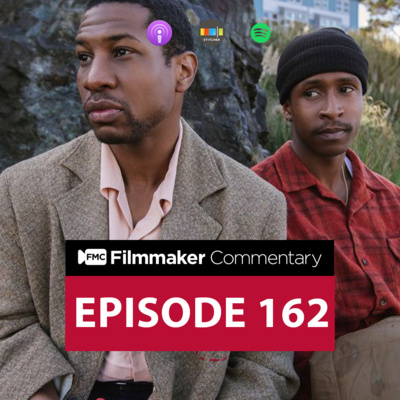
Tune into Filmmaker Commentary as Reginald Titus Jr. and Casey G. Smith dive deep into Joe Talbot’s “The Last Black Man in San Francisco.” This episode offers a thoughtful analysis of the film’s artistic merits, its nuanced portrayal of gentrification, and A24’s unique approach to filmmaking, making it a must-listen for anyone interested in independent cinema and the cultural impact of storytelling.
“The Last Black Man in San Francisco” is a film steeped in the personal narrative of its co-writer and director, Joe Talbot, offering a poignant look at gentrification and identity. This episode, FMC 162, sees Reginald Titus Jr. and Casey G. Smith unpack the film’s journey from a modest $3 million budget to its critical acclaim, including a directing award at the Sundance Film Festival and recognition from the African American Critics Association. The film ultimately grossed $4.5 million domestically and $4.6 million worldwide.
A significant part of the discussion revolves around the film’s distributor, A24, and their unique approach to filmmaking. The hosts explore how A24 often prioritizes artistic expression and awards over immediate box office returns, drawing parallels to Miramax’s strategies in the past. This perspective helps contextualize the film’s financial performance, suggesting that for A24, the film’s cultural impact and critical reception, exemplified by its “criticism needs diverse perspectives” Rotten Tomatoes quote, were paramount. The dialogue highlights how a predominantly African American cast tells a deeply personal story rooted in the changing landscape of San Francisco, resonating with themes of preserving heritage amidst displacement.
Beyond the main feature, Reginald and Casey G. Smith touch upon recent industry news and what they’ve been watching. They celebrate Viola Davis’s achievement of EGOT status with her Grammy win for an audiobook, placing her in an elite group alongside Whoopi Goldberg, John Legend, and Jennifer Hudson. The episode also navigates current box office results, the intriguing narrative of HBO Max’s “The Last of Us,” and diverse film offerings like “You People” on Netflix, a cultural clash comedy. They delve into the divisive reactions to HBO Max’s “Velma” series and reflect on classic films found on YouTube, showcasing the breadth of their cinematic interests. Listeners gain insight into the production realities of independent film and the broader trends shaping the entertainment industry, all delivered with insightful commentary.
What We Cover
- “The Last Black Man in San Francisco”: A critical look at its production, box office performance, and significant festival awards.
- A24’s filmmaking strategy: How the studio champions artistic vision and awards over traditional commercial success.
- Viola Davis achieves EGOT status: Celebrating her latest Grammy win for her audiobook and discussing the exclusive club of EGOT recipients.
- Navigating cinematic criticism: Why diverse perspectives are essential for evaluating films that challenge traditional narratives.
- Gentrification and identity: The film’s poignant exploration of cultural displacement in San Francisco.
- A range of TV shows and movies: Reviews of “You People,” “The Last of Us,” “The Menu,” “Velma,” and classic films like “Get Shorty” and “Other People’s Money.”
Key Moments
- 1:30: Breakdown of “The Last Black Man in San Francisco”‘s modest budget and box office performance.
- 4:15: Discussion of the film’s accolades, including wins at Sundance and the Black Reel Awards for Joe Talbot.
- 7:45: Celebrating Viola Davis’s historic EGOT achievement with her Grammy win for “Finding Me: A Memoir.”
- 15:00: Insights into the dynamics and cultural clashes portrayed in “You People” starring Jonah Hill and Eddie Murphy.
- 20:00: The hosts’ take on “The Last of Us” series, praising its storytelling and an episode focusing on Nick Offerman’s character.
- 27:00: A look at the divided audience reception of “Velma” and the hosts’ differing opinions on its reimagining of Scooby-Doo.
Gear & Films Mentioned
- The Last Black Man in San Francisco (2019)
- Minari
- You People (2023)
- Fences
- Ma Rainey’s Black Bottom (2020)
- Avatar: The Way of Water (2022)
- Knock at the Cabin (2023)
- 80 for Brady (2023)
- Calling Miss Cleo (Documentary)
- The Menu (2022)
- About a Boy (2002)
- Other People’s Money (1991)
- Get Shorty (1995)
- The Boy (2016)
- The Conjuring
- It (2017/2019)
- Before I Wake (2016)
- Black Adam (2022)
- Creepshow
- The Suicide Squad (2021)
- The Batman (2022)
- Hard Eight (1996)
- Lovesong (2016)
- Lazarus (2015)
- Beatriz at Dinner (2017)
- O.G. (2018)
- Mothers and Daughters (2016)
- Monsters and Men (2018)
- WandaVision (TV Series)
- The Green Knight (2021)
- Zola (2020)
- The Last of Us (HBO Max)
- Velma (HBO Max)
- Be Cool, Scooby-Doo!
- Cheers
- Rap Sh!t
- G.I. Joe: Real American Hero
- Scooby-Doo (various iterations)
- Grown-ish
- Black-ish
- Loki (TV Series)
- Lovecraft Country (TV Series)
- Euphoria (TV Series)
- Peacemaker (HBO Max)
Listener Questions
- What kind of budget did “The Last Black Man in San Francisco” have, and how did its box office compare?
- How does A24’s strategy impact the types of films they acquire and promote?
- What major awards did “The Last Black Man in San Francisco” receive, and what do they signify for its co-writer/director Joe Talbot?
- What’s the hosts’ take on recent box office hits like “Knock at the Cabin” and “80 for Brady”?
- How did Viola Davis become an EGOT winner, and what other notable Black artists have achieved this rare status?
- What’s worth watching among the latest film and TV releases on platforms like Netflix and HBO Max?