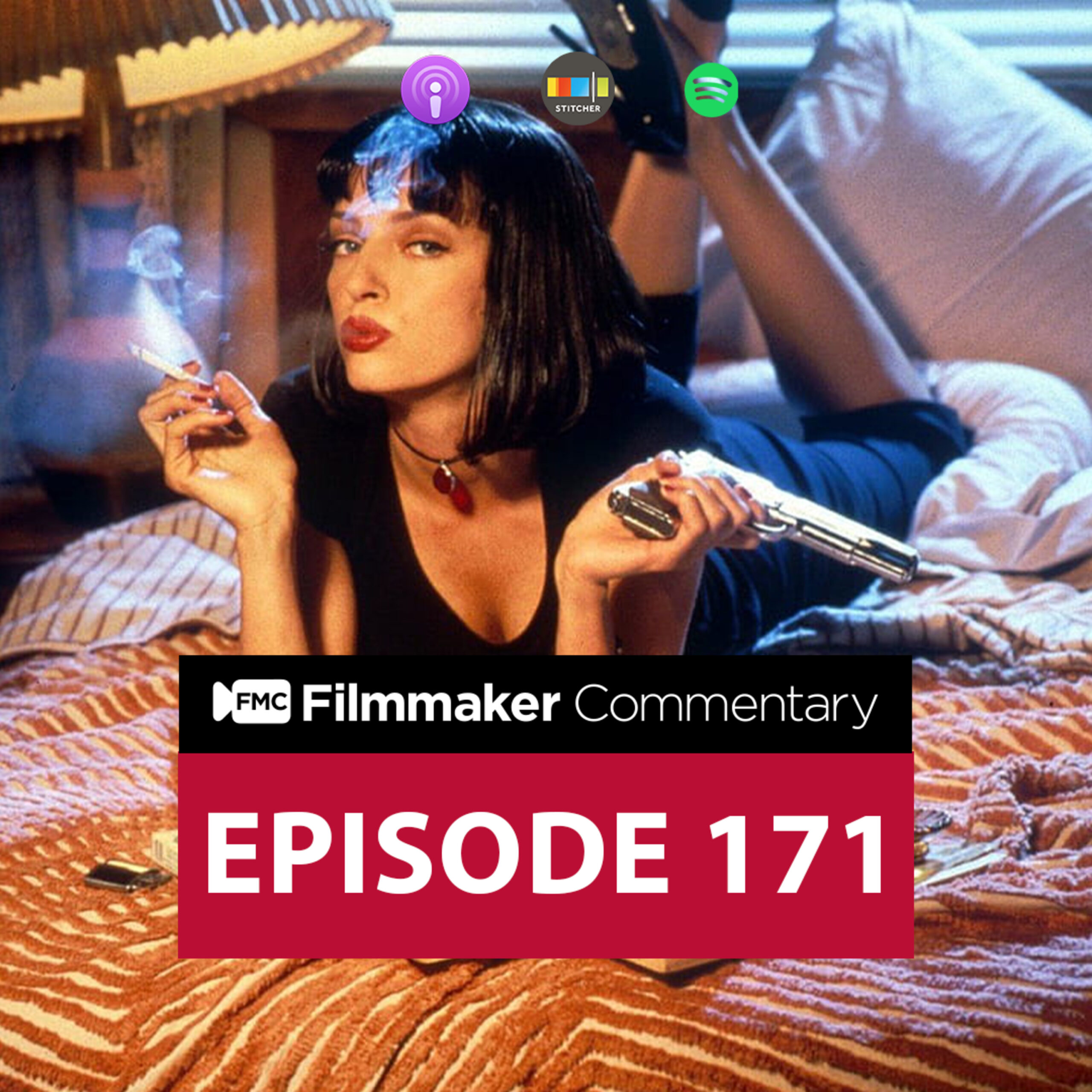
Step into the non-linear world of Quentin Tarantino’s groundbreaking masterpiece, “Pulp Fiction.” This episode dissects everything from its iconic dialogue and unforgettable characters to its unparalleled influence on cinema, revealing why this 1994 phenomenon continues to captivate audiences and filmmakers alike. Join us on Filmmaker Commentary as Reginald Titus Jr. and Casey G. Smith explore the film’s shocking budget-to-box-office success and its impressive haul of awards, including an Oscar for Best Original Screenplay.
What We Cover
- The audacious non-linear storytelling that redefined modern cinema.
- Pulp Fiction’s massive box office triumph and its legacy as a film industry game-changer.
- A deep dive into its Academy Award nominations, Palm d’Or win, and other accolades.
- Iconic performances from John Travolta, Samuel L. Jackson, Uma Thurman, and Bruce Willis.
- Tarantino’s distinctive filmmaking style, from his meticulous music choices to controversial dialogue.
- Exclusive insights from Blu-ray bonus features, including rare interviews and critical retrospectives.
Key Moments
- Budget & Awards Deep Dive (0:40) – Unpacking the film’s humble budget versus its staggering global gross and numerous award nominations.
- Siskel & Ebert’s Tarantino Retrospective (4:03) – A look at the special feature on the Blu-ray, highlighting how critics viewed Tarantino’s career impact.
- The Infamous Foot Massage Discussion (14:20) – Analyzing the dialogue that sparked countless debates and showcased Tarantino’s character development.
- Jules Winnfield’s Ezekiel 25:17 Monologue (22:00) – Exploring the raw power and unforgettable delivery of Samuel L. Jackson’s defining speech.
Gear & Films Mentioned
- Pulp Fiction
- Ed Wood
- Forrest Gump
- Bullets Over Broadway
- Spider-Man (Tobey Maguire trilogy)
- The Mandalorian
- Parenthood (1990s TV Series)
- Death Proof (Next episode)
Listener Questions
- What makes “Pulp Fiction’s” narrative structure so revolutionary, and how does it contribute to the film’s impact?
- How did the film achieve such massive commercial and critical success despite its relatively low budget and unconventional style?
- What insights do the Blu-ray’s bonus features provide into Quentin Tarantino’s creative process and the film’s lasting legacy?