June 19, 2026
F
Filmmaker Commentary
  • Home
  • About
  • Episodes
  • Film
  • TV
  • Home
  • About
  • Episodes
  • Film
  • TV
Podcast

FMC 036: H.P. Lovecraft’s Re-Animator Directed by Stuart Gordon

June 13, 2026
Listen on Apple Spotify YouTube
Listen to this episode
Your browser does not support the audio element.
Also on Apple Spotify YouTube

This episode of Filmmaker Commentary revisits Stuart Gordon’s audacious 1985 horror-comedy *H.P. Lovecraft’s Re-Animator*. Join your hosts as they dive into what makes this indie cult classic so enduring, from its shocking practical effects to its unexpectedly humorous tone. If you love discovering the behind-the-scenes magic and unconventional storytelling of genre filmmaking, this conversation is for you.

What We Cover

  • The film’s surprisingly low budget and high box office success for an independent production.
  • How *Re-Animator* masterfully blends grotesque horror with dark, often unexpected comedy.
  • The of Jeffrey Combs as Herbert West and his previous voice acting roles.
  • Detailed breakdown of the Blu-ray’s extensive special features, including a fascinating 30-minute deleted scenes reel.
  • Key themes explored in the film, such as the dangers of playing God, the pursuit of immortality, and a surprising commentary on sexual fantasies.
  • Filmmaking insights from the commentary track, including the importance of research, rehearsal, practical effects, and overcoming production challenges.

Key Moments

  • 0:45 – Discussion on *Re-Animator*’s shoestring budget and impressive return, highlighting its indie spirit.
  • 5:22 – Unpacking Jeffrey Combs’ iconic portrayal of Herbert West and his surprising career as a voice actor.
  • 7:06 – A deep dive into the Blu-ray’s deleted scenes, revealing alternate plot points and character motivations.
  • 9:55 – Exploring the film’s unexpected themes, including “monocreation” and the subversion of traditional horror archetypes.

Gear & Films Mentioned

  • *H.P. Lovecraft’s Re-Animator* (1985)
  • Blu-ray
  • DVD
  • VHS
  • 4K
  • Bram Stoker’s Dracula* (1992)
  • Mary Shelley’s Frankenstein* (1994)
  • StartUp* (Crackle TV series)
  • Cloak & Dagger* (Freeform TV series)
  • Daredevil* (Netflix TV series)
  • Punisher* (Netflix TV series)
  • Venom* (2018)
  • A Star Is Born* (2018)
  • A Star Is Born* (1976)
  • Into the Spider-Verse* (2018)
  • Aquaman* (2018)
  • The Howling* (1981)
  • Rosemary’s Baby* (1968)
  • Mother!* (2017)
  • The Fly* (1986)
  • The Fly II* (1989)
  • Lost Boys* (1987)
  • Justice League Unlimited* (TV series)
  • Transformers Prime* (TV series)
  • The Office* (UK TV series)
  • Shaun of the Dead* (2004)
  • Hot Fuzz* (2007)
  • Mission: Impossible* film series
  • Fargo* (TV series)
  • The Hobbit* film series
  • Captain America: Civil War* (2016)
  • Black Panther* (2018)
  • Fangoria Magazine

Listener Questions

  • What real-world filmmaking challenges did Stuart Gordon and Brian Yuzna face when making *Re-Animator*?
  • How did the filmmakers manage to blend humor and horror effectively in a way many other films struggle with?
  • What are the most surprising hidden meanings and interpretations of *Re-Animator*’s themes?

Full Transcript

Read the full transcript

Full Episode Transcript
In this episode, Reginald Titus Jr. and Casey G. Smith dive into the cult classic "H.P. Lovecraft's Re-Animator" directed by Stuart Gordon, sharing their unexpected delight, analysing the film's unique blend of horror and humor, and uncovering fascinating behind-the-scenes insights from the Blu-ray commentary and special features.

Opening Discussion and Initial Reactions
Reginald Titus Jr.: Filmmaker Commentary episode 36. Welcome to Filmmaker Commentary, where we give you insights from our favorite filmmaking commentaries. These commentaries can be heard on your DVD and Blu-rays of your favorite movies. We'll show you how you can use these commentaries and apply them to improve your video production and filmmaking techniques. All of this here on Filmmaker Commentary. I'm your host, Reginald Titus Jr. All right, y'all, welcome to another episode of Filmmaker Commentary. I'm Reginald Titus Jr., and I'm joined with Casey G. Smith. Welcome back, sir.
Casey G. Smith: Good to be back, sir.
Reginald Titus Jr.: So today we review *Re-Animator*, directed by Stuart Gordon. Oh yeah, what year was this?
Casey G. Smith: 1985.
Reginald Titus Jr.: Okay. This was a budget between 800,000 to 900,000. It made at the American box office about 2 million bucks.
Casey G. Smith: That's, yeah, I've got the same. That's a massive win. Really good win.
Reginald Titus Jr.: And this is like a straight-up independent film, you know, financed by one guy.
Casey G. Smith: Yes.
Reginald Titus Jr.: Uh, his name is...
Casey G. Smith: Brian Yuzna.
Reginald Titus Jr.: Yes. So, I'm going to jump into the synopsis real quick. Deep within the morgue of Miskatonic University, madman Herbert West introduces fellow graduate student Dan Cain, played by Bruce Abbott, to his formula for the reanimation of fresh corpses. But the secret of life and death has some very messy consequences. Get ready to experience one of the most outrageously inventive, over-the-top classic horror films of all time. *Re-Animator*. And it's *H.P. Lovecraft's Re-Animator*.
Casey G. Smith: Yes, it is.
Reginald Titus Jr.: So, I like that they put the name, um, kind of like *Bram Stoker's Dracula*.
Casey G. Smith: *Mary Shelley's Frankenstein*.
Reginald Titus Jr.: Ah, there you go.
Casey G. Smith: Uh-huh.
Reginald Titus Jr.: And like, uh, how they source for this film, you know, it was in the public domain, so free material.
Casey G. Smith: Absolutely. Which is again, that's, that's brilliant to do. And they were figuring out the format, you know, they wanted to do it in a serialized form initially and then figured out or came upon that it would be best as a, as a film. This would be interesting to see somebody revisit it in a, in a serialized format, especially with the way, you know, streaming is nowadays.
Reginald Titus Jr.: I didn't expect to like this film, but I do. I was pleasantly surprised.
Casey G. Smith: Likewise. I think, I think that's probably what a lot of people say coming out of it. I think a lot of people come out and say, wow, I didn't expect to, but I like this.
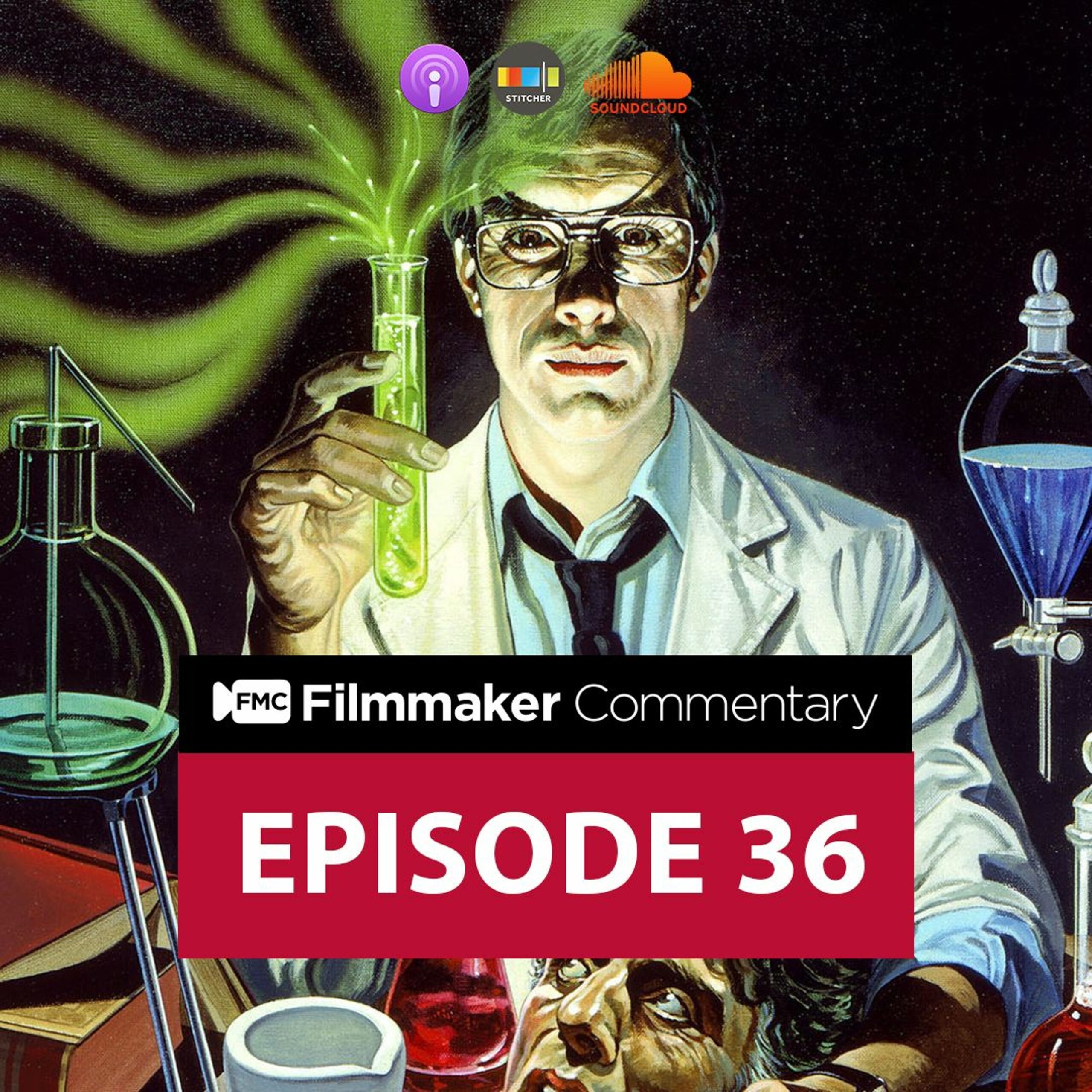
Reginald Titus Jr.: Yeah. I bought this on Blu-ray. Again, this came out 1985, right? When I looked at it, the reason I got this, it was cheap, it was like five bucks or something like that. But, um, I always hear about *Re-Animator* like looking at Lloyd Kaufman stuff and like some of the older filmmakers that are like the age of Stuart now, they were, you know, referring to like older stuff and things they look up to. *Re-Animator* always gets brought up. And I'm like, you know, I saw it, I was like, let me go ahead and grab it. But I just wasn't motivated to watch it. And like you said, you look on the cover and it's this key art that you were, you know, you were referring to, the key art.
Casey G. Smith: Yes. Again, I'd seen it for years pop up on multiple streaming services. And of course, like it happens sometimes, finally when you're ready to go and watch something on, you know, then it's not there. Now I, I searched, you know, multiple platforms and I was like, now you're not here. Okay, that, that's fine. But I'd seen it, I'd seen the key art and it's, you know, it's a beautifully drawn image. And I would see it and even in the name *Re-Animator*, I'm like, okay, is this like a, is this an animated feature? And then I look at some of the images, I'm like, oh, this is like a, a B horror movie. And I was like, ah, moving on. And I, and I wouldn't dive in and watch it. And unlike you, I hadn't heard much about it. So, this was a very, very pleasant surprise. I'm so glad you, you picked this one out.
Reginald Titus Jr.: And it's like what, 80 minutes, 85 minutes or something.
Casey G. Smith: It just moves along, man. You talk about just, it's like painless. It's, it's got, it's got some nice twists and turns. And everything that you would expect out of an 80s horror movie.
Reginald Titus Jr.: I watched this, uh, me and the wife watched this. We're just like, okay, just watch this film with me real quick, you know, it's from the 80s. She's not even a fan of the 80s. Yes. No. Sacrebleu. I don't know why I went French there, but.
Casey G. Smith: Right.
Reginald Titus Jr.: We just both really enjoyed this film. It was pleasantly surprised. I'm just like, what? I don't know. So we watched it and then we had a blast. She enjoyed it too, huh? Yeah, just laughing and stuff. It was pretty cool.
Casey G. Smith: Yeah, so I had again, had never previously seen it. I've never even stumbled across parts of it, because sometimes you don't realize you've seen bits of something until you see the whole thing. I've never seen any of this film before. Like nowhere. And yeah, sat down, I watched, I watched, I watched it in my spot. I watched it on Blu-ray and just popped it in and it just flowed through and I got to the end, I was like, wow. Okay. I, it wasn't what I was expecting. Some things I guess I was expecting, but just yeah, I really dug it. I really, really dug it. And yeah, I was, I was, I was, I was shocked and at times, you know, you're, you're, you're shocked, at times you're laughing. And it, it strikes those tones beautifully.

Character Analysis and Deleted Scenes
Reginald Titus Jr.: And Herbert, he just, uh, what's his name, Jeffrey, that plays Herbert.
Casey G. Smith: Jeffrey Combs. He plays that dude like creepy, weird, just perfect. Doesn't break character. He, he nails it.
Reginald Titus Jr.: So, here's the thing about Jeffrey Combs. So, when I was listening to the documentary, uh, in one of the interviews, he's talking, I'm like, I've heard this guy's voice before. And I was like, man, he sounds like the guy who does the voice of, of the Question on Justice League Unlimited and Ratchet and Transformers Prime. Wow. And I was like, he's, he's the way he says something because he has this, this, this, this cadence where he goes in and he kind of dips, dips further to the back of his throat. And I was like, man, I hadn't, I looked him up and I saw his name, I was like, but I didn't see the initial on his page, but then I, I put in Justice League Unlimited and went down to Question and sure enough, it's him, man. I'm like,
Casey G. Smith: Wow. Oh man. Spottable. That's, yeah, that voice, man. When he, when he goes there and plays those roles, he's one of my favorite voice actors. Just on his performance that he does as the Question, his is just fan-freaking-tastic. So, I was very, very, very happy to, to watch him perform live in, in this role. He just, man, stole. Yes, stealing shots and everything. You know?
Reginald Titus Jr.: What are some of, well, I can go into the special features of the Blu-ray. Real quick. It's, uh, it's a, there's a documentary called *Re-Animator Resurrectus*. Uh, there's an audio commentary with the director, Stuart Gordon. There's audio commentary with the producer and like Barbara Compton, Jeffrey Combs, Bruce Abbott, Robert Samson. Too many people, like, for one commentary. Um, there's an interview with the director Stuart Gordon and producer Brian Brian Yuzna. Yuzna.
Casey G. Smith: Yuzna.
Reginald Titus Jr.: Yuzna. Uh, there's an interview with the writer. There's an interview with the composer. There's a music discussion by the composer. And there's an interview with Fangoria Magazine. And there's some deleted, I didn't even, I didn't know there were some deleted scenes.
Casey G. Smith: You didn't watch the deleted scenes?
Reginald Titus Jr.: No. It's like 30 minutes, man.
Casey G. Smith: Are you serious? Yes. Basically all the, all the extra footage they show in the documentary, that's all deleted scene stuff. Okay. It's like 90% what was in the deleted. That's why I went immediately afterwards. I was like, okay, because you can't just, you know, sometimes that you select. It was like, you had to watch all of it. And I, you know, I said, how much, how long is this? Like, 30 minutes? I'm like, what? But yeah, all the deleted scenes are things like the, the dream sequence he had before, before he woke up to the sound of, you know, his, his cat being reanimated. Um, the angle that they had shot where the, the doctor, where, uh, Dr. Halsey was using hypnotic powers on people.
Reginald Titus Jr.: Oh yeah, I remember that. I saw that shot.
Casey G. Smith: But it's actually, it's, it's kind of cool to see it as a deleted scene. I, I think it makes sense that they, that they left it out. Yeah, but it, it's, it's cool to see him, because he literally, literally with, um, the father of, of Megan, uh, Dr. Dr. Hill.
Reginald Titus Jr.: Oh, you know what? Okay, I switched. I'm sorry. So, Dr. Hill is the one using the hypnotic powers on Dr. Halsey, who is Megan's father. So, when, when they're having dinner together, and, and, uh, Dan and Megan come in real quick and they, and they, and they head out, then Dr. Hill turns to Halsey and he's like, and he starts like just talking to them and the camera is cut to a view of the fire and he's like, you know, they have him like highlighted in red and he's just speaking these things to him. Right. And just taking over his mind.
Reginald Titus Jr.: And I was wondering, oh, I didn't mean to cut you off. Um, I was wondering like through the film, that I haven't seen any of the deleted scenes, like why he was talking to people a certain way. He's like, oh, you will do this, or you, I'm like, why is he saying that?
Casey G. Smith: Yeah, he is. And it's basically, he's, he supposedly has such a strong will that he can literally talk people into things and hypnotize them. And even in the, the scene where he, where he confronts, uh, Wesley, excuse me, Herbert, when he confronts Herbert, when he about his formula and he tells him, you will do this. There's, there's, there's one way where they shoot it where Herbert becomes almost like instantly subservient to him. It's less of him putting up a fight, less of him, uh, giving up because he's intimidated and worried about, you know, being sent to jail or whatever. Instead, it's like, I, yes, I will obey kind of thing. And so they kind of shot that differently and, and changed that or maybe reshot it. But yeah, those deleted scenes.
Reginald Titus Jr.: All right. Yeah, yeah. I was gonna worry. So those are the special features. This Blu-ray is jam-packed. Uh, the look of the film looks, looks intact. Sometimes, sometimes these transfers are horrible. But, uh, this is not the case. No, this one holds up pretty well.

Thematic Exploration
Reginald Titus Jr.: What are some themes of the film?
Casey G. Smith: So some of the themes that I, I took away from *Re-Animator*, uh, one is making life without a woman.
Reginald Titus Jr.: I called, I gave it a name: mono-creation.
Casey G. Smith: Ooh. And that's, that's fascinating, that the, the mono-creation aspect of things, because in the, uh, I want to say it's in the documentary or it's in the interview, um, that both the director and producer have. Uh, when, when Stuart and Brian are talking with each other, one of them mentioned that somebody had mentioned to them that there are basically, basically three kinds of horror movies. Uh, based on the classic kind of three monsters, you know, your, your, your Frankenstein, your, your, your werewolf and your, your vampire. Uh, but he says they all, they all tie into basically, they all tie into kind of sexual fantasies. Uh, that the, the werewolf is at, at that saying at, at every man's core, he's just a, a beast, like a sexual beast. The, uh, vampire that is about having sex with a stranger, you know, going and seeking in somebody's room to have sex with them. And then the, the Frankenstein or if you will even the zombie, uh, is, is, they, they say that it's masturbatory because it's about making life without a woman. Uh, or, you know, mono-creation if you will.
Reginald Titus Jr.: Ah.
Casey G. Smith: So I was like, oh, that's super fascinating. But it's, and it's, it's, it's very interesting that through the film again, uh, these doctors, these geniuses are, you know, thinking about this great discovery, this great breakthrough and as unnatural as it is, and yet it's the, it's the woman, it's Megan's character, who is like, no, you know, this is, this is, this is, this is, this is wrong, this is jacked up. And she's, she even tells Dan, you know, and Dan's like, oh, you know, what, what Herbert and I could do together. And she's like, no, what about what we could do together?
Reginald Titus Jr.: Right, right. You know, and it's like, oh man.
Casey G. Smith: I, I even threw a little, little misogyny there, you know, like, maybe there's a little dislike for the woman. Because of that, the, the actors made fun of that on the part when they were downstairs and the cat's like separated. And, uh, Herbert's trying to explain to Dan, like, yeah, this, this and that. And then his girlfriend comes in and yells, and kind of interrupts while Herbert's trying to tell him what's going on. And the, and the actor is saying, oh, another woman interrupting what we're trying to do.
Reginald Titus Jr.: Yeah, you can tell that Herbert is, he's actively annoyed. Yeah, actively annoyed by, by Megan. Yeah, that, that theme though carries, carries throughout. And also again, it's, it's, there is a seduction of of being able to conquer death.
Casey G. Smith: Right? Especially like those who are in the medical field, I mean, you know, the Hippocratic Oath and and trying to prolong and heal and sustain life and vitality, if you could find something that would, you know, cure death, that's like the be all, you know, that's like the apex of, of, um, what you could do as a physician. And so, and even the notoriety, obviously, the money that would come from something like that, I mean, it's like game over, you know. Uh, and then even you have the money to, to, to basically then yourself live forever, because you would refine that formula and you definitely would use it on yourself.
Reginald Titus Jr.: Oh yeah, for sure.
Casey G. Smith: Uh, to to become immortal. Also, I thought there was maybe a bit of a theme of of of of sometimes we talk about choosing the lesser of two evils, but in this instance, it's like, there is a greater of two evils. Again, once uh, Dr. Hill gets a hold of of, uh, Herbert's formula. Once he confronts him and you also you see, oh, before you thought he was just, okay, this guy's just a pompous jerk, you know. But then you see, oh no, this guy is a legit threat. And you almost feel for Herbert, who's a psychopath, you know, in and of himself. It's like, oh no, there's even, there's an even greater evil out there. So it's so amazing how production can do that. Like, okay, you've got somebody that's bad, and you're like, oh, this person's terrible. But all you have to do is introduce somebody worse.
Reginald Titus Jr.: Yep.
Casey G. Smith: To change how you feel about that person who's, who's really horrible as it is.
Reginald Titus Jr.: As soon as you feel that way, then he gets a shovel and hits him upside the head and decapitates them.
Casey G. Smith: And you're kind of like, yeah. Take that. Yeah. You thief. Oh, no, this guy's a killer over here.
Reginald Titus Jr.: Don't you, don't you steal from the, from the murderer?
Casey G. Smith: Like, what? Why, why am I rooting for, for either of these guys? But it's, it's just why you go on this journey. But that's also also that you didn't see coming either. Like I, I love how they put that, that twist in like that. Right. And, um, it works. And then lastly, another theme that I saw was the, uh, again, laughter being a, um, a really useful, useful release. Uh, you know, this, this film strikes this amazing tone of horror and humor. And but it, but it plays things straight the whole time. They're not pandering to the humor. They're not trying to like set up everybody like they're doing their thing, playing it straight. And they even use musical cues at different times to kind of, you know, bring in, they bring in the theme and, uh, that helps with it, but it's, you know, there are times where you just find yourself laughing at certain moments.
Reginald Titus Jr.: That's true. I, um, later on, I'll talk about it, but it's, uh, it reminds me of like what *The Fly 2* didn't get right. They didn't get the tone right. They were trying to get the laughter in with the horror, and this is almost like *Fly*, like a mixture of *Fly 2* and *Fly 1*, but you got to do the funny stuff like kind of separately. Um, but they got the tone right in this one and playing it straight.
Casey G. Smith: Like *Lost Boys* also.
Reginald Titus Jr.: Yeah. Exactly. One of the themes I had it is love. At the end of the day, it's a love story, sacrifice, and then, um, transformation and a little bit of jealousy. Got to throw that in there.
Casey G. Smith: What I thought was interesting, you mentioned love, is the fact that in the original, uh, in the original story by the author, that there is, there is no female character. You know, they tweaked and modified.
Reginald Titus Jr.: That's why your name Lovecraft.
Casey G. Smith: They took Lovecraft's original stories, which were period pieces, right? They were set in a very different time. Uh, and even the perspective of things is a little bit different. I, I don't think that Dan's character even has a name in, in the stories, and I think it's told from his perspective. But, yeah, they actually took it, played with it and they, they, they, you know, shifted it around as needed and then they brought in, uh, Megan as a, uh, a female character. So, um, yeah, I found that very fascinating. And then like I said, you know, it is, at the end of the day, it is a, a love story. There is a, there is a, a bit of a love, a love triangle, and we find Dan torn in between, you know, you know, with, with, they say that, uh, Herbert represented, you know, love for work and profession, and obviously Megan representing, you know, love for, for, for family and futures. I'm like, yeah, interesting.
Reginald Titus Jr.: Crazy. Before we dive deeper into this film, we're going to talk about movies watched this past week.

Recent Watches and Film Commentary
Reginald Titus Jr.: All right. I only have one. The show that I recently watched, it was recommended by a listener, his name is Hero Lux on Facebook. Um, the name of it is called *Startup* on Crackle.
Casey G. Smith: Good old Crackle.
Reginald Titus Jr.: He was like, I know Crackle. I was like, man, this is like, nobody recommends Crackle.
Casey G. Smith: Hey. They're, they're there. They're doing it. They're, they're doing it.
Reginald Titus Jr.: Yeah, they got and it's a, it's a advertised video on demand platform, so it's basically like watching TV. But, you know, you still get the, you get the rated R, um, in your, um, in your viewing.
Casey G. Smith: And it's free.
Reginald Titus Jr.: And it, there you go. Free. So basically *Startup*, I, I wrote the synopsis down, a quick little sentence of what it's about, so I can, I'll say that real quick. Um, it's a desperate banker, a Haitian American gang lord, a Cuban American hacker are forced to work together to unwittingly create their version of the American Dream, *Organized Crime 2.0*. And so I, you know, he said, hey man, I think you'll dig it, you know, we were just on Facebook kind of messaging back and forth. He said, I think you'll dig it. I said, I don't have room in my life for another TV series. I'm in a movie right now. I was like, all right, I'll check it out. And I got sucked in, brother. Got sucked in. Wife is watching it with me. She really likes it because of the, um, one of the protagonists, uh, being the Cuban American hacker, you know, a strong female character. My wife really identified with her. So she was like, I like this. I'm like, all right, we're on board.
Casey G. Smith: How many episodes?
Reginald Titus Jr.: Three.
Casey G. Smith: I mean,
Reginald Titus Jr.: Oh, for the whole season.
Casey G. Smith: I don't know.
Reginald Titus Jr.: I take it you're three in. Yeah, I'm three in. Three, that's it. It's over. Tell you what. Okay. That's, that's very palpable. Okay. That's doable. That is doable.
Casey G. Smith: I'm like, oh, seriously. Okay. I can get on board with that.
Reginald Titus Jr.: We're back to a picture of three, three season, I don't know, three episode season.
Casey G. Smith: One episode per season. You know what? I wouldn't be surprised. That would be very fascinating and doable. Like if you, if you plan something out right. Like a it's like a mini series. Like boom, hey, just three episodes. Yeah. Deal. And you just like, pop, pop, pop. I mean, it's like a, a really long movie. You know. Pretty much. Yeah, so three in. I think there's the third season starts in November this year. Oh, wow. And they're still going on to the third season. Yeah. Um, one of the, the guy, who did it say, FBI. One guy that's playing the FBI. He is, man, I'm trying to remember what he played on. He's, um, a British actor, character actor. Um, he was in the original *Office* with, uh, Ricky Gervais, Gervais. It's not Simon Pegg, isn't it?
Reginald Titus Jr.: Which one? What did he play in, Simon Pegg?
Casey G. Smith: Uh, *Hot Fuzz*, uh, he's in the *Mission Impossible* films, the latter *Mission Impossible* films.
Reginald Titus Jr.: No, not him. Uh, but he has a very distinct look, you know, he has a comedic look. He has like some ears that stick out a little bit. You will know him as, you know, as soon as you see his face, you'll know who I'm talking about.
Casey G. Smith: Is he an older guy?
Reginald Titus Jr.: He's probably in his late 40s by now, or mid 40s, I would say. But he is, he's in the mix. Yeah, and he's, he's a recognizable face, so when, um, it starts out with him as a, uh, a dirty cop, dirty FBI agent. And the, the, Martin Freeman, that's him.
Casey G. Smith: I would recognize him. I absolutely recognize him. He was in *Fargo*. He was in the *Hobbit* films.
Reginald Titus Jr.: Yeah. He's in *Captain America Civil War*. He plays, he plays, um, in *Black Panther*. That's right. He played Everet K Ross. He's in a lot of stuff, man. He gets a lot of work. He's good. And he has timing, his comedic timing. But he's playing the dirty FBI agent.
Casey G. Smith: Oh, really?
Reginald Titus Jr.: Yeah. So like, he starts out threatening somebody and for some money. He's like, I want half of whatever you get in.
Casey G. Smith: Shake down.
Reginald Titus Jr.: Yep. And when he does that, it causes a ripple effect. And that's why all these characters are like kind of forced to be together.
Casey G. Smith: Mm.
Reginald Titus Jr.: So I was like, I wasn't expecting this to be good, and here I am. Thanks, Hero.
Casey G. Smith: Thanks.
Reginald Titus Jr.: So that's all I got.
Casey G. Smith: Okay. I, I've got a couple of things. That was, uh, from last week, I forgot to mention that I did watch *Cloak and Dagger* on Freeform. For those not familiar, your resident nerd here giving you a quick update. *Cloak and Dagger* are, uh, they're Marvel comic book characters. They made their debut, debut back in the 80s. Uh, their kind of whole storyline in the comic centered around like drugs. Like kind of like they were both runaway teenagers who were got caught up into drug stuff, experimenting, and they both emerged with powers that, that are kind of polar opposites of each other. You know, Tandy Bowen, you know, is, is has like these light powers where she can and it can produce daggers of light that she can throw at people that can harm them, hurt them, and whatnot. Whereas Tyrone, he became Cloak, where he has these like dark energy forces where he can literally teleport and they often will just teleport and just show up. But also he can take people and suck them into his cloak, and they go into this dark dimension and it creeps, it, it, it, it jacks people up pretty, pretty bad mentally. Nonetheless, the show is only 10 episodes. First season's only 10 episodes. They do a nice build-up to it. And, you know, their powers emerging and, and all this stuff, it's well done, set in Louisiana. They even give some slight nods to kind of being a part of the, of, of the, the TV Marvel Universe. They even like, even make a little mention of, uh, of, uh, Misty Knight, it's like a little just Easter egg drop. But enjoyed the show, the two actors playing the lead roles, bang-up job on their part. And, uh, yeah, if you're looking for kind of a quick, a quick season of something, and if you, if you, if you dig like Daredevil or, or Punisher, it doesn't get quite as dark as those do, but it's, it is, it is, it is fairly dark. Again, it's because it's, you know, ABC Freeform, it's not, it's not, you know, ABC, it's not no, it's not family-friendly. No, not. I mean, you know, if you got a teenager, then yeah, that's, that, that's cool, but it's definitely, uh, it's definitely more, more mature for sure. But it's, it's got some nice twists and turns, good performances, but that's *Cloak and Dagger* on Freeform. Then I watched two movies this weekend.
Reginald Titus Jr.: Okay.
Casey G. Smith: First off, on Friday, I went and saw, no, Saturday. Saturday morning, I went and saw *Venom* with Tom Hardy. Now, going into it, I had heard, I heard some mixed reviews. Now, again, I saw the trailer. Yes, I saw, I saw the trailer. I was not excited about going to see it. One of my buddies wanted to see it. I said, all right, we'll, we'll do that. I'd heard mixed reviews. Um, again, resident nerd here.
Reginald Titus Jr.: It did pretty well this weekend.
Casey G. Smith: Crushed it. It broke, it broke October box office records. It did like, uh, I think it was
Reginald Titus Jr. : I wasn't expecting that. Oh no, neither was I. I thought, I thought, I, I knew, I knew it wasn't going to bomb, but I didn't expect it to just blow up. But, I, I, I knew it was going to do really well once we went to the theater. We, we went to a, like a 10:30 showing, and there was like, almost no seats left. I was like, oh, this is going to crush. When you go to see a film on a Saturday morning and it's packed out, that's a high, uh, high-level indicator of how, how it's going to do. They've been putting a lot of money into marketing, too. So they did. And *Venom*, *Venom* is a, I mean, this, this, this is a, like almost 30 years in the making for *Venom*, well, I'll got to take it back. Sam Raimi did *Venom* in *Spider-Man 3*, but Yes, he did. We don't talk about that. We don't talk about that. It is on Netflix, though. I'm just saying. It is, it is. It's probably making, it's probably trying to like capitalize off the wave of Oh, yeah. It makes sense to do so. If people want some kind of reference. My son, he's a fan of the *Spider-Man Homecoming*. He's like, I want to watch *Spider-Man 3*. I'm like, you probably don't. Son, I'm trying to protect you. Don't say I didn't warn you. Some things that just ain't right in life. Some things just ain't right. But yeah, and, and what's, you know, interesting about this with, with *Venom* is that, I mean, obviously, you know, the origin is different. But I'll tell you this, I enjoyed the film. What?
Casey G. Smith: For, for what it was, I, I was looking, I'm looking forward to, to the sequel. And again, I did not go in expecting to, I didn't expect to dig it. It wasn't looking good. No, it was not. It was not. But, you know, the visual effects, the CGI are pretty good. Tom Hardy, his performance is, is, is solid. The story, the story's okay. You know, it's not a great storyline. I feel Michelle Williams is, like her, I don't feel like her chemistry with Tom Hardy is is just to me, it's not, it's not, it's not there, man. I hate to say that she's, she's a fantastic actress, but I just feel, I just feel, you can't, you can't act that. I just, yeah, I'm like, that, that relationship didn't, didn't work for me. But what does work is the relationship between Eddie Brock and Venom. That's the highlight. I think that's what people as a whole enjoy the most. Their, their banter with each other, that's hilarious. That is, that's the money right there. Like, more of that, please. All right, and then finally, I saw *A Star Is Born*. Everything you've been hearing about it, all, all the buzz, yeah, I think it, that's, that's real. Like, this, this film, the performances, people have been talking a lot about, about Lady Gaga's performance, which is great. But for me, Bradley Cooper, dadgum, man. Bradley Cooper, man, just, just, he just crushed it. Their chemistry, yeah, is fuego. Their chemistry is fire. Um, and, you know, all the, all the supporting performances around them, everybody's just, just on, on top of their game. And yeah, you know, at, at the end, you know, it tugs on the heartstrings a little bit. You can hear people in the, you know, some of the sniffles going on. Yeah. Uh, the, the singing, man. Bradley Cooper learning how to play guitar and, and sing. Wow. And he's singing with Lady Gaga on stage, like, come on. And, and he's that acting for the first time. Like, you talk about like, he just laid it out on the table. Oh, yeah. Go for broke, man. And dadgum, man. This, this, this film, I think it deserves whatever accolades it, it receives. But, yeah, uh, *A Star Is Born*, um, yeah, dug it. When I saw that trailer for the first time, that was months, months ago. Mm-hm. Uh, I forgot what movie I was watching and it popped up. I was like, ooh, I was like, this is something. Yeah. I feel like I discovered something. Mm. That's, you know, like, you're wondering, it might, it might like this. It's just me. It's just me. I might like this. But usually I can tell if a movie's going to be good. Sometimes I'm off, but for the most part, I'm pretty good. By the trailer. Just trailer alone. Called it. Called, yeah, that one, I was like, yeah, this is it. This is money. The trailer, I mean, the trailer was, was really, really good, the way they, they, synced it up with the music and everything. So, here's a question for you. Have you seen any of the previous *A Star Is Born* films?
Reginald Titus Jr.: No.
Casey G. Smith: I saw the one with Barbra Streisand and, and Kris Kristofferson, uh, which was the, the, the latest one. That wasn't an, uh, either late, uh, excuse me, either late 70s or early 80s. Okay. Probably, it was, it was probably, I want to say 70s when that one dropped. There's been like, apparently, like four versions of the film. So you could probably just make one for each generation. I mean, more or less, yeah. And for some people, they feel like, you know, with the story lies that, that, that it's kind of a familiar trope, uh, because of that. Uh, but also Judy Garland was in a version of it as well. And there's another one.
Reginald Titus Jr.: Was the most recent one with the Barbra Streisand one?
Casey G. Smith: Yeah, which is again, like at least 20 years ago.
Reginald Titus Jr.: Okay. Yeah. I didn't see that one. Yeah. All right, brother.
Casey G. Smith: But that's, uh, that's what I scoped and peeped. And I've been dabbling with some other, other series, but I'll save those for another go around.
Reginald Titus Jr.: Okay. Speaking of trailers, I did see the, I don't know if I even said this on the podcast, maybe if I have, I'll just cut it out. But I saw a newer version of the *Aquaman*. I was like, there might be potential here.
Casey G. Smith: That's the one they dropped at, at the New York Comic Con. Where they're running over the rooftops. Yeah, that's.
Reginald Titus Jr.: I was like, I might, I might rescind my last comment, but I'm not yet. But the, the it looked, it looked promising.
Casey G. Smith: Cautiously, cautiously intrigued.
Reginald Titus Jr.: Yes. Fair enough. Because I kind of trashed it the first time around. I was like, no. I want to drown this film. And all the water. But still, some of the, the humor in that trailer was like, it still didn't hit. Fair enough. I was like, cut that joke out. Like, Yeah, yeah. Yeah. Yeah. Well, sometimes when they, when you try too hard. Yeah, that's, that's evident. Because, you know, he's the big, swole guy. He's not Chris Hemsworth. You know what I'm saying? So, like, we don't have to do that. We don't have to do that. You know, that's his thing. Like, you don't have to do that. But that's kind of how they, how they set Aquaman up. He's, you know, like a bat. Dig it. You know, that's just kind of how they've, how they've set up Aquaman. He's a bro. He's, he's Aquabro. Just the, just the comedy, you know, just, just cut that out. Just, because it's not, something's not right with it. Mm. It's not, it's almost like it's missing a beat. It feels, uh, when he, some of the lines he lands, it feels like it's old. It's dated. Ooh. You know, I was like, just cut it. But the trailer still looked good. So I was like, all right, maybe. Maybe. You going to check it out? Maybe. That's going to be one where it's going to be the following week. Like, understandable. Understandable. I'll probably, I'll probably will see it opening. You know what I'm saying? Well, see, that, that, that, that release period in December, there is so much coming out in December. Like, man, Into the Spider-Verse. Speaking of which, at the end of *Venom*, there, there's like a, they showed like 10 minutes of footage from *Into the Spider-Verse*. So yeah, I'm reserved. We'll see. Well, let's dive back into the show.

Filmmaking Insights and Production Details
Reginald Titus Jr.: Okay. So, in *Re-Animator*, there's a documentary called *Re-Animator Resurrect*. What? Resurrects. Uh, the guy who played Herbert, he was like, it's a time, it's a timeless movie that will never die. It just won't die, which is kind of ironic, right?
Casey G. Smith: That is ironic. And it makes sense, because I mean, it's, it's living right here as we, as we talk about it right now, so many years later. Just discovering it.
Reginald Titus Jr.: Especially being on Blu-ray. So, let that be a tip for your filmmakers out there. You know, you create something, if you're able to hold on to your rights for it, just kind of think of how you're going to future-proof your film. This being on film, you know, they're able to, you know, put it on DVD, it was on VHS, put it on Blu-ray. You know, I'm sure it'll if there's a demand, put it on 4K, because film allows you to do that. The resolution of film is better than 4K, according to Robert Rodriguez. Um, here are some bullet points from that documentary. So, they were doing research. Stuart Gordon, who's the director, and the producer Brian. And they watched almost every horror film from the last 10 years, preparing for this film.
Casey G. Smith: You know, when we were working on the script for another potential feature, we were watching movies in that genre. It can get brutal. It can get brutal sometimes. But it, it is important to get a feel of what's been, what, what, what's out there, what worked, what didn't work. Um, what, what is most similar to what you're trying to create, what are some pitfalls?
Reginald Titus Jr.: Yeah, and they were looking for a way to outdo all of those films from the last 10 years, and have like a unique point of view. And I think they might have pulled that off.
Casey G. Smith: I think they absolutely did. Um, but, and but even also still though, in this commentary, willing to, to give credit to what influenced them. So, talking about how they, they watched quite a bit of, like *Rosemary's Baby*. They said they watched that a couple times through. I'm like, oh man, that's, I watched it once. I'm like, I think I'm good.
Reginald Titus Jr.: Yeah, I'm good for ten. I'm good for maybe like fifteen.
Casey G. Smith: That's, whoof. I mean, it's a, it's, it's close to *Mother*.
Reginald Titus Jr.: You know what?
Casey G. Smith: That's remember I said, *Mother* reminds me of *Rosemary's Baby*.
Reginald Titus Jr.: Yeah, and I heard you say that and it just, I don't know, like, just thinking about it right now, it's clicking even more. See, I kind of, I kind of want to watch it again. I wouldn't mind seeing that on Blu-ray with some features behind it. Yeah. And like more about the breakdown.
Casey G. Smith: But you already know, that, that director has a troll pass. Jeez. To say the least. Yeah. That's a hot one. Oh man.
Reginald Titus Jr.: So, the importance of rehearsal in this documentary talk about how they did a lot of rehearsals before the shoot and that helped them out a lot. And then too, you know, Stuart Gordon being from, you know, a stage play background, you know. He just realized he's used to, you know, rehearsing with actors anyway. So this is like second nature to him.
Casey G. Smith: And he said most of his actors came from stage backgrounds, that they had performed on, on stage. Jeffrey Combs was just coming off winning an award for a performance that he had done in a production before, you know, he came in to, to this project.
Reginald Titus Jr.: I'm a fan of rehearsals. Like, especially if it, you're dealing with a lot of actors that they don't have a name as in a TV or film actor, if they don't have a name yet. I don't know. I think they still enjoy it. I think the actors would enjoy it. But, you know, as we, you know, we went, you know, once they get to a certain level, it's like, I, they can just dial in as soon as they're like, hey, just give me the script. I'm good.
Casey G. Smith: I think just each actor is different. I think sometimes it might even depend on the director and even the, the chemistry of the cast. Yeah. Uh, how they, you know, some, some, I think will, will kind of enjoy going back, yeah, all right, you know, let's, let's, let's, let's play a little bit and, and, and, and practice. And some say, I, I forget what I was listening to, but some somebody was saying that you actually find sometimes the the opposite, you know, it, you would think that on a larger budget film, that's going to have, you know, maybe more scenes, maybe more, whatever, that there would be more time to rehearse. And that on a smaller indie film, that you, you'd think that, okay, you maybe need less time to rehearse because whatever you could say about it. But it's the opposite. On the smaller films, you typically have more time to rehearse, and on the larger films, you typically have less.
Reginald Titus Jr.: It makes sense because of the schedule of your, your, your working, yeah, working talent. Makes sense. Um, one of the, doing research, you know, they took a field trip to the morgue. Fun. Yeah, they do it good. And it helped them realize like how magical this formula would be if it was able to happen for real. So them going through the morgue, living through that, they were able to experience like, you're seeing, you're, you're there looking at a dead body. And I remember, uh, Brian Abbott, the actor, that played Dan Kane, Bruce Abbott, he said that, um, when you're there next to a dead body, like, there's no rhythm, there's no pattern, there's no like heartbeat. So you, you don't get nothing from that body.
Casey G. Smith: Because it's dead. Yeah.
Reginald Titus Jr.: And but you know, it's like surreal though. Like, you can play dead, but you can still, I guess feel the soul of the person or feel, you know, you can feel, I don't know, the kinetic energy, I don't know, or whatever. But when it's a dead body, there's nothing. I see what you mean. I see what you mean. Yeah, when the, when the life has left. Yeah. Yeah, there is, there, there is, there's nothing, nothing sending, nothing coming, nothing going. It's, it's all gone, all dried up. Because they say we're electricity, right? We're, you know, we got electricity. Yeah. Firing. It's not. So like even someone that's sleep, and you know, you can't see them breathing, but you know that they're asleep. You can sense it. You can feel. Yeah. I don't know. It's hard to explain. But that's like, even like when somebody like walks into a room or whatever and you kind of or someone's looking at you sometimes. You know, you just, people say, oh, I felt their eyes on me. You're like, what are you doing? You know, and if you get caught looking like, oh, oh, sorry. Yeah. Hey guys. I was just looking at your, your, uh, your shoes. But you're right. And, and they also mentioned that when it came to those bodies when they were in the morgue, seeing how they're just in plastic bags. You know, not like in these like body bags and all that kind of stuff, you might see in more kind of Hollywoodized versions of, of, of the dead. No, they're like just in bags. And their skin color, you know, just varies depending on how the blood settles within them, um, once they pass away and, and, and wanting to capture that. It was, it was interesting. You could tell they'd definitely done their, their homework. So, there were some reshoots in this documentary talk about how they had to do some reshoots. Well, it was really just one scene. And they shot a scene of the actor playing Herbert. Uh, basically how he started his research in another university. And how that went wrong. And that was kind of like foreshadowing what was going to be happening later on. And I guess the, uh, producer Bruce wanted the audience to feel a tone of what this film was going to be, instead of just hitting them with it a little bit later. He wanted to kind of get you, get a taste of that early on. I think that helped.
Casey G. Smith: Absolutely. Now, again, initially, I, I mentioned this before we said recording. Initially when I, when I saw that opening, and then as the film was progressing through, I thought, okay, was that a, is this, is this whole film is a flashback? And I, I thought that's where he maybe ended up, that he went overseas. Because he, he would mention that the, the, the creator of the work by name, but it, to me, it wasn't in a sense that that guy was dead. And so I thought, okay, maybe if something happens here and he ends up overseas going to see that doctor. But then, of course, once we get to the end of the film, which by the way, spoilers. You mentioned this earlier. Spoilers. But we are and have and we'll continue to talk spoilers. But, well, once you get to the end of the film and you see that obviously, you know, he doesn't make it. I was like, oh, he's not traveling anywhere anytime soon. So that's why I realized that scene was, okay, that was, that was a flashback in essence. Or a progression of time, he was there and then elsewhere.
Reginald Titus Jr.: And it's pretty bad that, honestly, I think it's pretty bad, you know, that maybe that'd be a little a hole that, um, and I think the audience can be forgiven, you know, they'll forgive that. Um, but the fact that it isn't obvious, it should be obvious. Because I was, even though it did help for tone reasons, but for a storytelling standpoint, it was kind of hard to fill in the blank like, okay, did he get in trouble for this? And why is he at this university?
Casey G. Smith: Why is he not in jail?
Reginald Titus Jr.: That's what, how did he get out?
Casey G. Smith: Right.
Reginald Titus Jr.: One murder per lifetime. You know.
Casey G. Smith: I was like, ah, you know, malpractice? Is that a thing? Overseas.
Reginald Titus Jr.: And he's a student. Yeah. He's a student. Oh, just a slap on the wrist. Yeah. So like there's a big gaping hole there, but, you know, people, hey, we're, it's a movie, been entertained, it's a, it's a horror film, so we kind of let that slide. Yeah, we just go, we just go with it. And so, yeah, but it, it's tonally, I think that was very important, because that, that scene is gory in and of itself and it does let you know what you're in for. It does also let you know what this guy is capable of, you know, and then when he delivers that line, I gave him life. You're like, oh, yeah. And that, that instantly takes me to the cover that key art. Then you just that image. I'm like, oh man. And just even the open, I like, I like the opening sequence with the use of the colors, uh, and the use of an anatomy. Yeah, the title, I'm like, oh man, that's, yes, okay. I was, yeah, I was like, I'm in. And that music, I'm like, okay, I'm in.
Casey G. Smith: Uh, the, uh, producer Brian talks about, you know, it's my money. He used basically his all his money. You know, he found a way to get financing and come up with eight, basically a little bit under a million bucks to get this thing made. Yeah. Wow. That's, that's, that's hella risky.
Reginald Titus Jr.: It is. And he even says that, I did it wrong. You know. I basically put all my money up there. And and then made guarantee. This could have been tragic. Like, this really was, this was a formula for them to fail, because you got a, you got a million bucks, basically, and a first-time director who was coming from stage plays.
Casey G. Smith: First-time producer. Yeah. This was his first film, also.
Reginald Titus Jr.: Man. And, and you are going for comedy and, and, and horror. And you, you decide to go no rating, which is could be a kiss of death. And yet, you know, they, they say multiple times in the interviews and even in the commentary that they say they felt this, this film was charmed. I think is the word that they use. Okay. Uh, yeah, they say, you know, we, we, we just, you know, felt like the film was, was just charmed. Just from the way that it, it was received at the, at the initial film festival. And then even when they, when they screened it in, in, yeah, when they screened it in Hollywood, and the reaction from that audience, um, they mentioned he, uh, Brian mentions that he went to a screening in, like, uh, in an inner city. Yeah. And that him and, and one of the other somebody else they were sitting up in the in the upper levels. And it was almost all black audience watching it. And they said that people were just like freaking out. There was one guy who was like standing up like, oh, oh, what the hell? What, what the hell? And he said he would walk out. He would come back in. Oh, no, man. And he said, like, it was like, like they said, the audience, they just, they loved it, though. Yeah. And he said one guy came out after this like, man, that's the best damn movie I ever seen in my whole life. He was just loving it, man. And so you got this film, you know, like crossing boundaries, uh, because, I mean, even the setting of that place, that's very different from the hood. You know. But yet there these, these themes still played through and, and, when I was watching this, I, I just assumed it was rated R. I was like, this is a hard R. This is, that's what I was saying to myself. What's going on here? You seeing front nudity. I'm like, man, what are y'all? How did this, how did this not be NC-17? That's what I was thinking to myself why the movie was going on. I was like, this is rated R. This probably should be NC-17. And then after listening to the documentary, of course, it's not rated, it's unrated. So it actually helped the film, it not being rated. Um, and able to, for them to keep that stuff in there.
Reginald Titus Jr.: What I thought was really interesting in the, in the interview when they talked about, when they talked about how later on there was an R-rated version released, which actually did incorporate, uh, some of the deleted scenes. Right. Into it. Maybe, maybe all the deleted scenes, I'm not, I'm not sure. Which that's, that makes for a different cut of the film, for one. Yeah. But they did that and then that got obviously, you know, approved by the MPAA. But then, they outlawed, banned the unrated version. And Brian had to go in and, and fight and, and, and make a request for the R rating to be rescinded off. And so that was at that time, was the first time that ever happened in the history of the MPAA. People had asked for a rating to be lifted off. So they go back to showing and screening the, yeah, the midnight showings of the film. Yeah, I'm like, wow. Because remember, at this time in the 80s, you know, you're people are watching basically pornography at movie theaters, you know, you got movies like *Deep Throat* that's like blockbuster. You know, in the, in these theaters called, um, Grindhouses. So, right. Like, these films do well. And making their money. Yes, for sure. Um, so another thing, um, there was a DP, I can't think of the DP's name, but there was one DP that came in early, that helped shoot the film. Um, but some of, you know, they, they were being nice. They were like, yeah, we just brought in somebody else. But you discover later on that he was like, kind of had to be fired. If you look at the early scenes, they're like real dark. And you can, you notice a difference when the other guy that's more experienced comes in and lights the place. Mac Ahlberg. Yeah, man. You, you notice a difference. But that DP actually helped Stuart Gordon and kind of like held his hand through the movie-making process. Without that DP, this film does nothing. You know, he's learning about the 180 rule. He's learning about, you know, what happens when you cross it and you disorient people. And there's a few scenes where I, I see, um, uh, Herbert looking like directly at the camera, like, there's no need for this shot. It's like, it's, it's a weird, it's a weird cut, because he's looking directly at the camera, and then you cut away to like a side profile of him, and it's like, that, why are we doing this? But, I don't know, it could just be the style of what, uh, Stuart's doing, or just could be not knowing any better, but it still worked. Also, the glowstick juice as the formula, the glowing formula, they use glowstick juice.
Casey G. Smith: Genius, man. Just making the most of your resources. And, you know, one, keep it thing safe because that stuff is highly toxic. Uh, even though it's probably, they said it splashed around all over the place when they were filming. But, just, you know, having that resource on hand and being able to refill it. And they even talked about at one point having the, the eyes of the zombies glow. But sometimes less is more. Yeah, for sure. That the only thing that has this, this, you know, otherworldly, uh, sci-fi feel to it, aside from people actually, you know, coming back from the dead, is just when you see the actual formula, the reanimation formula just being extracted and being injected and, uh, even at the very end of the, of the, of the film, when he has the syringe, when, when Dan is, is putting it into, into Megan, and yeah, it's just kind of everything's like kind of fading to black except that one little bit. Yeah, I like that. And then it's, and then you hear the scream. I'm like, oh man, that was great. That was great. That was great. Oh, so another thing about the no, no rating thing is that, um, when you don't have a rating, you can't advertise a film in the newspapers at that time. I don't know if things have changed since then, but when you don't have a rating, you can't advertise it in the newspapers. That was another reason why it was bold for them to not go after a rating. You know, they were not willing to compromise their vision for, for that rating. For that rating. And kudos to them for sticking to their guns and knowing, knowing what they had. Which, I mean, for first-time film, that's filmmaker and producer, that's, I wanted them to get into the, um, I wish they got into the more of the business stuff because, even though that was, uh, Bruce's first time producing a film, the distributor was Empire, Empire Films, is that what it was? Empire Films. Like, I don't know if they just, if Empire Films just wrote them a check and be like, hey, here's 1.5 million or whatever, we got it from here on out. Uh, kind of thing like a distributor, you know, for they're buying you out. I don't know how that, the whole deal worked. I know they didn't distribute it themselves, obviously.
Reginald Titus Jr.: Right. Well, well again, Brian was mentioning that, um, I think the guy who was over Empire, uh, again, they had gotten into some kind of thing where that guy owed Brian money. Right. And they'd worked out some kind of bartering system, which is kind of how Empire came on as the producing company and distributor. Right. I would like to know more about that deal.
Casey G. Smith: I would too, because, because Brian also made a mention that later on, and this may have been where the R-rating stuff happened. Later on he came back and there was some, he had to fight some legal battles, uh, either maybe to get the rights back for the film or other things, but he had to go through some legal things and he said that was just, you know, part of the learning, learning experience. Because I think the rated R, because remember, this thing is going on VHS. You know, I believe a majority of this film, this money was made from this film from these Blu-rays, these DVDs, the VHS market at the time. Right, right. I don't know if some of the retailers, um, or the VHS cassettes at the time, required the film to be rated. So they could be a reason why Empire was like, hey, we need that rating for later on, because I know a majority of the film money was made from that distribution. The home. Yeah, the home market. So that would make, that would make sense for it, why it was done that way. Yeah, this is straight up, man. Like if you're in the 80s and 90s, this would be a great blockbuster. Man. Blockbuster rental on Friday night. Yeah, man. Yeah. And then, and then public broadcast. Like I don't know, like if it, USA, up all night back in the day. Yeah. Yep. USA. And then whatever the pay TV was at the time, I don't know when pay TV came about, but how would this look on cable television? But I'm saying, the rated R version, it'll be fine. But like on USA, like on the USA network, oh, it's cut to pieces. Like, I, I doubt if it even was, they said if they had gone with, they had gone with the radar recommendation, they said when they were naive and they went initially for a rating, they thought, they thought they could get away with an R-rating. And they said the MPAA just laughed. After they saw, they laughed and they said, you'll have about a 40-minute film if, if you, you know, do these all these notes and these cuts. Yeah. Uh, the actual commentary, what did you think about the commentary itself? Uh, the one with Stewart Gordon.
Reginald Titus Jr.: I thought it, I thought it was a standard commentary. Good etiquette. Introduced himself. Kind of, he kind of got into talking about the film in different parts. I kind of, I kind of like it when during the commentary that they're they're able to get their points out quickly and then talk to what's happening on screen to a degree. What's happening in the scene. Because there's certain things, well, okay, well, I wanted to learn more about that. Sometimes, you know, you can only say so much at a time, and the movie is quick. So, I, I kind of, you know, I got some different forgiveness on that because this movie flies. It flies by very fast. If I hadn't listened to some of the other behind-the-scenes stuff, it would have seemed more insightful, but because I watched the documentary and I watched an interview with him and and Brian, Yeah. I had a lot of info of the behind-the-scenes things. Yeah. So, I felt the same way. It's pretty good. Seems like he got caught up watching it. Like it, it would just go mute for a minute.
Casey G. Smith: Yeah, this is, uh, oh, wow. Look at that, Barbara. Oh, what was I saying?
Reginald Titus Jr.: Um, some, some tips for your filmmakers out there. Um, he talked about self-censorship. So the only time that they did a self-censorship, I can't remember which scene it was. Uh, I think I, I thought I made a note about that. I just didn't write what scene it was. It was like 15 minutes in. Oh, it was, um, it was a scene when all of the students are looking at the professor do the brain surgery.
Casey G. Smith: That's right. That's right. Doing an autopsy.
Reginald Titus Jr.: Yeah, he was doing pulling the brain out and all. So man, that was so gross looking, but it worked. Um, especially when he peeled the head, the scalp back. The sound effects. Man, it just, and they were like Kind of like an orange.
Casey G. Smith: Yeah. Dark humor. So, it was like, and the weight was like perfect, so it looked real. But they said to just kind of went on too long. That scene went on too long. It was too gruesome. Yeah, they said it felt, it felt, it, it didn't bring horror, but it crossed the line into being just clinical. And so it's fascinating to know that that difference between the two. Again, there, there are multiple examples in the film where they figured out, okay, you know what? Less is more. Whether it's, whether it's not having glowing eyes on zombies, whether it's not going with the hypnosis angle, or whether it's, you know, pulling back from an autopsy, autopsy scene. Also, there's a tip from Stuart Gordon. He talks about just let the camera into the room. And it's a technique he learned from Stanley Kubrick. And it's a scene when, uh, we're following, uh, Megan, played by Barbara. We're following her in the hallway as she's discovering, going through these doors and kind of seeing what's going on. And we're, and it kind of builds tension up when you're following her along. Watch a lot of movies. Watch a lot of movies to learn the language. And we talked about *Rosemary's Baby*. That was where the film that he watched the most. Yes, which is, wow. Three times. I think they said they watched it three times. That's a lot of *Rosemary*.
Reginald Titus Jr.: Yeah, that's, that's like, that's like 30 years worth. Yeah. Yeah. That's like 30 years worth. And he said the reason is because the camera is an active participant in that story. So, it's, um, he took a lot of techniques from Polanski.
Casey G. Smith: Yes, which ties into again, also knowing, you know, knowing your character's purpose. What perspective they serve in the film. You know, Dan's character, uh, or, or, yeah, Dan Cain. His character serves as the, the viewpoint for the audience, and he, he is, he is the, he is the grounded person in this film. He can't overly freak out or go one way or get too kooky or, or weird. Excuse me. He remains grounded. Uh, it's even mentioned a couple of times that the camera often kind of sits like, uh, kind of over his shoulder at times, just to again, to be that, that viewpoint for, for us as the audience.
Reginald Titus Jr.: Another point, acting is the best special effect there is. So there's a scene where Herbert and Dan are down in the basement and they're fighting a cat that's been reanimated. And you just hear this like demented cat sound harassing them in the room. Oh yeah. That's a funny sequence. Um, and then out of nowhere, the cat just attacks to Herbert and he he's got the claws in. And it's a fake cat, of course. You know, it's like some fluffy cat, but the way that they're acting towards this cat and he like throws it to the side. It's hilarious. But then they're just like going around the room beating on stuff like in the room. You're like, there's no cat there at all. Yeah. But with sound effects and with the actors there, you think that there's a cat. They give the feel of, of, of terror and and anticipation. And when the cat jumps forward at Dan, like that, that's a legitimate, that's a pretty good jump scare. Because it's like, and it knocks him down and it crawls across the floor. You see the stunt, yeah. And you get the feel that, oh wow, this thing is stronger than it was, stronger than it was. Before. And then, uh, when Dan like does the baseball, he like baseball throws the cat against the wall. Those are like some of my favorite scenes in this film. Like they he throws a cat against the wall and then the meat from the cat like it just falls. Yeah, it was, I wonder how many times they had to shoot it to get the meat to fall from the wall perfectly like that. Oh man, that's gross. That's gross. Oh my goodness. Well, you just, I mean, when you kind of contrast the look of those of those two films, more money, question answered. And the talent. Yeah, yeah. I mean those the yeah. Yes. Yes. And that comes from the director for, you know. That's true. That's true. Different, yeah, different, different different paths. But that, that these respective ones would go on to. But still being able to create anything that maintains and endures like this. Like, I mean, you talk this is a cult classic. Yeah. This is a cult classic. I would, I would love to watch this with a, with an audience of, of like, other like, just like, genre fans. Man. That would be, that would be a pretty cool experience. Now having seen this, I'm like, okay, I could, I could, I could vibe with that. Just to just to, yeah, if this was shown somewhere at the thing, I, I'd go and check it out. What's up for next week?

Final Thoughts and Conclusion
Reginald Titus Jr.: Next week, we are going to jump into *The Howling*. Yes. I don't think I've seen that film. I think you have. Like, we chatted about that before. Yeah. And the film, like I've seen clips somewhere. You know, that's one of those, that movie's popular. So that was somewhere on some television somewhere and I accidentally seen it, so, parts of it.
Casey G. Smith: Oh, okay, okay.
Reginald Titus Jr.: So yes, so next week tune in to *The Howling*. Also, if you would like to keep up with us, we are on social media at
Casey G. Smith: www.facebook.com/filmmakercommentary. You can also find Reginald and myself on Twitter. He is @ReggieTitus. I am @KCGSmith32. And of course, you can find us also on Instagram @ReginaldTitusJr and @KCGSmith32.
Reginald Titus Jr.: All right. And also, if you, if you want us to review a movie, make sure that it has commentary and, uh, we'll get around to it. So for the next three episodes, we are going to be, um, going over Halloween-ish films as a theme for October. Horror. Horror. There you go. Horror films for our theme in October. But, um, yeah, so if you have any suggestions, feel free to type up, you know, in Facebook, give us a message. Also, if you're on iTunes, Stitcher, SoundCloud, give us a rating. Until next time, peace.

About Filmmaker Commentary

Reginald Titus Jr.

Apple Spotify YouTube Subscribe Free
Continue Listening

FMC 035: Running Scared Written and Directed by Wayne Kramer

May 18, 2026

FMC 034: A Scanner Darkly Written and Directed by Richard Linklater

May 18, 2026

FMC 033: Boyz N The Hood Written and Directed by John Singleton at age 24

May 18, 2026

Leave a Response Cancel reply

This site uses Akismet to reduce spam. Learn how your comment data is processed.

Never Miss an Episode

New episodes every week — free.

Listen on Spotify Apple Podcasts

Recent Episodes

  • FMC 035: Running Scared Written and Directed by Wayne Kramer
  • FMC 034: A Scanner Darkly Written and Directed by Richard Linklater
  • FMC 033: Boyz N The Hood Written and Directed by John Singleton at age 24
  • FMC 032: The Lost Boys Directed by Joel Schumacher

Archives

  • June 2026
  • May 2026
  • April 2026
  • March 2026
  • January 2026

Categories

  • Film
  • Podcast
  • TV
© 2026 Filmmaker Commentary. All rights reserved.
  • About
  • Episodes
  • Privacy Policy
  • Disclaimer
  • Terms of Service