July 1, 2026
F
Filmmaker Commentary
  • Home
  • About
  • Episodes
  • Film
  • TV
  • Home
  • About
  • Episodes
  • Film
  • TV
Podcast

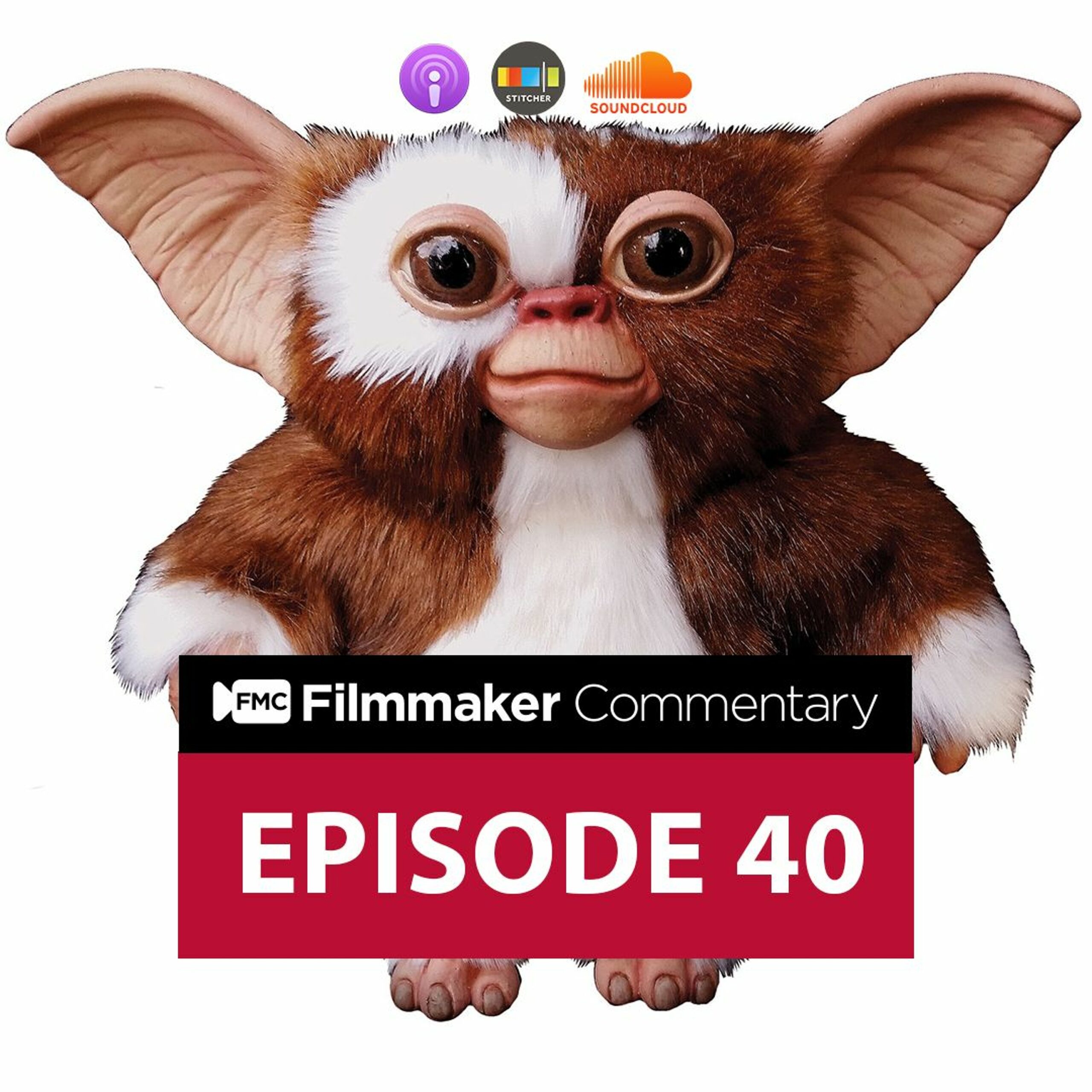
FMC 040: Gremlins Directed by Filmmaker Joe Dante

December 29, 2018
Listen on Apple Spotify YouTube
Listen to this episode
Your browser does not support the audio element.
Also on Apple Spotify YouTube

Join hosts Reginald Titus Jr. and Casey G. Smith on Filmmaker Commentary as they dive into Joe Dante’s 1984 horror-comedy classic, Gremlins, breaking down the director’s commentary track. Discover the filmmaking insights, behind-the-scenes stories, and surprising details that shaped this beloved film, including how it pushed the boundaries of its PG rating and the significant influence of Steven Spielberg.

This episode unpacks the film’s unique blend of humor and dark themes, offering a filmmaker’s perspective on practical effects, script development, and lasting cultural impact. Get ready to rethink everything you thought you knew about Gizmo and the mischievous creatures he spawned.

What We Cover

  • The surprising original script for Gremlins and its much darker tone.
  • Steven Spielberg’s pivotal role in shaping the film’s narrative and key character decisions.
  • How the film, alongside Indiana Jones, directly led to the creation of the PG-13 rating.
  • Insights into the innovative practical effects and creature design by special effects coordinator Chris Walas.
  • Director Joe Dante’s signature use of pop culture references and foreshadowing throughout the film.
  • The enduring appeal and merchandising legacy of Gremlins.

Key Moments

  • 01:03 – The hosts introduce Gremlins, discussing its horror-comedy genre and PG rating.
  • 01:47 – An in-depth look at Joe Dante’s career post-Gremlins and the commercial success of the film.
  • 04:40 – Casey G. Smith recounts his childhood experience with the film and revisits it as an adult, noting its surprising humor and violence.
  • 11:30 – The fascinating revelations about Chris Columbus’s original, much darker script for Gremlins.
  • 13:55 – The discussion on Steven Spielberg’s direct influence, including the crucial decision to keep Gizmo as a protagonist.

Gear & Films Mentioned

  • Film: Gremlins (1984)
  • Film: Ghostbusters (1984)
  • Film: Innerspace (1987)
  • Film: The Howling (1981)
  • Film: E.T. the Extra-Terrestrial (1982)
  • Film: Indiana Jones franchise
  • Film: The NeverEnding Story (1984)
  • Film: Max and Me (1988)
  • Film: Fight Club (1999)
  • Film: Grizzly Man (2005)
  • Film: Creed (2015)
  • Film: Creed II (2018)
  • Film: Black Panther (2018)
  • Film: The Fly (1986)
  • Film: Piranha (1978)
  • Film: Batman: The Animated Series
  • Film: Superman: The Animated Series
  • Film: Justice League (animated series)
  • TV Show: Ben 10
  • TV Show: Teen Titans
  • TV Show: Fatman Beyond
  • TV Show: Bobby’s World
  • TV Show: Drawn Together
  • TV Show: Rick and Morty
  • TV Show: Pinky and the Brain
  • TV Show: Futurama
  • TV Show: King of the Hill
  • TV Show: Beavis and Butt-Head
  • TV Show: Tales from the Tour Bus
  • TV Show: Titans
  • TV Show: The Gifted
  • TV Show: Black Lightning
  • App/Platform: MasterClass
  • Book: I Know That Voice (documentary about voice actors)
  • Book: Pick Me by Chuck Palahniuk
  • Book: The Nature of Fear by Devin Watson
  • Comic Book: X-Force
  • Comic Book: X-Men Gold Annual #1
  • Miscellaneous: Steadicam

Listener Questions

  • What were the initial reactions to Gremlins when it was first released, especially given its PG rating?
  • How did the collaboration between director Joe Dante and producer Steven Spielberg impact the final vision and success of the film?
  • What are some essential lessons filmmakers can take from Gremlins regarding creature design, practical effects, and balancing genres?

Full Transcript

Read the full transcript

Full Episode Transcript
This episode of Filmmaker Commentary Joe Dante's 1984 horror-comedy "Gremlins," discussing its production, lasting impact, and the fascinating behind-the-scenes stories from the director's commentary.

Welcome and Film Overview
Reginald Titus Jr.: Filmmaker Commentary episode 40. Welcome to Filmmaker Commentary, where we give you insights from our favorite filmmaking commentaries. These commentaries can be heard on your DVDs and Blu-rays of your favorite movies. We'll show you how you can use these commentaries and apply them to improve your video production and filmmaking techniques. All of this here on Filmmaker Commentary. I'm your host, Reginald Titus Jr.
Welcome to Filmmaker Commentary. I'm Reginald Titus Jr. I'm joined with Casey G. Smith. Welcome back, sir.
Casey G. Smith: Good to be back, sir.
Reginald Titus Jr.: If you're tuned in, this is Filmmaker Commentary, where we digest Blu-rays, DVDs of your favorite movies, and we glean little gems from that and pass it on to you to help you with your filmmaking techniques. We're coming fresh off a Thanksgiving break.
Casey G. Smith: Happy Thanksgiving.
Reginald Titus Jr.: Everybody. I'm probably gained about five pounds.
Casey G. Smith: Well, thankful that it's not 10.
Reginald Titus Jr.: Yeah.
Casey G. Smith: All kind of reason to be thankful.
Reginald Titus Jr.: There you go. Today, we are talking about Gremlins, directed by Joe Dante, 1984, which is considered a horror comedy, rated PG. How about that?
Casey G. Smith: How about that? And if this is your first time listening to Filmmaker Commentary, we want to let you know that there will be spoilers. You've been forewarned.
Reginald Titus Jr.: And this movie was released June 8th, 1984, and it closed up about November 29th, 1984.
Casey G. Smith: Interesting fact, it opened up the same weekend as Ghostbusters.
Reginald Titus Jr.: Oh. We had a budget of $11 million, and it grossed $153 million domestically.
Casey G. Smith: That's a win.
Reginald Titus Jr.: That is a win.
Casey G. Smith: That's a big, fat win.
Reginald Titus Jr.: Did Joe Dante, did he just get the tickets to the kingdom after that or what? The keys to the kingdom after that?
Casey G. Smith: Man, you would have figured that after pulling this off, you know, making money through Howling, The Howling. And then coming into this, that Joe Dante could have had the cinema world at his fingertips, but ironically enough, he he did, I mean, Innerspace, a couple years later with Dennis Quaid and Martin Short.
Reginald Titus Jr.: I like that movie. That was a good movie.
Casey G. Smith: Yeah, that was that was that was a pretty cool, even effects wise, there's some pretty cool things going on there. But those are kind of two of the the biggest things that he is known for. I'm trying to look at some other things. He's done some television, but yeah, those seem to be some of his bigger, bigger, bigger hits.

Personal Experiences and Film's Impact
Reginald Titus Jr.: So, I'm going to read a synopsis from Gremlins. A gadget salesman is looking for a special gift for his son, and he finds one at a store in Chinatown. The shopkeeper is reluctant to sell him the Mogwai, but sells it to him with the warning to never expose him to bright light, water, or to feed him after midnight. All of this happens and the result is a gang of Gremlins that decide to tear up the town on Christmas Eve. Gremlins.
Casey G. Smith.: Oh, man. Ugh.
Reginald Titus Jr.: Gremlins. Oh, man. What were your like, how were you exposed to this and then like, what were your thoughts after you watched it this time around?
Casey G. Smith: So, I was first exposed to Gremlins as as a as a child of the 80s. Uh, we watched it at home. Uh, I want to say I probably watched it on HBO, I think the first time. Or we may have even rented it. I don't I don't I think, yeah, either way. Um, I was maybe maybe first, second grade when I watched it. Loved it. This is really cool, this is fun. Uh, it's it's a little scary also at times as well. It's an it's an exciting film. Once it starts, it just goes. It has a nice amount of intrigue. So, I hadn't watched it for I mean, at least a decade, maybe even longer. And so, actually, last Christmas, uh, I was with the family at my mom's in in in uh, in San Antone. And so, my niece and nephew, they hadn't seen it. It was streaming maybe on Netflix or Amazon, and uh, we decided to put it on. You know, I was a family. We all sat around and watched it. And it had been so long. And I enjoyed the heck out of it, man. I was like, it number one, how funny it was. I'm like, this is Right. The humor in this still works.
Reginald Titus Jr.: True.
Casey G. Smith: And also the violence as well. I was like, oh, I, man, I forgot how violent this thing was. So, you know, being a horror comedy, it it it nails both. Slightly just I think a little bit more on the on the comedy, but it um, it still hits. So, so this go around for the for the commentary, I just I just literally just went right into the commentary. I'd seen it a year ago. It's like, all right. Yeah, yeah. But yeah, man. How about yourself?
Reginald Titus Jr.: Kid of the 80s was a fan of the whole Gizmo thing and even when part two came out, you know, I was kind of waiting on that. I was like, oh, same characters. That's cool.
Casey G. Smith: Oh, yeah.
Reginald Titus Jr.: I forgot how like brutal it was, like, and I remembered like the when it opens up, it's well lit. You're being pushed into this world, you know, you got the crane shot coming in. He's in Chinatown. It's dark. The dark streets, it's like, oh man, the CD place where he's going to buy Gizmo. That kind of sets the tone for everything, you know. It but the but him as a character, he's like warm. So, even though it's supposed to be scary, it's like, everything's everything's going to be okay.
Casey G. Smith: Yeah, there's just there's just optimism.
Reginald Titus Jr.: Right.
Casey G. Smith: Kind of scattered throughout that. Once within, I guess, kind of his his family, if you will.
Reginald Titus Jr.: Right.
Casey G. Smith: Uh, and that that his son has has some of as as well. That little slice of Americana. And even the town that they live in, you know, when you when you see the town, it it has this feeling of being like a it feels like a period piece. It's definitely 80s, but I don't know, it's it's fascinating that it's it's it's kind of capsulated the way that town is set up where you can watch it kind of whenever and you know that it's period of time.
Reginald Titus Jr.: This time watching it, because my wife, she's never seen it. So I'm exposing to all these movies.
Casey G. Smith: Nice!
Reginald Titus Jr.: Like, we're watching Gremlins. So, she liked um, I would say probably like, I think she's like seven out of ten or something like that.
Casey G. Smith: Okay.
Reginald Titus Jr.: But I think she was surprised how brutal it was as well. Our favorite part, of course, you know, women empowerment, was the kitchen scene. You know.
Casey G. Smith: Hell, yeah. That scene is that scene is boss.
Reginald Titus Jr.: Well done. It's a well done scene.
Casey G. Smith: It is. Yes. And gross.
Reginald Titus Jr.: Yeah.
Casey G. Smith: Yeah. As a kid when I saw it, it was kind of like seeing like, you know, these like demented muppets just getting jacked up. But now as I watch it, you know, with all the the practical effects, it's like, oh, man, this is really this is really violent and gory. It's like, wow. It affected me differently again, seeing seeing it as an adult. I'm like, dang. And I'm again, come with the box. I'm like, wow, this is you know, this film along with the Indiana Jones are the reasons now why we have the PG-13 rating.
Reginald Titus Jr.: Yeah, uh that that's some fun facts for you guys. And I was thinking I looked on the back. I was like, what is this rated? Because the way that people are dying, it should be a little bit more bloody. And I noticed like on the humans, it really wasn't that much blood unless it was like a scratch or something.
Casey G. Smith: Right.
Reginald Titus Jr.: But when it came to the Gremlins like green blood is just everywhere.
Casey G. Smith: Everywhere.
Reginald Titus Jr.: I was like, this thing is rated PG. I was like, how?
Casey G. Smith: If it ain't red, then uh, you know, you can get away with a lot. If the that blood ain't red, you can get away with a whole lot.
Reginald Titus Jr.: Man. Seriously. But of course, um, because, you know, you said what, PG-13, it wasn't
Casey G. Smith: Did not exist.
Reginald Titus Jr.: It didn't exist.
Casey G. Smith: It was PG or R. Like those are the those are the two camps. That's why so many PG movies like Airplane, you see stuff
Reginald Titus Jr.: Yeah, I remember you were talking about it. And that that explains it, right? Yeah.
Casey G. Smith: Is that
Reginald Titus Jr.: That that rating didn't exist. So, honestly, parental guidance, it it's fair.
Casey G. Smith: Sure. Like, hey, parents, you should be guiding your kids in terms of what they watch. This is not restricted per se, but you might want to, you know, check it out. Now, I think maybe, here's an interesting thought, maybe today with access to content. Because back then, access to content was very limited. You know, if you wanted to see a movie, you had to go to the theater and see it. And there's going to be months until it it came available for rent. I mean, stuff took longer to get to to video or to the cable services, uh, even. So, uh, you had time to to screen and check and and and and vet stuff out. I don't know. But now you can you can do it even easier now. So, I don't know. I I wonder if that that means anything for settings. And we just were I want to say we're used to more, but I don't know, you watch some of these early 80s films, I'm like, man, they were doing stuff then. It's like, it's pretty out there. Like this.
Reginald Titus Jr.: Yeah. And it's um, and I know I was thrown off, like another fun fact is that during their ad campaign, they tricked it, it basically tricked people because people thought they were going just to see this family film kind of thing because you see Gizmo, you know,
Casey G. Smith: And Spielberg's name. As as a as a producer's Amblin's first film, and he was all coming off ET, so people would automatically assume family friendly film, you know, boy and his otherworldly creature,
Reginald Titus Jr.: You see this cute little creature. Even on the DVD, it's just a cute little creature on the front. And you, but you see the shadow of the Gremlin, but that's it. You don't see Gremlin, like the the Gremlin version of him on the art. It's the furry creature. So you think it's like going to be this fun, happy time.
Casey G. Smith: And there's a lot of 80s movies like that with like fun little, you know, again, otherworldly creatures that, you know, whether it's the NeverEnding Story or whether it's Max and Me.
Reginald Titus Jr.: I like NeverEnding Story. That's a that's a good one. That is a good one.
Casey G. Smith: Oh man. But yeah, there's a lot of 80s stories like that. A boy, kind of a boy and his dog, kind of kind of tales. Um, but this is not quite that. Yeah.
Reginald Titus Jr.: Yeah. So, and I I think that was one thing that I caught onto when I was younger. It was like, I don't know what term I would have used back then, but it was dark, but I didn't really understand why. It's because it was just in this weird space where it wasn't quite a family film, but it's also horror too.
Casey G. Smith: Yeah.
Reginald Titus Jr.: So I was like, where does
Casey G. Smith: But it's also a comedy.
Reginald Titus Jr.: Yeah. That's why I thought I thought it hit that blend perfectly.
Casey G. Smith: It did.
Reginald Titus Jr.: As a kid, I was rooting more for the Gremlins because they were funny. You know, they were funny. They were laughing like you see them killing all the adults. like, this is kind of hilarious. You see the old lady sliding up and popping out the window like
Casey G. Smith: That scene gets me every time, dude. Her launching out the window gets me, man. I didn't I didn't think it would be as funny as an adult, but I saw it. I was like,
Reginald Titus Jr.: And we're laughing all right along with the Gremlins. So, it's like as a kid, you know, seeing all the, you know, all the adults getting jacked up by these puppets, it's like funny.
Casey G. Smith: And I think you have to keep in mind, again, at that time, you had the Muppets that were out. So, seeing, you know, something being puppeted and and moving, it was something that we were used to, that we were used to seeing kind of on the on the regular with the I want to say the Muppet Show was was yeah, the Muppet Show was was already, you know, in in was going fairly strong. So, yeah, it's kind of pulls a little bit from that.

Filmmaking Techniques and Story Insights
Reginald Titus Jr.: Now, watching as an adult, I'm like, okay, I'm going to side with the adults on this one.
Casey G. Smith: Yeah. But the feeling, it felt stylized, it felt, it did feel like a stage. Like it was on, like he mentioned later on, it was on the back lot. It felt that way.
Reginald Titus Jr.: Yeah. When I initially, you know, did you watch it on DVD or Blu-ray?
Casey G. Smith: Blu-ray. So, I watched it on Blu-ray. Initially, I initially don't stick with like, you know, transfers and things like that, you know. But when I initially saw it, I was like, the transfer.
Reginald Titus Jr.: It's a little dusty.
Casey G. Smith: Yeah. Yeah. I and it was like noticeable. I was like, it's not the best transfer that that I've seen. Uh, because I've seen some films that look fantastic on on Blu-ray. This one, you know, looked okay. Yeah. Uh, it looked okay. Uh, anyway, that's, you know, what it is what it is. The screenplay by Chris Columbus. Apparently, he wrote it when he was coming out of film school. And the movie is uh, they made quite a few changes.
Reginald Titus Jr.: Mhm.
Casey G. Smith: Uh, and I find very, very interesting. It's the screenplay is much darker. You know, you and I, you and I, we've chatted before about what would it look like to make, you know, Gremlins kind of a a modern day take on it and then kind of going, I maybe I maybe I asked my brother-in-law I was talking with that about.
Reginald Titus Jr.: Probably.
Casey G. Smith: Um, but we we've talked about like what it looked like.
Reginald Titus Jr.: I was just going along with it. Yeah, thank you. I appreciate that.
Casey G. Smith: Actually my brother-in-law and I, we've talked about like what it would look like. Movies we want to see remade. And we've talked about Gremlins. Uh, and it's kind of going darker and it was interesting to hear in this commentary that
Reginald Titus Jr.: It's already dark.
Casey G. Smith: But the script is even darker, man. Like the the scene that we just talked about, the the woman empowerment. In the in the original script, the mom gets killed and she gets her head gets cut off.
Reginald Titus Jr.: Yeah, at least they kept the decapitation but it happened to a Gremlin, so.
Casey G. Smith: That's true. But that's that's very different though for
Reginald Titus Jr.: It's very different. Yeah.
Casey G. Smith: It was the mom.
Reginald Titus Jr.: Cuz I forgot what happens in the film, so when the Gremlin was on top, I was like, man, she could probably die in this sequence. And that's the feeling that I had because I kind of forgot like what happens in the film. So I was like, oh okay, she didn't die. Thank God. But she could have.
Casey G. Smith: That would have been totally different if that had happened. The dog uh gets killed.
Reginald Titus Jr.: Yeah, that's one thing you don't do. Right?
Casey G. Smith: You don't kill the dog.
Reginald Titus Jr.: In America, you don't kill dogs.
Casey G. Smith: Don't kill the dog. Yeah, man. Um, but
Reginald Titus Jr.: Even having the dog hung up on the lights would bother people these days.
Casey G. Smith: Oh, yeah. Yeah, people would flip. People would flip. Uh, but
Reginald Titus Jr.: It's ridiculous.
Casey G. Smith: Yeah, man. But that But then, the thing that really tripped me out was the fact that originally Gizmo as Gizmo was only in the movie like the first, you know, first act, maybe maybe halfway through the second act, that he actually originally becomes Spike.
Reginald Titus Jr.: That would make sense, though. That would make sense.
Casey G. Smith: Especially when you talk about that key art, you said that you got the shadow behind him is of a of a Gremlin. Yeah, in the film, in the screenplay, excuse me, he actually becomes Spike. But Spielberg, Spielberg's fingerprints are on this film like big time. Some of the suggestions that he gave Joe Dante and the crew really helped direct and take this film towards its commercial success. He made the recommendation after seeing Chris Walas's um, design for Gizmo, and he was like, no, he should stay and be a protagonist in the film. And then even ultimately, Spielberg's one that made the suggestion at the very end of the film for Gizmo to not just be the one that raises the blind, but to actually cut Billy's scene where he raises the other blind that opens up the light that kills Spike. So, in when you see the film, you just see Gizmo saving the day.
Reginald Titus Jr.: Gizmo's the hero.
Casey G. Smith: And it cuts out it cuts out Billy, you know, being the hero. He just Billy's getting his butt kicked by Spike.
Reginald Titus Jr.: That's true.
Casey G. Smith: Um, so yeah, that that's that would have been vastly different. It would have definitely been more I think of a definitely of a horror film if those changes had taken place.
Reginald Titus Jr.: Yeah. That would be that would be interesting. And it's so gross at the end when when he's melting and he pops out. It's bubbling.
Casey G. Smith: Disgusting.
Reginald Titus Jr.: To watch this as a child.
Casey G. Smith: But it but it man, that stuff's good. And that's the thing. I think the practical effects hold up in in this film. Um, they they they totally hold up.
Reginald Titus Jr.: True. I agree. Big time.

Beyond the Film: Media Consumption and Industry Insights
Reginald Titus Jr.: We are going to talk about movies watched this past week. Uh, when we get back, we're going to go over the commentary, we thought about the commentary, fun facts and tips, and themes. We'll be right back.
Alright. Movies watched this past week. What have you been up to in your world of movies watched? And they can and include other media as well. You know, I'm just kind of opening it up, you know.
Casey G. Smith: Okay, okay. Man, I've um, I'm continually on, again, I got several shows that I watch on the regular. You know, I'm I'm always on my, uh, on the DC Universe app, I'm watching Titans. Uh, on Fox, I'm watching X-Men Gifted, which I love. I dig dig Gifted. Good show. Black Lightning as well. Um, on the CW. On a uh movie standpoint, I went to the theater to check out Creed II.
Reginald Titus Jr.: How how was that how was that film?
Casey G. Smith: The the way I can I can best put it, um, when on um Michael B. Jordan's Twitter feed, he had he had, you know, posted, hey, how many guys have seen Creed II? And, you know, all kind of people were responding back. And one guy said, I didn't see it. He goes, I felt it. Now, I was like,
Reginald Titus Jr.: Oh, wow.
Casey G. Smith: All right. Yeah. That's that's how I felt. I I I I felt it. Creed II Creed II feels like Rocky II, III, and IV, kind of like beats from all all three of those films, kind of blended together. Um, you know, Michael B. Jordan and Tessa Thompson, their chemistry is is is returns, it is just as real as the first one. Uh, him and and Rocky and just, you know, the performances, the the the the training, you know, the return of of of uh, the Dragos. I I dug it, man. I'm actually tempted to go in and I'm I'm tempted to go and watch it again.
Reginald Titus Jr.: Wow.
Casey G. Smith: Yeah. I got I got I got I got feels for it. More so more so than the first Creed. I like the first Creed, but how I felt afterwards with this one, I was like, yeah, man, I need to go to get in the gym, man.
Reginald Titus Jr.: I need to get in the gym. Do some work. Work that bag.
Casey G. Smith: So yeah, I I dug Creed II. I dug it. I dug it a lot.
Reginald Titus Jr.: Man, I liked Creed I. That one's a tear jerker. That's got everything in there. Um, I was concerned, you know, when Creed II, you know, when it started. I was excited about the trailers, of course, don't get me wrong.
Casey G. Smith: The first trailer is money.
Reginald Titus Jr.: But I was concerned when they were saying that they were going to include Drago and that whole lineage. And then when uh Ryan Coogler wasn't part of it from a directing writing standpoint, I was really concerned.
Casey G. Smith: Yeah.
Reginald Titus Jr.: Rightfully so.
Casey G. Smith: I will I will be interested in knowing how the business, um, what happened behind the scenes, business wise, you know, this still owns like, hey, I this is mine anyway, so we just move forward. You know, like, I wonder I would like to know, you know, from a business standpoint, resurging the franchise, you know, Creed did that. And then how they handled it because he was working on, you know, the Marvel thing or, you know, I will that'll be interesting just to see, you know, nobody really talks about that, but
Reginald Titus Jr.: I well, I mean,
Casey G. Smith: Would it because would it be who wrote the film? Who wrote this one? Do you know?
Reginald Titus Jr.: Stallone.
Casey G. Smith: Stallone wrote it?
Reginald Titus Jr.: Yeah. Stallone wrote it. I would want to I would be interested if, uh, if Ryan Coogler, who, you know, created, you know, this version of it, would it be different if he was to write it and direct it would be fine either way, but from a writing standpoint, if he decided to if he wrote it stuff, would he decide to reach back into the franchise and pull that from it or what was his initial plans or was this this initial plans anyway and Stallone decided to write it?
Casey G. Smith: It's a good question because I mean, technically he hadn't done any sequels up up till this, right? And a lot of stuff that he does is very personal. Uh, um, Fruitvale, Black Panther, you know, and the first Creed. So, I don't know, uh you know, he he actually, Steven Cappy Jr. is an old classmate of of of Coogler. Yeah. Uh and and Coogler recommended uh Cappy for this gig. And he met Stallone and everything. And um, yeah, it's kind of how he came into. I was I was listening to an interview on on Collider Live a couple, I guess, week and a half ago. Uh of him kind of sharing kind of how he got into the franchise and he grew up a fan and all that kind of stuff. But you can I I feel that when you watch the film, you can see hints of Stallone having written the the script. And it it's got it it it it feel it has it has similar beats of a Rocky film, which I kind of I like it. It kind of bring it brings in some of that familiarity. uh but it's still this is still totally a a a a Donis Johnson's story. Yeah. And him and Tessa, ah, yeah, that's Yeah, you can tell I'm I'm smiling while I talk about him. I'm like, I want to I think I want to watch this one again.
Reginald Titus Jr.: USC?
Casey G. Smith: We're fan of the franchise, right?
Reginald Titus Jr.: I'm watching it again.
Reginald Titus Jr.: I wonder if like, uh, because I know it took a while to convince Stallone to do it. It was like, why, you know, why do a film, you know, and then finally getting him on board. And then seeing how everybody reacted to it, like, I wonder if he was excited to do part two, you know, like, I
Casey G. Smith: Man, he got nominated. He got nominated for an Oscar for best supporting actor when when Creed came out. And kind of
Reginald Titus Jr.: Yeah. I bet that felt good. That felt good.
Casey G. Smith: Oh, yeah. And where they, you know,
Reginald Titus Jr.: Cause he won one for the first Rocky, best wasn't the best movie, best picture that year. The first movie they had the steady cam shot in it. They did
Casey G. Smith: Yeah, he definitely got an Oscar for sure. But yeah, so Creed II, dug it.
Reginald Titus Jr.: All right. How about you? What you what you been on?
Casey G. Smith: What have I been on? I watched um Masterclass. So, I'm pretty sure filmmakers, producers out there, y'all are familiar with like the Masterclass. You can learn how to cook, shoot like Stephen Curry. But there's a lot of like, um, filmmaking stuff on there. So, on the Masterclass, I just finished not finished, but I'm on like episode 11 or 12. Um, for Warner Herzog. Um, he's a director. Going through his Masterclass for filmmakers. And he just kind of just opened my mind up just a just a little bit more. He uh, he's famous for that film, um Grizzly Man.
Casey G. Smith: Grizzly Man?
Reginald Titus Jr.: It's a documentary. Oh God, um, type that YouTube that Grizzly Man. Um, that one's um not funny, but funny. Uh, it's about a um, what would you call those people that um, like hug the trees, save the forest kind of people, save the polar bears.
Casey G. Smith: Environmentalist?
Reginald Titus Jr.: I guess. But like the extreme version of that.
Casey G. Smith: Tree huggers?
Reginald Titus Jr.: So, this guy was just like just like all about saving grizzly bears. So much so that he went out to go live and out be with them.
Casey G. Smith: In the wilderness, huh?
Reginald Titus Jr.: Yeah, in the wilderness and
Casey G. Smith: Conservationist?
Reginald Titus Jr.: I don't know what to call him, but he he got it was so bad that it kind of teetered on the line of like he might have been a little bit psychotic as far as like how he was treating with the he's like, I would die for these grizzly bears. I would die for these grizzly. He's saying this on camera and stuff like that. So, spoiler alert, uh, but if you see the YouTube trailer, it tells you. Ironically, he gets killed by a grizzly bear.
Casey G. Smith: Man.
Reginald Titus Jr.: And so, uh that one was um, a lot of people talk about that documentary. That was that was uh that was like a hit. Um, but anyway, he, um, got me like on wanting to read more novels. You know, I used to be a big reader when I was like in high school, junior high, especially like when it comes to novels and things like that. Um, since then, most of my reading materials have been like self-help, business books, and filmmaking books. That's like my diet of books. Um, but he's got me, I went out and bought a book called Pick Me by Chuck, I hope I'm saying his name right, Chuck Palahniuk. And that's the guy that wrote Fight Club.
Casey G. Smith: Mm.
Reginald Titus Jr.: Uh, his novels are, man, out of this world. So, I'm in the process of reading that. And the reason he tells people to read, you know, make sure that you're a voracious reader because it it takes it's a different language and it takes you into another world that you can experience these different words and everything. And it gives you just more of an edge as a storyteller when you're reading a bunch of like novels and things like that and having a daily diet of that. And he says some of the best filmmakers are voracious readers. So I was like, all right, I'll take that as a hey, let me go get a book. So that's the novel that I'm working on and and also, uh, what's the other one? There's a horror screenwriting book. It's called The Nature of Fear by Devon Watson. That one's been a big help. Especially since we've been listening to, uh, these commentaries with Francis Coppola.
Casey G. Smith: Nice!
Reginald Titus Jr.: And him being like a voracious reader, you know, and like how much research that he does and it's in his Bibles when he was like, you know what, Warner's on to something because like the stuff that we like, these guys are on it. You know, they're big researchers and, um, the author of this book, this horror book on screenwriting, you know, when we're talking about these commentaries and stuff, there's like, I'm I'm feeling myself liking horror a lot more as an adult, uh, just because you get to explore fears and things and you get to kind of exercise those demons in a way and really talk about it using horror as like the palette to kind of paint that on. Um, which you can't really you can't really explore in other genres. It's a horror specific thing by addressing fears and all that stuff.
Casey G. Smith: That's a that's a good point.
Reginald Titus Jr.: Oh, all right. There's this show called Tales from the Tour Bus. It's on Cinemax. Created by Mike Judge.
Casey G. Smith: Really? Of Beavis and Butt-Head fame and um, over the what's the other
Reginald Titus Jr.: King of the Hill.
Casey G. Smith: King of the Hill. I was going to say over the Hill. I was like, no, that's not right. King of the Hill.
Reginald Titus Jr.: So, he's basically, uh, it's like a documentary style, like episodic, like 30 for 30. And like, Rick James, for example, doing like interviewing all the people that were in his camp when they were on tour and everything that he was going through. So, he interviews these people and they're all animated. So, it's like, imagine like the like an interviewee, but then that version of that person being animated. And then all the crazy stuff they're talking about is an animation.
Casey G. Smith: How long has the series been out?
Reginald Titus Jr.: I would say maybe it's on its second season.
Casey G. Smith: So, on the WWE Network, they they had a, because they had original content that they that they do on there as well, and they literally had a show like that. But they but it was short, condensed, like Tales from the Road or something like that. And it would be just like small little, like, maybe like 15, if even that, like one episode would be like 15 minutes, and it would have like three or four stories of crazy things wrestlers experienced while either traveling to another town or flying on a on a jet. Like there was one about, you know, Rick Flair and him being on a private jet playing and and walking out in just his robe and the kind of crazy stuff like that. But it was all animated. So, you're saying that made made me think of that. I'm like, I wonder which came first. That's all.
Reginald Titus Jr.: Really?
Reginald Titus Jr.: I don't know. But I know it's funny. And, um, and Mike Judge sounds like Butt-Head even more during the narration. It's hilarious because he opens up, you know, the whole show, um, about who they're going to be talking about. And then him, just his regular talking voice, he sounds like Butt-Head from Beavis and Butt-Head fame. It's like, his voice is just funny.
Casey G. Smith: Right.
Reginald Titus Jr.: Um, so yeah, I would actually recommend I only watched two episodes of that, the the Rick James and uh George Clinton. Um, the rest are some more artists like country and things like that, but, um, those popped out to me. I was like, I got to check this out.
Casey G. Smith: Okay, okay. One last thing I'll mention, I've been you mentioned other mediums like reading. So, this this past several days, I've been reading, I've been reading quite a few comic books and and graphic novels. I've been I've been reading up on my, uh, I've been on a, uh, I was on an X-Force kick like early like mid-2000s X-Force kick where, um, basically Cyclops leading the X-Men had about three members of the team kind of separate and become like this co-op task force to not be good guys, but literally to kill people. Like to kill threats to the mutant race. Like people who were endangering the species. It's like, all right, Wolverine, X-23, Warpath. This is your mission. You know, you're you are covert. Like nobody else can know about this. That's been a cool read. And then I I I read, uh, recently last night, I read a, uh, uh, X-Men Gold annual number one, which was a throwback. It it had a little reunion. It was like a reunion kind of issue that brought together this team called Excalibur, which is Nightcrawler, Captain Britain, Kenny Pride, Megan, and Phoenix. It was one of the funnest comic books that I've read in in a while. Like exactly like when you're done, you kind of just smiled because it it just brought together all the right feelings and and emotions and Yeah, it was just really a real enjoyable read. Like two of the main characters, they had just they had gotten married over the course of time and they had just had a kid, which brought the other three X-Men back to come and visit them and reform the team. And but the baby is like three months old, but like already talking. And so, literally like when like, oh, it it's a trip because like they they show up and like you don't know it, but like the baby's like, um, Dad, who are these people? Like you see the this voice, you know, bubble come from the crib. You know, I'm like, what? And like, so literally she's like, Dad, hand me over to to Kurt. You know, Kurt, you know, Nightcrawler, he's like, you look different. Why do you look different? And like Nightcrawler's having this conversation with this with this, you know, three month little old girl. And while they're having this conversation, she's asking like these big questions, and he's like so patient. He's answering these questions. And it's it's a lovely. It's a lovely, lovely read. But yeah, man.
Reginald Titus Jr.: That's crazy.
Reginald Titus Jr.: What was that again? That was X-Force?
Casey G. Smith: Uh this so this this was X-Men X-Men Gold annual number one.
Reginald Titus Jr.: Okay.
Casey G. Smith: It was a
Reginald Titus Jr.: What year? Which one just come out?
Casey G. Smith: Uh, this would have been either like last year. Yeah, like last I'm going to say last year, cuz it was the first annual because the second annual should be coming up. So, let's say within the last 12 months, I think is when it when it came out. But man, it was a lovely read. And plus seeing the Excalibur reunite for one issue, that was that was a nice feel. That was a a fun comic back. So anyway, yeah.
Reginald Titus Jr.: It's what's out there.
Reginald Titus Jr.: All right, everybody. We're going to jump back to the show.

Final Thoughts and Outro
Reginald Titus Jr.: All right, we're back. Uh talking Gremlins from 1984 by Joe Dante. A very successful horror comedy film.
Casey G. Smith: Very successful.
Reginald Titus Jr.: So, let's introduce some themes. What are some themes from this film? I only got one, and that's only because I think it was Joe Dante that said something and he was just talking about entropy and how everything falls apart eventually.
Casey G. Smith: Yep, same one. That's all I got.
Reginald Titus Jr.: Yeah, that that's that one and then I put another theme of just things being, it's not I guess not really a theme, but just how things are stylized. The town itself is very stylized and specific in how it looks. And and so are the the Gremlins. And even as as they progress, they begin to take on traits of humans, some some of the worst some of the worst, the worst traits. Uh, which is fascinating to see. Which again, kind of ties back into the entropy, how it ultimately everything kind of falls apart. Uh, and you kind of get a feel that that Gizmo like you could almost do a Gremlins prequel. Because if if if Gizmo is the only one, I I wonder, like I I wonder how old Gizmo is. And how many times this has happened before? Because how would they know, how would people know these rules unless it's happened before? And how often do they like kill, how many others have been killed off, other Gremlins have been killed off, to where you only have this one that, you know, hasn't himself turned into a Gremlin, you know, the ugly version of a Gremlin. He's still a Mogwai. Or did he sprout from somebody else? I don't know. But when you see him, it's like, almost like he knows. Because even when like when he's offered the piece of chicken, you know, when when other ones are eating, he's like, you know, like, I know this goes. I'm good. I was tricked, uh, during the film part, you know, he said 11:45 or 11:30, or whatever it said, like 11:15. It wasn't midnight.
Casey G. Smith: That's true.
Reginald Titus Jr.: Yeah, cuz yeah, the clock had
Casey G. Smith: And then so like how they positioned, they composed it so that you can see the clock. So we know, they told us the rules. We know the rules. Do they know the rules? So, we're with the people in the film, but then we cut to the scientist at the school. It's like 2:00, right? We look on the clock like, I was 2:00. He doesn't know the rules. I don't think he told them really. Did he tell them really, or was did he know the rules? He would have because the first thing he would have done is he would have laid out the rules. They were very big on sharing the rules, because he he put the water on them specifically.
Reginald Titus Jr.: I think so.
Casey G. Smith: Yeah, I don't I don't remember him giving him the part one, two, three. It was very important.
Reginald Titus Jr.: That's that's huge. Yeah. That's huge to not tell that guy the because because the I mean, the way that thing got a hold of the sandwich, it was just sitting there. He kind of just reached his hand out and got a hold it in. And he he seem like he would be a by the rule kind of guy. So, for sure.
Casey G. Smith: It was clearly on the clock. It said 2:00 in the morning or whatever it was. But then when they cut back to being at the home, it said like 11 something. I said, wait, the the clocks are wrong.
Reginald Titus Jr.: Yeah. I'm sure it was like, what what's going on there?
Casey G. Smith: Well, his clock got um reset.
Reginald Titus Jr.: Yeah, and they showed us like later on after the transformation. After the transformation, of course, he discovers that the wire was cut.
Casey G. Smith: Wire was cut. That's right. That's right. Yeah. But before that, you saw like, like, hey, something's wrong here.
Reginald Titus Jr.: He know better.
Casey G. Smith: He's like, I got an internal clock. Like internally, he knew like, nah. But people often throw out the question also, well, you know, well, hey, it's it's midnight somewhere. So kind of like how does how does that how does that work? You know,
Reginald Titus Jr.: What clock is he on?
Casey G. Smith: In the in the concept and constructive time is relative. But yeah, so that's that's that's fascinating. So, I wonder Yeah, I wonder if it's is it a sundown kind of thing? Because they they they seem obviously they're sensitive to light, you know, light literally can kill them. Uh, you see here's another thing I wonder. So, when Gizmo sees light, you know, it makes him kind of freak out and his eyes go crazy or whatever. But when the Gremlin form gets hit with the light, it like destroys them. But that was just a flat like a a quick flash. So like the flash, cuz she used the flash on the Gremlin, they're like you know. So they like just all trip out. But we didn't see Gizmo get exposed to sunlight.
Reginald Titus Jr.: That's true.
Casey G. Smith: Yeah, I guess not. Not direct sunlight. Yeah. Hence why he had keep him in a in a dark box. So, that's almost like some like vampire you told him from vampire lore. Um,
Reginald Titus Jr.: He's in the backpack like, keep me covered. Give me some sunscreen. So gross.
Casey G. Smith: But yeah, that's that's what I had the same thing, man. That was that was
Reginald Titus Jr.: And how they were able to juxtapose that. So you have the father who's an inventor. All his stuff goes wrong. Like early on. Like nothing works. How are you making money? And how many lawsuits?
Casey G. Smith: Yeah, man.
Reginald Titus Jr.: And why is your wife so patient with your crap that that literally jacks up the house? Like you got a uh freaking orange juice maker that literally shoots out And everybody's trying. Let me try it again. Let me try the juice. Sludge comes out. You jacked up coffee. You know, you can just buy a carton.
Casey G. Smith: Shout out to Corey Feldman who makes his appearance, you know, and
Reginald Titus Jr.: Like, man, Cory was on it, man.
Casey G. Smith: That scene when he's first interacting with Gizmo and kind of just treating him like a like a pet. Like that's that's a that's a super cute scene. Like he just like
Reginald Titus Jr.: That's exactly how a kid would act. Straight up.
Casey G. Smith: For real.
Reginald Titus Jr.: And then how they edited it. Like you couldn't tell that. I mean, you could tell they're puppets, but the way they they chose to edit it out to where it didn't look weird.
Casey G. Smith: Yeah. Just kind of a call back to, you know, the different films that we have reviewed and looked at commentaries for. Special effects coordinator, Chris Walas. Our man, Chris Walas. Of course, also known for, uh, his, uh, Academy Award winning work on The Fly.
Reginald Titus Jr.: Hello, people.
Casey G. Smith: And of course, his his directing on The Fly II.
Reginald Titus Jr.: You know what? That's why it's so gross. That's why that stuff looks so gross when he came out of that. I forgot about that. And popping out and all that stuff at the end. That goes together.
Casey G. Smith: Yeah, that style, man. That style. Cuz he would the fly was on 86.
Reginald Titus Jr.: Don't get me the line.
Casey G. Smith: Yeah, yeah, I'm going to say The Fly is like 86.
Reginald Titus Jr.: Go back to one of our previous episodes on The Fly. I'm quite quite positive The Fly is 86. But, but yeah, man, but it's Walas, man, him and his production company.
Casey G. Smith: Man. And this this one, this this put him through the paces, man. He was he he constantly talks about in the commentary just how under the gun he was and how much they kind of kind of hated Gizmo. They kind of hated working with Gizmo. Like they kind of had a list like towards the end of what are things that we could do to Gizmo. So those scenes where Gizmo's are torturing Gizmo, like the crew kind of enjoyed that cuz it was a kind of a pain. Uh, I thought it was super fascinating though to hear that when you see those close-ups of Gizmo's face, that's actually a really large head. Like that they that they made to to get those expressions and all the different animatronics and and and movements. I'm like, oh wow, that's some that's some Hollywood magic right there.
Reginald Titus Jr.: And he looks bigger, but I didn't know why. Cause you can see some of that stuff like in Chucky, they do that stuff. And then also when, um, the Francis Coppola thing, Coppola, and, uh, Bram Stoker's Dracula, they had the big book that you see the train in the background, but it's the the small little miniature train. And they had like a big old book in the front in the foreground. You got to know what you're doing when you're doing stuff like that. Going into commentary. Since we're talking about commentary. Which version did you listen to?
Casey G. Smith: I actually listened to both versions of the commentary.
Reginald Titus Jr.: Overachiever!
Casey G. Smith: I did the first one early in the morning. So I knocked that one out. And then I had a little more time and so while I was working on some other stuff, I kind of just put it put the second one on in the background with the uh with the actors. Um, which I don't think you're missing much if you didn't listen to the one with the actors. It was it was okay. Howie Mandel had uh who who voiced Gizmo. He had a couple of funny a couple of funny cracks. Uh, but I mean, mainly it was some of the actors talking about some specific experiences that they had on set and kind of how they got cast, but the majority of those details, a lot of it's covered in the first commentary. So, yeah, so you're not you're not you're not missing much. Even though Joe Dante's on both. Um, you're you're fine if you if you didn't catch the second one.
Reginald Titus Jr.: Really?
Reginald Titus Jr.: Mm, okay. Uh yeah, I was I was wondering how that one will come off cuz I looked at them. I was like, okay, I got to make a choice here. Because I watched the film first and then I went into the commentary right after it. So, I was like, let me go ahead and look at the producer one.
Casey G. Smith: Yeah, you chose the right one. That one that that one is is is for for this purpose was is the better one to go with.
Reginald Titus Jr.: And on that one, you have Joe Dante, you have producer Michael Finnell, and special effect supervisor, Chris Walas. What are some fun facts about this film?
Casey G. Smith: Again, I mentioned before that the original screenplay that again Gizmo originally becomes Stripe. Uh in the original screenplay, they shared that. And Spielberg suggested that he stay. Um, again, mentioned some of the the uh grizzly deaths that took place within within the screenplay, you know, the mom dying, the dog dying. Um, this is Amblin Entertainment's first first film. Uh, which was obviously a big deal. Um, you know, Gremlins, as far as their origin, here in America, our kind of our first or most familiar ex exposure we would have had to them before this film was actually a Bugs Bunny cartoon. Uh, by Warner Brothers that dealt with Gremlins. One of the things that Joe Dante likes to do, and again, we saw a lot in The Howling, is to constantly have um, films, movies, and cartoons that are either working as commentary or just referential to the subject matter or even foreboding or foretelling of things that are going to take place. We saw it all again, all throughout The Howling. This this film's no different. There's a lot of that. And he loves to pay homage to to older actors, uh, and and to Hollywood and things that came before. He's he's big in that big on those things. I like that they said at one point, uh, and it's kind of summarizing Gremlins, it's like the wonderful uh, it's a Wonderful Life meets The Birds. I was like,
Reginald Titus Jr.: Yeah.
Casey G. Smith: That's really good. That's a that's a really good uh summation.
Reginald Titus Jr.: Just to add to that, I like how the characters, we see them watching TV and it it tells you a little bit about their character. The mom's watching It's a Wonderful Life. The character that the World War II vet, what is he watching? It's like Santa Claus, watching some show with Santa Claus, something's going wrong with Santa Claus. I think he's on the roof or something.
Casey G. Smith: Yeah, and he's getting attacked by Well, no, he actually does I'm thinking later on that's Santa does get attacked. Right. But yeah, you're right. Yeah, he's watching something something goes wrong. He goes to slide off the roof or something like that. Yeah, something something weird was going on. And then later on, I think was it Corey Feldman, his character or one of the other characters are watching some science fiction show. It's kind of showing the little the little things popping out of the eggs or whatever. So I was like, okay.
Reginald Titus Jr.: Yeah, something something weird was going on.
Casey G. Smith: That may be like an, I don't know, if I was an invasion of the body snatchers or something. Yeah. But again, constantly just references and and and and
Reginald Titus Jr.: Yeah, man. I can get expensive these days, but that was that was cool. He was able to do that.
Casey G. Smith: Yeah, and that's kind of part of his style. I'd be interested to see like, say if we went back and watched Piranha. I wonder if he if he does that in Piranha. If he makes reference a reference to Jaws in Piranha because Spielberg, Spielberg saw Piranha. Because I remember they wanted to wanted to sue him. They wanted to sue um, Soderbergh, right?
Reginald Titus Jr.: That would probably be Cronenberg, the one that did
Casey G. Smith: Yeah, Cronenberg. Yeah. Yeah, of course.
Reginald Titus Jr.: Are you saying David Cronenberg? Okay. Yeah, yeah, of course.
Casey G. Smith: They wanted to sue him, but then once Spielberg saw it, he's like, no, it's it's fine. Even though it's, you know, it's not clearly knockoff of Jaws. But I'm curious if in that film, if there are little like film references to to other stuff. Um, nonetheless, it's kind of a side thing. It's interesting that the stage itself, most of the stage it shot on was raised like several feet off the ground, so people could hide underneath to kind of get these cables in to work these work these puppet. The dog, his performance in this movie, is amazing. Like they they comment on that. And like when you see the different things that he does, like at the right time. Like the fact that he was kind of scared of the Gremlins. Uh, at the same time, the one thing they did mention the actors commentary was that the dog kind of wanted to eat Gizmo at times. And they they had to kind of find ways to hold him back.
Reginald Titus Jr.: Yeah.
Reginald Titus Jr.: You can kind of see that when he's first when the dog is first introduced to Gizmo, he's like licking his ear.
Casey G. Smith: I think he actually bit he actually he like bit a part of Gizmo at one point. And they had to like kind of fix it. Uh, even and there's an opening scene, uh, where he's first where Billy's kind of first introduced in kind of a kind of an establishing shot and like he's he's coming down the the street. The dog like wasn't like really following him. And so they used a a special piece of uh of of fishing line. I forget what they they they call it. Uh and literally like Billy has that attached to him and it it's like pulling the dog along, but you can't you can't see it all. It works it works perfectly.
Reginald Titus Jr.: Monochromatic.
Casey G. Smith: Yes, yes, yes. A lot of the puppeteers who actually designed the puppets actually worked the puppets, so they were very familiar with him.
Reginald Titus Jr.: Yeah, okay.
Casey G. Smith: Obviously, our man Dick Miller, uh, making another appearance in the Joe Dante film. It's like, you know, like
Reginald Titus Jr.: Yeah. Just a Ronald Vet. Yeah. Like peanut butter and jelly, man. They go hand in hand.
Casey G. Smith: Uh, you mentioned earlier the PG-13 rating was introduced because of this film in Indiana Jones. I thought one interesting fun fact was the the scene with Phoebe Cates talking about why she doesn't celebrate Christmas, how that like was like controversial for the studio. How they desperately wanted to cut that scene. They even tried to go behind their back and talk with Spielberg and get him convince him, but Spielberg talked with Joe and Joe was like, no, I think they should stay. It's only 55 seconds. And yada yada yada. And even afterwards, they were trying to even get it cut out in the distribution phase. But uh, he just kind of stuck to his guns and kept with it. Sometimes you got to do that.
Reginald Titus Jr.: Yeah, he did.
Casey G. Smith: Uh,
Reginald Titus Jr.: Yeah, I think that was a huge thing.
Casey G. Smith: And then one last fun fact I have is that at the very end, after all the chaos and everything, they're watching the news, you got Jim McKrell, uh, for Channel 6, I think it is. Getting reports.
Reginald Titus Jr.: Yeah, it is Channel 6.
Casey G. Smith: Same dude from The Howling.
Reginald Titus Jr.: Ha! It's the same, same, same, same guys playing the same character. That's beautiful.
Casey G. Smith: The same news anchor.
Reginald Titus Jr.: I like it. So like everything's like grounded like its own weird world.
Casey G. Smith: Well, this there are so many Easter eggs in this film. There's reference multiple references to ET. There's multiple references to other Spielberg movies. Uh there's even within the theater, there was a Howling poster in there as well. They they talked about it. I'm like, this is it's pretty cool. It's very kind of meta.
Reginald Titus Jr.: I can get expensive these days, but that was that was cool. He was able to do that.
Casey G. Smith: Yeah, and that's kind of part of his style. I'd be interested to see like, say if we went back and watched Piranha. I wonder if he if he does that in Piranha. If he makes reference a reference to Jaws in Piranha because Spielberg, Spielberg saw Piranha because I remember they wanted to wanted to sue him. They wanted to sue um, Soderbergh, right? Yeah, Cronenberg. Yeah. Yeah, of course. They wanted to sue him, but then once Spielberg saw it, he's like, no, it's it's fine. Even though it's, you know, it's not clearly knockoff of Jaws. But I'm curious if in that film, if there are little like film references to to other stuff. Um, nonetheless, it's just kind of a side thing. It's interesting that the stage itself, most of the stage that's shot on was raised like several feet off the ground, so people could hide underneath to kind of get these cables in to work these work these puppet. The dog, his performance in this movie, is amazing. Like they they comment on that. And like when you see the different things that he does, like at the right time. Like the fact that he was kind of scared of the Gremlins. Uh, at the same time, the one thing they did mention the actors commentary was that the dog kind of wanted to eat Gizmo at times. And they they had to kind of find ways to hold him back.
Reginald Titus Jr.: Uh, yeah, that's that's all I got for this time. Okay, next week, um, we are going to go over the film, I Spit on Your Grave, the new version.
Casey G. Smith: The remake.
Reginald Titus Jr.: The remake. And if you want to know why we're um actually doing some research on one of our own film projects and, and when we do this, we tend to go into a genre, so you can use this as a tip for films that you're producing, start looking at screenplays of films and genres that you're interested in, and then start looking at the films to see like some of the commonality, see some of the trends, and then also what can you add to this genre that's slightly different.
Casey G. Smith: Exactly. Could not agree more. So, if you are interested in getting in contact with us, at filmmaker commentary, you can number one, check out our Facebook page at facebook.com/filmmaker commentary. You can find Reginald on Twitter @ReggieTitus or on Instagram @ReginaldTitusJr. You can also find me both on Twitter and Instagram, simply @CaseyGSmith32.
Reginald Titus Jr.: All right. Thank y'all for tuning in. We'll check you out. Check us out next time. Peace.

About Filmmaker Commentary

Reginald Titus Jr.

Apple Spotify YouTube Subscribe Free
Continue Listening

FMC 244 : The Karate Kid Directed by John G. Avildsen

June 20, 2026

What We’ve Been Watching Episode 008

June 12, 2026

FMC 243 : Love and Basketball Written and Directed by Gina Prince Bythewood

June 9, 2026

Leave a Response Cancel reply

This site uses Akismet to reduce spam. Learn how your comment data is processed.

Never Miss an Episode

New episodes every week — free.

Listen on Spotify Apple Podcasts

Recent Episodes

  • FMC 244 : The Karate Kid Directed by John G. Avildsen
  • What We’ve Been Watching Episode 008
  • FMC 243 : Love and Basketball Written and Directed by Gina Prince Bythewood
  • What We’ve Been Watching Episode 007

Archives

  • June 2026
  • May 2026
  • April 2026
  • March 2026
  • February 2026
  • January 2026
  • September 2019
  • August 2019
  • July 2019
  • June 2019
  • May 2019
  • April 2019
  • March 2019
  • February 2019
  • January 2019
  • December 2018
  • October 2018
  • September 2018
  • August 2018
  • July 2018
  • June 2018
  • May 2018
  • April 2018
  • March 2018
  • February 2018
  • January 2018
  • December 2017

Categories

  • Film
  • Podcast
  • TV
© 2026 Filmmaker Commentary. All rights reserved.
  • About
  • Episodes
  • Privacy Policy
  • Disclaimer
  • Terms of Service