July 1, 2026
F
Filmmaker Commentary
  • Home
  • About
  • Episodes
  • Film
  • TV
  • Home
  • About
  • Episodes
  • Film
  • TV
Podcast

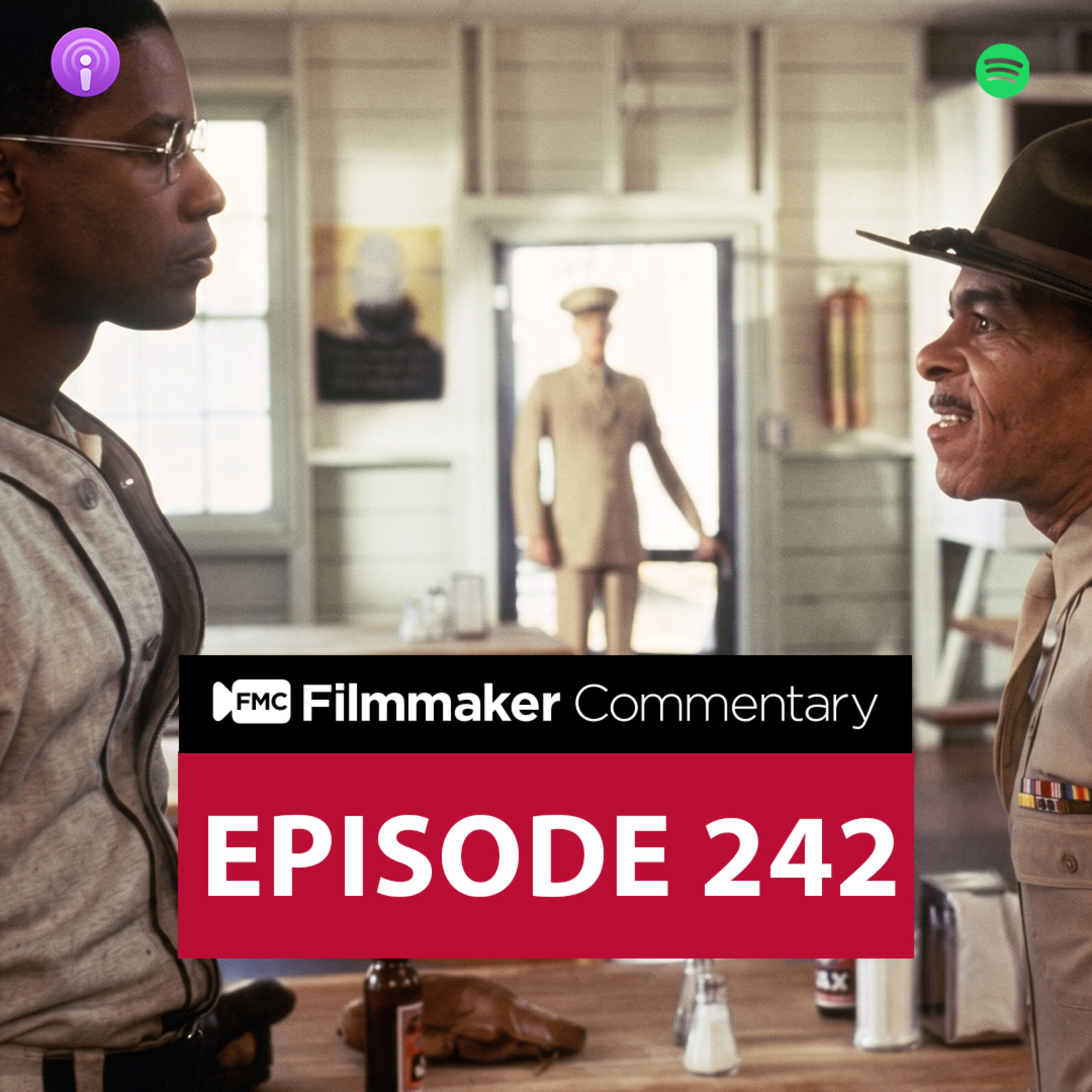
FMC 242 : A Soldiers Story Directed by Norman Jewison

May 15, 2026
Listen on Apple Spotify YouTube
Listen to this episode
Your browser does not support the audio element.
Also on Apple Spotify YouTube

Step back into cinematic history with FMC 242 as Reginald Titus Jr. and Casey G. Smith unpack Norman Jewison’s powerful 1984 film, A Soldier’s Story. Dive deep into a compelling murder mystery set against the backdrop of a segregated World War II army base, and discover why this adaptation of Charles Fuller’s Pulitzer Prize-winning play still resonates today.

What We Cover

  • The film’s impressive box office performance on a modest budget.
  • Critical reception and notable Academy Award nominations, including Best Picture.
  • Norman Jewison’s versatile directorial career, spanning musicals to gritty dramas.
  • The film’s impact on diverse audiences during its initial release.
  • The nuanced portrayal of internal and external racism within the military.
  • The powerful ensemble cast, featuring early career performances from future stars.

Key Moments

  • 00:55 – Discussion of A Soldier’s Story‘s modest $6 million budget and over $21 million box office gross.
  • 02:05 – Exploring the film’s Oscar nominations, including Best Picture, Best Adapted Screenplay, and Best Supporting Actor for Adolph Caesar.
  • 03:10 – Reviewing the film’s critical acclaim, particularly its 91% Rotten Tomatoes score and examination of racism.
  • 04:18 – Highlighting Norman Jewison’s diverse filmography, including Moonstruck and Jesus Christ Superstar.

Gear & Films Mentioned

  • A Soldier’s Story (1984)
  • Moonstruck
  • Jesus Christ Superstar
  • In the Heat of the Night
  • The Hurricane
  • House Party
  • The Mirror Has Two Faces
  • When Harry Met Sally
  • She’s the Man
  • The Devil Wears Prada 2
  • Michael (biopic)
  • One of the Guys
  • Clueless
  • The Craft
  • Can’t Hardly Wait
  • Fast Times at Ridgemont High
  • The Breakfast Club
  • Ferris Bueller’s Day Off
  • Zoolander
  • Glory

Listener Questions

  • How did A Soldier’s Story manage to achieve critical and commercial success despite dealing with sensitive themes?
  • What makes Norman Jewison’s directorial style unique, allowing him to tackle such a wide range of genres effectively?
  • What does the film reveal about the complex dynamics of race and power within the U.S. military during World War II?

Join us on Filmmaker Commentary each week as we unpack the details behind the movies you love!

Full Transcript

Read the full transcript

Full Episode Transcript
This episode of Filmmaker Commentary the 1984 film "A Soldier's Story," directed by Norman Jewison, exploring its critical reception, cast performances, thematic depth, and the director's diverse filmography, alongside discussions of recent movie news and other films watched by the hosts.

Opening Discussion & Box Office
Reginald Titus Jr.: Filmmaker Commentary, episode 242. Welcome to Filmmaker Commentary, where we cover movies with commentaries from directors who take the time to record them on Blu-ray and DVDs. We also give our detailed insights, so look out for spoilers. We discuss the latest in showbiz news along with movies and TV shows that we've been watching. So join Reginald Titus Jr., that's me, and Casey G. Smith, that's me, every week here on Filmmaker Commentary.
Reginald Titus Jr.: Welcome, welcome, welcome to another episode of Filmmaker Commentary. I'm Reginald Titus Jr. I'm joined with...
Casey G. Smith: Casey G. Smith.
Reginald Titus Jr.: Welcome back, sir.
Casey G. Smith: Good to be back, sir.
Reginald Titus Jr.: And today, we're talking about A Soldier's Story, 1984, directed by Norman Jewison, Jewison, Jewison. Written by Charles Fuller, based on his Pulitzer Prize-winning stage play.
Casey G. Smith: What was the budget and box office for this film?
Reginald Titus Jr.: So, A Soldier's Story came in at an estimated budget of $6 million, and went on to gross worldwide a nice $21.5 million. Dollar dollar bills, y'all.
Casey G. Smith: Wow. Nice little win for '84.
Reginald Titus Jr.: Dang. Okay. And there, there is a, um, he mentions the budget. Did you, did you catch when he mentioned the budget?
Casey G. Smith: He said like $5 million in the commentary, but I'm assuming maybe they added on the, the, you know, the advertising, all that kind of stuff.
Reginald Titus Jr.: And we just recently covered House Party. Was that like $2 or $3 million? Something like that. I'm trying to remember. Um, I remember theirs was low, but it was like on purpose, right? It's because, hey, we're kind of taking a risk here, and it ends up blowing up. But imagine if the film was like 15, if this film was like $15 million or something, you'd be like...
Casey G. Smith: House Party was $2.5 million.
Reginald Titus Jr.: $2.5 million. Okay, cool. Um, so they end up being a hit or, you know, well received because financially they were responsible or scared? I don't know. Um, what were the, uh, did it win any awards?

Awards & Critical Reception
Casey G. Smith: Uh, so, the, the film itself had a number of nominations. Uh, in particular, it was uh nominated for several Academy Awards, including Best Picture, as well as Best Writing and Screenplay based on material from another medium. Uh, which I think they could now call Adapted Screenplay. And then also Best Actor for, um, in a supporting role by Adolph Caesar.
Reginald Titus Jr.: Adolph. I've never met anybody named Adolph.
Casey G. Smith: Neither have I. Outside of, you know, the other guy.
Reginald Titus Jr.: But, um, never met him either.
Casey G. Smith: That would be odd. On multiple levels. Uh, but no major wins outside of some Image uh Awards, NAACP. But, um, but just, you know, some, some, again, nominations also at the Golden Globes as well. Um, but well, well received in that regard by, by critics.
Reginald Titus Jr.: Wow. Um, what was the sentiment at the time?
Casey G. Smith: So, according to my handy dandy uh Google AI overview, it says A Soldier's Story in 1984 received critical acclaim for its gripping murder mystery, brilliant ensemble performances, and examination of racism, holding a 91% rating on Rotten Tomatoes. Uh, while some critics found the storytelling structure mechanical, it was largely praised as a powerful drama, earning it, once again, three Academy Award nominations, including Best Picture.
Reginald Titus Jr.: Interesting. They find something, don't they? Mechanical. What does that even mean?
Casey G. Smith: It means it's... No, I don't know, I don't know. I don't know. I don't know.
Reginald Titus Jr.: There are some brilliant shots in this film. And it's based on a stage play.
Casey G. Smith: I, I, I, I do agree that there, I, and the lighting, I love, I love how they, they lit all the different melanin throughout the, uh, throughout the production.
Reginald Titus Jr.: Yeah. Absolutely. Um, I have one bullet, uh, bullet point, um, uh, Norman Jewison, he was basically saying, "The film became successful with not only a black audience, but, but a white audience as well, which was unusual, according to the director."
Casey G. Smith: Mhm. Who would later direct the whitest movie ever, in Moonstruck.
Reginald Titus Jr.: Like two or three years later. That's something I actually I wanted to make mention of, so if you're not familiar with the, with the director uh Norman Jewison, you may know him for from such movies such as Moonstruck, as well as Jesus Christ Superstar.
Casey G. Smith: Ooh. Now, you talking about that. That was controversial and was popular.
Reginald Titus Jr.: Yes, back in '73. Wow.

Director's Diverse Filmography & Discussion
Casey G. Smith: And so, I'm very curious to kind of see what his, because that's also, obviously a stage play as well, if I'm not mistaken, that's adapted, and of course, then we have this, you know, a Soldier's Story, which was originally called a Soldier's Play, when it was um a play. But he also directed In the Heat of the Night.
Reginald Titus Jr.: Uh-huh.
Casey G. Smith: As well as The Hurricane.
Reginald Titus Jr.: Yeah, I noticed that he would come back to work with Denzel. I saw that when I was looking at the IMDb. I was like, oh, they came back around.
Casey G. Smith: That's right, right.
Reginald Titus Jr.: You kind of note take the people, it's like, one day. But he also worked with Poitier as well, Sidney Poitier. I'm like, okay, In the Heat of the Night. Like, bro, this guy was, that's back in '67. This guy has a very interesting filmography to go from Heat of the Night, Jesus Christ Superstar, then you go to Soldier's Story, Moonstruck, and The Hurricane.
Casey G. Smith: That's, I, yeah, very, you can't really pigeonhole him, really.
Reginald Titus Jr.: I, I like when, when directors do that, because it's very easy to get pigeonholed and not become successful, or you're kind of regulated to just doing like B movies and stuff like that. Not that anything's wrong with that, but, um, you can kind of get stuck there and then you're no longer like creative anymore, because you're like, it's just a job now. It's just like, let's go, let's do this thing. So, I think Robert Townsend's kind of like that as well, where he, he can do a drama, he can do some action, he can, he's doing a little bit of everything.
Casey G. Smith: For sure.
Reginald Titus Jr.: Yeah. Oh, did you have something else you wanted to add? My bad.
Casey G. Smith: No, I don't know, I don't, I don't think so. I was just, I was in my, in my, in my head just thinking about just, this guy's career is very interesting.
Reginald Titus Jr.: Yeah, it's diverse. Portfolio.
Casey G. Smith: Yeah, because I wasn't familiar with his name.
Reginald Titus Jr.: Me neither.
Casey G. Smith: But I'm familiar with his works. But it's been a while since I've...
Reginald Titus Jr.: And we haven't really, I don't think we've covered anything by him. We, we've seen some of the films, but we haven't covered anything.
Casey G. Smith: This is the first. This is the first. Yes, perhaps there'll be more.
Reginald Titus Jr.: Yeah, absolutely. I mean, you got Hurricane.
Casey G. Smith: Hey. I've never actually watched Moonstruck before. I've seen highlights and clips. I know Cher's in it and Nicholas Cage. But I've never actually seen the, the film itself.
Reginald Titus Jr.: I saw the trailer. It, I saw the trailer and, uh, she was like talking to her mother and she, I, I think her, is her mom?
Casey G. Smith: Olivia Dukakis.
Reginald Titus Jr.: Is her mother?
Casey G. Smith: Yes. That much I, I, that's like ingrained in my mind.
Reginald Titus Jr.: How is that in your mind? You haven't seen it?
Casey G. Smith: I've seen clips for decades. It's like, it has popped up for, like, it's one of those things, it's like, it's like got a place in the movie's zeitgeist where I, I can see scenes from it in my head. Um, but yeah, I know that's Olivia Dukakis playing her mother.
Reginald Titus Jr.: And it looks like one of those films that is, looks charming, and it actually looks like it might be actually good. Uh, has a heart, looks like it has a heart. It's funny because Cher's talking to her mom and then, I don't know if she's Jewish or she's talking with her hands, so she...
Casey G. Smith: Italian. Yeah, it sounds like Italian, especially like Nicholas Cage in the mix.
Reginald Titus Jr.: Yeah, yeah. Oh, Moonstruck definitely because, because they play uh Amore, you know, the, the...
Casey G. Smith: Oh, okay. Yeah, it's definitely Italian vibes.
Reginald Titus Jr.: Okay, so she's like, so she said, uh, so it starts out, the, her, I guess, fiance or boyfriend, boyfriend is asking her to marry her and she's like, okay, and then cuts to the mother and she said, "Do you love him?" And she's like, "No." "Good, because if you love him, they'll give you hell," basically is what she's saying. "They'll give you hell. He'll cause you nothing but trouble." And then some kind of way Nicholas Cage gets in the mix and they're like, they have this affair and. And then she said, "Do you love him?" "I'm awfully in love with him." She's like, "Bless your heart." Man. So yeah, Moonstruck is uh, it was, I didn't even, I didn't really know about the film.
Casey G. Smith: Right, another romantic comedy. There's, there's some good ones out there. Again, hearing that made me think of, um, When Harry Met Sally.
Reginald Titus Jr.: Yes, Harry Met Sally. That was, that was, again, decades of me not watching it and I finally watched it a few years ago. I was like, man.
Casey G. Smith: So, nevertheless, but you know what, I'm liking these films uh from earlier, from like the '90s and the '80s and things like that because, um, maybe there's a little bit of nostalgia, you know, as I get older, maybe it's like, I can relate more. I don't know, but I think it's also a little bit of nostalgia and they're good.
Reginald Titus Jr.: They are good, yes sir.
Casey G. Smith: Cause I had watched um, the, I had mentioned this on a previous show, uh The Mirror Has Two Faces with Barbra Streisand. It's a cheesy, uh, romantic comedy.
Reginald Titus Jr.: That was a little while. I feel like that was a little while ago.
Casey G. Smith: That was probably like seven episodes ago.
Reginald Titus Jr.: Sure, sure. But yeah, I'm like, oh, when you see Barbra Streisand, okay. Oh, you talking about when the film was made?
Casey G. Smith: No, I'm just, again, she's, she's a, again, very much of the time like the '70s, '80s, even some '90s stuff.
Reginald Titus Jr.: This is in the '90s when, when this one was produced. The Mirror Has Two Faces. And, um, with, um, our guy from Tron, from, um, Tron and Tron. Well, um, Jeff Bridges. Jeff Bridges, yes. So he's the guy, all the women love him, but like when girls get around him, he's like, uh, uh, he doesn't know what to, like, saying, he's like kind of weird, but women basically throw themselves at him. He's a college professor. So he's like, I don't want to be physically attracted to the, to this woman. Any woman that I, I don't want to be physically attracted. It should just be about, you know, what's in my mind? And this, this and that. And then, so it sound like, it sounds real educated and sounds like, you know, a good thesis. Sorry. Yes, sir. Sound like a good thesis and all. Um, and that's how Barbra Streisand gets in the mix. So they got her like totally looking like homely and this, this, and that. Oh, man. It's pretty bad. And she's also an educated, um, person, a professor as well, talking about romance and stuff like that. Anyhow, uh, I'm just following this movie along like, this is pretty good.
Casey G. Smith: It, it is nice being surprised. And, and drawn into something, which I'll, I'll mention later on when we talk about things we've been watching.
Reginald Titus Jr.: And then it's like a forgotten film, like, because I remember watching it when I was a kid when it was on like, because you remember on cable, they just played the same movie over and over again. It's like, well, since it's here, I guess I'll watch it. Um, they weren't that many options.
Casey G. Smith: It's like, oh, okay, cool. I can...
Reginald Titus Jr.: Yeah. Get some culture, right? You just...
Casey G. Smith: I've been, I've been thinking about that more of just the, the non-on-demand aspect of things of, you want to see it, you had to be there and you may not catch it from the beginning if you're not on time. And you may have just maybe heard about someone talk about it and the power of recommendation from someone that you knew. Yes. Uh, to go and see. And of course, we had newspapers and there were, there were shows, Entertainment Tonight that would talk about things, but it's, yeah, just, sometimes you would only have pieces of a story or pieces of a film you had seen and then you'd have to wait or look it up in the TV Guide, when is this gonna actually show up?
Reginald Titus Jr.: Oh man, TV Guide. Let's go. For real.
Casey G. Smith: I remember as a kid one time I got super excited because I looked at TV Guide and saw a show called The Avengers. I was like, The Avengers have a show? And I was like, oh, what the hell is this?
Reginald Titus Jr.: Come back in about 25 years.
Casey G. Smith: Yeah, it was like, this is not, this is not, these are not comic characters, you're not heroes.
Reginald Titus Jr.: Just a little early. But it, it was something totally, you were on the right track. In name only. Oh, okay. But before we talk further about A Soldier's Story, let's talk about TV news and movies watched.

News & Films Watched
Casey G. Smith: So in the news, I'm gonna take y'all back from at least from the time of this recording, back about a week or so, because I have to speak on the, the initial launch and release of the biopic Michael. Which initially bowed to $217 million globally. Nice. And, uh, yeah, a fantastic debut for that film, according to Variety. Says, "Michael glided to the top of the box office charts with $217 million globally, the biggest opening weekend of all time for any musical biopic." "The ticket sales included a mighty $120.4 million from 82 international markets, as well as a $97 million, uh, $97 million in North America." Yes, and it says, "Despite the mostly negative reviews from critics, Michael has exceeded all box office expectations heading to the weekend. The film, uh, about the rise of Michael Jackson's was projected to earn $75 million domestically, $150." So, again, um...
Reginald Titus Jr.: That's good. Critics hating on it. Like, what did they say? I've been hearing good stuff from people that said they've seen it.
Casey G. Smith: So there's, there's like these two camps. So initially as the, as the film came out, the critics, the, the main thing they were focusing on, they were like, oh, this film doesn't touch on the allegations against Michael. Well, when you go and you watch the film, it stops in '88. Like literally the end of the film, spoiler alert, is him starting the Bad Tour. He literally...
Reginald Titus Jr.: I don't mind you spoiling it, I saw his career.
Casey G. Smith: You know, exactly. This is, this is, this is, this is...
Reginald Titus Jr.: There's no, it shouldn't be anything new.
Casey G. Smith: And while the film isn't 100% like historically accurate from a timeline standpoint, there's some things that like, you know, a scene where the Jacksons are singing "Never Can Say Goodbye" before they're signed to Motown, like, that's inaccurate. That song came later on. Like, I'm a big Michael fan. But, but it, so the critics were complaining about that. I'm like, you guys are critics, you're supposed to have your facts straight. You can't report on allegations that hadn't happened yet during this time in his life. Like, the allegations don't come until after the Bad album.
Reginald Titus Jr.: So they're like waiting for the hate.
Casey G. Smith: 100% looking for that. I'm like, man, that's, that's, that's, that's bad reporting. Uh, on, on their part. So you can't knock a film for something that doesn't cover that time period. Doesn't happen in this, exactly. And at the end of the film, he even says, Michael will return. So there's gonna be a second film, they're already beginning to work on pre-production for the second film. And secondly, here's the other thing, they originally what, Antoine Fuqua shot, he had, he had a, the third act actually involved speaking to some of the allegations and, and one of the initial, uh, I guess, um, children that had brought the allegations with their parents or whatever. But they had, somebody in the legal department overlooked that there was an actual, uh, legal clause, I forget the term, where, maybe it was an NDA, whatever, but it was a clause where they couldn't portray that, that kid on film. And so they had to totally scrap the third act and change all that up.
Reginald Titus Jr.: Interesting.
Casey G. Smith: So, yeah. So one, the film doesn't cover that time period. Two, they're, they're...
Reginald Titus Jr.: Get your facts right, right?
Casey G. Smith: Yeah, they're gonna approach it, but then they, they couldn't actually portray that, that, uh, one, one of the, uh, accusers. So, yeah, I'm like, but yeah, um, but the audience side, audiences freaking love it. Like it's like high 90s with the audience.
Reginald Titus Jr.: Cause he's got hardcore fans.
Casey G. Smith: 100%. Yeah. Hey, I'm not gonna lie. I, I dressed up for the film. I, I, I had my, I had the Michael Jackson pre-Werewolf varsity look. I had, I had, it was cool.
Reginald Titus Jr.: It looked cool.
Casey G. Smith: Appreciate that.
Reginald Titus Jr.: Looked cool on the internet.
Casey G. Smith: I, I put some time. I, I, I actually ordered the jacket, I ordered patches. I saw, I sewed the patch on myself.
Reginald Titus Jr.: What did you order? Oh, wow. What? Yeah. Is it the one that, oh, so you had extra?
Casey G. Smith: Yeah, it came like with like three patches. But yeah, I, I, I was looking, I'm like, oh man, it was like the day my sister was coming into town. I was like, oh, I gotta, I gotta find some shoes.
Reginald Titus Jr.: What, what did you find this? Amazon. Man, you some...
Casey G. Smith: Just like, put in like Michael Jackson jacket. So yeah, throw the, throw the jacket, of course, the red and black. I was like, ah, that's a little too much for me. I was like, let me, let me go with the, the...
Reginald Titus Jr.: Some throwaways. Yeah, you ain't cool. Pre-werewolf. Grown man.
Casey G. Smith: And I, I looked closely at the shirt. I was like, I got a, I got a, I got a, you know, a plaid shirt. I was like, okay, I've got that. And then I was like, okay, now I gotta, the shoes. I'm like, okay, I used to have penny loafers back in the day, but I don't have any more penny loafers. So I, I, I was looking and I'm like, oh man, it was like the day I, my sister was coming into town. I was like, oh, I gotta, I gotta find some shoes.
Reginald Titus Jr.: Yeah.
Casey G. Smith: And so then I, I, I, I went to, I just went to a Ross and found some, found some black. like, yeah. It just, it came together last minute pretty nicely. I was very happy, very happy with my, with my outfit.
Reginald Titus Jr.: Oh, okay. All right. The fit.
Casey G. Smi: Yeah, we were leaving the theater, one brother came in, he had the, he had the, he had the black, he had the black sequins, the glove, had the, had the, the black slacks like coming up to like about mid-shin. Yes. Mid-shin. You like, you crazy, bro. He had a little...
Reginald Titus Jr.: Was anybody dancing? Was anybody doing like Michael dancing?
Casey G. Smith: Like, you, you can't help but want to move when you're watching, because like, as the music hits, you're like, oh, yeah. Like, everybody's like, like grooving. It's, but I've seen plenty of clips online with people just like, just like...
Reginald Titus Jr.: Like moonwalking up the aisle of the movie theater?
Casey G. Smith: My crowd was, we, we went like Friday afternoon, like around a 3 o'clock showing. Okay. So, most people there were like, they, they weren't, yeah, people had on t-shirts and stuff like that. You know, there weren't too many people like dressed up, but I know that, that if we had gone Friday evening, uh, it would have been poppin'. Cause people would have gotten off work, had time to really get, but yeah, but it was, it was a very enjoyable experience. I'm so happy to have shared that with my sister and my niece. But, um...
Reginald Titus Jr.: Wow.
Casey G. Smith: Yeah, I, I, I loved it. And critics, get yourself together. Get it together.
Reginald Titus Jr.: Get your life together.
Casey G. Smith: Man. But that's, uh, that's, that's the first story.
Reginald Titus Jr.: We went on a tangent there.
Casey G. Smith: Second story is this, this is recent. And that, according to Deadline, The Devil Wears Prada 2 has a stunning opening with $233 million worldwide, uh, and a $77 million opening at the box office.
Reginald Titus Jr.: Oh. Wow. I didn't know that many people loved that film. It's been a while, too. And the first one was good.
Casey G. Smith: Yeah, uh, again, it was one of those films it took me a while to actually see it, but once I watched it, I was like, okay, this is, this is pretty good. But yeah, when I, the, I saw it yesterday and, uh, it was, it was packed out. Even as my buddy was like looking for tickets online, like it was, yeah, they were like, we had to like search and find, yeah, it took, it took, took a little bit, but yeah, it's a, and it's a popular film. But the sequel, I'll get all touched on that in a moment as we go more into what we've been watching. But, uh, yeah. But yeah, it's making, making some money.
Reginald Titus Jr.: Okay. Nothing wrong with that.
Casey G. Smith: Yes, sir. Reginald, what have you been watching, sir?
Reginald Titus Jr.: I've been watching a few things. Um, but I'll keep it short until we go into our next episode of what we've been watching.
Casey G. Smith: That's right.
Reginald Titus Jr.: Um, this is from like a couple weeks ago or a week and a half ago. Where are you? Okay. I was on Vizio. All kind of, um, on the television on Vizio, they have in the hardware, they have their own software. So you're in Vizio World, and they have, you know, free premium, free, I want to say premium, premium, uh, television shows and movies. And I was like, all right, let me try it out. And so there's a movie called She's the Man.
Casey G. Smith: Oh, that's with uh, what's her name?
Reginald Titus Jr.: Amanda Bynes. Yes. Amanda Bynes. And I don't, this is like, I believe 2000 and between four and six.
Casey G. Smith: Sure, yeah.
Reginald Titus Jr.: And I don't know why I watched this. I, it was just there. I was like, shrugged my shoulders. Why not? Switch it up, right? Not like what's it like James, like his portfolio, uh Jewison, let's just switch it up. So, I was like, She's the Man. Uh, the premise is basically she's a, so it starts out she's a soccer player. She's real good. She's like killing them on the beach. And uh saying, um, soccer. Uh killing it. I'm like, oh, she's great. You know.
Casey G. Smith: Sand soccer.
Reginald Titus Jr.: I don't know why it's, um, not, not volleyball, but soccer. Yeah, she's a soccer player. They were playing and the guys are there, and her, I think her boyfriend was like, you're better than probably most of the guys on my soccer team, this, this and that. And he wants to go on for kicks. So you got the like kind of battle of the genders. She's got like her top on, the, uh, uh, swimsuit. She's got her swimsuit top. So she's like real girly and stuff like that. Um, fast forward, um, at the school that they're at, they're getting rid of the soccer team for, the girl soccer team specifically. And so she has a brother. And so, the thing is, my brother's going out of town, he's like leaving to go, I don't know if he's dropping out of school, but he, is this high school? Yeah, it's high school. Okay. And he's not going to be there because he wants to chase his dream of being a band. Yeah, musician. And so they had like a gig booked somewhere like France or something like that. And so she shows up as her brother. Um, you know, everything takes place, you got Chad, Tatum, Tatum. Channing Tatum. Channing. I know no Channing. They made that up. All names are made up. Um, he's in there and becomes the love interest. Okay. And so, anyhow, Amanda has talent. It's, she had me dying laughing. I said, this girl good. Cause I mean, she, she was on Disney, right? Was it Disney? Or Nickelodeon. One of the, yeah. And I was too grown by then. So I wasn't watching none of that stuff. So.
Casey G. Smith: She had a, she had a show with Jennie Garth on the CW as well where they played sisters.
Reginald Titus Jr.: Also, anyway, sorry. Um, but her comedy style reminds me like Raven Simone. Simone, yes. Uh, just that same style, same with, uh, Orlando Brown. Like, they got that, that certain timing. And you can see it in the film. And she's like on campus, like when she first get her, somebody dropped her off, she's like, what's up, what's up? And then, the dude looked at her, then she's like, he knows. Like, just the way, I was like, she is good. She's good. Uh, so, anyhow, that was like a surprise. That was like just one of those random films like, I was like, all right, whatever.
Casey G. Smith: Okay. Again, it's, it's nice to be surprised. So, I'm glad you're able to. I, I've never, I've never watched that film. I was aware of when it came out and seen the promos for it, because but I, I just recognize Miss Bynes from, again, being on that show with Jennie Garth. Um, on the CW. Can I spoil part of it? You don't plan on watching it anytime soon?
Reginald Titus Jr.: Probably not.
Casey G. Smith: Okay. What was the movie, uh, we talked about? We talked about it where the...
Reginald Titus Jr.: One of the guys. I was gonna say, if I'm gonna watch like a, a quota quote, Xenorex film, one of the guys that would be my go-to. That would be the one. Yeah. I, I don't remember the actor's name, but, you know, she was cool. Yeah. She was. Oh. So, so that's an iconic shot, right? Is the shot when, uh, that actress lifts up her shirt and it's like, you know, it's '80s exploitation all the way. And it's like, oh, she really is a girl. Kind of thing. So, they pay homage to that in this film, because in the last, uh, game, the soccer game, uh, her brother comes back, and he's like, what's going on? So, everybody thinks, because they have like the same haircut and since they're brother and sister, they look alike. So, he's kind of androgynous. So, she was able to kind of make it happen. I mean, but you gotta kind of suspend all belief. To that these adults are that, you know, these kids and adult that dumb. Uh, but, so you just gotta suspend and then you're good. Um, so she's playing, uh, soccer and then it comes, someone's trying to like, uh, expose her. But her, her brother's actually on, like, on the field. And he's like, that's, she's, this guy's really a girl. This, this and that. And then he pulls his pants down. But it doesn't show it. That's the difference. So, it's like, boom. Yeah. So, it's kind of like, yeah. So, he's like, you know, he's pulling his pants down, you see like the pants drop, and then cut, then you just cut above the, whatever the crease is called. Gotcha. Um, and then everybody's like, oh. And then he pulls it back up. And then late, then later, she has to prove that she's a girl to Channing Tatum. And so she lifts up her shirt. And so, they cut it off at the top. Sure. Yeah. And so, because it's like PG, PG-13 or whatever. Right, right. Um, so I was like, oh, this is so unacceptable. Especially for like, oh, but you know what? That, they were in high school, too, now that I think about it. Uh, for one of the guys, they were in high school, as well, weren't they? Or was that college?
Casey G. Smith: It was high school.
Reginald Titus Jr.: It was high school. '80s did not care.
Casey G. Smith: The '80s, the '80s, the '80s is rules. They do not care.
Reginald Titus Jr.: They do not care.
Casey G. Smith: Uh, why did I think it was college?
Reginald Titus Jr.: So, because she was doing a paper, a journalism paper about men and the men and in general.
Casey G. Smith: I'm, I'm 90% sure that it was high school. Let me, let me, let me double-check here. The premise for One of the Guys from 1985 says, "Terry feels discriminated against when the summer jobs at the Sun Tribune go to two guys. She decides to do something about it. She dresses like a guy and gets a haircut. Uh, will students at the other high school notice?" Girls notice, that's a really bad premise, but yeah, high school.
Reginald Titus Jr.: Okay, so she enters a high school.
Casey G. Smith: Uh, and it was rated PG-13. But '80s PG-13 in the '80s is like, maybe R today.
Reginald Titus Jr.: Yeah. In 2000 dollars. It's like, oh, a man. But even, even PG. I mean, again, before there was PG-13, there was just PG would have nudity sometimes. Anywho.
Casey G. Smith: Yeah.
Reginald Titus Jr.: But, um, she's the Man.
Casey G. Smith: She's the Man.
Reginald Titus Jr.: Available on Vizio. On Demand.
Casey G. Smith: I told people, I told some folks that I work with. This is a diverse crowd, and I said, hey, I just watched She's the Man. And then one of the girls like, that is, what's her name? Favorite film.
Reginald Titus Jr.: Oh man. It's kind of cool like when you watch certain films, you can kind of like, kind of match it with someone's personality. That's true. I got a perfect, perfect film for you. That tracks. That's funny.
Casey G. Smith: So speaking of, uh, famous films from the, the 2000s, uh, obviously The Devil Wears Prada came out 20 years ago in 2006. Wow. And now we are sitting at the precipice and the release of the sequel, The Devil Wears Prada 2.
Reginald Titus Jr.: And I went and saw it this, this, uh, this weekend and I was, I was pleasantly surprised.
Casey G. Smith: Really?
Reginald Titus Jr.: It, even if you haven't seen the first film, this film is well done, well crafted. Anne Hathaway, you know, the street monster, Meryl Streep. And of course, uh, also returning was, I didn't, I, I, I didn't think I'd watched really any trailers for this film. But then also, um, Emily Blunt. Back in the mix. I, I love Emily Blunt, man. She can do no wrong. She's good in everything. That's true. And she's, she's back in this, she can use her, her, her, you know, her English, her, her English, I guess, her regular speaking voice. But...
Casey G. Smith: She's English.
Reginald Titus Jr.: She is.
Casey G. Smith: Oh, no. That is, if you didn't know that, is a testament to, to, but yeah, she's...
Reginald Titus Jr.: But those English actors know how to play Americans very well.
Casey G. Smith: Australians as well. They, yeah.
Reginald Titus Jr.: We can't play, we can't play anybody for crap. But, yeah.
Casey G. Smith: Yeah, it's, uh, but yeah, but they, they're all in the mix. It is, it is very well done. The, the story moved, it flowed and...
Reginald Titus Jr.: Shout out to Arnold Schwarzenegger. For real. Yeah.
Casey G. Smith: All the actors hit the, the soundtrack to this. I was like, man, like when they're cutting between scenes, like just the music, I'm like, soundtracks moving along. It, I was, I was thoroughly entertained and, and, and quite pleased. Wow. With The Devil Wears Prada 2. Wow. They, they, I think they, they did a phenomenal job. Sometimes you wait a long time for a sequel and it could be just a, a car crash. And those three actors, they kept themselves together as well, and they've only gotten better. Meryl Streep, man, hey. Silver Fox, man, she, she looks so good. She looks, I mean, it's a fashion film, right? So everybody is, is, is dolled up and they always, they always rag on Anne Hathaway's character. She's, uh, uh, Emily. I think, I think she's an Emily in this film. There's like two, there's two Emmas. Maybe it's Emma. But like there's her, her and, um, her and Emily Blunt, they both have the same name. It's like, oh, it's the two, the two Emmas. Let me make sure I, I get it.
Reginald Titus Jr.: Okay. Back at it again.
Casey G. Smith: Yeah, but they...
Reginald Titus Jr.: The key art's interesting, because you see Meryl Streep at the top and she got like her arm bent, and it looked like it's broke or something. It's like, it's like a very awkward position that she's in, but it works. So I guess it's a fashion, a fashion pose.
Casey G. Smith: Yeah. But this, this, the film worked. I was, I was, I was really. Yeah, I mainly went to hang out with a buddy of mine. But I was like, I will pick whatever, you know. Doesn't matter. I was like, oh man, this is, this is good. I, I kind of felt the same way about the first one. I, I didn't watch the first film. Again, decades later. I, I saw it maybe five years ago. I'm like, ah. But this, it, on its own merits, solid. Again, great actresses and actors as well. The, the guy with the shaved head and the glasses, like, he's, he's in it again. I think Stanley Tucci.
Reginald Titus Jr.: Really?
Casey G. Smith: The first one solid.
Reginald Titus Jr.: Oh, Tucci, yeah. I mean, he's great, too.
Casey G. Smith: Yeah. And he was, he was great in this, as well.
Reginald Titus Jr.: Um, that lady, the that it's based on, she was kind of the advocate for Zoolander. Because everybody in the fashion industry did not want Zoolander to come out. They didn't give them no play at all. But once they got her approval to like, kind of mock the industry, then everybody was like on board to help them out.
Casey G. Smith: Power is power.
Reginald Titus Jr.: You know. Yeah, that's a classic line.
Casey G. Smith: Well, since I already touched on Michael a little bit during the review, I'll, I'll consider those my, my two things of what I've been watching. I'll save the rest for our show, what we've been watching.
Reginald Titus Jr.: All right, one last one for me since I'm in rom-com land. Clueless. Also on Vizio. Okay. I was in that vibe that weekend. All right, all right. It's well done. And then, there's some problematic stuff in there. Uh, oh my God. Cause, so like, some of the biggest stuff that, um, that's kind of like trending is like, people with age, like, age groups, like, what's appropriate? If you're 17 and you're a girl, should you be dating this? Or, that. Is that inappropriate? And things like that. So that's like, been on, been out there talking. Um, because recently, uh, Brandy had a book that came out and she talks about a relationship that she had with another musician and people saying it might be inappropriate. She was, and so she felt like she was manipulated in that, in that relationship. Nonetheless, um, in Clueless, who's, what's her name? What's the, the, the main actress that plays in Clueless?
Casey G. Smith: Alicia Silverstone.
Reginald Titus Jr.: Silverstone. I mean, that's a heck of a last name. Um, she doesn't date high school guys. That's like, that's her premise, that's her policy. Like, she doesn't date high school guys. So she dates out of it. I was like, oh, that's kind of like what I felt with, uh, when we watched House Party. I was like, Shurane doesn't date, uh, high school guys. She dates older guys. That's why she's like more like, um, experienced, as you, and she can just kind of wrap these guys around her finger. Anyhow. For real. Clueless. It, it was surprisingly well done. You know, it could have been just like a cheesy, like high school film, but I think it was groundbreaking, because you also have, what's the, uh, young actress that, Brittany Murphy, that passed away. Yeah, man. Yeah, like there, there's some interesting stuff going on there. Stacey Dash was in the mix. Yeah, and had a lot of talent. Like, she's, honestly, if she had more opportunities during that time to lead, she could. And she had it. But unfortunately, she had to do a lot of supporting stuff. Uh, but she could have been the lead, honestly. That, like, you can see it on the screen. Like, it's, it's been a minute since I've seen Clueless. So, I've only seen Clueless like once. And again, that was when my, my, during my Netflix catch-up era. I think it was when, when I watched Clueless. But it always, it was, it was such a popular film. It was, when it dropped, in the zeitgeist for, for so long. Uh, Alicia Silverstone actually kind of reprised her look for Clueless on, um, Lip Sync Battle. Oh, that's a good news. Yeah, she came out, I don't remember the name of the song, but it was, it was like, booty, booty. I don't, I don't know. I was, I do, it was a rap. The rap song. Oh, uh, Fancy. Is it Fancy? I'm so. Yeah. But man, the way, the way, but she's out there dancing, it, it's, it is dope. I'm like, man, yeah, this is the steps you're doing. I'm like, man, okay. But yeah, but she's got the whole like look going on. I think it's Fancy. Um, because in the, in that music video, the, the artist did all Clueless in the music video. So everybody dressed in all the scenes that you remember from Clueless, the music video is done in that way. Nice, nice. So it played homage to Clueless. So it was kind of cool that she did that. Yeah, that's full story. Is that new?
Casey G. Smith: This is from a couple years back. And it may not be, I don't, I don't know the name of the song for sure. But just Google it, it's a song, Lip Sync Battle, it'll pop up, but yeah, she's, she's, uh, yeah. They, they, they're doing it. It's, it's nice. Let you know. Um, but anyhow, Clueless, great. Um, I just forgot how good it was. Like, good filmmaking is good filmmaking. I don't care who you are. That's true. And there seems to be almost, in every generation, there's gonna be one, at least one high school coming of age movie that will drop. You know, in the, I guess, the late '70s, early '80s, right? Fast Times at Ridgemont High. Right. You get into the '80s, uh, I don't know what I'm thinking of. Uh, a coming of age in the '80s. You got a bunch of John Hughes films, right? Weird, uh, Breakfast Club, you got, yeah, that was his bag. Ferris Bueller's Day Off. Uh, you got a whole bunch of John Hughes films. Uh, then you get into the, the '90s. Clueless is in the '90s. Yeah, it's in the '90s. Uh, you, you get, if you wanna go darker, you got The Craft. Cause it's like dealing with, yeah. But you also got, uh, Can't Hardly Wait. Uh, as well, which I haven't seen that one in years. That was pop, for real. Yeah, I remember, I remember seeing that one in the theaters. Uh, Can't Hardly Wait. Dude, I related to that one so much because that, the people in that movie reminded me of my high school. When you get all the tropes, right, worked, worked in there in different ways and depending on the, I guess, the, the, the, the viewer, the, the viewer, the director's viewpoint or the story they're trying to tell, basically, the writer's viewpoint, what they're trying to tell, like what, what groups will be represented. And again, also again, you, you get the cultural aspect where you get, uh, House Party, like then deals with different. Yeah, '90s, yeah. So, it's, it's, yeah, those, those things, I, I enjoyed those films. Yeah. And, and in regards to the generation, we know what it's like to be in high school. So even if it's something from an older generation or even a newer generation, those tropes are still there. Yeah. Um, yeah. Okay, okay. Um, was I gonna say anything? Nope, that's it. Um, today's show is sponsored by Naturally Hair the Movie by Grind Over Matter Films, available to stream on multiple platforms, including YouTube, Tubi, Roku on Demand, Zumo, Vizio on Demand as well. Please check it out and leave a review. Now, let's jump back into the show.

A Soldier's Story Deep Dive
Reginald Titus Jr.: Thank you for tuning in to Filmmaker Commentary. We're talking about A Soldier's Story, 1984, directed by Norman Jewison, written by Charles Fuller, based on his stage play. Tensions flare in this gripping film about a murder on a black army base near the end of World War II. Captain Davenport, a proud black army attorney, is sent to Fort Neal, Louisiana, to investigate the ruthless shooting of Sergeant Waters. Through interviews with Serge's men, Davenport learns that he was a vicious man who served the white world and despised his own roots. Was the killer a bigoted white officer, or could he have been, or could it have been a black soldier embittered by Waters' constant race-baiting? A Soldier's Story.
Casey G. Smith: And if this is your first time listening to Filmmaker Commentary, please note that there will be spoilers. You've been forewarned.
Reginald Titus Jr.: How did you want to, you want to introduce the cast?
Casey G. Smith: I would love to introduce the cast of A Soldier's Story. This is a cavalcade of black talents before they were really, really known. This is the who they would become. And it's, uh, quite a delightful group of actors. So, of course, we had in the lead role as Captain Davenport, Howard E. Rollins, who I believe actually is in the TV show In the Heat of the Night.
Reginald Titus Jr.: Yeah. All right. We also, of course, had the Academy Award nominated Adolph Caesar.
Casey G. Smith: Yes. As Sergeant Waters, also known for playing the dad in The Color Purple. He's the, he's the, he's the dad of, of, of, uh, Donald Glover in The Color Purple. He's the, the mean, his, his father.
Reginald Titus Jr.: Really? Yeah, that's how I was trying to, once I saw him, I was like, oh, yeah. It, it gave me reference that he's known for the being in The Color Purple. I'm like, yeah, that is him. He's a mean old cuss in that.
Casey G. Smith: Color Purple was trauma for me. I don't even remember half the stuff.
Reginald Titus Jr.: Uh, we have Art Evans as Private Wilkie. We have David Alan Grier. Yeah. As Corporal Cobb. We have David Harris as as Private Smalls. We have also Larry Riley in a riveting role as CJ Memphis. That brother did a good job. He did. And we have, of course, the, uh, forementioned, uh, from previous episodes, Robert Townsend as Corporate Ellis, known for Hollywood Shuffle, director of, of wonderful films, including our favorites, The Five Heartbeats. Yep. Heartbeats. And we have the incomparable Incomparable. Get your hands off me. Denzel Washington as Private First Class Peterson. In addition, we also have William Allen Young as Private Hinson. Yeah, just, again, uh, incredible cast. Yeah. How did you watch this film?
Casey G. Smith: Bits and pieces initially. Like, when, when I started watching it today, uh-huh. On, on DVD, uh-huh. I'm like, oh, man, I have, I, I remember as a kid now, this showing up on HBO and seeing certain scenes. I'd never seen the whole thing all the way through. It was too, like, complex, my child mind to fully comprehend what was happening. But the scene of them running at the end, I'm like, oh, man, yeah, I saw that. Oh, in the tunnels when he was, yeah, like, just the, the way that was lit. Like, it always kind of like scared me when I saw people like, when I saw black people like running for their lives. I was like, what's happening? Yeah. It reminds me of, uh, uh, Danny, Donald Glover in, uh, This Is America. Yeah, when he's running away. He's like, just, uh, running, frightened. Yeah. Anyhow. But yeah, I, I saw bits and pieces of this on HBO as a, as a kid. But watching the whole thing, I'm like, oh, man, I, I, I had totally forgot I had seen some of this. But this time around, I purchased a DVD, uh, from MTC. And I was, I was happy to see that there were more features on this than I thought. Cause I'd researched it on Amazon and it the copy I saw there didn't have any features. So when they told me commentary and a little, like, mini documentary on just kind of soldiers, uh, facing discrimination in, in the military over, over time, I was like, oh, cool. Let's do it.
Reginald Titus Jr.: Yeah, same. I, I think I was, like, I was like, does this have a Criterion release? I was looking for that. I was looking for special features. I was looking on eBay and all, Amazon. I was like, it's, it was like $50, $40. I was like, what? Come on, guys. Let's pump the brakes. Calm down. Calm down. What have you done now, boy? I was like, calm down. Um, so I'm glad that you gave me the heads up because I was able to get the only copy in Irving. Look at that, buddy. Look at that, I'm like, you know, let me just let Reginald know. Yeah, it was the only one. I was like, nope. I guess no one else was waiting for me. That's right, that's right. Um, so yeah, so I'm like you, I'll watch it, put it on DVD. I was like, oh, this is dated. You know, just because you even have enhanced DVDs. I don't know if you've seen like any of the enhanced DVDs.
Casey G. Smith: Not actively searching for those.
Reginald Titus Jr.: You know, like, like, going Blu-ray, of course. Yeah. Um, uh, what's the Denzel Washington, the supernatural, um, the supernatural Denzel Washington film? Ooh, um, we, we covered it. Yeah, yeah, yeah. Uh, Fallen. Fallen. That one was a super release and it looks good. Like, as a DVD. As a DVD, it looked good.
Casey G. Smith: I'll take your word for it. Just no need to watch it. You find with 4K.
Reginald Titus Jr.: But yeah, sometimes we, we have to take these, we have to take this L. I was like, dude, I remember him as a kid one time, I got super excited because I looked at TV Guide and saw a show called The Avengers. I was like, The Avengers have a show. And I was like, oh, what the hell is this? That was a bad movie. That was a bad movie. That was a bad movie. That was a bad movie. That was a bad movie. That was a bad movie. That was a bad movie. That was a bad movie. That was a bad movie. That was a bad movie. That was a bad movie. That was a bad movie. That was a bad movie. That was a bad movie. That was a bad movie. That was a bad movie. That was a bad movie. That was a bad movie. That was a bad movie. That was a bad movie. That was a bad movie. That was a bad movie. That was a bad movie. That was a bad movie. That was a bad movie. That was a bad movie. That was a bad movie. That was a bad movie. That was a bad movie. That was a bad movie. That was a bad movie. That was a bad movie. That was a bad movie. That was a bad movie. That was a bad movie. That was a bad movie. That was a bad movie. That was a bad movie. That was a bad movie. That was a bad movie. That was a bad movie. That was a bad movie. That was a bad movie. That was a bad movie. That was a bad movie. That was a bad movie. That was a bad movie. That was a bad movie. That was a bad movie. That was a bad movie. That was a bad movie. That was a bad movie. That was a bad movie. That was a bad movie. That was a bad movie. That was a bad movie. That was a bad movie. That was a bad movie. That was a bad movie. That was a bad movie. That was a bad movie. That was a bad movie. That was a bad movie. That was a bad movie. That was a bad movie. That was a bad movie. That was a bad movie. That was a bad movie. That was a bad movie. That was a bad movie. That was a bad movie. That was a bad movie. That was a bad movie. That was a bad movie. That was a bad movie. That was a bad movie. That was a bad movie. That was a bad movie. That was a bad movie. That was a bad movie. That was a bad movie. That was a bad movie. That was a bad movie. That was a bad movie. That was a bad movie. That was a bad movie. That was a bad movie. That was a bad movie. That was a bad movie. That was a bad movie. That was a bad movie. That was a bad movie. That was a bad movie. That was a bad movie. That was a bad movie. That was a bad movie. That was a bad movie. That was a bad movie. That was a bad movie. That was a bad movie. That was a bad movie. That was a bad movie. That was a bad movie. That was a bad movie. That was a bad movie. That was a bad movie. That was a bad movie. That was a bad movie. That was a bad movie. That was a bad movie. That was a bad movie. That was a bad movie. That was a bad movie. That was a bad movie. That was a bad movie. That was a bad movie. That was a bad movie. That was a bad movie. That was a bad movie. That was a bad movie. That was a bad movie. That was a bad movie. That was a bad movie. That was a bad movie. That was a bad movie. That was a bad movie. That was a bad movie. That was a bad movie. That was a bad movie. That was a bad movie. That was a bad movie. That was a bad movie. That was a bad movie. That was a bad movie. That was a bad movie. That was a bad movie. That was a bad movie. That was a bad movie. That was a bad movie. That was a bad movie. That was a bad movie. That was a bad movie. That was a bad movie. That was a bad movie. That was a bad movie. That was a bad movie. That was a bad movie. That was a bad movie. That was a bad movie. That was a bad movie. That was a bad movie. That was a bad movie. That was a bad movie. That was a bad movie. That was a bad movie. That was a bad movie. That was a bad movie. That was a bad movie. That was a bad movie. That was a bad movie. That was a bad movie. That was a bad movie. That was a bad movie. That was a bad movie. That was a bad movie. That was a bad movie. That was a bad movie. That was a bad movie. That was a bad movie. That was a bad movie. That was a bad movie. That was a bad movie. That was a bad movie. That was a bad movie. That was a bad movie. That was a bad movie. That was a bad movie. That was a bad movie. That was a bad movie. That was a bad movie. That was a bad movie. That was a bad movie. That was a bad movie. That was a bad movie. That was a bad movie. That was a bad movie. That was a bad movie. That was a bad movie. That was a bad movie. That was a bad movie. That was a bad movie. That was a bad movie. That was a bad movie. That was a bad movie. That was a bad movie. That was a bad movie. That was a bad movie. That was a bad movie. That was a bad movie. That was a bad movie. That was a bad movie. That was a bad movie. That was a bad movie. That was a bad movie. That was a bad movie. That was a bad movie. That was a bad movie. That was a bad movie. That was a bad movie. That was a bad movie. That was a bad movie. That was a bad movie. That was a bad movie. That was a bad movie. That was a bad movie. That was a bad movie. That was a bad movie. That was a bad movie. That was a bad movie. That was a bad movie. That was a bad movie. That was a bad movie. That was a bad movie. That was a bad movie. That was a bad movie. That was a bad movie. That was a bad movie. That was a bad movie. That was a bad movie. That was a bad movie. That was a bad movie. That was a bad movie. That was a bad movie. That was a bad movie. That was a bad movie. That was a bad movie. That was a bad movie. That was a bad movie. That was a bad movie. That was a bad movie. That was a bad movie. That was a bad movie. That was a bad movie. That was a bad movie. That was a bad movie. That was a bad movie. That was a bad movie. That was a bad movie. That was a bad movie. That was a bad movie. That was a bad movie. That was a bad movie. That was a bad movie. That was a bad movie. That was a bad movie. That was a bad movie. That was a bad movie. That was a bad movie. That was a bad movie. That was a bad movie. That was a bad movie. That was a bad movie. That was a bad movie. That was a bad movie. That was a bad movie. That was a bad movie. That was a bad movie. That was a bad movie. That was a bad movie. That was a bad movie. That was a bad movie. That was a bad movie. That was a bad movie. That was a bad movie. That was a bad movie. That was a bad movie. That was a bad movie. That was a bad movie. That was a bad movie. That was a bad movie. That was a bad movie. That was a bad movie. That was a bad movie. That was a bad movie. That was a bad movie. That was a bad movie. That was a bad movie. That was a bad movie. That was a bad movie. That was a bad movie. That was a bad movie. That was a bad movie. That was a bad movie. That was a bad movie. That was a bad movie. That was a bad movie. That was a bad movie. That was a bad movie. That was a bad movie. That was a bad movie. That was a bad movie. That was a bad movie. That was a bad movie. That was a bad movie. That was a bad movie. That was a bad movie. That was a bad movie. That was a bad movie. That was a bad movie. That was a bad movie. That was a bad movie. That was a bad movie. That was a bad movie. That was a bad movie. That was a bad movie. That was a bad movie. That was a bad movie. That was a bad movie. That was a bad movie. That was a bad movie. That was a bad movie. That was a bad movie. That was a bad movie. That was a bad movie. That was a bad movie. That was a bad movie. That was a bad movie. That was a bad movie. That was a bad movie. That was a bad movie. That was a bad movie. That was a bad movie. That was a bad movie. That was a bad movie. That was a bad movie. That was a bad movie. That was a bad movie. That was a bad movie. That was a bad movie. That was a bad movie. That was a bad movie. That was a bad movie. That was a bad movie. That was a bad movie. That was a bad movie. That was a bad movie. That was a bad movie. That was a bad movie. That was a bad movie. That was a bad movie. That was a bad movie. That was a bad movie. That was a bad movie. That was a bad movie. That was a bad movie. That was a bad movie. That was a bad movie. That was a bad movie. That was a bad movie. That was a bad movie. That was a bad movie. That was a bad movie. That was a bad movie. That was a bad movie. That was a bad movie. That was a bad movie. That was a bad movie. That was a bad movie. That was a bad movie. That was a bad movie. That was a bad movie. That was a bad movie. That was a bad movie. That was a bad movie. That was a bad movie. That was a bad movie. That was a bad movie. That was a bad movie. That was a bad movie. That was a bad movie. That was a bad movie. That was a bad movie. That was a bad movie. That was a bad movie. That was a bad movie. That was a bad movie. That was a bad movie. That was a bad movie. That was a bad movie. That was a bad movie. That was a bad movie. That was a bad movie. That was a bad movie. That was a bad movie. That was a bad movie. That was a bad movie. That was a bad movie. That was a bad movie. That was a bad movie. That was a bad movie. That was a bad movie. That was a bad movie. That was a bad movie. That was a bad movie. That was a bad movie. That was a bad movie. That was a bad movie. That was a bad movie. That was a bad movie. That was a bad movie. That was a bad movie. That was a bad movie. That was a bad movie. That was a bad movie. That was a bad movie. That was a bad movie. That was a bad movie. That was a bad movie. That was a bad movie. That was a bad movie. That was a bad movie. That was a bad movie. That was a bad movie. That was a bad movie. That was a bad movie. That was a bad movie. That was a bad movie. That was a bad movie. That was a bad movie. That was a bad movie. That was a bad movie. That was a bad movie. That was a bad movie. That was a bad movie. That was a bad movie. That was a bad movie. That was a bad movie. That was a bad movie. That was a bad movie. That was a bad movie. That was a bad movie. That was a bad movie. That was a bad movie. That was a bad movie. That was a bad movie. That was a bad movie. That was a bad movie. That was a bad movie.

About Filmmaker Commentary

Reginald Titus Jr.

Apple Spotify YouTube Subscribe Free
Continue Listening

FMC 244 : The Karate Kid Directed by John G. Avildsen

June 20, 2026

What We’ve Been Watching Episode 008

June 12, 2026

FMC 243 : Love and Basketball Written and Directed by Gina Prince Bythewood

June 9, 2026

Leave a Response Cancel reply

This site uses Akismet to reduce spam. Learn how your comment data is processed.

Never Miss an Episode

New episodes every week — free.

Listen on Spotify Apple Podcasts

Recent Episodes

  • FMC 244 : The Karate Kid Directed by John G. Avildsen
  • What We’ve Been Watching Episode 008
  • FMC 243 : Love and Basketball Written and Directed by Gina Prince Bythewood
  • What We’ve Been Watching Episode 007

Archives

  • June 2026
  • May 2026
  • April 2026
  • March 2026
  • February 2026
  • January 2026
  • September 2019
  • August 2019
  • July 2019
  • June 2019
  • May 2019
  • April 2019
  • March 2019
  • February 2019
  • January 2019
  • December 2018
  • October 2018
  • September 2018
  • August 2018
  • July 2018
  • June 2018
  • May 2018
  • April 2018
  • March 2018
  • February 2018
  • January 2018
  • December 2017

Categories

  • Film
  • Podcast
  • TV
© 2026 Filmmaker Commentary. All rights reserved.
  • About
  • Episodes
  • Privacy Policy
  • Disclaimer
  • Terms of Service