July 1, 2026
F
Filmmaker Commentary
  • Home
  • About
  • Episodes
  • Film
  • TV
  • Home
  • About
  • Episodes
  • Film
  • TV
Podcast

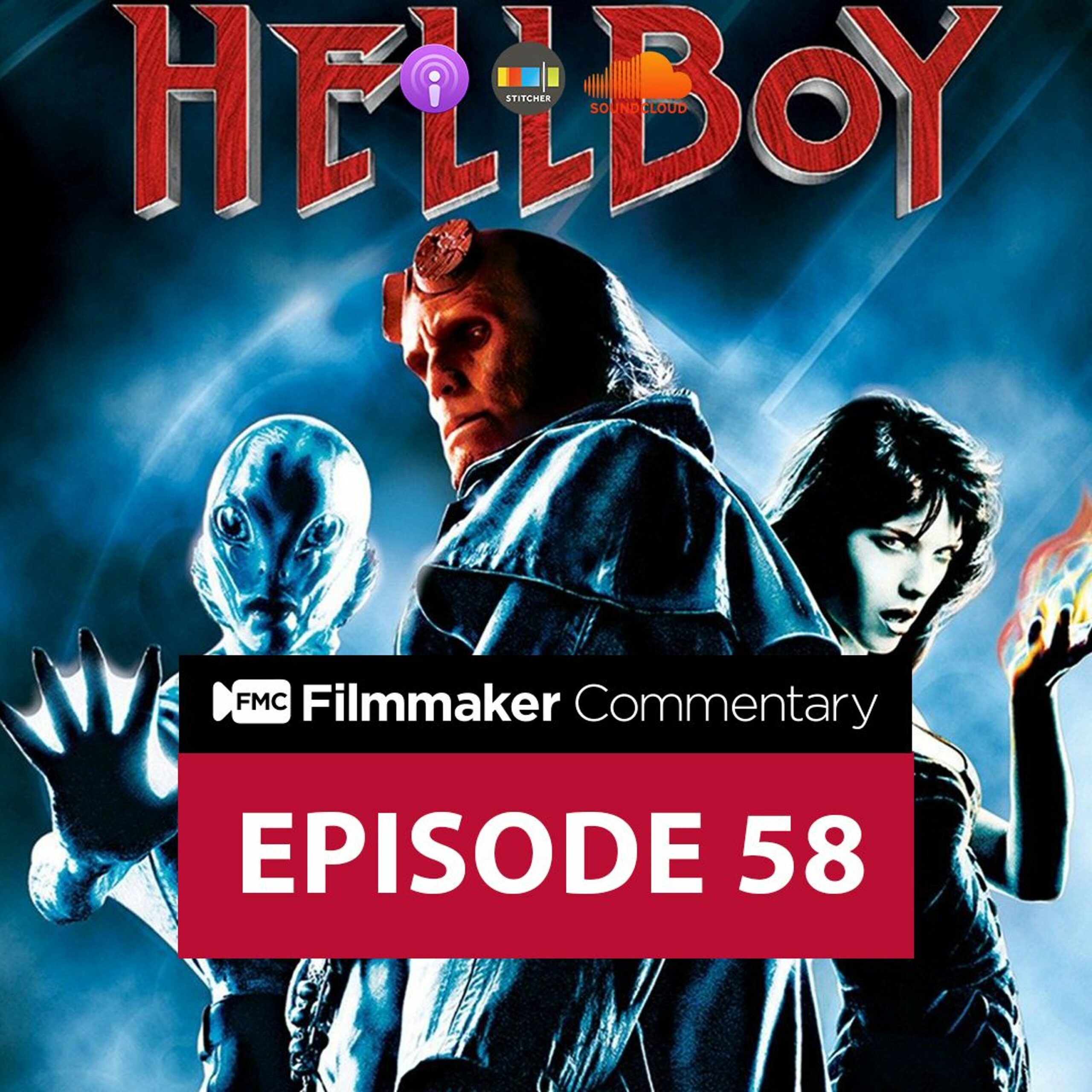
FMC 058: Hellboy 2004 Written and Directed by Guillermo del Toro

May 31, 2019
Listen on Apple Spotify YouTube
Listen to this episode
Your browser does not support the audio element.
Also on Apple Spotify YouTube

Join Reginald Titus Jr. and Casey G. Smith on this episode of Filmmaker Commentary as they dive deep into Guillermo del Toro’s 2004 supernatural action film, Hellboy. Discover the unique visual style, intricate character development, and behind-the-scenes filmmaking choices that shaped this beloved comic book adaptation. This isn’t just a film discussion; it’s del Toro’s passionate approach to storytelling and world-building.

What We Cover

  • The budgetary challenges and box office performance of Hellboy, considering the era’s visual effects landscape.
  • Insights into the “streaming wars” and the rising “Netflix tax,” exploring the changing dynamics of content consumption and city revenue.
  • A look into Guillermo del Toro’s distinctive directorial style, including his use of “unreal colors,” “melodrama,” and signature visual motifs.
  • Discussion on themes woven throughout Hellboy, such as self-acceptance, the complexity of father figures, and the reflection of societal prejudices in monster lore.
  • Filmmaker tips on leveraging visual storytelling, fighting for your creative vision, and ingeniously stretching production budgets with techniques like mirror sets.
  • Honest reviews of other films watched, including Kevin Hart’s “Irresponsible,” “The Greatest Movie Ever Sold,” and “The Night Before.”

Key Moments

  • 0:47 – Discussion on Hellboy’s budget and box office, questioning its financial success relative to its production costs.
  • 6:34 – Apple’s entry into the streaming wars and its impact on the industry, alongside other major players.
  • 27:26 – Reginald and Casey’s initial reactions to rewatching Hellboy, assessing its lasting appeal and del Toro’s unique signature.
  • 49:16 – Filmmaker tips on telling a compelling story through visual cues, as demonstrated in Hellboy‘s narrative techniques.

Gear & Films Mentioned

  • Night School
  • Thanos: Titan Consumed (Audiobook)
  • The Greatest Movie Ever Sold
  • Irresponsible (Kevin Hart stand-up)
  • The Night Before
  • Blade II
  • Pan’s Labyrinth
  • Joker
  • Superman (original animated cartoons)
  • Batman & Robin
  • Alien
  • Beauty and the Beast (1980s TV series)

Listener Questions

  • How did Guillermo del Toro’s unique artistic vision overcome budgetary constraints to shape the distinct aesthetic of Hellboy?
  • What can filmmakers learn about conveying complex backstories and character arcs without resorting to overt exposition?
  • How did the challenges faced by Hellboy, such as resistance to its title and themes, reflect broader industry and societal prejudices at the time?

You can find more episodes and insights into the craft of filmmaking on Filmmaker Commentary.

Full Transcript

Read the full transcript

Full Episode Transcript
This episode of Filmmaker Commentary Guillermo del Toro's 2004 film "Hellboy," discussing its production, visual style, and thematic depth, alongside broader industry news on digital taxes and the streaming wars.

Introduction & Production Details
Reginald Titus Jr.: Filmmaker Commentary 58. Welcome to Filmmaker Commentary, where we give you insights from our favorite filmmaking commentaries. These commentaries can be heard on your DVD and Blu-rays of your favorite movies. We'll show you how you can use these commentaries and apply them to improve your video production and filmmaking techniques. All of this here on Filmmaker Commentary. I'm your host, Reginald Titus Jr.
Welcome to Filmmaker Commentary. I'm Reginald Titus Jr. I'm joined with Casey G. Smith. Welcome back, sir.
Casey G. Smith: Good to be back, sir. Fresh off a...
Reginald Titus Jr.: Mother's Day weekend, right?
Casey G. Smith: That's right. So to all you mothers out there, a happy belated, happy Mother's Day.
Reginald Titus Jr.: All right, all right. So we're going over Hellboy, 2004. Written and directed by Guillermo del Toro. We had a budget of 66 million. We had a box office of 59.6 million domestically and 39.6 million foreign. Math, I didn't add that, what is the total?
Casey G. Smith: 99,378,985 dollars.
Reginald Titus Jr.: Okay. So the 22 cents. No, just kidding about the cents. That's a win, right?
Casey G. Smith: That's, that's, I don't know, man. If, if we consider marketing money going into that, this, this was a close one, I think. I think this was a...
Reginald Titus Jr.: It was, but considering the time it's 2004.
Casey G. Smith: Sure.
Reginald Titus Jr.: This is Hellboy 1.
Casey G. Smith: Yes.
Reginald Titus Jr.: PG-13.
Casey G. Smith: Yes.
Reginald Titus Jr.: Yeah. This is a risk, but it did end up becoming a franchise and and spun into a part two. But, I don't know. I think they fudge on these budgets. I think they'd be lying.
Casey G. Smith: Little, little inflation?
Reginald Titus Jr.: Yeah.
Casey G. Smith: I, I've, I've heard such things as well. But I, I think with this, when you look at the visuals for the time, like these visuals, they, they put some money into these, into these visuals. And and and the, the practical effects that are in it as well. So, ah.
Reginald Titus Jr.: They shot on film, right?
Casey G. Smith: Digital, digi- Yeah, and digital wasn't as, as inexpensive back in 2004.
Reginald Titus Jr.: Did you say he was shot- they shot this film, didn't they?
Casey G. Smith: Oh, I, I mean as far as the digital effects, the CGI.
Reginald Titus Jr.: Oh, right, right. So, I don't know, man. I think this, I think this thing cost and then whatever, whatever money they spent on marketing.
Reginald Titus Jr.: I need to see the finances prepared by CPA.
Casey G. Smith: Show me the numbers! I, I need to see your books.
Reginald Titus Jr.: Yes, thank you. Oh, they're on fire.
Casey G. Smith: How convenient, being that this is Hellboy.

News & Movies Watched - Part 1 (Digital Taxes & Streaming Wars)
Reginald Titus Jr.: Uh, but before we dive further into Hellboy, 2004, we are going to talk about news and movies watched.
News and Movies Watched.
First we'll, we'll talk about news. So, uh, one of the first thing is, Chicago is the first city to successfully collect tax revenue on digital products. It's called the Netflix tax. That's what they're dubbing it. Um, so I'm going to just read a quick, uh, post from, was this, CBS? Four years ago, Chicago imposed a 9% tax on streaming entertainment services, leading to a flurry of lawsuits. Now the city has collected 2 million in sales tax from Sony and two online ticketing services, making it the first major city to collect such a tax successfully. Oh, this is by Bloomberg. Um, the city collected 1.2 million from Sony in January on services including PlayStation Video Live events and purchases of music and video, according to Bloomberg. It also collected nearly 800,000 from Eventbrite and 70,000 from Fandango. Uh, the levy has been dubbed the Netflix tax because it targets streaming video service in addition to gaming and other digital entertainment. So what do you think about that, huh?
Casey G. Smith: I think it sucks. I don't like it.
Reginald Titus Jr.: Why not? Why you don't like it?
Casey G. Smith: Don't like it. Because we pay taxes already. Taxes come out of paychecks, we pay taxes on the other items that we buy, we pay taxes on on the, the rent that I pay, tax on everything else. This was like that one area where there was some reprieve.
Reginald Titus Jr.: Yes.
Casey G. Smith: And uh, it's, it's, it's digital. So how does the government have jurisdiction in in the worldwide web?
Reginald Titus Jr.: Yes.
Casey G. Smith: So, I don't like it. I'm not a fan of it. That's why I stand.
Reginald Titus Jr.: Not a fan. Man.
Casey G. Smith: Get off my lawn, definitely get off my digital lawn. What, what do you think, Reginald?
Reginald Titus Jr.: Yeah, as a, um, as a creator, you know, it's, it to pay that, you know, sucks, but, you know, wherever you're conducting business in, that's kind of the thing. And also, too, um, this from a city standpoint, a lot of retailers have been drying up, you know, you got Toys 'R' Us that closed down, you got Best Buy that's kind of hanging on, but there really is no point for it to be in existence because of Amazon and things like that. And so cities are kind of desperate to find ways to get their tax revenue that's missing.
Casey G. Smith: There's...
Reginald Titus Jr.: Because everybody, basically everybody's changed their habits to purchasing a lot online. I know a lot of our, you know, grocery shopping, we buy a lot of stuff from Amazon.
Casey G. Smith: Amazon, though you pay sales tax on Amazon.
Reginald Titus Jr.: You do have a point.
Casey G. Smith: Yeah, so they've, they've got Amazon, because those are, you know, physical goods. They're also now in a lot of places being housed in warehouses that are local to that, that area. So, I don't have an issue with, with that per se. Like, okay, there's a physical space there, these are physical goods.
Reginald Titus Jr.: But it's the entertainment part. You would have to pay it, I mean if you, you know, you go to the theater, you watch the film, you're going to pay.
Casey G. Smith: That's in, that's in a theater, that's in that city. Built on that property.
Reginald Titus Jr.: Yeah.
Casey G. Smith: You know, if I go in a physical store and and and buy something in that physical store, built in that property.
Reginald Titus Jr.: I agree, it sucks.
Casey G. Smith: Yeah, and I guess, I guess, I guess if I, if I, if I'm using my, my cable service and I buy a movie on that cable service, I think I'm going to get charged sales tax.
Reginald Titus Jr.: Yeah, for the monthly service.
Casey G. Smith: I think so. I think, if I, if, I'm going to have to look at my, my bill next time, like if I rent a movie through my cable service.
Reginald Titus Jr.: Oh, I see what you mean.
Casey G. Smith: Do they, do they add, I mean, tax gets added on my ca- to my cable bill. You know, they add all kinds of whatever tax they want to throw in there, but God, I don't want them to start...
Reginald Titus Jr.: Yeah. It probably is when they're It's going to be probably hidden in a way where you won't notice it. But the people that are paying the 2 million bucks and all, you know, the 70,000 Fandango, they know it. They're the ones that they're going to feel it. But that's, but what's going to end up happening is that's just going to get passed down to the consumer anyway, the prices are going to go up.
Casey G. Smith: As always.
Reginald Titus Jr.: But yeah, I agree. It does suck. Um, but that's the way the world is going, you know, we're going all digital. And uh, now the businesses are starting to catch up.
Casey G. Smith: Yes.
Reginald Titus Jr.: Uh, speaking of streaming, uh, Apple has opened up its streaming services. And uh, let's hear what CBS has to say about reinventing Apple.
Unknown: Well, Apple is betting big on a partnership with Hollywood to counter slowing sales of its devices. The tech giant unveiled its move into subscription streaming entertainment yesterday during a splashy event at its Silicon Valley headquarters. Jamie Yuccas shows us Apple's new strategy.
Unknown: Apple TV Plus. CEO Tim Cook brought out the megawatt star power for Apple's new streaming subscription service, including Hollywood icon Steven Spielberg. A whole new batch of amazing stories. I'm really excited about it. There has never been a moment quite like this one. Oprah Winfrey will debut new documentaries exclusively on the service. She said the decision to join Apple was easy.
Unknown: Because they're in a billion pockets, y'all, a billion pockets. Apple's iPhone sales were up and down last year, but bounced back with nearly 52 billion in sales in the first three months of this year. Apple needs to make money and they're not selling a lot of iPhones or not as many as they used to. CNET News editor in chief Connie Guglielmo says Apple is pivoting.
Unknown: We're used to Apple introducing iPhones and iPads and computers and this is a big investment and this event today demonstrates that they want to start making a lot more money from services as demand for some of their hardware dips. Apple also announced a new credit card, plus subscription news and gaming services. A recurring theme throughout, they're designed to keep your personal information private and secure, securing users' privacy and data.
Unknown: They're taking the stand that they are the privacy advocate. For CBS This Morning, Jamie Yuccas, Cupertino, California.
Casey G. Smith: Oprah said it best, they're in a billion pockets, y'all, right? It's quite the roll out. They're ready over there. Can't fight that.
Reginald Titus Jr.: A billion people have their products. She said it like straight up, you know, they, and so it makes sense. Uh, but also the iPhone has slowed up in sales. So where people were clamoring to buy the next iPhone whatever, uh, those sales have started to slow down. And so now they're kind of tapping into other streaming stuff and it's, uh, it's interesting how, um, these companies are doing the streaming war, like the streaming wars now.
Casey G. Smith: Oh, man.
Reginald Titus Jr.: So, like, what do you, what do you, what have you been hearing out there?
Casey G. Smith: Man, I was literally reading yesterday, uh, so outside from Apple, um, you've got AT&T and Warner Media. They're getting set to, they're going to be launching a streaming service because they're actually going to be, uh, pulling certain films off of Netflix.
Reginald Titus Jr.: Yep.
Casey G. Smith: Um, obviously Disney+ drops in November. Uh, coupled with that, uh, NBC Universal, they're looking at starting their own, they're going to be starting their own streaming service as well. Disney now officially, as of this week, has, has controlling interest of Hulu as well, in addition to Disney+. So, yeah, it is going to be the streaming wars. And now Netflix, it's going to be fascinating to see because Disney's going to be pulling their content from Netflix as well. Star Wars, the MCU films, all that's going to be leaving Netflix, which of course is one big reason why they began to push, really put a lot of money into their original content.
Reginald Titus Jr.: Right.
Casey G. Smith: But, I think they and they did some kind of poll or whatever and they said, like, 70% of viewers watch, you know, non-original content on Netflix.
Reginald Titus Jr.: Yeah, it was like The Office, Friends.
Casey G. Smith: Friends. Mm-hm.
Reginald Titus Jr.: And I think the other one was Stranger Things. I think it was but that's original, right? That's Netflix original.
Casey G. Smith: Yeah, that's a Netflix original.
Reginald Titus Jr.: Uh, but I think that those are the most, the most popular ones on there. And I think just recently there's a Dead to Me as a series.
Casey G. Smith: Yeah, with uh, Christina Applegate, which I, I really want to watch. I, I love Christina Applegate, she's one of my favorite.
Reginald Titus Jr.: For sure. Yeah, she's been able to shed the, uh, the Married With Children, yeah. Oh, man. She like shrugged it off and like super talented.
Casey G. Smith: Oh, yeah.
Casey G. Smith: But yeah, so it's, it, it, it is going to be a war and I think people will have to pick and choose like what they want to go with because it's like you, for those who have cut the cord of cable, you're going to find yourself possibly paying more for buckets of streaming services. So then you might have the cable companies saying, hey, let me partner with the streaming services and offer you this bundle of streaming. So it's going to be fast, we might be right back in the same boat in essence.
Reginald Titus Jr.: Yeah, pretty much.
Casey G. Smith: Yeah. Everybody's caught up.
Reginald Titus Jr.: So, uh, there was one actress, I can't think of her name, but she was basically saying, I, I stream, I purchase Hulu, Amazon Prime, Netflix. I think it was like a CBS play.
Casey G. Smith: HBO Go?
Reginald Titus Jr.: HBO Go and like a CBS something, whatever David Letterman was on.
Casey G. Smith: If you could only say have three streaming services, which would be your three? Your essential three?
Reginald Titus Jr.: Um, I would probably go Netflix, Amazon Prime, Disney.
Casey G. Smith: Like Disney, the new Disney+? Getting set to drop?
Reginald Titus Jr.: Yep. Oh, man. Okay.
Casey G. Smith: I'd say...
Reginald Titus Jr.: But without Disney, probably HBO.
Casey G. Smith: Yeah, man, like for me, man, HBO has so much good content, amazing content, and their library and their, and their own original stuff.
Reginald Titus Jr.: Right.
Casey G. Smith: So yeah, Netflix, HBO.
Reginald Titus Jr.: It's hard.
Casey G. Smith: Man, it's difficult. I'd want to say Disney+, but I don't have to have Star Wars. I don't have to have Disney's animated stuff.
Reginald Titus Jr.: You would, you would tell me their Fox stuff. You were saying Fox and some more things.
Casey G. Smith: You forgot that quick.
Reginald Titus Jr.: Yeah, they.
Casey G. Smith: Oh, man, you Yeah, thousands and thousands of Oh, man, you're right. Yeah, I might, I might have to take them over over Hulu.
Reginald Titus Jr.: Yeah. Dad gum.
Casey G. Smith: Or Amazon Prime even.
Reginald Titus Jr.: Yeah, it's difficult because, um, um, there's a, a podcast called Martini Shot and...
Casey G. Smith: Yeah, Rob Long.
Reginald Titus Jr.: And he was talking about how like it's confusing right now. We're like in confusing times because you will have somebody that has like a AT&T, uh, cable thing and then they got to use that in order to log into like their HBO whatever, but then HBO has their Go platform, which is kind of by itself.
Casey G. Smith: HBO Go versus HBO Now.
Reginald Titus Jr.: Yeah, so it's like, I was confused when that came out because I just, I'm like, uh, which one, which is what?
Casey G. Smith: HBO Go is if you have a current cable account and you have HBO, you subscribe to HBO through your cable service, you can use HBO Go. If you're totally independent, you've cut the cable cord but you want to access HBO, then you use HBO Now.
Reginald Titus Jr.: And then you have that across all the networks. So you have like FX, you know, and you, if you, you know, if you're subscribed, you know, as a cable person, you go in and you can just log in, but then you have the, um, uh, the advertisements that come on. That's how I was able to watch, you know, Atlanta or whatever, but then you have that version of it where you're just paying, like you would, like a Netflix or something like that and you just get to stream, I guess it's like on demand now or whatever.
Casey G. Smith: Sure.
Reginald Titus Jr.: Uh, but, you know, it's like, it's, it's, it's very confusing right now in the marketplace. But it'll...
Casey G. Smith: I, I take, I take back my, part of my answer. I'd go with Amazon Prime.
Reginald Titus Jr.: Boom.
Casey G. Smith: Because through Amazon Prime, you have sub-channels, you can subscribe to.
Reginald Titus Jr.: There you go.
Casey G. Smith: Ha-ha! Work the system.
Reginald Titus Jr.: Yeah, it's going to get, uh, expensive.
Casey G. Smith: Yes. Now you want to tax it, too. Thanks.
Reginald Titus Jr.: Thanks for everything. YouTube. Uh, anything else in the news?

News & Movies Watched - Part 2 (Film & TV Discussions)
Casey G. Smith: Uh, two things. James Gunn opened up and shared about his experience in, in being fired and rehired by Disney. Um, you could find this in multiple sources on the internet, whether it's the, the Wrap or Variety. Uh, we were talking off, off, off, um, off air, uh, just, man, I'm just so impressed with James Gunn, how he handled the whole situation, how he took ownership of what he did, and this article where he explains this, just is, it's even more of that, him talking about his, uh, emotional state from what happened and, and, and feeling the loss of losing the, the, the franchise, but understanding why Disney did what they had to do. Uh, his relationship with Bob Iger, uh, and then hearing immediately from like, uh, you know, uh, Jason Blum and others that who said, you know, hey, I would hire James Gunn, you know, immediately. And then of course, landing this Suicide Squad over at Warner Brothers. And then Iger decided to bring him back in and what that meant to him. But the, the outpouring he got in in in support from fans, especially the Guardians of the Galaxy cast, meant a lot to him. Uh, but also, you know, he said he felt such a big loss initially because like he didn't get to finish the, the story, particularly Rocket's story. He said he feels in the, in Guardians that he is Rocket.
Reginald Titus Jr.: Wow. Like that's.
Casey G. Smith: I could see that voice. I could see his voice in that character now that you say that.
Casey G. Smith: Yeah, so, uh, so, so he's happy that he gets to come back and complete that. So we might see in Guardians 3 he, he might really be diving into Rocket's arc, which kinda carries through, you know, the, the Infinity War and even End Game. Uh, Rocket has a nice little arc going. So there's that. And then the Variety just ported, reported as of the recording of this podcast, just a hour or so before that, uh, apparently Robert Pattinson, uh, is going to be cast in the, the new Bat, uh, Batman movie being directed by, um, Matt Reeves.
Reginald Titus Jr.: Do you know what the approach they're going with this Batman situation, is it in reality like Nolan or is it more fantastical? What are they doing?
Casey G. Smith: Well, so from what's been kind of thrown out there over the past couple of years, even when Ben Affleck was attached to it, but once Matt Reeves stepped in to direct and, and work on the script, is that it's, it's supposed it's going to be a, a younger, uh, less experienced Batman, but apparently it's going to have a focus on the, him being the detective. The detective aspects.
Reginald Titus Jr.: Okay.
Casey G. Smith: So.
Reginald Titus Jr.: A different world. But you're saying that they're not even focusing on like a world, or putting everything in a world, it's like every kind of film that's kind of stands on its own.
Casey G. Smith: That's kind of what they've been saying is that the focus won't be as much on making everything connected. I mean, it won't mean that there won't be some connections. But that's not the primary, uh, the primary goal of every film. Again, the trailer we saw for that Joker movie with Joaquin Phoenix. Apparently it's going to be totally not, not connected. But we'll see. This might be set in an earlier time, but we'll, we'll see where this Batman falls.
Reginald Titus Jr.: Okay. And that's not the primary concern. Interesting.
Reginald Titus Jr.: And we're going to talk about movies. So, any movies watching this past week, week and a half, almost two weeks since last time we recorded?
Casey G. Smith: Uh, since last time we recorded, I believe I'd only seen End Game twice. Now it's three times.
Reginald Titus Jr.: There you go.
Casey G. Smith: And I, I saw Night School, um, on HBO. Watched it with my, with my mother during Mother's Day weekend. And uh, yeah, it was all right. It was a, it was a, it was a, um, enjoyable film. There was a couple of, couple of chuckles within. Um, you know, Tiffany Haddish is doing, doing her thing. Kevin Hart is, is, is doing his evolved version of, of what he's, of what he's been doing. You know, more and more he's kind of flexing his, kind of dramatic chops a little bit. I, I, I enjoyed the story, actually. Uh, as far as the, the, the, the story, uh, it was good. Again, some of the humor was hit and miss, but there were a couple of chuckles within. And the supporting cast is, uh, is nice. And his, man, the, the actress playing his, his significant other in the movie. Wow.
Reginald Titus Jr.: Gee whiz. Golly.
Casey G. Smith: But yeah, um, and I, I, you know, keep up on a couple of shows. And then of course, on the, uh, way to San Antonio to, to, to visit, uh, family, I, I, I mentioned to you before, I listened to an audio book called Thanos: Titan Consumed, which, uh, is, is a non-canon but MCU based audiobook background on, on, on Thanos and his upbringing and all this stuff. And it's, it was quite lovely. So, Thanos: Titan Consumed, if you're into audiobooks.
Reginald Titus Jr.: And you must, you must be wanted. It's 10 hours.
Casey G. Smith: Indeed. Great for a road trip. Or if you, if you commute a lot, hey, that could be like, you know, maybe, uh, a week, depending on how long you commit is each way. You can, you can knock it out in, in a week and it'll, it'll, I think it'll keep you entertained.
Reginald Titus Jr.: Yeah. Yeah, easy, easy. Pretty entertaining. Okay. Check it out.
Casey G. Smith: How about you?
Reginald Titus Jr.: Um, speaking of Kevin Hart, I didn't write this down but, um, after you mentioned his standup on Netflix, I mean my wife checked it out. I liked it more than I expected to like it.
Casey G. Smith: Yeah, I was the same way. A couple of other ones had kind of fallen off for me, but this one I was like, I felt like he kind of bounced back on, on this one. I had a, I had some, some definite laugh out loud moments.
Reginald Titus Jr.: Yeah. We enjoyed it. We're both laughing. Laugh more, people. Yeah, I enjoyed that one. It was pretty good. So that on that Kevin Hart, Netflix. What was it called? Irresponsible.
Casey G. Smith: Irresponsible.
Reginald Titus Jr.: Irresponsible. And then I watched on Amazon Prime, The Greatest Movie Ever Sold. Um, and that's by Morgan Spurlock.
Casey G. Smith: Okay, from Super Size Me. Fame and.
Reginald Titus Jr.: Yeah.
Casey G. Smith: Seven Deadly Sins on, on Showtime and what's, what's the other one that I'm missing? Uh, there was a, there's another show they did it was like, it was like kind of going behind, Inside Man, right?
Reginald Titus Jr.: That's right. Yeah. Where he was like going to the school system and all that stuff. Uh, but he, uh, this movie, it didn't do too well at the box office. It only made like 700,000 or something like that. But basically, it's a documentary showing how sponsors pay for their, um, product placement inside movies. And so, like, he'll be on Jimmy Kimmel wearing like the, the blazer coat and it has all the different logos from different corporations that paid their way in his film. That's basically how he got to finance 1.5 million. Uh, he wanted to kind of emulate how NASCAR does it and things. So he, you know, did that. It was, it's actually a pretty interesting film just for like filmmakers that are interested in like how you can get product placement and the agencies that help you get these ad products.
Casey G. Smith: Aha.
Reginald Titus Jr.: Um, into your movie. So, uh, yeah, I actually enjoyed that one. I didn't expect to enjoy it, but yeah, business filmmaking, I'm in there.
Casey G. Smith: Now, where did you watch that again?
Reginald Titus Jr.: Uh, Amazon Prime.
Casey G. Smith: On Amazon Prime. All right.
Reginald Titus Jr.: And of course, Morgan Spurlock kind of fell from grace, you know, he got caught up in the Me Too movement.
Casey G. Smith: Oh, really?
Reginald Titus Jr.: Yeah, he turned himself in. He basically stepped down from like his company and all that. So, um.
Casey G. Smith: Oh, jeez, I didn't know.
Reginald Titus Jr.: Yeah, because he, because, you know, he kinda went, was there somebody else that kind of said, hey guys, you know, some things might have happened and, you know, he kind of before he, before somebody out there took him out, he took himself out.
Casey G. Smith: Wow.
Reginald Titus Jr.: So yeah, so that's why he's been quiet. Because he was producing a lot of stuff.
Casey G. Smith: Man. He stayed pretty busy.
Reginald Titus Jr.: Yeah. Also, another film, I don't I guess I was like in a comedy mood, um, I watched The Night Before with Anthony Mackie, Seth Rogen, and.
Casey G. Smith: Joseph Gordon-Levitt?
Reginald Titus Jr.: Yes. How was that?
Reginald Titus Jr.: It was, you have to be high.
Casey G. Smith: Pre-recs.
Reginald Titus Jr.: If you're going to watch this film. Yeah, here's, here are the things you got to do. You got to get high, and um, don't take yourself so serious.
Casey G. Smith: Okay.
Reginald Titus Jr.: So, yeah, because it was silly. It, it was just a silly film.
Casey G. Smith: It was just silly. Yeah.
Casey G. Smith: I think I saw a piece of that, I think I saw a piece of that film somewhere at, at some time. Or I might, I might be confusing it with.
Reginald Titus Jr.: The world ending.
Casey G. Smith: Oh, no, or that. That, um, oh, man, that right moment or something like that. It was a movie, it's three actors in it. It's, it's got Michael B. Jordan, Zach Efron, and Miles Teller in it. And I think it's called like That Awkward Moment, I think it's what it was called. So.
Reginald Titus Jr.: Didn't see it.
Casey G. Smith: Yeah. It's kind of a, you know, comedy coming of age kind of film.
Reginald Titus Jr.: And I think now because like, um, you know, weed is like kind of like the thing that in America, we used to kind of be the, the comedy thing, like, oh, we're getting high, do stupid stuff. And so now that it's like legal in a lot of states, it's like, it's not it doesn't have the same effect anymore, you know, it doesn't seem as taboo whenever you see it on TV and like, because people kind of use that as like, kind of like the, the crutch of the film. And uh, and this film, that, you know, it kind of was in a way. I'm just like, it's not a big deal. It's almost like tobacco and stuff, depending on where you live now.
Casey G. Smith: Yeah.
Reginald Titus Jr.: It's not a big deal.
Casey G. Smith: And there's more and more laws that are.
Reginald Titus Jr.: Very lenient, you know.
Casey G. Smith: Yeah, and, and, and we're at, at, at a point and place where I'm like, if it's going to be legal some places, then then just let's just regulate the freaking thing and, and let's, let's be done with this. Let's, come on. And then there's a, a very fascinating documentary I watched on Netflix recently. Um, that's, that's Fat Pipe Freddy produced. Oh, yeah, Fat Pipe.
Reginald Titus Jr.: Oh, yeah, Fat Pipe.
Casey G. Smith: And I can't think of the name of it, man, but it it just dropped on Netflix within the past couple of weeks. And it was really good. And it's going deep into the history and talking about jazz, like jazz scenes, how, how much they were involved.
Reginald Titus Jr.: I saw the trailer to that.
Casey G. Smith: How was like, what?
Reginald Titus Jr.: They were on these other notes because they were high, son.
Casey G. Smith: That's what they were saying. They, the guys that interviewed, man, I, I've been, I've been smoking for 45 years. And they're they're just, and they're, they're like lighting up right there. It's like no big deal. And they get deep into like the why the government began to outlaw and ban it and it's, it's interesting. Like some the propaganda. I'm like, yo, and even studies that came out that said, look, this is not, this does not have the same, you know, addictive properties that you're claiming that it has. It has medicinal value. There are people in the government who, who did reports and just ignored, you know, guys like Nixon, oh, we're coming after it. We're going to we're going to crack down on it. We're going to get.
Reginald Titus Jr.: It's interesting because it's there's other agendas behind these, you know, when they're trying to push things like that. And who always suffers? Hey, just look at America.
Casey G. Smith: Hey, yo, they, they specifically mentioned in the documentary that they, they, instead of calling it cannabis, they specifically started calling it marijuana so that it would have a closer tie to Mexico to make it sound more, more foreign. Uh, and also again, targeting, again, they, they specifically wanted to target, target, uh, people of color, blacks and, uh, you know, Hispanics. Uh, yeah, it's, it's, yeah, it's it's been kind of rigged from day one.
Reginald Titus Jr.: We could tangent on that, but.
Casey G. Smith: Yeah.
Reginald Titus Jr.: And then you got, you know, when you go from there, then you look at Ava DuVernay's, uh, documentary, you know.
Casey G. Smith: Yes.
Reginald Titus Jr.: She's got the new one, but the older one, the, you know, 13th. And then you see why.
Casey G. Smith: What's the new one?
Reginald Titus Jr.: Uh, the, uh, uh, it was about those boys in New York. Uh, they were, um, uh, accused of raping, um, a white lady, a white jogger, teenagers. And like the whole media was just like, you lock these kids up. They were in jail and everything. And Donald Trump like pulled out like this big advertisement saying.
Casey G. Smith: Oh, from back in the like, the.
Reginald Titus Jr.: It might have been late 80s, early 90s.
Casey G. Smith: I remember that. He put that whole ad in the, in the.
Reginald Titus Jr.: Yeah. It was bad. What's on that?
Reginald Titus Jr.: And so what ended up happening is the guy that actually did the rape turned himself in, and all those kids got free and actually ended up getting a multimillion dollar settlement.
Casey G. Smith: Good for them.
Reginald Titus Jr.: Sad, sad, sad. America. Toke up. Everywhere.
Casey G. Smith: If you're in a legal state, of course.
Casey G. Smith: Where's the, Anyway, I, I.
Reginald Titus Jr.: Where where's the Okay, there, there.
Casey G. Smith: We'll talk. All right. All right. I hadn't prepared my statements just yet. So.
Reginald Titus Jr.: That's right. Yes. Uh, so, um, The Night Before, I think it's a fun film, you know, it's a fun film and I think, I I watched it because you had sent me something on about, uh, Anthony Mackie interview. And then he was talking about like his friends and stuff like that. And then, uh, uh, there's a TV show with LL Cool J called Lip Sync Battle, Lip Sync, what's it called? Battle of the Lip Sync Battle? So Anthony Mackie was on there doing the MC Hammer, uh, Too Legit to Quit.
Casey G. Smith: Lip Sync Battle, no.
Reginald Titus Jr.: Really?
Reginald Titus Jr.: And then, um, right after him, uh, Gordon Jared Levitt, what's his name?
Casey G. Smith: JGL.
Reginald Titus Jr.: Joseph Gordon-Levitt?
Casey G. Smith: He goes by JGL. Joseph Gordon-Levitt.
Reginald Titus Jr.: Joseph Gordon-Levitt. I had to get it right, you know, from Looper. Um, he does Janet Jackson, uh, Rhythm Nation.
Casey G. Smith: What?
Reginald Titus Jr.: Yeah. And all he can dance. And kills it.
Casey G. Smith: He can dance. So he's grown up like triple threat style. Yeah, singing, acting and dancing. He's an old school. Okay. Triple threat.
Reginald Titus Jr.: Yeah. So anyhow, so because of that and I think they were and Seth Rogen was on there with LL Cool J like, ah! And so I was like, let me go watch the movie.
Casey G. Smith: Okay.
Reginald Titus Jr.: Yeah. And so that's how I got into that. But it's a fun film. At the end of the day, it's, it's a fun film. It's silly, don't take it too serious. It's something if you don't It's just junk food for your mind.
Casey G. Smith: It's like a Friday night, you chilling, you got nothing to do, just pop it on and just, just disconnect. Junk food for your mind.
Reginald Titus Jr.: Yeah. Pretty much. There's still, there's still a, a story element to it that's serious, but yeah, just disconnect.
Casey G. Smith: Just let it ride. Let it go.

Hellboy (2004) Analysis - Overview & Visuals
Reginald Titus Jr.: And we'll jump right back into the show.
Welcome back to Filmmaker Commentary. We're talking about Hellboy, 2004. Uh, the real Hellboy. Oh.
Casey G. Smith: Shots fired! Shots fired!
Reginald Titus Jr.: And.
Casey G. Smith: And, just in case you haven't watched this real Hellboy of 2004 creation, um, or this is your first time listening to Filmmaker Commentary, we do want you to know that there will be spoilers. You've been forewarned.
Reginald Titus Jr.: Uh, Hellboy 2004, written and directed by Guillermo del Toro. Uh, let's jump into the synopsis.
At the end of World War II, the Nazis attempt to open a portal to a paranormal dimension in order to defeat the Allies, but are only able to summon a baby demon who is rescued by Allied forces and dubbed Hellboy. 60 years later, Hellboy serves as an agent in the Bureau of Paranormal Research and Defense, where he, aided by Abe Sapien, a merman with psychic powers and Liz Sherman, a woman with pyro-kinesis, protects America against dark forces. Hellboy.
Yeah, this is your first time watching this, right? This film, what were your thoughts? This came out in 2004. So it's 2019. What are your initial thoughts?
Casey G. Smith: It's okay. For me, typically when I go into a film, you know, I'm, I'm use time to time or when it comes out, usually I don't try to see too much as a factor. I like watching things that came before. Um, and so I, I'd heard about Hellboy for, I mean, for years.
Reginald Titus Jr.: Right.
Casey G. Smith: And so, I, I didn't go in with like super high expectations, because I feel like it kind of had a cult following. I watched it and it was, it was, it was okay for me. There were a couple of cool moments. Um, you know, Ron Perlman as Hellboy, you know, people talk about it all, all the time. And um, I enjoyed the visuals and the story was, was, was fine as well. But it, it didn't blow me away. And again, I think it's not because how it looks, it's just, it's just, I don't know, as a whole, it just didn't move me if you will. So, but yeah.
Reginald Titus Jr.: Yeah. Yeah. How about you?
Reginald Titus Jr.: I watched this film back in 2000, this is when I was studying like just certain directors. I was studying Guillermo after watching, um, Blade 2, and Pan's Labyrinth, I think.
Casey G. Smith: Hmm, Pan's Labyrinth.
Reginald Titus Jr.: Labyrinth. And so I was just kind of, just studying his career and that's what I was doing with a lot of directors, like studying their first films and just kind of seeing, you know, what their style was, how they're developing and what they're doing next. And um, I enjoyed the film. At the time, I really enjoyed the film, but I, I appreciate it, like what he brought to the film. Because another person with that, they would bring to the film would be a totally different movie. Like his creepiness, his, the things that he's into, that he brings personally into every film that he does, it, it's, you, it's just all over, like his style's written all over this Hellboy. But, um, after now watching it back in 2019, after watching all these Avenger films and Marvel, it's like, you could look at this film and be like, meh.
Casey G. Smith: Yeah. It's, and it's also it's a, it's a different kind of film. It's, it's got a this pseudo, pseudo indie vibe to it. And again, you know, Hellboy is a, is a, is a indie comic. I mean, it's.
Reginald Titus Jr.: That's why I love it. Dark Horse, right?
Casey G. Smith: Yeah, Dark Horse. It's not, it's not, not mainstream and they faced a lot of challenges, even with this, with having the name Hell in the, in the title. There were certain theaters that didn't want to play it there. Some execs wanted them to change the name of the film or change the name of the character. Uh, and they were like, no, we're not doing that. Some people were uncomfortable with the fact that, you know, the, the guy gets to, the, the monster gets to the, the girl at the end. She's a monster too, though. Yeah, she is. And, and Del Toro, uh, says as much that it, it's, it's, it's kind of like Beauty and the Beast, but at the end, Beauty becomes also a Beast. And ends up with a Beast. So, you know, the, the, the fireproof monster with the, with the fire starter, you know, girl.
Reginald Titus Jr.: She's a monster too, though. Yeah, she is. And, and Del Toro, uh, says as much that it, it's, it's, it's kind of like Beauty and the Beast, but at the end, Beauty becomes also a Beast. And ends up with a Beast. So, you know, the, the, the fireproof monster with the, with the fire starter, you know, girl.
Reginald Titus Jr.: It's perfect. Match made in Hell.
Casey G. Smith: Yeah. Match made in Hades. Um, but I, I enjoyed the commentary though. I enjoyed, uh, Guillermo's commentary. It wasn't the most technical.
Reginald Titus Jr.: Right.
Casey G. Smith: Uh, but there is a, a wonderful, um, uh, I've watched part of it, you've, you've seen the whole thing, there's a, there's a multi-part documentary, uh, on this, if you want to dive in more technical. They've got plenty of special features that will give you everything.
Reginald Titus Jr.: Yep. Yeah. And I, I definitely would suggest, it's a two-hour documentary, uh, behind the scenes. Also, it's an enhanced I had the DVD. I don't know if they had, did they have the script? They had the script on the DVD. It was like enhanced DVD. And then they also had the director's notebook, like all his drawings of all his characters and paintings and things like that, deleted scenes, and two commentaries, right?
Casey G. Smith: See, I don't, I don't think this one had two commentaries. I think this one only has one commentary.
Reginald Titus Jr.: Really? So there's a, a second commentary with Ron Perlman and all the other actors.
Casey G. Smith: Really? Yeah, I don't think that's on the Blu-ray. Yeah, I think it's, I think it's, I think it's just, it's just, Guillermo's. And it's, it's, um, yeah, and it might, it might be because it's the director's cut. So, maybe because of that, cuz he talks about how, yeah, he wanted this director's cut. So, so maybe the commentaries we listened to, I wonder how different they are.
Reginald Titus Jr.: That's terrible. Was Guillermo and the co-executive producer on this?
Casey G. Smith: No, it's just Guillermo.
Reginald Titus Jr.: What? Okay, yeah, you got a completely different one.
Casey G. Smith: Yeah, cuz he's, he's spending the bulk of his time talking about different creators and he's, he's he talks about Jack Kirby, he talks about Lovecraft. He's, he's talking about the lore and the influence of why he made this film and in.
Reginald Titus Jr.: Oh, my God.
Reginald Titus Jr.: Okay, so we just discovered, we watched two different commentaries. All right, cool.
Casey G. Smith: Yeah.
Reginald Titus Jr.: So yeah, so the one, yeah, so before we jump to the commentaries, you know, it's, um, I enjoyed the , like kind of going back and looking at it, it's like, uh, if you appreciate it for what it is and like all the work that they put, especially from a practical standpoint, just appreciate it for that. Um, I think it's good, but if you've watched tons of Marvel films, you would look at this and be like, hah. For real. Like, especially coming off End Game and all the other film, like, whoa, wait a minute, buddy. But they were pioneers, you know, they were like one of the first, you know, films to do this, especially on this budget, my God.
Casey G. Smith: Again, I think the visuals are are commendable. Uh, again, especially considering that the, the time of when this was created, I'm like, okay, yeah, I think, I think that the combination of of practicality with, with some of the CGI. Uh, and I wonder, I wonder if there was any kind of restoration or whatever with, with this particular Blu-ray.
Reginald Titus Jr.: Good point.
Casey G. Smith: Um, yeah, since it was director's cut, I wonder. I'll have to double check when it was released, uh, as well, because they may have done some touch up.
Reginald Titus Jr.: What do you think about the actual style of the film?
Casey G. Smith: So it seems like it was like cooler.
Reginald Titus Jr.: Mm-hm.
Casey G. Smith: There's a couple things that pop. Obviously, you know, Hellboy's actual look, you know, with that red, you know, will pop, but it seemed like it was kind of cooler tones, uh, at least, uh, initially. He mentioned, uh, Harry Hausen, uh, in, in, in the commentary as far as him being like a, a famous creator of, of looks of, of, of different, uh, monsters. And, and, and how your monsters, he, he this guy said that your monsters should move like animals. And they, they tried to with, particularly with the, with the demons, uh, in the film, how they move like a combination of gorillas and at times like lions. Um, and even like when they're in their lair and they're like, you know, gnawing on a bone and they realize that somebody is there and they stop and kind of look up and, and turn their head. It's like, like something discovering someone is coming to their lair. So they said you treat your, treat your monsters, have them, have them move like animals. Um, and then the final, the look of the final fight scene, uh, Del Toro mentions that there is, he gives The Matrix a lot of credit for introducing mainstream America to an anime style of action. And that what he tried to do in Blade 2 was kind of have an anime style. But in this film, towards the end, he went for, in that final fight scene where Hellboy grabs that big blade and, and fights the, the tentacled monster that he went for more of a Disney, a Disney fairy tale ending fight where you've got the hero with a big sword fighting the dragon. He kind of made a callback to like Sleeping Beauty. Uh, so with that, that kind of look. But I, , I, I enjoyed the look of the film. Again, the when it was shot, it again, I wasn't really even thinking, I was like, visual, visual, I'll, I'll probably bring my copy to see if you see something different. I'm, I'm very, I'm very curious from a comparative standpoint.
Reginald Titus Jr.: Wow. Oh, it's good direction. Yeah. For sure.
Reginald Titus Jr.: Um, for me, like the style, uh, he mentioned like unreal colors. So things are just heightened. So you have the real blue, like the cooler look you were talking about, but then you have red that's popping. You know, when you see the blood popping out of the guy that they kill and just running in the streets, it's super red and the dude that comes up, it's covered in the blood. The red is just popping through. So like, basically colors that you don't see in real life. No one, no red is like popping out like that. Um, also he like the style like the melodrama. For example, the scene when, um, he's going to see, when Hellboy is going to see Liz at the mental hospital. And, um, the leaves are falling in the background and, you know, to kind of visualize, he's sad. So he's talking about melodrama and him being Latino, he's like, hey, I'm, you know, I'm Mexican. So, I'm like, I'm going to up the melodrama. So I could appreciate that. And then also in his style, he likes to have a fetus, a fetus and an autopsy. That's like his thing in a lot of his films. If you go back to Blade 2, you go to a lot of his stuff, he's going to have a fetus, he's going to have an autopsy.
Casey G. Smith: Pan's Labyrinth, there was definitely a fetus.
Reginald Titus Jr.: Yeah. Coming out the autopsies. So we, we had both of those here, we like we see the fetus of, um, those little worm, whatever those monsters were called. Oh, yeah, yeah, yeah. And it was like in Hellboy's arm and it got it out and that's when they discovered and then we see the close-up of the fetus. So that's like part of and Guillermo style. Um, and then also, uh, with style, it's a fairy tale love story. So things are going to be over the top and he talks about how it's like Grimms' fairytales. So going back to Grimms' fairytales, um, there's a connection with Karel Roden, who plays Rasputin. Hopefully I'm saying that name right. Um, in this film, but also plays The Duke in the movie Running Scared, which is shot from a Grimms' fairytales dark point of view. That's true. Also from a non-American director.
Casey G. Smith: Aha.
Reginald Titus Jr.: I think the film could have benefited from like a rated R. I think it would have been like dope as a rated R film, but, uh, for the pocketbooks, I understand why they went PG-13. But yeah, that's, that's all I got for like style. The commentary. So the commentary that I listened to was, uh, Guillermo and, uh, the co-executive producer Mike Mignola. Hopefully I'm saying his last name right.
Casey G. Smith: Who's also the creator of Hellboy and the, uh, the actual comic book artist and writer of Hellboy.
Reginald Titus Jr.: Yeah, so like seeing them like kind of go back and forth and, uh, I like, uh, Guillermo, his passion. Like, I don't know if he was just like straight up off, I don't know when they recorded this. Uh, if it was just like after it was released in the theater or what, but they like, he was super excited.
Casey G. Smith: He has a reputation for, in different interviews and people I've heard who have interviewed him, they always number one comment on how nice he is. He says he's one of the nicest guys you can meet. But secondly that they, they, his passion, they often comment about his passion for his projects. And he, even the commentary I listened to, that passion comes through. He's, he's, he's so well studied and he, he talks about the influence of, of pulp novels and comic books. Like that's the, that's the bulk of the commentary that I listened to on the director's cut. He talks about just like their the influence and kind of going into some of the histories and what they tried to recreate in terms of the look of some of these characters and some of the different scenes and again he's mentioning Lovecraft, he's mentioning Jack Kirby. Uh, he's mentioning, uh, man, like some, like the, the early in their opening scene, as far as with the Nazis and, and, and their historic ties to the occult and, yeah, he's, he's diving, he's diving, he's dealing with a lot of lore, uh, basically on the director's commentary.
Reginald Titus Jr.: He's for sure. Got to dig it, man.

Hellboy (2004) Analysis - Themes, Quotes & Trivia
Reginald Titus Jr.: What are some of the themes in this film?
Casey G. Smith: All right, so one, one that I had, speaking of themes, as, and he says this specifically, uh, Nazis, the occult and science. How those things try to be like fused together. And there are other films that have, uh, dabbled in some of that as well.
Reginald Titus Jr.: Your defects make you who you are and it's okay not to be perfect. And basically just coming to grips like, hey, like you for who you are kind of situation. And what I forgot the line in the story is like, you love somebody for their defects. Is that what he was saying?
Casey G. Smith: Something like that.
Reginald Titus Jr.: Something like that.
Casey G. Smith: Also there's a little of a theme of of two fathers and one son. So once, once Hellboy appears, you have Broom, or Dr., Dr. Broom, uh, played by John Hurt, obviously as, as Hellboy's immediate father, takes, takes to him and, and, you know, gives the, the, the, the Babe Ruth. And there's an immediate kind of bond there. But then also you have, um.
Reginald Titus Jr.: And John Hurt, he passed away, didn't he, in 2017?
Casey G. Smith: He did. Yeah, yeah. He's famous for being in the movie Alien and having the, the chest tugger, um, come out of his chest.
Reginald Titus Jr.: The first one. Get old Alien.
Casey G. Smith: Oh, yeah. And then you have Rupert Evans who is kind of like his other father on, kind of like the demonic side of things, uh, who, who knows kind of what, what he's capable of, uh, as well. And, uh, so yeah, you have that theme going on, two fathers and one son.
Reginald Titus Jr.: Yeah, and just kind of going with what you were saying, just, uh, mythology, having that dark backstory, uh, what you had talked about with the three being infused.
Casey G. Smith: Mm. People's reactions to monsters are, are often, uh, kind of reflective of their, their own prejudices. Uh, so, uh, people react to to Hellboy. And Del Toro mentions like, you know, when he wanted to do a movie with an African-American as a lead, uh, who had a, a white wife. You know, he said you would have, you would have thought, you know, that, you know, they're making some kind of monster movie, you know, yeah. Uh, and it was just like people like just, just, just, he said the reactions he got to just pitching something like that was, he got like a lot of pushback. And so kind of dealing with, with the, with the, with the, with the minority. Um, but he said yeah, often when, when how people react to different kinds of monsters, often is a reflection on their own potential prejudices. And then lastly, I, I had again, just again, the beauty and the beast theme.
Reginald Titus Jr.: Quotes. You got any quotes?
Casey G. Smith: The only quote I had, uh, the one that stuck to me was, um, when Liz is, is, is walking with the other agent and he simply says.
Reginald Titus Jr.: She took a picture of him?
Casey G. Smith: And he's just really, oh yeah, he was mad about that. Yeah.
Reginald Titus Jr.: He took a picture of him?
Casey G. Smith: He's just bothered by that.
Reginald Titus Jr.: How about you?
Reginald Titus Jr.: Uh, the only quote I have, uh, is when he, when uh, Hellboy was talking to Liz and he was talking about how he would, he will never give up on her. I'll never give up on you, you know, he was just kind of laying it out that, you know, he's not perfect, but, you know, these are the things like, this is a couple qualities that I do have.
Casey G. Smith: Right, right.
Reginald Titus Jr.: Spitting that game, Hellboy.
Casey G. Smith: You know.
Reginald Titus Jr.: Trivia. Oh, man, there's, I got a couple things on trivia.
Casey G. Smith: Trivia. Based on this commentary, the director's cut commentary. Um, Guillermo del Toro is a huge collector of comic books. It's similar to his upbringing. Uh, major influencers from guys like Eisner, uh, obviously Mike Mignola and, uh, Jack Kirby.
Reginald Titus Jr.: Uh, one of the trivia that I had is, uh, that scene where, uh, Hellboy is crossing the street, you know, get all the traffic that's coming through. And he punches the Jeep to, uh, save the new FBI, uh, agent. I can't think of the character's name right now.
Casey G. Smith: Agent Clay.
Reginald Titus Jr.: Agent Clay. The car, that's like, it's kind of like one of my favorite scenes because the car, from the angle of Hellboy, when we see him look up and we look up to the sky and we see the car flipping over him, that's a real car. And it, and they built like a rig to flip that car, yeah, to like, make it, so they can shoot it, so it can just kind of twist over him. That's like one of my favorite looking shots. And so, yeah, that's just some trivia, that that was no CGI there.
Casey G. Smith: Nice, nice. Um, a little bit of trivia based on what, uh, Guillermo Del Toro was saying earlier about the, uh, the Nazi party, that they, um, had groups that would, that would search cities for different artifacts. And some were even searching for, uh, the lost city of Atlantis.
Reginald Titus Jr.: Oh, okay.
Casey G. Smith: Other influences that, that Guillermo Del Toro mentions in his commentary, uh, again, Doc Savage, uh, which is a, was a popular comic book/pulp novels, uh, he had multiple tales throughout the, uh, I guess from the 1900s and on, maybe even as early as the 1800s. Uh, The Shadow, on, uh, and there are just a bunch of pulp influences that are in this movie. When they talk about the movement of the characters, they pulled a lot from Jack Kirby's drawings. Uh, and a lot of his art you could see like the power of movement. And actually he said Kirby started off as a a fill in artist for some of the earlier, kind of, Fleischer, uh, cartoons. Uh, so you ever seen like the original Superman cartoons from the, uh, 40s?
Reginald Titus Jr.: Dang, been around for a minute.
Casey G. Smith: Those, like they're beautifully animated, though. I mean, like that Snow White kind of like animation. They are, they are lovely. They're, they're. That's moving art. Yeah, they're kind of like, wow, like shoot, man. You could tell that's real bullets. Like it looks like real bullets being shot at them. The way they kind of bounce off. And it's like, you know, it's, it's, it's a sense of danger to it. Like, if somebody gets hit one of these, we're going to have some, we're going to have some animated blood. We're going to have some animated body count. But there's a sense of, of danger with. Cool world.
Reginald Titus Jr.: Hey.
Casey G. Smith: But, uh, but yeah, but Kirby started there, helped influence his style. And so they tried to emulate like the, the power of some of his style.
Reginald Titus Jr.: Okay.
Casey G. Smith: Um, and he just mentions again, like guys like Lovecraft and Kirby really focused on being able to create worlds and mythologies and theologies. They didn't focus on necessarily it always being polished or logical per se. That you don't have to be able to explain everything. And he, he gave an example of like when you see the Greek god Mercury, who has wings on his feet. You don't have to, you don't have to know, you know, biologically how that came about. You just need to know that that's the mythology. So.
Reginald Titus Jr.: Yeah. Boom. Wings on his feet. Wings on his feet. Mercury, please.

Filmmaker Tips & Conclusion
Reginald Titus Jr.: Uh, what are some favorite scenes? I have a couple of them.
Casey G. Smith: All right, I, uh, go ahead and kick it off.
Reginald Titus Jr.: I like the shot when, uh, Liz is catching fire and it's right after, uh, Rasputin when he tells her, think of fire. And then in the mental hospital, she like catches on fire and it's like this blue flames that are coming from her body and she's like moving and then that's blue is going down and then the orange is up top like flowing out. It just, this looks good. It's a pretty cool effect. I, I like, I like how they handled her flame, how it's blue on her. Um, I like towards the end with, uh, Hellboy and Jeffrey Tambor, um, played by Tom Manning, who was kind of like, you know, he's kind of beefing with Hellboy throughout, but then towards the end once Hellboy saves his life. Hellboy goes to light his cigar with the, with the Zippo. And he's like, no, no, use a, a regular match, you know, it had, it says it was a flavor. And he, you know, lights it for him and he takes a couple of puffs. And he's like, thank you. I just, I, I like that little moment there. I was like, that's nice. It's subtle, but it's like respect.
Casey G. Smith: It's a pretty cool effect. I, I like, I like how they handled her flame, how it's blue on her. Um, I like towards the end with, uh, Hellboy and Jeffrey Tambor, um, played by Tom Manning, who was kind of like, you know, he's kind of beefing with Hellboy throughout, but then towards the end once Hellboy saves his life. Hellboy goes to light his cigar with the, with the Zippo. And he's like, no, no, use a, a regular match, you know, it had, it says it was a flavor. And he, you know, lights it for him and he takes a couple of puffs. And he's like, thank you. I just, I, I like that little moment there. I was like, that's nice. It's subtle, but it's like respect.
Reginald Titus Jr.: True, true. And it's true. Because I just recently got on cigars about a year ago. And that's one thing that, that the cigar shop they tell you all the time. Don't use that, you know, use a wooden matches.
Casey G. Smith: Ha-ha!
Reginald Titus Jr.: Um, one of the shots that I like, uh, scenes, uh, call it painfully beautiful. And it's the shot where we see the statue in the foreground and then in the background, we see John Hurt, you know, he's, he's being killed in the background. Um, and then when he falls, you know, they, they kill him with a sword, but they make it where, you know, he'll die quickly. They're not going to torture him anything, they just kill him quickly. And he says, I'm ready. So he's like, he's ready to die. Ready to give his life over for his son. You know, it gets cut and then the background, he's slightly out of focus. He falls and dies and then in the next scene, we see Hellboy with the little boy and then the doves are like, they're not doves, but they're just birds that are pigeons that are flying away. Kind of emulating, you know, a spirit passing.
Casey G. Smith: Sure.
Reginald Titus Jr.: Nice.
Casey G. Smith: Uh, going back to Liz, uh, I just enjoyed towards the, uh, at the, at the end. Well, even, even before him, she, she, when she talks about, I guess, kind of trying to be able to control her power, she makes her hand light up. And it lights up and, and they, they, the visual effects company, I saw the, there's a, there's a whole piece on this in the, in the, um, extras. But they made a hand that would light up and have the kind of similar effect of the skin almost beginning to become a little translucent. And yet you still being able to kind of see like the, the bones within the hand.
Reginald Titus Jr.: Yeah, that was a good, that was a good looking effect. Yeah, I, I liked how that was done. And at the very end when she, when she, when her and Hellboy, you know, when they, when they embrace and they kiss and they're both on, on fire. I'm like, oh, that's pretty cool. That's it for fave scenes. How about you?
Casey G. Smith: Oh, that's pretty cool. That's it for fave scenes. How about you?
Reginald Titus Jr.: Now it's time for filmmaker tips.
Casey G. Smith: Do you know what's running through my veins? Cheese Wiz.
Reginald Titus Jr.: Oh, man.
Reginald Titus Jr.: So, tell the story without stopping the flow of the movie. So there's a part where they're telling the story of Liz and but they're using like the her newspaper articles and pictures of her on the wall, which are showing like the kind of like the background of, you know, what's happening to her without like actually stopping the whole flow of the film.
Casey G. Smith: Mm-hm.
Reginald Titus Jr.: So basically, you can use, use certain tricks or, you know, maybe a newspaper, I don't know, to tell the story without explaining the plot, I guess.
Casey G. Smith: Yeah, visually, just more visual storytelling just by, you know, panning over a article or or even physical objects. So it's basically like we get to discover it as an audience, we're discovering like, oh, okay, so that's what happened. And I like it when people can treat the audience like, you know, hey, we're intelligent enough to kind of figure the things out versus just like kind of spoon feeding things. Let us be able to kind of search things out.
Reginald Titus Jr.: Yeah. Okay. So that's what happened. And I like it when people can treat the audience like, you know, hey, we're intelligent enough to kind of figure the things out versus just like kind of spoon feeding things. Let us be able to kind of search things out.
Casey G. Smith: Yeah, there's a, um, again, it's not a movie, but it's still a troop of storytelling in the, uh, most recent Spider-Man video game. Spider-Man PS4, the very opening scene, you're in Peter Parker's apartment and the, the camera, if you will, is panning past news articles of different things that he's done. And it's kind of to quickly bring you up to speed because this is this is an experienced Spider-Man. It's not an origin story. And so they kind of quickly just pan over some things, you, you catch those things like, okay, that, that, that, that. All right, this guy's established. So, yeah, makes sense.
Reginald Titus Jr.: Yeah, visually, just more visual storytelling just by, you know, panning over a article or or even physical objects. So it's basically like we get to discover it as an audience, we're discovering like, oh, okay, so that's what happened. And I like it when people can treat the audience like, you know, hey, we're intelligent enough to kind of figure the things out versus just like kind of spoon feeding things. Let us be able to kind of search things out.
Casey G. Smith: Uh, I had a tip of, um, sometimes be ready to, to wait for the right time. Uh, Guillermo mentions that Hellboy, uh, that this film could have been ready to go back as, as early as 98.
Reginald Titus Jr.: Oh, wow.
Casey G. Smith: Um, but because of, uh, comic book movies kind of not being really all that popular then. Primarily because of, uh, Batman and Robin.
Reginald Titus Jr.: That, that, that, like almost destroyed comic book movies.
Casey G. Smith: That Joel Schumacher.
Reginald Titus Jr.: That is Joel Schumacher.
Casey G. Smith: But under the, I used to, I used to kind of point the finger at him, but more and more I'm going to learning he was under, he was, he was with the studio. What the studio told him, hey, sell we want to sell toys, basically. That's why everything became brighter and all that kind of stuff. They wanted to sell toys. And for kids that watched it, I was in high school already, but for kids that watched, uh, Batman and Robin, like they, they loved it. They didn't, they didn't know any better. Uh, and sometimes you've got that thing.
Reginald Titus Jr.: They liked trash.
Casey G. Smith: They did. They didn't know. Like.
Reginald Titus Jr.: I'm just kidding.
Casey G. Smith: Growing up. Like, you know, there's, uh, uh, Danny Fernandez, she, she's, she's one of those people. She's a comedian and pundit and she says that when she was little, she grew up watching the movie and she didn't know that it was a bad movie until she became an adult and people were like, hey, you like Batman and Robin. And so she did a a thing on her Twitter, hey, what what are some movies that you watched as a kid you thought were great, you got older and you realized that, oh, no, these were, you know, pandered or whatever. Uh, so I think about like The Wiz, you know, as a as a kid.
Reginald Titus Jr.: The Wiz is creepy.
Casey G. Smith: I'm not going to, I'm not going to dispute that because man, my dad used to have the album. He had the actual album to The Wiz. Yo, like he, he knew that like there was a foldout inside. It was like a, like a, like a, not just a foldout of the album, but there's like a actual like poster. And one it has like, you know, Eveline, the, the witch. And one has the lion like roaring and it's a close up of him. I came home from school one day. I was like, first grade Reginald and he had taken that and put it up in my room. And I'm like, you know, I'm coming in from school. I go to my room. He was a good school. It was, it was, North Dakota had a great educational system.
Reginald Titus Jr.: Dang. Oh.
Casey G. Smith: I'm just kidding.
Reginald Titus Jr.: Yeah. Yeah.
Casey G. Smith: Uh, I think about like The Wiz, you know, as a as a kid.
Reginald Titus Jr.: The Wiz is creepy.
Casey G. Smith: I'm not going to, I'm not going to dispute that because man, my dad used to have the album. He had the actual album to The Wiz. Yo, like he, he knew that like there was a foldout inside. It was like a, like a, like a, not just a foldout of the album, but there's like a actual like poster. And one it has like, you know, Eveline, the, the witch. And one has the lion like roaring and it's a close up of him. I came home from school one day. I was like, first grade Reginald and he had taken that and put it up in my room. And I'm like, you know, I'm coming in from school. I go to my room. He was a good school. It was, it was, North Dakota had a great educational system.
Reginald Titus Jr.: So I'm some other first, cut to another first grader running for his life. Yeah. Yeah. Well, well. Two different lives, buddy.
Casey G. Smith: Hey, I'm getting home in the, the, the safe space of grand folks, North Dakota. Make my way upstairs to my room. And I get, get inside my room and, and I turn around. It was right above my door. And I see this poster, I'm like, and I literally dash out of my room. And my dad is dying laughing. He is cracking up. No, no. But I was like, take it down, take it down. He's like, nope. You got to, you got to, you got to sit and look at this thing until you like overcome the fear. And I was like, fine. And I again, every I'm going to bed, and it's right where, where I'm in bed. I can look up and I can see it there. And I had to see it. Like, I think. But, you know what, eventually I got over it. So, thanks Pops. I, I appreciate, you know, helping tough, toughen the brother up. Yeah, I know. So I said, love, love was like, too early. That's, love. Yeah, tougher than us.
Reginald Titus Jr.: Destroy. Destroy.
Casey G. Smith: But, you know what, eventually I got over it. So, thanks Pops. I, I appreciate, you know, helping tough, toughen the brother up. Yeah, I know. So I said, love, love was like, too early. That's, love. Yeah, tougher than us.
Reginald Titus Jr.: Yeah. Love. Put some bass in your voice. Help.
Casey G. Smith: Love, love, love, love, love. All that to say. Uh, The Wiz is creepy. Yeah, yeah. There's, yes. There are some very creepy elements in The Wiz. But all that to say is that sometimes you have to wait for the right moment to release your, your film. There you go.
Reginald Titus Jr.: We brought it back.
Casey G. Smith: We brought it back. We brought it back around.
Reginald Titus Jr.: Love, love, love, love.
Casey G. Smith: Love, love, love, love, love.
Reginald Titus Jr.: Um, also, cheap effects can be the most effective effects sometimes. So there's a scene where, uh, Rasputin is coming in, um, out of the dark towards Liz, who's played by Selma Blair. And right before he comes out of the dark, a doctor checks in in her room. It's a dark room, but a doctor opens up the door and we see the light. So whatever doctor, checking on her. He closes the door. Soon as he closes the door, we see Rasputin walk from that same shadow towards the camera.
Casey G. Smith: Mm-hm.
Reginald Titus Jr.: Yeah. And so they set that up just by keeping the camera in the same place. Doctor opens it up, you cut, you put the the actor in that shadow and then roll it again and then you stitch it together later in the editing. And so it's, it's seamless.
Casey G. Smith: Nice. So nice little filmmaking trick.
Reginald Titus Jr.: Also, sometimes you have to fight for your vision. Again, this, this film had opposition. Again, people were kind of freaking out and pushing back the fact that it had Hell in the title. That was a, that was a thing. Uh, there were some theaters that wouldn't show it because it was called Hellboy. There were some of the execs wanted them to change the name of the character or change some of the scenes.
Casey G. Smith: Mm-hm.
Reginald Titus Jr.: I'm glad they didn't.
Casey G. Smith: Yeah, they stuck, they stuck to their guns. And they, Del Toro even mentioned that at some theaters, uh, towards the film during the, the final act, there are, there is after after she goes kind of Nova and, and kind of, just kind of burns everything. Like there are some projectionists who, who cut the scene like too quick. And like there was like a, it kind of jumps from her on fire and then it jumps to the scene of them kind of being kind of waking up from being knocked out. And so it was like, there's like a crazy jump. And there were people that kind of emailed Del Toro to let him know. Damn. Uh, that hey, there's, there's something like off here. And they were able to find out and, and find out kind of which theaters was projectionists were, were doing that because they, they kind of just misread what was going on. I was like, I didn't even heard that before. I didn't know projectionists had that kind of pull when they were, I thought they were just playing the movie back. But, no, there were something.
Reginald Titus Jr.: They make their own times of film. Seriously.
Casey G. Smith: So, some people were dropping the ball and he had to rectify that situation. Sometimes you have to fight for your vision.
Reginald Titus Jr.: There you go. Use images to help tell your story and the, the director, um, he was talking about, he was looking through the Hellboy comic book and he was like archiving images of the Hell, uh, of the comic book in his diary. It's a good way to store information, especially if you're a director. Try to do that for your next story. Uh, me personally, I like to use, uh, digitally like Evernote. I always I'm plug in log lines or story ideas inside of Evernote. Also, um I use a stack of uh note cards and put it in like, it's like a crayon box for kids or whatever, but it's the one that's clip and it's like translucent or whatever. Um, got that from Spike Lee on the Master Class. So so that's when I'm working on a specific story. So I'm just just write notes because I'm always thinking of ideas and then TV shows and especially news stories always trigger something. So I have to write it down and just put it to the side, you know, just to get it out. But I'm thinking about the the, um, the door, the the diary idea. I'm kind of digging that a little bit. I do have a couple diaries that I use just for business stuff that I filled up, but uh, maybe having like a director's diary might be something cool to do. Hey. Nice.
Reginald Titus Jr.: Hey. Nice. Uh, in addition to that, find actors who can be subtle and nuanced even when they're in makeup. Yeah. Del Toro says he loved working with Ron Perlman and had Ron Perlman in mind for the role of Hellboy like from the time that they met. Uh, he had wanted him to be in one of his other films and just love that he loved how intelligent Ron Perlman was. Um, and that again what he speaking of Beauty and the Beast, he played the Beast in the TV show Beauty and the Beast in the in the 80s alongside. Wow. Linda Hamilton from Terminator. That's right. Yeah. And so that's. Yeah. I didn't even know it was him. Yeah. Neither, I didn't realize it either. But the fact that he could play nuanced, uh, and that his emotions come across even when he's in heavy makeup and prosthetics. And that shows even in this film. There are, there are just expressions that he makes, you know, subtle, just when he, like just turns and raises an eyebrow. Yeah, Ron is fantastic, uh, at doing so. Wasn't he in Blade 2?
Reginald Titus Jr.: Yeah. I didn't even know it was him. Yeah. Neither, I didn't realize it either. But the fact that he could play nuanced, uh, and that his emotions come across even when he's in heavy makeup and prosthetics. And that shows even in this film. There are, there are just expressions that he makes, you know, subtle, just when he, like just turns and raises an eyebrow. Yeah, Ron is fantastic, uh, at doing so. Wasn't he in Blade 2?
Reginald Titus Jr.: He was in Blade 2.
Casey G. Smith: I don't know, maybe.
Reginald Titus Jr.: Yeah, no, he was.
Casey G. Smith: I'll take your word for it.
Reginald Titus Jr.: Uh, he was in Blade 2. He's like, he's like, uh, like they're teeing off with each other, seeing who's the alpha male or whatever.
Casey G. Smith: Mm-hm.
Reginald Titus Jr.: Blade. Have you seen Blade 2?
Casey G. Smith: I have, it's been years, though. Long time.
Reginald Titus Jr.: Okay. So Wesley Snipes is doing like this little twirling thing with his little silver baton, like, uh-huh, you looking at it? You looking at it? Swam, hits, hits him in the face. And then Ron Perlman does something and then, uh, Wesley Snipes puts a tracker on the back of the head of Ron Perlman, because he's bald-headed in the film. And puts a tracking device on him. So he's like, aha, gotcha. You know, Wesley Snipes with the, with the, uh, the teeth showing, because if he hits that clicker, it'll blow, it'll blow his head off. So you can, he, he can control him.
Casey G. Smith: Oh, was the detonator?
Reginald Titus Jr.: So you can, he, he can control him.
Casey G. Smith: Nice. Okay, yeah. I'm looking forward to checking out Blade 2 again. It's been, it's been a very long time.
Reginald Titus Jr.: It's been a minute.
Casey G. Smith: Been a minute.
Reginald Titus Jr.: Stretch your budget in production design by knowing about mirror sets. I didn't even know about mirror sets. So, um, there's a scene where it's, it's underground, it's blue. Basically, what they do is they only build the center of, uh, the set and then they have like the arch that's coming from those. And then at the end of those arches, they have, uh, a mirror at the end of the set. And so they put those mirrors there and they angle them in such a way to make it seem like there's an infinite amount of arches. So the scene when they're, when, uh, they're being attacked, that set is very tiny. Like you move over too long, you're out of the set. So it's a very small set. But that's how you can stretch it out, using mirrors.
Casey G. Smith: Mm-hm. Smoke and mirrors.
Reginald Titus Jr.: Yes, indeed. Uh, combine modern day elements with old occult stories. So in this particular film, that's, that's what they're doing. They're pulling from so many different tropes of old kind of, uh, a occult themes and stories that were done again in pulp comics and done in pulp novels and comic books and horror comic books, they're just pulling these elements in and using them combining them with elements of modern technology and, you know, taking the themes of this, of this, you know, instead of him being a, a full-blown demon from hell, he's got this human characteristics being birthed out of, kind of those who were present when they tried to, you know, access this portal. Um, yeah, it's kind of a different take even on a, on a on a bad guy. I guess like the main bad guy, he's, I don't know, unique that he the fact that he creates these demons out of his, his flesh or whatever.
Casey G. Smith: Yeah. Yeah, he's a mess. Yeah. Even even even the other, uh, Roden, I guess, do you name Roden? Rasputin. No, excuse me. Uh, Rasputin. Is that the one who's who's changing into dust?
Reginald Titus Jr.: Yeah. Yeah, he's a mess. Yeah. Even even even the other, uh, Roden, I guess, do you name Roden? Rasputin. No, excuse me. Uh, Rasputin. Is that the one who's who's changing into dust?
Reginald Titus Jr.: No, Rasputin is the one that, uh, is the bald-headed guy.
Casey G. Smith: Yeah. That's the one that's played by, I can't think of the guy, uh, Carl Roden.
Reginald Titus Jr.: There you go.
Casey G. Smith: Yeah, that's Rasputin. Um, what's the other guy? It's, it's a, it's a Corian? I think it's Cornen. He's the guy who's kind of like the, oh, yeah, yeah, yeah, yeah. The monster with the blades. He's the one who's killing everybody, you know. Like him being kind of obsessed with surgery and kind of how, you know, being all cut up and able to. Yeah, that was gross. I'm like, that's wild, you know, the, I don't know. But yeah, so kind of like he's, he's kind of like a modern-day version of like the mummy almost. He's like, he's like mummy and Frankenstein. Like he's cut up and all this kind of stuff, but he's dead and revived and his face is covered. So you got, you got a little bit of invisible man going on. He's a mess. Yeah, so, yeah, old occultic tropes brought into modern day, uh, or modern day for that time period. Because that guy's made out of, out of, kind of automaton technology of that time period. So, it's all kinds of different, uh, elements being fused. Also with that character, there's a scene where they're in the museum and he's, he's walking down the, well, he's crawling down the wall. Mm-hm. And then he lands on the floor with his hands and does a handstand and then contorts his body over. I said, that looks like a girl. And then, in my brain, my brain says it, like, she looks a little bit shorter. Guillermo said, because of her toosh, he doesn't have a toosh like that.
Reginald Titus Jr.: Sure. He's a mess.
Casey G. Smith: Ha!
Reginald Titus Jr.: Uh, but, uh, she's a contortionist. So she was able to contort her body to, to wrap it all the way around like that. And then you cut to the regular, back to the dude. Yeah. Trivia. Give back to your crew. So there's a scene where Guillermo, where they're it's the underwater scene, it's green. Uh, Sapien has been injured. Abe, Abe Sapien has been injured and he's trying to hide away from the little demons that are floating around. That's a tense scene, man. Yeah, is. It looks pretty cool, too. Those things are scary, man. And it's a, it's a combination of practical Abe, you know, it's him and the it's the actor in the suit.
Reginald Titus Jr.: Oh. That's a little dark. Yes. So he's kind of like almost like consulting with that and kind of he's kind of basically that's that's him accepting, you know, he's going to die. But you know what, that would be, that works out because when the scene was like, I'm ready. You know, when he says I'm ready, that makes sense. If that scene was in there.
Casey G. Smith: Hold on, Jones.
Reginald Titus Jr.: And then you have the CGI little demon creatures that are like floating around. And one of the producers, uh, was basically telling Guillermo, like, I bet you can't do it in one day, $10,000. He's like, I'm going to do it. So he did it, got, got the whole scene done in one day. Won the bet. Got one the bet, got $10,000. And what he did was over the next weeks, uh, he would reward somebody $1,000 from the crew. But I forgot how they would determine how they would get the thousand dollars. I don't know if it was like a raffle or whatever.
Casey G. Smith: Wow.
Reginald Titus Jr.: That's awesome.
Casey G. Smith: So, I was like, man, I bet that morale was through the roof.
Reginald Titus Jr.: Man, those those people going to follow you to the ends of the earth, man. You dropping, you dropping money like that. So I'm like, dang, bruh. Stack. Yeah. So, anyhow, uh, give back to your crew. Hey.
Casey G. Smith: Hey.
Reginald Titus Jr.: And then, uh, my last tip was, uh, know what to cut and how it will affect other scenes and arcs. So, again, watching the director's cut, Guillermo specifically wanted to put scenes back in that helped flush out these characters' arc. So example with, with Liz. When she first meets Agent Clay, uh, apparently in the theatrical version, she response, she's like responding to a question he asked, but we don't, I maybe, maybe we don't see the question in the theatrical. Uh, there's a scene also those there, where they're both in a car, kind of riding down the highway and there's a really like warm smile she gives him in the director's cut that I think that's not in the theatrical. And he says that it wasn't quite earned because of the, the interaction at the hospital with Agent Clay was shorter. And so they expand that scene out, so they can expand the car scene. So then even the, the, the, the scene where, um, Hellboy is following those two, that's expanded as well. And so in each time we're getting more and more of Liz's arc throughout. Even with the doctor, with Broom, when he first gets his diagnosis and tell him how much time he has left, he actually and again, I don't know if this is in the theatrical version or or not, cuz I, I've watched like, maybe 50 minutes of the, of, let me say, 30 to 40 minutes of the theatrical on, on Netflix. And I said, no, I should be watching the director. And I looked and I was like, this is director's cut. Let me watch this instead. I switched over. Does he turn over a tarot card?
Reginald Titus Jr.: No.
Casey G. Smith: No. Yeah, so, but the doctor? Yeah. So, when he gets his diagnosis and they're asking him, you know, oh, you know, we, we can give you drugs, we can make you comfortable, all that kind of stuff. Before he leaves the office, he had literally has a tarot card that he turns over and it has, it has the image of death. Uh, so he's kind of like.
Reginald Titus Jr.: Yeah.
Casey G. Smith: Oh, that's a little dark.
Casey G. Smith: Yes, so he's kind of like almost like consulting with that and kind of, he's kind of basically that's that's him accepting, you know, that he's going to die. But you know what, that would be, that works out because when the scene was like, I'm ready. You know, when he says I'm ready, that makes sense. If that scene was in there.
Reginald Titus Jr.: But you know what, that would be, that works out because when the scene was like, I'm ready. You know, when he says I'm ready, that makes sense. If that scene was in there.
Casey G. Smith: Yeah, so they flushed out more. So there's a couple more scenes with him that flushed out his arc as well. So those two really benefit from kind of what goes down in the director's cut. Again, it's about 10 to 12 minutes of additional footage. Like I can understand, you know, why and things like that, but maybe it was for pacing reasons because it still felt, there was like places where it felt like it was dragging a little bit. Um, but I don't think, you know, add more scenes would have helped.
Reginald Titus Jr.: Like I can understand, you know, why and things like that, but maybe it was for pacing reasons because it still felt, there was like places where it felt like it was dragging a little bit. Um, but I don't think, you know, add more scenes would have helped.
Casey G. Smith: Since I just watched, again, I I going to watch a little bit of both, but I I like, I liked I guess those scenes being in there. They did kind of flush those characters out a little bit. A little bit more. And it's fascinating to see the difference between them in the comic books, cuz in the comic books, they've got very little roles. They say that Broom, he dies like within the first like issue or so. Like he's there briefly and then he's out of the picture. And that with Liz, like she's got very limited interaction. And there is no love story in the comic book between Hellboy and Liz. If you don't have a love story, like James Cameron said, do whatever you want to do, just make sure it's a love story.
Reginald Titus Jr.: That's true. If you don't have a love story, like James Cameron said, do whatever you want to do, just make sure it's a love story.
Casey G. Smith: So.
Reginald Titus Jr.: Period. Doesn't matter what movie it is. You got this movie. And going back to movies watched, when we were talking about, what movie were we talking about? The Night Before? That's a love story. At the end of the day, it's a love story. That's the only thing that I think we, you know, humans, you know, we can kind of really, truly all together relate to.
Casey G. Smith: Universally.
Reginald Titus Jr.: Yes. We all want to be loved.
Casey G. Smith: Exactly.
Reginald Titus Jr.: Exactly. One of my last tips is, uh, they couldn't make it gory. So the way they made it gory was, uh, for the scene when Hellboy is fighting the demon in the subway, he pulls that little telephone, the little payphone and start hitting the demon with. So he uses coins to like emulate blood. So or like the drool that's coming from the, uh, little dragon demon. It's, they use that in place of blood. So he needs something that's flinging around to kind of emulate blood.
Casey G. Smith: Interesting.
Reginald Titus Jr.: And that is it. Um, next time, we are going to be going over the film Blade 2, directed by Guillermo del Toro. We're going to do it again. Um, but you can catch us where?
Casey G. Smith: At facebook.com/filmmakercommentary. Also on Instagram @filmmakercommentary. You can of course always find us on iTunes where you can listen, like, and subscribe. If you want to follow Reginald Titus, you can find him on Twitter @ReggieTitus. And also on Instagram @ReginaldTitusJr. That's JR. Uh, if you want to follow me, Casey G. Smith, you can find me on both Twitter and Instagram, simply @CaseyGSmith32.
Reginald Titus Jr.: Until next time, peace.

About Filmmaker Commentary

Reginald Titus Jr.

Apple Spotify YouTube Subscribe Free
Continue Listening

FMC 244 : The Karate Kid Directed by John G. Avildsen

June 20, 2026

What We’ve Been Watching Episode 008

June 12, 2026

FMC 243 : Love and Basketball Written and Directed by Gina Prince Bythewood

June 9, 2026

Leave a Response Cancel reply

This site uses Akismet to reduce spam. Learn how your comment data is processed.

Never Miss an Episode

New episodes every week — free.

Listen on Spotify Apple Podcasts

Recent Episodes

  • FMC 244 : The Karate Kid Directed by John G. Avildsen
  • What We’ve Been Watching Episode 008
  • FMC 243 : Love and Basketball Written and Directed by Gina Prince Bythewood
  • What We’ve Been Watching Episode 007

Archives

  • June 2026
  • May 2026
  • April 2026
  • March 2026
  • February 2026
  • January 2026
  • September 2019
  • August 2019
  • July 2019
  • June 2019
  • May 2019
  • April 2019
  • March 2019
  • February 2019
  • January 2019
  • December 2018
  • October 2018
  • September 2018
  • August 2018
  • July 2018
  • June 2018
  • May 2018
  • April 2018
  • March 2018
  • February 2018
  • January 2018
  • December 2017

Categories

  • Film
  • Podcast
  • TV
© 2026 Filmmaker Commentary. All rights reserved.
  • About
  • Episodes
  • Privacy Policy
  • Disclaimer
  • Terms of Service