June 29, 2026
F
Filmmaker Commentary
  • Home
  • About
  • Episodes
  • Film
  • TV
  • Home
  • About
  • Episodes
  • Film
  • TV
Podcast

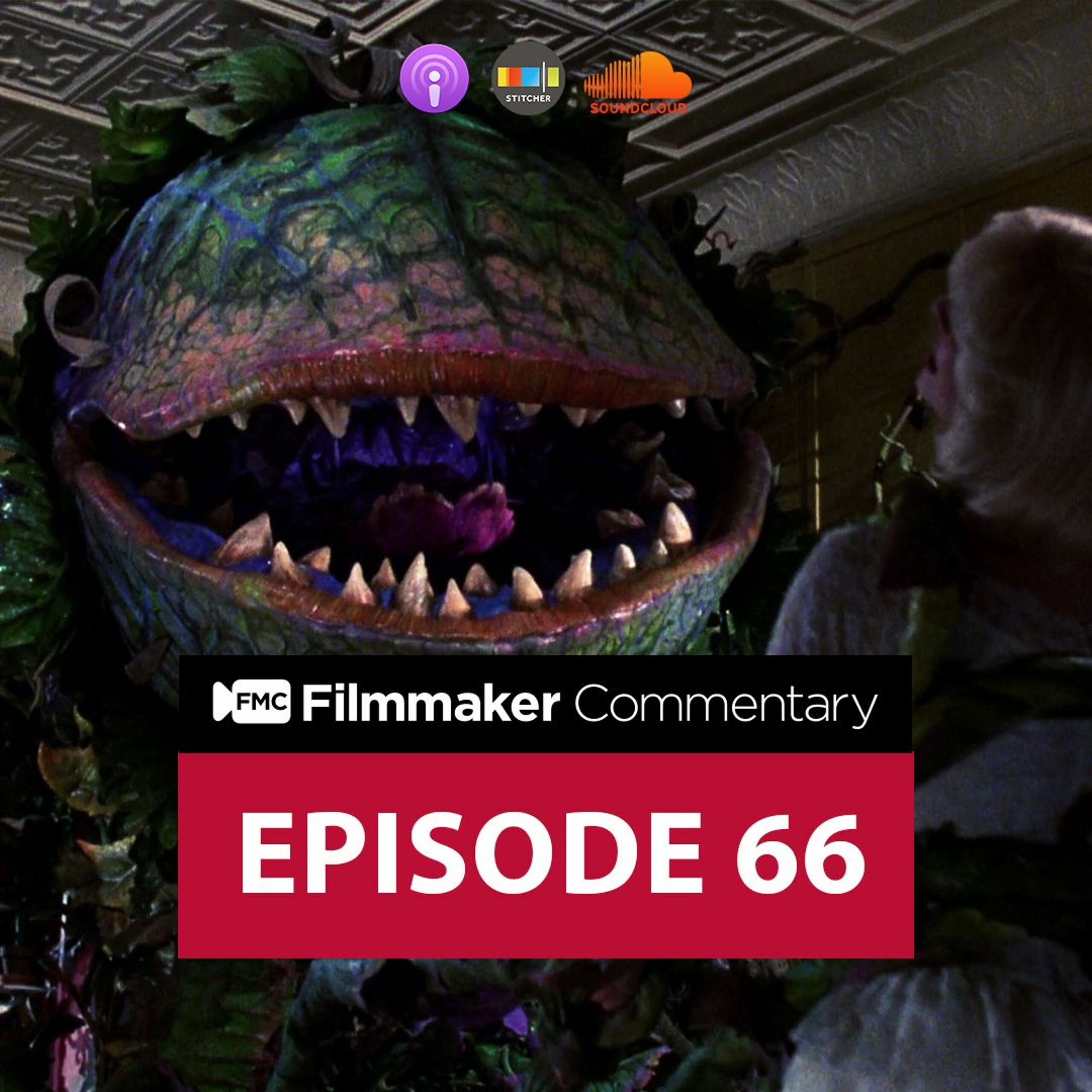
FMC 066: Little Shop Of Horrors Directed by Frank Oz

July 30, 2019
Listen on Apple Spotify YouTube
Listen to this episode
Your browser does not support the audio element.
Also on Apple Spotify YouTube

Step into the delightful and devious world of “Little Shop of Horrors” with Reginald Titus Jr. and Casey G. Smith on Filmmaker Commentary. This episode dives deep into Frank Oz’s unique vision and meticulous direction, exploring how his technical prowess brought the cult classic to life.

What We Cover

  • Frank Oz’s precise and highly technical approach to directing a musical horror-comedy.
  • The enduring artistry of the film’s practical effects and puppet work, particularly with Audrey II.
  • Insights into the often-inflated world of film budgets and box office reporting, with surprising industry anecdotes.
  • A fascinating look at the history of Hollywood musicals and their evolution from mainstream hits to “prestige pictures.”
  • Analysis of the film’s seamless blend of dark comedy, horror, and musical elements.
  • The challenges and unique storytelling opportunities presented by the musical film genre.

Key Moments

  • Budget & Box Office Transparency (1:08): Reginald and Casey open a compelling discussion about the accuracy of reported film budgets and box office figures, highlighting discrepancies with blockbuster titles like “Terminator 2” and how studios may manipulate numbers.
  • The Lion King Remake & CGI vs. Emotion (5:10): A deep dive into the critical reception of Jon Favreau’s “The Lion King” remake, examining how its hyper-realistic CGI animals struggled to convey the emotional depth of traditional animation.
  • Frank Oz’s Technical Directing (36:38): Discover the incredible detail in Frank Oz’s commentary, as he breaks down complex camera movements, soundstage design, and the challenges of puppeteering the iconic Audrey II.
  • Musicals as “Prestige Pictures” (26:15): The hosts explore the historical shift of musicals in Hollywood, discussing how they evolved from popular studio tentpoles to films often created for awards recognition.

Gear & Films Mentioned

  • Films: Little Shop of Horrors (1986), The Lion King (2019), Terminator 2, Demolition Man, Annie, Grease, Mary Poppins, The Five Heartbeats, Purple Rain, Dreamgirls, Gummo, La La Land, The Artist, Dr. Jekyll and Mr. Hyde (1939), Wizard of Oz, The Wiz, Roxanne, Parenthood, Cool World.
  • TV Shows: Euphoria, Jessica Jones Season 3, Stranger Things Season 3.
  • People: Frank Oz, Roger Corman, Jon Favreau, Sylvester Stallone, Rick Moranis, Steve Martin, Bill Murray, Ellen Greene, Jim Belushi, Casey G. Smith.
  • Other: VHS.

Listener Questions

  • How did Frank Oz’s meticulous approach influence the distinctive style of “Little Shop of Horrors,” and what filmmaking lessons can be learned from his commentary?
  • What hidden truths about film budgets and box office earnings are revealed through Hollywood’s accounting practices, and why should filmmakers be skeptical?
  • What makes a film a “musical,” and how have these productions evolved in Hollywood from their heyday to modern interpretations?
Full Transcript

Read the full transcript

Full Episode Transcript
This episode of Filmmaker Commentary Frank Oz's 1986 musical film, "Little Shop of Horrors," discussing its production, critical reception, and the broader context of movie budgets and the musical genre.

Opening Discussion and Budget Analysis
Reginald Titus Jr.: Filmmaker Commentary episode 66. Welcome to Filmmaker Commentary, where we give you insights from our favorite filmmaking commentaries. These commentaries can be heard on your DVD and Blu-rays of your favorite movies. We'll show you how you can use these commentaries and apply them to improve your video production and filmmaking techniques. All of this here on Filmmaker Commentary. I'm your host, Reginald Titus Jr.
Reginald Titus Jr.: Welcome to Filmmaker Commentary. I'm Reginald Titus Jr. I'm joined with...
Casey G. Smith: Casey G. Smith.
Reginald Titus Jr.: Welcome back, sir.
Casey G. Smith.: Good to be back, sir.
Reginald Titus Jr.: Today we are covering Little Shop of Horrors, 1986, directed by Frank Oz. It was nominated for two Academy Awards, one for visual effects, another one for best song. Had a budget of... in this book, Roger Corman, it's called Roger Corman's book of an Unauthorized Life by Beverly Gray. They had a budget of 33 million. What did you find for his budget?
Casey G. Smith: On IMDb Pro, I found a budget of 25 million.
Reginald Titus Jr.: 25. And then we have a box office of 38.9 million.
Casey G. Smith: Mhm.
Reginald Titus Jr.: The more I'm starting to look into box office, and not necessarily box office, but budgets for sure, I am starting to be a little bit...
Casey G. Smith: Skeptical?
Reginald Titus Jr.: Very skeptical. And this is why. I was on YouTube looking, I don't know, a Terminator 2 like old promo video that was on a VHS like popped up, it was a commercial. And I looked up the budget for Terminator 2, it said like 200 and something million or something like that. I was like, "Alright," or, no, no, no, was it the budget or what they were claiming they made at the box office? Both, budget and box office. So at the box office, I think they said it was about 500 million, and the budget was like 200 or something like that. Y'all can check, double-check it because it changes depending on what source you look at. But on this VHS, on the the promo commercial, because it was Terminator 2 was going over to Home Entertainment.
Casey G. Smith: Okay.
Reginald Titus Jr.: And said, "Terminator 2 made 1 billion at the box office." Would it be a billion. But what's reported is like 500 million or whatever. And I'm like, "Whoa, wait, what's going on here?" What's what's what's going on here?
Casey G. Smith: They're saying it made a billion dollars?
Reginald Titus Jr.: A billion.
Casey G. Smith: Not that, hmm, that's interesting. Well, also during that time, they knew that people didn't have access. Unless you were in the system, you had no way to check and verify those numbers.
Reginald Titus Jr.: A billion dollars.
Casey G. Smith: That's a big fudge.
Reginald Titus Jr.: So the double?
Casey G. Smith: Yeah.
Reginald Titus Jr.: And this was a this was um, who was the cop, the guy that played the the alien with the the liquid the liquid cop? I can't remember his name either.
Casey G. Smith: I can't remember the actor's name either.
Reginald Titus Jr.: Uh, but he was like kind of hosting the commercial. He was hosting the commercial. He said, "Made over a billion dollars at the box office." And they were talking about the campaign like the like go to Blockbuster, go all these places because we're putting 10 million dollars behind the marketing campaign for the home entertainment stuff. And I'm just like, "Whoa," which made me think though, because remember on our last episode, we were talking about, I think we briefly kind of talked about Sylvester Stallone and how um with Demolition Man, he was supposed to get 15% of the profit. And what he ended up doing is he had to sue because he wasn't getting like that money and all that, and he ended up settling out of court for that amount because they weren't reporting it correctly.
Casey G. Smith: Right, probably showing that they had less.
Reginald Titus Jr.: Yeah, exactly. And so when you see that, and that doesn't really become public and they kind of settle behind the scenes, it kind of raised my flag a little bit. It's like, man, these Blockbusters were making a lot more than maybe we know or that they're reporting to the public so they don't get sued or because, I mean, what other business that isn't publicly traded is just going to tell you like, hey, we made this is how much we're making. Nobody does that.
Casey G. Smith: Yeah, yeah, you got a point. Even and even when you know, when you watch like, you know, somebody like Dov S.S. Simmons, he specifically talks about the budgets being inflated.
Reginald Titus Jr.: Yeah.
Casey G. Smith: That they share. Saying that they had that they're gonna say it cost X amount more, just to kind of give it a little more prestige. But that, you know, maybe it's maybe it's what, like, I don't know, maybe like a 30% or whatever increase um to maybe what it actually would have cost. And of course, you know, when we see these budgets, I don't know they include like the the P&A.
Reginald Titus Jr.: Right.
Casey G. Smith: Um either. So...
Reginald Titus Jr.: Might just be production budget.
Casey G. Smith: Mhm.
Reginald Titus Jr.: So that's um, yeah, so I've been kind of looking at these budgets and box office a little different, especially when um when you go back to looking at films from like an earlier time, the 80s and the 90s, especially some of these blockbusters. Now that now that we're in the future, it's like, okay, the reporting is a little different now.
Casey G. Smith: Interesting.
Reginald Titus Jr.: We didn't make no money cause like I'm pretty sure they made just another billion just on home entertainment cause these companies are just like, I mean, Blu-ray, DVD, streaming, transactional, like, what are those numbers like?
Casey G. Smith: Mhm.
Reginald Titus Jr.: Anyhow, that was a tangent, but yeah, uh we are gonna dive into Little Shop of Horrors a little bit further, but first let's talk about news and movies watched.

News and Movie Watchlist
Casey G. Smith: Uh so in the news, the the new version of The Lion King by Disney and directed by Jon Favreau uh with its um beautiful um Jungle Book-esque um rehaul and and makeover and and and uh visual effects is getting mixed uh mixed reviews and it's kind of sitting borderline on on being fresh on Rotten Tomatoes. So we'll we'll see how that that plays out. Um but yeah, that's kind of a a shock.
Reginald Titus Jr.: What specifically is it like story? Is it the singing? Is it are they saying specifically what is messing it up?
Casey G. Smith: Some some say that while it's visually stunning, what I've heard a lot of is that the the animals' faces don't emote as much as the the original animation, which makes sense because they're going for realism. Um and even though these animals will speak and feel different emotions, it's going to be different. So one person um I believe it was uh Christian Halloff on uh Collider Live uh they were kind of doing an overview of it and they had like about maybe four people in the space and then they're saying you kind of will fall in one or two camps. Either when you see it, it's gonna kind of make you remember the original film and you may not like it as much because because you're nostalgic for that first film is so strong, uh you just won't connect the same way. You'll you'll say, "Oh, this is this is cool, you know, it's different," but it's just it's not my Lion King kind of thing.
Reginald Titus Jr.: Yes.
Casey G. Smith: Or you'll see it and it'll give you those nostalgic feels and you also will maybe like fall in love with the with the new look of it. Um so yeah, so people kind of are falling like in in two camps. Um but from what I hear story-wise, it's pretty much beat by beat. There's very few changes.
Reginald Titus Jr.: Okay.
Casey G. Smith: Um I I hear that Pumbaa and Timon, though, the actors playing those roles, I know one is is uh Seth uh Rogen and I forget the other guy's name, but he's in a lot of stuff. He's usually yelling at people. But I hear that those two kind of kind of uh steal the show. And there's a couple of new songs. Beyoncé has a new song from that that that she released. Sounds pretty good. She's doing some different things with her voice in that one that I hadn't really heard her do too often.
Reginald Titus Jr.: Okay, Beyoncé.
Casey G. Smith: So yeah, I still want to check it out. How about you?
Reginald Titus Jr.: Yeah.
Casey G. Smith: Yeah. And I'm not a huge, like the first Lion King, I'm like, oh man, okay, it's fine. But uh I really do want to see this. I I don't know.
Reginald Titus Jr.: I think I'd uh just for like the visual, like how how they were able to pull off how realistically how realistically these animals look. I'm interested in that that part of it, but um I think my wife, she's probably really gonna she's like looking forward to it, you know.
Casey G. Smith: Oh, nice.
Reginald Titus Jr.: Yeah. So...
Casey G. Smith: Cool.
Reginald Titus Jr.: Um we have uh John Wick's Derek Kolstad. We talked about Derek earlier. Um he's...
Casey G. Smith: How you treating your brothers? You say LC, you know what I'm saying?
Reginald Titus Jr.: So he's writing Falcon and Winter Soldier for Marvel Studios and Disney Plus. And um of course Falcon and the Winter Soldier was it was announced last year and it's part of the developing set of limited Marvel series for Disney's new streaming service, Disney Plus. Anthony Mackie and Sebastian Stan are reprising their roles for the films, and we already knew that Empire TV producer Malcolm Spellman was setting up the writing room. So uh this is from Owen William from Empire Magazine. Lovely. Congratulations, Derek. What about movies watched, man? Did you watch anything in this past week?
Casey G. Smith: So this past week uh mainly it was more so shows. Um so been staying on Euphoria on HBO. Again, if you have HBO, if you're not on that...
Reginald Titus Jr.: How many uh episodes is it?
Casey G. Smith: Yeah, there should be about five Oh really? I want to say like five between four to five episodes in. But I I literally the episode that I I saw, I I haven't seen this week's, but uh what I was at last week, I thought it was like I thought, okay, maybe this is just a short series. This the way that it ended, I was like, oh, this could be like the end. But then I saw a preview for the next week. I was like, oh, there's more. Okay, all right, let's keep going. Um, Jessica Jones Season 3. I don't think I had wrapped that up last time uh we talked. Well, I did wrap it up this week, very fitting ending. I was I was very pleased with the ending of Jessica Jones Season 3. Season 1 is cool. Season 1 is good. No, Season 1 is is really good. Season 2, it's okay. Season 3, man, great ending to the arcs. Um, saw Aziz Aziz Ansari's new Netflix comedy special called Right Now.
Reginald Titus Jr.: Okay.
Reginald Titus Jr.: Yeah.
Casey G. Smith: Dug it, man, really, really dug it. He's hitting some hot topics of the day, but in a very uh a very poised, a very personal way and I was uh I was I was really impressed with how Aziz handled things and for him to come back from the the year that he had and address some serious...
Reginald Titus Jr.: Oh man, that's gonna be a brutal year, man, for a lot of people.
Casey G. Smith: Yeah, but he he addressed it just won wonderfully. And then also uh I guess been on Netflix a lot because also uh Stranger Things Season 3.
Reginald Titus Jr.: I'm with you, bro.
Casey G. Smith: I'm like two I think I'm I'm two episodes in on that as far as I've I've gotten. But so far, I'm digging. I wasn't sure. I I I was thinking maybe I was kind of over. I wasn't really excited about this season. I don't know why. It's like, I love the first season. Again, second season was was okay uh for me, but uh I wasn't really super excited. But man, like two episodes in, I'm like, yeah, I'm in. Okay, I'm just I'm digging what they're doing. And watching these kids grow older. Yeah, I'm like, wow.
Reginald Titus Jr.: Okay.
Reginald Titus Jr.: That's crazy. And they're writing towards them getting older. So for as me, that's that's the only thing I watched was Stranger Things. That's all I had time for this week. Um I think we're on chapter four right now. But I felt the same way, like uh when I saw the teaser trailer, I forgot, whenever the first teaser trailer hit, I was like, "Ooh, I can't wait." Because something about like the Stranger Things, they really nailed it the first two seasons. Um in my opinion, the way they shoot it is super cinematic. You know, it's about an hour per episode or something like that. So it doesn't feel like uh like TV. You know, like sometimes it seems like with certain TV shows, they're just trying to get they're just trying to make their day. You know, it's like, hey, we're just going to shoot with four or five cameras, let's just grab some stuff. Uh it seems like they definitely have a vision um for for each season. Uh but um I wasn't I was excited at first, but then so much time had passed, I kind of just like forgotten about it, you know, you binge it for a week and then you're like, dang, I gotta wait a year or two. Started playing this one and I'm like the same way, like, oh man, they didn't lose a step. Sometimes some of these seasons they fall off and you like the writing is off a little bit or something's missing, but it seems like they were able to kind of capture that magic again and they just picked right back up.
Casey G. Smith: Right.
Casey G. Smith: Yeah.
Casey G. Smith: Agreed. Absolutely agreed, man. So I'm I'm looking forward to the rest of this season.
Reginald Titus Jr.: Well, let's jump back into the show.

"Little Shop of Horrors" First Impressions and Musical Discussion
Reginald Titus Jr.: Welcome back to Filmmaker Commentary. We're talking about Little Shop of Horrors, 1986, directed by Frank Oz.
Casey G. Smith: And if this is your first time listening to Filmmaker Commentary, please know that there will be spoilers. You've been forewarned.
Reginald Titus Jr.: Yes, indeed. And uh let's jump into the synopsis.
Reginald Titus Jr.: Meek flower shop assistant, Seymour, pines for coworker, Audrey. During a total eclipse, he discovers an unusual plant he names Audrey 2, which feeds only on human flesh and blood. The growing plant attracts a great deal of business for the previously struggling store. After Seymour feeds Audrey's boyfriend, Orin, to the plant after Orin's accidental death, he must come up with more bodies for the increasingly bloodthirsty plant. Little Shop of Horrors. Did you like it? How did you how would you present it this film?
Casey G. Smith: Well, Rej, I'm glad you asked.
Reginald Titus Jr.: Yes.
Casey G. Smith: So as young Casey growing up in the the the the north.
Reginald Titus Jr.: Yes.
Casey G. Smith: Uh we first saw this again, it was on on HBO. From the first time I saw it, I I I dug this film. Loved this film, actually. Uh it it was a weird dynamic. So sometimes I would have uh times I would have nightmares, you know, of of Audrey 2. These visual effects still hold up.
Reginald Titus Jr.: Very much so.
Casey G. Smith: Uh yeah. Like I I could I could only imagine, you know, a kid watching this today, it would it would freak them out. Yeah. It would freak them out. Uh it so yeah, this is where practical effects just yeah, hold up. But yeah, saw it as a kid, the the and I was, you know, into into monsters and stuff like that when I was young, but the music, the the setting, you know, because it's an older older film, the theatrics, the the humor, and it and the pace. This movie just moves. When you start, it's just it just goes. And you're you're on for the ride. I own this own this film happily and uh yeah, I was happy to revisit it. Glad we're talking about it today.
Reginald Titus Jr.: True.
Reginald Titus Jr.: Yes, indeed.
Reginald Titus Jr.: How about you, man? How were you introduced to Little Shop of Horrors?
Reginald Titus Jr.: Man, when I was, this just came out in '86. So like, when I was in daycare, oh, they would always play musicals. So like, but I didn't know that there was a genre of musicals or anything like that. It was just like they would play stuff like, I have it written down.
Casey G. Smith: Sound of Music.
Reginald Titus Jr.: Uh Grease, let me see. Where's my list? Grease, Mary Poppins, Annie, Popeye, Pippi Longstocking, Willy Wonka, Chocolate Factory, Pete's Dragon, and Charlotte's Web. That's like the stuff I remember like from daycare. So I was like indoctrinated to the like a lot of Disney stuff and things like that. So I don't know if like some older kids were watching uh this film or, you know, it was like, because this is offbeat. This isn't to be played like a like, you'd see the stuff that I was listening to.
Casey G. Smith: That's why you said daycare. I was like, wait, what? I don't know if I'm not going there to say it.
Reginald Titus Jr.: Yeah, so I don't know if I remember it at daycare, but I I do remember watching the whole movie at home. Or somebody had it on VHS or something like that. But at the time, I did like it, but I do remember like kind of being scared, you know what I mean, because of the I thought it was just going to be another kind of like Grease kind of film.
Casey G. Smith: Tell me more.
Reginald Titus Jr.: How do I? What? I mean, man, even like with Grease, like there's like some some borderline rapist activity going on.
Casey G. Smith: Yo, Grease. Like Grease is not for kids.
Reginald Titus Jr.: No, you go back to it. You're like, what is going on here?
Casey G. Smith: It is a sexually charged, peer pressure, yeah, no, Gre- gangs. No, Grease is not for kids.
Reginald Titus Jr.: Yeah, but it's so like popcorn that you it's easily you can look over it very easily. What was I saying? What you first saw it at home? Yeah, so I thought it was just going to be a, you know, typical musical, whatever, even though it's hit Little Shop of Horrors, but uh I was still able, you know, to watch the whole thing. But when that thing started coming alive and he had to go eat people and all this stuff, I'm like, man, this is kind of creepy. You know?
Casey G. Smith: Yeah.
Reginald Titus Jr.: The creepy and like the creepy one was like for the song when he's about to he's like trying to convince uh what's the plant?
Casey G. Smith: Supper Time.
Reginald Titus Jr.: Yeah, he's trying to convince him to...
Casey G. Smith: Or or uh Feed Me.
Reginald Titus Jr.: Was that Feed Me? Is it the upbeat one or or the or the?
Casey G. Smith: No, that was Supper Time.
Reginald Titus Jr.: No, it was Supper Time. It was Supper Time. Yeah, Supper Time was, yeah. I was like, this is creepy. They like so like little like song.
Casey G. Smith: It's seductive, you know? It's bad. Yeah, and but man, when we get into the look of it, yeah, I definitely want to bring that one back up.
Reginald Titus Jr.: This is our first musical that we're covering. Um so as far as me, like I I enjoyed it as a kid, you know, watching it. Now that I'm an adult, I don't watch musicals as much, you know, like it'll just have to be suggested and then on top of that, they're not making that many musicals in general. They're just not. And so I kind of, I appreciated the like the cinematography this time around. But I was watching it with the wife and she was just like, "No!" So I'm trying to watch. I'm like, man, this is actually, this is done pretty well. Like I'm analyzing it. I'm like, I may not be like into musicals and stuff like that, but forget that, like, this has been this was executed very well. Because as soon as that scene opens up and the way that he's cutting, I'm like, ooh, this like before...
Casey G. Smith: It's bad. Yeah. This transitions in this. I've never really appreciated them as much as I have. I'm like, these transitions are brilliant, man. Yeah, just again, that plays into that pacing.
Reginald Titus Jr.: Yeah. My wife, she didn't like it. I still dig it, but she was like, this is she like halfway, she said, "I don't like it." I'm like, why you don't like it? She's singing. It's like, no! That's always been so fascinating to me that again, for some people like with I mean, there's a hard line with music. I think more so than any genre I know of. There is a hard line with people and musicals. I don't know what it is with I've I've got three people, you know, like I can think of off top. if I mention, oh, you know, a musical, they're like, nope, I don't do musicals. Nope, I don't like musicals. And there are some bad musicals out there. There are some that are, you know, there are some that have like this certain, you know, trope and a certain sound to them that, uh, you know, no. But I don't know, to put all of them in the same box, I'm like, that doesn't makes that's like saying if you like, you know, you don't like westerns or you don't like...
Casey G. Smith: Yeah.
Reginald Titus Jr.: Yeah, just man. Yeah, there's always some some in some genre. I figure we could find something that you like, but...
Casey G. Smith: Yeah. But you know, teach these person their own. Yeah.
Reginald Titus Jr.: Yeah, it's definitely weird, but I uh like, you know, this will probably just transition to us just talking about musicals in general. So like we can just spend like the next 10, 15 minutes talking about musicals in general.
Casey G. Smith: Let's do it.
Reginald Titus Jr.: Um, but yeah, she was like, this is going to be on my, she has a list of movies that she'll never watch again. She she was like, this is on my uh on her list right now is Gummo. Did I ever tell you about Gummo?
Casey G. Smith: Oh.
Casey G. Smith: I think you got you may have mentioned it. Yeah. I I I associate a bad experience with it. Just saying it.
Reginald Titus Jr.: I think that one was directed by Harmony Korine. Good old guy, Harmony Korine. Oh, man. But anyhow, that made her list. Like she has a list. She got Gummo. And so now this got on her list.
Casey G. Smith: Oh, man.
Reginald Titus Jr.: I don't think it deserves to be on the same list as Gummo. But uh she but she doesn't, she likes certain musicals. Cause I was like, you do like uh like Annie?
Reginald Titus Jr.: Okay. Like the new, the new Annie, the the more contemporary.
Casey G. Smith: I I never actually never watched that.
Reginald Titus Jr.: She dug that one. I'm saying it was pretty decent. Okay.
Reginald Titus Jr.: And then so she's not anti-musical, she just she didn't like this movie. Yeah, and that's fair. Okay, I'm like, all right. And she and I think for her, the when uh live action, when people are singing, it brings her out of the movie. Because if this just played as a movie, I think she would like the movie. But because when they start singing, it just brings her out of that. And so I'm thinking that's what the deal is.
Casey G. Smith: And it's said and I I wonder like when they're singing, is she listening to the lyrics and what they're saying? Is she or or does like it something totally like switch off? Because with this, like the that's for me, that's what draws me in. Because I'm I'm I'm very big into lyrics in anything I listen to. So if you're gonna if you're gonna put it, I'm like, oh man, okay, what are you singing about? What's the context? But also I want to I want to experience the play on words. Kind of something the poetry that's in it, you know? And I like this because they, you know, the three girls uh, you know, they're our guides throughout, you know, they're almost yeah, they're almost like narrators. Yeah. They they they narrate and take us through and their continual costume changes. I dig. And then again, when you know, when people are are singing about the the situation. And there's a lot, this this this is there are a lot of songs in in this musical. And they are and it's short and they this is a high amount of songs in the musical. Some have less, this one has a lot and it's just it's it's you literally at times go from one song literally right into another. Um, but it's not a lot of like it's mainly the three girls that dance. This is not one of those musicals where you have like a bunch of dance routines like a like a, you know, like a Grease, you know, you got actual like dance sessions.
Reginald Titus Jr.: Okay.
Reginald Titus Jr.: And so like there's so there's different versions of musicals because it's kind of hard to say like, okay, is um what we were talking about, uh like the Five Heartbeats, you know, it's a movie, but then it has like musical elements to it. It has musical numbers. No, it has it has performances. That's the difference for me. Five Heartbeats has performances where they're singing and dancing, but they aren't singing to the plot. They aren't singing to we are moving the plot for. We aren't singing about our specific situation um because of sake of performing for a crowd or or label because we are a musical group.
Casey G. Smith: It has musical numbers.
Reginald Titus Jr.: And it's it's crazy because it's like some people will put other films into this being a musical like what is a musical, you know? Um like Purple Rain was on the list as far as like being a musical. Under the cherry moon. For real, like, really? Yeah, because it's like it has music and they're like performing it in there.
Casey G. Smith: That's that's um I'm trying to think of something to equate that too. That's that to me, that's almost like saying, I don't know, that's like oh that's like saying, if if I'm watching a movie that has somebody in it that um that does anything heroic and it involves any kind of uh supernatural ability or extraordinary ability, then automatically that makes that a superhero movie. Well, no.
Reginald Titus Jr.: Because you can market it as that.
Casey G. Smith: You can market things all all kinds of ways, but not but not but I'm like, ah, not necessarily. This is an element of the supernatural doesn't make it a superhero movie. They're they're additional tropes. just because, I don't know. To me, a musical is so specific. Like you could like to me, if people break into song in the midst of the plot to move forward. It's it's the difference between Five Heartbeats and Dreamgirls.
Reginald Titus Jr.: Didn't see Dreamgirls. No. Dreamgirls is a prime example. You have people, Jennifer Hudson, when she won her Academy for you know, I'm telling you, you're gonna love me. That is a song she is. You know, I'll take that back. I did see I've seen probably like 75% of that movie. Okay.
Casey G. Smith: That's a song where they are people sing to each other not for the sake of performing for a crowd. They they are singing to each other to communicate their emotions and drive the plot forward versus Five Heartbeats, anytime that they're singing or performing, it's for a crowd that that's being recorded.
Reginald Titus Jr.: But remember that one point with the girls sweeping up in the room, what about that?
Casey G. Smith: Oh jeez, man, you got me right there. Yeah, you totally got me right there. I forget I forget about that.
Reginald Titus Jr.: That's why I was like, it's like it's...
Casey G. Smith: Nah, you got me there. Nah, you totally got me there. I forget about I forget about that that scene that that would make it that that I almost say yeah.
Reginald Titus Jr.: So it's like you have these little things.
Casey G. Smith: You got me on that one. I always forget, but that you're right. That that is a that is a musical number. That would, man, yeah.
Reginald Titus Jr.: But I enjoy that part of the movie, you know, it's not even it doesn't take me out or anything like that. And I don't even even though it's music, I don't in my brain, I don't really view it as a musical, but it could be argued that...
Casey G. Smith: That's a musical number. Man, that...
Reginald Titus Jr.: It's using musical like a musical application in the film. Yeah. And that's the and that's the only it's kind of like the only one that's there where they where they're breaking into song. Right. And uh well, so uh but there's there's music kind of coming out of nowhere. That's the other that's the other aspect. Does music come out of nowhere? It does. In that scene, dead gummy it does. Uh and you know, the context that they're actually trying to sing about, you know, helping him come up with a song and she's literally finding scraps and she has a voice and all that. But yeah, there is music coming out of nowhere. So that's a musical number.
Casey G. Smith: That's a musical number. It's interesting. Hmm.
Reginald Titus Jr.: I don't know where we were going with that. Um, but yeah, it's kind of hard to define it, you know, some Well, I I wouldn't say it's hard to define, but you got certain films that may not harp on the dancing so much or how they're presenting the plot to you or maybe they just having fun singing. I don't know.
Casey G. Smith: Yeah, typically the numbers are going to move the story forward somehow, right? We're dealing with, you know, whatever basic basic tropes of drama are there. Those numbers help at times transition, uh help reveal uh plot, help reveal uh characters, right? Their motivations, help resolve conflicts at the end. Sometimes they're just plot devices, sometimes they're just can be just fun. Yeah.
Reginald Titus Jr.: I think out of musicals, even like with uh with Disney and their you know, their animation. Um I I feel like it's just it's I don't, you know, it's animation and arts and cartoon. We're already suspended belief anyway. Yes, of course, the animals can sing. Um, but you know, they...
Reginald Titus Jr.: But those were classified as musicals, right?
Casey G. Smith: I don't know. I I I just I just see them as I see them as animated features. It's crazy, but they Yeah, I would call it animated feature. I I guess I guess you could you could almost sub-genre, you could sub-genre. To me, animation is this key category. It's a Disney animated film or Pixar animated film or Sony or DreamWorks. All animated films. And um...
Reginald Titus Jr.: Cause it's one of the few Disney, like one of the few studios that continued the tradition of musicals after everybody kind of abandoned it. Hm. There is a um I'm gonna recommend like just, because we can probably, this whole musical thing, like this is like, I didn't realize this until until I started kind of researching and looking through the just like the history of Hollywood and how a lot of Hollywood was just built on the backs of like these actors that they that they kept in in their uh studio in the star system. Yeah. And and if you could, you know, they taught him how to sing, you know, how to dance. They were triple they were triple threats. That was the foundation. You know, your your Fred Astaires, your your um, you know, the the Judy Garlands. They yeah, I mean, it was it was it was like almost a given. Man, okay, oh man, I I I wish I wish that um Singing in the Rain, man. I wish that had commentary from the director. Wow. I would I would I would recommend I would just as a movie staple classic, Singing in the Rain, man. If you've never if you've never seen it, highly I saw it a couple years ago cause I would always hear about it. I'm like, what's the big deal? From a performance standpoint, it's it's it's it's kind of awesome, man. There's some amazing things happening in that. And when you see some behind the scenes, like how hard they worked to pull off some of those things, those actors back then, they were beasts, man. Beasts.
Casey G. Smith: Yeah.
Reginald Titus Jr.: It's crazy. So I would recommend there's a YouTube channel by Lindsay Ellis and uh she does like a whole piece of the death of the Hollywood musical. And and she kind of brings up, you know, just how like basically the musicals are what like the uh like the Marvel films are now, like the tentpoles. You know, they're they were tentpole movies, everybody was doing it. And kind of just the money, bad business, and things just kind of crushed the system crushed the system and it disbanded. People were going to TV, like new thing new opportunities started popping up. Uh actors that were doing musicals and now they're no they have their, you know, their own TV show where they might be singing and doing. What is it? Variety shows. Variety shows. Yeah, the Carol Burnetts and Dick Van Dykes. Exactly. And a lot of these people came from like a musical background and they just brought it to their show. Yeah. And uh yeah, it's very very eye-opening. So I I didn't realize like just how much history just in musicals and how much like that was a Hollywood movie, the musical. Yeah. I mean that was yeah, it was it was it was huge. The biggest stars of the day again, triple threats.
Casey G. Smith: Yeah.
Reginald Titus Jr.: So there's something called a Prestige Picture. Have you heard of this term? It's a um a prestige picture is a film produced to like bolster the film studio's perceived artistic integrity rather than to earn a profit. And so like...
Casey G. Smith: By Art House film.
Reginald Titus Jr.: Yeah, so it was like, yeah. And it's for studios that have money. And so Yeah. Basically, the musical has kind of fallen into that category of a prestige film. We're doing it to get some awards.
Casey G. Smith: Mhm.
Reginald Titus Jr.: Right, right. Which, you know, we had what La La Land and what I mean, where are some other like kind of?
Casey G. Smith: The the artist. Even though even though it was a silent film. Again, so many movies that get nominated for like Best Picture and things like that often appeal to old Hollywood. Whether it was Hugo, you know, years back. Again, the Artist appeals to the old Hollywood system. Uh to some degree, uh Argo did. Yeah, it's when you look at them, it's very, very interesting to see how many that that play to that that get nominated. Again, La La Land, again speaking, you know, to, you know, it's uh...
Reginald Titus Jr.: Yeah, it got nominated for a lot of stuff.
Casey G. Smith: Yeah. And it was a different kind of different kind of musical, you know, what Damien Chazelle did with that. It was it was kind of paying an homage to that as well. Um, but uh...
Reginald Titus Jr.: Le Mis. You know, but Le Mis has been that play has been around for decades. Um a long, long time. And it goes like Mamma Mia. Was that one that was hot? Was it Mamma Mia? They did Mamma Mia. They did recently the second Mamma Mia, Here We Go Again. I don't I don't know what kind of accolades that received. I guess, you know, enough to make a sequel. But...
Casey G. Smith: You know, but Le Mis has been that play has been around for decades.
Reginald Titus Jr.: Yeah.
Reginald Titus Jr.: So yeah, man, I got a uh a new appreciation for the genre just uh after kind of doing a little bit of research and seeing like the history of the musicals. And even though now they're in a considered prestige pictures and, you know, there's ones that a lot of studios kind of stay away from, them and like westerns, you know, like it's but westerns were a big part of the old Hollywood as well. Oh, yeah. And it's just those are just two genres that kind of...
Casey G. Smith: They were they were of a I think they were of of a time. And that's why I think one reason why, you know, Hamilton was was such a big deal. Um that brought quite a bit of shine back to musicals. Um that mean that was huge. I mean, people were waiting in line and and...
Reginald Titus Jr.: But that was just like a straight up Broadway musical, but not converted to a movie yet. Yeah. Not yet. Eventually, I'm sure...
Casey G. Smith: Yeah.
Reginald Titus Jr.: Oh, man, I would not want to be.
Casey G. Smith: Sure they will. Oh, man.
Reginald Titus Jr.: Cause I feel like I would probably enjoy the musical as like a Broadway production versus as a movie. I think I would like probably the Little Shop of Horrors as, you know, the off-Broadway production, probably better than I would like the cinematic version.
Casey G. Smith: See, I don't I I'm just I'm just assuming that.
Reginald Titus Jr.: Because I've seen this first. Right. Yeah, you got a point. I probably use a different film.
Casey G. Smith: I've seen this first and this is and this is so well done. When going and seeing it in a theater, it will never live up to for me will never live up to this because the way Audrey 2 looks, it's going to be some dude in a in a plant, you know, costume and that's, you know, made of velvet or felt or something like that and and just yeah, it's not it's not yeah, and then the you got a point there. It it would be yeah.
Reginald Titus Jr.: I just think it's a it would just be a different experience, you know?
Casey G. Smith: I totally totally agree with that.
Reginald Titus Jr.: I was driving down downtown Fort Worth. Uh I can't think of the name of the theater and they got Carrie the Musical.
Casey G. Smith: Oh dear. Oh dear.
Reginald Titus Jr.: I was like, man, okay. Maybe I it popped on my radar cause we're going to record this.
Casey G. Smith: And it does sound it does seem seem and sound interesting. I'm kind of intrigued now. Yeah. And then that fascinates me also when something goes from obviously you know, it's a novel first, right? And then the movie adaptations, both versions, and then into Broadway. I'll tell you what, man, Spider-Man, Turn Off the Dark. I've never seen the actual musical, but I've got the soundtrack. I downloaded it one day and I dig some of the songs that are that are in there. Uh sometimes when I'm playing Spider-Man PS4, I'll I'll literally this one New York, like opening songs, it's all instrumental. It's got some nice guitar riffs in it. I'll let that fly while I'm web-slinging. But yeah, it's uh musicals are...
Reginald Titus Jr.: I was going back. I just thought about something. We were talking about Lion King. So since Lion King, the old Lion King is animation, but the new one's supposed to be live action. And if they're singing...
Casey G. Smith: See, I wouldn't even call it live action.
Reginald Titus Jr.: That's what they is that what they're saying is live action? Isn't that what they're marketing is this the live action animation?
Casey G. Smith: A lot of times they automatically say that because most of the most of...
Reginald Titus Jr.: Cause it looks like it's real life.
Casey G. Smith: Every other Disney film has some live real people in it, right? So if it's Aladdin, if it's Maleficent, um if it's Beauty and the Beast, there are real people in the roles. So they automatically are just kind of using the term, but everything in the movie is all CGI. There's nothing real about it, you know. Lion King has no humans in it. So it's still animated.
Reginald Titus Jr.: So you still animated?
Casey G. Smith: Yeah. Everything in there, everything in there is computer-generated. So there's nothing live about it. If if there's not a real person in it, Jungle Book is live because you have that one kid. You have a real person. To me, that's live. Whether you're whether you're creating by 2D animation or whether it's 3D, which is what this is, you know, it's still...
Reginald Titus Jr.: So Cool World with Brad Pitt.
Casey G. Smith: That's the live-action with with animation. Roger Rabbit. Yeah, there's yeah, there's a live person in it. Then it's it's a high it's a hybrid of live-action and animation. Um that and that's where...
Reginald Titus Jr.: Same.
Reginald Titus Jr.: I was just saying it doesn't like fall into being considered a musical based on some of the...
Casey G. Smith: As far as being a musical?
Reginald Titus Jr.: Based on some of the...
Casey G. Smith: Hmm, okay. So with this current Lion King, they're gonna be singing? Again, it's a hybrid. Once again, it's it's yeah, it's an animated musical movie. That's how I would categorize it. All these rules. Yeah. Animated musical movie.
Reginald Titus Jr.: It's another hybrid.
Casey G. Smith: Cuz like, you know, Little Shop of Horrors, they've got it pegged as a comedy, musical, horror film, which it checks all of those.
Reginald Titus Jr.: It does. I don't know how you sell that one.
Casey G. Smith: But heaviest, I think on the musical side. The title indicates horror, but the title also indicates comedy because it's just ridiculous. Little Shop of Horrors.
Reginald Titus Jr.: Yeah. And I noticed with some of the other musicals, like we're looking at La La Land and some of these other ones, they lead with drama or they'll say drama and then slash musical.
Casey G. Smith: I guess we'll jump in the commentary itself, but uh yeah, it's points. I was like, oh, I wait till we.
Reginald Titus Jr.: Yes. Yes, let's. Okay. So that's it for that. You know, I just wanted to talk briefly, kind of like about musicals and, you know, I encourage our listeners to kind of look into some of the history of Hollywood and kind of see where things come from.
Casey G. Smith: Yes. Yes, your history. Again, we've got a lot of classics. Wizard of Oz. That's a musical.
Reginald Titus Jr.: It is. Off to see the wizard, somewhere over the rainbow. There's a lot of songs in there. Well, if I only had a brain. The Wiz. Oh, buddy.
Casey G. Smith: Somewhere over the rainbow.
Casey G. Smith: That's one of those films I didn't know that people like ragged on it until I got older. Like I was growing up, you know, that was it, man. I love the Wiz. I still love it now, man. I'm but...
Reginald Titus Jr.: That was creepy. That one I did see in daycare.
Casey G. Smith: Oh, man. Yeah.
Reginald Titus Jr.: That was creepy. I was like, what is this?
Casey G. Smith: Oh, man. When you, man, yeah, when you get into the history of the the the author behind the Wizard of Oz and kind of where that came from and it's it's it's interesting. But yeah, The Wiz goes it goes like black magic and hood, you know, like the the ghettos of the day of the of the 70s and um yeah, just some of the the art direction and all that kind of stuff. Again, we had that on vinyl too and yeah my dad put that poster that insert poster of the lion young because that would freak me out. The lion and the witch would freak me out. He put it in my room when I came home one day like I don't know second grade, whatever. I walked in my room saw it ran out.
Reginald Titus Jr.: First rule, son, don't touch anybody. That's right.
Reginald Titus Jr.: Yeah, man. Um, what did you think about the commentary of this movie with uh Frank Oz?

Director's Commentary and Production Insights
Casey G. Smith: Very impressed, man. Frank Oz, he's super technical and he's boom, boom, breaking down. You know, definitely if you're gonna listen to a Frank Oz commentary, make sure you've watched the film before because he's he spoils like like spoils every scene that like this is what's gonna happen next. And it's like, all right, now what's gonna happen next? So, you know, I've watched it but he's he's he says that quite a bit. All right, let's get that's happening that this this is this is. When he's he's constantly breaking it down, letting you know what they used, you know, what was difficult. And again, I've got even greater appreciation for this film just hearing about like the huge sound stage, six months worth of shooting, all the miniatures that were used, but it's it's this is a good-looking film, especially, I don't know if you watched any of the the the behind-the-scenes stuff. No, I didn't. But there's a feature that they show and you can kind of see like the way the film like used to look or how they did it for this documentary piece. And then when you see it now that the transfer into the, you know, into Blu-ray, it just, man, it looks so much better, man. Just the colors and all that just pops. You can the the there's a definite contrast, but yeah, I enjoyed really enjoyed Frank Oz. Me too. As a director, um, and in his commentary.
Reginald Titus Jr.: Yeah, I enjoyed it too. Right up my alley, technical, like to the point to where it's like, he's breaking the scene down to the second. I'm like, ah, that's what I'm talking about, Frank. Yeah. So yeah, from a technical standpoint, filmmakers, definitely check this commentary out. You'll definitely appreciate it more. See what everybody went through. We we just take so much stuff for granted, man.
Casey G. Smith: He really was. He really was.
Reginald Titus Jr.: Oh, man.
Reginald Titus Jr.: Uh you don't realize, you know, who from stunt people who might have gotten hurt on a film or killed or you just don't know what people are doing to get these scenes that we just we just take it for granted.
Casey G. Smith: Oh, yeah. And the fact that this this commentary in particular was actually recorded in 1997. Yeah. So almost 10 years uh from the original filming of the of the movie.
Reginald Titus Jr.: And he still was crisp and on point. He really was.
Casey G. Smith: He really was. Yeah.
Reginald Titus Jr.: That's pretty impressive for ten years. Um, the style of the film, I have uh earthy, grungy feel, has a simulated rain style. Man, yep. Got the moving camera. Uh you got a lot of moving camera work in different positions. Like from a visual visually stimulating. Uh this film, it's uh...
Casey G. Smith: Man, yep. A lot of crane work.
Reginald Titus Jr.: There's one shot in particular that they have where they had like a a crane on a crane kind of shot um that he yeah that he discussed because they were there wasn't uh a crane big enough to capture. So they had to, you know, uh have some uh some innovation going on. But yeah, I I agree, definitely dark and and and moody at uh at certain times. It's fantastic practical effects use effects used throughout. Great use of of miniatures, some great camera tricks, man.
Casey G. Smith: Yeah.
Reginald Titus Jr.: Yeah. I'm a fan for just keeping everything optical, keeping it in camera. That's I like that.
Casey G. Smith: Dude. When they I I never realized that when they talked about the scene of of of Audrey 2 first growing out of the out of the Maxwell coffee can, when he said that's how they did it, my mind is still spinning. Like, wait, what? Say that the camera is moving closer. I'm like, wait, what? Like, that's that's awesome.
Reginald Titus Jr.: Everything just about everything, no, everything was shot. All I mean, it's one big uh studio in London that they shot on and they just rebuilt a replica of Skid Row in New York. So everything is in is an interior uh technically. Um, like we said, you know, this again, lots of crane work and lots of camera movement.
Reginald Titus Jr.: For real.
Reginald Titus Jr.: Cause somebody could have easily took this and just gave it the stage play look and just shoot it. Okay, we're done in a month, you know, or whatever.
Casey G. Smith: Because, you know, the the original film by Corman, which is classically kind of panned for being, you know, known as being bad, was shot just within a couple of days, you know. Most of the story takes place literally in the store. The only other location, I think there's a location at a dock or something like that and then the dentist office.
Reginald Titus Jr.: I've never seen the first one. I didn't see the first one. But the reason the first one was really bad. Roger Corman, I like Roger Corman, like his business practices, you know, the original film was 19. Just like trivia. Just since you started talking about it. Um, it was a 1960. The original film, 1960. Made by Roger Corman. Made for $27,000. Uh, he he brags. He's like, in the book that I was that I uh said earlier, uh he brags that he made his money back in the first hour uh of the release. Um, and of course, that was later adapted into a stage play and he was able to, you know, capitalize on that. But a part of also another one of the trivia is that he didn't ever copyright the film. Roger Corman never copyrighted the movie or anything like that. Oh, wow. Yeah. So it was basically was in the public domain and from the very beginning. And he had to kind of go back and, you know, tie it tie some loose ends up. Wow. But he kind of bragged that, hey, we made our money back like in the the first hour of release, whereas this new movie, which was supposed to be this blockbuster, didn't make its money back at all. And it only took him two days to make it. It took them six months to make it. 33 million. How many people even know about the original, you know?
Casey G. Smith: Oh, wow.
Reginald Titus Jr.: Well, when the uh when the stage play came out, when the when the stage play came out, that's when it started that's when it got back on Roger Corman's radar. Sure. Um and then people were like bootlegging it. They were bootlegging the original film. They were it was on VHS, they were bootlegging it. He's like, man, what's going on here? Like, why is this popular? And so he had to kind of go back because it was starting to make money and everybody knows Roger Corman is about that money. And so he had to go figure out how he can make sure that he was included on, you know, making sure for the stage play and anything else afterwards.
Casey G. Smith: Sure.
Reginald Titus Jr.: Nice, nice. What's doing more trivia?
Casey G. Smith: Uh, no, no, no. I was just, no, I was just going through my memory. I was like, I I watched it so many times, but I kind of forgot a lot.
Reginald Titus Jr.: Oh, I was just no, I was just going through my memory. I was like, I I watched it so many times, but I kind of forgot a lot.

Themes, Tropes and Final Thoughts
Reginald Titus Jr.: Oh, yeah. Oh, Spaceballs. Um, one more, Jim Henson's kids, uh show up in the film. One is the is the little girl with the crazy bracelet contraption on her mouth. And then, um, is it uh one of the puppeteers or one of the the the mechanics, if you will, for for Audrey is is it uh, oh, man, I want to say his name is David Henson. I don't remember his name, but I'm assuming it's Henson's son. But he is working like the puppet. Yeah, working uh Audrey 2, especially like during the like the Feed Me song. He's like, he he's even covered like in branches, like helping move the the main head. One little trivia is in England, a DP, like the DP is the one doing the lighting and the camera operator actually talks to the director about camera moves and setups and blocking. But in America, the DP lights and talks to the director about setups and camera move camera movements and lenses and things like that, whereas a the camera operator doesn't talk. He's just hands and eyes. And so a little flip of that. I think that's I think that's very interesting, you know. I think I like the uh probably the England way of doing it because director of photography, definitely. But the person that's holding the camera that's going to be going, you know, blocking and doing all this stuff. It makes sense, you know, to talk to that person, but hey, you know, because of the studio system and what we have in place, got to keep these unions and keep keep these jobs justified.
Casey G. Smith: Oh, yeah.
Reginald Titus Jr.: Oh, yeah.
Casey G. Smith: Yeah, the puppet.
Reginald Titus Jr.: Yeah. Yeah, he he he was he was pushed. Uh, but I think this thing impacted Frank Oz a lot because in the behind-the-scenes stuff, when he when he does a commentary on the original ending. Um, and when he talks about he he constantly says that audiences hated us for, you know, having killed the leads. That's the he uses that line specifically. They hated us for, you know, they hated us for, you know, doing it that way. He he mentions it multiple times in that, I'm like, wow, I think this affected him quite a bit. Right. And then uh, whenever, I forgot where I read this, but when they put in the new ending with, um, you know, with the full color and all that stuff, and they showed it to an audience, I don't I don't know what year this was. They showed it to the audience, they got like a standing ovation of like the new director's cut of the film. So what what was what do you mean like uh, they reshowed it to I don't know if it was like a premiere that they had um somewhere with the new director's cut, you know, for the first time showing the audience. What you saw what you what you saw? Yeah. With the with the original ending. Yeah, with the color. And it they had he had a standing ovation, people clapped, you know, so. So, you know, he I guess you're, you know, you're right, you know, it it stuck with him that long that he was like, I got the I got the stuff in color, let's do it right. Yeah, because even when he did the even the commentary is interesting, that commentary for this is old. Because when he's when he's talking about the commentary, uh for that, just I mean, just for that original ending. Yeah. He he says multiple times, oh, you know, if we were going to fully do this, we would have had sound effects. Would but there are sound effects in it. So they they they went through and touched it up for this, but they didn't have him do new commentary for it, which is fascinating. I'm like, oh, it's interesting because I'm like, oh, the sound effects are all sound effects are there, you know, it said there should have been sound effect of, you know, you know, the plant breaking through this. I'm like, I'm like, no, the sound effects there. Yeah. It's there now. So, um interesting. Yeah, and to to to to work at that kind of pace, that's something, man. Credit to man, Rick Moranis, man. Amazing.
Casey G. Smith: Okay, let's you know.
Reginald Titus Jr.: Whenever you're um, there was a lot of storyboarding going on in this film, you know, like down to the second. Uh, when you're storyboarding or pre-visualizations, we call it now, um, you're communicating more things than just words. And so costume changes and uh some of the plant stuff that they had, that was like really, really planned out. And so don't, you know, you're we're dealing with a visual visual craft. So, you know, let's not skip the process of storyboarding. Definitely. And you know, you mentioned like being being innovative. Again, mentioned before that that first shot of Audrey 2 growing out of the Maxwell Coffee House Tin Can, that that was all in camera. Again, I'm I'm still like, I don't know how you guys did this. I still don't get it because what what I'm still like, what? Be be innovative and study, study what's come before. Yeah. Because for me to look at this, this is kind of the same way I felt about when I watched um, uh, the old 1939 Dr. Jekyll and Mr. Hyde and they show the effects of of him transforming on camera. His face literally changing colors. It's a black and white film, but his face changing colors and it wasn't a dissolve shot. No, literally his face changing color and becoming darker right there in camera and how they they had used a special kind of ink on his face that lightens when you expose something a certain way. And then I think they they didn't like then played it in reverse or something like that. But some smart smart tech. That made me think about uh, you know, Francis Ford Coppola's son, you know, it was a Raymond Raymond Coppola. Was it Ray Raymond Coppola? I think Ramon. Yes, Ramon. Just they would study films like that, you know, go back to study those films in order to implement that into the Dracula film. Yes. Smart. State of the craft, everybody. Master shot. So there's a scene what scene is that? Seymour and Audrey. At the end, when he's singing Mean Green Mother? Is that Mean Green Mother? Exactly. I mean, everything they they didn't have they didn't have like any almost like no masters like whatever they shot what they had they just kept. They were in the store, right? They were in this that was the main green mother. All the vines were going everywhere. Uh-huh. Yeah. And then the uh, there were about to kiss though. It looks like they're about to kiss and then they're interrupted by the store owner. Oh, okay. That's early. That's early. Okay, okay, that's early on when um right after he started feeding it the blood from his fingertips. Yeah. And he's forgetting everything and and yeah, so Seymour he's coming in and um he's messing up and she's like busy like clipping the the flowers. This is for a funeral. And so a master shot, basically it's just one camera shot. There's no cutaway shots. It's just that one that one camera angle with both of the actors in front of it. So it allows the work allows the actors to do the work, but you have no other cameras to cut away to. So if they mess up and you don't realize that they messed up, you're pretty much screwed. And uh he said, you know, it's risky. Um but you know, this goes with having a vision as a director, having a vision, allowing your people to work. Um remind me of the shot uh on uh Inside Man with uh Denzel and uh Jodie Foster. Is that Jodie Foster? Yes, Jodie Foster. And was the line that he said when it was it was him on the left, it was her on the right, they're facing each other, profile shot. It was like uh the first time him meeting her. And he said, he was basically saying screw you or something like that. Right, right, right. Kiss my black ass or something. Right, right, right. I'm trying to remember the line. I'm trying to remember the quote.
Casey G. Smith: Yeah.
Reginald Titus Jr.: Right. That that maybe think about, uh, you know, Francis Ford Coppola's son. You know, it was a Raymond Raymond Coppola. Was it Ray Raymond Coppola? I think Ramon. Yes, Ramon. Just they would study films like that, you know, go back to study those films in order to implement that into the Dracula film. Yes. Smart. State of the craft, everybody. Master shot. So there's a scene, what scene is that? Seymour and Audrey. At the end, when he's singing Mean Green Mother? Is that Mean Green Mother? Okay. Uh, when he's just there was a lot of storyboarding going on in this film, you know, like down to the second. Uh, when you're storyboarding or pre-visualizations, we call it now, um, you're communicating more things than just words. And so costume changes and uh some of the plant stuff that they had, that was like really, really planned out. And so don't, you know, you're we're dealing with a visual visual craft. So, you know, let's not skip that process of storyboarding. Definitely. And you know, you mentioned like being being innovative. Again, mentioned before that that first shot of Audrey 2 growing out of the Maxwell Coffee House Tin Can, that that was all in camera. Again, I'm I'm still like, I don't know how you guys did this. I still don't get it because what what I'm still like, what? Be be innovative and study, study what's come before. Yeah. Because for me to look at this, this is kind of the same way I felt about when I watched um, uh, the old 1939 Dr. Jekyll and Mr. Hyde and they show the effects of of him transforming on camera. His face literally changing colors. It's a black and white film, but his face changing colors and it wasn't a dissolve shot. No, literally his face changing color and becoming darker right there in camera and how they they had used a special kind of ink on his face that lightens when you expose something a certain way. And then I think they they had like then played it in reverse or something like that. But some smart smart tech. That made me think about uh, you know, Francis Ford Coppola's son, you know, it was a Raymond Raymond Coppola. Was it Ray Raymond Coppola? I think Ramon. Yes, Ramon. Just they would study films like that, you know, go back to study those films in order to implement that into the Dracula film. Yes. Smart. State of the craft, everybody. Master shot. So there's a scene, what scene is that? Seymour and Audrey. At the end, when he's singing Mean Green Mother? Is that Mean Green Mother? Okay. Uh, when he's just there was a lot of storyboarding going on in this film, you know, like down to the second. Uh, when you're storyboarding or pre-visualizations, we call it now, um, you're communicating more things than just words. And so costume changes and uh some of the plant stuff that they had, that was like really, really planned out. And so don't, you know, you're we're dealing with a visual visual craft. So, you know, let's not skip that process of storyboarding. Definitely. And you know, you mentioned like being being innovative. Again, mentioned before that that first shot of Audrey 2 growing out of the Maxwell Coffee House Tin Can, that that was all in camera. Again, I'm I'm still like, I don't know how you guys did this. I still don't get it because what what I'm still like, what? Be be innovative and study, study what's come before. Yeah. Because for me to look at this, this is kind of the same way I felt about when I watched um, uh, the old 1939 Dr. Jekyll and Mr. Hyde and they show the effects of of him transforming on camera. His face literally changing colors. It's a black and white film, but his face changing colors and it wasn't a dissolve shot. No, literally his face changing color and becoming darker right there in camera and how they they had used a special kind of ink on his face that lightens when you expose something a certain way. And then I think they they had like then played it in reverse or something like that. But some smart smart tech. That made me think about uh, you know, Francis Ford Coppola's son, you know, it was a Raymond Raymond Coppola. Was it Ray Raymond Coppola? I think Ramon. Yes, Ramon. Just they would study films like that, you know, go back to study those films in order to implement that into the Dracula film. Yes. Smart. State of the craft, everybody. Master shot. So there's a scene, what scene is that? Seymour and Audrey. At the end, when he's singing Mean Green Mother? Is that Mean Green Mother? Okay. Uh, when he's just there was a lot of storyboarding going on in this film, you know, like down to the second. Uh, when you're storyboarding or pre-visualizations, we call it now, um, you're communicating more things than just words. And so costume changes and uh some of the plant stuff that they had, that was like really, really planned out. And so don't, you know, you're we're dealing with a visual visual craft. So, you know, let's not skip that process of storyboarding. Definitely. And you know, you mentioned like being being innovative. Again, mentioned before that that first shot of Audrey 2 growing out of the Maxwell Coffee House Tin Can, that that was all in camera. Again, I'm I'm still like, I don't know how you guys did this. I still don't get it because what what I'm still like, what? Be be innovative and study, study what's come before. Yeah. Because for me to look at this, this is kind of the same way I felt about when I watched um, uh, the old 1939 Dr. Jekyll and Mr. Hyde and they show the effects of of him transforming on camera. His face literally changing colors. It's a black and white film, but his face changing colors and it wasn't a dissolve shot. No, literally his face changing color and becoming darker right there in camera and how they they had used a special kind of ink on his face that lightens when you expose something a certain way. And then I think they they had like then played it in reverse or something like that. But some smart smart tech. That made me think about uh, you know, Francis Ford Coppola's son, you know, it was a Raymond Raymond Coppola. Was it Ray Raymond Coppola? I think Ramon. Yes, Ramon. Just they would study films like that, you know, go back to study those films in order to implement that into the Dracula film. Yes. Smart. State of the craft, everybody. Master shot. So there's a scene, what scene is that? Seymour and Audrey. At the end, when he's singing Mean Green Mother? Is that Mean Green Mother? Okay. Uh, when he's just there was a lot of storyboarding going on in this film, you know, like down to the second. Uh, when you're storyboarding or pre-visualizations, we call it now, um, you're communicating more things than just words. And so costume changes and uh some of the plant stuff that they had, that was like really, really planned out. And so don't, you know, you're we're dealing with a visual visual craft. So, you know, let's not skip that process of storyboarding. Definitely. And you know, you mentioned like being being innovative. Again, mentioned before that that first shot of Audrey 2 growing out of the Maxwell Coffee House Tin Can, that that was all in camera. Again, I'm I'm still like, I don't know how you guys did this. I still don't get it because what what I'm still like, what? Be be innovative and study, study what's come before. Yeah. Because for me to look at this, this is kind of the same way I felt about when I watched um, uh, the old 1939 Dr. Jekyll and Mr. Hyde and they show the effects of of him transforming on camera. His face literally changing colors. It's a black and white film, but his face changing colors and it wasn't a dissolve shot. No, literally his face changing color and becoming darker right there in camera and how they they had used a special kind of ink on his face that lightens when you expose something a certain way. And then I think they they had like then played it in reverse or something like that. But some smart smart tech. That made me think about uh, you know, Francis Ford Coppola's son, you know, it was a Raymond Raymond Coppola. Was it Ray Raymond Coppola? I think Ramon. Yes, Ramon. Just they would study films like that, you know, go back to study those films in order to implement that into the Dracula film. Yes. Smart. State of the craft, everybody. Master shot. So there's a scene, what scene is that? Seymour and Audrey. At the end, when he's singing Mean Green Mother? Is that Mean Green Mother? Okay. Uh, when he's just there was a lot of storyboarding going on in this film, you know, like down to the second. Uh, when you're storyboarding or pre-visualizations, we call it now, um, you're communicating more things than just words. And so costume changes and uh some of the plant stuff that they had, that was like really, really planned out. And so don't, you know, you're we're dealing with a visual visual craft. So, you know, let's not skip that process of storyboarding. Definitely. And you know, you mentioned like being being innovative. Again, mentioned before that that first shot of Audrey 2 growing out of the Maxwell Coffee House Tin Can, that that was all in camera. Again, I'm I'm still like, I don't know how you guys did this. I still don't get it because what what I'm still like, what? Be be innovative and study, study what's come before. Yeah. Because for me to look at this, this is kind of the same way I felt about when I watched um, uh, the old 1939 Dr. Jekyll and Mr. Hyde and they show the effects of of him transforming on camera. His face literally changing colors. It's a black and white film, but his face changing colors and it wasn't a dissolve shot. No, literally his face changing color and becoming darker right there in camera and how they they had used a special kind of ink on his face that lightens when you expose something a certain way. And then I think they they had like then played it in reverse or something like that. But some smart smart tech. That made me think about uh, you know, Francis Ford Coppola's son, you know, it was a Raymond Raymond Coppola. Was it Ray Raymond Coppola? I think Ramon. Yes, Ramon. Just they would study films like that, you know, go back to study those films in order to implement that into the Dracula film. Yes. Smart. State of the craft, everybody. Master shot. So there's a scene, what scene is that? Seymour and Audrey. At the end, when he's singing Mean Green Mother? Is that Mean Green Mother? Okay. Uh, when he's just there was a lot of storyboarding going on in this film, you know, like down to the second. Uh, when you're storyboarding or pre-visualizations, we call it now, um, you're communicating more things than just words. And so costume changes and uh some of the plant stuff that they had, that was like really, really planned out. And so don't, you know, you're we're dealing with a visual visual craft. So, you know, let's not skip that process of storyboarding. Definitely. And you know, you mentioned like being being innovative. Again, mentioned before that that first shot of Audrey 2 growing out of the Maxwell Coffee House Tin Can, that that was all in camera. Again, I'm I'm still like, I don't know how you guys did this. I still don't get it because what what I'm still like, what? Be be innovative and study, study what's come before. Yeah. Because for me to look at this, this is kind of the same way I felt about when I watched um, uh, the old 1939 Dr. Jekyll and Mr. Hyde and they show the effects of of him transforming on camera. His face literally changing colors. It's a black and white film, but his face changing colors and it wasn't a dissolve shot. No, literally his face changing color and becoming darker right there in camera and how they they had used a special kind of ink on his face that lightens when you expose something a certain way. And then I think they they had like then played it in reverse or something like that. But some smart smart tech. That made me think about uh, you know, Francis Ford Coppola's son, you know, it was a Raymond Raymond Coppola. Was it Ray Raymond Coppola? I think Ramon. Yes, Ramon. Just they would study films like that, you know, go back to study those films in order to implement that into the Dracula film. Yes. Smart. State of the craft, everybody. Master shot. So there's a scene, what scene is that? Seymour and Audrey. At the end, when he's singing Mean Green Mother? Is that Mean Green Mother? Okay. Uh, when he's just there was a lot of storyboarding going on in this film, you know, like down to the second. Uh, when you're storyboarding or pre-visualizations, we call it now, um, you're communicating more things than just words. And so costume changes and uh some of the plant stuff that they had, that was like really, really planned out. And so don't, you know, you're we're dealing with a visual visual craft. So, you know, let's not skip that process of storyboarding. Definitely. And you know, you mentioned like being being innovative. Again, mentioned before that that first shot of Audrey 2 growing out of the Maxwell Coffee House Tin Can, that that was all in camera. Again, I'm I'm still like, I don't know how you guys did this. I still don't get it because what what I'm still like, what? Be be innovative and study, study what's come before. Yeah. Because for me to look at this, this is kind of the same way I felt about when I watched um, uh, the old 1939 Dr. Jekyll and Mr. Hyde and they show the effects of of him transforming on camera. His face literally changing colors. It's a black and white film, but his face changing colors and it wasn't a dissolve shot. No, literally his face changing color and becoming darker right there in camera and how they they had used a special kind of ink on his face that lightens when you expose something a certain way. And then I think they they had like then played it in reverse or something like that. But some smart smart tech. That made me think about uh, you know, Francis Ford Coppola's son, you know, it was a Raymond Raymond Coppola. Was it Ray Raymond Coppola? I think Ramon. Yes, Ramon. Just they would study films like that, you know, go back to study those films in order to implement that into the Dracula film. Yes. Smart. State of the craft, everybody. Master shot. So there's a scene, what scene is that? Seymour and Audrey. At the end, when he's singing Mean Green Mother? Is that Mean Green Mother? Okay. Uh, when he's just there was a lot of storyboarding going on in this film, you know, like down to the second. Uh, when you're storyboarding or pre-visualizations, we call it now, um, you're communicating more things than just words. And so costume changes and uh some of the plant stuff that they had, that was like really, really planned out. And so don't, you know, you're we're dealing with a visual visual craft. So, you know, let's not skip that process of storyboarding. Definitely. And you know, you mentioned like being being innovative. Again, mentioned before that that first shot of Audrey 2 growing out of the Maxwell Coffee House Tin Can, that that was all in camera. Again, I'm I'm still like, I don't know how you guys did this. I still don't get it because what what I'm still like, what? Be be innovative and study, study what's come before. Yeah. Because for me to look at this, this is kind of the same way I felt about when I watched um, uh, the old 1939 Dr. Jekyll and Mr. Hyde and they show the effects of of him transforming on camera. His face literally changing colors. It's a black and white film, but his face changing colors and it wasn't a dissolve shot. No, literally his face changing color and becoming darker right there in camera and how they they had used a special kind of ink on his face that lightens when you expose something a certain way. And then I think they they had like then played it in reverse or something like that. But some smart smart tech. That made me think about uh, you know, Francis Ford Coppola's son, you know, it was a Raymond Raymond Coppola. Was it Ray Raymond Coppola? I think Ramon. Yes, Ramon. Just they would study films like that, you know, go back to study those films in order to implement that into the Dracula film. Yes. Smart. State of the craft, everybody. Master shot. So there's a scene, what scene is that? Seymour and Audrey. At the end, when he's singing Mean Green Mother? Is that Mean Green Mother? Okay. Uh, when he's just there was a lot of storyboarding going on in this film, you know, like down to the second. Uh, when you're storyboarding or pre-visualizations, we call it now, um, you're communicating more things than just words. And so costume changes and uh some of the plant stuff that they had, that was like really, really planned out. And so don't, you know, you're we're dealing with a visual visual craft. So, you know, let's not skip that process of storyboarding. Definitely. And you know, you mentioned like being being innovative. Again, mentioned before that that first shot of Audrey 2 growing out of the Maxwell Coffee House Tin Can, that that was all in camera. Again, I'm I'm still like, I don't know how you guys did this. I still don't get it because what what I'm still like, what? Be be innovative and study, study what's come before. Yeah. Because for me to look at this, this is kind of the same way I felt about when I watched um, uh, the old 1939 Dr. Jekyll and Mr. Hyde and they show the effects of of him transforming on camera. His face literally changing colors. It's a black and white film, but his face changing colors and it wasn't a dissolve shot. No, literally his face changing color and becoming darker right there in camera and how they they had used a special kind of ink on his face that lightens when you expose something a certain way. And then I think they they had like then played it in reverse or something like that. But some smart smart tech. That made me think about uh, you know, Francis Ford Coppola's son, you know, it was a Raymond Raymond Coppola. Was it Ray Raymond Coppola? I think Ramon. Yes, Ramon. Just they would study films like that, you know, go back to study those films in order to implement that into the Dracula film. Yes. Smart. State of the craft, everybody. Master shot. So there's a scene, what scene is that? Seymour and Audrey. At the end, when he's singing Mean Green Mother? Is that Mean Green Mother? Okay. Uh, when he's just there was a lot of storyboarding going on in this film, you know, like down to the second. Uh, when you're storyboarding or pre-visualizations, we call it now, um, you're communicating more things than just words. And so costume changes and uh some of the plant stuff that they had, that was like really, really planned out. And so don't, you know, you're we're dealing with a visual visual craft. So, you know, let's not skip that process of storyboarding. Definitely. And you know, you mentioned like being being innovative. Again, mentioned before that that first shot of Audrey 2 growing out of the Maxwell Coffee House Tin Can, that that was all in camera. Again, I'm I'm still like, I don't know how you guys did this. I still don't get it because what what I'm still like, what? Be be innovative and study, study what's come before. Yeah. Because for me to look at this, this is kind of the same way I felt about when I watched um, uh, the old 1939 Dr. Jekyll and Mr. Hyde and they show the effects of of him transforming on camera. His face literally changing colors. It's a black and white film, but his face changing colors and it wasn't a dissolve shot. No, literally his face changing color and becoming darker right there in camera and how they they had used a special kind of ink on his face that lightens when you expose something a certain way. And then I think they they had like then played it in reverse or something like that. But some smart smart tech. That made me think about uh, you know, Francis Ford Coppola's son, you know, it was a Raymond Raymond Coppola. Was it Ray Raymond Coppola? I think Ramon. Yes, Ramon. Just they would study films like that, you know, go back to study those films in order to implement that into the Dracula film. Yes. Smart. State of the craft, everybody. Master shot. So there's a scene, what scene is that? Seymour and Audrey. At the end, when he's singing Mean Green Mother? Is that Mean Green Mother? Okay. Uh, when he's just there was a lot of storyboarding going on in this film, you know, like down to the second. Uh, when you're storyboarding or pre-visualizations, we call it now, um, you're communicating more things than just words. And so costume changes and uh some of the plant stuff that they had, that was like really, really planned out. And so don't, you know, you're we're dealing with a visual visual craft. So, you know, let's not skip that process of storyboarding. Definitely. And you know, you mentioned like being being innovative. Again, mentioned before that that first shot of Audrey 2 growing out of the Maxwell Coffee House Tin Can, that that was all in camera. Again, I'm I'm still like, I don't know how you guys did this. I still don't get it because what what I'm still like, what? Be be innovative and study, study what's come before. Yeah. Because for me to look at this, this is kind of the same way I felt about when I watched um, uh, the old 1939 Dr. Jekyll and Mr. Hyde and they show the effects of of him transforming on camera. His face literally changing colors. It's a black and white film, but his face changing colors and it wasn't a dissolve shot. No, literally his face changing color and becoming darker right there in camera and how they they had used a special kind of ink on his face that lightens when you expose something a certain way. And then I think they they had like then played it in reverse or something like that. But some smart smart tech. That made me think about uh, you know, Francis Ford Coppola's son, you know, it was a Raymond Raymond Coppola. Was it Ray Raymond Coppola? I think Ramon. Yes, Ramon. Just they would study films like that, you know, go back to study those films in order to implement that into the Dracula film. Yes. Smart. State of the craft, everybody. Master shot. So there's a scene, what scene is that? Seymour and Audrey. At the end, when he's singing Mean Green Mother? Is that Mean Green Mother? Okay. Uh, when he's just there was a lot of storyboarding going on in this film, you know, like down to the second. Uh, when you're storyboarding or pre-visualizations, we call it now, um, you're communicating more things than just words. And so costume changes and uh some of the plant stuff that they had, that was like really, really planned out. And so don't, you know, you're we're dealing with a visual visual craft. So, you know, let's not skip that process of storyboarding. Definitely. And you know, you mentioned like being being innovative. Again, mentioned before that that first shot of Audrey 2 growing out of the Maxwell Coffee House Tin Can, that that was all in camera. Again, I'm I'm still like, I don't know how you guys did this. I still don't get it because what what I'm still like, what? Be be innovative and study, study what's come before. Yeah. Because for me to look at this, this is kind of the same way I felt about when I watched um, uh, the old 1939 Dr. Jekyll and Mr. Hyde and they show the effects of of him transforming on camera. His face literally changing colors. It's a black and white film, but his face changing colors and it wasn't a dissolve shot. No, literally his face changing color and becoming darker right there in camera and how they they had used a special kind of ink on his face that lightens when you expose something a certain way. And then I think they they had like then played it in reverse or something like that. But some smart smart tech. That made me think about uh, you know, Francis Ford Coppola's son, you know, it was a Raymond Raymond Coppola. Was it Ray Raymond Coppola? I think Ramon. Yes, Ramon. Just they would study films like that, you know, go back to study those films in order to implement that into the Dracula film. Yes. Smart. State of the craft, everybody. Master shot. So there's a scene, what scene is that? Seymour and Audrey. At the end, when he's singing Mean Green Mother? Is that Mean Green Mother? Okay. Uh, when he's just there was a lot of storyboarding going on in this film, you know, like down to the second. Uh, when you're storyboarding or pre-visualizations, we call it now, um, you're communicating more things than just words. And so costume changes and uh some of the plant stuff that they had, that was like really, really planned out. And so don't, you know, you're we're dealing with a visual visual craft. So, you know, let's not skip that process of storyboarding. Definitely. And you know, you mentioned like being being innovative. Again, mentioned before that that first shot of Audrey 2 growing out of the Maxwell Coffee House Tin Can, that that was all in camera. Again, I'm I'm still like, I don't know how you guys did this. I still don't get it because what what I'm still like, what? Be be innovative and study, study what's come before. Yeah. Because for me to look at this, this is kind of the same way I felt about when I watched um, uh, the old 1939 Dr. Jekyll and Mr. Hyde and they show the effects of of him transforming on camera. His face literally changing colors. It's a black and white film, but his face changing colors and it wasn't a dissolve shot. No, literally his face changing color and becoming darker right there in camera and how they they had used a special kind of ink on his face that lightens when you expose something a certain way. And then I think they they had like then played it in reverse or something like that. But some smart smart tech. That made me think about uh, you know, Francis Ford Coppola's son, you know, it was a Raymond Raymond Coppola. Was it Ray Raymond Coppola? I think Ramon. Yes, Ramon. Just they would study films like that, you know, go back to study those films in order to implement that into the Dracula film. Yes. Smart. State of the craft, everybody. Master shot. So there's a scene, what scene is that? Seymour and Audrey. At the end, when he's singing Mean Green Mother? Is that Mean Green Mother? Okay. Uh, when he's just there was a lot of storyboarding going on in this film, you know, like down to the second. Uh, when you're storyboarding or pre-visualizations, we call it now, um, you're communicating more things than just words. And so costume changes and uh some of the plant stuff that they had, that was like really, really planned out. And so don't, you know, you're we're dealing with a visual visual craft. So, you know, let's not skip that process of storyboarding. Definitely. And you know, you mentioned like being being innovative. Again, mentioned before that that first shot of Audrey 2 growing out of the Maxwell Coffee House Tin Can, that that was all in camera. Again, I'm I'm still like, I don't know how you guys did this. I still don't get it because what what I'm still like, what? Be be innovative and study, study what's come before. Yeah. Because for me to look at this, this is kind of the same way I felt about when I watched um, uh, the old 1939 Dr. Jekyll and Mr. Hyde and they show the effects of of him transforming on camera. His face literally changing colors. It's a black and white film, but his face changing colors and it wasn't a dissolve shot. No, literally his face changing color and becoming darker right there in camera and how they they had used a special kind of ink on his face that lightens when you expose something a certain way. And then I think they they had like then played it in reverse or something like that. But some smart smart tech. That made me think about uh, you know, Francis Ford Coppola's son, you know, it was a Raymond Raymond Coppola. Was it Ray Raymond Coppola? I think Ramon. Yes, Ramon. Just they would study films like that, you know, go back to study those films in order to implement that into the Dracula film. Yes. Smart. State of the craft, everybody. Master shot. So there's a scene, what scene is that? Seymour and Audrey. At the end, when he's singing Mean Green Mother? Is that Mean Green Mother? Okay. Uh, when he's just there was a lot of storyboarding going on in this film, you know, like down to the second. Uh, when you're storyboarding or pre-visualizations, we call it now, um, you're communicating more things than just words. And so costume changes and uh some of the plant stuff that they had, that was like really, really planned out. And so don't, you know, you're we're dealing with a visual visual craft. So, you know, let's not skip that process of storyboarding. Definitely. And you know, you mentioned like being being innovative. Again, mentioned before that that first shot of Audrey 2 growing out of the Maxwell Coffee House Tin Can, that that was all in camera. Again, I'm I'm still like, I don't know how you guys did this. I still don't get it because what what I'm still like, what? Be be innovative and study, study what's come before. Yeah. Because for me to look at this, this is kind of the same way I felt about when I watched um, uh, the old 1939 Dr. Jekyll and Mr. Hyde and they show the effects of of him transforming on camera. His face literally changing colors. It's a black and white film, but his face changing colors and it wasn't a dissolve shot. No, literally his face changing color and becoming darker right there in camera and how they they had used a special kind of ink on his face that lightens when you expose something a certain way. And then I think they they had like then played it in reverse or something like that. But some smart smart tech. That made me think about uh, you know, Francis Ford Coppola's son, you know, it was a Raymond Raymond Coppola. Was it Ray Raymond Coppola? I think Ramon. Yes, Ramon. Just they would study films like that, you know, go back to study those films in order to implement that into the Dracula film. Yes. Smart. State of the craft, everybody. Master shot. So there's a scene, what scene is that? Seymour and Audrey. At the end, when he's singing Mean Green Mother? Is that Mean Green Mother? Okay. Uh, when he's just there was a lot of storyboarding going on in this film, you know, like down to the second. Uh, when you're storyboarding or pre-visualizations, we call it now, um, you're communicating more things than just words. And so costume changes and uh some of the plant stuff that they had, that was like really, really planned out. And so don't, you know, you're we're dealing with a visual visual craft. So, you know, let's not skip that process of storyboarding. Definitely. And you know, you mentioned like being being innovative. Again, mentioned before that that first shot of Audrey 2 growing out of the Maxwell Coffee House Tin Can, that that was all in camera. Again, I'm I'm still like, I don't know how you guys did this. I still don't get it because what what I'm still like, what? Be be innovative and study, study what's come before. Yeah. Because for me to look at this, this is kind of the same way I felt about when I watched um, uh, the old 1939 Dr. Jekyll and Mr. Hyde and they show the effects of of him transforming on camera. His face literally changing colors. It's a black and white film, but his face changing colors and it wasn't a dissolve shot. No, literally his face changing color and becoming darker right there in camera and how they they had used a special kind of ink on his face that lightens when you expose something a certain way. And then I think they they had like then played it in reverse or something like that. But some smart smart tech. That made me think about uh, you know, Francis Ford Coppola's son, you know, it was a Raymond Raymond Coppola. Was it Ray Raymond Coppola? I think Ramon. Yes, Ramon. Just they would study films like that, you know, go back to study those films in order to implement that into the Dracula film. Yes. Smart. State of the craft, everybody. Master shot. So there's a scene, what scene is that? Seymour and Audrey. At the end, when he's singing Mean Green Mother? Is that Mean Green Mother? Okay. Uh, when he's just there was a lot of storyboarding going on in this film, you know, like down to the second. Uh, when you're storyboarding or pre-visualizations, we call it now, um, you're communicating more things than just words. And so costume changes and uh some of the plant stuff that they had, that was like really, really planned out. And so don't, you know, you're we're dealing with a visual visual craft. So, you know, let's not skip that process of storyboarding. Definitely. And you know, you mentioned like being being innovative. Again, mentioned before that that first shot of Audrey 2 growing out of the Maxwell Coffee House Tin Can, that that was all in camera. Again, I'm I'm still like, I don't know how you guys did this. I still don't get it because what what I'm still like, what? Be be innovative and study, study what's come before. Yeah. Because for me to look at this, this is kind of the same way I felt about when I watched um, uh, the old 1939 Dr. Jekyll and Mr. Hyde and they show the effects of of him transforming on camera. His face literally changing colors. It's a black and white film, but his face changing colors and it wasn't a dissolve shot. No, literally his face changing color and becoming darker right there in camera and how they they had used a special kind of ink on his face that lightens when you expose something a certain way. And then I think they they had like then played it in reverse or something like that. But some smart smart tech. That made me think about uh, you know, Francis Ford Coppola's son, you know, it was a Raymond Raymond Coppola. Was it Ray Raymond Coppola? I think Ramon. Yes, Ramon. Just they would study films like that, you know, go back to study those films in order to implement that into the Dracula film. Yes. Smart. State of the craft, everybody. Master shot. So there's a scene, what scene is that? Seymour and Audrey. At the end, when he's singing Mean Green Mother? Is that Mean Green Mother? Okay. Uh, when he's just there was a lot of storyboarding going on in this film, you know, like down to the second. Uh, when you're storyboarding or pre-visualizations, we call it now, um, you're communicating more things than just words. And so costume changes and uh some of the plant stuff that they had, that was like really, really planned out. And so don't, you know, you're we're dealing with a visual visual craft. So, you know, let's not skip that process of storyboarding. Definitely. And you know, you mentioned like being being innovative. Again, mentioned before that that first shot of Audrey 2 growing out of the Maxwell Coffee House Tin Can, that that was all in camera. Again, I'm I'm still like, I don't know how you guys did this. I still don't get it because what what I'm still like, what? Be be innovative and study, study what's come before. Yeah. Because for me to look at this, this is kind of the same way I felt about when I watched um, uh, the old 1939 Dr. Jekyll and Mr. Hyde and they show the effects of of him transforming on camera. His face literally changing colors. It's a black and white film, but his face changing colors and it wasn't a dissolve shot. No, literally his face changing color and becoming darker right there in camera and how they they had used a special kind of ink on his face that lightens when you expose something a certain way. And then I think they they had like then played it in reverse or something like that. But some smart smart tech. That made me think about uh, you know, Francis Ford Coppola's son, you know, it was a Raymond Raymond Coppola. Was it Ray Raymond Coppola? I think Ramon. Yes, Ramon. Just they would study films like that, you know, go back to study those films in order to implement that into the Dracula film. Yes. Smart. State of the craft, everybody. Master shot. So there's a scene, what scene is that? Seymour and Audrey. At the end, when he's singing Mean Green Mother? Is that Mean Green Mother? Okay. Uh, when he's just there was a lot of storyboarding going on in this film, you know, like down to the second. Uh, when you're storyboarding or pre-visualizations, we call it now, um, you're communicating more things than just words. And so costume changes and uh some of the plant stuff that they had, that was like really, really planned out. And so don't, you know, you're we're dealing with a visual visual craft. So, you know, let's not skip that process of storyboarding. Definitely. And you know, you mentioned like being being innovative. Again, mentioned before that that first shot of Audrey 2 growing out of the Maxwell Coffee House Tin Can, that that was all in camera. Again, I'm I'm still like, I don't know how you guys did this. I still don't get it because what what I'm still like, what? Be be innovative and study, study what's come before. Yeah. Because for me to look at this, this is kind of the same way I felt about when I watched um, uh, the old 1939 Dr. Jekyll and Mr. Hyde and they show the effects of of him transforming on camera. His face literally changing colors. It's a black and white film, but his face changing colors and it wasn't a dissolve shot. No, literally his face changing color and becoming darker right there in camera and how they they had used a special kind of ink on his face that lightens when you expose something a certain way. And then I think they they had like then played it in reverse or something like that. But some smart smart tech. That made me think about uh, you know, Francis Ford Coppola's son, you know, it was a Raymond Raymond Coppola. Was it Ray Raymond Coppola? I think Ramon. Yes, Ramon. Just they would study films like that, you know, go back to study those films in order to implement that into the Dracula film. Yes. Smart. State of the craft, everybody. Master shot. So there's a scene, what scene is that? Seymour and Audrey. At the end, when he's singing Mean Green Mother? Is that Mean Green Mother? Okay. Uh, when he's just there was a lot of storyboarding going on in this film, you know, like down to the second. Uh, when you're storyboarding or pre-visualizations, we call it now, um, you're communicating more things than just words. And so costume changes and uh some of the plant stuff that they had, that was like really, really planned out. And so don't, you know, you're we're dealing with a visual visual craft. So, you know, let's not skip that process of storyboarding. Definitely. And you know, you mentioned like being being innovative. Again, mentioned before that that first shot of Audrey 2 growing out of the Maxwell Coffee House Tin Can, that that was all in camera. Again, I'm I'm still like, I don't know how you guys did this. I still don't get it because what what I'm still like, what? Be be innovative and study, study what's come before. Yeah. Because for me to look at this, this is kind of the same way I felt about when I watched um, uh, the old 1939 Dr. Jekyll and Mr. Hyde and they show the effects of of him transforming on camera. His face literally changing colors. It's a black and white film, but his face changing colors and it wasn't a dissolve shot. No, literally his face changing color and becoming darker right there in camera and how they they had used a special kind of ink on his face that lightens when you expose something a certain way. And then I think they they had like then played it in reverse or something like that. But some smart smart tech. That made me think about uh, you know, Francis Ford Coppola's son, you know, it was a Raymond Raymond Coppola. Was it Ray Raymond Coppola? I think Ramon. Yes, Ramon. Just they would study films like that, you know, go back to study those films in order to implement that into the Dracula film. Yes. Smart. State of the craft, everybody. Master shot. So there's a scene, what scene is that? Seymour and Audrey. At the end, when he's singing Mean Green Mother? Is that Mean Green Mother? Okay. Uh, when he's just there was a lot of storyboarding going on in this film, you know, like down to the second. Uh, when you're storyboarding or pre-visualizations, we call it now, um, you're communicating more things than just words. And so costume changes and uh some of the plant stuff that they had, that was like really, really planned out. And so don't, you know, you're we're dealing with a visual visual craft. So, you know, let's not skip that process of storyboarding. Definitely. And you know, you mentioned like being being innovative. Again, mentioned before that that first shot of Audrey 2 growing out of the Maxwell Coffee House Tin Can, that that was all in camera. Again, I'm I'm still like, I don't know how you guys did this. I still don't get it because what what I'm still like, what? Be be innovative and study, study what's come before. Yeah. Because for me to look at this, this is kind of the same way I felt about when I watched um, uh, the old 1939 Dr. Jekyll and Mr. Hyde and they show the effects of of him transforming on camera. His face literally changing colors. It's a black and white film, but his face changing colors and it wasn't a dissolve shot. No, literally his face changing color and becoming darker right there in camera and how they they had used a special kind of ink on his face that lightens when you expose something a certain way. And then I think they they had like then played it in reverse or something like that. But some smart smart tech. That made me think about uh, you know, Francis Ford Coppola's son, you know, it was a Raymond Raymond Coppola. Was it Ray Raymond Coppola? I think Ramon. Yes, Ramon. Just they would study films like that, you know, go back to study those films in order to implement that into the Dracula film. Yes. Smart. State of the craft, everybody. Master shot. So there's a scene, what scene is that? Seymour and Audrey. At the end, when he's singing Mean Green Mother? Is that Mean Green Mother? Okay. Uh, when he's just there was a lot of storyboarding going on in this film, you know, like down to the second. Uh, when you're storyboarding or pre-visualizations, we call it now, um, you're communicating more things than just words. And so costume changes and uh some of the plant stuff that they had, that was like really, really planned out. And so don't, you know, you're we're dealing with a visual visual craft. So, you know, let's not skip that process of storyboarding. Definitely. And you know, you mentioned like being being innovative. Again, mentioned before that that first shot of Audrey 2 growing out of the Maxwell Coffee House Tin Can, that that was all in camera. Again, I'm I'm still like, I don't know how you guys did this. I still don't get it because what what I'm still like, what? Be be innovative and study, study what's come before. Yeah. Because for me to look at this, this is kind of the same way I felt about when I watched um, uh, the old 1939 Dr. Jekyll and Mr. Hyde and they show the effects of of him transforming on camera. His face literally changing colors. It's a black and white film, but his face changing colors and it wasn't a dissolve shot. No, literally his face changing color and becoming darker right there in camera and how they they had used a special kind of ink on his face that lightens when you expose something a certain way. And then I think they they had like then played it in reverse or something like that. But some smart smart tech. That made me think about uh, you know, Francis Ford Coppola's son, you know, it was a Raymond Raymond Coppola. Was it Ray Raymond Coppola? I think Ramon. Yes, Ramon. Just they would study films like that, you know, go back to study those films in order to implement that into the Dracula film. Yes. Smart. State of the craft, everybody. Master shot. So there's a scene, what scene is that? Seymour and Audrey. At the end, when he's singing Mean Green Mother? Is that Mean Green Mother? Okay. Uh, when he's just there was a lot of storyboarding going on in this film, you know, like down to the second. Uh, when you're storyboarding or pre-visualizations, we call it now, um, you're communicating more things than just words. And so costume changes and uh some of the plant stuff that they had, that was like really, really planned out. And so don't, you know, you're we're dealing with a visual visual craft. So, you know, let's not skip that process of storyboarding. Definitely. And you know, you mentioned like being being innovative. Again, mentioned before that that first shot of Audrey 2 growing out of the Maxwell Coffee House Tin Can, that that was all in camera. Again, I'm I'm still like, I don't know how you guys did this. I still don't get it because what what I'm still like, what? Be be innovative and study, study what's come before. Yeah. Because for me to look at this, this is kind of the same way I felt about when I watched um, uh, the old 1939 Dr. Jekyll and Mr. Hyde and they show the effects of of him transforming on camera. His face literally changing colors. It's a black and white film, but his face changing colors and it wasn't a dissolve shot. No, literally his face changing color and becoming darker right there in camera and how they they had used a special kind of ink on his face that lightens when you expose something a certain way. And then I think they they had like then played it in reverse or something like that. But some smart smart tech. That made me think about uh, you know, Francis Ford Coppola's son, you know, it was a Raymond Raymond Coppola. Was it Ray Raymond Coppola? I think Ramon. Yes, Ramon. Just they would study films like that, you know, go back to study those films in order to implement that into the Dracula film. Yes. Smart. State of the craft, everybody. Master shot. So there's a scene, what scene is that? Seymour and Audrey. At the end, when he's singing Mean Green Mother? Is that Mean Green Mother? Okay. Uh, when he's just there was a lot of storyboarding going on in this film, you know, like down to the second. Uh, when you're storyboarding or pre-visualizations, we call it now, um, you're communicating more things than just words. And so costume changes and uh some of the plant stuff that they had, that was like really, really planned out. And so don't, you know, you're we're dealing with a visual visual craft. So, you know, let's not skip that process of storyboarding. Definitely. And you know, you mentioned like being being innovative. Again, mentioned before that that first shot of Audrey 2 growing out of the Maxwell Coffee House Tin Can, that that was all in camera. Again, I'm I'm still like, I don't know how you guys did this. I still don't get it because what what I'm still like, what? Be be innovative and study, study what's come before. Yeah. Because for me to look at this, this is kind of the same way I felt about when I watched um, uh, the old 1939 Dr. Jekyll and Mr. Hyde and they show the effects of of him transforming on camera. His face literally changing colors. It's a black and white film, but his face changing colors and it wasn't a dissolve shot. No, literally his face changing color and becoming darker right there in camera and how they they had used a special kind of ink on his face that lightens when you expose something a certain way. And then I think they they had like then played it in reverse or something like that. But some smart smart tech. That made me think about uh, you know, Francis Ford Coppola's son, you know, it was a Raymond Raymond Coppola. Was it Ray Raymond Coppola? I think Ramon. Yes, Ramon. Just they would study films like that, you know, go back to study those films in order to implement that into the Dracula film. Yes. Smart. State of the craft, everybody. Master shot. So there's a scene, what scene is that? Seymour and Audrey. At the end, when he's singing Mean Green Mother? Is that Mean Green Mother? Okay. Uh, when he's just there was a lot of storyboarding going on in this film, you know, like down to the second. Uh, when you're storyboarding or pre-visualizations, we call it now, um, you're communicating more things than just words. And so costume changes and uh some of the plant stuff that they had, that was like really, really planned out. And so don't, you know, you're we're dealing with a visual visual craft. So, you know, let's not skip that process of storyboarding. Definitely. And you know, you mentioned like being being innovative. Again, mentioned before that that first shot of Audrey 2 growing out of the Maxwell Coffee House Tin Can, that that was all in camera. Again, I'm I'm still like, I don't know how you guys did this. I still don't get it because what what I'm still like, what? Be be innovative and study, study what's come before. Yeah. Because for me to look at this, this is kind of the same way I felt about when I watched um, uh, the old 1939 Dr. Jekyll and Mr. Hyde and they show the effects of of him transforming on camera. His face literally changing colors. It's a black and white film, but his face changing colors and it wasn't a dissolve shot. No, literally his face changing color and becoming darker right there in camera and how they they had used a special kind of ink on his face that lightens when you expose something a certain way. And then I think they they had like then played it in reverse or something like that. But some smart smart tech. That made me think about uh, you know, Francis Ford Coppola's son, you know, it was a Raymond Raymond Coppola. Was it Ray Raymond Coppola? I think Ramon. Yes, Ramon. Just they would study films like that, you know, go back to study those films in order to implement that into the Dracula film. Yes. Smart. State of the craft, everybody. Master shot. So there's a scene, what scene is that? Seymour and Audrey. At the end, when he's singing Mean Green Mother? Is that Mean Green Mother? Okay. Uh, when he's just there was a lot of storyboarding going on in this film, you know, like down to the second. Uh, when you're storyboarding or pre-visualizations, we call it now, um, you're communicating more things than just words. And so costume changes and uh some of the plant stuff that they had, that was like really, really planned out. And so don't, you know, you're we're dealing with a visual visual craft. So, you know, let's not skip that process of storyboarding. Definitely. And you know, you mentioned like being being innovative. Again, mentioned before that that first shot of Audrey 2 growing out of the Maxwell Coffee House Tin Can, that that was all in camera. Again, I'm I'm still like, I don't know how you guys did this. I still don't get it because what what I'm still like, what? Be be innovative and study, study what's come before. Yeah. Because for me to look at this, this is kind of the same way I felt about when I watched um, uh, the old 1939 Dr. Jekyll and Mr. Hyde and they show the effects of of him transforming on camera. His face literally changing colors. It's a black and white film, but his face changing colors and it wasn't a dissolve shot. No, literally his face changing color and becoming darker right there in camera and how they they had used a special kind of ink on his face that lightens when you expose something a certain way. And then I think they they had like then played it in reverse or something like that. But some smart smart tech. That made me think about uh, you know, Francis Ford Coppola's son, you know, it was a Raymond Raymond Coppola. Was it Ray Raymond Coppola? I think Ramon. Yes, Ramon. Just they would study films like that, you know, go back to study those films in order to implement that into the Dracula film. Yes. Smart. State of the craft, everybody. Master shot. So there's a scene, what scene is that? Seymour and Audrey. At the end, when he's singing Mean Green Mother? Is that Mean Green Mother? Okay. Uh, when he's just there was a lot of storyboarding going on in this film, you know, like down to the second. Uh, when you're storyboarding or pre-visualizations, we call it now, um, you're communicating more things than just words. And so costume changes and uh some of the plant stuff that they had, that was like really, really planned out. And so don't, you know, you're we're dealing with a visual visual craft. So, you know, let's not skip that process of storyboarding. Definitely. And you know, you mentioned like being being innovative. Again, mentioned before that that first shot of Audrey 2 growing out of the Maxwell Coffee House Tin Can, that that was all in camera. Again, I'm I'm still like, I don't know how you guys did this. I still don't get it because what what I'm still like, what? Be be innovative and study, study what's come before. Yeah. Because for me to look at this, this is kind of the same way I felt about when I watched um, uh, the old 1939 Dr. Jekyll and Mr. Hyde and they show the effects of of him transforming on camera. His face literally changing colors. It's a black and white film, but his face changing colors and it wasn't a dissolve shot. No, literally his face changing color and becoming darker right there in camera and how they they had used a special kind of ink on his face that lightens when you expose something a certain way. And then I think they they had like then played it in reverse or something like that. But some smart smart tech. That made me think about uh, you know, Francis Ford Coppola's son, you know, it was a Raymond Raymond Coppola. Was it Ray Raymond Coppola? I think Ramon. Yes, Ramon. Just they would study films like that, you know, go back to study those films in order to implement that into the Dracula film. Yes. Smart. State of the craft, everybody. Master shot. So there's a scene, what scene is that? Seymour and Audrey. At the end, when he's singing Mean Green Mother? Is that Mean Green Mother? Okay. Uh, when he's just there was a lot of storyboarding going on in this film, you know, like down to the second. Uh, when you're storyboarding or pre-visualizations, we call it now, um, you're communicating more things than just words. And so costume changes and uh some of the plant stuff that they had, that was like really, really planned out. And so don't, you know, you're we're dealing with a visual visual craft. So, you know, let's not skip that process of storyboarding. Definitely. And you know, you mentioned like being being innovative. Again, mentioned before that that first shot of Audrey 2 growing out of the Maxwell Coffee House Tin Can, that that was all in camera. Again, I'm I'm still like, I don't know how you guys did this. I still don't get it because what what I'm still like, what? Be be innovative and study, study what's come before. Yeah. Because for me to look at this, this is kind of the same way I felt about when I watched um, uh, the old 1939 Dr. Jekyll and Mr. Hyde and they show the effects of of him transforming on camera. His face literally changing colors. It's a black and white film, but his face changing colors and it wasn't a dissolve shot. No, literally his face changing color and becoming darker right there in camera and how they they had used a special kind of ink on his face that lightens when you expose something a certain way. And then I think they they had like then played it in reverse or something like that. But some smart smart tech. That made me think about uh, you know, Francis Ford Coppola's son, you know, it was a Raymond Raymond Coppola. Was it Ray Raymond Coppola? I think Ramon. Yes, Ramon. Just they would study films like that, you know, go back to study those films in order to implement that into the Dracula film. Yes. Smart. State of the craft, everybody. Master shot. So there's a scene, what scene is that? Seymour and Audrey. At the end, when he's singing Mean Green Mother? Is that Mean Green Mother? Okay. Uh, when he's just there was a lot of storyboarding going on in this film, you know, like down to the second. Uh, when you're storyboarding or pre-visualizations, we call it now, um, you're communicating more things than just words. And so costume changes and uh some of the plant stuff that they had, that was like really, really planned out. And so don't, you know, you're we're dealing with a visual visual craft. So, you know, let's not skip that process of storyboarding. Definitely. And you know, you mentioned like being being innovative. Again, mentioned before that that first shot of Audrey 2 growing out of the Maxwell Coffee House Tin Can, that that was all in camera. Again, I'm I'm still like, I don't know how you guys did this. I still don't get it because what what I'm still like, what? Be be innovative and study, study what's come before. Yeah. Because for me to look at this, this is kind of the same way I felt about when I watched um, uh, the old 1939 Dr. Jekyll and Mr. Hyde and they show the effects of of him transforming on camera. His face literally changing colors. It's a black and white film, but his face changing colors and it wasn't a dissolve shot. No, literally his face changing color and becoming darker right there in camera and how they they had used a special kind of ink on his face that lightens when you expose something a certain way. And then I think they they had like then played it in reverse or something like that. But some smart smart tech. That made me think about uh, you know, Francis Ford Coppola's son, you know, it was a Raymond Raymond Coppola. Was it Ray Raymond Coppola? I think Ramon. Yes, Ramon. Just they would study films like that, you know, go back to study those films in order to implement that into the Dracula film. Yes. Smart. State of the craft, everybody. Master shot. So there's a scene, what scene is that? Seymour and Audrey. At the end, when he's singing Mean Green Mother? Is that Mean Green Mother? Okay. Uh, when he's just there was a lot of storyboarding going on in this film, you know, like down to the second. Uh, when you're storyboarding or pre-visualizations, we call it now, um, you're communicating more things than just words. And so costume changes and uh some of the plant stuff that they had, that was like really, really planned out. And so don't, you know, you're we're dealing with a visual visual craft. So, you know, let's not skip that process of storyboarding. Definitely. And you know, you mentioned like being being innovative. Again, mentioned before that that first shot of Audrey 2 growing out of the Maxwell Coffee House Tin Can, that that was all in camera. Again, I'm I'm still like, I don't know how you guys did this. I still don't get it because what what I'm still like, what? Be be innovative and study, study what's come before. Yeah. Because for me to look at this, this is kind of the same way I felt about when I watched um, uh, the old 1939 Dr. Jekyll and Mr. Hyde and they show the effects of of him transforming on camera. His face literally changing colors. It's a black and white film, but his face changing colors and it wasn't a dissolve shot. No, literally his face changing color and becoming darker right there in camera and how they they had used a special kind of ink on his face that lightens when you expose something a certain way. And then I think they they had like then played it in reverse or something like that. But some smart smart tech. That made me think about uh, you know, Francis Ford Coppola's son, you know, it was a Raymond Raymond Coppola. Was it Ray Raymond Coppola? I think Ramon. Yes, Ramon. Just they would study films like that, you know, go back to study those films in order to implement that into the Dracula film. Yes. Smart. State of the craft, everybody. Master shot. So there's a scene, what scene is that? Seymour and Audrey. At the end, when he's singing Mean Green Mother? Is that Mean Green Mother? Okay. Uh, when he's just there was a lot of storyboarding going on in this film, you know, like down to the second. Uh, when you're storyboarding or pre-visualizations, we call it now, um, you're communicating more things than just words. And so costume changes and uh some of the plant stuff that they had, that was like really, really planned out. And so don't, you know, you're we're dealing with a visual visual craft. So, you know, let's not skip that process of storyboarding. Definitely. And you know, you mentioned like being being innovative. Again, mentioned before that that first shot of Audrey 2 growing out of the Maxwell Coffee House Tin Can, that that was all in camera. Again, I'm I'm still like, I don't know how you guys did this. I still don't get it because what what I'm still like, what? Be be innovative and study, study what's come before. Yeah. Because for me to look at this, this is kind of the same way I felt about when I watched um, uh, the old 1939 Dr. Jekyll and Mr. Hyde and they show the effects of of him transforming on camera. His face literally changing colors. It's a black and white film, but his face changing colors and it wasn't a dissolve shot. No, literally his face changing color and becoming darker right there in camera and how they they had used a special kind of ink on his face that lightens when you expose something a certain way. And then I think they they had like then played it in reverse or something like that. But some smart smart tech. That made me think about uh, you know, Francis Ford Coppola's son, you know, it was a Raymond Raymond Coppola. Was it Ray Raymond Coppola? I think Ramon. Yes, Ramon. Just they would study films like that, you know, go back to study those films in order to implement that into the Dracula film. Yes. Smart. State of the craft, everybody. Master shot. So there's a scene, what scene is that? Seymour and Audrey. At the end, when he's singing Mean Green Mother? Is that Mean Green Mother? Okay. Uh, when he's just there was a lot of storyboarding going on in this film, you know, like down to the second. Uh, when you're storyboarding or pre-visualizations, we call it now, um, you're communicating more things than just words. And so costume changes and uh some of the plant stuff that they had, that was like really, really planned out. And so don't, you know, you're we're dealing with a visual visual craft. So, you know, let's not skip that process of storyboarding. Definitely. And you know, you mentioned like being being innovative. Again, mentioned before that that first shot of Audrey 2 growing out of the Maxwell Coffee House Tin Can, that that was all in camera. Again, I'm I'm still like, I don't know how you guys did this. I still don't get it because what what I'm still like, what? Be be innovative and study, study what's come before. Yeah. Because for me to look at this, this is kind of the same way I felt about when I watched um, uh, the old 1939 Dr. Jekyll and Mr. Hyde and they show the effects of of him transforming on camera. His face literally changing colors. It's a black and white film, but his face changing colors and it wasn't a dissolve shot. No, literally his face changing color and becoming darker right there in camera and how they they had used a special kind of ink on his face that lightens when you expose something a certain way. And then I think they they had like then played it in reverse or something like that. But some smart smart tech. That made me think about uh, you know, Francis Ford Coppola's son, you know, it was a Raymond Raymond Coppola. Was it Ray Raymond Coppola? I think Ramon. Yes, Ramon. Just they would study films like that, you know, go back to study those films in order to implement that into the Dracula film. Yes. Smart. State of the craft, everybody. Master shot. So there's a scene, what scene is that? Seymour and Audrey. At the end, when he's singing Mean Green Mother? Is that Mean Green Mother? Okay. Uh, when he's just there was a lot of storyboarding going on in this film, you know, like down to the second. Uh, when you're storyboarding or pre-visualizations, we call it now, um, you're communicating more things than just words. And so costume changes and uh some of the plant stuff that they had, that was like really, really planned out. And so don't, you know, you're we're dealing with a visual visual craft. So, you know, let's not skip that process of storyboarding. Definitely. And you know, you mentioned like being being innovative. Again, mentioned before that that first shot of Audrey 2 growing out of the Maxwell Coffee House Tin Can, that that was all in camera. Again, I'm I'm still like, I don't know how you guys did this. I still don't get it because what what I'm still like, what? Be be innovative and study, study what's come before. Yeah. Because for me to look at this, this is kind of the same way I felt about when I watched um, uh, the old 1939 Dr. Jekyll and Mr. Hyde and they show the effects of of him transforming on camera. His face literally changing colors. It's a black and white film, but his face changing colors and it wasn't a dissolve shot. No, literally his face changing color and becoming darker right there in camera and how they they had used a special kind of ink on his face that lightens when you expose something a certain way. And then I think they they had like then played it in reverse or something like that. But some smart smart tech. That made me think about uh, you know, Francis Ford Coppola's son, you know, it was a Raymond Raymond Coppola. Was it Ray Raymond Coppola? I think Ramon. Yes, Ramon. Just they would study films like that, you know, go back to study those films in order to implement that into the Dracula film. Yes. Smart. State of the craft, everybody. Master shot. So there's a scene, what scene is that? Seymour and Audrey. At the end, when he's singing Mean Green Mother? Is that Mean Green Mother? Okay. Uh, when he's just there was a lot of storyboarding going on in this film, you know, like down to the second. Uh, when you're storyboarding or pre-visualizations, we call it now, um, you're communicating more things than just words. And so costume changes and uh some of the plant stuff that they had, that was like really, really planned out. And so don't, you know, you're we're dealing with a visual visual craft. So, you know, let's not skip that process of storyboarding. Definitely. And you know, you mentioned like being being innovative. Again, mentioned before that that first shot of Audrey 2 growing out of the Maxwell Coffee House Tin Can, that that was all in camera. Again, I'm I'm still like, I don't know how you guys did this. I still don't get it because what what I'm still like, what? Be be innovative and study, study what's come before. Yeah. Because for me to look at this, this is kind of the same way I felt about when I watched um, uh, the old 1939 Dr. Jekyll and Mr. Hyde and they show the effects of of him transforming on camera. His face literally changing colors. It's a black and white film, but his face changing colors and it wasn't a dissolve shot. No, literally his face changing color and becoming darker right there in camera and how they they had used a special kind of ink on his face that lightens when you expose something a certain way. And then I think they they had like then played it in reverse or something like that. But some smart smart tech. That made me think about uh, you know, Francis Ford Coppola's son, you know, it was a Raymond Raymond Coppola. Was it Ray Raymond Coppola? I think Ramon. Yes, Ramon. Just they would study films like that, you know, go back to study those films in order to implement that into the Dracula film. Yes. Smart. State of the craft, everybody. Master shot. So there's a scene, what scene is that? Seymour and Audrey. At the end, when he's singing Mean Green Mother? Is that Mean Green Mother? Okay. Uh, when he's just there was a lot of storyboarding going on in this film, you know, like down to the second. Uh, when you're storyboarding or pre-visualizations, we call it now, um, you're communicating more things than just words. And so costume changes and uh some of the plant stuff that they had, that was like really, really planned out. And so don't, you know, you're we're dealing with a visual visual craft. So, you know, let's not skip that process of storyboarding. Definitely. And you know, you mentioned like being being innovative. Again, mentioned before that that first shot of Audrey 2 growing out of the Maxwell Coffee House Tin Can, that that was all in camera. Again, I'm I'm still like, I don't know how you guys did this. I still don't get it because what what I'm still like, what? Be be innovative and study, study what's come before. Yeah. Because for me to look at this, this is kind of the same way I felt about when I watched um, uh, the old 1939 Dr. Jekyll and Mr. Hyde and they show the effects of of him transforming on camera. His face literally changing colors. It's a black and white film, but his face changing colors and it wasn't a dissolve shot. No, literally his face changing color and becoming darker right there in camera and how they they had used a special kind of ink on his face that lightens when you expose something a certain way. And then I think they they had like then played it in reverse or something like that. But some smart smart tech. That made me think about uh, you know, Francis Ford Coppola's son, you know, it was a Raymond Raymond Coppola. Was it Ray Raymond Coppola? I think Ramon. Yes, Ramon. Just they would study films like that, you know, go back to study those films in order to implement that into the Dracula film. Yes. Smart. State of the craft, everybody. Master shot. So there's a scene, what scene is that? Seymour and Audrey. At the end, when he's singing Mean Green Mother? Is that Mean Green Mother? Okay. Uh, when he's just there was a lot of storyboarding going on in this film, you know, like down to the second. Uh, when you're storyboarding or pre-visualizations, we call it now, um, you're communicating more things than just words. And so costume changes and uh some of the plant stuff that they had, that was like really, really planned out. And so don't, you know, you're we're dealing with a visual visual craft. So, you know, let's not skip that process of storyboarding. Definitely. And you know, you mentioned like being being innovative. Again, mentioned before that that first shot of Audrey 2 growing out of the Maxwell Coffee House Tin Can, that that was all in camera. Again, I'm I'm still like, I don't know how you guys did this. I still don't get it because what what I'm still like, what? Be be innovative and study, study what's come before. Yeah. Because for me to look at this, this is kind of the same way I felt about when I watched um, uh, the old 1939 Dr. Jekyll and Mr. Hyde and they show the effects of of him transforming on camera. His face literally changing colors. It's a black and white film, but his face changing colors and it wasn't a dissolve shot. No, literally his face changing color and becoming darker right there in camera and how they they had used a special kind of ink on his face that lightens when you expose something a certain way. And then I think they they had like then played it in reverse or something like that. But some smart smart tech. That made me think about uh, you know, Francis Ford Coppola's son, you know, it was a Raymond Raymond Coppola. Was it Ray Raymond Coppola? I think Ramon. Yes, Ramon. Just they would study films like that, you know, go back to study those films in order to implement that into the Dracula film. Yes. Smart. State of the craft, everybody. Master shot. So there's a scene, what scene is that? Seymour and Audrey. At the end, when he's singing Mean Green Mother? Is that Mean Green Mother? Okay. Uh, when he's just there was a lot of storyboarding going on in this film, you know, like down to the second. Uh, when you're storyboarding or pre-visualizations, we call it now, um, you're communicating more things than just words. And so costume changes and uh some of the plant stuff that they had, that was like really, really planned out. And so don't, you know, you're we're dealing with a visual visual craft. So, you know, let's not skip that process of storyboarding. Definitely. And you know, you mentioned like being being innovative. Again, mentioned before that that first shot of Audrey 2 growing out of the Maxwell Coffee House Tin Can, that that was all in camera. Again, I'm I'm still like, I don't know how you guys did this. I still don't get it because what what I'm still like, what? Be be innovative and study, study what's come before. Yeah. Because for me to look at this, this is kind of the same way I felt about when I watched um, uh, the old 1939 Dr. Jekyll and Mr. Hyde and they show the effects of of him transforming on camera. His face literally changing colors. It's a black and white film, but his face changing colors and it wasn't a dissolve shot. No, literally his face changing color and becoming darker right there in camera and how they they had used a special kind of ink on his face that lightens when you expose something a certain way. And then I think they they had like then played it in reverse or something like that. But some smart smart tech. That made me think about uh, you know, Francis Ford Coppola's son, you know, it was a Raymond Raymond Coppola. Was it Ray Raymond Coppola? I think Ramon. Yes, Ramon. Just they would study films like that, you know, go back to study those films in order to implement that into the Dracula film. Yes. Smart. State of the craft, everybody. Master shot. So there's a scene, what scene is that? Seymour and Audrey. At the end, when he's singing Mean Green Mother? Is that Mean Green Mother? Okay. Uh, when he's just there was a lot of storyboarding going on in this film, you know, like down to the second. Uh, when you're storyboarding or pre-visualizations, we call it now, um, you're communicating more things than just words. And so costume changes and uh some of the plant stuff that they had, that was like really, really planned out. And so don't, you know, you're we're dealing with a visual visual craft. So, you know, let's not skip that process of storyboarding. Definitely. And you know, you mentioned like being being innovative. Again, mentioned before that that first shot of Audrey 2 growing out of the Maxwell Coffee House Tin Can, that that was all in camera. Again, I'm I'm still like, I don't know how you guys did this. I still don't get it because what what I'm still like, what? Be be innovative and study, study what's come before. Yeah. Because for me to look at this, this is kind of the same way I felt about when I watched um, uh, the old 1939 Dr. Jekyll and Mr. Hyde and they show the effects of of him transforming on camera. His face literally changing colors. It's a black and white film, but his face changing colors and it wasn't a dissolve shot. No, literally his face changing color and becoming darker right there in camera and how they they had used a special kind of ink on his face that lightens when you expose something a certain way. And then I think they they had like then played it in reverse or something like that. But some smart smart tech. That made me think about uh, you know, Francis Ford Coppola's son, you know, it was a Raymond Raymond Coppola. Was it Ray Raymond Coppola? I think Ramon. Yes, Ramon. Just they would study films like that, you know, go back to study those films in order to implement that into the Dracula film. Yes. Smart. State of the craft, everybody. Master shot. So there's a scene, what scene is that? Seymour and Audrey. At the end, when he's singing Mean Green Mother? Is that Mean Green Mother? Okay. Uh, when he's just there was a lot of storyboarding going on in this film, you know, like down to the second. Uh, when you're storyboarding or pre-visualizations, we call it now, um, you're communicating more things than just words. And so costume changes and uh some of the plant stuff that they had, that was like really, really planned out. And so don't, you know, you're we're dealing with a visual visual craft. So, you know, let's not skip that process of storyboarding. Definitely. And you know, you mentioned like being being innovative. Again, mentioned before that that first shot of Audrey 2 growing out of the Maxwell Coffee House Tin Can, that that was all in camera. Again, I'm I'm still like, I don't know how you guys did this. I still don't get it because what what I'm still like, what? Be be innovative and study, study what's come before. Yeah. Because for me to look at this, this is kind of the same way I felt about when I watched um, uh, the old 1939 Dr. Jekyll and Mr. Hyde and they show the effects of of him transforming on camera. His face literally changing colors. It's a black and white film, but his face changing colors and it wasn't a dissolve shot. No, literally his face changing color and becoming darker right there in camera and how they they had used a special kind of ink on his face that lightens when you expose something a certain way. And then I think they they had like then played it in reverse or something like that. But some smart smart tech. That made me think about uh, you know, Francis Ford Coppola's son, you know, it was a Raymond Raymond Coppola. Was it Ray Raymond Coppola? I think Ramon. Yes, Ramon. Just they would study films like that, you know, go back to study those films in order to implement that into the Dracula film. Yes. Smart. State of the craft, everybody. Master shot. So there's a scene, what scene is that? Seymour and Audrey. At the end, when he's singing Mean Green Mother? Is that Mean Green Mother? Okay. Uh, when he's just there was a lot of storyboarding going on in this film, you know, like down to the second. Uh, when you're storyboarding or pre-visualizations, we call it now, um, you're communicating more things than just words. And so costume changes and uh some of the plant stuff that they had, that was like really, really planned out. And so don't, you know, you're we're dealing with a visual visual craft. So, you know, let's not skip that process of storyboarding. Definitely. And you know, you mentioned like being being innovative. Again, mentioned before that that first shot of Audrey 2 growing out of the Maxwell Coffee House Tin Can, that that was all in camera. Again, I'm I'm still like, I don't know how you guys did this. I still don't get it because what what I'm still like, what? Be be innovative and study, study what's come before. Yeah. Because for me to look at this, this is kind of the same way I felt about when I watched um, uh, the old 1939 Dr. Jekyll and Mr. Hyde and they show the effects of of him transforming on camera. His face literally changing colors. It's a black and white film, but his face changing colors and it wasn't a dissolve shot. No, literally his face changing color and becoming darker right there in camera and how they they had used a special kind of ink on his face that lightens when you expose something a certain way. And then I think they they had like then played it in reverse or something like that. But some smart smart tech. That made me think about uh, you know, Francis Ford Coppola's son, you know, it was a Raymond Raymond Coppola. Was it Ray Raymond Coppola? I think Ramon. Yes, Ramon. Just they would study films like that, you know, go back to study those films in order to implement that into the Dracula film. Yes. Smart. State of the craft, everybody. Master shot. So there's a scene, what scene is that? Seymour and Audrey. At the end, when he's singing Mean Green Mother? Is that Mean Green Mother? Okay. Uh, when he's just there was a lot of storyboarding going on in this film, you know, like down to the second. Uh, when you're storyboarding or pre-visualizations, we call it now, um, you're communicating more things than just words. And so costume changes and uh some of the plant stuff that they had, that was like really, really planned out. And so don't, you know, you're we're dealing with a visual visual craft. So, you know, let's not skip that process of storyboarding. Definitely. And you know, you mentioned like being being innovative. Again, mentioned before that that first shot of Audrey 2 growing out of the Maxwell Coffee House Tin Can, that that was all in camera. Again, I'm I'm still like, I don't know how you guys did this. I still don't get it because what what I'm still like, what? Be be innovative and study, study what's come before. Yeah. Because for me to look at this, this is kind of the same way I felt about when I watched um, uh, the old 1939 Dr. Jekyll and Mr. Hyde and they show the effects of of him transforming on camera. His face literally changing colors. It's a black and white film, but his face changing colors and it wasn't a dissolve shot. No, literally his face changing color and becoming darker right there in camera and how they they had used a special kind of ink on his face that lightens when you expose something a certain way. And then I think they they had like then played it in reverse or something like that. But some smart smart tech. That made me think about uh, you know, Francis Ford Coppola's son, you know, it was a Raymond Raymond Coppola. Was it Ray Raymond Coppola? I think Ramon. Yes, Ramon. Just they would study films like that, you know, go back to study those films in order to implement that into the Dracula film. Yes. Smart. State of the craft, everybody. Master shot. So there's a scene, what scene is that? Seymour and Audrey. At the end, when he's singing Mean Green Mother? Is that Mean Green Mother? Okay. Uh, when he's just there was a lot of storyboarding going on in this film, you know, like down to the second. Uh, when you're storyboarding or pre-visualizations, we call it now, um, you're communicating more things than just words. And so costume changes and uh some of the plant stuff that they had, that was like really, really planned out. And so don't, you know, you're we're dealing with a visual visual craft. So, you know, let's not skip that process of storyboarding. Definitely. And you know, you mentioned like being being innovative. Again, mentioned before that that first shot of Audrey 2 growing out of the Maxwell Coffee House Tin Can, that that was all in camera. Again, I'm I'm still like, I don't know how you guys did this. I still don't get it because what what I'm still like, what? Be be innovative and study, study what's come before. Yeah. Because for me to look at this, this is kind of the same way I felt about when I watched um, uh, the old 1939 Dr. Jekyll and Mr. Hyde and they show the effects of of him transforming on camera. His face literally changing colors. It's a black and white film, but his face changing colors and it wasn't a dissolve shot. No, literally his face changing color and becoming darker right there in camera and how they they had used a special kind of ink on his face that lightens when you expose something a certain way. And then I think they they had like then played it in reverse or something like that. But some smart smart tech. That made me think about uh, you know, Francis Ford Coppola's son, you know, it was a Raymond Raymond Coppola. Was it Ray Raymond Coppola? I think Ramon. Yes, Ramon. Just they would study films like that, you know, go back to study those films in order to implement that into the Dracula film. Yes. Smart. State of the craft, everybody. Master shot. So there's a scene, what scene is that? Seymour and Audrey. At the end, when he's singing Mean Green Mother? Is that Mean Green Mother? Okay. Uh, when he's just there was a lot of storyboarding going on in this film, you know, like down to the second. Uh, when you're storyboarding or pre-visualizations, we call it now, um, you're communicating more things than just words. And so costume changes and uh some of the plant stuff that they had, that was like really, really planned out. And so don't, you know, you're we're dealing with a visual visual craft. So, you know, let's not skip that process of storyboarding. Definitely. And you know, you mentioned like being being innovative. Again, mentioned before that that first shot of Audrey 2 growing out of the Maxwell Coffee House Tin Can, that that was all in camera. Again, I'm I'm still like, I don't know how you guys did this. I still don't get it because what what I'm still like, what? Be be innovative and study, study what's come before. Yeah. Because for me to look at this, this is kind of the same way I felt about when I watched um, uh, the old 1939 Dr. Jekyll and Mr. Hyde and they show the effects of of him transforming on camera. His face literally changing colors. It's a black and white film, but his face changing colors and it wasn't a dissolve shot. No, literally his face changing color and becoming darker right there in camera and how they they had used a special kind of ink on his face that lightens when you expose something a certain way. And then I think they they had like then played it in reverse or something like that. But some smart smart tech. That made me think about uh, you know, Francis Ford Coppola's son, you know, it was a Raymond Raymond Coppola. Was it Ray Raymond Coppola? I think Ramon. Yes, Ramon. Just they would study films like that, you know, go back to study those films in order to implement that into the Dracula film. Yes. Smart. State of the craft, everybody. Master shot. So there's a scene, what scene is that? Seymour and Audrey. At the end, when he's singing Mean Green Mother? Is that Mean Green Mother? Okay. Uh, when he's just there was a lot of storyboarding going on in this film, you know, like down to the second. Uh, when you're storyboarding or pre-visualizations, we call it now, um, you're communicating more things than just words. And so costume changes and uh some of the plant stuff that they had, that was like really, really planned out. And so don't, you know, you're we're dealing with a visual visual craft. So, you know, let's not skip that process of storyboarding. Definitely. And you know, you mentioned like being being innovative. Again, mentioned before that that first shot of Audrey 2 growing out of the Maxwell Coffee House Tin Can, that that was all in camera. Again, I'm I'm still like, I don't know how you guys did this. I still don't get it because what what I'm still like, what? Be be innovative and study, study what's come before. Yeah. Because for me to look at this, this is kind of the same way I felt about when I watched um, uh, the old 1939 Dr. Jekyll and Mr. Hyde and they show the effects of of him transforming on camera. His face literally changing colors. It's a black and white film, but his face changing colors and it wasn't a dissolve shot. No, literally his face changing color and becoming darker right there in camera and how they they had used a special kind of ink on his face that lightens when you expose something a certain way. And then I think they they had like then played it in reverse or something like that. But some smart smart tech. That made me think about uh, you know, Francis Ford Coppola's son, you know, it was a Raymond Raymond Coppola. Was it Ray Raymond Coppola? I think Ramon. Yes, Ramon. Just they would study films like that, you know, go back to study those films in order to implement that into the Dracula film. Yes. Smart. State of the craft, everybody. Master shot. So there's a scene, what scene is that? Seymour and Audrey. At the end, when he's singing Mean Green Mother? Is that Mean Green Mother? Okay. Uh, when he's just there was a lot of storyboarding going on in this film, you know, like down to the second. Uh, when you're storyboarding or pre-visualizations, we call it now, um, you're communicating more things than just words. And so costume changes and uh some of the plant stuff that they had, that was like really, really planned out. And so don't, you know, you're we're dealing with a visual visual craft. So, you know, let's not skip that process of storyboarding. Definitely. And you know, you mentioned like being being innovative. Again, mentioned before that that first shot of Audrey 2 growing out of the Maxwell Coffee House Tin Can, that that was all in camera. Again, I'm I'm still like, I don't know how you guys did this. I still don't get it because what what I'm still like, what? Be be innovative and study, study what's come before. Yeah. Because for me to look at this, this is kind of the same way I felt about when I watched um, uh, the old 1939 Dr. Jekyll and Mr. Hyde and they show the effects of of him transforming on camera. His face literally changing colors. It's a black and white film, but his face changing colors and it wasn't a dissolve shot. No, literally his face changing color and becoming darker right there in camera and how they they had used a special kind of ink on his face that lightens when you expose something a certain way. And then I think they they had like then played it in reverse or something like that. But some smart smart tech. That made me think about uh, you know, Francis Ford Coppola's son, you know, it was a Raymond Raymond Coppola. Was it Ray Raymond Coppola? I think Ramon. Yes, Ramon. Just they would study films like that, you know, go back to study those films in order to implement that into the Dracula film. Yes. Smart. State of the craft, everybody. Master shot. So there's a scene, what scene is that? Seymour and Audrey. At the end, when he's singing Mean Green Mother? Is that Mean Green Mother? Okay. Uh, when he's just there was a lot of storyboarding going on in this film, you know, like down to the second. Uh, when you're storyboarding or pre-visualizations, we call it now, um, you're communicating more things than just words. And so costume changes and uh some of the plant stuff that they had, that was like really, really planned out. And so don't, you know, you're we're dealing with a visual visual craft. So, you know, let's not skip that process of storyboarding. Definitely. And you know, you mentioned like being being innovative. Again, mentioned before that that first shot of Audrey 2 growing out of the Maxwell Coffee House Tin Can, that that was all in camera. Again, I'm I'm still like, I don't know how you guys did this. I still don't get it because what what I'm still like, what? Be be innovative and study, study what's come before. Yeah. Because for me to look at this, this is kind of the same way I felt about when I watched um, uh, the old 1939 Dr. Jekyll and Mr. Hyde and they show the effects of of him transforming on camera. His face literally changing colors. It's a black and white film, but his face changing colors and it wasn't a dissolve shot. No, literally his face changing color and becoming darker right there in camera and how they they had used a special kind of ink on his face that lightens when you expose something a certain way. And then I think they they had like then played it in reverse or something like that. But some smart smart tech. That made me think about uh, you know, Francis Ford Coppola's son, you know, it was a Raymond Raymond Coppola. Was it Ray Raymond Coppola? I think Ramon. Yes, Ramon. Just they would study films like that, you know, go back to study those films in order to implement that into the Dracula film. Yes. Smart. State of the craft, everybody. Master shot. So there's a scene, what scene is that? Seymour and Audrey. At the end, when he's singing Mean Green Mother? Is that Mean Green Mother? Okay. Uh, when he's just there was a lot of storyboarding going on in this film, you know, like down to the second. Uh, when you're storyboarding or pre-visualizations, we call it now, um, you're communicating more things than just words. And so costume changes and uh some of the plant stuff that they had, that was like really, really planned out. And so don't, you know, you're we're dealing with a visual visual craft. So, you know, let's not skip that process of storyboarding. Definitely. And you know, you mentioned like being being innovative. Again, mentioned before that that first shot of Audrey 2 growing out of the Maxwell Coffee House Tin Can, that that was all in camera. Again, I'm I'm still like, I don't know how you guys did this. I still don't get it because what what I'm still like, what? Be be innovative and study, study what's come before. Yeah. Because for me to look at this, this is kind of the same way I felt about when I watched um, uh, the old 1939 Dr. Jekyll and Mr. Hyde and they show the effects of of him transforming on camera. His face literally changing colors. It's a black and white film, but his face changing colors and it wasn't a dissolve shot. No, literally his face changing color and becoming darker right there in camera and how they they had used a special kind of ink on his face that lightens when you expose something a certain way. And then I think they they had like then played it in reverse or something like that. But some smart smart tech. That made me think about uh, you know, Francis Ford Coppola's son, you know, it was a Raymond Raymond Coppola. Was it Ray Raymond Coppola? I think Ramon. Yes, Ramon. Just they would study films like that, you know, go back to study those films in order to implement that into the Dracula film. Yes. Smart. State of the craft, everybody. Master shot. So there's a scene, what scene is that? Seymour and Audrey. At the end, when he's singing Mean Green Mother? Is that Mean Green Mother? Okay. Uh, when he's just there was a lot of storyboarding going on in this film, you know, like down to the second. Uh, when you're storyboarding or pre-visualizations, we call it now, um, you're communicating more things than just words. And so costume changes and uh some of the plant stuff that they had, that was like really, really planned out. And so don't, you know, you're we're dealing with a visual visual craft. So, you know, let's not skip that process of storyboarding. Definitely. And you know, you mentioned like being being innovative. Again, mentioned before that that first shot of Audrey 2 growing out of the Maxwell Coffee House Tin Can, that that was all in camera. Again, I'm I'm still like, I don't know how you guys did this. I still don't get it because what what I'm still like, what? Be be innovative and study, study what's come before. Yeah. Because for me to look at this, this is kind of the same way I felt about when I watched um, uh, the old 1939 Dr. Jekyll and Mr. Hyde and they show the effects of of him transforming on camera. His face literally changing colors. It's a black and white film, but his face changing colors and it wasn't a dissolve shot. No, literally his face changing color and becoming darker right there in camera and how they they had used a special kind of ink on his face that lightens when you expose something a certain way. And then I think they they had like then played it in reverse or something like that. But some smart smart tech. That made me think about uh, you know, Francis Ford Coppola's son, you know, it was a Raymond Raymond Coppola. Was it Ray Raymond Coppola? I think Ramon. Yes, Ramon. Just they would study films like that, you know, go back to study those films in order to implement that into the Dracula film. Yes. Smart. State of the craft, everybody. Master shot. So there's a scene, what scene is that? Seymour and Audrey. At the end, when he's singing Mean Green Mother? Is that Mean Green Mother? Okay. Uh, when he's just there was a lot of storyboarding going on in this film, you know, like down to the second. Uh, when you're storyboarding or pre-visualizations, we call it now, um, you're communicating more things than just words. And so costume changes and uh some of the plant stuff that they had, that was like really, really planned out. And so don't, you know, you're we're dealing with a visual visual craft. So, you know, let's not skip that process of storyboarding. Definitely. And you know, you mentioned like being being innovative. Again, mentioned before that that first shot of Audrey 2 growing out of the Maxwell Coffee House Tin Can, that that was all in camera. Again, I'm I'm still like, I don't know how you guys did this. I still don't get it because what what I'm still like, what? Be be innovative and study, study what's come before. Yeah. Because for me to look at this, this is kind of the same way I felt about when I watched um, uh, the old 1939 Dr. Jekyll and Mr. Hyde and they show the effects of of him transforming on camera. His face literally changing colors. It's a black and white film, but his face changing colors and it wasn't a dissolve shot. No, literally his face changing color and becoming darker right there in camera and how they they had used a special kind of ink on his face that lightens when you expose something a certain way. And then I think they they had like then played it in reverse or something like that. But some smart smart tech. That made me think about uh, you know, Francis Ford Coppola's son, you know, it was a Raymond Raymond Coppola. Was it Ray Raymond Coppola? I think Ramon. Yes, Ramon. Just they would study films like that, you know, go back to study those films in order to implement that into the Dracula film. Yes. Smart. State of the craft, everybody. Master shot. So there's a scene, what scene is that? Seymour and Audrey. At the end, when he's singing Mean Green Mother? Is that Mean Green Mother? Okay. Uh, when he's just there was a lot of storyboarding going on in this film, you know, like down to the second. Uh, when you're storyboarding or pre-visualizations, we call it now, um, you're communicating more things than just words. And so costume changes and uh some of the plant stuff that they had, that was like really, really planned out. And so don't, you know, you're we're dealing with a visual visual craft. So, you know, let's not skip that process of storyboarding. Definitely. And you know, you mentioned like being being innovative. Again, mentioned before that that first shot of Audrey 2 growing out of the Maxwell Coffee House Tin Can, that that was all in camera. Again, I'm I'm still like, I don't know how you guys did this. I still don't get it because what what I'm still like, what? Be be innovative and study, study what's come before. Yeah. Because for me to look at this, this is kind of the same way I felt about when I watched um, uh, the old 1939 Dr. Jekyll and Mr. Hyde and they show the effects of of him transforming on camera. His face literally changing colors. It's a black and white film, but his face changing colors and it wasn't a dissolve shot. No, literally his face changing color and becoming darker right there in camera and how they they had used a special kind of ink on his face that lightens when you expose something a certain way. And then I think they they had like then played it in reverse or something like that. But some smart smart tech. That made me think about uh, you know, Francis Ford Coppola's son, you know, it was a Raymond Raymond Coppola. Was it Ray Raymond Coppola? I think Ramon. Yes, Ramon. Just they would study films like that, you know, go back to study those films in order to implement that into the Dracula film. Yes. Smart. State of the craft, everybody. Master shot. So there's a scene, what scene is that? Seymour and Audrey. At the end, when he's singing Mean Green Mother? Is that Mean Green Mother? Okay. Uh, when he's just there was a lot of storyboarding going on in this film, you know, like down to the second. Uh, when you're storyboarding or pre-visualizations, we call it now, um, you're communicating more things than just words. And so costume changes and uh some of the plant stuff that they had, that was like really, really planned out. And so don't, you know, you're we're dealing with a visual visual craft. So, you know, let's not skip that process of storyboarding. Definitely. And you know, you mentioned like being being innovative. Again, mentioned before that that first shot of Audrey 2 growing out of the Maxwell Coffee House Tin Can, that that was all in camera. Again, I'm I'm still like, I don't know how you guys did this. I still don't get it because what what I'm still like, what? Be be innovative and study, study what's come before. Yeah. Because for me to look at this, this is kind of the same way I felt about when I watched um, uh, the old 1939 Dr. Jekyll and Mr. Hyde and they show the effects of of him transforming on camera. His face literally changing colors. It's a black and white film, but his face changing colors and it wasn't a dissolve shot. No, literally his face changing color and becoming darker right there in camera and how they they had used a special kind of ink on his face that lightens when you expose something a certain way. And then I think they they had like then played it in reverse or something like that. But some smart smart tech. That made me think about uh, you know, Francis Ford Coppola's son, you know, it was a Raymond Raymond Coppola. Was it Ray Raymond Coppola? I think Ramon. Yes, Ramon. Just they would study films like that, you know, go back to study those films in order to implement that into the Dracula film. Yes. Smart. State of the craft, everybody. Master shot. So there's a scene, what scene is that? Seymour and Audrey. At the end, when he's singing Mean Green Mother? Is that Mean Green Mother? Okay. Uh, when he's just there was a lot of storyboarding going on in this film, you know, like down to the second. Uh, when you're storyboarding or pre-visualizations, we call it now, um, you're communicating more things than just words. And so costume changes and uh some of the plant stuff that they had, that was like really, really planned out. And so don't, you know, you're we're dealing with a visual visual craft. So, you know, let's not skip that process of storyboarding. Definitely. And you know, you mentioned like being being innovative. Again, mentioned before that that first shot of Audrey 2 growing out of the Maxwell Coffee House Tin Can, that that was all in camera. Again, I'm I'm still like, I don't know how you guys did this. I still don't get it because what what I'm still like, what? Be be innovative and study, study what's come before. Yeah. Because for me to look at this, this is kind of the same way I felt about when I watched um, uh, the old 1939 Dr. Jekyll and Mr. Hyde and they show the effects of of him transforming on camera. His face literally changing colors. It's a black and white film, but his face changing colors and it wasn't a dissolve shot. No, literally his face changing color and becoming darker right there in camera and how they they had used a special kind of ink on his face that lightens when you expose something a certain way. And then I think they they had like then played it in reverse or something like that. But some smart smart tech. That made me think about uh, you know, Francis Ford Coppola's son, you know, it was a Raymond Raymond Coppola. Was it Ray Raymond Coppola? I think Ramon. Yes, Ramon. Just they would study films like that, you know, go back to study those films in order to implement that into the Dracula film. Yes. Smart. State of the craft, everybody. Master shot. So there's a scene, what scene is that? Seymour and Audrey. At the end, when he's singing Mean Green Mother? Is that Mean Green Mother? Okay. Uh, when he's just there was a lot of storyboarding going on in this film, you know, like down to the second. Uh, when you're storyboarding or pre-visualizations, we call it now, um, you're communicating more things than just words. And so costume changes and uh some of the plant stuff that they had, that was like really, really planned out. And so don't, you know, you're we're dealing with a visual visual craft. So, you know, let's not skip that process of storyboarding. Definitely. And you know, you mentioned like being being innovative. Again, mentioned before that that first shot of Audrey 2 growing out of the Maxwell Coffee House Tin Can, that that was all in camera. Again, I'm I'm still like, I don't know how you guys did this. I still don't get it because what what I'm still like, what? Be be innovative and study, study what's come before. Yeah. Because for me to look at this, this is kind of the same way I felt about when I watched um, uh, the old 1939 Dr. Jekyll and Mr. Hyde and they show the effects of of him transforming on camera. His face literally changing colors. It's a black and white film, but his face changing colors and it wasn't a dissolve shot. No, literally his face changing color and becoming darker right there in camera and how they they had used a special kind of ink on his face that lightens when you expose something a certain way. And then I think they they had like then played it in reverse or something like that. But some smart smart tech. That made me think about uh, you know, Francis Ford Coppola's son, you know, it was a Raymond Raymond Coppola. Was it Ray Raymond Coppola? I think Ramon. Yes, Ramon. Just they would study films like that, you know, go back to study those films in order to implement that into the Dracula film. Yes. Smart. State of the craft, everybody. Master shot. So there's a scene, what scene is that? Seymour and Audrey. At the end, when he's singing Mean Green Mother? Is that Mean Green Mother? Okay. Uh, when he's just there was a lot of storyboarding going on in this film, you know, like down to the second. Uh, when you're storyboarding or pre-visualizations, we call it now, um, you're communicating more things than just words. And so costume changes and uh some of the plant stuff that they had, that was like really, really planned out. And so don't, you know, you're we're dealing with a visual visual craft. So, you know, let's not skip that process of storyboarding. Definitely. And you know, you mentioned like being being innovative. Again, mentioned before that that first shot of Audrey 2 growing out of the Maxwell Coffee House Tin Can, that that was all in camera. Again, I'm I'm still like, I don't know how you guys did this. I still don't get it because what what I'm still like, what? Be be innovative and study, study what's come before. Yeah. Because for me to look at this, this is kind of the same way I felt about when I watched um, uh, the old 1939 Dr. Jekyll and Mr. Hyde and they show the effects of of him transforming on camera. His face literally changing colors. It's a black and white film, but his face changing colors and it wasn't a dissolve shot. No, literally his face changing color and becoming darker right there in camera and how they they had used a special kind of ink on his face that lightens when you expose something a certain way. And then I think they they had like then played it in reverse or something like that. But some smart smart tech. That made me think about uh, you know, Francis Ford Coppola's son, you know, it was a Raymond Raymond Coppola. Was it Ray Raymond Coppola? I think Ramon. Yes, Ramon. Just they would study films like that, you know, go back to study those films in order to implement that into the Dracula film. Yes. Smart. State of the craft, everybody. Master shot. So there's a scene, what scene is that? Seymour and Audrey. At the end, when he's singing Mean Green Mother? Is that Mean Green Mother? Okay. Uh, when he's just there was a lot of storyboarding going on in this film, you know, like down to the second. Uh, when you're storyboarding or pre-visualizations, we call it now, um, you're communicating more things than just words. And so costume changes and uh some of the plant stuff that they had, that was like really, really planned out. And so don't, you know, you're we're dealing with a visual visual craft. So, you know, let's not skip that process of storyboarding. Definitely. And you know, you mentioned like being being innovative. Again, mentioned before that that first shot of Audrey 2 growing out of the Maxwell Coffee House Tin Can, that that was all in camera. Again, I'm I'm still like, I don't know how you guys did this. I still don't get it because what what I'm still like, what? Be be innovative and study, study what's come before. Yeah. Because for me to look at this, this is kind of the same way I felt about when I watched um, uh, the old 1939 Dr. Jekyll and Mr. Hyde and they show the effects of of him transforming on camera. His face literally changing colors. It's a black and white film, but his face changing colors and it wasn't a dissolve shot. No, literally his face changing color and becoming darker right there in camera and how they they had used a special kind of ink on his face that lightens when you expose something a certain way. And then I think they they had like then played it in reverse or something like that. But some smart smart tech. That made me think about uh, you know, Francis Ford Coppola's son, you know, it was a Raymond Raymond Coppola. Was it Ray Raymond Coppola? I think Ramon. Yes, Ramon. Just they would study films like that, you know, go back to study those films in order to implement that into the Dracula film. Yes. Smart. State of the craft, everybody. Master shot. So there's a scene, what scene is that? Seymour and Audrey. At the end, when he's singing Mean Green Mother? Is that Mean Green Mother? Okay. Uh, when he's just there was a lot of storyboarding going on in this film, you know, like down to the second. Uh, when you're storyboarding or pre-visualizations, we call it now, um, you're communicating more things than just words. And so costume changes and uh some of the plant stuff that they had, that was like really, really planned out. And so don't, you know, you're we're dealing with a visual visual craft. So, you know, let's not skip that process of storyboarding. Definitely. And you know, you mentioned like being being innovative. Again, mentioned before that that first shot of Audrey 2 growing out of the Maxwell Coffee House Tin Can, that that was all in camera. Again, I'm I'm still like, I don't know how you guys did this. I still don't get it because what what I'm still like, what? Be be innovative and study, study what's come before. Yeah. Because for me to look at this, this is kind of the same way I felt about when I watched um, uh, the old 1939 Dr. Jekyll and Mr. Hyde and they show the effects of of him transforming on camera. His face literally changing colors. It's a black and white film, but his face changing colors and it wasn't a dissolve shot. No, literally his face changing color and becoming darker right there in camera and how they they had used a special kind of ink on his face that lightens when you expose something a certain way. And then I think they they had like then played it in reverse or something like that. But some smart smart tech. That made me think about uh, you know, Francis Ford Coppola's son, you know, it was a Raymond Raymond Coppola. Was it Ray Raymond Coppola? I think Ramon. Yes, Ramon. Just they would study films like that, you know, go back to study those films in order to implement that into the Dracula film. Yes. Smart. State of the craft, everybody. Master shot. So there's a scene, what scene is that? Seymour and Audrey. At the end, when he's singing Mean Green Mother? Is that Mean Green Mother? Okay. Uh, when he's just there was a lot of storyboarding going on in this film, you know, like down to the second. Uh, when you're storyboarding or pre-visualizations, we call it now, um, you're communicating more things than just words. And so costume changes and uh some of the plant stuff that they had, that was like really, really planned out. And so don't, you know, you're we're dealing with a visual visual craft. So, you know, let's not skip that process of storyboarding. Definitely. And you know, you mentioned like being being innovative. Again, mentioned before that that first shot of Audrey 2 growing out of the Maxwell Coffee House Tin Can, that that was all in camera. Again, I'm I'm still like, I don't know how you guys did this. I still don't get it because what what I'm still like, what? Be be innovative and study, study what's come before. Yeah. Because for me to look at this, this is kind of the same way I felt about when I watched um, uh, the old 1939 Dr. Jekyll and Mr. Hyde and they show the effects of of him transforming on camera. His face literally changing colors. It's a black and white film, but his face changing colors and it wasn't a dissolve shot. No, literally his face changing color and becoming darker right there in camera and how they they had used a special kind of ink on his face that lightens when you expose something a certain way. And then I think they they had like then played it in reverse or something like that. But some smart smart tech. That made me think about uh, you know, Francis Ford Coppola's son, you know, it was a Raymond Raymond Coppola. Was it Ray Raymond Coppola? I think Ramon. Yes, Ramon. Just they would study films like that, you know, go back to study those films in order to implement that into the Dracula film. Yes. Smart. State of the craft, everybody. Master shot. So there's a scene, what scene is that? Seymour and Audrey. At the end, when he's singing Mean Green Mother? Is that Mean Green Mother? Okay. Uh, when he's just there was a lot of storyboarding going on in this film, you know, like down to the second. Uh, when you're storyboarding or pre-visualizations, we call it now, um, you're communicating more things than just words. And so costume changes and uh some of the plant stuff that they had, that was like really, really planned out. And so don't, you know, you're we're dealing with a visual visual craft. So, you know, let's not skip that process of storyboarding. Definitely. And you know, you mentioned like being being innovative. Again, mentioned before that that first shot of Audrey 2 growing out of the Maxwell Coffee House Tin Can, that that was all in camera. Again, I'm I'm still like, I don't know how you guys did this. I still don't get it because what what I'm still like, what? Be be innovative and study, study what's come before. Yeah. Because for me to look at this, this is kind of the same way I felt about when I watched um, uh, the old 1939 Dr. Jekyll and Mr. Hyde and they show the effects of of him transforming on camera. His face literally changing colors. It's a black and white film, but his face changing colors and it wasn't a dissolve shot. No, literally his face changing color and becoming darker right there in camera and how they they had used a special kind of ink on his face that lightens when you expose something a certain way. And then I think they they had like then played it in reverse or something like that. But some smart smart tech. That made me think about uh, you know, Francis Ford Coppola's son, you know, it was a Raymond Raymond Coppola. Was it Ray Raymond Coppola? I think Ramon. Yes, Ramon. Just they would study films like that, you know, go back to study those films in order to implement that into the Dracula film. Yes. Smart. State of the craft, everybody. Master shot. So there's a scene, what scene is that? Seymour and Audrey. At the end, when he's singing Mean Green Mother? Is that Mean Green Mother? Okay. Uh, when he's just there was a lot of storyboarding going on in this film, you know, like down to the second. Uh, when you're storyboarding or pre-visualizations, we call it now, um, you're communicating more things than just words. And so costume changes and uh some of the plant stuff that they had, that was like really, really planned out. And so don't, you know, you're we're dealing with a visual visual craft. So, you know, let's not skip that process of storyboarding. Definitely. And you know, you mentioned like being being innovative. Again, mentioned before that that first shot of Audrey 2 growing out of the Maxwell Coffee House Tin Can, that that was all in camera. Again, I'm I'm still like, I don't know how you guys did this. I still don't get it because what what I'm still like, what? Be be innovative and study, study what's come before. Yeah. Because for me to look at this, this is kind of the same way I felt about when I watched um, uh, the old 1939 Dr. Jekyll and Mr. Hyde and they show the effects of of him transforming on camera. His face literally changing colors. It's a black and white film, but his face changing colors and it wasn't a dissolve shot. No, literally his face changing color and becoming darker right there in camera and how they they had used a special kind of ink on his face that lightens when you expose something a certain way. And then I think they they had like then played it in reverse or something like that. But some smart smart tech. That made me think about uh, you know, Francis Ford Coppola's son, you know, it was a Raymond Raymond Coppola. Was it Ray Raymond Coppola? I think Ramon. Yes, Ramon. Just they would study films like that, you know, go back to study those films in order to implement that into the Dracula film. Yes. Smart. State of the craft, everybody. Master shot. So there's a scene, what scene is that? Seymour and Audrey. At the end, when he's singing Mean Green Mother? Is that Mean Green Mother? Okay. Uh, when he's just there was a lot of storyboarding going on in this film, you know, like down to the second. Uh, when you're storyboarding or pre-visualizations, we call it now, um, you're communicating more things than just words. And so costume changes and uh some of the plant stuff that they had, that was like really, really planned out. And so don't, you know, you're we're dealing with a visual visual craft. So, you know, let's not skip that process of storyboarding. Definitely. And you know, you mentioned like being being innovative. Again, mentioned before that that first shot of Audrey 2 growing out of the Maxwell Coffee House Tin Can, that that was all in camera. Again, I'm I'm still like, I don't know how you guys did this. I still don't get it because what what I'm still like, what? Be be innovative and study, study what's come before. Yeah. Because for me to look at this, this is kind of the same way I felt about when I watched um, uh, the old 1939 Dr. Jekyll and Mr. Hyde and they show the effects of of him transforming on camera. His face literally changing colors. It's a black and white film, but his face changing colors and it wasn't a dissolve shot. No, literally his face changing color and becoming darker right there in camera and how they they had used a special kind of ink on his face that lightens when you expose something a certain way. And then I think they they had like then played it in reverse or something like that. But some smart smart tech. That made me think about uh, you know, Francis Ford Coppola's son, you know, it was a Raymond Raymond Coppola. Was it Ray Raymond Coppola? I think Ramon. Yes, Ramon. Just they would study films like that, you know, go back to study those films in order to implement that into the Dracula film. Yes. Smart. State of the craft, everybody. Master shot. So there's a scene, what scene is that? Seymour and Audrey. At the end, when he's singing Mean Green Mother? Is that Mean Green Mother? Okay. Uh, when he's just there was a lot of storyboarding going on in this film, you know, like down to the second. Uh, when you're storyboarding or pre-visualizations, we call it now, um, you're communicating more things than just words. And so costume changes and uh some of the plant stuff that they had, that was like really, really planned out. And so don't, you know, you're we're dealing with a visual visual craft. So, you know, let's not skip that process of storyboarding. Definitely. And you know, you mentioned like being being innovative. Again, mentioned before that that first shot of Audrey 2 growing out of the Maxwell Coffee House Tin Can, that that was all in camera. Again, I'm I'm still like, I don't know how you guys did this. I still don't get it because what what I'm still like, what? Be be innovative and study, study what's come before. Yeah. Because for me to look at this, this is kind of the same way I felt about when I watched um, uh, the old 1939 Dr. Jekyll and Mr. Hyde and they show the effects of of him transforming on camera. His face literally changing colors. It's a black and white film, but his face changing colors and it wasn't a dissolve shot. No, literally his face changing color and becoming darker right there in camera and how they they had used a special kind of ink on his face that lightens when you expose something a certain way. And then I think they they had like then played it in reverse or something like that. But some smart smart tech. That made me think about uh, you know, Francis Ford Coppola's son, you know, it was a Raymond Raymond Coppola. Was it Ray Raymond Coppola? I think Ramon. Yes, Ramon. Just they would study films like that, you know, go back to study those films in order to implement that into the Dracula film. Yes. Smart. State of the craft, everybody. Master shot. So there's a scene, what scene is that? Seymour and Audrey. At the end, when he's singing Mean Green Mother? Is that Mean Green Mother? Okay. Uh, when he's just there was a lot of storyboarding going on in this film, you know, like down to the second. Uh, when you're storyboarding or pre-visualizations, we call it now, um, you're communicating more things than just words. And so costume changes and uh some of the plant stuff that they had, that was like really, really planned out. And so don't, you know, you're we're dealing with a visual visual craft. So, you know, let's not skip that process of storyboarding. Definitely. And you know, you mentioned like being being innovative. Again, mentioned before that that first shot of Audrey 2 growing out of the Maxwell Coffee House Tin Can, that that was all in camera. Again, I'm I'm still like, I don't know how you guys did this. I still don't get it because what what I'm still like, what? Be be innovative and study, study what's come before. Yeah. Because for me to look at this, this is kind of the same way I felt about when I watched um, uh, the old 1939 Dr. Jekyll and Mr. Hyde and they show the effects of of him transforming on camera. His face literally changing colors. It's a black and white film, but his face changing colors and it wasn't a dissolve shot. No, literally his face changing color and becoming darker right there in camera and how they they had used a special kind of ink on his face that lightens when you expose something a certain way. And then I think they they had like then played it in reverse or something like that. But some smart smart tech. That made me think about uh, you know, Francis Ford Coppola's son, you know, it was a Raymond Raymond Coppola. Was it Ray Raymond Coppola? I think Ramon. Yes, Ramon. Just they would study films like that, you know, go back to study those films in order to implement that into the Dracula film. Yes. Smart. State of the craft, everybody. Master shot. So there's a scene, what scene is that? Seymour and Audrey. At the end, when he's singing Mean Green Mother? Is that Mean Green Mother? Okay. Uh, when he's just there was a lot of storyboarding going on in this film, you know, like down to the second. Uh, when you're storyboarding or pre-visualizations, we call it now, um, you're communicating more things than just words. And so costume changes and uh some of the plant stuff that they had, that was like really, really planned out. And so don't, you know, you're we're dealing with a visual visual craft. So, you know, let's not skip that process of storyboarding. Definitely. And you know, you mentioned like being being innovative. Again, mentioned before that that first shot of Audrey 2 growing out of the Maxwell Coffee House Tin Can, that that was all in camera. Again, I'm I'm still like, I don't know how you guys did this. I still don't get it because what what I'm still like, what? Be be innovative and study, study what's come before. Yeah. Because for me to look at this, this is kind of the same way I felt about when I watched um, uh, the old 1939 Dr. Jekyll and Mr. Hyde and they show the effects of of him transforming on camera. His face literally changing colors. It's a black and white film, but his face changing colors and it wasn't a dissolve shot. No, literally his face changing color and becoming darker right there in camera and how they they had used a special kind of ink on his face that lightens when you expose something a certain way. And then I think they they had like then played it in reverse or something like that. But some smart smart tech. That made me think about uh, you know, Francis Ford Coppola's son, you know, it was a Raymond Raymond Coppola. Was it Ray Raymond Coppola? I think Ramon. Yes, Ramon. Just they would study films like that, you know, go back to study those films in order to implement that into the Dracula film. Yes. Smart. State of the craft, everybody. Master shot. So there's a scene, what scene is that? Seymour and Audrey. At the end, when he's singing Mean Green Mother? Is that Mean Green Mother? Okay. Uh, when he's just there was a lot of storyboarding going on in this film, you know, like down to the second. Uh, when you're storyboarding or pre-visualizations, we call it now, um, you're communicating more things than just words. And so costume changes and uh some of the plant stuff that they had, that was like really, really planned out. And so don't, you know, you're we're dealing with a visual visual craft. So, you know, let's not skip that process of storyboarding. Definitely. And you know, you mentioned like being being innovative. Again, mentioned before that that first shot of Audrey 2 growing out of the Maxwell Coffee House Tin Can, that that was all in camera. Again, I'm I'm still like, I don't know how you guys did this. I still don't get it because what what I'm still like, what? Be be innovative and study, study what's come before. Yeah. Because for me to look at this, this is kind of the same way I felt about when I watched um, uh, the old 1939 Dr. Jekyll and Mr. Hyde and they show the effects of of him transforming on camera. His face literally changing colors. It's a black and white film, but his face changing colors and it wasn't a dissolve shot. No, literally his face changing color and becoming darker right there in camera and how they they had used a special kind of ink on his face that lightens when you expose something a certain way. And then I think they they had like then played it in reverse or something like that. But some smart smart tech. That made me think about uh, you know, Francis Ford Coppola's son, you know, it was a Raymond Raymond Coppola. Was it Ray Raymond Coppola? I think Ramon. Yes, Ramon. Just they would study films like that, you know, go back to study those films in order to implement that into the Dracula film. Yes. Smart. State of the craft, everybody. Master shot. So there's a scene, what scene is that? Seymour and Audrey. At the end, when he's singing Mean Green Mother? Is that Mean Green Mother? Okay. Uh, when he's just there was a lot of storyboarding going on in this film, you know, like down to the second. Uh, when you're storyboarding or pre-visualizations, we call it now, um, you're communicating more things than just words. And so costume changes and uh some of the plant stuff that they had, that was like really, really planned out. And so don't, you know, you're we're dealing with a visual visual craft. So, you know, let's not skip that process of storyboarding. Definitely. And you know, you mentioned like being being innovative. Again, mentioned before that that first shot of Audrey 2 growing out of the Maxwell Coffee House Tin Can, that that was all in camera. Again, I'm I'm still like, I don't know how you guys did this. I still don't get it because what what I'm still like, what? Be be innovative and study, study what's come before. Yeah. Because for me to look at this, this is kind of the same way I felt about when I watched um, uh, the old 1939 Dr. Jekyll and Mr. Hyde and they show the effects of of him transforming on camera. His face literally changing colors. It's a black and white film, but his face changing colors and it wasn't a dissolve shot. No, literally his face changing color and becoming darker right there in camera and how they they had used a special kind of ink on his face that lightens when you expose something a certain way. And then I think they they had like then played it in reverse or something like that. But some smart smart tech. That made me think about uh, you know, Francis Ford Coppola's son, you know, it was a Raymond Raymond Coppola. Was it Ray Raymond Coppola? I think Ramon. Yes, Ramon. Just they would study films like that, you know, go back to study those films in order to implement that into the Dracula film. Yes. Smart. State of the craft, everybody. Master shot. So there's a scene, what scene is that? Seymour and Audrey. At the end, when he's singing Mean Green Mother? Is that Mean Green Mother? Okay. Uh, when he's just there was a lot of storyboarding going on in this film, you know, like down to the second. Uh, when you're storyboarding or pre-visualizations, we call it now, um, you're communicating more things than just words. And so costume changes and uh some of the plant stuff that they had, that was like really, really planned out. And so don't, you know, you're we're dealing with a visual visual craft. So, you know, let's not skip that process of storyboarding. Definitely. And you know, you mentioned like being being innovative. Again, mentioned before that that first shot of Audrey 2 growing out of the Maxwell Coffee House Tin Can, that that was all in camera. Again, I'm I'm still like, I don't know how you guys did this. I still don't get it because what what I'm still like, what? Be be innovative and study, study what's come before. Yeah. Because for me to look at this, this is kind of the same way I felt about when I watched um, uh, the old 1939 Dr. Jekyll and Mr. Hyde and they show the effects of of him transforming on camera. His face literally changing colors. It's a black and white film, but his face changing colors and it wasn't a dissolve shot. No, literally his face changing color and becoming darker right there in camera and how they they had used a special kind of ink on his face that lightens when you expose something a certain way. And then I think they they had like then played it in reverse or something like that. But some smart smart tech. That made me think about uh, you know, Francis Ford Coppola's son, you know, it was a Raymond Raymond Coppola. Was it Ray Raymond Coppola? I think Ramon. Yes, Ramon. Just they would study films like that, you know, go back to study those films in order to implement that into the Dracula film. Yes. Smart. State of the craft, everybody. Master shot. So there's a scene, what scene is that? Seymour and Audrey. At the end, when he's singing Mean Green Mother? Is that Mean Green Mother? Okay. Uh, when he's just there was a lot of storyboarding going on in this film, you know, like down to the second. Uh, when you're storyboarding or pre-visualizations, we call it now, um, you're communicating more things than just words. And so costume changes and uh some of the plant stuff that they had, that was like really, really planned out. And so don't, you know, you're we're dealing with a visual visual craft. So, you know, let's not skip that process of storyboarding. Definitely. And you know, you mentioned like being being innovative. Again, mentioned before that that first shot of Audrey 2 growing out of the Maxwell Coffee House Tin Can, that that was all in camera. Again, I'm I'm still like, I don't know how you guys did this. I still don't get it because what what I'm still like, what? Be be innovative and study, study what's come before. Yeah. Because for me to look at this, this is kind of the same way I felt about when I watched um, uh, the old 1939 Dr. Jekyll and Mr. Hyde and they show the effects of of him transforming on camera. His face literally changing colors. It's a black and white film, but his face changing colors and it wasn't a dissolve shot. No, literally his face changing color and becoming darker right there in camera and how they they had used a special kind of ink on his face that lightens when you expose something a certain way. And then I think they they had like then played it in reverse or something like that. But some smart smart tech. That made me think about uh, you know, Francis Ford Coppola's son, you know, it was a Raymond Raymond Coppola. Was it Ray Raymond Coppola? I think Ramon. Yes, Ramon. Just they would study films like that, you know, go back to study those films in order to implement that into the Dracula film. Yes. Smart. State of the craft, everybody. Master shot. So there's a scene, what scene is that? Seymour and Audrey. At the end, when he's singing Mean Green Mother? Is that Mean Green Mother? Okay. Uh, when he's just there was a lot of storyboarding going on in this film, you know, like down to the second. Uh, when you're storyboarding or pre-visualizations, we call it now, um, you're communicating more things than just words. And so costume changes and uh some of the plant stuff that they had, that was like really, really planned out. And so don't, you know, you're we're dealing with a visual visual craft. So, you know, let's not skip that process of storyboarding. Definitely. And you know, you mentioned like being being innovative. Again, mentioned before that that first shot of Audrey 2 growing out of the Maxwell Coffee House Tin Can, that that was all in camera. Again, I'm I'm still like, I don't know how you guys did this. I still don't get it because what what I'm still like, what? Be be innovative and study, study what's come before. Yeah. Because for me to look at this, this is kind of the same way I felt about when I watched um, uh, the old 1939 Dr. Jekyll and Mr. Hyde and they show the effects of of him transforming on camera. His face literally changing colors. It's a black and white film, but his face changing colors and it wasn't a dissolve shot. No, literally his face changing color and becoming darker right there in camera and how they they had used a special kind of ink on his face that lightens when you expose something a certain way. And then I think they they had like then played it in reverse or something like that. But some smart smart tech. That made me think about uh, you know, Francis Ford Coppola's son, you know, it was a Raymond Raymond Coppola. Was it Ray Raymond Coppola? I think Ramon. Yes, Ramon. Just they would study films like that, you know, go back to study those films in order to implement that into the Dracula film. Yes. Smart. State of the craft, everybody. Master shot. So there's a scene, what scene is that? Seymour and Audrey. At the end, when he's singing Mean Green Mother? Is that Mean Green Mother? Okay. Uh, when he's just there was a lot of storyboarding going on in this film, you know, like down to the second. Uh, when you're storyboarding or pre-visualizations, we call it now, um, you're communicating more things than just words. And so costume changes and uh some of the plant stuff that they had, that was like really, really planned out. And so don't, you know, you're we're dealing with a visual visual craft. So, you know, let's not skip that process of storyboarding. Definitely. And you know, you mentioned like being being innovative. Again, mentioned before that that first shot of Audrey 2 growing out of the Maxwell Coffee House Tin Can, that that was all in camera. Again, I'm I'm still like, I don't know how you guys did this. I still don't get it because what what I'm still like, what? Be be innovative and study, study what's come before. Yeah. Because for me to look at this, this is kind of the same way I felt about when I watched um, uh, the old 1939 Dr. Jekyll and Mr. Hyde and they show the effects of of him transforming on camera. His face literally changing colors. It's a black and white film, but his face changing colors and it wasn't a dissolve shot. No, literally his face changing color and becoming darker right there in camera and how they they had used a special kind of ink on his face that lightens when you expose something a certain way. And then I think they they had like then played it in reverse or something like that. But some smart smart tech. That made me think about uh, you know, Francis Ford Coppola's son, you know, it was a Raymond Raymond Coppola. Was it Ray Raymond Coppola? I think Ramon. Yes, Ramon. Just they would study films like that, you know, go back to study those films in order to implement that into the Dracula film. Yes. Smart. State of the craft, everybody. Master shot. So there's a scene, what scene is that? Seymour and Audrey. At the end, when he's singing Mean Green Mother? Is that Mean Green Mother? Okay. Uh, when he's just there was a lot of storyboarding going on in this film, you know, like down to the second. Uh, when you're storyboarding or pre-visualizations, we call it now, um, you're communicating more things than just words. And so costume changes and uh some of the plant stuff that they had, that was like really, really planned out. And so don't, you know, you're we're dealing with a visual visual craft. So, you know, let's not skip that process of storyboarding. Definitely. And you know, you mentioned like being being innovative. Again, mentioned before that that first shot of Audrey 2 growing out of the Maxwell Coffee House Tin Can, that that was all in camera. Again, I'm I'm still like, I don't know how you guys did this. I still don't get it because what what I'm still like, what? Be be innovative and study, study what's come before. Yeah. Because for me to look at this, this is kind of the same way I felt about when I watched um, uh, the old 1939 Dr. Jekyll and Mr. Hyde and they show the effects of of him transforming on camera. His face literally changing colors. It's a black and white film, but his face changing colors and it wasn't a dissolve shot. No, literally his face changing color and becoming darker right there in camera and how they they had used a special kind of ink on his face that lightens when you expose something a certain way. And then I think they they had like then played it in reverse or something like that. But some smart smart tech. That made me think about uh, you know, Francis Ford Coppola's son, you know, it was a Raymond Raymond Coppola. Was it Ray Raymond Coppola? I think Ramon. Yes, Ramon. Just they would study films like that, you know, go back to study those films in order to implement that into the Dracula film. Yes. Smart. State of the craft, everybody. Master shot. So there's a scene, what scene is that? Seymour and Audrey. At the end, when he's singing Mean Green Mother? Is that Mean Green Mother? Okay. Uh, when he's just there was a lot of storyboarding going on in this film, you know, like down to the second. Uh, when you're storyboarding or pre-visualizations, we call it now, um, you're communicating more things than just words. And so costume changes and uh some of the plant stuff that they had, that was like really, really planned out. And so don't, you know, you're we're dealing with a visual visual craft. So, you know, let's not skip that process of storyboarding. Definitely. And you know, you mentioned like being being innovative. Again, mentioned before that that first shot of Audrey 2 growing out of the Maxwell Coffee House Tin Can, that that was all in camera. Again, I'm I'm still like, I don't know how you guys did this. I still don't get it because what what I'm still like, what? Be be innovative and study, study what's come before. Yeah. Because for me to look at this, this is kind of the same way I felt about when I watched um, uh, the old 1939 Dr. Jekyll and Mr. Hyde and they show the effects of of him transforming on camera. His face literally changing colors. It's a black and white film, but his face changing colors and it wasn't a dissolve shot. No, literally his face changing color and becoming darker right there in camera and how they they had used a special kind of ink on his face that lightens when you expose something a certain way. And then I think they they had like then played it in reverse or something like that. But some smart smart tech. That made me think about uh, you know, Francis Ford Coppola's son, you know, it was a Raymond Raymond Coppola. Was it Ray Raymond Coppola? I think Ramon. Yes, Ramon. Just they would study films like that, you know, go back to study those films in order to implement that into the Dracula film. Yes. Smart. State of the craft, everybody. Master shot. So there's a scene, what scene is that? Seymour and Audrey. At the end, when he's singing Mean Green Mother? Is that Mean Green Mother? Okay. Uh, when he's just there was a lot of storyboarding going on in this film, you know, like down to the second. Uh, when you're storyboarding or pre-visualizations, we call it now, um, you're communicating more things than just words. And so costume changes and uh some of the plant stuff that they had, that was like really, really planned out. And so don't, you know, you're we're dealing with a visual visual craft. So, you know, let's not skip that process of storyboarding. Definitely. And you know, you mentioned like being being innovative. Again, mentioned before that that first shot of Audrey 2 growing out of the Maxwell Coffee House Tin Can, that that was all in camera. Again, I'm I'm still like, I don't know how you guys did this. I still don't get it because what what I'm still like, what? Be be innovative and study, study what's come before. Yeah. Because for me to look at this, this is kind of the same way I felt about when I watched um, uh, the old 1939 Dr. Jekyll and Mr. Hyde and they show the effects of of him transforming on camera. His face literally changing colors. It's a black and white film, but his face changing colors and it wasn't a dissolve shot. No, literally his face changing color and becoming darker right there in camera and how they they had used a special kind of ink on his face that lightens when you expose something a certain way. And then I think they they had like then played it in reverse or something like that. But some smart smart tech. That made me think about uh, you know, Francis Ford Coppola's son, you know, it was a Raymond Raymond Coppola. Was it Ray Raymond Coppola? I think Ramon. Yes, Ramon. Just they would study films like that, you know, go back to study those films in order to implement that into the Dracula film. Yes. Smart. State of the craft, everybody. Master shot. So there's a scene, what scene is that? Seymour and Audrey. At the end, when he's singing Mean Green Mother? Is that Mean Green Mother? Okay. Uh, when he's just there was a lot of storyboarding going on in this film, you know, like down to the second. Uh, when you're storyboarding or pre-visualizations, we call it now, um, you're communicating more things than just words. And so costume changes and uh some of the plant stuff that they had, that was like really, really planned out. And so don't, you know, you're we're dealing with a visual visual craft. So, you know, let's not skip that process of storyboarding. Definitely. And you know, you mentioned like being being innovative. Again, mentioned before that that first shot of Audrey 2 growing out of the Maxwell Coffee House Tin Can, that that was all in camera. Again, I'm I'm still like, I don't know how you guys did this. I still don't get it because what what I'm still like, what? Be be innovative and study, study what's come before. Yeah. Because for me to look at this, this is kind of the same way I felt about when I watched um, uh, the old 1939 Dr. Jekyll and Mr. Hyde and they show the effects of of him transforming on camera. His face literally changing colors. It's a black and white film, but his face changing colors and it wasn't a dissolve shot. No, literally his face changing color and becoming darker right there in camera and how they they had used a special kind of ink on his face that lightens when you expose something a certain way. And then I think they they had like then played it in reverse or something like that. But some smart smart tech. That made me think about uh, you know, Francis Ford Coppola's son, you know, it was a Raymond Raymond Coppola. Was it Ray Raymond Coppola? I think Ramon. Yes, Ramon. Just they would study films like that, you know, go back to study those films in order to implement that into the Dracula film. Yes. Smart. State of the craft, everybody. Master shot. So there's a scene, what scene is that? Seymour and Audrey. At the end, when he's singing Mean Green Mother? Is that Mean Green Mother? Okay. Uh, when he's just there was a lot of storyboarding going on in this film, you know, like down to the second. Uh, when you're storyboarding or pre-visualizations, we call it now, um, you're communicating more things than just words. And so costume changes and uh some of the plant stuff that they had, that was like really, really planned out. And so don't, you know, you're we're dealing with a visual visual craft. So, you know, let's not skip that process of storyboarding. Definitely. And you know, you mentioned like being being innovative. Again, mentioned before that that first shot of Audrey 2 growing out of the Maxwell Coffee House Tin Can, that that was all in camera. Again, I'm I'm still like, I don't know how you guys did this. I still don't get it because what what I'm still like, what? Be be innovative and study, study what's come before. Yeah. Because for me to look at this, this is kind of the same way I felt about when I watched um, uh, the old 1939 Dr. Jekyll and Mr. Hyde and they show the effects of of him transforming on camera. His face literally changing colors. It's a black and white film, but his face changing colors and it wasn't a dissolve shot. No, literally his face changing color and becoming darker right there in camera and how they they had used a special kind of ink on his face that lightens when you expose something a certain way. And then I think they they had like then played it in reverse or something like that. But some smart smart tech. That made me think about uh, you know, Francis Ford Coppola's son, you know, it was a Raymond Raymond Coppola. Was it Ray Raymond Coppola? I think Ramon. Yes, Ramon. Just they would study films like that, you know, go back to study those films in order to implement that into the Dracula film. Yes. Smart. State of the craft, everybody. Master shot. So there's a scene, what scene is that? Seymour and Audrey. At the end, when he's singing Mean Green Mother? Is that Mean Green Mother? Okay. Uh, when he's just there was a lot of storyboarding going on in this film, you know, like down to the second. Uh, when you're storyboarding or pre-visualizations, we call it now, um, you're communicating more things than just words. And so costume changes and uh some of the plant stuff that they had, that was like really, really planned out. And so don't, you know, you're we're dealing with a visual visual craft. So, you know, let's not skip that process of storyboarding. Definitely. And you know, you mentioned like being being innovative. Again, mentioned before that that first shot of Audrey 2 growing out of the Maxwell Coffee House Tin Can, that that was all in camera. Again, I'm I'm still like, I don't know how you guys did this. I still don't get it because what what I'm still like, what? Be be innovative and study, study what's come before. Yeah. Because for me to look at this, this is kind of the same way I felt about when I watched um, uh, the old 1939 Dr. Jekyll and Mr. Hyde and they show the effects of of him transforming on camera. His face literally changing colors. It's a black and white film, but his face changing colors and it wasn't a dissolve shot. No, literally his face changing color and becoming darker right there in camera and how they they had used a special kind of ink on his face that lightens when you expose something a certain way. And then I think they they had like then played it in reverse or something like that. But some smart smart tech. That made me think about uh, you know, Francis Ford Coppola's son, you know, it was a Raymond Raymond Coppola. Was it Ray Raymond Coppola? I think Ramon. Yes, Ramon. Just they would study films like that, you know, go back to study those films in order to implement that into the Dracula film. Yes. Smart. State of the craft, everybody. Master shot. So there's a scene, what scene is that? Seymour and Audrey. At the end, when he's singing Mean Green Mother? Is that Mean Green Mother? Okay. Uh, when he's just there was a lot of storyboarding going on in this film, you know, like down to the second. Uh, when you're storyboarding or pre-visualizations, we call it now, um, you're communicating more things than just words. And so costume changes and uh some of the plant stuff that they had, that was like really, really planned out. And so don't, you know, you're we're dealing with a visual visual craft. So, you know, let's not skip that process of storyboarding. Definitely. And you know, you mentioned like being being innovative. Again, mentioned before that that first shot of Audrey 2 growing out of the Maxwell Coffee House Tin Can, that that was all in camera. Again, I'm I'm still like, I don't know how you guys did this. I still don't get it because what what I'm still like, what? Be be innovative and study, study what's come before. Yeah. Because for me to look at this, this is kind of the same way I felt about when I watched um, uh, the old 1939 Dr. Jekyll and Mr. Hyde and they show the effects of of him transforming on camera. His face literally changing colors. It's a black and white film, but his face changing colors and it wasn't a dissolve shot. No, literally his face changing color and becoming darker right there in camera and how they they had used a special kind of ink on his face that lightens when you expose something a certain way. And then I think they they had like then played it in reverse or something like that. But some smart smart tech. That made me think about uh, you know, Francis Ford Coppola's son, you know, it was a Raymond Raymond Coppola. Was it Ray Raymond Coppola? I think Ramon. Yes, Ramon. Just they would study films like that, you know, go back to study those films in order to implement that into the Dracula film. Yes. Smart. State of the craft, everybody. Master shot. So there's a scene, what scene is that? Seymour and Audrey. At the end, when he's singing Mean Green Mother? Is that Mean Green Mother? Okay. Uh, when he's just there was a lot of storyboarding going on in this film, you know, like down to the second. Uh, when you're storyboarding or pre-visualizations, we call it now, um, you're communicating more things than just words. And so costume changes and uh some of the plant stuff that they had, that was like really, really planned out. And so don't, you know, you're we're dealing with a visual visual craft. So, you know, let's not skip that process of storyboarding. Definitely. And you know, you mentioned like being being innovative. Again, mentioned before that that first shot of Audrey 2 growing out of the Maxwell Coffee House Tin Can, that that was all in camera. Again, I'm I'm still like, I don't know how you guys did this. I still don't get it because what what I'm still like, what? Be be innovative and study, study what's come before. Yeah. Because for me to look at this, this is kind of the same way I felt about when I watched um, uh, the old 1939 Dr. Jekyll and Mr. Hyde and they show the effects of of him transforming on camera. His face literally changing colors. It's a black and white film, but his face changing colors and it wasn't a dissolve shot. No, literally his face changing color and becoming darker right there in camera and how they they had used a special kind of ink on his face that lightens when you expose something a certain way. And then I think they they had like then played it in reverse or something like that. But some smart smart tech. That made me think about uh, you know, Francis Ford Coppola's son, you know, it was a Raymond Raymond Coppola. Was it Ray Raymond Coppola? I think Ramon. Yes, Ramon. Just they would study films like that, you know, go back to study those films in order to implement that into the Dracula film. Yes. Smart. State of the craft, everybody. Master shot. So there's a scene, what scene is that? Seymour and Audrey. At the end, when he's singing Mean Green Mother? Is that Mean Green Mother? Okay. Uh, when he's just there was a lot of storyboarding going on in this film, you know, like down to the second. Uh, when you're storyboarding or pre-visualizations, we call it now, um, you're communicating more things than just words. And so costume changes and uh some of the plant stuff that they had, that was like really, really planned out. And so don't, you know, you're we're dealing with a visual visual craft. So, you know, let's not skip that process of storyboarding. Definitely. And you know, you mentioned like being being innovative. Again, mentioned before that that first shot of Audrey 2 growing out of the Maxwell Coffee House Tin Can, that that was all in camera. Again, I'm I'm still like, I don't know how you guys did this. I still don't get it because what what I'm still like, what? Be be innovative and study, study what's come before. Yeah. Because for me to look at this, this is kind of the same way I felt about when I watched um, uh, the old 1939 Dr. Jekyll and Mr. Hyde and they show the effects of of him transforming on camera. His face literally changing colors. It's a black and white film, but his face changing colors and it wasn't a dissolve shot. No, literally his face changing color and becoming darker right there in camera and how they they had used a special kind of ink on his face that lightens when you expose something a certain way. And then I think they they had like then played it in reverse or something like that. But some smart smart tech. That made me think about uh, you know, Francis Ford Coppola's son, you know, it was a Raymond Raymond Coppola. Was it Ray Raymond Coppola? I think Ramon. Yes, Ramon. Just they would study films like that, you know, go back to study those films in order to implement that into the Dracula film. Yes. Smart. State of the craft, everybody. Master shot. So there's a scene, what scene is that? Seymour and Audrey. At the end, when he's singing Mean Green Mother? Is that Mean Green Mother? Okay. Uh, when he's just there was a lot of storyboarding going on in this film, you know, like down to the second. Uh, when you're storyboarding or pre-visualizations, we call it now, um, you're communicating more things than just words. And so costume changes and uh some of the plant stuff that they had, that was like really, really planned out. And so don't, you know, you're we're dealing with a visual visual craft. So, you know, let's not skip that process of storyboarding. Definitely. And you know, you mentioned like being being innovative. Again, mentioned before that that first shot of Audrey 2 growing out of the Maxwell Coffee House Tin Can, that that was all in camera. Again, I'm I'm still like, I don't know how you guys did this. I still don't get it because what what I'm still like, what? Be be innovative and study, study what's come before. Yeah. Because for me to look at this, this is kind of the same way I felt about when I watched um, uh, the old 1939 Dr. Jekyll and Mr. Hyde and they show the effects of of him transforming on camera. His face literally changing colors. It's a black and white film, but his face changing colors and it wasn't a dissolve shot. No, literally his face changing color and becoming darker right there in camera and how they they had used a special kind of ink on his face that lightens when you expose something a certain way. And then I think they they had like then played it in reverse or something like that. But some smart smart tech. That made me think about uh, you know, Francis Ford Coppola's son, you know, it was a Raymond Raymond Coppola. Was it Ray Raymond Coppola? I think Ramon. Yes, Ramon. Just they would study films like that, you know, go back to study those films in order to implement that into the Dracula film. Yes. Smart. State of the craft, everybody. Master shot. So there's a scene, what scene is that? Seymour and Audrey. At the end, when he's singing Mean Green Mother? Is that Mean Green Mother? Okay. Uh, when he's just there was a lot of storyboarding going on in this film, you know, like down to the second. Uh, when you're storyboarding or pre-visualizations, we call it now, um, you're communicating more things than just words. And so costume changes and uh some of the plant stuff that they had, that was like really, really planned out. And so don't, you know, you're we're dealing with a visual visual craft. So, you know, let's not skip that process of storyboarding. Definitely. And you know, you mentioned like being being innovative. Again, mentioned before that that first shot of Audrey 2 growing out of the Maxwell Coffee House Tin Can, that that was all in camera. Again, I'm I'm still like, I don't know how you guys did this. I still don't get it because what what I'm still like, what? Be be innovative and study, study what's come before. Yeah. Because for me to look at this, this is kind of the same way I felt about when I watched um, uh, the old 1939 Dr. Jekyll and Mr. Hyde and they show the effects of of him transforming on camera. His face literally changing colors. It's a black and white film, but his face changing colors and it wasn't a dissolve shot. No, literally his face changing color and becoming darker right there in camera and how they they had used a special kind of ink on his face that lightens when you expose something a certain way. And then I think they they had like then played it in reverse or something like that. But some smart smart tech. That made me think about uh, you know, Francis Ford Coppola's son, you know, it was a Raymond Raymond Coppola. Was it Ray Raymond Coppola? I think Ramon. Yes, Ramon. Just they would study films like that, you know, go back to study those films in order to implement that into the Dracula film. Yes. Smart. State of the craft, everybody. Master shot. So there's a scene, what scene is that? Seymour and Audrey. At the end, when he's singing Mean Green Mother? Is that Mean Green Mother? Okay. Uh, when he's just there was a lot of storyboarding going on in this film, you know, like down to the second. Uh, when you're storyboarding or pre-visualizations, we call it now, um, you're communicating more things than just words. And so costume changes and uh some of the plant stuff that they had, that was like really, really planned out. And so don't, you know, you're we're dealing with a visual visual craft. So, you know, let's not skip that process of storyboarding. Definitely. And you know, you mentioned like being being innovative. Again, mentioned before that that first shot of Audrey 2 growing out of the Maxwell Coffee House Tin Can, that that was all in camera. Again, I'm I'm still like, I don't know how you guys did this. I still don't get it because what what I'm still like, what? Be be innovative and study, study what's come before. Yeah. Because for me to look at this, this is kind of the same way I felt about when I watched um, uh, the old 1939 Dr. Jekyll and Mr. Hyde and they show the effects of of him transforming on camera. His face literally changing colors. It's a black and white film, but his face changing colors and it wasn't a dissolve shot. No, literally his face changing color and becoming darker right there in camera and how they they had used a special kind of ink on his face that lightens when you expose something a certain way. And then I think they they had like then played it in reverse or something like that. But some smart smart tech. That made me think about uh, you know, Francis Ford Coppola's son, you know, it was a Raymond Raymond Coppola. Was it Ray Raymond Coppola? I think Ramon. Yes, Ramon. Just they would study films like that, you know, go back to study those films in order to implement that into the Dracula film. Yes. Smart. State of the craft, everybody. Master shot. So there's a scene, what scene is that? Seymour and Audrey. At the end, when he's singing Mean Green Mother? Is that Mean Green Mother? Okay. Uh, when he's just there was a lot of storyboarding going on in this film, you know, like down to the second. Uh, when you're storyboarding or pre-visualizations, we call it now, um, you're communicating more things than just words. And so costume changes and uh some of the plant stuff that they had, that was like really, really planned out. And so don't, you know, you're we're dealing with a visual visual craft. So, you know, let's not skip that process of storyboarding. Definitely. And you know, you mentioned like being being innovative. Again, mentioned before that that first shot of Audrey 2 growing out of the Maxwell Coffee House Tin Can, that that was all in camera. Again, I'm I'm still like, I don't know how you guys did this. I still don't get it because what what I'm still like, what? Be be innovative and study, study what's come before. Yeah. Because for me to look at this, this is kind of the same way I felt about when I watched um, uh, the old 1939 Dr. Jekyll and Mr. Hyde and they show the effects of of him transforming on camera. His face literally changing colors. It's a black and white film, but his face changing colors and it wasn't a dissolve shot. No, literally his face changing color and becoming darker right there in camera and how they they had used a special kind of ink on his face that lightens when you expose something a certain way. And then I think they they had like then played it in reverse or something like that. But some smart smart tech. That made me think about uh, you know, Francis Ford Coppola's son, you know, it was a Raymond Raymond Coppola. Was it Ray Raymond Coppola? I think Ramon. Yes, Ramon. Just they would study films like that, you know, go back to study those films in order to implement that into the Dracula film. Yes. Smart. State of the craft, everybody. Master shot. So there's a scene, what scene is that? Seymour and Audrey. At the end, when he's singing Mean Green Mother? Is that Mean Green Mother? Okay. Uh, when he's just there was a lot of storyboarding going on in this film, you know, like down to the second. Uh, when you're storyboarding or pre-visualizations, we call it now, um, you're communicating more things than just words. And so costume changes and uh some of the plant stuff that they had, that was like really, really planned out. And so don't, you know, you're we're dealing with a visual visual craft. So, you know, let's not skip that process of storyboarding. Definitely. And you know, you mentioned like being being innovative. Again, mentioned before that that first shot of Audrey 2 growing out of the Maxwell Coffee House Tin Can, that that was all in camera. Again, I'm I'm still like, I don't know how you guys did this. I still don't get it because what what I'm still like, what? Be be innovative and study, study what's come before. Yeah. Because for me to look at this, this is kind of the same way I felt about when I watched um, uh, the old 1939 Dr. Jekyll and Mr. Hyde and they show the effects of of him transforming on camera. His face literally changing colors. It's a black and white film, but his face changing colors and it wasn't a dissolve shot. No, literally his face changing color and becoming darker right there in camera and how they they had used a special kind of ink on his face that lightens when you expose something a certain way. And then I think they they had like then played it in reverse or something like that. But some smart smart tech. That made me think about uh, you know, Francis Ford Coppola's son, you know, it was a Raymond Raymond Coppola. Was it Ray Raymond Coppola? I think Ramon. Yes, Ramon. Just they would study films like that, you know, go back to study those films in order to implement that into the Dracula film. Yes. Smart. State of the craft, everybody. Master shot. So there's a scene, what scene is that? Seymour and Audrey. At the end, when he's singing Mean Green Mother? Is that Mean Green Mother? Okay. Uh, when he's just there was a lot of storyboarding going on in this film, you know, like down to the second. Uh, when you're storyboarding or pre-visualizations, we call it now, um, you're communicating more things than just words. And so costume changes and uh some of the plant stuff that they had, that was like really, really planned out. And so don't, you know, you're we're dealing with a visual visual craft. So, you know, let's not skip that process of storyboarding. Definitely. And you know, you mentioned like being being innovative. Again, mentioned before that that first shot of Audrey 2 growing out of the Maxwell Coffee House Tin Can, that that was all in camera. Again, I'm I'm still like, I don't know how you guys did this. I still don't get it because what what I'm still like, what? Be be innovative and study, study what's come before. Yeah. Because for me to look at this, this is kind of the same way I felt about when I watched um, uh, the old 1939 Dr. Jekyll and Mr. Hyde and they show the effects of of him transforming on camera. His face literally changing colors. It's a black and white film, but his face changing colors and it wasn't a dissolve shot. No, literally his face changing color and becoming darker right there in camera and how they they had used a special kind of ink on his face that lightens when you expose something a certain way. And then I think they they had like then played it in reverse or something like that. But some smart smart tech. That made me think about uh, you know, Francis Ford Coppola's son, you know, it was a Raymond Raymond Coppola. Was it Ray Raymond Coppola? I think Ramon. Yes, Ramon. Just they would study films like that, you know, go back to study those films in order to implement that into the Dracula film. Yes. Smart. State of the craft, everybody. Master shot. So there's a scene, what scene is that? Seymour and Audrey. At the end, when he's singing Mean Green Mother? Is that Mean Green Mother? Okay. Uh, when he's just there was a lot of storyboarding going on in this film, you know, like down to the second. Uh, when you're storyboarding or pre-visualizations, we call it now, um, you're communicating more things than just words. And so costume changes and uh some of the plant stuff that they had, that was like really, really planned out. And so don't, you know, you're we're dealing with a visual visual craft. So, you know, let's not skip that process of storyboarding. Definitely. And you know, you mentioned like being being innovative. Again, mentioned before that that first shot of Audrey 2 growing out of the Maxwell Coffee House Tin Can, that that was all in camera. Again, I'm I'm still like, I don't know how you guys did this. I still don't get it because what what I'm still like, what? Be be innovative and study, study what's come before. Yeah. Because for me to look at this, this is kind of the same way I felt about when I watched um, uh, the old 1939 Dr. Jekyll and Mr. Hyde and they show the effects of of him transforming on camera. His face literally changing colors. It's a black and white film, but his face changing colors and it wasn't a dissolve shot. No, literally his face changing color and becoming darker right there in camera and how they they had used a special kind of ink on his face that lightens when you expose something a certain way. And then I think they they had like then played it in reverse or something like that. But some smart smart tech. That made me think about uh, you know, Francis Ford Coppola's son, you know, it was a Raymond Raymond Coppola. Was it Ray Raymond Coppola? I think Ramon. Yes, Ramon. Just they would study films like that, you know, go back to study those films in order to implement that into the Dracula film. Yes. Smart. State of the craft, everybody. Master shot. So there's a scene, what scene is that? Seymour and Audrey. At the end, when he's singing Mean Green Mother? Is that Mean Green Mother? Okay. Uh, when he's just there was a lot of storyboarding going on in this film, you know, like down to the second. Uh, when you're storyboarding or pre-visualizations, we call it now, um, you're communicating more things than just words. And so costume changes and uh some of the plant stuff that they had, that was like really, really planned out. And so don't, you know, you're we're dealing with a visual visual craft. So, you know, let's not skip that process of storyboarding. Definitely. And you know, you mentioned like being being innovative. Again, mentioned before that that first shot of Audrey 2 growing out of the Maxwell Coffee House Tin Can, that that was all in camera. Again, I'm I'm still like, I don't know how you guys did this. I still don't get it because what what I'm still like, what? Be be innovative and study, study what's come before. Yeah. Because for me to look at this, this is kind of the same way I felt about when I watched um, uh, the old 1939 Dr. Jekyll and Mr. Hyde and they show the effects of of him transforming on camera. His face literally changing colors. It's a black and white film, but his face changing colors and it wasn't a dissolve shot. No, literally his face changing color and becoming darker right there in camera and how they they had used a special kind of ink on his face that lightens when you expose something a certain way. And then I think they they had like then played it in reverse or something like that. But some smart smart tech. That made me think about uh, you know, Francis Ford Coppola's son, you know, it was a Raymond Raymond Coppola. Was it Ray Raymond Coppola? I think Ramon. Yes, Ramon. Just they would study films like that, you know, go back to study those films in order to implement that into the Dracula film. Yes. Smart. State of the craft, everybody. Master shot. So there's a scene, what scene is that? Seymour and Audrey. At the end, when he's singing Mean Green Mother? Is that Mean Green Mother? Okay. Uh, when he's just there was a lot of storyboarding going on in this film, you know, like down to the second. Uh, when you're storyboarding or pre-visualizations, we call it now, um, you're communicating more things than just words. And so costume changes and uh some of the plant stuff that they had, that was like really, really planned out. And so don't, you know, you're we're dealing with a visual visual craft. So, you know, let's not skip that process of storyboarding. Definitely. And you know, you mentioned like being being innovative. Again, mentioned before that that first shot of Audrey 2 growing out of the Maxwell Coffee House Tin Can, that that was all in camera. Again, I'm I'm still like, I don't know how you guys did this. I still don't get it because what what I'm still like, what? Be be innovative and study, study what's come before. Yeah. Because for me to look at this, this is kind of the same way I felt about when I watched um, uh, the old 1939 Dr. Jekyll and Mr. Hyde and they show the effects of of him transforming on camera. His face literally changing colors. It's a black and white film, but his face changing colors and it wasn't a dissolve shot. No, literally his face changing color and becoming darker right there in camera and how they they had used a special kind of ink on his face that lightens when you expose something a certain way. And then I think they they had like then played it in reverse or something like that. But some smart smart tech. That made me think about uh, you know, Francis Ford Coppola's son, you know, it was a Raymond Raymond Coppola. Was it Ray Raymond Coppola? I think Ramon. Yes, Ramon. Just they would study films like that, you know, go back to study those films in order to implement that into the Dracula film. Yes. Smart. State of the craft, everybody. Master shot. So there's a scene, what scene is that? Seymour and Audrey. At the end, when he's singing Mean Green Mother? Is that Mean Green Mother? Okay. Uh, when he's just there was a lot of storyboarding going on in this film, you know, like down to the second. Uh, when you're storyboarding or pre-visualizations, we call it now, um, you're communicating more things than just words. And so costume changes and uh some of the plant stuff that they had, that was like really, really planned out. And so don't, you know, you're we're dealing with a visual visual craft. So, you know, let's not skip that process of storyboarding. Definitely. And you know, you mentioned like being being innovative. Again, mentioned before that that first shot of Audrey 2 growing out of the Maxwell Coffee House Tin Can, that that was all in camera. Again, I'm I'm still like, I don't know how you guys did this. I still don't get it because what what I'm still like, what? Be be innovative and study, study what's come before. Yeah. Because for me to look at this, this is kind of the same way I felt about when I watched um, uh, the old 1939 Dr. Jekyll and Mr. Hyde and they show the effects of of him transforming on camera. His face literally changing colors. It's a black and white film, but his face changing colors and it wasn't a dissolve shot. No, literally his face changing color and becoming darker right there in camera and how they they had used a special kind of ink on his face that lightens when you expose something a certain way. And then I think they they had like then played it in reverse or something like that. But some smart smart tech. That made me think about uh, you know, Francis Ford Coppola's son, you know, it was a Raymond Raymond Coppola. Was it Ray Raymond Coppola? I think Ramon. Yes, Ramon. Just they would study films like that, you know, go back to study those films in order to implement that into the Dracula film. Yes. Smart. State of the craft, everybody. Master shot. So there's a scene, what scene is that? Seymour and Audrey. At the end, when he's singing Mean Green Mother? Is that Mean Green Mother? Okay. Uh, when he's just there was a lot of storyboarding going on in this film, you know, like down to the second. Uh, when you're storyboarding or pre-visualizations, we call it now, um, you're communicating more things than just words. And so costume changes and uh some of the plant stuff that they had, that was like really, really planned out. And so don't, you know, you're we're dealing with a visual visual craft. So, you know, let's not skip that process of storyboarding. Definitely. And you know, you mentioned like being being innovative. Again, mentioned before that that first shot of Audrey 2 growing out of the Maxwell Coffee House Tin Can, that that was all in camera. Again, I'm I'm still like, I don't know how you guys did this. I still don't get it because what what I'm still like, what? Be be innovative and study, study what's come before. Yeah. Because for me to look at this, this is kind of the same way I felt about when I watched um, uh, the old 1939 Dr. Jekyll and Mr. Hyde and they show the effects of of him transforming on camera. His face literally changing colors. It's a black and white film, but his face changing colors and it wasn't a dissolve shot. No, literally his face changing color and becoming darker right there in camera and how they they had used a special kind of ink on his face that lightens when you expose something a certain way. And then I think they they had like then played it in reverse or something like that. But some smart smart tech. That made me think about uh, you know, Francis Ford Coppola's son, you know, it was a Raymond Raymond Coppola. Was it Ray Raymond Coppola? I think Ramon. Yes, Ramon. Just they would study films like that, you know, go back to study those films in order to implement that into the Dracula film. Yes. Smart. State of the craft, everybody. Master shot. So there's a scene, what scene is that? Seymour and Audrey. At the end, when he's singing Mean Green Mother? Is that Mean Green Mother? Okay. Uh, when he's just there was a lot of storyboarding going on in this film, you know, like down to the second. Uh, when you're storyboarding or pre-visualizations, we call it now, um, you're communicating more things than just words. And so costume changes and uh some of the plant stuff that they had, that was like really, really planned out. And so don't, you know, you're we're dealing with a visual visual craft. So, you know, let's not skip that process of storyboarding. Definitely. And you know, you mentioned like being being innovative. Again, mentioned before that that first shot of Audrey 2 growing out of the Maxwell Coffee House Tin Can, that that was all in camera. Again, I'm I'm still like, I don't know how you guys did this. I still don't get it because what what I'm still like, what? Be be innovative and study, study what's come before. Yeah. Because for me to look at this, this is kind of the same way I felt about when I watched um, uh, the old 1939 Dr. Jekyll and Mr. Hyde and they show the effects of of him transforming on camera. His face literally changing colors. It's a black and white film, but his face changing colors and it wasn't a dissolve shot. No, literally his face changing color and becoming darker right there in camera and how they they had used a special kind of ink on his face that lightens when you expose something a certain way. And then I think they they had like then played it in reverse or something like that. But some smart smart tech. That made me think about uh, you know, Francis Ford Coppola's son, you know, it was a Raymond Raymond Coppola. Was it Ray Raymond Coppola? I think Ramon. Yes, Ramon. Just they would study films like that, you know, go back to study those films in order to implement that into the Dracula film. Yes. Smart. State of the craft, everybody. Master shot. So there's a scene, what scene is that? Seymour and Audrey. At the end, when he's singing Mean Green Mother? Is that Mean Green Mother? Okay. Uh, when he's just there was a lot of storyboarding going on in this film, you know, like down to the second. Uh, when you're storyboarding or pre-visualizations, we call it now, um, you're communicating more things than just words. And so costume changes and uh some of the plant stuff that they had, that was like really, really planned out. And so don't, you know, you're we're dealing with a visual visual craft. So, you know, let's not skip that process of storyboarding. Definitely. And you know, you mentioned like being being innovative. Again, mentioned before that that first shot of Audrey 2 growing out of the Maxwell Coffee House Tin Can, that that was all in camera. Again, I'm I'm still like, I don't know how you guys did this. I still don't get it because what what I'm still like, what? Be be innovative and study, study what's come before. Yeah. Because for me to look at this, this is kind of the same way I felt about when I watched um, uh, the old 1939 Dr. Jekyll and Mr. Hyde and they show the effects of of him transforming on camera. His face literally changing colors. It's a black and white film, but his face changing colors and it wasn't a dissolve shot. No, literally his face changing color and becoming darker right there in camera and how they they had used a special kind of ink on his face that lightens when you expose something a certain way. And then I think they they had like then played it in reverse or something like that. But some smart smart tech. That made me think about uh, you know, Francis Ford Coppola's son, you know, it was a Raymond Raymond Coppola. Was it Ray Raymond Coppola? I think Ramon. Yes, Ramon. Just they would study films like that, you know, go back to study those films in order to implement that into the Dracula film. Yes. Smart. State of the craft, everybody. Master shot. So there's a scene, what scene is that? Seymour and Audrey. At the end, when he's singing Mean Green Mother? Is that Mean Green Mother? Okay. Uh, when he's just there was a lot of storyboarding going on in this film, you know, like down to the second. Uh, when you're storyboarding or pre-visualizations, we call it now, um, you're communicating more things than just words. And so costume changes and uh some of the plant stuff that they had, that was like really, really planned out. And so don't, you know, you're we're dealing with a visual visual craft. So, you know, let's not skip that process of storyboarding. Definitely. And you know, you mentioned like being being innovative. Again, mentioned before that that first shot of Audrey 2 growing out of the Maxwell Coffee House Tin Can, that that was all in camera. Again, I'm I'm still like, I don't know how you guys did this. I still don't get it because what what I'm still like, what? Be be innovative and study, study what's come before. Yeah. Because for me to look at this, this is kind of the same way I felt about when I watched um, uh, the old 1939 Dr. Jekyll and Mr. Hyde and they show the effects of of him transforming on camera. His face literally changing colors. It's a black and white film, but his face changing colors and it wasn't a dissolve shot. No, literally his face changing color and becoming darker right there in camera and how they they had used a special kind of ink on his face that lightens when you expose something a certain way. And then I think they they had like then played it in reverse or something like that. But some smart smart tech. That made me think about uh, you know, Francis Ford Coppola's son, you know, it was a Raymond Raymond Coppola. Was it Ray Raymond Coppola? I think Ramon. Yes, Ramon. Just they would study films like that, you know, go back to study those films in order to implement that into the Dracula film. Yes. Smart. State of the craft, everybody. Master shot. So there's a scene, what scene is that? Seymour and Audrey. At the end, when he's singing Mean Green Mother? Is that Mean Green Mother? Okay. Uh, when he's just there was a lot of storyboarding going on in this film, you know, like down to the second. Uh, when you're storyboarding or pre-visualizations, we call it now, um, you're communicating more things than just words. And so costume changes and uh some of the plant stuff that they had, that was like really, really planned out. And so don't, you know, you're we're dealing with a visual visual craft. So, you know, let's not skip that process of storyboarding. Definitely. And you know, you mentioned like being being innovative. Again, mentioned before that that first shot of Audrey 2 growing out of the Maxwell Coffee House Tin Can, that that was all in camera. Again, I'm I'm still like, I don't know how you guys did this. I still don't get it because what what I'm still like, what? Be be innovative and study, study what's come before. Yeah. Because for me to look at this, this is kind of the same way I felt about when I watched um, uh, the old 1939 Dr. Jekyll and Mr. Hyde and they show the effects of of him transforming on camera. His face literally changing colors. It's a black and white film, but his face changing colors and it wasn't a dissolve shot. No, literally his face changing color and becoming darker right there in camera and how they they had used a special kind of ink on his face that lightens when you expose something a certain way. And then I think they they had like then played it in reverse or something like that. But some smart smart tech. That made me think about uh, you know, Francis Ford Coppola's son, you know, it was a Raymond Raymond Coppola. Was it Ray Raymond Coppola? I think Ramon. Yes, Ramon. Just they would study films like that, you know, go back to study those films in order to implement that into the Dracula film. Yes. Smart. State of the craft, everybody. Master shot. So there's a scene, what scene is that? Seymour and Audrey. At the end, when he's singing Mean Green Mother? Is that Mean Green Mother? Okay. Uh, when he's just there was a lot of storyboarding going on in this film, you know, like down to the second. Uh, when you're storyboarding or pre-visualizations, we call it now, um, you're communicating more things than just words. And so costume changes and uh some of the plant stuff that they had, that was like really, really planned out. And so don't, you know, you're we're dealing with a visual visual craft. So, you know, let's not skip that process of storyboarding. Definitely. And you know, you mentioned like being being innovative. Again, mentioned before that that first shot of Audrey 2 growing out of the Maxwell Coffee House Tin Can, that that was all in camera. Again, I'm I'm still like, I don't know how you guys did this. I still don't get it because what what I'm still like, what? Be be innovative and study, study what's come before. Yeah. Because for me to look at this, this is kind of the same way I felt about when I watched um, uh, the old 1939 Dr. Jekyll and Mr. Hyde and they show the effects of of him transforming on camera. His face literally changing colors. It's a black and white film, but his face changing colors and it wasn't a dissolve shot. No, literally his face changing color and becoming darker right there in camera and how they they had used a special kind of ink on his face that lightens when you expose something a certain way. And then I think they they had like then played it in reverse or something like that. But some smart smart tech. That made me think about uh, you know, Francis Ford Coppola's son, you know, it was a Raymond Raymond Coppola. Was it Ray Raymond Coppola? I think Ramon. Yes, Ramon. Just they would study films like that, you know, go back to study those films in order to implement that into the Dracula film. Yes. Smart. State of the craft, everybody. Master shot. So there's a scene, what scene is that? Seymour and Audrey. At the end, when he's singing Mean Green Mother? Is that Mean Green Mother? Okay. Uh, when he's just there was a lot of storyboarding going on in this film, you know, like down to the second. Uh, when you're storyboarding or pre-visualizations, we call it now, um, you're communicating more things than just words. And so costume changes and uh some of the plant stuff that they had, that was like really, really planned out. And so don't, you know, you're we're dealing with a visual visual craft. So, you know, let's not skip that process of storyboarding. Definitely. And you know, you mentioned like being being innovative. Again, mentioned before that that first shot of Audrey 2 growing out of the Maxwell Coffee House Tin Can, that that was all in camera. Again, I'm I'm still like, I don't know how you guys did this. I still don't get it because what what I'm still like, what? Be be innovative and study, study what's come before. Yeah. Because for me to look at this, this is kind of the same way I felt about when I watched um, uh, the old 1939 Dr. Jekyll and Mr. Hyde and they show the effects of of him transforming on camera. His face literally changing colors. It's a black and white film, but his face changing colors and it wasn't a dissolve shot. No, literally his face changing color and becoming darker right there in camera and how they they had used a special kind of ink on his face that lightens when you expose something a certain way. And then I think they they had like then played it in reverse or something like that. But some smart smart tech. That made me think about uh, you know, Francis Ford Coppola's son, you know, it was a Raymond Raymond Coppola. Was it Ray Raymond Coppola? I think Ramon. Yes, Ramon. Just they would study films like that, you know, go back to study those films in order to implement that into the Dracula film. Yes. Smart. State of the craft, everybody. Master shot. So there's a scene, what scene is that? Seymour and Audrey. At the end, when he's singing Mean Green Mother? Is that Mean Green Mother? Okay. Uh, when he's just there was a lot of storyboarding going on in this film, you know, like down to the second. Uh, when you're storyboarding or pre-visualizations, we call it now, um, you're communicating more things than just words. And so costume changes and uh some of the plant stuff that they had, that was like really, really planned out. And so don't, you know, you're we're dealing with a visual visual craft. So, you know, let's not skip that process of storyboarding. Definitely. And you know, you mentioned like being being innovative. Again, mentioned before that that first shot of Audrey 2 growing out of the Maxwell Coffee House Tin Can, that that was all in camera. Again, I'm I'm still like, I don't know how you guys did this. I still don't get it because what what I'm still like, what? Be be innovative and study, study what's come before. Yeah. Because for me to look at this, this is kind of the same way I felt about when I watched um, uh, the old 1939 Dr. Jekyll and Mr. Hyde and they show the effects of of him transforming on camera. His face literally changing colors. It's a black and white film, but his face changing colors and it wasn't a dissolve shot. No, literally his face changing color and becoming darker right there in camera and how they they had used a special kind of ink on his face that lightens when you expose something a certain way. And then I think they they had like then played it in reverse or something like that. But some smart smart tech. That made me think about uh, you know, Francis Ford Coppola's son, you know, it was a Raymond Raymond Coppola. Was it Ray Raymond Coppola? I think Ramon. Yes, Ramon. Just they would study films like that, you know, go back to study those films in order to implement that into the Dracula film. Yes. Smart. State of the craft, everybody. Master shot. So there's a scene, what scene is that? Seymour and Audrey. At the end, when he's singing Mean Green Mother? Is that Mean Green Mother? Okay. Uh, when he's just there was a lot of storyboarding going on in this film, you know, like down to the second. Uh, when you're storyboarding or pre-visualizations, we call it now, um, you're communicating more things than just words. And so costume changes and uh some of the plant stuff that they had, that was like really, really planned out. And so don't, you know, you're we're dealing with a visual visual craft. So, you know, let's not skip that process of storyboarding. Definitely. And you know, you mentioned like being being innovative. Again, mentioned before that that first shot of Audrey 2 growing out of the Maxwell Coffee House Tin Can, that that was all in camera. Again, I'm I'm still like, I don't know how you guys did this. I still don't get it because what what I'm still like, what? Be be innovative and study, study what's come before. Yeah. Because for me to look at this, this is kind of the same way I felt about when I watched um, uh, the old 1939 Dr. Jekyll and Mr. Hyde and they show the effects of of him transforming on camera. His face literally changing colors. It's a black and white film, but his face changing colors and it wasn't a dissolve shot. No, literally his face changing color and becoming darker right there in camera and how they they had used a special kind of ink on his face that lightens when you expose something a certain way. And then I think they they had like then played it in reverse or something like that. But some smart smart tech. That made me think about uh, you know, Francis Ford Coppola's son, you know, it was a Raymond Raymond Coppola. Was it Ray Raymond Coppola? I think Ramon. Yes, Ramon. Just they would study films like that, you know, go back to study those films in order to implement that into the Dracula film. Yes. Smart. State of the craft, everybody. Master shot. So there's a scene, what scene is that? Seymour and Audrey. At the end, when he's singing Mean Green Mother? Is that Mean Green Mother? Okay. Uh, when he's just there was a lot of storyboarding going on in this film, you know, like down to the second. Uh, when you're storyboarding or pre-visualizations, we call it now, um, you're communicating more things than just words. And so costume changes and uh some of the plant stuff that they had, that was like really, really planned out. And so don't, you know, you're we're dealing with a visual visual craft. So, you know, let's not skip that process of storyboarding. Definitely. And you know, you mentioned like being being innovative. Again, mentioned before that that first shot of Audrey 2 growing out of the Maxwell Coffee House Tin Can, that that was all in camera. Again, I'm I'm still like, I don't know how you guys did this. I still don't get it because what what I'm still like, what? Be be innovative and study, study what's come before. Yeah. Because for me to look at this, this is kind of the same way I felt about when I watched um, uh, the old 1939 Dr. Jekyll and Mr. Hyde and they show the effects of of him transforming on camera. His face literally changing colors. It's a black and white film, but his face changing colors and it wasn't a dissolve shot. No, literally his face changing color and becoming darker right there in camera and how they they had used a special kind of ink on his face that lightens when you expose something a certain way. And then I think they they had like then played it in reverse or something like that. But some smart smart tech. That made me think about uh, you know, Francis Ford Coppola's son, you know, it was a Raymond Raymond Coppola. Was it Ray Raymond Coppola? I think Ramon. Yes, Ramon. Just they would study films like that, you know, go back to study those films in order to implement that into the Dracula film. Yes. Smart. State of the craft, everybody. Master shot. So there's a scene, what scene is that? Seymour and Audrey. At the end, when he's singing Mean Green Mother? Is that Mean Green Mother? Okay. Uh, when he's just there was a lot of storyboarding going on in this film, you know, like down to the second. Uh, when you're storyboarding or pre-visualizations, we call it now, um, you're communicating more things than just words. And so costume changes and uh some of the plant stuff that they had, that was like really, really planned out. And so don't, you know, you're we're dealing with a visual visual craft. So, you know, let's not skip that process of storyboarding. Definitely. And you know, you mentioned like being being innovative. Again, mentioned before that that first shot of Audrey 2 growing out of the Maxwell Coffee House Tin Can, that that was all in camera. Again, I'm I'm still like, I don't know how you guys did this. I still don't get it because what what I'm still like, what? Be be innovative and study, study what's come before. Yeah. Because for me to look at this, this is kind of the same way I felt about when I watched um, uh, the old 1939 Dr. Jekyll and Mr. Hyde and they show the effects of of him transforming on camera. His face literally changing colors. It's a black and white film, but his face changing colors and it wasn't a dissolve shot. No, literally his face changing color and becoming darker right there in camera and how they they had used a special kind of ink on his face that lightens when you expose something a certain way. And then I think they they had like then played it in reverse or something like that. But some smart smart tech. That made me think about uh, you know, Francis Ford Coppola's son, you know, it was a Raymond Raymond Coppola. Was it Ray Raymond Coppola? I think Ramon. Yes, Ramon. Just they would study films like that, you know, go back to study those films in order to implement that into the Dracula film. Yes. Smart. State of the craft, everybody. Master shot. So there's a scene, what scene is that? Seymour and Audrey. At the end, when he's singing Mean Green Mother? Is that Mean Green Mother? Okay. Uh, when he's just there was a lot of storyboarding going on in this film, you know, like down to the second. Uh, when you're storyboarding or pre-visualizations, we call it now, um, you're communicating more things than just words. And so costume changes and uh some of the plant stuff that they had, that was like really, really planned out. And so don't, you know, you're we're dealing with a visual visual craft. So, you know, let's not skip that process of storyboarding. Definitely. And you know, you mentioned like being being innovative. Again, mentioned before that that first shot of Audrey 2 growing out of the Maxwell Coffee House Tin Can, that that was all in camera. Again, I'm I'm still like, I don't know how you guys did this. I still don't get it because what what I'm still like, what? Be be innovative and study, study what's come before. Yeah. Because for me to look at this, this is kind of the same way I felt about when I watched um, uh, the old 1939 Dr. Jekyll and Mr. Hyde and they show the effects of of him transforming on camera. His face literally changing colors. It's a black and white film, but his face changing colors and it wasn't a dissolve shot. No, literally his face changing color and becoming darker right there in camera and how they they had used a special kind of ink on his face that lightens when you expose something a certain way. And then I think they they had like then played it in reverse or something like that. But some smart smart tech. That made me think about uh, you know, Francis Ford Coppola's son, you know, it was a Raymond Raymond Coppola. Was it Ray Raymond Coppola? I think Ramon. Yes, Ramon. Just they would study films like that, you know, go back to study those films in order to implement that into the Dracula film. Yes. Smart. State of the craft, everybody. Master shot. So there's a scene, what scene is that? Seymour and Audrey. At the end, when he's singing Mean Green Mother? Is that Mean Green Mother? Okay. Uh, when he's just there was a lot of storyboarding going on in this film, you know, like down to the second. Uh, when you're storyboarding or pre-visualizations, we call it now, um, you're communicating more things than just words. And so costume changes and uh some of the plant stuff that they had, that was like really, really planned out. And so don't, you know, you're we're dealing with a visual visual craft. So, you know, let's not skip that process of storyboarding. Definitely. And you know, you mentioned like being being innovative. Again, mentioned before that that first shot of Audrey 2 growing out of the Maxwell Coffee House Tin Can, that that was all in camera. Again, I'm I'm still like, I don't know how you guys did this. I still don't get it because what what I'm still like, what? Be be innovative and study, study what's come before. Yeah. Because for me to look at this, this is kind of the same way I felt about when I watched um, uh, the old 1939 Dr. Jekyll and

About Filmmaker Commentary

Reginald Titus Jr.

Apple Spotify YouTube Subscribe Free
Continue Listening

FMC 244 : The Karate Kid Directed by John G. Avildsen

June 20, 2026

What We’ve Been Watching Episode 008

June 12, 2026

FMC 243 : Love and Basketball Written and Directed by Gina Prince Bythewood

June 9, 2026

Leave a Response Cancel reply

This site uses Akismet to reduce spam. Learn how your comment data is processed.

Never Miss an Episode

New episodes every week — free.

Listen on Spotify Apple Podcasts

Recent Episodes

  • FMC 244 : The Karate Kid Directed by John G. Avildsen
  • What We’ve Been Watching Episode 008
  • FMC 243 : Love and Basketball Written and Directed by Gina Prince Bythewood
  • What We’ve Been Watching Episode 007

Archives

  • June 2026
  • May 2026
  • April 2026
  • March 2026
  • February 2026
  • January 2026
  • September 2019
  • August 2019
  • July 2019
  • June 2019
  • May 2019
  • April 2019
  • March 2019
  • February 2019
  • January 2019
  • December 2018
  • October 2018
  • September 2018
  • August 2018
  • July 2018
  • June 2018
  • May 2018
  • April 2018
  • March 2018
  • February 2018
  • January 2018
  • December 2017

Categories

  • Film
  • Podcast
  • TV
© 2026 Filmmaker Commentary. All rights reserved.
  • About
  • Episodes
  • Privacy Policy
  • Disclaimer
  • Terms of Service