July 17, 2026
F
Filmmaker Commentary
  • Home
  • About
  • Episodes
  • Film
  • TV
  • Home
  • About
  • Episodes
  • Film
  • TV
Podcast

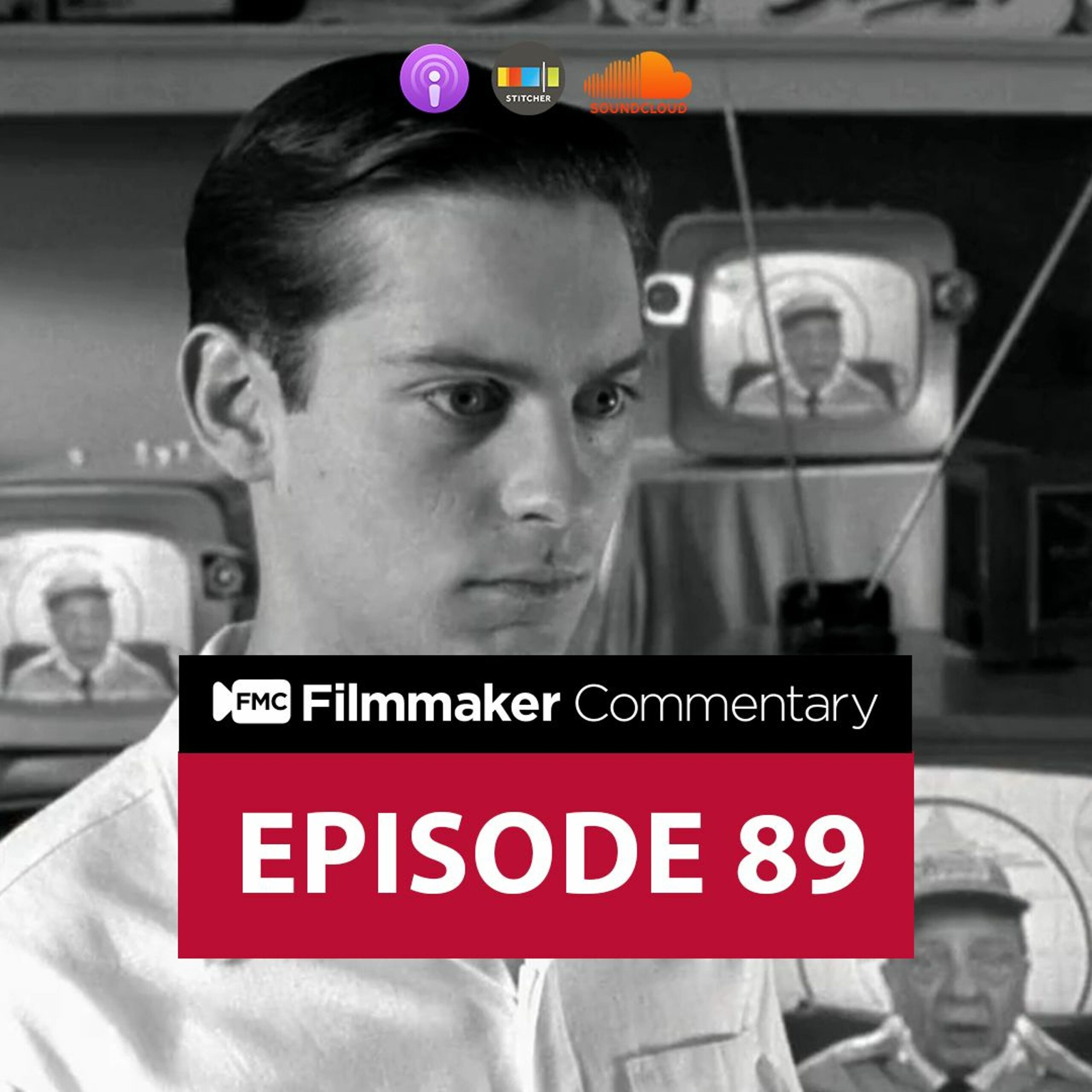
FMC 089: Pleasantville Written and Directed by Gary Ross

August 10, 2020
Listen on Apple Spotify YouTube
Listen to this episode
Your browser does not support the audio element.
Also on Apple Spotify YouTube

This episode of Filmmaker Commentary offers an in-depth look at Gary Ross’s thought-provoking 1998 film “Pleasantville.” Hosts Reginald Titus Jr. and Casey G. Smith unravel the movie’s surprisingly modest box office performance and mixed critical reception, contrasting it with the success of similarly themed films like “The Truman Show” released that same year. They delve into the possibility that the film’s “preachy” tone contributed to audience discomfort, particularly domestically, and discuss Hollywood’s curious tendency to produce multiple projects with similar concepts simultaneously, citing examples like the various “Jungle Book” adaptations.

The discussion also extends to a rich exploration of “Pleasantville’s” intricate thematic layers. The hosts dissect the film’s powerful commentary on societal complacency, the transformative power of knowledge, and the courage it takes to break free from comfortable ignorance. They highlight how the town of Pleasantville itself serves as a metaphor for a restrictive mindset, with characters literally coming into “color” as they experience new emotions and ideas, pushing the boundaries of their black-and-white reality. This innovative visual technique is a central point of analysis, showcasing Ross’s nuanced storytelling.

In addition, Reginald and Casey explore how Ross, with his background as a writer-director from a filmmaking family, brought a deep understanding of character motivations and thematic consciousness to the project. They reflect on the film’s portrayal of a sexual awakening and the subtle yet profound clash between traditional values and progressive thought, underscoring its lasting relevance. The episode also covers current film industry news, including a clever prank on Carol Baskin, Netflix’s record-breaking “Extraction” premiere, and the ongoing tension between theater chains and streaming platforms. Join us on Filmmaker Commentary each week for more.

What We Cover

  • The surprising box office performance and critical reception of “Pleasantville.”
  • Comparison of “Pleasantville” to other films with similar themes released around the same time.
  • Analysis of the film’s core themes: knowledge, conformity, free will, and social change.
  • “Pleasantville” as a metaphor for an open mind and breaking free from ignorance.
  • Innovative visual techniques, including the selective use of color.
  • The role of Gary Ross’s background as a writer-director in shaping the film’s depth.

Key Moments

  • [0:46] Discussion on “Pleasantville’s” unexpected financial struggles despite its thematic depth.
  • [9:25] News story about YouTubers pranking Carol Baskin into her first post-Tiger King interview.
  • [13:19] Regal Cinemas’ strong stance against studios that bypass the theatrical release window.
  • [42:00] Hosts dissect “Pleasantville’s” themes, such as the town symbolizing a state of blissful ignorance versus the pursuit of self-discovery.

Gear & Films Mentioned

  • Films: “The Truman Show” (1998), “Jungle Book” (2016, Jon Favreau), “Jungle Book” (Andy Serkis’s version), “The Lion King” (2019), “Extraction” (2020), “Trolls World Tour” (2020), “The Long Shot” (2019), “The Longshots” (2008), “Money Heist” (Netflix), “#BlackAF” (Netflix), “Guardians of the Galaxy” (cartoon), “Avengers” (cartoon), “Avengers Assemble” (cartoon), “Black Panther” (cartoon), “The Last Dance” (ESPN, Michael Jordan documentary), “NBA 2K16”, “NBA 2K” (various), “Dr. Jekyll and Mr. Hyde” (1931), “Neverending Story”, “Labyrinth”, “Tron”, “Pan’s Labyrinth”, “Pulp Fiction”, “Fight Club”, “Beauty and the Beast” (1991).
  • People: Gary Ross (Writer/Director), Jim Carrey, Andy Serkis, Jon Favreau, Chris Hemsworth, Joss Pieters, Archie Manners, Jimmy Fallon, Carol Baskin, Kenya Barris, Rashida Jones, Michael Jordan, Stephen Curry, LeBron James, Wilt Chamberlain, Scotty Pippen, Magic Johnson, Shannon Sharpe, Skip Bayless, Keke Palmer, William H. Macy, Joan Allen, Paul Thomas Anderson.
  • Platforms: Netflix, HBO, Disney XD, ESPN, YouTube, Amazon Prime, Vimeo On Demand.
  • Technology: VCR, DVD, Blu-ray, Green screen, CGI, Digital filmmaking, Film stock.

Listener Questions

  • What major themes did Gary Ross explore in “Pleasantville,” and how are they relevant today?
  • How did “Pleasantville” utilize visual techniques, particularly color, to enhance its storytelling?
  • What is the current state of the “streaming wars” versus traditional theatrical releases, and what might the future hold?

Full Transcript

Read the full transcript

Full Episode Transcript
This episode of Filmmaker Commentary the 1998 film *Pleasantville*, discussing its themes, production challenges, and impact, alongside current film industry news and personal movie recommendations.

Opening Discussion and Industry Insights
Reginald Titus Jr.: Filmmaker Commentary, episode 89. Welcome to Filmmaker Commentary, where we give you insights from our favorite filmmaker commentaries. These commentaries can be heard on your DVD and Blu-rays of your favorite movies. We'll show you how you can use these commentaries and apply them to improve your video production and filmmaking techniques. All of this here on Filmmaker Commentary. I'm your host, Reginald Titus Jr.
Reginald Titus Jr.: Welcome to Filmmaker Commentary. I'm Reginald Titus Jr. I'm joined with Casey G. Smith.
Casey G. Smith: Good to be back, sir.
Reginald Titus Jr.: Good to be back, sir. Today we're talking about *Pleasantville*, 1998, written, directed, and produced by Gary Ross. Uh, we had a budget of 60 million, box office of 40 million domestically, and 9 million internationally, total of 49 million. That's an L.
Casey G. Smith: Yeah, not, not including P&L. Um, that's, that was shocking to see. No, did not, did not make money. No bueno.
Reginald Titus Jr.: No bueno. It's a good film too, so it's, it's a wonder. Maybe this was like John August, we talked about script notes, and I think one of, uh, who was his co-host on this podcast, Craig Mason, Mason. I think they said it was like, I think it was him that said, "This movie was, it started out great, then it started getting too preachy." You know what I'm saying? I remember him saying that a while back. I think it made a lot of people feel uncomfortable domestically.
Casey G. Smith: Sure, but there've been plenty of movies that have made people feel uncomfortable that have, I don't know, made money.
Reginald Titus Jr.: I should've, I should've saw what the critics thought, but, uh, I was surprised to see that it didn't do well.
Casey G. Smith: Again, I didn't see this until years later. So I mean, this wasn't on, I mean, it wasn't on my radar when it first came out. I was like, "What's this?" You know, and didn't give it a second thought at the time. And I'm trying to figure out what made me watch it initially, even before, you know, this go around.
Reginald Titus Jr.: I think within that same year, Jim Carrey's movie that came out, uh, *The Truman Show*, which I think did pretty well, but it's kind of like almost on the same premise, like trying to break out of your world. That was '98, same year. So you had those two films, same year, and, um, how do you kind of distance yourself without, like, marketing-wise?
Casey G. Smith: And that's that thing that Hollywood does sometimes, where you have two movies being produced sometimes at the same time, either dealing with similar or sometimes the same topic. Like when *Jungle Book* came out a couple of years ago, you had Disney's version, but then at the same time, um, Andy Serkis was working on his version of, of, of *Jungle Book*.
Reginald Titus Jr.: Wow.
Casey G. Smith: Which I think it eventually ended up going, I think directly to Netflix, it had delays, and I think it ended up going directly to Netflix.
Reginald Titus Jr.: I didn't watch either.
Casey G. Smith: The Jon Favreau's, oh man, that's that's pretty good. Yeah, I've heard, pretty, pretty good. Uh, yeah, Jon, he's a good, good director. He's solid.
Reginald Titus Jr.: Just didn't move me.
Casey G. Smith: Fair enough. Visually though, when it came out, visually it was like, as far as like, animals, digitized animals, like, "No way! This, this, come on, no. This is, what?"
Reginald Titus Jr.: Yeah. I've seen the, um, I scanned through the new *Lion King*, because they use like the same technology, right?
Casey G. Smith: Right. And that's what that's what got that greenlit was because of how *Jungle Book* came out. Because everything in *Jungle Book* is all green screen. You have one kid, one real kid, everything else, all green screen. That, that's what impressed me about it. I'm like, "This is, which is, I mean, nothing new."
Reginald Titus Jr.: Robert Rodriguez kind of led the way, *Sin City*.
Casey G. Smith: But I mean everything, everything.
Reginald Titus Jr.: Everything in *Sin City*? Well, the people?
Casey G. Smith: No. That's what you mean. That's what you're saying. I'm saying, no, this kid literally spent however many months in a little studio space because, I mean, the the the ground, the water, everything, it's all digitized.
Reginald Titus Jr.: Mm-hm.
Casey G. Smith: And it's just this kid on a, you know, green screen playground, apparently. I'm just, and all the animals, I'm like, the sky, I'm like, "What?" That's, that's, that's super, super impressive to me.
Reginald Titus Jr.: Yeah, but I, I think when Robert Rodriguez and George Lucas, when they were doing their thing, especially Robert Rodriguez with *Sin City*, and that's all they were doing. Everybody came down to Austin, Texas, was just in a green room, doing their thing. There's like one sequence that actually was a location, which was the bar sequence, but everybody else was just looking at a little ball in a green room.
Casey G. Smith: That's true. That's true. Yeah, I've seen the behind the scenes of that, but it's also it's also a super stylized look versus this is trying to replicate nature. I don't know. Again, *Sin City* is super impressive, super impressive for its time, man.
Reginald Titus Jr.: It was a long time ago, yeah.
Casey G. Smith: Amazing. Uh, but yeah, but *Jungle Book*.
Reginald Titus Jr.: It should be better. The graphics should be better. It better be. I think it's time to improve, yeah.
Casey G. Smith: If you wanna. If you wanna.
Reginald Titus Jr.: Yeah, but I scanned through *Lion King* on the Disney thing. I, I literally scanned through it like, "Man." I saw it, okay.
Casey G. Smith: I haven't, I haven't, I haven't been moved to watch it. *Lion King*'s not my favorite Disney film. It's, it's, there, I said it. It's, it's cool, it's out there. It's out there. Everybody's like, "Oh." Cause here's, okay. Here's my issue. It's not with the story of *Lion King*, it's not with the characters, it's that in a time where when you look at all your other Disney movies that had come out, the animated Disney movies that had come out up until then, you you would see all kinds of different representation.
Reginald Titus Jr.: Okay.
Casey G. Smith: But then in a film that, you know, cast some different Black actors in it, obviously we have James Earl Jones, um, we have our, our, uh, Robert Guillaume, but
Reginald Titus Jr.: Jason Weaver singing the songs.
Casey G. Smith: Yeah. That's right, that's right. You know, from, uh, you know, played Michael Jackson back in the day. The American dream. But we don't, even within the film, set in Africa, there are no, there are no Black people. And so I'm like, "Where, where Disney, where is," Now I know we have *The Princess and the Frog*, now but I'm like, "You do all these other films representing people in all these other countries, but then when it comes to a film that is set in Africa, it's animals." No Black folk at all. Not even any Africans. Just animals. Now *The Lion King* I, I, I'm assuming, I haven't done my research, I'm assuming it's probably a, you know, a story that existed that Disney adopted or adapted, I should say. And that's cool, but I'm like, "Where is the film that shows the the African experience?"
Reginald Titus Jr.: Like a true, not the whitewashed version.
Casey G. Smith: Yeah. And so, so that, that, that's, I guess in the back of my mind, kind of my ongoing thing like, that's, that's cool, but, there's animals. Where, why not people? Like where, where are the Black people, or African people? You ain't see the hyenas?
Reginald Titus Jr.: I've seen *Crows in Dumbo* too.
Casey G. Smith: But I'm like, "Hey."
Reginald Titus Jr.: I've seen *Brotherly*. I've seen clips of *Song of the South*, but hey, we, we'll just go there. Yeah, Disney represent.
Casey G. Smith: But but I mean that, that, that's the true history. It is what it is. You can't hide it. Yeah. Again, I know they have *The Princess and the Frog*, uh, but again, even then, like, you got a sister, spoiler alert, and she's turned into a frog, into an animal. I'm like, "What, what's going on?" And I, I still don't think we've had a solid animated Disney film focused on Black folk, if you will.
Reginald Titus Jr.: No. And I think it's, it's long past due.
Casey G. Smith: It is time. We've gotten *Mulan*, we've gotten *Pocahontas*, you know, we had *Coco*.
Reginald Titus Jr.: I didn't even see that one.
Casey G. Smith: *Coco* was good. Right? But these films that that that that do a good job of tapping into at least an aspect, right? There there, you know, there's not going to be any film. There's like there's just like there's not any definitive, you know, Eurocentric, you know, quote unquote white person movie that it tells the story of every white person's experience. You know, there there is no cultural film for any culture or people group that's going to be, it will be a sample of a experience, but it won't be the experience. And so I'm not looking for it to be that, but I'm looking for at least a slice. Give me a slice of of of life and it with like no anthropomorphism, right? With just people. Now I'm sure a parent or two will die, you know, but that's that's, I mean that happens in Marvel films too, but it's you gotta, you gotta create drama. But yeah, so that's kind of my issue. So when *Lion King* dropped, I've always kind of had that chip on my shoulder like,
Reginald Titus Jr.: Well, there, there you go, another marketplace. There's an opportunity. Creation is the mother of invention? Invention is the mother of creation. What? Innovation.
Casey G. Smith: Necessity. Isn't it like necessity is the, is the, is the, is the mother of invention?
Reginald Titus Jr.: My brain is gone. Necessity is the mother of invention. Yes. Did it?
Casey G. Smith: I think so.
Reginald Titus Jr.: Yeah, yeah, yeah, you did it right. In some way, nah. You're fired, brain. I'm so hungry.
Reginald Titus Jr.: I haven't been out in a while. Oh, man. Give me a break.
Reginald Titus Jr.: Oh, man. Unbelievable. *Lion King* tangent. But, uh, we are talking about *Pleasantville*, but before we talk further about *Pleasantville*, uh, let's talk about news and movies watched.

News and Movies Watched
Casey G. Smith: All right, so according to Variety, two YouTubers, Josh Pieters and Archie Manners, ended up tricking Carole Baskin of *Tiger King* fame into recording her very first post-*Tiger King* interview by posing as producers for Jimmy Fallon's *Tonight Show*.
Reginald Titus Jr.: Oh.
Casey G. Smith: These guys went through an elaborate process. And this, there's a whole video where you watch, you watch them how they set this up. I mean, they posed as producers, they finally got a hold of her and talked with her and said, "Hey look," you know, and she said, "Well, we, we can't talk anything, I'm not, I don't, I don't like how I'm portrayed in *Tiger King*, we can't talk about any of that, we just want to talk about the cats, just want to talk about animals." And they were like, "That's cool." And they even scoured the internet, got clips of Jimmy Fallon asking interview questions so that they could use. And then they, they came up with a reason to give an excuse as to why she wouldn't be able to see him on the Zoom call. And but then they just they just played his questions. Like, "Wow." They even got her her husband and and and and lawyer, I forget the guy's name, but he was the one that that signed off on the agreement and everything. And so, yeah, they were able to to get Carole Baskin's first post-*Tiger King* interview.
Reginald Titus Jr.: Was it entertaining? Was it good?
Casey G. Smith: The process of watching the process of how they set this thing up, and it actually is is really entertaining. I, I didn't get a chance to finish watching the whole thing, but I got up to the part right as the interview was was starting. But the buildup to it is entertaining as is. And who was this, who are these people again?
Reginald Titus Jr.: Josh Pieters, P.I.E.T.E.R.S., and Archie Manners. They're they have their own YouTube channel, they have about 1.5 million subscribers. It sounds like they're like from the UK. But, uh, yeah, if you get a chance, just you can look up Carole Baskin *Tiger King* post interview. But yeah, Variety reported, uh, reported that these are the guys they pulled it off. And again, they have their their video in there. Again, pretty entertaining how they set this up. Uh, and I'm curious what the end was like if they finally revealed that they were like pranking her or or what, but.
Reginald Titus Jr.: They uh, they, yeah, they they were able to pull it off. Carole Baskin.
Casey G. Smith: Carole Baskin.
Reginald Titus Jr.: Speaking of which, did you, did you see the follow-up episode?
Casey G. Smith: No. I forgot that it even, I remember they're saying something was going to happen, but I, I had not, uh, gone back into that world.
Reginald Titus Jr.: Okay, we'll get into that.
Casey G. Smith: But one of the, speaking of Netflix though, one of the things that happened is, uh, Chris Hemsworth's film *Extraction* is slated and on the trajectory to become Netflix's biggest movie premiere.
Reginald Titus Jr.: Wow.
Casey G. Smith: It's currently available to stream on Netflix, and they're estimating that around, uh, 90 million households, uh, might view it within the first four weeks, which again, would make it Netflix's largest movie premiere.
Reginald Titus Jr.: Interesting. I'll be interested in seeing like, how many American households watched it, and then internationally, how many people watched it, because it seemed like an, I saw the trailer, so it, it looks entertaining, and it looks like they considered like an international viewpoint. So I will be interested in seeing like, what are the numbers, you know, from international worldwide, you know, here in America, and then international, and then specifically, what countries are watching it. But I doubt they'll show us those numbers, but I'm interested.
Casey G. Smith: I don't see why they why they wouldn't. I mean, they're a worldwide company and they, we know, you know, international box office makes or breaks box office. I mean, as, as is, and, you know, Hemsworth is not American. So why, why not? But it would be very fascinating to see the numeros. And that was, uh, according to Deadline. There we go.
Reginald Titus Jr.: There we are. There we go. Have you seen the did you see the trailer to that film?
Casey G. Smith: I did. Yeah. I watched it a couple weeks ago.
Reginald Titus Jr.: Oh, you actually watched the the trailer or the movie too?
Casey G. Smith: The trailer.
Reginald Titus Jr.: Not not interested in the movie?
Casey G. Smith: I am interested in the movie, but I, I haven't been watching a lot of films that we'll get to shortly. So a lot out there, a lot of things lined up, but I haven't haven't dove into it yet.
Reginald Titus Jr.: Okay, okay. Yeah, I saw the trailer and I was like, maybe later. It's like just straight up. Looking good though. We have by Zoe Haylock from Vulture.com. Regal Cinemas issues a warning to any movie studio considering a pivot to VOD. Regal Entertainment isn't banning any movie studios from its cinemas, for now. The theater chain's parent company, Cineworld, released a statement regarding NBCUniversal's decision to consider releasing films in theaters and on demand simultaneously. While they didn't go as far as AMC Theaters did, uh, barring all Universal movies from their mini theaters, they did draw the line. Regal is not boycotting Universal, nor any other studio. The company tweeted Thursday afternoon. We will continue our normal policy and play movies that respect the theatrical window, allowing movies to be released first in theaters prior to streaming or VOD platforms. Regal's policy has not changed, but it emphasizes the need to respect the theatrical window, if not, the film would not play at Regal. In a press release obtained by The Wrap, Cineworld CEO, Mooky Granger, called Universal's decision to bypass the theatrical window for *The Trolls World Tour* completely inappropriate. And said it certainly has nothing to do with good faith business practice, partnership, and transparency. All our partners called a situation they want to shorten windows for movies that were already released as cinemas are closing. Most importantly, they all reassured us that there will be no change to their window policy once the cinema business returns, the statement reads. Unfortunately, I missed a similar message in Universal's announcement. Not only did Universal provide no commitment for the future window, but Universal was the only studio that tried to take advantage of the current crisis and provide a day and date release of a movie that was not yet released. Universal previously responded to complaints by reiterating its allegiance to the current model, but noted that execs were disappointed by this seemingly coordinated attempt by theater owners to blackball the studio. Uh, that's Warner Brothers and Disney also moved films to on demand or streaming in the wake of the coronavirus crisis. No one said the war between theater chains and streaming services would be easy, but a pandemic certainly didn't help. As for right now, no movies in any theaters, no movies in any theaters, but you already knew that. Again, that was an article from Zoe Haylock regarding the streaming wars and theatrical wars. What do you think, man?
Casey G. Smith: Well, that came about, of course, because of a statement made by Universal and one of their top execs earlier this week, mentioning that they were trying to do day and date, right? In theater, but also available for audiences to access from home, and that set off AMC. And they came, they came out guns blazing. Now, they gave an ultimatum. They weren't going to all out all out just ban Universal just up front. They would do so if Universal kept on a certain trajectory. So Universal has a decision that they can make, and they, and they then, of course, came out with another statement to try and kind of walk things back. And then other theaters chimed in as well. But I think that, I think that now isn't the time, when when when when theaters are fighting and struggling, I think now is not the time for studios to to make those kinds of announcements. Uh, right now, they need to work with their partners, ensure that once theaters open back up, that they have their movies in the theaters. Keep that going, make sure, I mean, at the end of the day, it's their business, and they they decided to pull out, that's that's their their choice. But, I mean, have they really set up their business model to be able to handle that with with what they're putting in on the backend to produce these films? No, of course not. They're they're expecting theatrical release. I think it was a mistake to make the announcement at this time.
Reginald Titus Jr.: Yeah. Poor timing. Yeah. I think they're kind of like, it's already written on the wall. The writing's on the wall in regards to the future of the theatrical business, especially dealing with things like this. I think they're the the the exhibitors are going to have to learn how to kind of make adjustments in this kind of situation. Are you going to do more, um, you know, outside theatrical environment where it's like a drive-through theater? Since more people are just are watching at home, you know, that's like a, that's normal.
Casey G. Smith: People have been watching from home for for a long time. People thought theaters stopped when when the VCR came out. And people could buy movies now from Blockbuster or rent movies from Blockbuster back in the day, that that would kill the movie industry. And even though we have all these streaming platforms, when the theaters are open, I mean, there are I mean, how many billion dollar box office movies have we gotten over the past five years?
Reginald Titus Jr.: And most of them, I'm I'm talking more like from an American standpoint, because a lot of those are heavily dependent on like the international, because, you know, internet, they a lot of times the DVDs are very heavy, you know, internationally. That's still a a good, uh, income for some. From an American standpoint, we they have been suffering. They just the exhibitors have. Uh, I don't know if it's going to go away all the way, but it's, it's kind of looking like that. I mean, you have kids that don't go to theaters at all.
Casey G. Smith: I yeah. That's that's not anything shocking or surprising.
Reginald Titus Jr.: Yeah, in high school, we always went to theaters. But like you've seen a whole generation of kids that that don't do that.
Casey G. Smith: Yeah, they've got what they've got so much in the palm of their hand. And there is a there is a fight for attention, no doubt. Uh, there's a definite fight for attention. But and this doesn't have to be always always just the the kids. I think up to a certain point also, before before, say, when we talk teenagers, right, when they can make a decision to go or to or to not go, they're they're driving whatever. But young young kids, right, parents can still make the decision, make the choice to take them, you know, that's that's still an experience, right? Yeah, there's still a certain experience tied to it. Uh, and some theaters have put in, I mean AMC has put in a lot of money, billions into upgrading their theaters, trying to enhance the experience, right, trying to find ways to keep it relevant, you know, trying to find ways to cater to adults by having, you know, a fork and dining, things like that, or only certain age groups, only over 21, allowing into this kind of theater. The Dolby Atmos, uh, sound. So yeah, they're trying to work different things, you know, trying to go to to a subscription model. But yeah, no doubt it's it's getting it's going to get tougher for sure, but as a whole, going back to Universal, I don't think now is the time to make that that announcement.
Reginald Titus Jr.: Yeah, no. Yeah, the shift, the shift, the shift is, it's been historical data, it's down downward. It's just what it is.
Casey G. Smith: Sure. It'll So here's going to be what's going to be fascinating is, does distance make the heart grow fonder? Right? When something is taken away, is it going to be this big bounce back, right? Because we've never again, never been in a situation like when we are now, as of the recording of this podcast, right, where theaters have been, where the experience has been taken away. And people have been inside. Uh, will there be a bounce back where people like, "Oh, you know, I want to get out and go and see something collectively with other people." Right, to have a communal experience of the theater, versus just my family, I've been watching stuff with, for, you know, whatever, whatever.
Reginald Titus Jr.: Mm-hm. We're not itching to go, as a family, my family, we're not itching to go to a theater.
Casey G. Smith: But y'all don't go to the theater that often though.
Reginald Titus Jr.: We do. We went to watch *Sonic*, we went to watch *Sonic the Hedgehog*.
Casey G. Smith: Right, right.
Reginald Titus Jr.: No, we're not itching to go to the theater at all. I mean, we're getting Now, if it was a situation where, say it was, say like a Marvel movie, say it's a the next *Thor* is on its way, and the pandemic's over, and *Thor*'s available. Me and my son, and maybe another son, we'll go watch it.
Casey G. Smith: Sure.
Reginald Titus Jr.: You know what I mean? Uh, but like it has to be like one of those like eventful like movies that's like, all right, we got to watch it. But outside of that, I mean, you get a lot of movies that are good at home.
Casey G. Smith: No argument there. Yeah, no argument there. Yeah, no, I'm not arguing against that. Uh, no, there's no argument against that. There's there's there's a lot of quality content there, right, that's available right at home. Um, me as a single dude, again, there's plenty of things that I can watch comfort of my own home, but there are times where yeah, I want to go to the theater and see stuff.
Reginald Titus Jr.: You gotta do a date night. You know.
Casey G. Smith: I'm like, yeah, go see it. Or just me, you know, I don't mind going to a movie and just solo. Sit down, you know, the lights go down. I I enjoy the theater experience still. And it's just me, you know, a lot of times, so I'm not not having to
Reginald Titus Jr.: It's not 120 bucks to go to the theater.
Casey G. Smith: Yeah, and that's hey, and I that's, I know that's that's a big deal. You know, that's a big deal for for, a lot of families. And that's yeah, and that's not, you know, you start adding in, you know, snacks and all that kind of stuff.
Reginald Titus Jr.: Oh yeah, forget about it.
Casey G. Smith: Yeah. So yeah, it's going to be fascinating to to see, uh, what happens once theaters open back up, what kind of surge. Will it maintain? Will it sustain? Will theaters offer something new and different that keeps people coming in? Will they have a new subscription model? Like, "Hey," because somebody somebody mentioned that like back in the day, apparently with with with theaters, I mean, we're talking like, you know, say maybe, I don't know, in the '70s or something like that. You could literally pay one price and then you could watch two, three, four movies at a theater within the course of that that day.
Reginald Titus Jr.: Like the Grindhouse days?
Casey G. Smith: Some something I guess something to that effect. And that's that's interesting like, the double features and all that.
Reginald Titus Jr.: Hey, they got to be nice to the indie filmmakers, man. That's We're still in the filmmakers are still nostalgic in regards to having their film at the theater. So
Casey G. Smith: Some are.
Reginald Titus Jr.: Most of the ones I would they want their movie in the theater. If it's a theatrical film, like it's been made to and they want people to experience the film in the theater, most of them want to. But if it comes to business, money, hey, whoever get to me the check. It's also one consideration. I don't know. I hope theaters will be around us for a while, though.
Casey G. Smith: I hope so too. What you've been watching in the movies, man? Any movies watched, TV, what? What you got?
Casey G. Smith: All right, so last night I watched *The Long Shot* on HBO. It came out last year in the theaters. It stars Seth Rogen, uh, along with Charlize Theron.
Reginald Titus Jr.: Was there an Ice Cube movie called *The Long Shot*?
Casey G. Smith: That's *Ride Along*, him and Kevin Hart.
Reginald Titus Jr.: No, it was he was like a football coach, and this girl wanted to play football. I'm sorry, I got to look this one. *The Long Shots*, uh, with an S.
Casey G. Smith: Shots. There you are.
Reginald Titus Jr.: The answer is. Yeah, wow, 2008. It's been that long?
Casey G. Smith: Yes, it has.
Reginald Titus Jr.: Is that Keke Palmer?
Casey G. Smith: Yep, it is. 12 years ago.
Reginald Titus Jr.: It's in my brain like it's new. Wow. Okay. Okay, so *The Long Shots*. I'm sorry, that came to my head when you said that, so I was like,
Casey G. Smith: Fair enough. Okay.
Reginald Titus Jr.: So, it is not that movie.
Casey G. Smith: No. That's, that is clear. It is not that movie. This this movie was 2000, 2019.
Reginald Titus Jr.: I remember, I didn't know that was the name of it, but I do remember the trailer for that, the basically, the guy that, "Has no chance, she's out of your league." Yeah. Okay.
Casey G. Smith: Dude, it was so good, man. It was really good. It was, I I enjoyed it, man. I enjoyed it. I watched it last night. It's like it would be a, uh, I think a fun, a fun date movie.
Reginald Titus Jr.: Mm. Yeah. Okay.
Casey G. Smith: And you got obviously you got Seth Rogen, like you said, you know, he's the the frumpy, he's smart, but, how's his laugh go? I can't do it. He's kind of got a little Muppet quality to him. But yeah, but
Reginald Titus Jr.: It's like grugly and when I talk, it hurts. Kind of.
Casey G. Smith: It's like he's developed that voice. It feels like.
Reginald Titus Jr.: Yeah. But it was good. It was a good film.
Casey G. Smith: It was. Him and Charlize Theron, great chemistry. Cool, fascinating little backstory there, but she's she's like the Secretary of State.
Reginald Titus Jr.: Yeah, yeah, yeah.
Casey G. Smith: And, uh, yeah, man. Yes, quite enjoyable.
Reginald Titus Jr.: Okay. What channel?
Casey G. Smith: *The Long Shot*, HBO. Send the check, HBO, thanks. And, man, I I went through HBO, I just through the movies, and I just I added a bunch of movies to to my watchlist. I was like, "Yo, HBO, man, they've got a lot of good stuff on there right now. A lot of good movies on there right now."
Reginald Titus Jr.: All the *Stars*, all these other all these platforms have good stuff. You can get sucked into a little curated time warp. I was just adding stuff like, "Oh, oh, oh, yeah, yeah, yeah, yeah."
Casey G. Smith: And of course, you know, *Alien* 40 year anniversary, so they got all the *Alien* films on there, but
Reginald Titus Jr.: What? Yeah.
Casey G. Smith: 40 year anniversary.
Reginald Titus Jr.: On HBO?
Casey G. Smith: Yeah, all four, uh, the the first four films.
Reginald Titus Jr.: Oh, got it. Got it. Was there any like special documentary or anything, but it's just the four, just packaged together, kind of thing.
Casey G. Smith: Yeah, each one. *Alien*, *Aliens*, *Alien 3*, *Alien Resurrection*.
Reginald Titus Jr.: Boom. What you've been watching?
Reginald Titus Jr.: *Money Heist* on Netflix. That was recommended by our brother David and, uh, we're on season four, part four, episode three. Wow.
Casey G. Smith: Y'all almost a wrap then.
Reginald Titus Jr.: It's about a wrap. It's good.
Casey G. Smith: That's what everybody tells me.
Reginald Titus Jr.: It's good. Watch it in Spanish. Don't be lazy.
Casey G. Smith: Le-a-las-palabras. Read the words.
Reginald Titus Jr.: After a while, you feel like you kind of, you can get the rhythm of the language. It's, uh, it's kind of cool. It's like, yeah, I don't know.
Casey G. Smith: Well, I mean, each episode is like what, an hour, basically? Yeah. And you've watched how many episodes? What would you say? About 20, 25, 30?
Reginald Titus Jr.: Yeah, about 30.
Casey G. Smith: So you're about 30 hours worth of Spanish.
Reginald Titus Jr.: Sí. Muy bien. Sigue adelante. What's the word that's been, uh, when you're telling somebody to calm down? *Tiempo*, uh, uh, *Cálmate*?
Casey G. Smith: No. See, it also depends because you're talking about obviously, you know, different. Castellano?
Reginald Titus Jr.: Tranquilo?
Casey G. Smith: Tranquilo.
Reginald Titus Jr.: Tranquilo. Yeah. You'll hear that a lot in this film. In this joint, just because of the genre. So yeah, like certain words you just like hear them over and over and it comes part of your brain.
Casey G. Smith: Repetition, man. That's how we learn, right? We learn repetition, hearing, hearing that again and again and context is the other big thing, right? When you see, all right, when something is using, "Oh, okay, that's what that is," all right. Context is is king. So, I've got it all set up, man. Again, I've got I've got my subtitles set, and I've got I've got the the Spanish audio, original Spanish audio. Actually, I guess I'm doing 5.1, cuz I want to watch it surround sound, but I've got that set. And so I'll probably jump into my first episode. It'll be this week, probably Tuesday.
Reginald Titus Jr.: And I like the culture, how they really are into family, you know, just the culture. And so the storylines are involved with like family stuff. You know, how strongly someone feels towards a family member. You can just do a whole bunch of stuff with that, you know? And because of their culture, they're moved by that. And so when someone's acting, like they say something like, "Entiendo, Entiende?" You know, like the way that they do it, and then they also have the accent. So like when they say "Policía", you know, they say it like that. So it's like, okay, you kind of hear the differences in their accent.
Casey G. Smith: Totally. Totally. And again, when you start hearing people from other countries, again, the way Spanish is spoken, you you catch those those differences, right? Somebody from España versus Puerto Rico versus Mexico, or different parts of Mexico, even the the way things are spoken, pronounced, certain words, just like, you know, like it is within the states, right?
Reginald Titus Jr.: Yeah. Dialects. English.
Casey G. Smith: The Queen's English versus American English.
Reginald Titus Jr.: Oh yeah. They talk about it in the film, in the movie, in the series. Um, but I will not say anything else. But yeah, they mentioned accents.
Reginald Titus Jr.: All right. Anything what else have you been watching? But yeah, *Money Heist*, I recommend it. Learn something, don't be lazy. Read the titles. If you don't know.
Casey G. Smith: Um, I finished *#BlackAF* on Netflix.
Reginald Titus Jr.: Oh, you finished it?
Casey G. Smith: I did. I did. I did.
Reginald Titus Jr.: Is it one season or what is it?
Casey G. Smith: Yes, it's one season. It is okay.
Reginald Titus Jr.: Oh, man.
Casey G. Smith: Yeah, I think, is it a situational comedy? It is. It's it's it's, as you can tell from the trailers, it's that it's that pseudo documentary style, like *The Office*, like *Parks and Rec*.
Reginald Titus Jr.: Okay. So it's pseudo documentary style, but is the premise documentarians are coming in to document this family?
Casey G. Smith: The daughter is documentarian. She's trying to to make a piece to submit for film school. To get into into college.
Reginald Titus Jr.: Oh, good.
Casey G. Smith: And then but she's doing it with her with her family. With her father, who is really technically playing himself. And then everybody else is just made up family members for his, you know, to him, in relation to him. I wish I, I wish the in the day, I wish the jokes hit better, you know, I wish they landed better. It was entertaining to watch, there were there a couple of laugh out loud moments. But yeah, it just it just leaves me wanting more from a just from an execution standpoint. There's just something that you try to you try to put your finger on like, "Man, what what what about this, you know, you don't understand, it seems like everything should work."
Reginald Titus Jr.: But what about this just doesn't quite quite land for me, you know? Yeah. It might be the main character himself. I don't know. I still haven't quite quite figured out what it what it is that doesn't work. I mean, Rashida Jones though, is great in this.
Casey G. Smith: Rashida's dope.
Reginald Titus Jr.: When I, uh, think of the other guy, cuz he's more of a writer, producer, right, and just real
Casey G. Smith: He created *Black-ish* and *Grown-ish*.
Reginald Titus Jr.: Yeah, so like when I see him, I don't see him as an actor. You know what I mean? Even though he can. But I don't see him that way. I see him more as a producer, creator.
Casey G. Smith: Right. So like, what if the casting choice changed? Say, him and somebody else playing him, but you keep everybody else. I don't know because the character of who he's supposed to be is not exactly a likable person. And so I don't know. May maybe maybe it maybe that's maybe that's it, that his character is is is just not the most likable person. Like the the family as a whole, I mean, it's very it's not these aren't the Huxtables. Of course not, especially in L.A., come on. And and and they're unapologetic about that. I'm not that's not what I'm expecting him to be, but it's this is like they're like the antithesis of the Huxtables. Like, literally, this is like 2019, 2020, totally different lifestyle. And it's Netflix, so there's like no filter, you know, you know, kids are cursing at parents, parents are cursing at kids. And not just not not in a I'm mad at you like, no, like this is all like everyday conversation. And so it's so different in that regard. And again, that's not like the the the, I don't know, it's just something about it, it's just so different.
Reginald Titus Jr.: Don't worry. I'll watch it and I'll be able to tell you why you thought it was whack.
Casey G. Smith: All right. Well, I had I had to finish it. I was like, "Man, I got to finish it." I was like,
Reginald Titus Jr.: How many episodes is it?
Casey G. Smith: 13, I think? No, no, no, not even that many. It's not even, I think maybe eight. I think it's eight.
Reginald Titus Jr.: Really? I was hoping it would be better than that, though. I was hoping. I was hoping.
Casey G. Smith: So was I. And like the moment that you see in the trailer, like, I think like the best episode might be the last two episodes. I feel like I feel like I feel like I would watch a second season of it, I'll put it that way. I feel like it gained its its legs. Like the last two episodes, I'm like, "Okay. All right, this feels like it's it's it's it's like really hitting hitting its groove for me."
Reginald Titus Jr.: It kind of developed.
Casey G. Smith: Yeah, I felt it gained its its legs. Like the last two episodes, I'm like, "Okay. All right, this feels like it's it's it's it's like really hitting hitting its groove for me."
Reginald Titus Jr.: They found their groove within it. That sucks when that happens.
Casey G. Smith: Yeah, yeah, so I'm glad I I mentioned that. Yes, so
Reginald Titus Jr.: Maybe that's what it was. Yeah. Yeah, I think I didn't get to mention that. I'm like, "Ah, you know what? It's towards the end, it really seemed to.
Casey G. Smith: You figured it out.
Reginald Titus Jr.: Is it a situation where it can be open for another season, or it's kind of
Casey G. Smith: Totally. Yeah, they could they could find a way to Okay.
Reginald Titus Jr.: Do more. Anything else?
Casey G. Smith: Uh, just, you know, some some some small things, I'm you know, I'm still on my, again, *Static Shock*, which is still doing its thing. And, uh, I've been on a *Guardians of the Galaxy* kick. Like,
Reginald Titus Jr.: Mm-hm. They have what, two movies?
Casey G. Smith: Two movies, yeah, but I'm watching like the, they have a they had a cartoon that was on Disney that was on, it was on Disney. It was on Disney XD. And Disney, you know, from a marketing standpoint, they're they're smart. Duh, right?
Reginald Titus Jr.: How do you say, you're the practice?
Casey G. Smith: They're doing all right. They're doing all right. But they're very good at making cartoons that are based on their film property.
Reginald Titus Jr.: It's bread and butter, huh?
Casey G. Smith: Imagine, imagine that. Right? We're going to make a cartoon. But they're very good about lining up their marketing, right? So when they have a movie, they then will adapt that adapt and make a cartoon that is is very much in line with with the universe, to at least a to a pretty good, pretty good amount, aligned with the universe, with the with the MCU basically.
Reginald Titus Jr.: Okay.
Casey G. Smith: Like when they first dropped, uh, the first *Avengers*, they had they had an ongoing *Avengers* cartoon before the first *Avengers* came out, called *Avengers: Earth's Mightiest Heroes*. Solid. And it was very much so kind of comic based. Once *Avengers* dropped and doing gangbusters, they said, "Oh, uh, *Avengers: Earth's Mightiest Heroes*, all right, cancel. We're done." We're introducing a new version of the *Avengers* called *Avengers Assemble* in all the character costumes, straight up like very highly influenced by the by the movie.
Reginald Titus Jr.: They're agile. They know how to switch it up.
Casey G. Smith: Oh yeah. Oh yeah. And they, and that that series ran for a while. And even the last season of it, it was it was *Black Panther* focused. Like the whole last season was like *Black*. I was like, "Oh my goodness." So again, why didn't get *Lion King*, I got almost a whole season of *Black Panther*.
Reginald Titus Jr.: There you go. Now you got your Disney Black.
Casey G. Smith: It's not on the big screen.
Reginald Titus Jr.: That's the Blackest we're going to get.
Casey G. Smith: I still need that. But in the midst of all this, they dropped the *Guardians of the Galaxy* cartoon. And again, very much so all in the vein of of the movie characters. So, um, I'd watched episodes here and there, but you know, with streaming stuff, like if you don't, you know, stuff only only so much shows up, right, on their on their, when it was just, you know, on the Disney app. Yeah, but now since everything is there, right? All the episodes are there because even if you have cable, they're only going to put so many episodes of what's streaming. But with this, everything is there.
Reginald Titus Jr.: How many episodes is it?
Casey G. Smith: It's it's three seasons. I didn't realize it was that many. I thought I thought maybe I had done two seasons of the show. Yeah, and so, uh, so yeah, so I'm going back and, um, watching some of that. And they and they totally it reinforces the brand, the the I mean, I'm telling you, man, the look of the characters, they're pulling directly. But the other thing that they do is that it's based pseudo MCU as far as the look of the characters, but they pull in different storylines from obviously you got, you know, 40 years worth of comics when it comes to the guardians. They they pull some of those storylines. So you kind of get you get some of that that, uh, that flavor. Heck, even *Avengers Assemble*, before Thanos happened in the MCU, they did a whole two, three episode arc with Thanos with the gauntlet just beating that beating the heck out of the *Avengers*. It was, I was like, "Oh, this is bad." This is on a standing chance. breaks off of them. Yeah, and they they had the Black Order in there, that was like, I'm talking like two, two years or so before, um, you know, I think heck, I mean, right around the time he had *Age of Ultron*. So anyway, yeah, I'm I'm on a on a guardians kick.
Reginald Titus Jr.: I watched *The Last Dance*. I'm four episodes in. That's the Michael Jordan documentary.
Casey G. Smith: Tripping. I was like, "Man, what's the other thing that I've been watching?"
Reginald Titus Jr.: Oh, is that right? I got you. Appreciate it, brother. Yeah, *The Last Dance*, four episodes. At the time of this recording, it's a Sunday, and episode five and six are dropping today. We're sacrificing for you. You know what I'm saying?
Casey G. Smith: We're sacrificing for y'all. Quarantine it is.
Reginald Titus Jr.: We love y'all. Yes. We are in two separate locations. It's good. It's funny. This Michael Jordan documentary has, I grew up, I mean, I watched basketball when I was younger, and this was like in the heyday. I was like, this was 97, 98, right? I was in high school, and Michael Jordan was the reason everybody watched basketball. Heck yeah. Uh, once he was done, there wasn't really much going on. You know, I was a AI fan because he had, I was into hip hop, too, so he kind of, there was a new generation of of of players coming into the league, but I mean, Michael Jordan was the ticket, you know? That was the whole reason for watching basketball. Once he left, it was over. So, this is just a, this *The Last Dance* is awesome. You can watch it on ESPN. It has made me look into myself, and, you know, question like, you know, what does it mean to be great? You know, to be great, it's a huge sacrifice to be great at anything. Then on top of that, what do I want to be great at? What do you, I ask you, your listeners, what do you want to be great? Then on top of that, like, are you going to leave a mark in the field that you're in? Because because of Michael Jordan, like, the game has changed. You had like, he created the the fading jump shot. You know, the Well, I mean, it wasn't, he didn't really create it, but he made it so smooth and stylized the way that he presented the fadeaway that coaches used to say like, "You're not supposed to jump away, why? You're supposed to shoot jump straight up and let go, jump shot. Jump straight up, let it go." They would never tell you to jump away away from the goal and shoot it. Uh, but, you know, he had even, you know, MJ said something about that. But, um, that, and then hiring a personal trainer, doing things like that, where he was like one of the first people to have a personal trainer to to make sure that he can last a whole season. So like, just little things like, he just finding different ways to be great at his craft has inspired me.
Casey G. Smith: I'm so glad you you brought up this wonderful, wonderful docu-series.
Reginald Titus Jr.: As I was preparing for today's show, I usually go to my streaming apps, and I look at, okay, what have I, what have I watched? And wasn't even thinking, right, I didn't go to ESPN, so I I didn't jot it down, but I love this freaking series. It's you're right. I grew up with MJ in the '90s. Yep. You know, living in North Dakota, big surprise, we didn't have our own basketball team. There was no NBA team. Nope. So we we we got WGN, as a station, WGN. And we got all the Bulls games. Oh, snap. So when I say I grew up with the Bulls, I was all the all their home games like, Yo. And I was, you know, I was I was I was playing basketball in, you know, from junior high. And so like all the all the NBA Finals, all six Finals, like, I watched them. I watched them. Watched them. Well, just about all of them. The last, the last one, I was actually at a I was at a camp during that summer. And so, but, you know, we were hearing on the radio, you know, how they they won. But, yeah, I watched, I watched, I was watching the game, you know, when they played the Lakers in that first championship game, and watch when Jordan jumped and then went from the the right hand to the left and threw it up. And like, we were like, "What is that?" And like, you know, because Magic had been my dude early, like he was the that was the first thing I ever watched with the Lakers. So to watch, you know, now Jordan and Magic and squaring off. But yeah, man, this this documentary just brings it all back. And the fact that they had all this footage all this time. Man. And Jordan has, um, he has editorial approval on this thing. Of course. Got to control the image. Man. It was very, very fascinating listening to, uh, *First Take* with, uh, Shannon Sharpe and Skip Bayless. Yeah. Hearing them go at it. I've been I've been on top of that too. Skip, skip, skip. Skip, y'all be ashamed of yourself.
Casey G. Smith: Let's look at the goat one more time.
Reginald Titus Jr.: Skip. Skip. I am just eating this up. Skip, you know better. And you will be reminded. You'll be ashamed of yourself, Skip. Shannon, the thing, you know, I admire it, but Shannon, even though, you know, he he stood his ground. He's like, "Hey, you know what? I'm going to go up in flames with this whole goat argument of LeBron James. He's going to he's going to die with that argument." He will. He I I respect I respect his, uh, his persistence. Yeah. He's like, "I'm not, I will die on this hill. I will die on this hill." Solo. I will serve as tribute. But man, like watching those two go back and forth and just the things that they bring out about the doc. And it's it's it's very fascinating. It's good, and I I love them just going back in history. I love how it kind of jumps around and the way that it's edited is really takes you back, all right, to whatever year. We're talking about, you know, Rodman and the and the worm. And just how it's highlighting different players and their abilities. And and again, Jordan is being to some degree, right? Um, I don't know if it's transparent is the right word, but he's highlighting people that he knew helped him get to where he's at. True. Right? He gives credit to Scottie Pippen. You know, gives credit to Rodman. He said, he he literally said, "Without Scottie Pippen, there is no Michael Jordan." Whoa. Hey, the best of all time saying that. Take that. Yeah. He knows it. And again, and and it's true. No, I'm trying to be very, very cautious. I'm thinking like, I'm like, no, well, typically, I'm going to put it that way, typically, no great great player basketball without in basketball? Are you saying are you are you saying the sports in general, basketball? I'll say I'll say sports, any sport that has a team element, typically, it's not just that one person. Oh, no. You know, there's there's going to be at least one other person. Typically, there's three people that really make it. In basketball in particular, typically there's there's typically three that are bedrocks. You've got your, you know, you probably have at least one superstar, slash all-star, and then you might even have two.
Casey G. Smith: Wilt Chamberlain. I see Chamberlain came across. But I I need to look at who else is on his team, right? Didn't he have, didn't he play with Jerry West?
Reginald Titus Jr.: Well, Wilt Chamberlain is, it's just not fair. He's a freak.
Casey G. Smith: Yeah. So, but still, so, once you hit the level of of superstar all-star, that is what it is. However much you do in that in that air is is whatever. But typically, there's at least, you know, at least one other person, maybe two. Because, I mean, I can't name them. I can't name them the the who was with Wilt Chamberlain, you know? I want to say Jerry, wasn't Jerry West?
Reginald Titus Jr.: Sorry, guys. Sports, my sports trivia is shot. I know Jerry West and and Chamberlain. Okay. So, yeah. Well, delete that. Typically, we'll keep it typically. Typically, you usually have one or two or or three, right? We can look at almost any team. Yeah, and you get to see that that's where the discrepancy is. That's what it was. Because this director specifically said he always had Reese Witherspoon as his choice for the daughter Mary Sue. But his casting director would probably, you know, fill in for some of the other. That's why I think that's where it's like, you know, who's going to get credit for that? That director having somebody in mind and then casting them. And then casting one person, even even if even he said, even if it's Toby Maguire, too, he was also in *Seabiscuit*, which he wrote. Sure. But Joanna, did he cast her? We don't know. But again, I'm saying that you set parameters, right? So if if if, let's say, um, I don't know, maybe it's your your your, uh, supporting actors, whatever, or the the the whatever, whatever, whatever. Whatever the parameters are, you meet those parameters, then that's not a problem. And if you don't meet the parameters, then they won't be in the category. That that that casting director doesn't meet the qualification. Once you set the parameters, it's not a problem. Yeah. I think they should set the parameters. It's, um, because they're letting some of the other people starting to come in, like the stunt coordinators and all like, right? Is a stunt coordinators and because at one point in time, that wasn't a thing and now it is a thing. Or is that still no, not a thing?
Casey G. Smith: Yeah, I think I think it's still not a thing. I still don't think it's a thing.
Reginald Titus Jr.: Or was it special effects? Or was it special? I'm trying to remember. Like it was a category that nobody considered and then it became nominated.
Casey G. Smith: Oh, yes, there's been some there's been some categories that have come and and gone. Um, I thought stunt coordinators. I don't know. I don't think it's there. I don't think it's there yet. I think there's been talk. There's been talk of it, but I don't think it's there yet.
Reginald Titus Jr.: I'm trying to remember. We we talked about this on the episode. I can't remember what episode it is. Because with with yeah, definitely the special effects is there. Obviously, you know, animated animated features got added after *Beauty and the Beast* had got nominated for Best Film. They're like, "Oh, it's not a film, this is a cartoon." But no, I I think, uh, yeah, I think casting directors should I agree, but they got to get the stipulation right. They got to get it right. Like with everything, right? It's it's difficult. Uh, I won't disagree with that. It's it's not, uh, enviable for any of these categories, right? I mean, you know, the Oscars, again, they were they were going to last year, uh, they were going to make they they had made a category for was it like pop culture? Yeah. Yeah. Kind of appease *Black Panther*. I forget that. People like, "What the hell?" Very dumb. Yeah, and they backtracked. But I think you're not going to get pushed back for casting directors. I think I think I think the industry as a whole will be like, yeah, you know, um, again, provided that they meet whatever the parameters are. And then whoever you have who judges that, because man, the Oscars is the whole process, man, it's it's it's weird. Like how they go about the whole movie selection process, who watches what, and who votes and in what percentage of that, that, that, that. Anyway, but, uh, Oscars. Oscars. But you can't transcend bad casting choices. Man. So, uh, another thing that I have, I'll I'll another tip is no, I actually have two others. And you actually made reference to this. Obviously, excuse me, you can shoot in black and white and then adjust the contrast afterwards to make something look like it was excuse me, you can shoot in color and then, you know, like I said, adjust the contrast, uh, afterwards to make it look like it was shot in black and white, which is a good part of what they what they did here. Okay. Um, you can emphasize, he emphasizes the satirical world by visually emphasizing breakfast. When we see breakfast, you're literally looking at like a hundred, oh, it looks like a hundred pancakes, maybe 50 waffles, a hundred pieces of sausage, you look at all it looks good, though. It really did. Thank you, Mom. Yeah. Eggs, it's just just gorging, just throwing it on. And then a ham steak. To finish it off. So that looked like our breakfast a few days ago. We have so many kids that it's like breakfast is just always something cooking. You have to. These kids are hungry, son. What else you got? Help actors have a sense of freedom to feel comfortable in their characters place and time. And so I think Gary mentioned that he he likes to storyboard things, but he also realizes the importance of of of that, making sure that his actors basically can collaborate. Yeah. Um, and that as they're finding their character, that they can be able to to have inside and input and and and again, ultimately feel comfortable in in the place and time that their character needs to exist. Uh, what he to bring, you know, oh, my, I don't think my character would do that or or say that that way or whatever the case might be. Yeah, cuz some and and I think he was saying that because he's a writer, director, he's a writer. Um, some some writer directors are like, these are the words that they're saying. This like, don't add anything else in. And some actors respect that, you know, there's like, hey, you know, this is this especially if they respect the material, it's like, this I'm going to say these words. Right. I'm I'm with the open, keeping it open. Whatever's going to be best for the for the for the adaptation of screenplay to edited production. Especially if the actor is really spending time with his character and starting to know this character more than what's written there. Uh, they really know what that character's going to say. That exploration, yeah, living in that in that head space, you know, like, you know, rat again, I keep coming back to 12 monkeys. I don't know why, but like, Brad Pitt going and staying at it, you know, an insane asylum. Rapid's nuts. That's why he was like, wow, that's that's method. man. Um, if your actors get into a giggling fit, which was a scene with William H. Macy and Toby Maguire, your sister's older now. So she's naturally going to see boys. So they start, they couldn't stop giggling. It was over. They couldn't stop. It's actually funny to see behind the scenes. I don't know if they have it on this one, but behind the scenes when when actors cannot stop laughing and there's nothing you can do. They actually get mad. They start getting angry. They start getting pissed at themselves because they can't stop laughing. It's funny seeing that. It is funny. But, uh, if you if your actors get into a fit, just move on. Move on to the next scene. You're not going to fix it. Become technically proficient so that you can tell a better story. And basically, he was one of the first people to digitize a whole movie. The digitize a majority of this movie, and it was so he can tell the story, show like the colors and how they were changing the colors and stuff like that. So he had to learn technically why it was better to do it digitally, versus trying to shoot color and black and white stock at the same time. There was he probably would have ruined this film if he did that, or the the the pay, the budget would have been astronomical if he would have tried to do it that way. You know, trying to learn while doing it. So it's a good thing that he did a lot of tests to see if this would be able to work, be able to pull this off.
Casey G. Smith: Totally. It would have been, a even bigger loss than what it was. Loss is they already have. However, this film has made money. According to the bomb report, how they financed this film was, uh, they sold like the foreign rights pre-sold. They pre-sold the foreign rights to raise a part of the the budget. And so when the movie released, um, in the theaters, it became like a wash from a theatrical standpoint. But we're not of course, again, we're not talking about VHS, DVD, Blu-ray, and now streaming because I watched it on Stars. Streaming on Stars. And then and then I watched the commentary on the DVD.
Reginald Titus Jr.: Yeah, that's true. Whenever we give that box office, that literally is just based on the theatrical. Yeah. Yeah. So there, it would be sometimes we can look at the numbers. Literally like the website, the the numbers. Yeah, there you go. But sometimes it doesn't a lot of times it does not give. And no studios are going to give that information, I'm telling you. I think so many people be surprised on how much films that we thought bombed actually made hundreds of millions of dollars. Some people were going to be pissed and sued.
Casey G. Smith: Right, because then they're like, "Oh, I didn't make any money. You're supposed to get points on the back end."
Reginald Titus Jr.: Ah, well. Yeah. About that. Uh. I don't know how Hollywood gets away with this murder. Literally. And. We just, we just we just said they don't, don't give all the numbers out. Well, technically it made. There's so many gag orders in Hollywood, it's funny and ridiculous. But hey, what can you do? What are we going to be doing next time?
Casey G. Smith: Next time on Filmmaker Commentary, we will be diving into *Hot Fuzz*.
Reginald Titus Jr.: Okay. And this episode of Filmmaker Commentary has been sponsored by *Natural Hair*, the movie by *Grind or Matter Films*, which is available for purchase and rent on Amazon Prime, as well as Vimeo On Demand. Please check it out and leave a review. There you go. And you can catch us where?
Casey G. Smith: Facebook.com/filmmakercommentary. We are also on iTunes, where you can like and subscribe to our feed, as well as on SoundCloud and Stitcher Radio. You can connect with us via Twitter. You can connect with Reginald @ReggieTitus and myself @KCGSmith32. We'd love to hear your thoughts, what you guys think of the podcast, what are your favorite episodes, and what are some films that you would maybe like us to tackle that do have commentary. You can also connect with us on Instagram, simply @FilmmakerCommentary. You can find Reginald there @ReginaldTitusJr, that's J.R. And again, myself @KCGSmith32.
Reginald Titus Jr.: Until next time, peace.
Casey G. Smith: Respect.
Reginald Titus Jr.: [Outro music]

About Filmmaker Commentary

Reginald Titus Jr.

Apple Spotify YouTube Subscribe Free
Continue Listening

FMC 244 : The Karate Kid Directed by John G. Avildsen

June 20, 2026

What We’ve Been Watching Episode 008

June 12, 2026

FMC 243 : Love and Basketball Written and Directed by Gina Prince Bythewood

June 9, 2026

Leave a Response Cancel reply

This site uses Akismet to reduce spam. Learn how your comment data is processed.

Never Miss an Episode

New episodes every week — free.

Listen on Spotify Apple Podcasts

Recent Episodes

  • FMC 244 : The Karate Kid Directed by John G. Avildsen
  • What We’ve Been Watching Episode 008
  • FMC 243 : Love and Basketball Written and Directed by Gina Prince Bythewood
  • What We’ve Been Watching Episode 007

Archives

  • June 2026
  • May 2026
  • April 2026
  • March 2026
  • February 2026
  • January 2026
  • October 2022
  • August 2022
  • July 2022
  • June 2022
  • May 2022
  • April 2022
  • September 2021
  • August 2021
  • July 2021
  • March 2021
  • November 2020
  • October 2020
  • September 2020
  • August 2020
  • July 2020
  • May 2020
  • April 2020
  • March 2020
  • February 2020
  • January 2020
  • November 2019
  • October 2019
  • September 2019
  • August 2019
  • July 2019
  • June 2019
  • May 2019
  • April 2019
  • March 2019
  • February 2019
  • January 2019
  • December 2018
  • October 2018
  • September 2018
  • August 2018
  • July 2018
  • June 2018
  • May 2018
  • April 2018
  • March 2018
  • February 2018
  • January 2018
  • December 2017

Categories

  • Film
  • Podcast
  • TV
© 2026 Filmmaker Commentary. All rights reserved.
  • About
  • Episodes
  • Privacy Policy
  • Disclaimer
  • Terms of Service