July 15, 2026
F
Filmmaker Commentary
  • Home
  • About
  • Episodes
  • Film
  • TV
  • Home
  • About
  • Episodes
  • Film
  • TV
Podcast

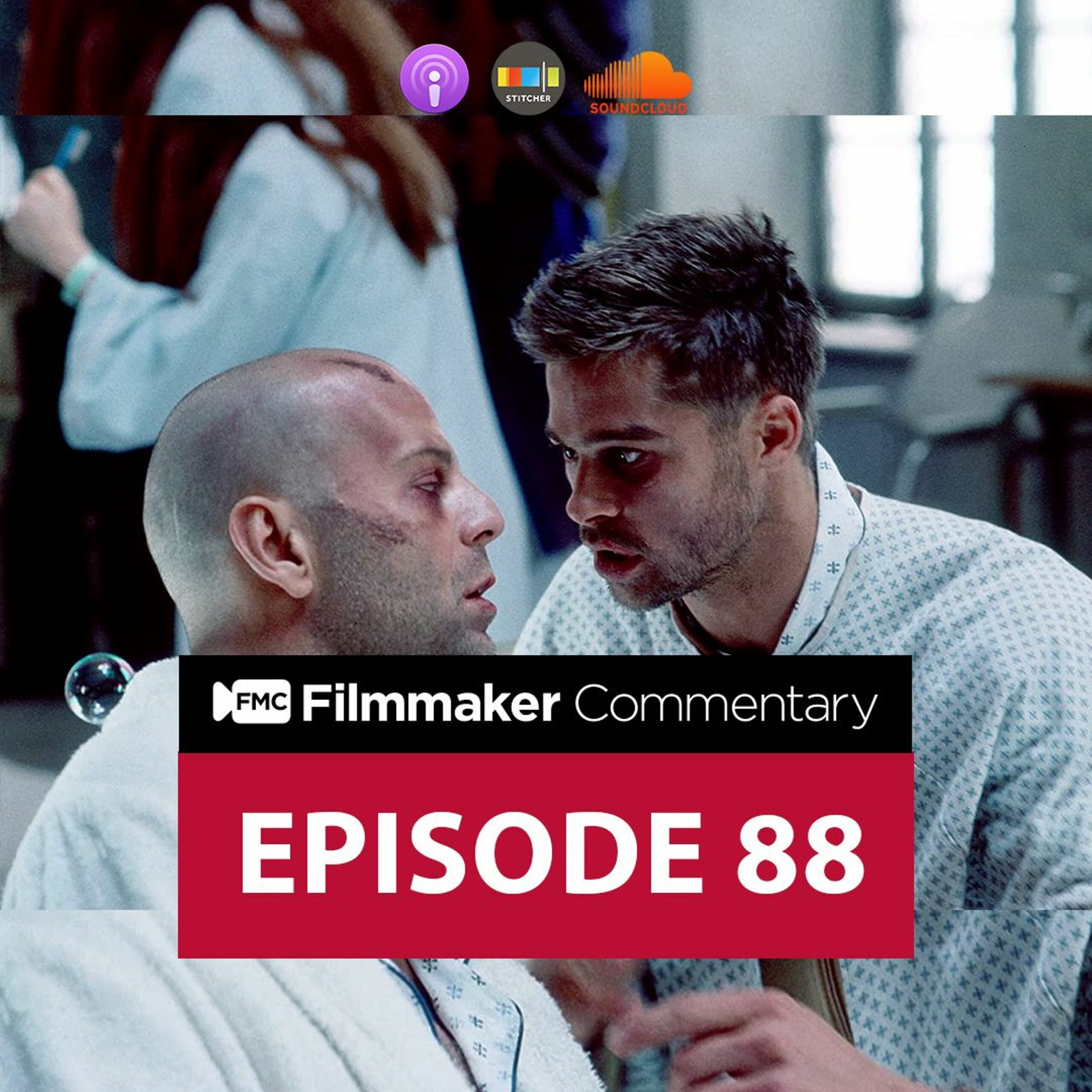
FMC 088: 12 Monkeys Directed by Terry Gilliam

July 25, 2020
Listen on Apple Spotify YouTube
Listen to this episode
Your browser does not support the audio element.
Also on Apple Spotify YouTube

This installment of the Filmmaker Commentary podcast provides a fascinating look into Terry Gilliam’s 1995 sci-fi thriller, “12 Monkeys.” Hosts Reginald Titus Jr. and Casey G. Smith kick off the discussion by highlighting the film’s impressive financial performance, grossing over $168 million worldwide on a modest $29 million budget – a testament to its unique vision and Gilliam’s distinctive approach to filmmaking, often working outside the traditional Hollywood system. They delve into the film’s intriguing origins, tracing its loose inspiration to the French short film “La Jetée,” and discuss how Gilliam’s unconventional style shaped its narrative and visual identity.

Beyond “12 Monkeys,” the conversation shifts to a highly relevant and timely examination of the broader film industry, particularly in the wake of significant global events. The hosts explore the precarious financial state of major exhibition chains like AMC Theatres, which found itself taking on substantial debt and furloughing thousands of employees. This leads to a thoughtful debate about the accelerating shift towards streaming platforms and its profound implications for film distribution. They analyze how services like Disney+ have rapidly amassed subscribers, demonstrating consumer demand for instant access to content, and ponder whether traditional exhibition-focused companies can adapt. The discussion touches on the pressure from studios for day-and-date releases, questioning the long-held exclusive theatrical windows and how this might necessitate adjustments in film budgets.

Listeners will also get a peek into the hosts’ recent viewing habits, offering varied recommendations and insights. Casey G. Smith shares his surprisingly positive experience with the 1981 “Spider-Man” cartoon and his appreciation for the meaningful themes in “Static Shock.” Meanwhile, Reginald Titus Jr. discusses the wildly popular “Tiger King,” unraveling its bizarre narrative and exploring the deeper implications of such a cultural phenomenon. Both hosts share their enthusiasm for “The Last Dance,” the Michael Jordan documentary, praising its unprecedented access and raw portrayal of a sports legend. They also recommend the HBO documentary “McMillions” for its look at a real-life McDonald’s Monopoly scam. This episode, available on Filmmaker Commentary, serves as both a celebration of a cult classic and a vital conversation on the transformative forces at play within the world of cinema, making it a must-listen for film enthusiasts.

What We Cover

  • How “12 Monkeys” achieved impressive box office success despite its unique tone and subject matter.
  • Insights into Terry Gilliam’s filmmaking philosophy and his approach to working within (or outside) the Hollywood system.
  • The impact of streaming platforms on traditional cinema and the potential future for film budgets and distribution windows.
  • A detailed look at AMC Theatres’ financial struggles and potential strategies for recovery in a changing market.
  • Discussion of recent cultural phenomena like “Tiger King” and “The Last Dance” and their significance in documentary filmmaking.
  • The historical influence of the French short film “La Jetée” on “12 Monkeys.”

Key Moments

  • 0:48 – The hosts marvel at “12 Monkeys'” strong box office performance against its production budget.
  • 3:38 – A critical analysis begins regarding the sustainability of traditional cinema exhibition in the face of surging streaming services.
  • 1:40:00 – Casey G. Smith shares his excitement and initial impressions of “The Last Dance” documentary, praising its unique access to Michael Jordan’s final championship season.
  • 2:25:00 – The podcast the “Tiger King” phenomenon, discussing its entertainment value and the broader implications of its widespread popularity.

Films, Shows & Platforms Mentioned

  • 12 Monkeys
  • La Jetée
  • Black Widow
  • Inside Man
  • Captain Marvel
  • Wonder Woman
  • Terminator
  • Looper
  • Die Hard
  • Fight Club
  • Dark City
  • The Last Dance
  • Black AF
  • Spider-Man (1981 cartoon)
  • Static Shock
  • Harley Quinn (Season 2)
  • Tiger King
  • McMillions
  • Money Heist
  • Parks and Recreation
  • Blindspot

Listener Questions

  • How might the current challenges faced by movie theaters influence their future relationship with independent filmmakers?
  • What revenue strategies could exhibition-focused companies like AMC explore to stay afloat amidst a surge in direct-to-consumer streaming?
  • What are the implications of Disney+’s rapid subscriber growth for traditional film distribution and the exclusive theatrical window model?

Full Transcript

Read the full transcript

Full Episode Transcript
This episode of Filmmaker Commentary dives into Terry Gilliam's "12 Monkeys," exploring its box office success, thematic depth, and production challenges. The hosts also discuss the evolving landscape of cinema with the rise of streaming, review popular documentaries like "Tiger King" and "The Last Dance," and share insights on acting, cinematography, and creative processes.

Opening Discussion & Box Office Performance
Reginald Titus Jr.: Filmmaker Commentary, episode 88. Welcome to Filmmaker Commentary, where we give you insights from our favorite filmmaking commentaries. These commentaries can be heard on your DVD and Blu-rays of your favorite movies. We'll show you how you can use these commentaries and apply them to improve your video production and filmmaking techniques. All of this here on Filmmaker Commentary. I'm your host, Reginald Titus Jr.
Reginald Titus Jr.: Welcome to Filmmaker Commentary, I'm Reginald Titus Jr. I'm joined with Casey G. Smith. Welcome back, sir.
Casey G. Smith.: Good to be back, sir.
Reginald Titus Jr.: Quarantine edition.
Casey G. Smith.: Two times, second time around.
Reginald Titus Jr.: So today we are covering "12 Monkeys," uh, 1995, directed by Terry Gilliam, and written by David Peoples and Janet Peoples. We have a box office of, a domestic box office of 57.1 million. Uh, we have an international box office of 100, uh, 111.7 million, which has an all around worldwide 168.8 million off of a budget of 29 million. That is a win.
Casey G. Smith.: Most definitely. I, I didn't know it had done that well. I mean, that's, that's, that's impressive. Very impressive.
Reginald Titus Jr.: Yeah, I was, I was surprised too.
Casey G. Smith.: Especially considering how much of, considering the timeframe and considering that the, the bulk of the win is, is international also.
Reginald Titus Jr.: Yeah. Which makes sense for the style of it, and if I'm not mistaken, was Terry Gilliam, was he staying like in, like the UK or he, he wasn't staying in America for a little while. I might have to double check that, but from my understanding, he kind of like tries to stay out of the Hollywood system.
Casey G. Smith.: And also with the basis of the film, um, having some basis or being loosely based on the, uh, the French kind of, the French short film, *La Jetée*, *La Jetée*. Forgive me, those who speak French for I'm butchering that, that name, but perhaps that may have had something to do with it as well.
Reginald Titus Jr.: Probably so. But before we dive further into "12 Monkeys," let's talk about news and movies watched.

Industry News - AMC Theaters and Streaming
Casey G. Smith.: All right, so according to the New York Post, AMC Theaters is raising 500 million in debt amid the coronavirus closures that it has been, uh, experiencing. Of course, at the time of this recording, you know, the, the, the country as a whole, by and large, is still in, uh, lockdown and practicing social distancing, of course, which has had a major impact on, I mean, everything, but especially a place like a movie theater. Now, drive-ins seem to obviously be resurging. The perfect place you could go and stay nice and safe. But, uh, AMC has been hurting. Over the past couple of years, they had invested billions, um, into rebuilding their theaters and upgrading them and adding nicer seats and all that. And now they're at the point where they're looking at, uh, filing for bankruptcy. And, uh, you know, they have 630 theaters and they have furloughed 25,000 of their workers, including their chief executive officer. Uh, and they're hoping to reopen in June. So they've, uh, you know, have taken another 500 million to, to try and stay afloat.
Reginald Titus Jr.: Wow. Do they have any other like revenue streams besides exhibition, or is this like it? This is their thing?
Casey G. Smith.: From what I understand, yeah, this is their thing. Now, they had just started to begin to see, um, a profit and and and make some, see some returns on their A-Plus, right? That their, their subscription service for, for movies. Uh, I think it was like A-Plus, A-List, A-List. There we go. They their A-List service, but obviously now, I mean, you know, that's kind of, it's it's tough to justify. One, I'm sure those people having that membership, because they can't use it, so, uh, yeah, so that's a pretty big hit for them all around. So they are, they're they're fight, they're fighting to to stay afloat. You know, I know you and I had kind of had a conversation about them, the more we, uh, potentially saw the, the future of of film going. What are your thoughts on this, Reginald?
Reginald Titus Jr.: The future. I think, um, depending on how long the situation goes, I have a feeling that companies that only focus on exhibition will more than likely be out of business, and mainly because they, the times change. You know, people are really streaming everything. They want instant access. Even the studios were pressuring exhibitors to have, uh, day-and-date dates, especially on films that aren't performing well in the theater. And so instead of like a film that maybe blocked off just for exhibition for that exclusive window for 30 days or something like that. If that film doesn't do great in the first week, well, that studio's kind of stuck with a film that's kind of dying, and then they slowly have to reel it back in and they can't take advantage of it on video on demand or DVD, Blu-ray, whatever. They're not able to do that just because the, uh, the exhibitors are holding that window open. They've been fighting to have that window and the studios want to be agile. But I think, uh, if this goes further than the summer, uh, I think our industry will be forever changed.
Casey G. Smith.: Yeah, it's, it's wild to think that there could that that that again, the powerhouse, the number one, AMC could, I mean, I mean, filing for bankruptcy is one thing. It's not the same as going out of business, but, uh, it's, it's a usually a big step towards something like that taking place. Now, I know they also do at times host special events where, you know, it might be a live event that they're actually, you know, if you will, streaming or showing on their screen. Sometimes different companies can come in and host different events there. Sometimes businesses might do something like that. So they do have a couple of other streams in that regards, you know, and just showing films. But by and large, we know the bulk is, is films. I just wonder how, with some of these budgets, again, a lot of these big-time studio budgets, I think are made to be not just seen in the theaters, but to have people going to a place and paying, let's say on average $10, right? You get a family of four that goes in and you're paying, let's say again, on average $10 per person. It might be a little bit more for the adults, a little bit less for the kids, but let's say the average is out to $10 bucks. That's $40. From just from a box office standpoint because we know that for the theaters themselves, the bulk of what they get is is the is the sugar that they sell. Right? They get a smaller portion of that box office, but for the actual studios, right? So for them to go from, hey, we got four, we got $40 off this family of four, then going into, okay, this just went straight into into streaming on a on a platform, or straight to streaming, and you've got one person with an account and, you know, that that login is being shared to say two or three other families, then that one access to that one particular film. Not only can they watch it multiple times, but now you might have nine, just say even 10 people watching it with one person paying an eight to $12 a month subscription. That's a, that's almost, that's I mean, that's a, that's a pretty substantial loss. If you average the ticket costs out to to to $10 bucks per, that's that's a pretty substantial shift. And so I just wonder how, how much the, I don't know, those models are prepared for, for those kinds of of things. Of course, I mean, the, the services allow for multiple accounts to be on one, but they're, they've been planning, up until now, they've been planning on worldwide box office. People in theaters to make the good bulk of that. So I wonder if that'll affect budgets and if, if things go south with the theaters.
Reginald Titus Jr.: I think it will. The budgets are going to definitely have to come down a little bit. Um, for because when you have studios like Disney that now have their own platform, it only takes a amount of time before the, the smart people in their organization will figure out how to recreate that window, the exclusive window in their own way. I don't know how they would do that, maybe within the subscription. You go inside your Disney Plus app and then you can see the, the new Black Widow movie is available, but you'll have to, um, your credit card's already on file with them so you can be like, hey, would you want to watch this for an extra 20 bucks early? You know, that could be an option. They can do that in that platform. That's possible. Um, they'll figure it out. They'll definitely figure it out to recreate that exclusive window.
Casey G. Smith.: And it could be just the, the, the, you know, could be just the FOMO aspect of it, right? The fear of missing out. If we say, okay, for our 55 million subscribers, for everybody who's not subscribed, you know, on an account, hey, look, this is dropping only on our platform. If you want to see it, you got to sign up. So maybe just up in the subscribers just by that again, that fear of missing out might, uh, be one of the things at least again for a platform like Disney, but, you know, what if you're like Sony? You know, they're, they're, their films show on some other places, but I think, I I was thinking about this today. I think it would be smart if Sony partnered with, because I'm sure Disney would be fine with showing more content than just their own. I mean, they've obviously acquired Fox, but I mean, they're streaming platforms. So, and obviously they've got a majority stake in Hulu as well. But I'm like, I wonder if they would, you know, say, hey, you know what, Sony, you know, give us, you know, you know, make some deals and we'll have access to your catalog and add that to, I guess they'd go more Hulu, because Sony has some kids stuff, but a lot of the stuff, I'm sure, is more, Yeah. Yeah. And Sony does have, Yeah. All the, all the end-game stuff. True. And Sony does have Sony Crackle. Um, I'm not sure, and that's an, and it's an, and it's an ad-based service, so it's free, but it's based on advertisements. Um, on top of that, with Disney, they like to stay within brand, so they're not going to do anything over PG-13.
Reginald Titus Jr.: And Sony does have, Yeah. All the, all the end-game stuff. True. And Sony does have Sony Crackle. Um, I'm not sure, and that's an, and it's an, and it's an ad-based service, so it's free, but it's based on advertisements. Um, on top of that, with Disney, they like to stay within brand, so they're not going to do anything over PG-13.
Casey G. Smith.: Sure, but that's what, but again, but they have a majority stake in Hulu. So that's where they're like edgier stuff. Yeah, just throw it on there. They're edgier stuff, they're put it on Hulu. Yeah, I mean, they they literally have a majority stake. Like, they own like once they got Fox, that gave them like, I think they may have like 60% of Hulu. So, yeah, that's where they can put the, uh, the edgier content.
Reginald Titus Jr.: They're going to figure it out. I mean, they were able to just, we saw how long it was to build a Netflix, and as more time went along, Disney was able to study that. Other people have been able to study that, and they were able to implement a Netflix in less than a year, right?
Casey G. Smith.: Oh man, dude, I mean, they Disney Plus launched like in November.
Reginald Titus Jr.: Yeah. So, and we're talking. I don't know how much of the development, you know, the development of it. I don't know how long that took, but yeah, but it's been live for less than a year.
Casey G. Smith.: Five months.
Reginald Titus Jr.: Yeah, five months. And they already have what, 50 million or something like that subscribers?
Casey G. Smith.: 55 million subscribers, dude.
Reginald Titus Jr.: That's crazy.
Casey G. Smith.: Yeah.
Reginald Titus Jr.: So, yeah, they, they perfected the model, so they're definitely going to be the leaders, them, Netflix, uh, Hulu, HBO for curated content, they're
Casey G. Smith.: Amazon Prime?
Reginald Titus Jr.: Yes. Oh yeah. Yes, there we go. How can we forget that?
Casey G. Smith.: Check out Amazon Prime. How can we forget that?
Reginald Titus Jr.: Um, but to add to the exhibitors, if any movie theaters are still in business, if this thing prolongs, um, hopefully they will be a little bit, um, nicer to independent filmmakers, um, in the future. There'll be a definitely an opportunity there to befriend some independent filmmakers and, uh, like independent film basically made theaters what it is before it got taken over.
Casey G. Smith.: Taken over. I think you'll always have, um, some that will be open, like, you know, like, like, you know, here in the Dallas area we have the Angelica Theater, which is, you know, they show some mainstream stuff, but they are very much so independent film friendly. Oh, yeah.
Reginald Titus Jr.: Oh yeah.
Casey G. Smith.: Yeah, man, I hope nothing happens to, to them, man. That would be, that'll be, that would make, that would be very sad. That would be very, very sad. Um, because they have no location here and they got one in New York, right? Maybe headquartered out of out of New York.
Reginald Titus Jr.: That's right.
Casey G. Smith.: Um, I I I'll look into that.
Reginald Titus Jr.: And AMC is kind of sad too, because they do have an indie-friendly package for certain films, as long as you have a budget to go along. So they do have an indie film program, but, uh, we shall see, only time. Time is not in their corner for theaters.
Casey G. Smith.: They may if, if things go south with their physical locations that we were talking about with drive-ins, they could, you know, just switch over to doing drive-ins. That would be a smart thing. Yeah, because again, the desire to go out and see a film, that's not going to go away. To get out of the house. Yeah, man. And be able to go and like, just do that like in your car and just, you know, to dial into the, to whatever station that the sound is coming through and, right about now, I'd love to, I'd love to go to a drive-in right about now.
Reginald Titus Jr.: That would be a smart thing. Yeah, because again, the desire to go out and see a film, that's not going to go away. To get out of the house. Yeah, man. And be able to go and like, just do that like in your car and just, you know, to dial into the, to whatever station that the sound is coming through and, right about now, I'd love to, I'd love to go to a drive-in right about now.
Reginald Titus Jr.: Uh, there's, there, we got a couple in in DFW, maybe next week. Yeah.
Casey G. Smith.: I, it, it may be time. It may be time. Oh, I think there's one in Fort Worth, then there's another one in Ennis.
Reginald Titus Jr.: I think there's one in Fort Worth, then there's another one in Ennis.
Casey G. Smith.: Ennis, yeah.

What We're Watching
Reginald Titus Jr.: Also, tonight, there was, uh, a documentary, a 10-part documentary called "The Last Dance," which is a 10-part documentary about MJ, Michael Jordan, the GOAT, they say. During his night, was that during the 1990?
Casey G. Smith.: This is, this is actually, it's, it's based on the, the last season of the Chica, of the '97 Chicago Bulls. Oh, '97. Yeah, when they were literally going for their last championship. Yeah. And it's one of those things where it's so wild like when organizations give access to be, you know, filmed and all that kind of stuff and archived. And like, we don't know about it. I mean, this is, this is literally over 20, this is over 20 years ago. But there's all this footage. And so they gave this, you know, whoever, unprecedented access to them. And so I, right before we started recording, I've, I had, I had set on my phone that this was coming on and I got caught up watching, uh, uh, "Black AF," #BlackAF. Yeah. And I was like, and I was like, oh, oh, no, it's on. And so I, I, I jumped on and I and and like, like episode two was, was, was playing and so I, I went back to episode one. I'm about, I'm about 30 minutes in and I'm freaking loving it, man. I, I love the 90s Bulls, man. I mean, I was in high school then, man, that was like, Yeah. Michael Jordan was life. Dude, dude. I mean, they were just killing it, man. So to, to, to be a high school student during the time, and I, and I, I, you know, I love playing basketball back then. And to be, man, to be in high school or or college or whatever during that time, what the Bulls were doing was just like, it was, it was just magical, man. Like, it was, and it was basketball taking over the world at that time. True. And, and, yeah, to go back and see this. Yeah, I'm very ex, I'm very excited. And there, they're, you know, obviously they've, they've got the interviews going, right? You've got MJ. And, and you know, MJ had his videos in the past, right? The "Come Fly with Me" and, and "Jordan's Playground" that he did back in the day, but it's cool to see this access to Jordan again, because he's such a, he's a personality also, right? And, and Pippen, I mean, Pippen's been very much so in, you know, he's on different shows and stuff like that, but, you know, he's in the mix. And but, you know, they're getting, they're getting behind the scenes because this is the business aspect, right? Where, you know, going into it, they already had told like, uh, Krauss, Yeah, the GM for the Bulls. Yeah. He told Phil Jackson before the game in season, you're not coming back. I don't care, I don't care if you guys win 82 games. Dang. You're, you're not coming back next season. He was adamant on rebuilding. For whatever reason, he and Phil, their relationship had gone south. Anyway. But yes, it's on ESPN. And but it's a partnership between ESPN and Netflix. So I'm like, I'm curious, when is this thing, I guess after it's on ESPN for a while, it will then eventually come to Netflix. Interesting. Okay. Didn't know that. But yeah, I am, Everybody's buzzing about it. Uh, Skip Bayless, Shannon Sharpe, they were talking about it all week. I know MJ, he was kind of nervous because he was like, I think people are going to think I'm a jerk or a-hole and all that. He was kind of concerned about his image, because he's always about being fresh and fly, that was like his thing. He wouldn't let anybody videotape him while he was like dirty, you know, sweating after a game. Let me get fresh and then y'all can record.
Reginald Titus Jr.: Oh, '97. Yeah, when they were literally going for their last championship. Yeah. And it's one of those things where it's so wild like when organizations give access to be, you know, filmed and all that kind of stuff and archived. And like, we don't know about it. I mean, this is, this is literally over 20, this is over 20 years ago. But there's all this footage. And so they gave this, you know, whoever, unprecedented access to them. And so I, right before we started recording, I've, I had, I had set on my phone that this was coming on and I got caught up watching, uh, uh, "Black AF," #BlackAF. Yeah. And I was like, and I was like, oh, oh, no, it's on. And so I, I, I jumped on and I and and like, like episode two was, was, was playing and so I, I went back to episode one. I'm about, I'm about 30 minutes in and I'm freaking loving it, man. I, I love the 90s Bulls, man. I mean, I was in high school then, man, that was like, Yeah. Michael Jordan was life. Dude, dude. I mean, they were just killing it, man. So to, to, to be a high school student during the time, and I, and I, I, you know, I love playing basketball back then. And to be, man, to be in high school or or college or whatever during that time, what the Bulls were doing was just like, it was, it was just magical, man. Like, it was, and it was basketball taking over the world at that time. True. And, and, yeah, to go back and see this. Yeah, I'm very ex, I'm very excited. And there, they're, you know, obviously they've, they've got the interviews going, right? You've got MJ. And, and you know, MJ had his videos in the past, right? The "Come Fly with Me" and, and "Jordan's Playground" that he did back in the day, but it's cool to see this access to Jordan again, because he's such a, he's a personality also, right? And, and Pippen, I mean, Pippen's been very much so in, you know, he's on different shows and stuff like that, but, you know, he's in the mix. And but, you know, they're getting, they're getting behind the scenes because this is the business aspect, right? Where, you know, going into it, they already had told like, uh, Krauss, Yeah, the GM for the Bulls. Yeah. He told Phil Jackson before the game in season, you're not coming back. I don't care, I don't care if you guys win 82 games. Dang. You're, you're not coming back next season. He was adamant on rebuilding. For whatever reason, he and Phil, their relationship had gone south. Anyway. But yes, it's on ESPN. And but it's a partnership between ESPN and Netflix. So I'm like, I'm curious, when is this thing, I guess after it's on ESPN for a while, it will then eventually come to Netflix. Interesting. Okay. Didn't know that. But yeah, I am, Everybody's buzzing about it. Uh, Skip Bayless, Shannon Sharpe, they were talking about it all week. I know MJ, he was kind of nervous because he was like, I think people are going to think I'm a jerk or a-hole and all that. He was kind of concerned about his image, because he's always about being fresh and fly, that was like his thing. He wouldn't let anybody videotape him while he was like dirty, you know, sweating after a game. Let me get fresh and then y'all can record.
Casey G. Smith.: I think we're going to see some different sides. They they showed one clip, and they they had actually had a bunch of like kind of preview clips. There's one again, talking about like him in college and like they, they had his mom read a letter that he had sent to her while he was in college saying, hey mom, you know, I hope you're, I hope you're doing, doing well. How's the family? I've, I've, I've attached my account number, please send me some money. I only have $20 left in my account. That's gangster. Uh, you know, something like, you know, you know, you know, you know, me and God both, you know, are smiling on you, something like that. And then, um, PS, sorry about last, last month's phone bill, please send more stamps. And so like, they, they, they video her, you know, reading that. And then as they do it, they cut to Michael looking at an iPad, watching her. Yeah. Uh, and and just like, again, his reaction. It was really cool, really very sweet. So I'm like, you get moments like that, his image will be fine. You're going to see some things where he gets, yeah, you're going to see some images, I'm sure where he's hard on on other players like we've heard. You're going to get some of that, but Yeah. That's what it was then.
Reginald Titus Jr.: Yeah, that's gangster. Uh, you know, something like, you know, you know, you know, you know, me and God both, you know, are smiling on you, something like that. And then, um, PS, sorry about last, last month's phone bill, please send more stamps. And so like, they, they, they video her, you know, reading that. And then as they do it, they cut to Michael looking at an iPad, watching her. Yeah. Uh, and and just like, again, his reaction. It was really cool, really very sweet. So I'm like, you get moments like that, his image will be fine. You're going to see some things where he gets, yeah, you're going to see some images, I'm sure where he's hard on on other players like we've heard. You're going to get some of that, but Yeah. That's what it was then.
Casey G. Smith.: Yeah. That's what it was then.
Reginald Titus Jr.: Yeah, he was a, he, everybody knows, he's about being like they say, shut up and play basketball, that's what he's about. Any kind of political thing or anything outside of basketball, he's not your guy. He was, he was laser-focused, man. Yeah. Even in college, when he as a freshman, he was talking to his coach and he told his coach. His coach, his coach was recounting, he's like, yeah, he said he wanted to be the best player whoever played. And he's like, where are you going to have to work hard? He's like, I worked just as hard as any of the other guys in high school. He's like, oh, I'm sorry. I thought you said you wanted to be the best that ever played. He said, I'll show you, coach. I'll show you. And yeah, I, I didn't, again, I didn't, I don't, I don't follow college ball, so I didn't know who Jordan was in, you know, in college. I only heard stuff afterwards. But seeing how he came up his freshman year, I was like, whoa, I had no idea, man, he like, just blossomed freshman year in college, and, you know, playing, you know, guys like, you know, James Worthy and, and I didn't realize that he had beat Patrick Ewing's team for that championship his freshman year. He hit that winning shot to win the game. I'm like, dude, this guy's been just crushing Patrick Ewing's dreams for a long time. Forever. That would suck. Uh, Larry Bird called him Jesus in sneakers. Huh. Yeah. Yeah, he he when he crossed Bird up at the, at the Garden, I mean, that, oh, that's just, I I love, I love that clip. Yeah. Oh man. Yeah. He crossed him up but he got his karma, you know, AI came and did him twice. Yeah. But I'm not a fan of AI. AI is the man. Come on. I'm not saying he's not the man. I'm just saying I'm not a fan. I'm not, I'm not, I'm not a fan of AI. Respect. Respect his game. Dude, dude had crazy handles, but what's wrong with AI? Nothing's wrong. Yeah, I'm saying I'm not a fan. I'm just not a fan. Again, I respect his hustle, tough, tough, tough, tough competitor. Yeah. One of the toughest guys. He gets his respect from his peers. No doubt. I I watched him doing line tape, I mean, I'm a tremendous player. I just, I'm just, he's not my guy. One of the greats. Hall of Fame. Yes, he is. He's not my guy. It's the braids, wasn't it? The braids. It was the braids, wasn't it, Casey? It's okay. No, because I'm cool with Kwahi. Kwahi has braids. Yeah, it wasn't, it wasn't the braids. It was the tats. It was, it was, it was the attitude. That's what it was. I didn't, I didn't like his attitude. Man. Yeah, he's, uh, interesting. Guys say he's not going to, who's a guy, a guy who says he is not going to practice? We talking about practice. We talking about practice, Casey. What is this guy? That was the best clip of all time. There's more things going behind the scenes that most people don't know about and it's just hilarious, because there's other fights that are going on and they can't say what it's about. And so it's hilarious when somebody makes a big deal about something that's small, but they don't know what, what happened. That was hilarious though. But from the just regular audience, we're like, uh, you're supposed to go to practice. Oh, that's great. That was one of the greatest clips of all time. All right, all right, we'll get off MJ. But yeah, MJ's the GOAT. The Last Dance, yes. The '97 Chicago Bulls, their last season on their way to their second three-peat. Yeah. Check it out. Yeah, basketball will never be the same. ESPN. Um, movies and TV, what you've been watching?
Casey G. Smith.: Yeah. He's a, he, everybody knows, he's about being like they say, shut up and play basketball, that's what he's about. Any kind of political thing or anything outside of basketball, he's not your guy. He was, he was laser-focused, man. Yeah. Even in college, when he as a freshman, he was talking to his coach and he told his coach. His coach, his coach was recounting, he's like, yeah, he said he wanted to be the best player whoever played. And he's like, where are you going to have to work hard? He's like, I worked just as hard as any of the other guys in high school. He's like, oh, I'm sorry. I thought you said you wanted to be the best that ever played. He said, I'll show you, coach. I'll show you. And yeah, I, I didn't, again, I didn't, I don't, I don't follow college ball, so I didn't know who Jordan was in, you know, in college. I only heard stuff afterwards. But seeing how he came up his freshman year, I was like, whoa, I had no idea, man, he like, just blossomed freshman year in college, and, you know, playing, you know, guys like, you know, James Worthy and, and I didn't realize that he had beat Patrick Ewing's team for that championship his freshman year. He hit that winning shot to win the game. I'm like, dude, this guy's been just crushing Patrick Ewing's dreams for a long time. Forever. That would suck. Uh, Larry Bird called him Jesus in sneakers. Huh. Yeah. Yeah, he he when he crossed Bird up at the, at the Garden, I mean, that, oh, that's just, I I love, I love that clip. Yeah. Oh man. Yeah. He crossed him up but he got his karma, you know, AI came and did him twice. Yeah. But I'm not a fan of AI. AI is the man. Come on. I'm not saying he's not the man. I'm just saying I'm not a fan. I'm not, I'm not, I'm not a fan of AI. Respect. Respect his game. Dude, dude had crazy handles, but what's wrong with AI? Nothing's wrong. Yeah, I'm saying I'm not a fan. I'm just not a fan. Again, I respect his hustle, tough, tough, tough, tough competitor. Yeah. One of the toughest guys. He gets his respect from his peers. No doubt. I I watched him doing line tape, I mean, I'm a tremendous player. I just, I'm just, he's not my guy. One of the greats. Hall of Fame. Yes, he is. He's not my guy. It's the braids, wasn't it? The braids. It was the braids, wasn't it, Casey? It's okay. No, because I'm cool with Kwahi. Kwahi has braids. Yeah, it wasn't, it wasn't the braids. It was the tats. It was, it was, it was the attitude. That's what it was. I didn't, I didn't like his attitude. Man. Yeah, he's, uh, interesting. Guys say he's not going to, who's a guy, a guy who says he is not going to practice? We talking about practice. We talking about practice, Casey. What is this guy? That was the best clip of all time. There's more things going behind the scenes that most people don't know about and it's just hilarious, because there's other fights that are going on and they can't say what it's about. And so it's hilarious when somebody makes a big deal about something that's small, but they don't know what, what happened. That was hilarious though. But from the just regular audience, we're like, uh, you're supposed to go to practice. Oh, that's great. That was one of the greatest clips of all time. All right, all right, we'll get off MJ. But yeah, MJ's the GOAT. The Last Dance, yes. The '97 Chicago Bulls, their last season on their way to their second three-peat. Yeah. Check it out. Yeah, basketball will never be the same. ESPN. Um, movies and TV, what you've been watching?
Casey G. Smith.: Man, um, a lot.
Reginald Titus Jr.: Quarantine.
Casey G. Smith.: Quarantine. More like, more like Corntime, you know what I'm saying? Because it's like, we've got loads of it on our hands. So, a couple of things that I won't dive into, into, like, great detail on. You know, again, a bit on my, my, my Disney Plus. I, I've gone back and started watching the 1981 Spider-Man cartoon.
Reginald Titus Jr.: Yikes, you do have some time.
Casey G. Smith.: Yeah. Because, you know, I, you know, I'm a child of the 80s, right? And so, I, I, I grew up on Spider-Man and His Amazing Friends, which came out like '83 and then syndicated in '85. So, I, I, that was like childhood, watching that and, you know, Stan Lee would come on with the voiceovers. Wow. But I'd never, I'd never seen the '81 Spider-Man. I knew it was a cartoon, but I'd never, I would never see it anywhere. So, I started watching it and, real talk, it's some of the best puns, like Spider-Man puns, in any cartoon that I've seen. Like, legit, like, like they actually like make me chuckle. I'm like, this is actually pretty well, pretty well written. Like, they're, like, they're like nailing Spidey's character. Like, that, that is, that's impressive because I've, I've heard a lot of Spider-Man puns. Yeah. These, these are some of the funniest ones. I'm like, okay, these writers were on their game. So, that, uh, been watching a lot of Static Shock on the DC Universe app, which is still a thing. What is that? It's an application that has, has film, movies, and comic books.
Reginald Titus Jr.: Wow. But I'd never, I'd never seen the '81 Spider-Man. I knew it was a cartoon, but I'd never, I would never see it anywhere. So, I started watching it and, real talk, it's some of the best puns, like Spider-Man puns, in any cartoon that I've seen. Like, legit, like, like they actually like make me chuckle. I'm like, this is actually pretty well, pretty well written. Like, they're, like, they're like nailing Spidey's character. Like, that, that is, that's impressive because I've, I've heard a lot of Spider-Man puns. Yeah. These, these are some of the funniest ones. I'm like, okay, these writers were on their game. So, that, uh, been watching a lot of Static Shock on the DC Universe app, which is still a thing. What is that? It's an application that has, has film, movies, and comic books.
Reginald Titus Jr.: I have heard nothing lately.
Casey G. Smith.: Yeah, Harley Quinn season two. And like, they're actually actively again, every week they launch a a a new episode of of season two of Harley Quinn. Oh, okay, okay. Um, yeah, they had, they had this whole role-playing, celebrity role-playing thing they did. So, yeah, they're still doing content. Yeah, I know you do. I know you do.
Reginald Titus Jr.: You need to get on that right time. Yeah, I know you do. I know you do.
Reginald Titus Jr.: Is the, uh, I know we had talked about like their subscribers. Did we ever get a number on how many subscribers they have?
Casey G. Smith.: I have no idea what their subscriber base is like. I'll have to, I'll have to reach, research that and, and, and, and come with something and if I'm too embarrassed to say, no, it'll be what it'll be.
Reginald Titus Jr.: And yeah, I wonder. I haven't looked it up, and I know we were going to talk about doing it one day. Uh,
Casey G. Smith.: One day. It kind of slipped.
Reginald Titus Jr.: It kind of slipped.
Casey G. Smith.: You have those, you have those numbers yet, Smith? No, not yet. Yeah. The internet went down. The internet has, uh, a virus. Yeah.
Reginald Titus Jr.: Yeah. The internet went down. The internet has, uh, a virus. Yeah.
Reginald Titus Jr.: But isn't it crazy though, like, like the power of marketing because like we know the numbers of the Disney app, you know, like without even searching, it's just we know it because of the market, they've been advertising it. The people have been talking about it. Yeah, they're so proud. They're like, haha, 55 million. Boom. DC's like, uh, What's that over there? Oh, look at HBO Max. Run. That's pretty funny. But what I had been watching on this, on this app is Static Shock, and it's been very entertaining. Some very good episodes. I, I was, I'm very impressed with the, the content and topics that they're covering in Static Shock. And this is a cartoon back in the early 2000s, but, uh, Black superhero, he's almost like a, he's almost like a Black Spider-Man. He's a young high school kid who gets, you know, electric-based powers. But he's smart, and and he's always does the right thing. But just good role model, you know, he's in a home with a, you know, a Black father that's present and and and helping raise him and his sister. It's, uh, yeah, man, Static Shock, man. I'm, I snuffed, I snuffed it when I was younger. But now I'm watching it and I'm like, this is very entertaining. But, on to bigger things. So, uh, also, we went back and we watched the Captain America trilogy on Disney Plus. Okay. But I did watch Tiger King. Oh, ha ha ha. Yes. Were you not entertained?
Casey G. Smith.: Yeah, they're so proud. They're like, haha, 55 million. Boom. DC's like, uh, What's that over there? Oh, look at HBO Max. Run. That's pretty funny. But what I had been watching on this, on this app is Static Shock, and it's been very entertaining. Some very good episodes. I, I was, I'm very impressed with the, the content and topics that they're covering in Static Shock. And this is a cartoon back in the early 2000s, but, uh, Black superhero, he's almost like a, he's almost like a Black Spider-Man. He's a young high school kid who gets, you know, electric-based powers. But he's smart, and and he's always does the right thing. But just good role model, you know, he's in a home with a, you know, a Black father that's present and and and helping raise him and his sister. It's, uh, yeah, man, Static Shock, man. I'm, I snuffed, I snuffed it when I was younger. But now I'm watching it and I'm like, this is very entertaining. But, on to bigger things. So, uh, also, we went back and we watched the Captain America trilogy on Disney Plus. Okay. But I did watch Tiger King. Oh, ha ha ha. Yes. Were you not entertained?
Reginald Titus Jr.: Oh, ha ha ha. Yes. Were you not entertained?
Casey G. Smith.: Oh man, I, I, yes. It's, it's like a train wreck, right? It's like, I can't stop watching. Yeah. Probably my brain's like, what are you doing, you fool? I'm like, I, I got to watch the next episode. I, I can't look away. But it was wildly, wildly entertaining. One of my, one of my favorite things was after I watched it, Saturday Night Live did a skit where they were spoofing, uh, the MasterClass series. And one of the ones they spoofed, they said, uh, uh, Carol, what, what's her name, Carol? Carol Baskins. Carol Baskins. That's what I forget. They Carol Baskins MasterClass and, and bike riding. And they had this, oh man, one of the act, one of the SNL actors was like, I just like to ride my bike. It's just so, it's just so relaxing. It's just. I was like, oh man, it was, it was golden, man. But, yeah, I'm sure those of you who are listening to this, you probably have seen Tiger King. We'd love to know what you think. So, feel free to to to hit us up on Instagram or on Twitter, and, uh, let us know your thoughts of of Tiger King. Unbelievable. It's a phenomenon, it's an American phenomenon right now. It is, and it's, uh, something to behold. Um, one thing I'm, I like about that is that, people that represent us, aren't really around in that. I thought two brothers, the whole, the whole documentary, two brothers, they stayed away. One with a speaking part, and the other was a bailiff, like, holding open the door when they were going to the courthouse. Just doing his job. It's like, it. The only brothers that I, I saw in there. I'm like, this is, I, I, I've never seen anything like it. I mean, I, I'm sure most of the people have, and that's why we're just enamored like, what is this world? Unbelievable. But it's also the power of obviously filmmaking, right? Because you can, you can pick and choose certain things as well. Like, um, what was, uh, the main guy, uh, I'm just blanking on names, man. The main guy's, his, his first boyfriend. I forgot their names. Uh, but he was, what do they call him, Hollywood? He was from California. No, it's first, but his, his first boyfriend. The, the thief, who had the meth teeth, meth mouth. Yeah, but you know what, I, I've been so like enamored by this thing. I started doing, looking at some interviews. Dave Spade did some interviews, and then, uh, there's a podcast that goes kind of further into the Tiger King. If you go like on Stitcher app, just type in Tiger King. Um, turns out that, uh, Joe, whatever his last name is, he actually had a husband before he became the Tiger King character. And his first husband actually passed away of HIV. Oh, wow. And they said like, oh, yeah, yeah, that story twist. Um, and but his first husband was, uh, kind of balanced him out to where he wasn't like the crazy that he is, like how he was in that show. Um, he wasn't like that at first. But after his husband passed away, he just came, kind of became this crazy character. So they say, according to this podcast. Yeah, I got to fetch the name of that podcast, but yeah, man, it's, uh, it's been so crazy. They said they, they, uh, Netflix is going to produce another episode. Did they already, I don't know if they already published it or not, but they were talking about putting another episode, kind of like a follow-up. I haven't checked to see if it's on there. I think I had enough. I, I'm not going to lie, I probably would. Yeah. Watch it and then maybe not say anything. Yeah, yeah. Guilty pleasure. Talk about guilty pleasure. Yeah, that is. Yeah. Yeah, because I, I don't really do reality TV. Like, I'm, I'm that's just not my thing. If you, if you love reality TV, great, but I, I, I don't, I don't think it came, it to me, it didn't seem like, it felt like, uh, uh, the filmmakers had the intention of shooting a documentary, like, shooting like a straight-up true documentary. But then it turned, and they had to shoot it in this way to get it into the camera. I mean, Yeah. Yeah, I don't know. There's no.
Reginald Titus Jr.: Oh man, I, I, yes. It's, it's like a train wreck, right? It's like, I can't stop watching. Yeah. Probably my brain's like, what are you doing, you fool? I'm like, I, I got to watch the next episode. I, I can't look away. But it was wildly, wildly entertaining. One of my, one of my favorite things was after I watched it, Saturday Night Live did a skit where they were spoofing, uh, the MasterClass series. And one of the ones they spoofed, they said, uh, uh, Carol, what, what's her name, Carol? Carol Baskins. Carol Baskins. That's what I forget. They Carol Baskins MasterClass and, and bike riding. And they had this, oh man, one of the act, one of the SNL actors was like, I just like to ride my bike. It's just so, it's just so relaxing. It's just. I was like, oh man, it was, it was golden, man. But, yeah, I'm sure those of you who are listening to this, you probably have seen Tiger King. We'd love to know what you think. So, feel free to to to hit us up on Instagram or on Twitter, and, uh, let us know your thoughts of of Tiger King. Unbelievable. It's a phenomenon, it's an American phenomenon right now. It is, and it's, uh, something to behold. Um, one thing I'm, I like about that is that, people that represent us, aren't really around in that. I thought two brothers, the whole, the whole documentary, two brothers, they stayed away. One with a speaking part, and the other was a bailiff, like, holding open the door when they were going to the courthouse. Just doing his job. It's like, it. The only brothers that I, I saw in there. I'm like, this is, I, I, I've never seen anything like it. I mean, I, I'm sure most of the people have, and that's why we're just enamored like, what is this world? Unbelievable. But it's also the power of obviously filmmaking, right? Because you can, you can pick and choose certain things as well. Like, um, what was, uh, the main guy, uh, I'm just blanking on names, man. The main guy's, his, his first boyfriend. I forgot their names. Uh, but he was, what do they call him, Hollywood? He was from California. No, it's first, but his, his first boyfriend. The, the thief, who had the meth teeth, meth mouth. Yeah, but you know what, I, I've been so like enamored by this thing. I started doing, looking at some interviews. Dave Spade did some interviews, and then, uh, there's a podcast that goes kind of further into the Tiger King. If you go like on Stitcher app, just type in Tiger King. Um, turns out that, uh, Joe, whatever his last name is, he actually had a husband before he became the Tiger King character. And his first husband actually passed away of HIV. Oh, wow. And they said like, oh, yeah, yeah, that story twist. Um, and but his first husband was, uh, kind of balanced him out to where he wasn't like the crazy that he is, like how he was in that show. Um, he wasn't like that at first. But after his husband passed away, he just came, kind of became this crazy character. So they say, according to this podcast. Yeah, I got to fetch the name of that podcast, but yeah, man, it's, uh, it's been so crazy. They said they, they, uh, Netflix is going to produce another episode. Did they already, I don't know if they already published it or not, but they were talking about putting another episode, kind of like a follow-up. I haven't checked to see if it's on there. I think I had enough. I, I'm not going to lie, I probably would. Yeah. Watch it and then maybe not say anything. Yeah, yeah. Guilty pleasure. Talk about guilty pleasure. Yeah, that is. Yeah. Yeah, because I, I don't really do reality TV. Like, I'm, I'm that's just not my thing. If you, if you love reality TV, great, but I, I, I don't, I don't think it came, it to me, it didn't seem like, it felt like, uh, uh, the filmmakers had the intention of shooting a documentary, like, shooting like a straight-up true documentary. But then it turned, and they had to shoot it in this way to get it into the camera. I mean, Yeah. Yeah, I don't know. There's no.
Casey G. Smith.: The power, right? The power of a documentary, you know? Um, or just, you know, media, uh, you know, wielding that and and shaping the narrative. But speaking of also a documentary, I also, uh, based on your recommendation, I I watched all of the docu-series, "McMillions." What did you think? That's HBO. Pretty, pretty awesome. Yeah, pretty awesome documentary, um, I didn't feel guilty after watching it. I was like, it's, it's, uh, these, these, these FBI agents, uh, particularly the, uh, the young one. Yeah. Matthews, Agent Matthews. That guy, man, that guy could have his own show. He was, yeah, he's got the charisma. Oh man, wildly, wildly entertaining. He's in the wrong field. But I mean, he's creative. They said he was creative in some of the crazy stuff he came up with. You know, they used it. They were just like, ah man, just sit down. But what was he saying? Uh, undercover. Undercover. Is that what he was saying? Undercover. Mm-hm. He was itching to go undercover. And, uh, once he got the, once, once the, uh, what was it, the something undercover department like gave him one-time approval to be able to to pull this off. I'm like, man, this is deep. But yeah, at the end, seeing like just how little the main guy, Uncle, Uncle Joe, Uncle I forgot everybody's name. I, I blame that on Tiger King. Soon as, uh, Yeah. I watched Tiger King, I lost a lot of IQ points. Yeah. It's Uncle, whatever they, they called him. They were, Uncle, Uncle John, anyway. The main, Uncle Joe. What's his name? Oh man, you're going to make me Google. Cause there's two, cause there's two. There was two guys with the same name. Yeah, there was two. Yeah, Jerry. Jerry, there we go. Uncle Jerry. Two Uncle Jerry, two of them. Yeah. Yeah. There was Jerry, and there was Uncle Jerry. So, I was shocked at how little, honestly, like, how little Uncle Jerry had to pay, you know? I mean, in terms of of of time, you know, in jail. And, I mean, even though he's got to, like, pay back 12 million, he only sends like $300 a month. So, he still gets to keep the, the vast majority of what he's stolen. Yeah. I'm like, wait, what? How, what? McMillions. You got to explain to the folks what McMillions is. Okay. So, if you all remember the, oh, they're still around actually. So, the McDonald's Monopoly game, right? It's been around since '89, I believe. '87, '89. And, of course, it comes around a certain time of the year, and, and it, it, it exponentially boosts McDonald's sales. I mean, like, 40, 50%. It's insane what it does for their business. And, of course, they have all kinds of, obviously, you can either try and and and and win, you get a peel off, and it might be an instant win, it might be okay, you're trying to, like, Monopoly, get enough pieces to, you know, have enough to cover the board and win that way. But prizes can range from boats to trips to to cars. And so, the basic premise of this is that the FBI found out, through an anonymous tip initially, that there, that the game had been rigged. And after a little bit of digging, they found out that, like, the past four, four or five winners were all related. They had different last names, but some way or another, like, well, I mean, we're talking like one degree of separation. Yeah. They were all related, like, friends and family. Yeah. And, and you find out that McDonald's themselves didn't really run the Monopoly game. They relied on a marketing company. And then even the place where those, where the actual game pieces were printed was another place. And it was a very secure process. But in the process of this documentary, you find out how all this unfolded and all the people involved, you know, some of these, uh, instant winners. I mean, we're talking like like $1 million. Yeah. Winners. And you find out these things were being given to people. So, it's a very fascinating, six-part documentary, and very, very well done. And it's entitled "McMillions." Yeah, highly recommended. Um, you get a, a better appreciation for the FBI when you watch this film, but then when you watch the, uh, Tiger King, you see how the FBI got involved. Like, that lady was just kind of by herself. She didn't really have no backup as far as like people that wanted to get on camera and kind of talk about how they found that about, you know, the, the, the, the guy Joe from Tiger King and how they were going to set him up. Like, you didn't really get that story. But, uh, this, they're not. Different perspectives, right? This one is, it's, it's true. This is based on the, I mean, the FBI is, they're, they're, it's kind of internal. Like, they're the main, well, I mean, I can't even say they're the main. It's a nice blend, right? Of of of the criminals and the FBI. Yeah. Where, yeah. Cause we opened up with McMillions. Like, the agents are discovering, you know, it had, basically said, make what do they say, Monopoly game rigged, question mark. Yeah. And like, that kind of opens up. Yeah. And that kind of opens up everything. So, yeah, it's from their perspective. But it is a balance, cause you kind of have a little empathy for the people that are involved in this thing. Or sympathy. I'm using the wrong word. Sympathy. No, I think, I think, yeah, yeah, a little empathy. And even some empathy and sympathy, you can have, you can have both for, uh, for them. I don't have it for, for the main, for the main guy behind it all. No. No, no. More so, I, I, I feel bad for the people who, again, had those other. I have, I have, I feel bad for the people who are at those companies that, um, suffered. Yeah, the printing place, the marketing company. The marketing company. I'm like, and then the people that were kind of like strong-armed into becoming a to cash in the pieces. Like, wait a second. See, I don't, I don't, I don't totally feel, because they, they, like, you knew you were scamming a a game, scamming a company and they decided to take, take the money. Yeah. You know, they decided, they decided to do the deal. I'm like, you, like this isn't. Yeah. You know, like, legit. So, so, I, I mean, I don't, I don't feel, I don't feel like too, too bad for them. Plus, I mean, they got, they got, like, slapped, I won't say, I won't say slapped on the wrist, more so, some got probation. Yeah. A lot of them got probation or, you know, a a minor, and then, and then, again, what they have to pay back, you know, per month, a couple hundred bucks. So, I'm like, I don't know. Yeah. Yeah. But I, I definitely, uh, I definitely recommend that one. That was a good one. It was, yeah, it was good recommendation, man. How about you, man? What, what have you been on?
Reginald Titus Jr.: The power, right? The power of a documentary, you know? Um, or just, you know, media, uh, you know, wielding that and and shaping the narrative. But speaking of also a documentary, I also, uh, based on your recommendation, I I watched all of the docu-series, "McMillions." What did you think? That's HBO. Pretty, pretty awesome. Yeah, pretty awesome documentary, um, I didn't feel guilty after watching it. I was like, it's, it's, uh, these, these, these FBI agents, uh, particularly the, uh, the young one. Yeah. Matthews, Agent Matthews. That guy, man, that guy could have his own show. He was, yeah, he's got the charisma. Oh man, wildly, wildly entertaining. He's in the wrong field. But I mean, he's creative. They said he was creative in some of the crazy stuff he came up with. You know, they used it. They were just like, ah man, just sit down. But what was he saying? Uh, undercover. Undercover. Is that what he was saying? Undercover. Mm-hm. He was itching to go undercover. And, uh, once he got the, once, once the, uh, what was it, the something undercover department like gave him one-time approval to be able to to pull this off. I'm like, man, this is deep. But yeah, at the end, seeing like just how little the main guy, Uncle, Uncle Joe, Uncle I forgot everybody's name. I, I blame that on Tiger King. Soon as, uh, Yeah. I watched Tiger King, I lost a lot of IQ points. Yeah. It's Uncle, whatever they, they called him. They were, Uncle, Uncle John, anyway. The main, Uncle Joe. What's his name? Oh man, you're going to make me Google. Cause there's two, cause there's two. There was two guys with the same name. Yeah, there was two. Yeah, Jerry. Jerry, there we go. Uncle Jerry. Two Uncle Jerry, two of them. Yeah. Yeah. There was Jerry, and there was Uncle Jerry. So, I was shocked at how little, honestly, like, how little Uncle Jerry had to pay, you know? I mean, in terms of of of time, you know, in jail. And, I mean, even though he's got to, like, pay back 12 million, he only sends like $300 a month. So, he still gets to keep the, the vast majority of what he's stolen. Yeah. I'm like, wait, what? How, what? McMillions. You got to explain to the folks what McMillions is. Okay. So, if you all remember the, oh, they're still around actually. So, the McDonald's Monopoly game, right? It's been around since '89, I believe. '87, '89. And, of course, it comes around a certain time of the year, and, and it, it, it exponentially boosts McDonald's sales. I mean, like, 40, 50%. It's insane what it does for their business. And, of course, they have all kinds of, obviously, you can either try and and and and win, you get a peel off, and it might be an instant win, it might be okay, you're trying to, like, Monopoly, get enough pieces to, you know, have enough to cover the board and win that way. But prizes can range from boats to trips to to cars. And so, the basic premise of this is that the FBI found out, through an anonymous tip initially, that there, that the game had been rigged. And after a little bit of digging, they found out that, like, the past four, four or five winners were all related. They had different last names, but some way or another, like, well, I mean, we're talking like one degree of separation. Yeah. They were all related, like, friends and family. Yeah. And, and you find out that McDonald's themselves didn't really run the Monopoly game. They relied on a marketing company. And then even the place where those, where the actual game pieces were printed was another place. And it was a very secure process. But in the process of this documentary, you find out how all this unfolded and all the people involved, you know, some of these, uh, instant winners. I mean, we're talking like like $1 million. Yeah. Winners. And you find out these things were being given to people. So, it's a very fascinating, six-part documentary, and very, very well done. And it's entitled "McMillions." Yeah, highly recommended. Um, you get a, a better appreciation for the FBI when you watch this film, but then when you watch the, uh, Tiger King, you see how the FBI got involved. Like, that lady was just kind of by herself, she didn't really have no backup as far as like people that wanted to get on camera and kind of talk about how they found that about, you know, the, the, the, the guy Joe from Tiger King and how they were going to set him up. Like, you didn't really get that story. But, uh, this, they're not. Different perspectives, right? This one is, it's, it's true. This is based on the, I mean, the FBI is, they're, they're, it's kind of internal. Like, they're the main, well, I mean, I can't even say they're the main. It's a nice blend, right? Of of of the criminals and the FBI. Yeah. Where, yeah. Cause we opened up with McMillions. Like, the agents are discovering, you know, it had, basically said, make what do they say, Monopoly game rigged, question mark. Yeah. And like, that kind of opens up. Yeah. And that kind of opens up everything. So, yeah, it's from their perspective. But it is a balance, cause you kind of have a little empathy for the people that are involved in this thing. Or sympathy. I'm using the wrong word. Sympathy. No, I think, I think, yeah, yeah, a little empathy. And even some empathy and sympathy, you can have, you can have both for, uh, for them. I don't have it for, for the main, for the main guy behind it all. No. No, no. More so, I, I, I feel bad for the people who, again, had those other. I have, I have, I feel bad for the people who are at those companies that, um, suffered. Yeah, the printing place, the marketing company. The marketing company. I'm like, and then the people that were kind of like strong-armed into becoming a to cash in the pieces. Like, wait a second. See, I don't, I don't, I don't totally feel, because they, they, like, you knew you were scamming a a game, scamming a company and they decided to take, take the money. Yeah. You know, they decided, they decided to do the deal. I'm like, you, like this isn't. Yeah. You know, like, legit. So, so, I, I mean, I don't, I don't feel, I don't feel like too, too bad for them. Plus, I mean, they got, they got, like, slapped, I won't say, I won't say slapped on the wrist, more so, some got probation. Yeah. A lot of them got probation or, you know, a a minor, and then, and then, again, what they have to pay back, you know, per month, a couple hundred bucks. So, I'm like, I don't know. Yeah. Yeah. But I, I definitely, uh, I definitely recommend that one. That was a good one. It was, yeah, it was good recommendation, man. How about you, man? What, what have you been on?
Reginald Titus Jr.: I've been watching "Money Heist," which is on Netflix. Uh, shout out to David Simmons who recommended this one via text. It's, I'm probably, we're about four episodes in. Each episode's about 50-something minutes, something like that. And we're watching it all in the in the original, uh, dialogue, which is Spanish. And it's, um, uh, the Spanish is like a different accent than like the Mexican Spanish. It, it's, uh, it's like a real romantic Spanish, Castilian Spanish. Um, and real, just enjoying watching this film like from that perspective, in that culture. You know, and you can really, the scenes, uh, are really, really suspenseful because there's a lot of kind of drama going on. And it, basically, it's a, it's a couple criminals going into rob the, uh, Royal Mint. Uh, I can't think of the country right now. Uh, but any, they're they're robbing the place that prints out the money. It, it's a, it'll remind you of the Spike Lee movie, "Inside Man," but turn it up a notch. Just turn it up a lot more. Oh, wow. Yeah, just like that. It's, it's good. We're still rocking and rolling with it. So, uh, I think it's like a, uh, uh, kind of like an international phenomenon because while we were scrolling on Netflix, it says, um, "Money Heist Phenomenon," and you kind of follow the actors and stuff. We didn't, we just, I just saw like a clip to it. It's like, okay, we're going to come back to this after we finished the film because maybe this might be a follow-up of how to affect like the world.
Casey G. Smith.: You know, I, I like what Netflix is doing with its interface. I like how it's putting like the, the, the numbering and kind of like where it, like, top 10, like, like, ranking. Yeah. I'm like, that's pretty fly. I like that. That's, uh, it's, it's catchy. It's very catchy. And just, yeah, I'm like, you know, yeah, you, you're, your interface doesn't have to be so stagnant. Yeah. I like, I like what they're doing there.
Reginald Titus Jr.: Yeah. I like, I like what they're doing there.
Reginald Titus Jr.: Yeah, you definitely get blindness to the movies. They have so many movies, man, it's ridiculous. Uh, so "Money Heist," and then on the Disney app, watched Marvel's Captain Marvel. Is that the right title?
Casey G. Smith.: That's the right title.
Reginald Titus Jr.: So it was my first time watching that, and, uh, uh, watched that with the family. Everybody seemed to enjoy it. My wife, she dug it too. She was like, yeah, it's pretty cool. So, yeah, I was like, meh, kind of what I expected, you know, I wasn't based on the trailer, you know, it's like, I don't think it's going to be like a dud, but I don't, nothing really excites me too much about it. But I did want to go ahead and, go ahead and watch it because I watch all the other Marvel films, so I might as well, you know, hey, let's do this thing. I had similar, I had similar feelings after, after watching Captain Marvel. And again, from a character standpoint, I, I, I dig Carol Danvers. I've dug her for a long time, back when she was just Miss Marvel. But yeah, the movie, yeah, the movie was so-so. The trailers weren't great. Yeah. Yeah. I like her better in, I like her better in End Game, which, interestingly enough, she actually did her scenes for End Game before her actual movie. Wow. Interesting. Yeah, and just for how powerful she is, I, I expected more, you know, from the film. But yeah, it's not, it's not, it's not bad. It's, it's good, it's safe.
Casey G. Smith.: I had similar, I had similar feelings after, after watching Captain Marvel. And again, from a character standpoint, I, I, I dig Carol Danvers. I've dug her for a long time, back when she was just Miss Marvel. But yeah, the movie, yeah, the movie was so-so. The trailers weren't great. Yeah. Yeah. I like her better in, I like her better in End Game, which, interestingly enough, she actually did her scenes for End Game before her actual movie. Wow. Interesting. Yeah, and just for how powerful she is, I, I expected more, you know, from the film. But yeah, it's not, it's not, it's not bad. It's, it's good, it's safe.
Reginald Titus Jr.: It's safe. Yeah.
Casey G. Smith.: Well, you know, I think about, you know, quite a few of the first films for a lot of solo characters, typically, you know, we're somewhat safe, you know, first Thor, first Cap. Um, typically most people don't say like the first of those film franchises are their favorites. So we'll see how she, how she progresses along.
Reginald Titus Jr.: Yeah, I don't know. Uh, you, you got to compare it to the other films. So, I was like, Wonder Woman, we were excited to go watch Wonder Woman. We went to the theater, so I saw that with my wife. She was amped about that one. You know, after watching that, I'm like, this, that one blew me away. The fight sequences in Wonder Woman. I was like, dang, I was like, they did. Yeah. Patty Jenkins, you're also a Patty Jenkins, though. You got to inc, inc. She's an experienced director. Oh man, she crushed it. And Gal Gadot, man. Gal Gadot. Mad props to her. She, she proved everybody wrong. Cause, man, people were all up in arms when she was, uh, cast. They're like, she's a model. She, she came out and was like, silence. Silence, everyone. Yeah, with her, I didn't, I didn't know like who would be the right person to cast for Wonder Woman. I didn't have no suggestions.
Casey G. Smith.: Yeah, I don't know. Uh, you, you got to compare it to the other films. So, I was like, Wonder Woman, we were excited to go watch Wonder Woman. We went to the theater, so I saw that with my wife. She was amped about that one. You know, after watching that, I'm like, this, that one blew me away. The fight sequences in Wonder Woman. I was like, dang, I was like, they did. Yeah. Patty Jenkins, you're also a Patty Jenkins, though. You got to inc, inc. She's an experienced director. Oh man, she crushed it. And Gal Gadot, man. Gal Gadot. Mad props to her. She, she proved everybody wrong. Cause, man, people were all up in arms when she was, uh, cast. They're like, she's a model. She, she came out and was like, silence. Silence, everyone. Yeah, with her, I didn't, I didn't know like who would be the right person to cast for Wonder Woman. I didn't have no suggestions.
Casey G. Smith.: I, man, I would have liked to have seen, uh, actually, uh, Jamie Alexander, who plays Lady Sif in the Thor films. Uh, I think, I think she could have been. Okay. Uh, Wonder Woman. Uh, she had her own, she had that show, uh, Blindspot on NBC. That ran a couple of seasons. Uh, but I think she, uh, potentially could have been a good Wonder Woman. But I mean, I mean, you know, but, but, you know, Gal Gadot, she's doing her thing. Yeah, she is. It's becoming. And when I, when I realized that she actually, you know, studied martial arts and, you know, was, you know, was Israeli and military, you know, when they're in the army. Mandatory. And you have to study, uh, Krav Maga, which is, it's kind of a brutal martial art. I was like, respect. Off time. I'm like, respect, cause that studying that martial art is, it's not for the looks, like taekwondo or some of these other martial arts. It's to stop your opponent, one blow, kill them, crush some testicles, you know what I'm saying? Like, that's how raw that, I'm serious, like that's how raw that, that is. Yeah. Eye-gauging, all that stuff. Yeah. Quickly in the, in the fight, effective. Yeah. Not pretty. Yeah. It's about disarm. Disarm. Disarm, get rid of no matter what, as quickly as possible. Oof. I just, I I, I'm still caught up on testicle crush. Yikes. Yikes. Yeah, they kind of goes like just, just the brutal nature of that martial art. Jeez. So when I, yeah, when I know she studied that, I was like, all right, respect. She, she got it. Hopefully not. But anyway. Um, any, any more movies, TV?
Reginald Titus Jr.: I, man, I would have liked to have seen, uh, actually, uh, Jamie Alexander, who plays Lady Sif in the Thor films. Uh, I think, I think she could have been. Okay. Uh, Wonder Woman. Uh, she had her own, she had that show, uh, Blindspot on NBC. That ran a couple of seasons. Uh, but I think she, uh, potentially could have been a good Wonder Woman. But I mean, I mean, you know, but, but, you know, Gal Gadot, she's doing her thing. Yeah, she is. It's becoming. And when I, when I realized that she actually, you know, studied martial arts and, you know, was, you know, was Israeli and military, you know, when they're in the army. Mandatory. And you have to study, uh, Krav Maga, which is, it's kind of a brutal martial art. I was like, respect. Off time. I'm like, respect, cause that studying that martial art is, it's not for the looks, like taekwondo or some of these other martial arts. It's to stop your opponent, one blow, kill them, crush some testicles, you know what I'm saying? Like, that's how raw that, I'm serious, like that's how raw that, that is. Yeah. Eye-gauging, all that stuff. Yeah. Quickly in the, in the fight, effective. Yeah. Not pretty. Yeah. It's about disarm. Disarm. Disarm, get rid of no matter what, as quickly as possible. Oof. I just, I I, I'm still caught up on testicle crush. Yikes. Yikes. Yeah, they kind of goes like just, just the brutal nature of that martial art. Jeez. So when I, yeah, when I know she studied that, I was like, all right, respect. She, she got it. Hopefully not. But anyway. Um, any, any more movies, TV?
Casey G. Smith.: Uh, the last thing I, I, I, I also was watching is "Black," #BlackAF. On Netflix. Yeah. So far, so good.
Reginald Titus Jr.: So far, so good.
Casey G. Smith.: So far, I'm digging it. Again, I, I said you got to get, give it three episodes, because it's, it's so, it feels, there similarities to other stuff you've seen, but the tone is so different and it's so raw. It's very raw. Like, it's, I mean, they're dropping F-bombs and just going in. But the more I watch it, the more I'm enjoying it. So, it's, it's, uh, I'm, maybe like four or five episodes in. And, uh, yeah, I'm, I'm, I'm digging it. I'm, I'm, I'm, I'm connecting with some of the characters a little bit, uh, a little bit more as well, especially like the main character. And Rashida Jones, she's just, man, she's looking amazing in this. Yeah. I'm a fan of Rashida Jones. Hello. Amazing. I like her, uh, haven't seen any episodes, but I'm a fan of like her comedic timing. Uh, especially the stuff that she's done, like, Dave Chappelle. I was just like, she is hilarious. So, I'll definitely check this out once. Parks and Rec, man. Parks and Rec. Ah, that's right. Dude, yes. Parks and Rec. One of these days. One of these days. Again, look, I, I snuffed Parks and Rec for the longest. Like, ah, this looks so silly. And then I finally, like, I was like, you know what, let me just check it out. And it's some, it's some major talent in that, in that, major talent, man. Anyway. But yeah, "Black," #BlackAF so far, I'm, I'm digging it.
Reginald Titus Jr.: So far, I'm digging it. Again, I, I said you got to get, give it three episodes, because it's, it's so, it feels, there similarities to other stuff you've seen, but the tone is so different and it's so raw. It's very raw. Like, it's, I mean, they're dropping F-bombs and just going in. But the more I watch it, the more I'm enjoying it. So, it's, it's, uh, I'm, maybe like four or five episodes in. And, uh, yeah, I'm, I'm, I'm, I'm digging it. I'm, I'm, I'm connecting with some of the characters a little bit, uh, a little bit more as well, especially like the main character. And Rashida Jones, she's just, man, she's looking amazing in this. Yeah. I'm a fan of Rashida Jones. Hello. Amazing. I like her, uh, haven't seen any episodes, but I'm a fan of like her comedic timing. Uh, especially the stuff that she's done, like, Dave Chappelle. I was just like, she is hilarious. So, I'll definitely check this out once. Parks and Rec, man. Parks and Rec. Ah, that's right. Dude, yes. Parks and Rec. One of these days. One of these days. Again, look, I, I snuffed Parks and Rec for the longest. Like, ah, this looks so silly. And then I finally, like, I was like, you know what, let me just check it out. And it's some, it's some major talent in that, in that, major talent, man. Anyway. But yeah, "Black," #BlackAF so far, I'm, I'm digging it.
Reginald Titus Jr.: Okay. And before we dive back into the show, this show is brought to you by
Casey G. Smith.: "Natural Hair the Movie," which you can find streaming or purchase on Amazon Prime Video. And it's also streaming on Vimeo On Demand. All right. Please watch and leave a review. Yes, please leave those reviews. Those help out a lot. Now let's jump back into the show. Thank you for tuning in to Filmmaker Commentary episode 88. We're talking about "12 Monkeys," directed by Terry Gilliam and written by David Peoples and Janet Peoples. All right, let's get into the synopsis. In a future world devastated by disease, a convict is sent back in time to gather information about the man-made virus that wiped out most of the human population on the planet. "12 Monkeys." That was fast. That was very fast. That was like, "12 Monkeys." That was, that was pretty quick. Yeah, that was quick. And so, this is your first time listening to Filmmaker Commentary, from this point on, please know that there will be spoilers. You've been for warned.
Reginald Titus Jr.: Yes, please leave those reviews. Those help out a lot. Now let's jump back into the show. Thank you for tuning in to Filmmaker Commentary episode 88. We're talking about "12 Monkeys," directed by Terry Gilliam and written by David Peoples and Janet Peoples. All right, let's get into the synopsis. In a future world devastated by disease, a convict is sent back in time to gather information about the man-made virus that wiped out most of the human population on the planet. "12 Monkeys." That was fast. That was very fast. That was like, "12 Monkeys." That was, that was pretty quick. Yeah, that was quick. And so, this is your first time listening to Filmmaker Commentary, from this point on, please know that there will be spoilers. You've been for warned.

12 Monkeys - Synopsis and Themes
Reginald Titus Jr.: So, how did you watch this film? Was it your first time watching it? Have you seen this before? What are your thoughts?
Casey G. Smith.: First time watching it. That seen trailers in the past. Honestly, no, I'd haven't even seen the trailer for it. I just heard about it in the past, but, uh, had no interest in in watching it previously. But, finally, obviously, watched it and was pretty impressed with the performances within this film. Brad Pitt, Bruce Willis, uh, they absolutely bring it with within this. And the story, the story was, was way more than what I expected it to, it to be. So, uh, yeah, props to, uh, Terry Gilliam and and the, the, the whole cast and crew. How about you?
Reginald Titus Jr.: Yeah, this one's been like in the queue, like, one of these days, like since I saw the trailer. But, uh, just never, never got around to watching it. Um, once, when I read the, um, that it was about, you know, what, kind of what we're going through now. You know, you know, the world's in a outrage, you know, kind of with this COVID thing. So, I was just like, what is something, who has had a cool little spin on it? And this is kind of dealing with, you know, a disease that wipes out a population, and time travel. So, I'm like, ah, they go, that's interesting. And so, that's part of the reason, I was like, man, let me, this'll be the perfect time to kind of check it out. Yeah, after checking it out, I'm like, this was a kind of a cool little surprise. I didn't really expect, I didn't expect much, you know, I saw it. Neither did I. Yeah. I was like, eh, it looks kind of quirky. I don't know. I didn't know time travel was going to be involved at all. Not from the trailer, right? Yeah, I never even watched the trailer for it. I mean, I, I literally, I just, I just know, I was like, okay, something with disease. Like that's all I knew about the film. Yeah, that's it. Nothing, nothing else.
Casey G. Smith.: Neither did I. Yeah. I was like, eh, it looks kind of quirky. I don't know. I didn't know time travel was going to be involved at all. Not from the trailer, right? Yeah, I never even watched the trailer for it. I mean, I, I literally, I just, I just know, I was like, okay, something with disease. Like that's all I knew about the film. Yeah, that's it. Nothing, nothing else.
Reginald Titus Jr.: Yeah, man. So yeah, good, good surprise. I watched it with the wife and she, she dug it as well and she's, she's a fan of like time travel stuff. And, um, and, you know, Bruce Willis, time travel, he comes back later and does Looper. Uh,
Casey G. Smith.: Yeah, I thought about that. I, that, yeah, very much so.
Reginald Titus Jr.: And, uh, yeah, so, yeah, I really dug it, you know. It's dated, that's for sure.
Casey G. Smith.: Oh yeah, it's a product of its time. Definitely, it's a 90s film. Makeup, yeah, we'll get into all that, but, yes, it is, it is, you'll know it's 90s.
Reginald Titus Jr.: Yes, indeed. Commentary and special features.
Reginald Titus Jr.: So, the commentary, what do we have? We have director Terry Gilliam and the producer Charles Roven. Yes, yes. Then on this DVD that you let me borrow, um, it has The Hamster Factor, another "12 Monkeys." Did you watch any of that?
Casey G. Smith.: I started watching some of it and then I didn't, I didn't finish.
Reginald Titus Jr.: It wasn't exciting.
Casey G. Smith.: Yeah, the movie's, the movie's pretty long within and of itself. And I was like, no, I'm not, I'm not in the headspace to take all this in right now. So, no, man. I, you know, but, no.
Reginald Titus Jr.: Yeah, the movie's, the movie's pretty long within and of itself. And I was like, no, I'm not, I'm not in the headspace to take all this in right now. So, no, man. I, you know, but, no.
Casey G. Smith.: The movie's enough. Then there's something called "12 Monkey Archive," "The 12 Monkeys Archives," and then production notes. So, I mean, it does have special features, especially for it being, you know, a DVD, special edition. So, the actual commentary, man, uh, I enjoyed it. It's solid. It's almost like listening to a podcast, like how engaged the producer and the director is. I'm like, this is, it's like, it's just non-stop, you know, commenting each other. Even like, just being, being real about, you know, the troubles they had on set.
Reginald Titus Jr.: The movie's enough. Then there's something called "12 Monkey Archive," "The 12 Monkeys Archives," and then production notes. So, I mean, it does have special features, especially for it being, you know, a DVD, special edition. So, the actual commentary, man, uh, I enjoyed it. It's solid. It's almost like listening to a podcast, like how engaged the producer and the director is. I'm like, this is, it's like, it's just non-stop, you know, commenting each other. Even like, just being, being real about, you know, the troubles they had on set.
Casey G. Smith.: This was actually, this commentary is lifted from, if, it was recorded on, uh, or laserdisc originally. Ah, yeah. All the filmmaker nerds. When they had laserdiscs, like, laserdisc, sorry about that. Uh, what?
Reginald Titus Jr.: Ah, yeah. All the filmmaker nerds. When they had laserdiscs, like, laserdisc, sorry about that. Uh, what?
Casey G. Smith.: What?
Reginald Titus Jr.: What?
Casey G. Smith.: No. They were known for was the commentaries. What is that?
Reginald Titus Jr.: What is that?
Casey G. Smith.: They were known for was the commentaries. What is that?
Reginald Titus Jr.: Yeah.
Casey G. Smith.: Yeah. Yeah.
Reginald Titus Jr.: Yeah. Yeah.
Casey G. Smith.: Laserdiscs, they were a thing back in the day. So, uh, what are some themes from this film? You got any themes for us?
Reginald Titus Jr.: Laserdiscs, they were a thing back in the day. So, uh, what are some themes from this film? You got any themes for us?
Casey G. Smith.: Yes, yes. Um, I had the theme of confusion. Yeah. There seems to be this, this, this constant air from the first time we see Bruce Willis's character. There's confusion. And then going back and forth between time, there's confusion. And then trying to communicate with the doctor, there's confusion. It's like, you never quite know what is what. Uh, so, yeah, there's, there's constant confusion.
Reginald Titus Jr.: And like, to add to that, I, I felt confused watching the film. I'm like, what, what's going on? And, uh, Terry Gilliam goes and saying, it's like the perception of reality. And so even as a viewer, you're kind of like, all right, what am I, what's the time, like, what? What's the timeline? Who's the real characters? Why is it changing? Uh, we're just as, I was just as confused. Yeah. Sometimes. Yeah. And again, Yeah, and you can tell, they do it on purpose. They they want to kind of leave you disoriented to a certain degree. Keep, keep you wondering, especially towards the, towards the end. Uh, I also had a theme of of star-crossed lovers. Uh, obviously with, with Bruce Willis's character and his, his counterpart, they clearly, they clearly have like this chemistry, right? And like, they, they have this like, almost like, uh, what's the term, Kismet? Uh, it's like, they were like, meant to be. Yeah. Cause even when he first goes to the hospital, she keeps saying, I can't, I can't shake the feeling that we've met before. Yeah. And then once you come around in the movie, I'm like, whoa, it's like this loop almost, right? It's like, they, they were, they were destined to to meet and have this exchange and almost like just continue to experience it. Um, yeah, Madeleine Stowe, who plays the doctor, Dr. Railey. But yeah, so star-crossed lovers is is one of the themes that I had. Theme of like programming. So, you, you'll see like the TV programs, there's like, some of the sequence, a lot of the sequences, you'll see like a TV station and some kind of programming on the TV to tell you how to be, whether that's the programming of the Florida Keys and the crazy house, or you will see images of doctors performing certain things on animals, certain tests on animals, things like that. And, uh, it's like, almost there's a message within that TV program that's kind of a theme of programming and you're not really in control. Yeah. It's kind of going along with that. I I put in like the theme of of of of sanity. You know, I said confusion, now I'm saying sanity. Uh, one thing to be confused and not know what's going on, but it's another thing to where now you, you, you're questioning if you are even in your, like, right mind. And so you've got this loop of again, the main character, uh, Bruce Willis's character going back in time, you know, James Cole, going back in time, and his, and his whole thing is that he's supposed to be excellent at remembering things. Yeah. And but the first thing he does is like he gets arrested, and then gets, you know, they drug him and then he's thrown into this, you know, asylum. And he's in there with all these other people who are, you know, who have their own, uh, mental issues. Yeah. And but it all, but also they force him to take the drugs, and it's kind of beginning to, to, to wear on him where he's kind of wondering who he is. And then it's like, okay, did he give the idea to Brad Pitt's character? Mm-hm. To, to do the whole thing to poison everything? And then all of a sudden, you know, he goes back. But even when he's dealing with his people in his own timeline, that whole council of people, they look insane. Like, what, what are y'all doing? You know, when they, when they, when he, he comes back the third time, I guess, and they're singing Fats Domino's "Blueberry Hill." I'm like, what is, y'all look crazy. Like, it's just, and then, and then he, he, then he goes back and he believes he's insane because he wants to be with, with Dr. Haley. It's just, yeah. Questions of sanity. And and and she even says it in, in the quote when she's talking about with, uh, you know, psychologists, you know, we, we're the ones we, we tell people, you know, you know, if they're this or if they're that. So, yeah, theme of sanity. Destiny and fate. Like, no matter what you try to change on the timeline, the timeline is still going to be what it is. Yeah, yeah, when you, when you, watching it the second time through, even with the commentary, I'm like, oh man, you know, it's like this, it's a loop. I also put vulnerab, vulnerability, vulnerability. Vulnerability. There we go, vulnerability. Um, you see there's these moments of him having to, James Cole having to be, I mean, he's like, he, basically, he's kind of vulnerable to everybody. Yeah. Uh, at at different points. He's vulnerable to, I mean, from the time the movie opens up, right? He's, he's being told where to go, he's on lockdown, and he's, he's vulnerable. He, he's out collecting samples, he's vulnerable to the animals that come and get him and attack him. He comes time travel, right? That's you're vulnerable. You show up naked somewhere. Uh, and then he's thrown in jail, then he's thrown into the, you know, asylum, and he's vulnerable there. Yeah, he just, he, always, he just seems like he is just one step away of trying to stay alive. Uh, and just seems like in constant threat of this may not work out for you, dude. And, uh, and even the actor, I mean, obviously Bruce Willis, like, they, they talk about how he, he really went to some places, uh, from an acting standpoint. Uh, and like, you know, but when this film came out, we had mainly known him as, you know, playing John McClain in Die Hard. Yeah. And so for some, this is some of the first times to see him, to see Bruce Willis as an actor this vulnerable. Yeah. Yeah, with vulnerability, how they show that being, visually, you show that by being naked and things like that. We'll find, we'll talk a little bit more about that in trivia, but, you know, that's the way to kind of visually show your vulnerability. Uh, you see that a lot in like horror films when the woman's the naked woman that's about to be attacked by somebody. Halloween, things like that. Uh, the show that they're vulnerable, they have nothing to protect themselves with. Um, I just put hitchcock. Cause they, they bring him up a couple of times. Uh, there's a couple of Hitchcockian kind of, uh, themes or tropes that are, that are thrown in, especially towards the the latter part of the of the film. A little Vertigo, uh, a little North by Northwest. Yeah. In the, in the in the mix. And again, it's showing through a screen, you know, a screen, like programming of something, or that, that programming is showing us something about the movie we're watching. It's kind of crazy. It's kind of genius in a way. Tone. How did you feel about this? What was the vibe of this movie? Despair and distrust. Yeah. The feel, it's, um, it has some religious overtones as well. You would see, you know, pastors preaching in the streets. Then, you know, as Cole's walking by, he's like, do I know you? You're one of us, you know? Uh, so maybe he's like some kind of prophet or, I don't know. Uh, it's. You know what I mean? And yeah. So, yeah, I really dug it, you know. It's dated, that's for sure. Oh yeah, it's a product of its time. Definitely, it's a 90s film. Makeup, yeah, we'll get into all that, but, yes, it is, it is, you'll know it's 90s.
Casey G. Smith.: Yeah. Yeah, when you, when you, watching it the second time through, even with the commentary, I'm like, oh man, you know, it's like this, it's a loop. I also put vulnerab, vulnerability, vulnerability. Vulnerability. There we go, vulnerability. Um, you see there's these moments of him having to, James Cole having to be, I mean, he's like, he, basically, he's kind of vulnerable to everybody. Yeah. Uh, at at different points. He's vulnerable to, I mean, from the time the movie opens up, right? He's, he's being told where to go, he's on lockdown, and he's, he's vulnerable. He, he's out collecting samples, he's vulnerable to the animals that come and get him and attack him. He comes time travel, right? That's you're vulnerable. You show up naked somewhere. Uh, and then he's thrown in jail, then he's thrown into the, you know, asylum, and he's vulnerable there. Yeah, he just, he, always, he just seems like he is just one step away of trying to stay alive. Uh, and just seems like in constant threat of this may not work out for you, dude. And, uh, and even the actor, I mean, obviously Bruce Willis, like, they, they talk about how he, he really went to some places, uh, from an acting standpoint. Uh, and like, you know, but when this film came out, we had mainly known him as, you know, playing John McClain in Die Hard. Yeah. And so for some, this is some of the first times to see him, to see Bruce Willis as an actor this vulnerable. Yeah. Yeah, with vulnerability, how they show that being, visually, you show that by being naked and things like that. We'll find, we'll talk a little bit more about that in trivia, but, you know, that's the way to kind of visually show your vulnerability. Uh, you see that a lot in like horror films when the woman's the naked woman that's about to be attacked by somebody. Halloween, things like that. Uh, the show that they're vulnerable, they have nothing to protect themselves with. Um, I just put hitchcock. Cause they, they bring him up a couple of times. Uh, there's a couple of Hitchcockian kind of, uh, themes or tropes that are, that are thrown in, especially towards the the latter part of the of the film. A little Vertigo, uh, a little North by Northwest. Yeah. In the, in the in the mix. And again, it's showing through a screen, you know, a screen, like programming of something, or that, that programming is showing us something about the movie we're watching. It's kind of crazy. It's kind of genius in a way. Tone. How did you feel about this? What was the vibe of this movie? Despair and distrust. Yeah. The feel, it's, um, it has some religious overtones as well. You would see, you know, pastors preaching in the streets. Then, you know, as Cole's walking by, he's like, do I know you? You're one of us, you know? Uh, so maybe he's like some kind of prophet or, I don't know. Uh, it's. You know what I mean? And yeah. So, yeah, I really dug it, you know. It's dated, that's for sure. Oh yeah, it's a product of its time. Definitely, it's a 90s film. Makeup, yeah, we'll get into all that, but, yes, it is, it is, you'll know it's 90s.

12 Monkeys - Cinematography, Tone, and Music
Reginald Titus Jr.: Yeah, it's. You know what I mean? And yeah. So, yeah, I really dug it, you know. It's dated, that's for sure. Oh yeah, it's a product of its time. Definitely, it's a 90s film. Makeup, yeah, we'll get into all that, but, yes, it is, it is, you'll know it's 90s.
Casey G. Smith.: Um, and also I noticed the camera angles. Once, at certain points inside the mental hospital, the camera angle, it, it shifts, like, just, you know, to, I don't know, so many degrees. Uh, where it's, it's slightly off-set. Uh, not slightly, it's definitely off-set. Yeah, it's, it's called a Dutch angle. That's it, the Dutch angle. I couldn't remember the name of it, the Dutch angle. I know we've covered that before. Yeah, we saw that, uh, Mario Van Peebles and, uh, Spike Lee uses it. Um, like, literally, if you type in Google, Dutch angle, the shot of Bruce Willis in the hospital, in the mental hospital, it pops up. Dutch angle. It's cool that you, you know, you noticed that. They use that, I think, particularly when he's, because they don't, they don't, they don't do it in every scene in the hospital. I think, it's particularly when he, when he's drugged, is, like, his perception is, is, is off and things are hazy. Cause it's there at the beginning when he arrives. And then when he gets the keys, like, during that part, it's, they're, they're rocking out the Dutch angle. Mm-hm. He, he uses it quite a bit in this film. Also, another thing he, I noticed before they mentioned in the commentary, was even in, you could see the ceilings in some of the locations. In order to see a ceiling, that means you're using a wide angle to just get a vibe of the whole area. So, I noticed that he used a lot of wide angles in this film. I'm like, it makes you, it makes you feel like you're part of the environment. You can kind of bring it all in.
Reginald Titus Jr.: Um, and also I noticed the camera angles. Once, at certain points inside the mental hospital, the camera angle, it, it shifts, like, just, you know, to, I don't know, so many degrees. Uh, where it's, it's slightly off-set. Uh, not slightly, it's definitely off-set. Yeah, it's, it's called a Dutch angle. That's it, the Dutch angle. I couldn't remember the name of it, the Dutch angle. I know we've covered that before. Yeah, we saw that, uh, Mario Van Peebles and, uh, Spike Lee uses it. Um, like, literally, if you type in Google, Dutch angle, the shot of Bruce Willis in the hospital, in the mental hospital, it pops up. Dutch angle. It's cool that you, you know, you noticed that. They use that, I think, particularly when he's, because they don't, they don't, they don't do it in every scene in the hospital. I think, it's particularly when he, when he's drugged, is, like, his perception is, is, is off and things are hazy. Cause it's there at the beginning when he arrives. And then when he gets the keys, like, during that part, it's, they're, they're rocking out the Dutch angle. Mm-hm. He, he uses it quite a bit in this film. Also, another thing he, I noticed before they mentioned in the commentary, was even in, you could see the ceilings in some of the locations. In order to see a ceiling, that means you're using a wide angle to just get a vibe of the whole area. So, I noticed that he used a lot of wide angles in this film. I'm like, it makes you, it makes you feel like you're part of the environment. You can kind of bring it all in.
Casey G. Smith.: And it's something that apparently, uh, Gilliam is known for, uh, shooting in in wide angles and, uh, and like he told the team to kind of prepare, uh, I mean, basically, prepare for that.
Reginald Titus Jr.: Yeah, yeah, that's smart because, yeah, you'll catch microphones in the in the camera, like, people, you, you'll get everybody. And they have to light a certain way so that the lights aren't in the frame either. True, true. Well, you see, visually, you know, you're talking about the color tone, it feels, it has like a bluish, like, I agree, like, the, the colors are muted and things like that, but it's a, a cool blue tone kind of on the film. It's not inviting.
Casey G. Smith.: True, true. Well, you see, visually, you know, you're talking about the color tone, it feels, it has like a bluish, like, I agree, like, the, the colors are muted and things like that, but it's a, a cool blue tone kind of on the film. It's not inviting.
Reginald Titus Jr.: No. No, at all. It's not, it's not pretty. No, at all. Like, ah. Yeah, that's going to be a, yeah, it's kind of off, it's kind of off-putting. Like, ah, but the story is good and it's executed well enough that that aspect of it, you, you literally have to look past. Um, because the performances and the and the the story that they're telling is, is good. Because, initially, for the first 10, 20 minutes, I'm like, what is this? Like, I was not feeling it. I'm like, oh man. And then, it got really good. I know the thing that threw me off was the music in the introduction. The little tango, was it Argentinian tango music? That music threw me off. I was like, this is terrible. Like it doesn't, it doesn't match up with what I thought the the film should be. It was just totally out of left field. They talk about that, you know, in the commentary. But I was not expecting that. Like, this is, this is wrong. That's the wrong music. But, but that was on purpose. What about tropes, man? Do we have any tropes? I can now speed it up to a little bit because we're like an hour and 11 minutes and I know we spent a little bit on the, uh, on the what you call it, movies and TV. Don't worry. All right. I got, uh, three, three tropes. First, the time traveler falls in love. The time traveler creates a loop. The time traveler is seen by a younger version of himself. Wow. Uh, yeah. Yeah, time traveling, man. It's, uh, he was looking for clues. Time traveler looking for clues, has to prove the point to the other character who needs to be convinced. And so, he's open, you know, in the streets, like pulling down the flyers and like the history under. He's like, see, it's the "12 Monkeys." It's, it's might as well be like, "Back to the Future" or something like that. Mm-hm. Um, and then my last trope was just, let's get out of here. Or last run, the last run, them, you know, putting on the wigs and, let's get out of here. Let's get on the plane. It's just, you, this is not going to end well. You just know, you can just feel it. Yeah. Yes. Yes, you're right. You're right. Whenever the, the, the typically the lead and, and, and the the leading lady, when they're in danger, they said, I just got, just get away. Yeah, typically, at least one is not going to make it. It's going to, you know, definitely be, have the happy ending. True. Do you have any quotes from this film? Usually, I have quotes, but I don't have any quotes. I've got, uh, three, three quotes. And I think, okay, yeah, yeah. So, two of them come from Brad Pitt's character. Brad Pitt was, Brad Pitt is amazing in, in this. True. His performance is incredible, man. So, first quote I have, uh, again, when, when he's in the same asylum, he's like, I was examined thoroughly. And he turns his head, you know, puts his hand in his testicles. But, I'm just saying, thoroughly. It's just so quick, but it's just hilarious, the way he just nails it, man. Um, and then when, when he's, you know, back in the future, when he's talking to his cronies and they're planning to set the animals free. Uh, he, he threatens his crew and says, I will have you shaved, sterilized, and destroyed. Wow. And then, and then, and then one of his cronies, like, after he says, he seriously crazy. Right? You know that, right? He just like, just says it like, you know, he seriously crazy. You know that. And, everybody's kind of looking at him and it's like, but it's true. Um, and then, uh, Dr., Dr. uh, Railey, uh, when she's talking to her counterpart, she says, you know, we're psychiatrists, we explain the world. Wow. Yeah, that was fascinating. So, those are my quotes. Quotes, quotes. I appreciate that, sir. Yes, sir. Yes. Favorite scene. I think, uh, for me, my favorite scene has to be just the introduction of Brad Pitt, you know? Uh, he's showing the world of the program, humans. Even though he's the crazy character with the crazy eye. He, he's explaining to, uh, Bruce Willis's character that they say that we're crazy, but, you know, if you, they say that we're crazy because we can, we're not, we choose not to like participate in their system and not consuming and doing all these things. So, we're perceived as crazy, but they're the ones that are actually crazy. So, it's like his character makes sense, but because he's crazy, it, it's a cool way to kind of give the audience truth, but because it's a crazy person, it's like you kind of unsure how to take it. Mm-hm. I agree. Like, that whole tour scene. I had that as, as one of my favorites. And then my other one is still with him. Um, when they're, the same scene where we're, where, where Cole eats the spider. You know, Mm-hm. Yeah. But, but it says Bruce Willis is talking to him. Just his, his movements, his proximity, like, how he gets real close, you know, Bruce Willis. And then he backs away and just, it's just, I mean, he's just a tour de force, man. And, uh, and how in a moment, when, when he thinks he's in trouble at times, he's like, oh, I'm sorry. I got a little, I got a little worked up, you know, or other times he just is, like, screw it. I don't care. And just, you know, he moons the, you know, the orderlies when they come in to take him away. And I'm like, this guy is, he is all the way in. So, yeah, those are, those are, uh, both of two of my favorite scenes. And, uh, one more I'll add is when, when the pimp, um, comes to get them in the, in the room and at the end. I, I should have put it as, as a quote, and he was like, I was trying, you know, some, you know, like, who, who assualted you? Some crazy whore, you know, you like, a whore and some, and some crazy dentist, you know, because they had pulled his teeth out. So, I was like, oh, that's pretty funny. So, yeah, but yeah, uh, Brad Pitt's character reminds me of Tyler Durden in Fight Club, you know, just some of the characteristics. You can kind of see it a little bit. I agree. He was crazy in that film. Yeah. And some of those manners you could tell that he, he, that, that helped lace, I think, definitely some of that character. Was his, his acting, his work in this. Facts. And that, I mean, just only a few years later, right, for Fight Club, or a couple years later. When Bruce Willis, when his character, uh, he put his the doctor, his, you know, romantic counterpart in the trunk. And then he comes back to get her and she does like a karate kick to his face. And then when he's on the ground, she like does an NFL punt to his stomach. I'm like, whoa. For real. It looked like, I'm like, dang, it looked like that hurt. She went in. I'm like, yo, okay. That was, you can't fake that. That, because it was a wide angle. She's punting upwards, and it, it hits his stomach. And I'm just like, ooh. Hopefully only one take. But, but Bruce, Bruce, he's a tough guy. Uh, also one of my last favorite scenes, is just the, the whole kid in the barn story, the kid that was supposed to be like in this manhole or something that happened to this kid. Got the whole news route of, like, oh my god, where is he at? Is he dead? Turns out he was hiding in a barn. Um, uh, that reminds me of, wasn't it the the balloon boy in, in, in our life, in this reality? Uh, the kid that was, I'm sorry, how you preference that, in our reality. Yes. You remember that? Like, there was a kid that was supposed to be in this, uh, hot air balloon. And it like just blew out of the way. And then his parents were like, our kid's in it, you know, he might be lost, that, that, that, that. And it turns out he was like in the attic. This is. Oh, wow. This just like what, this has to be, this has to be like eight years ago or something like that. Yeah. Oh, man, I'm, I'm kind of remembering it now that you, you, you bring it up. Man. Yeah, the kid's like an adult now, but, but they were doing it for like attention. Like, they were doing it to kind of get, you know, I guess you would say like likes, but they were trying to be like TV stars or something weird. Never cry wolf. Yeah. And their parents were in on it, right? That's what it was, their parents were in on it. Yeah. That's what it was. This is. Yeah, yeah, the more you, yeah. I forgot all about that, man. I'm sure they're, they'd be happy if people did too. But we remember. We remember. They had did a whole follow-up with them, some magazine article followed up with them. Oh man. Fake. That's fake news. That's fake news. That's fake news. You got to love it. Trivia, what did you get for trivia? All right. Um, I'll get kind of alluded to this earlier, but it is based on a French short film called "La Jetée," by Chris Marker. Right. Brad Pitt had to train his tongue to talk faster. He had a speech coach. And he also hung out with like manic depressants and actual crazy people. He actually checked into, uh, an asylum. He was so convincing, he almost had to stay. Yeah, I almost didn't let him out. Uh, digital, uh, digital effects are all throughout this film, uh, such as snowflakes. Yeah. Um, there was compositing done in the car scenes. They stuff on set. Um, and then, yeah, and then which proved to be some of the most challenging stuff because they ran into some challenges with the B teams, footage. Yeah. The, uh, second unit. Second unit. Yeah, the second unit footage. Uh, he said that the snow was created by a husband and wife team in Texas. And I was like, Yeah, I was like, was that Robert Rodriguez and his wife? Yeah. So he talked about like, when you're taking a work and kind of deriving, deriving and creating something new, you only had from, oh wait, based on a true story or in, wait, what was it? From, wait, based on a true story or from a true story, or from a something like that. And they came up with inspired by. That's what they created. They expanded it. They were the first to have that in their, in their title. And he said it was a lot of work to get that done. That's very fascinating. I'm like, wow. But they, it was cool that they wanted to make sure that everybody got, like, credit because, like, they, they like the script that were written by the two writers. And, and they wanted to, you know, honor that script in the making of the film. The writers wanted to make sure they honored Chris Marker, uh, who, again, made the original short film/picture film "La Jetée." Uh, so that's why they wanted to, uh, say inspired by. Mm-hm. So, yeah, but they, they pushed through and got made a new title, which, I mean, now we see inspired by quite a bit. Yeah. Uh, the opening music, which, uh, um, music producer Ray Cooper suggested Argentine Tango. Terry Gilliam said the music is mad passionate and dangerous. Um, there's something existential about it. Me personally, I don't like it, but, uh, he ended up, he tried to figure out what was he going to do with the music because he kept listening to it over and over again. He's like, what can I do with it? He's like, I know, just make it the theme, the theme of the film. Every time that song will pop up, I'm like, how? Yes. Keep him in the moment. Yeah, I like when, when a filmmaker can, uh, use the music to accent how we already feel the characters are feeling. So, if it is romance or whatever like that, we, it's very obvious. The music is used to kind of enhance that. Add a little flavor to that. But I do hate it when Keep him in the moment. Yeah, I hate it when the chemistry isn't there. And then they put the music to kind of push it. And you, you just, it doesn't vibe. So, it's, it's kind of tricky to do that. I don't know, but he was taking shots at Spielberg on that one. He was saying he telegraphs everything. Yeah, I'd heard that mentioned before, some of Spielberg's movies as far as with the musical cues. I don't remember who else, but somebody else, somebody else has done that shade before. I'm like, dang, bruh. Oh, okay. So, a director at times, their goal is to be a visionary and believe that all things are possible. A producer is there at times to cover everybody's butt. Yes, right. For example, uh, they, they had cast the, when they were trying to cast the, the, one of the first things you see when the movie starts is close-up of a boy's eyes. And, and, of course, he's watching a man get shot at the airport. They had cast one child who was a good actor. But then there was another child who had these really big eyes, but didn't have the same chops. And so, Gilliam wanted the kid with the big eyes, believing that he could, you know, get him to, get to the place performance-wise that they would need him at because it was just a very, very small role. The producer, Charles Roven, kept the boy who could act, kept him around, and actually had him, I guess, as a, doing a smaller role, a niche, or, or, like, extra role, almost. Um, but they of, the kid with the big eyes, Gilliam couldn't get the performance, couldn't get him to, couldn't get him to go there. And luckily, Roven had the other kid there, and he was able to fill in and and do the work. Shout out to the good producers out there. Yes. Yes. Saved his butt. For real. Um, sometimes you take an L. So, Bruce Willis's character, um, this is a totally different character than John McClain in Die Hard. Well, turns out that Die Hard had to do a reshoot of like four days, while this shoot is going on. And this is the studio system, so they're going to kind of win. Bigger budget, bigger, you know, the star gets what he wants, blah, blah, blah. So, Bruce Willis was performing one of these scenes, but he was already in the headspace of being John McClain. And you can kind of feel that in that particular scene, you can be like, it's a little, it's got a little bit too much confidence going on right now. Yeah. And, uh, and they had to chop it a certain way because after Bruce Willis came back from the Die Hard shoot, uh, they actually had to reshoot portions of that sequence. After Bruce Willis actually saw it, he's like, okay, I got to, got to turn it down. Oh, no. Yeah, got to turn it down. Cause I mean, once the actor's already in their headspace, you know, it's like, hey, there's nothing you're going to do about it. Um, you might as well just take that L. So, as a filmmaker, just, sometimes you're not going to, sometimes you're just not going to win the day, you know, you just get through the day, do what you're supposed to do. If you do have, you know, an opportunity to reshoot, then do it. Become what you are making and get lost in your film. What does that mean? So, Gilliam likes to, I mean, like, throw himself, throw himself into his, his films. Uh, and he says that they are to a degree, uh, there's always an element to the films that are always autobiographical, uh, to some part or area of his life. So, uh, he finds himself very much so tied in with his films. Let the characters do a scene instead of using a lot of clever editing. And so, keep in mind, this is like in the 90s, a lot of it was MTV generation, a lot of quick cuts, a lot of things happening. And you can use a lot of those tricks to move a story along. But instead, he just let the actors do a lot of the moving and doing their thing in a frame instead of cutting up to the close-up or cutting back. Do a long lens, you know, do a bunch of like clever editing, just simply let it be a simple scene and let the actors do their thing. So, he said simplicity sometimes is better. Okay, I got two more quick ones. Gilliam says he makes films you can watch again and again. And, uh, there were some things that I, I felt like I caught definitely the second time around. And then, uh, filmmakers are not supposed to make life easier for marketing people. Boom. Uh, when they first had, had Haggis, they maybe had the first trailer ready. There were some like pushback from the marketing department. Um, based on how something looked in the film, or the color of something, the marketing department was kind of complaining about it, saying that, you know, hey, look, how are you supposed to market this? And they, they feel, again, as, um, business people, business side, that they shouldn't have to, uh, make the job easier for the marketing people. It's the marketing people's job to understand what they've made and then build the marketing around that. A lot of different philosophies when it comes to marketing and filmmaking. Like, keeping the purity of filmmaking or being an artist. Whereas, some people say, reverse engineer it to where you're making a product. So, when from the process of doing the screenplay, you should already have marketing in mind. Uh, especially these days where it's, uh, things are collapsing. And you want to make, you can't really just take those risks. So, I mean, even like the machine, like we're talking about Disney, Marvel, you know, they have a formula, they know exactly what they're going to do. They they kind of forecast everything. It is what it is. Indeed, it is what it is. Next time, what are we going to dive into? Next time on Filmmaker Commentary, we will be diving into Pleasantville. Okay. And you can catch us where? Facebook.com/filmmaker commentary. We are also on iTunes, SoundCloud, and Stitcher Radio. You can like, subscribe, and please leave a review. We'd also love to hear from you here at Filmmaker Commentary. So, uh, if you've watched or listened to an episode and watched the film that we're talking about, or just listen to an episode, go ahead and leave us a comment. Uh, you can find us all on Instagram at Filmmaker Commentary. If you want to reach out to Reginald Titus directly, you can reach him at Twitter simply @ReggieTitus or on Instagram @ReginaldTitusJr, that's J.R. You can also find me on both Twitter and Instagram simply @CaseyGSmith32. Until next time, peace. Respect.
Reginald Titus Jr.: No, at all. Like, ah. Yeah, that's going to be a, yeah, it's kind of off, it's kind of off-putting. Like, ah, but the story is good and it's executed well enough that that aspect of it, you, you literally have to look past. Um, because the performances and the and the the story that they're telling is, is good. Because, initially, for the first 10, 20 minutes, I'm like, what is this? Like, I was not feeling it. I'm like, oh man. And then, it got really good. I know the thing that threw me off was the music in the introduction. The little tango, was it Argentinian tango music? That music threw me off. I was like, this is terrible. Like it doesn't, it doesn't match up with what I thought the the film should be. It was just totally out of left field. They talk about that, you know, in the commentary. But I was not expecting that. Like, this is, this is wrong. That's the wrong music. But, but that was on purpose. What about tropes, man? Do we have any tropes? I can now speed it up to a little bit because we're like an hour and 11 minutes and I know we spent a little bit on the, uh, on the what you call it, movies and TV. Don't worry. All right. I got, uh, three, three tropes. First, the time traveler falls in love. The time traveler creates a loop. The time traveler is seen by a younger version of himself. Wow. Uh, yeah. Yeah, time traveling, man. It's, uh, he was looking for clues. Time traveler looking for clues, has to prove the point to the other character who needs to be convinced. And so, he's open, you know, in the streets, like pulling down the flyers and like the history under. He's like, see, it's the "12 Monkeys." It's, it's might as well be like, "Back to the Future" or something like that. Mm-hm. Um, and then my last trope was just, let's get out of here. Or last run, the last run, them, you know, putting on the wigs and, let's get out of here. Let's get on the plane. It's just, you, this is not going to end well. You just know, you can just feel it. Yeah. Yes. Yes, you're right. You're right. Whenever the, the, the typically the lead and, and, and the the leading lady, when they're in danger, they said, I just got, just get away. Yeah, typically, at least one is not going to make it. It's going to, you know, definitely be, have the happy ending. True. Do you have any quotes from this film? Usually, I have quotes, but I don't have any quotes. I've got, uh, three, three quotes. And I think, okay, yeah, yeah. So, two of them come from Brad Pitt's character. Brad Pitt was, Brad Pitt is amazing in, in this. True. His performance is incredible, man. So, first quote I have, uh, again, when, when he's in the same asylum, he's like, I was examined thoroughly. And he turns his head, you know, puts his hand in his testicles. But, I'm just saying, thoroughly. It's just so quick, but it's just hilarious, the way he just nails it, man. Um, and then when, when he's, you know, back in the future, when he's talking to his cronies and they're planning to set the animals free. Uh, he, he threatens his crew and says, I will have you shaved, sterilized, and destroyed. Wow. And then, and then, and then one of his cronies, like, after he says, he seriously crazy. Right? You know that, right? He just like, just says it like, you know, he seriously crazy. You know that. And, everybody's kind of looking at him and it's like, but it's true. Um, and then, uh, Dr., Dr. uh, Railey, uh, when she's talking to her counterpart, she says, you know, we're psychiatrists, we explain the world. Wow. Yeah, that was fascinating. So, those are my quotes. Quotes, quotes. I appreciate that, sir. Yes, sir. Yes. Favorite scene. I think, uh, for me, my favorite scene has to be just the introduction of Brad Pitt, you know? Uh, he's showing the world of the program, humans. Even though he's the crazy character with the crazy eye. He, he's explaining to, uh, Bruce Willis's character that they say that we're crazy, but, you know, if you, they say that we're crazy because we can, we're not, we choose not to like participate in their system and not consuming and doing all these things. So, we're perceived as crazy, but they're the ones that are actually crazy. So, it's like his character makes sense, but because he's crazy, it, it's a cool way to kind of give the audience truth, but because it's a crazy person, it's like you kind of unsure how to take it. Mm-hm. I agree. Like, that whole tour scene. I had that as, as one of my favorites. And then my other one is still with him. Um, when they're, the same scene where we're, where Cole eats the spider. You know, Mm-hm. Yeah. But, but it says Bruce Willis is talking to him. Just his, his movements, his proximity, like, how he gets real close, you know, Bruce Willis. And then he backs away and just, it's just, I mean, he's just a tour de force, man. And, uh, and how in a moment, when, when he thinks he's in trouble at times, he's like, oh, I'm sorry. I got a little, I got a little worked up, you know, or other times he just is, like, screw it. I don't care. And just, you know, he moons the, you know, the orderlies when they come in to take him away. And I'm like, this guy is, he is all the way in. So, yeah, those are, those are, uh, both of two of my favorite scenes. And, uh, one more I'll add is when, when the pimp, um, comes to get them in the, in the room and at the end. I, I should have put it as, as a quote, and he was like, I was trying, you know, some, you know, like, who, who assualted you? Some crazy whore, you know, you like, a whore and some, and some crazy dentist, you know, because they had pulled his teeth out. So, I was like, oh, that's pretty funny. So, yeah, but yeah, uh, Brad Pitt's character reminds me of Tyler Durden in Fight Club, you know, just some of the characteristics. You can kind of see it a little bit. I agree. He was crazy in that film. Yeah. And some of those manners you could tell that he, he, that, that helped lace, I think, definitely some of that character. Was his, his acting, his work in this. Facts. And that, I mean, just only a few years later, right, for Fight Club, or a couple years later. When Bruce Willis, when his character, uh, he put his the doctor, his, you know, romantic counterpart in the trunk. And then he comes back to get her and she does like a karate kick to his face. And then when he's on the ground, she like does an NFL punt to his stomach. I'm like, whoa. For real. It looked like, I'm like, dang, it looked like that hurt. That, like, hopefully only one take. But, but Bruce, Bruce, he's a tough guy. Uh, also one of my last favorite scenes, is just the, the whole kid in the barn story, the kid that was supposed to be like in this manhole or something that happened to this kid. Got the whole news route of, like, oh my god, where is he at? Is he dead? Turns out he was hiding in a barn. Um, uh, that reminds me of, wasn't it the the balloon boy in, in, in our life, in this reality? Uh, the kid that was, I'm sorry, how you preference that, in our reality. Yes. You remember that? Like, there was a kid that was supposed to be in this, uh, hot air balloon. And it like just blew out of the way. And then his parents were like, our kid's in it, you know, he might be lost, that, that, that, that. And it turns out he was like in the attic. This is. Oh, wow. This just like what, this has to be, this has to be like eight years ago or something like that. Yeah. Oh, man, I'm, I'm kind of remembering it now that you, you, you bring it up. Man. Yeah, the kid's like an adult now, but, but they were doing it for like attention. Like, they were doing it to kind of get, you know, I guess you would say like likes, but they were trying to be like TV stars or something weird. Never cry wolf. Yeah. And their parents were in on it, right? That's what it was, their parents were in on it. Yeah. That's what it was. This is. Yeah, yeah, the more you, yeah. I forgot all about that, man. I'm sure they're, they'd be happy if people did too. But we remember. We remember. They had did a whole follow-up with them, some magazine article followed up with them. Oh man. Fake. That's fake news. That's fake news. That's fake news. You got to love it. Trivia, what did you get for trivia? All right. Um, I'll get kind of alluded to this earlier, but it is based on a French short film called "La Jetée," by Chris Marker. Right. Brad Pitt had to train his tongue to talk faster. He had a speech coach. And he also hung out with like manic depressants and actual crazy people. He actually checked into, uh, an asylum. He was so convincing, he almost had to stay. Yeah, I almost didn't let him out. Uh, digital, uh, digital effects are all throughout this film, uh, such as snowflakes. Yeah. Um, there was compositing done in the car scenes. They stuff on set. Um, and then, yeah, and then which proved to be some of the most challenging stuff because they ran into some challenges with the B teams, footage. Yeah. The, uh, second unit. Second unit. Yeah, the second unit footage. Uh, he said that the snow was created by a husband and wife team in Texas. And I was like, Yeah, I was like, was that Robert Rodriguez and his wife? Yeah. So he talked about like, when you're taking a work and kind of deriving, deriving and creating something new, you only had from, oh wait, based on a true story or in, wait, what was it? From, wait, based on a true story or from a true story, or from a something like that. And they came up with inspired by. That's what they created. They expanded it. They were the first to have that in their, in their title. And he said it was a lot of work to get that done. That's very fascinating. I'm like, wow. But they, it was cool that they wanted to make sure that everybody got, like, credit because, like, they, they like the script that were written by the two writers. And, and they wanted to, you know, honor that script in the making of the film. The writers wanted to make sure they honored Chris Marker, uh, who, again, made the original short film/picture film "La Jetée." Uh, so that's why they wanted to, uh, say inspired by. Mm-hm. So, yeah, but they, they pushed through and got made a new title, which, I mean, now we see inspired by quite a bit. Yeah. Uh, the opening music, which, uh, um, music producer Ray Cooper suggested Argentine Tango. Terry Gilliam said the music is mad passionate and dangerous. Um, there's something existential about it. Me personally, I don't like it, but, uh, he ended up, he tried to figure out what was he going to do with the music because he kept listening to it over and over again. He's like, what can I do with it? He's like, I know, just make it the theme, the theme of the film. Every time that song will pop up, I'm like, how? Yes. Keep him in the moment. Yeah, I like when, when a filmmaker can, uh, use the music to accent how we already feel the characters are feeling. So, if it is romance or whatever like that, we, it's very obvious. The music is used to kind of enhance that. Add a little flavor to that. But I do hate it when Keep him in the moment. Yeah, I hate it when the chemistry isn't there. And then they put the music to kind of push it. And you, you just, it doesn't vibe. So, it's, it's kind of tricky to do that. I don't know, but he was taking shots at Spielberg on that one. He was saying he telegraphs everything. Yeah, I'd heard that mentioned before, some of Spielberg's movies as far as with the musical cues. I don't remember who else, but somebody else, somebody else has done that shade before. I'm like, dang, bruh. Oh, okay. So, a director at times, their goal is to be a visionary and believe that all things are possible. A producer is there at times to cover everybody's butt. Yes, right. For example, uh, they, they had cast the, when they were trying to cast the, the, one of the first things you see when the movie starts is close-up of a boy's eyes. And, and, of course, he's watching a man get shot at the airport. They had cast one child who was a good actor. But then there was another child who had these really big eyes, but didn't have the same chops. And so, Gilliam wanted the kid with the big eyes, believing that he could, you know, get him to, get to the place performance-wise that they would need him at because it was just a very, very small role. The producer, Charles Roven, kept the boy who could act, kept him around, and actually had him, I guess, as a, doing a smaller role, a niche, or, or, like, extra role, almost. Um, but they of, the kid with the big eyes, Gilliam couldn't get the performance, couldn't get him to, couldn't get him to go there. And luckily, Roven had the other kid there, and he was able to fill in and and do the work. Shout out to the good producers out there. Yes. Yes. Saved his butt. For real. Um, sometimes you take an L. So, Bruce Willis's character, um, this is a totally different character than John McClain in Die Hard. Well, turns out that Die Hard had to do a reshoot of like four days, while this shoot is going on. And this is the studio system, so they're going to kind of win. Bigger budget, bigger, you know, the star gets what he wants, blah, blah, blah. So, Bruce Willis was performing one of these scenes, but he was already in the headspace of being John McClain. And you can kind of feel that in that particular scene, you can be like, it's a little, it's got a little bit too much confidence going on right now. Yeah. And, uh, and they had to chop it a certain way because after Bruce Willis came back from the Die Hard shoot, uh, they actually had to reshoot portions of that sequence. After Bruce Willis actually saw it, he's like, okay, I got to, got to turn it down. Oh, no. Yeah, got to turn it down. Cause I mean, once the actor's already in their headspace, you know, it's like, hey, there's nothing you're going to do about it. Um, you might as well just take that L. So, as a filmmaker, just, sometimes you're not going to, sometimes you're just not going to win the day, you know, you just get through the day, do what you're supposed to do. If you do have, you know, an opportunity to reshoot, then do it. Become what you are making and get lost in your film. What does that mean? So, Gilliam likes to, I mean, like, throw himself, throw himself into his, his films. Uh, and he says that they are to a degree, uh, there's always an element to the films that are always autobiographical, uh, to some part or area of his life. So, uh, he finds himself very much so tied in with his films. Let the characters do a scene instead of using a lot of clever editing. And so, keep in mind, this is like in the 90s, a lot of it was MTV generation, a lot of quick cuts, a lot of things happening. And you can use a lot of those tricks to move a story along. But instead, he just let the actors do a lot of the moving and doing their thing in a frame instead of cutting up to the close-up or cutting back. Do a long lens, you know, do a bunch of like clever editing, just simply let it be a simple scene and let the actors do their thing. So, he said simplicity sometimes is better. Okay, I got two more quick ones. Gilliam says he makes films you can watch again and again. And, uh, there were some things that I, I felt like I caught definitely the second time around. And then, uh, filmmakers are not supposed to make life easier for marketing people. Boom. Uh, when they first had, had Haggis, they maybe had the first trailer ready. There were some like pushback from the marketing department. Um, based on how something looked in the film, or the color of something, the marketing department was kind of complaining about it, saying that, you know, hey, look, how are you supposed to market this? And they, they feel, again, as, um, business people, business side, that they shouldn't have to, uh, make the job easier for the marketing people. It's the marketing people's job to understand what they've made and then build the marketing around that. A lot of different philosophies when it comes to marketing and filmmaking. Like, keeping the purity of filmmaking or being an artist. Whereas, some people say, reverse engineer it to where you're making a product. So, when from the process of doing the screenplay, you should already have marketing in mind. Uh, especially these days where it's, uh, things are collapsing. And you want to make, you can't really just take those risks. So, I mean, even like the machine, like we're talking about Disney, Marvel, you know, they have a formula, they know exactly what they're going to do. They they kind of forecast everything. It is what it is. Indeed, it is what it is. Next time, what are we going to dive into? Next time on Filmmaker Commentary, we will be diving into Pleasantville. Okay. And you can catch us where? Facebook.com/filmmaker commentary. We are also on iTunes, SoundCloud, and Stitcher Radio. You can like, subscribe, and please leave a review. We'd also love to hear from you here at Filmmaker Commentary. So, uh, if you've watched or listened to an episode and watched the film that we're talking about, or just listen to an episode, go ahead and leave us a comment. Uh, you can find us all on Instagram at Filmmaker Commentary. If you want to reach out to Reginald Titus directly, you can reach him at Twitter simply @ReggieTitus or on Instagram @ReginaldTitusJr, that's J.R. You can also find me on both Twitter and Instagram simply @CaseyGSmith32. Until next time, peace. Respect.
Casey G. Smith.: And you can catch us where? Facebook.com/filmmaker commentary. We are also on iTunes, SoundCloud, and Stitcher Radio. You can like, subscribe, and please leave a review. We'd also love to hear from you here at Filmmaker Commentary. So, uh, if you've watched or listened to an episode and watched the film that we're talking about, or just listen to an episode, go ahead and leave us a comment. Uh, you can find us all on Instagram at Filmmaker Commentary. If you want to reach out to Reginald Titus directly, you can reach him at Twitter simply @ReggieTitus or on Instagram @ReginaldTitusJr, that's J.R. You can also find me on both Twitter and Instagram simply @CaseyGSmith32. Until next time, peace. Respect.
Reginald Titus Jr.: And you can catch us where? Facebook.com/filmmaker commentary. We are also on iTunes, SoundCloud, and Stitcher Radio. You can like, subscribe, and please leave a review. We'd also love to hear from you here at Filmmaker Commentary. So, uh, if you've watched or listened to an episode and watched the film that we're talking about, or just listen to an episode, go ahead and leave us a comment. Uh, you can find us all on Instagram at Filmmaker Commentary. If you want to reach out to Reginald Titus directly, you can reach him at Twitter simply @ReggieTitus or on Instagram @ReginaldTitusJr, that's J.R. You can also find me on both Twitter and Instagram simply @CaseyGSmith32. Until next time, peace. Respect.
Casey G. Smith.: And you can catch us where? Facebook.com/filmmaker commentary. We are also on iTunes, SoundCloud, and Stitcher Radio. You can like, subscribe, and please leave a review. We'd also love to hear from you here at Filmmaker Commentary. So, uh, if you've watched or listened to an episode and watched the film that we're talking about, or just listen to an episode, go ahead and leave us a comment. Uh, you can find us all on Instagram at Filmmaker Commentary. If you want to reach out to Reginald Titus directly, you can reach him at Twitter simply @ReggieTitus or on Instagram @ReginaldTitusJr, that's J.R. You can also find me on both Twitter and Instagram simply @CaseyGSmith32. Until next time, peace. Respect.
Reginald Titus Jr.: Respect.

About Filmmaker Commentary

Reginald Titus Jr.

Apple Spotify YouTube Subscribe Free
Continue Listening

FMC 244 : The Karate Kid Directed by John G. Avildsen

June 20, 2026

What We’ve Been Watching Episode 008

June 12, 2026

FMC 243 : Love and Basketball Written and Directed by Gina Prince Bythewood

June 9, 2026

Leave a Response Cancel reply

This site uses Akismet to reduce spam. Learn how your comment data is processed.

Never Miss an Episode

New episodes every week — free.

Listen on Spotify Apple Podcasts

Recent Episodes

  • FMC 244 : The Karate Kid Directed by John G. Avildsen
  • What We’ve Been Watching Episode 008
  • FMC 243 : Love and Basketball Written and Directed by Gina Prince Bythewood
  • What We’ve Been Watching Episode 007

Archives

  • June 2026
  • May 2026
  • April 2026
  • March 2026
  • February 2026
  • January 2026
  • September 2021
  • August 2021
  • July 2021
  • March 2021
  • November 2020
  • October 2020
  • September 2020
  • August 2020
  • July 2020
  • May 2020
  • April 2020
  • March 2020
  • February 2020
  • January 2020
  • November 2019
  • October 2019
  • September 2019
  • August 2019
  • July 2019
  • June 2019
  • May 2019
  • April 2019
  • March 2019
  • February 2019
  • January 2019
  • December 2018
  • October 2018
  • September 2018
  • August 2018
  • July 2018
  • June 2018
  • May 2018
  • April 2018
  • March 2018
  • February 2018
  • January 2018
  • December 2017

Categories

  • Film
  • Podcast
  • TV
© 2026 Filmmaker Commentary. All rights reserved.
  • About
  • Episodes
  • Privacy Policy
  • Disclaimer
  • Terms of Service