July 15, 2026
F
Filmmaker Commentary
  • Home
  • About
  • Episodes
  • Film
  • TV
  • Home
  • About
  • Episodes
  • Film
  • TV
Podcast

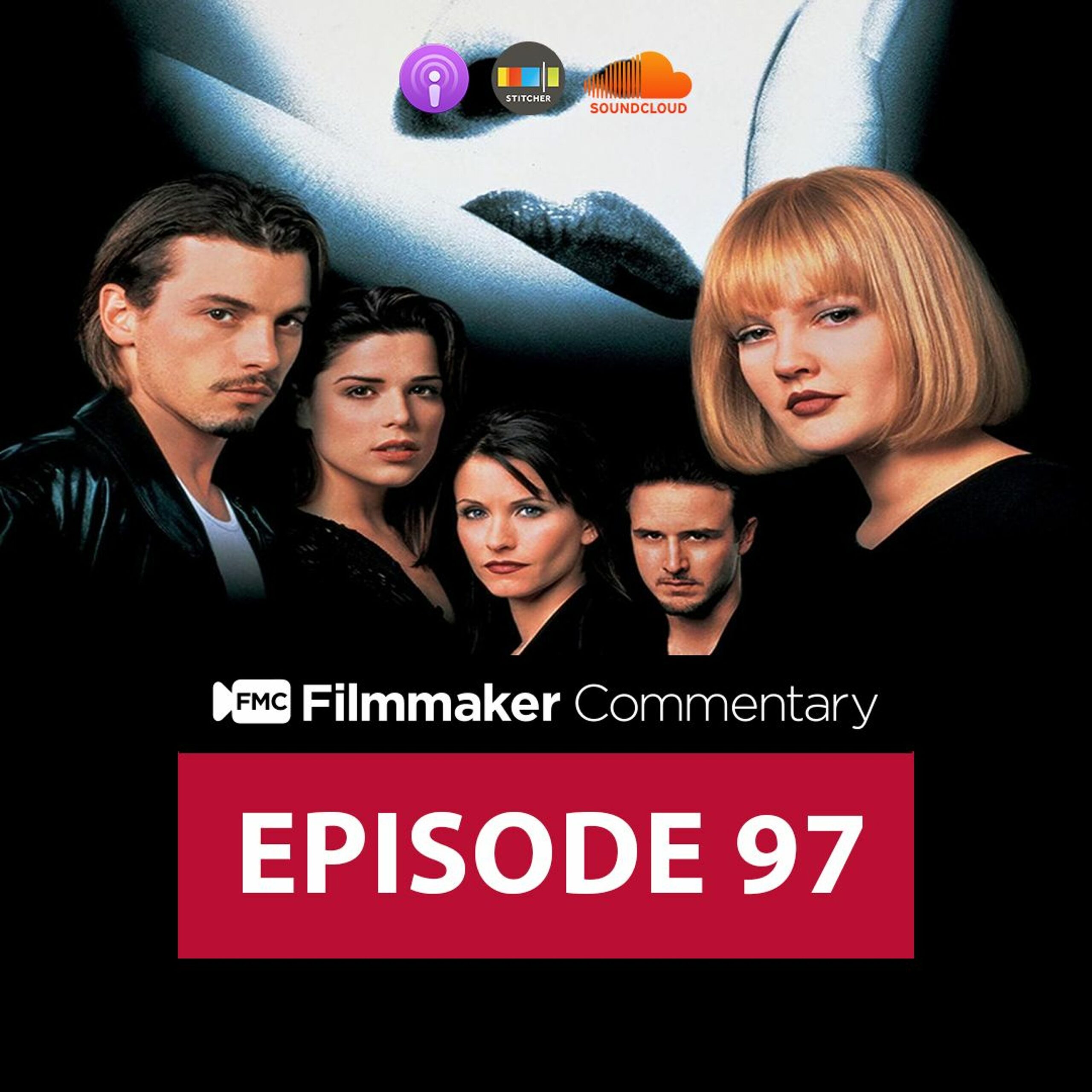
FMC 097: Scream Directed by Wes Craven

November 1, 2020
Listen on Apple Spotify YouTube
Listen to this episode
Your browser does not support the audio element.
Also on Apple Spotify YouTube

This episode dives deep into Wes Craven’s iconic horror classic, “Scream,” exploring the brilliant synergy between Kevin Williamson’s self-aware script and Craven’s masterful direction. Discover how the film’s shocking twists, clever deconstruction of horror tropes, and unprecedented box office success revitalized an entire genre. Tune in for insights into its cultural impact, production challenges, and why it remains a fan favorite years later.

What We Cover

  • The surprising box office success of “Scream” ($173 million worldwide on a $14 million budget).
  • The genius of Kevin Williamson’s script and Wes Craven’s direction, emphasizing their complementary talents.
  • “Scream”‘s enduring brilliance and its role in revitalizing the horror genre.
  • The shocking twist of Drew Barrymore’s character dying early in the film.
  • Challenges during production, including an initial NC-17 rating and a school’s reluctance to allow filming.
  • The influence of a young fan’s critique on Wes Craven’s decision to direct the film.

Key Moments

  • 0:56 – The hosts discuss the surprising box office success of “Scream,” which earned over $173 million worldwide on a modest $14 million budget.
  • 19:08 – A reflection on how “Scream” continues to be a brilliant and genre-revitalizing film, many years after its initial release.
  • 27:19 – The story of how Wes Craven’s decision to direct “Scream” was reportedly influenced by a young fan who challenged him to make something “kick ass” again.
  • 43:22 – Discussion about the film’s initial NC-17 rating for violence and how producer Bob Weinstein intervened to secure an R-rating by emphasizing the film’s comedic elements.

Gear & Films Mentioned

  • Films: Scream (1, 2, 3, 4), Judy, You Can’t Kill David Arquette, Avengers: Earth’s Mightiest Heroes, Family Ties, Cougar Town, Gladiator, Halloween, Showgirls, Ghostbusters, Mister Rogers (Tom Hanks film & documentary), Nightmare on Elm Street, Psycho, Boondock Saints, It Follows, Wizard of Oz, He-Man/Masters of the Universe, Basic Instinct, Candyman, Frankenstein, The Howling, Prom Night, Texas Chainsaw Massacre, Evil Dead, Hellraiser, Terror Train, I Spit on Your Grave, Silence of the Lambs, Carrie, Scary Movie, When a Stranger Calls.
  • Platforms: Disney+, Amazon Prime, iTunes, SoundCloud, Stitcher Radio.
  • Technical: Anamorphic lens.

Listener Questions

  • What inspired Wes Craven to take on “Scream” after initially passing on the script multiple times?
  • How did “Scream” manage to capture the “whodunit” feel so effectively, especially for its time, despite directly referencing classic horror tropes?
  • What factors contributed to “Scream” becoming such a massive cultural phenomenon and box office success in the 90s?

You can find more episodes and insights on Filmmaker Commentary.

Full Transcript

Read the full transcript

Full Episode Transcript
This episode of Filmmaker Commentary Wes Craven's iconic horror film "Scream," exploring its production, cultural impact, and unique blend of horror and self-aware commentary, alongside discussions on current film industry news and other movie recommendations.

Opening Discussion and Film Overview
Reginald Titus Jr.: Filmmaker Commentary, episode 97. Welcome to Filmmaker Commentary, where we give you insights from our favorite filmmaking commentaries. These commentaries can be heard on your DVD and Blu-rays of your favorite movies. We'll show you how you can use these commentaries and apply them to improve your video production and filmmaking techniques. All of this here on Filmmaker Commentary. I'm your host, Reginald Titus Jr.
Reginald Titus Jr.: Welcome to Filmmaker Commentary. I'm Reginald Titus Jr. I'm joined with...
Casey G. Smith: Casey G. Smith. Welcome back, sir.
Reginald Titus Jr.: Good to be back, sir.
Casey G. Smith: Halloween, Halloween edition.
Reginald Titus Jr.: All right, October edition, I don't know, blood something.
Casey G. Smith: Blood something.
Reginald Titus Jr.: I don't know why a lot of blood in it. Uh, so today we're talking about the movie Scream, directed by Wes Craven, written by Kevin Williamson, scored by Marco Beltrami. Uh, and it was released December 20th, 1996. We have a budget of 14 million.
Casey G. Smith.: Sounds good.
Reginald Titus Jr.: All right, we have a domestic box office of 103 million and an international box office of 70 million for a worldwide box office of 173, 46 thousand, 663 million dollars.
Casey G. Smith: And that, boys and girls, is a win.
Reginald Titus Jr.: Wow. Wow. Who would have thought? Like that, that budget, man.
Casey G. Smith: Nobody thought. Nobody thought this was gonna make that kind of...
Reginald Titus Jr.: Well done. Well done.
Casey G. Smith: Yeah.
Reginald Titus Jr.: I think they tapped into like just what was happening with high schoolers around that time, just their psyche, what was popular, trendy, and they lightning in a bottle.
Casey G. Smith: And that's, that's major kudos to both the the writer Kevin Williamson's script and Wes Craven's direction. And we'll dive into more into that as far as how they got involved with this.
Reginald Titus Jr.: Yes, it's cool, it's pretty awesome.
Reginald Titus Jr.: But before we talk about Scream, let's talk about news and movies watched.

Industry News and Recent Watches
Casey G. Smith: Well, according to Deadline, uh New York, yes, that New York, is actually going to allow some limited theaters to reopen under some pretty strict and stringent safety guidelines and codes, of course, under Mayor Cuomo, but that is actually taking place. So I'm sure that some of the different film houses and their appropriate parent companies are breathing a little bit of relief, like AMC and and Regal. Um, but it's, it's something. And also, this potentially will have a trickle effect on some of the other productions that are out there. Some, a lot have been slow to make moves and to go back into production because of the the lack of movement of viewership in New York. So, you know, we're all trying to find that balance between safety and productivity.
Reginald Titus Jr.: I was listening to KCRW The Business with Kim Masters.
Casey G. Smith: Kim Masters.
Reginald Titus Jr.: And I forgot who she was talking to, but kind of like during their banter section, they were talking about how like Disney and is it Disney and some of the other streaming platforms are basically or surprised at how well they're doing with their streaming that 100% of their focus now is streaming. And theatrical they're not even focused on it.
Casey G. Smith: Huge shift in focus on the streaming for those major platforms, which it makes sense. We already knew that...
Reginald Titus Jr.: Yeah, we knew that in general.
Casey G. Smith: It wasn't going anywhere. It was only going to continue to grow. I mean, Disney knew what they were doing when they they dropped Disney Plus almost a year ago.
Reginald Titus Jr.: Man, they're killing it. They're killing it.
Casey G. Smith: Yes, they are. And there's just more to come, especially when they start dropping some of these new Marvel shows. When those start dropping, if they can maintain the the caliber, uh, that some of the films have had, but now, I mean, right there at home and that the the timing of that is people are hungry for it, man.
Reginald Titus Jr.: Yeah, man. When does WandaVision drop?
Casey G. Smith: Uh, I think it's still coming out this year. I think it's still gonna hit in 2020. I could, I could be wrong on that.
Reginald Titus Jr.: Okay. Anything, uh, you've been watching Disney on the platform recently?
Casey G. Smith: Ooh, up and coming on Disney Plus? Man, I I mean, I, you know, I've taken some of the nostalgia stuff. So, again, one of my favorite uh animated series of all times is Avengers: Earth's Mightiest Heroes. And I'm literally going through my third or whatever rewatch of that. That's just something I just every now and then we'll just put on an episode and it's just I don't know, it's just it's the storytelling's really well done and reaches all corners of the, you know, the Marvel universe. Um, but I haven't, I mean, again, timewise, I haven't really watched anything else on there.
Reginald Titus Jr.: I feel you.
Casey G. Smith: What I did watch though, on Friday on on Amazon Prime, was uh Renée Zellweger in an amazing performance as Judy Garland in her latter years in the film Judy.
Reginald Titus Jr.: Wow. Well done.
Casey G. Smith: Amazing. Like her Renée Zellweger's performance, like I couldn't see her. I can only see Judy Garland. And I, and I've seen, I mean, I haven't like watched all of Judy Garland's films, but I've I've seen her in Wizard of Oz, of course, which she's most known for. And I've seen her in interviews, and she's got a she's got a a timbre in a way of talking, she does certain things, especially when she's, you know, playing as Dorothy. But then you see in her latter years, there is a a cadence and and Renée is nailing all these small little nuances. Things that I think of when I think of Judy Garland.
Reginald Titus Jr.: Interesting.
Casey G. Smith: She is crushing it, man. It is it's a, it is a hell of a performance. I was super impressed. And just how, I mean, how much, you know, she's super thin and and just it's amazing. I mean, what can I say? It's it's it's amazing. So I I highly, I highly recommend it, checking out Judy. And of course, there's some musical numbers because, I mean, she was that she could do the whole triple threat thing, right? The the dancing, the singing, um, and the acting. And it's one of those films that kind of that classic, okay, we're gonna visit the celebrity in their latter years.
Reginald Titus Jr.: Yeah.
Casey G. Smith: And and then flashback to their promise. But there's not a lot the flashbacks are minimum. This is primarily dealing with her in these latter years. Uh, which I thought was a cool a cool take because we've seen the the deep, deep flashback stuff. No, there's very, very little of that. This is about her, uh, yeah, in the in the time that she was in towards the latter years, really that kind of kind of the downside of of her career, potentially trying to, you know, maybe maybe score a comeback. And...
Reginald Titus Jr.: Mm-hm.
Casey G. Smith: Yeah, uh, yeah, I I enjoyed it. I I I'd wanted to see it when I'd first saw the initial trailers. I was like, oh, man, there's just something, I don't know, something about Judy Garland. Uh, and I I actually want to kind of go and find some of her other stuff to to check out. But yeah, Renée Zellweger crushes it, dude. She crushes it. Just mad respect. Mad respect.
Reginald Titus Jr.: Judy. Was it an Amazon Prime original?
Casey G. Smith: Or was it? No, this one dropped in the theaters. So I I don't I don't know if Amazon had a hand in producing the film.
Reginald Titus Jr.: Gotcha.
Casey G. Smith: But it's yeah, I remember, I remember I've seen it at at uh movie trading co and all that kind of stuff. And all it was a it had a theatrical release last year. And I'm I'm positive that she was nominated.
Reginald Titus Jr.: Movies like that, I like I want to see what's the uh, when Tom Hanks played uh Mr. Rogers in the film. I don't even know the name of the film, but it came out like a year ago. So you had the Mr. Rogers film with Tom Hanks was doing it. But then you also had Mr. Rogers like uh, maybe about six months or a year before the Tom Hanks one came out, it's a documentary about Mr. Rogers. I want to see both of them. But I want to see the documentary first because it's got a lot of praise.
Casey G. Smith: It did get a whole lot of praise. And and actually, um, Renée Zellweger actually won the Oscar this year for the performance in Judy.
Reginald Titus Jr.: How about that?
Casey G. Smith: Ha. Yeah, uh I'm like, hey, I'm not I am not surprised. I'm like, yes, that is that is well deserved. 100%. I mean, that's one of those where she transformed herself. It it truly is. It's like Jamie Foxx Ray level of transformation, commitment. Yes.
Reginald Titus Jr.: I can dig it.
Casey G. Smith: How about you, sir?
Reginald Titus Jr.: The only thing I've seen, saw, where am I? Uh
Casey G. Smith: Did you watch it? As an adult?
Reginald Titus Jr.: As an adult. I don't know what I was talking about. I said, ah, uh, I watched a trailer and it says you can't kill David Arquette.
Casey G. Smith: Wow.
Reginald Titus Jr.: David Arquette apparently was a wrestler.
Casey G. Smith: Yes.
Reginald Titus Jr.: I did not know this.
Casey G. Smith: He he's he's he has dabbled.
Reginald Titus Jr.: So like, like traveling like doing the underground wrestling stuff, the death matches and all that stuff. So there's a trailer for this film. I thought it was like a parody or something. Like kind of like uh John Claude Van not even a parody, but just kind of like poking fun at his um being a celebrity. Uh John Claude Van did that with J C V D. Yeah. So I was like, I thought it was like kind of on that same level, but no, this is basically like kind of like a documentary of David Arquette and him kind of paying respect because he said when he first came out saying that, you know, he wanted to be involved in wrestling and things like people thought that he was kind of like just playing around with it and like disrespecting the sport and stuff like that. But he's showing you like, no, he's serious about this. I had no idea this guy was in in this lane.
Casey G. Smith: I didn't know he had gone that far into it because the last time I saw him do anything with wrestling was like in the in like that that that 90s, the late 90s, early 2000s bubble of wrestling at its like apex, making some appearances like on, you know, on uh WCW uh Nitro. He did some things with, I think, maybe with Ric Flair or some stuff like that. But yeah, I didn't know that uh he had was still involved in it. So this is him he's totally in the in the underground scene, huh?
Reginald Titus Jr.: Yeah, this dude's nuts.
Casey G. Smith: Wow.
Reginald Titus Jr.: You gotta be nuts to do that stuff. Like they're like, wrestling's it's not fake, people. And then like somebody like hits him with something and blood's coming out of his back. Somebody smashes glass over his head, runs him into some kind of table. Like the doctor's like, yeah, you the rib you broke almost punctured your lung and you could have died. And like just kind of going through the injuries, I'm like, why what are you doing? But anyhow, very in it looks very entertaining. I do want to check it out. It recently came out like maybe four or five months ago. But it was at, you know, some festivals, had did the film festival run and people high praises.
Casey G. Smith: And the name the name is, I mean, how could you forget? You you can't kill David Arquette.
Reginald Titus Jr.: Yes. Got it. Where is it a streaming somewhere?
Casey G. Smith: Yeah, it's stream. Uh, I think it's like transactional, but okay.
Reginald Titus Jr.: Yeah, it's available. I was like, I think you would dig it. I had no idea that someone said, I thought this was S was something Punk. S P M S.
Casey G. Smith: Steam Punk?
Reginald Titus Jr.: No, it's like a a wrestler that sucks.
Casey G. Smith: C M. Oh, well C M Punk doesn't suck. He actually he's been world champ and all that kind of stuff. But he started off under underground. But I maybe could see somebody. He now he got his butt kicked in when he went to UFC. But as a pro wrestler, C M Punk.
Reginald Titus Jr.: Yeah, somebody in the comment had said something about somebody Punk. Maybe it was C M Punk, yeah.
Casey G. Smith: Yeah, it had to be C. It had to be like C M Punk.
Reginald Titus Jr.: Okay. So I I don't know their reputation, but they were like, I thought this was C M Punk. And then...
Casey G. Smith: I could see I could see like you were to put those two next to each other and like kind of look at a glance. You know, he's kind of got the 5 o'clock shadow, dark dark, you know, shorter dark hair. Yeah, on a glance, I could see somebody making that connection real quick.
Reginald Titus Jr.: David Arquette like got that out of shape. Like, you know, got the dad bod going. Wow.
Casey G. Smith: Wow.
Reginald Titus Jr.: I was like, wow. Is he still married to Courteney Cox? Are they still together? So him and Courteney Cox, you know, that's like a little trivia thing, but since we're talking about David Arquette, you know, married the lady that plays Gale Weathers. They were married for a long time. All the way up to recently. I think like 2015, 13, somewhere around that time.
Casey G. Smith: I mean, I just remember them being a couple for a good while.
Reginald Titus Jr.: Long time. So he remarried but the woman that he remarried kind of reminds you of Courteney? Yes. Man, he's got good taste, I'll give him that.
Casey G. Smith: Shout out.
Reginald Titus Jr.: Cuz Courteney Cox, man, I first saw her on Family Ties.
Casey G. Smith: Oh, you went back.
Reginald Titus Jr.: That's when I first saw her and I I was like, yo, who that is? Who that is? That's when she was she was dating Michael P. Keaton.
Casey G. Smith: Oh, wow.
Reginald Titus Jr.: And she she was his girlfriend. And she, I mean, just her look then. Family Ties, dude. I gotta Google that now. Yeah. Man, theme songs used to be it back in the day. Theme songs. That's true. Cuz that yeah, that show went from I I it may have like either started in the early I definitely early 80s, maybe even maybe even late 70s. Okay, yeah, they showing the pictures on there. She's She's alien. She was like kept her look for a long time. She's taking care of herself. Doing something. And then and then she went, you know, obviously she went on from that. I think I think I'm I'm positive she was in uh I know she is in Masters of the Universe. And of course, obviously she was most known for Friends. Of course. But then she did Cougar Town. I watched I've seen a couple episodes of Cougar Town. And that's it's it's it's pretty funny. Yeah, Cougar Town? Yeah, I I would that's a that's a show I would I would go back and potentially binge. Yeah, just the few episodes. Yep, bam, Masters of the Universe. But uh she had a show that was a short-lived one. Yeah, Dirt. 2007, 2008, where she played a very different character than what was on Friends. She was trying I think she was really trying to break out, you know, of of uh TV. Oh, not out of TV, cuz cuz Dirt was a was a a series, but that was like on FX or something like that. It was it was it was definitely meant to be much darker. And she may have been like a politician or maybe maybe even a reporter, but it was it was it had a very I remember seeing the trailers for it. It had a very strong kind of like very sexualized kind of vibe to it. But uh, but yeah, she was definitely trying to break away from her. After Friends, I mean, you're pretty much set for being on there. Yeah. For real. They're good for the rest of our lives now. But again, Cougar Town, if she's got residuals coming from Cougar Town, cuz I I know that went a couple of seasons. Okay. Courteney would be doing all right. She got oh, she is. Yeah. Uh, and she makes an appearance, she makes experience in the David Arquette uh movie. So, huh. Still got, you know, still family. Um, anything else with movies and TV? Nah, that's about it, man. And today's show is sponsored by Natural Hair the movie by Grind with Matter Films available for purchase and rent on Amazon video service and Vimeo on demand. Please watch and leave a review. And let's jump back into the show. Thanks for tuning in to Filmmaker Commentary. We're talking about Scream, directed by Wes Craven, written by Kevin Williamson, and scored by Marco Beltrami. Came out 1996. And let's get into the synopsis. In the town of Woodsboro, California, a year after the murder of her mother, Sydney Prescott is terrorized by a new killer, who targets the girl and her friends by using horror films as part of a deadly game. Scream.

Analysis of Scream: Spoilers and First Reactions
Casey G. Smith: And if this is your first time listening to Filmmaker Commentary, please know that there will be spoilers. You've been forewarned.
Reginald Titus Jr.: So how did you watch this film in 2020? How did you watch it?
Casey G. Smith: I first watched this as an adolescent teenager. Um, I saw it in the theaters with friends of mine.
Reginald Titus Jr.: Wow. That's gotta be the best experience. I don't think I watched it like that, but that's gotta be the best.
Casey G. Smith: That's that's how we checked it out. We because we were we were always going to the movies. Like in high school, we were always going to the movies.
Reginald Titus Jr.: That was perfect. Cuz I was on my way to high school. Like, uh-huh, this was my freshman. It gets fuzzy. Yeah, this was 1996. So this was either like December 96 would have been my
Casey G. Smith: Sophomore. Let's see, I graduated 98.
Reginald Titus Jr.: Uh, graduated 98. So that was 96, 97.
Casey G. Smith: Yeah, it should have been a sophomore, but I'm trying to I'm trying to think if we were already if I was already in my junior year. Cuz December of 96, no, it would have been my junior year. It would cuz cuz cuz December of 96, then I would have gone into 97 to wrap up junior year and then 97 I would have gone into 98 to finish senior year. So yeah, this was my junior year. So I was I was, you know, I was also I was working, making a little bread at West Telemarketing. So anyway, me and my friends, we were going to the movies all the time. So yeah, we saw this one in theater.
Reginald Titus Jr.: Wow.
Casey G. Smith: And one of the things that I had to do in watching it this time, after I watched it, I actually had to stop and think, oh, man, it's it's hard to capture that sense of who done it, you know, after knowing how just how how how iconic the end is and how big the reveal is. You can see the little setups of, oh, where everybody is a suspect, but man, watching it for the first time not knowing anything and it being so fresh at the time, it was there was something very, very special about it, you know. And I I dug, I'd really dug horror then.
Reginald Titus Jr.: Creepy child. I didn't want to mess with him.
Casey G. Smith: But no, it it was it was awesome. It was an awesome experience. Everybody's just wondering, what's what's going on?
Reginald Titus Jr.: It was pop culture, man.
Casey G. Smith: Who is this? What's what's what? Uh, and then, you know, you I mean, you had just, you know, all these fresh faces. You know, you got Neve Campbell in the mix, you got Courteney Cox in the mix. It was funny. It was an awesome movie. I didn't go and see it more than once. I saw it once, and honestly, I don't recall I don't recall having gone back and watched it again until now. Honestly, I've never tried, I've never sat down and watched it, you know, streaming somewhere. I've, you know, caught bits and pieces, but I've never gone back and just fully watched the whole movie again. So, to go back through it again, I was like, yo, this is this is still awesome. Like, this this the way this unfolds, it's still awesome, it's still brilliant. We can't say enough about Drew Barrymore.
Reginald Titus Jr.: It was a perfect setup.
Casey G. Smith: It was I yeah, they set us up for this one. Uh because if you look at all the key art, Drew Barrymore is right there in the front. You think that she's gonna be the star of the film. And too, like kind of going, she's got the blonde hair. So you think that's our star.
Reginald Titus Jr.: Yes.
Casey G. Smith: Uh yeah, so I don't I didn't go to the theater. I would have been a freshman. I would have been a freshman in high school. But yeah, I don't I don't remember when I watched it. I wasn't at the theater though. Sure. But I did watch it. Uh so many people were talking about this film, man. It was everybody was talking about this. Then you had Jamie Kennedy, who was like popping through with the jokes and stuff. So he kind of stole he just stole the scenes.
Reginald Titus Jr.: And he blew he blew up. Yeah, he definitely blew up after the fact.
Casey G. Smith: Cuz he had his own show, like a parody show and stuff like that. So, uh, and then also the other guy that was the killer that was like kind of over the top. I can't think of his name, but I don't know what he did, but
Reginald Titus Jr.: I don't know what he did. But I just remember like that character and it and it resonated with so many kids at the time.
Casey G. Smith: It was hilarious. Yes. And again, like like you say, you know, it speaking to yeah, just how teenagers were and kind of developing in in in 90s, had this 90s sensibility. You could you could you could probably pinpoint somebody, you know, at your high school who who active, yeah, who acted like these different teenagers.
Reginald Titus Jr.: All of them. Just needed a few more jocks in there. Some some people of color. Matthew. Yeah.
Casey G. Smith: Oh, that's what I was like, hey, Man, okay.
Reginald Titus Jr.: Yeah, yeah, I'm like, oh, okay. Cuz I think you had Jada Pinkett and Omar Epps in that one. Yeah, I'm yeah, see I'm looking forward to that.
Casey G. Smith: Yeah.
Reginald Titus Jr.: In the trailer of Scream 2, uh Jamie Kennedy was like, so he someone had called him that was a killer. He's like, what's your favorite movie? He was like, Showgirls. Terrifying.
Casey G. Smith: I remember that in the trailer. I remember that in the trailers. Terrifying. That is funny. That is funny. Um.
Reginald Titus Jr.: This time around, what what did you think rewatching it?
Casey G. Smith: Impressed. Like it's still it took me back, you know, some of the movies I watched, what we watched, it just takes you back to that time. You mentioned it with Ghostbusters last last uh recording. Yeah. Where it just takes you back to that time. This is a 90s film, but it is also a staple in film and in the genre where it's like, okay, everything changed after this. This literally revitalized the the horror franchise. And just the the story is is is is on point. And and it's got depth to it, right? Cuz as you as you're peeling back the layers and learning more about about uh Sydney's character, you're like, oh, and then the motivation/non-motivation. Yeah.
Reginald Titus Jr.: Those were well written. Like shout out to the writer.
Casey G. Smith: Yeah, Kevin Williamson he did his thing. And it uh it works, you know, some places, you know, things you could, you know, the holes and this or that. But this is this is facing those tropes head on and saying, yeah, these are the rules of the genre. We're making fun of them and we want you to know that everybody these these these characters have grown up with these tropes and yet they will at times fall into them, but also at times break them, break these rules.
Reginald Titus Jr.: Yeah, I like um, watching it for me this time around, I watched it I either watch movies new because my wife hasn't seen so many of these movies. She's like, I didn't watch it. So she got to watch it for the first time. Oh, man, I'm so happy for her. I'm a little jelly. A little jelly. Like, I can tell when like about five to ten minutes, any movie, I can tell if she's like in or not because it was around the scene when Drew Barrymore is getting like choked out, and then she's like trying to crawl to her parents. She's like, But she can't talk because her larynx has been crushed. That's brutal. Um, and she said, I hate this when they do this. So I said, hate that bastard. I was like, they got her. I was like, they got her. She is in for the ride. Whoop. Gotcha. So yeah, that that was hilarious to hear her say that. I hate it when they do that. Bastards, you bastards. So that she's in for the the end of this movie. Nice, nice. Did she see did she see uh it coming at all?
Casey G. Smith: No. Cuz the movie keeps you off balance. I mean, brilliantly. I mean, like everybody is a suspect. They they they do these small little things. Some things were in the script, some things were improv, and they added along the way. But it constantly keeps you wondering, well, what about the sheriff? What about the principal? Well, what about the dad? You know, just you constantly wonder. There's very few that aren't suspects. Like I never suspected like her best friend. You know.
Reginald Titus Jr.: I did a little bit.
Casey G. Smith: Really? Yes.
Reginald Titus Jr.: Only because she was late when she was about to get attacked. She was supposed to be there at 7:00. And when she wakes up at 7:30 and she's waking up, yeah, she wakes up and then right after she hangs after Sydney hangs up with her friend, then right after that, that's when the killer calls.
Casey G. Smith: That's true.
Reginald Titus Jr.: And so like from a timing standpoint, it's like, this girl's trying to set her up. Like, what's going on?
Casey G. Smith: Ah, that's that's a good point. Maybe at the time, I may have I may have uh thought that also. Yeah, yeah, that's that's a fair point. But then once she's there, you know, immediately and she stays with her and she gets called while they're, I'm like, okay, that rules that rules that one out. Yeah. But yeah, but early on, yeah, I had I hadn't I hadn't thought about that. Yeah, up until that point.
Reginald Titus Jr.: Yeah, cuz it's late. It's late. Like, where is she? The late friend.
Casey G. Smith: She's still a good friend. Yeah, she's still a good friend. Yeah.
Reginald Titus Jr.: Shout out to my late people. Um.
Casey G. Smith: But there are other qualities as well. Was that from uh uh Gladiator? uh we're talking. Yeah, in Gladiator. Um, Joaquin Phoenix.
Reginald Titus Jr.: Oh, yes, yes.
Casey G. Smith: There are other qualities as well. Father. That's what that made me think of. There's not just providence, there's astuteness. Did I miss the war? Did I miss the battle? Oh, man, there's ambition.
Reginald Titus Jr.: Oh, yes. So yeah, dig it. Uh what I liked about this, it was like a this is a master class of horror films. From a writing perspective, you got a writer who loves the genre, who studied it, who just put it all into one movie. Seriously. And then you have a master horror director who's iconic to get his material and do his thing. Like this is crazy.
Casey G. Smith: Yeah, totally. And and and you took some big risks. Again, the fact that Drew Barrymore was originally cast as the lead actress. Yeah. And I don't know if that came across. I don't know, I'm trying to remember if that came across in the commentary.
Reginald Titus Jr.: In the commentary. I don't think so.
Casey G. Smith: In the commentary. It was like kind of more kind of technical and yeah, but they didn't dive deep into like back story of the production. Okay, yeah, so they came in some of the other in the supplemental material, um that that I watched. But yeah, she was cast. it's a big reason why why why Wes Craven came on. He had he had rejected the script. That doesn't come across in the commentary either. He had turned down the script a couple of times. He even says well why he, oh it's just my my my general stupidity, you know, or something like that.
Reginald Titus Jr.: Come on Wes Carpenter. I don't need to live.
Casey G. Smith: He had turned it down because when he read the script and he saw that kind of opening killing. He was like, oh man, how many times are they gonna do this? But he said there was a kid at a convention that that came up to him like an 11-year-old kid. He says, I've seen all your stuff. Uh, and he said, he said, you know, you're you're getting soft. You need to make something kick ass again. You're starting to get soft. And he said that stuck with him. Holy crap. A child?
Reginald Titus Jr.: Yeah, an 11-year-old kid. I love it. And he he's told this story twice in two different uh two different um features at different times. Yeah. So that was you that was a child. You were the horror guru. Hey, Wes, look, look here, man. I got beef with how your films are unfolding. Step it up. Yeah, come on, guy. But no, but so Drew Barrymore being brought on, that caught his interest, but when that kid told him that that pushed him over to say, okay, let me do this. And then, of course, again, but she came up with the idea. Cuz she had made the decision she wanted to do the movie and she was going to be again, she was going to be the star. And then she had a change of she had a change of heart and wanted to be Casey at the beginning. And said they'll never they'll never suspect, cuz you still get to market her, right, like they did. All front and center. But they will never suspect that she's going to die within the first 10 minutes of the film. That's crazy. That's Hitchcockian. That is Hitchcockian. If you've ever seen Psycho, you'll know what I'm talking about. But that's that's that's that's a throwback to that. But yeah, so that is a uh, that was a big deal. And what what I what I what I like about the film is almost seems like a counter-trope. But when I think about some of the other films that Wes Craven did, when I think about Nightmare on Elm Street, you have that the virgin heroine still's able to defend herself, right? When you watch Nightmare on Elm Street, she wasn't a damsel in distress. She was, pardon me, fighting. But but Sydney, like she's like, like on her like on her game. Like she puts up in. But she's also fighting a human, right? This is not a nightmare. This is not a a guy come back from the dead or whatever the heck Michael Myers is. I still he's he's he's a lunatic, but he also almost seems to have some yeah, he almost seems to have some supernatural thing going on.
Reginald Titus Jr.: He's a demon.
Casey G. Smith: Yeah. Demonic. Most call him a force of nature. But demon could be applied in this scenario. Yeah. Well, see, that's that's but that's Jason, though. That's Jason Voorhees. Now he yeah, he's definitely demonic. But Michael Michael Michael Myers, I think he's on that same level, right? He's doing the same thing. Yeah. But people call him again, they call him um what the shape or the form. I forgot the nickname that they used uh for Michael Myers. Like he's the the shape or something. There's some kind of sorry, I can't name there. But nonetheless, nonetheless, uh I dig that the the heroines and people are are like willing to fight. Even um Rose McGowan's character. She gets in some licks before she meets her demise. And I think yeah, So I like that.
Reginald Titus Jr.: Yeah. Yeah, it was good. Shout out to the feminist.
Casey G. Smith: Yes. Um, yeah.

Thematic Elements and Production Insights
Reginald Titus Jr.: Also, I like um, how it's self-aware.
Casey G. Smith: Yeah. Uh, I dig that a lot. That was the first time I'm kind of seeing them talk about the plot for you in the movie without directly saying it, but them being aware of what's going on in the world of horror.
Reginald Titus Jr.: Having teens who have grown up with horror movies.
Casey G. Smith: Like they are us. I mean, in essence, like they were like, yeah, we've lived we've we've lived with all these films that you are are referencing and talking about. And if if we were in a scary movie, or if we were in a scenario where people are being murdered, we would think about the things in the movies we've seen before and look to try and avoid those things. But also probably ultimately in the case of of of, you know, fighter flight, probably end up making some of those same mistakes. Which is what makes for a very interesting conundrum. And the fact that you can blend this this this humor with this horror and the mystery of it all and it and it all just comes together perfect.
Reginald Titus Jr.: Yeah, they didn't they did it right.
Casey G. Smith: Yes, they did. Yes, they did.
Reginald Titus Jr.: I was gonna say something about Evil Dead, but I'm not. Uh, what did you like about the commentary, the actual commentary?
Casey G. Smith: I like the back and forth with with Wes and Kevin and how it struck it struck a a nice decent tone of of dealing with some of the a lot of the the business aspects and the production and kind of how it it came about. Um, it it wasn't like overly technical, which, you know, there could have been more of that for sure. But what I think about Wes's previous what I think about his previous commentaries, like for Nightmare on Elm Street, I don't remember that being super, super technical. But more so kind of diving into the explanation, some of the psychology behind certain things, um, being being addressed. So.
Reginald Titus Jr.: Yeah, I like the back and forth as well. Like the balance, because there's an age difference as well. There's respect there. Definitely. I think it's a good balance when the writer cares, cuz this writer cares a lot. Yes. And uh carries his own weight cuz no at that time, I mean, when you can just write a script and it's a bidding war in Hollywood, like those were the good old days. Like when you just have a script and everybody wants it and, you know, we saw that like in the show Entourage on like how crazy it is when there's a hot script script in town. Uh there's also another movie uh Boondock the Boondock Saints. Yes. And Tim I think that's director's name. I can't bring think of the brother's name. Um Duff? Something, is it Duff? I'm supposed to know this. But anyhow, he has a um, there was a documentary about him, the director of Boondock Saints, and how he basically went down this like whole self-sabotage thing. Oh, wow. Yeah, making that because he was like, I'm this, I'm just the ego just like took over his life and he was like basically blacklisted for like 10, 15 years. And um Director prison. Yeah, they he just put him away. And that wasn't Weinstein, you know, the Weinstein era as well. Uh but his his script for Boondock Saints was like hot. Like it was purchased by the Weinsteins, uh Miramax. And um, he was like the hot writer, you know, he was the hot guy, you know, the hot person in town. You know, but then I think it was Columbine hit or something had happened in a school where they had to shelve it for a little while. Oh, cuz he's guys said they had those long jackets on and yeah, it was not good. Oh, yeah. Well, they almost ran into some of they did run into some of not Columbine related, but they did run into a challenge with this film. Yeah. When they kind of mentioned the whole thing with the school, how the high school didn't uh uh initially was gonna let them shoot there. Yeah. And then the school board changed their minds. It's it's interesting how um um when you when you're trying to get permits and things like that, uh they want to they actually want to see the script. Yeah. So they want to see the script when you're getting your permits and things like that, depending on where you're shooting and that's what's gonna determine approval or not. That's responsible on on their end. They they you you need to know your community. If you're gonna open up and allow someone to use the facility, you should know what's going to be shot there. That's just being responsible. Right. But, you know, initially the administration, they were they were kind of cool with it, but then when the school board opened up, uh and they read the script, in one of the features, they actually, they go into detail about it. And they actually even interview some of the people. Oh, that's cool. Who were in the administration and some of the people in the school board, they even show they even show some some some uh some footage of there was this like meat town hall meeting kind of thing. And you see like the production crew and and Wes and other members up there on on on the stage, on a table and like members of the community had a chance to come out and voice their opinion. Now, here's why it got so uh visceral. There had been a murder. Oh, yeah. Uh a a series of murders that took place in Florida. With uh Oh, no, wait, I'm sorry. I'm I'm mixing I'm mixing stories. That was that was that was part of the influence uh for for Kevin. Sorry, watch a lot of lot of content. That was part of Kevin's influence partially in in writing the script. But there had been uh a murder that had taken place in a town in California. Close to where this town was. Yeah, it was in the state, just within the state, um and maybe not that far away. Uh of a young person being killed, um you know, being being murdered and that was I think maybe just about to go to trial or something like that. And so that was pretty fresh in the town's mind. And they'd been a young person or maybe a couple young people who had been who had been killed. And so that was all that that was the the real big reason why at the time they were like, you know, no, we don't want this, yada, yada, and why they pushed back so much to not have them to to be able to use the high school. Damn. And so and so it's interesting hearing both now, the one of something that represents of that town and even Wes saying, oh, you know, I I can respect while they had that decision, but it was kind of the way cuz they it got visceral. And so yeah, it kind of turned ugly. And even at the end of the film, he says, you know, thanks all these people who said, but no thanks to school board of Woodsboro. Love it. Um, hey, man, you gotta be petty out here, especially when people are doing stuff like that. And uh, hey, you know, everybody has their reason, but at the end of the day, this is just a product. Sure, true. And not real life. Um. So you were talking about the special features. So like, um, what what was in the special features? You can kind of quickly go over those. Sure. So the special features, um, this is coming out of a uh a special three-movie collection, uh that's recently been uh launched and released on Blu-ray with Scream 1, 2, and 3, plus a bonus disc that has two documentaries, one called Still Screaming, and the other called Scream: The Inside Story, which is where I'm drawing some of my um inside information from. Uh, it's from that. That was wasn't on the commentary. Yes, it was. But it's it adds some interesting facts that it added in. Also on the actual Scream disc, there was a small production featurette that was maybe like eight minutes or so. And then there were six small little features. Yeah, that weren't really much of anything. Like EPK kind of stuff. More more or less. Yeah, there was one featurette literally was like kind of just following Wes around for like two minutes, just showing him directing. It's just music playing and just, you know, like B-roll. Uh, and then there was one where they asked they asked the the cast and crew like, what are what are some of their favorite movies or or scary movies to them. And they they kind of go through the different members and ask them. And then another follow-up question, why do people enjoy horror so much? And they're giving their answers to that. Um, did you enjoy the movies? Did you watch both of the special feature uh featurettes? I watched all of Scream: The Inside Story. And then I was maybe I was just starting uh Still Screaming. And that actually has a pretty cool little like opening uh original piece that they had like directed with uh with like these two girls. I won't give away what happens, but it's that that was interesting. And then they were kind of beginning to give a retrospective over all three films at that point. Would you recommend this for filmmakers? Is it like enough insight to where it gives you like some more background knowledge that can kind of help a filmmaker? Or what what do you think? I think if you are I think if you're interested in the horror genre, then absolutely. Um, because I'm sure that Scream 2 and 3 I'm going to assume I haven't put the disc in, but I'm going to assume they have even more robust potential like features. Uh just because the franchise is growing and more money coming in, things like that. But uh Scream 1 itself again, these features there are decent. But these two additional discs, I think yeah, I think if you're a fan of the horror genre, then yeah, you should scoop this up because you're going to glean so much for from so many films and it's the value within. And then the two uh additional documentaries, so far, yeah, have uh have some value and give you perspective on the uh the industry. At least uh of of that time and then, you know, you kind of have to know where you've come from and know where you're going. Yeah. There you go. Check it out. So what did you think about the tone of the film? What kind of vibe did you get from this film?

Filming Style, Themes, and Tropes
Casey G. Smith: The tone of of of obviously of horror, of mystery, of comedy, and then uh they mentioned this in in one of the features, like a almost a John Hughes uh like teen movie. Like in the in the 80s, John Hughes was able to capture this vibe where it's Breakfast Club or almost say better off dead. Not better off dead. I forget what the other film's called. But 16 Candles.
Reginald Titus Jr.: 16 Candles was it? Yeah.
Casey G. Smith: Is one of them as well. But that kind of
Reginald Titus Jr.: Did he do Weird Science?
Casey G. Smith: Uh times I think we want to think that he did, but I don't I don't think so. Let's see, he may have had a hand in it for some reason. I don't know. Oh, no. He did. Yes.
Reginald Titus Jr.: Shout out.
Casey G. Smith: Cuz like in in his world, like the John Hughes world, it's almost as if the, bless you. Uh it's almost as if the parents don't exist.
Reginald Titus Jr.: Hmm.
Casey G. Smith: Uh kind of like what we saw in It Follows. It's almost like the the the kids are in their world, but the parents are like non-existent. Like they're on vacation.
Reginald Titus Jr.: Literally, they like, uh.
Casey G. Smith: Like Bryce or one of the one of the lead actors' parents literally are on vacation for the weekend or whatever. And the others, like you don't even you see his parents very briefly at one point.
Reginald Titus Jr.: Yeah, cuz cuz Neve Campbell like her, Sydney, Sydney, yeah. Her dad's gone away. And she's going over her friend's house played by, I remember. McGowan. Rose McGowan. I don't know why I get that. And but her, you know, her brother is kid-like, even though he's an adult. And so it's uh, he's so hilarious. Yeah. He's he's an endearing character. He is. And then And all you see, all you see is their mom also briefly, just literally there to answer the like, not answer the phone either, but just to let you yeah, and she answered the phone and let's and let's see her call. That's it, you know, and nobody and aside from um the uh Sydney's boyfriend, you see his dad at the police station, but that's it. Yeah. I mean, the screen time for the parents is very, very limited. It's light. And if you're like an authoritative figure, you're getting marked. Um, the tone I got is anyone can die. I mean, Drew Barrymore for freaking, you know what I'm saying? That's who you're killing? Yeah, out the gate. Damn. Out the gate. The Fonz. Yeah, you don't kill the Fonz. They killed the that's the principal of everybody. That's no that reference. Oh. Yes. It is. Happy Days. Was people I remember watching it when I watched it. I was like, yo, that's that's the Fonz. Henry Winkler. Or what what else would he have been known for in these times? There was another There's another show where he makes a he makes a reoccurring appearance on some other show where he's not a where he's not a good guy. He's like a he's like a a a really incompetent lawyer. Oh, interesting. On some show and it's it's real funny. I can't think of what it is. Anyway. But Oh, and and the tone too, is that it's funny a little bit at the like the first 10 minutes, it's funny a little bit, just in the dialogue. But they cut that short. You know, the banter is a little bit, you know, funny and stuff like that, but the killer cuts through that. Like, he stops it before it starts getting funny. Pun intended. But like just how graphic the the killings are. You know, you see the reaction of her stuff being broken, slashing the insides of the intestines falling out. Her boyfriend, you're like, whoa, this is gruesome. Hanging up hanging a kid from a tree. It's like, wow. Well, and here's the thing also that I I didn't realize at the time, but you know, this film's gonna have was gonna have an NC17 rating. Just for violence. The theatrical release and they actually in one of these features, they actually show the difference between like the R-rated version and and what we get on the disc. Oh, on the feature and the featurette, or in the actual documentary you saw. I watched so much, I don't know which. Um, I want to say I want to say it's probably in the uh the uh Scream the Inside Story. I think that's where they show it. I'm positive that's actually where they show it. Yeah, it would be cuz that's the most robust. Okay. But they show like the the difference between the two clips, like what you would have saw in the theater and then what you see on this. Like you don't see those entrail or guts of of uh the boyfriend, Steve. Really? They they weren't able to show that. They cut to reaction. They show his face and then they and they then cut back to her just her reaction. But they don't show his guts hanging out. Oh, so we're seeing the version. Uncut. Really? Yeah. There are there are a couple of frames cuz they they they were they were going, they had an NC, that NC17 rating was sitting on them. And they fought and fought and really the big and even and even once they made some of these different changes, they still were gonna have the rating. And it wasn't until Bill Weinstein called the the the rating board and said, look, watch it again and and told them to look look at the comedic elements and see that the light in which we are presenting this film. And then that's when they got the R-rating. Always fighting the board. They just want to flex their control. I love it. Man. Yeah, and that's that's what made it uh that's what allowed them to get the R-rating. So, of course, now, you know, you come to home release, you can show those things. And now, you know. And it's still it's still showing rated R on there. So maybe like did they get it rerated under new circumstances? That like I would be interested to know. Well, even with Evil Dead, Evil Dead was NC17, but now when we watch it on home release, you know, they can. Oh, it was NC17. The first one cuz of the cuz of the gore. Yeah. Evil Dead. Yeah, The Evil Dead was NC17. Mmm. Shame. Yeah. Interesting. But yeah, so I wonder if they had to get it rerated because you can't use uh a rating. And the show's rated R on Scream on the Blu-ray disc. You can't use their rating without their permission, especially if you do unrated. You have to get it rerated. Or say not rated. Yeah, they're out here doing it in these streets. They're out here in these streets. Paramount, they probably got to re rerated. Yeah, now everybody's desensitized to the rated R. Yeah, yeah, yes, yes. I I would agree that that I'm positive that's probably what they did. Cuz it's also this was uh it did have a rerelease in theaters at one point. They did do a rerelease. And so I'm sure by I'm sure then they they probably had that rerating done then. Yeah. Maybe you can If they would have had nudity in this thing, it would have been they would have been in all kinds of trouble. Yeah. Um, what what did you think about the style of the film?

Style, Tone, Themes, and Tropes of Scream
Casey G. Smith: Um, there are some elements of it visually that are that are definitely uh Alfred Hitchcock inspired. Uh with certain things that they do. Uh there is a, I mean, obviously this is shot in the 90s, and the 90s aesthetic is so, so strong. Like from the like the way makeup is done. I always I always know after I when we did our first short film and I had to pick up a book on makeup and seeing kind of different time periods and how makeup is handled. I've I've always really just noticed 90s makeup cuz it's often much paler. So when you see, especially with actresses, the foundation that they have on, it's it's it's it's typically yeah, it's typically just paler in general. Um.
Reginald Titus Jr.: To add to that, too, now that things are being transferred to Blu-ray, the mistakes, like uh because you're you might kick on a lot of makeup to compensate for certain things in the film. But now we're seeing it for what it really is. Like you're seeing the skin tone. Yeah, you actually can see the makeup. Yeah. I've noticed that. I've noticed that. You can see where the face and you can clearly see where the makeup starts and ends. You can see their skin tone cuz also the colors, right? The colors on our TVs. Uh and and what comes off from on the media is so much it's so much better now. Yeah, we can see these things. Yeah. Um, that's just one of those realities. But yeah, the 90s aesthetic is super super strong. And of course, anamorphic lens being used. I love it. And Wes said this is his first time. This is his first time uh working with anamorphic. I heard him say that. I'm like, huh, how about that? Um, it looks great. I noticed more so in this one also though. On the sides, how some characters look a little like stretched. Oh, yeah. If they're on the if they're on the side of the frame, they're in trouble. Yeah. I've I've noticed that more in this film than I had in in any others previously. Maybe I'm just paying more attention. I don't know, but I it really stood out to me in this film in particular. And I wonder if it's because since you were saying it's his first time using anamorphic lens and knowing there's just going to be a natural distortion at the end and not putting his characters in a little bit more. I don't know. But I did notice like a little blurry on the side, just on the set. Well, so here's interesting thing. Kind of just it ties in. The DP was fired. Oh. During the last two, during the last 21 days when they were shooting the the third when they were shooting the third act when they were out at that house, 21 days that they were there shooting those scenes. Um, rough. They they went to the DP and told him, look, your footage is out of focus. Really? And he was like, you know, when he did he said you need to, you know, fire some of the people on your team. Your first AC handles the focus. So they were telling him, you need to you need to you know, focus puller. You need to get rid of some of your people or whatever, whatever. And like and apparently he was like, well, you know, if you're gonna get rid of them, you got to get rid of me. Well, then you're gone. Yeah, that's exactly what they did. And they brought in another DP. Wow. For excuse me. And he says even in the credit says additional photography by whatever. And then brought in somebody else to to bring it home. Wow. So that makes me wonder about that. Uh about some of those elements that I saw in the scenes. Yeah. Like the like and I noticed that at the at the beginning. It was when we were in Sydney's room. It was in her room and a little bit at the school. Yeah. And I noticed. So if I notice, we in trouble. Hey, what's going on over here? Yeah. I'm like, huh, that's interesting. Yeah. Flaws. Yes. Uh some of the style, of course, like you're saying, anamorphic lenses, the locations were great. Uh Sonoma, California. Uh it's like the houses are their own characters. Yeah. A lot of history behind some of those houses, too, from from other productions. Yeah. Um, also in the style uh he uses a lot of misdirection. And so that makes it like, man, who could be the suspect? So like, for example, when the sheriff is smoking his cigarette, puts the cigarette out. We close up on the shoes. Yeah. Or when the when when Sydney's in the bathroom and we see the see the shoes of the black boots on the toilet. So it's like, or when um weathers her assistant Kenny, is it Kenny? Um, Yeah. He's looking kind of weird and stuff sometimes. So like his cutaways were natural, like, what does he know? Well, yeah, yeah, what was he hiding? Her boyfriend, Sydney's boyfriend, just looks creepy anyway. Like he's got the they they constantly make you wonder about him, right? When he shows up, how he shows up, answers that he gives, the looks that he gives. You're like, you you're not right. But then he has his charm where you're like, man, maybe maybe you're maybe you are vindicated. David Arquette, Dewey. Right? He's got he's got moments. I was definitely I was suspecting him. I remember in the thing, I'm like, oh, he he ain't right. You know, because you wonder they they mentioned I I don't I don't know if I've drawn the correlation before, but when the phone rings at their at their house and, you know, Sydney has given the phone. And then right after she hangs up, he doesn't come out until after she hangs up. Uh-huh. And he comes down, he's looking all confused with his gun and, hello? You know, but then, of course, and they may even have shown it in the trailers when he and Gail are getting set to go and and do some exploring. And he turns the light on, are you scared? Yeah. You know, that that look, it's like, hmm, wait a minute. I always think about the movie Scary Movie when that part when he's asked for the phone, cuz was it Doofy in Scary Movie? I've been so long, man. I don't know. He comes up. So the guy that was playing the Doof the parody version of Doofy, I think his name was Doofy or something like that. He comes out, he's got like brief his briefs on. He answered the phone, y'all quit calling me when I'm vacuuming my room. Oh, I remember that. When I'm vacuuming my room. Oh, dude, I remember that. Cuz he was like, I was like, oh, dude. I remember that. I remember that scene every time. That's that's pretty funny. Um, and then also the Dutch angle. So anytime something is off a little bit, they they go to the Dutch angle. They use it right as as Casey is being murdered with her mom. Like when it it goes through a close-up of of her mom, uh, when she picks up the phone or when she's answering the the the phone. And she's like, Casey, Casey. It's like, boom, straight to the Dutch angle. The way her and then with the angle to the steps. Yeah, the Dutch angle there. And then when um Jamie Kennedy's character is watching TV, they start tilting when we see the killer coming out. It's like, man, Masters of the craft. With themes you got. Themes of okay, so, this let me go up like in in reverse. All right, the themes of a cliché. Right, multiple clichés because they reference.
Reginald Titus Jr.: Themes cuz we also have tropes. So there's themes and then you also have tropes, which is different.
Casey G. Smith: I think though, like literally like clichés are a theme within the film itself. Oh, so the a cliché is a theme. Yes, sir. Yes, sir. Uh, being desensitized. Because these these kids, like early on, like there's murders happening in their town. They're like, oh, it's kind of cool. And people are people are wearing, you know, costumes running down the halls and you know. It's like, wow, even even uh. Which seems to be like taking a life, taking a life. Yeah. Yeah, even Sydney's best friend when she's talking, you know, oh, I used to sit next to her, you know, in in in in in whatever class. I said, not anymore. He's like, dang. Like, that sounds like some that sounds like some stuff I would have heard in school, high school. Yeah. You don't realize like how off-putting, I don't know, that it comes off. You don't realize that, just how raw your mentality is at that time. Desensitized. Cuz again, also having grown up with not only, you know, crazy stuff in the news, but also with movies. And it could be that way of dealing of coping with that as well. No doubt. No doubt. But that's that that kind of social grace that's not say there people will say whatever comes to mind. Cuz remember in Basic Instinct when the dude died and they were like, oh, I kind of cracked a joke at the beginning. Oh yeah, when they're yeah, when the guy had yeah. I almost cracked a joke. Huh. There are just thematically speaking, when I talk about clichés, there are at least 19 direct references, other films, horror, thriller or mystery films. Uh, including Nightmare on Elm Street, Friday the 13th, Halloween, The Exorcist, Basic Instinct, Candyman, Frankenstein, The Howling, Prom Night, Texas Chainsaw Massacre, Evil Dead, Hellraiser, Terror Train, I Spit on Your Grave, Silence of the Lambs, Psycho, and Carrie. What did she say, uh, I think it was McGowan's character. She said, I spit on your and she said some garage. Yeah. Direct references. Um, also a theme, uh, and the director just says it straight out. He's like, hey, there's a theme of knives. Oh, yeah. Cuz like it's actually in the Scream title. It's like a little blade. The M makes a blade. Hmm, yeah. There it is. And there it is. So yeah, so like we're we're seeing that early on as Drew Barrymore's character is playing with the knives while she's on the phone. Um, and then he talks about um, using props to wind down. Like they can be its own clock. So like when we see her popping corn, popping popcorn over the stove, that has a certain time limit. And we all know like how long it takes for popcorn to be done and stuff like that. But that becomes a countdown to something. Um, so that and then, you know, kind of going with like kind of like the countdown, uh Sydney's characters looking at the clock a lot of the times. Like the clock plays a big role. 30-second delay. Uh, there's like there's like these devices, the countdown. Ah, nice, nice. Did you notice that in the opening scene with Drew Barrymore? She initially grabs a knife like she's playing with, but like that knife set if I'm not mistaken is full. But then she comes back to later on, there are two knives missing. Oh, interesting. So either they took it or it seems their knife seems to be a specific kind, which those are just kitchen knives. It does, but I mean I I when I looked, I'm I'm positive like, wait a minute, there are like two knives missing from there. Yeah. I'm run that back. Yeah, we'll check that out. But I'm I'm positive, I'm like, there are two knives missing from there. But anyway, So it could either be a continuity issue or these are the knives that the two guys killed her with. Especially if this is But was there four at the very beginning? Four knives? Yeah, cuz the two people took the knives, right? Cuz there's two people killing. Sure. So those like, when she grabs, she grabs one, right? And then there are there's so there's three missing, basically. From the set. One that she has in hand and there's two other ones that that potentially these guys took. That's what I'm quite positive I saw when I when I watched. But what we're checking out. Again, it might be continuity, it might be, you know, but but potentially it could have been something. Yeah. Um, phones. Oh, yeah. Definitely. Or just you know, communication uh modern communication with his phones, cell phones, her using her computer at one point to dial 911. Yeah, she's the internet. It's the internet, which was that was pretty cool. I was like, oh, that's cool. That's smart. Again, just just yeah, smart smart smart smart characters. Especially a smart woman. Indeed. I had a theme of uh art art imitating life. Maybe more like life imitating art because again, they're, you know, talking like they're in the movies. It's all it's all it's all a movie, right? That kind of stuff. Uh hiding in plain sight, the killer are literally hiding in plain sight the whole time. And we're even being we're being in essence told that Billy is a killer. Is a killer. Like after something goes down, he pops in out of breath like, hello. On the scene. Hey. He's like, he's like, hey, Sydney. Get in here. Adrenaline pumping. You know? Kind of sweaty, he's like, what's going on? Yeah. They're like, that ain't right with that killer. And you're telling me he's not a killer. Yeah, right? Like everybody knows. But again, all the misdirection. Oh, which I mean in essence could be a theme itself, misdirection. Um, and the theme of everybody is a suspect. Yeah, that's it in style. But yeah, anybody is real. They're like, that's the style they shot it in. It was just like, boom, cut cut. They call them red herrings. That's all. Yeah. Yeah. And it's said yeah, they sent us all the down down everywhere. Tropes. We're gonna knock these out cuz I got a lot of quotes and Yeah. Yeah, so I'll glad I'll do this quick. Tropes, blonde murdered. Uh the boyfriend is the killer. The killer in the bathroom stall. Getting beer for the boys or the refrigerator where the hot girl is getting food. We saw that, I think that was Halloween. Um, uh the virgin brunette heroine. This is more like a homage to the movie when a stranger calls. I don't know if it's trope, but I'll make up for that in there. Okay, okay. And that's when I kind of want to check out because that's another, you know, it's they mentioned it in one of the features. Like they actually make mention of that film directly. Um, and they show a little clip from it. Dead or non-present parents, which we've we've we've mentioned. Yeah. There's always a reason to kill to kill the girlfriend. Yeah. And then this the rules, right? The the the rules. Never have sex, never drink or do drugs. Never say, I'll be right back. Or uh never ask uh who's there? Or who's out there? What are uh some of your favorite or memorable scenes? Uh, the opening scene. Yeah. You know, with Drew Barrymore, that is become a classic. So when uh Sydney when she is back home, uh waiting on her friend to come pick her up, cuz her dad's out of town. She runs downstairs because the killer's trying to attack her. She runs downstairs, goes out and she opens up the door and then like the mask, the killing mask is right there. So we think that the killer met her outside, but it's actually Dewey. And she and then Sydney yells and then he makes a yell and it's comical. And so it's like for us it's like relief. It's like, oh, okay. She'll get the lift to the next scene. But it's great, man. His reaction is great. Cuz he screams, oh, man, it's so funny. Uhm, when when Sydney's on the phone with with the killer, Uh-huh. And and she's like, and she's where are you? He's like, I'm I'm on your front porch. And she says, I call your bluff. Yeah. And she boldly walks outside. I was like, Yeah, man, but she's doing it with such good. It's not like this this this frightened curiosity. It's like Which we saw in Drew Barrymore's character early on. Exactly. I'm like, this is just straight boldness. I'm like, man, she's not afraid at all. Not afraid. What what is Amber what is uh what is Tatum? Tatum. I know it was something interesting. Tatum. When Tatum, who Tatum is Sydney's best friend. And right after, you know, uh Sydney knocks out Gail and then Tatum is like just talking to like the before B to what happened. She's like, bam, bitch went down. Like, that was just hilarious. Like everybody loves that. I had I had I had that one down too, man. When uh, when Jamie Kennedy's character, when he's in the store with with Stewart, Matthew. So Randy and and Stewart. When they're in the video store and they're talking and and Randy's like, you know, you got to look at Billy. He's gotta be a killer, you know. He thinks he would be interested in me, you know. After the fact and uh Stewart just responds. No, I don't think she would be interested in you at all. You know, just like, he just gives this crazy laugh this reaction and then just boom, straight into the dead pan. Unbelievable. Gale Weathers and Dewey are going into the the high school party. For there's a reason why he has to go in there. And then when he goes in there, his sister's like, what is she doing there? What is she doing here? And then he's like all smiling and stuff. She's with me. He's like, overly excited. I was like, oh, he is being manipulated. But it seems that it actually, you know, initially you he is he is being manipulated actually. And that's that's true. But she still likes him, though. Like their their chemistry is is real. But she she is still business, though. She's still about business first. Get that story. Get that story. Um, when you know, uh, Randy says the the rules of horror and says, you know, never say I'll be right back. And of course, Stewart obviously gets a challenge everything and it's like, I'm gonna go you you want to beer? Yeah. Yeah. Okay. I'll be right back. Which I I know they use in the trailer. It's just a that's one of those classic things. That's true. Stewy. That's his name? Stewart. Stewart. So when Stewart, after him and Billy are stabbing each other and he's leaking out and bleeding, he starts coughing up blood and it's like, he's slowing down a little bit. I was like, maybe he hit artery. He's like it's a wrap for for Stewart. And then he's like, I I think I'm dying here. Like the realization of like, you know, it might be over. He said, I think I'm dying here. It's like, oh, that's ironic. I'm feeling a little woozy here. Like, man, these guys are nuts. Uh when, you know, Billy's being asked about why he did what he did, why he and Stewart did what they did. He says, the millennium. Motives are incidental. It's like, wow, this is a different take. Even though he goes on to explain a motive, but just that that that general answer is like, okay, if they're going to turn these, you know, these things, these the rules on their head, that's uh. And the last scene when Billy and Stewart, they have Sydney's father on the ground. Yeah, Sydney's father on the ground. They're about to kill Sydney and they're going to get the gun. And then well, Stewart's going to get the gun while Billy has Sydney at knife point. Uh, Stewart's looking around. He's touching the counter. Houston, we have a problem. And he's like pointing at the counter and then, you know, surprise, you know, Gail Weathers has the pistol. Randy having the gun and all that. That was I like that. It was a cool little quote. Nice. I think that was improv by the way. Yeah. And so was this this last line I'm going to mention. So when um Sydney has turned the turn the tables and, you know, she's now calling them after they're trying to figure out where she's at. And and and Billy, you know, gives the phone to Stewart and he's like, did you really call the call the cops? And she's like, yes, I did. He's like, my mom and dad are gonna be mad at me. Just like a big kid. And it's just it oh, it it it plays so well. But that, I believe, was also improv as well. So unbelievable. Yes. Um, when Gail has the pistol and she's pointing at Stewart and Billy. And then Billy's like, I thought she was dead. And then Stewart's like, I thought she was too. Still does. She still looks dead. This the delivery was good, though, and how he did that. Yeah, Matthew Lillard, man, he his character's supposed to be such a like, you know, kind of forgettable. He's just kind of the accomplished, but he still yeah, he steals almost every scene that he's in. True. He was doing it. That's all I had for quotes. My last one was just um, Stewart was like choking Sydney. He's like, I always had a thing for you, Sydney. And then she something happened. She flips him over some kind of way or something happens and then she like throws a TV on his head. But before she throws the TV on his head, she's like, in your dreams. And then she throws it on the TV. I was like, oh, that's so funny. Yeah, for real. And um, where can they catch us?

Final Takeaways and Contacts
Casey G. Smith: You can find us on facebook.com/filmmakercommentary. You can also like, rate and subscribe on iTunes, SoundCloud, and Stitcher Radio. We would love to hear from you. You can connect with us either on Twitter. He's at @ReggieTitus. I'm at @KCG_Smith32. You can also let us know if there's a film you would like us to review. Uh, if it has commentary. Reach out to us on Instagram, simply @FilmmakerCommentary. We appreciate your support. Please spread the word, tell a friend. You can also once again connect through Instagram. He is at @ReginaldTitusJr. That's J R. And I am at @KCG_Smith32. Until next time, peace.
Reginald Titus Jr.: Respect.

About Filmmaker Commentary

Reginald Titus Jr.

Apple Spotify YouTube Subscribe Free
Continue Listening

FMC 244 : The Karate Kid Directed by John G. Avildsen

June 20, 2026

What We’ve Been Watching Episode 008

June 12, 2026

FMC 243 : Love and Basketball Written and Directed by Gina Prince Bythewood

June 9, 2026

Leave a Response Cancel reply

This site uses Akismet to reduce spam. Learn how your comment data is processed.

Never Miss an Episode

New episodes every week — free.

Listen on Spotify Apple Podcasts

Recent Episodes

  • FMC 244 : The Karate Kid Directed by John G. Avildsen
  • What We’ve Been Watching Episode 008
  • FMC 243 : Love and Basketball Written and Directed by Gina Prince Bythewood
  • What We’ve Been Watching Episode 007

Archives

  • June 2026
  • May 2026
  • April 2026
  • March 2026
  • February 2026
  • January 2026
  • September 2021
  • August 2021
  • July 2021
  • March 2021
  • November 2020
  • October 2020
  • September 2020
  • August 2020
  • July 2020
  • May 2020
  • April 2020
  • March 2020
  • February 2020
  • January 2020
  • November 2019
  • October 2019
  • September 2019
  • August 2019
  • July 2019
  • June 2019
  • May 2019
  • April 2019
  • March 2019
  • February 2019
  • January 2019
  • December 2018
  • October 2018
  • September 2018
  • August 2018
  • July 2018
  • June 2018
  • May 2018
  • April 2018
  • March 2018
  • February 2018
  • January 2018
  • December 2017

Categories

  • Film
  • Podcast
  • TV
© 2026 Filmmaker Commentary. All rights reserved.
  • About
  • Episodes
  • Privacy Policy
  • Disclaimer
  • Terms of Service