Anatomy of a Vision: Practical Artistry in Ridley Scott’s Blade Runner
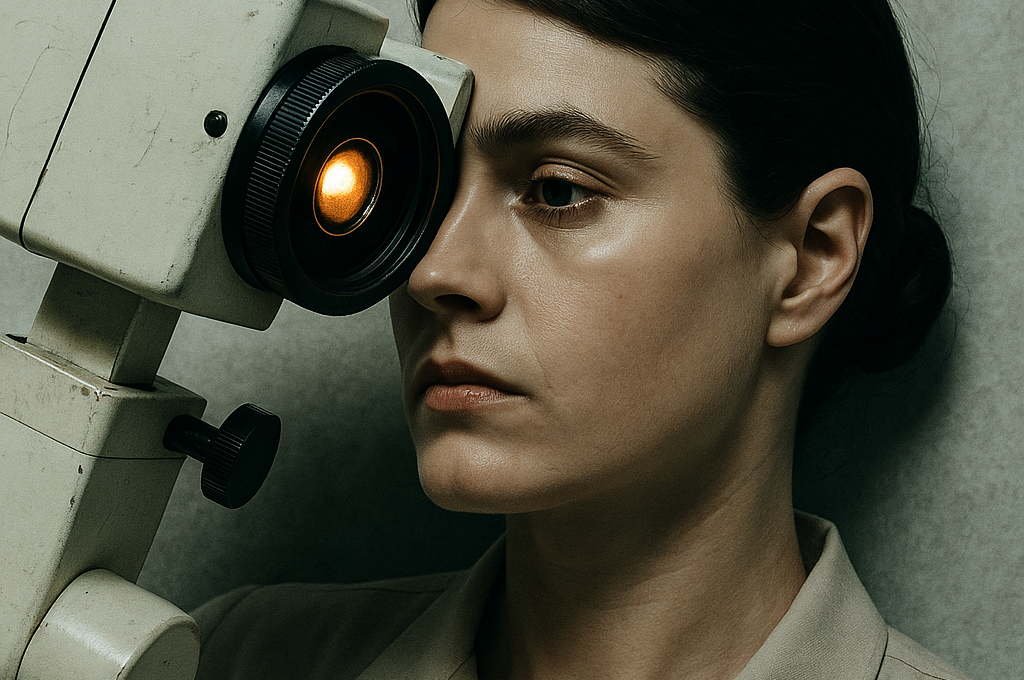
The luminous, unsettling glint in the eye of a replicant, a fleeting crimson flash captured with a deceptively simple light-splitting lens, stands as one of Blade Runner’s most iconic visual signatures. As explored in Filmmaker Commentary’s “FMC 004: Blade Runner The Final Cut,” this particular practical effect epitomizes the film’s profound and lasting impact, a testament to Ridley Scott’s meticulous craft and the enduring power of analogue filmmaking. What initially strikes the modern viewer as surprisingly contemporary, even in its 1982 form, is a carefully constructed world born from both boundless imagination and pragmatic artistic decisions, each contributing to a dystopian vision that continues to resonate decades later.
Constructing the Future: Lens, Light, and Limited Budgets
The visual fabric of Blade Runner’s Los Angeles, a perpetually rain-slicked metropolis bathed in neon and shadow, is a marvel of cinematic engineering. The host of “FMC 004” rightly observes that the film’s aesthetic feels remarkably undated, even to contemporary eyes. This timeless quality is largely attributable to Ridley Scott’s astute directorial choices in cinematography and production design, often made under significant budgetary constraints that paradoxically fueled creative solutions.
A key technical decision was to shoot the film anamorphic. This widescreen format, characterized by the distinctive “black bars” at the top and bottom of the frame, was not merely a stylistic flourish. As explained in the podcast, anamorphic lenses compress a wider image onto standard 35mm film, which is then desqueezed during projection, yielding a broader aspect ratio. Scott’s use of anamorphic lenses, he argued, allowed for “more information” in the background, offering a sprawling sense of scale and detail within each shot. While some might argue that filling an anamorphic frame is challenging, Scott believed such limitations were “bullcrap,” asserting that the director controls what occupies that space, irrespective of lens choice.
This control over composition was particularly crucial given that much of Blade Runner was shot on a backlot rather than on location in Scott’s initially envisioned Hong Kong. Financial limitations meant that constructing entire futuristic cityscapes was out of the question. Here, Scott’s background in commercials and music videos proved invaluable, instilling in him an “assertive quality” and a profound understanding of how to maximize visual impact within a confined space. The host notes Scott’s expertise in “dictating what you want” and being responsible for the “rectangle” of the frame. This translated to a strategic use of close-ups and low-angle shots, often to obscure the lack of ceilings or to enhance the oppressive atmosphere, making a limited set feel expansive and immersive. The cinematography, described as “dark but gritty,” actively encourages the audience to feel as though they are physically present in this decaying, lived-in future.
Beyond the fundamental choices of lens and location, the practical artistry extended to every facet of the film’s visual world. The replicants’ eyes, for instance, were brought to life not through nascent computer graphics but through a clever optical trick: a light-splitting lens. This small mirror, positioned at a 45-degree angle to the camera, allowed light reflecting off a human eye (specifically the retina) to be captured and subtly altered, creating that eerie, glowing red flicker without CGI. This tangible effect grounds the artificiality of the replicants in a startling reality. Similarly, the vehicles seen throughout future L.A. were not futuristic concept cars, but rather older models deliberately chosen for their availability and visual texture. This decision, as the host highlights, served both budgetary ends and a thematic purpose, suggesting a future of utility and recycling rather than sleek, impossible innovation. This pragmatic approach to world-building, combining meticulously crafted models, matte paintings for distant cityscapes, and the ingenious repurposing of existing elements, allowed Scott to construct a coherent and deeply believable future, despite the constraints.
The Echoes of Noir: Ethics, Existentialism, and Enduring Influence
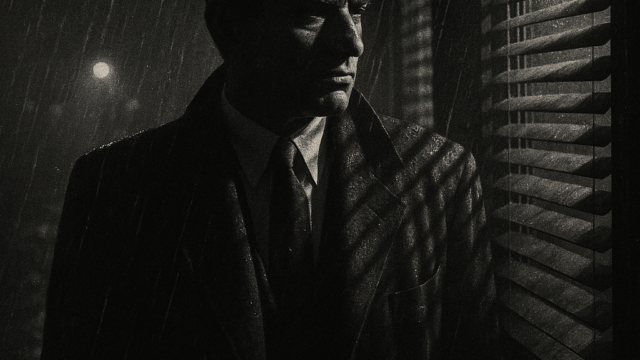
Blade Runner is famously dubbed “sci-fi noir,” a genre hybrid that marries the speculative future with the cynical, rain-soaked streets and moral ambiguities of classic detective fiction. This thematic depth, meticulously woven into the film’s narrative and visual language, is a significant part of its enduring legacy and a focal point of the podcast discussion.
At its thematic heart, Blade Runner grapples with industrial imperialism and the specter of “Big Brother,” as the host notes. The film’s world is dominated by three powerful corporations, most notably the Tyrell Corporation, whose genetically engineered replicants blur the lines between humanity and machine. This raises profound questions about sentience, identity, and the ethics of creation. Deckard, the weary “blade runner” tasked with “retiring” these artificial beings, embodies the classic noir detective: a cynical individual navigating a corrupt system, his own moral compass increasingly compromised. His internal struggle, particularly in the “Final Cut” where the unicorn dream sequence hints at his own replicant nature, elevates the film from mere spectacle to a philosophical inquiry.
Ridley Scott’s approach to storytelling, as elaborated in the podcast, prioritizes tension and narrative drive over gratuitous action. He famously stated that “action on top of action can be very boring” and emphasized the importance of giving characters something substantial “to fight for” or “a reason to run.” The host references a scene where Deckard, with two broken fingers, is handed his gun back by a replicant who then taunts him with a head start, transforming a simple chase into a psychological game. This exemplifies Scott’s philosophy: every confrontation, every moment of peril, is imbued with emotional and thematic weight, preventing the film from descending into mindless spectacle. This deliberate pacing and character-driven tension are hallmarks of the noir genre, successfully transplanted into a futuristic setting.
The film’s lasting influence extends far beyond its genre. The host points to the impact Blade Runner has had on subsequent works, even implicitly. The discussion of *Black Mirror*’s episode “Black Museum,” where a protagonist drives an old car charged by a solar device, echoes Blade Runner‘s use of vintage vehicles as a vision of a future that reuses rather than reinvents. This underscores the film’s prophetic ability to envision a future that feels organic, messy, and deeply human despite its technological advancements. Similarly, the host’s personal revelation that watching The Final Cut gave him a new appreciation for the trailer of Denis Villeneuve’s Blade Runner 2049 highlights the foundational power of Scott’s original vision. The sequel, itself visual storytelling, builds upon the thematic and aesthetic groundwork laid by its predecessor, proving that true cinematic quality, achieved through meticulous craft and a compelling narrative, can “stand the test of time.”
Questions Worth Asking
Q: How did Ridley Scott achieve the replicants’ glowing red eyes with practical effects?
A: Scott used a “light-splitting lens,” which is a small mirror positioned at a 45-degree angle to the camera. This setup allowed light reflecting off the actor’s retina to be subtly manipulated and captured, creating the distinctive red glow without relying on CGI.
Q: What role did budget limitations play in the film’s visual aesthetic?
A: Budget constraints led to extensive shooting on a backlot, necessitating creative camera work like close-ups and low angles to hide the absence of ceilings and make the sets appear larger. It also influenced decisions like using old cars rather than expensive futuristic prototypes, which ultimately contributed to the film’s gritty, lived-in feel.
Q: Why did Ridley Scott choose to shoot Blade Runner anamorphic?
A: The anamorphic format, characterized by a wider aspect ratio, allowed Scott to capture “more information” in the background of each shot. This enhanced the sense of scale and detail in the dense, futuristic cityscape, making the environment feel expansive and immersive.
Q: How does the film’s pacing contribute to its “sci-fi noir” sensibility?
A: Scott deliberately slows the pace, prioritizing tension and psychological depth over constant action. By giving characters clear motivations and framing confrontations as psychological battles, the film builds an oppressive, contemplative atmosphere reminiscent of classic film noir, even within its science fiction setting.
Further Viewing & Reading
- Blade Runner 2049 (2017): Denis Villeneuve’s critically acclaimed sequel beautifully expands upon the world and themes established in the original, offering a stunning continuation of the neo-noir aesthetic.
- Alien (1979): Another early masterpiece by Ridley Scott, this film showcases his talent for building suspense and creating immersive sci-fi environments with practical effects, illustrating his philosophy on pacing and tension.
- Metropolis (1927): Fritz Lang’s silent film epic is a foundational work of dystopian science fiction and a visual precursor to Blade Runner‘s towering cityscapes and themes of artificial intelligence.
- Chinatown (1974): A quintessential neo-noir film that shares thematic DNA with Blade Runner, featuring a cynical detective unraveling a complex conspiracy within a corrupt urban landscape.
- Do Androids Dream of Electric Sheep? (1968) by Philip K. Dick: The original novel that inspired Blade Runner, offering deeper insights into the philosophical questions surrounding humanity and artificial life.