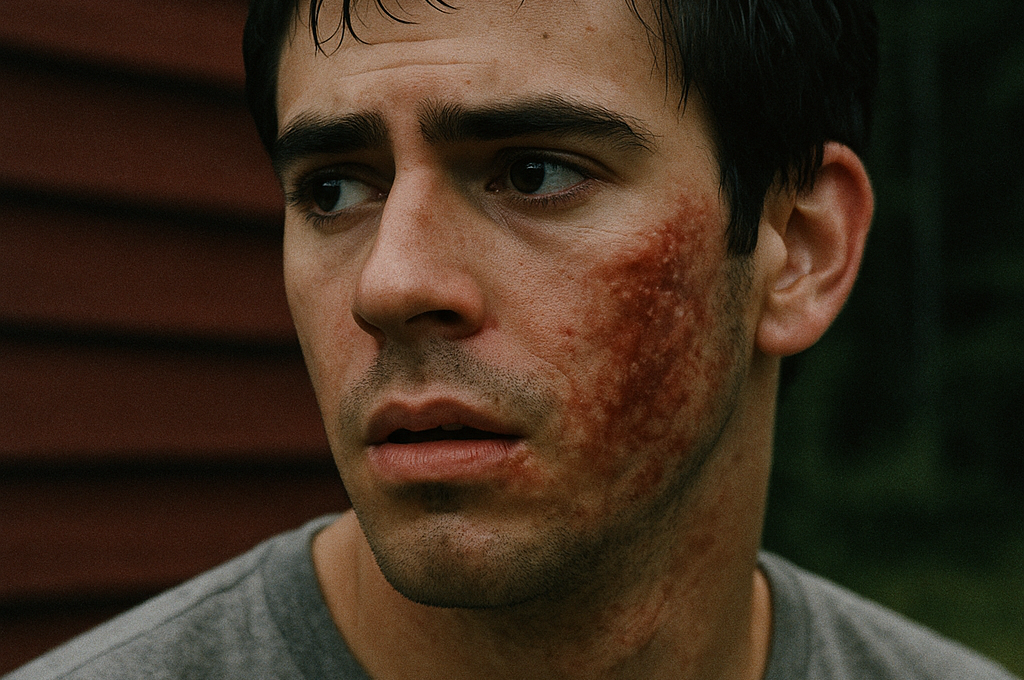
The infamous shaving scene in Eli Roth’s 2002 horror debut, Cabin Fever, wherein a character attempts to remove skin ravaged by a flesh-eating virus, remains a visceral touchstone for many viewers. It is a moment of profound, self-inflicted horror that goes beyond jump scares, burrowing into a primal fear of bodily decay and loss of control. The origins of such a potent image, however, trace back not to grotesque fiction, but to Roth’s own unsettling encounter with a skin infection while traveling. This personal narrative, along with many other insights into the film’s genesis and Roth’s broader filmmaking philosophy, surfaced during the recent Filmmaker Commentary episode, “FMC 005: Cabin Fever with Guest Casey G. Smith,” where hosts Reginald Titus Jr. and Casey G. Smith offered an illuminating deep dive into the horror-comedy’s enduring legacy.
The Alchemy of Experience and Intent: Crafting Cabin Fever’s Gritty Realism
Eli Roth’s vision for Cabin Fever was deeply rooted in a desire to return to the raw, unpolished terror of 1970s and 1980s horror cinema, citing classics such as The Evil Dead and The Texas Chainsaw Massacre as direct stylistic forebears. This intentional throwback to a grittier aesthetic wasn’t merely cosmetic; it permeated every level of the film’s production, from its script to its visual execution. As the podcast revealed, the most striking influence on Cabin Fever emerged from Roth’s personal history: a severe skin infection he contracted during a trip to Iceland. The experience of peeling back layers of his own skin, desperately trying to alleviate discomfort, left an indelible mark on his psyche, directly inspiring the film’s central premise of a virulent contagion. This fusion of lived experience with genre ambition lends Cabin Fever a disturbing authenticity that transcends its often darkly comedic tone.
The commitment to realism extended into the film’s pre-production and on-set practices. The podcast highlighted that the cast and crew, including Director of Photography Scott Kevan, spent a remarkable two weeks immersed in a secluded cabin setting, mirroring the isolation central to the narrative. This preparatory period allowed for a profound understanding of the film’s psychological and environmental pressures. Kevan, in particular, drew inspiration from the unsettling, visceral works of painter Francis Bacon, seeking to translate their distorted, raw energy into the film’s visual language. This meticulous approach to visual development, combined with an emphasis on practical effects for gore, ensured that Cabin Fever’s horror felt tactile and immediate, rather than digitally fabricated.
Roth’s prior experiences as a production assistant (PA) and stand-in on various sets, including Howard Stern’s Private Parts, further informed the film’s practical realism. As discussed by Titus Jr. and Smith, Roth’s observations of on-set emergencies—and how quickly seasoned professionals reacted—instilled in him a profound appreciation for preparedness. This knowledge proved invaluable during Cabin Fever‘s production, notably when actor Joey Kern (who portrays Jeff) endured multiple eye injuries, including glass fragments and a subsequent black eye. Roth’s ability to maintain composure and ensure rapid medical attention, a stark contrast to how he admits he might have reacted in his less experienced youth, directly mitigated what could have been a catastrophic event. This practical foresight, cultivated from his early industry immersion, allowed the film to navigate genuine crises while maintaining its creative integrity, underpinning the film’s raw, unvarnished aesthetic with a foundation of professional acumen.
Subverting Archetypes and the Business of Indie Horror
Beyond its visceral craft, Cabin Fever distinguishes itself through a deliberate subversion of established horror archetypes. Roth, as noted in the podcast, consciously played with audience expectations, setting up seemingly familiar character tropes only to dismantle them. Paul, initially presented as the conventional protagonist, quickly deviates from the “good guy” persona. Bert, the seemingly crass and oblivious local, unexpectedly demonstrates moments of surprising protectiveness towards Karen. Even the “hot chick” archetype, embodied by Marcy, and the “good girl,” Karen, face fates that are both brutally conventional and disturbingly unique. This intentional flipping of expectations, where characters do not adhere to predictable genre roles or demise orders, injects a refreshing unpredictability into the narrative, forcing viewers to constantly re-evaluate their allegiances and assumptions. Titus Jr. and Smith also drew parallels to the director’s cut of Little Shop of Horrors, where the plant taking over the world in the original ending was so jarring to test audiences, who had grown to love the main characters, that it was cut from the theatrical release. Roth understands this connection, advising filmmakers to introduce characters slowly to build connection before their eventual, often gruesome, demises.
The journey to bring Cabin Fever to the screen was, itself, a testament to the tenacity required in independent filmmaking. Roth began writing the script in 1995, only to face repeated rejections from studios who, at the time, declared “horror dead.” This period of persistent rejection, however, became an unexpected crucible for the project. Roth used the continuous feedback to tweak and refine his script, a process he credits for the film’s ultimate quality. He argues that the industry’s reluctance to embrace overt horror led to successful genre films, like The Sixth Sense, being re-labeled as “thrillers” to avoid the perceived stigma. This studio aversion highlights the precarious landscape for authentic horror, a battle Roth fought and eventually won, as Cabin Fever ultimately became a significant part of the early 2000s horror revival.
Roth’s “no BS” commentary, as highlighted by Titus Jr., also underscored key principles of his filmmaking philosophy. He implores aspiring filmmakers to create projects they genuinely wish to watch, emphasizing the long hours and deep commitment involved in any production. His candid advice extends to practicalities like leveraging resources such as IMDb, which he used effectively to generate distributor interest by posting behind-the-scenes stills on his page. The episode also touched upon the immense value of strategic networking and the power of industry endorsements, with Roth proudly recounting how he secured enthusiastic quotes from none other than Peter Jackson for Cabin Fever‘s marketing materials.
The financial hurdles of independent filmmaking were starkly illustrated by Roth’s journey. Despite having graduated from NYU’s film program, Roth was reportedly $15,000 in debt and struggling to make ends meet prior to Cabin Fever‘s success. The podcast underscored his gratitude that the film wasn’t greenlit straight out of film school, recognizing that the intervening years of struggle and on-set experience significantly matured his craft and perspective. This resilience extended to personal investment in the film itself. Casey G. Smith cited the extraordinary commitment of actress Jordan Ladd (Marcy), who dipped into her personal savings to cover costs when union disputes briefly halted production. Such acts of belief and shared sacrifice, as Roth noted with his quote, “If you have a vision and a script, it is amazing what people will do for you,” epitomize the spirit of collaboration that ultimately brought Cabin Fever to fruition, cementing its status as a quintessential, grassroots horror success story.
Questions Worth Asking
- What specific cinematographic techniques did the Cabin Fever crew employ to achieve its shifting visual tone throughout the film?The film deliberately transitions from a lighter to a darker visual palette. Director of Photography Scott Kevan achieved this by adjusting the contrast and gradually increasing the amount of silver in the film stock over the course of the narrative. Additionally, hospital scenes were intentionally unadjusted for natural light, creating a sickly green tint that emphasized the characters’ deteriorating health.
- How did Eli Roth’s early experiences as a PA and stand-in influence the practical realism of Cabin Fever‘s on-set emergencies?Roth’s time as a production assistant and stand-in on various sets, including Howard Stern’s Private Parts, provided him with firsthand experience of how professionals handle on-set crises. This taught him the importance of preparedness, enabling him to react calmly and efficiently to accidents during Cabin Fever, such as Joey Kern’s multiple eye injuries, ensuring medical attention was readily available and preventing panic.
- How does Cabin Fever challenge traditional horror archetypes and narrative conventions?Cabin Fever consciously plays with and subverts traditional horror archetypes. Characters like Paul (the supposed hero), Bert (the callous local), Marcy (the “hot chick”), and Karen (the “good girl”) are introduced with familiar genre traits but quickly diverge, experiencing unexpected arcs or dying in an order that defies conventional expectations, thus adding unpredictability to the narrative.
- What role did the film’s score play in enhancing its terror, as discussed by Roth?Roth explicitly states that the score “makes or breaks a movie,” citing examples like Psycho and Jaws. For Cabin Fever, composer Angelo Badalamenti crafted specific musical cues that, according to Roth, consistently scared him even after numerous viewings. A notable example is the scene where Paul discovers blood on his fingers after comforting Karen, with the music meticulously building dread to amplify the horror of the moment.
Further Viewing & Reading
- The Texas Chainsaw Massacre (1974): Tobe Hooper’s seminal horror film is a direct and acknowledged influence on Eli Roth’s desire to recapture the gritty, visceral aesthetic of 1970s horror, emphasizing practical effects and raw, psychological terror over supernatural elements.
- The Evil Dead (1981): Sam Raimi’s cult classic served as another primary inspiration for Roth’s approach to Cabin Fever, particularly its blend of extreme gore, dark humor, and isolated cabin setting. The podcast also notes Raimi’s coining of the term “shimping,” a practical filmmaking technique explored in the episode.
- Green Inferno (2013): Directed by Eli Roth himself, this film offers a later example of his continued exploration of cannibal horror and survival themes, directly mentioned in the podcast by Casey G. Smith as one of Roth’s other notable works.
- Make Your Own Damn Movie! (book/DVD series by Lloyd Kaufman): This resource from Troma Entertainment founder Lloyd Kaufman was explicitly cited in the podcast as a key influence and educational tool for Eli Roth, providing invaluable insights into low-budget, independent filmmaking and the realities of the industry.
- Dawn of the Dead (2004): Zack Snyder’s directorial debut, a remake of George A. Romero’s classic, exemplifies another film from the early 2000s that contributed to the “rebirth” of horror alongside Cabin Fever. The podcast specifically mentions Snyder’s film and his generosity with providing behind-the-scenes information in his commentaries.