April 1, 2026
F
Filmmaker Commentary
  • Home
  • Film
  • TV
Film

FMC 001: El Mariachi: 10 Minute Film School Review

March 26, 2026
Listen on Apple Spotify YouTube
Listen to this episode
Your browser does not support the audio element.
Also on Apple Spotify YouTube

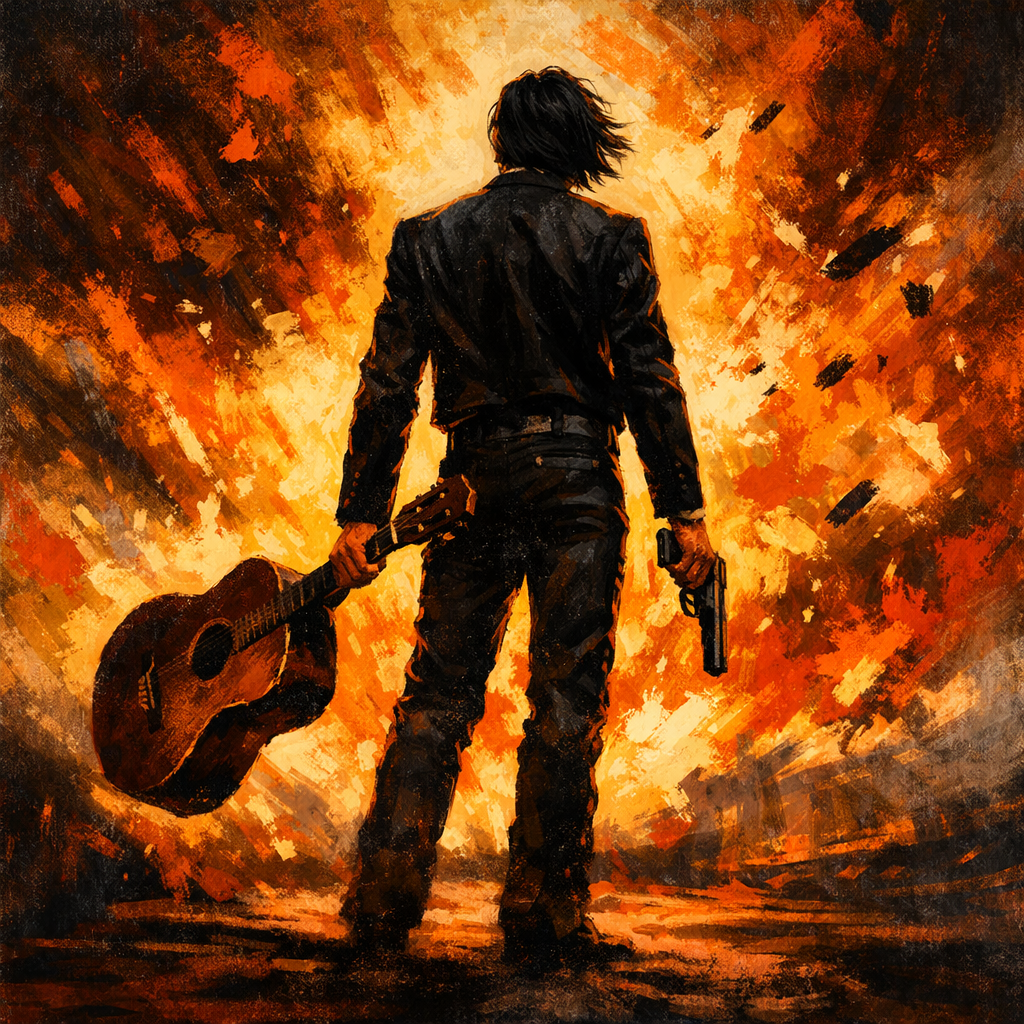
In this foundational episode, Filmmaker Commentary deconstructs the guerrilla filmmaking ethos of Robert Rodriguez through his seminal work, El Mariachi. Drawing insights from his “10 Minute Film School” on the DVD, host Reginald Titus Jr. reveals how Rodriguez leveraged radical ingenuity and minimal resources to craft a compelling feature film. Discover practical, actionable techniques that empower independent creators to achieve professional cinematic results even on the tightest budgets, proving that vision and resourcefulness can overcome financial constraints.

What We Cover

  • Robert Rodriguez’s Unconventional Path: Explore the origins of Rodriguez’s career, from his college days aspiring to join a film program to his pivotal decision to self-finance El Mariachi through participation in a clinical drug trial. This segment highlights his unique entrepreneurial spirit that underpinned his early filmmaking endeavors.

  • The “10 Minute Film School” Philosophy: Understand the core principles derived from Rodriguez’s celebrated “10 Minute Film School” featurette, included on the El Mariachi DVD. The discussion emphasizes an approach to filmmaking that prioritizes creativity and efficiency over expensive equipment or large crews, advocating for ingenuity and practical problem-solving.

  • Revolutionary Silent Filming: Delve into Rodriguez’s decision to shoot El Mariachi entirely silent using a 16mm camera. This technique, separating visual capture from audio recording, provided immense flexibility during production, reduced on-set complexities, and allowed for a streamlined workflow that proved invaluable for a micro-budget project.

  • In-Camera Editing and Lens Strategy: Learn how Rodriguez maximized his limited equipment, specifically a long lens, to achieve diverse shot compositions and transitions without complex setups. This method of “editing in-camera” enabled him to capture wide, medium, and close-up shots within a single take, maintaining momentum and conserving film stock.

  • Resourceful Production Techniques: Discover how Rodriguez engaged his cast and local community for various production roles, utilizing actors as crew members and sourcing everyday items like work lamps for lighting. This section showcases innovative ways to stretch a budget while fostering community involvement and authentic on-screen performances.

  • El Mariachi‘s Industry Impact: Trace the journey of El Mariachi from its independent genesis to its acquisition by Miramax. This segment illustrates how Rodriguez’s resourcefulness and unique cinematic voice propelled him into the Hollywood mainstream, influencing a generation of independent filmmakers and demonstrating the power of grassroots production.

Key Moments

  • [07:22] Learn how Robert Rodriguez uniquely financed El Mariachi by participating in clinical trials, a testament to his determination to fund his first feature film.

  • [08:06] Explore the innovative technique of shooting El Mariachi silently, where dialogue was recorded separately, allowing for remarkable efficiency and creative control on a minimal budget.

  • [09:03] Discover Rodriguez’s ingenious in-camera editing method, using a single long lens to achieve multiple shot angles within a continuous take, optimizing film use and speeding up production.

  • [10:33] Understand Rodriguez’s strategy of involving local community members, transforming potential opposition into enthusiastic support and authenticity for the film.

Gear & Films Mentioned

  • Cameras: 16mm camera
  • Lighting: Work lamps
  • Audio: RadioShack microphone, audio tape recorder
  • Films: El Mariachi, Spy Kids, Once Upon a Time in Mexico, Desperado, Sin City, Bedhead (short film), Clerks
  • Books: Rebel Without a Crew by Robert Rodriguez

Listener Questions

  • How did Robert Rodriguez manage to produce his debut feature film, El Mariachi, with an incredibly limited budget?
  • What practical and innovative filmmaking techniques can independent creators adopt from Rodriguez’s early work to enhance their own low-budget projects?
  • How can a filmmaker effectively leverage their cast, local community, and minimal equipment to achieve high-quality results and even secure distribution?
Full Transcript

Read the full transcript

Full Episode Transcript
This episode of Filmmaker Commentary introduces the podcast's mission and then dives into a detailed review of Robert Rodriguez's "El Mariachi," extracting key filmmaking lessons from its "10 Minute Film School."

Welcome and Podcast Introduction
Reginald Titus Jr.: Filmmaker Commentary episode one. Welcome to Filmmaker Commentary, where we give you insights from our favorite filmmaking commentaries. These commentaries can be heard on your DVD and Blu-rays of your favorite movies. We'll show you how you can use these commentaries and apply them to improve your video production and filmmaking techniques. All of this here on Filmmaker Commentary. I'm your host, Reginald Titus Jr.
I want y'all to roll with me as I figure out the format to this show. I'll be relying heavily on your comments as you follow. Just hit us up at soundcloud.com/filmmakercommentary. We're working on launching on, of course, iTunes and all the different, uh, different platforms that a podcast can live on. Give me feedback, let me know what works, what doesn't work for you. I want to give you a better experience. Leading off, I want to talk about news.

Industry News: Disney-Fox Acquisition
Reginald Titus Jr.: As you may or may not know, as of right now, Walt Disney has struck a deal with Fox to buy the film, television, and international businesses, and in the tune of 52.4 billion dollars in stock. So what does that mean for the entertainment company? Well, that means they'll be able to rival Netflix and Amazon. They'll, they stock-loading, and I believe Disney is going to have its own subscription service coming out. And I believe it was like 2019, because they took a lot of their Disney, they're taking their Disney catalog off Netflix and they're going to have their own subscription services. So it's going to be interesting how they how they approach this. Also, part of the deal that they just struck with Fox, this also means that they're a large stakeholder inside Hulu. What is that going to mean for Hulu's business? Are they going to keep the Hulu brand and kind of have their catalog on the Hulu brand? Are they going to have a majority catalog on their their Disney subscription services? Or are they going to combine it or keep it separate? It's going to be very interesting how this plays out in the next few years. The deal isn't really expected to to actually close until June of 2018. A lot of paperwork, a lot of things need to be handled, especially with all the different businesses that Fox News owns. Also, you know, their news division, everything, that's not necessarily being sold to Disney, that's being separated. So let's listen to what Tom Rogers has to say, he's the former president of NBC Cable.
Reginald Titus Jr.: Uh, what this does not necessarily speak to is, look, Netflix and Amazon have clearly shown that it is investing in original programming that is driving those services. Uh, Netflix to the tune of 8 billion dollars of investment, 4 million of investment by Amazon per billion per year in original programming. This speaks to acquiring a library. Uh, Hulu's a good asset. The Fox library's a good asset, uh, but, uh, what what has to follow is some massive additional investment in original programming. And my guess is some of the tech players you're talking about are much more focused on that leading-edge element than necessarily building the library block right now.
Reginald Titus Jr.: Very interesting times. It's going to be cool to see how these people compete. Then now, let's dig right into our show.

Meet the Host and Robert Rodriguez Introduction
Reginald Titus Jr.: Let me tell you a little bit about myself. So who am I? I'm a, I'm a filmmaker. I'm a freelance videographer. I have a media company with several branches. Our company, it specializes in producing videos for businesses, business-to-business videos to help market the company, and for individuals that are building their brand. I also have another vision where we shoot wedding videos, music videos, and we also have a newer version of the company that develops our own films in-house and we put them out for distribution. I've been operating since 2009 and we're coming up on 10 years. Uh, the goal for for our company is to be making films full-time until the end of life. All right, so today we're going to be talking about filmmaker Robert Rodriguez. Uh, Robert Rodriguez, he's based out of Austin, Texas, 49 years old. He, um, created films like Spy Kids, Once Upon a Time in Mexico, Desperado, Sin City. Hopefully this is jogging your brain a little bit. Um, he also is the owner of El Rey Network.
When I found out about him, it was around the year of 2000. I graduated college in 2007 with a degree in entrepreneurship. And I was going into the workforce. My first job was in commercial real estate. The economy was very terrible, and the company that I was working with was looking for ways to kind of downsize. And some of the newer people coming in, they were the ones that were downsized. As I left that marketplace, I started to kind of re-evaluating what I wanted to do with my life, in my 20s. And one thing that I've always done was shoot, uh, video productions. From junior high, I would shoot, I would use my dad's camcorder, I would be shooting kids in the neighborhood and we would create like our own little short films. Even in high school, I was involved with with the Media Tech program where we developed these news segments every week. Along with that, uh, when I went into college, I worked in the PR department where we would create these news segments that would go on the website of the actual university. And we would develop those every week. So, even though I was always involved with media, I never really considered it as a full-time thing. It was just something that I always did but never really actively gone after it. So around, um, 2008, 2007, 2008, is when I re-evaluated what I what I wanted to do with my life. Around this time, excuse me. Around this time I was at the Barnes and Nobles, I would always go to Barnes and Nobles and Half Price Bookstore. And I would look in the film making department. In in Half Price Bookstores, you will see screenplays, you would see dialogue that actors could use monologues that they can use to kind of help their acting craft. You'll see different stage plays, things like that. Um, in the film department in in Barnes and Nobles, there wasn't that many film books on making films. And I would see stuff by like Spike Lee and how he made his films, but it they weren't necessarily always in stock. But the one book that I did see that was always in stock was a book called Rebel Without a Crew by Robert Rodriguez, which is basically a diary of how he broke into Hollywood. So the title goes: How a 23-Year-Old Filmmaker Became a Hollywood Player. Very attractive title, I was like, I'm getting that. You know, being in my 20s, trying to figure out what I want to do. I was like, hey, how'd this guy do it?
And basically, it's a diary that documents how he went from being in, uh, I think it was a University of Texas, in Austin, how he was trying to work on getting into the film program. And he wanted to get into the film program, but he was like, you know what, I got to create a film. So he went to his location for a few months where they paid him to be like a guinea pig and they would try different uh pharmaceuticals on him, he'll take different drugs and all that stuff, basically became a lab rat. And in exchange for that time, he was writing his uh screenplay while this was going on and they paid him like $7,000 or whatever. So he took that amount of money and he applied that to producing his first film. His first film is called El Mariachi and that's what we're talking about today. I have the DVD special edition. Um, the DVD special, it comes with the director's commentary. It comes with what he calls a 10-Minute Film School, in which he breaks down how he created his film. Um, also on that DVD he has uh his first short film called Bedhead and he also has like a sneak peek of Once Upon a Time in Mexico. On the special edition, one of my favorite things is this film school. So today, we're going to talk about that film school.

"El Mariachi": Lessons from the 10-Minute Film School
Reginald Titus Jr.: All right, so here's a couple of points that you can you can take from that film school and apply to your low budget film. First and foremost, he shot the movie silent. So meaning he he had a 16 millimeter camera, which he borrowed from a friend. This is the way that he kept the budget low. Uh, he went out to Mexico and he shot this film. Um, his intention for the film was to sell it on the international market. And he was going to use this film, basically he was using this film as like his portfolio piece to get into film school. He shot the film silent, which means he recorded the dialogue without, he recorded the dialogue on film, but whenever the scene was done, then he recorded the audio separately onto a recording device. That way he was able to just run efficiently, run smoothly, and just knock it out. He had no slates in the film or anything like that. And this, whenever he would shoot uh the beginning of a scene, depending on what roll of film it was on, he would just have the actors hold up their hands five or 10 or 15 uh to signify which roll of film they were on. And he only shot on 25 rolls of the film. This allowed him to cut action sequences using a long lens, and he was able to edit this like in-camera. So he'll, he'll focus on um with the long lens, focus on a um an actor in a wide angle, shoot that scene, keep it rolling, and then zoom into their to a close-up. Then zoom back out into a medium shot. And that way in that one sequence, he'll have like three to four angles. And then he'll cut away when he'll do his cutaway shots, he'll just do the reaction shots. This allowed him to have more options whenever he was editing. Another tip from the film school is he would use actors as crew members. So he would use them to help maybe hold a camera, to hold certain devices whenever he's doing certain stunts in the film. In El Mariachi, it's an action film.

Filmmaking Techniques & Creative Solutions
Reginald Titus Jr.: Also, another thing that he did was during the sound setup, he basically his sound setup was a Radio Shack microphone that was plugged into an audio tape recorder. And whenever when he was recording music for the movie, he recorded the one of the guys was a musician. So he recorded him playing on the guitar, put the music in, and then he'll have his actor learn the the song and then just lip sync it later. And he was able to sync that up later when he was editing. He had a long lens, and then he also had like the super wide lens that really didn't need focusing. And so when he did like his action, his some of his action shots, he would have that wide angle and he would just follow, follow the actor and he didn't need to focus. He would just follow the actor and their movements to kind of give that little jarring effect. Also, another thing that he did, another tips that you can use is, he involved the local people in the area because some of the reporters in in the city that he was in, they were not fond of the film, or they were kind of like pissed off that he was shooting in their in their town. What he did was, he would incorporate those people into the actual film, and then they became advocates for the film. So they would talk highly of the film instead of what they were what they were previously doing, which is actually pretty cool. When he lighted the film, he only lit it with two with two work lamps, like these those little work lamps with the clamps, the little silver ones that you can get from like Home Depot. He used those work lamps and that's how he lit uh his actors. And he also said that he didn't really have any lighting continuity in the film, because he was basically practicing. So whenever he was shooting in the same location, he would always change the lighting up. One of the last points that I want to take from the commentary, not the commentary, but the actual film school, was he advised just keep it cheap, man. Just keep it as cheap as possible and have fun while you're doing it. That way you get an opportunity to sell the film, you know that you'll always kind of be in the profit mode.

Conclusion and Future Episodes
Reginald Titus Jr.: So, that kind of sums it up today for El Mariachi in regards to the film school. Next time, we're going to talk about the actual commentary and then we'll we'll talk about the commentary and we'll talk about the book Rebel Without a Crew because they fit perfectly together because you will also understand what he was going through in his personal life while he was creating uh this film and they match up together. And what actually ended up happening with this film, El Mariachi, is that it ended up getting into a film festival, and then at the film festival, it was actually purchased by Miramax. And if you if you know anything about Miramax at the time, they purchased Clerks, Kevin Smith movie. They were also behind the uh Quentin Tarantino's career. So, he was part, Robert Rodriguez was part of that class of filmmakers whose careers were launched uh by that Miramax machine. Tune in next time, we'll we'll go into part two where we talk about the actual commentary of El Mariachi, and at the same time we'll talk about Rebel Without a Crew. And I definitely recommend getting the DVD, get a Blu-ray now, um, and getting uh Rebel Without a Crew because these are these will definitely help you with your filmmaking career. Appreciate that. Tune in next time. Peace out.

About Filmmaker Commentary

Reginald Titus Jr.

Apple Spotify YouTube Subscribe Free
Continue Listening

What We’ve Been Watching Episode 001

March 26, 2026
EP 239

FMC 239: Bugonia — Did Yorgos Lanthimos Just Make a Masterpiece?

March 25, 2026

FMC 236 : Alien Romulus Directed and Written by Fede Alvarez

March 25, 2026

Leave a Response Cancel reply

Never Miss an Episode

New episodes every week — free.

Listen on Spotify Apple Podcasts

Recent Episodes

  • FMC 012: The Movie Casino directed by Martin Scorsese
  • FMC 011: GoodFellas Directed by Martin Scorsese
  • FMC 010: Alien Covenant by Ridley Scott
  • FMC 009: Prometheus by Ridley Scott with guest co-host Casey G. Smith

Archives

  • April 2026
  • March 2026
  • January 2026

Categories

  • Film
  • Podcast
  • TV
© 2026 Filmmaker Commentary. All rights reserved.
  • Privacy Policy
  • Disclaimer
  • Terms of Service