April 2, 2026
F
Filmmaker Commentary
  • Home
  • Film
  • TV
Podcast

FMC 002: Rebel without a crew book and El Mariachi Commentary

March 26, 2026
Listen on Apple Spotify YouTube
Listen to this episode
Your browser does not support the audio element.
Also on Apple Spotify YouTube

This episode offers an invaluable deep dive into the resourceful filmmaking philosophy of Robert Rodriguez, dissecting the practical insights from his seminal book Rebel without a Crew and the director’s commentary for El Mariachi. Listeners gain actionable strategies for independent production, demystifying the journey from conception to distribution with a focus on creative problem-solving and technical ingenuity under budget constraints.

What We Cover

  • A crucial correction regarding the initial distribution of Robert Rodriguez’s early work, clarifying the relationship between Miramax and Columbia Pictures, and the role of Dimension Films.
  • The podcast’s evolving thematic focus: moving forward, episodes will explore the debut feature films of notable directors to trace foundational craft and career trajectories.
  • An analysis of the trailer for Alita: Battle Angel, directed by Robert Rodriguez and produced by James Cameron, examining the challenges and stylistic choices inherent in adapting animated source material into live-action with advanced CGI.
  • Practical advice from Robert Rodriguez’s book, emphasizing the importance of extensive short film practice, the synergy of technical skill and creative vision, and early strategic thinking about marketing and distribution.
  • Detailed examination of filmmaking techniques demonstrated in El Mariachi, including economical solutions for complex shots (like using a wheelchair for dolly movements or a ladder for crane shots) and efficient production methodologies when working with limited resources and non-professional actors.
  • Insights into the business of independent filmmaking, highlighting the necessity of understanding contracts, cultivating self-reliance in post-production, and the strategic advantages of operating outside the traditional Hollywood system.

Key Moments

  • 00:25 – Clarification on Robert Rodriguez’s early film distribution, detailing the complex web between Columbia Pictures, Miramax, and its subsidiary, Dimension Films.
  • 05:16 – Hear James Cameron and Robert Rodriguez discuss their collaborative approach to Alita: Battle Angel, particularly on how Rodriguez was entrusted to translate Cameron’s vision for the anime adaptation.
  • 08:02 – The recommended approach to engaging with Robert Rodriguez’s work: read Rebel without a Crew, then watch El Mariachi, and finally, experience the film’s commentary for a comprehensive filmmaking education.
  • 16:57 – Discover how Rodriguez ingeniously faked a professional crane shot in El Mariachi using only a ladder, showcasing the power of resourcefulness in low-budget filmmaking.
  • 18:58 – A breakdown of Rodriguez’s clever editing technique that allows him to shoot actors separately while maintaining the illusion of a continuous interaction, demonstrating efficient use of time and resources.

Gear & Films Mentioned

  • Films: El Mariachi, Desperado, Four Rooms, From Dusk Till Dawn, Alita: Battle Angel, Cabin Fever, Clerks, The Faculty, Sin City
  • Books: Rebel without a Crew
  • Cameras & Software: Digital cameras, film (16mm, 35mm), editing software, Ronin, monopod, tripod

Listener Questions

  • What strategies can independent filmmakers employ to maximize production value with extremely limited financial resources?
  • How did Robert Rodriguez navigate the distribution landscape for El Mariachi, given his humble beginnings and unconventional production methods?
  • What is the significance of pre-visualization in filmmaking, and what are some effective modern tools for this process, building on Rodriguez’s early drawing techniques?


Full Transcript

Read the full transcript

Full Episode Transcript
This episode offers corrections from the previous show, introduces a new podcast theme focusing on directors' first feature films, discusses news about "Alita: Battle Angel," and provides practical filmmaking advice from Robert Rodriguez's book "Rebel Without a Crew" and his "El Mariachi" commentary.

Opening and Corrections
Reginald Titus Jr.: Filmmaker Commentary episode two. Welcome to Filmmaker Commentary, where we give you insights from our favorite filmmaking commentaries. These commentaries can be heard on your DVD and Blu-rays of your favorite movies. We'll show you how you can use these commentaries and apply them to improve your video production and filmmaking techniques, all of this here on Filmmaker Commentary. I'm your host, Reginald Titus Jr.
Reginald Titus Jr.: Okay, so I have a quick update from last episode. So, one correction: when I was talking about Robert Rodriguez and his first film that was purchased, I mentioned Miramax. That was incorrect. It was actually distributed by Columbia Pictures. Now, I'm trying to figure out why I associate Robert Rodriguez with Miramax, and there's a reason for that. So, his second film, Desperado, it was also distributed by Columbia. And of course, you know, it being a franchise, they're going to own the rights to that. However, when he directed, um, Four Rooms, he was like it Four Rooms is a film featuring director Quentin Tarantino. It was another director and Robert Rodriguez, and they each director directed their own sequence to that film. And that was actually distributed by Miramax. And after that, they did From Dusk Till Dawn. And at the time that From Dusk Till Dawn at the time that one was created, it, um, it was during the writers strike and everything like that. But Dimension, Dimension Films was the studio that distributed and produced From Dusk Till Dawn. Now, Dimension Films at the time was a subsidiary to Miramax. So, it's basically kind of like the same company, it's the same company. It was later purchased by Disney and then after that, it was purchased by the Weinstein Company. It's funny how these companies get purchased, repurchased, and different brands, but it's like the same people doing this. At any rate, um, a lot of his films were then produced and distributed under the Dimension Film Studios, which is basically a subsidiary of Miramax. And it makes sense why him, Kevin Smith, Quentin Tarantino, they all kind of came up under that same film class and why they're associated with each other a lot of times throughout the nineties until the early 2000s. I didn't want wrong information to be out there.

Episode Corrections and New Theme Introduction
Reginald Titus Jr.: Also, after sharing the show, the last show with a friend and producer Casey G. Smith, he gave me the idea that I should share directors' first features as a theme. So, I think it's a great idea, and I'm going to roll with that theme for a few episodes. The reason I had trouble with coming up with a theme for each episode is because I could very easily talk about one director's career probably for the next like ten or fifteen weeks depending on the information and the films and books that they have out there. And I know I don't want you as a listener to get tired just listening to the same director. I know there are different directors, different backgrounds, you know, we want to get a lot of that information. So, I wanted to switch it up a little bit, and eventually we'll get back to some of my favorite directors. Um, I just know when I first started studying, uh, the reason that I did study, uh, Robert Rodriguez, uh, Kevin Smith, Spike Lee, even Tarantino, uh, the reason that I chose to study them and their paths is because they kind of came from a different place where they didn't really have a lot of money. You know, they used whatever they had, whatever resources they had, their hustle, their writing, whatever skills they had, they use that in order to get a little bit of money and they produced their own independent film. And that's the reason why I chose to study those guys. We'll have Casey G. Smith on the podcast when we go over Eli Roth's first feature film. It's called Cabin Fever. It's one of my favorite pieces from Eli Roth. Um, but before we do that, let's jump into the news.

News Segment: Alita: Battle Angel
Reginald Titus Jr.: So, in early December, a trailer dropped for Alita: Battle Angel, which is a live-action film, but it's based on the anime, which was released in the early nineties. James Cameron, he's behind this because you know he's got the technology and he's bringing these things to life. So, he's kind of following that same formula with Avatar. The trailer dropped and it, and there were, there were mixed reactions because you have live action, but the actual Battle Angel, Alita, she's a CGI, she looks like a CGI character. And it's kind of hard to differentiate like if you're looking at a real person, but in her face, she has these real big anime eyes. And at first it's like, it's unsettling, and I saw the trailer and I'm like, my initial reaction is like, I'm not sure, you know, I'm not sure how I should react to this. However, it's compelling enough that I do want to watch it. I did not watch the first, the actual anime in the early nineties, I didn't watch it. I'm going to go back and watch that, and then when the movie drops, it's supposed to drop in July of 2018. I'm going to go to the theater and check it out. But the reaction on the internet is, it's kind of mixed. People love it, some people hate it. Some are kind of like me where I'm like, I'm not really sure. Hopefully the story's good. Here's a quick, um, here's a quick, um, tidbit that James Cameron and Robert Rodriguez have to say.
Casey G. Smith: Jim and I have tried to collaborate several times before, and he mentioned that he was only going to be doing Avatar movies. And I was like, what happened to movies like Battle Angel? Just as a fan. He said, if you can crack the script, you can direct it. Robert was like a kid in a candy shop with this movie. He was always very, very respectful of what I had written, but he's also not afraid to make it his own.
Reginald Titus Jr.: I'll be there, I'll definitely be supporting it in the theme of this show. You know, we're talking about Robert Rodriguez today, so I felt it was only proper to have his newest film, you know, Alita: Battle Angel, we should talk about that. What I do hope is that when the movie drops and it is then released on Blu-ray, that he has awesome special features because he is going to have to talk about the technology behind this because it, it looks well done. And why they chose to go with a CGI character, or if this is are there portions where the face is just CGI, or the whole body is CGI. Like, I want to know why he chose to go that route versus just having it all live action and maybe just altering the eyes a little bit. I'm, I'm definitely interested to see that. I hope he has a great commentary to go with that. Robert Rodriguez, he's usually very good at coming up with great commentaries, great special features in the DVDs, but every now and then, there'll be a movie where you don't hear anything. And the movie The Faculty is one of those where I'm like, man, where is the special features, dude? Like, come on, give you guys, give us what we want. So, Robert Rodriguez, if you're listening, please add that into the special features. You have to do that.

Filmmaking Insights from Rebel Without a Crew
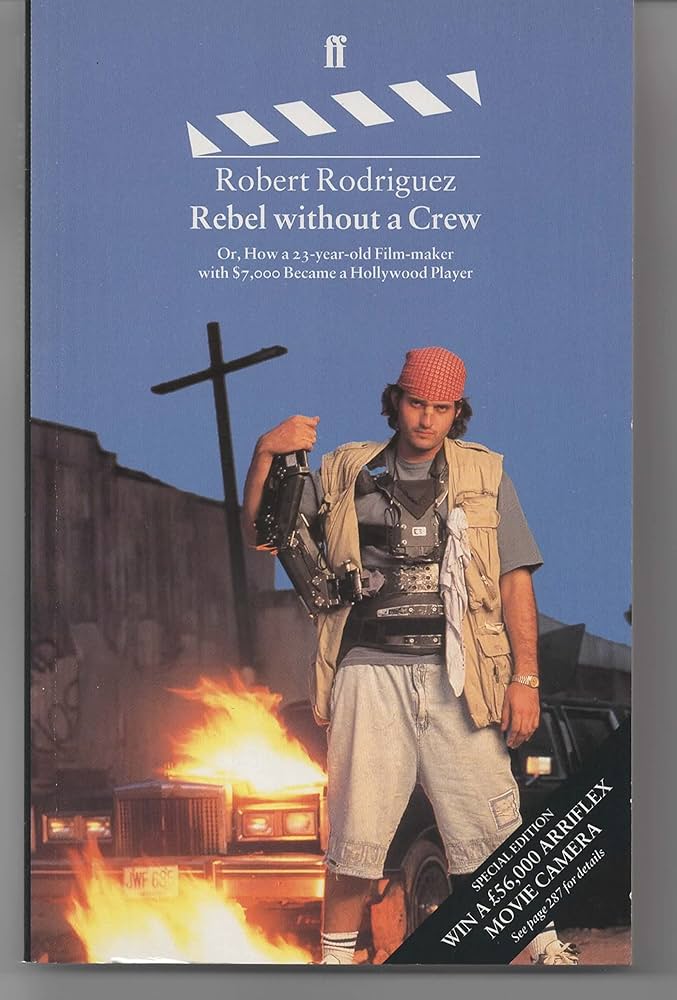
Reginald Titus Jr.: So, I'm, I'm a believer that how a first feature film is made and then distributed depends on a number of factors. And I think it's important to understand who you are in your position and related to the industry to come up with your strategy on how you're going to create your first feature film. These film, these, these factors will determine your approach and hopefully it's a practical one. The reason I like how Robert Rodriguez did his thing is because he came in, you know, no money, he raised a little bit of money, he he raised his money by sitting in on this facility where they basically treated him like a guinea pig and he was able to get some money from that. And the money that he got with that, he put directly into the film. I'll cover other films where a director might have had more money, or they had the backing of a studio in their first feature film, but in this case, this is purely independent, this has come out of Robert Rodriguez's pocket, and everything is treated and approached solely on that. I'm going to give you six quick tips that I got from his book called Rebel Without a Crew. I think there's great insight in this book. It's a huge companion to the actual movie. I recommend reading the book, then watch the movie, and then watch the commentary to the movie. And this will give you like a film school experience. And when he writes this book, it's, it's written like you're experiencing it with him because it's it's written in a diary format. So, it has the actual date, where he's located at, sometimes at times. It's actually pretty cool. So, you feel like you're experiencing this roller coaster from being this guy with no money to all of a sudden having a little bit of money to make the film, to the whole process of being tempted by getting offers from the film that are, you know, twenty, twenty-five thousand to getting to the point to where he's he's actually now has a career that's launched, and he has the money to do it. And it's pretty cool to see that whole roller coaster ride. So, I, it's a recommended reading. But from the book, I got six tips that I want to share.
Reginald Titus Jr.: Number one: he made over thirty short narrative films that were edited with opening and closing credits with sound effects and music. Now, I think this is important because a lot of times when people think first feature film, you think this is the director's first crack at making movies. And a lot of times that's not the case. These people have been working on their craft, whether that's shooting music videos or whatever they do before they get into their feature film. Now, every now and then, you'll have a person that has been given a lot of money and they direct their film and it's okay, uh, but you never hear from these people again because they discover, hey, this is not what I want to do. But I think it's very important what you should take from this is that you should always be working on your craft, you should always be getting better and find things to hone your craft.
Reginald Titus Jr.: Tip number two: be technical and creative. Now, he got this advice from one of his friends, and basically saying, hey, you're a creative person, but if you're technical, which anybody can learn to be technical, basically you just read the manual and learn how to do the thing. If you're technical along with creative, you'll basically be unstoppable. You won't rely on somebody else telling you how to do something because you'll know how to do it and you really won't be able to take advantage of. So, it's important to have that balance of being creative and being technical.
Reginald Titus Jr.: Tip number three: he bought a still camera to take photos for publicity while shooting the movie. And I think this is important because even though he was shooting the movie, he was producing it, in his mind, he was already thinking about marketing. He was thinking about how he was going to sell his film as a business person. And I know in one of my first films, you know, we didn't take that many pictures. We took a little bit, but not that many. But it's very important because you want to be able to sell that, you want to sell the experience, you want to sell everything. In this book, Rebel Without a Crew, you know, you you see the twenty-three-year-old Robert Rodriguez with with his camera and like all his gear, and then inside the actual book, you have still shots of the crew, of his shots that he was taking when he was on the ladder. It's very interesting to see him still think about, hey, let's take some still shots. So, that's important to document what you're going through.
Reginald Titus Jr.: Tip number four: read your contracts. In this book, Robert Rodriguez is eventually signed to an agency called ICM. When he was signed to ICM, they gave him the contract, he took the contract and gave it to a lawyer that he had in Texas. And that lawyer basically told, found a clause in the contract, she was basically like, you know, I'm not, you might want to run this by somebody else, but the only thing that I see is a redundancy in one of these clauses. Not redundancy, um, contradictory, um, in some of the language. And he mentioned that to the lawyer at ICM, and the lawyer was like, nobody ever catches that clause, and you can change it. So, read your contracts or have somebody that understands law to read your contracts. It's important they'll catch things and help you get paid quicker.
Reginald Titus Jr.: Tip number five: he mentioned, what good is the money if you're cursed to live in Hollywood? So, basically, he was flying back and forth. He would go from Texas and go to to LA in order to have his meetings, to conduct business. That's what he was there for. He mentioned, even, you know, being in his early twenties, mentioning like, hey, I can, I don't mind coming out here, but I don't want to live here. And he knew that right away. And also Robert Rodriguez, he was, he was married at a younger age too. And he had that insight like, hey, I'm going to take this money and we're going to build something in Texas, and we'll just come to Hollywood when we have to. In his commentary in Sin City, I remember him mentioning that you can be more creative when you're not in that environment. And also he got a tip from George Lucas, basically saying, hey, if if you're in Texas, stay in Texas, and you'll have that freedom, you'll always have that outsider perspective because once you move into Hollywood, everybody starts thinking the same. And of course, we all know George Lucas has the ranch where he does his thing.
Reginald Titus Jr.: Tip number six: the more self-reliant you can be, the better off you will be in this business. Now, one part of the the book that stood out to me was that he was editing the trailer. Somebody mentioned to him, hey, it's going to cost like twenty-five thousand or something like, something crazy to edit the trailer. And that's crazy that they would charge this amount of money to do that. And he he got an inside look because he was inside the inside the studios and realizing like they can charge so much money because all their stuff is in-house. So, they can be like, yeah, twenty-five thousand for this, fifty for that. And at this rate, you'll never be able to see your money back, especially if you're getting net points on the back end. You'll probably never see that because they can just justify all these different costs on the inside. So, he was just mentioning and he ended up editing that portion himself instead of trying to pawn it off to somebody else. He was just basically saying, you need to be more, um, self-reliant so that you you can be in a better position.

El Mariachi Commentary Analysis
Reginald Titus Jr.: Now, let's go into the commentary of the movie El Mariachi. The quality of the commentary, it's a, it's a little bit low. He might have recorded this at night or something like that because it's kind of like got a cool vibe, he's kind of chill, the sound's kind of low, so you definitely got to bring it up. I like that he wrote notes, and he had specific things that he wanted to talk about in the commentary. Sometimes on a commentary, you'll have people talking and they're just rambling about nothing. But he had specific things that he wanted to share to people that are interested and listen to commentaries on how they can make a better film. And this commentary is specifically for those people. So, here's here's some some items from that commentary. A lot of the bad guys in the film, he reused them. So, he would shoot one guy, and then use that same person later on in the film. And that was a way he could be economical. He also had the dolly shot. So, the dolly shot that he had was with a wheelchair that he borrowed from the local hospital. Nowadays, the equivalent to that would probably be like a Ronin. Technology has gotten so good that some of these cameras have image stabilization in them where you can almost just shoot handheld, which is crazy, because we all know like, without image stabilization, you got a long lens and you're on, you're on a monopod or you're on a tripod, and you try to move around, it's going to be real shaky and you, you can't really do anything about that. Also, another shot, he shot a woman diving into water, and he only had one take to do this because keep in mind that he was shooting on film. So, he said he only had one take, it's a waste of film because you would have to dry her off. So, uh, he was able to so anything that he did was all economical. So, he mentioned that the film cost seven thousand dollars to make. So, a lot of people were like, you know, where'd the money go to? Out of the seven thousand dollars, only about six hundred dollars of that is on the screen and that's for like squibs and maybe, yeah, for squibs, blood, things like that. But a huge chunk of the money went to buying film, processing and transferring the film to video. That's where a huge chunk of the money went to. It wasn't actually on the screen. Another thing, he had, he didn't have a real tripod. He had this small stand that was kind of like a janky tripod that was real short. He turned that into a good thing because it was short, it probably came up to the guy's waist. He, he would shoot up and it made the bad guys look bigger than they really were. Pre-visualization. Robert Rodriguez, he drew every day for about three years and this trained his mind to pre-visualize his film. You can do that now, David Fincher, he uses it a lot on his films where you can actually create your movie inside a software program that animates characters and you can choose the framing, the composition, lens, lens length, and you can basically have your film already pre-programmed and visualized so that you know exactly how your film is going to look. Robert did that by drawing. Also, he mentioned that he shot a lot of video before shooting on film. And he mentioned doing this so that you can get all the bad movies out of your system. You want to shoot as much as much as you can. And he was in a household of ten siblings, so he was able to use them to get better at directing non-actors and just to have an , um, natural feel when directing. So, there's another shot in the film where you have the El Mariachi like walking, you have the Mariachi walking down the road. There's a shot, it looks like a crane shot. But in actuality, it's a ladder. It's, it's a little, now looking at it, it's a little bit unstabilized, uh, because he had the camera on his shoulder. But he, he was mentioning that people are like, man, where'd you get the crane shot? But your brain doesn't really register that he's on a ladder, you're just used to seeing a crane shot, which actually increases the production value. So, something that you can take away that you can put on your own film is that if you have a ladder that gives you that crane shot looking feel. Another way that he saved money was everybody wore the same clothes. The reason he chose to do that is because he didn't want to waste time, plus nobody could keep up with the continuity of changing clothes. He was able to get natural performances from non-actors because it's intimidating when you have a big crew around, especially to people that aren't trained to be around in that environment. And because it was just him and a camera, and a couple of lights, they didn't have that intimidation, and he was able to direct them a little bit more intimately. So, there was this chase scene around town at the hotel. And he mentions that your brain doesn't register where you are. So, he shot the same two blocks of the people chasing the Mariachi around. Somebody in the crowd asked him, how much gas did you spend on driving these people around? And he's, he was like, you know what? We, we shot in the same two blocks, and we did a lot of close-ups and cutting away because your brain doesn't really register where you're at when you're cutting away that quickly. Unless you were from that town, you could know, but more than likely people in the crowd would not know. And so, you can get away with things like that. He made sure that he shot in a way where actors could come in, do their lines and leave. Um, so it's interesting, so like at a bar scene, he would have the lady talking to our main character. He would cut away specifically just on her, medium shot, and sometimes the other actor wouldn't be there. He would do that so that he can get the lines from them. He can get those lines from them, have that, and they can just kind of go on their way. Later on he would shoot the opposite scene, uh, with the character in the shot, and it's the cutaway shot, and it's another medium shot. And even though both characters are not there in the same place, your brain cannot figure it out, they're like, okay, they're talking to each other, your brain says. Even though they didn't shoot on the same day. A lot of filmmakers, they like to shoot the difficult scenes first. Uh, Robert, he chooses to shoot the easy scenes first, and this builds up confidence and momentum. Because on the first day you want to be able to knock things out and start gaining and and keep rolling with that. So, he chooses to shoot easy scenes first and builds up from there. All right, he mentions cutaway shots. A cutaway shot is, if some people are talking in a bar about something, and then you cut away to a person wiping the windows or smoking a cigar. He shot this one waiter several times cleaning dishes. And the reason he used that shot was sometimes somebody might mess up dialogue, or the lighting might be off, or for whatever reason, it's not cutting correctly whenever they're having a conversation. Now, the reason that you take a cutaway shot, because that saves you, so the dialogue can still go on while you try to figure out what your next shot is going to be. So, those cutaway shots are very important and they can help you. So, from a business standpoint, they learned that sixty percent of the sales on home video went to overdubbed versions of the film versus subtitles. They learned that sixty percent of the sales on home video went to the overdubbed versions of film, of the film, versus subtitles. So, they did that in order to capitalize and make more money. Understand that your script is a blueprint. Understand all of your mechanics, make sure it's right before shooting because you will not have time to fix it. Uh, he mentioned in the script that there were some things where there were some continuity issues or certain things were not really answered in the script, but while you're shooting, you that is not the time to fix it. You know, you you got to you got to produce this thing. You got to get it going. So, have a firm understanding of your script and understand that that is the blueprint. You stick to that, stick to your guns, and keep it going. I think Robert Rodriguez, he's a master at shooting people that are not on set together and make it look like they are shot together. So, there's a scene at the end of the movie where the bad guy has the girl gun up to her head. The cutaway shot is the gang, like ten guys, they're on the other side of this fence. So, what Robert Rodriguez does is he does a medium shot on the bad guy and the girl, gun to her head. The guy opens up the gate, and the gate opens towards the camera. Then he cuts away to the shot with the gang members. The gate swings open revealing this gang. Even though these two, these people were not shot on the same day, because you had that action of the gate swinging out when he kicks it, in your brain, you feel like they are together, even though he's cutting back and forth to the two separate scenes. It's actually kind of brilliant. And your brain doesn't really pick it up. Robert never had a film print, not even a sixteen millimeter sixteen millimeter film print because just to get a film print would have cost him twenty grand. And so, he mentioned, so remember, his film was just on video. When he got his, when he processed his film, it was just transferred to video. It was never an actual film print. And he mentions like a distributor would usually pay for your thirty-five millimeter blowup, your advertising, the transfer, the new sound mix, the marketing. So, he said, transfer your film to video and cut between like two video devices. Keep in mind, this is at the time, this is like in the nineties. So, technology has finally caught up to where everybody's just shooting straight digital, and very, very few people shoot on film anymore. I know I'm, I know I want to shoot a couple music videos on film and a short film on film. Uh, but outside of that, more than likely I'm going to be shooting a huge chunk of my movies on digital. This commentary is awesome. It gives you insight on what was going on at the times, especially in the nineties, when a lot of people were still shooting on film. And then how quickly things changed. Didn't take that much, but it's very interesting how this was a big a big debate, shooting on film or shooting digital. Now, everything is shot digital, and it looks great. Great commentary, great insights. And a lot of things in this commentary, you can still apply. Hard work, working on your craft, storyboarding, pre-visualization, marketing, these are very prevalent and these are skills that you must implement into your product.

Concluding Thoughts and Next Episode Preview
Reginald Titus Jr.: Now, next week, I'm going to dive into Kevin Smith's commentary from his infamous film called Clerks. I'm a fan of Kevin Smith, not necessarily because of his technical prowess, but he has created a business around his personality and his interests that allow him the freedom to direct or produce films that he chooses. Um, the reason I choose different filmmakers to emulate is not again, it's not be not all the time because of what they can do technically, it's how they approach their career. And some filmmakers, they have families. I notice, uh, filmmakers that have families, approach their projects slightly different than a filmmaker that doesn't have a family. And I think that's important as well. Understanding someone's background to understand why they make the choices they're going to make. Next time, we'll dive into Kevin Smith's Clerks. Thank you for listening. Tune in next time. I'll catch you later.

About Filmmaker Commentary

Reginald Titus Jr.

Apple Spotify YouTube Subscribe Free
Continue Listening

FMC 014: Scott Pilgrim vs The World Directed by Edgar Wright

April 2, 2026

FMC 013: Get Out Directed and Written by Jordan Peele

April 2, 2026

FMC 012: The Movie Casino directed by Martin Scorsese

April 1, 2026

Leave a Response Cancel reply

Never Miss an Episode

New episodes every week — free.

Listen on Spotify Apple Podcasts

Recent Episodes

  • FMC 014: Scott Pilgrim vs The World Directed by Edgar Wright
  • FMC 013: Get Out Directed and Written by Jordan Peele
  • FMC 012: The Movie Casino directed by Martin Scorsese
  • FMC 011: GoodFellas Directed by Martin Scorsese

Archives

  • April 2026
  • March 2026
  • January 2026

Categories

  • Film
  • Podcast
  • TV
© 2026 Filmmaker Commentary. All rights reserved.
  • Privacy Policy
  • Disclaimer
  • Terms of Service