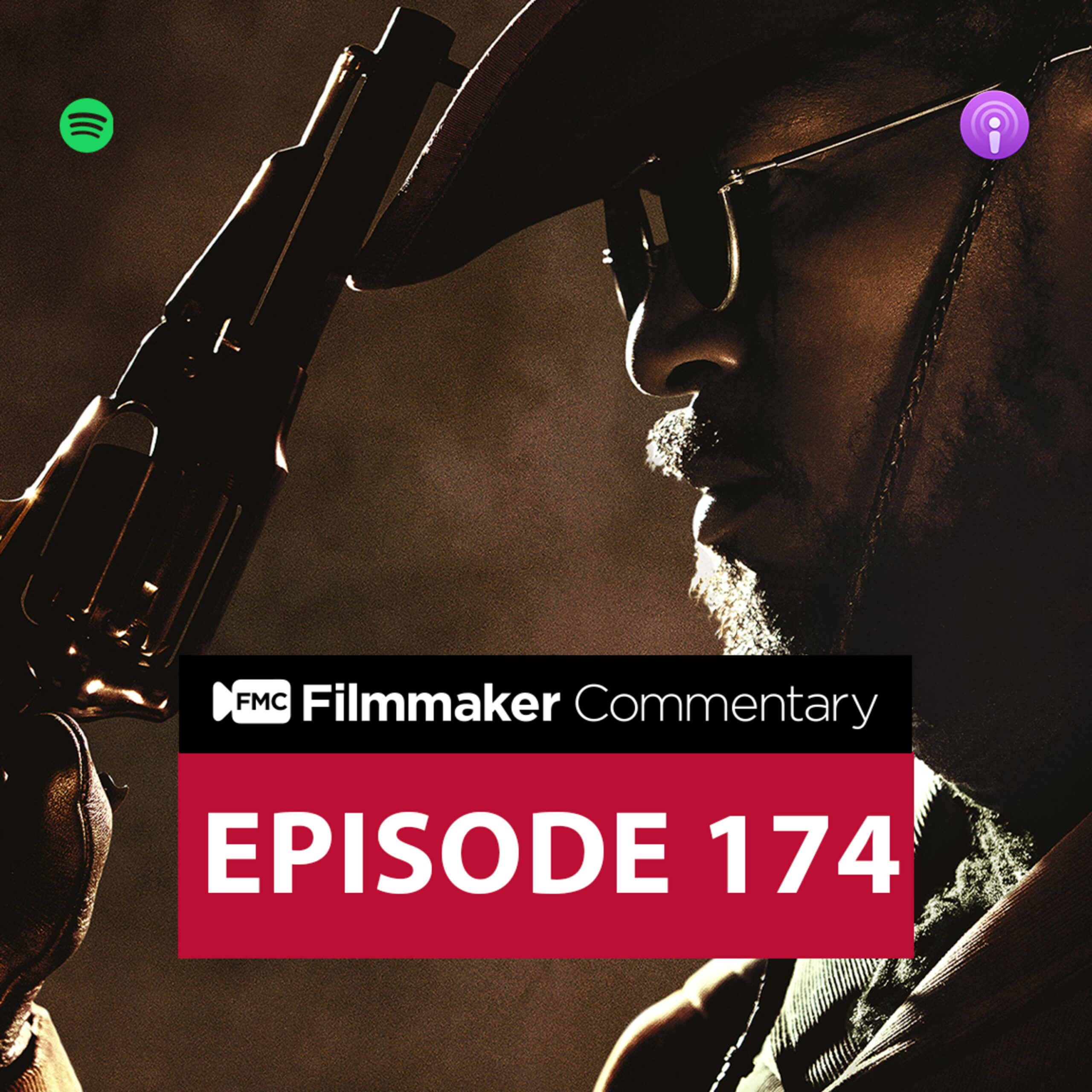
This episode unpacks Quentin Tarantino’s “Django Unchained,” a film that boldly reimagines the slave narrative through a unique lens. Join Reginald Titus Jr. and Casey G. Smith as they dissect its powerful performances, Tarantino’s distinctive style, and the surprising historical inspirations woven into its fabric. Discover how the film challenged traditional portrayals of slavery and sparked conversations about representation in cinema.
Dive into “FMC 174: Django Written and Directed by Quentin Tarantino,” a deep exploration of the 2012 Western-drama. Reginald Titus Jr. and Casey G. Smith take listeners on a journey through the film’s ambitious production, its impactful performances, and the broader cultural conversations it ignited. We kick things off by looking at the film’s significant financial footprint: a reported $100 million budget that yielded an impressive $426 million worldwide at the box office. This substantial investment is reflected not only in its A-list cast but also in the meticulous recreation of its period setting.
The hosts delve into the critical reception and initial audience sentiment for “Django Unchained.” The film landed with a strong impact, offering a unique “emancipation” and “revenge fantasy” narrative that set it apart from typical slavery portrayals. While slavery remains a deeply sensitive and challenging subject, Tarantino’s distinctive approach allowed for a different kind of engagement with the historical trauma. We also examine the film’s Academy Award success, with Quentin Tarantino earning an Oscar for Best Original Screenplay and Christoph Waltz winning Best Supporting Actor. Despite these accolades, a significant part of our discussion centers on the powerful performances by actors like Samuel L. Jackson, Jamie Foxx, and Kerry Washington, and the questions raised about their lack of individual Oscar recognition.
Casey G. Smith highlights the immense costs associated with bringing a period piece to life, from elaborate costumes to extensive use of horses and intricate stunt work. The conversation also touches on Quentin Tarantino’s specific filmmaking choices, including his deliberate use of the “N-word” within the film’s historical context, prompting necessary discussions about artistic license and historical accuracy. We explore fascinating trivia, such as Tarantino’s inspiration from the abolitionist John Brown, and how elements of Brown’s story subtly influenced Django’s character arc. The episode also touches on broader entertainment news, including Tarantino’s announcement about the fictional death of Rick Dalton, and box office updates on “Fast X.” Reginald and Casey G. Smith round out the discussion with what they’ve been watching, including “Silo” and various HBO Max offerings, and their personal favorite scenes from “Django Unchained,” underscoring its enduring impact. Join us on Filmmaker Commentary each week for more in-depth movie discussions.
What We Cover
- The significant budget required for Tarantino’s vision and A-list cast in a period piece.
- Audience reception to “Django Unchained” and its unconventional approach to the sensitive topic of slavery.
- The film’s Oscar wins for Quentin Tarantino and Christoph Waltz, alongside discussions on notable omissions in acting categories.
- Tarantino’s creative influences, including the historical figure John Brown, and how these shaped Django’s heroic journey.
- An analysis of the film’s tone, pacing, and visual storytelling, including iconic slow-motion sequences.
- Observations on the use of the “N-word” and the film’s portrayal of exploitation and violence within the context of slavery.
Key Moments
- 0:45: Discussion on Django Unchained’s $100 million budget and $426 million worldwide box office success.
- 2:23: Hosts analyze the star power on the Blu-ray cover, noting Jamie Foxx, Christoph Waltz, and Leonardo DiCaprio’s collective awards history.
- 3:07: Exploration of production costs for a period piece, including horses, specialized costumes, and location work.
- 4:05: Initial audience reactions are discussed, highlighting the film’s unique “emancipation” and “revenge fantasy” take on slavery.
- 5:27: A detailed look into the film’s Academy Award wins (Quentin Tarantino for Best Original Screenplay, Christoph Waltz for Best Supporting Actor).
- 9:41: Critiques regarding the lack of Oscar nominations for Black actors like Samuel L. Jackson, Jamie Foxx, and Kerry Washington, despite their impactful performances in a slavery narrative.
Gear & Films Mentioned
- Silo (Apple TV+)
- Love & Death (HBO Max)
- Dallas (TV series)
- Night Court (TV series)
- The White House Plumbers (HBO Max)
- Revenge of the Nerds
- Love to Love You, Donna Summer (documentary)
- Fast X
- Super Mario Bros. Movie
- Aquaman
- Looper
- Once Upon a Time in Hollywood
- Inglourious Basterds
- Pulp Fiction
- Titanic
- The Creator
Listener Questions
- What were the key financial details, including budget and box office, for “Django Unchained”?
- How did “Django Unchained” navigate the sensitive subject of slavery, and what was the initial public and critical reception?
- Which actors received Academy Award recognition for their roles, and which powerful performances went unacknowledged?