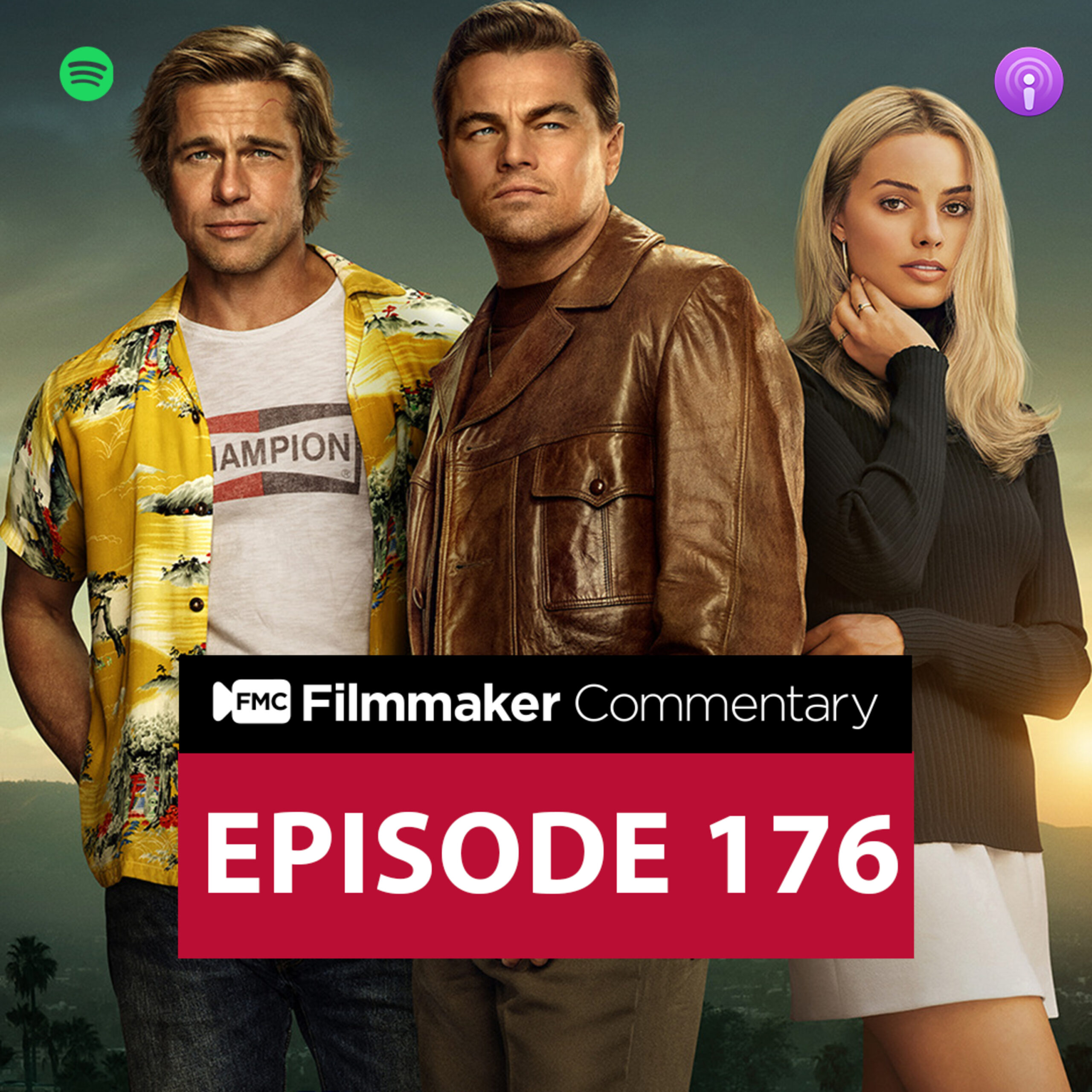
This week on Filmmaker Commentary, Reginald Titus Jr. and Casey G. Smith deliver a comprehensive commentary on Quentin Tarantino’s 2019 film, “Once Upon a Time in Hollywood.” They dissect its financial performance, diving into budget specifics and box office results, and explore the varied critical and audience reactions, including how its period piece nature may have been received. The hosts celebrate the film’s Academy Award wins, particularly Brad Pitt’s supporting actor triumph and the stunning production design that meticulously recreated 1969 Los Angeles.
They ponder Tarantino’s knack for elevating supporting roles across his filmography, citing examples like Christoph Waltz and John Travolta. Beyond the main feature, the conversation shifts to current industry trends, examining Pixar’s recent struggles with films like “Elemental” and “Lightyear,” and questioning whether studios are getting too comfortable with their storytelling. They also review “The Flash,” discussing its mixed reception, CGI quality, and box office woes, and share their surprisingly enthusiastic thoughts on “Transformers: Rise of the Beasts,” praising its human element and nostalgic soundtrack. Other films like “Nope,” “The Little Mermaid,” “Creed 3,” and even classic “Major Payne” come under the spotlight, alongside insightful filmmaker tips and a look at recurring Tarantino tropes.
What We Cover
- A deep dive into “Once Upon a Time in Hollywood’s” box office and critical reception, exploring the audience’s reaction to Tarantino’s historical narratives.
- Analysis of the film’s Academy Award successes, especially for Brad Pitt’s acting and the exceptional production design, drawing comparisons to other Tarantino films.
- Discussions on Pixar’s recent theatrical underperformance, prompted by “Elemental,” and the impact of rapid streaming releases on movie viewership.
- Reviews of major summer releases like “The Flash,” assessing its CGI quality and its reception and impact, and “Transformers: Rise of the Beasts,” noting its surprising appeal.
- Exploration of “Nope” and “Creed 3,” highlighting standout acting and narrative approaches, alongside broader conversations on filmmaking techniques and storytelling.
- A look at iconic Tarantino tropes, from feet shots and margaritas to characteristic dialogue and the use of narration, reflecting on their evolution.
Key Moments
- [01:00] Initial audience reaction and box office numbers for “Once Upon a Time in Hollywood.”
- [05:20] Discussion on the film’s Academy Award wins, particularly for supporting actor and production design.
- [10:10] The hosts’ debate on the impact of “The Hateful Eight” and Tarantino’s stylistic evolution.
- [11:00] How well the film recreates 1969 Hollywood, highlighting the detail in set and costume design.
Gear & Films Mentioned
- Once Upon a Time in Hollywood
- The Hateful Eight
- Inglourious Basterds
- Django Unchained
- Death Proof
- Pulp Fiction
- Elemental
- The Good Dinosaur
- Onward
- Lightyear
- Inside Out
- The Flash
- Transformers: Rise of the Beasts
- Bumblebee
- Nope
- The Little Mermaid
- Major Payne
- Final Destination
- Ready Player One
- Loki (TV series)
- Ant-Man and the Wasp: Quantumania
- Creed 3
- Stan Lee (documentary)
- 3000 Years of Longing
- Kraven the Hunter (trailer)
- Captain Planet
- Ozark (TV series)
- Scream (2022)
- Barbie (movie)
- Lady Bird (movie)
Listener Questions
- How did the portrayal of 1969 Hollywood and the Manson Family events resonate with audiences and critics?
- What impact do quick on-demand releases have on a film’s box office performance, especially for studios like Pixar?
- How does Tarantino’s distinctive directorial style evolve in “Once Upon a Time in Hollywood,” particularly concerning character development and historical settings?
Join Reginald Titus Jr. and Casey G. Smith each week on Filmmaker Commentary for more in-depth film discussions.