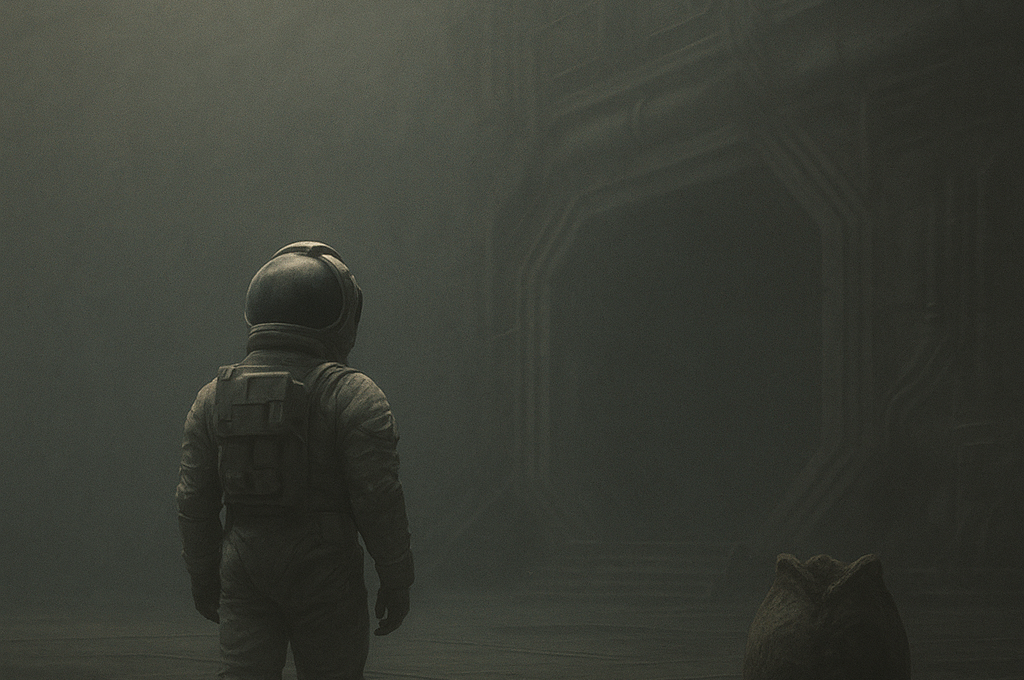
The Craft of Fear: Analyzing Ridley Scott’s Alien (Filmmaker Commentary)
Ridley Scott’s *Alien* remains an enduring masterpiece of science fiction horror, a film that continues to terrify and captivate audiences decades after its release. As discussed in the “FMC 007: Alien by Ridley Scott with guest Casey G. Smith” episode of Filmmaker Commentary, a key to its longevity lies in Scott’s meticulous, almost architectural approach to filmmaking, prioritizing atmosphere, visual storytelling, and a chillingly deliberate build-up of suspense over gratuitous spectacle. The podcast highlighted how Scott, an artist by trade, meticulously crafted every frame, understanding that true terror often resides in what is implied rather than overtly shown—a “less is more” philosophy echoing the work of Hitchcock and the methodical dread of *Jaws*.
Engineering Atmosphere: The Art of the Visceral
Ridley Scott’s unique visual style, honed through a background in commercials and his debut feature *The Duellists*, proved instrumental in forging *Alien*’s indelible atmosphere. The podcast emphasizes Scott’s “if you can do it physically, do it physically” mantra, a commitment to practical effects that imbues the film with a tangible, gritty realism. The Nostromo, in particular, feels authentically lived-in, a far cry from the sleek, pristine vessels often seen in sci-fi. This was no accident. Production designer Ron Cobb (alongside others like Chris Foss and H.R. Giger) collaborated on a ship that appears worn, industrial, and decidedly unglamorous. The commentary reveals how parts of the Nostromo’s corridors were constructed from airplane junk salvaged from aircraft graveyards, a resourceful solution born of budget constraints that inadvertently contributed to the ship’s claustrophobic, utilitarian aesthetic.
Furthermore, Scott’s hands-on approach, extensively storyboarding every sequence, allowed him to pre-visualize his compositions with painterly precision. This method, as KCG Smith and Reginald Titus Jr. noted, forces a director to fully conceive the blocking, lighting, and camera movement before stepping onto set, ensuring a cohesive and impactful visual narrative. The film’s extended takes and deliberate pacing in moments like the crew’s awakening from cryo-sleep, underscored by Jerry Goldsmith’s distinctive score, were designed to immerse the viewer in the characters’ experience, building psychological tension rather than relying on rapid-fire cuts. Even the decision to show vapor on the derelict planet, despite a lack of atmosphere in space, was a conscious choice: Scott knew his miniature models looked more convincing with it, prioritizing visual impact and “mood” over scientific accuracy. This deep understanding of visual rhetoric, from the grand scale of miniatures (like using children in costumes for the derelict sequence to enhance scale) to the subtle nuances of anamorphic lens flares, marks *Alien* as engineered terror.
Blue-Collar Terror and Thematic Depth
Beyond its technical brilliance, *Alien* subverts genre expectations by rooting its cosmic horror in the mundane realities of working-class existence. The hosts often highlight the “truckers in space” concept – a crew of blue-collar miners, squabbling over pay and enduring long hauls, rather than heroic astronauts. This grounding in everyday concerns makes the alien threat profoundly more disturbing. These aren’t elite soldiers prepared for combat; they’re relatable individuals thrust into an unthinkable struggle for survival. The casual banter, the dirty, unkempt appearance of the ship and crew, and their very human reactions to fear and greed (“You know, we ain’t gonna get paid for this!”) contribute to a sense of vulnerability that heightens the audience’s emotional investment.
This thematic choice also amplifies the film’s claustrophobic atmosphere. The Nostromo, designed by necessity as a confined, labyrinthine space, becomes a character in itself—a grim, unforgiving environment that traps its inhabitants with the unseen monster. The discussions on the podcast underscore how Scott deliberately avoided the clean, aspirational futures of earlier sci-fi, opting instead for a future that feels lived-in, decaying, and far more plausible. The film’s tension isn’t solely derived from jump scares, though *Alien* has its share of memorable ones, but from the slow, creeping dread of being utterly outmatched and alone. The cunning intelligence of the Xenomorph, its strategic patience, and its almost symbiotic connection to Ripley, even explored in early, unfilmed pseudo-sexual concepts, elevate it beyond a mere monster to a truly existential threat. This blend of meticulous craft and relatable human struggle against an utterly alien, cunning adversary is what secures *Alien*’s place as a landmark film.
Questions Worth Asking
- How did Ridley Scott’s background in commercials and *The Duellists* prepare him for *Alien*’s unique visual style and meticulous production?
Scott’s commercial work instilled a strong visual sense and efficiency. *The Duellists* showcased his mastery of composition, period detail, and atmospheric storytelling, all skills he seamlessly translated to *Alien*’s futuristic setting. - What role did practical effects and resourcefulness play in creating the convincing, lived-in world of the Nostromo and its environment?
Limited budgets forced ingenious solutions, like constructing sets from scavenged aircraft parts. This added a layer of realism and grime that made the Nostromo feel authentic and oppressive, contrasting sharply with the pristine aesthetic of many sci-fi films. - How does the film’s deliberate pacing and “less is more” approach contribute to its enduring horror, especially compared to modern horror tropes?
By delaying the full reveal of the creature and focusing on psychological tension, Scott built a profound sense of dread. This patient approach, emphasizing implication and atmosphere, allows the audience’s imagination to do much of the terrifying work, creating a more lasting and unsettling impact than rapid-fire jump scares. - Beyond Giger’s iconic design, what directorial decisions regarding the Alien’s portrayal maximized its terrifying impact on screen?
The decision to cast a tall, slender actor (Bolaji Badejo) and train him in mime and Tai Chi gave the Xenomorph its unique, unnerving movements. Combined with strategic lighting and limited screen time, Scott ensured the creature remained an enigmatic, terrifying presence rather than just a rubber suit.
Further Viewing & Reading
- *Blade Runner* (1982)
For another immersive, dystopian vision from Ridley Scott, showcasing his unparalleled ability to create intricate, lived-in future worlds. - *The Duellists* (1977)
Scott’s directorial debut, a visually stunning historical drama that demonstrates his early command of cinematic composition and atmosphere. - *2001: A Space Odyssey* (1968)
Stanley Kubrick’s monumental science fiction film, a significant visual and thematic influence on *Alien*’s approach to space and technology. - *Texas Chainsaw Massacre* (1974)
Tobe Hooper’s raw and visceral horror classic, which Ridley Scott studied for its rhythm and intensity to fuse with *Alien*’s sci-fi setting. - *Jaws* (1975)
Steven Spielberg’s masterful thriller, a prime example of building suspense through suggestion and methodical pacing, techniques that *Alien* expertly adapts.