June 29, 2026
F
Filmmaker Commentary
  • Home
  • About
  • Episodes
  • Film
  • TV
  • Home
  • About
  • Episodes
  • Film
  • TV
Podcast

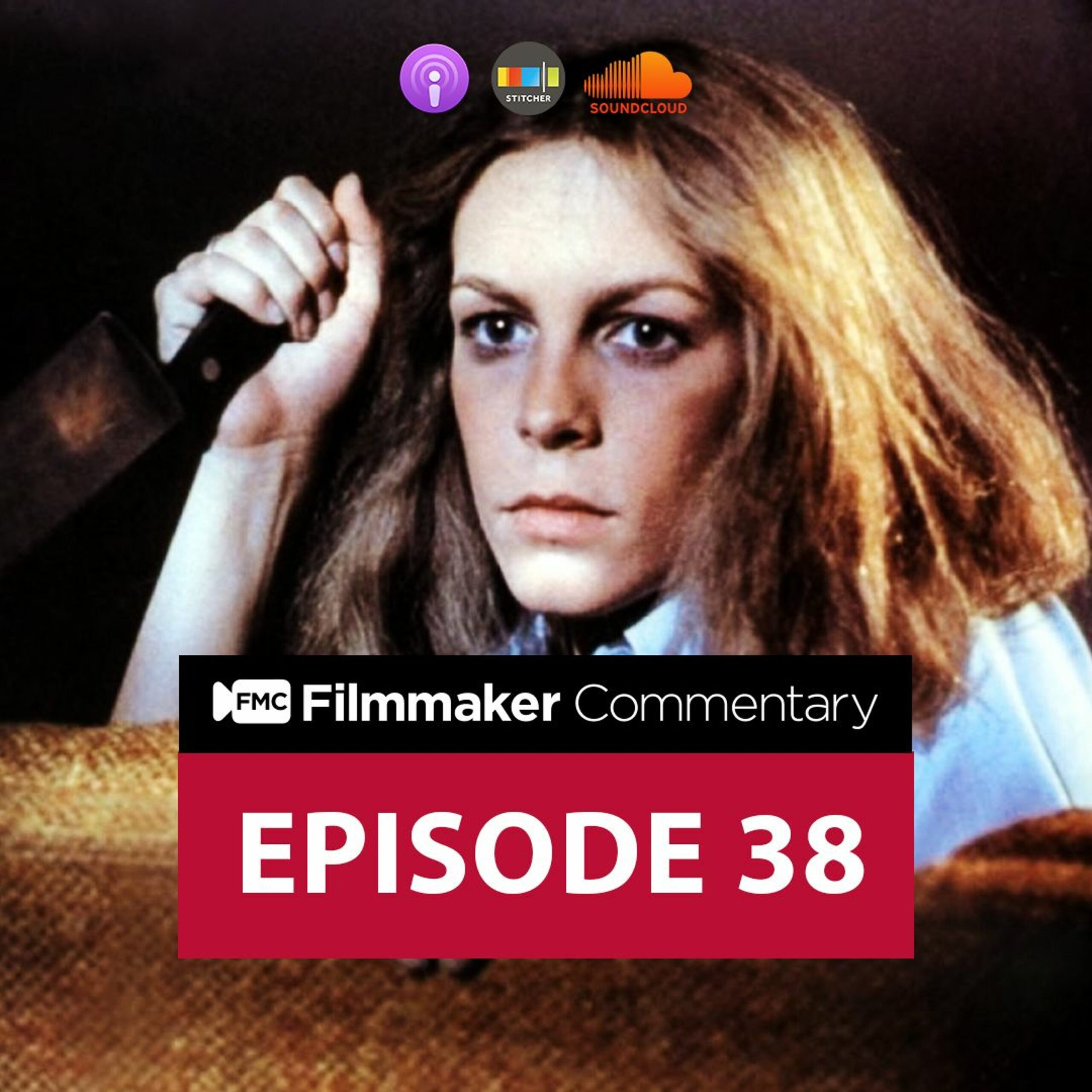
FMC 038: John Carpenter’s Halloween Co-Written and Directed by John Carpenter

December 24, 2018
Listen on Apple Spotify YouTube
Listen to this episode
Your browser does not support the audio element.
Also on Apple Spotify YouTube

Join hosts Reginald Titus Jr. and Casey G. Smith on Filmmaker Commentary as they unravel the enduring legacy of John Carpenter’s Halloween, a film that not only redefined the slasher genre but also stands as low-budget filmmaking. This episode dives into the creative decisions that shaped the 1978 horror classic, from its lean $325,000 budget and impressive $47 million domestic box office success, to the ingenious stylistic choices that immerse viewers in its terrifying world. Discover how Carpenter’s innovative use of a voyeuristic, gliding camera perspective and anamorphic lenses crafted a pervasive sense of dread, drawing influence from cinematic touchstones like Touch of Evil.

Reginald shares his surprising first-time viewing experience, admitting he initially mistook Michael Myers for a Jason Voorhees rip-off, only to realize Halloween’s pioneering role in establishing the slasher archetype. Casey also watched the film for the first time for the podcast and provides fresh insights. The discussion explores the film’s powerful central theme: the idea that “Evil can get you even if you think you’re safe,” embodied by Michael Myers as an almost supernatural “force of nature.” Listen as the hosts reveal how a real-life encounter from John Carpenter’s college days—seeing “pure evil in a boy’s eyes” at a mental institution—directly inspired the character’s chilling genesis.

The hosts dissect the film’s clever use of Hitchcockian suspense over overt gore, noting how suggestive editing allows the audience’s imagination to fill in the most horrifying details. They examine the practicalities of making an impactful film on a shoestring budget, from the importance of strong narrative themes to maximizing every shot and even relying on friends and family to fill various production roles. The conversation also touches on the film’s original, less iconic title, “The Babysitter Murders,” and how changing it to “Halloween” cemented its timeless connection to the holiday, demonstrating savvy marketing. Finally, they reflect on Jamie Lee Curtis’s early role, her character’s unique vulnerability, and how the film subtly plays with perceptions of sexuality and exploitation within the horror genre, contrasting it with later shifts in Hollywood.

What We Cover

  • How Halloween pioneered the slasher genre with its voyeuristic camera work and use of anamorphic lenses, drawing inspiration from films like Touch of Evil.
  • The film’s modest $325,000 budget and impressive box office success, achieved through clever filmmaking techniques and effective marketing, including changing its original title from “The Babysitter Murders.”
  • The central theme of inescapable evil, explored through Michael Myers as a “force of nature” and John Carpenter’s personal experiences, highlighting the power of a director’s instinct.
  • Jamie Lee Curtis’s role and her character’s vulnerabilities, discussing how practical effects and suggestive editing (Hitchcockian techniques) created suspense without excessive gore.
  • Insights into crafting low-budget films, emphasizing the importance of strong themes, maximizing coverage, and utilizing available resources like friends and family.
  • Current film and TV discussions including Daredevil Season 3, Red Dead Redemption 2’s immersive production, and explorations into animation techniques.

Key Moments

  • 0:33 – Hosts introduce John Carpenter’s Halloween, detailing its budget and box office success, setting the stage for its groundbreaking influence.
  • 2:41 – Reginald’s candid confession about initially underestimating Halloween and Michael Myers, highlighting how the film redefined his understanding of the slasher genre.
  • 2:38 – John Carpenter’s use of a voyeuristic, gliding camera perspective, and anamorphic lenses is discussed as a key stylistic element that creates a pervasive sense of dread.
  • 3:05 – The significance of the film’s theme, “Evil can get you even if you think you’re safe,” and how Michael Myers embodies an unstoppable force.

Gear & Films Mentioned

  • Adobe Creative Suite
  • Adobe Animate (formerly Flash)
  • Panaglide camera system (or similar gliding camera)
  • Anamorphic lenses
  • Films:
    • Dark Star (1974)
    • Assault on Precinct 13 (1976)
    • Halloween (1978)
    • It Follows
    • Psycho
    • Alien
    • Saw
    • Natural Born Killers
    • Hostel
    • Nightmare on Elm Street
    • Scary Movie
    • Training Day
    • Hustle & Flow
    • They Live
    • Trading Places
    • Black Lightning (TV series)
    • Daredevil Season 3 (TV series)
    • Iron Fist (TV series)
    • Luke Cage (TV series)
    • Touch of Evil
  • Games:
    • Grand Theft Auto V
    • Red Dead Redemption 2

Listener Questions

  • How did John Carpenter’s Halloween establish the slasher genre and its unique visual style?
  • What role did budget constraints and personal experiences play in shaping the film’s iconic villain and storytelling?
  • How can filmmakers utilize themes and production techniques to maximize impact, even with limited resources?

Full Transcript

Read the full transcript

Full Episode Transcript
In this episode, Reginald Titus Jr. and Casey G. Smith discuss John Carpenter's iconic horror film, *Halloween*, examining its cinematic style, enduring themes, and lasting impact on the genre, while also sharing insights from their own recent film and media consumption.

Episode Introduction & Film Overview
Reginald Titus Jr.: Filmmaker Commentary episode 38. Welcome to Filmmaker Commentary, where we give you insights from our favorite filmmaking commentaries. These commentaries can be heard on your DVD and Blu-rays of your favorite movies. We'll show you how you can use these commentaries and apply them to improve your video production and filmmaking techniques. All of this here on Filmmaker Commentary. I'm your host, Reginald Titus Jr. Welcome to another episode of Filmmaker Commentary. I'm Reginald Titus Jr. I'm joined with Casey G. Smith.
Casey G. Smith: Welcome back, sir.
Reginald Titus Jr.: Good to be back, sir.
Casey G. Smith.: So today we're talking about John Carpenter's Halloween, directed and written by John Carpenter. This is his third feature film. Like, his producer said it was his second, and then he said it was his third, so I don't know who to believe.
Reginald Titus Jr.: Haha. IMDb time.
Casey G. Smith: IMDb time. So, okay, so you've got Dark Star, yeah, in '74, which he was director on. And then Assault on Precinct 13 in '76, and then Halloween in '78. Haha, the director should know what he directed.
Reginald Titus Jr.: Yes. Deborah, she did kind of call some stuff out. She was, uh, one thing she was like, uh, "This is the only nude scene in the film." I'm like, "No, there was some more." We see.
Casey G. Smith: I have eyes.
Reginald Titus Jr.: Cool. So, uh, what year was Halloween? What year did Halloween come out?
Casey G. Smith: 1978.
Reginald Titus Jr.: Man, 1978. John Carpenter's Halloween, directed and co-written by John Carpenter. This is his third feature film, and he co-wrote it with Deborah, who was also a producer on the film and his girlfriend.
Casey G. Smith: Girlfriend, hey, that's a good way to collab.
Reginald Titus Jr.: Collabo. Uh, we had a budget of 325,000. Box office only said 47 million domestically. And of course, they weren't showing much outside of that, 'cause you know how old the title is, they didn't share as many numbers as they do this day, even if they're created.
Casey G. Smith: Just lie to us, tell us.
Reginald Titus Jr.: I bet it made way more money than that. Okay, so I'm gonna jump into the synopsis. "On a black and unholy Halloween night years ago, a little Michael Myers brutally slaughtered his sister in cold blood. But for the last 15 years, town residents have rested easy knowing that he was safely locked away in a mental hospital. Until tonight. Tonight, Michael returns to the same quiet neighborhood to relive his grizzly murder again and again and again. For this is a night of evil. Tonight is Halloween." How were you introduced to this film and did you watch it again or did you just listen to the commentary? What'd you do?

First Impressions & Cinematic Techniques
Casey G. Smith: So, I didn't actually see this film until about a year ago. I'd always heard about Halloween, and I would see Michael Myers and I'd say, "Ah, this guy looks weak." He looks whack. And so I I I paid him no credence, no attention. I I honestly thought he was a rip-off of Jason as far as the slasher. I didn't realize that he came first and that this film set the slasher genre into motion. So, my apologies, Mr. Carpenter, Mr. Myers.
Reginald Titus Jr.: The originator.
Casey G. Smith: And Miss Curtis and all those involved. Having a chance to watch this, I I I I love being able to to just kind of dive in and focus in on the film and let it be and and see it for, I I can I can kind of look past the time period when stuff was made and just get lost in the film itself and let it be and experience it. I was impressed with with the pacing. Yeah, so a year ago is when I when I saw it and I was like, "Wow, it it had some some genuine fright to it and suspense." And so for this, I rewatched it again, because I I definitely wanted to see it again, watched it on on on Blu-ray. And then, uh, of course, then did the the commentary with some special fact tracks that you could you could bring up that played. Initially when I when I turned it on, I turned those on and I couldn't figure out how to turn them off. So you know, I had to restart the film like eight times. I was like, "How do I turn these off?" I was like, finally I figured it out, but uh, yeah, so I yeah, it was worth revisiting. How about you, man?
Reginald Titus Jr.: This was my first time watching it. I knew about the character, but that's about it. But same thing with Jason. I've seen some Jason, some of the kill sequences and things like that, and but since I started studying films, I've started kind of getting into horror a little bit more. It's truly a universal, you know, genre, you know, everybody gets scared. You know, same thing with action, you know, action is one of those genres, especially for guys, it's like, even if you don't know the language, you see that there's conflict happening.
Casey G. Smith: That's a good point. That's a really good point.
Reginald Titus Jr.: So, um, I'm really liking horror right now. Now that we're studying some of the classics, like, no wonder why independent people start here, you know. It's because, you know, you can make a film that's low budget and have a lasting impression.
Casey G. Smith: That's true.
Reginald Titus Jr.: With no, and you don't have to have stars. So you can kind of get into the game cheaply. But at any rate, so I watched it last week, well, actually, I watched it today. I watched it today.
Casey G. Smith: All right.
Reginald Titus Jr.: I watched it today and watched the commentary today and, uh, wow. So it's fresh. Yeah, I can look, I'm saying like with you, I can look past the like time period, you know, 'cause to me it feels like you're going back in time and you're just reading a story from another time. That's what it feels like when I'm watching these movies. It's almost timeless in a way though, you know how.
Casey G. Smith: I agree.
Reginald Titus Jr.: The movie It Follows, you know, they didn't really have cell phones, I don't think in that film, when they were and and then we're following the teenagers in that film, that I'm like, every now and then you're like, where are the adults at? Like all this stuff is going on, but where are the adults? Like you ask yourself that. And that and this situation, that's what's going on, you don't, the uh, parents are like kind of like idiots in a way, but
Casey G. Smith: Well they're kind of just out doing doing their doing their thing. And this is also that that different time in and life where, you know, a Friday night or Halloween night. I mean, you know, people are going out and
Reginald Titus Jr.: That's when, you know what, during the trick-or-treat sequence, when you see them, that's when you see a few parents here and there.
Casey G. Smith: Yeah.
Reginald Titus Jr.: But like the main characters, I'm like, where are they? You see Jamie Lee Curtis, her character, her dad for like a a quick second, you know, that he's a realtor, he's off to work, but he's working really that late, you know, like where is he at? Where's her mom? Like we don't know backstory. But what then
Casey G. Smith: At their house either. They're probably they're back at the their house, but because she's at somebody else's house. I don't know. It it's like and you figure it's Halloween night, shouldn't there be just the streets just littered with people trick-or-treating?
Reginald Titus Jr.: Right. Yeah.
Casey G. Smith: It's a few things there. I'm like, it's budget.
Reginald Titus Jr.: It's a thin Halloween.
Casey G. Smith: Budget. This street's not known for that good of candy, so they just
Reginald Titus Jr.: So I just dove in and uh, really appreciated it, and um, the filmmaker in me is like kind of scrutinizing it, noticing that it was anamorphic, I did appreciate that. But uh, I think it's a solid piece. it's a solid piece and uh, then just followed it up by watching the commentary.
Casey G. Smith: Did you watch it by yourself or did you watch it with your wife?
Reginald Titus Jr.: This time I watched it solo.
Casey G. Smith: Gotcha.
Reginald Titus Jr.: No, I take that back. Man, my brain is just shot out right now, bro. Uh, I watched the first part of it, the first 12 minutes by myself, and then she kind of came in, and I said, "You gonna watch this?" And then I didn't rewind it, but I just brought it up to speed. This is what's happening. You know.
Casey G. Smith: Okay, okay.
Reginald Titus Jr.: Going up to Jamie Lee Curtis's character. Uh, but turned out she she enjoyed it.
Casey G. Smith: No, did did you feel any genuine, did it feel scary to you?
Reginald Titus Jr.: Not at all. Not at all.
Casey G. Smith: Gotcha.
Reginald Titus Jr.: There were some suspenseful things. Maybe if it was it, maybe if I watched it nighttime, maybe. Yeah, I know that changes things. If you watch it at night and it's quiet.
Casey G. Smith: Suspenseful. That's a good point. Yeah, that's a good point. When I when I watch these, I'm like, just like, you know, I don't really have many distractions. I'm able to like just, you know, zone in, if I want to bring the lights down, then, you know, I'll do that. Sometimes. Not all the time.
Reginald Titus Jr.: This is one of those films, like it's, uh, it's a little bit scary, but the I think the things that probably scare me a little bit more, probably like the supernatural scary films. Like we're talking about paranormal activity. Like if you're in a theater and you're just closed in, you're locked in, you ain't got nowhere to go, like, uh, yeah.
Casey G. Smith: That one with again, I I watched that one with surround sound by myself. That's when I I made me turn the lights on. The first couple times that base kicked in, boom, boom. Nope, click, click. Lights on. Lights on. My phone charge? Okay, we're good. Play.
Reginald Titus Jr.: Yeah, those to me are the like scary ones right there. Yeah. Something where you feel like it can happen in real life, you know, like not saying that getting stabbed by a knife, you know, could not happen.
Casey G. Smith: That could be pretty real.
Reginald Titus Jr.: Yeah, they can be pretty real. That, you know, getting shot, stabbed, you know, things like that. Yeah, for sure that can happen. But something about like just stuff coming out of your TV and living with you, that you can't do anything about.
Casey G. Smith: Yeah. I I think I think maybe partly is because guys we kind of feel like, this sucker was coming at me, you know, moving that slow. I mean, I could maybe do something, but this guy just keeps coming.
Reginald Titus Jr.: The slowest walk too.
Casey G. Smith: Oh, but like no matter what, he's like he just he just steadily coming for you.
Reginald Titus Jr.: Yeah, I'm I'm actually interested in looking at Jason, his horror story and kind of going back and looking at that. Just kind of seeing how like these people or like Jason, how he's able to like teleport, move quickly and like he's walking just as slow.
Casey G. Smith: I think you have to watch the first the first two Friday the 13th, the one and one and two, which is
Reginald Titus Jr.: It's dark, man. Like the I just discovered the backstory and what you were telling me about the video game of this. I'm like, this is kinda dark.
Casey G. Smith: Way dark.
Reginald Titus Jr.: Yeah. And it kinda makes sense too, 'cause you know how, you know, terrible kids can be when you're making fun of people with disabilities and things like that. So it brings that part into it. I'm like, God, wow.
Casey G. Smith: Just thinking about like watching that. That gives me the slightly gives the willies like, And it has that supernatural part of it, you know, like not saying that this one doesn't, but it maybe they had it more of a budget or something. I don't know, but
Reginald Titus Jr.: Uh-huh.
Casey G. Smith: But yeah, I I I'm interested though to to go back and check and and and check it out. Without, you know, I don't we got spoilers. If you haven't seen Friday the 13th, the first Friday the 13th, I don't want to give you spoilers for how that one ends.
Reginald Titus Jr.: You've had 30 years.
Casey G. Smith: How many sequels? Oh man. Plenty. All the way to the to space.
Reginald Titus Jr.: Oh, wow.
Casey G. Smith: To space, to hell and back again.

What We've Been Watching: Other Media Deep Dives
Reginald Titus Jr.: Before we continue, let's dive into movies we've watched. Movies watched in the past week. Did you watch anything, go to the theaters? Uh, did you watch? Oh, I remember last time we talked, you talked about Night School. Did you ever go watch that film?
Casey G. Smith: No, didn't get a chance to go and and and watch that. Me and a buddy we were gonna we were gonna go see it and then it just it just didn't pan out and I didn't get a chance to go during the the week. Um, what I did do, I I I wrapped up Daredevil season 3. And for those who uh, watch that on Netflix, uh, man, this is this this might this might be my favorite season. I I all I can say is I I like all three seasons of Daredevil. I think I think the second is better than the first, and it's it's this season is good all the way through and every character gets their shine. So Daredevil gets his shine, played by Charlie Cox. Wilson Fisk, obviously by Vince D'Onofrio. He gets his shine. Um, a new villain is introduced. And those who are um, familiar with the comic books, um, played by the name of Point Dexter, which is all I'll say, is introduced.
Reginald Titus Jr.: Was it good?
Casey G. Smith: Fisk.
Reginald Titus Jr.: Great cartoon name, though.
Casey G. Smith: Dexter. Um,
Reginald Titus Jr.: Dexter.
Casey G. Smith: But also Karen Page and Foggy Nelson. They get their shine, like, and it's and they introduce a new a new another new kind of main protagonist within the series. Uh, for this season, I should say, that really kind of helps tie things together, but it's it's it just it feels well written, well done. Here's okay, here is the measuring stick for me. I got I got so far in the the the episodes were so good to me that after one episode would end, I literally would double-check the timestamp and say, "There's no way that was 55 minutes." It felt like 30 minutes. 55-minute episodes felt like 30 minutes. And that like never happens for me. Like I I usually usually 55 minutes or 45 minutes feels like that amount of time. This thing was coming and going. I was like, there's no way. There's no way that was. And I look, oh my goodness, what? It wasn't just I got lost in lost track of time, but the episodes did not feel that long, which is, um, not always the case with especially with the Marvel Netflix. Sometimes those last, you know, four or five episodes when you get to 13 can just kind of drag. This did not. It it if I I was just I was in, dude. I was in. Very, very, very satisfied with season 3 of Daredevil. Um, and then also,
Reginald Titus Jr.: Yeah.
Casey G. Smith: Wow, they had you.
Reginald Titus Jr.: I think I think they their algorithm. Netflix's algorithm, you know, can probably dictate the writing, because like, hey, people are falling off after this episode or after whatever. They have like all the data. And so maybe that's getting passed down to the writers for the next season.
Casey G. Smith: But you would you would think that, but then we've got we've got Iron Fist, you know, it's got canceled. Iron Fist got canceled, but then also Luke Cage.
Reginald Titus Jr.: I think I think Luke Cage got canceled because of Iron Fist. How about that? Um, was Iron Fist any good? I never seen one episode. I've seen Luke Cage first season.
Casey G. Smith: Yeah.
Reginald Titus Jr.: Trash. Season 1 of Iron Fist was trash. I'm sorry, Netflix. Season 1 of Iron Fist just Iron Fist just sucked.
Casey G. Smith: I'm talking about universally like it was terrible, so
Reginald Titus Jr.: Everybody. Everybody was pissed. They were people were pissed about Iron Fist. Like they just they didn't.
Casey G. Smith: Cuz they had the potential of being great, but
Reginald Titus Jr.: Yeah. Cuz I mean people waited a long time. And and it was a like a long shot for him to get his get a show. It was like, whoa, they're doing Iron Fist and it just that first season just did not it didn't work. Uh, second season I got about halfway in. Man, once I heard it's canceled, I'm like, oh, I don't care now. Like I don't I don't care to finish watching it. Luke Cage, first half of the first of of season 1 was really good. Second half, drags a little bit. It still ends okay. Second season has some good episodes and some some good performances. The villain, uh, Cottonmouth is is I think it's awesome. Alfre Woodard, her performance is awesome. Michael Colter as Luke Cage, I've been I've been reflecting on this. I feel that I feel that they write Luke Cage kind of wrong as far as how he is in the comic books. And I'm not saying that the the show has to totally imitate the comic book, but one thing I get tired of is the fact that they make make Luke Cage hesitant to really use his abilities, to go all out. He holds back. He is far stronger and more powerful, but he plays this passive aggressive, almost like he's on the defense. Yes, he goes and cracks some heads here and there, but as far as like just taking it to uh, the bad guys like he could, and the in the comics, Cage is like, come at me, bro. Like he he he he runs the block and is very much so out there. Whereas first season Luke Cage is kind of hiding and and you know, he's he was never a cop in the comic books. He was just, you know, from the streets, false falsely accused. So, I think I think some of those things kind of water him down a little bit. Yeah, but why he got canceled, some are saying it's a different reason. They said Iron Fist because of ratings. They say they say it was creative differences. There's some there's buzz uh that it was creative differences with Luke Cage. I'm like, really? You you you're telling me you couldn't figure out creative differences. Yeah, they don't know the To me, like Luke Cage, I only saw the first season. And I was like clamoring, once that was done, I was like, where is the second season? Like I wanted it right then, right there. But too much too much time has gone past and more things have happened. I'm like, all right, I'm kind of over it. But I really did enjoy that first season. It kind of reminded me of like New York Undercover in a way where the the live performances, you know, at the at the club and stuff.
Reginald Titus Jr.: What's up?
Casey G. Smith: Ah, yeah, yeah, yeah.
Reginald Titus Jr.: Oh, all right. Outside of that, the other thing that I've that I've that I've jumped into and it's it's not a film, it's not a television show, but it is production and that's Red Dead Redemption 2. And I mentioned this briefly because this game's been in development for eight years. It's by Rockstar Games. Now here's the thing. Rockstar Games currently holds the record for the highest selling piece of media of all time, which is Grand Theft Auto 5.
Casey G. Smith: I remember that. How long did that took a while to develop as well?
Reginald Titus Jr.: Uh, they probably worked on that. I'm I'd say probably six, probably six years or so. Cuz it cuz it came out during the uh, the the 360 and PS3 era. And then they then they ported it over to the PS4 and Xbox One. Red Dead Redemption 2 is the first current generation of this generation that Rockstar has made from scratch. Which is why I get eight years in development, which is nuts, cuz the first Red Dead came out in 2011.
Casey G. Smith: Oh, that's a long, long time, dude.
Reginald Titus Jr.: Wow. Which people love. I loved the first Red Dead. Oh, amazing game that takes you back. I mention this game because from a sheer production value, thousands of lines, no, not just lines, thousands of pages. Yeah. The the the the script, all the writing, uh, nuts. Well maybe maybe it's hundreds. I might be exaggerating. It may it may be like 800 pages worth. Maybe 800 pages worth of of script.
Casey G. Smith: Still a lot though, considering a long script is 120 pages or something like that.
Reginald Titus Jr.: A hundred over 100 pieces of original music were scored for this game. What's the budget? Did they say what the budget was, like how much it cost to create this thing? Cuz that sounds expensive.
Casey G. Smith: That's a fantastic question. I'm scooping that up, pulling it right now. I wanna I wanna if it'll actually pull that up on IMDb. So, couldn't find the the the the actual budget, but substantial resources. And when you see the the world of this game, like it the the map is insanely large, and it's his own digital, pardon me, its own digital world. People are going about their everyday lives, doing stuff. GTA 5 was immersive. This is super immersive as well, and it's paced. This is not a this is not an experience about like being getting somewhere fast. It's about pace, taking it slow, building relationships.
Reginald Titus Jr.: Wow.
Casey G. Smith: Kind of's a little bit of honor system within it, but just it's the the game is absolutely gorgeous. The the blades of of grass, caring for your horse. Like I find myself regularly making sure that I feed my horse, I I I brush my horse, and I I pat my horse, because the better you take care of your horse, the better your horse will take care of you. If a fire fight breaks out, your horse is not gonna buck you off and run for the hills. It'll stay around, when you whistle for him to come and save you, but he'll be there. My my horse's name is 3030 off of old Marshal Brave Starr cartoon back in the day. Nevertheless, if you want a a fantastic, uh, cinematic immersive experience, then, um, look no further than Red Dead Redemption 2.
Reginald Titus Jr.: Of course. Sounds like Sounds like a game that'll suck you in for quite a long time.
Casey G. Smith: Yeah, I'm not gonna yeah, I woke up early this morning because I'd stayed up late, I stayed up really late Friday into into Saturday morning. Like I went to bed like at 4. Is that right? Yeah, I went to bed like at 4 Friday morning, into Saturday. Woke up about my day and I was I was I was dead tired by 7 o'clock. I like, I crashed at 7 p.m. But then I woke up this morning at 3, I got eight hours in, I was refreshed.
Reginald Titus Jr.: Let's do this again.
Casey G. Smith: Yeah, I watched I watched something.
Reginald Titus Jr.: You like you live your regular world, then you go into the virtual world, live a life there.
Casey G. Smith: I watched an episode of Black Lightning and I was like, Red Dead. We're going back into the old West, boys. I got some rustling to do. I'm gonna shoot somebody in the back today.
Reginald Titus Jr.: Cuz I remember I remember when Grand Theft came out, like just how and back then, those graphics were rudimentary, it was it was different. Um, even that world was fun just to navigate, just to play around in the world, beat up random strangers, like this is great.
Casey G. Smith: Red Dead though doesn't give you any slack, man. Like, I try to I try to avoid, because the law, man, the law, they will come after. You get into a a scuffle, you shoot an officer of the law and you get a warrant out, you got bounty hunters on you, dude, like for a whole territory. Bounty hunters will be there. You you, yo, go back in that territory. Like you'll you'll see them like waiting on you. I I was like, I had to run across the border, man. I had to do a border run, I had to get to another side of town.
Reginald Titus Jr.: Yeah.
Casey G. Smith: I haven't seen this, man.
Reginald Titus Jr.: Man, for real. And then you gotta finally get money and go and pay your bounty. And so, I finally got my bounty paid down so I could roam in the town again and oh man, digital life.
Casey G. Smith: Digital life. How about you, man? What did you see?
Reginald Titus Jr.: Speaking of digital life, I was really, really into animation. I've been studying animation. This is something that I want to do. I've been keeping a journal, writing some scripts, just kind of developing, you know, an original animation series, but part of it is, you know, I'm I'm drawing every day. At least one, my my goal is one sketch a day. It doesn't have to be great. Just to get the mechanics back going. Um, I still got a little bit of it. I was like, all right, I'll be back in the day. Now I have like with a family I have like we have drawing time, so we all sit down like back in the day, laying on your stomach, legs kicked up and just sketching, everybody's just sketching and drawing.
Casey G. Smith: It's good.
Reginald Titus Jr.: That's fun. That sounds fun.
Casey G. Smith: So my little ones, he's sketching, he's like, yeah, this is, you know, he's drawing Earth and all this stuff and my oldest son, he's his character starting to look better. I'm like, okay. I got story lines and everything. I'm like, okay. So anyhow, so I'm doing that, but I'm doing that because I'm studying animation, like the software, I'm subscribed to the Adobe, the Adobe Creative Suite, and so they have a software, uh, used to be called Flash, you know, where you can create video games and animation, but they changed that. They rebranded it to Adobe. They got Adobe Animate and Adobe, I can't even think of the name of it right now. But it used to be called Adobe Flash. And so you're animating inside this Adobe Flash. Now when I look at cartoons, I see I can tell if it's uh, like the Disney way of animating and they're importing it or if it's like kind of like a cheat way of animation. And as I look at PBS Kids and all these other, um, animations, I can see how they're using these little tricks to animate these characters. They're just creating it, putting it into the software and animating it in the software. So you no longer have to draw each keyframe anymore.
Reginald Titus Jr.: Yeah, he's good.
Casey G. Smith: Keyframe.
Reginald Titus Jr.: The software is guessing it for you. It's called tween tweening. I think that's what it's called. Uh, when the computer software is actually guessing the frame. So if a character starts at a squatting position, then at the end it jumps up and down. Um, the software can kind of dictate what it's gonna look like in between, man. So,
Casey G. Smith: Fascinating.
Reginald Titus Jr.: and I mean, all this stuff is readily available. Here I've done, um, in one of my previous jobs, I got a little taste of it, 'cause I hired a graphic designer to create a world and then we imported a character and then there was a software called Adobe Animate, which at the time was like beta, being beta tested. And I was able to create a little a little cartoon and little animation commercial, 30 seconds. Relatively quick. Took me a couple weeks, but I think I'm bitten by the animation bug. I don't want to be like an animator like that, but I want to create the stories and the look and be like a creator of it and then kind of pass it on to the animation to the animators and get it financed and stuff.
Casey G. Smith: Do the leg work.
Reginald Titus Jr.: They'll go do that. So anyhow, so I've been on YouTube just really looking at a lot of tutorials, um, looking at other people and how they animate. And there's quite a few like there's a lot of successful like young animators, you know, they're in their 20s and they're on YouTube showing how they do their thing. And they they're like on the microphones like the ones we have for our podcast, doing the voiceover work, the animations and the stories are good. One guy I've been listening to his name is Don is it Don Pablo Don Pablo the Sauce Guy, I think that's his name. Pablo Don the Sauce Guy. Something like that. But he's been hilarious. It's uh, yeah. Anyhow, so that's what I've been doing this this past week. Just kind of studying animation, kind of working on my skills and doing something every day to write or sketch.
Casey G. Smith: Nice.
Reginald Titus Jr.: Oh yeah. That's it. That's what I was doing, movies watched. All right, let's get back to John Carpenter's Halloween.

Filmmaking Wisdom & Halloween's Lasting Impact
Casey G. Smith: All right. Man, this movie I think is very stylistic. Um, some of the style I got out of this is, you know, it it feels voyeuristic, the way that he's shooting where you're we're kind of like behind or we're from the perspective of the killer.
Reginald Titus Jr.: Yes.
Casey G. Smith: That's crazy. Also, um, with the the gliding camera, uh, that's kind of like the almost like the steady cam. They kind of use the camera that's called the panaglide to do the same thing where you're just kind of roaming like the voyeur just flowing, following through and seeing what Michael Myers is doing. Um, and then also with those anamorphic lenses, it's kind of giving it a more cinematic feel and it's very wide. Uh, from a stylistic standpoint, uh, what what did you get out of this film?
Reginald Titus Jr.: Uh, stylistically also, I agree, seeing the the use of the the Panaglide. This was this was kind of one of the earlier introductions, uh, to kind of bring it into mainstream. Um, they said it it was a lot of the shots in the film were highly influenced by, excuse me, Touch of Evil by uh Orson Welles. They took influences from that. Definitely, the constantly seeing the perspective of the killer. That that that the sense of being watched is like continually throughout, but it's not just the shape of Michael Myers, but it's also Laurie, uh, Laurie/Jamie Lee Curtis's character, they're often watching, watching what's going on, because she even she sees him a couple times. She's like, you know, like she sees him outside of the, you know, outside of her her classroom. Um,
Casey G. Smith: She looks back and he's disappeared.
Reginald Titus Jr.: Yeah. And they said it's like a Alfred Hitchcock kind of trick.
Casey G. Smith: Yeah. And that's of itself is just creepy. Uh, like just like, but no, I saw it, you know, and then then, you know, or or the kid, you know, the kid seeing him, the boogeyman, yo, the boogeyman, he's there, you know, you stop it right now, you know, just not being believed when you're telling people what's what's going on. Just a a a just a interesting side note is with Jamie Lee Curtis, again the fact that she and the tie-in also to Hitchcock that her mom was was in the movie Psycho. was one of the the top-billed actresses in Psycho again, won't won't spoil anything for those that haven't seen the film yet. But, uh, yeah, I didn't know that was her her mother and of course her father being Tony Curtis, so Janet Leigh and and and Tony Curtis being Jamie Lee Curtis's folks. They say that this film was actually originally that it was panned by critics uh when it first dropped, but then one critic gave it glowing reviews and for whatever reason that changed kind of the the flow, the perception and reception by others after the fact. So, one one good review. Um, but also even even the the original name. They said originally this was gonna this was being called the the Babysitter Murders.
Reginald Titus Jr.: Yeah.
Casey G. Smith: Yeah. Interesting.
Reginald Titus Jr.: Wow. How differently would this have been perceived or even those who would have gone and viewed it when it was called the Babysitter Murders? I don't think I don't think it would have the same success. Yeah.
Casey G. Smith: Yes, yeah.
Reginald Titus Jr.: Had murder in the title.
Casey G. Smith: And now that you you put the name Halloween attached to it, then it it becomes synonymous with every year with that time of the year.
Reginald Titus Jr.: True. That was smart. For marketing. Yeah.
Casey G. Smith: And it came out October 27th of 1978. And as at the recording of of this podcast, we have the official sequel in theaters right now. Crushing. Uh, it had a huge, huge opening, opening weekend. It didn't get, it got a little more brutal than the first one.
Reginald Titus Jr.: Yep. I wonder what the reviews are saying.
Casey G. Smith: Themes. Um, the importance of having a theme in your story. Um, I know we talk about it, but the reason that we bring it up, and I'm gonna do a quick like quick definition of a theme just because having your film grounded, you have the plot and everything that's happening with your characters and all that. But having something that's in the background that's kind of pushing things, um, along, where it's like a vibe that you get or a feeling. Um, so according to this, um, the theme is it's in a story, it's like its underlying message. It's like what's the big idea of it? And it can kind of transcend cultural barriers and it's like usually universal in nature. There's a book called Save the Cat by Blake Snyder, and they kind of break it down a little bit more for the filmmakers that are listening to this, that are interested in writing and how to put these things into your into your movies. So example, uh, there was a movie Johnny Depp was in, it was called Blow. It was about drug trafficking and things like that. And Blake Snyder says in his book that sometimes you can actually have a character say what the theme is. So in that movie, twice his his dad would say, "Hey, son, you know, money isn't real." You know, he said it at the beginning of the film and he said it towards the end of the film. Money isn't real, 'cause if you've seen the film, it's about drugs, you know, he's always, you know, he's had more than enough money. You know, he could have got out the game, but for whatever reason, he keeps just getting more and more and more. He was trying to get his son to realize like, you're doing this all for nothing, basically.
Reginald Titus Jr.: Uh-huh.
Casey G. Smith: And that's kind of like an example of your of a character kind of slipping the theme out, a theme of the story. To me, the theme that I got out of this particular film is evil can get you even if you think you're safe. And you have uh, the doctor at the beginning of the film, when Michael Myers escapes, he says, "Evil is getting away." And so you can kind of have like your characters kind of tell you in a way what the theme is of the film.
Reginald Titus Jr.: I agree. They often they often refer to Michael Myers or the Shape as a they say that he is a a force of nature. that he is he is like the he is like the he is like an incarnation of evil. Cuz and even the doctor says that when he looked into the eyes of that child. And by the way, this is Filmmaker Commentary. Yes. There will be spoilers. When he looked into the eyes of that child. He said he saw nothing but evil. No remorse, no regret. And the whole opening of of the film when it fast-forwards so many years later, the the reason why this doctor is even going to this facility is to transport Michael Myers to a place where he can be locked away from society forever. They just by happenstance and and movie McGuffin that he gets out and returns to town. Yeah. But uh, it's fascinating that John Carpenter says in his own experience in college, he went to a a mental institute, uh, on a visit while in college, and he looked into the eyes of a boy that he saw pure evil behind those eyes. And that's always stuck with him. It's fascinating when you hear from these directors and creators in times what the genesis and the birth of these characters are.
Casey G. Smith: Yes.
Reginald Titus Jr.: And for you filmmakers out there, um, you know, use your personal experiences, you know, what Casey was saying with the devil's eyes. And that that happened to the director. So if anything, you know, if it was happening in your life, jot it down and use it into your stories. It makes it more grounded. And I wonder like when the the killer when he I mean, the uh, the villain when he's on the ground shot up, like really you're just gonna get up like that. So having to be a incarnation of evil, okay, that's the only way that's gonna explain that because you ain't getting shot, stabbed and all of a sudden you're getting up, you're good.
Casey G. Smith: Well, even when I mean, the guy was, I mean, he was stabbed in the in the eye. Uh, he's he's he was stabbed multiple times by by Jamie Lee. Like she she got him. She got some good shots in. Yeah, but here's one thing, side kind of side note I I noticed that that he does when so at towards the end of the film, when they have the shot, it's a close-up of her. He's in the background, laying by the closet. She's already stabbed him the the second time. She got him right like right in the heart it seemed. And he he he sits up. Boom. Straight up. That's where the Undertaker got his his thing from. In the WWE, when he when he does the sit-up thing him and Kane. I was like, and we saw the Reanimator as well, remember? The boyfriend getting up on the the sheets.
Reginald Titus Jr.: Yeah.
Casey G. Smith: Boom, rising up. I'm like I saw him, I'm like, Undertaker right there. Right there.
Reginald Titus Jr.: Undertaker.
Casey G. Smith: Also in that same scene, she throws the knife away again. She's like, uh-huh. And that's one of those things that the audience, remember, you're like, oh, come on. Like she messed up the first time. She messed up the first time, she threw the knife away. And Jamie Lee in the commentary mentions that she felt like it would have been better if like he did a close-up to see the reason why her motivation for throwing the knife down was that she was disgusted. You know, this is the same knife that killed her friends. She's in her hands and she's disgusted. She's like, I can't, you know, whatever. She freaked out.
Reginald Titus Jr.: The knife.
Casey G. Smith: The first time I can see it. When she's on the couch, I I see her disgust. The second time, I'm like, girl, you know better.
Reginald Titus Jr.: Yeah, and so and she can't, you know, hey, it wasn't a script. Yeah, she even said she's like, I got she's like, I can't, I can't defend that second one. That was just kind of dumb. Yeah. Cuz when she gets it back in her hand, she's like, all right, good. You got it back. Stab him. Got him. And then she throws it again to the side and he's rising up. I'm like, oh, okay, we just don't learn.
Casey G. Smith: But they say in horror films, characters have to do things that we don't want them to do that keeps us that keeps the suspense going for us. Even when we get upset with them, oh, don't go downstairs, oh, don't trip and fall, oh, don't throw away the weapon that could help you fight. That builds the suspense for the next the next part, puts them back in the position of of danger. Oh, you know,
Reginald Titus Jr.: True.
Casey G. Smith: Don't get rid of the cell phone, like they but they have to find a way to put them in the position, cuz there's so many ways to escape from people killing you, right? But characters have to be True.
Reginald Titus Jr.: And there there was a sequence me and my wife were talking about this, um, the lady that that was uh her friend who was just trying to hook up with her boyfriend or whatever, but like, uh, she had to get out of her clothes. This is just a thing of horror films, you know, you gotta get the girls naked some kind of way, and how are we gonna do this without seeing obvious. Debra did a good job like, well, we wouldn't, this is like a she was like kind of defending in a way, but I was like, come on, it's it's the nature of the genre. But you gotta find a way to get her into some scantily clad clothes and it was like she raced the butter on the clothes and so now she has to go wash her clothes. But also too, they gotta get her into another situation so that she's vulnerable. And I know we talked about that on uh, Ridley Scott's Alien. Getting someone from one end of the spaceship to the other end of the spaceship, you gotta give some kind of motivation. So in this particular situation, it was there's butter on her clothes, so that's the reason to get her into something else and away from the house for a little while.
Casey G. Smith: The suspense, the theme of suspense throughout. Because it is aside from the kill at the very beginning, it's quite a while until we see another kill in the film. You know, we see, we see him stalking his prey. That that character, she goes a while before she is killed. And even the whole time while she is in the laundry and the door closes behind her and she gets locked in, you know, you're like, oh, he's gonna get her. Ah, he's gonna get her. Ah, he's gonna get her. But yeah, yeah, you're right. It doesn't happen then.
Reginald Titus Jr.: Yeah, yeah, you're right. I was expecting it too, like this could be a perfect time for a killing.
Casey G. Smith: Right. And they but they they play against that and they make you wait. And it's not until she gets into the gets into her car, and she's in there. And she looks just for that brief moment, notices, why are the windows kind of foggy? And like I I didn't notice until she knows. I'm like, oh yeah, oh, no. And then it's it's you're done. That was too late. You're done. And so, uh, yeah, but again, that suspense, that that build up, I'm like, that was that was well, that was well done. Um,
Reginald Titus Jr.: And it's it's so you're done.
Casey G. Smith: His killing technique's pretty good too, you know, he's strangling them, so they don't scream and then stabs them.
Reginald Titus Jr.: Ah, I had even thought about that. Yeah, it's kind of cool. Crushing the larynx. Yeah.
Casey G. Smith: And so speaking of of being brutal, uh, the producer Deborah She, she makes a point that again, this is kind of using a Hitchcockian technique, where the film isn't overly gory as far as like blood splatter, things like that. you you have, you know, well done directing and editing, where you have the the initiation of the action of the of the kill, or like a knife stab, and then you see maybe your brain thinks that it you're seeing it, but you don't. Yeah. And I was actually surprised at how unbloody the movie was.
Reginald Titus Jr.: At all.
Casey G. Smith: Uh-huh. I was expecting it to be gory because that's kind of like what, you know, what we're seeing nowadays in films is like the more graphic, the more violent, it's like, uh, this isn't even entertaining anymore.
Reginald Titus Jr.: Uh-huh.
Casey G. Smith: I appreciate when they pull back. Yeah. Let that let my brain go to work a little bit. I I I really do appreciate that. But there's I mean, the goriest thing maybe when he pins that guy to the to the door.
Reginald Titus Jr.: And that's the first time you see like a graphic kill like that. At the very beginning when he's stabbing you, first off, your your your view is blocked by the mask that we're seeing. And then the stab, the camera like pulls away and then comes back to her after being stabbed. And so you just see her reacting to being stabbed.
Casey G. Smith: Uh-huh.
Reginald Titus Jr.: Sound effect. Pretty much. Yeah, you're right on that. Your brain makes you think you're it's more violent than what it really is.
Casey G. Smith: And in Psycho, Hitchcock, the the famous shower scene. True. That is exactly what they do there. So many cuts, man, for that one. Oh yeah. Oh yeah. And people I mean the I guess even like the ratings board that he worked with, like the the actress wasn't even naked, but people like think, you know, that that she was, but it's all about. It's an association, man. Like you're saying, jux juxtaposition. It's like, you're in the shower. Of course she's naked.
Reginald Titus Jr.: Uh-huh.
Casey G. Smith: Just yeah, And a people were scared to take a shower after watching that film, like looking in the corner, like, you don't get there's no more you don't get any more vulnerable than that.
Reginald Titus Jr.: Yeah, you're totally right. You are you are totally right. Um, and again, that stuff was controversial. Even even honestly, even the I think, uh, that this is the first film that either showed a toilet flushing or had the sound of a toilet flushing. Really? Uh, Psycho or this film? Oh, Psycho. Okay. Yeah, Psycho. Yeah, interesting.
Casey G. Smith: Random fact.
Reginald Titus Jr.: Yeah, random. Toilets can be scary too. No, I don't know.
Casey G. Smith: They mentioned Christopher Lee passed on the film and later regretted it.
Reginald Titus Jr.: Yeah.
Casey G. Smith: I was just gonna say sometimes people will believe in you now, and some people will believe in you later. Uh-huh.
Reginald Titus Jr.: That's how easy that to say, I I really wish I had been a part of your film that made a lot of money. I bet you do. That was my mistake.
Casey G. Smith: Yeah, cuz it helps everybody's career out. Um, but yeah, um, all right, so here's some bullet points for our filmmakers. We've already gotten to a couple of the bullet points. But Debra Hill, who was dating, uh, John Carpenter at the time, uh, she understood the power of spin. You know, how to use certain things to market. So like you were saying earlier about like, um, the Village Voice was the magazine that basically gave a positive view of this film. All the other critics kind of panned it and said, this is crap, whatever. But after the Village Voice gave it, uh, like, hey, this one this is a good film. Y'all might want to recheck this one out. Then all everybody kind of got in line. But she also then comparing it to Psycho, and then her being able to to tag the Psycho thing with Jamie Lee Curtis's background and being able to spin it into something else. Debra Hill was was the voice of reasoning in that. That was her reason for casting Jamie Lee Curtis, and uh John Carpenter that wasn't his first choice.
Reginald Titus Jr.: Uh-huh.
Casey G. Smith: Right, yeah, she wasn't his first choice, but it ended up working out. And even even going against kind of the type of what you would expect your your, um, your protagonist to be as far as dressing Jamie up and putting her in in such a way that made her look more plain, very, very plain, very comely, you know. Um, she wasn't, you know, the super hot, you know, girl like her or some of her other.
Reginald Titus Jr.: Yeah.
Casey G. Smith: She has a unique look. It's um, yeah, she has a very unique look. It's not what you're a bombshell.
Reginald Titus Jr.: Um.
Casey G. Smith: Well, again, later on, man, Jamie Lee Curtis, she's got it going on. There's movies in the 80s, like, man, I love her her short hair in in the 80s. I love that look for her. But in this film, she is very much so girl next door, uh, they referred to her as a virgin, like multiple times. Um, and her friends, you know, they're all just being teenagers, exploring, just pushing the boundaries. Yeah, but they all mean they all feel like, you know, these are just teenagers, you know, just kind of you know, she she's in the and she's not totally innocent. She's in the car, literally smoking pot with her friend as they pull up to her friend's police officer father, uh, as they get into shenanigans, but but yeah, it's been, spin, spin, spin.
Reginald Titus Jr.: Uh-huh.
Casey G. Smith: Rain and the the the glide cam or paniglide, uh, kind of set up the mood and also it's uh, it's a way using the rain and this glide cam is a way to cover up and give yourself some style for a low budget film. Use these different moods in order to do that and and also, um, for example, they were in the the professor and the nurse they were in a car together. You don't see any shots on the outside. They were an inside. And you just see the water falling down, it kind of sets the mood of what's going on. Now, if we had a bigger budget, she said, you know, you'll see different angles outside and all that stuff, but stayed inside. There was a couple of mistakes in the film. I I noticed like in the background like there were some shadows of like some crew members a couple times. And then one was like a there was a jump cut when um, they're on the little maybe they were on the dolly track and this is showing the kids coming out of school right before they're bullying the guy there they're saying like, he's going to get you or something like boogeyman's going to get you and he drops the lantern, yeah. And the kid drops and falls on the pumpkin, but when they were coming out, the glide cam is going, the dolly track to them, and then it just jumps. Like it stops and then goes to another like almost it's still wide but it's a closer wide, but it doesn't match right. I don't know if that was like a mistake that was on on purpose, but he didn't do that a whole lot of times in this film, so it was like it it felt like a like a jump cut that wasn't intended. And maybe it's maybe it was too long of a take and they kind of didn't hit the mark because it seemed real dark. They were like way back in the shadows when they were coming in. They didn't match up right with that glide cam. They were too far back by the time the glide cam the dolly track got there. But when they cut, it was like, Uh, there were some of the mistakes in the film. Hey, but just roll with it. It's a horror film.
Casey G. Smith: Okay.
Reginald Titus Jr.: Yeah. Okay.
Casey G. Smith: They even talk about making sure that you you capture transitions when and however you you can. You you never know when something may not quite be working right, or you need to give them some some some one scene to the next. So capturing and getting enough footage where you can have extra extra coverage for transitions. They also mentioned that as uh, traditionally filmmakers capture their master shots and then they pick up additional coverage. But when you're working on a smaller budget, you have to tell the story kind of while while you're on set and try to get in as much as you can with the time that you have. Maximize your your daylight, your cast, and your crew, and just, yeah, get what you can while you can.
Reginald Titus Jr.: That's very smart. I heard, uh, John Singleton on his commentary of Hustle & Flow. He was teaching the director, I think it's Craig Bo or Chris Bo, I think it's Craig Brewer. Um, he was telling him, just get the shot. You gotta get the the the main stuff, get that first because you might run out of day. So if it's two characters talking, get that master shot of both of them talking. You don't know what's going to happen. You may not be able to get the close-up or the pretty shot. So get get the stuff. Then maybe you can come in later and get all the pretty cutaway shots and all that stuff. But anyhow, he was that's, you know, coverage, you know, making sure you're covered. They mentioned how John Carpenter, he he allowed Deborah to shoot, um, the second unit shot of the girls in the car, them talking to each other and it was a transition scene. It's important to find somebody that you can trust to shoot these stuff because for whatever reason, he couldn't shoot it. Um, and he trusted her to go ahead and knock it out and they were basically just improving.
Casey G. Smith: Yeah, it was her and I think she had a cameraman with her.
Reginald Titus Jr.: Um, cameraman. And she directed it.
Casey G. Smith: Yeah. They just made it happen.
Reginald Titus Jr.: Also, from an effect standpoint, you know, they shot this thing in Pasadena, California, though it's supposed to have taken place in Illinois. The the movie takes place in Illinois in in October. If they hadn't said anything, I wouldn't have known any any different.
Casey G. Smith: Right.
Reginald Titus Jr.: Haven't been there, so I would have known. They did simple things and effective things like having like two fans there, to really big fans, having raked up a whole bunch of leaves and just letting go of the leaves and just letting them blow around. They look like they were like falling down off the trees. And then afterwards, they would go and they'd rake all the leaves back up, put them back in the bags to use them again for the other takes and other shots. I was like, wow, that is that's dedication right there. But that's preparation and and making the most of your budget.
Casey G. Smith: Yeah, that's smart. That's smart.
Reginald Titus Jr.: And they had to shoot around the palm trees in California. And uh Jamie Lee, she was just like, if we shot in Illinois, all these trees would be dead. Like there would be nothing on them if we really shot there. Part of just creating your own world.
Casey G. Smith: That's right.
Reginald Titus Jr.: And audience response to seeing themselves in the movies, you know, you got you're talking about teenagers pushing boundaries, so that's part of the reason why this movie was so successful because you're seeing people are seeing themselves in this film. Also Jamie Lee Curtis talks about how like the clothes, for actors out there, the clothes kind of help you fall into character a lot. You know, they just wore the J.C. Penney that got her this little just like dorky outfit that matched perfectly like the catalog says. Just looked like she was dressing too old and conservative for her age.
Casey G. Smith: Uh-huh.
Reginald Titus Jr.: The stockings way up, got the sweater with the cardigan on top of it and with the holding the books with both hands. She she had it down. Also, man, we're talking about horror film. So understand the nature of violence and like the impact it can have. The producer actually said things have probably gone too far from filmmakers this day. Um, you know, next week, for example, we're gonna be listening to and Saw. Which is a complete slasher film from what I understand.
Casey G. Smith: Saw.
Reginald Titus Jr.: Very yes, very very um far more graphic than Halloween. Just a little bit. Just a little. They mentioned how horror is a universal language, that along with we can relate to running away from a dog or being scared of like some beast or something like that. Um, you know, this horror in that, you know, this beast of a character killing everybody or action. You see in the conflict them fighting each other. Uh, some universal language.
Casey G. Smith: Well fear. I mean fear looks the same I think within any culture or language. A scream. Right. Yeah. Death. Yeah. You can even hear the little animals. It's universal. Oh yeah. Yeah, yeah, yeah. That that scene of the dog that they have where he's choking. The fact that they they slowed it down. Yep. Super, super, super slow. I was like, that's fascinating. You kill a dog, I mean, you you that that just you lose viewers these days. Well, I mean, I I think it it it sucks people in. if you're in, you know, halfway through the film, it's something like that happens, you're like, oh, no. You know, this guy's truly evil. You know, you killing the doggy.
Reginald Titus Jr.: You can even hear the little animals.
Casey G. Smith: It'd been funny if he not funny. It would have been, uh, entertaining for some people who just like kicked a small dog and he's just like, But they're like Pun him like Baxter off of uh, Anchorman.
Reginald Titus Jr.: Yep.
Casey G. Smith: Just and cuz it kind of goes with the character, uh, of this guy just how evil he is, you know, he's he basically this dog is like a K-9, you know, could take out people, the way he was barking and stuff. But now, not Michael. He just picks it and strangles the dog.
Reginald Titus Jr.: That's wow. That's that that tells you a lot about his character.
Casey G. Smith: Dead on the inside. Dead on the inside. But the way they just play that, though, it's showing the the dog's hind legs and just them slumping down. I'm like, oh. Man. That's all they showed, but you just you you you could just you could imagine. Again, leaves your mind to imagine, you know, all the upper part of the dog just going limp and and and restless, breathless. It's like, oh man, this guy's And how they shot it, basically they slowed it down, but it's the the actor, he's basically he he picks up the dog. He just picks up the dog by its arms under the armpits and then brings it back down. And while he's lowering him down, that's the part that they're slowing to make it seem like he just killed the puppy with the dog. And that's so it works. It works. It really does work. John Carpenter talks about his instinct as a director, and he gets all his instincts from from watching other films. Yeah. Like what we're doing every week.
Reginald Titus Jr.: Yes, sir.
Casey G. Smith: Know the difference between vulnerability and sexuality. Uh-huh.
Reginald Titus Jr.: In this film, they tried they tried to use nudity to to portray vulnerability at the end, especially some of the last couple of of of kills, you know, after these teenagers have, you know, been intimate. They are stripped down, exposed. You know, it's fascinating when when when Laurie's second friend, when she's expecting to be her boyfriend who comes and then shows up at the doorway with a sheet on, wearing wearing the boyfriend's glasses, which is even creepier by, um, by Myers. But maybe, you know, maybe there's a whole theme within him that he likes to dress up. Because you know, he obviously was just he was dressed up as a the clown. Yes, the kids. He was dressed up as a clown then. He goes and finds this William Shatner white mask. And that didn't even know that was William Shatner. Yeah, that's a William Shatner. That's a William Shatner mask painted white. That's what they used for for Michael Myers' mask. So gross. But he's got that, and then, you know, this kind of last kill, no one's one of the final kills of the film. He's got, you know, the white sheet on like a ghost, and then, you know, the the glasses of the guy he just had slain. Uh, and he approaches her and that's something else.
Casey G. Smith: Yeah.
Reginald Titus Jr.: So, know the difference between that sexuality. A lot of people like to be up in arms when it comes to sexuality and she talks about censorship and how there was a scene where the her friend is like trying to get out the window and they show like her and her panties trying to get out. And that was being that was cut for like a TV to be shown on TV or something like that. I don't know if the nature of it. I don't think it was like sexual, but I mean at the end of the day, it's someone's panties and butts in the air, so it's like in the window in a way. Sometimes it's just you're dealing with censorship versus like a real reason for cutting things out. This genre, you's kind of got to get used to that, I guess.
Casey G. Smith: Yeah, it is. There is a lot of it. And every I mean, honestly, every horror film that we've we've reviewed, there is, uh, and especially, you know, in the late 70s, early 80s, a lot of, I mean, it's nudity on both parts, but definitely a lot of, uh, female nudity throughout. But again, if if played for, I guess, the sake of vulnerability, you can kind of make sense. But you you find the the at times the comedy, the nudity and the horror. Halloween doesn't have any comedy. I mean, this is just, this is just horror. This is just suspense.
Reginald Titus Jr.: Have no fear when you're working in this genre. Um, I know some actors are concerned how they may be coming off, like, I want to be likable, I want to be this. But as a filmmaker, uh, embrace whatever genre that you're working in. And understand that you're gonna have people that say whatever, you know, they're gonna say, you know, horror is putting in the same category sometimes as porn and it's like ghetto wise in a way. Uh, but it's one of those genres where if you hit the right tone or it gets out there and it becomes a commercial success, a lot of people can actually relate to the horror thing. But there's some elements in in horror films where some people can kind of be, uh, hypocritical. That's the word. People could be very hypocritical when it comes to, um, things like that. And for example, uh, Jamie Lee Curtis talks about like, she's done like six quote-unquote exploitation films. And she said she didn't feel exploited at all in this film. Like, honestly, in my brain, when I thought about Halloween, 'cause I never seen the film. I was like, oh, Jamie Lee Curtis is gonna be run around naked and stuff like that. Didn't happen. Not in this film. Uh, but she said once she wanted to do the bigger studio films and cross over and do something more serious, that's when she felt like she was exploited the most. To be taken seriously, she had to be naked a lot more. I remember seeing Jamie Lee Curtis, uh, nude in a couple of films. And not knowing who she was, I'm like, oh, this oh, this Jamie Lee Curtis. But she's playing like this prostitute like in, um, I remember her in Trading Places, she was naked in that film, she was playing a a prostitute in that film. So like, that's probably what she was, you know, one of the films that she's referencing to because that was a big studio film. You had Eddie Murphy, Dan Aykroyd, all that stuff. I'm like, oh, but she felt exploited by those people, but not in the exploitation film. So that's the that's the irony of it.
Casey G. Smith: Right, that's right.
Reginald Titus Jr.: That twist.
Casey G. Smith: Yeah, it's it's she had to be naked and be and play a prostitute in order to be accepted in the system. In the system. I find it fascinating nowadays when and how nudity is used in different films. Sometimes sometimes it annoys me when when I see just like a sex scene that doesn't that doesn't have a real purpose behind it. I'm like, why why is this here? If it doesn't make sense, you know, like, anyway, that's a whole thing. That's a whole thing. When is it appropriate?
Reginald Titus Jr.: But in the
Casey G. Smith: You know, in in relation to the genre, you know, John Carpenter and Deborah both they kind of mentioned that that horror should be respected. As you mentioned earlier, some some want to put it in the same category as as as as as porn. But there are always elements of truth within horror. Like we mentioned earlier, John Carpenter's own experience with with horror. With Nightmare on Elm Street, um, and before that was before that was written by Wes Craven, I I I read somewhere that he saw this guy outside of it, when he was a kid. He saw this guy outside of his window. Uh he may have been a homeless guy. He may have had a a a a sweater that was black and red or black and or or red and green or whatever, and he saw this guy in the alley right underneath his window, and the guy just looked up at him, you know, and like he kind of, I guess, he felt him look at him. He looked up at him and like this that that moment, that stare like just freaked him out. And I don't know if that stopped him from having or being able to dream or have or go to sleep. But that was kind of the the birth of Freddy in the back of his mind. Just that that experience, that truth that he experienced. So, yeah, so there there is a place for for horror. I think horror and suspense. Well again, whether it's suspenseful like this or even, you know, some that are a little bit more extreme now with the the splatter movies/ you know, someone call it torture porn, which does that's like that's like tied in with you could even call it torture porn, which I don't I'm not a huge fan of that of that word, but, uh, that phrase. I'm like, it's okay, it's just it's just extremely gory. Right. Like torture porn. But it it's like, uh, like the knockoffs. I think having a seeing the movie Saw, but from what I understand, uh, what people were saying is that people have taken that and created their own thing, where they're just torturing people and that's the story. You know, that's how how graphic can we be? How like hostile? Not necessarily. 'Cause I thought that's what hostile was trying to do.
Reginald Titus Jr.: Wow.
Casey G. Smith: I'm I'm I assumed that's what it was doing, that it was like taking people and dismembering them and and destroying them, breaking them down in in the most graphic way possible. No, not the first one. Um, it was So basically, he wanted to explore like things like the dark web. Like people like if if you have enough money and you're a multimillionaire or whatever, you can get anything you want in the world. You can have anything you want. What's the one thing that you can kind of pay for and and, uh, that's illegal and you can kind of get away with? And you know what? What's one rush that you want to have? And then the other thing is I want to I want to be able to kill someone and get away with it. And so it kind of explores that thing. And so what if you were part of a club and you can murder somebody and get away with it? And it was based on a real story because Eli Roth saw there were some websites out there where people in Thailand they were in order to raise money for their family, someone was going to go get killed or something like this. And yeah. So, you know, exploiting. Yeah. But, uh, So, so yeah, um, so that story's kind of building up until, you know, until they get into the hostile thing. But the whole story isn't about that. The whole story isn't about like how how much can we kill and you know, that. Some people just do the torturing and that's the story. You know, we got our new film. That's a good point. That's a good point. And and those films created the torture porn genre. Yeah. Subgenre. But fortunately, with this film, again, it's a lot of holding back. Uh it's not super gory. There's a little bit of blood. But it's it's not He missed quite a bit when he was trying to stab Jamie Lee Curtis. I was like, your your aim's a little off today, sir. It was uh earlier in the movie, you were killing people easy.
Reginald Titus Jr.: Whoa.
Casey G. Smith: He's just a little tired. Okay. He's been out of practice. Evil doesn't rest. He He learned how to drive a car and like that. Put some miles in. So, he's a little winded. And didn't stretch. You just you stabbed him like you you missed twice. He missed her twice. He stabbed and hit the couch. Then upstairs he stabbed, but it kind of nicked her shoulder a little bit. Yeah, he he got her good. But I I like the fact that she's a fairly smart heroine. Yeah, you know, she's not, you know, just a I don't know, whatever you wanna call it, whatever trope. Um, but she is, she's fairly capable and she's trying to make moves and she's fighting. That's what I love that she is trying to fight back, even though it may be a losing fight. She's trying to fight back. And, uh, I I love that it's just he just keeps coming up until the until the very end.
Reginald Titus Jr.: He he he he he.
Casey G. Smith: And then there's a shot she's running outside yelling, help. I've had my own experience with this. A woman running outside yelling, help, help, help at the top of her lungs. This is not a good feeling to see this.
Reginald Titus Jr.: No. I I experienced that, um, yeah, as well. And I'll be honest, I was like, cuz I was in I was in my I was at home. Yeah. And I could hear it outside. And I I mean, I I called 911, you know, I I partly wanted to you're like the guy in the door in the doorway that Jamie Lee went to. He was right there like, I'm gonna turn the lights on. What's going on? I don't know you. No. lights off. Help me. But she yeah yeah, she was in a vehicle and like, I I hope I'd be the guy that would run out there. Hey, what's going on? But I didn't. And I'm like, oh, man, I kind of feel bad. You know, I thought I'd be that guy to real life is different. Go down there. It's it's barely I was like, I'm that Spider-Man. I'm just I'm just Peter Parker. I'm just uh, they call 911. Right. Keep an eye out. I don't have any special about. I better get over here quick. It's not good. He's not good. But be real, being a brother in America. You don't want to be in that same scene. Like you don't. Yeah, yeah, it was like she was in a vehicle and like, I I hope I'd be the guy that would run out there. Hey, what's going on? But I didn't. And I'm like, oh, man, I kind of feel bad. You know, I thought I'd be that guy to real life is different. Go down there. It's it's barely I was like, I'm that Spider-Man. I'm just I'm just Peter Parker. I'm just uh, they call 911. Right. Keep an eye out. I don't have any special about. I better get over here quick. It's not good. He's not good. But be real, being a brother in America. You don't want to be in that same scene. Like you don't. Yeah, yeah, it was like she was in a vehicle and like, I I hope I'd be the guy that would run out there. Hey, what's going on? But I didn't. And I'm like, oh, man, I kind of feel bad. You know, I thought I'd be that guy to real life is different. Go down there. It's it's barely I was like, I'm that Spider-Man. I'm just I'm just Peter Parker. I'm just uh, they call 911. Right. Keep an eye out. I don't have any special about. I better get over here quick. It's not good. He's not good. But be real, being a brother in America. You don't want to be in that same scene. Like you don't. Not particularly. So what were you doing? I I live here. Let me see some ID. What the Yeah, we don't want to be in that same scene. I'm saying. But, uh, yeah, I heard this lady run. This is not too long ago. It was happened to be like maybe a month ago. It was one in the like 1 in the morning. I I just happened to be outside, cigar, just chilling. And this lady's like, help me. Like bloody murder. Like help me. Whoa. I was like, like I thought it was like a movie. I thought somebody had like their movie on just looking for the camera. I'm like, what is this? But it like she did it like it was like way in the distance, then it got closer and closer and closer. Then I just see this lady running, no shoes on. Help me. Help. And then she hits her left and she was keeps running. Did you see who what was pursuing her? I'm like, what the heck? And then a then like maybe like 10 seconds later, this dude's like, I thought you wanted to drink with me. I thought you wanted to drink with me. He was like no. You like running after me. And then I'm like, okay, we gotta call the cops. Yep. Call the cops. And then, um, cuz she's waking up the whole neighborhood. Like she did this down the whole block. You call the cops on her. There's a woman screaming. Can you The police probably got 10 calls because that's how loud she was. She. Can you imagine 1 o'clock just a lady just running and you at the top bloody Mary, help me. So I thought she would have I thought she got shot or stabbed or something, but she didn't she didn't she was well lit when I saw her run. There's no stab wounds, no blood, anything like that. She just looks crazy. Uh, dude's like, I thought you's gonna drink with me. He's still He's the fact that he's chasing after her, like, when somebody runs away from you, you probably should let them run away. Unless they owe you money or something like that, or they're I don't know, I guess I don't know. If you think they pose a danger to themselves, but So the cops come up and when they see us outside, they say, "Hey, did y'all see?" I said, "They went that way." Uh, he's like, "Yeah, we pulled her over, but she said nothing's happening. He said she's fine, they nothing. She was kind of upset and belligerent and stuff like that. But she was high. I was like, drunk." Yeah, I was like, man. And then like, we see the guy like hiding behind some bushes and like trying to come back to the house that they ran from. I's like, this is odd. I'm glad she wasn't injured or anything, but they were crazy. Oh, man. Oh, but it's the worst. It's like, you want to help me? Like, let's see what happens. There's people there trained to do this. Yeah, trained professionals. That's what I thought on. When the cops gave up, then so did I. When the cops gave up, I was like, I'm not gonna help. Like she didn't want to be helped. He wasn't gonna help. Come with some slack. Oh, man. Oh, man. Uh-huh. Oh, man. Yeah, that's just those those realities of movies are movies. Fantasy is fantasy. Yes, yes. Real life. And um, when you hear that, you don't want to go in the same direction that that. Yeah, that's not a normal normal people don't do that. The citizens don't do that. Vigilantes. If you say fire or something, if there's another word, they're like, fire, help, fire, something like that. People like just out of curiosity, like what's this? Is that betting? Something bad? watch people get like mangled on the street. You know, see the car turned over and like, what's that? Do you need some help? You know, like you were saying about the car wreck, like, uh, people coming to help, you know, assist you. Yeah, yeah. But if you're saying help and running, you know. Yeah, cuz there's there's an immediate danger. It's getting like, like, you know, like king's comedy. Get Casey down. Get Casey down. Oh, man. Natural Born Killers, that movie was referenced twice in this film. So it made me believe that maybe they were recording this audio around the same time. And, uh, Deborah kind of said, this is or maybe it was Jamie, said that's more like a slasher film. Uh, and and she's right. Like, that's torture porn with a story. Massacring. That's bad. But, um, I can't think of the director right now that did that. Oliver Stone. Boom. He did that on purpose. MTV style, the way he was shooting, it was highly stylized. It was kind of, uh, it it was satirical and also was a way of saying, hey, you know, what if you're consuming too much of this stuff and then it's news media and they're actually exploiting something serious that happened and playing it on the news over and over and over again just for ratings and stuff like that. What kind of, you know, what are you doing? And because of that, you create killers that say, hey, we're getting famous because of this. Let's do some more stuff. Right. I you know, that that would be a fairly relevant, relevant film today. Yes. Still. As far as just like just coverage or maybe just, you know, killers having your own like YouTube channel or whatever, just trying to true. Get attention and hits. Yes. Popularizing criminal, criminal behavior and intent. Now we're not we are not there there yet, but Pretty close. Who knows in the in the years to come. Pretty close. In the script, they had like terror numbers. So, in order for Jamie Lee Curtis to know like what level of intensity the terror should be at, they gave it like a number. Um, and also, um, along with that, kind of showing her vulnerability. It helped her in her acting, cuz John Carpenter was saying, it's not about, um, she looked at vulnerability as like a weak, uh-huh. uh, as a weak sign. Um, but he was saying that the more vulnerable you are and allowing people to take whoever character you are in, and you become more likable and they care for you more when you are that vulnerable character. Uh, and if they care, the movie works. That's true. They want to feel that they want to feel that connection to to that lead, where you don't want them, you don't want them to be hurt. You don't want them to suffer. You want you do want them to win in the end. I believed her as a lead. As a lead, I believed her. Um, sorry, but some of the other actors seemed a little weak. Uh, specifically the one that was on she spiked the she spiked the lens, I've seen it. Um, she was on the phone, look the camera's like, she's looking at us at the camera, but she wasn't supposed to be looking at us. Just like off a little bit, but she spiked the camera once or twice. Um, I was one with the white shirt on. I was like, yeah, she's one that gets killed first. She's gonna die. The bad the acting, the worst acting is you're gonna get killed off. Is she the what she the first one? The brunette? Uh-huh. She was she's somebody's somebody's wife. I don't remember who on the in within the production. She she she's married to somebody with who's involved with the production. I just signed. Sorry, she's somebody. She looks marriageable wife. No, but she happened to be she kinda had a Striebeck kinda look to her. Streisan, the young Streisan. Barbara? Uh-huh. All right, no, filmmakers, know your business. Now, they were Debra said that hey, they were inexperienced, they're naive, they were young. You know, they were the oldest ones on set. 30 years old. Um, Jamie Lee was like 19 at the time, 18 or 19. Um, so they're all young just trying to just get it done. You know, for three of course 325,000. And, um, that movie made 40, 50 million bucks. They ain't seen any of it. So, for the next they learned from their lesson and did a part two to make up for the money they didn't get from part one. Yeah. I looked at the trailer. I don't know if part two is any good, but it didn't seem so in the trailer. But I understand why they went back and did it. Like, you know what? We've got some names. Let's capitalize off this and let's get the money we should have gotten the first one. Nothing wrong with that. Get getting paid. Getting paid. But I think also within that, when you're working with a a a a low budget, do not be afraid to ask for help and all hands on deck when when needed. I mean, actors were were doing more than just more than just their their their lines. You know, being able to help out in different kinds of ways and um, some of the with the blocking and and bringing things to set that might be needed. Just, yeah, they really had a conducive, almost like family-like environment on on the set and they they seem like they they loved it. Yeah, man. Yeah, man. The commentary. I think the commentary was we talk about when you have more than two people on the commentary. This one seemed to work. Because they were rotating between the three, so they could bring them in at different different times to to get their points out and. They weren't there together recording. It was just individually. So that maybe that's the secret. So, sometimes that don't even work. But for whatever reason, it worked this time.
Casey G. Smith: Yeah, she's gonna die.
Reginald Titus Jr.: Oh. Oh, wow.
Casey G. Smith: True, that's true.
Reginald Titus Jr.: I I would I would definitely listen to to more commentaries by John Carpenter. Yes. I enjoyed technically it was and what he had to say. He seems very he just like he seems like he's a very straight shooter, you know, just straightforward and here is, you know, what I thought, what I experienced, what I remember. Um, have you ever seen The Thing, John Carpenter's The Thing? No. Oh man. I think um now that I've been I've been visiting this one. I understand him, especially him being an independent, you know, director. Like I'm gonna start studying more of his stuff. They Live is my top 20, 30 film. I've never watched all of They Live.
Casey G. Smith: That's a good one.
Reginald Titus Jr.: Oh. Oh, heck. I don't know if I've seen it from the beginning. I've seen part I saw I've seen the the fight scene with Roddy Piper. Oh, yeah. I finally caught that. Um, but yeah, that's a that's one of those film blind spots that I have. Yeah, that's one of the films that's just like for conspiracy theory kind of people that's like that's the grab bag like, oh, that's the government. They live is streaming somewhere. They live is streaming on some channel. Yeah, so I like that I definitely like that. But um if you're interested in John Carpenter's stuff, I would definitely say check out um, Robert Rodriguez's series called The Chair. It's called The Chair. But anyhow, he's interviewing different um, directors that he looks up to. And John Carpenter was one. I watched all of them. And John Carpenter and he's and he's asking questions about every single one of his movies, from The Thing, breaking that down, Halloween, all these films. He breaks it down and talks about his musical scores and how he comes up with that stuff. And I know it's like all creative people like we all pull from different things, you know, I'm interested in music. I do music stuff. Um, definitely don't consider myself a composer, but I can put a melody together. You know, But and it seems like for most and musical scores, the more weird it is, the more you can kind of get away with this stuff. And it doesn't necessarily have to be right. Especially if you're doing the horror film. Um, Mario Mario Van Peebles or is it Melvin? Which one's the father? Melvin. Melvin. He had to score his own films. And as independent film director, we all know how how expensive it could be to license films and to get rights and chasing people. You're like, you know what, it would be probably just be easier just try take my crack at making some music. And it's just out of necessity. You have to do these things. Um, but anyway, uh, yeah, if you're interested in any more Carpenter stuff, check out The Chair. I hope I'm saying the right series. But look up Robert Rodriguez on the El Rey Network or if you just want to look at John Carpenter's, you can go on iTunes and all that stuff and just purchase it there. The more that we watch these horror films, I want to I want to make one now. Simple, especially like the independent ones. Like simple, this is simple. And you know, you need a little bit of money to put it. But it like it can be executed easier than, you know, high drama, comedy and some of this other stuff.
Casey G. Smith: Yeah. Yeah.
Reginald Titus Jr.: I like horror films that kind of go against the trend, the trends of other of other horror films. And sometimes they're almost commentaries on on horror like Scary Movie, right? That was a commentary. That was very smart film. Yeah. It's a commentary on horror films. Yeah. You know, the things that you shouldn't do. And then that being the look around. Now I feel like watching that again. It's been it's been a long time since I've seen the original Scream. And that just tells you the whole set. The guy is telling you the exposition, giving you the whole set up of horror films. Like, oh, he's telling us the plot. Thank you. Giving you introduction to the world of horror. But anyway, the genre.
Casey G. Smith: That was a commentary.
Reginald Titus Jr.: Next week, we will be looking at the film Saw. That Saw launched careers, man. They realized, I didn't realize James Wan directed. This guy's a this guy's a horror guru. Because he's got that, he's got the Conjuring series. Um, He's the man, though. Once Saw came out and they made so much money from that, they were just like, what do you want to do next? Yeah, it's true. Very true. Yeah. I'm not too thrilled for the Saw thing, but I do I want to see the first one, the original one, because I know the intent, uh, behind the vision of that is different than some of the, uh, some of the sequels. Right, right. Sometimes they really nail it with the first, the first one. And then, uh, Cuz I don't know if he was responsible for the sequels, you know, I don't know if they brought in other people and he he decided to move on. Tune in next week as we cover Saw. And you can find us on, you can find us on various outlets. When it comes to Filmmaker Commentary, you can find us on our Facebook page at www.facebook.com/filmmakercommentary. You can also find Reginald on Twitter at Reggie Titus. Also on Instagram at Reginald Titus Jr. And you can find myself at Instagram or on Twitter, simply at Casey G Smith 32. You can also find us on iTunes, as well as Stitcher Radio. Uh, other places where podcasts are streamed. Be sure to give us a like and a review. We appreciate that. Yes, yes. Also, if you have any kind of request for, uh, any films you'd like us to, uh, review the commentary for on Filmmaker Commentary, please make sure that film does have a commentary. Yes, sir. And we would love to check that out and dive into it.
Casey G. Smith: Uh-huh.
Reginald Titus Jr.: Until next time, peace.
Casey G. Smith: Peace.

About Filmmaker Commentary

Reginald Titus Jr.

Apple Spotify YouTube Subscribe Free
Continue Listening

FMC 244 : The Karate Kid Directed by John G. Avildsen

June 20, 2026

What We’ve Been Watching Episode 008

June 12, 2026

FMC 243 : Love and Basketball Written and Directed by Gina Prince Bythewood

June 9, 2026

Leave a Response Cancel reply

This site uses Akismet to reduce spam. Learn how your comment data is processed.

Never Miss an Episode

New episodes every week — free.

Listen on Spotify Apple Podcasts

Recent Episodes

  • FMC 244 : The Karate Kid Directed by John G. Avildsen
  • What We’ve Been Watching Episode 008
  • FMC 243 : Love and Basketball Written and Directed by Gina Prince Bythewood
  • What We’ve Been Watching Episode 007

Archives

  • June 2026
  • May 2026
  • April 2026
  • March 2026
  • February 2026
  • January 2026
  • September 2019
  • August 2019
  • July 2019
  • June 2019
  • May 2019
  • April 2019
  • March 2019
  • February 2019
  • January 2019
  • December 2018
  • October 2018
  • September 2018
  • August 2018
  • July 2018
  • June 2018
  • May 2018
  • April 2018
  • March 2018
  • February 2018
  • January 2018
  • December 2017

Categories

  • Film
  • Podcast
  • TV
© 2026 Filmmaker Commentary. All rights reserved.
  • About
  • Episodes
  • Privacy Policy
  • Disclaimer
  • Terms of Service