July 1, 2026
F
Filmmaker Commentary
  • Home
  • About
  • Episodes
  • Film
  • TV
  • Home
  • About
  • Episodes
  • Film
  • TV
Podcast

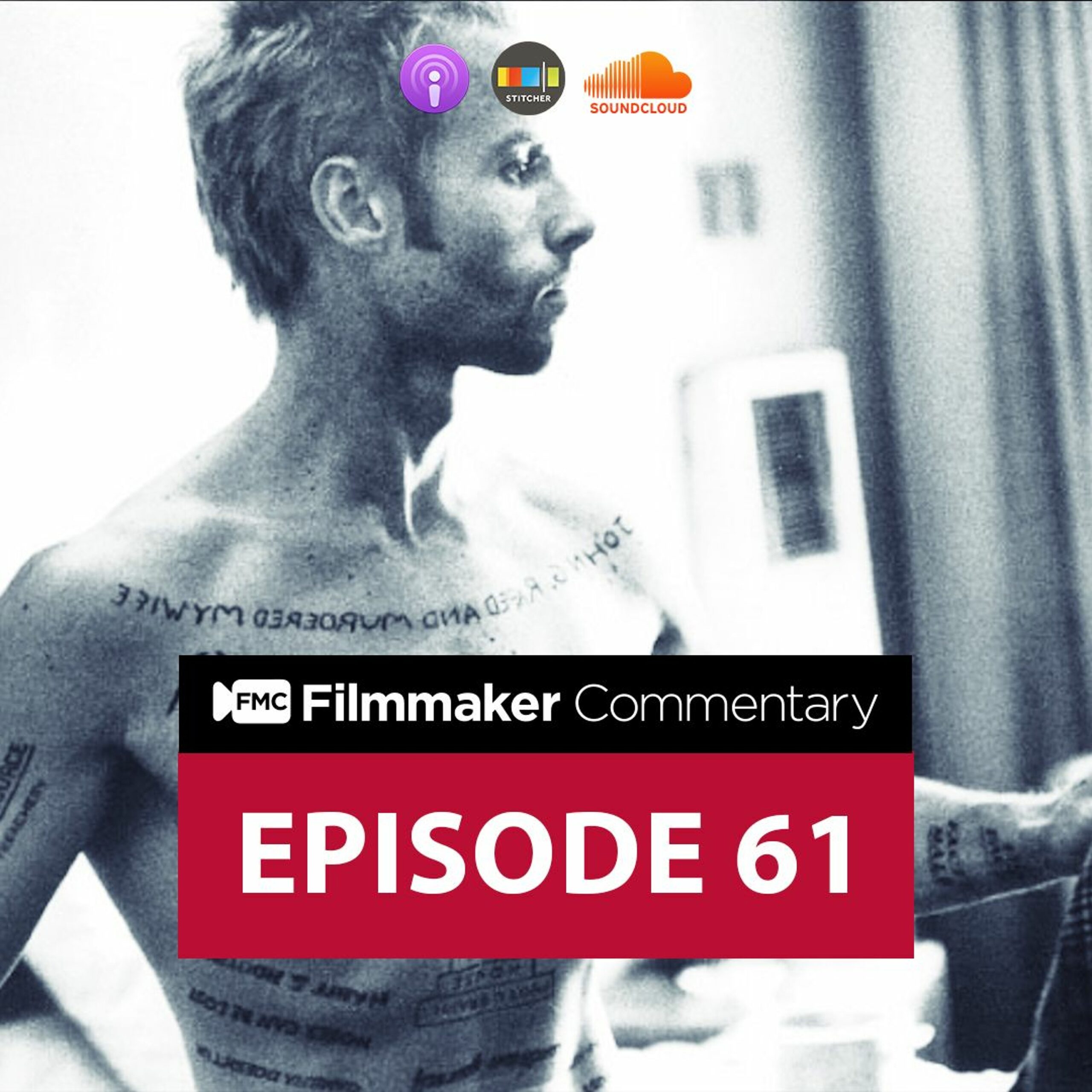
FMC 061 : Memento Written and Directed by Christopher Nolan

June 25, 2019
Listen on Apple Spotify YouTube
Listen to this episode
Your browser does not support the audio element.
Also on Apple Spotify YouTube

Step inside the labyrinthine mind of Leonard Shelby as Reginald Titus Jr. and Casey G. Smith dissect Christopher Nolan’s groundbreaking thriller, “Memento.” This episode takes listeners on a journey through a film that redefined non-linear storytelling, chronicling Leonard’s desperate search for his wife’s killer while battling profound short-term memory loss.

Originally released in the early 2000s, “Memento” quickly garnered critical acclaim and strong box office results, pulling in $39.7 million worldwide on a modest $9 million budget. Its innovative approach earned Oscar nominations for Best Screenplay and Editing, firmly establishing Nolan as a visionary filmmaker. Reginald and Casey explore how Nolan’s intricate narrative structure—told partly in reverse chronological order and partly through forward-moving black and white sequences—creates a powerful, immersive experience that places the audience directly into Leonard’s fragmented perception of reality. They compare its narrative audacity to other notable non-linear works like Quentin Tarantino’s “Pulp Fiction” and “Jackie Brown,” as well as the deeply impactful “Irreversible,” highlighting Memento’s unique contributions to this style on Filmmaker Commentary.

The conversation goes beyond the film’s complex plot mechanics, delving into its rich thematic layers. Listeners will hear discussions on the subjective nature of memory, the elusive construction of personal identity, and the pervasive theme of manipulation, both from external forces and from within Leonard’s own mind. The hosts reflect on the film’s lasting influence and the sheer ambition of its direction. Drawing from Nolan’s notoriously dry yet incredibly informative director’s commentary, Reginald and Casey share practical tips on crafting unique title sequences, clever narrative structuring, effective camera blocking, and the meticulous attention to continuity required for such a complex production. They also share personal reflections on rewatching the film, discovering new details and appreciating Nolan’s genius even more with each viewing. This episode promises to be an engaging and insightful look into a cinematic benchmark for any film enthusiast or aspiring storyteller.

What We Cover

  • The film’s initial critical and financial reception, setting the stage for Nolan’s career.
  • How “Memento” utilizes a groundbreaking non-linear narrative, comparing it to other examples.
  • A detailed look at the movie’s unique visual style, including its distinctive use of black and white alongside color to immerse the audience in Leonard’s fractured perspective.
  • The profound themes of memory, identity, and manipulation, and how the film challenges our perception of reality.
  • Insights from Christopher Nolan’s dry but incredibly informative director’s commentary, revealing his meticulous approach to storytelling and production.
  • Filmmaker tips gleaned from “Memento” covering title sequences, narrative structure, blocking, and maintaining continuity.

Key Moments

  • 02:40 – News and recent movie watches, including “X-Men: Dark Phoenix,” “Black Mirror” Season 5, “Love, Death & Robots,” “Always Be My Maybe,” and the impactful “When They See Us.”
  • 19:27 – A deep look into the film’s groundbreaking style, contrasting the objective black and white scenes with the subjective color sequences.
  • 22:02 – Unpacking the powerful themes of memory, self-deception, and the constant manipulation Leonard faces from himself and others.
  • 30:15 – Casey G. Smith’s favorite scene: the masterful manipulative performance by Carrie-Anne Moss that completely recontextualizes upon a second viewing.

Gear & Films Mentioned

  • X-Men: Dark Phoenix
  • Black Mirror (Season 5, “Striking Vipers,” “Smithereens,” “Rachel, Jack and Ashley Too,” “Metalhead,” “USS Callister”)
  • Love, Death & Robots (“When Yogurt Took Over”)
  • Always Be My Maybe
  • When They See Us
  • Pulp Fiction
  • Jackie Brown
  • Eternal Sunshine of the Spotless Mind
  • Irreversible
  • Biodome
  • Joe Rogan Experience
  • John Wick
  • Barry (HBO Show)
  • Boogie Nights
  • The Matrix
  • Inception

Listener Questions

  • How does “Memento” effectively use non-linear storytelling without completely confusing the audience?
  • What are the subtle visual and narrative techniques Christopher Nolan employs to immerse viewers in Leonard’s unique psychological state?
  • Beyond its complex plot, what deeper philosophical questions does “Memento” raise about memory and the construction of personal identity?

Full Transcript

Read the full transcript

Full Episode Transcript
This episode of Filmmaker Commentary Christopher Nolan's critically acclaimed non-linear thriller, *Memento*, exploring its innovative storytelling, thematic depth, and lasting impact on cinema, alongside current film news and co-hosts' recent watches.

Opening and Film Introduction
Reginald Titus Jr.: Filmmaker Commentary, episode 61. Welcome to Filmmaker Commentary, where we give you insights from our favorite filmmaking commentaries. These commentaries can be heard on your DVD and Blu-rays of your favorite movies. We'll show you how you can use these commentaries and apply them to improve your video production and filmmaking techniques. All of this here on Filmmaker Commentary. I'm your host, Reginald Titus Jr.
Reginald Titus Jr.: Welcome to Filmmaker Commentary. I'm Reginald Titus Jr. I'm joined with...
Casey G. Smith: Casey G. Smith. Welcome back, sir.
Reginald Titus Jr.: Good to be back, sir.
Reginald Titus Jr.: Today we are going to talk about *Memento*, directed, written and directed by Christopher Nolan. This around 2000, 2001, when this dropped. The film, it was nominated for an Oscar for Best Screenplay and Editing. We have a budget of 9 million and a box office of 25 million domestically and 14.2 million foreign, which equals 39.7 million worldwide.
Casey G. Smith.: That is a win. I agree.
Reginald Titus Jr.: Put him on the map.
Casey G. Smith.: Yeah, rightfully so. This this is a pretty amazing film. And if this is your first time listening to Filmmaker Commentary, please know that there will be spoilers. You've been forewarned.
Reginald Titus Jr.: Yes, indeed. Yeah, definitely put him on the map because that non-linear storytelling, we saw that with Tarantino's *Pulp Fiction* and with Tarantino's *Jackie Brown*, you know, kind of doing the loop thing.
Casey G. Smith.: Right, right.
Reginald Titus Jr.: I don't know if any other films around that time. Do you know any that kind of played with that format?
Casey G. Smith.: I'm trying to think if uh, Jim Carrey's, what's it called?
Reginald Titus Jr.: *Cable Guy*?
Casey G. Smith.: Not *Cable Guy*. It's uh, uh, I think something with dream in the...
Reginald Titus Jr.: Oh, uh, *Sunshine* something?
Casey G. Smith.: Yeah, *Sunshine of the Eternal Spotless Mind*. Oh, look at him. I I didn't see that film, but I heard a lot about it. *Eternal Sunshine of the Spotless Mind*. There we go.
Reginald Titus Jr.: Did it do the non-linear thing?
Casey G. Smith.: Potentially, I know I know it's it's kind of trippy. I know you're trying to piece together the story to a degree. So...
Reginald Titus Jr.: Okay.
Casey G. Smith.: I feel like I feel like there's another substantial one that we might be missing that is non-linear. But definitely obviously, yeah, *Pulp Fiction* was huge around that time and then this one, man. Oh, I know. I thought of this when I watched it. Um, *Irreversible*.
Reginald Titus Jr.: Ah, there you go.
Casey G. Smith.: Yeah. I thought it was like, what else, what other film goes literally in reverse?
Reginald Titus Jr.: And like even more devastating.
Casey G. Smith.: Oh, Lord.
Reginald Titus Jr.: That's a one-time watch.
Casey G. Smith.: Yeah. I think we we good here? We good?
Reginald Titus Jr.: We good. Yes, we are. It was no entertainment.
Casey G. Smith.: Moving along. Nothing to see here. Moving along.
Reginald Titus Jr.: It's like driving by a car crash. Just getting a piece of, I don't know, something stuck in your head, like just...
Reginald Titus Jr.: But before we dive further into *Memento*, we are going to talk about news and movies watched.

Film News and Recent Watches
Reginald Titus Jr.: So, news, movies watched. What's in the news right now?
Casey G. Smith.: Well, right now, as of today, *X-Men: Dark Phoenix*, the final entry into Fox's *X-Men* series, opened up this weekend as unfortunately the lowest opening in the history of the franchise, which is uh, sad for its send-off film, uh, having almost the exact opposite of uh, of *Avengers*. Yeah. Yeah, that's the main piece that I had. You've got any any news, Reginald?
Reginald Titus Jr.: Um, according to, to add to that, according to Associated Press, um, after nearly 20 years and a dozen films, the current, what do they call it, manifestation of *X-Men* movies is going out with a whimper. Uh, 200 million to make *Dark Force*, or *Dark Phoenix*. Um, it earned 33 million, which is a franchise low, from 3,721 North American locations.
Casey G. Smith.: So, here's the the thing. *X-Men: Dark Phoenix* had been riddled with just all kinds of rumors and talks and and all kinds of stuff. It it kind of, I feel like it went in unjustly having a lot of uh, against it. And having seen the film myself, again, it's fine. I don't it's it's not a it's not a train wreck, it's not a dumpster fire. Uh, there are actually some pretty cool scenes in the movie. I I I will go out and say, I like the movie. Would say I loved it. Uh, would I watch it again? Yeah, but I'd wait till it, you know, came out on video. Yeah, I don't need to go into the theater and see it again. But there's some cool, there's some cool moments, some cool effects, you know. Again, Michael Fassbender is still Michael Fassbender. He's a heck of an actor. So there's some cool dramatic scenes. And yeah, it's a decent send-off. I I I think if you're if you're on the fence about watching it, uh, if you've watched all the other films, then uh, I'd say, yeah, yeah, why not? I'd say go and uh, check it out. Send send *X-Men* off. The from Fox's standpoint, from a franchise, this film kicked off, helped kick off the kind of renaissance of superhero films. You know, from, I mean, because it came out before *Spider-Man*. Yeah. So and this put, you know, these characters in costume, gave us, you know, Hugh Jackman as Wolverine and Patrick Stewart as Professor X. So they did so and for its time, that first *X-Men* was huge. Yeah. You know, big step forward. So...
Reginald Titus Jr.: Yeah, I saw the trailer. I was like, I'll see what happens.
Casey G. Smith.: I think a lot of people felt that way. And yeah, I feel uh...
Reginald Titus Jr.: It's like, I've seen this before. What are we doing?
Casey G. Smith.: Yeah, it's it's so so to to that point, very different. Even though they're using some of the same like storyline, you know, they're kind of *Dark Phoenix*. From *X-Men: Last Stand* to to this, *X-Men: Last Stand* is, oh man, at least that movie made me angry, like angry. *Dark Phoenix* tempts really does attempt to to to pull from elements of the comic and kind of really and in some essence, stay true. It's a little rushed, you know, it takes a while to build that story up, but...
Reginald Titus Jr.: 200 million dollars. Wow.
Casey G. Smith.: Yeah. There's some pretty awesome effects though in the in the film. So, yeah.
Reginald Titus Jr.: Mm. Hmm. That's what I say. Story first, guys. Um, also next, uh, *Black Mirror* season five. I'm a fan of *Black Mirror*. You watch the series?
Casey G. Smith.: Oh yeah.
Reginald Titus Jr.: It was just, season five was released this past Wednesday, which is June 5th. Uh, but so far the reviews haven't been that great. And uh, it's got 63% on Rotten Tomatoes. That was a surprise. I didn't know that it was even dropping. You know, I just kind of saw it on there. I was like, what? Another one's coming out? And uh, saw the first episode. I'm like, me and me and the wife saw, it's starring Anthony Mackie in that one. And I was just like, I don't know. We were just kind of stumped at the end of that one.
Casey G. Smith.: Well, I want I definitely want to check it out. I mean, I've seen all the others, so, you know, it's there. It's it's...
Reginald Titus Jr.: And they're a little bit longer. I think it's only just a few episodes and they're like it's an hour long, I think per episode. So it's a little bit longer, so.
Casey G. Smith.: Yeah, very much.
Reginald Titus Jr.: We're going to finish it out, but you can kind of tell something's different. You don't know what if new, I don't know if it were more American writers or what, but something's different.
Casey G. Smith.: Hmm. And that kind of seemed to be the, I'm trying to think about last season. No, last season still had a number of...
Reginald Titus Jr.: Last season was dope.
Casey G. Smith.: Yeah, it was.
Reginald Titus Jr.: Cuz you remember the one uh the museum?
Casey G. Smith.: Spoilers. By the way.
Reginald Titus Jr.: Yes. What was her name? I can't remember. LaKeith Stanfield. Yeah, that one. Metalhead.
Casey G. Smith.: Is that the one with the the little robot dog? Oh, that one. That one's good. That one had a lot of people freaked out.
Reginald Titus Jr.: That one had a lot of people freaked out. Yeah.
Casey G. Smith.: Well, you you do know that like there's a school in there's a there's a university that literally had they've created that.
Reginald Titus Jr.: Oh, love it.
Casey G. Smith.: There's a YouTube video.
Reginald Titus Jr.: Oh, doing the flips, the dog's doing the flips and stuff. That's beautiful. I'm like, why?
Casey G. Smith.: Did you not watch the episode? And you want to go and you make this thing literally, it can fall down on its side and literally something transforms, it'll push itself back up and get up. I was like, nope. Nope. Nope. I'm out.
Reginald Titus Jr.: Not today.
Reginald Titus Jr.: My out of that season, I think my favorite one was probably kind of going with the music, probably the *Star Trek* one, that was...
Casey G. Smith.: Yeah, that's the one the first one, right? That's the first episode of the season.
Reginald Titus Jr.: Yeah, that was the first episode. Yeah.
Casey G. Smith.: Dude, that season's worth a rewatch, man. That's got you got me thinking. I'm like, man, there were a lot of good episodes in that one. So yeah, I definitely now I definitely want to watch this this new one just to, you know, just to contrast because *Black Mirror* has consistently been of a high quality. Yeah, that dark, that ever so slight dark twist on our impending reality is such a wonderful blend. The crazy thing is when I watched the first season, it was literally like maybe two or three years after it had already debuted. So things that they were showing back then, we then had technology. I'm like, huh, huh.
Reginald Titus Jr.: What about what about uh you got any any other news?
Casey G. Smith.: Um, that's it for news. Uh...
Reginald Titus Jr.: That was that kind of rolled right into what I watched. You know, I watched one episode of *Black Mirror*, so. Yeah, the jury's still out. I'll let y'all know next week what I feel about the whole season.
Casey G. Smith.: All right. Do you ever get to uh watch more of uh *Love, Sex and Robots* or...
Reginald Titus Jr.: Yes. I watched *Love, Sex and Robots*. *Love, Death and Robots*.
Casey G. Smith.: Oh, *Death*. *Sex, Death*.
Reginald Titus Jr.: Yeah.
Casey G. Smith.: The inevitable. Yeah.
Reginald Titus Jr.: Right. I watched episode "When Yogurt Took Over".
Casey G. Smith.: Is that the, is that the one where the girl is in like a time loop almost?
Reginald Titus Jr.: No, this one is when literally yogurt is ruling the world and they're like, we want Ohio. They practice Ohio.
Casey G. Smith.: Oh yeah, yeah, yeah. Literally it becomes sentient. Yeah, that's right. That that's a little cute one.
Reginald Titus Jr.: Yeah. So that's the only one I've I had time for this week. What about yourself? Any movies?
Casey G. Smith.: Uh, so aside from *X-Men: Dark Phoenix*, I watched on Netflix, uh, *Always Be My Maybe*, starring Ali Wong and...
Reginald Titus Jr.: Keanu Reeves?
Casey G. Smith.: Uh, Keanu Reeves, yes, he he does have a cameo in the film. It's quite quite hilarious. Uh, the other um, Jimmy, man, I don't know I don't want to get his name wrong. Um, but he uh, he plays in he's in the *Ant-Man* franchise. He plays uh, the Agent Jimmy Woo.
Reginald Titus Jr.: Oh yeah, I like that guy. That dude's hilarious.
Casey G. Smith.: He is, man. And in the in the movie, he's like, he has a a band and uh, he actually like raps. And uh, yeah, it's it's good. It's pretty fun. It's it's a fun film. Uh, and Ali Wong, man, again, her from I I fell in love with her from her comedy special, uh, *Baby Cobra*, both, you know, one and and two. And yeah, she is a riot. It's she actually co-wrote the screenplay. It's a fun little film. Fun little romantic comedy. It's got a nice throwback. Um, but yeah, I highly recommend it, man. Fun romantic comedy, fun little Rom-Com, on Netflix, uh, *Always Be My Maybe*. And of course, I watched also on Netflix, *When They See Us*. Ava DuVernay's seminal, impactful, heart-rending.
Reginald Titus Jr.: You know what? Um, some news go with that. The lady that was the lawyer, I can't think of her name. Is it Linda, the the lawyer that was prosecuting the guys? Um, after everybody like seen this movie, they basically like kind of ran her out of town. Like they ran off the internet, and a lot of people are being awakened. Like I think uh, she's on like some board or of a nonprofit and the nonprofit had a lot of uh, like diversity, like a lot of diverse members. And they basically like, hey, you got to get rid of this lady. Like we had no idea that she did this.
Casey G. Smith.: They found out who she who she was.
Reginald Titus Jr.: Yeah.
Casey G. Smith.: So that would, oh, Linda Fairstein, played by Felicity Huffman. So it's so so, it's not only the lawyer that plays a big role, but it's also uh, Vera Farmiga, who plays Elizabeth Lederer, who kind of is like the I guess he's like the detective that kind of spurs this thing forward and then puts it into Linda's hands to prosecute. But Elizabeth, excuse me, Lederer. I'm butchering that last name. Uh, L E D E R E R, Lederer. Nonetheless, she had like multiple books she had written uh about the Central Park Five and yeah.
Reginald Titus Jr.: Making money off for it.
Casey G. Smith.: Yes. But I, man, I I implore anybody out there. If you're a fan of just quality viewing, check this out. No, it's going to be, oh, it's it's going to be difficult. They this this thing emotionally was wrecking me. But I'm I'm glad I watched it. It was important for me to see because I hadn't really followed up on their story in quite some time. I honestly didn't really know the full full story. I'd known about, you know, Trump taking the ad out and all that kind of stuff, but this flushed it out in such a way. Uh, and these young actors, these young men who play the roles of these young boys, they're, man, they're stars in the making. They they put in some phenomenal roles. I just yeah, fantastic production. Shout out to Ava DuVernay, crushing it.
Reginald Titus Jr.: Trying to build up and like, we got to watch it, you know, just got to just be informed. And I knew about the story, but didn't see the dramatized version of it, so I'm like, you know, yeah.
Casey G. Smith.: I ain't going to lie. It's uh, whoa.
Reginald Titus Jr.: Lord. But anyway, uh, oh, I forgot. I watched *Biodome*. Did you ever you remember the film *Biodome*?
Casey G. Smith.: Paulie Shore and uh, one of the Baldwin Brothers, Stephen Baldwin? No, is it Stephen?
Reginald Titus Jr.: It was a Baldwin Brother though. I just can't remember his name is so generic. Um, Paulie Shore was on uh, Joe Rogan's podcast like, maybe a year ago. And then they were just talking about like fame and like how Paulie was talking about like how he missed, you know, that that era when he was like always popping. He just kind of explained like his descent on like why, you know, he was no longer popular anymore. The little weasel thing kind of got played out. And he just kind of explained all that, but he was also saying that he missed it and stuff like that. And then like, kind of like how he like felt jealous like going to other people's uh, movies, like even though he was in the movie, I was like, maybe a co-star or something like that. He's like, I used to be the lead man in this, this and that. But anyhow, I was like, well, let me check out *Biodome*. It's free on YouTube. So I just started watching. I was like, oh, wow. This is dated.
Casey G. Smith.: See, I think I was never a huge Paulie Shore guy. Even with his stick, it he just never really did it for me. And there were people who didn't even then, there were people who were annoyed by him. But that was his thing was being annoying.
Reginald Titus Jr.: Yeah.
Casey G. Smith.: Um, what else was he in? He was in, in *The Army Now*. Yeah. *Encino Man*. That may have been his biggest one, was *Encino Man*, when he broke out, right? And then of course, he a lot of cameos on like MTV. He's of that time though.
Reginald Titus Jr.: That's right. True. True. But I I like *Biodome* for whatever reason. I was like, then old girl that played in *Chasing Amy*, the love interest in *Chasing Amy*. I forget her name. Uh, but she was the love interest in in *Biodome*. So they there was a lot of good chemistry there between those four characters. Then it's typical old comedy from the 90s, like plug anybody that was popular in.
Casey G. Smith.: Right. I mean, that's that's that's the name of the game.
Reginald Titus Jr.: Yeah, so that's about it for me as far as movies watched. Well, let's head back to the show.

Memento: Synopsis and Initial Impressions
Reginald Titus Jr.: Thanks for tuning in, Filmmaker Commentary. We're talking about *Memento*, 2000, 2001, written and directed by Christopher Nolan. Let's jump into the synopsis.
Reginald Titus Jr.: Leonard, played by Guy Pearce, is tracking down the man who raped and murdered his wife. The difficulty, however, of locating his wife's killer is compounded by the fact that he suffers from a rare, untreatable form of memory loss. Although he can recall details of life before his accident, Leonard cannot remember what happened 15 minutes ago. Where is he going? And why? *Memento*. Uh, did you get like a Blu-ray DVD? I couldn't find a Blu-ray.
Casey G. Smith.: I've got a I bought yeah, I've got it on Blu-ray.
Reginald Titus Jr.: Uh. Did it have um, like the director's shooting script and all that stuff on there?
Casey G. Smith.: All my had was anatomy of a scene. And then it had some trailers and it didn't have commentary. Trailers for other movie that came out. I was like, that's it? So and I see your, you know, version there with the nice packaging. I'm like, what else is on there?
Reginald Titus Jr.: Reminiscent of, it reminds me of *Seven*, David Fincher.
Casey G. Smith.: Yeah, yeah. It has a it has a Fincher-esque feel to the packaging. Very detailed.
Reginald Titus Jr.: So this has the director's commentary, it's remastered, supposed to be in high definition, but I mean, you can't get HD on DVD, but I feel you. Uh, on disc two, they have anatomy of a scene. They have the director's shooting script, they have the original short story. Uh, they have production sketches and stills, and there are some hidden features, which uh people were saying on the commentary that like, you know, when it first comes on, it's like backwards and then it plays. And then you have to watch it all the way to the end of the commentary, like play it all the way through. And then when you start the commentary again, there's like some hidden stuff in there. It's kind of just kind of continuing messing with you.
Casey G. Smith.: Well, apparently all the features are hidden on my Blu-ray because they ain't giving me nothing. I don't know what's going on. Yeah, hidden. There's hidden features on here that kind of just mess with you. Interesting. So, specifically on the commentary track, play it go all the way through.
Reginald Titus Jr.: Yeah. And then you started it over and then there's like little sections that are added to it, or it plays like backwards for a little while or in reverse.
Casey G. Smith.: Interesting.
Reginald Titus Jr.: Like when the movie when it first came on, the commentary, it was playing backwards. So like, you know, I was doing I was going at 1.5. So I thought I heard something weird. I was like, what was that? And then it seemed then to go normal. So I was like, what was that? But I didn't bother to re-wind. I was like, it's Christopher Nolan messing with us. Unbelievable.
Casey G. Smith.: Yes.
Reginald Titus Jr.: Um, what did you think? How did you, you know, get the film and was this your first time watching it? Bring us up to speed.
Casey G. Smith.: Sure. I watched this several years ago. Um, and I'm trying to remember. I think I got it when I was again, I was getting still getting DVDs through uh, Netflix. Or maybe I checked it out from the library. But I I'd heard about it from maybe a podcast and just heard really good things about it. And I was like, you know what, let me check this out. I remember watching it and remember being blown away by it. I think we have I think we had talked about it before. And I was like, I was like, what is this? It's it was just so impressive. Now since then, there's so many details in this movie. I had forgotten a lot. All I I remembered that, you know, Guy Pearce had the memory issue and was trying to figure things out and, you know, killed somebody. And that it was things were like done in in reverse. And now, you know, watching it again, and even when when I watched it again this time, even once it's done, I'm like, I almost want to go back to the beginning and and watch it again because you're it's like you're like you are in the midst of a mystery. And you're trying to figure out, okay, do I believe what he believes and what he perceives? And uh, and there are some questions that have kind of popped up for me, uh, now watching it again, which we can get get into a little bit later. But I think this is a a masterpiece of a film just to even conceptualize it. Uh, and the fact that it's based off a short story by his brother, uh, that Chris then, you know, took and and made into a full-length feature. I mean, I'm I'm very curious what the shooting schedule was like in terms of what did they shoot first, what did they shoot later, how do you keep it all straight? And then I don't envy the editor.
Reginald Titus Jr.: God. Well, nominated for an Oscar. You can Google this on and Christopher Nolan kind of breaks down like literally how they put these scenes together. He said like he had index index cards with some of the scenes and literally threw them on the ground. Picked them up. Um, but man, they put a lot of thought into what they're doing. Uh for me when I first watched it, it it had to be in early 2000s. Um and even then, even though I wasn't studying film necessarily, I was like, what is this? You know. Um, it's a slow build-up, but I can appreciate it even more now because he was just spending so much time and detail on on this on this film. It's like his first big film.
Casey G. Smith.: It shows. It totally shows.

Analysing Memento's Narrative and Themes
Reginald Titus Jr.: What do you think about the style?
Casey G. Smith.: I love the opening shot, how the opening shot is in reverse. You know, and literally that image is is um going from being developed to undeveloped. Uh, and then how the black and white is to kind of show an objective documentary view. And then the the color, when things are in color, it's kind of putting you inside, uh, Leonard's inside of his his head. Um, but at the same time, the black and white is almost like, it's it's it's past and the color is like present. Even though it's also a little bit of past as well. And then they're on this crazy track to come together and meet. And then how at the end, it when it when they come together, it literally goes from black and white into color. Like that that's badass. That is that is pretty amazing. Pardon my French, that's that got me got me got me got me. It was amazing. Bang bang bang bang bang.
Reginald Titus Jr.: For the style, you know, it's like we're you know, like you were saying, the colors were like, we're detectives. We're following along with Leonard. Um, so you have to shoot a certain way to be like next to him and feel like you're involved in this mystery. Um, also, this is like high-level filmmaking, you know, just well thought out, have to be organized because your brain isn't. It's trying to figure out like, okay, where are the holes in this story? Cuz I remember watching uh the first time and being like, I don't want to watch keep watching the same scene over and over again. Cuz that's what I thought was happening. I was like, no, I don't want to do this. Because in *Jackie Brown* they kind of did that a little bit away, but it was like, you see the same scene again, but it was like from a different perspective. But you were seeing the same scene. I was like, I don't want to do this again. But um, he pulled it off. I don't know how he did it, but um, high-level filmmaking in doing the non-linear. So that's the whole style is kind of based on that.
Casey G. Smith.: It is. And they they talked about in that anatomy of the scene behind the features. I didn't watch the whole thing, but I watched the opening part. And they they mentioned how like the first three scenes set up the format, like the road map, um, the legend if you will, for the map of this film. How it's going to go. All right, we're going to be in the past, um, we're going to the present. We're going to show you a black and white. And then we're going to, you know, show that black and white kind of how it ties in and leads into the previous moment of of the present, which is the past. What? What are we doing?
Reginald Titus Jr.: What are we doing? Oh my goodness, no, every time. I hate to have to pitch this.
Casey G. Smith.: Man. What are some themes of this film?
Reginald Titus Jr.: Uh, so one that I have is uh, creating the history that that you want. And that really comes to bear towards the end. And I had forgotten how I had forgotten how it ended. Honestly.
Casey G. Smith.: Yeah.
Reginald Titus Jr.: And when...
Casey G. Smith.: Or how it started.
Reginald Titus Jr.: Oh, yes. You're you're right. Yes. Uh, how the the how the movie ends, or how Leonard's, you know, full descent begins if you will, when Teddy tells him that Sammy never had a wife. Like all the way through like you're wondering, somehow, did did somehow Leonard have something to do with what happened to his wife? That's that's always kind of it's shot in a way where you always kind of wonder, because you know this guy's off. And we don't know how much time has passed since his wife has passed. But then when Teddy reveals that, you know, Sammy never had, he never had a wife. And it was, you know, that was, you know, what you created, you know, in your mind, you know, and the fact your wife survived the incident. And the fact that you were the one that had the brain trauma. I'm like, what? You know, all these things being revealed. So, yeah, but the fact that that Leonard has created in his mind his own reality. Uh, and even this thing that he he values so much, that, oh, I I remember my past, you know, so well. Those are the things that I can hold on to. When even part of that is a lie. He has he has made some revision in his history. Uh, and literally everybody around him is literally making up their own history when they interact with him. Constantly. Uh, again, especially Natalie. Oh, man, I Carrie-Anne Moss in this. Yeah, this is my favorite performance by her. I love what she what she does, how manipulative she is. And it's the second watch that make you see her totally make her lines mean something totally different when you watch the second time through.
Reginald Titus Jr.: What I want to do as a project is bring all the footage into the editing system and just recut the film, like how it starts. Yeah, just to see how that would.
Casey G. Smith.: Yeah, how does it how how would it feel? And then do it without the black and white and just play it all the way through. And then also cut the black and white scenes all together to see how that would play.
Reginald Titus Jr.: I bet somebody did that on YouTube, man.
Casey G. Smith.: You're probably right. It's probably it's probably be a good exercise though. Yeah, that would be same thought crossed my mind. I'm like, it would be cool to see this cut chronologically.
Reginald Titus Jr.: Yeah, cuz I always want to do *Pulp Fiction* like that too. Just play it like how, you know, in order.
Casey G. Smith.: What kind of impact does it have?
Reginald Titus Jr.: Um, you have any any any other themes?
Casey G. Smith.: I've got a couple of themes. I only had one. Are you your memory? Oh, deep.
Reginald Titus Jr.: Yeah, I don't know. What if the things that you remember are wrong? Do you become a different person?
Casey G. Smith.: That's a real good question. Because it also, man, the whole time you see him, you know, wearing this suit and driving this car, you think he's one person. And then again, when it comes around and you see him in the in the flying, like, wait, what? It's funny too, because uh, art department, costume, that department, because the the suit I, my brain, I'm like, man, it's kind of big, you know, usually you would if you're, you know, high-end and all that, you got the money, you would get it tailored. Absolutely. Even if you're not, it's not that expensive then.
Reginald Titus Jr.: Yeah, but it was just like, it tells you about the character.
Casey G. Smith.: Sure.
Reginald Titus Jr.: And so in my brain, I was like, man, it's kind of baggy. What's up with his suit? You know, at the beginning and then it make sense later. It's not his. So it's like those little subtle subtle details.
Casey G. Smith.: See, partially part of it also makes me think though, okay, we're we're talking, you know, early 2000s, style-wise, suits were were bigger. You know, people were wearing big suits as well. So I'm like, ah, maybe it's just a sign of the times.
Reginald Titus Jr.: He's a bigger guy though. The guy he beat up.
Casey G. Smith.: Oh yeah, yeah, when you see him, yeah. But suits in general, people were wearing.
Reginald Titus Jr.: But you're saying you could have uh, like easily it could have just slid under the radar kind of thing?
Casey G. Smith.: Yeah, it didn't look, you know, it wasn't form-fitting for sure. But I was like, but once you see it, like, oh. Wait a minute. Uh, another thing I had was again, how how past and present can blend. Um, even in, you know, people who don't have this this person's particular mental disorder, uh, sometimes things can tend to blend. You know, sometimes, oh, you know, when you ask, hey, how was your week? And you're like, what day is it? Everything just seemed to blend together. Especially getting older. It's like, what? You know, what am I going to hold on to? And then, you know, watching media and stuff is like, our memories are things that are created that are fictional, you know, it's you, you know, we're remembering things that aren't real.
Reginald Titus Jr.: Mm.
Casey G. Smith.: And sometimes, yeah, you might have, you know, like, you know, like senses of déjà vu. Like, I I I don't know, I almost say I get déjà vu all the time. But there are times when I get déjà vu and it just feels so specific. Like, man, did I dream this? Sometimes I think I should like write down like my dreams. Your dreams make tricks.
Reginald Titus Jr.: What?
Casey G. Smith.: Yeah, sometimes I think I should write down my dreams because I swear, man, there are moments where I'm like, yo, this this conversation, these people, I've seen this. And I'm like, confident that I've seen it. But again, I I dream all the time. Every night. I dream every night. I hear some people who say, who, oh, I I don't I never dream like, I dream every time I go to sleep. There's I'm I'm going somewhere.
Reginald Titus Jr.: I know I'm not a clone because I have dreams. Small tangent. You've seen the trailer for *Gemini Man*, Will Smith, *Gemini Man*?
Casey G. Smith.: Mm-mm.
Reginald Titus Jr.: You get a chance, I'd recommend checking it out.
Casey G. Smith.: Okay then. Yes, indeed. Um, themes. manipulation. Uh, manipulation of others and and self. Because Lawrence is manipulating himself to a degree when he brings the items and he and he has that call, you know, the call the escort service and he has her come through and has her set the items up in a certain kind of way. And then, you know, going to the bathroom and close the door to wake him up. He is manipulating himself to to to keep the memory of his wife's loss fresh in his mind to almost to fuel the rage of revenge. Um, because again, he he that's one thing he remembers is is losing her. I don't know. Like, why would he have to recreate that whole kind of scene, you know? There are other ways to, you know, why not just remember the good times? Why why would you stop to remember the specific night when she's assaulted? Yeah. So to me, that's a bit of a manipulation. And obviously, everybody else in the film is manipulating Leonard. Everybody's taking advantage of this dude.
Reginald Titus Jr.: Yeah, that's terrible. Yeah.

Commentary, Trivia, and Favorite Scenes
Reginald Titus Jr.: The commentary, what did you think about the commentary in in general?
Casey G. Smith.: It was fun. Yeah. Um, tonally, Nolan is very, and we when we looked this up, it said that, you know, it was dry. And it is dry. He's not the most exciting guy. No. But but he's informative. And uh, he's giving some some solid information. But um, yeah, it's it's he's no he's no Ridley Scott.
Reginald Titus Jr.: No. Yeah, I agree. Very informative, not entertaining at all, but he's full of trivia and full of things that you need to know as a filmmaker and why he did certain things. I heard some people were saying that, you know, this commentary feels more like from a his writing standpoint of kind of getting more into the internal thoughts of the characters and things like that versus more directorial. Where like, we did this by doing this. Well, so it's kind of a mix, but I don't know. Yeah, but I enjoyed it, but man, it was dry.
Casey G. Smith.: Yeah. I was I was on that 1.5 speed. Yeah, man. I don't know. Christopher. Trivia. What do you got for trivia? I don't have anything for trivia.
Reginald Titus Jr.: I got a couple of couple of couple of dimes. Um, so uh, they shot the hotel room in somewhat of a of a of a set. Mhm. When you were on when you on the interior, that's a set. Uh, obviously when you're outside, that's actually a hotel that they found that works for them. And they redesigned the interior a little slightly larger, so they could fit the cameras inside, but they still wanted to give you an , they want to have it enclosed space to give you that claustrophobic feel. They had to and this is what I was trying to kind of figure out. He mentioned in in one scene in particular, um, the scene in the hotel room where he is going after Dodd when he uh, you know, you know, falls asleep on the bed and all that kind of stuff. That they they they had to shoot at least in that that that that hotel room. They had to shoot it all that in one day.
Casey G. Smith.: Oh. Now I don't I didn't think he meant all the scenes of the hotel. Uh but he mentioned at least in that that portion, they had to shoot it all in one day. Wow. Um, and so as far as shooting days, he said they they had 25 and a half days of shooting.
Reginald Titus Jr.: Not bad.
Casey G. Smith.: Yeah. Definitely not bad. And that the license plate, uh, Ted Teddy's license plate is actually the zip code to the school that Nolan uh, attended, uh, overseas.
Reginald Titus Jr.: Easter egg.
Casey G. Smith.: Yes.
Reginald Titus Jr.: I would never connected those.
Casey G. Smith.: No. Favorite scenes. For me, like you were saying earlier, is just the acting of Carrie-Anne Moss. Like her whole routine when she um, when she's like, you don't know who did this to me or or maybe it was right before that. Leading up to it.
Reginald Titus Jr.: Yeah, leading up to it. She manipulates him.
Casey G. Smith.: Yeah. When she manipulates him.
Reginald Titus Jr.: Yeah. And then seeing like she got like a retar and all this stuff. I'm like, whoa.
Casey G. Smith.: Cursing his wife's name to provoke him. Yeah, he he punches her. Then she goes out. And then it just start. She comes in and like, man, that's great acting. Now all of a sudden she's like, you don't know who did this?
Reginald Titus Jr.: What's brilliant about that scene? And especially upon second watch, is the fact that she grabs when she comes back when she comes in the first time, she grabs the pens. Ah, magic. She grabs the pens off the desk and puts them in her purse. And then starts the process to manipulate him. He strikes. She leaves, sits in the car, and that's why, you know, he's looking, you know, frantically for a pen. Come on. You know, and and it's just enough time where she can see it on him that he's beginning to lose, you know, you know, writing down not to trust her or listen to her or whatever. And then she comes in, you know, with the act of of being wounded, you know, and he's like, what's going on? That's freaking awesome, man. I'm like, man, what a manipulator. And even so, yeah, so yeah, that that whole scene, that's that's one of my favorites in the whole film. Uh, but also the shower scene. Uh, I thought was awesome because and Nolan said this in the commentary, he said he thought it was important to to to because at times we kind of get like jumps of him going from, okay, I know what's going on to, okay, I just lost I just lost it. But here we get to see him by himself. And he goes into the bathroom, sits down on the toilet, kinda holds the door open, and literally he looks down the bottom and he's like, I don't feel drunk. You know, and like shit, that natural progression, it's like a shift in thought, you know? Uh, and and he's he's off to another train of thought. And he's like, oh, I'm in a I'm in my hotel room, I guess. Let me go ahead and take a shower. Yeah. And yeah, that's just to see that just lost. But the way that it's cut, man, it going in reverse, man, just it does something to your brain. My brain's like, what are we doing? This is not how movies are supposed to be watched. Oh, man. But it but it's so amazing. Again, Nolan talked about the whole goal was to how can we make this this work, is that we withhold information from the audience. That we literally, you know, aside from what we see in the black and white images, we literally are only finding out as much as he is. Yeah. As as you go along. And that's what keeps you like locked in. You're like, we got to find out. Yeah, they baited us on every sequence. And you got to constantly think about how the other sequence ended because it's it's the the connecting tissue. It's so powerful. after a while I'm like, I almost got like, I almost get I get almost get lost to what brings him to her house, brings him to Carrie-Anne's house. But it's once he sees the image of Dodd on the, I guess he finds her address and that brings him back to her house, which leads into those great scenes. But constantly just, yeah, my brain is shot. You got to pay attention. And then I'd say, uh, again, I mentioned this earlier that that that last scene transitioning from black and white into color. Uh, and then just Teddy telling him that man, that actually they had already found the uh, the killer. Had literally had found him and done the deal. So here's my question. Why the hell wouldn't you have written down on that photo that, hey, now, you know what, I guess that was Teddy manipulating him? He was telling him, he already did it, but he wasn't happy. He said, this is the picture I took of you after you did it, right?
Reginald Titus Jr.: But he could have written on the picture or put a tattoo, had him go and get a tattoo of, hey, we got the guy. Uh, I I killed the killer. And here's the image. And that would have satiated everything. He could have looked at that every time and said, I got him. I don't think that's his motivation though. I don't think that was his motivation like he was saying, like, are you your memory? Now he wants to manipulate himself, like he was saying, manipulate himself into thinking. So he has to have something to kind of to live for. So it's like, okay, Or to not live with his guilt and shift it onto other people. Something. Because then they, he killed his wife. Yes, his wife was was unfortunately, you know, raped and assaulted and that's tragic. But at the end of the day, he killed his wife and doesn't want to live with the guilt. So he projects it onto others. Oh, that's right. So he did the insulin, the whole insulin thing. That was him. Yeah. Unbelievable. Yeah, that's why that that little quick clip initially of him pinching her. She's like, ow. You know, that's that's like actually, that's him injecting the the insulin. Terrible. And eventually, I guess she she's the one that guess does the test with him just to see if he'll remember who she is and she has him continually injecting her with insulin and she terrible dies from that. Yeah. Now, indeed. Yeah. Did you have any other favorite scenes? No, I don't. All right. Any quottable lines? I have just one. Um, and it's every time Leonard's like, did I tell you, have I tell you my story? And he was talking to is it Teddy? Only every time I see you. Yeah. I like when he says to the the hotel clerk, once he asked him, you know, how many how many rooms am I renting in this fleabag hotel? He says, well, at least you're being honest about ripping me off. Yeah, I just I just like the just the the the bruntness of that statement. And then my my other my other quote I had was we cut to him and he's he's running. He's like, oh, oh, okay, I must be chasing this guy. And then he he kind of cut, you know, once towards him, he's like, no, he's chasing me. I'm like, yeah, that's so appropriate for this guy's mental state. He's in the midst of a chase. Somebody needed to just take this guy out of his misery. Like this is bad. He's a he's a danger. He's a danger. So here's a here's an interesting question. So he doesn't actually end up killing Dodd. Right, so that dude's name, Dodd. Dodd, Dodd, Dodd. That wasn't Biodome, that's why it's in my brain. So he doesn't end up killing Dodd. That's going to be in my head. That's going to be in my head later on. I hadn't heard that in a while. That was on a that used to be on a used to use that on a car commercial too, didn't they? Oh, yeah, you're right. 90s. Um so they don't end up killing Dodd. They just end up sending him on his way. So then is Dodd gonna now that he knows that, I guess Teddy Teddy is dead. Is I don't even know, bro. Is Dodd gonna then go after Natalie? Because he was out to kill that, you know, Tony is he gonna go after Natalie or is he gonna just kind of leave it all alone. So cuz she thinks that he killed she thinks that Leonard killed Dodd cuz he has that picture of him. But Dodd is not dead. So is Dodd eventually going to come come around and get Natalie? And then, you know, kind of everybody has gotten got it except for Leonard. And now Leonard doesn't have Teddy there. I don't know, man. I don't know what what uh is this time, is he gonna take a picture of, I guess he has the picture at the end. He has the picture of Teddy, who he shot. Is he gonna write on that that I got him? Is he gonna tattoo his heart to say, I I I killed the killer? Or will he continue in his madness? This is questions. He's gonna continue in his madness till he goes to jail. Yeah. He's going to jail. It's a miracle this guy's not dead already. He's going to jail for a long time. His finger, his fingerprints are everywhere. Cuz they're gonna find this dead cop. Yeah, he's driving around in the Jag of this dead guy's car and. Yeah, man. They're gonna find this. They're gonna find this dead cop. And they're gonna find this guy's prints. They're gonna find him. Yeah, it doesn't end. It doesn't end happily for this guy. No. It's a mess. Now it's time for filmmaker tips. What is a tip? Use a unique title sequence to bring your audience into the story. Do you want to talk about that? I mean, we talked about a little bit what they use reverse stop. Yeah, Nolan had mentioned uh, yeah. Reverse mag. Reverse mag. Yes, that's the term I've written down too. I was like, reverse mag. You just put it in backwards. What does that mean? That's actually what it is. You know, you load the film in backwards and shot that way. I want to know how you would do it digitally. Digitally, you just reverse it in your editing suite. But what I did like is that even though he was playing in reverse, the sound was still going forward. And so it creates this weird effect. I'm like, this is I didn't even think about that. Like they're just filmmaking genius. Yeah, man. It's powerful. And even the scene the the gun like come coming to his hand. Yeah. See that that photo again. Undelop. Uh it it sits on that photo for a while. Yeah. It sits on that photo for a while. Um, but yeah, it was it's it's a it's a very effective opening. Cuz you you you're instantly riddle with questions. What what is that a picture of? What's going Wait, this is this is in reverse. What is this what's going on? Yeah. Um, I mentioned uh from a tip, you can use a scene, especially in a more complex kind of narrative. You can use a scene to to uh explain the condition and set up a structure for the film. So when Lawrence first talks with the the hotel clerk, he explains everything about his condition. And kind of how how how this how this thing's going to work throughout the film. I've got this condition. I can't I can't really make new memories. I understand myself and and what's happened in in in the past, but I I can't create any new memories. He kind of lays it out. And the guy even throws some questions out to him. And that kind of helps you. I'm like, okay, this is this guy's situation and then we're going to obviously just live live that for the rest of the film. Yeah. You see everybody's reaction to when he's about to go through his spiel, like, I've heard this a thousand times. But they got to play along with him because he can read people. Yeah. Um, proper blocking of the camera will put the audience in Leonard's head. So there's an example of his dead wife laying in bed and she's lying down, but it's like a vertical shot and it's real close to her. So we really, you know, feel like we're in his head. Find the right mix between set and on location. So again, mentioned earlier that the the hotel when it's outside, that's an actual hotel that they shot at. But then all the interior shots in the actual room, that's actually on set. Uh so, you know, this happens in a lot of films, a lot of films that we've we've watched where the exterior will be, you know, on location and then the interior will be at a set. That's a tremendous amount of organization to have, you know, you definitely need good continuity people. You need you need, you know, obviously great set designers. Um, you also have to be aware, obviously with time of day you shot, all that kind of information. Obviously, you'd have in your slate and all that. But wardrobe, continuity, all those things are are are critical to pull off two locations, exterior and interior. Uh especially if it's it's, you know, shot out of order or if you have to do, you know, pick-ups or reshoots. So, yeah, find that balance and and uh, you know, definitely be organized about it. For sure. Um, memory and context can change performances slightly. So like, for example, when uh Leonard, going back to the black and white scenes, him knowing what he knows in the context of that scene, he's on the phone just like, yeah, I did this and did this. He's just explaining everything to whomever he's talking to. Um, but then go back to in color. Same hotel room. Now he has new a new memory. Uh, what it how is he reacting to that new memory? And it's going to change his performance based on what the character knows at that point in time. And so he, so Nolan just suggests that, you know, that's going with his whole theme of memory. So I don't know if that's useful for you as a filmmaker, but just kind of know that with your characters, depending on what they know, will change the context of their performance. Most definitely. Which again, that's that's that should be continually because as as actors, they should always be reacting. Even if you even if your actor doesn't have lines, if they're acting, that means they're reacting. They're not just waiting to deliver their line. They are waiting to react to whatever's going on, whether they're in the background or right across from a lead or if it's over the shoulder, they should be ready to react. A one of the shots that kind of stuck out to me was when uh Carrie-Anne Moss when she was leaving out of the, you know, it was like they met for the first time. You can stay here and, you know, just make yourself at home. And then when she's on her way out the door, she says, my name is Natalie. And then she walks out. And so it's just like as a performer, it's like, oh, she's acting like she's acting badly. Yeah, cuz I originally thought like the prostitute did it or that he was with because he had it then. Yeah. I'm confused. Yeah. But yeah, that's where it happens when he's choking Jimmy. That's it for Memento. Rate it all. Yes, indeed. Yeah, I definitely say I would recommend it for a film for filmmakers out there, writers, people that are Christopher Nolan fans. And um, you know, I'm going to check out the shooting script. I do have the shooting script for *Inception*. Uh, so he he writes some very detailed, you know, scripts. And I'm going to see what some of these hidden features are.

Filmmaker Tips and Final Takeaways
Reginald Titus Jr.: So next time, what are we checking out?
Casey G. Smith.: *John Wick*.
Reginald Titus Jr.: I've never seen it and I'm interested in watching the film and listen to this commentary. Until next time, where can you catch us at?
Casey G. Smith.: You can catch us at facebook.com/filmmakercommentary. You can also rate, subscribe and like on iTunes. You can also find us on SoundCloud as well as Stitcher. Stitcher Radio. And Apple Podcast. Did you say that already? Yeah, but it's all good. You can check out all of them. Uh, if you want to follow Reginald, you can find him on Twitter at Reggie Titus and on Instagram at Reginald Titus Jr. You can also find Filmmaker Commentary on Instagram, simply at Filmmaker Commentary. If you want to follow me, you can find me on both Twitter and Instagram, simply at Casey G. Smith 32. Until next time, peace.

About Filmmaker Commentary

Reginald Titus Jr.

Apple Spotify YouTube Subscribe Free
Continue Listening

FMC 244 : The Karate Kid Directed by John G. Avildsen

June 20, 2026

What We’ve Been Watching Episode 008

June 12, 2026

FMC 243 : Love and Basketball Written and Directed by Gina Prince Bythewood

June 9, 2026

Leave a Response Cancel reply

This site uses Akismet to reduce spam. Learn how your comment data is processed.

Never Miss an Episode

New episodes every week — free.

Listen on Spotify Apple Podcasts

Recent Episodes

  • FMC 244 : The Karate Kid Directed by John G. Avildsen
  • What We’ve Been Watching Episode 008
  • FMC 243 : Love and Basketball Written and Directed by Gina Prince Bythewood
  • What We’ve Been Watching Episode 007

Archives

  • June 2026
  • May 2026
  • April 2026
  • March 2026
  • February 2026
  • January 2026
  • September 2019
  • August 2019
  • July 2019
  • June 2019
  • May 2019
  • April 2019
  • March 2019
  • February 2019
  • January 2019
  • December 2018
  • October 2018
  • September 2018
  • August 2018
  • July 2018
  • June 2018
  • May 2018
  • April 2018
  • March 2018
  • February 2018
  • January 2018
  • December 2017

Categories

  • Film
  • Podcast
  • TV
© 2026 Filmmaker Commentary. All rights reserved.
  • About
  • Episodes
  • Privacy Policy
  • Disclaimer
  • Terms of Service