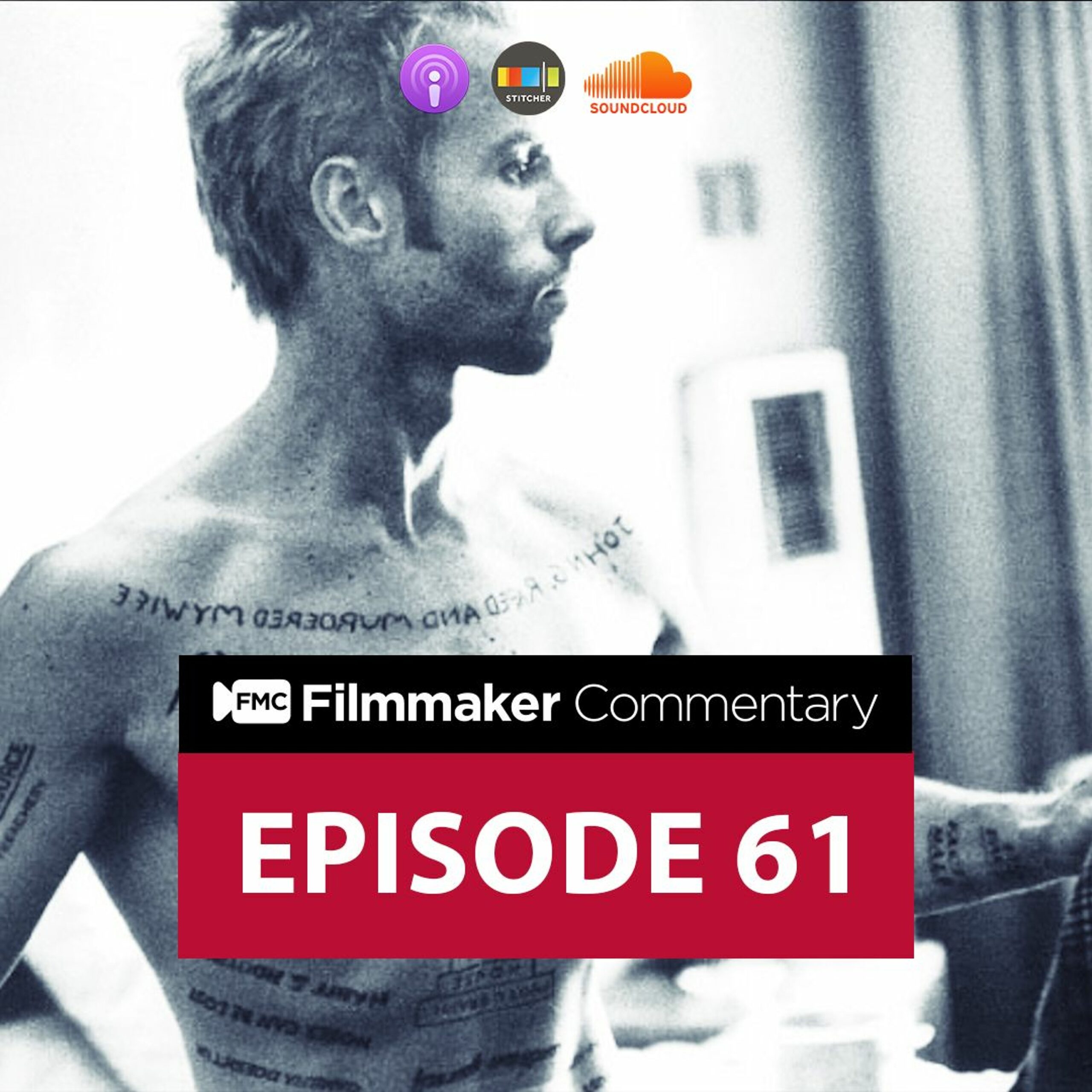
Step inside the labyrinthine mind of Leonard Shelby as Reginald Titus Jr. and Casey G. Smith dissect Christopher Nolan’s groundbreaking thriller, “Memento.” This episode takes listeners on a journey through a film that redefined non-linear storytelling, chronicling Leonard’s desperate search for his wife’s killer while battling profound short-term memory loss.
Originally released in the early 2000s, “Memento” quickly garnered critical acclaim and strong box office results, pulling in $39.7 million worldwide on a modest $9 million budget. Its innovative approach earned Oscar nominations for Best Screenplay and Editing, firmly establishing Nolan as a visionary filmmaker. Reginald and Casey explore how Nolan’s intricate narrative structure—told partly in reverse chronological order and partly through forward-moving black and white sequences—creates a powerful, immersive experience that places the audience directly into Leonard’s fragmented perception of reality. They compare its narrative audacity to other notable non-linear works like Quentin Tarantino’s “Pulp Fiction” and “Jackie Brown,” as well as the deeply impactful “Irreversible,” highlighting Memento’s unique contributions to this style on Filmmaker Commentary.
The conversation goes beyond the film’s complex plot mechanics, delving into its rich thematic layers. Listeners will hear discussions on the subjective nature of memory, the elusive construction of personal identity, and the pervasive theme of manipulation, both from external forces and from within Leonard’s own mind. The hosts reflect on the film’s lasting influence and the sheer ambition of its direction. Drawing from Nolan’s notoriously dry yet incredibly informative director’s commentary, Reginald and Casey share practical tips on crafting unique title sequences, clever narrative structuring, effective camera blocking, and the meticulous attention to continuity required for such a complex production. They also share personal reflections on rewatching the film, discovering new details and appreciating Nolan’s genius even more with each viewing. This episode promises to be an engaging and insightful look into a cinematic benchmark for any film enthusiast or aspiring storyteller.
What We Cover
- The film’s initial critical and financial reception, setting the stage for Nolan’s career.
- How “Memento” utilizes a groundbreaking non-linear narrative, comparing it to other examples.
- A detailed look at the movie’s unique visual style, including its distinctive use of black and white alongside color to immerse the audience in Leonard’s fractured perspective.
- The profound themes of memory, identity, and manipulation, and how the film challenges our perception of reality.
- Insights from Christopher Nolan’s dry but incredibly informative director’s commentary, revealing his meticulous approach to storytelling and production.
- Filmmaker tips gleaned from “Memento” covering title sequences, narrative structure, blocking, and maintaining continuity.
Key Moments
- 02:40 – News and recent movie watches, including “X-Men: Dark Phoenix,” “Black Mirror” Season 5, “Love, Death & Robots,” “Always Be My Maybe,” and the impactful “When They See Us.”
- 19:27 – A deep look into the film’s groundbreaking style, contrasting the objective black and white scenes with the subjective color sequences.
- 22:02 – Unpacking the powerful themes of memory, self-deception, and the constant manipulation Leonard faces from himself and others.
- 30:15 – Casey G. Smith’s favorite scene: the masterful manipulative performance by Carrie-Anne Moss that completely recontextualizes upon a second viewing.
Gear & Films Mentioned
- X-Men: Dark Phoenix
- Black Mirror (Season 5, “Striking Vipers,” “Smithereens,” “Rachel, Jack and Ashley Too,” “Metalhead,” “USS Callister”)
- Love, Death & Robots (“When Yogurt Took Over”)
- Always Be My Maybe
- When They See Us
- Pulp Fiction
- Jackie Brown
- Eternal Sunshine of the Spotless Mind
- Irreversible
- Biodome
- Joe Rogan Experience
- John Wick
- Barry (HBO Show)
- Boogie Nights
- The Matrix
- Inception
Listener Questions
- How does “Memento” effectively use non-linear storytelling without completely confusing the audience?
- What are the subtle visual and narrative techniques Christopher Nolan employs to immerse viewers in Leonard’s unique psychological state?
- Beyond its complex plot, what deeper philosophical questions does “Memento” raise about memory and the construction of personal identity?