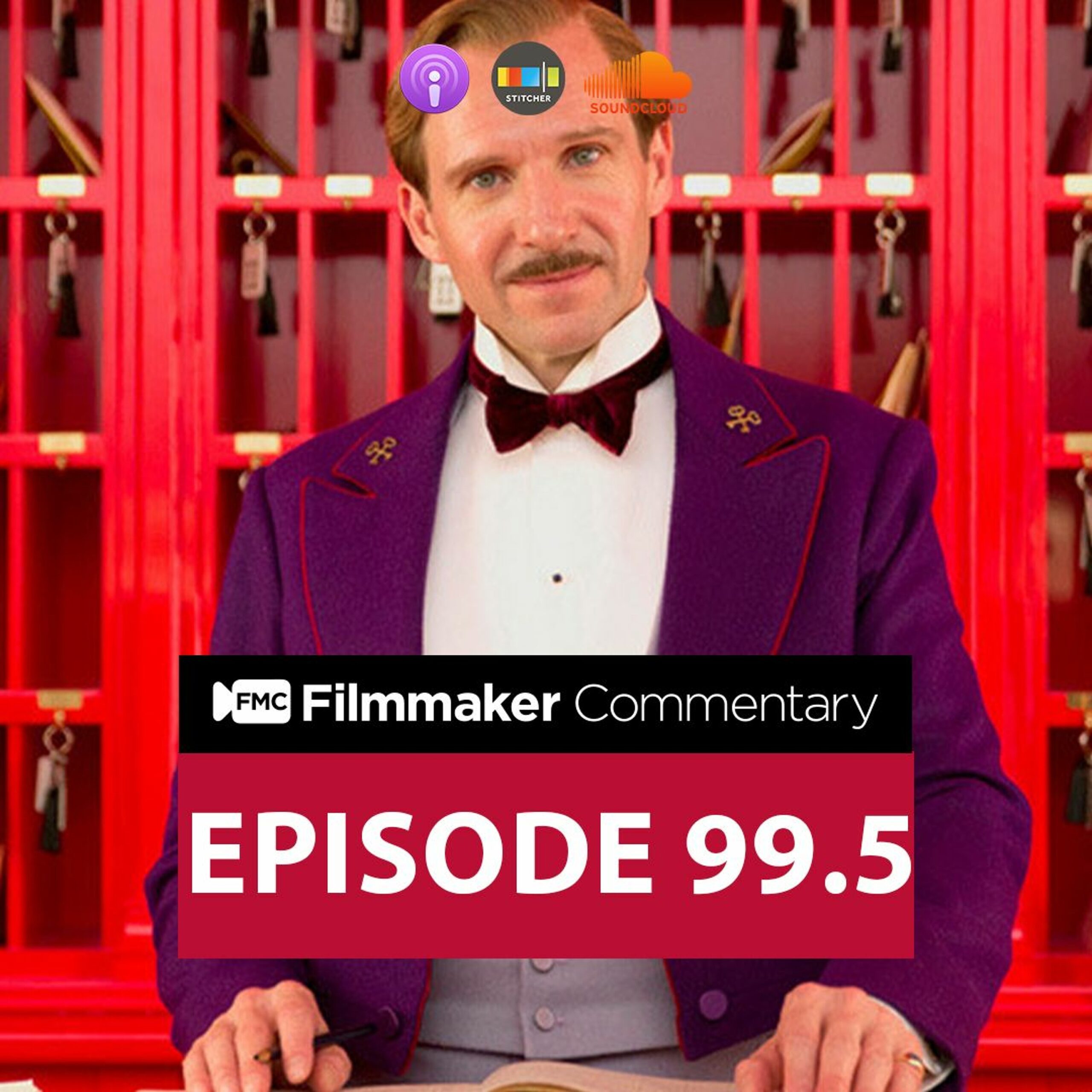
This episode of Filmmaker Commentary, FMC 99.5, focuses on Wes Anderson’s whimsical and meticulously crafted The Grand Budapest Hotel. Hosts Reginald Titus Jr. and Casey G. Smith guide listeners through the film’s extraordinary cinematic achievements, including its Oscar wins for Best Costume Design, Best Makeup and Hairstyling, Best Music (Original Score), and Best Production Design. The film was also a commercial success, grossing over $172 million worldwide against a $25 million budget, notably excelling in international markets—a testament to Anderson’s unique “art-house” appeal and distinct European flair.
The conversation covers Anderson’s signature style, characterized by its theatrical staging, quirky dialogue, and a visual precision that transforms each scene into a living storybook. Listeners will gain insights into the extensive use of miniatures, animatronics, and matte paintings that contributed to the film’s distinct aesthetic while managing production costs. The hosts also examine Anderson’s collaboration with his diverse cast, noting how actors like Saoirse Ronan were encouraged to embrace their natural accents, adding another layer of authenticity and charm. This close look at The Grand Budapest Hotel offers valuable lessons for aspiring filmmakers on innovative storytelling, visual composition, and unique directorial visions.
Reginald and Casey share their recent media consumption. Reginald discusses his staycation viewing, including HGTV’s Renovation Island, the wild animal encounters of Animal Planet’s River Monsters, and his journey through the DC cinematic universe with Hobbs & Shaw and Aquaman. Casey provides a look into the Japanese animated series Transformers Headmasters. The episode concludes with practical filmmaking advice, emphasizing the utility of animatics for pre-visualization and the strategic advantage of versatile filming locations, making this episode a rich resource for both film enthusiasts and creators. Join us on Filmmaker Commentary each week for more.
What We Cover
- The unique charm and international appeal of Wes Anderson’s directorial style.
- Behind-the-scenes insights into The Grand Budapest Hotel‘s technical brilliance, including its use of miniatures, animatics, and period-specific aspect ratios.
- Discussions on Wes Anderson’s collaboration with actors and his innovative use of language and natural accents.
- A look at the film’s impressive awards haul and how it performed financially against its budget.
- Reviews of other films and TV shows like Hobbs & Shaw, Aquaman, Renovation Island, and River Monsters.
- Filmmaker tips on using animatics for pre-visualization and location scouting for efficiency.
Key Moments
- 0:46 Hosts discuss the critical acclaim and numerous awards won by The Grand Budapest Hotel.
- 1:55 Insights into Wes Anderson’s distinct auteur style and why his films resonate globally.
- 1:11:13 Fascinating (and disturbing) facts about catfish and pufferfish from River Monsters.
- 2:23:00 A deep dive into Aquaman‘s unexpected billion-dollar box office and the implications for the DC cinematic universe.
- 4:12:45 Casey G. Smith’s detailed appreciation for The Grand Budapest Hotel‘s masterful cinematography and quirky dialogue.
- 5:10:55 Wes Anderson’s method of storyboarding and using animatics for pre-shooting, including humorous anecdotes.
Gear & Films Mentioned
- The Grand Budapest Hotel (Wes Anderson)
- Rushmore (Wes Anderson)
- Moonrise Kingdom (Wes Anderson)
- Fantastic Mr. Fox (Wes Anderson)
- Hobbs & Shaw
- Aquaman
- Justice League
- Batman v Superman: Dawn of Justice
- Joker
- Shazam!
- Transformers Headmasters (Japanese version)
- Renovation Island (HGTV)
- River Monsters (Animal Planet)
- A Different World
- Canon 5D
- Red camera
Listener Questions
- How does Wes Anderson’s unique visual style contribute to the international success of his films like The Grand Budapest Hotel?
- What behind-the-scenes techniques did the filmmakers use to achieve the distinctive look of The Grand Budapest Hotel, especially for its miniature and set designs?
- How can filmmakers utilize animatics and detailed pre-production planning to enhance their storytelling and achieve a specific aesthetic?