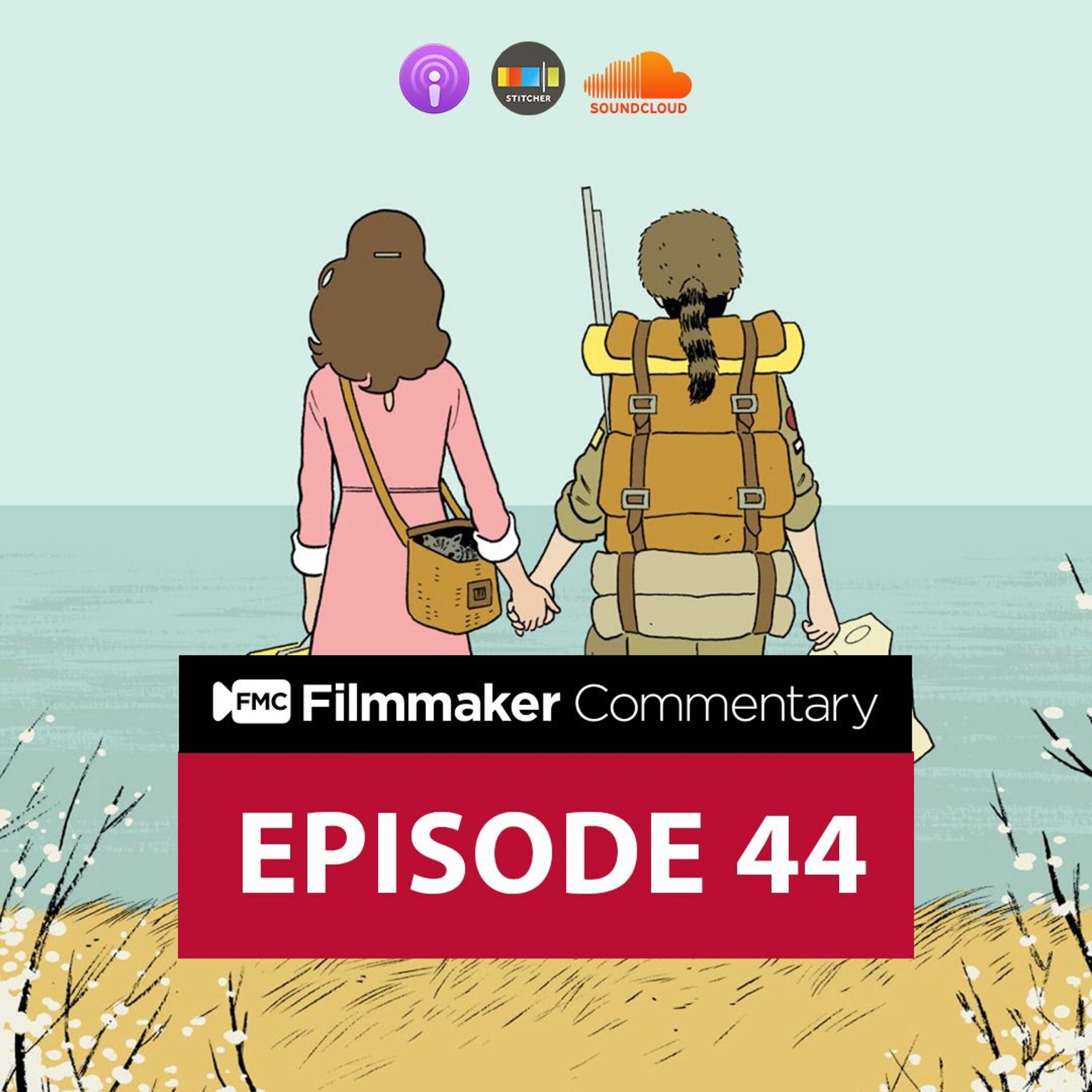
“Moonrise Kingdom,” Wes Anderson’s beloved 2012 film, captures the enchanting escape of two young lovers into the New England wilderness. In this episode of Filmmaker Commentary, Reginald Titus Jr. and Casey G. Smith dive into the movie’s distinct visual style, quirky dialogue, and profound themes, making it a must-listen for fans of Anderson’s unique artistry. The discussion explores Anderson’s mastery of symmetrical compositions and “dollhouse” aesthetic, highlighting how these choices contribute to the film’s whimsical yet deeply emotional narrative. Casey G. Smith shares his initial impressions of the film’s charming simplicity, finding himself drawn in by its unique approach to storytelling.
Our hosts unpack the nuanced character portrayals, especially from the talented young actors, and how the film sensitively addresses topics like childhood innocence, feelings of abandonment, and the search for belonging. Reginald specifically breaks down Anderson’s unique technical execution, from the meticulous production design and vibrant coloring to his signature static camera shots that let characters drive the movement. They examine Anderson’s unique writing style, particularly his meticulous approach to dialogue that demands precise delivery from his cast, including seasoned actors like Bruce Willis and Edward Norton. A significant portion of the conversation is dedicated to Anderson’s use of “material synecdoche”—his clever method of defining personalities and relationships through specific objects, clothing, and environments. This technique allows for subtle character insights without overt exposition, whether it’s the scoutmaster’s knife or Suzy’s binoculars.
Reginald and Casey G. Smith also draw comparisons between “Moonrise Kingdom” and other standout Wes Anderson works such as “Rushmore” and “The Grand Budapest Hotel,” revealing recurring thematic threads and stylistic signatures across his filmography. While praising the film’s artistic brilliance, the hosts offer a candid review of the Criterion Collection commentary track, detailing why it ultimately fell short of their expectations despite the film’s many strengths. This episode is a deep dive into the creative choices that make “Moonrise Kingdom” a standout in modern independent cinema.
What We Cover
- Wes Anderson’s signature visual style, including his use of symmetrical compositions and “dollhouse” camera shots.
- The film’s nuanced portrayal of childhood innocence, mental illness, and finding family in unexpected places.
- A deep dive into “material synecdoche” – how Anderson uses objects, clothing, and locations to define characters and their relationships.
- The challenging nature of directing child actors and animals, and Anderson’s specific approach to dialogue delivery.
- Contrasting “Moonrise Kingdom” with other Wes Anderson films like “Rushmore” and “The Grand Budapest Hotel.”
- The disappointing Criterion Collection commentary track, despite the film’s artistic merit.
Key Moments
- 01:58 – Casey G. Smith’s first impressions of “Moonrise Kingdom” and his appreciation for its charming simplicity.
- 05:50 – Reginald Titus Jr. breaks down Wes Anderson’s unique technical execution, focusing on production design, coloring, and static camera compositions.
- 06:17 – The hosts discuss Wes Anderson’s use of “material synecdoche” and how he employs objects and clothing to tell character stories.
- 10:07 – Thoughts on the standout performances, particularly from the young leads and Bruce Willis, and the film’s unique adult/child dynamic.
Gear & Films Mentioned
- Aaton A-Minima 16mm camera
- Kodak 16mm film stock
- Rushmore
- The Fantastic Mr. Fox
- Isle of Dogs
- The Grand Budapest Hotel
- Bram Stoker’s Dracula
- Constantine
- Bumblebee
- Justice League Dark
- The Lion, the Witch and the Wardrobe
- Zodiac
- Snowpiercer
- Doctor Strange
- Black Mirror (series and interactive film)
- Aquaman
- Napoleon Dynamite
- Room 104 (series)
- Legends of Tomorrow (series)
- Justice League Action (series)
Listener Questions
- How does Wes Anderson’s filmmaking style stand out, and what specific techniques define his work?
- What themes are explored in “Moonrise Kingdom,” particularly regarding childhood, family, and individuality?
- Is the Criterion Collection commentary for “Moonrise Kingdom” worth seeking out for aspiring filmmakers?