June 11, 2026
F
Filmmaker Commentary
  • Home
  • About
  • Episodes
  • Film
  • TV
  • Home
  • About
  • Episodes
  • Film
  • TV
Podcast

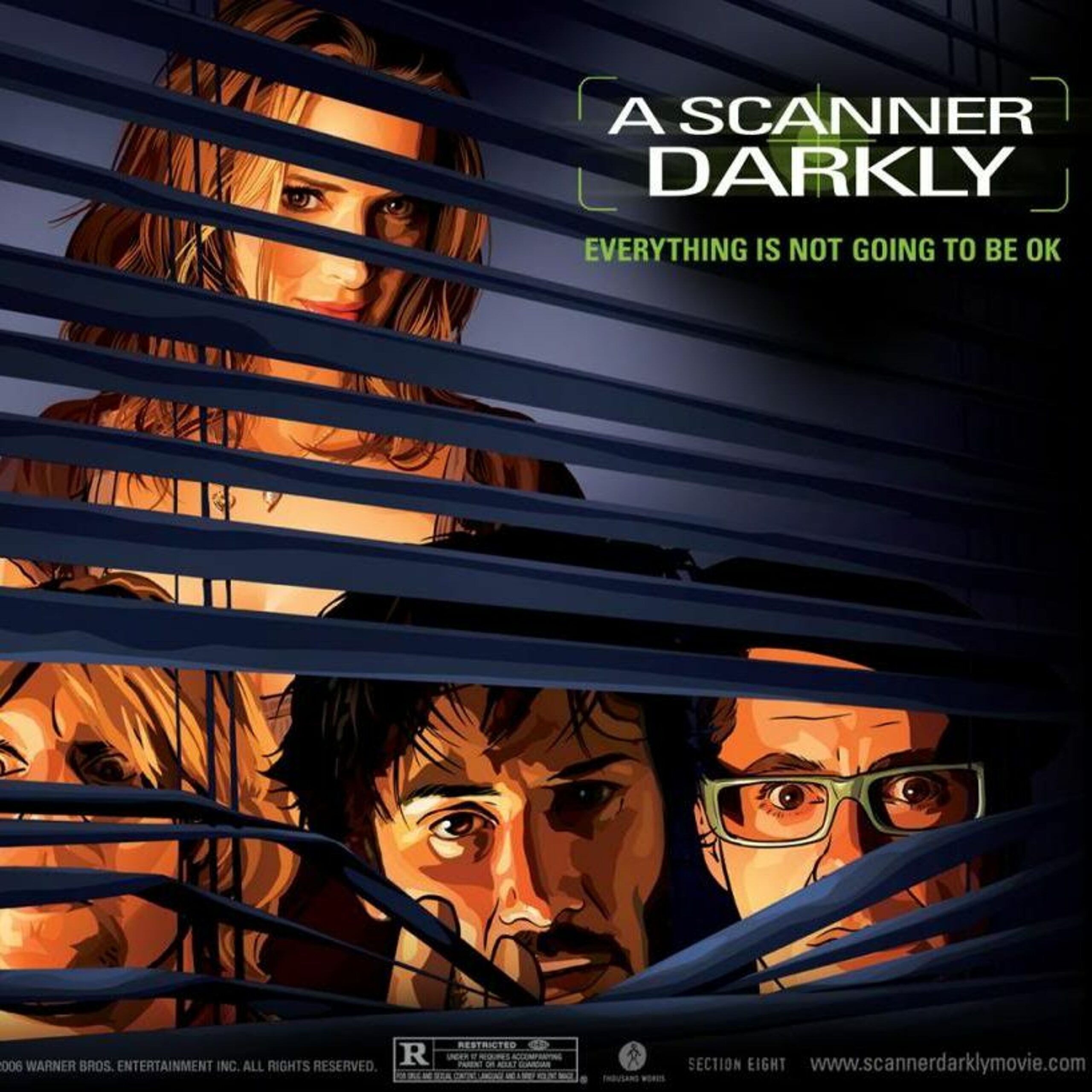
FMC 034: A Scanner Darkly Written and Directed by Richard Linklater

May 18, 2026
Listen on Apple Spotify YouTube
Listen to this episode
Your browser does not support the audio element.
Also on Apple Spotify YouTube

Tune into this episode for an in-depth look at Richard Linklater’s unique rotoscoped film “A Scanner Darkly,” an adaptation of Philip K. Dick’s dystopian novel. Hosts Reginald Titus Jr. and Casey G. Smith discuss its visual style, intricate plot, and relevant themes of paranoia and government surveillance, offering insights into its creation and impact.

What We Cover

  • The groundbreaking rotoscoping animation technique and its impact on the film’s visual style.
  • Philip K. Dick’s prophetic vision, his influence on sci-fi cinema, and the challenges of adapting his work.
  • The film’s themes of identity, surveillance, and the social implications of drug use in a dystopian future.
  • “A Scanner Darkly”‘s unique position as a box office “loss” that still resonates culturally, especially in a post-9/11 world.
  • Standout performances from the star-studded cast, highlighting Rory Cochrane’s intense portrayal and how the animation enhanced his role.
  • Why the official commentary track offers limited value, and how the special features provide more profound behind-the-scenes insights.

Key Moments

  • 2:45 — Initial reactions to “A Scanner Darkly” and the confusion even the actors experienced with the complex narrative.
  • 3:45 — The hosts highlight Rory Cochrane’s compelling performance and how the rotoscoping enhanced his character’s paranoia and distinct visual cues.
  • 6:22 — An exploration of Philip K. Dick’s surprising influence on major sci-fi films and his philosophical questions about reality.
  • 9:23 — A discussion on the film’s timeless relevance regarding government surveillance and societal control, especially in the age of personal devices.
  • 34:40 — A deep dive into the unique rotoscoping process used for “A Scanner Darkly” and its experimental predecessor, “Waking Life.”

Gear & Films Mentioned

  • A Scanner Darkly (2006)
  • Waking Life (2001)
  • Blade Runner (1982)
  • Total Recall (1990)
  • Minority Report (2002)
  • Avengers: Infinity War (2018)
  • Mother! (2017)
  • Terms & Conditions May Apply (2013)
  • Suits (TV Series)
  • Greenleaf (TV Series)
  • American Horror Story (TV Series)
  • Snowfall (TV Series)
  • Nappily Ever After (2018)
  • Bumblebee (2018)
  • Creed II (2018)
  • Captain Marvel (2019)
  • Aquaman (2018)
  • Mary Poppins Returns (2018)
  • Spider-Man: Into the Spider-Verse (2018)
  • Rocky V (1990)
  • True Grit (2010)
  • Edge of Seventeen (2016)
  • Kubo and the Two Strings (2016)
  • Boyhood (2014)

Listener Questions

  • How did Richard Linklater’s unique rotoscoping animation style impact the storytelling and performances in “A Scanner Darkly”?
  • What major sci-fi films are based on the works of Philip K. Dick, and how does “A Scanner Darkly” compare as an adaptation?
  • How does “A Scanner Darkly”‘s exploration of paranoia and government surveillance remain relevant in today’s world?
  • What makes “A Scanner Darkly” a challenging film to watch and market, and why did Linklater choose such a non-mainstream approach?

Full Transcript

Read the full transcript

Full Episode Transcript
This episode of Filmmaker Commentary dives deep into Richard Linklater's rotoscoped sci-fi film "A Scanner Darkly," based on Philip K. Dick's novel, discussing its unique visual style, thematic complexity, and the challenges of adapting such mind-bending source material.

Introduction & Film Overview
Reginald Titus Jr.: Filmmaker Commentary, episode 34. Welcome to Filmmaker Commentary, where we give you insights from our favorite filmmaking commentaries. These commentaries can be heard on your DVD and Blu-rays of your favorite movies. We'll show you how you can use these commentaries and apply them to improve your video production and filmmaking techniques. All this here on Filmmaker Commentary. I'm your host, Reginald Titus Jr.
Reginald Titus Jr.: Welcome back to Filmmaker Commentary. I am Reginald Titus Jr. I'm joined with...
Casey G. Smith.: Casey G. Smith.
Reginald Titus Jr.: Welcome back, sir.
Casey G. Smith.: Good to be back, sir.
Reginald Titus Jr.: We've taken a little break. I don't know when this will actually drop, but just know that it's been about two weeks since we've actually recorded an episode.
Casey G. Smith.: Apologies for the delay.
Reginald Titus Jr.: Yes.
Casey G. Smith.: But we've been creating.
Reginald Titus Jr.: Yes, we have. We've been creating and we can talk more about that on another episode.
Casey G. Smith.: Indeed.
Reginald Titus Jr.: So today we are reviewing A Scanner Darkly, written and directed by Richard Linklater. That's his name, right?
Casey G. Smith.: Linklater. Mm-hm.
Reginald Titus Jr.: Linklater. And it's based on the novel by Philip K. Dick. Now this movie, it was a suggestion from a listener. So thank you, listener, for that suggestion. The budget was 8.7 million.
Casey G. Smith.: Mm-hm.
Reginald Titus Jr.: At the box office US, we have 5.5 million and worldwide 7.6 million.
Casey G. Smith.: Not exactly a win.
Reginald Titus Jr.: That's an L for sure. Oh, what year did this come out?
Casey G. Smith.: This came out in 2006.
Reginald Titus Jr.: Okay. So I'm gonna read a quick synopsis about A Scanner Darkly. The time: just beyond now. The place: suburbia. The story: a twisted, funny tale of people hooked on Substance D and a government that cheerfully destroys its citizens, their rights, their relationships in order to save them. Robert Downey Jr., Woody Harrelson, Winona Ryder, and Corey Cochran play strung-out friends terrified of each other and of spies. Keanu Reeves plays a spy who's also one of the friends until his two personalities begin to split. Enjoy the paranoia. Nobody's watching you. Really. A Scanner Darkly.
Casey G. Smith.: That's an accurate synopsis. I like that.
Reginald Titus Jr.: Yeah, I read that one off the DVD, that's what I'm probably gonna do from now on.
Casey G. Smith.: Good call.

Initial Reactions & Visual Style
Reginald Titus Jr.: Oh man, what were your initial thoughts?
Casey G. Smith.: Oof, initial thoughts with A Scanner Darkly. At the very end, I was a little confused at what I had just seen, and that does not happen often. And yeah, really, usually I see something like, okay, I get it. But after this I was just like, uh, maybe I have to go back and watch some parts again. But then after watching the special features, it kind of filled me in on some things. But this is, I even heard actors in the features like, I, I'm still not quite sure what I'm making. Not quite sure what I'm a part of. So I didn't feel so bad then. I was like, ah, okay. I feel much better. But this is obviously based on a book by Philip K. Dick, that was written in the 70s, in 1977, and it's set in a dystopian future in 1992. I thought the film, the look of the film is amazing and holds up. I had, I had vaguely heard the name before but had never seen trailers or anything for this film until you mentioned it to me. It was not on my radar at all. I thought the performances were good. I really enjoyed the performances. Keanu, RDJ, you know, Robert Downey Jr., he always, he always brings it. And Woody Harrelson again, always brings it. I mean, these are, these are Academy Award-nominated actors.
Reginald Titus Jr.: Yeah, they come with it. They're raising the bar.
Casey G. Smith.: They are. But the guy who, who really stands out is the first guy, Corey, Cochrane. Is that his name?
Reginald Titus Jr.: Rory Cochrane.
Casey G. Smith.: Rory Cochrane. He...
Reginald Titus Jr.: With the bugging eyes.
Casey G. Smith.: Yeah, Rory Cochrane.
Reginald Titus Jr.: Oh, it's Rory Cochrane, I messed his name up.
Casey G. Smith.: Rory Cochrane, he, man, at the just that opening scene of him like creeping out and like scratching all those bugs coming off, that kind of gives you the heebie-jeebies a little bit. I'm like, oof.
Reginald Titus Jr.: Plus on top of that too, like the music that's playing while the bugs are going around. Great soundtrack.
Casey G. Smith.: Yeah, great score.
Reginald Titus Jr.: Yes.
Casey G. Smith.: And so that gets you, but when you see him like just in regular interviews talking, you know, his eyes look normal. And it's possible to open up your eyes wide, but I think the animation aspect helped just open him up a little bit more to make it just slightly surreal. So his, his paranoia and freaking out really stands out with his eyes, because he seems like he's more of a subdued person, but he really threw himself into the role and in the small scenes that he's in, he really stands out.
Reginald Titus Jr.: He said that he, because they knew it was gonna be an animation, that he, like, turned it over the top a little bit. So with his mannerisms and everything with the bugging eyes and all that stuff, it really did come across like weird, but it worked.
Casey G. Smith.: I thought the, the, the twist at the end, by the way, speaking of twists, and speaking of the end, ladies and gentlemen, there will be spoilers. So, you've been forewarned. That's a friendly courtesy here at Filmmaker Commentary.
Reginald Titus Jr.: There you go.
Casey G. Smith.: But I thought the twist at the end it got me. I was like, ah, I didn't, I didn't necessarily see that, I didn't see that coming.
Reginald Titus Jr.: What part? When you, what part of the twist?
Casey G. Smith.: Winona Ryder's character.
Reginald Titus Jr.: Oh, that one. Yeah. Uh-huh.
Casey G. Smith.: When that spot I was like, whoa, I didn't, I didn't see that coming.
Reginald Titus Jr.: I kind of, I forgot about. I had forgotten about that.
Casey G. Smith.: Yeah. And then when you go back and look at it, it's like, oh, it's kind of obvious.
Reginald Titus Jr.: Oh, it's not obvious, but after, you know, you...
Casey G. Smith.: It's feasible. It makes sense. It's not like it was planted along the way and you're like, okay, that makes sense. But that was something interesting enough that was not in the original book from what I understand. It actually was added by Linklater. He like made this connection and did that twist and it kind of worked.
Reginald Titus Jr.: It did.
Reginald Titus Jr.: Man, I'm trying to remember when I first saw this. It was a while ago, DVD, it might have been 2008. At that time when I checked, right?
Casey G. Smith.: When did it come out?
Reginald Titus Jr.: On DVD?
Casey G. Smith.: Came out '06.
Reginald Titus Jr.: Okay. So I didn't go to the theater or anything to watch it, but I watched it on DVD. And I'm always, I'm drawn to, like, with this when I saw the trailer. Things that are abstract, I'm like drawn to them. So I was drawn to this just from what I saw the images. Like, okay, one day I'm gonna watch that. And it seems like with Philip K. Dick, Blade Runner, Total Recall, Minority Report, like some of these films that's been based on his short stories, I didn't realize that. Yes, like, I'm always drawn to his work and didn't realize it.
Casey G. Smith.: Well now, I just, I just realized it. I didn't realize he had a hand in, in, in short stories on those properties.
Reginald Titus Jr.: Yeah. Yeah. And...
Casey G. Smith.: Wow.
Reginald Titus Jr.: So yeah, and when you listen to like some of his, in 1970-something, there's a video of him on YouTube talking about The Matrix. Like, do we live in like an artificial world or a simulation? And he says, you could take this for whatever you want to believe it. And he said, but these things have happened to me. He just kind of goes and explains like some of the weird things that's happened in his life. Certain things like he'll wake up and he's living like in like another life or he'll know like a language that he's never spoken before. It's like a bunch of weird stuff. So I was always drawn to this crazy guy and the works that come from him.
Casey G. Smith.: Wow. It's also fascinating to hear in the commentary his, they, they talk about his, his drug use and how, you know, he may have lived longer had he maybe gotten off of some of those substances earlier, earlier in life. But you just mentioned that he was involved with the genesis of projects like Total Recall and, um, Minority Report, Blade Runner, like, oh wow.
Reginald Titus Jr.: Ahead of his time. Like this stuff was way ahead of its time.
Casey G. Smith.: That makes me super fascinated. I'm gonna see if I can find some of his stuff, maybe some short forms of some of his stories like on Spotify or something like that.
Reginald Titus Jr.: And the thing is, it's very hard to adapt his stuff. You know, people have been trying to do it for a while, it's just difficult to do.
Casey G. Smith.: Wow.
Reginald Titus Jr.: You know, and I think his daughter said, you know, this is like one of the truest forms, you know, like a true adaptation to his work. But anyway, I saw it back in the day. What did I think of it? I wasn't like, I was curious, but I wasn't like blown away. The paranoia and all that, you know, conspiracy theories and all that stuff, it makes you really think about, you know, we're, we talk about things like Homeland Security and, you know, people on their cell phones and what, you know, the government, what are they recording? Everybody, basically everybody now is being monitored. You have a phone with an audio device and a video camera. You might as well just accept the fact that you're always being recorded and monitored.
Casey G. Smith.: And if you doubt it, you can watch a documentary called Terms and Conditions May Apply. It will, yeah, privacy is over.
Reginald Titus Jr.: Yeah, pretty much. And so this kind of like confirms it. But , I, I, I enjoy, but it's one of those things where you watch it every eight years.
Casey G. Smith.: Yeah, I, I agree. This is, this isn't a film that I would just pop in to feel, to feel good. It's, it's great to, to watch and to be able to appreciate and to, to digest and discuss. But it's also, it's, it's at the same time relevant, especially since it came, since they actually produced the film after 9/11. Like you said, after Homeland Security and under an administration that was beginning to implement those kinds of things, similar to how the Nixon administration during Philip's time were implementing different ways to, to monitor and, and, and track. So he was kind of coming out of that period writing about these things and had been tracked and things of that nature. And so to have his film produced, you know, after 9/11, it, it made sense.
Reginald Titus Jr.: I wish I could have gotten the Blu-ray because I wanted to see, you know, how it stands up and like the clarity of everything on Blu-ray, but I probably won't go out of my way to get it.
Casey G. Smith.: Did you buy it or did you rent this?
Reginald Titus Jr.: I, I purchased it. You know, this is one that goes in the collection. That's why I was hoping for a Blu-ray on the retail, but nobody had it.
Casey G. Smith.: I think if it had had more features on it, I was saying I hadn't seen it before. I was like, I didn't know if I wanted to take that risk. But yeah, I'm, I'm, I'm okay. I think, I think I'd, I'd, yeah. If it came out on Blu-ray, I'd consider it. But I was actually expecting more.
Reginald Titus Jr.: Mm.
Casey G. Smith.: You know, for them to go through all the trouble of doing the rotoscope. By the way, this is like the highest-grossing rotoscope movie. That's isn't saying anything, but it's true.
Reginald Titus Jr.: Mm.
Casey G. Smith.: Whole movie's been rotoscoped. But I was expecting more 'cause of the style. For them to kind of go out of the way to create this style, I was just expecting more.
Reginald Titus Jr.: From like an action standpoint?
Casey G. Smith.: Yeah, like some kind of, some kind of action, some actual like an actual, you know, maybe fight scene. Like the most violence that you see almost is the guy, you know, washing the bugs off of him and him driving along and an imaginary cop shooting him in the head. That's kind of the most heightened violence that you see throughout the whole film. It's, it's really subdued. It's more about the paranoia and identity and and the drug use and yeah, kind of the, the uncertainty of it all, this dystopian future.

Thematic Analysis & Ending Discussion
Reginald Titus Jr.: Yeah, it's one of those things where I wouldn't recommend it to just like a casual person who watches movies. I'll recommend it to like like a film, a person that's in the film and wants to. Yeah. And that's what we're doing here, of course. But yeah, I wouldn't just recommend it to the casual watcher of movies.
Casey G. Smith.: Yeah, I'm not gonna go out and say, hey, Mom, you should watch A Scanner Darkly. It's brilliant.
Reginald Titus Jr.: Nah, probably not, probably not gonna do that.
Casey G. Smith.: Some of the themes from the film, got, of course, we're talking about paranoia. I got, I got a few: nonconformity, the privatization of like governmental entities, you know, kind of talking about, you know, the like the prison system and kind of using that system to, to make money off of people.
Reginald Titus Jr.: Which they, they specifically talked about in the commentary. I was like, ah, nice, okay. And then, of course, like, it's like a dystopian vibe. What are some of the themes you got?
Casey G. Smith.: I had themes of identity, right? And they asked the question, especially when you see the scanner suits that they're wearing, you know, who, who are we underneath the, the suits that we wear in our different roles in life and the jobs that we go into? And obviously Keanu's character of Bob, he, Bob Arctor has to ask himself that, that question. As does Winona Ryder's character as Donna/Hank. Who are we? You know, drugs, I thought as, as a theme, where you could say maybe the alteration of your mental state. Will people use that to be recreational, to escape their reality? Will government use that to to not only have people entertain themselves by allowing them to use it, but then use it as an excuse to contain you, you know, by imprisoning you. It's a fascinating paradox, you know, there's multiple ways to enslave people, and that, that's, that's fascinating. And then that, the constant question that pops up when they, they'll ask you, you know, people who are using, they'll ask each other, how often do you use, or how much do you use? Like, they're kind of curious, almost wanting to gauge, you know, have I gone too far? Or have you gone too far?
Reginald Titus Jr.: Yeah, and then what, everybody's like, nothing much. Yeah.
Casey G. Smith.: They, people always justify. Betrayal. You know, even amongst the friends, there's all this suspicion and trying to figure out who the, who the mole is when everybody's, almost everybody's a mole, except for maybe Woody's character. Every, every, everybody, everybody is, is ratting to the, to the Feds, except for Woody's character and Charles. They're, they're, they're also the most paranoid, you know? And they're actually, they're, they're actually quite justified because their other, other three people are all snitches, you know? Um, reality. Uh, in, in this film, kind of trying to figure out what is, what is real, you know? And with Keanu, that, that, that wall begins to kind of break down for him, you know, because of, because of the, the drug use. Um, like you said, corporations, government take over. And then they mentioned specifically in the commentary, the tragic loss of hope. Which again, when the film takes that turn after that discovery, it's like, it feels like all hope is, is gone. Like, you feel like he was, this guy, he was gonna do something and, and maybe be able to, I don't know, do something good, but instead, like, he just cracks and gets taken to this facility and you see his other buddy there. You see Charles there. And then he just goes to this field. Like the ending, I was like, oh, hell, man. That's probably why it didn't perform well, now I think about it. Now you bring that up. That makes sense. I think Americans, they want to feel good. They want some kind of, I guess, it's a little bit of closure, but they were like, oh, like, I don't think Americans like those kind of endings too much.
Casey G. Smith.: I don't mind a dark ending every now and then, if I feel that it's, if I feel that it's like some kind of resolution. I don't, I don't mind a dark ending. Sometimes I think it's, it's really cool. I just, just didn't, it didn't work for me. It was, it was so, it was so bland.
Reginald Titus Jr.: There you go.
Casey G. Smith.: You know, I'm like, I don't know. I, I don't know. I want to see somebody, I want somebody to get it, you know? But this guy, he was just like, feed my bloodless. Yeah, or at least like there's a, I mean, I guess the, I mean, it's almost like the government's the bad guy. And they just like, they screwed over their employee. Especially when they're like, hey, nobody put a gun to your head to take those drugs.
Reginald Titus Jr.: Wow. Yeah.
Casey G. Smith.: I'm like, what a douche thing to say. And then, and then it turns out to be her. So I guess I have conflicted feelings about Donna. Like you say you, you dig this dude and then you, you go around, you come, you pull, you know what? You know what she did? She pulled a Richard Donner Superman kind of Clark Kent moment, like in the first Superman. Where Superman flies off after he leaves Lois on the roof and then comes in through the door as Clark Kent. That's what she did as Hank. Oh, let me just call Donna real quick. And then she goes out, goes through the door and then, you know, pulls up to, to, to take him off to rehab. And she says she feels bad about it, but I'm like, I don't feel like you feel bad enough. You helped ruin his dude's life and you want to say it's on the agency? No, it's just as much on you. So maybe that's why I feel like, man.
Reginald Titus Jr.: Yeah, it was bad.
Casey G. Smith.: Another loser.
Reginald Titus Jr.: Man.
Casey G. Smith.: Winning's easy.
Reginald Titus Jr.: Yeah, I was like, man, these statements are brutal.
Casey G. Smith.: Winning's easy. I'm like, yeah. Yeah, so it just, yeah, that ending is a, yeah, it's a real downer. It's a real downer.
Reginald Titus Jr.: I think the numbers reflected it.
Casey G. Smith.: Oh, man. Yeah, you just said it yourself. You wouldn't just recommend it to the casual moviegoers. Other people didn't either. Other people did not do that. Now, all things being said, again, I always, man, Linklater, I give him props because he's always wanted to go for it. He's always wanting to, to, to buck trends and just to do his thing. I respect the heck out of him for that. To take this, adapt it, and to have this vision and to follow it through. That, that's to me is, is, is very cool. And you take the risk, right? You, you take the risk. And the studio, Warner Independent Pictures, which I don't see that name pop up often. Maybe there's a reason. Linklater, you sunk us. No, just kidding. But, uh, try not to laugh. Oh man. But you gotta go for it, you know? And some things, again, there are plenty of films, I think, in particular, sci-fi films that for, at times, don't do well, you know, Blade Runner did not do well. Was not, was not a box office success when it came out. Ridley Scott, that movie did not make, did not make a lot of money. It became a, it became a cult classic over, over time though.
Reginald Titus Jr.: It's profitable though.
Casey G. Smith.: I'll give it that. But, yeah. But, you know, not as much as it, as it, as it could, as it could have made.
Reginald Titus Jr.: Didn't, yeah. Yeah, maybe like, I don't have to revisit those figures. Didn't set the world on fire.
Casey G. Smith.: Yeah. Yeah. Oh man. But, yeah, but Linklater, he goes for it, and I, I respect the heck out of that.
Reginald Titus Jr.: Yeah. And I think he had a film prior to this, it was called like Half Afterlife or Half Life or something.
Casey G. Smith.: He, he also rotoscoped on that.
Reginald Titus Jr.: Yeah.
Casey G. Smith.: I heard him mention the film, I didn't, I didn't write it down. But yeah, let me take a look.
Reginald Titus Jr.: And it was more, it was like more experimental, and it wasn't as polished and detailed as this film look. I've seen clips from the other film before.
Casey G. Smith.: Oh, Waking Life.
Reginald Titus Jr.: Waking Life. There we go.
Casey G. Smith.: That's right there. That he's known for that. That was '01, Waking Life, animation, drama, fantasy.
Reginald Titus Jr.: Was it a feature?
Casey G. Smith.: Uh, it runs 99 minutes. So yeah.
Reginald Titus Jr.: There you go. Hour and a half and some change, an hour and 39 minutes.

Current Media Consumption & Trailers
Reginald Titus Jr.: One thing that I think that was interesting in the film is they have Alex Jones with the bullhorn, like, look at what our government is doing. Look what they're doing. And these guys come out in the big van. And he said, look, look at our government dollars at work. And they throw him in the trunk. And in real life, what's going on now, Alex Jones has been like, been banned from like YouTube, from iTunes and some more things. Like they're like putting the kibosh on his show. Just because he says some things that are very outlandish and, you know, sometimes anti-government.
Casey G. Smith.: Wow. Full circle.
Reginald Titus Jr.: Man, life imitating art, right?
Casey G. Smith.: Yeah.
Reginald Titus Jr.: Meta. Again, but ahead of his time, man.
Casey G. Smith.: So you tell me you can't say whatever you want?
Reginald Titus Jr.: Nope.
Casey G. Smith.: Oh, well. Not even on YouTube?
Reginald Titus Jr.: Nope. Sorry. This is America.
Casey G. Smith.: That is against the, what is it they have, first amendment?
Reginald Titus Jr.: No, they're, their little policy that you hit okay. When nobody reads it, just hit...
Casey G. Smith.: Terms and conditions. Oh.
Reginald Titus Jr.: Yeah, you can go against it.
Casey G. Smith.: No, no anti-flamethrower marks towards the United States government.
Reginald Titus Jr.: All kinds of stuff. They have all kinds of stuff in there. But yeah, he...
Casey G. Smith.: Are you saying I should maybe read that?
Reginald Titus Jr.: Nah, just click yes. Just agree. Just assimilate.
Reginald Titus Jr.: So we're gonna talk about movies that we watched this past week.
Reginald Titus Jr.: What are some movies that you've seen in the last couple of weeks?
Casey G. Smith.: I, I started revisiting Avengers Infinity War. I started re-watching that.
Reginald Titus Jr.: That's a rewatchable movie. Like you can do that like several times.
Casey G. Smith.: It's so, there's so much going on and seeing some of my favorite characters interact with each other. I just take, I mean, I dig the opening, I dig, I dig, I dig Thanos and his arc. I was just listening to a Kevin Smith show, him, they're calling it Fat Man Beyond, him and Mark, I can't think of Mark's last name. Um, so there's a theory with Loki, in that first sequence, that they're saying that that he didn't really die. I think he's, is he right-handed or left-handed?
Reginald Titus Jr.: Loki?
Casey G. Smith.: Yeah.
Reginald Titus Jr.: I'm gonna assume that he's right-handed, but I don't know.
Casey G. Smith.: Yeah, because they were, they were saying like, you know, when he pulls out his knife, he uses a certain hand. But in that particular sequence, he used the opposite hand. So it was like one of his tricks that he played. So that's like a theory that's out there.
Reginald Titus Jr.: And Loki's dead, y'all. I'm sorry. He looked real dead.
Casey G. Smith.: He looked extra dead.
Reginald Titus Jr.: He extra dead.
Casey G. Smith.: Um, yeah, I think, I think, I think Loki's dead. He's gone. Yeah, I think people that died before the snap, pre-snap, pre-snap deaths, are legit. Now, it doesn't mean they can't be brought back through whatever means they use in Avengers 4 because there will be people who come back. Probably via some time travel. Pre-snap. Pre-snap. But, uh, yeah. Cause there, they're talking for Disney's new streaming channel, uh, doing a Loki, uh, a Loki prequel kind of series, him and Scarlet Witch, having their, their own. So if he's dead in the film, people can still get their Tom Hiddleston Loki fix via, via that. So I think all the more I think that, that, that kind of really potentially puts that nail in his coffin. Plus it progresses the story. He's gone back and forth with his, with his, his brother and all that kind of stuff for, for so long, and I just really wonder what the next chapter of, I mean, Thor and Asgard, what that will, what that'll be. Honestly, I think I think Asgard has to come back. That's kind of the, the prophecy when Ragnarok happens, somehow Asgard usually, it gets reborn in some kind of way. And I think, who knows, maybe they start going into like a King Thor story. But, nonetheless, yeah, I've been revisiting that.
Reginald Titus Jr.: I finally finished Mother! by Darren Aronofsky.
Casey G. Smith.: How was that?
Reginald Titus Jr.: Dear God, Darren. Um. Dear Darren. No more. Um, and that's Mother with an exclamation. Mother! How do I feel about this film? I would not recommend it to most people. You spend a lot of time. Spoiler alert, 'cause you ain't gonna watch it anyway. Just read the reviews, that's all I got to say. Um, now I like the craftsmanship and how he approached the story. You know, he had a style with how he was shooting it. So I appreciate that aspect of it, and that's pretty much it. But from a like a straight-up story standpoint, didn't really dig it too much. And then, you know, it's a hard sell when you're killing babies, eating babies and you see it. And, uh, what else? You murder, you, a woman that just given birth and you like stomp her out. Uh, it's, it's a hard sell. It's hard to recommend that.
Casey G. Smith.: I can't fault you there. I saw the movie a couple, couple weeks ago as well. There are elements of it that are, that are fascinating in terms of the way that it's shot and the way that it looks. It kind of keeps you guessing. But yeah, once you get that part, literally when we talked about it, I was like, man, I think I had mentally blocked those parts out of my mind after seeing them, 'cause it was so like horrific. I think, I think my brain literally like mentally blocked it out because once you mentioned it, I'm like, oh, that did happen.
Reginald Titus Jr.: Dude.
Casey G. Smith.: I think my brain said, nope, don't want to remember that because that was, oh.
Reginald Titus Jr.: Baby dies. Baby, she just given birth. Baby comes out, they snap the baby's neck. And then she come then like in like a matter of seconds, the baby is like obliterated, you know? They're on the ground, they're eating sections of the baby. The baby's rib cage, you can see it and stuff. It was like, why? Why are we doing this? Why is this entertaining? Yeah, I don't know, it's hard to, yeah, it's hard to promote that. So yeah, so I finally finished that one. It was taking me a while to get there too because I'm like the, you know, the, the shots are just on, uh, what's her name? Jennifer Lawrence?
Casey G. Smith.: Yeah.
Reginald Titus Jr.: Shots are on her most of the time.
Casey G. Smith.: J-Law.
Reginald Titus Jr.: J-Law. It was on her. You know, she pretty or whatever, but, you know, after a while it kind of gets like, all right, what are we doing here? Like, let's, let's speed this thing up. Let's hurry up. So that was one, finished that. Um, I was hoping that one had commentary because Darren needs to explain himself. And then, uh, and then it doesn't have commentary.
Casey G. Smith.: I'm going to need an explanation, sir.
Reginald Titus Jr.: It, uh, man, people online were like kind of like going at those people, at him and Jennifer Lawrence because they were trying to sell the movie when it was out, and they kept asking Jennifer Lawrence, tell us more about, you know, the story. And it was, it was hard for them to explain the story, you know, without giving certain things away, but it, they, it was, they made fun of them because how they were trying to sell the story, just like, just gibberish.
Casey G. Smith.: I think some people also maybe felt upset that once they watched, they felt they were marketed something different. Which, I mean, I remember seeing the trailers for it, but I don't remember, I mean, really knowing what it was about, uh, except for like, you know, a lot of people coming into some, somebody's house and then her kind of being uncomfortable with it. That was kind of the extent of, of the marketing.
Reginald Titus Jr.: House party?
Casey G. Smith.: That's almost a death wish in this nowadays when you're selling movies, like trailers. The trend is, you basically tell most of the story in your trailer. And you hide some things, but for the most part, when somebody's watching the trailer, they should be able to gauge what the story's about, and they're making the decision, okay, I'm gonna go out and watch that. You know, you can pretty much gauge what it's about. There's very few trailers that are mysterious. Where you watch and you still don't know what the heck is going on.
Reginald Titus Jr.: Sure. That's true.
Casey G. Smith.: But anyway, and I think that's kind of, it kind of proves that, you know, it's hard to, it's almost not recommended to have a mysterious trailer because the market is so saturated and you can watch great stuff on your devices. You don't have to go to the theater to watch something awesome. Moving right along. Me and the wife, we watch, uh, we've been watching Suits, you're telling about Suits, and they just wrapped up their, yeah. And they just wrapped up their summer, uh, season, and I think it's gonna come back in January. And, uh, how many seasons in are they now?
Reginald Titus Jr.: I don't know. It's been a minute. Probably six or seven.
Casey G. Smith.: Oh wow. Yeah, it's been quite a few.
Reginald Titus Jr.: But yeah, so that one was done, and, um, we watched like Greenleaf, which is on the OWN network. So we kind of go, we kind of juggle between two, they both, their new episodes usually both of them drop on Wednesday and so we'll watch them. But both of those seasons, they're done, um, until next year. And so we were like, oh man, what are we gonna watch next? So we just, there's so much stuff, dude. There's so much crap. Like on any platform, there's something good. So I was like, you know what, let's go back to, um, American Horror Story. We watched like the first three seasons of American Horror Story. Probably one of the better ones was the one that that taken place in like Louisiana, kind of dealing with slavery and stuff like that.
Casey G. Smith.: Really?
Reginald Titus Jr.: It was getting, it was getting real dark. After a while I was like, okay, I think Satan directed this episode.
Casey G. Smith.: Man.
Reginald Titus Jr.: That's how real it was getting. Um, and then we kind of fell off once they went to, it's one of those, uh, is it, what do you call those, um, is it anthology? Where each, each season is like a different theme, different story, but it has the same actors and actresses in it. And they just play different people. Is that an anthology series?
Casey G. Smith.: Yeah, or just where even, what the actors could still change, but like just each episode or, or episode and or season is, is different. You know, it's so...
Reginald Titus Jr.: So every season is different. And in with that season, we're telling like one full story in that season. When that season's over, you're doing something completely different. But you're always dealing with demonic stuff, spirituality, religious overtones. You know, you're dealing with a lot of stuff. Um, but...
Casey G. Smith.: I watched like half of the first, no, maybe three-fourths of the first season with Connie Britton and it was, it was good, it was creepy, but I never, I never finished it. But I've, I've heard good things. I know Lady Gaga is in some seasons.
Reginald Titus Jr.: Yeah, that was the Hotel one.
Casey G. Smith.: Um, so how many seasons in are they on America? Like six, six, seven?
Reginald Titus Jr.: Something around there. Gotcha. Um, but we just went to the most recent one. So what we've skipped, so there was one that was called like the circus. Freak Show, that was the name of that one. We saw that, it was like, man, like, starting out was like way too bloody. It was like, you know, we're gonna chill. Chill out. They was like come in, just like, uh, uh, uh.
Casey G. Smith.: Oh wow.
Reginald Titus Jr.: And so like, all right, we're gonna chill out. Since then, several seasons have passed by. And now they have this new season, and I think it's called Apocalypse. American Horror Story Apocalypse. And so the whole season starts out with, you know, we follow this rich daughter of a billionaire and he called, she's like one of those typical like airhead, you know, wealthy person in Santa Monica and her dad's like, hey, you need to take shelter. You need to go, I got a, a, a car that's gonna pick you up and take you to the airport because there's nukes in the air. That's how the episode starts off. Whoa. And so, the nukes, she gets to the airport with her a couple of her friends. The nukes land and just like obliterate the majority of America. And so they go off to these fallout shelters where a lot of wealthy people have created. And they're basically stuck there trying to figure out, you know, what to do while all this radiation is in there and stuff like that.
Casey G. Smith.: That actually sounds pretty interesting.
Reginald Titus Jr.: It was good. Started out good. I was like, all right. So there's about, uh, dropped another episode yesterday. So it's about three episodes in. It's a good one. I will probably, so far it is.
Casey G. Smith.: Uh, is that all on FX?
Reginald Titus Jr.: No. Yeah. Yeah, it is.
Casey G. Smith.: Mm-hm. Okay. So, speaking of effects, FX, I've been, uh, I've been watching Snowfall.
Reginald Titus Jr.: Yeah, John Singleton, right?
Casey G. Smith.: Yeah. Man, I, I, I, I burned through the first season and I'm on the, I'm on the second season. I'm about, I think I'm two, I think I'm, I've been one episode in on the second season. Really dig it, you know? Set in the 1980s, uh, dealing with a young, uh, a young kid from, from the hood who kind of is living a dual life. He goes to school, like, in the suburbs, but in his, in his space, in his hood, he's slinging weed initially, but the whole show's about the introduction of, of cocaine and crack cocaine into, into the hood and how there's various, um, characters who are involved with it. You've got, you know, your main character, one of your main characters in the hood. You also have your Hispanic and, and Latino families that are dealing in cocaine and, and stuff going on there. And then you have your, your CIA, uh, CIA or, I think he's a CIA agent, and kind of dealing, dealing with the arms and, and, and providing arms for the rebels in Nicaragua, uh, the contra, the contras. Yeah, for the contras in Nicaragua, and, and in exchange for the drugs to bring in, and yeah, just all these dynamics going on and, and the rise of this young man and his kind of ambition to want to make money. Again, initially it was just cocaine. And then once they get to the point where he actually sees the guy who figures out how to create crack, once he first sees it and you see somebody like do it for the first time and like, there his reaction. Like, it's, it's, it's good acting, really well done. Just the effect of you seeing somebody use it, you're like, oh man, these people are gonna get hooked. And literally like, when they first start slinging it, like the next day, people are literally waiting for them. Lined up, waiting for it, to get a hit of this stuff. You're like, it's, this stuff is super addictive. But yeah, man, the, the character development in the, in the show is, is done, it's well-paced. And John actually, John Singleton actually directs a couple of, uh, uh, a couple of the episodes also. But yeah, it was recommended to me by, uh, by someone, and I finally checked it out. I'm like, man, once I jumped in, I was like, next episode, next episode, next episode. It just, it just sucks you in. But yeah, uh, Snowfall on FX.
Reginald Titus Jr.: Yeah, they've been doing a good job marketing. I like the, the marketing and the look of the key art and everything. Yeah, it's done well.
Casey G. Smith.: It is done well.
Reginald Titus Jr.: What else did I watch? Uh, yesterday, or a few days ago, uh, we watched Nappily Ever After starring Sanaa Lathan. You know, we have a film, you know, me and you have worked on and, uh, this was like kind of like some research, you know, because Netflix, you know, kind of getting into this space. And so we watched that. Man, that, the film, it's, it's decent. It's okay. I don't want to bash it, but it's been, uh, the reviews on it have not been good. Yeah, they have not been good. So I don't want to bash it too much, but, uh, it was one that you were hoping for, like rooting for, like, I hope this one does well. And it's like, like it's like someone going in for the dunk and then you see him about to dunk it, and then it's like, Like, you hear that sound. Yeah, man. I was like, man. It's unfortunate. So, who, I think it was just like a chemistry, um, amongst some of the actors and, um, they were, in my opinion, they were just being a little too safe. And when you're being a little bit too safe, you kind of get the, uh, straight to DVD type film, movie type feel or straight to, back in the day, straight to, uh, network was different. Whenever you had made a movie that was straight for network, back in the day, that meant that it was like kind of like a lower budget kind of thing. Now it's different, of course. Sure. Uh, but it kind of felt like that, like this was made for like one of those network shows that nobody watches. Ooh. Shots fired. Yeah, that's unfortunate. But yeah, that's been kind of the, like a missfire. Yeah, that's what Variety said. It was like a missfire. Because there was a lot of hype behind it, you know, you had a lot of marketing, a lot of hype, a lot of, you know, a lot of advertising dollars put into this film. So, yeah, I think the consensus is, uh, it was, yeah, a missfire.
Casey G. Smith.: So, speaking of marketing, I want to ask you about a couple of trailers. You let me know if you've seen some of these. Have you seen the new Bumblebee trailer?
Reginald Titus Jr.: No.
Casey G. Smith.: Oh, Reginald. So, we might have to pause and just pull it up.
Reginald Titus Jr.: Why don't we do that? Okay.
Casey G. Smith.: This is, this is, this is worth checking out, yes. It's, yes. Okay. So, why that trailer is such a big deal. In contrast to the Michael Bay Transformers movies where they used like original and different designs for Optimus and, and Jazz and Ironhide and even Bumblebee. They put them in different car forms. This was a throwback. This is like set in the '80s and they're using actual what you call G1 designs. Like, straight from the first cartoon. Straight from the original. Like what we saw Starscream. Man, showing Starscream in his original jet form. Freaking showing Soundwave. Soundwave ejecting a cassette from his chest and it transforming into Ravage. Like, G1 fans, we were like, oh! Like, going nuts. They showed freaking Shockwave, like this the dude with like the one eye, who is like, he's, he's just, he's formidable. And like they, I mean, straight up G1 design. The one eye, the big chest thing where he can transform into a gun. They even showed, this is how this dude, this guy who's directing this, um, his name is Travis, is it Travis Knight? He's the same guy who directed Kubo and the Two Strings. Uh, highly acclaimed animated feature from a couple years back. He's a legit G1 fan because even when they show the, the shots on Cybertron, again, going back to the very first G1 cartoon, the very opening of that takes place on Cybertron where all of the Autobots and the Decepticons when they transform into a vehicle mode, it's a, a high-tech vehicle mode. You know, when Jazz transforms, he doesn't have wheels, he, he kind of is a, a hover like vehicle. When Starscream and Thundercracker and Skywarp transform, they transform into these triangular ships that, that look like, um, yeah, they're like this triangular ships. And literally in the trailer, you can see them flying overhead in those triangular ship modes. I'm like, dude, they, they went legit all the way back to the lore. And even when when Bumblebee is projecting and showing Optimus Prime, he's in straight G1 form. The whole design is straight G1. Man, I did not give two drops about Bumblebee. And then this second trailer, I'm like, hello. This is gonna be my favorite Transformer movie. Like, even if, even if the movie sucks, I just want to see, for the nostalgia effect. I just want to see these characters done right. The right look, the right design. I'm like, oh man.
Reginald Titus Jr.: Oh, I feel you. Man, when I see it, um, I see it doing well, looking at the trailer, just how like the, sometimes you, some stuff looks like a money grab. A lot of times, it just looks like a money grab. It's coming out on Christmas, like one of the big dates. It's a family film. It's diverse, you got the biracial kids in there. So that's, you know, you showing diversity. Um, you got the old man helping out. It's, it's got everything that you need for a successful film to bring the kids out. Absolutely. But again, more than the kids, the G1 fans are gonna come out.
Casey G. Smith.: Well, that's what I'm saying. I think the, uh, the G1 fans give it like the street cred. Yeah. You know what I mean? Like, it gives it the street cred, like touche. I'm, I'm, if you have like kids or whatever, like, y'all are all going to see this, you know what I mean? Yeah. Man, yeah, I'm, I'm, I'm stoked for this. And you, but it also has, you know, Hailee Steinfeld who is up and coming. She's a fantastic actress. She is, uh, she was great in the remake of, um, uh, of the old John Wayne movie. Uh, remake with Jeff Bridges. My mind is just drawing a blank. But she was in the early remake of, of, of that film. Magnificent. It was a, it was a Western, it was a Western. Uh, anyway, it'll come to me. But she was in the remake of that film from a couple years back. True Grit. Really good.
Reginald Titus Jr.: True Grit. There you go.
Casey G. Smith.: My man. True Grit. She was in the remake of that and she was, much younger then, and she was, I mean, like, you know, like it's a tough little, like, Western girl, you know, no makeup and just like, just very straightforward. And that's like my first impress, that's first film I saw her in. And then she's been in all these other films, you know, she's on the Edge of Seventeen, which she is wonderfully awkward in Edge of Seventeen. That's just like this, you know, it's a coming-of-age film. Wonderfully fun film. Uh, she's in the Pitch Perfect films, I like the second one. And, and in the third one as well. But she's got a nice range. And so this has kind of a, a girl in her dog kind of movie vibe going on. Yeah, I think, I think, I think it's gonna do, it's, it's gonna do as well as it can given it's a, it's a very stacked box office this holiday. You've got a lot of films coming out this holiday. Spider-Man, Edge of the Spider-Verse comes out around the holiday season. You got the new Mary Poppins movie. You've got, you've got Bumblebee. You've got Aquaman.
Reginald Titus Jr.: Oh, I got about Aquaman.
Casey G. Smith.: All those are dropping. Yeah, all those are dropping within like weeks of each other. It's, it's a crowded holiday season. None of them are gonna make as much money as they could have because they're all dropping so close. And they're all, you know, somewhat similar audiences, uh, that they're trying to appeal to.
Reginald Titus Jr.: This one looks good. Um, when I saw Aquaman trailer, I think I said it on the previous episode, I'm like, I gotta wait to hear the feedback from the, from the streets before.
Casey G. Smith.: I need to, I need the second trailer. I think the first trailer, 'cause like, even the first trailer for Bumblebee, if you saw the first trailer for Bumblebee, there's a lot of, of similar cuts, but they hadn't showed any of the G1 designs. Aside from Bumblebee actually being a, a Beetle, a Volks, you know, a Volkswagen Beetle. They hadn't showed, and they showed a little bit of Starscream. I was like, huh? But all these other ones they showed, all these other Autobots and Decepticons and showing Cybertron, I was like, So, I need the second trailer of Aquaman, I'm sure they're gonna show more. I think that will be, I think that'll be the real grab, but...
Reginald Titus Jr.: We'll see how it shakes out.
Casey G. Smith.: I need to hear what the streets are saying.
Reginald Titus Jr.: So, okay, this is probably talking trailers. Creed 2.
Casey G. Smith.: Yeah. And see, like, with Creed 2, I saw the first trailer and I wanted to watch it. Okay. I saw the second trailer, and I wanted to watch it even more. So, how about that for a trailer? Take that. It's the second trailer, ain't it? Oh man. Creed 2, that, that second trailer, dude. It, it, uh, when I saw the first trailer, I was like, okay, let's see, you know, I was excited, but I was just like, you know what, Ryan Coogler isn't directing it. And all that stuff. It was like, it was a couple strikes against it. And so I was just like, I don't know. I'm gonna go watch it to support it anyway. Yes. But I...
Reginald Titus Jr.: You're not necessarily excited for it.
Casey G. Smith.: Yeah. I was concerned, you know. Yeah. Legit. I was concerned about like, you know, the direction and everything like that. But when I saw the second trailer, I was like, okay. Yeah. The torch has been passed. Man, that second trailer. And I feel like even in the trailer, listening to Adonis's voice. It feels like, like he's like, Michael B. Jordan is developing into the character more because he's sounding like his own character, not just like Michael B. Jordan, but some of the things that he says, where he goes with his, his vocal inflections. Yeah. Sounded different. I like, I like that. I'm like, okay, it's like he's, he's kind of, yeah, kind of being, yeah, and being a little more vulnerable as, as well. And I, I like that they're kind of revisiting the, the Drago thing. Like, that's, I think, I think that's cool. And the fact that Dolph Lundgren shows up. Man, that's gonna be an official franchise. This is like the new Rocky. It is. And it, it can go as, as long as they need it to go. And I think, I think they'll have learned from the Rocky franchise where I don't think they'll take it. It's not gonna go a route of, of like, you know, being cheesy or or, or, or spoofy because they, they've got the Rocky legacy to kind of learn from when that happened. And it's just just different sensibilities in how films are made. Um, but yeah, there are places that you could take them, but I, I love the fact that, you know, Rocky's trying to warn him, you know, hey, you know, he broke things in me that, you know, never been fixed. Man, you know, that's some, some, some are saying that's almost legitimizing Rocky 5 because you know, when you get to Rocky 5, you know, when he talks about Rocky's brain damage and all that from having fought...
Reginald Titus Jr.: I like Rocky 5. A lot of people didn't like Rocky 5.
Casey G. Smith.: I don't, I don't, I don't hate it. There are parts that I, that I, that I do like, some of the dynamics. Of course. Oh man. Come on. You can't get any better than that.
Reginald Titus Jr.: I can't. I get crunk just thinking about Rocky 4.
Casey G. Smith.: The, the soundtrack alone, man. Yeah.
Reginald Titus Jr.: Yeah, I love that soundtrack.
Casey G. Smith.: But I like the, uh, the grittiness of part five. You know, like, he's being drugged into, you know, into this crap. You know, serving. Comes full circle, having to move back into the old neighborhood. Putting on his old clothes.
Reginald Titus Jr.: Trying to like help his son out and, you know, what do you do when your son doesn't want to follow your footsteps or anything like that or they just, the communication isn't there, but you find somebody that this is like the son I never had. And so you pour all that into it. I was like, man, this is a good story. And the fact that it was his real son playing the role.
Casey G. Smith.: Ah. Yeah. That was his actual son.
Reginald Titus Jr.: The little, little man. Yeah.
Casey G. Smith.: That was his actual son. Didn't know that. Yeah, man. Yeah, again, I don't, I don't, uh, then you had that guy who was like on the come-up. He was like the white Rocky of the time, like he was like...
Reginald Titus Jr.: Tommy Gunn.
Casey G. Smith.: Yeah, Tommy. Tommy Gunn.
Reginald Titus Jr.: Tommy Gunn.
Casey G. Smith.: I love the, I love the Don, Don, the Don King promoter spoof. That guy, um, I don't remember his name, but he just, he's just, his lines crack me up.
Reginald Titus Jr.: You hit me and I'll sue. Come on, punk.
Casey G. Smith.: Hit me and I'll sue. I love his time to put some hustle behind this muscle. Rock and Bow Bow. Only in America. Oh man, I'm gonna have to revisit Rocky 5. Now that we, we talking about it.

Commentary & Filmmaking Insights
Reginald Titus Jr.: You know, speaking of, you know, girls, in trailers, did you watch the Captain Marvel trailer?
Casey G. Smith.: Oh yeah. Oh yeah. Thoughts?
Reginald Titus Jr.: Thoughts?
Casey G. Smith.: All right. So, um, resident nerd here. I am very familiar with, with Captain Marvel, aka Carol Danvers, previously Ms. Marvel before the current Ms. Marvel, Kamala Khan. Um, I like the trailer. I didn't love it. I wanted to love it. Like, I'm, I'm so happy that Ms. Marvel, excuse me, Captain Marvel, is getting her own movie. And this is Marvel's first female-led feature. I think the movie's gonna be awesome when it comes out. I think, man, I think Captain Marvel and, and I think Brie Larson is gonna kick much butt. She's a fantastic actress. She is absolutely fantastic. Uh, Academy Award-winning actress, Brie Larson. Well, all right. Uh, love seeing, um, the technology/makeup to make, you know, Nick Fury look younger, with hair and two eyes. And even Agent Coulson. It's cool seeing him back in the mix, because he's been doing his Agent of Shield thing. It's awesome to see him back on the big screen, uh, as well. But you got Jude Law in this thing. Uh, we're gonna get introduced to the Skrulls. Uh, it's set, it's kind of set in the '90s. And it seems to kind of be like playing with time. I did like kind of how they cut between her as a, as a, as a young child and then like as a teenager and then as an, as an adult with some of the, the things that she was going through. And I'm, I'm, I'm, I'm very intrigued by it because when you start talking about the Skrulls, the Skrulls, for those who don't know, the Skrulls are an alien, an alien race that are shapeshifters. Okay. They can look like anybody. So when you get that scene where she's punching the grandma on the bus, some people with no knowledge are like, why is she punching an old lady?
Reginald Titus Jr.: That's hilarious to me. I saw that.
Casey G. Smith.: It's, it's because that, that's probably a Skrull.
Reginald Titus Jr.: Yeah, that's just to mess with people too. That's hilarious.
Casey G. Smith.: Yeah, yeah, so those who don't know, she's not just attacking an old lady at random. It's, it's because that lady's probably a Skrull. But I'm also curious if at some point, if maybe she's been replaced, uh, and even her trying to struggle to find out what memories are real in her life and what ones aren't, because there's a, there's a scene where they show her she's strapped up to some device upside down and it's beaming things into her brain. Uh, or could be extracting, but I think the beams are going into her brain. So, I'm intrigued by it. Again, it's the first trailer. The first trailers are usually just okay. But usually the second trailer really gives you a taste of the action and story. So, what about you, brother?
Reginald Titus Jr.: Yeah, I saw that. I was like, know nothing about the universe. So I'm just going based on the project alone. I need to see more. I'm not gonna go out first weekend and pay money to see it. I'm gonna wait to see what the street say for this one. And then if they say yes, indeed, then I'll go. I'll go support it.
Casey G. Smith.: I think the second trailer will, will, um, the second trailer's gonna go big because they'll know, I mean, this, this again, it brought some of the things, but, you know, this movie doesn't come out until, uh, I think March. Oh wow, okay. Yeah, this, this comes out the month before Avengers 4.
Reginald Titus Jr.: Oh, perfect.
Casey G. Smith.: This, this is the tie-in. So you got Avengers Infinity War and at the very end when Fury is...
Reginald Titus Jr.: They're so smart at making money.
Casey G. Smith.: Oh.
Reginald Titus Jr.: You have to watch this film. Even if it's not like not that good. You have to watch it so that you can watch the other one and be like in the know. Yeah, 'cause she's gonna, she's gonna, she should have a, you know, a pretty decent-sized role within that. That's why at the end of Avengers Infinity War when Nick Fury is pulling out that little pager, that's her logo on that. That's who he's reaching out to. And now we're gonna get the story of even how they know each other. And apparently he made a reference to her, you know, in another film, um, like that he met somebody from outer space or something like that. I don't know which, uh, which, which film that's in, but, but yeah, I'm, I'm, I'm, I'm looking forward to the next trailer and I think they're gonna really bring the thunder, 'cause this is, I mean, this is a big deal for Marvel. It's a big deal for movies, honestly. Cause when we think about female-led superhero films, like high-caliber blockbuster, uh, again, we've got Wonder Woman, which did well, but everybody knows Wonder Woman. She is a, she is an icon.
Reginald Titus Jr.: It was done, you know what I mean, like they could have dropped the ball on that one too, but it, she killed it.
Casey G. Smith.: It's, it's been arguably the most successful, uh, Worlds of DC, is what they're calling it now, their universe, Worlds of DC film to come out. But from, from a, uh, what about the Dark Knight series?
Reginald Titus Jr.: See, that's, that's, that's separate. That's like if you were to go back and like Sam Raimi's Spider-Man movies or the X-Men films. They're separate.
Casey G. Smith.: Oh, they're they're making that separate.
Reginald Titus Jr.: They're separate from the MCU, the Marvel Cinematic Universe. They're separate from that. Now, Spider-Man Homecoming is considered part of the MCU because that's, that's everything from Iron Man on, is all MCU. Everything from Man of Steel on is all Worlds of DC and all interconnected. Except for this new, um, it's still Worlds of DC, but it's not gonna be like connected with the other films, this new, uh, Joker movie that they're working on with Joaquin Phoenix. And they've showed it's like a kind of a set in the 70s, like an older prequel kind of thing. Unbelievable. It's gonna make that money. But Scorsese's team's like involved in producing it, and De Niro has a role.
Reginald Titus Jr.: That'll be good.
Casey G. Smith.: Yeah, and Joaquin Phoenix, he's not just gonna take anything.
Reginald Titus Jr.: He's already crazy anyway, so like, that's gonna, that's gonna perfect. Yeah, it should be in there. They, they showed some, there's like some behind the, behind the scenes video clips of him coming off a subway doing something and people kind of scattering. It looks interesting. He's dressed almost like the Caesar Romero Joker. His hair is slick back and looks kind of Heath Ledger-esque. It looks and his, his makeup is almost like a traditional clown makeup, which looks very interesting. Um, in terms of his look. So, I'm, I'm intrigued. First I was like, nah, but now I'm like, man. Tired of seeing the Joker, you know, after the Suicide Squad and the homie with the gold and...
Casey G. Smith.: Oh yeah, a lot of people didn't care for, for Leto's Joker.
Reginald Titus Jr.: I wonder what it could have been like if the movie was good. If they'd just had more time to write it. Yeah, and apparently there was more, more footage of him and what's her name? Harley. Harley. Yeah. Well, they're also working on a Joker and Harley Quinn movie as well. Oh, that would have been dope, because they were crazy. They had some chemistry. Yeah. That would have been cool together. But Margot, I think she has chemistry with anybody, man. She's just, she's just, she's, she's so good. She's good. She's a good actress. She beautiful too.
Casey G. Smith.: Let me give you some too.
Reginald Titus Jr.: She beautiful too. We need to get off these movies. We need to go right back into this movie.
Casey G. Smith.: Sorry, we were, we were making a different, we were going to a different show. Movie preview.
Reginald Titus Jr.: Well, I think we got excited about the movies that, uh, A Scanner Darkly so bland.
Casey G. Smith.: What have we not seen? Let's talk about it. Let's talk about that. What would we rather watch? All right, back to the show. Okay. A Scanner Darkly. So the actual commentary.

Commentary & Filmmaking Insights
Reginald Titus Jr.: The actual commentary to me, um, I wasn't really too thrilled about, you know, and I think we've talked about this before, I can't remember what movie it was, but when you have like more than two people talking about a movie, it becomes convoluted, and I don't think there's a theme, you know, it becomes where people are kind of trying to get their point across before somebody else.
Casey G. Smith.: Was that Aliens? Or maybe, maybe it was Aliens, 'cause there's, uh, Alien, Alien. I think it might be Alien.
Reginald Titus Jr.: Alien?
Casey G. Smith.: Yeah, 'cause you got Ridley Scott on there. You've got, maybe Sigourney Weaver, maybe one of the producers. I think there's like multiple people on that commentary. It may have been Alien or, was it one of the Prometheus films, it was one of the latter ones. It was something within the Alien film franchise. It was one of those that had just multiple, multiple people.
Reginald Titus Jr.: Was it a lot of people on Scott Pilgrim? I can't remember.
Casey G. Smith.: Well, weren't there two? Weren't there two commentaries on Scott Pilgrim? And we listen, I think we listened to the one with all the other people.
Reginald Titus Jr.: Yeah, that's right.
Casey G. Smith.: Yeah. They feel like a reunion thing. Same thing on Eli Roth, uh, with his. But I didn't, I didn't so much mind that. I kind of, I...
Reginald Titus Jr.: Eli Roth, his is always entertaining. First off, he takes the lead, um, a lot of the times in like kind of conducting, you know, trying to get everybody involved. That's true. So yeah, we've had a couple, that some, sometimes it's more successful than others, but yeah, I typically like it when it's just the director. Again, maybe one to two people where they can kind of bounce off each other. Sometimes that works. Sometimes it doesn't work.
Casey G. Smith.: Flying tubes.
Reginald Titus Jr.: Yeah, exactly. Dear God. Oh man. This one I, I would have liked to, I would like for it to have been maybe just Linklater and, and, um, Philip Dick's daughter. Cause I, I like some of the insights that, that she had being, knowing her father and things that he had gone through and being able to verify, oh, this, this came from his life and he experienced this and this. I could have just used just those two. Yeah. Cause the sound fluctuates as well and it sounds like people are either in two different rooms or different mics and it, it, I kind of get lost with who's talking.
Casey G. Smith.: True. And, uh, it seems like they had like a thing, like, you know, some chemistry or, you know, he's worked and made sure that certain, certain things were there, um, kind of featuring her father, you know, with the credit and stuff. So yeah, you're right, you know, there was like some, it could have been more insight. But you get a bunch of guys in the room, one girl, and this is pre-me too, you know, it's kinda feels sometimes like, be quiet, women, let us talk. Oh yeah. Men have a really bad habit of doing that. Tend to talk over women. And fellas, we gotta stop. We gotta stop it. I don't know what to say. Time's are changing. Time's are changing. But it, but it was kind of apparent, it was apparent in, in this particular one. And you know, this is what, 2006, 7, whenever they recorded it. Um, I think men are becoming more, have to become more aware of, you know, how they're conducting themselves around the opposite sex. And it's interesting, you picked up on that. I, I didn't, I didn't really, I don't know. I, I didn't, I didn't, I didn't catch that. I felt that she was able to get across some points. I felt that that they she was asked questions at times and gave insight. But it was only a couple times where I was like, I wanted their point of view. And then somebody butted in. Yeah, I'm clever. And then I'm like, what? Watch me, watch me. Right. Yeah, the actual commentary. I really wouldn't, I really wouldn't recommend this for learning filmmaking from. If it was Linklater by himself, or with, uh, Philip Dick's daughter, you know, that'd be in a different commentary. You're right. Mm-hm. So yeah, I wasn't too moved. But in this, um, this movie, this DVD set, there are two special features. Um, one is called The Weight of the Line: Animation Tales. And basically it's taking you behind the scenes and showing how they animated this film. Um, I like that, I like how, um, in that featurette, they're talking about how when they made this film, it was like making two films. Yeah, like they, you know, they had the script, they shot it and locked it. So basically you had a complete film. They could have just released that version and saved some money, probably made some money. But, you know, after locking film, then they took it to get rotoscoped, you know, animated and that took 18 months. They took this frame by frame, painting every single frame. Man. And that just for those out there who are maybe into animation. Sometimes when people are maybe outside looking in, they think about animation or even gaming. Sometimes I think that, oh, if I just, if I can just get on a computer, it's gonna be easy. You know, when you use some kind of software that kind of builds things for you in advance. That's that's a form of animation. But the professionals, the computers mainly just a tool. And they build things frame by frame. That's how it's done. Yeah, it takes, it takes time. It was interesting to hear some of the backgrounds of some of the people who were involved in it. Some were really, really good at it, really good at drawing. Some, you know, were so-so. Even figuring out who would work on what. Especially when it came to Winona Ryder. Yeah. And they talked about how sometimes men, sometimes struggle with, with men making a woman look like a woman and look, but also still look, look beautiful. And so they were able to hand it over to a, to a female artist. Uh, who was kind of the lead on. They called her Blue. Blue. Yes, working on, uh, Winona. And then dealing with Keanu, with, uh, with his face and his beard. Yeah. Uh, it's kinda scruffy. Yeah. It's patchy, but we don't want it too full, but we don't want you to remove the scruffiness. And even when, when they show him clean-shaven for, I think the, the flashback scene with him and his family, I think that's when he's clean, he's clean-shaven.
Reginald Titus Jr.: Yeah, he looks. Yeah, yeah, he's clean-shaven at the end of the movie.
Casey G. Smith.: At the end. Yeah. That's, that, that was all animation to make him look that way. Like, wow, that's, that's...
Reginald Titus Jr.: Then you have another featurette called One Summer in Austin. And basically talking about the production of this. And, um, the director talks about how Keanu, like, how, like, how engaged he is as an actor. You know, when he, when he's like on the film, he's in the moment and he's there, you know, he's sold on the project and he's there giving you everything. They talk about Richard, how like he's like a laid-back director, and they haven't seen, I think that was Robert Downey Jr. saying, he didn't, hasn't seen that too many times. Directors. And it could be because he's not, uh, Richard's not like in Hollywood, you know, he's, you know, a Texan, he's out here, he's doing his thing. And, uh, a lot of times it, it seems like in LA, you almost gotta yell and, you know, like when you're cussing people out and yelling, like, oh, you have a vision. You know, you gotta, like, gotta be a jerk to, to get certain things done. Also, uh, Robert Downey was talking about a mistake that certain actors make is that when you're overly confident, um, when you, when you're overly confident, sometimes you think you know a scene and you really don't. So he was going through how he like memorizes his lines. So he'll write the script out, you know, his lines. He'll write it out like a run-on sentence. And then once he gets that down, he'll do like acronyms of like each letter of the scenes or something like that. And that allows him to know that he knows the script, or he knows the scene. Yes. He said, once you're able to do that, then I actually know the scene. Well, especially when you see his character, he uses, he talks fast. Yeah. And says a lot in short periods of time. And it, and it uses all kinds of technical jargon and explanations. And so it's, it's, it's pretty impressive. Uh, what, uh, what he's able to do. Again, this, the, the actors in this film. This is a heck of a cast. True. Again, Academy Award-nominated actors. A-game. A-game. Oh yeah, just, just bringing it. Oh, yeah, just, just bringing it.

Conclusion
Reginald Titus Jr.: One thing that was impressive about it, when I heard that it was kind of just them actually in a parking lot, was the, the scene on the road where they're driving, how they said they actually shot that in a parking lot. Yeah, that was pretty cool, man.
Casey G. Smith.: Yeah. That was. I was like, wow, okay. Like the possibilities of what you could do again with that, with the, with the rotoscope is...
Reginald Titus Jr.: Yeah, it makes perfect sense too, because they, um, you can get the shots that you need, you know that you're not using this. You can get your audio right. You can get the perfect composition. Mm-hm. Yeah, it's, I like that. No different than the green screen. Um, outside of that, one of the main things that I pulled away from the film is that, you know, you can create your own world because this is basically a movie that Richard said, this is a, a movie that shouldn't exist, but for whatever reason, it does exist. And when he was able to pull Keanu Reeves, however he was able to do that, you know, he had some patience, he waited for Keanu Reeves to be available. Um, it got everybody involved. So when you can create your, create a project, an idea for a project, and you can get a, you know, a group of people on the same page, you can kind of do whatever you want to do. And being willing to be persistent, because he went after Keanu a couple of times, maybe like I think maybe three times, until he was actually able to, to land him. And whether that's because of scheduling conflicts or, uh, or they need to, you know, see the script in his phases of development, whatever it was, he was persistent. And again, that's kudos to, to Linklater. I mean, he again, he's always willing to go for it and to step outside of the box and and take risks and do, again, experimental films. Uh, again, I, I think of, uh, Boyhood, which I don't know, I, I still haven't seen yet. I still, I want to see, but, uh, again, another Academy Award-nominated film. Uh, yeah. All right, y'all, thank y'all for tuning in to this, uh, episode, uh, Filmmaker Commentary. Don't forget to like us on Facebook, uh, facebook.com/filmmakercommentary. Go to Stitcher, go to iTunes, however you listen to it, SoundCloud. And, uh, leave some comments if you want us to cover a specific movie, make sure that that movie has commentary on it and we'll check it out. Appreciate it, and peace out.
Casey G. Smith.: Peace.

About Filmmaker Commentary

Reginald Titus Jr.

Apple Spotify YouTube Subscribe Free
Continue Listening

FMC 035: Running Scared Written and Directed by Wayne Kramer

May 18, 2026

FMC 033: Boyz N The Hood Written and Directed by John Singleton at age 24

May 18, 2026

FMC 032: The Lost Boys Directed by Joel Schumacher

May 18, 2026

Leave a Response Cancel reply

This site uses Akismet to reduce spam. Learn how your comment data is processed.

Never Miss an Episode

New episodes every week — free.

Listen on Spotify Apple Podcasts

Recent Episodes

  • FMC 035: Running Scared Written and Directed by Wayne Kramer
  • FMC 033: Boyz N The Hood Written and Directed by John Singleton at age 24
  • FMC 032: The Lost Boys Directed by Joel Schumacher
  • FMC 031: Spring Breakers Directed and Written by Harmony Korine

Archives

  • May 2026
  • April 2026
  • March 2026
  • January 2026

Categories

  • Film
  • Podcast
  • TV
© 2026 Filmmaker Commentary. All rights reserved.
  • About
  • Episodes
  • Privacy Policy
  • Disclaimer
  • Terms of Service