June 29, 2026
F
Filmmaker Commentary
  • Home
  • About
  • Episodes
  • Film
  • TV
  • Home
  • About
  • Episodes
  • Film
  • TV
Podcast

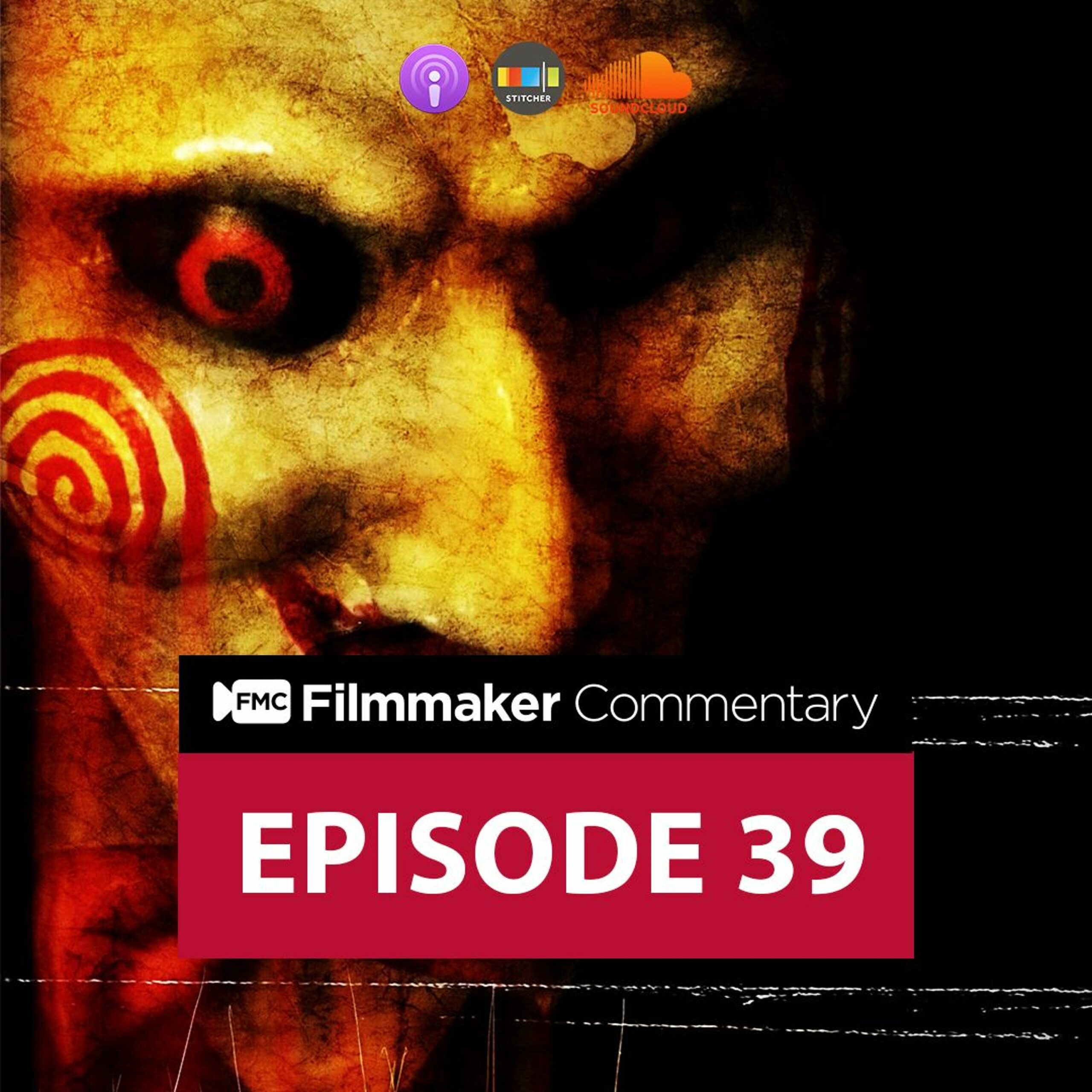
FMC 039: Saw Written And Directed By James Wan also a Stan Lee Tribute

December 26, 2018
Listen on Apple Spotify YouTube
Listen to this episode
Your browser does not support the audio element.
Also on Apple Spotify YouTube

“FMC 039” on Filmmaker Commentary offers a dual-feature episode, beginning with a profound tribute to the legendary Stan Lee. Reginald Titus Jr. and Casey G. Smith reflect on Lee’s incredible life and enduring impact, from his formative years in the comic book industry, where he co-created iconic, relatable, and flawed heroes like Spider-Man and the Fantastic Four, to his role as a global ambassador for equality and creativity. The hosts share personal connections to Lee’s work and discuss his philosophy of tolerance, which shaped characters that resonated deeply with fans across generations. They even touch on how his movie cameos continue to delight audiences, with upcoming appearances still anticipated post-mortem.

The episode then shifts focus to James Wan’s 2004 horror-thriller, “Saw.” This segment breaks down how Wan, alongside co-writer and star Leigh Whannell, transformed a micro-budgeted short film into a global phenomenon that grossed over $100 million. Reginald and Casey explore the film’s surprising depth, positioning it as a psychological thriller that challenges viewers on themes of morality, responsibility, and the true value of life, rather than just relying on gore. They reveal the remarkable production story, including the intense 17-day shoot in a single, repurposed warehouse location in downtown Los Angeles, and how creative constraints pushed the team to innovate on set design and visual storytelling.

Throughout the discussion, practical filmmaking advice emerges, drawing directly from “Saw”‘s production. The hosts cover essential tips for independent filmmakers, emphasizing the critical importance of a robust script, resourceful problem-solving (like using still photographs to bridge narrative gaps), and the benefits of a collaborative, relaxed set environment. Whether dissecting the film’s thematic layers or applauding the ingenuity of its creators, this episode offers a rich blend of film history, critical analysis, and actionable insights for aspiring and seasoned filmmakers alike. The hosts also share quick takes on other recent watches, rounding out a comprehensive and engaging broadcast. Join us on Filmmaker Commentary each week for more.

What We Cover

  • A tribute to the iconic Stan Lee, celebrating his life, career, and profound impact on comics and pop culture.
  • The surprising box office success and enduring influence of James Wan’s “Saw” (2004), made on a minimal budget.
  • The psychological depth and themes woven into “Saw,” moving beyond simple gore to explore morality and human nature.
  • Behind-the-scenes challenges of making “Saw,” including its 17-day shoot, limited resources, and unique set.
  • Filmmaking tips from the director and producers of “Saw” on storytelling, characterization, and maximizing limited budgets.
  • Discussion of other films watched, including “Molly’s Game,” “I, Tonya,” and “Rocky IV.”

Key Moments

  • 2:00 Remembering Stan Lee: His early life, journey in comics, and the creation of Marvel’s most beloved characters.
  • 7:30 “Saw”‘s Shocking Success: How a $1.2 million film became a box office phenomenon.
  • 10:00 The “Saw” Commentary: Insights from the cast and crew on working with limited time and resources.
  • 17:00 Exploring “Saw”‘s Themes: Unpacking the film’s deeper messages on the value of life, punishment, and moral choices.
  • 19:20 Practical Filmmaking Advice: Tips on set design, working with actors, and leveraging constraints for creative solutions.

Gear & Films Mentioned

  • Saw (2004)
  • Aquaman
  • Mallrats
  • Chasing Amy
  • Captain Marvel
  • Avengers (next film)
  • Spider-Man: Far From Home
  • Molly’s Game
  • I, Tonya
  • Rocky IV
  • Gremlins (next episode’s film)
  • Black Mirror, Season 3, Episode 3 (“Shut Up and Dance”)
  • The Office (BBC)
  • The Leftovers (HBO)
  • Jigsaw doll (moved by #6 monofilament fishing line)

Listener Questions

  • How did Stan Lee’s personal philosophy influence the creation of Marvel’s iconic, flawed superheroes?
  • What were the biggest filmmaking challenges James Wan and his team faced while creating “Saw” on such a tight budget, and how did they overcome them?
  • Beyond the gore, what deeper psychological themes does “Saw” explore, and how does the film encourage viewers to reflect on the value of life and moral choices?
Full Transcript

Read the full transcript

Full Episode Transcript
In this episode, Reginald Titus Jr. and Casey G. Smith pay tribute to the legendary Stan Lee before diving into a detailed discussion of the horror film "Saw," sharing their personal viewing experiences and key filmmaking insights.

Welcome and Podcast Update
Reginald Titus Jr.: Filmmaker Commentary, episode 39. Welcome to Filmmaker Commentary, where we give you insights from our favorite filmmaking commentaries. These commentaries can be heard on your DVD and Blu-rays of your favorite movies. We'll show you how you can use these commentaries and apply them to improve your video production and filmmaking techniques. All of this here on Filmmaker Commentary. I'm your host, Reginald Titus Jr.
Reginald Titus Jr.: Welcome to Filmmaker Commentary, episode 39. I'm Reginald Titus Jr. I'm joined with...
Casey G. Smith: Casey G. Smith.
Reginald Titus Jr.: Welcome back, sir.
Casey G. Smith.: Good to be back, sir.
Reginald Titus Jr.: So, we have been on a break.
Casey G. Smith.: Yes.
Reginald Titus Jr.: I think, you know, we went to Santa Monica, we, you know, had to do some film stuff out there and and just life and we're preparing for Thanksgiving and all those wonderful holidays and you know, this part of the year when everything just kind of shuts down in a way. School and kind of work a little bit and it's time to spend some money.
Casey G. Smith.: But we didn't want to forget about you guys. We appreciate all of you taking the time to listen and we have some a little bit of backlog coming coming through. Um, but we definitely wanted to to jump back in and get get back in the saddle, as they say.
Reginald Titus Jr.: Yes. And if um if the listeners out there, you know, you're paying attention to the episode numbers, this is episode 39. You know, episode 38 was Halloween and then we had episode 37, uh, with The Howling, The Howling. But we had a little bit of issue there. So don't be like, you know, concerned if you see the number skip from from 36 to 38 when it fills into your iTunes and Stitcher and things like that. Just know that we'll get back to episode 37, but it'll it'll look weird in your lineup.
Casey G. Smith.: And also know, here at Filmmaker Commentary, there will be spoilers.
Reginald Titus Jr.: Yes, indeed. There sure will be.

Remembering Stan Lee: A Legacy of Heroes
Reginald Titus Jr.: Before we go into this episode, we want to pay tribute to Stan Lee.
Casey G. Smith.: Yes, as uh, many of you may know, at the recording of this podcast, we are at the um, kind of late midway point of November. And um, Stan Lee passed away at the age of 95, um, on November 12th of 2018. And um, here at Filmmaker Commentary, we just wanted to take a moment and and recognize the contributions of Stan Lee, not just to comic books, um but to pop culture as a whole, to film and just being a absolutely fantastic um ambassador of equality, of acceptance, of creativity and just general love for humanity. Stan Lee's impact can be felt throughout generations, throughout all kinds of races, creeds, colors, and throughout the world. Um, and I just wanted to share a little bit about about Stan Lee's uh history uh and background, just taking some information that I found on biography.com. Now, personally, I'm I'm really familiar with Stan Lee. I'm a again, lifelong comic fan, resident nerd. Um, but his his history is interesting, Reginald. Um, he was born 1922 to uh Jewish Hungarian immigrants in New York. He graduated early from high school at the age of 16, and actually started working at at Timely Comics uh shortly thereafter. And he actually was working with Joe Simon and Jack Kirby, who are the creators of Captain America. His actual first credit in a comic book was in a Captain America comic book, and he used the pen name at that time Stan Lee, where his his full name is Stanley Martin Lieber. Um, but he used the pen name Stan Lee because he always had aspirations to become the great uh next great American novelist. And And during this time, in the 40s, it wasn't a popular thing, per se, to say that he worked in the comic book industry. So sometimes people would use pen names in case they wanted to do something later on. Um, after that period, uh of starting at Timely Comics, he actually got drafted, he and he went into uh the Army, served during World War II for the Army Signal Corps. Um, once that was done, he came back, found himself writing writing Western and romance comics, and then of course, he met his his wife uh Joan Boocock in 1947, and they um in 1947, they began their 70-year marriage.
Reginald Titus Jr.: That's crazy.
Casey G. Smith.: That is crazy. That's hard to imagine.
Reginald Titus Jr.: This 70 years of life is hard to imagine.
Casey G. Smith.: Let alone like in in in a in a partnership like that. But I I remember watching a documentary on Stan uh on Stan Lee a couple years back, and he and his wife were featured together, by and large. And they were, you know, they just had this partnership where, you know, they they knew each other and and, you know, they they gave each other the space that they needed, but they were they were together. And um, best friends. It was a beautiful beautiful thing to see. Um, unfortunately, she passed away um, about a year and a half uh, year and a half ago. Once they got married, they they had two daughters, they bought a house in Long Island, uh, and he was still writing for Timely. But Stan got to a point, Reginald, where he became really kind of disenfranchised, um, with the industry and what he was writing and the kind of the golden age of heroes had kind of passed away. But then DC Comics in the 1950s, they revived one of their characters, The Flash, and they began to bring about what what's known as the Silver Age of Comics. Timely Comics had then become Atlas Comics and then now they're ready to change to Marvel Comics. And Stan was charged by the editor uh at that time to bring forth some new heroes because the Justice League of America had already been introduced. And so in '61, that's when Stan Lee came up with the Fantastic Four. And his wife had even encouraged him, said, look, you know, if you're so tired of the industry, why don't you just why don't you just create the characters, write the comics you want to write and don't, you know, and just go for it. And so he and Jack Kirby, who again, he started off working under, now they were, you know, kind of partnered together, came up with the Fantastic Four. Uh, and Lee's kind of concept was to have a group that looked like movie stars, but yet they were also almost like monsters kind of. Uh even the way they come about getting their powers. And so that kicked off a whole renaissance within the comic book industry. Jack Kirby and Stan Lee together, uh, along with uh artists like Steve Ditko came up with just a whole house of ideas, uh, which Marvel would become uh known as later on. So characters like Spider-Man, The Incredible Hulk, Thor, Iron Man, the X-Men, The Avengers, um, also Stan Lee and Jack Kirby, Avengers number five, they brought Captain America back uh into the fold. And they would just kick off something brand new. And one of the big differences that really made these these characters stand out was the fact that they were flawed. And that's one of the big things that Stan Lee wanted. He wanted he wanted people to be able to see these characters, and they weren't like the Golden Age characters who were just perfect and everything's great and we'll save the day and we'll be on our way, fair citizens.
Reginald Titus Jr.: Oh. Oh, man. Oh.
Casey G. Smith.: No, you had you had characters like Bruce Banner, who was a brilliant scientist and physicist, you know, caught in an explosion of a gamma bomb of his own making that then transformed him into a a living monster in The Incredible Hulk. It's a Frankenstein and Dr. Jekyll meets Mr. Hyde story. The Fantastic Four again, caught up in their own science and creation of Reed Richards' ambition to test cosmic radiation. Peter Parker, regular high school student, bullied at school, totally unpopular, bitten by a radioactive spider, and while he gains powers, he ultimately, you know, gets a big head, goes into show business and lets a burglar run by him, who ends up killing his uncle, and then of course, he then learns tragically that with great power comes great responsibility. And all these characters, they're layered with issues. And that resonated with a lot of people.
Reginald Titus Jr.: They felt real, right? You know, um Kevin Smith talks about it, you know, they felt real and they uh they were relatable, they're in real neighborhoods in New York and they know each other, you know. Yes, yes. I mean, you have it in in uh Spider-Man, I think it's The Amazing Spider-Man number number two where Spider-Man literally gets the idea, hey, I could just join the Fantastic Four. I've got some I got superpowers, they got superpowers, why not? Spider-Early Spider-Man, he's like, he's he's a teenager, he's so cocky. He really is kind of cocky. And so he goes and literally breaks into the Baxter Building with the Fantastic Four. They're like, what are you doing? Like. Um, but yeah, they felt real and they had issues. And so as the comic industry rose, Stan Lee's responsibilities at Marvel were everything from editor-in-chief to marketing director and, um, there were certain issues that he stayed on and continued to write with and partner with Kirby. Others, he kind of handed handed over to others to to write. But Stan Lee, he introduced a new method of comics uh how they came together, called the Marvel Method, with more collaboration between writer and artist. He also maintained that everybody involved in the comic book had credit. He would had a had a page at the beginning of of the comics that showed everybody who was involved. The the colorists, the inkers. And then he had a way to communicate with the fans. You know, when you started seeing the at the back of comic books when you had the the the the letters that fans would write in. But then he had a a thing called Stan Lee's Soap Box, where he would address just kind of whatever issues he had on his mind. And there was one that I read this week, Reginald, that somebody posted that was uh in response to Bill Maher's uh recent comments, which Bill Maher, I I've got uh what did he say?
Casey G. Smith.: So, Bill Maher came out recently, um, within this week and slamming uh those who who like comic books.
Reginald Titus Jr.: Really?
Casey G. Smith.: Oh, it's it's it's it's one of the most distasteful things I've I've ever read, saying that, you know, just because in the in the in the 70s when they they had so many college students, they needed to fill the classes and they needed they needed more instructors, so they started having, you know, classes on the the the the philosophy of, you know, the Silver Surfer. But Silver Surfer is a very philosophical kind of comic. And actually, it's Stan Lee's favorite character.
Reginald Titus Jr.: Wow. That's disrespectful.
Casey G. Smith.: It's insanely disrespectful.
Reginald Titus Jr.: Did he say this or did he type it? How was it?
Casey G. Smith.: This was like in an interview that he did. It's it's yeah, it's been you can you can Google it and find it. This is this is stuff that he said directly. And it happened again, this past this week. And so different comic artists and writers on Twitter, boom, boom, they've been they've been going in. So somebody posted a a an outline from Stan's Soap Box where he specifically was was talking about talking about tolerance and acceptance. And he says something along the lines of, you know, we we all have at times conflict and issues with one another. He said, but for one person to take a whole people group, like to say like that that if you have a a challenge or an issue with with a with a person of color, with with a black man, but then for you to say that you have issue with all black people, that's that's that's ignorance and that's evil and it's not right. And he kind of begins to expand on that. And part of it's taken from a quote from somebody else, but somebody used that and injects to pose it with with Bill Maher and then show a picture of him and and the president. But I just thought it was on on his part extremely disrespectful and and and and in very, very poor taste. I don't if you don't like comic books, that's totally fine. You're you you have an opinion, you're you're welcome to share that. But to to come at it the way he did at this time was just um, disrespectful. But anyway, I don't want I won't give you any more time, Bill Maher, back to Stan Lee.
Reginald Titus Jr.: Take that. Take that.
Casey G. Smith.: Um, but Stan in '72, moved out to California and that's when Marvel began to have their television shows, the Spider-Man TV series, The Incredible Hulk TV series with Bill Bixby and Lou Ferrigno, which impacted quite a few people. The Incredible Hulk TV series actually won a couple of Emmys for a couple of its episodes. Um, of course, then...
Reginald Titus Jr.: I remember being a fan of that, The Incredible Hulk TV show.
Casey G. Smith.: Oh, man. If you if you guys haven't seen the actual the pilot for that TV show, um, it used to be on Netflix for the longest, but now I don't know if it is. But if you get a chance to watch the pilot, it's it's like watching a two-hour movie. Right. It is so good. It really I was I I went back and I was like, whoa, this is this is good storytelling. But I was first introduced to Stan Lee in the 80s, when you had the actual cartoons, Spider-Man and His Amazing Friends, and you had The Incredible Hulk. And Stan Lee was the narrator for these TV shows. So you would hear his voice come on at the beginning of every episode. Hey, true believers, this is Stan Lee. And he would, you know, come in and he's a character. Oh, man. Yeah, he would just come in with that voice that everybody just recognizes. And and it was just it was something about it that just, you know, just drew you in. And uh, so I mean, that just whenever I hear Stan Lee's voice, it just takes me back to my childhood, like being four years old and Saturday morning and getting a bowl of cereal, sitting down in front of the TV, watching the Hulk, watching Spider-Man. Um, and of course, you know, from there, in the 70s and then into the, you know, past the 70s, really you got to go into the 90s, that's when you really begin to see the movies begin to start, with X-Men and then, you know, Sam Raimi's Spider-Man. And and Stan Lee starting his history of cameos. Cameos in the films.
Reginald Titus Jr.: Yes. I was introduced to Stan Lee, um, it wasn't via comics. It was I'm a fan of a fanboy, you know, Kevin Smith, as a director. And so he would pay homage in his movies to comics in general. So if you watch movies like Mallrats or Clerks, a little bit, but Mallrats and uh Chasing Amy, where the two characters are actually a comic book writer, artist and then you have his friend who's the inker. So they you don't really draw it, you're a tracer. You know, so so they are they always have that joke in there. But, you know, and having uh Stan Lee come in and, you know, say a few lines and the and that begins the the friendship of Kevin Smith and Stan Lee. You know, he has And I would urge anybody, you know, that's a friend a fan of Stan Lee and everything like that, check out the podcast with Kevin Smith, Fat Man Beyond. And they just recently changed name. Right, SBN, Fat Man on Batman. Right. They said, well, copyrights haven't come after us yet, but we probably should change it. Uh, this is like years, you know, after this. But anyhow, uh, and their most recent episode, they just the whole, you know, it's based in LA, so the whole podcast is dedicated to Stan Lee's stories. So you got people that work in the industry, that's in the crowd. They tell them their stories from all the different Comic-Cons he's at. And then Kevin Smith have just like plenty of stories of Stan Lee, you know, going down the stairs about to fall over and then, you know, Stan Lee's uh body guy always like catches him because he falls a lot. So.
Casey G. Smith.: Oh, wow.
Reginald Titus Jr.: Yeah, so his body guy come catches him and stuff like that. All right, see you later, guys. Like like nothing happened, you know, he'll just fall over and get caught and then see you later.
Casey G. Smith.: Yeah, they said that Stan so much gusto. I mean, even at his age, I mean, 95, even though he had slowed things down after he got his pacemaker put in, still going to conventions, still just that forever that that ambassador of just goodwill. And so again, so many people, you know, in the industry and just fans, having chances to see him and meet him. At at my job, this past week, um, high school students, you know, they were coming into class, you know.
Reginald Titus Jr.: So many generations, you know, because, you know, I was introduced through, you know, these independent films, but then you have this younger generation that's being introduced to him, you know, via these new Marvel movies that are out and didn't, you know.
Casey G. Smith.: Ten years worth. A deca a decade's worth. Well, and it really is more than that. I mean, we're I'm just talking that's that's just MCU movies. But I mean, you can go back to the 2000s with X-Men. Yeah.
Reginald Titus Jr.: I don't think they had lines in, I don't know if he had lines in those. Do they have lines?
Casey G. Smith.: I think in I think in everyone, he has just like something that he says. I'll have to go back and watch the first X-Men.
Reginald Titus Jr.: I think one of them, he didn't have any lines, but he said, from now on, I want some lines.
Casey G. Smith.: Let him know, Stan. Let him know. But that's his thing, likes movies, likes to be in the movies.
Reginald Titus Jr.: He does. And he's he's just got that personality, but um.
Casey G. Smith.: It's like you almost expect it now, you know what I mean? Like, if that cameo ain't in there, like, people are upset.
Reginald Titus Jr.: Well, they they kind of knew Stan's health was was was ailing, so ailing. So they actually have recorded a couple of cameos for the upcoming Marvel movies already. They kind of backlogged a couple, so. What the They just kept it.
Casey G. Smith.: It's Captain Marvel one should be there. People are going to cry. Oh my God.
Reginald Titus Jr.: And then his next Avengers film, I think I I think they captured that one and hopefully for Spider-Man uh Far From Home, um I think they may have done that one as well. So we at least I think we at least have two more coming. Um, maybe maybe three. And uh, uh, thank you all for taking the time just to to to allow us to just to to honor uh somebody who who was willing to take a risk to let their creativity reach out and and touch the world and to and to be willing to to push and advocate for their passion and may we all be encouraged to to do the same.
Casey G. Smith.: And a blueprint. How about a blueprint to live your life? You know what I mean? Yeah. Like how he was with the fans, you know, he would turn on the Stan Lee character, even though it's not all the way him, he would turn that character on for people. You know, going to the Comic-Cons, uh, you know, being with his wife for that long, you know, just his philosophy that he put in his comic books, like Speaking at colleges. I mean, the 70s, he was at colleges speaking all the time.
Reginald Titus Jr.: A blueprint. A real blueprint. Yeah. Stan, we love you, we miss you, and uh, Excelsior.
Casey G. Smith.: Yes, indeed.

Introducing Saw: Production and First Impressions
Reginald Titus Jr.: All right. Welcome back to the show. And today we're going to talk about Saw. Made in 2004, or released in 2004, directed by James Wan. Now, I have a budget of $1.2 million. Got a box office of $56 million. Uh, international box office of $47.9 million, which is about a total of $103.9 million. Is that correct?
Casey G. Smith.: That's what I have. And that is a win. Oh my God. Whoa. Man.
Reginald Titus Jr.: One hundred percent. Yeah. You can't beat that. That's Wow.
Casey G. Smith.: After that, James Wan can have the world. Like whatever you want, they just throw money at him. He can do like three losses and it doesn't matter. And he's I mean, his his trajectory of his career is just going up, up, up and up, where I mean, again, as of this recording, you know, Aquaman is getting set to drop in uh in December. It's the biggest budget that he's he's worked with thus far.
Reginald Titus Jr.: Always scary.
Casey G. Smith.: Mm-hm.
Reginald Titus Jr.: Uh, but he's definitely This is like a proof of, you know, somebody really is like his nationality, he's Australian, but he's like Malaysian Chinese. And just coming over here, you know, with a short film and, you know, developing into a feature film and getting this thing rocking and rolling with a production company that they literally put their houses up to finance. That doesn't get any more risky.
Casey G. Smith.: Yeah, yeah. And and and just, you know, being able to partner with his friend, uh with with Leigh uh Whannell.
Reginald Titus Jr.: That's right. That's right.
Casey G. Smith.: Um, they were buddies in film school. And just, man, just working at it, going for it and just doing what they could with the time that they had and, yeah.
Reginald Titus Jr.: Go for broke, man. Now he's, you know, um James is, you know, producing films, you know, producing uh these horror films and, you know, making a pretty penny from these films. Uh, and now getting the chance to to direct Aquaman. Hey, man, I I hope it's a W. You know what I'm saying? After like reading, you know, knowing the history of him because I didn't when Aquaman, you know, when the trailer came out, I was like, ah. But uh, I hope he gets a W, you know, that's all I can say.
Casey G. Smith.: Yeah, a lot of people have hope in the film because he's the one directing it. Um, they're like, okay, you know, um.
Reginald Titus Jr.: My initial response, um, I watched it um with the wife the other day, and I was surprised by the film. I really was. I was expecting it to be gory and not really have a soul to the film. I was that's all I was expecting. So, it feels a little bit dated.
Casey G. Smith.: Yeah, a little bit. Yeah, a little bit. And any time you pull out a flip phone, you're done, you know. It's.
Reginald Titus Jr.: It's.
Casey G. Smith.: 2004, man. 2004. You're done.
Reginald Titus Jr.: It's just the time stamp, that's all. It's the time stamp. That's all.
Casey G. Smith.: It really is a small window of time for the flip phone, if you think about it. You're talking late 90s and maybe up until like 2000, cuz first iPhone is is 07. So you're talking a pretty small window for the flip phone. Wow. Again, it really is a time stamp. Sorry. Tangent.
Reginald Titus Jr.: But how about that reception? You know, there.
Casey G. Smith.: Who's your carrier?
Reginald Titus Jr.: They're in this like blocked off room and they're just getting great reception, okay.
Casey G. Smith.: Maybe he's got a Nokia or something. I don't know. I don't know.

Deep Dive into Saw: Themes and Twists
Reginald Titus Jr.: All right, I'm going to get into the synopsis real quick. Obsessed with teaching his victims the value of life, a deranged, sadistic serial killer abducts the morally wayward. Once captured, they must face impossible choices in a horrific game of survival. The victims must fight to win their lives back, or die trying. Saw. This is the uncut version I watched.
Casey G. Smith.: Yes, I watched the uncut version as well. And uh, you're right. From all I had heard of the film, cuz I didn't see it when it initially came out. It was years later. Um, and I expected, I expected it to be way more gory and and and bloodier, but it really it's it's not. Even with this this version of it, there's some, you know, there's some gore, but it's not anything near what I uh had expected. It's a horror thriller, you know.
Reginald Titus Jr.: Yeah, exactly. Yeah. It is a horror thriller.
Casey G. Smith.: It does feel a little dated, but also they you know, they they were working within a budget and a a very pretty tight budget too. Yeah. Money and time, 17 days. 17 day shoot.
Reginald Titus Jr.: And if you and you're shooting in LA. So the prices are high. And so whenever you need to rent, you know, they shot it at, what was the name of the production facility, uh the studios they shot it at? They were um Okay, so I listened to the the the commentary, the regular director's commentary with the actor and everything, and then uh uh maybe three fours of the commentary with the producers.
Casey G. Smith.: Oh, nice.
Reginald Titus Jr.: And so that's actually enjoyable because a lot of business, you know, both the producers, all they're talking about is business. So it's a different mindset. When you're listening to like the directors, it's like all creative and they're having fun and stuff like that. The producers are almost like, their jokes aren't landing and. Almost distasteful sometimes. Uh, but, you know, keep in mind this is pre-Me Too. So there's some things in there. Uh.
Casey G. Smith.: Yeah, there was you know, that's. This is time stamp, this is definitely time stamp.
Reginald Titus Jr.: Yeah. gotten more sensitive since this case. Yeah. Is this is this is this thing live? Are we being recorded? Yeah. It just comes out like it's nothing. That's why it's so interesting.
Casey G. Smith.: Mm-hm.
Reginald Titus Jr.: Um, but yeah, so the facility that they recorded is like in downtown LA and it's um, not necessarily abandoned, but it's a place where they do like a lot of porn and like rap videos.
Casey G. Smith.: Ah. And like everything like everything was shot. Like the whole film was shot there in that space.
Reginald Titus Jr.: Man, that's crazy. Yeah. Even like the the outside stuff was kind of like shot. I don't know, like it was right right right around it, I guess, but like just about everything was there. I guess technically there isn't really an outside shot. It seems like it's outside. Maybe the only thing that I can remember that was outside was when the truck's pulling up after the car chase.
Casey G. Smith.: Cuz like when Danny Glover though was looking out out the place that he's in, like across the street, he's like looking across the way. I'm trying to remember how they they did that. And they use pictures to like fill it in to give like a montage. Yeah, yeah. But nonetheless, like pretty much all all in the same spot, which is and and making everything so his his set designer, they give props to to that person for making everything just look so different. And they pulled it off. They did. They really did. Cuz when they said that I was like, that's impressive. And again, 17 days. Didn't even have a chair for James Wan. He was sitting on like a milk crate initially or something like that. They're like, get this man a chair.
Reginald Titus Jr.: How did you watch this film like the first time around?
Casey G. Smith.: So I was introduced to it, uh, when we actually went to we found a a sale at a Half Price Books and they had a bunch of uh things on on sale for a dollar, clearing out inventory. Uh and that's when I that's when I scooped it up. I was like, you know what?
Reginald Titus Jr.: A book?
Casey G. Smith.: Yeah. I yeah. Yeah. So uh, scooped it up with with a couple of other gems. And um, about maybe three, maybe two years ago, I think is when I finally watched it. It may could have been it could have been maybe three. Set down and watched it and I was really like, wow, you know, this had more uh more going on than I expected. I just I literally just expected a kind of a torture porn kind of thing. Right. Now I haven't I haven't seen any of the previous or or any of the the saws that followed, so, um I don't know, I don't know if they if they go into more of that, but uh but this was this was it was pretty it was pretty smart. It keeps you guessing up until the end. Um, and I I yeah. Yeah. So, and this time around, I I just, you know, I watched I watched it again just to kind of jog my memory cuz you know, there's a lot of different twists and things like that. And there were some people that I recognized now that uh I I didn't know. Like the the actress that plays Cary Elwes's uh wife, she is in um the NBC TV series that I I watched all of, Parenthood. Hmm. Yeah, she's one of the main main uh characters in that, like all six seasons of of that. And so I was like, oh, hey, that's that's her. Yeah. I've I've forgotten that that Danny Glover was was was in it. I was like, oh, yeah, he is in this. So yeah, it was good to good to revisit it. Yeah. And I always enjoy Cary Elwes and his performances. And the the the writer, Leigh Whannell, he he gave a good performance as well. That's right. That's right. Me, I I just kind of dismissed the film. Never, you know, I was like, ah, I'm going to skip. It's like. Just because I wasn't like horror, I guess it's okay, but wasn't really on my radar for probably the last 10 years or so. Mm-hm. And something just to go out of my way to watch. Every now and then there's something that'll pop up that I will check out, like a paranormal activity or something like that. But outside of that, nothing really started jumping on my radar. You know, it's not until I started studying films that I started getting more interested in horror. And now, like I'm actually more interested in because it I believe it it dives more into the psyche than, you know, we give it credit for.
Reginald Titus Jr.: I I'll agree with you on that. I I had a conversation with some people yesterday. I was talking about our our our podcast with them, and then we started talking about films that we've that we watched as kids that kind of scarred us. Or or we saw a clip of, and even now, as as grown men, going back and watching, there's still some of the feels are still kind of there. Uh, and that was it was fascinating to to hear some other other men like just mention that. I'm like, oh, man, yeah, okay, I'm not the only one around here. It happens to us all.
Casey G. Smith.: Like inner child.
Reginald Titus Jr.: But yeah, psychologically, yeah. And and something not just from being a kid, but there are themes, definitely that for sure. Especially as as we begin to study these things, you see like, oh, okay. And they're they're often saying something and and speaking to to the human condition in different ways. And some of these monsters and um urban legends and myths sometimes are created from different psychological, uh, for sure and societal things. For sure. My first time watching it was just yesterday. And just surprised. Watched it with the wife and we were both like, what? You know, especially at the end, you know, like, no, like you feel the horror as this guy's like rising into the park. Like, what the yeah. He's like, wait a second. This dude's still chained to the thing, like, he's done for it. Yeah, man. That sucked. Yeah.
Casey G. Smith.: And here's the amazing thing that as long as it took us respectfully to to to watch it, I never had I never had the ending spoiled.
Reginald Titus Jr.: Yeah, me neither.
Casey G. Smith.: Yeah. And I was I was I after I was like, I'm really surprised this was never spoiled. As many sequels as this has spun, this was never spoiled. And as we mentioned earlier, there will be spoilers. So if you're listening to this. Hey, we might be those guys this go around, but we'll let you know up front.
Reginald Titus Jr.: That's true. Yeah. Wasn't spoiled like, you know, you had like the Sixth Sense and these other films that blow up, always spoiled, you know. Yeah. Easily.
Casey G. Smith.: Yeah.
Reginald Titus Jr.: But yeah, this I was totally surprised.
Casey G. Smith.: Mm-hm. Yeah, me too. I was like, that was a good one. That was a good. Yeah. I was like, wow, I did not. Where I mean, it's it's again, like so brilliant psychologically that that you don't know who the bad guy is. It's just that everybody is a pawn. And this they're being set up and they're being blackmailed and, you know, people are trying to find this this person, this this quote-unquote bad guy, the antagonist. I'll I'll say the antagonist. It's trying to get people to value life more. At really at the end, and afterwards, you know, they're like, you know, you know, the girl with had the who had the reverse bear trap in her mouth, you know, who was a drug addict. You know, are you grateful? You know, and it's like, yeah, he got clean and it's like, man, but what did it take, you know, to push you to the extreme of, forget that. Guts and bowing somebody.
Casey G. Smith.: That was still alive. About that.
Reginald Titus Jr.: Yeah, I was totally totally surprised. So that was a good surprise. Will you watch any of the sequels now?
Casey G. Smith.: I saw the trailer. I said, let me look at just Saw 2, the trailer. And so I think the trailer um, I saw the trailer, but they're like all in one location, it's like five or six people all in one location trying to get out. So different scenarios and I'm actually interested in watching some more now. I'm about to check it out. I know it's on um, show no, Stars, I think. Stars or Showtime has Saw 2. Has multiple, yeah, has multiple uh of the sequels showing.
Reginald Titus Jr.: Okay. Um, it's funny listening to the producers talk about the film because uh James Wan goes on set on Saw 2, like, man, y'all got, what y'all got, man? I didn't have this on the first film. Y'all tripping. Yeah, cuz he really did. He really like at the end of the commentary, he kind of mentions that he wasn't fully happy with with how it came out because he just he he wish he had more time, more this, more that. Don't we all, don't we all, bro? Yeah. More money, more time. Yeah, but he he felt that. Uh and in the commentary, you know, with him and um Leigh and and and Cary, they joke around a lot in the commentary. What'd you think about? So, this is a commentary with three people. So, you have what, the director, the writer, who's also an actor, and then another actor. Mm-hm. You could say you're a quote-unquote first-time actor, you know, with experienced actor.
Casey G. Smith.: Yes. Um, I I I enjoyed them getting along. Sometimes I get annoyed when when people are having like, not I don't want to say a good time, but like when they're when when you have sometimes actor and directors and it's like it could be multiple. I thought they did a a good job of like they had fun, they had a laugh and then kind of bring it back where you could still get some some nuggets out of it. Um, but yeah, but they they they they do joke around quite quite a bit. And you could tell how close how close they are or became from this experience.
Reginald Titus Jr.: True. Like roommates or whatever, right? Before. Yeah, yeah, but even with even with Cary Elwes, like just as an an accomplished actor. It's right, cuz he's in the room with the guy. Yeah, literally like. But they really do, I mean, like they they even says that they they've they've they have become friends since since the filming of it. And uh, I thought that was pretty pretty amazing. And the fact that, um, they actually sold Cary by showing them their their short, their 9-minute short, um of of uh of Saw, which they wanted to call something else prior to Saw. Um, The Jig I think uh The puzzle? Jigsaw Puzzle? Yeah. Something with the puzzle. Something with the puzzle. Or the doll. I forgot the name of the doll. But yeah, , I thought the commentary was fine. I almost want to say I had listened to the the the producing one just to kind of see what what kind of nuggets they would have had there. But um, yeah, I had to make a decision. I was like, okay, do I want to watch the the second disc um and watch the short film and all that, cuz that's what I was going to do. And I was just like, let me just play this producer's thing. This is kind of see what it's up. And then they started talking about some of the business. I was like, okay, I like it. Yeah, I watched I watched the short right right before you right before we started started recording. It was it? The short film? It was actually pretty well done. It it really is. The editing on it is is really good. They basically the the short is basically, um, it's it's Leigh playing the basically playing the role of the the girl who was in the police office, who had the reverse bear trap. It's it's that it's that scene. But it's him playing the role instead. Yeah, and like he's being he's being interviewed by I guess like an officer. And like, what do you remember? Like, and and and he actually, it's like a combination of of Leigh playing the girl, but he's his his job is one who is the orderly at the hospital. So it's like kind of like two combined together. Yeah, but it was it's it was well edited and I was like, wow, this is this is well done. But it has I mean, it has the whole the whole vibe is there, the editing, the quick cuts. It's there in the short. It's crazy. I like it. So, we'll take a break right now and go into Movies Watched. All right. Um, we'll make this one kind of quick. What movies did you watch in this past few weeks or a week or whatever? It's been a while. So.

Recent Film Viewings: From Poker to Figure Skating
Casey G. Smith.: In this window of time. Uh, there's two that I'll highlight really quick. Uh, the first is Molly's Game, the directorial debut of writer Aaron Sorkin, based on, um, the life of a woman named Molly. Uh, who who has a very interesting uh very interesting history, but was um, investigated by the FBI for running a an illegal uh poker game. Uh, one of the largest and most high-stakes poker game in in the country. And Molly's played by Jessica Chastain, uh, brings on uh uh Idris Elba. Idris Elba as her uh defense attorney. And uh, throughout, you know, she's sharing her her story with them. Thought it was really well done. Uh, really enjoyed it. I mean, Jessica Chastain, she always brings it. Uh, and I thought Aaron Sorkin did a good good job. The dialogue is is sharp and and and witty as you would kind of expect from him. What platform was it on? Was it still in theaters or? No, no, this one came out last year. Uh, it had some it had some buzz around it going into the year. And I don't know if she was nominated for an Oscar or not. But, but yeah, Molly's Game. I think I think it's it's yeah, it was it was enjoyable. Kevin Costner plays her her father in the movie. I I enjoyed his performance as well. Can't go wrong, Kevin. Yeah, he he. And Idris. Come on.
Reginald Titus Jr.: Oh yeah, man. Yeah, always. And then secondly, I Tonya.
Casey G. Smith.: I remember the marketing campaign behind I Tonya. Like the images of that, I'm like, this is going to be dope. I haven't seen it, but like that looks pretty cool. Especially especially going like living through the real situation. Yeah. Like I could only imagine the movie. I didn't even thought it would be a made into a movie, maybe like a documentary or something, but.
Reginald Titus Jr.: Did you ever see the 30 for 30?
Casey G. Smith.: Uh-uh. I didn't know there was a. Oh, man. Yeah. If you get a chance, yeah, the 30 for 30, they did. Who do they interview? Um, they interviewed they interviewed Tonya, man. I may not let me not lie, cuz it's been a while since I watched it. I'm trying to. Yeah, okay, yeah. Tonya was in it. Uh-huh. Her ex-husband. That's the one who did the bashing. Well, he actually didn't do the bashing. If there's another guy, like yeah, it's it's it's it's worth watching because this really kind of breaks it breaks it down. And yeah, so that documentary and even even Nancy, Nancy isn't in in the in the yeah, Nancy Kerrigan isn't in the 30 for 30. I think her parents are. I think they talked to her parents. Very, very fascinating. Totally totally worth watching that. You can find a 30 for 30. So horrible, man. Like the situation is bad.
Reginald Titus Jr.: But once you, yeah, it's it's it's interesting because so when you watch the movie, also the movie, I Tonya was it's well done. Well done. It give a good insight on what's going on. Yeah. And and it's and it's Cuz I'm the propaganda baby. Like I just whatever the news gave me, that's what I that's what we had, right? We couldn't go to the internet research and look up who Tonya Harding, uh what's going on with her. Like we had all we had was that information. And it was here's the interesting thing. It was at a time cuz it was 94. It was at a time where you began we were just at the cusp and the introduction of the 24-hour news cycle. And they needed stories. They needed coverage. So they were covering this thing like crazy. Then the next thing that would come next would be O. J. Yeah, so so it was boom, Tonya, then the O. J. thing. So, you know, he had he had shows like Hard Copy. Uh, remember Hard Copy? Doon doon doon doon. And they they oh, man. Yeah, I Tonya is is enjoyable. I mean, I can't I can't say enough, you know, one to the director, Craig Gillespie, does a fantastic job. But Margot Robbie as as Tonya Harding, uh, is amazing. And also producer on the project. So she is she is crushing it. Sebastian Stan as as her her husband, dude, like he he impressed the hell out of me in in this role. Like really a kick-ass job. And then the woman that played her mother. Mm-hm. She actually was nominated. She was nominated for an Academy Award for her role. That's a good one to look up for commentary, maybe. It has commentary. Well, I'm not going to lie. Let me let me let me double check. Don't lie to me. Don't lie to me. You know what, I actually know it does, cuz I was looking at I was looking at over the the special features. It does have uh a commentary by by by Craig. Craig Gillespie. But yes, I Tonya. I, Casey, highly recommend I Tonya. It's it's just it's just one it's a it's a ride from start to finish. It's shot in a way where it almost mimics the 30 for 30 documentary, where it it literally cuts it it cuts to her and and these these people involved later in life as they're older and they're and they're talking. And which is how the the 30 for 30 documentary was. And then it goes to like the events. So you're you're constantly getting everybody's perspective. That's nice. And ah, it just goes. Man, I almost I'm going to watch I might hell, I might watch it again now I'm talking about it. I'm getting like, oh man, I'm like, oh man. But yes, I Tonya. I Tonya. I haven't really watched any movies in the last few weeks. The movie that we did watch, and you were there, was Rocky IV when we went to Santa Monica. Yeah. He dies. He dies. No pain. So with the child. So with the damn child. You kill. This is supposed to be an exhibition. So many quotable lines. Ding, ding. Yeah. So, Rocky IV is just a good time, you know, it's just it's conflict, and you see it visually, it's a music video montage. It is like a like a like a a 90-minute music video. And in the best way possible. Right. My my takeaway from Rocky watching Rocky IV uh was that, you know, obviously Rocky training montage. We got to have a training montage. For sure. And what I never noticed before was that when he initially starts and does the first part of the training montage, they're just playing kind of little little instrumental instrumental music. And then at.
Reginald Titus Jr.: Oh, there's the music. Oh.
Casey G. Smith.: And Rocky's going through and he's kind of getting used to trudging through the snow and he's got the the KGB kind of following him. Right. And then he he gets kind of halfway through the montage and all of a sudden Adrian shows up. Spoil spoiler alert. Spoiler alert. 30 year spoiler alert. Adrian shows up. Right. I missed you. I miss you too. And all of a sudden, boom, we get hearts on fire. And the whole montage changes. The energy goes up. I'm like, Rocky got laid. That's what happened. Sure, there's all he's sweating. You know, like, this man got laid. Back with the misses, back in the saddle. Drago. Rocky IV is just a good time. Oh, man. There's a message in it, you know, love at the end of the day.
Reginald Titus Jr.: We can all be humans. Cuz you can change. And I can change. We can all, we can all change. Which is a good little warm-up for Creed 2 coming in two days. Oh yeah. Oh yeah. So, yeah, that was my uh movies watched. That was a good one, you know. That was that was cool to revisit. Yeah. It's brief. It really it really it flew by. I was like, wow. That's great. Something that you like and you can just like get into it like boom, boom, boom. You're like, I'm satisfied. This is like a like a nice little snack. I was like, hey, okay, we're good here. We're good here. I forgot what podcast I was listening to, but they were talking about like the death of films because, you know, they're only, you know, 90 minutes, 100, 120 minutes, whatever. And will they ever go away because there's so much TV content? Um, episodic serial content. Um, and they're saying, I forgot what I was listening to. Maybe not because we want closure. We want the story to end. Yeah. And you come away with a feeling, you know, there's closure, you left, you should come away with something. And the reason with uh we binge-watch episodes is because we're trying to get to that conclusion. That closure, but we never get to it, especially the way the Americans do their film, their TV series, as long as it's making money, they just keep it going and it never comes to an end. Cuz the goal is at least get to that that magic third season to get that syndication. Yeah. But some but we're searching for that story to kind of wrap up, you know, we're searching for that. That's what gets us coming back. The left the leftovers on HBO. Mm-hm. Only two seasons. Closure. Is it American? Yeah. It is. Okay. Mm-hm. And and it's it's that is that is rare though. It is rare though. But depending on kind of who you're with. If it's like a is it a mini series or was it like It's on premium, it's on HBO. So, I think when you're in a model like that where subscriber-based to a degree, you can you can have you can go find out, yeah, you can say, okay, we're just this is all the story that there is within this. We're wrapping it up. And then you go on doing you can have a different. I think I like that approach serial content because with the writers, they all know that it's going to end and they can write those arcs. You can visit the characters, however long you need to visit them and hang out with them, but then you know there's an arc coming around and it's coming to an end. Whereas if you're just writing, I think that's the difference between like if it's just a sitcom. You're just hanging out with these people like, you know, Fresh Prince of Bel-Air, Martin, you're just hanging out with these people in this location for for 30 minutes and then you're going on. You're not really expecting like this whole story arc for seasons and episodes. You can kind of click on 100 episode 100 and just have some entertainment, then you're done. Yeah, they want to keep those, you know, those those sponsors coming coming through. It's a different when people are are paying for the content that that does give you that it does give you that freedom, you're like, okay, we don't have to stay going just for the sake of, oh, we got to make sure this sponsor stays. You know, we need to wrap this up. We could we could wrap it up and then and and make it satisfying. It's it's always nice when a show can can have a nice a nice uh satisfying ending. Yeah. Um, and I think that's the thing I liked about the I was I was kind of frustrated with like the BBC and their network. Um, but I could appreciate why they only do like two seasons of something. Six episodes. Yeah, and then do like a special, like out of nowhere, maybe do a special. That was like The Office. Uh they did two seasons and then did a special. And then they're done. So it was like a long movie, basically. Hmm. I like that. Movies, sticking around. I think so. So, back to the show. We are back to Saw, 2004, themes. So before we go into themes, I was um, I, you know, I've been been listening to a lot of podcasts, so that's kind of like my thing is, you know, listen to other podcasts and kind of developing and listening to other filmmakers and stuff. But there's a podcast I listen to, it's Indy Film Hustle by Alex Ferrari. He had a director on there. Uh his name is William Dickerson. He's the author of the book, Detour Hollywood, How to Direct a Microbudget Film. And he talks about theme a little bit in there. And he says like the best artists, you know, of the craft and everything, they think about their theme first and style second. Because a lot of times when we think about directors, we think about style, like, you know, Tarantino or Fincher style and all that stuff. But he was saying that they think about theme first. And he quoted Francis Ford Coppola. Coppola. Nailed it. Uh, he says, as a director, you must have a theme because as a director, you will have like 500 questions to answer every day, and you won't have the answer to all of them. But if you know your theme, you will have the answer to every question. And he used an example from the film, Conversation, which he did between Godfather 1 and Godfather 2. The theme of that film is dealing with privacy, and then on another level, it's the invasion of privacy. And it's basically a story that's Gene Hackman is basically, his job is to uh spy on people's telephone conversations. So he's listening to get information. Um, but he's not supposed to be personally involved. So he gets personally involved, and because he gets personally involved, his privacy uh becomes invaded. Interesting. And so, uh Francis Ford Coppola, uh his costume designer comes in and asks about uh the hero's coat, you know, what what coat should it be? And she had like three or four different versions, and one of the versions was a see-through rubber coat. And he's like, that's the one because we're talking about invasion of privacy. So, Yeah. Thematically, you can make choices to kind of visually coincide with your theme. So when you make your choices on the same theme, that style will start to bubble up to the surface. So, with that being said, you know, I couldn't, of course, we're guessing what the themes may be or what the director if they don't unless they say it, you know, blatantly. One is the value of life. Mm-hm. And no sin goes unpunished. And that's kind of what I two I came up with. So, um, I had I I definitely agree with those. I also had, um, going with that kind of value of life, no sin goes unpunished. I had kind of a twisted morality. Mm-hm. That again, this this uh antagonist is out to have people do the quote-unquote right thing, but but within it, he has them at times taking taking life uh and putting other lives on the on the line to do so. That's crazy. Um, but also, um, I think they actually they mentioned this in the commentary the kind of um, they talk about like confor conformity, having people to choose between conformity, punishment, like having to conform to the standards that this person is setting. Mm-hm. Uh, or you'll face punishment for it. Um, and they kind of believe that in different areas of of of life. If you're into society, if you're at times you don't conform, you might face punishment. Like them going for this kind of movie and film and going independent, you know, there's a risk in that, there you could almost be punished. If this didn't go right, James Wan his career could have looked very, very differently. Um, and then I just you know, even like this secrets and and and blackmail because like everybody has these secrets and everybody's out to to almost to blackmail somebody else. It's constant layers of of blackmail. Even the main guy that we thought was the main bad guy, he was actually being, you know, blackmailed also and and and set up. It's just it's just continual. And even we find out that, you know, Leigh's character has been taking pictures of Cary Elwes's character, you know, like, man, it's just it's just constant. Like nobody's hands are It's kind of strange because I was and me and my wife were kind of talking about it. It's like, okay, because we're trying to figure out the uh like, what's the rules of this guy's moral philosophy because, you know, what gets you into the cage of, you know, having to harm yourself, you know, in order to live or harm somebody else to live. And or kill somebody else, whatever. What was Adam's crime, you know, because he's he's a private investigator. Like that's his job, right? And he's being hired by another cop to try to figure out this crime. So, you know, what gets him in this place? Is it just because he's getting close to the killer or something like that? Like, what gets him in that place? And we see the other lady with the bear trap in her mouth. She's there, maybe because of her drug habit, maybe. Yeah. Yeah, that was the yeah, directly because of her drug habit. And because he was like wasting her life through drugs. And then the other guy, like, uh, that she kills, takes his stomach out of. Like, why was he in there? You know, it's But we don't know, you know, that was just a flashback. Remember? I don't remember. You know, the guy that she had to take the key out of his stomach. You know, he's alive. So, like, what what did he do to get him himself in that position? Because he doesn't have the opportunity to save his life, you know, he he just he's just a sacrifice in a way. Right. Some people are are literally dependent on the choices that others are going to make, and what they're what they're willing to do. Sometimes I I sometimes, honestly, a lot of times it's about self-sacrifice. Like, will you It's almost like selfish to a degree. Cuz a lot of times people have to either choose themselves over somebody else at times. Because I mean, even with with Cary Elwes's character, he's actually told to kill Adam's character by poisoning him with whatever's in the blood and putting that on the cigarette. And they figure out how to get the life to go off and kind of fake that and then they obviously end up getting shot. But. But yeah, there's just constant uh yeah, having to almost like choose somebody's life over your over your own. Mm-hm. You know. But. You want a fair fight at the end of the day. Mm-hm. I know the most gruesome one was the razor blades. Like, really? Like. Oh, man. Oh, the guy like crawling his way through. Yeah. Or the guy that's like butt naked and he's got to set set himself on fire by accident. Oh, man. That was trying to get the combination lock. Like, oh, stepping on glass to find the numbers. That's horrible. How many people get like just drug and taken advantage of and just they wake up somewhere? Yeah. And that sucked too, when they showed like the zoom in of the key that opens up the lock, like going down the drain, the bathtub. Yeah, at the beginning. Flashback to it at the end. Oh, the key's in the tub. Like flashback. Yeah. And just being chained, I mean, chained to something and then having these hacksaws that seemingly could maybe do something, but, nah, it's not enough. That's brutal. That concludes this episode of Filmmaker Commentary. Next week, we next week, uh, we're going to watch Gremlins. Yes. And if you would like to follow us, you can catch us at Facebook.com/filmmakercommentary. And if you have a suggestion for a a movie you'd like for us to review, number one, please make sure that it does have commentary, preferably by the director. Boom. Um and um yeah, send a message to us on Facebook. And or you can reach Reginald at @ReggieTitus on Twitter or on Instagram at Reginald Titus Jr. and you can find me at Twitter and on Instagram, simply at @CaseyGSmith32. That's it and peace out. Peace. That's it and peace out. Peace. Peace.

About Filmmaker Commentary

Reginald Titus Jr.

Apple Spotify YouTube Subscribe Free
Continue Listening

FMC 244 : The Karate Kid Directed by John G. Avildsen

June 20, 2026

What We’ve Been Watching Episode 008

June 12, 2026

FMC 243 : Love and Basketball Written and Directed by Gina Prince Bythewood

June 9, 2026

Leave a Response Cancel reply

This site uses Akismet to reduce spam. Learn how your comment data is processed.

Never Miss an Episode

New episodes every week — free.

Listen on Spotify Apple Podcasts

Recent Episodes

  • FMC 244 : The Karate Kid Directed by John G. Avildsen
  • What We’ve Been Watching Episode 008
  • FMC 243 : Love and Basketball Written and Directed by Gina Prince Bythewood
  • What We’ve Been Watching Episode 007

Archives

  • June 2026
  • May 2026
  • April 2026
  • March 2026
  • February 2026
  • January 2026
  • September 2019
  • August 2019
  • July 2019
  • June 2019
  • May 2019
  • April 2019
  • March 2019
  • February 2019
  • January 2019
  • December 2018
  • October 2018
  • September 2018
  • August 2018
  • July 2018
  • June 2018
  • May 2018
  • April 2018
  • March 2018
  • February 2018
  • January 2018
  • December 2017

Categories

  • Film
  • Podcast
  • TV
© 2026 Filmmaker Commentary. All rights reserved.
  • About
  • Episodes
  • Privacy Policy
  • Disclaimer
  • Terms of Service