November 17, 2026
F
Filmmaker Commentary
  • Home
  • About
  • Episodes
  • Film
  • TV
  • Home
  • About
  • Episodes
  • Film
  • TV
Podcast

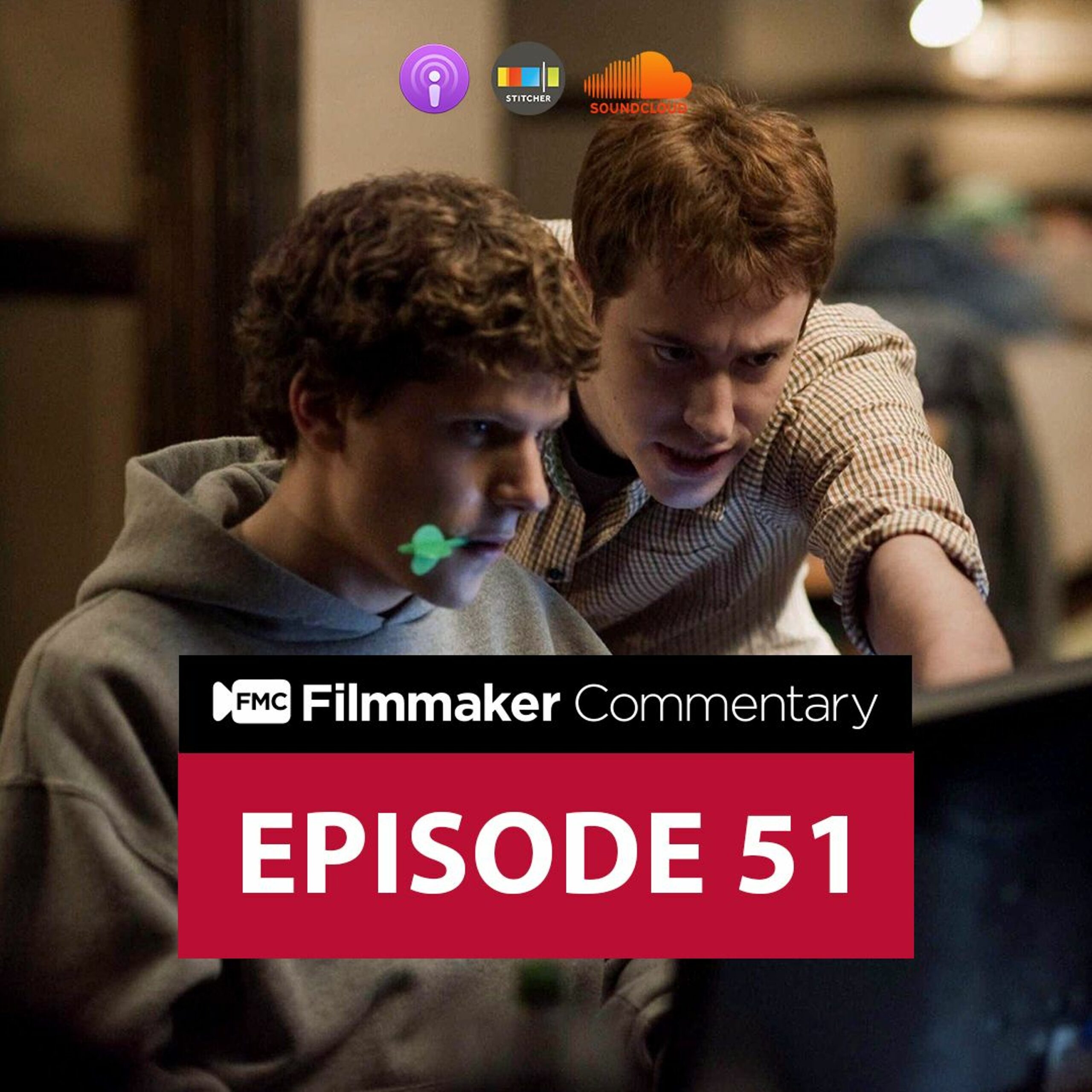
FMC 051: The Social Network Directed by David Fincher

March 25, 2019
Listen on Apple Spotify YouTube
Listen to this episode
Your browser does not support the audio element.
Also on Apple Spotify YouTube

Dive deep into David Fincher’s “The Social Network,” a film that isn’t just a fascinating look at Facebook’s controversial origins but also modern filmmaking. Join Reginald Titus Jr. and Casey G. Smith as they pull back the curtain on Aaron Sorkin’s sharp script, Fincher’s meticulous direction, and the unforgettable performances that brought this internet origin story to life.

This episode is your backstage pass to understanding how a story about legal battles and coding became a examination of ambition, friendship, and the digital age.

What We Cover

  • How David Fincher transforms dialogue-heavy scenes into dynamic storytelling.
  • The distinctive writing style of Aaron Sorkin and its impact on the film’s pacing.
  • Unpacking the nuanced performances from Jesse Eisenberg, Andrew Garfield, and Armie Hammer.
  • Behind-the-scenes magic: The seamless visual effects creating the Winklevoss twins.
  • Key themes of the film, including the complex relationship between friendship and business.
  • Insights from the film’s commentary tracks, revealing production challenges and creative choices.

Key Moments

  • 0:35 – Introduction to “The Social Network,” including budget, box office success, and Oscar wins.
  • 1:43 – Reginald and Casey share their initial reactions to the film and how they were introduced to it.
  • 2:08 – A deep dive into the dual commentary tracks, offering diverse perspectives from the cast and crew.
  • 3:20 – Discussion on the film’s powerful themes: ambition, betrayal, and the complex nature of relationships in the digital era.
  • 4:10 – An exploration of Fincher’s unique visual style, including his digital shooting methods and precise camera work, and how they contribute to the film’s distinctive aesthetic.
  • 4:50 – A look at the Blu-ray’s extensive special features, from comprehensive documentaries to technical insights into the filmmaking process.

Gear & Films Mentioned

  • Film: 21
  • TV Series: House of Cards
  • Film: Manchester by the Sea
  • TV Series: True Detective
  • TV Series: Trigger Warning
  • Film: Now You See Me Part 2
  • Film: The Prestige
  • Film: Molly’s Game
  • Film: Black Panther
  • Film: Detroit
  • Film: Zodiac
  • Film: Jurassic Park
  • Film: Alien Covenant
  • Camera: Red Digital Cinema Cameras
  • Lens: Tilt-shift lens

Listener Questions

  • How does David Fincher manage to make a story about legal battles and coding so engaging?
  • What specific filmmaking techniques were used to create the convincing illusion of Armie Hammer playing identical twins?
  • How did the actors prepare to portray real-life figures, and what were their personal takes on the characters and story?
  • What lessons can filmmakers learn from Fincher’s meticulous approach to directing and editing?
  • How does “The Social Network” delve into the moral complexities of innovation and ambition?

For more insights into your favorite filmmaker commentaries, join us on Filmmaker Commentary each week.
Full Transcript

Read the full transcript

Full Episode Transcript

This episode of Filmmaker Commentary David Fincher's 2010 film "The Social Network," exploring its production, performances, narrative themes, and the filmmaking techniques that make it a compelling drama about the birth of Facebook.

Introduction and Film Overview

Reginald Titus Jr.: Filmmaker Commentary, episode 51. Welcome to Filmmaker Commentary, where we give you insights from our favorite filmmaking commentaries. These commentaries can be heard on your DVD and Blu-rays of your favorite movies. We'll show you how you can use these commentaries and apply them to improve your video production and filmmaking techniques. All of this here on Filmmaker Commentary. I'm your host, Reginald Titus Jr.

Welcome to Filmmaker Commentary. I'm Reginald Titus Jr. I am joined with Casey G. Smith. Welcome back, sir.

Casey G. Smith: Good to be back, sir.

Reginald Titus Jr.: And today we are talking about The Social Network, directed by David Fincher, 2010, and written by Aaron Sorkin. We had a budget of 40 million, and we had a box office of what, 96.9 million domestically, 127.9 million foreign, together worldwide for 224.9 million dollars. That's a win.

Casey G. Smith: We are winning.

Reginald Titus Jr.: Yes, indeed. Also, it was nominated for eight Oscars, winning three for Adapted Screenplay, Editing, and Original Score. It was based on the book Accidental Billionaires by Ben Mezrich. Hopefully I'm saying your name right. He was a Magnum Cum Laude from Harvard in 1991. Or Magnum Cum Laude... am I saying that right? I said laude.

Casey G. Smith: Yeah, Magnum Cum Laude.

Reginald Titus Jr.: Who, he wrote the other book called Bringing Down the House, which turned into the movie 21. You remember that film?

Casey G. Smith.: Kevin Spacey?

Reginald Titus Jr.: So Kevin Spacey...

Casey G. Smith: The people who were counting the cards?

Reginald Titus Jr.: Yeah, from MIT, yeah. And Kevin Spacey executive produced that film, and he also produced this film.

Casey G. Smith: Ah.

Reginald Titus Jr.: Which, you know, I was like, I saw his name in the credits. He snuck it in there, didn't he?

Casey G. Smith: Well, I mean, he's, he and and Fincher obviously have a good work relationship because then you'd see them later on in House of Cards, which he helped produce some of those episodes as well.

Reginald Titus Jr.: He's executive for that one as well. And then of course, in Seven.

Casey G. Smith: Ah, yeah, yeah, yeah.

Reginald Titus Jr.: Yes. It's interesting when you start peeling back the layers and see how everybody's like kind of connected.

Casey G. Smith: I tell students all the time, people work with people that they like, that they that they get along with.

Reginald Titus Jr.: I can dig it. Before we go any further, we're gonna jump into Movies Watched.

Movies Watched and Recommendations

Reginald Titus Jr.: Movies Watched, anything you checked out this past week?

Casey G. Smith: So, um, recently, as in today, aside from getting caught up with The Social Network, I I watched Manchester By The Sea. The 2017 release starring Casey Affleck, which won him an Academy Award for for Best Lead Actor. And, um, it was, it was a pretty good film.

Reginald Titus Jr.: What made you want to watch it?

Casey G. Smith: Well, the fact that it it had so much Oscar buzz the year that it came out, and the fact that that he won.

Reginald Titus Jr.: Okay.

Casey G. Smith: I was like, okay. You know, there was some controversy around it because he has some personal things going on. I also kept hearing about Michelle Williams and her performance. And so it's been one of those things where I would see it, you know, show up and I was like, but the trailers made it look kind of slow and drab and dark and I just wasn't ready. And finally today I was like, you know what? I want to see something that's, you know, Academy caliber film.

Reginald Titus Jr.: There you go.

Casey G. Smith: And I said, all right, let's do it. And I just popped it in and or I should say, I, you know, clicked on it. I didn't pop in.

Reginald Titus Jr.: Streamed it, people.

Casey G. Smith: But I gave it, gave it a watch, and I was impressed because I really didn't know what it was about going into it.

Reginald Titus Jr.: It sounds like a children's storybook or something. It's like, The title helps you not at all.

Casey G. Smith: But it, it's, um, yeah.

Reginald Titus Jr.: After watching it, does the title make sense?

Casey G. Smith: Yes, because Manchester is a location by the sea. So geographically, it's quite accurate.

Reginald Titus Jr.: Just asking.

Casey G. Smith: Yes. I I'm aware of the locate the the the setting.

Reginald Titus Jr.: Has there ever been like a movie where you watch it and then like, why did they name it that?

Casey G. Smith: Yeah. When I was younger, I used to, I used to like when when they would be on the nose and actually whatever the title of the movie is, I still want them at some point to say it. You know, I want them to say it somehow in the film. But now that I'm older, I'm like, oh, you know, then I'll, yeah, I'm past that.

Reginald Titus Jr.: Oh, okay, got it.

Casey G. Smith: But, um, but yeah, I used I used to get upset when I was younger. They didn't say the name of the movie. What? You know, especially if it was kind of an ominous, you know, kind of name or or at least make reference to it, but...

Reginald Titus Jr.: The Fly!

Casey G. Smith: Ah! Yes! There it is. There we go.

Reginald Titus Jr.: Like, oh.

Casey G. Smith: Uh-huh. Um, but no, this it's well acted and it's well written. It's a, it's an emotional piece. I won't go into any kind of spoilers, but Casey Affleck's character is is, uh, is, he's very macabre and and and dark. And obviously, through the course of the film, you you find out why he's kind of just, he's kind of just existing. He's not living, but just existing. And, um, some things happened that change that begin to change the course of his life and then begins to reveal some things of the past and why he is the way he is.

Reginald Titus Jr.: Okay.

Casey G. Smith: And, um, and yeah, those those reveals are the reveals are unexpected, and you're like, oh, wow. When when you see that, like, oh. And I I'm honestly surprised up until this point that none of it had been spoiled for me. So, um, so yeah. And again, some some some really good performances. But yeah, Manchester By The Sea. If you're feeling a little melancholy, not even if you're not, it's, it's, it's, it's worth checking out. Not, not too, not too long, either.

Reginald Titus Jr.: No comment. I saw the ending. Oh. So Reginald, Reginald showed up before we started recording and literally saw, uh, you literally like like 30 seconds before the the credits rolled. And it was like, nah, not impressed. I'm like, but I'm like, well, wasn't really too much going on there at the uh, Yeah.

Casey G. Smith: I know. But it was just, it was It it it fits.

Reginald Titus Jr.: It's not the way to end a film.

Casey G. Smith: Yeah, it's, it's, it's not, uh, it's not a big, it's not a shootout or anything. It's not, it's not an exciting ending. I was like, nah, okay. I can't I can't uh, I can't disagree with you. The ending wasn't great. But it's, it's more of a, it's kind of a resolution. You have to have heard the dialogue and the conversations before. Nonetheless, Manchester by the Sea. Helpful title, to an insightful film. Land by the water.

Reginald Titus Jr.: Anything else? Any other films?

Casey G. Smith: Uh, not so much a a film, but I did also watch the last episode of Season 3 of True Detective.

Reginald Titus Jr.: Okay.

Casey G. Smith: Again, Mahershala Ali just crushing it in in this season. Him and, uh, I'm I'm remiss for not remembering the other actor's name that he acts alongside, but those two, they just, man, they teared it up. This was a a good, really good season. Um,

Reginald Titus Jr.: And we didn't really touch on it, but he in the last episode, you know, we we actually were watching the Oscars while we were about to record, and he's fresh off a win.

Casey G. Smith: Second win at the Academy Awards. Yeah, man, he's, he's doing his thing. He's again, whether it's whether it's television or whether it's film, dude brings it. Cause again, remember when, remember remember when he was Cottonmouth in Season 1 of Luke Cage?

Reginald Titus Jr.: Oh yeah, for sure.

Casey G. Smith: Dude. You know, that that performance, man. Uh, that maybe my, one of my favorite performances by him.

Reginald Titus Jr.: Damn.

Casey G. Smith: Uh, but then to see what he does in True Detective, it's so different, man. So different. Dude, dude has range.

Reginald Titus Jr.: Yeah. And Remy in House of Cards. That was yeah.

Casey G. Smith: So yeah, I I saw those saw those things. And I also watched Kevin Hart's uh Black History.

Reginald Titus Jr.: Were they pretty good?

Casey G. Smith: It actually, yeah. It's I think it's great to sit down with your with your kids. It's it's done really well. It's it's a lot of, um, reenactment, kind of like a little bit of humor to them, but they're not like super, super silly. It strikes a nice, a nice tone.

Reginald Titus Jr.: Okay.

Casey G. Smith: So yeah, it's about, it's about 50 minutes, I think, in length. I sat down and watched that and and enjoyed it. How about you, man?

Reginald Titus Jr.: I watched, um, what everything else?

Casey G. Smith: I got one more, actually. I'm sorry. No worries. And I I I meant to write it down. I I can't believe that I didn't. I watched Detroit.

Reginald Titus Jr.: Directed by Kathryn Bigelow.

Casey G. Smith: Yes.

Reginald Titus Jr.: Hurt Locker.

Casey G. Smith: Yes.

Reginald Titus Jr.: So, how was that? Because she's a beast.

Casey G. Smith: She is. It's, it's, it's well done. It's well directed. And, you know, I don't mind watching movies that, you know, deal with with race and hot topics. Uh, and sometimes you see them and they might make you, you know, upset, might make you sad, might make you just, you know, introspective and looking and examining, asking questions. This movie made me angry, man. Like, it made me.

Reginald Titus Jr.: Yeah, yeah, yeah. I was not ready. I saw the trailer. I know it was well done by looking at the trailer, but it's a story that had to be told. Somebody had to do it. But, um,

Casey G. Smith: I agree. But there you go. Yeah, again, I'm not, I'm not mad at how the film was made, but I'm mad at the circumstances of the story of what took place. Dude, it is infuriating, man. It, it's, and it's very sensitive to this, you know, what was taking place at that time. Again, I'm I'm I'm part of me is, is surprised that we've had as as few riots within our country as we have. There's been a couple, and and and riots are are are are bad. I understand why people do it, but when you destroy businesses of other people who are also, you know, minorities, whatever, um, or anybody's business, I'm not, I'm not, yeah, I'm not from anybody destroying people's businesses, but it's it's, it's, it's, it's something, uh, and that creates a certain atmosphere. But at the same time, I always, I always believe that our officers should be held to the highest of standards. They're supposed to be the ones who are there to serve and protect. Now, that could be taken different ways, but, um, at the end of the day, um, they're supposed to protect. And even if you have somebody who's a a a a criminal, um, if they're not posing an actual physical threat, you know, then the things should be handled a certain way. But in this in this film, you see just the tensions that that have risen and and things that unfold, and, and I was, I was surprised, and I felt I felt it was a little bit of, uh, misleading, uh, as far because I didn't know the story, but John Boyega, you know, is in the film.

Reginald Titus Jr.: Mm, yeah.

Casey G. Smith: And, uh, he's kind of, you know, top billing in it. Who his character is, and the role that he plays, it was not what I expected at all. Not what I expected at all from from from the trailers.

Reginald Titus Jr.: Wow.

Casey G. Smith: But, um, but yeah, this film is really well done. Uh, some really good performances. And I I think it should have gotten buzz. I think it's one I think it's an example, one of those films that comes out so early. It comes out earlier in the year, and then people forget about it by the time that the Oscars roll around.

Reginald Titus Jr.: I think it, uh, what year was this one?

Casey G. Smith: It was last year.

Reginald Titus Jr.: It was last year. It was, um, so 2018? It came out in 2018?

Casey G. Smith: If I'm not mistaken, yeah.

Reginald Titus Jr.: Okay. I mean, when you got to if it came out in 2018, when you got a film like Black Panther that comes out in February, and you got Detroit, bro. Like, everybody wants to feel good. And, um, we're gonna go watch Black Panther. Thank you very much.

Casey G. Smith: Yeah. And it, uh, Oh, maybe it was 2017. Yeah, it says 2017 is when it dropped in theaters. August 4th, 2017.

Reginald Titus Jr.: Oh, wow. Okay.

Casey G. Smith: Yeah. So further back than I thought. But, um, yeah.

Reginald Titus Jr.: Not trying to feel like that in a theater.

Casey G. Smith: Yeah, man, I could, oh, I can only imagine, man, watching in in in a theater.

Reginald Titus Jr.: Yeah, I don't sign up for those movies too often.

Casey G. Smith: Yeah, it it literally I was I was I was I was pretty fuming, like, rage.

Reginald Titus Jr.: Rage!

Casey G. Smith: Anyway, so yeah, sorry. That that was the other one that I that I watched. Uh, if, uh, yeah. If you if you or just curious about what was taking place, then definitely it's worth it's worth it's a good movie. Worth checking out, but yeah, it might might leave you a little a little miffed after the fact when you when you see what what went down and and how these people, how these people were treated. And I I just I marvel at some actors, especially Caucasian actors who take, who will take roles as racists. And, you know, having to get into it and and and and do it. And, and yeah, sometimes, yeah. But the guy who plays the lead in this, the lead cop, man, like, I don't know if I'll ever see him the same in any other movies. Uh, he he he he did his job well. He was very convincing.

Reginald Titus Jr.: That's why I signed up for it.

Casey G. Smith: Yeah, man, I. Yeah. Anyway, what did you see, Reginald?

Reginald Titus Jr.: Yes. Speaking of race, I watched Trigger Warning.

Casey G. Smith: Ha-ha!

Reginald Titus Jr.: By Killer Mike on Netflix. Watched the first five episodes. Haven't gone to the sixth episode yet.

Casey G. Smith: Okay.

Reginald Titus Jr.: So, um, yeah. You've been telling me about it, you know, I gotta watch it. My wife, she's like, you gotta watch it. All right, fine. I'm gonna watch it. I enjoyed it, man.

Casey G. Smith: All right, all right.

Reginald Titus Jr.: I really dug it. So, uh, especially the, um, what's the episode, uh, when he tried to buy Black for the whole day? The first one. That's the first one. Yeah. That was just that it was comedy, but at the same time it make you realize, like, hey, man, still got a long way to go.

Casey G. Smith: Yeah, man.

Reginald Titus Jr.: Got a long way to go. Um, and then the the whole White Jesus thing was kind of funny. It just it made you think about, uh, just religion in general as a business and all that good stuff. So,

Casey G. Smith: The fact that he had he was chopping it up with Creflo.

Reginald Titus Jr.: Yeah. In Atlanta, yeah. Yeah.

Casey G. Smith: It's like, okay.

Reginald Titus Jr.: And even like some of the footage afterwards it was kind of like, I'm like, man, I wonder I wonder if he got his approval to get that on there.

Casey G. Smith: That footage, like, it was, yeah, when he was talking about some some black folks need to listen to a white guy. I was like, ah! He said it! He said it! And then some of the conversation they were having, it was kind of muted out. I was like, oh, what? What?

Reginald Titus Jr.: See, yeah, yeah. I was like, I was like, oh, man, I wonder if Creflo signed off on that?

Casey G. Smith: Yeah. That's interesting. That's interesting.

Reginald Titus Jr.: Won't even tell all the truth, man. Come on. I need this jet.

Casey G. Smith: Come on, some slack.

Reginald Titus Jr.: Yeah. Creflo got in trouble for trying to get his jet a couple years back. Uh, so anyhow, that one was funny. That was, uh, it was eye-opening, funny, and pretty cool. Um, then I also watched Now You See Me 2.

Casey G. Smith: Once again, yeah. I remember Mark Ruffalo was in the first one as well. Uh, I almost thought, I thought almost thought Kate Mara was in it, but it's not Kate Mara. It's a totally different actress that's, uh,

Reginald Titus Jr.: Jesse Eisenberg is in it.

Casey G. Smith: I can't think of her name, the other lady that makes an appearance in this new one. And our guy from Seven. What's our brother's name? Uh, from Seven. Brad Pitt and

Casey G. Smith: Oh, Edward Norton.

Reginald Titus Jr.: No. Seven.

Casey G. Smith: Oh, Morgan Freeman.

Reginald Titus Jr.: Morgan Freeman! I'm trippin'. Like, I I I'm

Casey G. Smith: That's right. Morgan Freeman. How could you forgive me, Reginald?

Reginald Titus Jr.: Morgan Freeman. What I like to call, uh,

Casey G. Smith: Some pot.

Reginald Titus Jr.: Less is more. Less is more. So yeah, that one, that I'm always been a fan of magic. I like back in the day, I wanted to I used to go to the magic store all the time, buy stuff.

Casey G. Smith: I ain't know that. Okay.

Reginald Titus Jr.: I like I was into all that. So though even though the movie's kind of cheesy, like I still enjoy it.

Casey G. Smith: Sure.

Reginald Titus Jr.: So, and then because you're dealing with magic and you're doing special effects, you can make the magic tricks even appear better because it's a movie about magic.

Casey G. Smith: Yes, sir.

Reginald Titus Jr.: Shout out to Chris Nolan and what movie was that? The Prestige. That's an awesome, that's an awesome film.

Casey G. Smith: Nolan, if you're listening, we'd love for you to do some commentaries on your film.

Reginald Titus Jr.: Did he do a com did he? I thought he did. He did commentary on that one.

Casey G. Smith: Well, well, well, the plot thickens.

Reginald Titus Jr.: Yep.

Casey G. Smith: You you can do some more commentaries.

Reginald Titus Jr.: Yeah. Just going to put that out there. Yeah, he is a brilliant filmmaker. Um, any rate, uh, so that's it for movies that I've watched, movies that Casey's watched. And let's get back into the show.

The Social Network: Initial Reactions & Commentary Analysis

Reginald Titus Jr.: All right. Thanks for tuning in. We're here talking about The Social Network, directed by David Fincher in 2010, written by Aaron Sorkin. Let's jump into the synopsis. In 2003, Harvard undergrad and computer genius Mark Zuckerberg begins work on a new concept that eventually turns into the global social network known as Facebook. Six years later, he is one of the youngest billionaires ever. But Zuckerberg finds that his unprecedented success leads to both personal and legal complications, and he ends up on the receiving end of two lawsuits. One involving his former friend. This is based on the book The Accidental Billionaires. The Social Network. So what did you think about the film, man? And how were you introduced to it?

Casey G. Smith: Man, I first watched this film, I didn't watch it in theaters. I, I think I got it through Netflix, uh, on a disc or possibly streamed it. I don't I don't remember which way. But it was, it was a number of years ago. I remember watching it and being kind of blown away. Like, wow. Uh, just the story behind this, and I had mixed feelings about, uh, about having a Facebook account then, like, oh, man, I don't know about this. Now, of course, I didn't close it down. I, you know, I'm like, hey, I'm in the in the system already. Yes. But, uh, just really impressed. And I like I like films that at times kind of jump around, uh, and the fact that, you know, this this does that. And just the performances, I mean, from from from Eisenberg, uh, to Andrew Garfield. Uh, didn't realize at the time that Armie Hammer was was a twin.

Reginald Titus Jr.: Yeah.

Casey G. Smith: Um, those effects are done really, really well. I mean, seamless. Even now when I look at it, I'm like, I can't tell.

Reginald Titus Jr.: I can see the CGI on like two of the scenes.

Casey G. Smith: Really? On DVD, I couldn't tell. Oh. Well, actually, no, even even I actually streamed, when I watched, I streamed it on Stars and then I did DVD for just for the commentary.

Reginald Titus Jr.: DVD is harder to see, for sure. Um, but on the HD, you can see, especially if you're close up on the screen, you can see it.

Casey G. Smith: So I was thinking that, yeah, okay, that makes that makes that makes more sense. But yeah, DVD, uh, seamless.

Reginald Titus Jr.: Seamless. Yeah.

Casey G. Smith: Yeah, I'm like, huh. Um, but yeah, no, I I dug it. And even now, rewatching it, uh, I enjoyed rewatching it and then doing the commentary. I didn't I watched I watched both commentaries. So technically I've

Reginald Titus Jr.: So you watched like back, oh, so you watched the the, yeah. Yeah.

Casey G. Smith: Yeah. So three three viewings. And I was okay with that. And I was okay with that. So, yeah, kudos to you, Fincher.

Reginald Titus Jr.: Yes.

Casey G. Smith: And, uh, and everybody and Sorkin, and everybody, uh, involved. Yeah. And I I I have an I had a greater appreciation for the performances and the nuances of the performances. Someone I mentioned to me before that they thought Andrew Garfield should have gotten a nod for Best Supporting Actor. And I I will agree with that.

Reginald Titus Jr.: Especially, I didn't know he was he has a British accent and all that. I was like, I had no idea. Well done.

Casey G. Smith: Yes. The scene at the end, um, when he's, you know, basically getting screwed over, when he when he when he yells, um, Zuckerberg's name and opens the doors, here's just the walk that he does. I love it, man. I love that that that walk because he makes his way over there and he's

Reginald Titus Jr.: He's plugged in. He's plugged in.

Casey G. Smith: Yeah. And he smashes the laptop.

Reginald Titus Jr.: Justin Timberlake is a jerk. Yeah. So how about you, man? How were you introduced to The Social Network?

Reginald Titus Jr.: I watched this, um, this was when I was really studying David Fincher because I was just going through all his films. So it was around 2013 and I was just popping his films in and I this one I was like, what is this? This is great, you know. I, you know, when I saw the trailer and all that stuff, I wasn't really, I didn't really care too much, you know, whatever, it's another one of those films, whatever. But, um, starting to study David Fincher, I was like, all right, I was interesting to it. And this the pacing is is perfect. Cause if you just look at it for what it is, a bunch of people sitting down, it's a legal, yeah, talking head film, legal battle, boring. It's supposed to be boring. But it's not some kind of way. Yeah, we'll get to the style of it, but they figured out how not to make it boring.

Casey G. Smith: And I think a good part of that credit goes to Sorkin, you know, the way the way that he does dialogue. Yes. The way that he does dialogue, it's pretty amazing. I, man, um, what's the his directorial debut, uh, the film that he it came out last year, uh, and it has, I'm blinking, Jessica Chastain in it. Uh, Mrs. Sloane. No, no, no, that's not Mrs. Sloane. That's not that.

Reginald Titus Jr.: Shout. Yes.

Casey G. Smith: I don't know. I remember, yeah, he's getting into directing, but I didn't see the film or.

Casey G. Smith: Molly's Game, there we go.

Reginald Titus Jr.: Molly's Game. Okay. Okay.

Casey G. Smith: Yeah. That one.

Reginald Titus Jr.: You seen that one?

Casey G. Smith: Yeah. I yeah it is. I wish it had commentary, but yeah, I watched that one earlier this year and checked that out. And again, Sorkin obviously wrote and and directed it and it's got that

Reginald Titus Jr.: Pretty good.

Casey G. Smith: Same kind of pace. Like, why she it's kind of like a, you know, it's a lot of talking head kind of stuff, but

Reginald Titus Jr.: Mhm. Aaron talked about, um, there's special features, but he really likes talking about how the rhythm of how someone talks. And that's the stuff that he likes, the rhythm. Any rate, um, so it's his, uh, you should be able to pick out his type of dialogue very quickly.

Casey G. Smith: Mhm.

Reginald Titus Jr.: , what do you think about the commentary, though?

Casey G. Smith: Um, I thought the commentary was was was good. It's what I typically expect from Fincher. He's always he's always very complimentary of his of his his cast. Uh, he had a lot of high praise for for for Jesse, uh, Eisenberg. Uh, and even, you know, when he talked about Rooney, uh, Mara, of course, who he would work with in the future with the Girl with the Dragon Tattoo, you know, you constantly hear about, you know, obviously, you know, the number of takes. Uh, and when you listen to the the, um, the writer and cast commentary, they they talk about some of that stuff, as far as how many takes that they that they did to get all the, you know, to get all the coverage. But, uh, yeah, I mean, I always enjoy Fincher's commentary. It was it seemed it seemed standard fair, you know. Doesn't introduce it. Just kind of comes right into it. Uh, like like like almost like, hey, welcome back, you know. Uh, and and it almost starts kind of like the movie does. It's almost like he would had been talking and just kind of goes into it. But it kind of makes you have to, you know, pull up, okay, did I miss something? I was like, no, we're just we're just going right into this.

Reginald Titus Jr.: It feels like he was just talking, then they just, oh, you you got to hit record. And then.

Casey G. Smith: And then there we go.

Reginald Titus Jr.: Well, I'm not I'm not starting again. We're just gonna keep recording. How about you? What what what do you think?

Reginald Titus Jr.: This time around, his his commentary, he it's insightful, sometimes technical, just depends on how he feels that day. Um, boring, you know, just like the tone of his voice, just like, I'm going to sleep, you know. But censored. I didn't the the commentary was actually censored. Did you like notice that? Yeah, yeah, I did. I was like, what? What are we doing here? So like some things that he was saying, they had censored out in the film, and they also censored it on the commentary. That was the first time I'm seeing that, hearing that.

Casey G. Smith: Yeah, I did find that odd cause even on the other commentary, uh, Sorkin, when they talk about what was on the that that note that was sent to Zuckerberg when he was in the classroom. He said, originally it said, beep, you know.

Reginald Titus Jr.: Yeah, like, man, it gained my interest, though. I'm like, now I gotta go read the screenplay.

Casey G. Smith: Yeah. But it's the same thing happened when Sorkin was talking about it as well. Uh, he said, originally it said, beep, beep, beep, beep, you know, and it was like, I was like, huh. So I don't know if that was a creative decision made by those that produced the commentary itself.

Reginald Titus Jr.: Cause not too many commentaries where they're just cussed up a storm, but if it the movie's R rated R, it doesn't really matter. And so I was assuming just because it was a PG 13, maybe that's the reason why they bleeped some of the

Casey G. Smith: That's true. Often they'll just say the the opinions expressed by so-and-so do not necessarily reflect those of the studio. So, okay, then they must express their opinion. It was it was odd. And even if it did say whatever, you know, typically in a PG 13 movie, you have typical of the two F-bombs that you can drop.

Reginald Titus Jr.: Speaking of which,

Casey G. Smith: But also the commentary's not rated by the MPAA, I would assume. Only the film itself, for the theatrical release. This is for home release.

Reginald Titus Jr.: You can get it rated because, um, I'm looking on the MP was it the MPAA? I'm trying to remember what site it was on. But they rate commentary tracks.

Casey G. Smith: When they do the, uh,

Reginald Titus Jr.: Um, when you're doing the E&O and all that stuff, they ask is like the different version of the film, is this one rated?

Casey G. Smith: Right. That's what I said. The unrated version at times, you get, yeah. Then you don't have to worry about or director's cut.

Reginald Titus Jr.: I don't know. Yeah. So, so if they did rate it, the that it would make sense why it's bleeped out. But I found that interesting. But the commentary at the end of the day, was very informative. I still enjoyed it. Um, but yeah, this out of all the David Fincher films, I think this is probably one of my favorite ones right under Fight Club, and the pacing is done well. And probably just because of the amount of preparation that they put into this film, uh, really, really shows. It feels like it's a love, like they were passionate about this.

Casey G. Smith: Yeah. It it is, it's condensed, it's tight, and it's just, I don't know.

Reginald Titus Jr.: Is not a normal David Fincher film. Like usually a David Fincher was like, let's add an extra 30 minutes to this.

Casey G. Smith: Yeah. It's, it's tight and it's like, all right, we're getting in, boom, we're getting out.

Reginald Titus Jr.: Cause it could easily could have been an extra 30 minutes messing with David Fincher.

Casey G. Smith: Honestly, when it when it ended, I was like, oh, it's it's done. I I I was expecting there to be I was expecting it to be longer. Really. It was a spot when it came to it. I was like, yeah, I thought this was a longer film. And I wouldn't have been okay.

Reginald Titus Jr.: And it was two hours.

Casey G. Smith: Yeah, it's a tight. It's a tight two hours, though, considering the the subject matter and the content. It could have, yeah, it could have gone along. Yeah.

Reginald Titus Jr.: I was happy about that. It's like, cool. Good job, Fincher. No more of that Zodiac stuff.

Casey G. Smith: No, zing. Bam. Yes.

Visual Style & Production Insights

Reginald Titus Jr.: Uh, special features. So on the Blu-ray, I had a DVD and a Blu-ray, but I lost one of my DVDs. It was a DVD two-disc. I lost it, so I had to go purchase the Blu-ray. But on the Blu-ray, you have like a full feature, like documentary, talking about how they were able to put this whole movie together. It was like an hour and a half just a documentary. That whole thing. And they're interviewing the editors, they're interviewing Jesse Eisenberg. They're they're going to everybody, kind of talking about the process. Um, and also you have featurettes um, on the first, was it no, on the second disc, which is like supplemental material. And it, um, you'll they'll talk to the composer, uh, go behind the scenes on how they did the compose it. They'll talk to the DP about the visuals and all that stuff. And , it's pretty good.

Casey G. Smith: Man. Well, I I checked out the DVD from the library, and it only had the two commentary tracks on it. I feel gipped.

Reginald Titus Jr.: Of course. I mean, I I guess I got what I didn't pay for. So,

Casey G. Smith: It was free. I'm like, man. You mention all this. I'm like, dag, gum.

Reginald Titus Jr.: A whole hour and a half. But that's why I was a trip, though, because on the DVD, it had the documentary on the second disc, but you was on just one disc. Just one disc, Jackson.

Casey G. Smith: I got the I got the free edition, apparently. They were like, uh, yeah, this is the, uh, cost cutting measures edition. You can get the commentary tracks, bruh.

Reginald Titus Jr.: Man, the thing that was a trip is how they created like the dorm room, like where, um, uh, Justin Timberlake, when they were introduce his character, that was just a lot. That was just a little little set. They lit it up and it looked like daylight. I was like, this is a trip, man. Even, um, uh, uh, Andrew Garfield, when his stuff get when his crazy girlfriend lights her stuff on fire, like that's another set. Like it's it's crazy how they were able to pull that off in just one lot after they left Boston. But any rate, uh, special features, this is definitely worth getting. It was only like $5.99 at movie trading co. So, definitely worth picking up, for sure.

Casey G. Smith: I might have to swing back around.

Reginald Titus Jr.: Yeah, man, add that to your collection. It's worth it.

Themes and Filmmaking Techniques

Reginald Titus Jr.: Um, what what do you think like some of the themes were in the film?

Casey G. Smith: Real quick, before themes, uh, you you'd asked me what I thought about the commentary as a whole. Again, I mentioned I watched two commentaries. So,

Reginald Titus Jr.: Oh, my bad.

Casey G. Smith: That's right. No, no worries, man. So, the the second commentary track has has the writer Aaron Sorkin. Uh, and and he's by himself. Then it also has Jesse Eisenberg also by himself. Uh, it has Justin Timberlake by himself. So they're like switching back like kind of cutting back and forth between those.

Reginald Titus Jr.: Got it.

Casey G. Smith: Between the two. Got it. And then and then it has, uh, Armie Hammer and Andrew Garfield together along with, uh, so the guy who who acted alongside Armie Hammer as the other twin, uh, Paul, uh, what's this dude's name? I I wanna make sure I I

Reginald Titus Jr.: I wonder if they took, um, the audio from the documentary and and paced it in.

Casey G. Smith: I don't know, because they were they were actually watching it and and, uh,

Reginald Titus Jr.: Oh, they were? Okay.

Casey G. Smith: No, they were they were coming they were commenting directly on Okay. Uh, on the film as it played through. Uh, and they they were talking about some of their own reactions. And that's where like this I actually think it's actually worthwhile listening to because some of the insights that they give as cast members because they were kind of like, to some degree, in in isolation. So, for example, like Andrew Garfield, he didn't act with with Armie Hammer and, uh, what is this other guy's name?

Reginald Titus Jr.: Not even in in the hallway, um, sequence, when he first is introduced to them, they weren't in the same.

Casey G. Smith: No, Zuckerberg was, um, Zuckerberg was by himself. He he had just come downstairs and then they and they see him and say, hey, you know, um,

Reginald Titus Jr.: That was brilliant, man.

Casey G. Smith: He said, hey, come come come come with us or whatever. And he's like, okay. And that's when he goes to their their fraternity house or their whatever place. And, um, yeah, so no, he's, uh, it's like isolated. Yeah. So, yeah, really, they they didn't do anything, uh, together. So, when they are watching the film, Josh Pence is the other is the other guy. He he was he was he mainly was Tyler, uh, Winklevoss, whereas Armie Hammer, uh, well, Armie played both cause they used his his face and all that. He was he was Cameron Winklevoss. Okay. But after they they had had seen the film, seen the performances, their perceptions had changed because, you know, with with with with with, uh, Josh and Armie playing the Winklevosses, they were staunchly on their side. They had been, you know, robbed and all this kind of stuff. And then after seeing the film and seeing, uh, Zuckerberg's side and they were like, oh, seeing the nuances of it, it kind of shifted their mindset a little bit. Uh, and even with with Andrew, Andrew seems like he's very like kind of on on the side of, uh, the character that he was playing. He seems to really take to Eduardo's side. Even though originally, you know, I'm sure you saw in the commentary, originally he had he had, uh, read for Zuckerberg.

Reginald Titus Jr.: Oh. Wow.

Casey G. Smith: Yeah. Originally, originally he had read to for Zuckerberg, and then Fincher said, I want you to I want you to go ahead and and and read for, uh, for Eduardo, you know, and, you know, put that time in there and and do that. And and he did. Uh, and and that kind of that that and that gave him a unique perspective because he had gotten to know Zuckerberg's character from preparing, which helped him then with the friendship aspect. And him and Jesse really kind of connected also and they did lots of behind the scenes. But it was I I enjoyed, you know, actors' commentaries can be hit or miss. This was I I enjoyed this one. It had some some very interesting insights between between switching between them. And even Timberlake. I I enjoyed hearing Timberlake's take on, um, taking on the role of, uh, Sean Parker. Yes, the creative of Napster. And he he usually specifically spoke to his his parts. And even hearing the other actors talk about when when they were scenes with working with with Timberlake, they had they had they had good things to good things to say. But yeah, what are some of the themes of this film?

Reginald Titus Jr.: That worked.

Casey G. Smith: Uh, just a couple of themes. One of my themes I put was pay attention. Because at the at the very, for I mean, the whole purpose of both these lawsuits are two people, two groups, that at some point, when it came to Mark, that they didn't pay attention. And that's where they got got, you know. Um, with the Winklevosses and their and their their, uh, partner, they they should have got something in in in in writing and and made it legal.

Reginald Titus Jr.: And then you know, by that, right?

Casey G. Smith: Yeah. Yes, indeed. And even then, you know, things can still, you know, go odd. But just, yeah, that communication they were going back and forth with email when they they should have pinned pinned him down and said, okay, what what are you really doing? You know, what are you working on? And they and they gave their idea up. But then also on Eduardo's side, again, when they sat down with those lawyers and, you know, he was asking those questions here and there, but then, you know, didn't read over the documents for himself or have his own lawyer kind of read through them. You know, because he was I'm he can trust his his friend. Uh, but he already saw kind of moves being made and and Sean working his way in. And, uh, that was just, man, that that sucked. But, yeah, uh,

Reginald Titus Jr.: They they reincorporated. And then, yeah, so taking Facebook, reincorporated in Delaware. Which if y'all know about Delaware, there's reasons why all the big companies incorporate in Delaware. There's some things you can't do in other states. But yeah, he was saying in the deposition that he thought they were his lawyers. Yeah.

Casey G. Smith: Yeah. Because you're there representing the company. They're representing all of us, all of our all of our respective interests. Um, but when you hear about his his shares being diluted. And only only his shares were the ones where nobody else's were. I'm like, that's where. Yeah.

Reginald Titus Jr.: Yeah. Stabbing in the back.

Casey G. Smith: And that's why again, in the commentary, hearing Jesse Eisenberg, him talk about Mark, he talks about him with a with a level of of fondness. And that's that's interesting. And and kind of seeing him as, you know, just a guy who was, you know, just taking a good business opportunity. And and even though he, there's a way he said it at the end. I was like, ooh, no. I did I just didn't agree with what what he said. Uh, that, you know, even though he, you say, he's not a bad friend, he just he he put his preference on on the business. And I'm like, no, that does make you a bad. That's exactly what a bad friend is. Uh, yeah, anyway. And again, he didn't have to do his partner like that. Even though they they disagreed and and, you know, he's trying to do the ad revenue thing. Okay, I'm fine with you disagreeing, but you could have you could have made it work and still taken care of your boy.

Reginald Titus Jr.: Right. Yeah.

Casey G. Smith: Yeah.

Reginald Titus Jr.: Which I think he kind of made up for because they at the end, they talk about like the settlements and how much money they got, like the Winklevoss got like 65 million or something like that. He got undisclosed. But if you look online, um, it was like in the billions.

Casey G. Smith: Right. Yeah. I I actually looked him up, and, uh, his net worth, oh, man, how much is in there?

Reginald Titus Jr.: I think it would have been like two or four billion, something like that. But had things kind of been, you know, he kept his same percentage, it would have been like 34 billion. He would have been like top 10 billionaire.

Casey G. Smith: Yeah, so that's not that's that's. Still a B, though, regardless. Yeah, but that's like going back to the example of what Parker says to uh to Mark Zuckerberg when they're at the club when he talks about the guy who started up, uh, Victoria's Secret and what he sold it for. Um, except in this case, you know, Eduardo didn't have a a choice. He was, you know, kind of, right, screwed out because he didn't pay attention. So, hey, pay attention to the money, pay attention to the legal things. Law and money. Finances and law are the two things that when if we don't pay attention, yes, we we will we can and will get in trouble. And not knowing is not an excuse. Not knowing will not protect you when it comes to finances and law.

Reginald Titus Jr.: Not knowing the law is no excuse. I don't know.

Casey G. Smith: That's true. That it is absolutely true.

Reginald Titus Jr.: I'm saying the quote wrong. But any rate.

Casey G. Smith: But the principle, the principle's there. Yeah, not knowing the law is is is not an excuse. I didn't know I couldn't do that. It's not. No, David. I didn't know I couldn't do that. Sorry, officer. I didn't know I couldn't do that.

Reginald Titus Jr.: So, I'm saying the quote wrong. But any rate.

Casey G. Smith: I'll handle this, Dave. Don't worry.

Reginald Titus Jr.: But the principle, the principle's there. Yeah, not knowing the law is is is not an excuse. I didn't know I couldn't do that. It's not. No, David. I didn't know I couldn't do that. Sorry, officer. I didn't know I couldn't do that.

Casey G. Smith: But that's that's one of my themes. What what about you, Reginald?

Reginald Titus Jr.: I'm quoting Kevin Spacey, the executive producer. A brutal film about ambition.

Casey G. Smith: Mhm. Yeah.

Reginald Titus Jr.: Ambition. And I just why I really like the film, though. It's, uh, outside of how well it's crafted, business. I went to a business university. I really like business. I like movies about business, about the grind, about the startup, about being broke, and then all of a sudden cracking through. Coming up. Yeah. Uh, really enjoy those, you know, business movies. So, um, yeah, uh, ambition.

Casey G. Smith: Okay. I, a question in the form of a theme, who are your friends? And to to, yeah, look at this film and and and and and ask that hard question, uh, from even looking at at Mark, who would he consider his friends? Now, again, in the commentary, it it, uh, Mark, um, Jesse speaks to speaks to this. And in the scene where Eduardo says to to Mark in the deposition, I was your only friend. Now, Jesse says that, well, that statement, it's it's a false statement because he has other friends. Yeah. You know, the other guy that he brought on, who has a percentage of the company that that was in their dorms, who's who was at the party.

Reginald Titus Jr.: The guy that was plugged in.

Casey G. Smith: Mhm. And at the recording of this commentary, he was still an employee at Facebook. So Mark had other friends. But for Eduardo to say that in the deposition, then it being recorded helps his case, helps his side.

Reginald Titus Jr.: Yeah.

Casey G. Smith: You got a point.

Reginald Titus Jr.: Ambition.

Casey G. Smith: Yeah, but it makes you it it does bring in the question, the film brings, who are who are your your friends? Um,

Reginald Titus Jr.: Which is ironic, you know, cause you're building a platform about friendship in a way. Exactly. You know, and a guy who seems maybe, well, in the context of the film, in the character of Mark Zuckerberg in the film, seems like he's trying to be social, but, you know, kind of as it says at the beginning and the end, you know, when when, uh, Rooney Mara's Rooney Mara's character's talking to him and she says, you know, you think that, and it's kind of getting the old quote, but you think that girls won't maybe like you because you're a nerd. That's not gonna be the reason why. It's gonna be because you're an a-hole. And then at the very end, uh, you have Rashida Jones saying, you know, I think you're you're I think you you're you're not a bad guy, you know, you're not a a-hole, you're just trying too hard to be one.

Reginald Titus Jr.: Yeah.

Casey G. Smith: Yeah.

Reginald Titus Jr.: Booking.

Casey G. Smith: Boom. Who are who are your friends? Even even when it comes to Mark and and and Sean.

Reginald Titus Jr.: Who are your friends?

Casey G. Smith: Are they really friends? Or is is Sean just there for the business opportunity? Because he saw, uh, Facebook. And even though he still has a, you know, part ownership or whatever, if he if he was a real friend, would he, you know, trying to rein in some of his vices to not embarrass the the company or

Reginald Titus Jr.: That's just who he is. Like you say, know your friends. That's just the kind of guy he is.

Casey G. Smith: Yeah. Yeah, but it's it's it's it's it's interesting. Who are who are your friends? Who are your friends? One more that does does anyone own an idea? I can't uh necessarily disagree with that. Yeah, you put it out there. Yeah. Yes, they are. Um, and and one of the quotes that, uh, Zuckerberg has is that, you know, just because, you know, a guy who makes a a chair, does he owe it to Does everybody who makes a chair in the future owe him? You know, because he made a a chair or invented the first chair? Well, no, of course not.

Reginald Titus Jr.: No.

Casey G. Smith: So, yeah. Ideas are free.

Reginald Titus Jr.: No. Until you turn him into an actual product or something. Keep that in mind, boys and girls. Yes. You can have an idea for a film, but who cares? Everybody has an idea. When you make your own treatment, copyright it. Now, it's intellectual property. Yes. So, protect your protect your ideas. Yeah. Turn them into something tangible. Ideas are free. Not that very valuable either.

Casey G. Smith: Well, this Facebook was a.

Reginald Titus Jr.: Well, it's not. He he made it. He created intellectual property. That's what's valuable.

Casey G. Smith: Sure.

Reginald Titus Jr.: The code is valuable, not the idea. Okay, so style. So you had a like a lot of like the feeling of the film, you had like a lot of amber colors, it was dark, good.

Casey G. Smith: For those two brothers, the idea got them 64 mil.

Reginald Titus Jr.: Well, you know what, they had a case, though. They they did have a case. Especially being there from the beginning. You know, being there from the beginning, it's one of those things where even though Mark Zuckerberg is probably right, because of those interactions via email and all that, there's something going on there. Sure. He he was he was he wasn't up front. Yeah. That's the thing. Yeah. He wasn't he wasn't up front. He had he had agreed to do something with them and for them and had a verbal, at least a verbal agreement. And yeah. And then yeah, agreed. And, um, and from Garfield, um, Eduardo from his perspective, you know, he actually had some, what's it, the algorithm for the first face smash, smash. So, he had the algorithm for that, but then also by putting money into it, he had the seed money. So, he has more of of the pie. But yeah, hey, got to pay the cost. Yes, sir. And it was it at that point, at the end of the day, those were those were drops in the bucket for, you know, as as he became a billionaire. 64 mil. Drop in the bucket. Million Hertz. Sure. A million will be missed. How about that? Probably 65 will still be missed.

Casey G. Smith: Yeah. But that's like going back to the example of what Parker says to uh to Mark Zuckerberg when they're at the club when he talks about the guy who started up, uh, Victoria's Secret and what he sold it for. Um, except in this case, you know, Eduardo didn't have a a choice. He was, you know, kind of, right, screwed out because he didn't pay attention. So, hey, pay attention to the money, pay attention to the legal things. Law and money. Finances and law are the two things that when if we don't pay attention, yes, we we will we can and will get in trouble. And not knowing is not an excuse. Not knowing will not protect you when it comes to finances and law.

Reginald Titus Jr.: No comment. I saw the ending.

Casey G. Smith: Yeah. But that's like going back to the example of what Parker says to uh to Mark Zuckerberg when they're at the club when he talks about the guy who started up, uh, Victoria's Secret and what he sold it for. Um, except in this case, you know, Eduardo didn't have a a choice. He was, you know, kind of, right, screwed out because he didn't pay attention. So, hey, pay attention to the money, pay attention to the legal things. Law and money. Finances and law are the two things that when if we don't pay attention, yes, we we will we can and will get in trouble. And not knowing is not an excuse. Not knowing will not protect you when it comes to finances and law.

Reginald Titus Jr.: Not knowing the law is no excuse. I don't know.

Casey G. Smith: That's true. That it is absolutely true.

Reginald Titus Jr.: I'm saying the quote wrong. But any rate.

Casey G. Smith: But the principle, the principle's there. Yeah, not knowing the law is is is not an excuse. I didn't know I couldn't do that. It's not. No, David. I didn't know I couldn't do that. Sorry, officer. I didn't know I couldn't do that.

Reginald Titus Jr.: So, I'm saying the quote wrong. But any rate.

Casey G. Smith: I'll handle this, Dave. Don't worry.

Reginald Titus Jr.: But the principle, the principle's there. Yeah, not knowing the law is is is not an excuse. I didn't know I couldn't do that. It's not. No, David. I didn't know I couldn't do that. Sorry, officer. I didn't know I couldn't do that.

Casey G. Smith: By somebody. And who knows what what he had going in legal feeds because those both those came out the same time. So, you know, you probably lowered up real nice and had the

Reginald Titus Jr.: Especially for, you know, a billion. Think about that, though. That hurts. But, you know, did he feel obligated, though? Because he he know this guy was the seed money. Yeah. Totally. Yeah. That was that was a different situation. From an style, you know, you had the amber colors. It was dark. Shot digitally. It was shot on the RED. Uh, one thing that I do like about like David Fincher's style is that a lot of times his films are just locked down, static shots, and they glide. So when people move across, they just glide along with them on a dolly track or whatever. Very rarely is his shots moving around. You know, I think he said it was only one time that he had like a handheld shot. The rest of the time it was locked down, tripod, dolly, solid, slick. Like he his personality is always in the composition of his films.

Casey G. Smith: Yeah. Yeah, but that's like going back to the example of what Parker says to uh to Mark Zuckerberg when they're at the club when he talks about the guy who started up, uh, Victoria's Secret and what he sold it for. Um, except in this case, you know, Eduardo didn't have a a choice. He was, you know, kind of, right, screwed out because he didn't pay attention. So, hey, pay attention to the money, pay attention to the legal things. Law and money. Finances and law are the two things that when if we don't pay attention, yes, we we will we can and will get in trouble. And not knowing is not an excuse. Not knowing will not protect you when it comes to finances and law.

Reginald Titus Jr.: Totally. He he's going to be prepared in and it it, yeah, speaks to his like stability. Yeah, and there's only yeah, only one handheld shot in the film. And it's at the end. It was uh during the Sean Parker scene when uh the cops come in, and he's running towards the door. And the camera's like right behind Justin Timberlake as he's going to the door, and he gets busted for cocaine and all that. Yeah. That's the only time. Yeah, yeah. That's the one shot. I was like, man, where was it at? Yeah, that that is the one. And you're right. I may notice the muted muted colors throughout. Uh, it's just very drab. It works. Uh, something about all of it works. And even though they weren't they couldn't like Harvard didn't cooperate with them. So they they, uh, shot at uh, was it Johnston? John Hopkins. There we go. John Hopkins. Uh, and just, you know, set dress things and and use some digital effects. One, one interesting style-wise was towards the end. And and actually, in the in the in the actor's commentary, Jesse made mention of this. So, speaking of that scene where the handheld on on on Sean, when Sean calls Mark, Mark picks up the phone. And frame-wise, he's he's on he's on one side of the frame. And when it cuts back to Sean, Sean's on the other side of the frame. And then when Sean moves to the other side of the frame, then when it cuts back to Mark, Mark's now on the other side of the frame. As well. And and he's like, he said, and he said, he didn't notice it until he saw the film and he commented. I was like, he said, watch, watch, watch, watch, watch when it switches. I'm like, oh, man, that's that's pretty cool. Like, man, Fincher just on top of it. Beast! And all the composition that was done again, for, yeah, for Armie Hammer and Josh Pence. Uh, those two, for one, Pence being willing to have his head, you know, digitized as Armie Hammer is, you know, kudos to him. And he has one quick cameo, you actually see his face playing somebody else, uh, right, at the at the club. But, uh, you know, those two had to coordinate together. And they said, by the by the end of their time, like they were like, they'd gotten so close, they were like finishing each other's sentences and and almost like like almost like twins. Um, but just again, the composite of of that, I think just, man. Uh, at least again, when I watched on on DVD, it, yeah, the the effect is is is pretty pretty amazing. It is. And the way, you know, we'll talk about a little bit later, just how they were able to pull it off and just to trick your eyes into thinking that the faces were always painted on, when actually they weren't. Cause they had some pretty similar things in in terms of the just how they they look in general. Even some of the behind, you know, over the shoulder shots or things of that nature, they or the yeah, have when kind of out of out of focus, right, in the backdrop. Well done. Yes. I mean, as as a whole, all you can say is this is a well-done film. It was. It's quality through and through.

Themes and Filmmaking Techniques (Continued)

Reginald Titus Jr.: Trivia! Over 268 hours of footage, which had to be trimmed down to two hours. How much? 268 hours. Yeah. So, for example, like the scene with, um, when they're in the deposition and it's, uh, the twins, their partner, Rashida Jones, Andrew Garfield, both of the lawyers. Like the room is just packed. Those are two separate depositions, though. Because the twins are never in there with with Andrew. Rashida, Rashida, Mark and his lawyers, Andrew and his legal team, that's one that's one deposition. It's the orange one where the and that's in the newer, that's like in California somewhere versus where the twins are at with their business partner. That's kind of and that's juxtaposed to kind of show the differences in in the the the. Okay, so that room. The one where, um, Mark Zuckerberg's drawing on his notepad in that particular room. Yeah, cause he's on the other side of the table. Also, he's also on different on different sides, um, within that. Yeah, so when he's on the the left side, that's with the twins. So, in that particular one, you've got over six or seven angles being shot. Might have been more than that. From different angles. Probably had like eight to 12 takes, eight to 12 different setups. And in those eight to 12 different setups, you probably have like 15 to 20 takes. Yeah, that's Fincher. We know this. That's Fincher. He said that, uh, also, in the in the very first scene, uh, Jesse I think, actually, you know, Fincher may have mentioned this. But that first scene with Rooney, they shot it 99 times. And Sorkin, Sorkin, I think is the one who mentioned it, uh, because he said, yeah, we shot this thing 99 times, and we tried to you know, we tried to encourage Fincher, why don't you just do one more to make it a hundred? And he's like, no, we got what we need.

Casey G. Smith: That's exactly what I was thinking. That's what I was thinking. Yeah. But they shot that. Yeah, yeah, yeah.

Reginald Titus Jr.: And Jason, uh, Jesse Eisenberg in the documentary, he says that, um, that felt out of all the like everything that they shot, that one felt like even though they did 99 takes, they still wanted to do more. It still felt fresh. It felt like they did something, like on a stage play, like you as an actor, you feel like, huh. He called he's like, orgasm. So it was like, but that's the only thing he can kind of equated to. So as an actor, you get that satisfaction that you've done something.

Casey G. Smith: Well, I mean, it is powerful. And they say, you know, Sorkin mentions that he likes to start movies off with people already talking, like they're in the midst of something because then it a lot of times it forces audiences to to have to feel feel the obligation to focus and to try and catch up. Because, oh, this is this is going, right, this is already started. And so having them kind of start mid-conversation, it does kind of draw you in. And it's such a a a unique conversation because he's talking so fast, and it's almost like he's he's boom, boom, boom, here and there. But then like she's, you know, Rooney I I I really dig her dialogue. And like she's like, not afraid and and and like standing up to this to this guy. And she's like, what what you know, boom, boom, boom. And even like when she says, I think we should just be friends. And he's like, well, I don't I don't want, you know, I don't I don't want friends. And she's like, I'm just being polite. I have no intentions of being. I was like, oh, man, I love it. But that, um, dialogue in and and then back and forth. I could I could see. It's it's a it's a fantastic, uh, opening scene.

Reginald Titus Jr.: Yeah. Yeah, but that's like going back to the example of what Parker says to uh to Mark Zuckerberg when they're at the club when he talks about the guy who started up, uh, Victoria's Secret and what he sold it for. Um, except in this case, you know, Eduardo didn't have a a choice. He was, you know, kind of, right, screwed out because he didn't pay attention. So, hey, pay attention to the money, pay attention to the legal things. Law and money. Finances and law are the two things that when if we don't pay attention, yes, we we will we can and will get in trouble. And not knowing is not an excuse. Not knowing will not protect you when it comes to finances and law.

Casey G. Smith: Yeah. Yeah, but that's like going back to the example of what Parker says to uh to Mark Zuckerberg when they're at the club when he talks about the guy who started up, uh, Victoria's Secret and what he sold it for. Um, except in this case, you know, Eduardo didn't have a a choice. He was, you know, kind of, right, screwed out because he didn't pay attention. So, hey, pay attention to the money, pay attention to the legal things. Law and money. Finances and law are the two things that when if we don't pay attention, yes, we we will we can and will get in trouble. And not knowing is not an excuse. Not knowing will not protect you when it comes to finances and law.

Reginald Titus Jr.: Totally. Yeah, it's perfect. It it let you know who Mark Zuckerberg is. This in this way. I'm like, man, jerk, unlikable.

Casey G. Smith: Yeah. And and and again, and it's it's has a degree of irony that that this guy, who is socially awkward, uh, would start up a social network. Who the the guy who starts the movie off off losing somebody in his social network would would go to to to build one. You know, she's the muse. Indeed, indeed. Uh, Fincher mentioned they're about a a a hundreds of composites of blue screens throughout the film. Uh, and that, you know, when you're going through and watching it before you get those composites in, it's like, you know, you kinda can feel nervous about it. Because he said, you know, once they're all in, then he was like, oh, okay, this doesn't look dumb anymore. You know. But I I can only imagine, man. Like, you just so mean because there's so many screens just throughout. Yeah. Yeah, they killed it. Um, another trivia, there's an actor's name is Dustin Moss, who was also a child actor in Jurassic Park. He was the guy that in the computer lab, he's like, hey, he's asking Mark Zuckerberg, like, about a girl. And then it sparks the relationship status on Facebook. Um, but anyhow, I was like, man, I I his face look familiar. I was like, I know that face, but I don't know where. And then when they mentioned Jurassic Park, I was like, oh, yes, of course. He left us. He left us. That's not what I'm gonna do. Any rate. And he and he tried to kind of he tries to keep that kind of under wraps because I would say, you know, he he probably gets recognized all the time and and he said, towards the end, I think Fincher Fincher didn't even realize it. Uh, until towards the end, somebody else mentioned it to him. He was kind of, you know, the actor was was was concerned if if if, you know, anybody else. That's gotta suck, man. That branding. You know. Yeah. Yeah, it's just, you know, it's the cost. But that's the reason why he had to pay his friend a lot more money. Mhm. The undisclosed. Yeah, the undisclosed amount. And I'm pretty sure he felt guilty about that.

Final Thoughts and Outro

Reginald Titus Jr.: How much is it?

Casey G. Smith: Too much to mention. Okay. Yes. Too much to mention. Okay. Uh, so what else? So yeah, decide on a point of view. So did he steal the idea? All right, so there's a way that you can make people feel like they're in the same room by having them throw something. Um, or interact with somebody. So you had Armie's character, they were on like one side of the frame, then the other character's on the other side of the frame. And they're like, I think he was like throwing a bottle. What was he throwing at him? He was it a it was a book? Oh, they threw a textbook. They threw the handbook. Yeah. So he threw the handbook. But they shot that two separate ways because it's Armie. And so you think that they're interacting because visually you see the book being thrown. So, that's a way you can connect somebody, um, by having them interact with an object. Visually it works, and your brain's like, yeah, they're in the same room. Totally. Uh, David Fincher talks about how like so many actors just want to be liked or be or play likable characters. And it's brave to go 100% and be the unlikable guy. And Jesse Eisenberg just went on and relished in being the unlikable dude. Yeah. Even though like you hear from other actors that he's a he's a probably pretty pretty likable person. Mhm. But yeah, he is convincingly just, man. Yeah. And like you were saying, like in the in the movie Detroit, you know, you're not going to look at that one guy that the same anymore, you know, as an actor because you pay racist too good. Yeah. Now I've seen Jesse in, uh, he's in Zombieland. Mhm. Batman V Superman. He was in another another he he's in another film where he's like playing a doppelganger of himself almost. Oh, uh, American Assassin. So that's another film that he did. Was it American Assassin? Something like that. Yeah, something like that. Or he he he's like a sleeper agent and he kind of wakes up and it's him and Christian Stewart in that. I didn't I didn't see it, but, um, but he seems to be playing a more likable character potentially in in that. Um, the entire film was shot with aperture 1.3. So, dear God. The um, I'm trying to see how I can explain this. So, whenever you have the aperture that low, you're trying to get depth of field. So everything behind a character is kind of out of focus or in focus. And they they shot digitally. And in order to achieve this, so like, for example, the shot when they were outside of the was it the Jewish fraternity party and they come outside and they're only lighting the scene with like two practical lamps. They're able to do this by opening the aperture, opening the aperture to 1.3. So even though it's 1.3, it's like wide open, so it lets a lot of light in. And to keep that depth of field during the day and keeping it at 1.3, so you can still have the depth of field, you gotta add ND filters. What are basically like sunglasses for your camera lenses? So they had to put a lot of ND filters in front of the lens in order to still shoot at 1.3. So, for you nerds out there, we shot it on the red, but in order to keep that depth of field, that's what they had to do. My God. Also, being a gorilla filmmaker really comes in handy. Even on a budget like this, they still had to be like gorilla style in it. So there's a shot where you see, uh, Jesse Eisenberg running after getting broke after his girlfriend breaks up with him, and he's running outside Harvard. So that's actually in front of Harvard where he's he's walking in front of. It's like these little pillars there. So, um, the DP said the pillars you couldn't see. And these are iconic pillars that enter into Harvard, and he's running by them. Um, so what they had to do, they had somebody on the ground playing like he's a clown or a mime. And he walked into the little archway of where these pillars are and had a battery powered light. Turned the light on and it was like doing mime so he can light that scene. Then they had cameras across the street at a private building because Harvard wouldn't let him on campus. Uh, they had four cameras up on the private building across the street shooting down on Eisenberg as he's running in front of Harvard. Wow. And those four cameras are like literally like stitched together. So it created like a panorama looking image. Whoa. Yeah. It's pretty awesome, man. you don't know. Yeah. So, guerrilla, guerrilla style. Straight up. So they they figured by the time if cops come and try to see what this clown this mime guy is doing, they'll be good with the shot. They're out. They're done. They mentioned that, uh, I think Armie mentioned this in the commentary that when they they did a screening, uh, college screening at Harvard at one point. And they showed one of the buildings that obviously they they shot in the other school. And they said they heard one of the students in the audience say, that's not Harvard. That's not Harvard. That is not Harvard. Well, too snoopy. Um, they had three weeks of rehearsal before actually shooting. And that was with Justin Timberlake, Andrew Garfield, Aaron Sorkin, David Fincher. And Jesse Eisenberg. Yes. And just kind of just talking about the dialogue. It wasn't really just rehearsing so much. It was just like trying to fine tune the dialogue. And David Fincher wanted to really know like the thought behind certain words and things like that. And it was, um, like for example, David Fincher, when Andrew Garfield was breaking up with his girlfriend, it like lit stuff on fire. He's like, I'm going to LA. And also I'm breaking up with you. He doesn't like the word also. Yeah. So he's like, he was like just stuck on that. You know what I mean? Like, hey, man, I don't know what you can do. But that's just the nature of Sorkin's way of talking. Yeah. And and sometimes he'd have people do it, you know, with or without just to get the right the right feeling. And in the in the documentary, when we talked about this before, like David Fincher and actors and, you know, how do they feel do, you know, what what's the process? Is he an actor? Is he the the the actor's director? Or do they like it as you just a straight technical guy? Like what's going on with this? Um, but, um, Andrew Garfield was talking about that, like, he likes things the way that he likes them. And if you're not giving him that, you basically like kind of become a slave. That's what he said. You become a slave in a way. So you got to like tweak it to do it to kind of like his liking. Even if you're giving him something else that you think like an actor would give, it's not exactly that. Cause he's like, he's his own. It's his own thing. And it's it depends on just how how how well that matches up because with Jesse, you know, him and Fincher had a lot of, you know, he only mentioned a few times where they like disagreed, and he he did this, did that. And then he found out, oh, I did this because Mark did this in an interview or whatever. And he was like, oh, okay, no, we'll go with that. You know, so kind of just, just depends. It does depend. And then, uh, Eisenberg, he said at first he couldn't wrap his mind around, uh, David Fincher. Even though he was thoughtful, but he said he talks like esoterically, couldn't really you know, he said it was kind of frustrating. Um, he said it was it was frustrating at first, because he would he wouldn't outside of the the first scene when they did the 99 takes. Outside of that, he said he just didn't get that delight. Like, oh, we achieved it. Cause a lot of times he he was uncertain. He didn't know if if we had it or not. As far as uh, Fincher or or or Jesse? Okay. Jesse, my bad. Uh, yeah, so he said sometimes it was frustrating as an actor, just because he he didn't know if he was doing if he was achieving the goal that he was supposed to achieve. And you know, you keep doing these takes, doing these takes, and then David was like, all right, we're good. He's like, did we even do anything? You know, outside of that 99 takes where they got, you know, they really enjoyed that. But outside of that, he felt like he wasn't really achieving that. He also puts a lot of pressure on himself. He mentioned in the commentary that he leading up to to scenes, big scenes and shoots that he he gets a panic or anxiety attacks. Uh, leading up to some scenes. So I'm sure he's he's he's really hard on himself. But then going back to listening to David Fincher and when he's talking, he's like, man, the things that Jesse does and like his thing, you know, his face and he likes him a lot. Yeah, so like you see Fincher like commenting on the way that somebody is doing something. Um, but maybe there's just a disconnect on, you know, what how to get there. But, you know, the way to get there is those takes. You know what I mean? Clearly. That's that's that's the method. That's how we getting there. Throughout, yeah. We're gonna have more than we're gonna have more than enough coverage. And, uh, yeah, we're gonna get there. 268 hours of footage. Wow. Cut down to two. No. But, you know, this this movie is it's it's well done. Masterpiece almost. Hey, I I got no complaints. Yeah. That's all I got, brother. Anything else? No, man. Um, music's good. Music's is is memorable. I think when I when I first heard the the the cues, I was like, this is different. But it it it works. True. Trent Reznor, man. There is a a, um, there's a special feature with the music. And something called the samatrax or samatron. I can't think of the name of the the device that they use. So it was some weird device that he said, um, somebody, I think it was New York, they they created this handheld device. And he played the keys on it, and it it's it's a unique sound. And it's, um, throughout this film, it's it's real mechanical. It's, uh, it's hard to explain what it is. But it's playing in the background. It sounds like industrial, and then he playing chords on top of that sound. Yes. And it's perfect, perfect for this film that is dealing with technical jargon and dealing with hacking and coding. Yes. And, you know, VCs and Silicon Valley and So, I take it that we like this film because we're at hour and 48 minutes. Wow. A lot to say about the social network. If you haven't seen it, go and check it out. Check it out. Well done. Well done. If you tune in next time, we will be checking out for Ragnarok directed by Taika Waititi. Yeah, I've been watching this one like over and over again, like on Netflix. Mainly the sequence when Thor arrives at this weird planet. Nice. But yeah, yeah, anyhow, so, um, if you want to catch us on social media, you can catch us where? At facebook.com/filmmakercommentary. Also on Instagram at Filmmaker Commentary. You can also find us on iTunes where you can like and subscribe. We definitely would love your your comments, uh, as well as your reviews. You can find Reginald on Twitter @ReggieTitus. Also on Instagram @ReginaldTitusJr. You can find me @KCGSmith32 on both Instagram and Twitter. And also on our Instagram @FilmmakerCommentary. And until next time, peace.

About Filmmaker Commentary

Reginald Titus Jr.

Apple Spotify YouTube Subscribe Free
Continue Listening

FMC 254 : Scream 7 Directed by Kevin Williamson

November 13, 2026

FMC 253 : It Follows Directed by David Robert Mitchell

November 7, 2026

FMC 252 : Talk to Me Directed by Danny Philippou and Michael Philippou

October 25, 2026

Leave a Response Cancel reply

Never Miss an Episode

New episodes every week — free.

Listen on Spotify Apple Podcasts

Recent Episodes

  • FMC 254 : Scream 7 Directed by Kevin Williamson
  • FMC 253 : It Follows Directed by David Robert Mitchell
  • FMC 252 : Talk to Me Directed by Danny Philippou and Michael Philippou
  • FMC 251 : Weapons Directed by Zachary Michael Cregger

Archives

  • November 2026
  • October 2026
  • September 2026
  • June 2026
  • May 2026
  • April 2026
  • March 2026
  • February 2026
  • January 2026
  • November 2025
  • September 2025
  • January 2024
  • December 2023
  • November 2023
  • October 2023
  • September 2023
  • August 2023
  • July 2023
  • June 2023
  • May 2023
  • April 2023
  • March 2023
  • February 2023
  • January 2023
  • December 2022
  • November 2022
  • October 2022
  • August 2022
  • July 2022
  • June 2022
  • May 2022
  • April 2022
  • September 2021
  • August 2021
  • July 2021
  • March 2021
  • November 2020
  • October 2020
  • September 2020
  • August 2020
  • July 2020
  • May 2020
  • April 2020
  • March 2020
  • February 2020
  • January 2020
  • November 2019
  • October 2019
  • September 2019
  • August 2019
  • July 2019
  • June 2019
  • May 2019
  • April 2019
  • March 2019
  • February 2019
  • January 2019
  • December 2018
  • October 2018
  • September 2018
  • August 2018
  • July 2018
  • June 2018
  • May 2018
  • April 2018
  • March 2018
  • February 2018
  • January 2018
  • December 2017

Categories

  • Film
  • Podcast
  • TV
© 2026 Filmmaker Commentary. All rights reserved.
  • About
  • Episodes
  • Privacy Policy
  • Disclaimer
  • Terms of Service