June 29, 2026
F
Filmmaker Commentary
  • Home
  • About
  • Episodes
  • Film
  • TV
  • Home
  • About
  • Episodes
  • Film
  • TV
Podcast

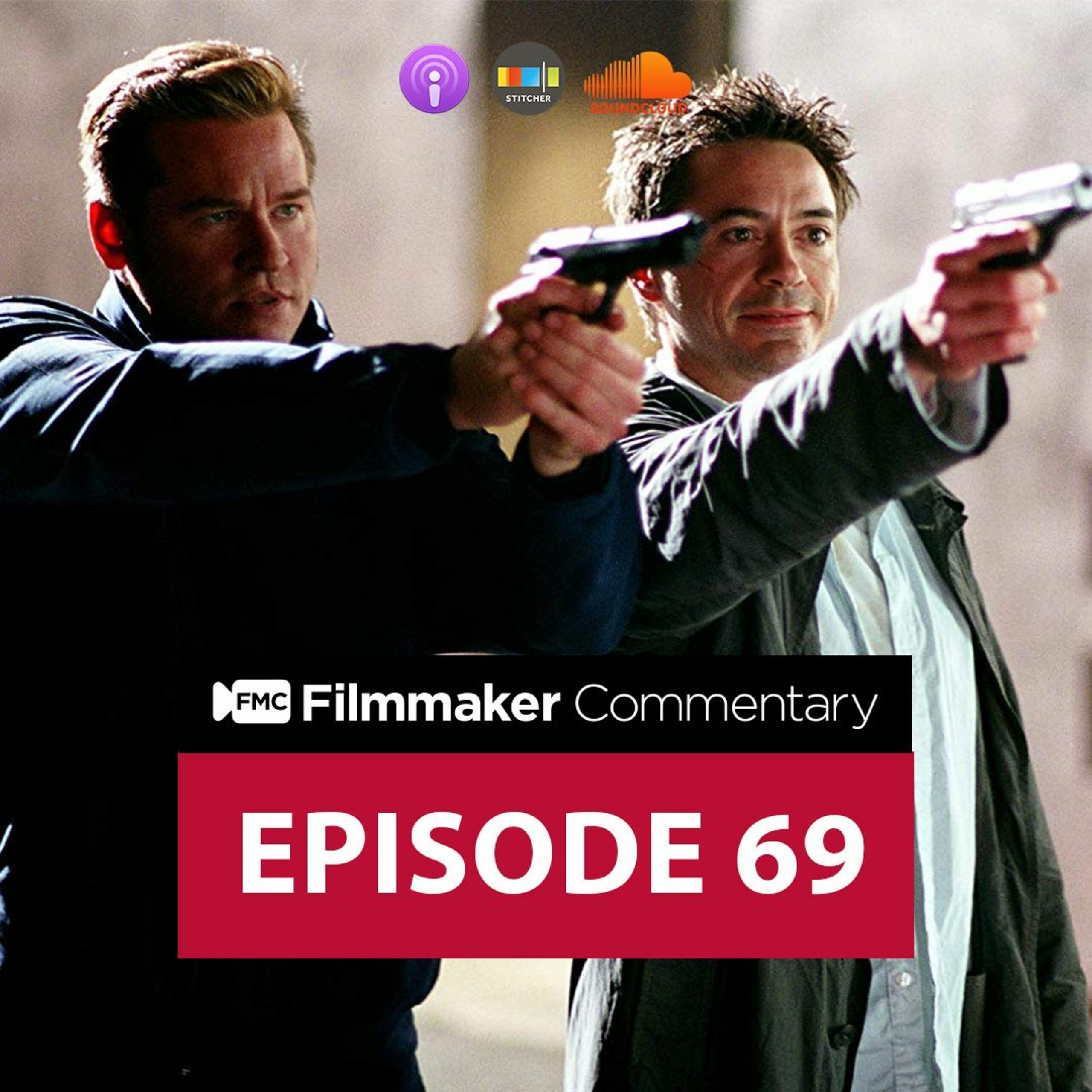
FMC 069: Kiss Kiss Bang Bang Directed and Written by Shane Black

August 30, 2019
Listen on Apple Spotify YouTube
Listen to this episode
Your browser does not support the audio element.
Also on Apple Spotify YouTube

This week on Filmmaker Commentary, Reginald Titus Jr. and Casey G. Smith dive into Shane Black’s 2005 dark comedy noir, “Kiss Kiss Bang Bang.” Join them as they explore the film’s unique tone, visual style, and the surprising aspects of its star-studded audio commentary, offering valuable insights for aspiring filmmakers.

What We Cover

In this episode, we unpack:

  • Shane Black’s directorial debut and its distinctive blend of dark comedy with classic noir elements.
  • An in-depth look at the film’s visual style, cinematography, and how it effectively showcases the gritty glamour of its Hollywood setting.
  • Deconstructing the film’s twisty plot, recurring tropes, and the deeper themes of illusion and reality woven throughout.
  • A candid review of the film’s audio commentary, highlighting the dynamic between Shane Black, Robert Downey Jr., and Val Kilmer, and its entertainment versus informational value.
  • Discussions on other noteworthy film and TV productions, including Disney’s streaming strategies, the complex superhero series “The Boys,” and more.
  • Practical filmmaking tips inspired by the commentary, covering aspects like engaging your audience and smart shot setups.

Key Moments

Tune in for these episode highlights:

  • 01:18:00: The hosts’ frank discussion about the film’s portrayal of “throwaway characters” and specific scenes involving violence against certain groups, prompting critical reflection.
  • 02:06:00: Why the film’s unique blend of dark comedy and noir can be a challenging but rewarding for first-time viewers.
  • 02:40:00: An unfiltered look at the film’s audio commentary, including Val Kilmer’s memorable antics and Shane Black’s directorial insights.
  • 03:27:00: The unforgettable moment when Robert Downey Jr.’s character humorously claims, “I invented dice.”

Gear & Films Mentioned

Here are some of the films and gear we discussed:

  • Kiss Kiss Bang Bang
  • Donnie Darko
  • Hobbs & Shaw
  • Once Upon a Time in Hollywood
  • The Boys (TV series)
  • Comedians in Cars Getting Coffee (TV series)
  • Stranger Things (TV series)
  • X-Men: The Animated Series
  • The Irishman
  • Benjamin Button
  • Traffic
  • Iron Man 3

Listener Questions

This episode offers answers to questions like:

  • How does Shane Black successfully blend dark comedy with the noir genre in his directorial debut?
  • What insights can filmmakers gain from analyzing a commentary where the creators themselves acknowledge the film’s struggles?
  • How important is an actor’s “generous” approach to collaboration on set, and how does it influence a production’s success?
Full Transcript

Read the full transcript

Full Episode Transcript
This episode of Filmmaker Commentary Shane Black's "Kiss Kiss Bang Bang," with hosts Reginald Titus Jr. and Casey G. Smith discussing the film's style, narrative, and related industry news and filmmaking tips.

Opening and Industry News
Reginald Titus Jr.: Filmmaker Commentary, episode 69. Welcome to Filmmaker Commentary, where we give you insights from our favorite filmmaking commentaries. These commentaries can be heard on your DVD and Blu-rays of your favorite movies. We'll show you how you can use these commentaries and apply them to improve your video production and filmmaking techniques. All of this here on Filmmaker Commentary. I'm your host, Reginald Titus Jr.
Reginald Titus Jr.: Welcome to Filmmaker Commentary. I'm Reginald Titus Jr. I'm joined with...
Casey G. Smith: Casey G. Smith.
Reginald Titus Jr.: Welcome back, sir.
Casey G. Smith: Good to be back, sir.
Reginald Titus Jr.: And today we're talking about Kiss Kiss Bang Bang, directed and written by Shane Black, produced by our guy Joel Silver. Man. Uh, music composed by John Ottman. The film was released October 21st, 2005. We have a budget of 15 million that's estimated. Uh, we got a box office domestic of 4.2 million and a foreign box office of 11.5 million, which gives it a worldwide 15.7 million. Yikes. That's an L.
Casey G. Smith: Yeah.
Reginald Titus Jr.: That's an L. Sorry, guys.
Casey G. Smith: I think again, this is one of those instances where it would have been nice to see what the, um, the home theater, um, market looked like after the fact, because I think it may have potentially found more notoriety there.
Reginald Titus Jr.: Oh, I got you. Yeah, yeah, yeah, like one of those cult hits like, um, what's the guy, like Donnie Darko and stuff like that.
Reginald Titus Jr.: Before we dive further into Kiss Kiss Bang Bang, we're going to talk about News and Movies Watched.
[Music]
Casey G. Smith: Um, from a news standpoint, I'd it seems that, uh, Disney is officially just continuing to take over. They, uh, they now have the majority ownership in Hulu. Um, because once they, once the Fox acquisition went through, that gave them majority ownership. And then Comcast agreed to just sell their portion to, to Disney.
Reginald Titus Jr.: It's like, I don't even want to deal with this, they're just, yeah.
Casey G. Smith: So now that gives Disney a very interesting multiple strategy. Number one, they're they're going to have Disney Plus. You'll have content there that'll be quote-unquote family-friendly. But then they can utilize Hulu and that service to go for the, the darker stuff, potentially can go through, through Hulu. So, yeah, it's smart, but man, that's two fronts. And eventually I think they're going to offer some kind of, they're doing a thing.
Reginald Titus Jr.: Yeah. They're going to do all all entertainment, which I think they kind of do in a way. Oh, okay.
Casey G. Smith: Uh, also the new movie Hobbs & Shaw, as of the, uh, release of this recording, is off to a strong start worldwide. Uh, over I think close to 150, maybe up to 180 million, uh, worldwide box office. So, you know, that that franchise, uh, the spinoff of the Fast and Furious franchise doing well. And of course, you got, you know, the world's biggest star, The Rock, headlining.
Reginald Titus Jr.: How's, uh, Once Upon a Time in Hollywood doing?
Casey G. Smith: Uh, I think it is doing okay. I don't think it toppled Lion King last week. But Lion King is, yeah, it's going to be open to to so many.
Reginald Titus Jr.: Right. Right. That's for the big guys.
Casey G. Smith: But critically, critically, acclaimed pretty, pretty well. The there is some, I think a little bit of pushback with, uh, the character who's playing Bruce Lee. And how kind of how that scene unfolds. I haven't seen the film yet. I I want to see it, but it's it's a long one, but it's a Tarantino movie, so, you know what, what he think to him.
Reginald Titus Jr.: Oh, really? Okay. Two and a half. Yeah. We let him happen. Whatever.
Casey G. Smith: But definitely want to check it out.
Reginald Titus Jr.: Yeah. Um, movies watched, did you watch anything, television, movies?
Casey G. Smith: Yes, I did. So I'm always watching my show Euphoria again on HBO. Week after week continues to just surprise. Wonderful performances, acting and writing. Also, got caught up and finished The Boys, which we mentioned last week. Once again, shout out to David Simmons for his recommendation.
Reginald Titus Jr.: Shout out, Dave!
Casey G. Smith: Thank you, sir. And wow, I was just, I was, I was really taken. Spoiler alert! Why not? Just hey!
Reginald Titus Jr.: Oh, man.
Casey G. Smith: If this is your first time listening to Filmmaker Commentary, please know that throughout the show there will be spoilers. You've been forewarned. So The Boys, based on a graphic novel by, uh, writer, I believe, Garth Ennis. Uh, this was a very adult take on the superhero genre. What happens when superheroes aren't all they're cracked up to be and all the collateral damage that happens? Uh, but also asking the question of are they really good? Where do they come from? The Boys dives into all those different things. And who could actually stop them if they found out that they're not as good as we believe them to be?
Reginald Titus Jr.: Right.
Casey G. Smith: The Boys tackles some very complex issues in the world and then and parodies the superhero genre. And honestly, this dropping on Amazon Prime, it's the perfect time because we're at kind of like this zenith and height of superhero films. So what did you think, Reginald? I know you had a chance to catch some episodes.
Reginald Titus Jr.: Yeah, I saw the whole thing.
Casey G. Smith: The whole thing?
Reginald Titus Jr.: The whole thing. Eight episodes, about an hour each, so I had to kind of pace that out, you know. Sure. Um, but I remember seeing the trailer two weeks ago, right before David had mentioned it and I was like, I put that on, all right, I'm going to check that out one day. But because he mentioned it, I was like, well, I guess I got to. Then you checked it out and mentioned and recommended it, so I had no choice.
Casey G. Smith: Oh, yeah.
Reginald Titus Jr.: I liked it. I I give it a seven out of 10.
Casey G. Smith: All right.
Reginald Titus Jr.: Seven out of 10, only because it sometimes it seems like it it it lags a little bit. It feels a little like TV-ish sometimes. Sure. And so, um,
Casey G. Smith: Even though it's on TV.
Reginald Titus Jr.: Well, like, for example, you got Stranger Things that's on Netflix and it feels very cinematic in style. Uh, whereas this feels like more like 30-minute WB kind of TV style. Not all the time.
Casey G. Smith: Sure, but there's moments. But there's moments.
Reginald Titus Jr.: But there's moments where it's like, okay, we're let's get our day. Let's let's shoot to get our day. But , I dug it, you know, just the like the realness of how, you know, if you got superpowers and you got an ego, you're going to take advantage of it.
Casey G. Smith: Oh, yeah. And and this is it just goes to dark places and and the way it plays into corporations, the fact that this is this corporation that runs the superheroes and when you find out where they come from and when you find out just the differences in the personalities, one thing I really appreciate is that all the characters were layered. All of them have their own backstory. Nobody's necessarily cookie-cutter. They're archetypes. Clearly, a lot of these heroes are archetypes of of the Justice League. Uh, you have Homelander who's clearly a Superman archetype. You have A-Train who's a Flash archetype. You have The Deep who's an Aquaman archetype.
Reginald Titus Jr.: Oh, I got you. Yeah, yeah. That's hilarious. The Deep.
Casey G. Smith: You have, um, oh, what's the the the Amazon?
Reginald Titus Jr.: Zena. No, it wouldn't be Zena. Um, I know what you're talking about.
Casey G. Smith: Yeah. But she's clearly a Wonder Woman.
Reginald Titus Jr.: Mezen? Mezen? It was what it is.
Casey G. Smith: Some Yeah, something like yeah. Yeah, it's very bad. Yeah. But she's clearly a Wonder Woman archetype. But, uh, yeah, everybody carries these different archetypes. So here's an interesting. Yeah, and I know why I just, uh, yeah, I'm trying to who she's an archetype for, but she's clearly the newest person coming in and she's kind of a little bit of the audience. Now, I'll tell you this, from the comic book, they actually toned down some of the the violence that she faces. Like she only deals with The Deep, yeah. In the graphic novel, it's not just The Deep who has her, who performs that that rape, uh, in essence, it is it is like all the guys. Homelander, A-Train, like, they're all there, uh, initiating her. And she kind of gets a little bit of Stockholm Syndrome. Yeah, she goes she goes through it far worse in the in the comic. So they toned some of that down.
Reginald Titus Jr.: Star-Like? Starlight. Oh, Star Girl. That's pretty bad.
Casey G. Smith: And they've also compressed because I think the series ran like 30 issues or so. They had to compress issues, not issues, aspects of the story to move it along quicker. Um, but yeah, , I thought it was well done. I enjoyed I I enjoyed the production value.
Reginald Titus Jr.: Wow.
Casey G. Smith: Uh, I really, I was I was like, okay, it was, uh, I felt they they were smart with it. And there were some funny moments, man, when the when The Deep is is uh, trying to save the dolphin.
Reginald Titus Jr.: Yeah.
Casey G. Smith: That just, that cracked me up, man, when he hits the brakes, the dolphin flies through the window. And then I'm like, are you kidding me, man?
Reginald Titus Jr.: The ending is a is like I didn't That one was a doozy. I'm like, season two, come on.
Casey G. Smith: Yeah, for real. Eight episodes, man. I I thought it it it went by pretty, uh, pretty quick. I was I was like, oh man, this is done. It was it was a nice, I thought, trim.
Reginald Titus Jr.: It worked. Yeah.
Casey G. Smith: Because sometimes, you know, you get some of Netflix ones, you talking like 12, you know, episodes sometimes or CW stuff which goes like 22, you know, hour or, you know, 45, 50-minute long episodes. It's a lot. But this was, jump in. And again, not for kids.
Reginald Titus Jr.: At all.
Casey G. Smith: We can't make that clear enough. This is not for kids. I mean, you do what you do. You parent how you parent. You know your kids. But, um, yeah, it's it's graphic. It doesn't, uh, it doesn't hold, doesn't hold back. The Boys.

Discussions on "The Boys" and Other Media
Reginald Titus Jr.: Wow. Also, got a chance to catch a couple of episodes of Comedians in Cars Getting Coffee.
Casey G. Smith: Comedians.
Reginald Titus Jr.: Comedians.
Casey G. Smith: Getting Coffee.
Reginald Titus Jr.: Getting Coffee. Uh, the Seth Rogen episode and the Matthew Broderick episode. That's the ones I
Casey G. Smith: Nice, nice, nice. I watched those as well. I want again, I just I ended up burning through the season. Didn't even realize it. I just kind of had it on. I was doing some other things. I was like, oh.
Reginald Titus Jr.: That's the one I got. They're pretty quick. They're like 16 minutes, 18 minutes, so when you watch a full hour of The Boys and you just these are just like, yeah, commercial break. Bite size, for real. But yeah, I I I I enjoyed the show. Again, it's just something about listening to comedians talk to each other, getting inside each other's thought process. I actually ended up going back and and and watching a couple other ones that I had started but just didn't finish because I was, I don't know, whatever reason I had to leave or whatever. But yeah, I I I I enjoyed the show and, uh, it's a some good laughs and get getting the psychology. Oh, the Jamie Foxx one. That was pretty good, too.
Casey G. Smith: Oh, yeah. Yeah.
Reginald Titus Jr.: Yeah. He's always putting on a show though. Like, you know. It seems like he's always performing. Like he's got he's going to have some material ready. He's going to do his thing for for us, the audience.
Casey G. Smith: Oh, yeah. Oh, yeah. And it's it's very fascinating when when Jerry is talking with, with Jamie. Like, Jerry doesn't get like starstruck often. Like Jerry Jerry kind of he he's like his Godfather, you know, his comedic Godfather and kind of knows and understands a hierarchy, who's on his level, you know, who's up and coming, who's on the way. But he's a mentor in different aspects. I I it's cool to see this this comedic hierarchy. But very seldomly is like he like struck. To me, when he sees Jamie Foxx, like he like was like, you know, very, very complimentary. He compliments everybody, but he seemed more so like with with Jamie. I was like, that's it was interesting dynamic. Like, does Jerry the guy, you know, this and that. I'm like, fascinating. This is very interesting. But, uh, but yeah, Jamie Jamie's impression of Dave was dead on. I mean, Jamie's great at impressions. But when he did Dave. I was like, oh, man, that's great. He said, Dave likes to Dave likes to throw in the the the big words with the hood, you know. I was, flabbergasted.
Reginald Titus Jr.: Oh, yeah. That's that's crazy. That's funny.
Casey G. Smith: Oh, man. But yeah, so, uh, yeah, I I enjoyed that show, too. I think I watched I watched one more episode of Stranger Things. And then I also watched
Reginald Titus Jr.: Did you finish Stranger Things?
Casey G. Smith: Haven't finished it yet.
Reginald Titus Jr.: Oh, man.
Casey G. Smith: Come on.
Reginald Titus Jr.: Oh my God. Hold on. I wanted to talk about a a certain episode. I should have it. I should have it done. I should have I'll finish it this week. Yeah, I'll be able to wrap it up this week. And then
Casey G. Smith: I'll finish it this week.
Reginald Titus Jr.: Wrap it up, P. What else? Then, uh,
Casey G. Smith: Watch episode of Young Justice. I watched a couple of episodes of, uh, when Old School X-Men, The Animated Series season two. Dove into that, watched like eight episodes of that, uh, yesterday while I was just working on other things. But yeah, that's been it, man. Haven't really dove into any major films of yet. Also, trailer-wise, I watched the trailer for Martin Scorsese's The Irishman.
Reginald Titus Jr.: Oh, yeah, I did. I saw that, too. That looks violent.
Casey G. Smith: Scorsese. Yeah, par for the course. Yeah, I'm I'm definitely going to watch it as well. And there was a lot of talk about, of course, you know, the money being spent to to make these these actors look younger, you know, the De Niro and and Pesci and And yeah, the the very last clip of the trailer, you could really see it.
Reginald Titus Jr.: Like, man, how old is Scorsese? He's got He loves that violence. Like, man, come on. I'm watching though.
Casey G. Smith: I had to check it out again. I saw it on my phone so I didn't care.
Reginald Titus Jr. No,
Casey G. Smith: I was specifically looking for it. I was looking for the de-aging technology. When I saw it, I was like, yeah, so it's got that uncanny valley action kind of kind of going, especially the last clip of it, you really, I don't know. But, um,
Reginald Titus Jr.: Ah. Oh. They needed to get with the, they should have gotten with, or maybe they did with David Fincher's company, you know, what, I, you know, what he did with, uh, Brad Pitt, you know, making him older and younger for Benjamin Button. Like they got the technology down. I'm I'm assuming they probably did.
Casey G. Smith: Oh, yeah.
Reginald Titus Jr.: Had to. Yeah, they got it down. So there's that was years ago. So there's no reason why it shouldn't be spot on these days.
Casey G. Smith: We don't want Fincher be blowing up those budgets, though. Just need one more take. Just, just another take.
Reginald Titus Jr.: I heard a quote from him today. Um, I do about seven takes and then, and then we can begin.
Casey G. Smith: No surprise there. Get it done, David.
Reginald Titus Jr.: God. All right, let's get back to the show.
[Music]
Reginald Titus Jr.: Thanks for tuning in. We're talking about Kiss Kiss Bang Bang, directed and written by Shane Black, uh, released on October 21st, 2005. Now, let's get into the synopsis.

Kiss Kiss Bang Bang Synopsis and Initial Reactions
[Music]
Reginald Titus Jr.: A petty thief posing as an actor is brought to Los Angeles for an unlikely audition and finds himself in the middle of a murder investigation along with his high school dream girl and a detective who's been training him for his upcoming role, in which he experienced a bad week in a tough town. Kiss Kiss Bang Bang.
Casey G. Smith: That was a good synopsis.
Reginald Titus Jr.: Oh, thank you. Yes. Found on the internet.
Casey G. Smith: Very good, very good.
Reginald Titus Jr.: When did you watch this film? How did you watch it this time? Did you do the watch the movie then the commentary? How'd you approach it?
Casey G. Smith: Um, so I'd heard about Kiss Kiss Bang Bang for a number of years, uh, from, um, uh, a lot of times when I listen to when I was listening to Collider a lot, I I would hear just dude Christian Harloff talk about it, mention it. And I'd hear it other places and finally I checked it out about a year ago and thought it was good. Honestly, I could not remember what happened in the film. I don't know why. I mean it's it's pretty frantic. So I definitely wanted to I had to watch it again. And I I enjoyed it. You know, even before I couldn't remember, I didn't have bad feelings about it. I was like, okay, let me check it out again. And, uh, yeah, I dug watching it, watching it again. It's it's it's it's frenetic and it's it's flashbacks going on. Watched it again and then dove into dove into the commentary.
Reginald Titus Jr.: Still don't. Yeah. Yeah. Yeah. Uh, me, I I was mixing this up for something else. There's a movie with Antonio Banderas that's called The Bang, The Big Bang. And it's also a detective film as well, but it's more like a film noir kind of like hard style. And that's what I thought this movie was when you kept bringing it up.
Casey G. Smith: Surprise!
Reginald Titus Jr.: Surprise! But it's also, you know, dealing with detectives and things like that. So it was like in that same kind of genre, but way different. This movie wasn't even on my radar. Outside of you mentioning it, I don't, yeah, maybe in like floating, but I always thought it was the Antonio Banderas film. And, uh, when you mentioned it was, you know, Robert Downey and Val Kilmer, I'm like, what?
Casey G. Smith: I remember like in trying to catch this initially, I was I was I tried to find it on like streaming services and it would like show up and I remember it was on HBO like years back and I was going to I was like, okay, I put it in my queue. I'm going to come back and watch it and then I got ready to watch it. It was gone. I was like, ah, it kept just like disappearing on me. I'm like, man. So but finally I caught it on, I don't know where. But, um, but yeah, it was it was good to to revisit.
Reginald Titus Jr.: Ah.
Reginald Titus Jr.: Yeah, the movie itself. I liked, um, like the scenes. Like, because Robert Downey Jr. and Val Kilmer, they're just good. They're great actors. And you got great actresses in there. So it was like, I liked the scenes. Like, just the different scenes, just for enjoying it purposes. Just like, oh, this is a good scene. It's just like, we're just hanging out with these people. But as a whole, I wasn't really feeling it as a whole, just because I was lost a couple times. I'm like, man, what what is this?
Casey G. Smith: Yeah.
Reginald Titus Jr.: Yeah.
Casey G. Smith: I think I think it definitely it again, after watching, I didn't remember. I was like, what did I? What happens in this movie? I I literally could not, I could not remember. And that was kind of frustrating. I'm like, am I getting old? What's going on? Right. But now rewatching it, I'm like, okay, so I I actually, I guess I felt I enjoyed it more now watching it, uh, the second time. So this one might reward a second watch if you, uh, if you've only seen it once.
Reginald Titus Jr.: Yeah.
Casey G. Smith: There's a there's a lot going on.
Reginald Titus Jr.: A whole lot going on. What I did like was because they're shooting the brothers in the face again.
Casey G. Smith: Oh man, I thought about that really during the the commentary. I was like, oh man, he kills two brothers. Yep. Now we're talking about that. Yeah. Yeah. Yeah.
Reginald Titus Jr.: Yeah, and a Puerto Rican. Um, what was that?
Casey G. Smith: Right.
Reginald Titus Jr.: Yeah, so I was like, again, Joel.
Casey G. Smith: How you treating the brothers?
Reginald Titus Jr.: How you treating the brothers, Shane? Shane Black, you wrote it. How you treating the brothers, Shane? You're going to bring like, we're nowhere to be found in the movie, like during just the regular movie. But out of nowhere, brother comes in, he's the bad guy, gets shot by Robert Downey. Then later on, another brother.
Casey G. Smith: The disorderly. Yeah, you know.
Reginald Titus Jr.: Robert shoots him shoots him in the face. I'm like, wow. And like throwaway characters. That's the thing I don't like. It's because they're just throwaway characters. They're not really important. They're just, oh, a bad black person. Let's shoot them. Throw them away. And then at the end, uh, towards the end, then you got the Puerto Rican guy that Val Kilmer literally shoots through his peephole in his pants. Shoots that.
Casey G. Smith: Big shot.
Reginald Titus Jr.: Big shot, pow, pow. So I'm just like, oh, man, that's too much. That's too much. That's it. That's all I got. That's that's what I didn't like. Good observation. Yeah. I really again, it wasn't until I listened to the commentary. I'm like, I just noticed. I'm like, one brother down. Another brother down. Only brothers in the film. Third brother down. Yeah. Yeah. Because he had the guy, that actor plays both. He plays like Puerto Rican and Black, the guy towards the end. That was torturing Robert. That's a tough toy. Yikes.
Casey G. Smith: Yeah. Yeah. Yeah. Good observation. Right. Mm. Yeah. Yeah. Yeah. Yeah. Yeah. Right. Exactly. Yikes, indeed. That's about it. Watch your back. Watch your back, Shane Black. Man. But because, um, what I did like though, because it's like Hollywood background and you introducing to that world. It makes you actually want to watch a Tarantino movie a little bit more now because, you know, that's in the world of Hollywood and old Hollywood and stuff like that. So anyhow, that's what it. Because it's always interesting when they include Hollywood as a character into the film.

Visual Style, Tone, and Tropes
Reginald Titus Jr.: Visual style. What did you think about the visual style?
Casey G. Smith: It goes, um, the film looks good. A lot of, uh, the steadycam shots throughout. And it goes back and forth. It has really, really at times, really, really cool tones. And then it'll go like really warm. So it's it's it's well lit throughout. A lot of good backlighting in different scenes, but there's a lot, there's a lot of cool cool tones. There's one scene in particular, um, when initially when Harold and Harmony are at the bar, it's very cool initially. And then when you see them later on, uh, after they've after, you know, he realized that she's his his old childhood crush and then they're they're both, you know, having a drink and when she spits the the drink on them. It it's really warm then. All of a sudden like like they've kind of warmed up to each other literally. And so, yeah, but there's quite a few scenes where it's very, very cool, has a bluish tint going on. Uh, how about you?
Reginald Titus Jr.: Great lighting. It's like big budget lighting. Like when they're outside it looks too good. When they're outside the cabin and they got the woods and it's like the little deer that's beside them and they're waiting for somebody to leave and then when they I think that's one when they go to the car then the lady dives over into the pond. Like, this is, is this a stage? Like, this is like over the top lighting. So it was just like big budget lighting. Everything's just perfect. It just seems real poppy.
Casey G. Smith: Shane Black specifically mentioned the the guy who did the lighting. When the the initial flashback scene where RDJ and his his cohort cohort are trying to rob the toy store, when RDJ is coming down the alley before he turns and goes up the steps to the audition, as he's coming down the alley, the way it's lit, the backlighting and how it's like the the the the yellows and whatever hues and like and and Shane Black specifically points that out and says how much how impressed he was. And he says, this looks like a like a high-end lighting scenario.
Reginald Titus Jr.: It really does. It looks like they had a lot more money. Because they said the estimated budget is 15 million. It seems like they had more lights. Millions of dollar worth of lights. But, um, yeah, those flashback scenes were like yellow in tone. Uh, they said desaturated, but it's not necessarily desaturated. It seemed like it was like a burnt cyan. Cyan the right color? I don't know. No, cyan's blue. Uh, I can't think of the name of the, um, tone that I'm thinking about, but it's, um,
Casey G. Smith: Sepia?
Reginald Titus Jr.: Yeah. In the movie Traffic, that look can be done in camera on the film through a process by skipping one of the processing and making it look like, but it's baked in. You it's not it's not a situation you do in post. You do it in the in, uh, in the film stage. And that's how you process it. And that's it's very dangerous because you can lose your film. In the movie Traffic, the the director does it in there.
Casey G. Smith: Right, right.
Casey G. Smith: And I think just from the time period this is made in the in the early 2000s, I think this kind of that kind of effect was was being used in multiple films. Because I'm assuming Traffic is is somewhere around that time period when that came early 2000s or so. Yep. So, makes sense. I mean, you're going to have styles. They're still using film, too, so. Yeah. Yeah. But yeah, . Uh, tone. Dark comedy action thriller? I wasn't sure if I should be laughing or like, you know, what is this? Like, I was trying to hold on to a tone. I was like, okay, am I supposed to laugh or is this supposed to be serious? You feel when you see the body like fall, through, you know, and then it's like, that's kind of like gross and tragic and but it's played as comedy, you know, and things like that. So I was I was thrown off a little bit by the tone.
Reginald Titus Jr.: Sure.
Casey G. Smith: So, yeah, it's it's also a bit of it's it's a noir film as well. It's it's to me, , it's it's it's a it's a noir dark comedy. Because you have the you have the narration, which is classic noir. You're dealing with detectives. You're dealing with Hollywood. Those are all common themes that you will see in a noir film. But then it's this it's this dark comedy kind of lying under underneath it all.
Reginald Titus Jr.: And this was Shane's directorial debut, right?
Casey G. Smith: No.
Reginald Titus Jr.: This wasn't? Shane Black?
Casey G. Smith: No, man.
Reginald Titus Jr.: This wasn't his directorial debut?
Casey G. Smith: I don't think so.
Reginald Titus Jr.: It is Google says.
Casey G. Smith: Let's look up Mr. Shane Black. Oh, you know what? You're right.
Reginald Titus Jr.: Now like I was saying, Oh, my bad.
Reginald Titus Jr.: So since this was, uh, uh, Shane Black's directorial debut, you know, I wonder, you know, how how is he going to get that tone right? Because, you know, in his writing, you know, he great at the writing and things like that. But since it's his first film and things like that, you know, maybe it maybe it was difficult to get the tone or maybe this is what tone he was going for. I don't know. But I personally felt like I couldn't dial into any of the tones or accept it for what for what it was like, um, like Demolition Man, like we you just accept the world that we're in. Like this one, I was trying to like, should it be serious? You know, I couldn't I couldn't get it. I couldn't dial in all the way. Even though I still was entertained by it.
Casey G. Smith: Sure.
Reginald Titus Jr.: Right. I was still entertained, but I I I was trying to dive into the story and I just, you know what? I'm just going to have fun watching it.
Casey G. Smith: Hmm. Yeah, I I I wonder what it would be like to watch this in a theater. Yeah. You know, would that affect the feeling of it, the vibe of it being with an audience and seeing how how they react because sometimes people's reactions can affect you like people if people are are laughing more at certain things. Uh, yeah.
Reginald Titus Jr.: Or if somebody else directed it. Like that, too.
Casey G. Smith: That too. That too.
Reginald Titus Jr.: Because I think with his other films, like this has the Shane Black, uh, kind of stamp with the writing, uh, like what Last Boy Scout or Lethal Weapon. Like it it has that stamp on it, but there's like a set tone in those films. You know, they kind of decide where we're going to take it. I guess it's a struggle to be a writer director always. You know, as a, and I think that's what makes like, uh, directors like David Fincher just a little bit more powerful because they're force, of course, know the material and things like that, but they're forced to kind of be in, all right, in the visual language. How how am I going to interpret this screenplay whereas it's coming when you're writing yourself, it's coming directly for you. Maybe, you know, maybe it's a little different and more close to you when you when you're a writer and director.
Casey G. Smith: Hmm.
Reginald Titus Jr.: Maybe it's a little bit more precious.
Casey G. Smith: Maybe, maybe.
Reginald Titus Jr.: Just thought. You got any input on tone?
Casey G. Smith: Again, I can see where anybody watching would be like, what what is, what is, what is this? Because it's it's it goes back and forth quite a bit and quite suddenly. There are certain parts that are where some parts are played straight, but it's can be interpreted as as being humorous. Again, you mentioned that that body dropping, yeah, yeah, that could be seen as that. But then you have elements like in the flashback initially when he's talking about Harmony's sister being molested by her father. And then that kind of just that information's given, but then we're like just moving right along. So there's some some really dark tragic things that are taking place. Yeah, and then but my kids, the reality, you know, this is this is part of their exposition and then boom, we're we're moving we're moving along. Yeah.
Reginald Titus Jr.: Yeah, just kind of breezes over it. I don't know.
Reginald Titus Jr.: Trope.
Casey G. Smith: Tropes. Um, again, flashbacks with narration. Yeah, classic noir trope. Again, it being a a modern noir, again, you're dealing with detectives who are trying to figure out, you know, we have the we have dead bodies, who did this, we're on the trail. Somebody trying to trying to throw us off. Uh, has been a few callbacks to maybe like, you know, Chinatown and so many other noir films of of the past. And again, there's an element of the Hollywood fairy tale when we see kind of Harmony's story and and where she came from, where she was going. And people that that that lure and the promise of of fortune and and fame. Even how Harold's character gets gets drawn in, um, kind of by accident. And then finds out that in the in the end he was he was flown out just to be a a negotiation piece so they could get, uh, Colin Farrell, uh, to get his get his rate down. Uh, so, yeah, just the the Hollywood fairy tale.
Reginald Titus Jr.: Yeah. Yeah.
Reginald Titus Jr.: Yeah, the only trope that I had was the the book that stops the bullet, you know, we've seen that so many times like somebody get shot in the heart and the thing that means something to some to them or somebody else gets hit.
Casey G. Smith: Oh, I've got another one is the, um, the childhood crush, you know, the one that got away. Yeah, we we see that or or just even the the friend zone kind of box where, you know, hell's character was was in for the longest.
Reginald Titus Jr.: Um, do you have any themes?
Casey G. Smith: Yes, a couple of themes. Um, just a theme of classic who done it, you know, in terms of trying to trying to trying to figure out, um, the the the mystery and the murder. Um, I think it was like a like a fairy-tale ending. The fact that, you know, there's so many things that go bad throughout this. And these people should all, you know, in reality, they all have been dead. Yeah. Uh, Harmony would have died tragically in that in that van. When that crash, I'm like, ain't no way in hell she survived that crash. That was vicious. The front driver side was crushed. And I'm like, she's just, I'm like, concussion at least. You know, nothing. She just, you know, zips on out. And also, again, just a theme I had of, uh, again, the the one that got away. Those are some of the things that I had. How about you, man?
Reginald Titus Jr.: None. I mean, I couldn't I was lost. I was lost. I was lost, man. I was just like, I don't even know. You know, maybe fish out of water or, you know, some of those cliché ones, but yeah, I was trying to hone in and I was just, man, I was lost. I was just like, I'm just going to watch it and listen to it.
Casey G. Smith: Stay tied in.
Reginald Titus Jr.: Hey.
Casey G. Smith: Y'all just keep doing what you're doing.
Reginald Titus Jr.: Yeah, just keep doing it because, yeah. What did you think about the commentary?

Commentary Review and Quotes
Casey G. Smith: Oof. I didn't I did Val Kilmer was just too over the top.
Reginald Titus Jr.: Because you got Robert Downey. You got Val Kilmer and Shane Black. Three people on the commentary. So what are you saying?
Casey G. Smith: Uh, he he he's hot, he's hot. So it's not so much the number of people, it's it's the quality. Yeah. I won't even say quality because Val Kilmer's very entertaining.
Reginald Titus Jr.: Yeah.
Casey G. Smith: But he's not there to inform. He and he literally like is just doing bits throughout the whole commentary. There's some funny stuff there, but this is also early 2000s like, man, this is this is pre-Me Too movement for sure. And and yeah, it's it's not very it's it's not all that informative. You know, they're they're speaking to certain things and every now and then Shane Black will kind of chime in, but there's so much joking happening and they're talking over each other. Uh, it's it's not the best, it's not a very good commentary. I would not recommend it. No. No. Wouldn't recommend it. Um, seems like they have like their own, uh, vibe with each other. It seems like they kind of found that and they were just had a good time doing it because they even joke about the movie not being a hit. They, you know, it's like,
Reginald Titus Jr.: Yeah, yeah.
Casey G. Smith: It'll be a hit in the depression.
Reginald Titus Jr.: You know, like saying little stuff like that. So I was like, they're good sports about it and most people probably wouldn't even want to do a commentary after the movie performed like it did.
Casey G. Smith: Yeah, yeah. But yeah, Val Kilmer just had bits, just bits and bits. He was just going. Just
Reginald Titus Jr.: That'd be interesting to see him do do stand-up.
Casey G. Smith: Oh, Val.
Reginald Titus Jr.: Oh, Val?
Casey G. Smith: Yeah, that'd be fascinating. He had just just he was just going, going, going. But I I would I would be interested here to hear a commentary with just Shane Black. I think I think that would have been insightful and and informative with just him.
Reginald Titus Jr.: True. Yeah, because when it came to him, he's like, yeah, this part. Then when the actors with the charisma start coming in, he's like, well, y'all just talk then. Y'all just whatever.
Casey G. Smith: Yeah, yeah. But they were just yeah, just hijacked it.
Reginald Titus Jr.: Any quotes?
Casey G. Smith: Yes. Uh, one thing I I the dialogue in this, man, there's some there's some snappy witty dialogue. Uh, and Val Kilmer, in particular, his character, uh, has some great great one-liners. Uh, well, so one is, uh, from Harmony and she says, Did I just cut off your finger? Like that's so unexpected when she slams the door and she's like, Did I just cut off your finger? And he's just like, you're like, wait, what just happened?
Reginald Titus Jr.: Yeah.
Reginald Titus Jr.: Side note, that same situation happened when I was at Wiley College and, uh, I was a resident assistant. There's one guy, he's probably about 6'3", 6'4". He had these real long fingers. And we had these big just our doors were humongous. Like, they when they closed, they're closed. It felt like metal, wood, whatever, to our dorms. And I'm chilling in the little lobby area, resident resident assistant, just whatever. And, uh, this guy comes down like, my fingers. Like, his fingers are gone, two of them. And he's literally holding his fingers. And he, what he had did is he closed the door and his fingers were so long that he was mad at somebody, you know, and he slammed the door before pulling his fingers back and they got caught and slammed and crushed. I actually seen them and I had to drive this guy to the hospital and in my cousin's car and, uh, uh, the guy's in the backseat because I have somebody else in the car and he literally drops his fingers in the backseat. I was like, did you just drop your fingers? He drops his fingers in the backseat. He had to have them in a cup. Oh, man, but it, yeah, I've witnessed this that exact situation. But they couldn't save the fingers. This this movie ain't real. Like, they couldn't save them because like the the nerves, they're too crushed and they can't get them in time. It's not worth attaching them because it's you're basically like, it's like having some nails or something. Like, you won't be able to feel them. So, they'll get in your way. So, it's better just to have them off.
Casey G. Smith: Oh.
Reginald Titus Jr. No,
Casey G. Smith: Whoa.
Reginald Titus Jr.: Well, there you go. Side note.
Casey G. Smith: Reality, ladies and gentlemen, reality.
Reginald Titus Jr.: When I saw that finger fall, I was like, oh, yeah. That happened for real.
Casey G. Smith: That's why when you have actual like points of reference to the stuff like that.
Reginald Titus Jr.: It's that's crazy. Any any other quotes on on your end?
Casey G. Smith: Oh.
Reginald Titus Jr.: When, uh, Robert Downey, his character was at the LA party and everybody was asking like, what do you do for a living? What do you do for a living? Just super, superficial. Um, and he's at the party and late the cute lady's like, what do you do for a living? He's like, I'm retired. I invented dice.
Casey G. Smith: I heard that same quote. Yeah, I had that one too. I invented dice. I invented dice when I was young. And so, I'm retired. Like, wow. She's like, oh, okay. I'm attached to somebody else. Yeah. Walks along.
Reginald Titus Jr.: You walk along. Another quote I had was, it's from Val Kilmer. You know what it says in the dictionary under idiot?
Casey G. Smith: I had that one too.
Reginald Titus Jr.: Or do you know do you know what you'll find in the dictionary under the word idiot?
Casey G. Smith: What, my face?
Reginald Titus Jr.: No, the description of the word idiot. We'll just watch you all. Oh, man, he's just he just goes in. Val Kilmer's good. I like Val Kilmer. Um, I can't remember the movie. It was a early 80s movie, around Weird Science time. It was Genius something.
Casey G. Smith: Yeah. Young Geniuses?
Reginald Titus Jr.: Was that what it's called? It was Young Geniuses?
Casey G. Smith: I think so.
Reginald Titus Jr.: I remember that one. I was like, who is this guy?
Casey G. Smith: The song Everybody Wants to Rule the World by Tears for Fears was one of the main songs in it. Heck yeah. Yeah. Yeah, I remember watching that as a kid. I I used to love that film. He was so Val Kilmer is, when he wants to be good, he is a he's one of the best. Yeah. When he's on his game. Val Kilmer is truth.
Reginald Titus Jr.: Agreed. Um, this quote is when Robert Downey is talking, what's his character's name? Official, the name of the character, uh, is specifically Gay Perry.
Casey G. Smith: Yeah. Yes. Agreed.
Reginald Titus Jr.: No, no, uh, not Val Kilmer. Uh, Robert Downey, what's his character's name?
Casey G. Smith: Uh, Harold Lockhart or Harry Lockhart.
Reginald Titus Jr.: Harold, Harry Lockhart. When Harry is talking to Harmony in the club and he's like just pre-Me Too, guys. Um, just talking about women and what they should do and this this this and like what LA is full of. And he said, man, everyone's complaining, my uncle put his peen-peen in my pa-pa. And they're like, and in the commentary they're kind of laughing about it, but it kind of pertains to Harmony because her sister went through that and all that and he, you know, kind of struck home and, you know, he's kind of making jokes about it. But what he said was funny, but it was serious at the same time. So it was like, man, how do you handle that line? But it was a quote that was that stood out.
Casey G. Smith: Oh, yeah.
Reginald Titus Jr.: And this character, so just as an observation, RDJ's character in this film is the exact opposite of Tony Stark. I mean, they are polar opposite characters. The only thing they have in common is that they're they look alike and they're and they're they can they can say witty banter. Yeah. But other than that, they are complete opposites. Yeah. One is, you know, deadbeat thief and a dummy. Yeah, that's true. The other is a philanthropist millionaire playboy. Yeah. Interesting. Genius. Yeah, genius. Yeah. That they want that. Yeah. One is a cosmic hero, brave. Yeah, the other is yeah, semi little little coward.
Casey G. Smith: True. True. Yeah. Yeah. Yeah.
Reginald Titus Jr.: He's still likeable. That's the crazy part. Still likeable. Even though he's a thief.
Casey G. Smith: Yes. A womanizer. Steals stuff. Yeah. Yeah, and that too. Yeah. So, just just observation I wanted to throw out there before I forgot. Uh, the last line I had was once again from, uh, from Val Kilmer when he says, uh, after after he accidentally shoots the the other brother in the in the face after, uh, Harold, you know, trying to do roulette, that was kind of funny. Nothing in the yeah, that was like, wow, okay. But he says, um, you know, the the gun was the gun was, you had a live round in the gun. He was like, I thought it was like a, you know, a 8% chance. He's like, who taught you math? Yeah. Who taught you math? Oh, man.
Reginald Titus Jr.: Unbelievable. Who taught you math?
Reginald Titus Jr.: Unbelievable. Uh, one of my quotes who was by Val Kilmer's character and, um, it was towards the end when he's the, I guess, was it the guy that molested Harmony's sister?
Casey G. Smith: That was her dad.
Reginald Titus Jr.: So he goes visit their dad, the molester. He's in a old folks home. He goes up and just pimp-slaps him twice. And then the old man's like, who are you? You're just some big tough guy. You know, if I can get up, you know, whatever. And then Val Kilmer's like, yeah, big tough guy. I was like, whoa. The way he delivered it was just like, yeah, I know what you did. That's why you got pimp-slapped up in here. That's right. Yeah, because they were there to bury Harmony's sister. They'd gone back to their hometown. And so that I think that was actually their their house that they were in. Interesting. And so he so Val just took the liberty to go up there and pimp-slapped. Mm-hmm. Good for him.
Casey G. Smith: That's right.
Reginald Titus Jr.: See, I was so lost, didn't know what was going on. Didn't even know that was his house.
Casey G. Smith: Man, I don't remember that scene when I watched the movie the first time. I'm like, man, where's my head? I don't know why. It was so hard to remember.
Reginald Titus Jr.: It's confusing. That's why.
Casey G. Smith: I'm like, what? It's almost like I'm like, man, did I see this movie? But I know I did. I've been wait I've been waiting a long time, but it's did did not stick in the data banks.

Trivia and Filmmaking Tips
Reginald Titus Jr.: Trivia. The song entitled Broken is written by and performed by Robert Downey Jr.
Casey G. Smith: Yes, it is. You can hear it at the end of the credits. It is.
Reginald Titus Jr.: I was surprised.
Casey G. Smith: So, the, um, bear, the animated bear character in the beer commercial that Harmony is in is actually voiced by Lawrence Fishburne.
Reginald Titus Jr.: I thought the bear sounded familiar. So, there's some shots, like exterior shots and it turns because, um, was it Val? Maybe Val Kilmer asked Shane Black, he's like, hey, why are these, you know, shots, why do they look like orange, or whatever.
Casey G. Smith: Why why they have a filter on them?
Reginald Titus Jr.: Yeah, why do they have a filter? And he's like, uh, cause I was wondering the same thing. Because it was like, it was too stylized, you know, to show regular LA. But he said, yeah, it's stock footage.
Casey G. Smith: Yet we we had to buy it. We we had to buy it.
Reginald Titus Jr.: How can?
Casey G. Smith: So, interesting, uh, bit of bit of trivia. So, towards the end of the commentary, Shane Black specifically mentions to to, uh, Robert Downey Jr. and to Val Kilmer that he he'd love to work with them again someday on his next project. Interestingly enough, research going to IMDB, Iron Man 3 would be Shane's next, uh, movie that he directed, of course, starring Robert Downey Jr.
Reginald Titus Jr.: He said, would have been? Has it been? How many? What? He said, you said he would have been. Did he direct that one? He did. I didn't even know that. Yeah, yeah, yeah.
Casey G. Smith: It's been three Iron Man movies. He did. Shane Black, Iron Man 3.
Reginald Titus Jr.: I thought I knew that. I was so used to Favreau.
Casey G. Smith: Yes, sir. Yeah, so Favreau did the first two and then Shane Black did did Iron Man 3. But they they the Iron Man movies came so fast, you know, because we had two Iron Man movies even before the first Avengers movie. And then before Avengers 2, we had Iron Man 3. And that's the one that's kind of dealing with more the PTSD. And then a lot of people say that Iron Man 3 is, they literally say it's a it's it's a good Iron Man, it's a it's a good Shane Black movie. But some say it doesn't it doesn't seem to kind of quite fit within the MCU, but they say it's a good Shane Black movie. Mm-hmm.
Reginald Titus Jr.: Really? Why? Why do they say that? Uh, he wrote it? Did he write that? Did he write the screenplay?
Casey G. Smith: Um, I no, I wouldn't be surprised if he if he did. There's a good chance of that that it did. Let's see here. Shane Black. Uh, see, Drew Pierce and Shane Black.
Reginald Titus Jr.: Oh, okay. So, yeah, it was two two of them that were on it. But, uh, but yeah, it deals with the the the PTSD of what Tony experienced in the first Avengers, basically going into space and almost dying and then coming back to Earth. A lot of uh, witty banter in the film. Yeah, and it's it's pretty it's pretty self-contained within Iron Man's universe. It does not like any cameos for any other Avengers or anything like that. It's really Tony and and his world and some of the fallout that comes from him. And at the end of the film, he he basically spoiler alert, decides to give up being Iron Man. Like, when you get to the end of Iron Man 3, Yeah. Which, yeah, he's kind of said, yeah, okay, he tells Pepper that he's done. Who was the villain in Iron Man 3? Uh, the villain is actually quote-unquote the Mandarin, uh, who was played by Sir Ben Kingsley. But it really that's all an affront. He's actually just a an actor who's hired to to play this role. Okay. Uh, which interestingly enough, now with Marvel's announcements of of of of Shang-Chi, the real Mandarin is supposed to be making his his appearance, but he's going to be an enemy of of Shang-Chi when the real Mandarin in the comics is a is an arch nemesis of of Iron Man, but but yeah. Oh, and, um, uh Guy Pearce plays, I forget the character's name, but he's got he's kind of like the main villain. That's who he has to kind of go to blows with at the end. That's when Pepper actually steps up and does some cool things. But there's some it's a it's a fun movie. I've seen it. I just forgot. So many Marvel movies, it's just like, I just remember the last two. And that one made a billion. Iron Man 3 by itself made a billion. I think it was the first solo. It was getting momentum too. You know, like, yeah, people just like, let's do it, let's do it again. Yes, sir. That was trivia.
Casey G. Smith: Yes. Yes. Yes.
Reginald Titus Jr.: Yeah. Yeah.
Casey G. Smith: That he just shot. He just shot. Yeah. Now, we'll give him props for the line that he says as the as the the rear passenger jumps out and he just says, nope, Nope, Nope. Kapsim twice. I'm like, that's nice. We're talking about windshield and guns and stuff. Oh, yeah. And he reaches underneath and finish off the guy the the the driver's side. My thought was like, how many bullets does this gun have? That's a good question. Yeah, I wasn't I wasn't counting. I remember John Wick. You got to reload. He was shooting a lot of bullets. Didn't have any clips.
Reginald Titus Jr.: Yeah.
Casey G. Smith: But I guess it's kind of him making up for his his roulette mistake earlier.
Reginald Titus Jr.: Yeah, that was crazy. Like that stuff like in real life, you held them to a corpse body part like that, it's ripping off but your weight, it's ripping off from the shoulder or from the elbow. It's going down.
Casey G. Smith: Seriously.
Reginald Titus Jr.: Yeah. I mean, we're several days in to that body being dead. Well, we assume were several days in. Maybe maybe the body was dead. No, it it had to be only a few days because that was the same it was the daughter of the guy. That's wild.
Casey G. Smith: That's how it went down. That's how it went down.
Reginald Titus Jr.: That's a movie. It is a movie. Yeah, you just suspend all belief. You know what? I'll be honest, I'm I'm in this moment right now. I'm like, I don't remember why that girl why the daughter of the guy was killed. Me neither. I'm confused. I told you, I was confused this whole time watching this.
Casey G. Smith: I thought I had figured that out, but now in this moment, I'm like, nope, I don't know. I know why I know why the girl who was her doppelganger, I know why she was killed. Because she was she was the fill-in. She was the person that that would fill in. But I don't know why I don't know why the daughter was initially killed. I know she was in a psych ward.
Reginald Titus Jr.: They could have better, they could honestly, you know, it's pre-Me Too and stuff. They could have been did a better job with the women character development. It just there was not attachment. It was just like they were just objects. No, I like Harmony's character because she actually takes lead. Like her sister and then the the other dead girls, it's just like, we need a little bit more so we can face this together. What's going on?
Casey G. Smith: Yeah. Yeah. Yeah. Yep. So you're saying Shane Black directed and wrote Iron Man 3 and Kiss Kiss Bang Bang. That's quite a feat, man. That's quite a feat.
Reginald Titus Jr.: Yeah, they're just getting killed. Suicides and yeah, Robert just, you know, taking the P in his restroom and then they're just the dead body's right there. Like, really? Really? That's what we're doing? I'm like, man, that's horrific and Is this comedy? What is this? Dog comedy? Then he pees on the corpse. How about that?
Casey G. Smith: That happened. That happened. Wow. Mm-hmm. Yeah, that was a cheap laugh right there. For sure.
Reginald Titus Jr.: How do you Yeah. Wow. Mm-hmm.
Casey G. Smith: Nope. I don't know. Yep.
Reginald Titus Jr.: Um, anyway. Uh, for filmmaking tips, I would say, but if you're just trying to get entertained and watch something, just say you watched it. Hey. This is a movie.

Filmmaking Tips and Closing Thoughts
Casey G. Smith: Yeah, and again, I think it does clearly want a second and maybe now a third watch because I still can't figure out why um one of the uh characters died and the who done it. Um, again, I know why the sister died, why she did commit suicide. It wasn't as big of a conspiracy as they thought, but I don't I don't remember why the daughter was killed. I don't know if she saw something that her father was doing, or if that something to do with the fact that her mother had died, or money. That's what was going on. But anyways, that's all I got for this episode. Well, uh yeah, that's it for us here at Filmmaker Commentary.
Reginald Titus Jr.: I almost didn't care about the story anymore. It was just like, is it going to get the part? You know?
Reginald Titus Jr.: Oh, man. Anyway. Uh, what do we looking at next time?
Casey G. Smith: Next time, we are jumping into the James Cameron directed sequel, Aliens.
Reginald Titus Jr.: Yes, indeed. And you can catch us where?
Casey G. Smith: At facebook.com/filmmakercommentary. You can also like, rate, and subscribe on iTunes. You can also listen to us through SoundCloud as well as Stitcher Radio. Also, if you know of a film that you would like us to talk about and review, number one, please make sure it has commentary. And hit us up on any of those aforementioned channels. If you want to connect with Reginald Titus Jr., you can do so through Twitter, simply @ReggieTitus, or on Instagram @ReginaldTitusJr. Also on Instagram, you can find us at Filmmaker Commentary. If you want to connect with me, I am both at Instagram and Twitter, simply @CaseyGSmith32. Until next time.
Reginald Titus Jr.: Until next time. Peace.
Casey G. Smith: Respect.
[Music]

About Filmmaker Commentary

Reginald Titus Jr.

Apple Spotify YouTube Subscribe Free
Continue Listening

FMC 244 : The Karate Kid Directed by John G. Avildsen

June 20, 2026

What We’ve Been Watching Episode 008

June 12, 2026

FMC 243 : Love and Basketball Written and Directed by Gina Prince Bythewood

June 9, 2026

Leave a Response Cancel reply

This site uses Akismet to reduce spam. Learn how your comment data is processed.

Never Miss an Episode

New episodes every week — free.

Listen on Spotify Apple Podcasts

Recent Episodes

  • FMC 244 : The Karate Kid Directed by John G. Avildsen
  • What We’ve Been Watching Episode 008
  • FMC 243 : Love and Basketball Written and Directed by Gina Prince Bythewood
  • What We’ve Been Watching Episode 007

Archives

  • June 2026
  • May 2026
  • April 2026
  • March 2026
  • February 2026
  • January 2026
  • September 2019
  • August 2019
  • July 2019
  • June 2019
  • May 2019
  • April 2019
  • March 2019
  • February 2019
  • January 2019
  • December 2018
  • October 2018
  • September 2018
  • August 2018
  • July 2018
  • June 2018
  • May 2018
  • April 2018
  • March 2018
  • February 2018
  • January 2018
  • December 2017

Categories

  • Film
  • Podcast
  • TV
© 2026 Filmmaker Commentary. All rights reserved.
  • About
  • Episodes
  • Privacy Policy
  • Disclaimer
  • Terms of Service