November 17, 2026
F
Filmmaker Commentary
  • Home
  • About
  • Episodes
  • Film
  • TV
  • Home
  • About
  • Episodes
  • Film
  • TV
Podcast

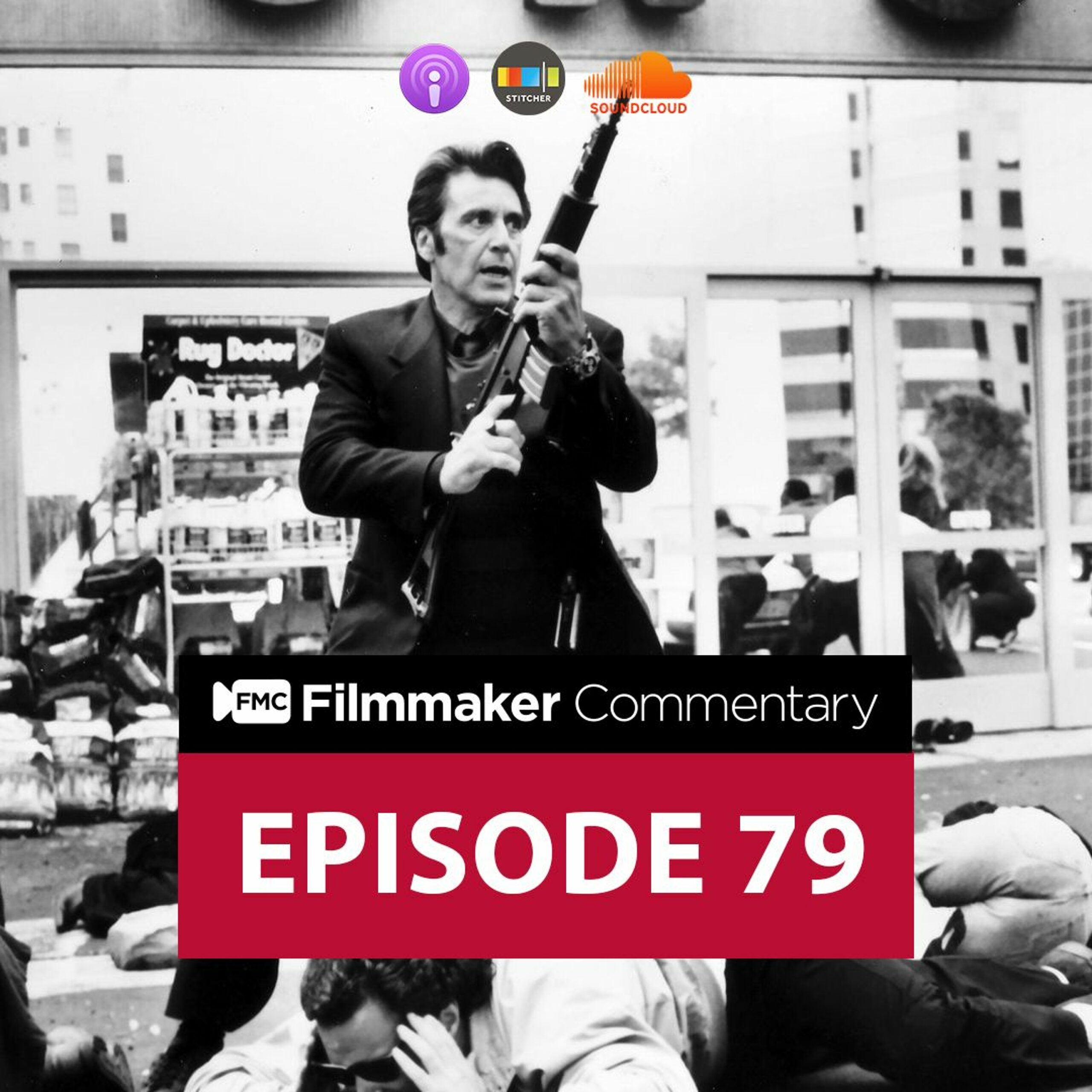
FMC 079: Heat Produced,Written, and Directed by Michael Mann

January 30, 2020
Listen on Apple Spotify YouTube
Listen to this episode
Your browser does not support the audio element.
Also on Apple Spotify YouTube

This episode dives deep into Michael Mann’s crime epic, “Heat,” exploring its meticulous production, complex characters, and enduring impact. Join us as we dissect the film’s gritty realism, the iconic performances of Al Pacino and Robert De Niro, and Mann’s unparalleled dedication to authenticity.

What We Cover

  • The meticulous craft behind Michael Mann’s “Heat,” from its authentic portrayal of crime to its nuanced character development.
  • Insights into the legendary performances of Al Pacino and Robert De Niro, and their dynamic on-screen chemistry, including the international appeal of its star-studded cast.
  • Michael Mann’s extensive research process, including direct interactions with law enforcement and real-life criminals, to achieve unparalleled realism.
  • The film’s distinctive visual style, cinematography choices, and its lasting influence on the crime genre.
  • Discussions on key themes like “risk versus reward,” “time,” and the duality of its protagonists, along with explorations of character motivations and compulsions.
  • Behind-the-scenes stories, including details on the film’s intense action sequences and Mann’s unique directing methods, emphasizing his approach to filmmaking.

Key Moments

  • 0:55 – The surprisingly strong international box office performance of “Heat” and its implications for 1995 filmmaking.
  • 12:44 – How evolving NCAA rules on athlete compensation mirror the film’s themes of exploitation and individual agency in broader society.
  • 23:55 – Co-host Reginald Titus Jr.’s critique of Michael Mann’s portrayal of certain minority characters within the film’s narrative.
  • 36:44 – Fascinating trivia about the film’s production, including real-life inspirations and Mann’s commitment to detail.

Gear & Films Mentioned

  • “Terminator: Dark Fate”
  • “Terminator: Genisys”
  • “Terminator” (1984)
  • “Terminator 2: Judgment Day”
  • “Joker” (2019)
  • “Barbershop Uninterrupted”
  • “Watchmen” (HBO series)
  • “Transformers G1” (animated series)
  • “Collateral” (2004)
  • “Jackie Brown” (1997)
  • “Carlito’s Way” (1993)
  • “Reservoir Dogs” (1992)
  • “Training Day” (2001)
  • “Righteous Kill” (2008)
  • “The Departed” (2006)
  • “No Beast So Fierce” (book by Edward Bunker)
  • Anamorphic lenses

Listener Questions

  • How did Michael Mann achieve such a high level of authenticity in “Heat,” especially in its portrayal of criminal operations and police procedures?
  • What production details and behind-the-scenes stories from the commentary contribute to the film’s legendary status on Filmmaker Commentary?
  • How do the character motivations and philosophical undertones of “Heat” continue to resonate with audiences and filmmakers today?

Full Transcript

Read the full transcript

Full Episode Transcript

This episode of Filmmaker Commentary Michael Mann's crime epic "Heat," exploring its cinematic techniques, character development, and impact on the hosts, while also discussing current film industry news and the evolving landscape of college sports.

Opening Discussion & Film Details

Reginald Titus Jr.: Filmmaker Commentary episode 79. Welcome to Filmmaker Commentary, where we give you insights from our favorite filmmaking commentaries. These commentaries can be heard on your DVDs and Blu-rays of your favorite movies. We'll show you how you can use these commentaries and apply them to improve your video production and filmmaking techniques. All of this here on Filmmaker Commentary. I'm your host, Reginald Titus Jr.

Reginald Titus Jr.: Welcome to Filmmaker Commentary. I'm Reginald Titus Jr. I'm joined with Casey G. Smith. Welcome back, sir.

Casey G. Smith: Good to be back, sir.

Reginald Titus Jr.: And today we're talking about Heat, directed by, written, and produced by Michael Mann. Released December 15th, 1995. We have cinematography by Dante Spinotti, or Spinati. Probably Spinotti.

Casey G. Smith: Spinotti.

Reginald Titus Jr.: Spin, what did I say? Spinnyati? I don't know. I made up a name.

Casey G. Smith: Spinotti.

Reginald Titus Jr.: Music by Elliot Goldenthal. So we have a budget of 60 million. We have a box office of 187.4 million, and with 67 of that coming from the US. That's a win.

Casey G. Smith: That is a win. Especially 95, you know, I'm sure the budget for the marketing advertising wasn't, wasn't maybe as exorbitant as it is now. So, yeah.

Reginald Titus Jr.: And what's interesting is that most of that money came out of the US. You know, they barely made their budget back, 67 million of that coming from the US. Yeah. So I guess the foreign audience wanted to see some Americans blow stuff up.

Casey G. Smith: Yeah, I wonder, um, from an international perspective, I wonder about the draw, uh, you know, of, uh, De Niro and Pacino.

Reginald Titus Jr.: Yeah, and Tom Sizemore, you know, he was especially for the, uh, American film market, he was a hot commodity at one point.

Casey G. Smith: Hmm. And Val Kilmer too. I'm wondering what his international appeal.

Reginald Titus Jr.: That's right.

Casey G. Smith: Uh, is like.

Reginald Titus Jr.: This film had some who-who up in here.

Casey G. Smith: No doubt.

Reginald Titus Jr.: Like.

Casey G. Smith: You know, even even Jon Voight doing his thing.

Reginald Titus Jr.: Voight, which one was that?

Casey G. Smith: He was the, uh, kind of like the quest giver throughout.

Reginald Titus Jr.: Huh. Oh, with the hair, with the— Oh, that's Angelina Jolie's dad, right?

Casey G. Smith: Yeah.

Reginald Titus Jr.: Okay.

Casey G. Smith: It was almost difficult to recognize him. I'm like, huh?

Reginald Titus Jr.: I, yeah, I didn't, never knew his name. Yeah.

Reginald Titus Jr.: Um, but before we dive further into Heat, let's talk about news and movies watched.

News & Movies Watched

Casey G. Smith: All right, according to The Wrap, Terminator: Dark Fate, unfortunately wipes out with only, uh, 29 million at the box office for its opening domestic weekend as of the recording of this podcast. Um, however, there is maybe potential hope, uh, it seems to, uh, had some, you know, a decent amount of opening, uh, within the, the international market, about 44 million. So it's due to gross 101.9 million, uh, during its global opening weekend. And some of the distribution, of course, was spread out over a couple of different companies. So they won't all feel the sting of this. Uh, Paramount put in 30%, Skydance, uh, along with 20th Century Fox, each provided 30% co-financing and handling overseas distribution, while Tencent, uh, provided 10% of the co-financing and they're handling distribution specifically in China. Interesting thing is that while this film has a much higher audience rating on Rotten Tomatoes, uh, around 85%, um, as opposed to Terminator: Genisys, which was just at 53%, uh, and even the, the, the critics, um, have given it higher acclaim. 69% for Terminator: Dark Fate, while Terminator: Genisys only had 27%. It's still currently from an opening opening weekend standpoint, only about $2 million more. Genisys opened at 27 domestically, whereas Dark Fate at 29%.

Reginald Titus Jr.: What was the budget for this one again?

Casey G. Smith: Uh, budget for this one, you is, budget for Terminator: Dark Fate is coming in, uh, estimated 185 million.

Reginald Titus Jr.: That's the budget?

Casey G. Smith: Hmm.

Reginald Titus Jr.: Oh, dear God. Sorry, guys. This is not looking good.

Casey G. Smith: Yeah, there were I think I saw something that said that the studio might, I mean, the financiers might take a, you know, it might, yeah, it might be a 100 million loss potentially maybe on this film, which is unfortunate, man.

Reginald Titus Jr.: Yikes. 185? How did they come up with that?

Casey G. Smith: I guess we got to see it to find out. And, you know, as we were discussing off off-air, I'm part of the problem because I told myself I wanted to go and see this, uh, I planned on seeing it Saturday morning, and I had some, I had some, uh, automobile issues. And so I didn't, uh, and I didn't go today either. So, yeah.

Reginald Titus Jr.: I saw the trailer and I was like, I won't be seeing this.

Casey G. Smith: Hmm. Again, I think it's one of those cases of, you know, fool me, you know, once, shame on you. Fool me five times. Yeah. Shame, shame, shame, shame.

Reginald Titus Jr.: Well, they're getting money somewhere to be, to make so many of these, you know?

Casey G. Smith: I think this is the, but the difference with this one is that this is not just James Cameron stamping his name on it. He was actively involved. Him and and, um, Tim, I was going to say Tim Stewart, that's a real person that I know. Uh, the director of Deadpool, Tim Miller. Yeah. Him and Tim Miller were working hand-in-hand on this. Like, uh, Cameron was coming in in between, you know, work on the new Avatars, calling in and all that. He was, he literally consulted on this Terminator movie. So I think it has some of the, some real legitimate, uh,

Reginald Titus Jr.: I think to get the juice from James Cameron, you need James Cameron in the seat at the helm 100%. And because Avatar is a big thing that, you know, technology-wise, being torn between that. Then he was also working with Robert Rodriguez on the Alita and, what was it?

Casey G. Smith: Battle Angel.

Reginald Titus Jr.: Yeah, the Battle Angel movie. And, yeah, man, we need Cameron all the way in if you want to get that Cameron juice.

Casey G. Smith: Hmm. Yeah, I think this one just again, it's too many. You got T1, you got T2. Hmm. And then T3, T Salvation, Terminator: Genisys, uh, and now Dark Fate.

Reginald Titus Jr.: And the cool factor seems to be kind of going away.

Casey G. Smith: Oh, yeah. I think, I think, I think definitely. But I think this one literally is a good one, but just it's too much, you know,

Reginald Titus Jr.: All speculation, because you didn't pay for the ticket.

Casey G. Smith: It's, Touche. It is all speculation, but I'm merely going by what audiences and critics have said. They've improved, according to Rotten Tomatoes. They have never been wrong. Never. Don't question them, Reginald. But I am going I am going to next week, uh, I will, I will, I will check this out for myself.

Reginald Titus Jr.: Okay. Okay. Let us know.

Casey G. Smith: First-hand account.

Reginald Titus Jr.: Right. Let us know.

Casey G. Smith: I might come back and say, shame, shame, shame.

Reginald Titus Jr.: Or I might say, yeah. Okay. Okay. I know the third trailer was about the third trailer, and I was like, okay, this is watchable. Yeah.

Casey G. Smith: Admittedly so, the the trailers hadn't done it for me. It wasn't until I saw some trusted sources give, give some reviews that I was like, okay, okay. Yeah, I was, yeah, the trailers did not do it for me. There've been some bad trailers. Um, there's a lot, I think a lot of trailers that just aren't doing it for me, uh, these days. There's, yeah, it's unfortunate.

Reginald Titus Jr.: The Joker trailer did grab me.

Casey G. Smith: Hmm.

Reginald Titus Jr.: The first like, you have that one, you have, okay, we'll take a chance and watch it.

Casey G. Smith: That's true.

Reginald Titus Jr.: Soon as the Joker trailer dropped, whatever date that was, I was like, ooh.

Casey G. Smith: Yes, I will give you that. That was a really well-done trailer.

Reginald Titus Jr.: And it wasn't even a full trailer. It was just like a, yeah, it was a teaser.

Casey G. Smith: Teaser.

Reginald Titus Jr.: And I was like, this looks like an award-winner.

Casey G. Smith: It, it captured the tone, it did its thing. I will give you that.

Reginald Titus Jr.: Yeah.

Casey G. Smith: Trailers.

Reginald Titus Jr.: Yeah, this one I was like, oh, bad, the first thing I thought, bad special effects. That's what I couldn't get over. I couldn't get over it. 185 million, that shouldn't happen.

Casey G. Smith: Hmm. Period.

Reginald Titus Jr.: At any rate, do we have any more news?

Casey G. Smith: Um, speaking of Joker. Yeah. Joker is coming closer and closer to, um, hitting the billion dollar mark. It's already made 900 plus million dollars.

Reginald Titus Jr.: Okay.

Casey G. Smith: That's mighty impressive.

Reginald Titus Jr.: And what was their budget again?

Casey G. Smith: Budget for the Joker is going to be approximately, estimated budget for the Joker, 55 million.

Reginald Titus Jr.: Learn something, Terminator people.

Casey G. Smith: Let's be honest, though. Making a Joker movie versus a Terminator movie, it's going to be a slight, slight difference in budget.

Reginald Titus Jr.: True.

Casey G. Smith: Slight, slight difference.

Reginald Titus Jr.: Uh, yeah. What was the budget for Terminator one?

Casey G. Smith: Ooh, for the first Terminator?

Reginald Titus Jr.: Oh.

Casey G. Smith: You want to take us back to 84, is it?

Reginald Titus Jr.: Man. Then I guess because that's just like a monster movie, right? Because you got just the one guy versus T2, which I'm sure the budget quadrupled.

Casey G. Smith: Oh, man, I'm sure it did. All right, so the first Terminator back in 84, uh, wow. You ready for this? Yes. 6.4 million. For the first Terminator. They've gotten away from that. They've gotten away from it. Yes. They they have. Uh, yeah, definitely they, they have. Uh, oh, I got to I got to put in Terminator 2. Uh, let's see what that difference in budget. Yeah, Terminator 2: Judgment Day. 102 million. Wow. Worldwide gross, 521 million.

Reginald Titus Jr.: Mhm.

Casey G. Smith: Now, again, of course, you know, back in, you know, 260 that was, was uh, domestic. But, of course, back in these days, you know, worldwide wasn't playing as prominent of a role as it does now.

Reginald Titus Jr.: And then also those numbers, remember we I forgot what episode we had talked about it. I was looking at an old, uh, you it was on YouTube and it was an old, um, promo. Yeah, it was a promo. Yeah, like it was like a billion or something like that. It was a lot of money. Um, and they were like bragging about it. Like, oh, like, yeah, this is the highest grossest of all time, all time. I was like, ooh, the numbers are lying on the internet.

Casey G. Smith: Somebody lied.

Reginald Titus Jr.: Yeah, this is like documented. Yeah. This is documented. It's the, uh, the guy that played the liquid Terminator. He was the one that was doing the promo. Yeah, it's worth a, worth a watchy.

Casey G. Smith: Hmm. Robert Patrick.

Reginald Titus Jr.: There we go.

Casey G. Smith: The T1000.

Reginald Titus Jr.: Yeah, man, once he became famous, like famous for T2. It's like, I couldn't see him in any other role.

Casey G. Smith: Yeah, man, he, uh, he rocked that.

Reginald Titus Jr.: Do we have any of more news?

Casey G. Smith: No, that's all we have for now.

Reginald Titus Jr.: It's all the news we're getting today. I got, I do have one little thing about the news. Um, this is kind of like a side news, pop culture thing. But the, uh, NCAA, did you hear, is allowing athletes to use their image and likeness to make money?

Casey G. Smith: Well, California, oh. Go ahead.

Reginald Titus Jr.: Um,

Casey G. Smith: That's what I did watch. Speaking of things watched, I watched, um, The Barber Shop Uninterrupted. Okay, LeBron. Mhm. And then when this episode this came on, it gave a caption about the the the Governor of California signing that bill. He literally signed it on the show.

Reginald Titus Jr.: I remember that. Well, I mean, I don't remember that, but a podcast I listen to mentioned this a week ago.

Casey G. Smith: Yeah, and you're right there, he signs it with everybody there in the room. I'm like, what? And, uh, yeah, man.

Reginald Titus Jr.: And this was just for California, right? And so that opened up the gate. And also, the NCAA's been getting pressure anyway because you have people like Rich Paul, the agent for LeBron. You know, didn't go to college, high school degree, all that. But he is becoming, he is a legitimate, like power agent in the NBA. He's actually showing kids instead of being like exploited by the NCAA, like he's showing them how to get money. He's like, hey, do you want to play for NCAA for, you know, free one, two years and kind of wait to hopefully get an NBA, or do you want to make six figures right now? And then he's showing them a pathway on how they can get paid by playing internationally and getting some, some decent money, and you're playing with grown men, and it'll prepare you to come to the into the actual draft.

Casey G. Smith: Sure.

Reginald Titus Jr.: And also, uh, LaVar, LaVar Ball, who's famous with the, the Lonzo kids. I mean, the three, what do they call them, the Ball brothers. One, uh, famously went to the, to Los Angeles, came out of the UCLA program, but the other two younger brothers, you know, he had them playing internationally as well instead of going to the college program. Make some money, you know, get your skills up at the same time. And people are actively figuring out ways to make a living off their skill set without being exploited for a couple of years. And, uh, and I think this is forcing NCAA to be like, you know what, everybody else is making money. Everybody the coaches are getting paid millions, the tickets are getting paid.

Casey G. Smith: For real.

Reginald Titus Jr.: The football and basketball are literally supporting other programs. Like you got the golf players on private jets going to whatever.

Casey G. Smith: They're, they're the money-making programs. They and they talk about that in that episode. Highly, highly recommended because he's, he's, I believe he's on there as well.

Reginald Titus Jr.: Who that?

Casey G. Smith: Rich Paul.

Reginald Titus Jr.: He's the man.

Casey G. Smith: He's a shorter guy? Shorter brother? Yeah, yeah, yeah. He's on that episode. He's he's sitting there. Along with, uh, Ed O'Bannon.

Reginald Titus Jr.: Ah, because he was the first one.

Casey G. Smith: He was the first one.

Reginald Titus Jr.: Yep.

Casey G. Smith: Yeah, I mean when he saw himself on, uh, the NCAA.

Reginald Titus Jr.: It's a basketball game, yeah.

Casey G. Smith: They used to, they used to make. Now they don't make those games anymore.

Reginald Titus Jr.: No, they just stopped it. They just shut it down.

Casey G. Smith: Yeah, I'm like, oh, that's, yep, they shut it down because he was, he started that whole thing, you know?

Reginald Titus Jr.: Yeah.

Casey G. Smith: His likeness I mean, years later, his likeness, he's out, you know, had played in the NBA and he was just done, and yet his likeness is still being used in a video game and they're making money off of it and he's not getting anything. That, that is I'm like, you know what, that makes sense, you know? Um, you're still making money off my likeness, you know, you've, yeah, this is very important too, especially with, uh, with NCAA, you know, we kind of focus on like the NFL players, you know, the basketball players, especially, you know, dealing with colorism and black players and all that. Uh, there's, you know, just a history of exploitation, you know what I'm saying? That's why they kind of compare it to the slavery and stuff like that. But, uh, this is huge, man. I don't know when it's actually being implemented, when the NCA, why do I keep saying NCD? Uh, yeah, NCAA. I want to say NAACP. I'm like, I'm saying the right, yeah, double L, double L. I think the, um, I wonder when this is going to be implemented. Is this like as of right now, or does it have to wait till next season? You know, when does it happen?

Casey G. Smith: True. You know, I say if it takes another year or so, just so you can make sure that you you roll it out right. You know, because it is a big, it is a very, very big deal.

Reginald Titus Jr.: It changes everything.

Casey G. Smith: Exactly. So you need to make sure that you that everybody understands what it is. And also, even with this, you're still going to have potential people trying to exploit the players. For sure. So you have to, you know, make sure that they are protected because it's going to get sticky. And even the recruiting aspect of things, what's that going to look like?

Reginald Titus Jr.: This is a new chapter. This is the floodgates are about to be open. Um, what is your stance now? Because I remember we had debated this a long time ago.

Casey G. Smith: Sure.

Reginald Titus Jr.: You know, about, you know, them getting a free education and all that. My forget, education in quotations. Well, again, again, I'm still, I still think that's great that they get that free education. Now, again, on top of that, if, ouch. I believe definitely they should get a cut of, if they're, they have, you know, a jersey or their likeness is being used, then yes, they should get a cut of that. Again, I don't, but I I my thing is this, I never will equate it to slavery because slavery involves no will at all versus life or death, whereas this you you still have plenty of options. But in light of everything, I think definitely someone's going to use your likeness, then you should be compensated for that. especially when you think about again, Ed O'Bannon, prime example, years later, after the fact, they're going to sell jerseys with your your your number that you wore and it's specifically, you know, because of you, then yes, you you should receive uh, um, you should receive money from that. Uh, portions of your sales from your your likeness, um, your work because you're you're you're bringing that to them. You are, you are making that jersey, you're you, you add the value. Um, yeah, I just think that they'll have to, uh, figure out well, what are the, as best as they can. There's going to be bumps, right? Something brand new like this, there's going to be drama. And, and they have to, they have to stand firm and say, oh, that, you know, the first sign of a mistake or this or that, they can't say, oh, this is why we didn't do it. No.

Casey G. Smith: Come on now.

Reginald Titus Jr.: I think this is, uh, this is like when you start introducing CBD to, you know, a state that's not necessarily legal legal with marijuana, you know, that's like the first step into like, okay, eventually, it's going to be legal in the state, you know, because you get this other one. I feel like this is going to open the door to basically what needs to happen is NCAA needs to compensate these players, and then be like, hey, you don't have to be a student to be here. You know what I mean? You don't have to be an actual student, but we're recruiting you specifically for this entertainment for our people here. And that's really what it is. I think this is what's going to happen.

Casey G. Smith: Oh, okay. So not even, not even, uh, like basically we're, we're, we're, we're, we're paying you not to say through a free education, but we instead we'll use that money just to have you play on our team.

Reginald Titus Jr.: Yeah. Like this is just, yeah, for entertainment. So you're not, so you're not a a student per se. You're just you're just an athlete. You're not a student athlete, you're just an athlete.

Casey G. Smith: Right.

Reginald Titus Jr.: Because you're just an employee, yeah, of of, uh, of our athletic program. Yeah. Absolutely. And that's that's, that's going to be fascinating. But what about those who who do want to get the education?

Casey G. Smith: Hmm.

Reginald Titus Jr.: I'm pretty sure that that'll be easy to come up with a solution for that.

Casey G. Smith: Because then yeah, so it's going to be fascinating to see how that, how that will work, you know, like how that all that will, uh, title for funding, how all that will work.

Reginald Titus Jr.: It's almost like if you work for a college. Sometimes they have a discount if you work for a college or they let you just get a free education if you work for the college. And Right, right. I see what you're saying. Yeah. They have the like tuition waivers or reimbursements.

Casey G. Smith: Hmm.

Reginald Titus Jr.: That'll be easy. I think people will be surprised how many would still be able to take, yeah, advantage of the educational benefits.

Casey G. Smith: I think it would be more difficult for somebody that'd be interested in that to get a education just because right now it's difficult to keep the kids when we hear professors talking about this, just kids are never there. They're always on the road, they're always flying somewhere, they're traveling. Yeah, they're not there. They're not getting a quality education most of the time anyway. So I think you'll by it'll be even more difficult to actually get an education if they decide to be like, you know what, you're all employees and you all have salaries, that. That's really the thing that people really want them to realize, hey, you need to compensate these people.

Casey G. Smith: There's a flip side to that. Yeah. Um, actually I, I work with I I work with a somebody who kind of enlightened me about something I didn't know that when you're a student athlete currently, like there's certain rules in place and I don't know all the details of it, but if you get injured while you're playing, and this this person was a football player at a school. Uh, had a scholarship for, for football.

Reginald Titus Jr.: In NCAA.

Casey G. Smith: Um, yeah, I'm pretty sure. Yeah, it wasn't like a division, it wasn't like, um, you know, yeah, it was it was he was playing division ball, like NCAA. And, um, if you get hurt, there are some regulations in place that you still would receive at least aspects of your scholarship money. Uh, if you were still, you know, you got hurt and you still wanted to, you know, still go to school. So I wonder how that would work if you are again, as an employee, you get hurt, now, man, now you got to worry about workman's comp and this that. That's a different situation. And then again, from an education, if you're if you're also going to school like, I don't know how those benefits would still potentially play out. That's interesting. And then then and now so now if you're an employee, then you also just be straight like fired, you know? Like things aren't working out. Yeah. All right, you get like go. We just straight let you go.

Reginald Titus Jr.: It's it's own market, it's its own thing, just like the NFL operates, just like the NBA operates, it's its own thing. They have their own rules.

Casey G. Smith: Man, so, cause I mean, you know, injuries happen, right? And there's a and so, hopefully maybe then while you're, gosh, while you're there, hopefully, hopefully that's people there. Hopefully, you know, maybe you put some money away because again, most won't go pro. Yeah, you know. That's the, that's the reality. Most will not go pro. Um, it's just the numbers.

Reginald Titus Jr.: It'll be an interesting league, though. If it opened up like that, it'll open up the door to, uh, uh, uh, you know how Ice Cube has the big three, uh, that league? You're going to start getting maybe retired, uh, NBA people that are still good.

Casey G. G. Smith: Still great.

Reginald Titus Jr.: Coming back to college. Yeah, to represent the team. Do you know that'll be like so dope?

Casey G. Smith: Yeah.

Reginald Titus Jr.: Because they still got skills. Like if you've seen any, if you watch the Big Three, there's some guys on there that are like legit, still. But they might they're not 21.

Casey G. Smith: No doubt. That in alone makes me, that interests me. I'm like, I don't I don't watch college ball at all. I don't I've never cared about college ball. There's been a few occasions where I've watched maybe the the the championship game. And I can count on one hand the number of times I've done that. Yeah. Uh, I just typically don't have, I don't have a tie to it.

Reginald Titus Jr.: I'm there with you. The only time I did was when Allen Iverson was playing Georgetown, but that's it.

Casey G. Smith: Hmm. Yeah, I I can't even tell you who I who I saw play when I did watch. But, man, you talk about like some old hats coming through to just to play. I mean, we're talking this is just another, you know, route of, uh, of, uh, of entertainment or of of ball.

Reginald Titus Jr.: It is what it is, man.

Casey G. Smith: That would, that changes it, it changes everything.

Reginald Titus Jr.: God.

Casey G. Smith: I know, and that's the other thing. I I hate the whole college system of how they select who I like it, it's to me it's confusing and it doesn't make sense. I'm like, what is this?

Reginald Titus Jr.: It doesn't, I don't know. I don't I don't like any of that.

Casey G. Smith: Yeah.

Reginald Titus Jr.: Yeah, I'm not really a fan of it either. And football, too. Like I, we'll watch it, but it's like, no. I'll watch people that are getting paid to do it, just me.

Casey G. Smith: At the end of the day, that's that's what, that's that's where yeah, that's where I've been. But that is interesting. Well that could, wow, that could.

Reginald Titus Jr.: It could change, it could change everything. This could change everything.

Casey G. Smith: But, okay, so here's so here's the other thing, though. All right. So now if they if these are just employees, now people who know they would never make it in the league could stay at a college longer and play longer. They're not just limited to a four-year or, you know, eligibility as a whatever, a senior. They're just, they're not.

Reginald Titus Jr.: Yeah, those old rules don't apply anymore.

Casey G. Smith: Oh, man.

Reginald Titus Jr.: You play on the team.

Casey G. Smith: So, so where does that leave space then for other people to come in? Because if they got a team and you got people who are going for careers, how do people coming out of high school then find a spot on a team? That's going to be even tougher.

Reginald Titus Jr.: I think you'll still get recruited.

Casey G. Smith: But even less then will be recruited.

Reginald Titus Jr.: But the competition will be higher.

Casey G. Smith: Yeah, less would be recruited because you would have, you going you going to have you don't have free labor anymore. So you going to have some career players who will say, okay, I'm not, I'm not NBA ready or at least I'm not NBA ready right now. They're going to stay on longer with that team. Heck yeah. Um, which also in turn it would be fascinating to see what that does for the NBA numbers because if people are going to stay in longer. I don't have to jump into the NBA just yet. Yeah. I can stay here. If I'm making decent money, um, hell, am I negotiating, you know, you know, contracts now and, oh, it's basically creates another market.

Reginald Titus Jr.: Wow.

Casey G. Smith: It's already a market there, but it's kind of like, it's got handcuffs on it. But when it opens up like this, it's over. Man. But I think the the the starting to get paid, it's kind of, so much coverage. That opens up the door. So many freaking college teams. Heck yeah. That's what that's going to open up a whole lot of more, I think, sports agent jobs potentially, too. Yeah. There's a lot of people who say, oh, I mean, sports only a handful. This is going to open up more, you're going to need more agents. Yep. And schools are going to have to figure out how to how to deal with, you're going to schools are going to be people who can deal with agents then, too. Like, these the athletic departments are going to need, oh, man, and lawyers and everything changes. Holy, holy smokes. Everything changes. This is a, this is huge. It's like I'm, I was surprised they decided to change the rules. Wow. So they just they just on on the shop, uh, the Governor of California said, you know, I'm, you know, people, you know, I've gotten so many calls and letters, people saying, oh, you're ruining, you know, the purity of the game and all this trash. I'm like, come on. If it was so pure, then, you know, anyway, those men going wouldn't be to go pro and make money off. He would just play, you know, so don't don't don't come with that. But, um, he said, but he the whole goal, he he said his goal of doing it was to hopefully eventually them to be the starting point and then other states beginning to do the same thing to put that pressure on the NCAA. But apparently all it took was just them.

Reginald Titus Jr.: California. That's a big pool of people.

Casey G. Smith: Of course.

Reginald Titus Jr.: California and athletes. Football, oh my God. Yeah, absolutely. Wow. And so they did it and literally like, what, a month later, NCAA's like, no, goddamn. All right. All right. Here we go. Okay. You got us there. You got us.

Casey G. Smith: And did you hear like the the rule, this had to been maybe two months ago or something like that when after you like I told you Rich Paul had got one of his, uh, people that were highly recruited, I can't think of the student athlete, or athlete coming out of high school. Instead of going to the NCAA, got them paid overseas. Uh, the NCAA basically made a rule for agents, basically saying you had to have a degree in order to to work with them. And then LeBron, they were just pissed. Like, this is this is them pit basically showing like, hey, trying to put Rich Paul in his place because he's making new strategies and things like that.

Reginald Titus Jr.: Yeah.

Casey G. Smith: And they they've been fighting it, man. And him signing that paper and doing things like that. Man. Very powerful.

Reginald Titus Jr.: So what, they said you have to have a degree to to what, to to deal with student or to, to, to, I guess basically recruit high school students coming out of high school students going to the NCAA. You had to be an agent with a college degree.

Casey G. Smith: Oh, that's trash. That's that's just that's just exploitation. Yeah, I mean, yeah, I work at education, but you if you got the skills, you got the skills. Yeah. Period. It was messed up. And that was in retaliation of what he was doing. He was like, you ain't got to worry about the NCAA. Whereas other agents were probably like, you need to go through here, you know, we got ties with Duke, you can get from there, you know. People have often used degrees and certifications and licenses to hold down competition. Yeah, that's.

Reginald Titus Jr.: Any how, I know we kind of went on tangent on that one, but that one was interesting because you have documentaries that are out kind of explaining, you know, how kids have were exploited, you know, through the football NCAA through the football system, basketball system, but they, they really I can't remember the one of that was used, the documentary used to be on Hulu, specifically kind of targeting the, the black kids and going into the football system. And, uh, with this, this is going to be a cool add-on to whatever documentaries that are out there as they start to explore this new terrain of NCAA with the images and then possibly in the future just go ahead and compensating the players.

Casey G. Smith: I'm sure EA is working on bringing back that video game.

Reginald Titus Jr.: Man. Wow. That is going to be dope. If they bring that back, dope.

Casey G. Smith: Yeah. Man, the whole thing you said about the older players coming back through. Yeah. I'm like, man, what about what about like what about, so, okay. So what about like, you know, your other international players coming into these teams? It's going to be All right, yeah. We could go on this for, we could do a whole another podcast. It changes everything, dude. It changes everything. God Lord. Um, that's a paradigm shift on what we think about college sports because they've been exploiting the term student athlete, changes everything. It's tough to even call it college sports, it's like sports. There you go. You know. What, what have you been watching, sir?

Reginald Titus Jr.: The only thing that I've watched, haven't had any chance to watch really anything this past week. But on YouTube, there's a show called, uh, The Breakfast Club, which is a, you know, popular, um, morning radio show in New York. And, uh, Byron Allen, from Entertainment Studios, was on there. Byron Allen, you know, billionaire, uh, TV entrepreneur, just recently purchased the Weather Channel. He was on there for, I think his interview is about an hour and a half.

Casey G. Smith: He purchased the Weather Channel?

Reginald Titus Jr.: Yeah, for 300 million.

Casey G. Smith: Is that it? Wow. I thought the Weather Channel would be worth more. Hmm. Interesting.

Reginald Titus Jr.: I don't know. Yeah, buddy. So he was on there just dropping gems. Just for entrepreneurs, and he had everybody captivated.

Casey G. Smith: I'll have to go back and listen to that for sure.

Reginald Titus Jr.: Byron Allen is the truth. How about that? African-American guy. He's just talking about how he he came up, you know, I think he was born in Detroit. You know, his parents had divorced, decided to go with the mom's mom's side, you know, but he had like a strong work ethic and he just kind of goes about how he went from that to becoming a TV entrepreneur.

Casey G. Smith: Nice. Okay.

Reginald Titus Jr.: That one was a good one. That was good.

Casey G. Smith: Excellent. Uh, likewise, man, I haven't, I have not watched much much aside from The Barber Shop Uninterrupted. Uh, I also checked out, uh, again on HBO, Watchmen, episode two. And man, this this show continues to impress me, man. Uh, episode one was good. Episode two, yeah, it gets it's it's maybe a little bit better. Okay. They are they are diving in. It's it is it's very well done, very, very well done. So that's that's it. I got a little nostalgic. I actually I went and pulled out my my Transformers collection. Wow. And for whatever reason I I was doing something for work this week. I said, man, I want to I want to watch those first original five episodes of More Than Meets The Eye of the old animated Transformer series. And I went and I I put those in and watched those. Even though they're riddled with mistakes, riddled with animation mistakes, wrong character saying the wrong thing. Like there's yeah. I've I've I've noticed that for years, but, um, and you know, when you have characters doing an animated show, especially brand new like voice actors, they're still trying to kind of find their, you know, find their flow. And I noticed for me, when I listened to Peter Cullen doing Optimus Prime, he is very much so has a John Wayne kind of sound to him in the earlier episode. He still sounds like Optimus Prime, but he's just a just a little little, there's a little John Wayne kind of in there for me. But even though, uh, Cullen says he actually modeled him after his brother, who was a military veteran, uh, and had had served. But, um, anyway, but yeah, so I I watched, I watched, uh, several episodes of the old old-school G1 Transformers. Right. I can dig it. And there's some actually some good dialogue in it. Like some of the yeah, some of the, I I the the back and forth between the power dynamic between Megatron and Starscream. Starscream is so blatantly power hungry and Megatron is just so like boss, in control. And, you know, Starscream will say something and there's one line Megatron says, you know, Starscream, your your intelligence is only overshadowed by your stupidity. It's like, But yeah, it's, yeah, it's it's it's fascinating, it's fun. And again, riddled with just inconsistencies. Like the Decepticons fly all the time. All the time, you know, Decepticons attack. All right, we're flying in. Decepticons retreat. Okay, we're flying out. Autobots fly sometimes, which is really confusing. Decepticons are flying away, let's go after him. Oh, we can't. We're stuck in the water. Oh, okay. And then like, you know, a little bit later, I'm going after him. Flying off. Wait a minute. Why didn't you do that earlier? Yeah, it's riddled with. And then after those first five episodes, the Autobots don't don't ever fly again. Unless unless they're like you can transform into a plane. You are you are you're groundbound.

Reginald Titus Jr.: Maybe they animated it first, then put it in the car, the voiceovers. Who knows? Yeah, it's it's funny stuff. But anyway, but yeah, so that's that's kind of it for me, man.

Casey G. Smith: Okay.

Reginald Titus Jr.: Nostalgia. Well, let's jump back into the show.

Initial Thoughts & Reactions to Heat

Reginald Titus Jr.: Thank y'all for tuning in to Filmmaker Commentary. We're talking about Heat, released in 1995 on December 15th, directed, written, and produced by Michael Mann. Let's jump into the synopsis. Master criminal, Neil McCauley, played by Robert De Niro, is trying to control the rogue actions of one of his men while also planning one of his last big heists before retiring. Meanwhile, Lieutenant Hannah, played by Al Pacino, attempts to track down McCauley as he deals with the chaos in his own life, including the infidelity of his wife and the mental health of his stepdaughter. McCauley and Hannah discover a mutual respect even as they try to thwart each other's plans. Heat. And if this is your first time listening to Filmmaker Commentary, please know that there will be spoilers. You've been forewarned.

Reginald Titus Jr.: Yes. How did you watch this movie? Did you like it?

Casey G. Smith: This is my first time watching the whole movie. I remember I tried to watch it a couple years back, and I remember because I remember seeing the opening heist scene and, uh, I just was I thought it was cool, but I was like, oh, I'm tired or whatever. Something came up and I didn't didn't watch it. Didn't finish watching it. Hadn't didn't go back to it until until this go 'round. Okay. Uh, scooped it up from Movie Trading Company, uh, and sat through it and I got I got, you know, saw how long it was and I was like, ooh, okay. Started watching it, you know, at night. I was like, I'm probably not going to make it through the whole thing. So I got about two-thirds of the way and was trying to fall asleep and it was kind of rewinding back parts and I'm like, no, I got to I got to shut it down. So then I came back this morning to finish watching it. And, um, I enjoyed it. I think it is a little too long. Honestly, I think, I think, um, you know, you get to a point where once that last heist goes bad and you have the shootout, the rest of the fallout, I'm like, that's like another hour. Just handling that fallout. I'm like, this I think that could have been done quicker. Yeah. You know, especially yeah, especially having then gone through with the commentary, I'm like, I think they could have, uh, tightened this up. Yeah. But , I did like the movie. I mean, come on, you got De Niro, you know, you've got Pacino. Yeah. You've got Val Kilmer. Who his role is very limited, but, you know, he's he's he's always, you know, effective. But yeah, it's it's, uh, again, it's it's it's it's well written, it's well done, well paid. So yes, I do, I do like the movie, but it is it's a long one. It is. Which I don't have a problem with, but you you kind of feel it on this one. Yeah, two hours and 50 minutes. Yes, sir. How about you?

Reginald Titus Jr.: Uh, this is my first time watching it. I remember seeing like, just, I don't even remember what year or any of that.

Casey G. Smith: 95.

Reginald Titus Jr.: No, I mean, just like, um, I know that now, but, uh, you mean when you first saw it? Just when like, it was just in the ether, like, it was just out there. I'm just like, yeah. And I think at the time, it was already an old movie because it was in the early 2000s when this is out there. I was like, okay, Al Pacino, Val Kilmer. Uh, probably flopped. Like, that's what I thought by looking at just the poster art. The key art, just like, probably flopped or something. One day. That's what it looked like. Uh, so this was my first time watching it, watched it with the wife during the day. This is a daytime movie. Just, man, but we really dug into this film. It was, uh, once it started, it was off and running, you know, I, uh, watched it and then right away watched the commentary, almost back to back. Yeah, I like how De Niro is sharp in this film. Same thing with Pacino and in contrast. Oh, yeah. Equally as sharp. What I didn't like. How? What didn't you like? I didn't like, um, you got the brother that's trying to in the movie that's trying to be straight, trying to get his life together. And then he's easily convinced to all of a sudden be the getaway driver on a heist at the last minute. And then he's killed. First one killed. Killed. I'm like, wow, that's how we rolling. Uh, how are you treating the brothers, man? How are you treating my brothers? Then we got, uh, uh, a young actress, black, that's supposed to be playing a teenager is basically beat up, killed by white supremacists. Murdered. Dumped in a trash can. Then, Al Pacino gets all his tips from snitches that are black men. Ricky Harris, Tone Loc. And Tone Loc. I'm like, wow, come on, Michael Mann. That's all. That's what I didn't like.

Casey G. Smith: Hmm. How you treating the brothers, Mike? Duly noted, man. I I when I saw, uh, upon watching the commentary, yeah. And see that, seeing that scene again where our our main man, uh, Dennis Haysbert, who played, uh, Donald Breedon, the the the the brother that makes the unfortunate choice of going with De Niro and driving. Yeah. I was like, hm, Reggie's not going to like that. I didn't like it either. But it it it is one of those things, like, oh, man. Cause you know, his brother, he's trying to be on the straight and narrow, you know, and he's, but he's, but he's in this like, I mean, crap job where the the guy he's working for, being exploited. Seriously, you talk about exploitation. Yeah, you're going to do this. You're going to clean this, clean that, you know, and, you know, 20% of what you make, you're going to kick it back to me. Wow. Like, what? And just talk down to. It's like, yeah, this guy was, yeah, he was set up to, to, to fail, you know? Oh, I was like, oh, no. Screw this. And, uh, but yeah, oh, man, but then just, yeah, to be to be the one that gets gets capped quickly. It's like, oh, man. He's the insurance guy for Allstate.

Reginald Titus Jr.: Allstate.

Casey G. Smith: He is.

Reginald Titus Jr.: I was like, whoa. He's got that voice, man. He's also, uh, on, um, Major League, he's Serrano. That's right. Heck yeah. Wavos. Yeah. Uh, that's what I didn't like. Uh, the , you had the commentary that's, um, you featuring Michael Mann, director, writer, producer. I wouldn't recommend the actual commentary for filmmakers from a technical standpoint. Um, but I would kind of recommend the special features. There's tons of like little documentaries on the special features. I watched one of them and it was it was informative. So I would recommend the special features for sure. Um, if you want to get more into like, um, uh, character, uh, deep study, listen to the commentary. But.

Casey G. Smith: I'd say if you're a writer, Yeah. You'd probably will pull a lot out of the commentary because it is, it's, it's dealing quite a bit with backstory, with character development, with motivation, uh, and, and, and man's own research into this world, into the criminal and police world. I I I applaud him on his his level of understanding of these worlds. Uh, and yeah, there's a lot of that within the commentary. So I think, yeah, it's, it's definitely more of the, the writer side of him, uh, is on display in in the commentary. And some of the director. I mean, he he talks about how he set up certain shots and and the locations and where they were at. He mentions that continually throughout, but, uh, yeah, a lot of character development. And they, yeah. Um, and it's kind of, you know, pauses in between. So it's a, it's a long movie. It's a, it's a lot of commentary. Yeah, it was like drawn out, monotone. He'll put you to sleep. But if you're a writer, I think, I think definitely, uh, the commentary could be recommended for you.

Tone, Style, & Themes

Reginald Titus Jr.: Tone. The tone is about how do things make you feel. So, how did this movie make you feel with tone, you using either, you know, lighting, exposure, art direction to kind of set the tone. So, I feel like it was like authentic. You know, it felt it had like a very authentic tone to the movie. I was like, man, this didn't seem like overly hyped, you know, like overly like in another world, even though that first like, kind of open-in sequence, when you know, when they rammed the, uh, the armored truck, when they rammed it with another truck, I was like, hmm, but it felt, it still felt grounded. Even though it was a little bit over the top, it still felt grounded like, this could possibly happen if they knew what they were doing. If there were some criminals that really, really knew what they were doing, this seemed possible. Right. Cause these guys were, I mean, military level of, of being tactical and proficient. Yep. Which, which I, I appreciate. I appreciated their their planning. Tonally speaking, there's a, I feel like there's there's always this like, um, almost like a desperation kind of throughout. Like you feel like about these people like people like like they like they have to do like like a maybe compulsion might be might be a better word. There's a compulsion and maybe mixed with a bit of desperation, like, I have to do this, you know, Pacino's character, and they even say it in their motivations when they sit down and you have coffee. Hmm. He has to do what he's doing. You know, he feels like he has these reoccurring dream about drowning, whereas Pacino, he has to understand the criminal mind and go after them and stay on edge and hold on to the to the deaths and things that he sees, even sees it in his dreams. Um, yeah, they have to do what they're compelled, um, and there's a a desperation that's that's there for them. With Val Kilmer's character, Chris, you know, he he has to do it because he's compulsive in his gambling, but then he has to pay those debts, uh, and then with the other gentleman, the other member of their of their crew, uh, Danny Trejo's character. I can't think of the guy's name. Trejo? Trejo. Yeah. They literally call him Trejo throughout throughout the film. I was like, that's interesting. Um, but the other, uh, uh, Tim, uh, Tom Sizemore, who plays Michael, his character, he's in it for the thrills. You know, he's compelled by just being an action junkie. Hmm. It's like, oh, this is this is interesting, these these these motivations. But yeah, I just you you you feel that sense of I think desperation throughout. True. Style. For like, kind of like the visual style, um, you had the anamorphic lenses again. Yeah, this is 1995. Shoot the film. You can really see it like in the background, the bokeh of the lights and how that's popping and it's like these blue. I kind of like a blue texture. It feels kind of poetic. Hmm. There's there's one or two shots of like the cityscape where even on the on the the very ends of the screen, it's kind of, I don't know, the look is kind of like, something's bending, like towards the edges of the screen, I noticed on a couple of couple of shots. Um, it's, there's a lot of shadows, uh, that are used throughout and and cooler, it feels like cooler tones, uh, as a as a whole. Yeah, you got a lot of blues and grays and it's definitely set the mood. Hmm, in a a darker, a darker world. A lot of themes, man. What you got for themes? Uh, risk versus reward. You hear that from uh, Ashley Judd's character. Mm-hm. when she's talking to Val Kilmer. Yep, yeah, when you first like meet meet them. And it is a valid point because even they're constantly weighing the risk versus the reward. I mean, they literally literally before they decide to hit the bank, I mean, all four are in concert and they're talking about it, you know? Uh, De Niro's character, Neil, he's about, he's like, I think we should get out, you know, like that's it, you know, let's be done. Kilmer's like, can't, you know, got debts. Gambling. And that's when you find out Michael's like, hey, I'll do what I'll do whatever you do, Neil. You know, you're the leader guy, you know, he's like, no, this time you got to you got to decide on your own. Yeah. And Michael's like, well, I do it for the, you know, he's like, I do it for the, I forgot what word he used, but. Yeah, so he said, gas? Something like that or but basically saying he's in it for the thrills. Yeah. And then, you know, Trejo's like, yeah, whatever. You know, just like, all right, cool, whatever. That's a meeting. Yeah. Man. So yeah, they're constantly weighing and even and at the very, very end, you know, the very measured Neil, you know, has that moment, you know, when when, uh, his his his buddy, uh, Nate, the the the the giver of tasks and information, Yeah. tells him, hey, just dude's in his hotel, you know, is that a big deal for you? And he's like, nah, I'm good, you know, I'm heading out, I'm leaving. Yeah. And then last minute, bam. He hits the sex real quick. Yeah. It's like, oh, man. And he's the insurance guy. Allstate. Allstate. That he is. I was like, whoa, I want to say. He's got that voice, man. He's also on, um, Major League, he's Serrano. That's right. Heck yeah. Mables. Wavo. That's what I didn't like. Uh, the , you had the commentary that's, um, you featuring Michael Mann, director, writer, producer. I wouldn't recommend the actual commentary for filmmakers from a technical standpoint. Um, but I would kind of recommend the special features. There's tons of like little documentaries on the special features. I watched one of them and it was it was informative. So I would recommend the special features for sure. Um, if you want to get more into like, um, uh, character, uh, deep study, listen to the commentary. But. Yeah. It's like, man, but then just, yeah, to be to be the one that gets gets capped quickly. It's like, oh, man. He's the insurance guy. Allstate. Allstate. That he is. I was like, whoa, I want to say. He's got that voice, man. He's also on, um, Major League, he's Serrano. That's right. Heck yeah. Mables. Wavo. Yeah. Uh, that's what I didn't like. Uh, the , you had the commentary that's, um, you featuring Michael Mann, director, writer, producer. I wouldn't recommend the actual commentary for filmmakers from a technical standpoint. Um, but I would kind of recommend the special features. There's tons of like little documentaries on the special features. I watched one of them and it was it was informative. So I would recommend the special features for sure. Um, if you want to get more into like, um, uh, character, uh, deep study, listen to the commentary. But. Yeah. It's like, man, but then just, yeah, to be to be the one that gets gets capped quickly. It's like, oh, man. He's the insurance guy. Allstate. Allstate. That he is. I was like, whoa, I want to say. He's got that voice, man. He's also on, um, Major League, he's Serrano. That's right. Heck yeah. Mables. Wavo. Yeah. Uh, that's what I didn't like. Uh, the , you had the commentary that's, um, you featuring Michael Mann, director, writer, producer. I wouldn't recommend the actual commentary for filmmakers from a technical standpoint. Um, but I would kind of recommend the special features. There's tons of like little documentaries on the special features. I watched one of them and it was it was informative. So I would recommend the special features for sure. Um, if you want to get more into like, um, uh, character, uh, deep study, listen to the commentary. But.

About Filmmaker Commentary

Reginald Titus Jr.

Apple Spotify YouTube Subscribe Free
Continue Listening

FMC 254 : Scream 7 Directed by Kevin Williamson

November 13, 2026

FMC 253 : It Follows Directed by David Robert Mitchell

November 7, 2026

FMC 252 : Talk to Me Directed by Danny Philippou and Michael Philippou

October 25, 2026

Leave a Response Cancel reply

Never Miss an Episode

New episodes every week — free.

Listen on Spotify Apple Podcasts

Recent Episodes

  • FMC 254 : Scream 7 Directed by Kevin Williamson
  • FMC 253 : It Follows Directed by David Robert Mitchell
  • FMC 252 : Talk to Me Directed by Danny Philippou and Michael Philippou
  • FMC 251 : Weapons Directed by Zachary Michael Cregger

Archives

  • November 2026
  • October 2026
  • September 2026
  • June 2026
  • May 2026
  • April 2026
  • March 2026
  • February 2026
  • January 2026
  • November 2025
  • September 2025
  • January 2024
  • December 2023
  • November 2023
  • October 2023
  • September 2023
  • August 2023
  • July 2023
  • June 2023
  • May 2023
  • April 2023
  • March 2023
  • February 2023
  • January 2023
  • December 2022
  • November 2022
  • October 2022
  • August 2022
  • July 2022
  • June 2022
  • May 2022
  • April 2022
  • September 2021
  • August 2021
  • July 2021
  • March 2021
  • November 2020
  • October 2020
  • September 2020
  • August 2020
  • July 2020
  • May 2020
  • April 2020
  • March 2020
  • February 2020
  • January 2020
  • November 2019
  • October 2019
  • September 2019
  • August 2019
  • July 2019
  • June 2019
  • May 2019
  • April 2019
  • March 2019
  • February 2019
  • January 2019
  • December 2018
  • October 2018
  • September 2018
  • August 2018
  • July 2018
  • June 2018
  • May 2018
  • April 2018
  • March 2018
  • February 2018
  • January 2018
  • December 2017

Categories

  • Film
  • Podcast
  • TV
© 2026 Filmmaker Commentary. All rights reserved.
  • About
  • Episodes
  • Privacy Policy
  • Disclaimer
  • Terms of Service