July 15, 2026
F
Filmmaker Commentary
  • Home
  • About
  • Episodes
  • Film
  • TV
  • Home
  • About
  • Episodes
  • Film
  • TV
Podcast

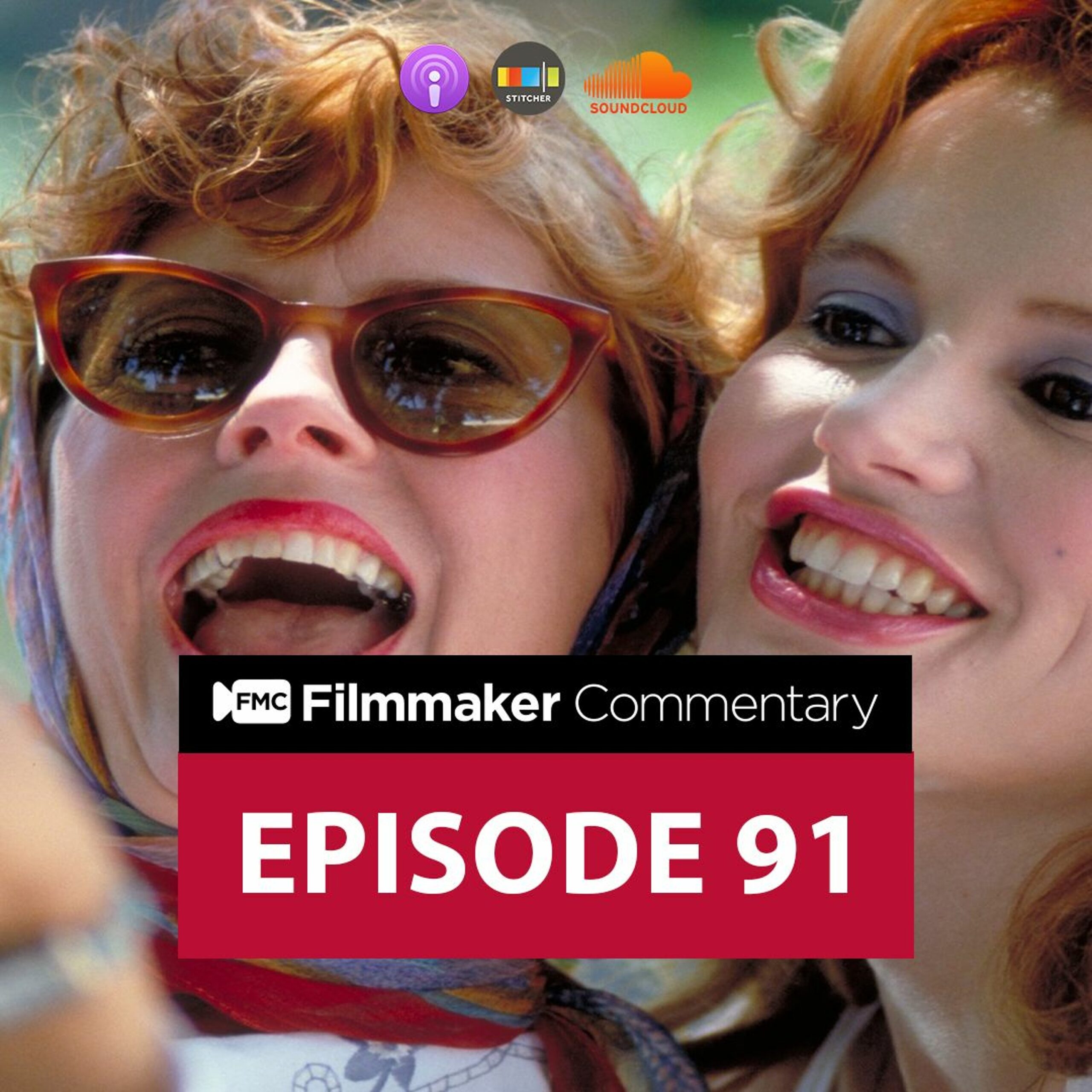
FMC 091: Thelma & Louise Directed by Ridley Scott

August 31, 2020
Listen on Apple Spotify YouTube
Listen to this episode
Your browser does not support the audio element.
Also on Apple Spotify YouTube

Buckle up for a wild ride! On this episode of Filmmaker Commentary, Reginald Titus Jr. and Casey G. Smith dive deep into Ridley Scott’s iconic 1991 film, “Thelma & Louise.” Join them as they dissect the film’s groundbreaking direction, powerful performances, and themes that resonate just as strongly today.

What We Cover

  • How “Thelma & Louise” remains profoundly relevant, tackling themes of female empowerment, freedom, and societal constraints.
  • Ridley Scott’s meticulous and prolific directorial style, including his preference for anamorphic lenses and natural light to create stunning visuals.
  • The nuanced character arcs of Thelma (Geena Davis) and Louise (Susan Sarandon), who both earned Academy Award nominations for Best Actress.
  • Insights into Callie Khouri’s Oscar-winning screenplay and Hans Zimmer’s memorable score.
  • A detailed breakdown of key scenes, including the infamous “push-off” moment and the film’s unforgettable ending.
  • Discussions around the film’s box office success and critical reception, solidifying its place as a cinematic classic.

Key Moments

  • 0:41 – Awards & Acclaim: The hosts highlight Callie Khouri’s Oscar win for Best Original Screenplay and the film’s multiple Academy Award nominations.
  • 1:33 – Ridley Scott’s Genius: Discover Scott’s organized and prolific approach to filmmaking, balancing artistic vision with practical execution.
  • 25:06 – The Infamous Push-Off: A deep dive into the scene where Thelma and Louise confront a truck driver, showcasing the shift in their characters.
  • 31:41 – Cinematography & Americana: The hosts discuss Ridley Scott’s use of anamorphic lenses and natural light to capture the American Southwest, including a memorable helicopter shot.

Gear & Films Mentioned

  • Da 5 Bloods (Spike Lee)
  • Extraction (Netflix)
  • The Last Dance (Documentary Series)
  • Reservoir Dogs
  • Alien
  • Blade Runner

Listener Questions

Ever wondered why “Thelma & Louise” continues to be a landmark film for women in cinema? Or how Ridley Scott’s distinct visual style contributes to its lasting power? The hosts explore these questions and more, offering insights into the film’s enduring legacy on Filmmaker Commentary.
Full Transcript

Read the full transcript

Full Episode Transcript
This episode of Filmmaker Commentary Ridley Scott's 1991 classic "Thelma & Louise," exploring its filmmaking techniques, cultural impact, and the hosts' recent movie watches and sports discussions.

Opening Discussion and Recent Watches
Reginald Titus Jr.: Episode 91. Welcome to Filmmaker Commentary, where we give you insights from our favorite filmmaking commentaries. These commentaries can be heard on your DVD and Blu-rays of your favorite movies. We'll show you how you can use these commentaries and apply them to improve your video production and filmmaking techniques. All of this here on Filmmaker Commentary. I'm your host, Reginald Titus Jr. Welcome to Filmmaker Commentary. I'm Reginald Titus. I'm joined with...
Casey G. Smith: Casey G. Smith.
Reginald Titus Jr.: Welcome back, sir.
Casey G. Smith.: Good to be back, sir.
Reginald Titus Jr.: Quarantine edition. Boom. And today we're talking about Thelma & Louise, 1991, directed by Ridley Scott, written by Callie Khouri, scored by Hans Zimmer. This actually won an Oscar for Best Writing, Best Screenplay. Also got a Golden Globe for Screenplay.
Casey G. Smith.: Nominated for multiple Oscars.
Reginald Titus Jr.: That's true. Got like six different Oscars.
Casey G. Smith.: I don't have those written down in my notes. Yeah. I took a peek at that as well, so it's all good.
Reginald Titus Jr.: Okay. All good. What do you have for the box office?
Casey G. Smith.: Box office. So, came out at a budget of 16.5 million. Opening weekend made 6 million. Domestically, it made 45.3 million dollars. Globally, 45.4 million dollars. So, clearly, the bulk of this film was domestic and was a win.
Reginald Titus Jr.: That is a win.
Casey G. Smith.: That is a win.
Reginald Titus Jr.: Controlling those budgets. Ridley Scott likes to produce a lot of his stuff, and I ain't mad at him. Get some of that back end.
Casey G. Smith.: Oh, yeah. And he's so, he's so organized and structured. Like, just I mean, this guy, left brain, right brain, just like the... sparks in tandem.
Reginald Titus Jr.: Yeah. But before we talk further about Thelma & Louise, let's talk about news and movies watched. So according to Variety, the film "Wretched" made an estimated 85,000 at the drive-in box office. Oh, the drive-in box office, which is what we're measuring now. Apparently, so...
Casey G. Smith.: It's a little light.
Reginald Titus Jr.: It's a little light.
Casey G. Smith.: There's a little light, yes. Yes.
Reginald Titus Jr.: Wretched. What's in Wretched? Who's what is this?
Casey G. Smith.: It's a horror film, apparently.
Reginald Titus Jr.: Okay. Yeah. Scared movie people drove, drove up and, uh, you know, tuned in.
Reginald Titus Jr.: I wonder how many theaters?
Casey G. Smith.: Oh, that's a really good question. It they actually, in the article, they actually mentioned the number of theaters that that popped up in.
Reginald Titus Jr.: Dang, that's gotta be creepy though, man. Going in the middle of the night, going to the drive-in and watching a scary movie?
Casey G. Smith.: Yeah, for real.
Reginald Titus Jr.: Watch a scary movie about a film that takes place at a scary drive-in theater. Could be like interactive.
Casey G. Smith.: Huh. That would be terrifying. Yes, be terrifying. Have somebody come up to your, your car and...
Reginald Titus Jr.: They're a ghoul or some vampire or something.
Casey G. Smith.: Just somebody knocking on your window. Yeah. Yeah. Yeah. Here's your popcorn. It was one theater.
Reginald Titus Jr.: He was 21 drive-in movie theaters. Made 85 thousand.
Casey G. Smith.: Shout out to the drive-in movie theaters. That's pretty cool.
Reginald Titus Jr.: Yeah, that was across the across the country. 22. All right. That's all right. How'd you like them apples?
Reginald Titus Jr.: Okay. Spike Lee's new film called Da 5 Bloods comes out on Netflix June 12th.
Casey G. Smith.: What's that about?
Reginald Titus Jr.: It is a Vietnam War film about their brothers, soldiers that are Black Americans, um, and they find gold while they're there, you know, Vietnam. So they find gold during the Vietnam War, and they make a promise that they would they would bury it and then when they get older, come back and bury it and pick get it back. And so it's, uh, the film, uh, your guy's in it, Black Panther, Chadwick Boseman, yeah, he's in there. And so it's, uh, it juxtaposes kind of like old footage of them when they were younger and like the older versions of themselves. So when it goes back to the older footage, it's like in the 4x3 ratio, kind of format. And then when it goes in present time, it's the HD full widescreen, yeah, 16x9.
Casey G. Smith.: That should be pretty cool.
Reginald Titus Jr.: It was interesting. I looked, I was like, got a little flavor of the Apocalypse Now. I'm like, okay, I don't know, not Spike Lee's really into war films. And so, I'm me, not so much. Um, but it I think I might check this one out. It's gonna for me, it's gonna depend a lot on word of mouth.
Casey G. Smith.: You mentioning word of mouth just made me remember, um, one of the films that I saw that I didn't get down in my notes.
Reginald Titus Jr.: Haha. Haha. Thank you. Yes, indeed. Um, and I just like the way Spike Lee can parlay his last film and go right to work on another one. It's crazy how he does that. He's been doing that for years. Like, he's one of like the most prolific filmmakers.
Casey G. Smith.: Absolutely, man. Spike is he's the man, he's the truth.
Reginald Titus Jr.: Almost like every year. At one point in time in his career, it was like almost every year he was knocking out a film. Every single year. If that not a documentary, you know, some and in between the like doing the movies, he would do like commercials in between then.
Casey G. Smith.: He's, he's got that hustle mentality. Like he's, he's going to work. He's going to get something done.
Reginald Titus Jr.: That's true. We're going to get something done.
Casey G. Smith.: He's not he's not idle.
Reginald Titus Jr.: No, at all. And then on top of that, um, some more news kind of related, I mean, directly related to Spike Lee. He released he recently, I think this was in April, he released the Jackie Brown story. It was a screenplay he wrote a long time ago. Um, and it's 155 pages. We all know about the long Spike Lee movies. Um, but he knew it was never going to get made. You know, especially they came out 42, was like before that. And, um, he says, it's never going to get released, so here's, since we're all on during the pandemic, we're on lockdown, here's the script if you want to check it out. So he let so he released it for everybody to check out. He said, here you go. If you don't like it, it's never gonna get made anyway. So if you don't like it, so what? And he covered everything. It was almost like the style, what they're saying, I haven't read it, but what they're saying is that it covered his life kind of like how he did Malcolm X.
Casey G. Smith.: Oh, wow.
Reginald Titus Jr.: From from his younger self all the way to him being older.
Casey G. Smith.: That would have been epic.
Reginald Titus Jr.: That would have been epic, because we in 42, we kind of just pick up on him just getting started in in the majors.
Casey G. Smith.: Hm.
Reginald Titus Jr.: What about have what did you watch? Any movies watched?
Casey G. Smith.: So, I watched Extraction on Netflix.
Reginald Titus Jr.: That's, uh, it's good?
Casey G. Smith.: Yeah. I was pleasantly surprised. Yeah, it's...
Reginald Titus Jr.: It's the Bollywood joint.
Casey G. Smith.: I I I wouldn't call it that at all. I'd say it's it's like John Wick meets Call of Duty.
Reginald Titus Jr.: Dang.
Casey G. Smith.: Yeah. Hemsworth is jacking dudes up. Kung fu. Again, one of the Russo brothers directed it, and you know, they they're tight with the with the John Wick guys. They helped them with different action scenes for Caps, Civil War. So take that kind of action, yeah. Hemsworth is bodying people. It's it's nice. And he he he I mean, Hemsworth showing his chops, right? We know he he could do he could do comedy, he could do action. But he is I mean, hey, this is John Wick style action in a one-man war. You know, you've ever seen you know, trying to save this kid, get him from point A to point B. It's good, dude. I was pleasantly surprised. I was like, yo. Okay. Yes, I I recommend it. Extraction, check it out. It's not it's not too long. It's it paces pretty well.
Reginald Titus Jr.: The trailer looked pretty decent.
Casey G. Smith.: Yeah. Once you get in it's like it it flows pretty well. Uh once you get I I said once you get like 20 minutes in, um, yeah, it's it was good. Again, story is, you know, it is what it is, but it's an action movie, you know, I I watched I think I watched it on Friday. Just popped it on. I was like...
Reginald Titus Jr.: Nothing wrong with a good action film though.
Casey G. Smith.: Yeah. And that this scratches that itch. Yeah. Words don't need to be said. It's just...
Reginald Titus Jr.: Yeah. You can just follow along. It doesn't matter what country you're from.
Casey G. Smith.: Yeah. But it's brutal. So for those of you with with with younger ones, that's a a thing...
Reginald Titus Jr.: Some of y'all with a weak heart.
Casey G. Smith.: Oh. A weak heart did need not apply. No, it's yeah, it's again, like John Wick. This is this is a this is a rated R film from a violence standpoint.
Reginald Titus Jr.: John Wick 3. I recently seen the John Wick 3. I don't know if I said no other podcast. But I probably did. It seems kind of cartoonish some of the the violence. It seems cartoonish.
Casey G. Smith.: Is it over the top?
Reginald Titus Jr.: Yeah.
Reginald Titus Jr.: Was this was this more grounded in real realism where?
Casey G. Smith.: For the most part, I'd say yes.
Reginald Titus Jr.: Okay.
Casey G. Smith.: But it is one of those things where you got that lone warrior who I mean, gets gets jacked up throughout the film and trying to make their way towards the end, and you're like, who could take that much? Nobody.
Reginald Titus Jr.: Punishment.
Casey G. Smith.: You get kicked in a rib one good time. You're done. You're done. It's a wrap. Forget about it.
Reginald Titus Jr.: Yeah.
Casey G. Smith.: But no, it's it this this scratches the action itch for sure. Extraction.
Reginald Titus Jr.: Extraction. Thanks for the Netflix.
Reginald Titus Jr.: It's Monday right now, The Last Dance, episode 9 and 10, watched it last night.
Casey G. Smith.: What?
Reginald Titus Jr.: I'm glad it's over, but my God, brilliant.
Casey G. Smith.: It is. It is bloody brilliant. Well done.
Reginald Titus Jr.: That's what I say. 9 and 10, man. It basically just wraps up everything. Just wraps it up in a nice little bow.
Casey G. Smith.: Nice little bow, man.
Reginald Titus Jr.: Here you go. The goat.
Casey G. Smith.: It's it's been a beautiful journey that sparks conversation, sparks debate. At the same time, very fascinating. At the same time, it it shines light on other people just because it brings them into the conversation. People that we weren't talking about, you know, Patrick Ewing. We weren't really talking about...
Reginald Titus Jr.: That stack, bro. Bro, bro.
Casey G. Smith.: Everybody, man, everybody's been talking about it because I mean, what do you talk about? If you if you have a sports show, there is nothing to talk about.
Reginald Titus Jr.: Yeah. Very true. I mean, yeah, you had some NFL stuff that been leading up throughout the time that this documentary launched. And the draft happened. Well, action. Scheduled got released. You know what I mean?
Casey G. Smith.: Oh, yeah. No, nothing like that.
Reginald Titus Jr.: People are talking about negotiations. People are talking about people talking. That's the that's the sports.
Casey G. Smith.: Well, they said. Exactly. I was like, this is nuts.
Reginald Titus Jr.: They said that. They said. I said, if they keep this up, I'm gonna like go crazy. Like I can't keep listening to this.
Casey G. Smith.: The nice thing about it, obviously with all that inner cut footage, you know, of previous games and just and just being able to frame. I mean, sports is already dramatic as it is. But then when you frame it in in the way of a documentary and you can get these highlights because each each game and then the music. Oh, yeah, you build it.
Reginald Titus Jr.: And the suspense is going. You're like, oh, you you start caring. Like, yeah.
Casey G. Smith.: Like you don't even know what happens. Like, oh, they're gonna make it. Ah, they're gonna make it. Yeah, right, you get sucked in. And what was very cool is, um, you know, the flu game.
Reginald Titus Jr.: Oh, man.
Casey G. Smith.: That was fascinating because literally a couple of days prior, I think I may have been talking with my brother-in-law or I was listening to something. I don't know, but somebody had said that he had drank something instead of Gatorade, he had drank something else that's supposed to like when you're supposed to be something like when you're working out or whatever, and like that, you know, gave him problems or whatever. And that's why he had the bad game. I'm not the bad game, but he felt bad. But from, you know, what they were sharing, like, yeah, they said, you know, some people gave him some like bad food poisoning. Yes. Michael said, yeah, it was food poisoning.
Reginald Titus Jr.: It was food poisoning.
Casey G. Smith.: You're like, wait. First off, why did this not get out? I I answers. Question. I got questions.
Reginald Titus Jr.: And and and his, uh, trainer when he was saying like, first off, four or five guys deliver the pizza, which is that never happens.
Casey G. Smith.: Right.
Reginald Titus Jr.: That's never happened in my life. It's always been one person that drops off the pizza. I would I would have threw that smoothie in the trash. But Michael Jordan was hungry.
Casey G. Smith.: And he said nobody else ate any of it except for him. You know, they couldn't find any other place to get anything. It's like...
Reginald Titus Jr.: That's disgusting.
Casey G. Smith.: Man.
Reginald Titus Jr.: This trainer's like, I have a bad feeling about this. Ate the whole thing. I mean, big guy, working out. You need some kind of food for real. That's messed up. But it kind of shows you like how competitive these cities are.
Casey G. Smith.: I mean, what what, yeah. And this this was Utah's, I mean, their second time going to the finals. But the time before was the was the first time their franchise had ever even made it to the finals. And yeah, they they you could imagine that crowd was hungry. No pun intended. But, you know, they wanted the they wanted that championship, man.
Reginald Titus Jr.: Even if that meant cheating. That's messed up.
Casey G. Smith.: I remember, man. I remember strongly disliking, respecting the heck out of, but strongly disliking, man, like John Stockton, Jeff, uh, Hornacek.
Reginald Titus Jr.: They were so good, man. They John Stockton is so good. Not flashy, but just so freaking solid.
Casey G. Smith.: At all. No, fundamentals though. He's just like, bam, boom, boom, boom. I'll get the pass off. I get the dribble. And you're like, he doesn't seem fast. He doesn't seem, you know, I'm like, why can't you stop this guy? But he's just so fundamentally sound.
Reginald Titus Jr.: And he's quick. He's quick. Maybe not fast, but he's quick.
Casey G. Smith.: Yeah, I guess that's what it is.
Reginald Titus Jr.: Yeah, dude, those point guards are the shorter point guards are hard to guard.
Casey G. Smith.: Yeah. He just didn't he I mean, he didn't look that fast. He didn't look that quick.
Reginald Titus Jr.: He didn't look fast. The eye test, is what they call it. I'm watching him like, yeah, you don't look that quick. I'm sure you shake me out of my out of my shoes, but...
Reginald Titus Jr.: No, it's it's, um, it's about being quick because they're so short. It and people lose sight of them, you know what I'm saying? And then you get stripped. You just keep getting stripped. These guys solid, man.
Casey G. Smith.: No doubt. I mean, that guy again, I I just he was What it takes to hustle. What it takes to hustle. Take it from a short guy. Um, have an always be a point guard, uh, you have to outhustle everybody.
Reginald Titus Jr.: I understand the concept of like, because, I mean...
Casey G. Smith.: Of of of of height versus skill. Like my whole thing is that I'm saying, I would be so frustrated with him because he was so good. At the end of that, I'm like, he's so freaking good. I'm like, why can't we stop this dude? He would just he would just do his thing all the time. And then he'd get to Malone, and, you know, Malone would do his thing. And, and again, you get Hornacek in the mix, and, you know, yeah, they were they were solid, they were solid team. I mean, obviously they made it to the finals two years in a row.
Reginald Titus Jr.: Yeah.
Casey G. Smith.: And then you get you get denied twice by the same team, man. That's...
Reginald Titus Jr.: Yeah. That's so difficult.
Reginald Titus Jr.: Yeah. To me, they wouldn't have they wouldn't fully only had those two to three people. It was really a one-two punch. Yeah. Where is...
Casey G. Smith.: A lot of times, it's what most teams were. They had usually a one-two punch. I mean, Scotty goes down and in the game.
Reginald Titus Jr.: You got Rodman.
Casey G. Smith.: Yeah. But even having Scotty out there just as a decoy made all made the difference because they they were kind of off to a slow start. If they don't if Scotty doesn't come back out there earlier, maybe they don't win that game. Because again, they won it last last minute shot. So, it won that one-two. And Jordan said from the very beginning, there no Michael Jordan, you know, without without Scottie Pippen. Like they, yeah. Mm-hm. The one-two. Hm.
Reginald Titus Jr.: But this serious.
Casey G. Smith.: Yes. Fantastic.
Reginald Titus Jr.: We get lost, huh?
Casey G. Smith.: Yeah, it was like, hm. Oh, what? Oh, what? We're on a podcast. Yes. We're live. Yes. Give me his. Give me his. Give me his. Travel to the 90s real quick. We're back. Yes. I'm sorry. Let me turn off my beeper. We just got back. That's crazy. Oh, man.
Reginald Titus Jr.: Lost in thought, in nostalgia.
Casey G. Smith.: But this series does that, man. It it pulls you in in such a way. Like I would, I'm not gonna lie. I would watch this again. I would absolutely watch this again. I'm not saying like tomorrow, but I'd watch it again. I would totally watch this again. Like a year a year from now, definitely. I will I will I will probably watch this again a year from now. Yes.
Reginald Titus Jr.: Yeah.
Casey G. Smith.: Again, the Bulls the Bulls were my team in the 90s. Again, growing up where I grew up, number one, we didn't have a team. And again, WGN, I watched the Bulls. All their home games. That's just the it's called being a fan.
Reginald Titus Jr.: You're brainwashed. Fanatic.
Casey G. Smith.: Fanatic. I was just a fan. No, I was I was a fan too. I I was a fan too. Don't get it twisted.
Reginald Titus Jr.: Yeah. You were brainwashed. Wait wait a minute now. You some...
Casey G. Smith.: What do you mean?
Reginald Titus Jr.: What do you mean brainwashed? He's the best of all time. Goat. Goat. Goat. Which in this case is kinda true.
Casey G. Smith.: It's man, what he did, I mean, everybody knows. That's why he's got this 10-part documentary.
Reginald Titus Jr.: Everybody. I mean, I said that before the documentary. I don't need a documentary to prove that. Of course. Yeah, I'm like, something's yeah. Like I said, every time he went out on the court, something something was happening. I don't tune in after he left. I didn't really tune in too much for like to just every game like that.
Casey G. Smith.: Sure. Well, again, I mean, it was I was playing basketball, uh, in junior high, and, yeah, man, those Bulls games would would come on in the evenings. And even even throughout high school. I was I was watching a lot of Bulls games. Now again, there's some other teams that I liked. I liked uh the 90s the mid to late 90s, uh Miami Heat with Jamal Mashburn, Alonzo Mourning, uh Eddie Jones, uh Tim Hardaway. They were coached by Pat Riley.
Reginald Titus Jr.: Like they already had the killer crossover.
Casey G. Smith.: Yeah. That was man. I I I I enjoyed that squad. I enjoyed the early 90s Lakers back when Van Exel was still with him. Again, EJ, Eddie Jones, he was still with him. Um, Elden Campbell. Every time you pull these names out like I I was a collector too. Baseball, basketball, football. So that's how I memorized people's names. So I was like, yeah, yeah, yeah. Juan Gonzalez. Baseball. 41 home runs. Like, how is that in my brain?
Reginald Titus Jr.: Oh, wow, you were again, some of those stats too.
Casey G. Smith.: I was never a stats guy. I I stats never stuck with me.
Reginald Titus Jr.: If you if you were a collector of it, you just knew that because then you would kind of determine the value. Flash cards. You would know the value of someone like Mark McGwire or Ken Griffey, Jr. You just kind of like, how many home runs is he having, you know, 1992? Big hurt, right? Yeah. Frank. Yeah. He had uh video game. Frank Thomas, Big Hurt. Was he pretty good? I didn't play it. Baseball wasn't Baseball was never really my my my thing. I used to I used to have some cards. I still have some of my my, uh, dad's, uh, old cards used to collect. But I used to I I had some. That was very, very young when I collected those. But, you know, every now and then we would play outside with some friends. But I never again, another big thing I I I used to be pissed because the Cubs games would come on WGN. I would have want to When I would want to watch Transformers as a kid, every now then it would get interrupted by the Cubs game. So I think that that that literally like scarred me, and I've had a thing against baseball ever since. That's funny. That's funny. Can't let it go. Where's Optimus? The Cubs? What's going on here? Cartoon. I need to see Megatron. One of us is going to be here in the future. Well, yeah. The Transformers is a billion-dollar franchise. They they've done their thing. There's a new Netflix cartoon starting up in the I will check my last statement. Rewatched it. Maybe maybe it will be the anime. Maybe it will be the cartoon. Brainwashed. It's very powerful marketing going on, ladies and gentlemen. The WGN. What does it really mean? Taking over the minds of the youth of America. WGN. You gotta love it. What else have you been watching, man?

The Last Dance Documentary and Basketball Culture
Reginald Titus Jr.: Um, but I wanted to talk more about this this Last Dance. We just got on tangents. So it's like, 90s. So like, I like how they got into like the psyche of Michael Jordan a little bit more. Uh, especially because like, they didn't really talk about like how he was dealing like with his father passing away and stuff like that. They kind of like just kind of hurried kind of went through that one when I saw it. But then when you see the character of Gus and that's kind of like his like kind of like his dad real play. Yeah. I'm like, he, you know, he's sitting there cuz like his dad was like kind of like his good luck charm in a way, you know, he's at every game. It was just something that was always just part of his routine. Like, look up in the stands, he's right there, you know. His dad. And so it's crazy how his security guard, he basically became, you know, surrogate father like you were saying. But then showing how when Gus gets sick, you know, Michael Jordan's there for him, you know. Like, whoa.
Casey G. Smith.: See, and I'm wondering, man, I'm see, they didn't say anything, but I'm I'm wondering if he like helped take care of some of the bills, things like that. You know what I'm saying, some of the medical bills. I don't know, yeah, just that's curious, you know, but that kind of thing. And maybe, you know, they maybe they don't say anything, which was, which is even better. You know, um...
Reginald Titus Jr.: Gus would never allow it.
Casey G. Smith.: Oh, boy. Wait, how much is the bill? Thank you, Michael. Bless you. Bless you.
Reginald Titus Jr.: Speaking of which, like, uh, Reggie Miller, uh, him him him talking about calling, uh, Jordan like he wouldn't call him Michael Jordan anymore, right? He would call him either either Black Jesus or, uh, when he said Black Cat, oh, yeah, that Black Cat. Yeah, that Black Cat. I was like, initially, like I took it as, you know, kind of like kind of like saying, hey, what's up, cat, or oh, that Black Cat over there, you know. But then when the second the second time he said it, he meant like it like a black cat like bad luck for him, you know, I'm saying, kind of thing like, don't cross the black cat cross your path. And I'm like, ah, the second time when he said it, it it clicked that way. I'm like, oh, okay, he meant like, okay, like omen, like a bad omen, a Black Cat. I was like, oh, man.
Casey G. Smith.: You gotta have some more significance. Either that or Jesus. It's like...
Reginald Titus Jr.: Yeah. He said, oh, what did Jordan say to him after that in that first game after, uh, don't ever something to Black Jesus. Yeah. Yeah. I was like, what? Yeah, the trash talk, man. But, you know, you can tell that you know, don't ever talk to Black Jesus like that. Something like something in that tone. Paraphrasing.
Casey G. Smith.: Wow. Yeah. And last for me.
Reginald Titus Jr.: But it was contextual, right? Because it was it was a in the context of what Reggie had called him. Uh, oh, cuz he said something about walking on water. He was like, oh, you know, are you the you know, the one who's supposed to walk on water or whatever? And that's why he came out with the Black Jesus comment. I'm like, okay, it's all. Well, cuz Larry Bird basically called him God and sneakers. So it's like from that on you're then you just took it a step further to call yourself Jesus. Like, you know, I guess it's one and the same.
Casey G. Smith.: Well, again, Reggie, he made he specifically the walk on water. And that's why he came back, you know, with the Black Jesus. I'm like, that's that's pretty funny. Contextually speaking, it's pretty funny. Yes. Just so you know. Context. Context. Context.
Reginald Titus Jr.: I got to insert him.
Casey G. Smith.: It is okay. He invented it. Absolutely. Um, in episode 10, the last shot, my favorite scene. So, we see the crossover, Byron Russell, right?
Reginald Titus Jr.: Byron Russell.
Casey G. Smith.: It's in Utah. The fans, you can you can probably say they're racist, the way they look.
Reginald Titus Jr.: I had no good. Yeah, I mean, cuz you hear about it even in today's league, you know, um, who's the guy? Russell Westbrook. You know, he gets into with fans and stuff because some of the stuff that they're saying to these guys are they use an N-word. They're saying anything they can come up with. Right. Yeah. So some of these fans are starting to get kicked out now, you know, because sometimes you'll have the the the the players will turn around and like retaliate sometimes. But you you know, you can just look at the you can just look and be like, something's coming out of these people's mouth. It may not be good. So, anyhow, cross Byron Russell up, he's stumbling back. Michael Jordan is shooting, how many seconds is left?
Casey G. Smith.: Maybe like five.
Reginald Titus Jr.: Maybe like five seconds left. It's in like midair. And so they pause it cuz the you know, the photography, they pause it, and then they zoom into the picture. And then you see in the crowd like people's hands over there and like, oh, oh my God. Some people are like kind of like praying. Some people are like like just squinching. And when in this shot, they're scanning to different people in the picture. So it's like, scan, scan. And you just see people are just horrified. And then they scan to another picture, and it's a little child, a little little white boy in a Michael Jordan uniform. And his hand his hands are up like field goal. And I'm like, where's his where's his parents? Because no one around him has Michael Jordan. He's just by himself, hands up. Oh, nah. That's the best shot. Swish. Got him, coach. Got him.
Casey G. Smith.: There was a fan. There was one fan in the crowd of bold kid with a Michael Jordan uniform like, yes. Everybody else is horrified. It was beautiful.
Reginald Titus Jr.: You got to support your players. whoever it is and wherever you live, doesn't matter. Support your players. Do your thing. Oh, man.
Casey G. Smith.: And, you know, I I love that they addressed the, uh, the Byron Russell, quote unquote, push off because does he touch him? Yeah. But again, he was, when you watch that when you watch him the other angle, the momentum of Byron Russell, he was already stumbling over. Exactly. already crossed over and he just helped him out a little bit. Yeah, a little tap, but again, even the force of that tap, again, no extension of the arm, like barely barely touching him. I'm like, nah, it's not enough to send Byron Russell on his way. He was he was already going that way. And again, he'd already established the way that Byron Russell plays, plays on his toes. You give him a head fake or whatever, that he was fairly easy to shake, right? And, uh, yeah, he did it. Yet again. Like, wow. It yeah, that's the way to...
Reginald Titus Jr.: And then he holds it. He holds it like, I know I got this. Just holds it.
Casey G. Smith.: I know I got this.
Reginald Titus Jr.: That's crazy. So, yeah, so I was happy to see it conclude. There are some revelations. If y'all haven't seen it, well, tough cookies. You it's like the hottest.
Casey G. Smith.: It's on if you have, uh, Cable, if you have the ESPN app, downloaded, all the episodes are there.
Reginald Titus Jr.: But yeah, there were some revelations, you know, you know, about like it possibly continuing onto another not not the documentary, but Michael Jordan talking about like, you know, it could he wanted to go for seven because a lot of people just didn't know what they were talking about. They could go for another championship. I don't know, in retrospect, looking at it, I was like, man, that's it's a brutal that's a long journey, man. For for everything you have to endure, the competition and what everything your body has to go through. Michael I mean, Scottie Pippen, you know, back jacked up. Yeah. But they said, you know, they at least wanted the chance to they wanted the again, Jordan said like it it drives him crazy that they didn't get a chance to at least defend defend their title, you know, to go to go out swinging versus kind of being forced with the breakup. You know, who knows, maybe Phil, again, you know, Reinsdorf came to Phil Jackson and Phil was kind of ready to move on. You know, so, you know, I think this is this is a good spot to end it. One thing I liked that they did throughout the documentary is that they when they would give the iPads to the people, they would get to see what people were were were saying. I'm like, oh, let me see this comment. That's pretty cool. Then seeing their reaction, I'm like, that's that's pretty cool when you've gathered the footage and then you can do that and get reactions. I'm like, wow. It it pulls you in in a different kind of way. Yeah, cuz we're watching them watch. Yeah. So yeah, , pretty good. Well done, I think. And it ends like it started him sitting on the bench smoking a cigar. Yeah. I I wonder if, um, it'll get nominated.
Casey G. Smith.: I believe so. For for Emmy. Yeah, for sure. Or even even like, uh, Oscar. Because OJ: Made in America, that was a docu-series. And that won that won the Oscar. If I'm not mistaken. No, yeah, no, absolutely it did. Cuz we were when we were pitching, that that I brought that up. It's the fascinating with with this black content, document. So that one was Oscar? You sure won an Emmy? It was Oscar. It was Oscar, dude. Really? Yeah. I'm yeah, yeah, cuz I was I was talking about the Academy. Yeah, I'm I I'm I I was watching them. Yeah. OJ: Made in America. If that's a category this one qualifies for, why not? If if OJ: Made in America qualifies, I don't see why this wouldn't because that was multiple multiple parts. That was like three or four, maybe more parts to that. And that was freaking good. That was really, really good. Um, and this is just as good. So, yeah, this will definitely be nominated. I I I can't see how it would not be. Well, that's the one that, uh, Cuba Gooding was in? Was that the one?
Reginald Titus Jr.: No, no, no. This is a docu docu-series. Oh, okay. That's what I was thinking of. Okay. So my brain was thinking of the Cuba Gooding one. Yeah. Uh, but that was really good too. And I think that that may I know it got at least nominated for some Emmys. That got nominated for some Emmys, excuse me. But OJ: Made in America, the docu-series that won an Oscar. Then if that's the case, then I based on what you're saying, this one probably should fall in that category. Yeah. Cuz that you had you had OJ: Made in America. I think you also had uh I Am Not Your Negro. I think that was also the the same year. Both those were were out. Yeah. Tough year. It's black. Make it the double. Yeah. I Am Not Your Negro. My God. Don't play with Black. Yeah. He's also again at that that, uh, show I mentioned Soul. There's a couple of episodes where he's on there being interviewed. Dude, he'll make you want to get up and be like, all right, let's do something.
Casey G. Smith.: Right.
Reginald Titus Jr.: I don't know what.
Casey G. Smith.: Right. Let's turn this thing around.
Reginald Titus Jr.: Yeah. Right now. What else have you been watching, man?
Casey G. Smith.: That's it. I've watched that yesterday. Outside of that, outside of this movie of what we're going to get back to. Really haven't had much time for anything else.
Reginald Titus Jr.: I've been watching some.
Casey G. Smith.: You've been watching some things. What you got?

Comedy, Cartoons, and More Film Discussions
Reginald Titus Jr.: I watched Jerry Seinfeld's Netflix comedy special, 23 Hours to Kill.
Casey G. Smith.: Now, before you get into this, dramatic pause. I've been my dreams have been vivid recently, like in the last three weeks. And in one of my dreams, I'm telling jokes and Jerry Seinfeld's right across from me, and he is dying laughing.
Reginald Titus Jr.: Oh, wow. Somebody next to me that was like, who was it that was saying this? It was another comedian. He was like saying, he was talking to another another white guy and he was like, that guy's mixed. I could tell. He said, I could tell. I could tell. It's all about the nose. And then I was like, how many white people you know with a big nose? And then Jerry Seinfeld just starts dying laughing. And like, I just start telling more jokes. And then Tiffany Haddish is like, one like person over to me and she's like gives me a fist bump like, if you got him laughing, then you're good. Anyhow, side note, that was just a dream, and I have no idea why that was in my in my head while I was sleep.
Casey G. Smith.: Comedians in dreams getting fist bumps.
Reginald Titus Jr.: The next Netflix show.
Casey G. Smith.: That's wild. There's been like a phenomenon since the pandemic, that people have been having like these strange dreams recently.
Reginald Titus Jr.: I always have strange dreams. You always? But it's specifically because of this pandemic. Also, too, people have been getting more sleep. Fair enough. Fair enough. So you're probably in that I I dream every night. I mean, I don't I mean, I don't remember, but I I dream every night.
Casey G. Smith.: I think I dream every night, but usually it's like when I get up, somebody hit the delete button. And I'm like, what happened? But these were so vivid, I was like, I was really there. Yeah. That's the wildest thing about dreams, right? When you when you are in your mind, right? I was there. Yeah. Yeah, man. There's some yeah. There's some dreams that are you'd be amazing. And then some are terrifying. And then some are hilarious. And and some bring about a feeling of déjà vu. You're like, wait a minute. I've been in this scenario. I know it, man. This is so familiar right now. I know I've I've been in this situation where I I've dreamt it, and like, I feel like then I'm there. I don't know, it's something, man. It is something.
Reginald Titus Jr.: Dreams, people, do you have them? If you don't, you're probably a clone.
Casey G. Smith.: Oh. No offense to any of our clone fans out there. We're we're we're glad you're listening. That's right. Tell your original copy. Listen to. We want we want both your ears. All your ears.
Reginald Titus Jr.: You were talking about Jerry Seinfeld.
Casey G. Smith.: Yes. Yeah, yes. Um, it is a pretty funny special. Okay. Jay Seinfeld, 23 hours to kill. I was I was laughing out loud multiple times. I was like, wow. And again, I I I enjoy comedians with comedians and cars getting coffee. I really enjoy that series. I love listen to comedians talk about their craft. Anybody that's passionate about their craft, having two people in the same field talk is interesting. But with comedians, they're always trying to make each other laugh. Kind of like in your dream, right? That's that's a big thing. And it's funny to to watch them go for it. Um, and so yeah, Seinfeld's doing his thing. And I I I've I've his show's cool. I've watched episodes. I've seen episodes of Seinfeld. Oh, the actual sitcom. Yeah, it's it's always it's you know, been funny. I've always seen some I've seen some funny episodes. No, not for you. Not your cup of tea. Uh, maybe I'll I'll probably try to go back maybe. Maybe. I've never actually say, oh, I got to watch Seinfeld. I've never been that kind of thing. Yeah. But this comedy special, he's doing his thing, man. I I I I gotta admit, I was I was and he and he was done obviously well before the pandemic started. Yeah. This was recorded months months before the pandemic. But it's interesting, hell, what he's talking about. And and yeah, I I dug it, man. I was like...
Reginald Titus Jr.: Just told him the trailer. He was like a little, he was like escaping or something like that.
Casey G. Smith.: Yeah, it's kind of like the opening. Trailer. I was like, I don't know. I might have to wait for word of mouth on this one. Yeah, I said, give it a shot. Give it a shot. But if if if you get in 20 minutes, you're not feeling it, jump out. Yeah. Seinfeld's like they grown man comedy. It's like you you get older and you start noticing things and you're like, I feel that way too, Seinfeld. Yeah. And there's I mean, that's his thing, right? He's like, I'm you know, he's not quite so much like, oh, what's the deal with it? But he is he is, I mean, it's it's it's observations, right? It's constant observations. And you know, people don't really like, you know, and he's yeah, complaining, right? There's not a lot of complaining about this. Complaining about that. Yeah. But it still works. Yeah. But it's it's he complains, but it's in a witty way. And he's very knowledgeable. Slightly pretentious, which is a favorite word. He uses that a lot. Yeah. I dug it. I dug it. I'll try it. You sold it a little bit. I was what was trying to what was trying to sprinkle. A little bit. A little bit. If if if you should feel so inclined. Um, and then lastly, you know, I I've just been on I've been on a Transformers kick. You know, some G1 action. Just been on stars. I'm trying to burn through this first G1 series. Then hit the movie. And then I don't know, episode three, four, whatever. Or season three, four. So yeah, I'm steady grinding steady grinding on that. And I I find it I find it so funny at times when I'm watching these episodes because there's inconsistencies at times with animation. There are, from a plot standpoint, these dudes do whatever they need to do in whatever episode. So there's okay inconsistent with abilities, right? In one episode, the Decepticons always fly. It's just bad writing. Yeah, some degree. Decepticons always fly regardless. Whether they turn to a plane or they're in robot mode, they can always fly. Okay. Autobots fly sometimes. And it's crazy inconsistent. Sometimes they use jetpacks. Sometimes they don't. Sometimes they just say, oh, I can't I can't fly. Other times, oh, I'm not an expert at flying, but I'm gonna try. Like, what the hell's going on? Like, either you do or you don't. You need a jetpack or you don't. I like it. And and then it's how they it's how they get to different places so damn fast, driving, right? There's an episode, all right, we we are in somewhere in Africa. Yeah. Oh. Now, they never say it explicitly in the in the cartoon, but I know from the comic books that when they crash landed on Earth, the Autobot's headquarters are somewhere in Denver, Colorado. Okay. Apparently. But all of a sudden, you know, the episode will start, and the Decepticons are always out for energy. That's the whole thing, right? They are always out for energy. And the Autobots, some Autobots will be scouting, and they'll find Decepticons. Let's let's radio Prime. Optimus, the Decepticons are over here, trying to, you know, get these oil barrels and get more energy. That's the plot. That's like, that's that's what this whole episode's going to be about. It's always about energy. It's always about energy. Oil, electricity, you know, dams with water. It's all about energy and and mind control. Mind control is used so sounds like Television and War and real life. Always, man. Always mind control. But, so then, you know, Prime's like, Autobots, transform and roll out. And then they're in Africa, like 20 minutes later. Oh, man. Driving. Well, at times they get on the water and they get like these airfoils underneath their their vehicles. Even then, I'm like, how the hell do you get to Africa in 20 minutes? They're pretty fast. Or less. I'm like, they're pretty fast. Come on, guys. But they get anywhere, across the country. They're not teleporting, they're freaking driving. Optimus Prime is a is a semi-truck with a trailer attached. And they will get anywhere. It better than than than pizza delivery. So that that cracks me up about about the series. But, uh, driving to Africa. Yeah, we're going to Africa. Autobots in Africa, roll out. Now, we're going to Antarctica. Roll out again. I'm like, how do you even have enough, I mean, the Decepticons are trying to get fuel. Where do you guys get your fuel from? It's it's it's funny. Uh, it's it's really, really funny. So, yeah, but I'm I'm I'm enjoying it. It just see I'm like, yeah. And where is this at? Well, Stars. The Stars app. Okay. Gotcha. But yeah, they've got all of G all of the G1 stuff, man. And it's, uh, it's yeah, it's it's funny. And again, it's all about toys. So you see from season one to season two, they literally just introduced like all these new additional characters, right? You got your kind of original cast, but then all of a sudden you have like eight more. And some they don't explain where the heck they came from. Like Omega Supreme, Omega Supreme was this huge toy. Huge. It had a rocket ship and a little like motorized tank thing. Nobody explains where he came from. And he's a he has a rocket that can shoot into space. I'm like, if you can shoot into space, why don't you guys go back to Cybertron? And you got a guy named Cosmos, who's literally like a flying saucer. I'm like, why don't you go back to Cybertron? You've got transportation now. You're thinking too much into this. We're just trying to sell toys. Thank you. Yeah, clearly. Nothing to say, huh? Move along by the plastic. By the plastic. Too many questions, this child. Yes. By the plastic. But yeah, so it's been fun. It's been it's been a lot of fun to to go through and try to make logic. Today's episode is brought to you by Natural Hair the Movie, by Grind of Matter Films, available for purchase on rent on Amazon Prime, and Vimeo on Demand. And also for you Amazon Prime members, it is streaming at no additional charge. We encourage you to check it out and to leave a review. And let's jump back into the show.

Thelma & Louise Analysis: Direction, Performances, and Themes
Reginald Titus Jr.: Thank you for tuning in to Filmmaker Commentary. We're talking about Thelma & Louise, 1991, directed by Ridley Scott, written by Callie Khouri, scored by Hans Zimmer. Okay. Thelma & Louise are accidental outlaws on a desperate flight across the Southwest after a tragic incident at a roadside bar. With a determined detective on their trail, a sweet-talking hitchhiker in their path, and a string of crimes in their wake, their journey alternates between hilarious, high-speed thrill ride and empowering personal odyssey, even as the law closes in. Thelma & Louise.
Casey G. Smith.: If this is your first time listening to Filmmaker Commentary, please know that there will be spoilers. You've been forewarned. So, I saw this movie when I was in elementary school. When we rented it, brought it home, watched it as a family. I remember I remember enjoying it. And seeing the ending, I was like, what? Yeah. Like, I hadn't really seen an ending like that, or expected that. And, uh, really enjoyed it. And coming back around, watching it again. Yeah, uh, it's it's uh, it's still a powerful film. It's still very much so speaks to issues of today. Big time.
Reginald Titus Jr.: Oh, yeah. Yeah. For sure. Yeah, very, very relevant for for today. And again, both these actresses, they were both nominated for Academy Awards for best lead actress. Fight. But they were also up against uh Jodie Foster for Silence of the Lambs as well. So, let you have it. Yeah, it's a pretty big year in 91. But no, I I I dug coming back to it and, uh, and and just seeing some of the other actresses who were in it that I didn't realize. I didn't know Brad Pitt was in this or Michael Madsen or Harvey Keitel. I mean, I didn't know them who and who they were then. But yeah. How about you?
Reginald Titus Jr.: Um, this is my first time watching it. Even though I know I knew how the story ended, I never just never got around to it. And I was like, I already know the ending, so, uh, what's the point? Um, hearing that this is a good commentary, you know, top 100. And then also too, Ridley Scott. I mean, we've enjoyed I mean, Ridley Scott is a master. Yeah. Arguably one of the top 10 film of all time. He might got a couple on that list. Dude's cold. In different genres. He's cold. From Gladiator to Alien. Alien. My God. Blade Runner. Yeah. And, uh, yeah. And then I mean, now you you gotta you gotta I think you have to put this. I mean, it's different genre, totally different genre. And the time he did it was like perfect, right? To step away and do something totally different. Yeah. And again, I mean, like six or seven Academy Award nominations for this film alone. I mean, editing, obviously established it won for for writing. Uh, again, two for your two lead actresses to both get nods. He got nominated as as director as well. Yeah. He's doing his thing. So, yeah, this was my first time watching it. Uh, enjoyed it. I even though I knew how this movie was gonna be, just based on genre, based on kind of like the buddy love stuff. Um, I knew this was gonna have strong what they call femme themes. And because of that, I was like, I want to watch this with my wife. Because I know she's going to it's going to speak to her differently than it will to me. I'll enjoy it, no matter what. But I know that it's going to speak to her, you know, cuz it's coming from a just a woman wrote it. You know what I mean? I know anytime a woman writes or is directing, there's just something different that bleeds through. You can tell.
Casey G. Smith.: Definitely.
Reginald Titus Jr.: Um, so I watched it with her and she was just like, wow. She was kind of blown away. She was like, whoa, okay. I'm glad she had a chance to see it. I was gonna ask if you watched it with you. That's good. I'm glad she had a chance to see it.
Casey G. Smith.: I I force her to watch a lot of these films because she didn't watch a lot of films like in the 90s. So she missed out on the 90s. Right. Early 2000s. She just didn't watch a lot of movies. Okay. So, um, so yeah, she was blown away. Like, she was like almost like tears. I was like, whoa, okay. I think I mean, watching this for if if and she didn't know how it ended either. No, she didn't. So I was like, I knew how it ended. So she's like, Yeah. I have a feeling. So so like she didn't know that this was like, you know, two women that are like vigilantes kind of situation. She was just like, all right, it's just like on the Thelma & Louise has nothing about them on the run, you know what I mean? Just the title. So she like, what is this? You know, in her brain. She didn't say it like verbally, but she was thinking, she like, this is just another typical whatever movie. Right. Like a buddy like a buddy film, right? These two, you know, women are out just having a good time, joyriding around the country. Mm-hm. But I knew what was gonna catch her attention is like how the men were like turned up to be like just jerks. You know, cuz that's kind of like a theme in some of the film movies film theme. Am I saying this right? Feminine. But it's F E M M E. Femme. Hopefully I'm saying it right. I'm not sure with F E M M E. I guess yeah, I guess we'll just But it it's like a, um, I think it's like slang for like in the LGBT community. But it's, uh, but they use it a lot with themes like this. Mm-hm. Um, but I just want to make sure I'm saying it right. Uh, but I know it's spelled that way. So you will say like femme film. Oh, my God. Come on, we gotta do it. See if we can look it up in, uh, cuz I want to say feminist, but I know like there's a shorter version of femme feminine. Okay. Femme. Yeah. Femme. Oh, this says specifically a lesbian whose appearance and behavior are seen as traditionally feminine. Make sense what why they would kinda label this in that category considering the scene that was deleted or Yeah, it was the deleted scene at the at the end, but that's not the actual film itself. Yeah. Because it was deleted, so then it doesn't it doesn't really count then. Right. They're just So I've seen it kinda, um, so I've seen like there's, um, femme film festivals with femme in it, but they're celebrating women. Ah, okay. And so I've seen people use that term, but I'm not gonna use it. I'm gonna use feminist. Uh, so, yeah, when there's a lot of, um, when there's feminist themes, always know that the men are turned up to look negatively. You know, on purpose, you know, yeah. And so, I was I wanted to know how I wanted to see how she was gonna react to how the guys were such jerks. And because the guys are such jerks in this film, the one guy that isn't a jerk, how will she gonna think about that guy? Okay. Which our guy Harvey Keitel. Um, but yeah, man, I enjoyed the film, man. This is the first time watching it. You know, I knew how it was gonna end, but I ended up enjoying it. Beautifully shot and everything. So, yeah. What I do like is the thing I do like about it is the character arc of Thelma. Yeah. Yeah. Thelma was getting on my nerves early on. I was like, that gum, Thelma. Come on. She played, didn't she play dumb so good? So well. She played it's like it's like it's it's innocence, you know what I'm saying? Like innocence, ignorance. Yeah. And they and and and really talks about that, that it's almost like a mother-daughter kind of thing, which I didn't I saw it more like sisters initially, but then the more he thought, I'm like, yeah, she almost is she is like childlike. You even see hints of that in terms of how she packed so much, kind of throwing everything together. You see it when she's when she's talking to, uh, Louise on the phone. Yeah. And she's got that little candy bar where she goes, she gets a bite, puts it back in. Yes. Shout out to the Hershey. In the refrigerator, and she goes and pulls it out again and gets another little bite of it. I just find it so fascinating. And he's like a kid like trying to like like having something like two two, I don't know, I don't know. Before dinner or whatever, like, you know, it's like snacking on it. And yeah, it's like, it's improper. It's like, that doesn't make sense for an adult to be, of course, we like eating things, sweet things, and stuff like that. But it doesn't seem right in the morning for breakfast, you know. Yeah. Like her husband's getting ready, uh, drinking, you know, coffee. Like they he does a lot of things visually. I I want to know if that was something that was like in the script, or if that was something that, um, Gina Davis developed in her character. Like, yeah, the candy bar, the kind of like how she would smile is kind of like goofy in a way. Really talks about, you know, hiring the right actors. They're gonna put that work in. You know, they're gonna show up with solutions. Again, Gina Davis, again, you know, seen her in, you know, in The Fly, like, you know, she's she's sharp. Absolutely, man. He's absolutely sharp. He's not playing herself. It's almost like, uh, uh, when we, uh, uh, cover Pleasantville, how he was talking about, uh, Reese Witherspoon being super smart, you know, and then for her to kinda dial it down. Yeah. Which sometimes I mean, like the like a comedian, right? You know, just being able to like, like do dramatic roles. Um, yeah, I mean, an actress is is is an actor, right? They they they sometimes they relish sometimes being able to step outside the the box. Take the challenge on and she definitely does. What do you think about the commentary? And then we what are the special features on your? Yeah, so I I I enjoyed the commentary. I mean, really is always solid that it's interesting how he started off kind of with kind of introducing himself, giving a resume. I was like, come on, Ridley, we know who you are. But people, I mean, in 91, he was just, I mean, literally, this is like his fifth movie or so at that point. He had the duelist, Alien, uh Blade Runner. He's already dropped a classic, like, he's like, second second film in. Oh, with Alien. Yeah. Yeah. That was pretty freaking huge. Cuz Blade Runner doesn't doesn't become a cult classic until years later. It it flopped in the theaters. It wasn't a wasn't successful box office wise. But yeah, so yeah, he let him know. And especially I think especially from a genre standpoint, true. Right? There's a pretty good chance that those who went to go see Thelma & Louise, maybe didn't go see Alien. Maybe, but maybe not. More likely. Probably high, yeah. Much higher chance they maybe hadn't seen any of his work, except aside from like say TV or music videos or some of the more commercial stuff, maybe. Even then. Nobody knew directors and that stuff then. Still don't. Yeah. That's true. Totally totally true. So yeah, I think it made sense for him to kinda drop his pedigree on him. And, uh, let him know. Yeah. His background. I'm like, okay. Cuz I didn't even know that he directed. So when I when I started doing research, oh, you directed look through his portfolio. Oh, you did this? Okay. I want to check it out now. Because I'm a fan of the director. Absolutely, man. He's So, I I always enjoy Ridley's commentary because he does a great job of he gets technical, he gets backstory, he talks business. He's trying to teach you along the way. I really feel that in his commentaries, he is trying to to teach you, and he's going to be blunt, and he's going to be straightforward. And he understands so much. He understands the whole process. Um, and it's always fascinating hearing how he came into the business, not as a director, uh, he comes from like that design side. And that I know I didn't I didn't know he spent seven years in art school. He dropped that nugget. I was like, seven years. Long time. Yo. Yeah. That's a long time. It is a long time, man. How about you? What did you think about the commentary? Yeah, I'm saying when it comes to Ridley Scott, he he's always I'm like, thank you, Ridley. If there were more people that thought like you, the movies would be better. Just how much thought he puts into it, and he I think he's kind of like in, man, who would I pick over David Fincher or Ridley Scott? That's that's a difficult one. But, uh, I probably might go with Ridley. Uh, but just how, um, how they have their own process, how they make the, uh, screenplay theirs, you know, when they go over it, how they're gonna do it. And they both use art to do it, you know. David Fincher tends to do more of the the pre-visualization, and he does pre-visualization, but he's drawing it himself. So painting himself like crazy. Yes. So, So, either way, they find a way to engulf themselves into the script, kind of like a mind director, yeah. Everything is planned out to the T. Mm-hm. Depending on how you handle takes, um, hopefully keep you a little more. I would go Ridley. I would go Ridley. Oh, man, from a take standpoint, yeah, we will be we know how Fincher works. Oh, lord. Sorry about that, Fincher. But it has to be the only thing that you've done lately. They didn't have to throw that book on that car seat just just 30 more times, please. He is nuts. 30 more times. Special features. So you had the commentary by Ridley Scott. And then you also have another commentary by Susan Sarandon, Geena Davis, and writer Callie Khouri. That's on the Blu-ray. I had the DVD. Yes. Only had commentary by Ridley Scott and an alternate ending. That's it. On mine, I went and bought 5.99. Use worth the money. Blu-ray 20th edition. And, uh, you had Thelma & Louise, The Last Journey. That's a featurette. You had, um, and then the extended ending with director's commentary you just talked about. Uh, deleted scenes and extended scenes, multi-angle storyboards of the final chase, and the music video by Glenn Frey, Part of You, Part of Me. Here you go. Buy it. Buy copy. 20th anniversary edition. Yeah. For filmmakers out there, I would definitely say get the screenplay if you can online. This will be worth the study. Thematically speaking, I had a, uh, you know, we heard the term ride or die. Yeah. Straight up. I put, uh, ride and or die. Yeah. No. No. Because I mean, at the at the end of the day, I mean, that is ride and die. Ride and die. That they have, you know, chosen to no options. Yeah. That's it. Like at the end of the day, it's about, all right, we are in this together all the way to the end. Uh, we've we've we've that you you hit a turn a certain point in the story where they're like, you know what, we're not turning back. I mean, Gina uh Thelma even says, I feel like something, you know, was turned, you know, changed inside of me and and it's like that's, okay, full full turn. Mm-hm. No turning back. So, yeah. I had a theme and actually Ridley Scott talks about this and he says freedom. And so I just like, yeah. From a visual standpoint, the top is a they're riding the car with the top off, you know, there's a certain freedom to that. You know, letting letting loose. Open, I mean, riding on the open road like you said, top down, hair blowing in the wind. Listen to Motown. I had a theme of feminism. There you go. Period. Yeah, feminism, right? Dealing with real issues that women go through, kind of tying in that through feminism. I had a theme of a man's world. And we're again, we're seeing how they are functioning initially in in in a man's world and then kind of breaking out and pushing back against that. To to an extreme to some sorts. But sometimes out of necessity, sometimes out of just, you know, kind of enough is enough kind of deal. And and and based upon how they've previously been treated by different men in in their life. Sure. Sure. There's a character when, uh, Thelma's on the phone, uh, she's talking to, uh, Louise and Louise is at her job, smoking a cigarette on the phone. And then, uh, I think it was like her manager. I think it was Louise, uh, manager. And then he gets on the phone, he's like, Thelma, when are you going to run away with me? Yeah. I was like, in a way, that kind of tells you what's going to happen in a way and that's probably a theme as well, running away. Mm. Actually, yeah. No, I see that. I see that. Because yeah, yeah, running away. Because part of it is is also Louise, you know, she's kind of still running from her past in Texas. And even yeah, I mean so much so she doesn't even want to drive through Texas. Yeah. They would have if if if if they had driven through Texas, maybe they would never have met Brad Pitt's character. I don't know how I don't know if they they may have met him in Oklahoma. I don't know, but I don't know, but they may have, uh, not met that character and not lost the money and not had to rob a bank and then not, uh, yeah, anyway, but boom. That's a good one, man. Shout out to the character. Shout out to Louise. Tone. What kind of tone do you get from this film? So, initially, the tone is lighthearted. Road trip. All right, let's do it. Yeah. Then I found a tone of of frustration. Mm-hm. Mainly with Thelma. All right. I'm getting frustrated with you. Then I feel the theme of complication. Like, awesome, everything just seemed complicated and and jumbled and confused. And then finally, just the theme of just just danger and rebellion. Like, okay, we've crossed this threshold. This is not going to end well. And screw it. You know, we're we're we're going for it. When we see, who do we see? What's the opening shot? Is it is it Louise getting the phone call? Is that the opening shot? No. The opening shot is the landscape. Yeah. With the music playing. So it was like kind of dramatic, actually. So it's like a foreshadowing what's going to happen later. Totally is. Uh, but it But it's beautiful. You know, at the end of the day, it's beautiful. The women are free. They're pretty. Yeah, , like it there's a lot of beauty in the film. That's kind of what I get from the the tone. There are times when, uh, some of the beauty is like coming from nature. Because they're out in the open a lot. So you see the rain and how it shimmers. Got the warm, the warm vibe, and then just like in a natural environment. So to me, that kind of sets the mood, even though it's coming they're running away from a from a dark theme. Uh-huh. Cinematography. So, obviously, they're outside quite a bit. So there's a lot of natural light. Mm-hm. Handling a lot of it. And, uh, really mentions in the commentary that he he hates to use top light. Mm-hm. And then he always likes to work with two cameras. One of which he sounds like he's operating at least one of them. And I just put that for a movie like this, there are a couple of of of effects that are way bigger than, um, than I would have have expected. Yeah, the explosion of the tanker, it's a pretty big explosion. Yeah. So like, whoa, you know, the this this this chase scene at the end, some of the cars, cop cars flipping over, going off ramps. And that's even thrown this this car driving off that cliff, especially once you see the ultimate ending. This thing really did launch a car off a ramp into this valley. And that's, oh, it's kind of terrifying. Like, oh my God, that thing is a long drop. How about you? What did you see visually?

Filmmaker Tips and Final Takeaways
Reginald Titus Jr.: Um, yeah, cinematography is anamorphic. Ridley Scott loves the anamorphic lenses. So you can see it when you see the beams coming through. stretched out like, man, this is so pretty. It's a it has a great aesthetic. Uh, but also too, like kind of like with his directing style. He talks about Americana. Yes. Um, and so I kind of put that in like with his directing style. And he was giving an example of, uh, we see Gina Davis's character, Thelma, walking outside in the pool. It's in a motel, you know, in the background, you have the highway. Um, and you have like these still umbrellas that are in the motel by the pool. And he said, uh, to us, you know, Americans, we don't know, it's like this is just normal. But he said for your Europeans, they're enamored with it because they're not used to seeing it. So, you want to get an American look, but we don't know, may not even know what American look is cuz it's just another day. Right. Yeah. Yeah. I know. He's like, hey, do your thing, man. Uh, uh, the the biker, the Jamaican biker dude. You know, again, somebody they saw they took some pictures of and It was funny cuz in this film, I was like, I don't see any brothers or sisters around here. Yeah, exactly same thing. I was like, all right. I don't think we need to be in this one. Sure enough. Like, oh. Got him on a bike. Smoking weed. Yeah. No lines, but man's a real person. So, there you go. There you go. It seems weird like you're riding this bike for endurance, and you got just then I don't know, uh, you're smoking. I'm like, Just debate there. Yeah. Again, no judgment. I'm just like, is that gonna affect your No, I'm saying the debate could be. Actually helps him. I don't know. I've heard people say that. Fair enough. Fair enough. Um, my next tip is you can kind of seduce your audience by making your characters more attractive as they progress through the film. And that's what is what happens with Thelma & Louise. Even though they have committed more technically, they obviously they committed murder early on. And then arm robbery later on. But after that, while they're riding, they do look more and more attractive, you know, little little less makeup, little tan from the sun. Hair and makeup done in a different way, and they and they become more kind of let letting down. They're kind of becoming more themselves, kind of coming out as they're shedding away whatever you want to say, they're shedding away. They're becoming like really more feminine. Yeah. And it but really actually uses the term handsome. Like, towards the end, there's a shot of of Gina Davis. He says, you know, in this shot, she's made to look handsome. Like, almost a little more commanding, um, in a certain kind of way. But he says she looks handsome here. Uh, and I was like, that's super fascinating. It might be because maybe her jawline is is present or something like that. But he uses the term handsome. I was like, very fascinating. Make some of those female themes. Potentially, potentially. But it's also like them taking control, right? Like taking control in a man's world. But I think that's all I got for tips. Cool. I got a few more. Um, there's a shot where there's a an airplane and the camera is from the the airplane's angle, but it's a crop duster. I'm like, why is this shot in here? But it looks good. And it's just the crop duster going over the car and we see angle of the car from like a bird's eye view. I'm like, why is this even in here? Didn't think about it. But I was like, that's a cool shot. And then they go back to the car. But it turns out that he wasn't even in the script. And, uh, Ridley Scott was like, hey, he saw how much is it going to cost for us to get up there and put a camera? Like 200 bucks. I'm like, what? So, hey, you never know. You might get some good shots, you know, so be flexible on the day of shooting. Keep some petty cash on hand. You mentioned having a two-camera setup. Ridley Scott likes to do that a lot. I know Spike Lee likes to do that as well because if you're just focusing on one actor, the other actors are sitting there. And what if they're not giving you anything to act with? You know, we we talked about in another film about Robert Downey being like just giving, you know, for the actors to have something to react to. But so that nobody is cheating, you just put those two cameras on each other and hey, y'all both got FaceTime. Right. Let's go. Let's get it. It kind of pisses off the DP because they have to light differently when when you're doing that way. They have to keep that both in mind. But, um, he does it so that it keeps the actors fresh. Right. Instead of stop and go, stop and go. And I do I I really dig that style. I'm all about it. He said you'll end up with more footage. I would probably say you will more than likely will have a better performance without interrupting the actor. Unless you want them to be tired. Like in Social Network. What's that like 101 scenes for the opening scenes? Like 100 scenes, yeah. Something like that. That was my God. Marathon. Marathon filming. Okay, so he talks about when you have a reading with actors and he said bring in so like say Brad Pitt's reading, bring in the opposite sex to read with them, and they'll just be they'll be in it for a week if you ask them to. And I was like, oh, that's very interesting cuz even, uh, Eli Roth, he talks about it when you want to boost morale with the crew, you know, the lighting department, the gaffers. He said, just bring some pretty girls around. You'll you'll be surprised what they try to do to impress them. Look at these lights. You know, just to impress the women. So hey, man, psycho human psychology. Indeed. What are we tuning in to next time? Next time, we will be tackling The Queen and Slim. All right, sticking with the genre. And you can catch us where?
Casey G. Smith.: Facebook.com/filmmakercommentary. You can also like, rate, and subscribe on iTunes, on SoundCloud, and Stitcher Radio. We'd love for you to leave us a review and to hear your thoughts on our episodes. We'd love to engage with you as well. We do appreciate you taking the time to listen. You can connect with us on Instagram @filmmakercommentary. You can also connect with Reginald Titus on Twitter @reggietitus. Again, on Instagram @reggietitusjr, that's JR. You can also connect with me on both Twitter and Instagram simply @KCGsmith32.
Reginald Titus Jr.: Until next time, peace. Respect.
Casey G. Smith.:

About Filmmaker Commentary

Reginald Titus Jr.

Apple Spotify YouTube Subscribe Free
Continue Listening

FMC 244 : The Karate Kid Directed by John G. Avildsen

June 20, 2026

What We’ve Been Watching Episode 008

June 12, 2026

FMC 243 : Love and Basketball Written and Directed by Gina Prince Bythewood

June 9, 2026

Leave a Response Cancel reply

This site uses Akismet to reduce spam. Learn how your comment data is processed.

Never Miss an Episode

New episodes every week — free.

Listen on Spotify Apple Podcasts

Recent Episodes

  • FMC 244 : The Karate Kid Directed by John G. Avildsen
  • What We’ve Been Watching Episode 008
  • FMC 243 : Love and Basketball Written and Directed by Gina Prince Bythewood
  • What We’ve Been Watching Episode 007

Archives

  • June 2026
  • May 2026
  • April 2026
  • March 2026
  • February 2026
  • January 2026
  • September 2021
  • August 2021
  • July 2021
  • March 2021
  • November 2020
  • October 2020
  • September 2020
  • August 2020
  • July 2020
  • May 2020
  • April 2020
  • March 2020
  • February 2020
  • January 2020
  • November 2019
  • October 2019
  • September 2019
  • August 2019
  • July 2019
  • June 2019
  • May 2019
  • April 2019
  • March 2019
  • February 2019
  • January 2019
  • December 2018
  • October 2018
  • September 2018
  • August 2018
  • July 2018
  • June 2018
  • May 2018
  • April 2018
  • March 2018
  • February 2018
  • January 2018
  • December 2017

Categories

  • Film
  • Podcast
  • TV
© 2026 Filmmaker Commentary. All rights reserved.
  • About
  • Episodes
  • Privacy Policy
  • Disclaimer
  • Terms of Service