July 15, 2026
F
Filmmaker Commentary
  • Home
  • About
  • Episodes
  • Film
  • TV
  • Home
  • About
  • Episodes
  • Film
  • TV
Podcast

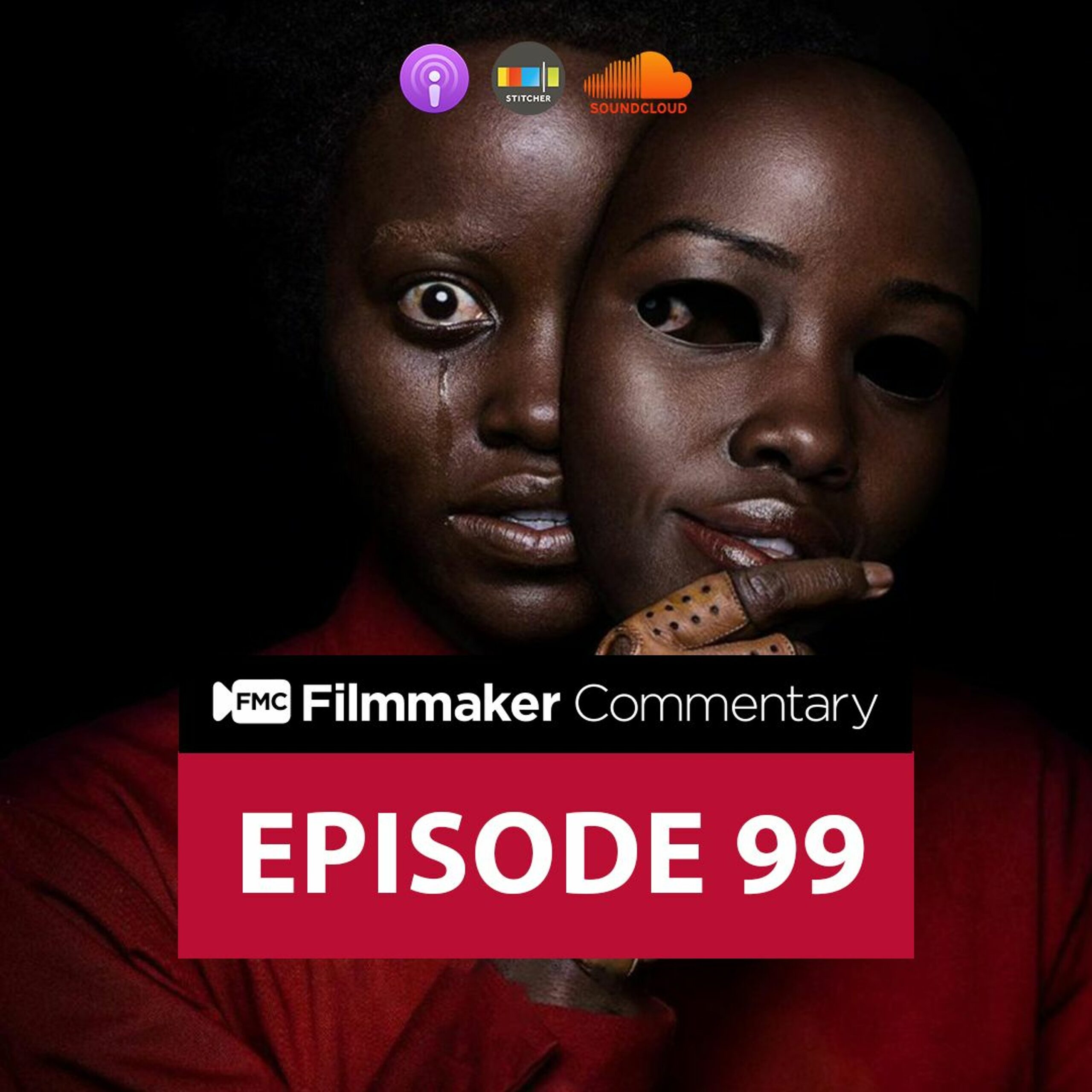
FMC 099: US Written and Directed by Jordan Peele

July 13, 2021
Listen on Apple Spotify YouTube
Listen to this episode
Your browser does not support the audio element.
Also on Apple Spotify YouTube

Reginald Titus Jr. and Casey G. Smith unpack Jordan Peele’s psychological thriller, Us, examining how the film’s chilling narrative takes on new relevance in today’s social climate. They delve into the film’s intricate technical execution and potent thematic layers, offering a fresh perspective on this modern horror classic.

What We Cover

  • The impressive box office success of Us and Jordan Peele’s growing filmography.
  • Reflections on Naya Rivera and Kelly Preston’s lives and unexpected passing.
  • Discussions around thought-provoking documentaries Epstein Filthy Rich and Take Your Pills, highlighting societal issues.
  • A review of the pilot for P-Valley, exploring its unique perspective on the stripping industry and all-female directorial team.
  • An in-depth look at Us’s special features, including insights into its groundbreaking filming techniques and chilling score by Michael Abels.
  • Analysis of Us’s deeper themes of duality, privilege, and the ‘fear of the other’ in contemporary American society.

Key Moments

  • (0:24) Reginald and Casey G. Smith kick off the episode with an overview of Us’s critical and commercial success.
  • (2:50) The hosts discuss the profound impact of re-watching Us and how its themes resonate differently in 2020.
  • (3:35) Explore the unique filming methods of Us, specifically how Lupita Nyong’o and the cast portrayed dual roles.
  • (5:52) Discussion of the film’s overarching themes: fight or flight, fear of the other, and the symbolic ‘tethered’ representing ignored societal issues.

Gear & Films Mentioned

  • Get Out (2017)
  • The Invisible Man (2020)
  • Natural Hair: The Movie
  • Epstein Filthy Rich (Netflix)
  • Take Your Pills (Netflix)
  • P-Valley (Starz)
  • Transformers: Headmasters (Japanese version)
  • One Punch Man (Netflix)
  • Attack on Titan
  • Magic City (documentary)
  • Generation Wealth (documentary)
  • The Shape of Water (2017)
  • The Lost Boys (1987)
  • Boyz n the Hood (1991)
  • Training Day (2001)
  • Mad Men (TV series)
  • Candyman (1992)
  • Hands Across America (1986)
  • C.H.U.D. (1984)

Listener Questions

  • How did Jordan Peele manage to film scenes with actors playing dual roles so seamlessly in Us?
  • What deeper social and political commentaries are embedded within the horror narrative of Us?
  • How does the film’s score by Michael Abels contribute to its unsettling atmosphere?
  • What insights can we gain from the special features on the Us Blu-ray regarding the director’s vision and execution?

For more insights on filmmaking techniques and commentaries, join us on Filmmaker Commentary each week.

Full Transcript

Read the full transcript

Full Episode Transcript
In this episode, hosts Reginald Titus Jr. and Casey G. Smith dive deep into Jordan Peele's critically acclaimed horror film "Us," discussing its themes of duality, privilege, and the fear of the other, alongside their initial reactions, re-visiting experiences, and an in-depth look at its special features and cinematic craft.

Opening Discussion: "Us" Production and Box Office Success
Reginald Titus Jr.: Welcome to Filmmaker Commentary, where we give you insights from our favorite filmmaking commentaries. These commentaries can be heard on your DVD and Blu-rays of your favorite movies. We'll show you how you can use these commentaries and apply them to improve your video production and filmmaking techniques. All of this here on Filmmaker Commentary. I'm your host, Reginald Titus Jr.
Welcome to Filmmaker Commentary. I'm Reginald Titus Jr. I'm joined with Casey G. Smith. Welcome back, sir.
Casey G. Smith: Good to be back, sir.
Reginald Titus Jr.: We're talking about *Us*.
Casey G. Smith: Right.
Reginald Titus Jr.: Produced... Right.
The movie *Us*, written, produced, directed by Jordan Peele, released March 22nd, 2019. And this is COVID edition, by the way.
We have a budget of, a budget of 20 million. 20 million? Wow.
Casey G. Smith: Yeah.
Reginald Titus Jr.: 20 million. Uh, we have a box office of 175 million domestically, 80 million internationally, for 255 million worldwide. Dang.
Casey G. Smith: Win-ning.
Reginald Titus Jr.: That is the big W. Basically, when you do something like that, um, Jordan Peele can do whatever he wants.
Casey G. Smith: Yeah.
Reginald Titus Jr.: Jason Blum was laughing all the way to the bank. And they were, and since they were also producer, he, uh, Jordan Peele is also a producer on this as well. I'm pretty sure there's some backend money, so, uh, hats off to those guys.
Casey G. Smith: Oh yeah. Man, Blum, man, as a producer, I mean, again, we saw with *Invisible Man*. Yeah. You know, that did, did well. Small that's that's their whole MO, right? Small budget,
Reginald Titus Jr.: Mhm.
Casey G. Smith: Find a niche and they get good returns. You know, it doesn't doesn't have to be a billion, right?
Reginald Titus Jr.: Oh no. No. They're his sweet spot was 5 million, but like if, if it's gonna be somebody that somebody knows their face or whatever like that then he kind of put it up a little bit. But his thing is catching directors on the way down. And some on the way up. So it's like finding that little happy medium.
Casey G. Smith: Oh yeah.
Reginald Titus Jr.: And then always having a genre, so it's easy, it's an easy sell. So no matter what, he's always gonna make money. But when he's working with a proven entity like Jordan Peele, all right, we'll give you 20 million this time. Why not?
Casey G. Smith: Fo' show. And it works. It works.
Reginald Titus Jr.: Yeah. Yeah.

News and What We Watched
Reginald Titus Jr.: Um, but before we talk further about *Us*, let's talk about news and movies watched.
Casey G. Smith: Okay, so, uh, this is a bit of a follow-up story from something that we covered on, um, one of our two previous episodes in relation to, uh, actress Naya Rivera, uh, whose, uh, initially her body was found missing. Um, they recovered her, her son found him on a boat. Um, unfortunately, as of this recording, her body was recovered. Of course, fortunately she was found dead at age 33. Of course, Naya Rivera, um, known, um, mostly for her role on the TV series *Glee*, as a character named Santana, uh, which was, uh, quite prominent, and, uh, she displayed quite a bit of talent, uh, on that show. Not only for for singing and dancing, but, uh, her her acting from from humor and, uh, the character was kinda known as a bit of a bit of a, uh, a bully, plenty of attitude. Um, but, uh, but yeah, definitely, uh, left a mark and was on the show for its complete run. Okay. Uh, which is, uh, impressive. So, um, uh, condolences, uh, to the, uh, the the family and friends, uh, of, uh, Naya Rivera. Also, unfortunately, um, the surprising passing of John Travolta's wife, Kelly Preston, uh, who, uh, passed away from a private battle with, uh, cancer at the age of 57. Um, most people did not know about this, again, it being a private thing. And so, um, Travolta posted on social media that he's taking some time away to spend time with his family and and time for him to heal and apologizing in advance in case we did not hear from them for a while, which I thought is a really smart way to, uh, to do so. So, once again, condolences to, uh, John Travolta and, uh, and the, the, the kids, um, and the, the, the rest of the, uh, the Preston and Travolta family.
Reginald Titus Jr.: Yeah.
Reginald Titus Jr.: TV, you watch any TV or movies this week?
Casey G. Smith: So I, I finally finished, uh, *Epstein Filthy Rich*. I finished that actually today.
Reginald Titus Jr.: Yeah, the wash your hands afterwards, wash your body.
Casey G. Smith: Right.
Reginald Titus Jr.: Get the filth off you.
Casey G. Smith: Just gonna cover myself in in and and drink some some hand sanitizer. Yeah, man. It is, uh, pretty brutal. But the ending, you know, it's bitter sweet, right?
Reginald Titus Jr.: Right.
Casey G. Smith: Uh, cowardly as it was for him to supposedly, you know, kill himself. But then they have, they have, they have the, the guy on there, the, the additional consultant, uh, for, um, when somebody dies, the coroner,
Reginald Titus Jr.: Yeah.
Casey G. Smith: they had the specialist and he looked at the portion of the, there was a specific bone around the the neck, or maybe around the jaw, that had a fracture, had several fractures that couldn't be caused by somebody hanging themselves.
Reginald Titus Jr.: Yeah.
Casey G. Smith: Of course. And then like the perfect storm of the guards being asleep or not paying attention and the cameras being down, it was just too much of a perfect storm. Yeah, yeah, for him to go the way he did. But at the same time, he'd also changed his, the way he changed his will, so that was like he made it into everything into a trust that I think was was going to his brother. So basically making it so that the, um, the survivors, you know, wouldn't be able to, you know, be recompensed and like, oh, man. So it was maybe he like knew, he knew that he was going to die.
Reginald Titus Jr.: Mm-hm.
Casey G. Smith: Uh, or that he was going to make sure that they couldn't get anything. But either way, man, what a piece of trash.
Reginald Titus Jr.: At the very end, a piece of trash.
Casey G. Smith: Yeah. Uh, but yeah, but I mean, it it was all really, really well done. I'm glad these women had a chance to have their voice. And kudos to the judge who still gave them opportunity to get up and and have their voices heard. I thought that was fantastic. That was wonderful. Not only the strength that they found within themselves, but for some it's like a calling, you know, to get out, then you, you know, uh, one of the young ladies at the end, she, you know, kind of got back into her art and she had made pieces of all the different of of not all the different women, but the you know, some of the different women. Yeah, so I, you know, saying I enjoyed it is one thing. It was really well done. I'm I'm glad that I watched it to be informed.
Reginald Titus Jr.: There you go.
Casey G. Smith: Yeah.
Reginald Titus Jr.: Yeah, same here. It's, it kind of draws out a little bit. It's like, oh, man, this is nothing's entertaining about this. You know, when you watch it. But yeah, you gotta be informed. You gotta know what what's going on across the bridge. You know, you think everything's all great in rich land, but it isn't.
Casey G. Smith: No. More money, more problems.
Reginald Titus Jr.: Man, more demons. I watched a Netflix original documentary called *Take Your Pills*. And they're kind of diving into the whole Adderall and how like young adults and and older folks are taking Adderall to kind of get that competitive edge. They talk to, you know, of course, college students.
Casey G. Smith: Yeah, you've been hearing about that for years.
Reginald Titus Jr.: Dear God. Man, I remember, uh, at our university, like, uh, we had friends with some people from another like more prestigious university. And, uh, kids were just on it. Like, it was just like, that was just a thing they did. It was just like, hey, we, you know, when it's time to study, we take this.
Casey G. Smith: Wow.
Reginald Titus Jr.: It was just, and it's kind of weird how you how you see people how it gets them to kind of zone in and focus and kind of do their thing. You like, oh, okay. For a lot of people that are working that are at those Ivy League, it's almost like everybody's on it. When you see this documentary, you realize these young adults, they know. They they they pretty much know like, hey, we're gonna get access to this. We have a competitive advantage. You know, we have resources, so we're gonna use this to to our advantage.
Casey G. Smith: Wow.
Reginald Titus Jr.: Uh, so you see that. You have a professional, uh, ex, um, NFL player, you know, talking about like how when he started getting on Adderall and things like that and how he's felt like he had like when it's on the snap count, he like he had up on the snap count before, he was just had a jump on everybody.
Casey G. Smith: Damn.
Reginald Titus Jr.: And so he would talk about that and just, yeah, seeing the history of Adderall and how it works in our society and it's been it's very interesting. Man, I almost I almost went down that road too. Like, man, how, you know, I can get focused, you know, but hey, man, I got up out of college, you know. You just gotta hunker down.
Casey G. Smith: You know, again, we live in a country where drugs are prevalent. And people, people want drugs. Yeah, you know, beyond, you know, any kind of morality, people want drugs. They want that edge.
Reginald Titus Jr.: Yeah.
Casey G. Smith: For various purposes. Whether it's to take the edge off or whether it's to add an edge, right?
Reginald Titus Jr.: Yeah, add the edge.
Casey G. Smith: People, people want drugs. And there's, you know, there's certain legal avenues to it. There are some illegal avenues, some things could change. Um,
Reginald Titus Jr.: Yeah. Yeah, so so and then you have you have that version, then you have the other side where the people that may not be as privileged, uh, not as privileged, and how these younger boys were put on Ritalin to pay attention. You know, to like, basically, the Ritalin like kinda turns a lot of these guys into like zombies and things like that, you know. You might have known a kid that was real outgoing and stuff like that. Get put on Ritalin, they just zombie'd out like, uh, you know. Um, so they're kind of showing you the effects. And, um, also there were, there was this one guy, he worked at like some Wall Street firm or whatever. And they would routinely take Adderall and, um, and 16, 18-hour days. Like, just back to back, back to back. One, uh, at the end of like three day in a row without going to sleep or anything like that, they finished whatever project they had to do. Um, but he said, he felt like that environment forces you to take things to get an edge over people, to always be at work. He's like at the beck and call of your job. And if you're not, somebody's gonna take your spot.
Casey G. Smith: Is Adderall the equivalent of speed? What they call speed?
Reginald Titus Jr.: Yeah, it's, what's that another name for it?
Casey G. Smith: For it.
Reginald Titus Jr.: Ampheta. Let me, yeah, since that's, let's go ahead and look this up, cause I don't wanna put out the wrong. An Adderall or trade names for a combination drug containing four salts of amphetamine. Yeah, amphetamine. Amphetamine. So yeah, there's some a lot of side effects, but, um, one of the biggest ones is kinda being your liver. You know, attacking your liver, so you don't wanna be drinking and stuff like that. It'll make it even worse. But yeah, so what ended up happening to the Wall Street guy, uh, him and another buddy were working on a project, and when they were done with the project, the boss said, oh, this was the wrong one. He was like a jerk. He was like, oh, this is the wrong one. And he's like, man, forget you, dude, I'm out of here. You know, he leaves. And then it turns out his friend had passed out like, you know, had like a seizure or something like that and was like in the hospital. And his parents were like, man, you need to stop this job because it's making you you're gonna you're gonna drop dead at the job. Right. And then his friend was talking to the other guy and he was like, hey, I know I'm not there, but can you, um, they're still asking me for work. He's in the hospital and the job is still requesting work from him.
Casey G. Smith: Dang, hardcore.
Reginald Titus Jr.: Yeah, they don't care. But anyhow, *Take Your Pills*, Netflix. It's informative.
Casey G. Smith: Okay. Uh, I also, I I watched a pilot for a show called *P-Valley* on, uh, on Stars.
Reginald Titus Jr.: Oh, I just saw that on IMDb. I didn't see the video, but I saw the little image on IMDb. I was like, ooh, this looks to the lady. Go ahead.
Casey G. Smith: Spicy.
Reginald Titus Jr.: Spicy. Yeah.
Casey G. Smith: I heard I heard a review for the pilot on, uh, NPR, uh, this week. Cause I I'd seen the, um, you know, the key art for it and I was like, eh, whatever. But after hearing about the review, I was like, you know what? I'll I'll check out I'll check it out. And it's obviously it's dealing with a strip club, kind of like the stripping industry. You know, you know, since we had watched, uh, *Hustlers*, you know, which gives some interesting insight and behind the scenes. Uh, but it's, it's well done. There's a lot of intrigue around like, you know, who's one of the people supposedly like them, you know, the the main character and kind of where she's coming from, you know, what her background is. And you know, obviously a a dynamic cast of characters, each with their own given issues and you've got, you know, different archetypes if you will. But, yeah, it was intriguing, like, going through the first episode. And, you know, for a show based on strippers, even when they're on stage, it's almost like more so from like their perspective to a certain degree. So it's not, you know, it's, uh, there was I was I was impressed that there was there wasn't a whole like a lot of nudity. You know, let me all breast here or there and you know, some some sheen sheen, uh, outfits. But I was like, okay. And but I think actually, I think the whole first season, I think that all the directors are are are women directors. Okay. On the show. So it's gonna be fascinating to see where it goes, but, but yeah, uh, *P-Valley*.
Reginald Titus Jr.: *P-Valley*. And that was a pilot and. So we got to wait to hear the see the other episodes basically or other episodes.
Casey G. Smith: I think I think I think it's gonna continue to go. But I think this was just the first initial episode.
Reginald Titus Jr.: And it's scripted, is it or is it more like kind of documentary film?
Casey G. Smith: Oh no, this is a, uh, drama. Oh, okay. Gotcha. Yeah, it's a full-on, full-on show. Production value and everything.
Reginald Titus Jr.: When I saw that when I saw the image, it made me it made me think of there's a director, her name is Lauren Greenfield. Well-known photographer. Used to do a lot of like hip-hop, pop photography from back in the day for different editorial. Um, but she had a a movie called *Generation Wealth* that just recently dropped in 2018. And then she did another film called *Magic City* in 2015. *Magic City* being that Atlanta strip club like famous and infamous. Um, but she did a small documentary for *Magic City* and it was like on Vice or something like that. But yeah, Lauren Greenfield. Um, that's what that key art reminded me of.
Casey G. Smith: Ah, okay. Okay. You watching anything else?
Reginald Titus Jr.: No, no other shows, but I do have a couple trailers.
Casey G. Smith: I got one last, uh, thing. I guys started watching, uh, again, super super nerdy, but I started watching the Japanese version of *Transformers*, *Headmasters*! So I'm like, I don't know, four or five episodes in and yeah, it different and interesting. Cause it's it takes a departure from where the first three seasons of the American, quote unquote, American version went.
Reginald Titus Jr.: Is it dubbed in English or is it?
Casey G. Smith: No, it's like I'm reading like I'm having to watch it reading the subtitles. Yeah. Cause I don't have a choice. Like there's no other option. Like I heard there was a dub somewhere, but that the dub was like terrible. Really. So I found the, uh, I ordered the a DVD set off Amazon and so there's there's three seasons in Japan. *Headmasters*, something super God, yada yada. And then the third season's called *Victory*. But, uh,
Reginald Titus Jr.: Interesting.
Reginald Titus Jr.: If you had a choice, you would have chose the English version or would you want to have feel the vibe of the Japanese?
Casey G. Smith: I I'd probably I'd want I'd want the I I'll take I'll take dubs over subs. Uh, yeah, I'll I'll take dubs over subs any day of the week because I like to be able to if I something else that I want to do while I'm, you know, watching, I can look away and not and not wonder, oh, what did I did I miss a key piece of dialogue that, you know, that that's gonna, you know, come to pass later on. One interesting thing that happened while I was watching it, uh, sixth or seventh episode, it was something to do with the planet of some beasts. And there was these dudes who were anthropomorphic animals with, um, in armor, but they're small, you know, in comparison to the Transformers. And I'm looking at these things and I'm like, yo, those are Battle Beasts!
Reginald Titus Jr.: Oh!
Casey G. Smith: There were these toys out in the late 80s called Battle Beasts. I remember seeing the commercials for them. I don't think I ever owned any. I remember some kids brought brought some to school. Battle Beasts, collect every one of these incredible creatures that battle for fun. Battle Beasts! And they had a little thing on their chest that you could like, you could, you could rub it. Very similar to the Transformers like, with you could like rub on their little sticker to make their their symbol autobot deepticon show, but with Battle Beasts they had the same kind of little gimmick, you rub on the chest to show whatever allegiance they had.
Reginald Titus Jr.: Interesting.
Casey G. Smith: But I'm like, yo, these are the Battle Beasts! And sure enough, I did a little research and yeah, they were by Hasbro and they had made that appearance in this Japanese Transformer cartoon and they released released in, you know, all over the world but in the States as well. I was like, huh, again, the cartoon to get the toys out. I mean, it's just remains. Anyway, so yeah, it's, uh, interessante, business, the business of animation and plastique.
Reginald Titus Jr.: That's cool. I got you. I got you. Yeah, I remember watching One-Punch Man, One-Punch Man on Netflix.
Casey G. Smith: That's an awesome theme song.
Reginald Titus Jr.: Yeah. And but I I listen to it in Japanese. I think I think they had the English version. Did they have the English to it?
Casey G. Smith: Ooh, no, I think I watched it with yeah. Yeah, I no, I'm no, I watched it with subtitles. They had no choice with that one? Yeah. Yeah. That was funny, man. One-Punch Man. That first season was good. I I did a season ever drop?
Reginald Titus Jr.: I never watched it.
Casey G. Smith: I think maybe it might be like on Crunchyroll or something like that. But I that's something I do anticipate. I was anticipating that one, but they were going with a different animation studio and some more things. A lot of things kind of fell through the crack on season two for One-Punch Man. Yeah.
Reginald Titus Jr.: Yeah.
Casey G. Smith: There's a couple of animays I just dropped off not having gone into the second season. *Attack on Titan* was the same way. I I really enjoyed the first season. They're like on season three now. I still haven't gone back cause it, you know, I hate to say it, it didn't it didn't come to Netflix, you know. And that's where I watched both those, you know. But, uh, but yeah, One-Punch Man was funny, man. Uh, Saitama? Is that is that the main character's name?
Reginald Titus Jr.: It was good.
Reginald Titus Jr.: I forgot his name.
Casey G. Smith: Yeah, I forgot the brother's name. He's so unassuming and and just goofy. He just wants to, yeah, he just wants to, you know, buy his groceries on time and and he gets upset when he's, you know, when he beats you with one punch. One punch again. Train so hard his hair fell out. Oh, man. That was wild. I'm like, wow.
Reginald Titus Jr.: I gotta look him up now. One-Punch Man. Like, Saitama.
Casey G. Smith: Saitama. Okay, not Saitama. So Saitama. Mhm. What what trailers have you checked out, sir?
Reginald Titus Jr.: Okay. Trailer, first trailer is *Tawana Jackson* by, uh, Romany Malco. Uh, hopefully I'm saying his name right. Um, he was the guy in *The 40-Year-Old Virgin*, the brother that got into it with Kevin Hart. The infamous scene. It's been a long time since *The 40-Year-Old Virgin*. Ooh, man. I'm gonna play that. We gotta play this just for.
Casey G. Smith: It's been a while since *The 40-Year-Old Virgin*.
Reginald Titus Jr.: Oh, man.
Casey G. Smith: Is it this is is this at the, uh, store?
Reginald Titus Jr.: Yeah. And then Kevin Hart, oh, was he with you? Yeah, we rode together. Yeah, that's my that's my guy. We rode together. Well, I'm clappin' up both of y'all. Oh, it's been so long. Oh, you got That's a classic scene. And then and then what's his name? He's like, hey, you got us in trouble. You know, it was funny.
Casey G. Smith: Oh, it's been so long. Oh, you got
Reginald Titus Jr.: Yeah, you gotta play that scene, bro.
Casey G. Smith: You mean to pull it up? Yeah. You gotta pull it up.
Reginald Titus Jr.: Yeah, you gotta pull it up.
Reginald Titus Jr.: Just to jog the memory. (audio clip from The 40-Year-Old Virgin plays) But anyhow, that's, uh, Romany Malco. And so, he'd been trying to he's been developing this character for a long time. This this, uh, uh, what's it called? Motivational speaker that just recently came out of prison.
Casey G. Smith: I've heard I've heard I watched an interview with him on on a show where he was talking about that exact same thing. This is from a couple years ago. Yeah, he's been developing this character for a minute.
Reginald Titus Jr.: Yeah, he's been developing this character for a minute.
Casey G. Smith: Gotcha.
Reginald Titus Jr.: And so I saw the trailer. I was like, man. Cause when I when I when he first started developing the character, I looked at I was like, nah, I'm cool. But then when I saw the trailer, I was like, you know what, this might be funny. To it looked like it's more developed, so I'm like, okay, I'll I'll risk it. I'll spend an hour and a half. Why not? *Tawana Jackson*. Hopefully I'm saying the name right, but by Romany Malco. He's a poet. And then the other, uh, trailer that I checked out is called *The Tax Collector* with Shia LaBeouf. Hopefully I'm saying his name right.
Casey G. Smith: LaBeouf.
Reginald Titus Jr.: LaBeouf. But, uh, man, Shia LaBeouf he just gangster. He's gangster. He's killing folks. He's in in LA. The tax collector is a person that comes in and gets their portion of the week. You know, you pay your little how much you owe to the mob, mafia, whoever. Getting taxed. So he's the one who collects that tax. Yeah, so, it looks like one of those little action be it's like a watered-down *Training Day*. You know what I mean? No disrespect, but that's that's, you know, that's kinda that's the vibe that I kinda get.
Casey G. Smith: *Training Day* is up there. It's, you know, Academy Award-winning film.
Reginald Titus Jr.: Yeah, man, you got Denzel, I mean, come on. Okay. What are we doing? Like, dang, he just told him that. Uh, but that's all I have for trailers. What about yourself?
Casey G. Smith: Ha ha ha! I run this, you just live here. Yeah, I didn't have any any trailers.

Film Synopsis and Initial Impressions
Reginald Titus Jr.: Okay. This episode of Filmmaker Commentary is sponsored by *Natural Hair the Movie* by Grindin' Matter Films, available for purchase and rent on Amazon. If you are a member of Amazon Prime, you can stream it currently right now, as well as on Vimeo On Demand. And we encourage you to leave a review. Thank you for tuning in to Filmmaker Commentary. We're talking about the movie *Us*, produced, written, and directed by Jordan Peele. Dropped March 22nd, 2019. And this is our first time doing episode on a film that didn't have commentary. Sorry about that.
Casey G. Smith: Yes. And if this is your first time listening to Filmmaker Commentary, please know that there will be spoilers. You've been forewarned.
Reginald Titus Jr.: Yeah, yeah. Sorry about that. So, we'll see how this goes. But, you know, it was a good thing it did have some special features. Uh, but before we dive into that, let's look into the synopsis. In order in order to get away from their busy lives, the Wilson family takes a vacation to Santa Cruz, California, with the plan of spending time with their friends, the Tyler family. On a day at the beach, their young son Jason almost wanders off, causing his mother, Adelaide, to become protective of her family. That night, four mysterious people break into Adelaide's childhood home where they're staying. The family is shocked to find out that the intruders look like them. *Us*. So, man, how did you watch this film? Did you watch it when it came out? And then was this your first time revisiting? What are your thoughts, man?
Casey G. Smith: So I did originally watch this in the movie theater. Uh, went to the Studio Movie Grill, uh, close to where I live. And, uh, yeah, went in, watched it. Uh, I enjoyed it. And of course, the the ending I was like, whoa, okay. Yeah. But I enjoyed it more the second time around. I watched it differently. This was my first time revisiting, uh, since then. And now watching it, knowing who, you know, Adelaide really is, or excuse me, Adelaide, knowing who she really is. And looking for these different tics, it makes it it informs the performance so much more. You're like, oh oh, wow. Okay. That's why she's so that's why she's she's she's nervous about somebody coming after her because she shouldn't have had all this in the first place. It's like, dang. So yeah, it gives it another layer. And I like that there was room, you know, in between watching it again. But, but yeah, I liked it even more the second go around.
Reginald Titus Jr.: Yeah, me too. I watched it at, as soon as it dropped, we were went to the theater to go check it out. I gave it like a high bar because after coming off of *Get Out*, I mean like, come on, bruh. Everybody was anticipating what what you were gonna do next. So, uh, and then with the I Got 5 On It, how they they, you know, they made it scary, you know.
Casey G. Smith: Yeah.
Reginald Titus Jr.: Yeah. I forgot the name of the of the composer that, you know, put all that together. But, man, to make that song. Did Michael Abels the the one who actually did the composing for the the film, did he do it? Michael Abels or was it somebody else?
Casey G. Smith: Did Michael Abels the the one who actually did the composing for the the film, did he do it? Michael Abels or was it somebody else?
Reginald Titus Jr.: You know what? I don't know, we might need to look into that. Cause I'm assuming Michael Abels did it since he was the one composing and everything, but you know, it might have been by somebody else. Uh, speaking of which, uh, Michael Abels, the music is creepy, but at the same time it has like a kinda like a circus vibe to some of the some of the compositions.
Casey G. Smith: Hm.
Reginald Titus Jr.: It's like a little circus. A broken circus. That's a broken circus.
Casey G. Smith: That's good. Uh, yeah.
Reginald Titus Jr.: Yeah, he did that one.
Casey G. Smith: Yep. Michael Abels.
Reginald Titus Jr.: Michael Abels, shout out to Michael Abels. So, um, so the bar was set high when I was going in to watch *Us*. I think I liked, at the time, I liked *Get Out* more than watch than *Us*. But this one, I don't know. I was like, one moment I was like, I don't know what do we watch? What do we watch? This is kind of like depressing. But, having so much time gone by since then, then we have everything that's happening in America right now, dear God, you know.
Casey G. Smith: Yeah.
Reginald Titus Jr.: Like, it it hits differently. So it was like, you're literally talking to people that are, when you you're talking the themes of privilege and things like that, it's like, wow, how relevant is this film?
Casey G. Smith: It hit. Yeah, it hit differently. Man, timing let's say, timing is everything, right? Watching this film now, it I I totally agree, man. I was like, man, it, yeah, this feels differently. Like you you're thinking more about, you know, maybe those who are oppressed or downtrodden or, you know, the shadows, the tethered. Oh, wow. Yeah. You zoned out. I'm like, yeah, that's it. It's just, uh, yeah, it hits different. But I I enjoy it way more than I did the first time. And again, there's also sometimes you have that something really good comes out by a director or studio. And you got something that follows up, but sometimes the hype is, it can't reach the the same levels as as that first thing. And sometimes it gets overshadowed and it takes distance and time to look at it, give me like, you know what? This is better than, you know, I I thought the first time around. Again, I think that the second Avengers movie suffers that same kind of thing. Um, but anyway, but yeah, I.
Reginald Titus Jr.: Yeah.
Casey G. Smith: I agree.
Reginald Titus Jr.: Yeah, I agree. Yeah. It's a lot of a lot of time, a lot of thought put into. I wonder how many years he put into this particular film.
Casey G. Smith: That's a good question.
Reginald Titus Jr.: You know, just thinking about this, you know, adding the 1986, what is it? The everybody crossing holding hands.
Casey G. Smith: Hands Across America.
Reginald Titus Jr.: Hands Across America. Hands Across, yeah.
Casey G. Smith: Something like that.
Reginald Titus Jr.: But yeah, seeing that and then incorporating that into the story, like, like a story that's forgotten. That like people forget that. That was like some gimmick. You know.
Casey G. Smith: Mm-hm.

Behind the Scenes and Technical Analysis
Reginald Titus Jr.: Also another, um, okay, so in the scene explorations, uh, in that particular featurette, uh, they talk about how, uh, Jordan Peele allowed the actors to kind of play and come up with an idea. Instead of like being behind the scenes like, what should we do this? Should we do this? But letting the actors kind of lead the way and introduce like creepy things to it. So one example is the the twins.
Casey G. Smith: Cali and Noelle Sheldon.
Reginald Titus Jr.: That's their real name or the.
Casey G. Smith: Okay.
Reginald Titus Jr.: That's their real name. That's real name. The Sheldon twins. They they approached the part of the, um, the hallway and then they just look their eyes are like looking up. And they just look like demonic. But that was their decision. You know, originally they were looking down, but looking up made it look more creepy. And that was something they came up with.
Casey G. Smith: Surely did. And he says he goes, that was the right decision. You know, that was the right decision to make. Uh, just that, yeah, that willingness to collaborate and trust the actors. I think I'm I'm going to assume that probably when you have directors who have been actors that you may find that a little bit more. Yeah. Cause they know what it's they know what it's like.
Reginald Titus Jr.: Yeah.
Reginald Titus Jr.: Mhm. Then there's some deleted scenes. We went through the deleted scenes. Some of the deleted scenes though, they were like they feel like they were finished. You know.
Casey G. Smith: Yeah. I I think, um, they just trimmed it for the sake of of time. Um, all of them looked looked finished that they could have been in there. But, you know, they didn't take they don't take away. And some things you get, you still got and understood with without them. Like the one of, uh, the little brother when the sister like, you know, you know, kind of flinches at him, uh, he's in his bed and she's like, I'm not even near you. And then he puts his mask on and then, you know, jumps out of frame. But you know, that's when he's he goes to hide, right? That's kind of the intent of that. But it, you know, with siblings it doesn't matter who started it, right?
Reginald Titus Jr.: Yeah.
Casey G. Smith: Um, and he's a little brother, so he's gonna do, you know, annoying things. So, uh, yeah, I was like, all right, that wasn't totally necessary. It I think it the only scene maybe that I would have kept in is the one with, um, with Winston Duke and, uh, uh, Shahadi, the, the daughter, um, the P is silent. Yeah. Yeah. That that it was just cool to kind of have that moment like real sincere in the two of them. I think that would have been worth keeping.
Reginald Titus Jr.: Okay. I like the one when, uh, when Lupita and Elizabeth Moss are talking about just their lives and things like that. And, um, they were talking about kids. Like, uh, I think Lupita was saying. Lupita was saying she was like, yeah, the best part of you know, highlight of her life was basically her kids. Was the dance. She that was like the highlight of her life. Next to, of course, you know, then she mentions her kids being born. And then what were you laughing at?
Casey G. Smith: Was the dance. She that was like the highlight of her life. Next to, of course, you know, then she mentions her kids being born.
Reginald Titus Jr.: And then what were you laughing at?
Casey G. Smith: And then, you know, uh, Elizabeth Moss's character, Kitty, said, yeah, the girls don't even make my top ten. Like, dang.
Reginald Titus Jr.: Man, they did not. It's it's crazy how her husband and her were talking to each other. Oh, man. Yeah, it's uncomfortable. In public. I'm like, mm-mm. No. But it's also, I mean, again, this is a credit to Elizabeth Moss, Elizabeth Moss as an actress when you see how kind of low-key she is in *Invisible Man*, and then you see the character she plays in this where she's just, I mean, just bougie and. It's almost seems like. Had some had some work done. Had a little bit, just a little bit. That's the key, just get a little bit done. Yeah. Yeah, a little bit, you know, here and there. It's almost she's almost unrecognizable just because of how different those characters are. Yeah, when you should see her and then in in *Mad Men*, the character, you know, Peggy, that she plays in in that and even how that character kind of evolves along the way, but she's in a period piece then playing this character trying to break into the advertising. It's it's yeah, it's it's very it's quite amazing. Uh, that's where I I first, you know, got introduced to her and she's a she's a hell of an actress, man. Uh, but yeah, it's just cool to see just that difference.
Casey G. Smith: Yeah, it's uncomfortable. In public. I'm like, mm-mm. No. But it's also, I mean, again, this is a credit to Elizabeth Moss, Elizabeth Moss as an actress when you see how kind of low-key she is in *Invisible Man*, and then you see the character she plays in this where she's just, I mean, just bougie and. It's almost seems like. Had some had some work done. Had a little bit, just a little bit. That's the key, just get a little bit done. Yeah. Yeah, a little bit, you know, here and there. It's almost she's almost unrecognizable just because of how different those characters are. Yeah, when you should see her and then in in *Mad Men*, the character, you know, Peggy, that she plays in in that and even how that character kind of evolves along the way, but she's in a period piece then playing this character trying to break into the advertising. It's it's yeah, it's it's very it's quite amazing. Uh, that's where I I first, you know, got introduced to her and she's a she's a hell of an actress, man. Uh, but yeah, it's just cool to see just that difference.
Reginald Titus Jr.: Back to back. Mhm.
Reginald Titus Jr.: There was one that was like Driftwood where it's just the boat. It's when the family escapes on the boat. You have the red family in red and they just recently killed, um,
Casey G. Smith: Abraham.
Reginald Titus Jr.: Abraham. And he's floating in the water. So they cut away to that and him floating in the water. I don't know. I was like, it felt done. But maybe they had to cut I don't know why they did.
Casey G. Smith: I think again, I think those cuts were surely for the sake of, yeah, just for the sake of time. And it's like, you know, they didn't they didn't really miss them. I mean, I didn't miss them. I'm like, all right. It's fine without them. Again, I just would I would I would have liked to see the scene of him and his daughter talking.
Reginald Titus Jr.: Yeah, that was the only one that I would have kept. Uh, talking to each other. I was like, yeah, I like the the interaction between them, but when he kept saying, your mother's gonna fix it, your mother. It was like, all right, y'all are kind of killing it. You know, you know, cause he said it probably like three times in the film without that. And then with that deleted scene, so like you're probably gonna take that out because now you're almost like you're hitting him overhead that he's a woos. You know what I mean? And then like this is a big old sucker. He, he gets knocked in, he got knocked in the leg. They have to sound like that one hurts too. He gets taken. Oh, yeah. I was like, oh, brother, I don't know why they do the brother like that. He gets he gets dragged away. But, you know, the interesting thing is that it is by by the version of him of himself that isn't afraid to use all his strength, you know. Maybe this is a brother who, you know, we talk about, you know, aspects of racism, that who has felt, who has felt the need to maybe not come across as threatening most of his life and toned it down. Whereas this, you know, his tethered side is like, you know, my God is my strength. And this is my time to unleash it and. Yeah. Maybe there's an anger at him as his counterpart for, uh, you know, not. Yeah. But then he does have to call him out, because he does kill, he does kill two people. Yeah. Yep. At least, yeah, at least two. True. Yeah. Would you know, counting kill counts. Yeah, kill counts. So, yeah, that was a quote. Yeah, you're probably right. You know. But I, you know, congratulations on them for keeping the continuity, because he got hit in the knee. I was like, ooh, you ain't coming back from you get hit in the knee like that, you're done. It's a wrap. So, for him to be able to carry that injury out throughout the film, I was like, okay, man, good for them.
Casey G. Smith: Yeah, you're hitting him overhead that he's a woos, you know. Right. He gets he gets dragged away. But, you know, the interesting thing is that it is by by the version of him of himself that isn't afraid to use all his strength, you know. Maybe this is a brother who, you know, we talk about, you know, aspects of racism, that who has felt, who has felt the need to maybe not come across as threatening most of his life and toned it down. Whereas this, you know, his tethered side is like, you know, my God is my strength. And this is my time to unleash it and. Yeah. Maybe there's an anger at him as his counterpart for, uh, you know, not. Yeah. But then he does have to call him out, because he does kill, he does kill two people. Yeah. Yep. At least, yeah, at least two. True. Yeah. Would you know, counting kill counts. Yeah, kill counts. So, yeah, that was a quote. Yeah, you're probably right. You know. But I, you know, congratulations on them for keeping the continuity, because he got hit in the knee. I was like, ooh, you ain't coming back from you get hit in the knee like that, you're done. It's a wrap. So, for him to be able to carry that injury out throughout the film, I was like, okay, man, good for them.
Reginald Titus Jr.: For real.
Casey G. Smith: Yeah, yeah, he didn't like just miraculously get better or whatever. It's like, nah, that knee's jacked, probably it might be a, you know, a ACL, MCL, PCL, maybe some meniscus. Sounds like some of you like, you know, I tore an ACL before.
Reginald Titus Jr.: Yeah, yeah, I tore an ACL before.
Casey G. Smith: Yes, yes. So. Ouch. You know, it's like you gotta ask him, man, are you, are you. Is that the one in the front? Is the ACL one in front or the side of the knee?
Reginald Titus Jr.: Is that the one in the front? Is the ACL one in front or the side of the knee?
Casey G. Smith: Side is the meniscus. That's a cushion kind of where the bones come together. Um, but it's like, you know, we need to know, are you injured or are you hurt?
Reginald Titus Jr.: Ouch.
Casey G. Smith: He was injured, cause he's still able to stay in the game. Yeah. You know, it's like, you gotta ask him, man, are you, are you. Is that the one in the front? Is the ACL one in front or the side of the knee?
Reginald Titus Jr.: He was injured, cause he's still able to stay in the game.
Casey G. Smith: He gets knocked in, he got knocked in the leg. You know. But it's like, you know, we need to know, are you injured or are you hurt?
Reginald Titus Jr.: Yeah. Yeah.
Casey G. Smith: He was injured, cause he's still able to stay in the game. Yeah. You know, it's like, you gotta ask him, man, are you, are you. Is that the one in the front? Is the ACL one in front or the side of the knee?
Reginald Titus Jr.: Yeah, yeah. And his ex-venture is, um, Candy Man.
Casey G. Smith: Oh, that's right. I've never seen the original Candy Man.
Reginald Titus Jr.: What? True story.
Casey G. Smith: True story. I told you before when that that first title sequence came on, the dude started talking, I'm out. It was never it was just never on. I mean, like I never was in a position where, you know, that it was like on HBO or something like that, or. You didn't catch any of the marketing for it? I mean, I knew about it, but again, it was never it was never in a position where I could watch it. Um, or or where where I knew it was able to watch. And then by then, I guess I just maybe wasn't interested or whatever. But, yeah, before I watched Peele's, I I definitely want to go and watch the original. Oh yeah, for sure. Eventually, so. For sure. Yeah. And they can catch us where? Facebook.com/filmmakercommentary. You can also like, rate, and subscribe on iTunes, SoundCloud, Stitcher Radio. Feel free to subscribe and leave a review. You can contact Reginald Titus on Twitter @ReggieTitus, on Instagram @ReginaldTitusJr. You can also communicate with us, connect with us on Instagram @filmmakercommentary. If there's a film or movie that has commentary, and, potentially, maybe even if it doesn't, uh, you'd like us to cover it, let us know. We would love to hear from you. You can also reach me simply at CaseyGSmith32 on both Instagram and Twitter. Until next time. Peace. Respect. (outro music begins)

About Filmmaker Commentary

Reginald Titus Jr.

Apple Spotify YouTube Subscribe Free
Continue Listening

FMC 244 : The Karate Kid Directed by John G. Avildsen

June 20, 2026

What We’ve Been Watching Episode 008

June 12, 2026

FMC 243 : Love and Basketball Written and Directed by Gina Prince Bythewood

June 9, 2026

Leave a Response Cancel reply

This site uses Akismet to reduce spam. Learn how your comment data is processed.

Never Miss an Episode

New episodes every week — free.

Listen on Spotify Apple Podcasts

Recent Episodes

  • FMC 244 : The Karate Kid Directed by John G. Avildsen
  • What We’ve Been Watching Episode 008
  • FMC 243 : Love and Basketball Written and Directed by Gina Prince Bythewood
  • What We’ve Been Watching Episode 007

Archives

  • June 2026
  • May 2026
  • April 2026
  • March 2026
  • February 2026
  • January 2026
  • September 2021
  • August 2021
  • July 2021
  • March 2021
  • November 2020
  • October 2020
  • September 2020
  • August 2020
  • July 2020
  • May 2020
  • April 2020
  • March 2020
  • February 2020
  • January 2020
  • November 2019
  • October 2019
  • September 2019
  • August 2019
  • July 2019
  • June 2019
  • May 2019
  • April 2019
  • March 2019
  • February 2019
  • January 2019
  • December 2018
  • October 2018
  • September 2018
  • August 2018
  • July 2018
  • June 2018
  • May 2018
  • April 2018
  • March 2018
  • February 2018
  • January 2018
  • December 2017

Categories

  • Film
  • Podcast
  • TV
© 2026 Filmmaker Commentary. All rights reserved.
  • About
  • Episodes
  • Privacy Policy
  • Disclaimer
  • Terms of Service