July 16, 2026
F
Filmmaker Commentary
  • Home
  • About
  • Episodes
  • Film
  • TV
  • Home
  • About
  • Episodes
  • Film
  • TV
Podcast

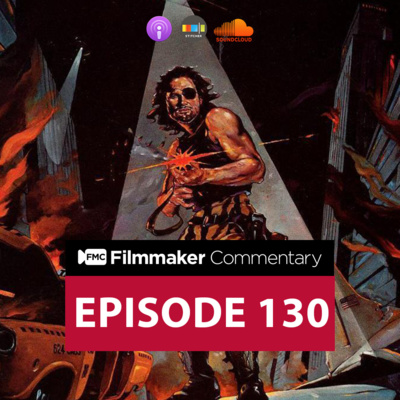
FMC 130 : Escape from New York Written and Directed by John Carpenter

May 23, 2022
Listen on Apple Spotify YouTube
Listen to this episode
Your browser does not support the audio element.
Also on Apple Spotify YouTube

Join Reginald Titus Jr. and Casey G. Smith as they dissect John Carpenter’s iconic 1981 dystopian action film, “Escape from New York,” in an episode packed with behind-the-scenes insights. Discover how Carpenter’s distinctive style and innovative filmmaking techniques transformed a modest budget into a genre-defining classic, setting the stage for future action heroes and gritty urban landscapes.

What We Cover

  • The film’s surprisingly low budget and impressive box office performance, establishing it as a cult classic.
  • John Carpenter’s signature directorial style, including his effective use of anamorphic lenses and practical effects to maximize visual impact.
  • How the political and social climate of 1981-2020 informed the film’s dystopian themes and contemporary controversies.
  • An in-depth look at the loaded special features of the 4K UHD Blu-ray, including multiple commentaries and documentaries.
  • The concept of the “anti-hero” embodied by Snake Plissken and its enduring influence on cinema.
  • Personal viewing experiences, memorable scenes, and fascinating production trivia, from plane crashes to actors’ real-life injuries.

Key Moments

  • [00:51] Catch up on Filmmaker Commentary’s latest announcements, including new Spotify availability and how to access older episodes (104-124).
  • [01:44] The hosts dive into the unexpected budget and box office success of “Escape from New York,” and its surprising sequel, “Escape from L.A.”
  • [06:33] Explore the innovative blend of 2D and 3D animation in the new “Chip ‘n Dale: Rescue Rangers” movie, and a detailed review of M. Night Shyamalan’s “Old.”
  • [13:48] Discussion shifts to the controversial 2020 film “The Hunt” and its satirical take on the rich elite, highlighting its unfortunate release timing during a period of social unrest.
  • [20:55] Casey G. Smith shares his personal journey of discovering “Escape from New York” later in his film education, filling in “blank spots” from earlier decades.
  • [31:47] Learn about the groundbreaking filmmaking technology used, such as Panavision lenses and the Panaglide camera system, that shaped the film’s distinct look.
  • [41:30] A treasure trove of trivia, including Kurt Russell’s Clint Eastwood-inspired performance, the use of a real plane crash for a scene, and amusing anecdotes from the set.

Gear & Films Mentioned

  • Films: “Escape from L.A.,” “Alien: Resurrection,” “Who Framed Roger Rabbit,” “The Offer,” “The Godfather,” “Hacks,” “Chip ‘n Dale: Rescue Rangers,” “Old,” “The Hunt,” “Fresh Prince of Bel-Air,” “Atlanta,” “Thinner,” “The Fog,” “Big Trouble in Little China,” “Tango & Cash,” “Collateral,” “Miami Vice,” “Rocky,” “Predator,” “Elf,” “Teenage Mutant Ninja Turtles,” “Westworld,” “Guardians of the Galaxy,” “Spider-Man,” “Halloween.”
  • Gear: Panavision lenses, Panaglide camera system.

Listener Questions

  • How did John Carpenter’s innovative use of visual techniques and practical effects elevate “Escape from New York” beyond its small budget?
  • What specific filmmaking lessons can be gleaned from the film’s production, especially regarding working with creative constraints?
  • How did the historical and social context of the film’s release impact its themes and reception, then versus now?

Join us on Filmmaker Commentary each week for more in-depth analyses of your favorite movies and the creative minds behind them!

Full Transcript

Read the full transcript

Full Episode Transcript
This episode of Filmmaker Commentary John Carpenter's 1981 dystopian action film "Escape from New York," analyzing its production, technical innovations, and lasting cultural impact, while also exploring various filmmaking techniques and current media observations.

Opening Discussion and Podcast Updates
Reginald Titus Jr.: Filmmaker Commentary, episode 130. Welcome to Filmmaker Commentary, where we give you insights from our favorite filmmaking commentaries. These commentaries can be heard on your DVD and Blu-rays of your favorite movies. We'll show you how you can use these commentaries and apply them to improve your video production and filmmaking techniques. All of this here on Filmmaker Commentary. I'm your host, Reginald Titus Jr.
Reginald Titus Jr.: What up, y'all? Welcome to another episode of Filmmaker Commentary. I'm Reginald Titus Jr. I'm joined with Casey G. Smith. Welcome back, sir.
Casey G. Smith.: Good to be back, sir.
Reginald Titus Jr.: Yes. And today we're talking about Escape from New York, 1981.
Casey G. Smith.: John Carpenter's Escape from New York.
Reginald Titus Jr.: You got to be specific with that. A couple housekeeping suggestions. Notes. Notes, yeah. We are now on Spotify. Whoop whoop. Whoopty whoop. Thank y'all, everybody, for your support. There may be a few ads coming on here and there. And we would like to know like, during our transition, because we're going through another platform now, if you have any issues with iTunes, or Stitcher, Google, we'll be switching all that stuff over. So if you have any issues, please reach out to us through social media.
Casey G. Smith.: Of course, we'll give you all those as usual at the end of the show.
Reginald Titus Jr.: Also, our episodes. So we're on episode 130 right now. But we have episodes from 104 to 124, which is like our pandemic episodes. And those are going to be published to the web, to the platform as well. Words. They'll be published, however, they'll still be numbered like the old episodes, so it'll be episode 104, but we'll be publishing those at the same time that we're publishing our newest episodes at one with 131. So I just wanted to let y'all know like, when you see those older episodes, don't be alarmed. Those are just our pandemic episodes. And that's episode 104 through 124.
Casey G. Smith.: Be on the lookout. There's some good stuff there.
Reginald Titus Jr.: Indeed. Any more housekeeping notes?
Casey G. Smith.: I think you about covered it, buddy.
Reginald Titus Jr.: Okay.

Film Background: Box Office Success and Director's Vision
Reginald Titus Jr.: So, Escape from New York, 1981, written and directed by John Carpenter. Co-writer, Nick Castle. What kind of box office did this, and budget and box office this film had?
Casey G. Smith.: So, Escape from New York came in at an estimated budget of around $6 million, which was a small budget even for that time. And it grossed approximately $25 million. So it was a hit and also a cult classic as well. This character of Snake Plissken has been referenced and the the style of the film has been duplicated and imitated many times over.
Reginald Titus Jr.: Yeah. I'd say that's a win.
Casey G. Smith.: Definitely, definitely a win. And the international numbers were very low, and as we know, we don't know what really happened. They didn't really...
Reginald Titus Jr.: That's true. It was enough to garner a sequel in the 90s with Escape from LA.
Casey G. Smith.: Did you watch that one?
Reginald Titus Jr.: I haven't seen it yet. I'm I'm curious to check it out, but I I remember watching the HBO behind the scenes of it when they were making the film. I know there's a shot in the film specifically where Snake is on a basketball court and he like just him, obviously, there's nobody else around, and he throws up this Hail Mary, like half-court shot, like like I think Kurt Russell did it after like maybe like four or five tries. He didn't he didn't have to do it that many times, but he he hit it, but I just remember watching that from behind the scenes.
Casey G. Smith.: It was like a wide shot so you could tell that he actually shot it.
Reginald Titus Jr.: Do you remember Sigourney Weaver in Alien?
Casey G. Smith.: Alien Resurrection?
Reginald Titus Jr.: Yeah. She's got the like the red jumpsuit. She throws it back and nails it on the first go. And people like, one of the one of the villains start celebrating, like, yeah. So he had to kind of cut it.
Casey G. Smith.: Wow.
Reginald Titus Jr.: Cause she wouldn't it wasn't even on purpose. It's like that wasn't even the intention of that shot. They were intending on cutting it and then doing the insert of the ball going in.
Casey G. Smith.: But it just went in.
Reginald Titus Jr.: Yeah, it just went in.
Casey G. Smith.: That's cool. Very, very cool.
Reginald Titus Jr.: Escape from Yeah, so I saw that trailer, like, hmm, 90s. I don't know. It looked like they had some money though to make it. Yeah, that means the budget increased.
Casey G. Smith.: Come back around. Yes, sir.
Reginald Titus Jr.: Oh, man. Kurt Russell definitely would have been demanding more by that point because this was the start of his action career. Like before then, nobody saw him as that guy. He was the he was the Disney actor. And then he did an Elvis like TV movie series for John Carpenter. That kind of got them rolling and then Yeah, even for this, he had to they had to kind of push to get him in the role, but Carpenter had enough stroke then to get him in. So
Casey G. Smith.: Yeah. It's interesting because he actually has like all those capabilities of being able to do his own stunts, which a lot of people didn't probably didn't know that. But at that time, you know, the superhero had to have like month just a bunch of muscles on their body. And that's your hero as we saw. Might be stiff as all get out, but uh, got to have the muscles.
Reginald Titus Jr.: Yes, sir.

What We're Watching: TV Shows and Movies
Reginald Titus Jr.: But anyhow, before we talk further about John Carpenter's, John Carpenter's, Escape from New York, let's talk about TV and movies. Watch. So what have you been watching, sir?
Casey G. Smith.: Well, I've been on my usual grind again, my Young Rock, my Hill Street Blues, my uh Wonder Years. Just to clarify again, this is the new Wonder Years. The Black Wonder Years. Every time I think that the season is is done, there's another episode. But now I'm sure the season finale just took place. But that show is very enjoyable. Of course, Atlanta also, I believe, had their season finale because I saw a promotion that says all all episodes available on Hulu. So I think this last episode was the season finale, which makes me sad. I'm like, man,
Reginald Titus Jr.: I know, right?
Casey G. Smith.: Give me some more.
Reginald Titus Jr.: I watched that episode recently and I was like, wow, is this it? I didn't know that was it. You know, I was actually kind of surprised. I was like, I was thinking like, let's go, let's go to the next one.
Casey G. Smith.: Yeah, exactly. But it was a great, maybe I guess my favorite. Maybe my favorite uh season.
Reginald Titus Jr.: Oh, favorite season. I thought you were going to say episode of the season.
Casey G. Smith.: Yeah, this this last one was was okay. Yeah. It it showed off some of Zazie Beetz's acting chops.
Reginald Titus Jr.: For sure.
Casey G. Smith.: Had some surprises, but not not my favorite though. Uh, what else I've been on? Mm, okay. So, of course, The Offer on Paramount Plus, again, about the making of The Godfather, that's still been very, very good. Hacks on HBO Max. Two new things that I watched. Two movies that I watched.
Reginald Titus Jr.: Uh oh. Two movies?
Casey G. Smith.: Yes, that were both very enjoyable, but both very, very different. First, on Disney Plus. Do you remember or did you watch as a child, Chip 'n Dale: Rescue Rangers?
Reginald Titus Jr.: Okay. Of course.
Casey G. Smith.: Disney Afternoon, right?
Reginald Titus Jr.: Yeah.
Casey G. Smith.: All right, so they've been showing a trailer for a couple months now of a Chip 'n Dale: Rescue Rangers movie. Oh, where in in the trailer, they show that Dale, right? Dale is the one who would have the Magnum P.I. shirt on. He was a Dale was the dumb one. Let's just be honest. Dale Dale was goofy. He had the red nose and all that kind of stuff. Chip was always more serious. And but Dale Dale is going through a process and had the surgery, the 3D surgery. And so Dale is 3D generated. Oh, nice. Where Chip is still 2D. Yeah. And uh, you know, something they've been they've been separated for years where they had a falling out in the show. And like they and it's like they're real actors who were doing a show. Even their voices are different. Their voices are much more deeper. Like they they did the whole chipmunk thing sound for the show. But they had a falling out and the Rescue Rangers are done. And something happens, they got to come back together. And so this this film, well this film is it's it's like Who Framed Roger Rabbit, but for 2022. Interesting. It is brilliant. The the jokes in this film, man, are are wonderful, man. They have some great gags. They go in on a couple of properties. And the cameos that that take place in here from other properties that are outside of Disney, just like when you saw Roger Rabbit and you saw like Bugs and Mickey on the screen together, like, wait a minute, what? What is going on? Like, how is that possible? I feel there's some of some of that, not to that that I mean, that's the height of heights to have those two on screen together. But there are some pretty awesome cameos within it. It's funny, it's well done, but yeah, Chip 'n Dale: Rescue Rangers. Ah. If you were a fan of the show in the 90s, definitely check this out. It's going it's going it's going to hit you with a lot of feels and it's a it's a lot of fun.
Reginald Titus Jr.: Okay. I might I might have to watch that with the children.
Casey G. Smith.: Yes, sir. Uh, and then the other film that was completely different.
Reginald Titus Jr.: M. Night Shyamalan's Old. Dude, I've we've been trying to watch this forever and Yeah, you should see Casey's face. He's like, he's like, he's reluctant. You didn't know what to say. What do you?
Casey G. Smith.: I watched it last. Give me some adjectives.
Reginald Titus Jr.: I watched it last night. Shocked. Surprised. Uh-huh. Intrigued. But it's brilliant. Okay. It really it is brilliant. The execution is brilliant. Playing I mean, obviously, we know from the trailers, these people are on the island. And they're aging at an exponential. And they're aging at a rapid rate. But just the ramifications of what happens when you are when you're when you are aging faster when your body is going through those changes of aging at such a rapid rate. What what does that mean? And I'm not going to go into the details of spoilers, but it is it is quite brilliant. It's jarring.
Casey G. Smith.: Ah.
Reginald Titus Jr.: And and the set the setup is great and then when it just turns you like oh, oh no, oh no, oh no. And every time you a moment you think things have calmed down and all of a sudden there's something else because the clock is ticking.
Casey G. Smith.: Oh. The clock is ticking and you and time is not on your side.
Reginald Titus Jr.: Dang.
Casey G. Smith.: And and and uh a satisfying I thought the ending was was quite satisfying as well. I didn't feel, you know, sometimes, you know, for a movie.
Reginald Titus Jr.: M. Night Shyamalan.
Casey G. Smith.: Yeah, I didn't I didn't feel that. But uh, yes, it old, brilliant. There should be more talk about this film. Check it out. It's on HBO Max.
Reginald Titus Jr.: Yeah, I'm going to check it out. I like the key art to it because it's always like a like some skeleton or
Casey G. Smith.: Yeah, a woman's like a young woman's leg. Yeah. And then the other leg is skeletal. Like the Goonies.
Reginald Titus Jr.: Old. Old.
Casey G. Smith.: There was a old, wasn't there a film called Old back in the day? No, it was called Thinner.
Reginald Titus Jr.: Thinner.
Casey G. Smith.: And then that guy gets cursed. I remember this trailer. I was like, whoa. What did you do, homie? But actually, I watched that. I watched that when as a I mean, it was in my teens, man.
Reginald Titus Jr.: That was good, was it good?
Casey G. Smith.: That was a Stephen King. Yeah, it was Thinner. It's creepy as you would expect. That was yes, that was a Stephen King. Stephen King-er.
Reginald Titus Jr.: We were just we were just talking about different titles. And then in particular, we were talking about because obviously this is John Carpenter's Escape from New York. Like, what if you just came up with just different titles when you throw John Carpenter's name in front of it? John Carpenter's Humidity.
Casey G. Smith.: Because because Casey brought up that he had a movie called The Fog. I was like, that is a true story. It's boring. That's a boring title.
Reginald Titus Jr.: John Carpenter's Boring. John Carpenter's Coming this Fall. Mist. Rain. You could just like use anything.
Casey G. Smith.: John Carpenter's Overcast. Oh, no, it's overcast.
Reginald Titus Jr.: Stay inside. Stay inside.
Casey G. Smith.: What have you been watching, sir?
Reginald Titus Jr.: Um, watched Atlanta, watched um, I told you we've been into the old Fresh Prince, still have yet to watch the dramatized version. And the reason that I watched the older Fresh Prince is because like 20 something minutes and then something I can watch with the whole family, and I really don't have that much time during the week. So when I watch something, it has to be like, I have to set I have to almost schedule it.
Casey G. Smith.: Surely, surely. You're a busy man.
Reginald Titus Jr.: So tonight will be Old. I'm going to watch Old tonight for sure. Now that I
Casey G. Smith.: Watch it with the missus?
Reginald Titus Jr.: Yeah. Now that we because it's something that's been on our queue, but we just haven't done it.
Casey G. Smith.: I can't wait to hear your thoughts on it after after words, next next next podcast.
Reginald Titus Jr.: Oh, yeah. Next episode. So the Fresh Prince episode that we just recently watched was the one when uh Ashley's being bullied, and then Will Smith was trying to show her how not to be bullied, mind your business. Mind your business. That's all. That's all.
Casey G. Smith.: Back up. Back up.
Reginald Titus Jr.: Man, it was everybody was just dying laughing on that one. Yeah, cuz classic, that's that's a classic one.
Casey G. Smith.: Yeah, I think that's one of the first episodes that I saw Fresh Prince. May have been that one.
Reginald Titus Jr.: Uh-huh. And it it's also teachable moments with the family because there's always lessons with these sitcoms. This specific one that, you know, don't let your anger get the best of you, you know, their dad ends up hitting, you know, the other dad, he's like, you might have got a mistake with your mama. Boom. Ooh, yeah, Philly at them out. So anyhow, that was good. Um, movie that I watched, The Hunt. Do you remember the movie called The Hunt? Very controversial in 2020, um, starring Betty Gilpin. She's uh in the Glow. I think it was the Glow series on Netflix with the wrestlers.
Casey G. Smith.: Okay. You know what? I remember hearing about that. Briefly, but I didn't see it.
Reginald Titus Jr.: So, yeah, one of the most controversial films in 2020, because it's basically a satire of the rich elite hunting undesirables.
Casey G. Smith.: Uh-huh.
Reginald Titus Jr.: Just being the the normal average public citizen or whatever. Um, but the reason it was so controversial is because keep in mind, every during the pandemic, all of us are like panicking. We're getting like toilet paper, uh, people are fighting in the streets, looting, people are being lynched, murdered. You know, that's how Black Lives Matter just kind of came during the pandemic.
Casey G. Smith.: Sure.
Reginald Titus Jr.: A lot of lot a lot was going on. And so for them to have this film dropping around the time when we're talking about like corporations, elite, billionaires, and there were a lot of corporations that had to say sorry for things during that time and, you know, try to make amends with Black Lives Matter or whatever non-profit they can kind of get next to.
Casey G. Smith.: Sure.
Reginald Titus Jr.: Uh, it was people were it was just bad timing because it was because it's a movie satire, so it's uh, uh, yeah, it just hit all the wrong cords at that time. All the wrong notes at that time. Uh, but going back on it was this was in a $5 bin. Remember I sent you a picture of all the Nicolas Cage movies that are in the $5 bin?
Casey G. Smith.: Right. Okay.
Reginald Titus Jr.: It was it was unbelievable. It was like six movies, five or six movies, just Nicolas Cage all movies in the Walmart Blu-ray dollar bin. Uh, but The Hunt was in there. And I was like, I got to get this.
Casey G. Smith.: Mm.
Reginald Titus Jr.: Got to get it and it is satisfying.
Casey G. Smith.: Really?
Reginald Titus Jr.: Yeah. Okay, I'll have to look at checking that out.
Casey G. Smith.: Okay, I'll have to look at checking that out.
Reginald Titus Jr.: There's uh also um, what's her name? The uh the actress that played uh she played a boy in like, I think it was like a mid or late 90s movie.
Casey G. Smith.: Boys Don't Cry?
Reginald Titus Jr.: Yeah, yeah. What's her name? Hilary Swank. Swank, Swank's in here.
Casey G. Smith.: Hilary Swank.
Reginald Titus Jr.: And you have to truth, man, she's incredible.
Casey G. Smith.: I think she got an Oscar for that. Million Dollar Baby. She got that Oscar.
Reginald Titus Jr.: Oh, maybe she was nominated for Boys Don't Cry or
Casey G. Smith.: Probably. She's she's a powerful actor actress.
Reginald Titus Jr.: All right. What's gonna be today? Um, but there's a scene. There's reminiscent of Kill Bill. Oh. With uh Vivica Fox and with her. Oh. Yeah. Very satisfying. Okay. Bring it. Bring it. And today's show is sponsored by
Casey G. Smith.: Natural Hair: The Movie by Grand of the Matter Films available on multiple platforms, such as Amazon Video, All Black TV, and now on Tubi. Please check us out. Rate and leave a review.
Reginald Titus Jr.: And let's jump back into the show.

Escape from New York: Synopsis and Initial Reactions
Reginald Titus Jr.: Thank you for tuning in to Filmmaker Commentary. We're talking about John Carpenter's Escape from New York, 1981. Here is the synopsis. In a world ravaged by crime, the entire island of Manhattan has been converted into a walled prison where brutal prisoners roam. But when the U.S. President crash lands inside, only one man can bring him back. Notorious outlaw and former Special Forces war hero, Snake Plissken. But time is short. In 24 hours, an explosive device implanted in his neck will end Snake's mission and his life. Unless he succeeds. John Carpenter's Escape from New York. And if this is your first time listening to Filmmaker Commentary, please note that there will be spoilers. You've been forewarned. How did you watch this film? Did you know about this film? Oh, because you mentioned it. So, how did you know about this film?
Casey G. Smith.: I as a youngster, I didn't really know about it. I think I had seen imagery, just because it would just pop up different places. But it wasn't until, honestly, when they started working on the sequel and I saw that behind the scenes on HBO about Escape from LA. It got me kind of curious, but I would never I would never see it pop up somewhere to watch it, like ever. It's just one of it was one of those blind spots that I had. So again in the mid-2000s, you know, I I went probably probably from 2008 to 2013, I specifically focused in on kind of filling in some of my blank spots with films. And it was just, you know, using Netflix, ordering like two two films at a time. And just trying to up up my knowledge. And this was one of those films. I was like, you know what, let's check out this Escape from New York film. It's on there. All right, let's check it out. I think I was going through some like top 100 film thing that I think Barnes & Noble had at the time. It was just like, boo boo. All right, next two. On deck, next two. And so I watched it. But after watching it, I kind of forgot about it and didn't didn't think about it anymore because even as we got around to it, I'd forgotten I'd watched it until I was like, wait a minute, I did see this.
Reginald Titus Jr.: Forgettable. Sorry about that.
Casey G. Smith.: So I was like, eh, But uh, I think I enjoyed it more this time. Well, I I delved deeper into it this time. So that kind of I think changes how I feel about a film. Learning more about it behind the scenes and since we've kind of been on a bit of a Carpenter kick, True, uh, and seeing some of his other work becoming more familiar with his style. It's uh, it gives me a it gives a greater appreciation for his work. But yeah, mid-2000s is when I heard about it. How about you?
Reginald Titus Jr.: Oh, this is never. Uh yeah, just 1981, this is like old, you know, as a it was already old when I was, you know, a kid watching, you know, just around in the 80s. But um, yeah, I think for me, there's like a a spot between like the mid 70s, early 80s where I'm just like, there's like a blind spot there, you know, for a lot of movies. Uh, this was one of them. But I started seeing, like you, when the other one came out in the 90s, Escape from LA, and okay, that was around. That was being promoted because that was like, it's kind of in the style of Demolition Man after looking at the trailer, like Demolition Man and all the other 90s films. So it was like, all right, well, but nothing really excited me about um, the main character, because, you know, you had, I mean, you got what's what's the guy Sylvester Stallone and all these other guys, like, uh, you know,
Casey G. Smith.: Right. You grew you grew up with him. You didn't grow up with Snake Plissken.
Reginald Titus Jr.: Right. And it it just didn't seem like a believable to me. It's kind of seemed more like a kind of like a parody or something like that based on the trailer. Not knowing anything. Um, but kind of looking back on it and realizing there was a whole another film before Escape from LA. And seeing where all this come from, then, you know, starting to start to study filmmaking and all that. like, okay, it's important to know about this history of this this particular type of genre. Um, but yeah, this is my first time watching it. Yeah, right.
Casey G. Smith.: Yeah, all right.
Reginald Titus Jr.: Yeah. Dug it.
Reginald Titus Jr.: What um, so you had the you purchased the 4K UHD Ultra HD.
Casey G. Smith.: Not initially by choice. It was again, y'all, if you're listening to this episode, you know that previously we were supposed to cover this back in episode 129. Had some hiccups with the the company I was initially ordering this from, they sent me the wrong version, the the non-special edition version, uh, just based upon a mistake in how the it was labeled. And so I sent it back, received another copy, still the non-special edition version. And by that time, it just so happened that week that this 4K version was coming out and it was and it was on sale, so I said, oh, screw it. I'm just going to get the the newest version.
Reginald Titus Jr.: Right. When I was purchasing it, that, you know, I saw in movie training company, we were actively promoting this version. I'm like, oh, this is coming out in a few. Cause I was looking for a Blu-ray. They only had DVDs. I'm like, y'all don't know how to Blu-ray this? She's like, no, we don't. And then I looked on the monitor and I was like, oh, man, that's convenient. It's coming out for 4K in a few days. But, hey, I'm committed to the DVD since it I we were supposed to be recording that Sunday, so I was like, I'm just going to go ahead and get this DVD and just rock with that. But when this came out, I was going to purchase it, but I was like, I looked at the special features, mainly the commentaries, and I believe they're the same.
Casey G. Smith.: Hmm.
Reginald Titus Jr.: The extra special features are not, but yeah, you can go through those.
Casey G. Smith.: Sure. So this one actually is quite robust. So it comes with obviously the the 4K 4K UHD disc that has a 4K restoration by StudioCanal. It also has on on both the Blu-ray and and 4K UHD, it has audio commentary with John Carpenter and Kurt Russell, commentary with the producer Debra Hill and production designer Joe Alves, and also audio commentary with Adrienne Barbeau and director of photography Dean Cundey. A couple with that on the Blu-ray. And it actually not it's not the list that he had because I don't for whatever reason, that's not listed here, but on the the first Blu-ray, there's also a what what was it? There's a feature, like you you go under under features and it's the top is like I don't know it says posters or something like that. Or like a trailer or something, but then underneath it, there's something else that makes you think it's like a trailer. And I happened to click on it and it was actually a 56-minute documentary on the making of the film. Oh, wow.
Reginald Titus Jr.: That should be marketed on the box.
Casey G. Smith.: Yeah, I was like, oh, that's a win. So I checked that out. Then there's a second disc, a second Blu-ray that has uh Big Challenges in Little Manhattan, the visual effects of Escape from New York.
Reginald Titus Jr.: Big Troubles in Little Manhattan. I like that.
Casey G. Smith.: Yeah, Big Challenges in Little Manhattan. Then it has Scoring the Escape, an interview with composer Alan Howarth, Howarth, who, of course, worked with Carpenter. Um, Alan Howarth had previously worked on the Star Trek: The Motion Picture. That was his first deal and then he got connected with uh with John, uh, do the editor, and they they seemingly had a really good time working together and he worked with him on some other films in the future. Carpenter is really good about that.
Reginald Titus Jr.: Yeah. Bringing bringing them bringing his team along.
Casey G. Smith.: That's what I'm talking about. Uh I Am Tailor, an interview with actor Joe Unger. Um, My Night on the Set, an interview with filmmaker David Decoteau, Decoteau. Uh, a deleted scene of the original opening, the bank robbery sequence with optional audio commentary. Return to Escape from New York, featurette. So that's a a nice where they go back and they they're talking with all the actors, even like Isaac Hayes is on there before he passed away.
Reginald Titus Jr.: Oh, wow. So they went back and got some footage. Okay.
Casey G. Smith.: Yeah, that's a nice one, like everybody is enough. Like they're probably like it's probably took place sometime in the 90s. But everybody was like, for the most part, like still still around who was in the original. And then theatrical trailers and a photo two photo galleries.
Reginald Titus Jr.: Got to love it, man. Um, which commentaries? Did you watch everything and also, which commentaries did you listen to and which one is the best in your opinion?
Casey G. Smith.: Yes, I watched everything. Uh, and I listened to all but two. I listened to the commentary first with John Carpenter and Kurt Russell. And then I listened to the commentary with uh Debra Hill, the producer, and with uh Joe Alves. I didn't listen to the one with Adrian and Dean. Okay. But I I'd say the one with with Carpenter and and Kurt Russell is the best commentary. Because a lot of the stuff that I heard from Debra, by the time I got to theirs, because of the the the featurette that I had watched, then then things started to be really redundant.
Reginald Titus Jr.: Okay. All the little side stories, for the most part, had been told. So I really didn't have any updates for my notes. There was maybe one or two new things by that point. Doesn't mean it's a bad commentary, I just had that other featurette that I'd watched by then. So
Casey G. Smith.: Right. And when I was looking through it, I was like, all right, I only saw the two docu two commentaries on the first disc. And it was Kurt or and John Carpenter or the producers of the film. And I was like, hmm, let's go with John Carpenter this time.
Reginald Titus Jr.: Uh-huh. Whoo. Glad that one's good.
Casey G. Smith.: Yeah, sir. Yeah, sir.
Reginald Titus Jr.: Go ahead.
Casey G. Smith.: No, but it was yeah, this was this was much better than Big Trouble in Little China's commentary.
Reginald Titus Jr.: Yeah, you got a point there.
Casey G. Smith.: Yeah, they were they were really talking about the film. Like when they did Big Trouble in Little China, it seemed like they hadn't seen each other in a while and they were kind of just catching up and reminiscing. Which is, you know, that's great. You know, they they obviously have a long-standing relationship. But this was they were still friendly, but it was they were really like talking about the process and things on the film and stuff like that. So yeah, I I I enjoyed the commentary much much more. It was more it was more technical.
Reginald Titus Jr.: Uh-huh. I like how John Carpenter, he's always when when he's like in the zone of talking about his film, he gives you some nuggets on filmmaking. And so I appreciate the talkative directors that love talking about their craft and he's one of those guys.
Casey G. Smith.: And he's so focused. He he obviously has a very clear vision for what he's trying to do. So he he knows his stuff.
Reginald Titus Jr.: Yes, indeed. Speaking of like Big Trouble in Little China, um, going using Kurt again, it's like they both have mastered their thing. That's what it feels like. You know, and in and in this one, it seems like, you know, from Kurt's standpoint, he's like, uh, not yet, but soon, you know, as far as just him being the staple. Um, but yeah, and then from a execution standpoint and resources and like technology that's available, it seems like with Big Trouble in Little China, like everything kind of you had he had everything he needed.
Casey G. Smith.: Yeah, that was the biggest budget he had worked with at that point. But also this was this was his first big budget film. Excuse me, not big, it wasn't a big budget film. He had a small budget, but one of his first
Reginald Titus Jr.: Studio films.
Casey G. Smith.: Yeah. Yeah, this was his first studio film, because he had always been independent. This is his first studio film. This is Kurt Russell's first lead action role. So it it this springboarded him into other other things, you know, the Tango and Cashs of the world.
Reginald Titus Jr.: Ah, how can I forget? I can't wait to jump to the 90s.
Casey G. Smith.: Heck yeah. I just thought about now. I was like, dang, Tango and Cash. I love Tango and Cash, man. That's a that's a good one.
Reginald Titus Jr.: We got to jump into 90s films soon.
Casey G. Smith.: Heck yeah, heck yeah. Be on the lookout.
Reginald Titus Jr.: For real.

Filmmaking Techniques and Themes
Reginald Titus Jr.: Um, the tone of this film. I feel like at the beginning, you kind of get a vibe for it because they do the whole intro scene, which is just an animation and kind of talking about the prison planet, I mean, not prison planet, but prison island of New York and um, you know, cut to that, we see, you know, the big wall and all that stuff. And then you see some people trying to escape. And then the helicopter's like, turn back. And then they just send missiles down on the people.
Casey G. Smith.: And the guys are literally trying to turn around. It's just so slow like, too late. Boom.
Reginald Titus Jr.: Man, it gives you like the vibe of this whole area. What are your thoughts about the tone of the film?
Casey G. Smith.: Uh, yeah, it's definitely it's it's it's dystopian. Like from day one and it's uh, it's dark like, oh man, this is uh, this is an island of criminals. This is the worst of the worst. With one rule, you check in, like a hotel, you don't check out. You cannot leave. You live however you need to live, but you cannot leave.
Reginald Titus Jr.: Oh my god.
Casey G. Smith.: I kind of got almost like Suicide Squad vibes from it. Because here you have you have somebody who's a criminal who then gets a contract to go in to do a good deed, go and rescue somebody to have their record cleared.
Reginald Titus Jr.: Yeah. Uh-huh. That's like, this is this is Suicide Squad.
Casey G. Smith.: That's a that's a Task Force X. I mean, that's a trope, basically. Like, this film has basically created the trope.
Reginald Titus Jr.: Yeah, this is the the Expendable anti-hero who uh is, you know, willing to risk their lives, you know, and or willing to have his life risk to try and gain his his freedom.
Casey G. Smith.: And in Suicide Squad, they literally have things in their neck to make their heads explode.
Reginald Titus Jr.: Very much so true. Very true. So, I was curious, and I forgot to look this up, but I was curious to look at some of DC's publication dates of when Task Force X/Suicide Squad was first published, and and more specifically, when they started putting like the bombs in their necks. Like if that happened before after this movie, or were they doing that before?
Casey G. Smith.: Oh. I'm I'm still curious to to find that out.
Reginald Titus Jr.: Did was Carpenter inspired or vice versa?
Casey G. Smith.: Or or Nick Castle, his co-writer. Nope. That's a good question. It's a very good question. I mean, because this the script was written back in, they said, you had the outline like back in like '74, '76. And then Nick Castle helped him punch it up before they went to production. So,
Reginald Titus Jr.: Or could it be the director/writer of Suicide Squad being inspired by older films?
Casey G. Smith.: I don't know. James Gunn, I don't know. Hmm. But they did it in David Ayer's as well.
Reginald Titus Jr.: Oh. Yeah. Oh, okay. Oh, okay. Yeah. So I mean, it's a it's a Suicide Squad even in the comics, like they would have. But I'm just curious when they started doing that in the comics. Research. Uh, yes. But yeah, it's it's dark, it's twisted, but it's also it's it's it's a modern Western. It has a modern Western vibe to it. You're you're you're in the town that seems kind of derelict and people are kind of in the hiding, but come out of casing for gunfire and you could uh, you know, it's lawless.
Casey G. Smith.: Uh-huh. So,
Reginald Titus Jr.: They even have like a a famous person from the from the Westerns playing in the film.
Casey G. Smith.: Yes, sir. Mister. We should be put some respect on his name.
Reginald Titus Jr.: Put some respect on my name.
Casey G. Smith.: John by the name of Lee Van Cleef.
Reginald Titus Jr.: Okay. What um even though this is John Carpenter's first studio film, I do feel like he has style in his picture. Um, you know, he's back to the anamorphic, man. You know, anamorphic is like his thing and it's very apparent. Um, and then he also said it's a way to kind of stretch the budget, you know, using like one takes. If he does like the one takes and it'll kind of stretch the budget a little bit. So it's like almost like his $6 million film looks more like a $10 to $12 million film. Um, what do you think about his style and his approach?
Casey G. Smith.: So, in this one, obviously, I mean, the the dystopian vibe and tone is set by just the film taking place the majority of it at night. Right? Even even when you're around the the place where the the Liberty uh the National Liberty uh control, yada yada yada. I forget the name of the organization. The Liberty Island Security Control. Oh, you know, it's all at night. But then you see, you know, heavy shadows everywhere, you know, things lit with with with torches once you're inside the the buildings. Like you said, you know, very simple scenes that that are done in one take where they boom, all right, we got the coverage. All right, we're move we're moving on. But there are also some innovations that happened during during this filming. There were new lenses that came out by Panavision. Early lenses that allowed them to shoot in very, very low lighting. Uh, they were faster lenses. Yeah. And then they talk about the pan glide that came out that allowed for tracking shots that kind of gave it more of a of a floating feel. Like that was a new technology then that they were able to take advantage of also.
Reginald Titus Jr.: The first Rocky, what year was that? Was that '79 for the first Rocky?
Casey G. Smith.: Yeah, '78 or '79.
Reginald Titus Jr.: Cause if I'm not mistaken, if they might be getting they might have credit for like the first steadicam shot. Um, and two years later, you know, still same, you know, it's not still be new technology. Right. As they're perfecting it. Um, yeah, kind of talking about the low light thing, uh Michael Mann, I think is a with the movie Collateral and Miami Vice are examples of like as technology progresses, instead of relying on the lenses so much to bring you more light. Now, you have the sensors and digital um instead of using film, the digital sensor bringing in more light. So you can kind of Michael Mann said, see into the night a little bit. And you can get that vibe in Collateral and um Miami Vice. Specifically Miami Vice.
Casey G. Smith.: Mm. Also, with that, there were new EMI lights had just been created. And so they they're able to give that blue tone that they use to light so much of the so much of the city. But yeah, those lights had just come on the scene as well. So a lot of new innovations that made this film possible from a technological standpoint and a budgetary standpoint.
Reginald Titus Jr.: Yeah, man. Uh one other thing that I noticed with his style is that green. The green. He used the color green quite a bit. Uh, like when you know when um Snake jumps into that little glide plane and then there was a green light hitting him in front of the face, Yeah, in the front of his face and then there's a red light behind him. And then they use like green lights in the city. It was just accent. Just a little bit there.
Casey G. Smith.: I had I had noticed. Good call, good good catch.
Reginald Titus Jr.: Yeah, man. Um, what what do you think some of the themes that John Carpenter was trying to get across to us as viewers in this film?
Casey G. Smith.: All right, we have the theme of the anti-hero. Snake Plissken is the guy who comes across like he doesn't care about anybody else. We see that highlighted in that he's got obviously a specific mission to take care of. And when he's in the city, he sees uh a young girl uh among some gang members, like they like they're about to like rape her basically. They even like tear her top off. And he's he obviously has turned his head and we cut to them, you know, pushing her around and tearing her clothes off. He just turns away and he keeps about his mission. He doesn't he doesn't even stop to try and help. Like typically we think about a hero, a hero would would would jump in to save, you know, innocent lives in danger. But these are all criminals. The worst the worst of the worst.
Reginald Titus Jr.: Seems like women are done for in this prison.
Casey G. Smith.: Yeah, you don't you don't see many of them. Like there's literally, I think, maybe three that we see.
Reginald Titus Jr.: Yeah, that we're introduced to, yeah.
Casey G. Smith.: Yeah. So, but he's just like, not my not my concern. He's moving on. And he he doesn't even want to take the mission initially to to save the president. He's just disillusioned, former soldier. So, anyway, anti-hero. Uh, but then we have the Liberty Island Security Control. I have them as a theme because they show the the contrast and the contradiction because they're they're set up at Ellis Island, where the Statue of Liberty is. In the name itself is one big oxymoron, the Liberty Island Security Control. Wow. That's all one big oxymoron. So, we have this police state, right, that that's been set in place. Uh, and if you're not the the theme of if you're not the president,
Reginald Titus Jr.: You're screwed.
Casey G. Smith.: Yeah, pretty much.
Reginald Titus Jr.: Like, and then that that not only takes place in the mission at hand because when they're in Air Force One and then it's in the plane is going down and they're thinking is there any way they could be saved? All the people there, they they know they're going to die. They're like, we got to get the president into this thing. And he tries to act like he cares, oh, no, I don't want anything to happen. like, oh, we got to get you in there. Okay, all right. And he just goes through his his little egg.
Casey G. Smith.: His little red egg that drops down.
Reginald Titus Jr.: Yeah. Yeah, he's he's they're they're done. Uh, and then I have uh perversion, like everything is like perverse, perverse, perverted. And go, perverted and distorted.
Casey G. Smith.: Perverse. Perverted. Perverted and distorted.
Reginald Titus Jr.: Words. Yep, it's the month for words.
Casey G. Smith.: So like the library is where the brain is at, I believe. And he's got all the information. That's fitting. I didn't even connect the dots there. Like whoops. Ah. Uh City like this, their city hall. Yeah. Which is where the Duke is at and he's like the authority of the whole island. The uh kind of what their rendition of Broadway, right? You've got these, you know, men in drag singing singing their songs. Oh my God. Yeah, man. And the cabby, the guy that played that's driving the cabby is in the audience like, yeah, this is wonderful entertainment. What else do you have? You got nothing. You can go commit some crimes in jail. This is prison. There's not even a prison. I mean, the whole thing is a prison but they're what what you know what? What other film has that? There's another film that has I can't think of what it is, but there's a this is another film that has a you live in an area and it's it's you can like it's where you do what you want, but you can't leave, but it's like a prison. I can't think of what it is, but that's what But you can do what you want. But it's like it's like it's like you can't leave, but it's a but it's a uh The island? No, they were prisoners on there for real. On the island. But there's there's another film or show or something where that kind of setup exists and I can't think of what it is. But it's You can do what you want? That's great. Yeah, but it's Are they considered prisoners? They could But it's it's lawless. Kind of, yeah. But it's like a lawless kind of society thing and it but it's walled off. And it's a walled off section of society that's just you don't want to go there because it's just anarchy. Oh. Excuse me. Uh, you know what? I think I'm I'm think I'm I may be thinking about Westworld. And I it was in my brain, but I was like, people are going off to this island for for entertainment. But there are areas where you can go that But you can do what you want. But you can still do what you want to do because these people aren't considered people that you're creating crimes against. Yeah. And yeah. Maybe it's Westworld. I need to pick that back up. I think I stopped around season two. So did so did I. But uh, yeah. I think I saw maybe the beginning of season three, but I I kind of just fell off. Yeah. I was like, I don't know, took a took a left turn. So those are some of the so those are some of the themes I have for also like you can kind of see his character, um, Snake's character, you know, like you were saying is doesn't care about anything. Literally watch somebody being raped, not watching them, but ignoring rape. Um, and then that's, I had to come back from that. And then at the end of the at the end of the film, you know, he asked the president, you know, what do you think um, you know, about the people that risk their lives for you, blah blah blah blah. And then what did the president say? Well, we appreciate their their sacrifice. I'm going on air in about two minutes. Dang. Let's see that's back to the theme of if you're not the president, you're screwed. Yeah. And so, so maybe Snake did care a little bit. And then did a whole switch a Texas switch-a-roo on him. Is that what it's called? The whole stunt? No, that's a different stunt. But the Texas switch. No, well, whatever. It is a switch-a-roo though. It's just not a Texas switch-a-roo. The Texas the Texas switch was when you have uh a stunt person coming onto the scene and dropping down behind something and then the actual actor is waiting behind there and then the actual actor who appears and keeps moving forward with the scene. So with that Texas switch-a-roo, we have that in uh remember the movie Elf? Yes. There's a shot and then he runs off the the frame. Uh, what's uh Farrell? He runs out of the Will Ferrell. Runs out of the frame. And then somebody else jumps into the frame and it's the stunt guy that jumps into the frame and into the tree. I guess that'll be considered a Texas switch-a-roo. Yeah, sir. Yeah, sir. Um, what are um some favorite scenes that you pulled from this movie?
Reginald Titus Jr.: I can give you one. Um, the plane crash. The plane crash in uh in the set of St. Louis, which is a real plane, literally on fire in the middle of the city, St. Louis, but it's New York. It just I like the way it looked. It looked real and it looked amazing.
Casey G. Smith.: Mm. Yeah, they do some very innovative things uh visually and with the effects. Like really really cool things for their time and their budget.
Reginald Titus Jr.: So I like how I like when he actually rescues the president. He grabs the first dude. And I was kind of ticked at the president because I'm like, the president gives away that he's there because he's looking right at him. The guy's like, what are you looking at? He turns, that's when he sees Snake. Like the president was like, okay, look the opposite way. So, but I thought about it later, I was like, the president doesn't know who this guy is. He doesn't know this guy's there to rescue him. He could be there to murder him. But the fact that that that Snake gets hit with an arrow in the leg, it doesn't like barely flinches and just takes the guy out. And still rescues the president, but the rest of the film, he's got a limp, like a noticeable limp that slows him down and they stick with that the rest of the film. I like that. I thought that was one of my favorite scenes. I'm like, now that you bring that scene up, we noticed that um Snake throws a knife at a guy in his forehead and kills him right before he rescues the president. And we see that. Jack Burton. Yes. Good call, good catch. I thought about it. And then John Carpenter says like the actor didn't like kind of took the fun out of it by not giving a reaction because when he hits with the knife, he's just still and then. But when in Big Trouble in Little China when he throws the knife, there's like the guy's acting like ah. He like, yes. But anyhow, they perfected it.
Casey G. Smith.: Indeed. Like we learned from we learned from uh Escape from New York. Uh, I also have oh, when Snake wins the match against the the wrestler, he just those last two shots, the spike back to the gut or to the nuts, I can't tell which one. Yeah. And then just and then back of the head. And the way they did that was they had a bolt they had a board with a nail in it sticking like out of the guy's clothes from behind. Yeah. So Snake just had to get the bat to land on the nail. That's how I got just got to stick. No, no, no. Yeah, that looked real. That was good.
Reginald Titus Jr.: There's got to be a better way.
Casey G. Smith.: Yeah, very effective because it's the it's the it's a bat going into the nail facing out the opposite way. No. So. You got to be a better way. And he cut away and he just leans on those ropes. Nice. He got any tropes?
Reginald Titus Jr.: Or is there any more memorable scenes? Uh, just two more. Maggie's last stand and when she decides again, there's so few women even in the spot. And then her dude has, you know, been taken out. And she like just looks at Snake to give him the gun. It's one of the few kind of times he's like showing some emotion. Like, like, come on, don't don't do this, but she's like, nah. And she saves the day. I mean, in essence, she allows him to then him and the president to get away. And she's there and then just she shoots at she shoots the Duke. He gets plowed over. And then lastly, at the end when Snake is walking away and he has the actual real tape. And he's like literally destroying it, just stripping the tape, pulling it pulling it out of the cassette holder. Wow. Like, whoa. Cassettes. Anti-hero. Screw world peace. That's what Snake is saying. Don't need it. Overrated.
Casey G. Smith.: Oh. So, I have a few tropes. Trope, tropes. So, one of the tropes, um, and they talk about it, the expository weapon scene where we see all the weapons and the choices that Snake has to use in his mission. Mm. We see that everywhere. You know, that's Rambo, that's that's that's everything. I think Rambo, Rambo, it's like a whole situation.
Reginald Titus Jr.: He be making his weapons.
Casey G. Smith.: Yeah. We need you because you're the best. Yes. We're not going to give you any help. Good luck. Thanks. Try not to die in this city of very dangerous criminals who are all going to be out to kill you. Yeah. Good luck. Report back. And if you don't make it, you're going to die anyway. Yep. Um, another trope. Like we were you were just talking about the fight, the gladiator's fight and one of the guys is the unbelievable giant. And it made me think about Thor and Hulk. You know, they got the shields, they got the bats and stuff like that. He's a friend from work. And they're just going at it, you know. Um, that's what the gladiator fight scene reminds me of. It's for pure entertainment.
Reginald Titus Jr.: Mm.
Casey G. Smith.: The eccentric bad guy and his wacky like second in command.
Reginald Titus Jr.: Oh, yeah. Yeah.
Casey G. Smith.: But that was kind of a trope in like, you know, you get Mad Max and and things like that. Like there were other kind of dystopian future films where you had really kind of just whacked out.
Reginald Titus Jr.: Whacked out.
Casey G. Smith.: Whacked out characters. So you can imagine like the amount of drugs these guys were were just doing. Yeah. I mean, and I mean, it's anything goes like they got to the point where they're like, we don't care, y'all go over there and just be there and whatever.
Reginald Titus Jr.: And let them destroy themselves basically. Yikes.
Casey G. Smith.: Um, cannibalism. For sure. Oh, yeah. Yeah, anymore tropes?
Reginald Titus Jr.: Um, no, I don't. But I did have that equipment overview before the mission. Like I didn't I didn't realize I'd actually written that down. I was like, oh, yeah, I do have that down. And I'm sure there's I'm sure there are plenty, plenty more within this just based upon the time it came out and things that we see now this this probably may be created. Maybe some tropes. But uh, yeah.
Casey G. Smith.: Yeah, the the weapon situation. That I mean, that's such a trope. I mean, that's that's almost in some movies you're waiting for that. Like 007, all right, what's the new weapons? You know, you trying to, you know, Batman. Here's one. The limited amount of time to get out and the the loss of communication. Like, okay, I've got a walkie-talkie. Now it just happened to fall and break. Yeah. That's unfortunate. Yeah, that's a trope. Cause you cause you have to find a way to break that communication. Now, today's cell phones, so it was like, okay, how can you find a way to separate the cell phones away from your characters? Because in real life, you just, I'll just call if I need help. And the first the first way out never working. Yeah. Like I've got I've got I've got a glider on top of the, you know, the uh the twin towers, you know. And sure enough, like, we get there, we we we we're almost there. Yeah. We we're literally on on the building, on the roof. Yeah. Right as these guys cut the line and throw the glider off the building, like, oh, you bastards. So it's it's creepy seeing planes fly near the, you know, the towers anytime in a film prior to 9/11. Yeah. Like just different man. Yeah, and it's crazy how I mean, everything just like changes. It's it's always odd to me now just seeing the towers and stuff now. They were so prominent. I mean, used a lot of stuff. Like so many things had to That's an establishing shot to let you know you're in New York. Yeah, you have to have that shot. It's like the bridge, San Francisco. Yeah, the first Spider-Man movie actually had a promotional shot of him like webbing something between the two towers. And they had to like, you know, take uh take that out promotional shots. Unbelievable. Do you have any quotes? I don't have any quotes. But, I don't I don't think I've seen anything that was like, I'm gonna write this down. Um, yeah. We got a few quotes. Um,

Final Takeaways and Filmmaker Tips
Reginald Titus Jr.: Bob says to uh Snake, what are you doing? And then Plissken replies, playing with myself. I'm going in. When he's on the glad here again. That's a good one. That's a good one. Um, then I have uh, you know, Isaac Hayes's character the Duke forcing the president and say, who who am I? And the president say, you're the Duke. You're number one. And then at the end of the film when the president is mowing him down with the machine gun, he's like, yeah, the Duke. You're number one. And he's like getting his revenge. Just light lighting up that guy. Dang. This guy's always tricky. It's like Doctor Strange, right? Doctor Strange is telling Tom Holland what to call him.
Casey G. Smith.: We've we've saved the universe. We can, you know, you don't have to call me doctor. Okay. Then he said, Steven. Still weird. But I'll allow it.
Reginald Titus Jr.: Well done. Uh, I know you have trivia. I just might. Have a little. Trivia. All right, we're going to burn through it. Okay. All right, so,
Casey G. Smith.: Trivia.
Reginald Titus Jr.: So, Kurt Russell's actually doing a slight imitation of Clint Eastwood with his. Again. Kind of his little whisper. Before it was it was John Wayne in Big Trouble in Little China. But this is more Clint Eastwood. Go ahead, make my day. How did I mix that up?
Casey G. Smith.: Oh, partner. I don't know.
Reginald Titus Jr.: Oh, I don't know. Two different dudes.
Casey G. Smith.: Uh, so Mr. Lee, who played Bob, he had a problem with walking and also giving his lines because he had he had broken his knee back during the Western days. And so that was he never got it fixed.
Reginald Titus Jr.: Oh, so. Oh. Once you know it, you're looking at. You really see it. Like, ouch. He's in pain. A broken knee?
Casey G. Smith.: Yeah. Broken knee. And they said like it would buckle, like it would just give out.
Reginald Titus Jr.: Yeah. Yeah, the scene like he was yeah, yeah, yes. Anyway. So, yes, that's uh unfortunate, but he powered through. He's a professional. Yeah. The crew of the film is actually playing instruments during the musical number on Broadway. So Carpenter's there, I think the director of photography. Multiple members of the of the crew are actually playing those instruments during that Broadway performance and they had to get a they had a song they wanted to play, but they couldn't get the rights. So they had to they had to create a new song. Nice. So, that's good.
Casey G. Smith.: Creative power. I like it.
Reginald Titus Jr.: A telltale sign that your film is low budget, if you have white lettering on the black background. John Carpenter says that.
Casey G. Smith.: Yes. And I know we didn't do dislikes, but that's one of the things I disliked that the it was so long. To me that opening was so long. What, dude, we're so easy to use the open, I'm like, come on. Like this is this is taking forever. This is not what I came here for. Uh, but back in the day, you know, our patients was a little bit, you know, we had a little bit more patience back in the day. It was a lot, it was a lot more back in the day. Even even with the scenes, like certain scenes you will let draw out a little bit more for a couple minutes before a cut. Now we got uh, uh, what's what's the movie that we were talking about last time? Uh, Guardians of the Galaxy. Like the whole intro, the whole title sequence is a whole battle going on. You know, with the music playing. So we're being entertained while these titles we don't even Not even reading the titles. We're just like watching them battle this thing. Yeah. Yeah, it's uh it's a different different different beast. Um, it was Kurt Russell's idea to and to have the eye patch on Snake. Um, the guy who played the president, Donald, is his first name. He actually fought in World War II and actually had handled a machine gun before and actually was a prisoner of war. Dang. And was tortured, right?
Reginald Titus Jr.: Yeah, he was actually, yeah, a POW who was tortured. So that's one reason why he got to handle the machine gun at the end and and shoot out the Duke. Nice. Um, during this time, CGI hadn't been invented.
Casey G. Smith.: Yes, sir.
Reginald Titus Jr.: And so they relied heavily on animation, which would be, you know, CGI stuff today. But, uh, actual animation, you know, hand drawing animations to uh, convey their vision. Indeed. Uh, St. Louis St. Louis's the state of St. Louis is the city of St. Louis. No, the city of St. Louis. Their streets were used, um, and had to be reset each morning, uh, as far as all the trash that was there. Cause St. Louis had a fire that that destroyed a lot of the downtown St. Louis and so they would set out trash all over. They would then have to like remove it during the day and then and then early in the morning, before or, I guess, late late at night because they shot mainly at night. They'd have to put it all back out before they would a couple hours before they'd start shooting.
Casey G. Smith.: That's rough.
Reginald Titus Jr.: But, um, it pays off, man.
Casey G. Smith.: The the big plane that they that gotten from Arizona from the like the plane graveyard that they brought back and cut up to kind of represent the president's plane. After they set it out there, there were people who were calling into the police giving giving eyewitness account. Eyewitness accounts of having seen the plane crash. Oh, it's total BS. Total BS. I swear, I saw it go down. You didn't see nothing. Extra. Um, they ordered smoke to be you know, used during different parts of the film. And that smoke was flying in on a plane and one of the containers came loose and once it becomes loose and exposed to air, the smoke starts coming out. So the pilot thought the plane was on fire. Oh my god. And that led to um you know, him being sure assured that it wasn't, but then it led to a lawsuit with the uh FAA. Um, whatever the whatever the organization that handles handles flights.
Reginald Titus Jr.: Mm. Okay. Who knows. Yeah, whatever. That's a good one. Yeah, whatever. Yeah. Whatever. Yeah, I think it was I think it was FAA. Federal FAA. Federal Aviation Association or something like that. Okay. That led to like a $10,000 like fine that the production company had to had to pay because of that. Dude. Yeah. Unbelievable.
Casey G. Smith.: That's my trivia.
Reginald Titus Jr.: Now, it's time for filmmaker tips. What you got?
Casey G. Smith.: Understand the times and context. So this film coming out in 1981, coming off of the recent years in turmoil that had taken place in New York. New York was rough in the late 70s and early 80s as far as crime, poverty, fires. It was it was it was bad. And so for people to see a film where crime had escalated to such a level, you know, according to this storyline, by '88. Uh, 1997. Sure, that's when the that's when the when the film was taking place. But within its timeline in '88 is when like crime has increased by like 400% or something like that.
Reginald Titus Jr.: Sure. That's when the that's when the when the film was taking place. Yeah. And let's not forget why. Crack, ladies and gentlemen. Come on, now. We crack. Well, crack was about to come on the scene pretty hard. But I mean, drugs definitely like heroin and things like that were already kind of wrecking shop. But, yeah, to see a film where these bad things are then kind of hid. Kind of similar to what you mentioned with The Hunt where you you got these things that are happening in the real in the real world in real life and then boom, it hits and the it'll affect you differently. So now we watch this and it doesn't affect us that that much, especially seeing that it was set in '97. And we we've already come and lived through '97 like over 20 years ago now. Uh, but yeah, but knowing the times. I'd be very, man, very fascinating how how this hit for people. True. Yeah. Not to lose my head. I mean, that music video looks just like the the shots in this film. Broken glass everywhere. Come on, he telling you. True that. True that. Um, you got to you got to um the opening shot where we see the wall, um, it's established first by the animation that we talked about a second ago. And then we go into like the real filming, and it's um the wall, the camera tilts up. And uh as the camera is tilting up over this wall, it goes into like black. And so when it goes into black, now uh James James Carpenter talks about James Cameron's uh company, which did a lot of like the animation and um special effects. So James Cameron's uh company called New World was doing like the special effects on the stage. And so when the camera is tilting up to the black part of the scene, of the frame, uh it transitions over to James Cameron's special effects. And so that's how you can kind of hide those transitions. Shoot in other places. So they really couldn't shoot in New York proper. So as I mentioned before, they shot predominantly in St. Louis on those exterior shots. There's one shot in New York, and that's really of the Statue of Liberty when they're initially establishing the um the Liberty yada yada police or control, security control organization. Pardon me. Yeah, I ain't over there. Yes, sir. Sorry, I had a little bit of Pepsi. Uh, John Carpenter mentioned that working at night changes your life. Yeah. Uh, and then how you approach things when you are getting up like in the afternoon and so it just changes your approach, changes your priorities. So just something to consider, you know, depending on when you're shooting that it's going to change your life. Yeah, I used to work the 11:00 p.m. to 7:00 a.m. shift. It does, like, even to this day, I can, right now, I can stay up 24 hours. Like, hey, we're staying up today. All right. Um, yeah, it feels like a literal fight though. Like, what, like, training yourself to do that, it's feels like a fight. Around like 2:00, it's just like, coming down on you, like. Unnatural. Yeah. Natural. John Carpenter, night workers. This night is different. Can't sleep, you should be at work. Um, in addition to that, uh, the manhole covers, if you're going to have manhole covers in your film, you don't want the real ones because they're extremely, extremely heavy. Dang. In this film, they were made out of cardboard. Yeah, they were easily move them. You you watch so many films that you think they're easily movable. Like movies ruin life because of For real. If you were running for your life and you tried to grab a manhole, you'd probably die because you'd still be trying to lift it and the killer would get up on you or run you over or whatever. He said, if you're trying to push it up, it'd like break your back because that's how heavy they are. Dang. And we see Teenage Mutant Ninja Turtles, you know, easy, oh, let's get out. They're like, there's also mutant, they're super strong. Yeah, I'm just saying. I think even the even the, uh, the clan, the ninja clan was doing the same thing to follow those guys. Like, nobody has trouble with manhole covers in the movie. You're like, uh, no big deal. You think it's like light, but no, this thing's incredibly heavy. Which I guess they should be. People shouldn't just be able to lift manhole covers at random. Yeah, cuz that would be extremely dangerous if the car was like hit one of those. And So, it's cardboard. Save your back. Uh, this is my my last one. Uh, working on a low budget forces you to think critically and to rely on your performances and keep things straightforward. Well done. Indeed. Um, , I think Escape from New York, solid, must watch, must study film for filmmakers. Indeed. Yeah, I gained a great appreciation for it watching this the second time around taking a deeper deeper dive into it. And I probably will track down Escape from LA cuz I'm just curious now to see the continuation of Snake Plissken. Oh. I do want to mention his his outfit. I really like his outfit and it seems very modern for the time. Uh-huh. Because men's pants have gotten tighter and tighter. So he's got But just the look, the the gray like the gray fatigue like he didn't really see that before then. Right. And his top looks almost like a like a kind of like a one like the wick kind of Spanish material, which you didn't see like that. Like I had I've had some red camouflage pants. But see back in the day, like in the 90s, they were baggy. So we would go to the Army Navy store and buy it, like the gray. You can buy the gray, blue camo because the gray you need that for um Antarctic. Um scenery. Uh, you can buy the gray, you can buy the blue, you can buy the red. Yep. And um, and then just or just the regular ones. And so, that was around. But they were baggy. They were not spandex type material. Well, I don't mean his pants, I mean his his shirt top. Like that looks like like kind of the wick kind of breathing material. Like under armour kind of thing. Oh, I see what you're saying. Yeah. Like, I'd seen that anywhere else in the 80s except for on his character, which I find very interesting. Yeah. That is uh, it did fit in for today's trendy fashion. Yeah. Interesting. Everything loops back around, man. Nothing new under the sun. At all. John Carpenter's new movie. The Sun. John Carpenter's atmosphere. Um, what are we diving into? We're sticking in the 80s. What movie we watching next?
Casey G. Smith.: We are going to come across one Axel Foley. Okay. With Beverly Hills Cop. Part one. Numero Uno.
Reginald Titus Jr.: Numeral one. Um, and you can catch us where?
Casey G. Smith.: Facebook.com/FilmmakerCommentary. You can also like, rate, subscribe on iTunes, SoundCloud, Stitcher Radio and now, of course, Spotify.
Reginald Titus Jr.: Indeed.
Casey G. Smith.: Once again, let us know if you have any kind of issues with uh as we migrate to the new format and the new platform on Anchor. Uh-huh. And you can reach him at Reggie Titus. Me at KCGS mith32 on Twitter. And on the Gram, you can reach out to us at Filmmaker Commentary. He's at Reginald Titus Jr., that's Jr. And I'm at KCGS mith32.
Reginald Titus Jr.: Until next time. Peace.
Casey G. Smith.: Respect.

About Filmmaker Commentary

Reginald Titus Jr.

Apple Spotify YouTube Subscribe Free
Continue Listening

FMC 244 : The Karate Kid Directed by John G. Avildsen

June 20, 2026

What We’ve Been Watching Episode 008

June 12, 2026

FMC 243 : Love and Basketball Written and Directed by Gina Prince Bythewood

June 9, 2026

Leave a Response Cancel reply

This site uses Akismet to reduce spam. Learn how your comment data is processed.

Never Miss an Episode

New episodes every week — free.

Listen on Spotify Apple Podcasts

Recent Episodes

  • FMC 244 : The Karate Kid Directed by John G. Avildsen
  • What We’ve Been Watching Episode 008
  • FMC 243 : Love and Basketball Written and Directed by Gina Prince Bythewood
  • What We’ve Been Watching Episode 007

Archives

  • June 2026
  • May 2026
  • April 2026
  • March 2026
  • February 2026
  • January 2026
  • October 2022
  • August 2022
  • July 2022
  • June 2022
  • May 2022
  • April 2022
  • September 2021
  • August 2021
  • July 2021
  • March 2021
  • November 2020
  • October 2020
  • September 2020
  • August 2020
  • July 2020
  • May 2020
  • April 2020
  • March 2020
  • February 2020
  • January 2020
  • November 2019
  • October 2019
  • September 2019
  • August 2019
  • July 2019
  • June 2019
  • May 2019
  • April 2019
  • March 2019
  • February 2019
  • January 2019
  • December 2018
  • October 2018
  • September 2018
  • August 2018
  • July 2018
  • June 2018
  • May 2018
  • April 2018
  • March 2018
  • February 2018
  • January 2018
  • December 2017

Categories

  • Film
  • Podcast
  • TV
© 2026 Filmmaker Commentary. All rights reserved.
  • About
  • Episodes
  • Privacy Policy
  • Disclaimer
  • Terms of Service