November 12, 2026
F
Filmmaker Commentary
  • Home
  • About
  • Episodes
  • Film
  • TV
  • Home
  • About
  • Episodes
  • Film
  • TV
Podcast

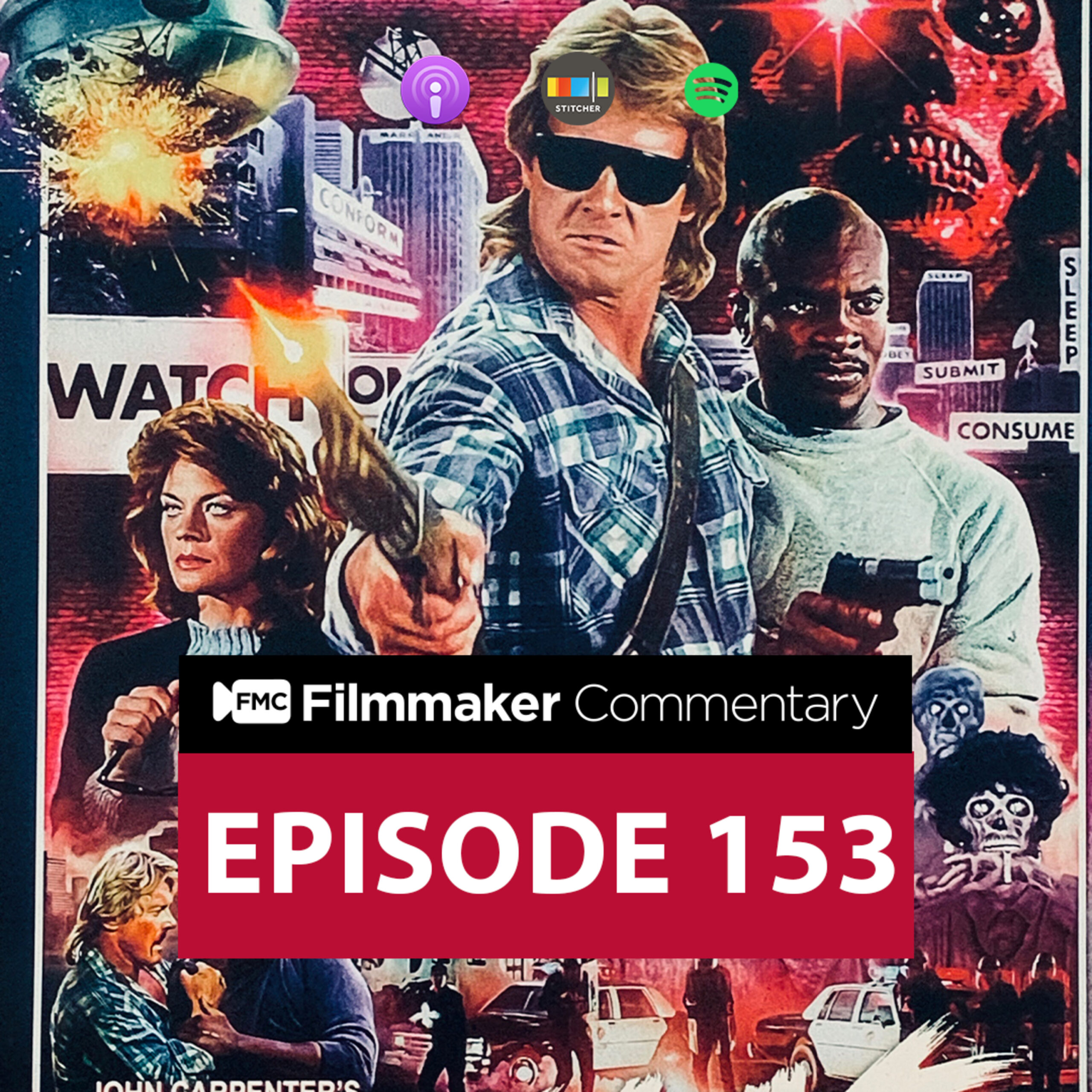
FMC 153: They Live Directed by John Carpenter

November 15, 2022
Listen on Apple Spotify YouTube
Listen to this episode
Your browser does not support the audio element.
Also on Apple Spotify YouTube

The latest Filmmaker Commentary episode, “FMC 153,” dives deep into John Carpenter’s 1988 sci-fi classic, “They Live,” starring wrestling icon Roddy Piper. Join Reginald Titus Jr. and Casey G. Smith as they dissect a film that, despite its cult status, offers a strikingly prescient commentary on media manipulation, consumer culture, and unseen power structures.

Initially, “They Live” made a splash, pulling in an impressive $13 million against a $4 million budget. It even held the number one spot at the box office for its first two weeks in November 1988. However, as revealed by actor Keith David in the film’s commentary, the movie mysteriously vanished from theaters after just four weeks, sparking playful speculation from the hosts that “they” (the film’s shadowy antagonists) might have taken it away. This episode explores the fascinating journey of a film that was ahead of its time, touching on the unique challenges of 1980s filmmaking and box office phenomena.

Reginald and Casey highlight the stellar casting, particularly Roddy Piper’s commanding performance. Piper, a celebrated pro-wrestling “heel” (villain) who famously main-evented the first WrestleMania, brought a raw, magnetic energy to the lead role. Director John Carpenter, a known wrestling fan, connected with Piper, leading to what many consider one of Piper’s strongest acting performances. The hosts also touch on Piper’s earlier, less successful foray into film and compare his authentic physicality to Mickey Rourke’s acclaimed role in “The Wrestler.”

Beyond its surface-level action, “They Live” serves as a powerful metaphor for societal control. The hosts discuss how the film’s core ideas – from subliminal messaging to unchecked authority – continue to resonate with contemporary issues like rampant consumerism and conspiracy theories. They explore how Carpenter skillfully uses practical effects and visual techniques, such as black-and-white visuals through the alien-revealing sunglasses and impressive matte paintings, to create a gritty, impactful experience that feels far more expensive than its budget suggests.

The discussion also touches on the distinct tones of Carpenter and Piper in the film’s commentary track, with Piper’s energetic delivery contrasting Carpenter’s more laid-back approach. Casey highlights the special features available on the Blu-ray, including interviews that shed light on the film’s production and deeper meanings. Meanwhile, Reginald shares his personal connection to “They Live” through its recurring appearance in online conspiracy discussions, further underscoring its lasting impact as a cultural touchstone. The episode wraps up by celebrating the film’s continued relevance and Carpenter’s genius in crafting a narrative that still provokes thought and discussion decades later. Join us on Filmmaker Commentary each week for more.

What We Cover

  • “They Live’s” surprisingly brief theatrical run and sudden disappearance from cinemas.
  • Director John Carpenter’s insightful commentary on society and the film’s enduring themes.
  • Roddy Piper’s compelling leading role and his rich background in professional wrestling.
  • The innovative use of practical effects and distinctive visual style throughout the film.
  • Behind-the-scenes stories from the film’s production and its commentary tracks.
  • The uncanny and continued relevance of the film’s messages in today’s world.

Key Moments

  • 1:50 – The hosts uncover “They Live’s” intriguing alternate title for its UK release.
  • 2:05 – Actor Keith David’s surprising revelation about the film’s abrupt removal from theaters.
  • 30:35 – A deep dive into the film’s powerful metaphorical resonance and its modern-day parallels.
  • 44:37 – An in-depth analysis of the iconic alley fight scene, exploring its brutality and symbolic weight.

Gear & Films Mentioned

  • They Live
  • Black Panther: Wakanda Forever
  • Fantasy Football
  • Little
  • Vice Versa
  • The Wrestler
  • Jaws
  • 48 Hours
  • Werewolf by Night
  • Director by Night (documentary)
  • Stir Crazy
  • Blazing Saddles
  • Is That Black Enough For You? (documentary)
  • Sweet Sweetback’s Baadasssss Song
  • Watermelon Man
  • The Spook Who Sat by the Door
  • Tropic Thunder
  • Won’t You Be My Neighbor (documentary)
  • Enola Holmes
  • Green Lantern: Beware My Might
  • The Thing
  • Beverly Hills Cop
  • Cobra
  • The Crow
  • Thelma & Louise
  • Plexiglass
  • Anamorphic lenses
  • Matt paintings

Listener Questions

  • Why did “They Live,” a film with a strong initial box office performance, suddenly vanish from theaters after only a few weeks?
  • How do “They Live’s” central themes of media manipulation and hidden power structures continue to resonate so powerfully in contemporary society?
  • What specific technical choices did John Carpenter make in “They Live” that showcase his directorial skill, particularly on a limited budget?
Full Transcript

Read the full transcript

Full Episode Transcript
This episode of Filmmaker Commentary John Carpenter's 1988 cult classic "They Live," discussing its unique box office trajectory, cast performances, thematic depth, and production insights, alongside a roundup of recent film and TV watches.

Opening Discussion and Box Office Analysis
Reginald Titus Jr.: Filmmaker Commentary, episode 153. Welcome to Filmmaker Commentary, where we cover movies with commentaries from directors who take the time to record them on Blu-ray and DVDs. We also give our detailed insights, so look out for spoilers. We discuss the latest in showbiz news along with movies and TV shows that we've been watching. So join Reginald Titus Jr., that's me, and KCG Smith, that's me, every week here on Filmmaker Commentary.
Reginald Titus Jr.: Welcome to another episode of Filmmaker Commentary. I'm Reginald Titus Jr. I'm joined with...
Casey G. Smith: KCG Smith. Welcome back, sir.
Reginald Titus Jr.: Good to be back, sir. And today we're talking about They Live, 1988, directed by John Carpenter, released in the fall. What did we have for our budget and box office on They Live?
Casey G. Smith: On a $4 million estimated budget, They Live raked in a whopping $13 million.
Reginald Titus Jr.: Oh. Okay, I'll take it. Um, was that just America or was that worldwide?
Casey G. Smith.: That was pretty much, that's pretty much America. I was looking at the box office and numerically, there's a kind of interesting phenomenon with this one where it literally only had about four weeks in at the box office. And yeah, then it just...
Reginald Titus Jr.: They took it away.
Casey G. Smith: That's, that's what it seems like. Like right, right as Thanksgiving hit and then it's just like nothing from, from there, even though it came in like number one at the box, it was like number one for like the first like two weeks.
Reginald Titus Jr.: Interesting.
Casey G. Smith: And then, they didn't live.
Reginald Titus Jr.: They, they dropped off.
Casey G. Smith: And that's it, it was just, yeah, worldwide, I mean that's it, that's $13 million.

Cast, Crew, and Initial Reactions
Reginald Titus Jr.: It's, um, yeah, I remember, you know, this is this was like a trivia, but like, he mentioned the release of it in London. Um, and it was a different name.
Casey G. Smith: That's right. He did mention that.
Reginald Titus Jr.: It was called Invasion of Los Angeles.
Casey G. Smith: Right.
Reginald Titus Jr.: So,
Casey G. Smith: It, you know, this is the 80s film, so, you know, you know, numbers get tricky back then.
Reginald Titus Jr.: That's true. But Keith, Keith David in the commentary, or actually in an interview with him that I watched in the special features, mentioned how man, this was, it came out and it was top, you know, for the first few weeks, he goes, and after that, you couldn't find it anywhere. And that's what made me go and look at the box office in IMDb and I looked and I'm like, oh, this is only showing on the on the charts for four weeks just in the month, like the month of November. Like, it came out on the...
Reginald Titus Jr.: That's crazy.
Casey G. Smith: November 4th, 1988, and then the last listing is November 25th through November 27th, week, that was week four of 1988, the Thanksgiving three three day weekend, whatever. And then there's nothing from there's nothing beyond that. Normally there's more and then a page, but that's it. Four weeks, one month.
Reginald Titus Jr.: That doesn't make sense.
Casey G. Smith: Done.
Reginald Titus Jr.: That doesn't make sense.
Casey G. Smith: Yeah, I think he, he or, um, oh, no, he said, he goes, I think, he goes, I think we must have pissed somebody off.
Reginald Titus Jr.: Them.
Casey G. Smith: Yeah, them.
Reginald Titus Jr.: They took it. Wow. This is good, that was that's kind of creepy. I didn't know that.
Casey G. Smith: Neither did I. The more you know.
Reginald Titus Jr.: Right. What are, uh, did were there any awards? I'm guessing probably not.
Casey G. Smith: Let's see. Uh, for this one, because of its, uh, brief time. All right, so it was nominated for four awards, but it didn't it didn't win any.
Reginald Titus Jr.: Okay. Oscars or? No.
Casey G. Smith: Let's see. It was nominated for, no, nothing in the Oscars.
Reginald Titus Jr.: They just looked the um, and next, um, the elite, the elite look over there. What film? I don't remember. Uh, did we get a vibe like the cinema at the time or did people just kind of ignore it, even though it was basically successful?
Casey G. Smith: Again, those first two weeks, it was hot. People saw it, it was hot. It didn't hurt that it had WWE wrestler Roddy Roddy Piper in the lead, because Piper was hot. You got to, you got to consider this the guy who main evented the first WrestleMania against Hulk Hogan and Mr. T.
Reginald Titus Jr.: Hey, good company.
Casey G. Smith: During the birth of MTV, Cyndi Lauper was in there. I mean that's that's all pretty big. So Piper's name was as hot as it had been. And even in WrestleMania 2, he he was up there. He actually boxed Mr. T, I think, in WrestleMania 2. And then he was involved in WrestleMania 3. And he was actually over, he was kind of getting at times over more than than Hogan. And so Vince would kind of try to bury him some, but John Carpenter's a big wrestling fan and they ended up making a connection at WrestleMania 2 or 3 and Piper walked away from the business for a while, because he had been wrestling for a long time already since the 70s and that's how he connected with John. And this was, I think, maybe at this time, maybe Piper's second film, I think.
Reginald Titus Jr.: Mmm.
Casey G. Smith: Because he had done he had done another a film based on wrestling that was trash. Oh, it was so bad. Yeah, it was it was it was a movie about wrestling and the choreography...
Reginald Titus Jr.: Oh, scripted, not documentary, or anything like that.
Casey G. Smith: Terrible. I remember watching it as a kid and I was like, oh, this is this is really bad, just too like, too exaggerated.
Reginald Titus Jr.: There was no stunt budget.
Casey G. Smith: And this is from a wrestling fan. I was like, oh, this is not this is this is not good.
Reginald Titus Jr.: And those guys have some of the best moves in the business. So like, for it to not translate is...
Casey G. Smith: Trying to, nothing like what Mickey Rourke did with The Wrestler. This was this was long long before then.
Reginald Titus Jr.: But yeah.
Casey G. Smith: They might be a good one to visit.
Reginald Titus Jr.: Oh, hey, I'd be I'd be down.
Casey G. Smith: Okay.
Reginald Titus Jr.: But nonetheless, yeah, it, uh, it was hot for all of two weeks. Too hot. It was too hot. Oh, good point. Good point. And then, yoink.
Casey G. Smith: Wow. They died.
Reginald Titus Jr.: Yeah, it's interesting how, you know, some things just disappear and no one talks about it.
Casey G. Smith: You know what's fascinating, like, it was there around enough to make its money back. And they're like, all right, shut it down. Shut it down. Pull it. Pull it. So not even not even a loss. That's that's fascinating.
Reginald Titus Jr.: Yeah, the 80s were interesting. You can get away with a lot back then.

Recent Watches and Media News
Reginald Titus Jr.: Um, all right, but before we talk further about them, no, They Live...
Casey G. Smith: And them too.
Reginald Titus Jr.: And those, and all of them. Uh, we'll talk about news, TV, and movies. Wow.
Casey G. Smith: All right, as we often here at Filmmaker Commentary, do, we like to talk about the box office. And of course, it's been a little bit of little bit droopy and dreary over the past couple of months as kind of October came to an end. Black Adam gave a little bit of a boost, but of course, everybody was waiting for the drop of Black Panther: Wakanda Forever. And according to Variety, Black Panther: Wakanda Forever rules with a $330 million global launch and a $180 million domestic debut.
Reginald Titus Jr.: Ooh, hello international.
Casey G. Smith: Hello. Well, hello even North America, because it says the sequel demolished the record for a November opening in North America, soaring past the previous high water mark of $158 million set by 2000, excuse me, set by 2013's The Hunger Games: Catching Fire. Globally, the superhero adventure netted a spectacular $330 million, again, with a $170 million dollar figure of that coming from 55 overseas markets. Its success has been a bitter sweet undercurrent, however, uh, that's because the filmmakers behind the sequel faced a shocking off-screen tragedy before production even commenced when Chadwick Boseman, the actor who had given 2018's Black Panther so much of its soul, died in 2020 because of cancer. He was only 43 years old.
Reginald Titus Jr.: Man, all right, RIP.
Casey G. Smith: Rest in power. Yes, indeed.
Reginald Titus Jr.: Um, wow, that's I like that. I like they came to the box office swinging.
Casey G. Smith: Oh, yeah. Oh, yeah. That's a lot of money.
Reginald Titus Jr.: And as we talk about movies watch, I actually went and saw Black Panther: Wakanda Forever this weekend. Don't worry, no spoilers here. But I was able to go actually to a friend's theater, one of my good buddies from college, shout out to Andy Remedys at The Cove Theater in Copperas Cove. If you're ever in that area, please go and check it out. It's a historical theater that he and his partner were able to revitalize and refurbish and bring it back, bring it to the community. And they've done a stellar job. I was able to go inside. Good sound, nice projection, comfy seats, and some some good libations and concessions. And so we were I was able to sit there with with my good buddy from college and some of my other buddies, we did a road trip and and and revisit Wakanda. And I'll say this about the film, it is wonderful. It's very, very well done. It is two hours and 45 minutes, and you you will feel that some. The the first opening part is a little slow, but they're building a lot. They're introducing a lot of new new things. They're introducing Namor or K'uk'ulkan, I think is how they they call him in the in the film and the the population of the the people that he leads, they don't call them, you know, Atlanteans or Atlantis, it's got a different name because they're they're tying in the Mayan culture. But, um, but yeah, you know, the the performances, Letitia Wright, Angela Bassett, yo, she's...
Reginald Titus Jr.: I think I saw something on the internet talking about potential supporting actress nomination.
Casey G. Smith: Hey, like I think I think that's having not seen too many of the other things that are out that are might be running. Like her her performance is legit. Even even Danai Gurira, like I I I'm shocked like not more is being said by her. She has one scene that is heartbreaking and moving. There's a lot there's a decent amount of heartbreak in the film. Obviously, we're we're celebrating Chadwick, but this film...
Reginald Titus Jr.: Already somber and then just to add some more.
Casey G. Smith: Yeah, it but it's powerful, man. But again, it earns it earns everything. Nothing feels rushed or cheated. This film takes its time and all that pacing and the build-up, I feel it all pays off in the end. If you have small children, this might be a little tougher for them because of the the more complexity and heaviness of the subject matter. Uh, my one of my friends had two of his young ones with him. One was in one was a first grader, one's a fourth grader. The first grader, you know, struggled understandably so. The fourth grader did did pretty well as a whole. Got a little antsy towards the end, but that's kind of expected. But nonetheless, if you enjoyed the first Black Panther and you or just an MCU fan, definitely you have to check out Wakanda Forever, or if you just enjoy Black excellence.
Reginald Titus Jr.: Oh, hello. Check it out. Yeah, I was meaning to check it out. Had new emergency this past week, but, um, going to take, uh, the two oldest sons to go watch the film.
Casey G. Smith: All right. Yeah, I'm going to watch a Matinee.
Reginald Titus Jr.: Hey, I expected it to be crazy this weekend, you know, with, you know, like it was when we went, uh, last time. So I was like, yeah, we went to an afternoon showing, so it wasn't too crazy. Yeah, it was a smaller theater, but it was it was a good experience . What else have you been watching, Reginald?
Casey G. Smith: So the only thing that I had a chance to watch was it's a trailer, and it's called Final, no, it's called, uh, Fantasy Football by Marsai Martin. Marsai Martin. She's 18 years old. She's known for her role in Black-ish, you know, basically grew up in front of everybody's eyes. But she's also like the youngest, um, person to produce a film, a major studio film.
Reginald Titus Jr.: She the the youngest daughter on Black-ish?
Casey G. Smith: Yeah. She produced Little with Issa Rae, the movie Little, when it came out.
Reginald Titus Jr.: I didn't I didn't see Little. So do you know the premise of it?
Casey G. Smith: I didn't know. It's like, uh, the movie Vice Versa or do you remember Vice Versa?
Reginald Titus Jr.: Oh, you know what? I'm tripping. I've I've seen that. I've seen a lot of movies. I I I forgot it. But yeah, I did see that. That wasn't it was before I started watching Black-ish, so I didn't really know who she was. Huh. That was a big deal because that was like her first studio film that she produced. And so her being so young and like just all just just killing it. And she's from Plano. Like she was born in Plano, Texas.
Casey G. Smith: Yeah.
Reginald Titus Jr.: She comes across as very smart on Black-ish. Like you can tell she's got those gears turning.
Casey G. Smith: She's got it. Oh, yeah.
Reginald Titus Jr.: Um, it's it's interesting like some of the people that, uh, people of color that've come from Plano that are like making it happen, specifically, uh, some of the African-American women. Because you got Candice who was in Flash, you know, from Plano, Texas, as well. Um, yeah, it's crazy how, but any, so she has she helped produce her LeBron James, they produce it's a family-friendly film called Fantasy Football with Amaury Hardwick, who's basically playing, uh, aging athlete, um, who's on his way out for retirement. And Marsai's character is, um, a young lady who is great at playing like football games. And so something happens, uh, something magical happens and she can now control her dad on the football game. And now his stats are going up and he's starting to get praise and stuff like that.
Casey G. Smith: Oh.
Reginald Titus Jr.: That sounds pretty awesome. I'm going to have to check out that trailer.
Casey G. Smith: Fantasy Football.
Reginald Titus Jr.: Fantasy Football. I was like, yeah, it's I'm like, Marsai is she's it.
Casey G. Smith: Smart title.
Reginald Titus Jr.: Wonderful. Absolutely wonderful. So, what I've been watching, I've been taking in quite a bit, ladies and gentlemen, so get ready for a moment. I'm going to share some of these wonderful things.
Casey G. Smith: Okay.
Reginald Titus Jr.: First, on Netflix, I watched a a short series of visual essays called Voir. V O I R.
Casey G. Smith: Oh, you text me about that. I have yet to be able to watch it. I'm probably going to do that tomorrow.
Reginald Titus Jr.: Bro, this, it it felt like going to film school, in the best way possible. These are fairly short visual essays. Like the first one is maybe like 13 minutes. The next one's like 13 minutes. They're they're pretty short. The longest one runs like 30 minutes. But it was I think five episodes in total, and you just burn through them. One deals with Jaws. And the person who is, you know, all these people who wrote these essays are narrating them. And then it's it's it's been then being visually told. And so you just you're watching it and they're talking about just the impact that Jaws had on this one young lady and her sister in their early childhood in the 70s, right? Jaws is considered by a lot as the first blockbuster.
Casey G. Smith: Ah.
Reginald Titus Jr.: Wow.
Casey G. Smith: Really?
Reginald Titus Jr.: Yeah.
Casey G. Smith: Okay.
Reginald Titus Jr.: And then a couple of years later you get Star Wars. But Jaws yeah Jaws was She she ended up seeing Jaws like maybe 40 times in the theater. Yeah, her and her sister just constantly kept kept going like their mom would would take them. And they didn't they didn't they they didn't have a lot of money. They were living in a poorer a poorer part of uh a less fortunate part of uh California. But their mom would drive them to your wherever the theater was and they just watched it again and again and again. I think they even recorded some of the highlight and would listen to it. But they but it's eventually led to this young lady going into into film, into into producing.
Casey G. Smith: Oh.
Reginald Titus Jr.: Skept. That's what it's really about.
Casey G. Smith: Okay, I can see that.
Reginald Titus Jr.: They also then covered, what else? They they covered, um, one episode covers 48 Hours in a wonderful way. Again, I'm not going to give give anything away, but it's called Voir. It's on Netflix. Short visual essays, very well done. I cannot recommend it enough. Dude, I think you I think you're absolutely going to love it, Reginald. Yep, I'm I'm tuning in.
Casey G. Smith: Oh.
Reginald Titus Jr.: All right. Next up, I watched Stir Crazy.
Casey G. Smith: Stir Crazy. On what platform?
Reginald Titus Jr.: Hulu.
Casey G. Smith: Stir Crazy. Episodes, was it just a movie?
Reginald Titus Jr.: This is a movie from the either early 80s or late probably early 80s, but it has Gene Hackman, not Gene Hackman. Gene Wilder of Willy Wonka fame and Blazing Saddles fame. Young Frankenstein, Gene Wilder and Richard Pryor.
Casey G. Smith: Oh.
Reginald Titus Jr.: Yes.
Casey G. Smith: How did you get here? Like how did you get to this movie?
Reginald Titus Jr.: I've been on Hulu a lot and it just it popped I think I've I've revisited Blazing Saddles I think on on Hulu, because Blazing Saddles is So the algorithm got you.
Casey G. Smith: Yeah, the algorithm.
Reginald Titus Jr.: Okay.
Casey G. Smith: And it popped up and I'm like, you know what? I've I've I've I've heard of Stir Crazy. I've seen clips. I know it's him and Richard Pryor both end up in jail. I like to watch the trailers initially. I was like, okay. Let me let me check this out. And so I watched Stir Crazy. It was it was pretty funny. It was it was yeah, it was it was a pretty funny film, but I mean, you know, the the those two teamed up, it it it tends to work pretty well.
Reginald Titus Jr.: Okay.
Casey G. Smith: Wow.
Reginald Titus Jr.: So, check that out. And what was interesting in in watching it, there are there are two actors that showed up in the film, Craig T. Nelson and Mary Mary Beth or Joe Joe Joe Beth something. But they're are both they both play the parents in Poltergeist.
Casey G. Smith: Oh, there you go. You just recently watched that one.
Reginald Titus Jr.: Yeah, I was like, hey, oh, hey, I know I know these two. Yeah. It's interesting like when you start watching like the older films and you start seeing, oh, they're in this film. They start start connecting.
Casey G. Smith: And now I just did.
Reginald Titus Jr.: Connect connecting those dots. You realize like some of these people, I mean, they were old in, you know, and you're going back and watching like, oh, a lot of people have passed away.
Casey G. Smith: Oh, yeah.
Reginald Titus Jr.: But Stir Crazy was was pretty fun on Netflix. Then I I watched another, uh, it was a documentary on Disney Plus. It was called Director by Night.
Casey G. Smith: Ooh, what is this about?
Reginald Titus Jr.: This is about the making of Werewolf by Night with the director Michael Giacchino.
Casey G. Smith: Um, Werewolf by Night. That was the one you were telling me about in Black and White.
Reginald Titus Jr.: I looked at the trailer of that and I was going to watch that, um, especially during like the Halloween season. I was like, this reminds me of, uh, uh, uh, uh, Death Proof, not Death Proof, um, Planet Terror with Robert Rodriguez and the style and the kind of Grindhouse style on how they were shooting. I was like, I wonder if they're trying to go for that. I said, I got to watch this, though, after seeing the trailer.
Casey G. Smith: It's very stylistic. And and yeah, so yeah, definitely recommend it. It's it's unique amongst any other Disney, any other MCU things that have been done. This one is by far the most unique. So this film is about the making of Werewolf by Night. And Michael Giacchino's brother is the documentarian behind it. And the film shows how when Michael and his brother were kids, they used to make films all the time. So you see all this footage of these like them them making their own like version of Star Wars and making the effects by actually cutting cutting the film, like not like separating, but like making marks in the films, yeah, scratches to make it look like lasers were coming out and, uh, so just that that whole build-up and then being on set of Michael because this is the first feature film that he's directed.
Reginald Titus Jr.: Okay.
Casey G. Smith: And heck of a job for his first go around. But it's yeah, the journey of of his brother capturing this thing. But yeah, Director by Night on Disney Plus.
Reginald Titus Jr.: I like it.
Casey G. Smith: It's pretty pretty enjoyable. Then...
Reginald Titus Jr.: Uh oh.
Casey G. Smith: I watched also on Netflix, the the also speaking of debuts, the debut of one Elvis Bishop in his first first major film is that Black enough for you?
Reginald Titus Jr.: Okay. Oh, that's right. We talked about this.
Casey G. Smith: Is that Black enough for you? That that dropped on Netflix on Friday. So I was like, that's actually perfect timing.
Reginald Titus Jr.: Yes. This now.
Casey G. Smith: It's perfect timing. Go ahead.
Reginald Titus Jr.: So much that we have talked about in in our time of talking about films, things that you've mentioned, things that I've mentioned, they pop up on this journey through Black cinema. It it it it connected some different dots of different stuff. I'm like, whoa. I mean, everything from Amaury Mario Van Peebles' dad, Melvin Van Peebles and Sweet Sweetback. Watermelon Man. Yeah, they they talk about all that. Even, um, even the film that one day passed, Robert Downey Jr.'s dad did before that then place. The corporate guy. Yeah. He started taking over the corporation. But even that, that that ties into, um, Coon at the Door, was that the name of the of the film? The Spook, the Spook that Sat by the Door. Based on the book. Like they make mention of that. I'm like, man, we were just talking about that with the Atlanta episode. But then how that that kind of plays plays into that. And then they mention how then Robert Downey Jr.'s character that he played, Tropic Thunder. Tropic Thunder. But it interesting enough, Robert Downey Jr.'s dad actually used voiced his voice over the guy in that role, which was even more in. I'm like, well, he's playing anyway, so, but yeah, it's...
Casey G. Smith: Oh, yeah, the Spook. Yeah, the Spook that Sat by the Door. Oh, yeah, the Spook. That's about the door.
Reginald Titus Jr.: Yeah.
Casey G. Smith: Yeah.
Reginald Titus Jr.: Yeah.
Casey G. Smith: Yeah.
Reginald Titus Jr.: Robert's the only one that can kind of get away with that. Yeah, for whatever reason. Yeah, because Tropic Thunder, I I can't, man, it's a mess. It's it's it's hilarious. Yeah, it's hilarious. That's the anyway, but it is excellent. It is covering so much in in Black cinema, some stuff some stuff I'd never heard of before. I was like, write down some names and some things. But yes, is that Black Enough for You on Netflix. Shout out to Elvis Bishop, fantastic job. If you are in the film, if you're a cinephile, check it out. It is highly educational, very well done. And of course, Elvis Bishop is narrating the whole thing and he's got those his smooth tone, so, pleasure to listen to as well.
Casey G. Smith: Yeah.
Reginald Titus Jr.: Elvis is it Elvis Mitchell?
Casey G. Smith: Mitchell. I said Elvis Bishop.
Reginald Titus Jr.: Yeah, that's what I said.
Casey G. Smith: Elvis Bishop, no, Mitchell.
Reginald Titus Jr.: Okay. Yeah, he he's great.
Casey G. Smith: Yeah, definitely worth checking out. Uh, I also watched on Netflix, Enola Holmes.
Reginald Titus Jr.: Who? Got excited. I've been seeing the sequel pop up. So we have, of course, Miss Millie Bobby Brown of, um, what's it called? Enola Holmes.
Casey G. Smith: E N O L A, Enola.
Reginald Titus Jr.: Enola Holmes. So Millie Bobby Brown of, uh, fame of being on, um, what's our show on Netflix? With the kids?
Casey G. Smith: Oh, uh, Stranger Things.
Reginald Titus Jr.: I was it wouldn't come to me. I didn't I didn't remember her name. I just know her as Eleven.
Casey G. Smith: Of Stranger Things fame. Yes, so Eleven from from Stranger Things. So she had done a film a couple years back called Enola Holmes, where she's basically is the the younger sister of Sherlock Holmes, who is played by Henry Cavill.
Reginald Titus Jr.: Ah.
Casey G. Smith: And so I watched that film. Very well done. Nice little family film. Very well done. But because the sequel came out, I'm like, okay, if this garnered a sequel, the first one must be worthwhile. So let me just check it out. Yeah, very nice, very well done. And so I'll probably watch the sequel sometime this week.
Reginald Titus Jr.: Sherlock. Enola Holmes. Okay.
Casey G. Smith: Enola Holmes. But yeah, nice little family film and uh, yeah, very well done. Also, uh, I watched on HBO Max, this is I think it's the last last one. Yeah, Green Lantern: Beware My Might.
Reginald Titus Jr.: What is this?
Casey G. Smith: Animated animated film.
Reginald Titus Jr.: Okay. Because I know red flag comes up anytime Green Lantern is mentioned for me. What are we doing here?
Casey G. Smith: Understandable. But this is this is basically a a Red Con story of one John Stewart Green Lantern. It was just John Stewart, but this is the origin story for him. So, nice little origin story. Black Superhero.
Reginald Titus Jr.: Yeah, let's go.
Casey G. Smith: So, uh, yeah, real well done, uh, nice little contained tale. And also one thing I watched before that I didn't mention was the the 20, maybe 2020 documentary, Won't You Be My Neighbor about Mr. Rogers.
Reginald Titus Jr.: Yes. I've been meaning to watch that. It's kind of interesting, remember we were talking about like how a documentary come out and then another scripted version of it. So you got the Tom Hanks version and then you got that one closely in proximity as far as when they were released. So, is that that one's on Netflix, as well?
Casey G. Smith: That was on I think Netflix or either Netflix or HBO I think maybe HBO Max might be where I watch that one. But either Netflix or HBO Max. But excellent. Yeah. I heard a lot of good things about it.
Reginald Titus Jr.: Did you grow up watching Mr. Rogers Neighborhood?
Casey G. Smith: Yeah, it was I mean, it was part of the Sesame Street bundle. The Block. Yeah, Sesame Street Block. Yeah. It's it's very interesting and it's well done and it gave me a greater appreciation for the topics that Fred Rogers specifically tried to cover on the show. Like, I mean, he he went deep dealing with grief. I'm like, wow, but just it was about helping kids process these things. Yeah, he was a perfect guy for that. Yeah. But yeah, Won't You Be My Neighbor? Excellent, excellent.
Reginald Titus Jr.: Yeah. Yeah.
Casey G. Smith: What was the guy that would do the the paintings with the afro?
Reginald Titus Jr.: Bob Vila.
Casey G. Smith: Was it Bob Vila?
Reginald Titus Jr.: I mean, Bob Ross. Bob Ross.
Casey G. Smith: Uh. Yeah, he probably Bob Vila was probably selling some paint things. Uh, but yeah, Bob Ross. That's what I think about. So Bob Ross, uh, when I, you know, Mr. Rogers. Sesame Street, all that's like bundled together. Random trivia. Uh, like there's conspiracy theories about, uh, the Bob Ross paintings that, um, some of the paintings that he has, they have found like bodies, in real life. And so the conspiracy theory is that, you know, that he knows where these bodies are and he paints these pictures as kind of like a totem or a token to show the public.
Reginald Titus Jr.: Mr. Rogers.
Casey G. Smith: So is it some kind of implication that that Bob Ross is a killer?
Reginald Titus Jr.: Don't know. I'm just saying, it's just just conspiracy theory. What's the word on the street?
Casey G. Smith: Oh, yes.
Reginald Titus Jr.: Yeah. I'm just but but in one of those pictures, I can't think of the name of the actual, uh, painting. Um, there were some bodies found, you know, these girls. And so they're linking those to some of his paintings.
Casey G. Smith: People die all the time in all kinds of places.
Reginald Titus Jr.: In the woods, right?
Casey G. Smith: Well, just look at the white for the clouds. I got some white fluffy clouds here. A little extra compost down here. I'm just going to scoop right over there.
Reginald Titus Jr.: Oh, there's some happy skies. Some things need to stay buried, kids. Until next time. Or not. Oh, yeah, I just I don't want to disparage Bob Ross or anything. It's just, hey, it's out there.
Casey G. Smith: But it's it's interesting because in the Won't You Be My Neighbor documentary, they they actually addressed, because I remember in high school, people started, you know, talking things like, oh, you know, did you hear that Mr. Mr. Rogers was in Vietnam and he's got the the highest sniper kill count in in history? I'm like, no, I hadn't heard that. But the more I was, I was like, really? Really? You know, because you didn't know. I mean, you only know the the friendly guy on front of the screen, you know, you don't know if this guy has a past.
Reginald Titus Jr.: Yeah.
Casey G. Smith: But this was this was pre-Google. So I was like, oh, that's interesting. But I remember those things floating around for a while. But they actually addressed that. It's like, no, this guy literally was on the verge of going to seminary. Went for seminary for one year, but knew that his calling was in television.
Reginald Titus Jr.: Interesting.
Casey G. Smith: And that's where he was like, all that time. So no, dude, dude was not in Nam. He even had episodes that kind of dealt with with Nam and and death and even like war.
Reginald Titus Jr.: Wow. Okay. Yeah, man. God, you got. You are. It's y'all. But so yeah, so that's that's what I've been watching.
Casey G. Smith: Da, that's a lot, brother.
Reginald Titus Jr.: Also, diversity in that whole collection of movies and TV.
Casey G. Smith: Still watching Black Love, Peripheral, Atlanta. I got I got to catch up with all that. Wrapped on Black-ish, and so now I'm watching more Grown-ish.
Reginald Titus Jr.: Okay. Uh, today's show was sponsored by...
Casey G. Smith: Natchez, a movie by Groud and Matter Films, available to stream on All Black TV, as well as for free on Tubi. Please check it out and leave a review. Now, let's jump back into the show.
Reginald Titus Jr.: Thank you for tuning in to Filmmaker Commentary. We're talking about They Live, directed by John Carpenter, released in 1988 in the fall. Now, let's jump into the synopsis.

"They Live" Deep Dive: Themes, Style, and Production
Reginald Titus Jr.: Aliens are systematically gaining control of the Earth by masquerading as humans and lulling the public into submission. Humanity's last chance lies with a lone drifter who stumbles upon a harrowing discovery: a unique pair of sunglasses that reveals the terrifying and deadly truth. They live. And if this is your first time listening to Filmmaker Commentary, please know that there will be spoilers. You've been forewarned. Man, how did you watch this film? And have you watched it before?
Casey G. Smith: I had not watched They Live before. I just so I'd seen it referenced dozens, if not hundreds of times throughout history. Knew it was by John Carpenter, knew it came out in the in the 80s, and we were doing our John Carpenter run. We hadn't we hadn't checked this one out. But I I knew Roddy Piper was in it. I knew there was an epic fight scene within it as well. So, this is my first time watching it on Blu-ray. It it all looks good and I I I was impressed by it. I did not I didn't know anything about what the storyline would be.
Reginald Titus Jr.: Oh. Knew nothing.
Casey G. Smith: Yes.
Reginald Titus Jr.: And I was very, uh, very surprised and and impressed with it and it's maybe some of its relevancy today. How about you?
Casey G. Smith: Uh, um, I didn't I haven't watched I didn't realize it until I watched the film that I haven't watched the film all the way through. Like, I probably seen that of, I don't know, how long is this thing running? An hour and a half maybe? Two hours?
Reginald Titus Jr.: No, hour and a half.
Casey G. Smith: Probably an hour and a half. Yeah, it this one felt great. You know, pacing, that's what I'm talking about. I don't want to hang around here too long. Get in, get out. Yes. Um, yeah, that's perfectly paced. I think, um, I've probably watched about an hour of the film, uh, in in pieces, because I was, um, introduced to this film online like doing probably like 9/11 research, like some of like conspiracy stuff. And this film would always be referenced for like conspiracy things, because it's like a metaphor. And so, this stuff would all so like the long fight and like what's that, you know, representing, why is this fight going so long? Um, then also what is the glasses, what does that represent in real life? Like, what's causing you to be asleep, you know, all that stuff. And so, I probably watched 45 to an hour minutes to an hour just on like YouTube research over the years. Uh-huh, but this was my first time actually watching it all the way through because there's scenes I haven't seen before.
Reginald Titus Jr.: Get in, get out.
Casey G. Smith: It's a full movie. Oh, yeah, right. Not just some random like section that somebody's using as their talking point. Uh-huh. Full contact. Yes. Yeah. So I was able to, um, I purchased this at, uh, at Movie Trading Company, you know, the 4K Blu-ray. They had a Blu-ray, but they they sold it or they couldn't find it. So I went on about the 4K thing.
Reginald Titus Jr.: Oh, well.
Casey G. Smith: Uh, okay.
Reginald Titus Jr.: Um, yeah. What did you like or not like about the film since you haven't seen it before?
Casey G. Smith: I liked again, how it felt relevant and just the the messaging behind it. I was like, oh, this is this is deeper than I thought it would be. I thought it was just going to be a a alien movie knock down drag out. I wasn't expecting, you know, again, rest rest his soul Roddy Piper. I wasn't expecting too much like out of it. I'm like, okay, this will be, you know, just a little like sci-fi thing, but it it holds deeper meaning. So I was impressed by that. I was I was impressed by Piper's performance as well. He he struck the right note and, you know, Keith David is always good. He's he's always solid in what he does. And, um, yeah, I enjoyed it. It's like you said, I enjoyed the pacing. It was nice and quick. I didn't really have any any dislikes, even though the film is older. I it holds up it holds up fine.
Reginald Titus Jr.: Wow.
Casey G. Smith: Same, man. I like, uh, like kind of how it's true, you know, the metaphor, and especially when you're doing like a lot of practical, you know, effects, um, kind of last a little bit longer and feels a little bit more classic and you can still be entertained by it. But I like yeah, I kind of like how it's kind of true, you know, even Roddy Piper, he talks about it in the commentary just like, this is real, you're ahead of your time. This is real life. It's like, mm. Um, so, yeah, I do like how it relates to, you know, contemporary times, you know, with, you know, there was a big thing about like 5G network stuff and people kind of having a big that was like during the pandemic, everybody was kind of having an uproar and, you know, everybody had time to research things during the pandemic and look up things, look into instead of just going to work, blindly going to work, you know, making our dollars. And you know, people start kind of questioning things. Take a look around. Take a look around. During the pandemic, that was that was an interesting time. Uh, um, um, what else? What else I like? Man, what's her name? Is it Meg Foster, the actress?
Reginald Titus Jr.: Seriously?
Casey G. Smith: Her name is Yeah, Meg Foster.
Reginald Titus Jr.: Her eyes, dude, they're like frightening and beautiful and frightening. She there they're they're they're piercing and they pull you into the same time.
Casey G. Smith: It's scary.
Reginald Titus Jr.: Like you you you almost you you know when you've seen her. You're like, oh, that actress. Because she she I know she played Evil-Lyn in Masters of the Universe back in the day. But whenever she shows up, you're like, oh, that's her. Those those eyes. You don't have to do anything to them. They just they seem to be there. Yeah, I like, oh, man, you got to couple those up. Uh, but she feels like a villain. Like when you see it, I was like, she just has such a unique look, uh, that is like, ah, I don't know what to think about this lady. It's hard to feel comfortable. Yeah, because she has those eyes and then, um, what's our guy from Goodfellas? He has like those silver eyes. Ray Ray Liotta, is that his name? Liotta, Ray Liotta. Goodfellas. Yeah, Ray Liotta, the main character. Yeah, Ray Liotta. He had those silver eyes, you know, they're like, ooh, I don't know if he's a villain or if he's a good guy, especially if they can make their eyes pop and like, man, I feel like Christopher Walken has that kind of vibe too. There's something in his eyes, it's like, I never I never quite trust you as a good guy. Um, what did you think, uh, oh, one thing I didn't like. I didn't like that they just had to take the homie out. They took the brother out at the very last...
Casey G. Smith: Oh.
Reginald Titus Jr.: That's that's a good point.
Casey G. Smith: But I'm like, well, yeah, no, you're right. Oh, my God. I was like, brother didn't make it.
Reginald Titus Jr.: Now it's time to say goodbye to my one negro friend.
Casey G. Smith: But everybody dies, right? So.
Reginald Titus Jr.: Yeah, it's it's on on an invasion kind of scale, like, okay, and then these these guys had just two guys going in, I'm like, it didn't didn't didn't sting as bad. I'm like, all right, because since both died, you know, spoiler alert. Nobody survived. Neither of them survived. It was a suicide mission. So I'm like, all right, I'm kind of okay with that.
Casey G. Smith: Okay. We'll take that comment.
Reginald Titus Jr.: We'll take that. All right. What do you think about the commentary with, uh, with John Carpenter and Roddy?
Casey G. Smith: You know, again, for having the director and actor there and they hadn't seen each other in about 12 years, I think. Little bit of catching up, but it wasn't it wasn't too much of that. But still . Yes, still . I felt I felt it was okay. I still would have wanted a little bit more, some maybe some technical, but I guess the film is not crazy. They they talked about how they did what they did. So I don't I don't really know what else I could have asked for.
Reginald Titus Jr.: Yeah, that's fine.
Casey G. Smith: I, um, I feel like they're hiding something. Like, it's, um, like, for example, like what you were saying about the budget and like how it was a successful film and it just like disappeared. And, uh, I, yeah, there's more to talk about there, but even Roddy, he was kind of like, yeah, man, this is about real life. And he's kind of like, you know, it seems like John was like, yeah. Well, no, but he was talking about like his life, because I've I've I've watched a documentary series on A&E, where they did a whole thing on Roddy Piper and I learned more about his history and he he's mentioning this stuff in this commentary about how he was homeless. Like he was homeless and and kind of abused for a while and eventually, of course, got into wrestling. But and he kept he kept a book. He would write down his like phrases he wanted to use on TV and this this and that. And that's where that, you know, famous line we'll mention later came up. Yeah, specifically, he was talking about John Carpenter. He said, man, you're ahead of your time, because right now, this stuff is true. Specifically that line. Um, uh, I forgot what I was going at going with there. Brain freeze. Oh, commentary. Um, yeah, it was it was like kind of like an entertaining commentary because Roddy, his voice is entertaining. Like he's he's like he's hyped up on something. Like that's what it feels like listening to him. And John Carpenter's more laid back like, yeah, you know, you know, just chilling.
Reginald Titus Jr.: Yeah. Yeah.
Casey G. Smith: Piper is one of the best people on the in in the history of wrestling. He is one of the best all time. Absolutely all time because his again, the fact that he would take time and write down stuff he wanted to say and use it at different times where he he he's one of the best heels, which means like a bad guy, in the business. Like he could go to whenever they would put him in a territory, he would always be the heel. And he would get fans so pissed because he would come out, he would beat up their bad guy and or he would just talk so much trash about them, about whatever city he was in. People, he he could get people to hate him. He was excellent at it. So, yeah, Roddy is he's a sharp sharp man. So, yeah, so his commentary it it it was entertaining in that sense. Um, but I would have like to have the have just a director's commentary with just John Carpenter kind of talking about some more technical things and then kind of some of the nuances because there is a lot under the surface, uh, with this film. Uh, a lot of people have used in their research, you know, in discovering things that are like more behind the scenes, governmental things and, um, they used this film quite a bit in commentaries, um, for that. So, I would just like to like know a little bit about that.
Reginald Titus Jr.: Yes, that's great.
Casey G. Smith: I think if you watch some of the additional supplemental materials on the uh, on your copy, you'll you'll get a little bit more with there's an interview with John Carpenter. Actually, I'll I'll read off some of the the features, because this is got quite a few features. Of course, Shout Factory does a pretty good job of that with these 4K releases. So, we got the audio commentary, which we've been discussing. You have Independent Thoughts, an interview with John Carpenter. You have Man versus Aliens, an interview with Keith David. You have Woman of Mystery, an interview with actress Meg Foster. You have Watch, Look, Listen: The Sights and Sounds of They Live, a look at the visual style, stunts, and music with director of photography Gary B. Kibbe and stunt coordinator Jeff Imada and co-composer Alan Howarth, who also helped compose on, um, Escape from New York. You also have, uh, you have the original making of They Live. You have the actual trailers, TV spots, and a stills gallery.
Reginald Titus Jr.: Ah, yes.
Casey G. Smith: Boom. So, plenty of plenty of content on the on the copy.
Reginald Titus Jr.: Watch that still gallery.
Casey G. Smith: I don't I don't know why they even have galleries.
Reginald Titus Jr.: I don't know. I I I I only like play through because it's usually not too long, but just to see some sometimes they not only show the actors, but they show some of the people behind the scenes. It's kind of interesting. I, yeah, I kind of every now and then.
Casey G. Smith: Every now and again.
Reginald Titus Jr.: Um, yeah, I did watch one of the interviews from the special features, the one with John Carpenter. That one was good, got a lot out of that. So, probably yeah, recommend that for the filmmakers that are listening to us to check that part out.
Casey G. Smith: The Sights and Sounds one is worth checking out as well because they dive deeper into how they set up a couple of the stunts and even how they did the the the makeup and the people who, um, I mean it's almost just one guy like the stunt coordinator, Mr. Imada. He plays most of the aliens in the film. Men and women. Because he's frame was small, small enough, they they just put it on him and then you know, and yeah, so he plays quite a few of them. Yeah, yeah, I know Papa was talking about him in the commentary. Um, how do you feel like the tone was reached in this film? What tone? How do you think they were, what kind of tone were they striking in this film, in your opinion?
Reginald Titus Jr.: Yeah.
Casey G. Smith: I think it's one of kind of loneliness and isolation. Little bit of paranoia. And of course, it's, you know, a science fiction and and and action based in, but it kind of ramps up to that. But it feels very kind of isolated and separated when you first get introduced to Roddy's character as as John Nada. You know, Nada in Spanish means like like nothing, you know, like like you know, almost like a nobody. But, uh, it then just kind of builds up, but then all of a sudden, you know, there's just this paranoia. You know, something is wrong. And you you're trying to figure out, okay, well, who who is the who's the bad guy initially when you see him kind of seen what what's what's happening in, you know, in the church with these people. Yeah, and you think that they're shady. And you're like, oh, no, they're they're the resistance. Welcome to Revelations, everyone. Yes, sir. How about you? What do you think about the the the tone?
Reginald Titus Jr.: Mmm.
Casey G. Smith: The the tone, yeah, sci-fi. Um, starting out, you know, the guy coming, the drifter from out of town, you know, just, um, yeah, I would say the isolation because you see him, especially with those anamorphic lenses and like how big the city the city is, and he's just this lonely guy in this big city just kind of like just moping around. You see that he's not able to get any kind of work. So, you know, we're kind of rooting for him because like, okay, he's trying to make an honest living and you kind of see how like, uh, the society is resisting him in a way. And so like, what do you do, you know, you know, you you're you can't find a way to make some decent living, so you're this guy's homeless, basically, you know, he's homeless, trying to find his way around. But I know he had a ring on, so he's, you know, he's a married guy. But we don't find that much out about that whole situation. We really don't find out much at all. Yeah, about about his past. But even at one point he says, you know, I have my own tools. Like, man, this guy's trying to just trying to get a break, like, able body, ready to ready to work, but. So, I feel like it's like kind of like a thesis on like just the everyday working man, you know, trying to trying to fight capitalism or trying to, you know, get a piece of the pie of the American dream, but that dream doesn't seem to be, uh, uh, manifesting. Uh, so yeah, that's what I feel about that tone. It's kind of somber in a way, and kind of a way to talk about politics of the time, you know. Yeah, Reaganomics. Yeah, man. Or Trickle, is that no Trickle Down economics. Interesting times. Yes, sir. I remember JZ was talking about, uh, Reaganomics. He was, what was he saying? He was saying the, we made a lot of money in the during the Reagan Reagan administration. Dang it. I forgot the line. Um, he was talking about how they were bringing in drugs. Like Reagan and that whole they brought in the the drugs, and, you know, JZ and his folks used that those drugs to make money. Then he says, we were in concert. Ah. Huh. He was he was it was kind of a clever line. I can't remember how. But anyhow, music by John Carpenter. I remember that one. What film was that when he was like in a music video? It was like his music. Big Trouble in Little China. Yeah, that music video with John Carpenter. You never want to see the music video with the director in the music video starring himself. Why? Yeah, that's usually doesn't work out. Yeah, but you got to give it a shot. I mean, hey, you know, you out there doing things. You only you only live once. That's true. Yolo. Uh, but yeah, he's doing this John Carpenter music and, you know, it's very distinct style. A lot of synthesizers. Yeah. But that's that's also with his cohort, Alan Howarth, who, uh, when he worked with John, Alan got all that stuff ready. And John says, when he when he does music, it's very much like improv. Goes in, he kind of feels it, he's then making the music to the scene. So, when when we first see John Nada coming off the train, like, literally, John is composing to the footsteps that John is taking as he's walking forward and then kind of developed this this blues vibe that we kind of hear, this blues theme that we hear throughout the film. For sure. Yeah. So. Yeah, yeah, it's, uh, I I like that he does that. Um, Melvin Van Peebles did his own music as well, and, uh, Robert Rodriguez does his own music. Um, yeah, it's cool to hear the different styles. And then and then the more, um, fluent they are in their their instruments and things like that, it, uh, you can you can tell, you know, when it's basic, you know, it's a few stabs here and there. Couple chords. Yeah. Or, you know, Robert Rodriguez, you know, playing with his guitar, I mean, he he gets down, man. Um, style. What kind of style did you see John Carpenter showing us in this film?

Filmmaker Insights and Closing
Reginald Titus Jr.: Yeah. Yeah.
Casey G. Smith: So again, you mentioned before, get it being anamorphic. Yeah. And we could see it. It does make for some some beautiful shots within the film. Uh, obviously we get some good camera movement when the especially the action ramps up more, some some some some pretty big stunts, right? We have the big invasion that takes place of the and and where they destroy the shanty town. We have the big, um, scene where he gets, you know, knocked out of the John gets knocked out of the window, the high-rise and fall and rolls and then has to go in the hiding. Then we get the big shootout right at the end. So there's the the the film pacing wise ramps up really well and gives you, you know, a nice mix of action. We get the course the big fight scene in the right in the middle of the film that's choreographed excellently. So, uh, but yeah, so there's there's some, uh, some nice camera movement through throughout the the film itself.
Reginald Titus Jr.: Wow, that's right. That was right.
Casey G. Smith: Yeah, I feel like it was contained, it's controlled well, um, definitely from a director, has some experience, kind of knows what he wants. Uh, there's not too much fluff, uh, I believe in this one. Uh, the budget was lower, so he was able to work that budget to make it kind of punch above its weight. It doesn't feel like a $4 million film. It feels more like a $15 million film. Um, and then, uh, uh, um, the black and white. I like how he incorporated the black and white to kind of show us visually what, um, John is doing, you know, through his eyes, like the perspective, when he puts on those glasses, like, okay, everything's in black and white. And we know right away this is what he is seeing right now. Yeah, it was kind of clever how they were able to pull that off. Yeah. And in addition to that, the use of matte paintings, the matte of matte paintings, when we see him put on the shades and look up at the the billboard sign, says obey, that's that's a matte painting. Even though it looks like he's looking, you know, at a billboard in the city backdrop, all that's just one matte painting. They do that several times throughout, which is very impressive. And again, just the the all the this is all practical effects. Yeah. The look of the the the aliens, it's, uh, I mean, they're yeah, pretty gross looking. Yeah, disgusting. Yeah. You look like formaldehyde face. Yeah. Uh, yeah. But I feel like they're yeah, disgusting. Yeah. You look like formaldehyde face. Uh, yeah. Uh, what kind of themes were were brought up in this film?
Reginald Titus Jr.: Oh, yeah.
Casey G. Smith: All right, so themes wise, we have themes of invasion, subliminal messages, control, conspiracy, greed, and elitism. And then of course, the ones that they actually show on some of the signs, stay asleep, conform, obey, submit.
Reginald Titus Jr.: Um, I know the, uh, director and Roddy Piper, same thing, you know, had a hatred for authority. And they talked about that and you can kind of see that with the character John, right away, he just goes blasting people, you know, which is is an interesting point of view because it's like, from his point of view, he's doing the right thing. But everybody just sees this guy shooting random people in a bank, because nobody's woke. Nobody can see what he sees. So he's just a crazy person that's shooting people. He's a mass murderer. Social path. He's a active shooter. Terrorist. All of the above. And so, it's a strange place to be to be the only one that can see something. Um, also, uh, uh, uh, nobody's going to help you. You know, in the theme, nobody's going to help you. Nobody helps. Yeah, nobody, nobody helps the situation. And if you do try to help the situation, you're going to die.
Casey G. Smith: Yeah. And and even the theme of of of having to choose sides. Because there's a temptation to go to the other side. I mean, as we see at the very end, one of the guys who was in the shanty town that we think is he's one of the nice guys there, but he kind of helped sell those people out. Yeah. And now he's now he's he's got a cut of of money and he's he's among the elite. Yes. But, uh, but it cost him.
Reginald Titus Jr.: Yeah. I like, yeah. So that's also another thing is like, okay, so you have people that are basically plants in and that's why I wanted to hear more about this kind of like undertones. It's like, okay, um, you're kind of dressing like somebody playing pretending to be homeless, so they can influence you. You know, because he every time the TV's on, that guy's like, yeah, man, they always doing it, they always turning this stuff on. But he knows what's going on. And then you hear, uh, the Foster, um, her character, uh, is basically kind of, she's in the mix pretending to be part of the crew, but she's really knowing what's going on. She's an elite. She's on the inside. She let him in. Well, actually, I I I think I had questions about her once you see her there, and then all of a sudden, they they break in. I'm like, mm. Oh, yeah. Oh, yeah.
Casey G. Smith: I didn't know.
Reginald Titus Jr.: I'm like, that. I'm like, I think I started having suspicions then. Yeah. Yeah, man. So, yeah, yeah. So, those are the themes that I have. Uh, do you have like any favorite scenes or like what's your memorable scenes?
Casey G. Smith: Uh, so for my memorable scene standpoint, I would say here we go. Uh, when when John Nada first goes into the church and first discovers that the the the choir rehearsal is just a a tape player. I was like, oh, wait a minute. What is what's going on? That that instantly raises like suspicion of okay, things are not what they what they seem. And and knowing that you're dealing with a a population that's already vulnerable, you start to kind of think like worst case scenario.
Reginald Titus Jr.: That's creepy.
Casey G. Smith: True. Um, a memorable scene is like, uh, the comps that are coming in, you know, to raid the, uh, that church and the home, like everybody that's in that little area that were living, they just come in with their bulldogs and just running over people. And these are homeless people. You know, and actually, interesting enough, gave me vibes of the pandemic. I don't know like like how down then you were during the pandemic, as far as like, you know, watching what was going on. But like, dude, like people in the streets, the cops literally with the shields, with their guns and just shooting people in the street with those little rubber bullet guns. knocking people's eyes out, hitting them in their genitals. Like, it was it was rough. I remember there was like a popular one of the old guy, the old guy, you remember that? I saw that one. That that one's still like that that one is disturbing. Dude, that guy that guy just like tapping him on the shoulder to try to get like some information or ask a question and that guy just pushes him so hard, unnecessarily just pushes that guy so hard. Hits the ground and then you see, you know, you can see the blood like coming from his ear. That's Yeah, dude. Tragic and and terrifying. Dude, it was rough like how much that was happening. It was like all over the world. Like it was London, it was Dallas in little section in Dallas. It was it was just everywhere that stuff was happening. People setting stuff on fire. I was like, wow, that scene happened. Yeah. And it's you know, these are scenes that we've seen around the world for for years when people, you know, in France a couple years ago with some of the younger people there. Um, yeah, all all over. Um, another scene that stood out to me was when when Holly strikes John. You know, he's he's had to kind of kidnap her to get away safely and is in her house and then she's kind of slowly lulls him a little bit and as he stands up and she pours him a glass of wine and as he as soon as he turns his back, whack, cracks him and then and then it's just edited so well because instantly, we see him straight taking a head dive out out of the window. Hit the ground, you know, the trouble of the the rolling body on the ground. By a miracle, he survives and keeps moving on the run. But yeah, that was memorable.
Reginald Titus Jr.: Oh. Yeah.
Casey G. Smith: Oh.
Reginald Titus Jr.: Oh.
Casey G. Smith: That was right.
Reginald Titus Jr.: Oh.
Casey G. Smith: That was right.
Reginald Titus Jr.: That was right. Yeah, man. It's it's it's a violent lifestyle. But there's other drugs is the the adoration of the crowd. Like you people get addicted to that. And some people stay in the business and actively wrestling for far too long. They used to hard to break away. It was a documentary I was watching about football. This guy his knees are jacked, you know, older guy, he's probably like in his 60s and barely can walk, walking in the stands. He's like, man. And he said, what would you do it all over again? Like kind of know what you know. He said, man, for that crowd, I'll do it all over again. I was like, yeah. That mean adrenaline is that that other drug, man, the adulation. because it's like no other, you know, experience like that. You know, you're going through the crowd. Now they're calling your name or you, you know what I mean? When you when you can control the crowd and it's, you know, they call it in the ring they call it ring psychology. The way you can take a match and tell a story, or just in between, right, the promos they cut. It's it's it's it's it's pretty powerful, man. Again, I yo, when I went to WrestleMania in Houston, Shawn Michaels and The Undertaker, that that is the most electrifying audience experience I've ever had. Just everybody dialed in. One one one half of the crowd for The Undertaker, other half for Shawn Michaels and one of the best matches all time. Anyway, sorry, it's tangent, but uh, no worries. Uh, speaking of wrestling, we may mention this, but again, John Carpenter's a long-time wrestling fan and he actually connect with Roddy Piper at one of the first at WrestleMania 2 or 3. Um, also, they paid gangs off to keep the area safe they're working in and they actually hired real homeless people to play some of the roles in the film. You got to check in when you're going to LA. They made reference again, you said you want to do some more research. They made reference Roddy Piper actually brought this up to something called The Brunswick Affair. Yes. And mentioned, I don't know if it's in the 60s or the 70s, but people were purchasing TVs, these TV units, and then all of a sudden they would find themselves buying multiples or of different products or buying them in high high bulk and maybe they were getting headaches too. But he said that's something worth researching in relation to. I remember that with, uh, in our in our, uh, industry of movies that in the theater, they would like put subliminal messages of popcorn or Coca-Cola. And you'd just be hungry. And you'll just go to they were tricking people into buying it. But like, I don't know what regulation stopped the people from doing it. But they were winning for quite some time with the subliminal messages, you know, getting people to buy buy crap they didn't need, but, you know, kind of raking the prices. That is no longer conspiracy, that it really happened. Programming. We now return to your regular scheduled program. Yes, TV program. Oh. Uh, also the the film itself is based on a short story called 8 O'Clock in the Morning. Mmm. Uh, the fight, the big fight was rehearsed for two months in John Carpenter's backyard. Yes. Yeah. And you can tell, you know, when you see that film, when you I mean, when you see that scene, that sequence, uh, they've been they've been working on it and kind of taking those falls. I mean, they could have really hurt themselves. Oh, yeah, they they made a couple of couple of hits were were actually made when they made contact with each other. But again, Roddy being a pro wrestler, that's that's what he do for a living. I mean, a good a good wrestler who has good punches can come at you full force and at the last minute pull away and just barely make contact with you. That's uh that's part of the part of the biz. Yes, indeed. Um, so, uh, no, actually, I already mentioned that. Yeah, that's all I have for trivia. Now it's time for Filmmaker Tips. What do you got? Find generous actors. Keith David helped Roddy Piper with a lot of his acting, uh, during the film. When making a film that's told through the eyes of one character, in this particular case, it was John, um, Nada, John Nada. Um, a lot of the nuances of how the character reacts to things, because it in not necessarily in the dialogue. So, when he's looking at the church or when he's, you know, putting the glasses over the shades over his eyes and like looking back and forth, or how he reacts to authority, you know, went straight to shooting. Again, that's that's a big part of being in pro wrestling. Yeah. You know, often you're looking at somebody says something on the mic and then the camera's going to cut to the other person reacting or waiting to react to the crowd. Yeah. That's a big part like when somebody says something that's real, whatever, funny, or whatever, you what being willing to wait and let the crowd kind of do their thing, and then you react. Timing. Yes, sir. Uh, when you have the right actor, you might have to put more work into them if they're inexperienced. So when John Carpenter knew that Roddy could perform and was very kind of raw and had the right vibe for the film, but had only been in maybe one other small film. So he knew he would have to put more time in with Roddy. So he spent a lot of time talking to him and they they really formed a nice friendship throughout. And, um, and Roddy was ready to go. I think this is this is a solid performance. I I wouldn't have if I didn't know Roddy from wrestling, I'm like, oh, this guy's a solid solid actor. Yeah. And I didn't know who he was. So like, I came into, uh, the film, never heard of him before. And that's wow. Okay. I knew Hulk Hogan. You know, all those films they were talking about with Hulk Hogan, like, oh, yeah, I remember that. Yep, remember that. You know, Andre the Giant, you know, like, certain people Roddy for whatever reason, you know. Just just missed him. Yeah, just just uh, he doesn't he doesn't work like he used to. But, uh, but yeah, that's his whole thing. Like he's just he's he's a I mean, a good a good wrestler who has good punches can come at you full force and at the last minute pull away and just barely make contact with you. That's uh that's part of the part of the biz. Yes, indeed. Um, so, uh, no, I actually already mentioned that. Yeah, that's all I have for filmmaker tips. That's all I got as well. And what are we tuning into next time?

Outro
Reginald Titus Jr.: We're going to take you into the 70s, into the city, where we're going to find a taxi driver.
Casey G. Smith: Ooh. And they can catch us where?
Reginald Titus Jr.: Facebook.com/filmmaker commentary. You can also like, subscribe on iTunes, SoundCloud, Stitcher Radio, and Spotify. We're also on Twitter. He is at Reggie Titus. I am at KCG Smith 32. We're also on the gram at Filmmaker Commentary. You can find him at Reginald Titus Jr., that's JR, and I'm at KCG Smith 32.
Casey G. Smith: Until next time. Peace. Respect.

About Filmmaker Commentary

Reginald Titus Jr.

Apple Spotify YouTube Subscribe Free
Continue Listening

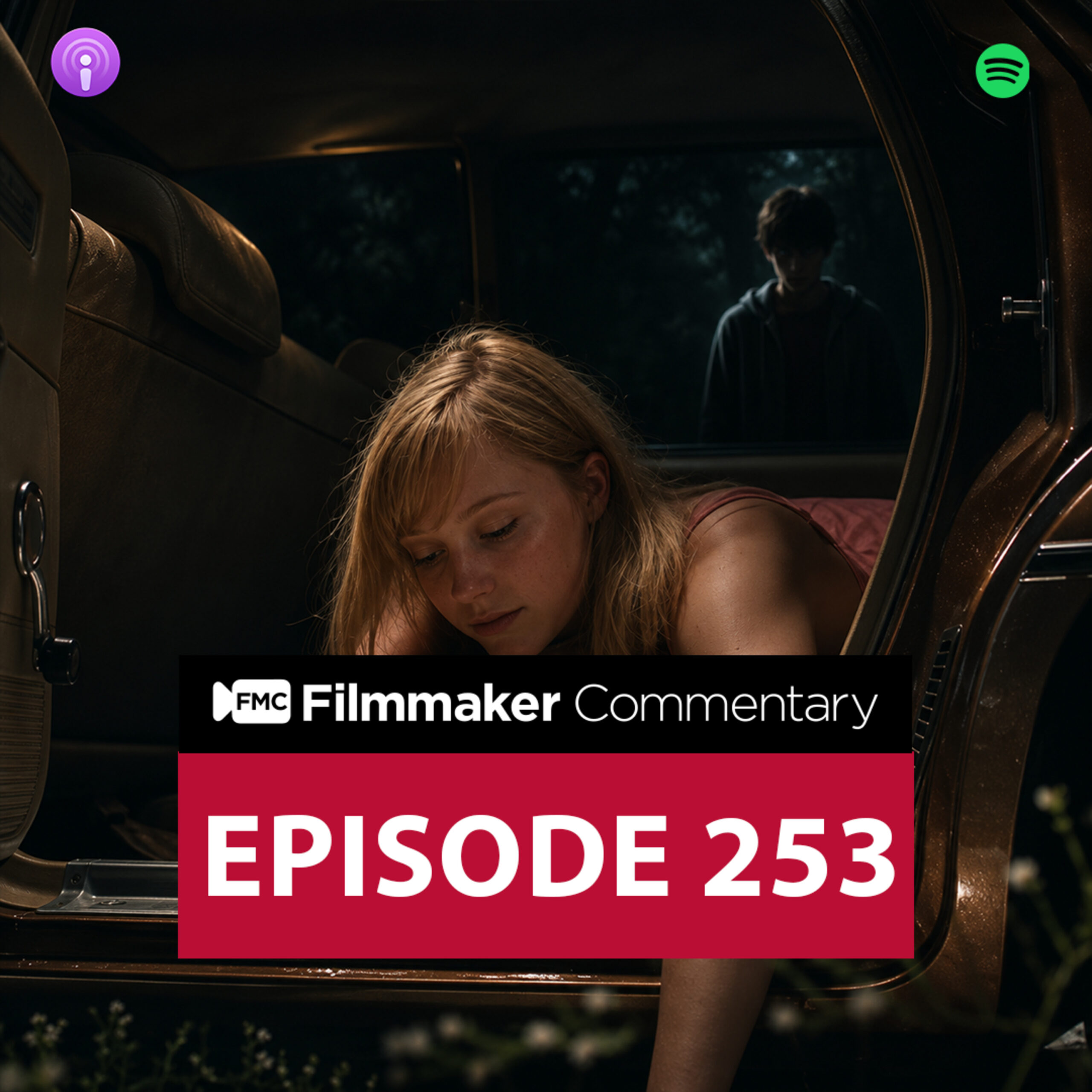
FMC 253 : It Follows Directed by David Robert Mitchell

November 7, 2026

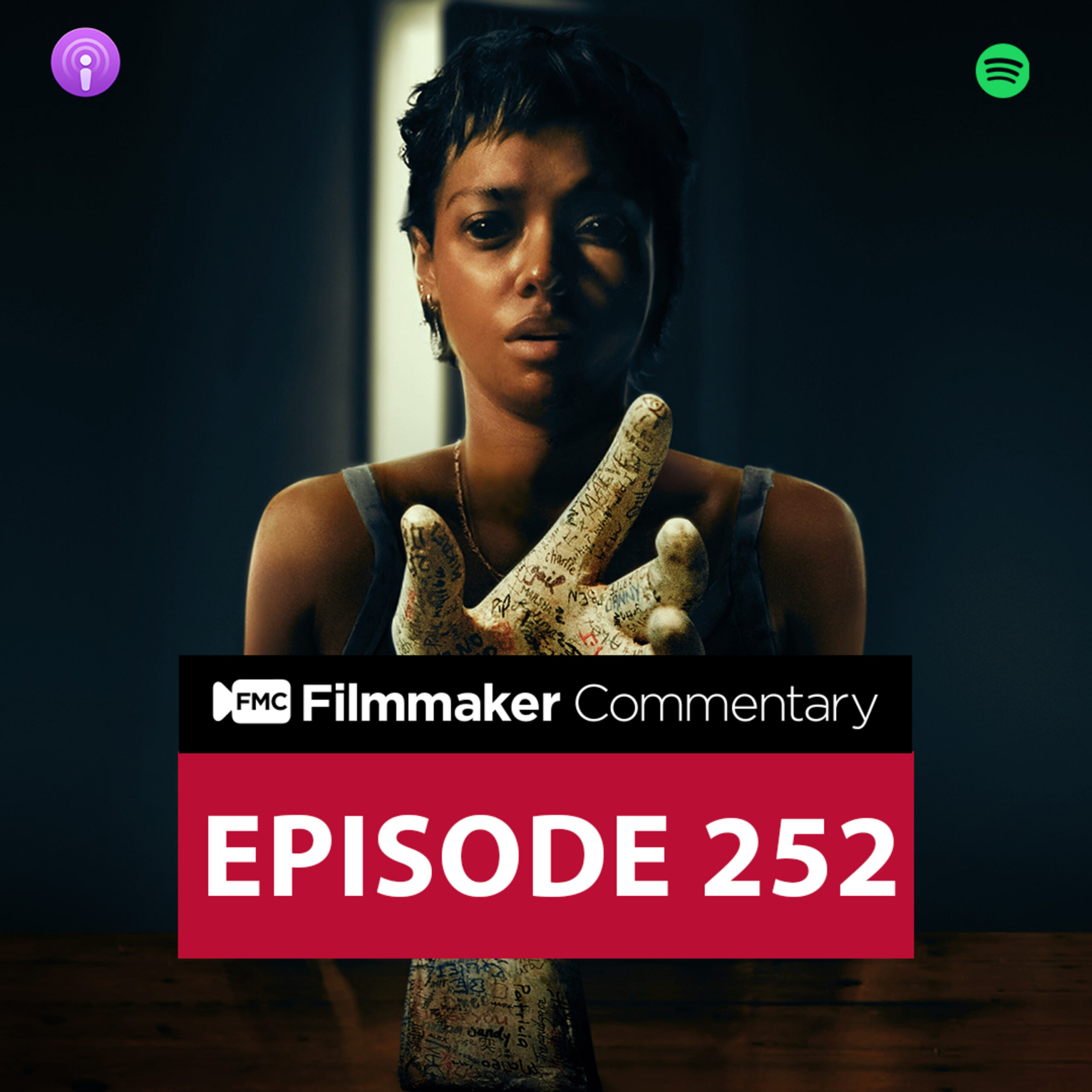
FMC 252 : Talk to Me Directed by Danny Philippou and Michael Philippou

October 25, 2026

FMC 251 : Weapons Directed by Zachary Michael Cregger

October 24, 2026

Leave a Response Cancel reply

Never Miss an Episode

New episodes every week — free.

Listen on Spotify Apple Podcasts

Recent Episodes

  • FMC 253 : It Follows Directed by David Robert Mitchell
  • FMC 252 : Talk to Me Directed by Danny Philippou and Michael Philippou
  • FMC 251 : Weapons Directed by Zachary Michael Cregger
  • FMC 250 : Obsession Written and Directed by Curry Barker

Archives

  • November 2026
  • October 2026
  • September 2026
  • June 2026
  • May 2026
  • April 2026
  • March 2026
  • February 2026
  • January 2026
  • November 2025
  • September 2025
  • October 2023
  • September 2023
  • August 2023
  • July 2023
  • June 2023
  • May 2023
  • April 2023
  • March 2023
  • February 2023
  • January 2023
  • December 2022
  • November 2022
  • October 2022
  • August 2022
  • July 2022
  • June 2022
  • May 2022
  • April 2022
  • September 2021
  • August 2021
  • July 2021
  • March 2021
  • November 2020
  • October 2020
  • September 2020
  • August 2020
  • July 2020
  • May 2020
  • April 2020
  • March 2020
  • February 2020
  • January 2020
  • November 2019
  • October 2019
  • September 2019
  • August 2019
  • July 2019
  • June 2019
  • May 2019
  • April 2019
  • March 2019
  • February 2019
  • January 2019
  • December 2018
  • October 2018
  • September 2018
  • August 2018
  • July 2018
  • June 2018
  • May 2018
  • April 2018
  • March 2018
  • February 2018
  • January 2018
  • December 2017

Categories

  • Film
  • Podcast
  • TV
© 2026 Filmmaker Commentary. All rights reserved.
  • About
  • Episodes
  • Privacy Policy
  • Disclaimer
  • Terms of Service