November 12, 2026
F
Filmmaker Commentary
  • Home
  • About
  • Episodes
  • Film
  • TV
  • Home
  • About
  • Episodes
  • Film
  • TV
Podcast

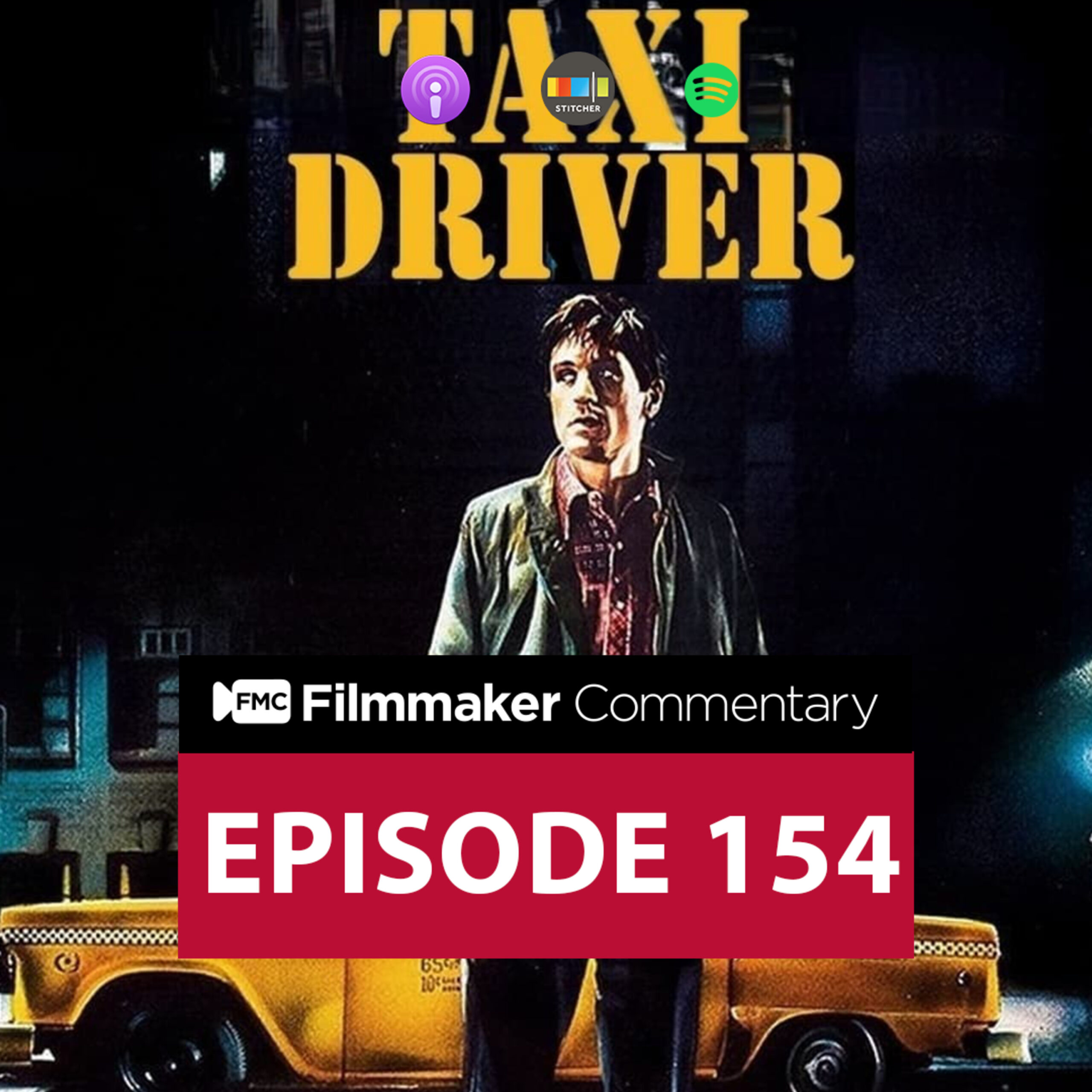
FMC: 154 Taxi Driver Directed by Martin Scorsese – Happy Thanksgiving!

November 24, 2022
Listen on Apple Spotify YouTube
Listen to this episode
Your browser does not support the audio element.
Also on Apple Spotify YouTube

Dive deep into Martin Scorsese’s iconic 1976 film, Taxi Driver, as Reginald Titus Jr. and Casey G. Smith unpack its gritty portrayal of urban alienation and violence. This episode explores why a film Scorsese himself doubted would succeed became a cinematic touchstone, earning multiple Oscar nominations and the prestigious Palme d’Or.

Join the hosts as they dissect Taxi Driver‘s controversial themes, historical context, and enduring relevance, offering insightful commentary on its impact on film and culture. Discover the unique filmmaking choices that defined an era and continue to spark conversation today, all on Filmmaker Commentary.

What We Cover

  • The film’s surprisingly modest budget and impressive box office performance, alongside its critical acclaim and numerous awards.
  • The gritty, dark, and lonely tone of 1970s New York City, shaped by events like Watergate and the Vietnam War, and how it influenced the film’s narrative.
  • Director Martin Scorsese’s distinct visual style, including his use of specific lenses and voice-overs, to immerse viewers in Travis Bickle’s distorted perspective.
  • The controversial themes of racial prejudice, vigilantism, and social isolation, and how the film’s violence garnered significant pushback.
  • Bernard Herrmann’s final, tension-building score and its evocative use of horns to underscore Travis’s unwavering resolve.
  • Why the film, despite its bleak subject matter, continues to resonate with contemporary audiences and its connections to modern narratives of alienation.

Key Moments

  • 0:40 The surprising budget and box office success of Taxi Driver, despite Martin Scorsese’s initial doubts.
  • 2:40 Discussion of the film’s critical reception and numerous accolades, including its Palme d’Or win at Cannes.
  • 4:00 An in-depth look at the socio-political climate of the 1970s that inspired the film’s dark and gritty atmosphere.
  • 17:55 Casey G. Smith and Reginald Titus Jr. share their personal likes and dislikes about the film, including its unflinching portrayal of violence and racial undertones.

Gear & Films Mentioned

  • Films: Taxi Driver, Re-Animator, Rocky, Joker, Falling Down, Watchmen, Inside Man, Atlanta, Kill Bill, Birth of a Nation.
  • Directors: Quentin Tarantino, Spike Lee, John Singleton.
  • Actors: Robert De Niro, Jodie Foster, Cybill Shepherd, Samuel L. Jackson, Robert Downey Jr.
  • Composer: Bernard Herrmann.
  • Equipment: 600mm lens.

Listener Questions

  • How did the turbulent political and social landscape of the 1970s directly shape the themes and tone of Taxi Driver?
  • What specific filmmaking techniques did Martin Scorsese employ to immerse the audience in Travis Bickle’s increasingly detached and violent reality?
  • How does Taxi Driver‘s exploration of alienation and radicalization remain relevant to contemporary society, despite being set nearly 50 years ago?
Full Transcript

Read the full transcript

Full Episode Transcript
This episode of Filmmaker Commentary reviews Martin Scorsese's 1976 psychological thriller "Taxi Driver," exploring its critical reception, societal context, artistic techniques, and enduring themes like loneliness and vigilantism.

Opening Discussion and Film Context
Reginald Titus Jr.: Filmmaker Commentary, episode 154. Welcome to Filmmaker Commentary, where we cover movies with commentaries from directors who take the time to record them on Blu-ray and DVDs. We also give our detailed insights, so look out for spoilers. We discuss the latest in showbiz news along with movies and TV shows that we've been watching. So join Reginald Titus Jr., that's me, and Casey G. Smith, that's me, every week here on Filmmaker Commentary. Welcome to another episode of Filmmaker Commentary. I'm Reginald Titus Jr., I'm joined with...
Casey G. Smith: Casey G. Smith.
Reginald Titus Jr.: Welcome back, sir.
Casey G. Smith.: Good to be back, sir.
Reginald Titus Jr.: And today we're talking about Taxi Driver, directed by Morton... Martin Scorsese. Morton? Morton. Uh, this, yeah, 1976. What was the budget and box office on this film?
Casey G. Smith: On a $1.3 million estimated budget, Taxi Driver raked in worldwide gross of $29 million, bills, y'all.
Reginald Titus Jr.: Wow.
Casey G. Smith: And that, that was worldwide. Yes, sir.
Reginald Titus Jr.: Okay. Uh, was it more of, was it more of a hit in America or did they split it up? Like, you know how sometimes they'll display international is bigger than America. Did they do that?
Casey G. Smith: This says that US, according to IMDb, it says that US and Canada was 28 million and the rest of the world was just a, another 1 million, making it 29 total.
Reginald Titus Jr.: Interesting. Still keeping it secret. Hush, hush. Uh, did this film win any awards at the time?
Casey G. Smith: Glad that you asked. Alright, so, Taxi Driver definitely did have some critical acclaim, pardon me. Uh, it was nominated for multiple Academy Awards, including Best Actress, Jodie Foster, Best Leading Actor, of course, in Robert De Niro, Best Picture. So, both the producers, Julia Phillips and Michael Phillips, were nominated for that, and then Best Music, um, and original score by Bernard Herrmann posthumously. Of course, he, of course, he unfortunately had passed away, literally like during the production of this film. Oh. Uh, in addition to that, it was also nominated for a couple of Golden Globes, but, uh, no major wins there. Did win some National Society of Film Critics Awards for Best Director, Supporting Actress and Best Actor. New York Film Critics Circle Awards, it won Best Actor for Robert De Niro. Cannes Film Festival, it won the Palme d'Or.
Reginald Titus Jr.: Very prestigious.
Casey G. Smith: So Martin Scorsese got that one. Uh, Los Angeles Film Critics Award for Best Actor, Best Music, and, um, again, New Generation Award for one Miss Jodie Foster.
Reginald Titus Jr.: Wow, I had no idea they won the Palme d'Or. I mean, that one is the one where everybody stands up and claps for you for minutes, minutes.
Casey G. Smith: Take it in.
Reginald Titus Jr.: Yes. So, had no idea. Would have never guessed, would have never thought. Um, what about, what was like the cinema at the time, or, you know, what were critics saying and how were they taking this in America with all this violence?
Casey G. Smith: So Taxi Driver was, was, was unique because Scorsese himself even didn't think that this film would, would be really viable at the box office. Didn't think it would make a lot of money. For him, this was more of a passion project. But clearly, it did quite well at the box office, especially given the budget to, to, to make that back, you know, some, you know, 28, 29 times over, super, super impressive. There, there was definitely some pushback because of the violence, and even to get the rating that they wanted, they had to desaturate. Well, we don't want to give too much away just yet. But obviously, we're going to be diving into spoilers a little bit later. But this film did have some pushback because of the, the nature of the violence. This is a film definitely not for kids or small children. And if they hadn't have made that change at the end, it would have gotten the, the dreaded X rating on it because of the violence. So this was, uh, this was out there, but yet there was something that, that resonated with, with the country and with, with a lot of young men who were also feeling this. Even the, the, the writer, Paul Schrader, this was, this was birth out of what he was feeling at the time. And what he's found over the years is that other young men have come up to him and, and, uh, have said how much they, they could, they could relate to the feelings. Even Scorsese and De Niro, both, they felt this kinship to, to some of the feelings, maybe not to the extreme, but with, with some of the feelings. And people feel what they feel, but the, the, the key is not acting on, on all your fantasies, boys and girls.
Reginald Titus Jr.: He's spilling. Keep an eye on Paul, the writer. My God.
Casey G. Smith: He seems, he seems, he seems pretty healthy now, but his, his, his backstory is interesting.
Reginald Titus Jr.: It's kind of like, what's his name, uh, The Crow, when he wrote all his trauma that he was going through and put it into the film.
Casey G. Smith: Yeah, there you go. But again, we know often out of pain and difficult situations, some beautiful art can be created. Uh, I don't know why I just thought of Taylor Swift, but, yeah.
Reginald Titus Jr.: She's, that's random. She's a matter, uh, American artist. Uh, what were like the signs of the times? What, what was going on in that era?
Casey G. Smith: So as, as we think about the, the 1970s, I was born in '79.
Reginald Titus Jr.: Okay.
Casey G. Smith: So, not that I remember the 70s, right. I mean, I'm talking like December of '79, I was right on the cusp. It's like, you know, a couple of, literally, days out before the 70s ended. But looking at the times, at this, this, this juncture, we're talking, this was shot in '75, came out in '76. Watergate had taken place, which was a, I mean, that, that was a huge blow. Think, I mean, I may be wrong, but I think, I think Nixon was the first president to be impeached.
Reginald Titus Jr.: Yeah, yeah, he was.
Casey G. Smith: That's, that's pretty huge. Vietnam War.
Reginald Titus Jr.: That's it. And then, first time where like war footage is being shown to the world and you see the horrors of the war.
Casey G. Smith: And a war that we did not win. Like people often talk about like what kind of psychological ramifications that had on the, the country as a whole, on the country's morale. Then we get Gerald Ford coming into office, who, if you watch clips of Ford addressing the nation, it's not, not that inspiring.
Reginald Titus Jr.: Mm-mm.
Casey G. Smith: Uh, but there also was, Paul Schrader talked about, there was, I think on an attempt, an attempt on Ford's life, like an assassination attempt. And that the woman who, it was a woman who made the attempt and she got put on the cover of Time magazine. And it made him think that, oh, this is, you know, in our media-crazed culture, he thought it was media-crazed back then. The this is all it takes to, to be famous. And that kind of plays into later on in the film. But, uh, but the film was received again, uh, somewhat mixed, but again, in the, in the 70s, it was, there was a lot of crime that was happening in, in New York.
Reginald Titus Jr.: Yeah.
Casey G. Smith: I mean, we could see, I mean, you know, porn was kind of pseudo mainstream, where you had all these theaters all around. People could go and watch.
Reginald Titus Jr.: That was interesting because, uh, during that time, you know, in the 70s and, um, you have like the exploitation films that are out, which are borderline like pornography, you know, like soft porn.
Casey G. Smith: More graphic.
Reginald Titus Jr.: Um, but, uh, if we remember from the film Re-Animator, a lot of people got into the business through porn, you know, and we'll be talking about, you know, Rocky and Sylvester Stallone, he kind of had his, you know, that was like the beginning of his career, was kind of, kind of dealing with that a little bit. It's like, that was the gateway, because that was the only way you can get access to film.
Casey G. Smith: Sure.
Reginald Titus Jr.: Um, on the cheap.
Casey G. Smith: On the cheap. Maybe more ways than one. Anyway, but...
Reginald Titus Jr.: But yeah.
Casey G. Smith: But yeah, it was, America was in an interesting support. Plus, I know a time comes in the 70s where we get this oil crisis. And when the gas prices like just shoot up crazy high, I don't know if that's right around this time or a little bit later, but the 70s were, were a little, a little rough go for America. So yeah, so this, this character, and, okay, here's one other thing I want to mention, in general in films in the 70s, you had this shift towards, at least with, with quite a few Caucasian male leads, you had the rise of the anti-hero.
Reginald Titus Jr.: Yeah.
Casey G. Smith: Where they weren't as squeaky clean, good guys. Like they were, it wasn't so defenceless. There was something kind of, there was a darker edge. This was not only a, a, reflected in movies, but also in, in, in other mediums like comic books, things like that, you saw darker characters beginning to emerge who would cross the lines, who, who were willing to, to kill and kind of do, like the, the ends justifying the means. So characters like The Punisher, characters like Wolverine, those kind of characters coming to forbearance on the, uh, the, the market and, and plenty of films like this that, uh, that dealt with that.
Reginald Titus Jr.: That's right. Yep. Yeah.

News and What We're Watching
Reginald Titus Jr.: But before we talk further about Taxi Driver, let's talk about news, TV and movies watched. All right, so in the news, we're going to be real quick here. According to Variety, that the box office Black Panther: Wakanda Forever rules with 67.3 million. And She Said flopped with $2.2 million $2.2 million debut. Again, Disney's comic sequel Black Panther: Wakanda Forever extended its reign at the domestic box office in its second week of release. The 30th feature installment of the Marvel Cinematic Universe collected 67.3 million between Friday and Sunday. But audiences continued to reject films pitched directly at them, steering clear of Universal's She Said. Uh, a look at the pair of New York Twin journalists who exposed Harvey Weinstein's sexual abuses.
Reginald Titus Jr.: Oh, I forgot about that. It's a, it's a documentary.
Casey G. Smith: Hmm, I hadn't even heard of it.
Reginald Titus Jr.: I don't know if it's a documentary or scripted. Um, but I remember, that's right. Whoops. I mean, we kind of saw the whole scandal fall in front of our eyes, you know, during the, uh, Me Too movement.
Casey G. Smith: Oh, yeah.
Reginald Titus Jr.: So that's just a little bit, uh, a little bit of, of news. Okay, what'd you been watching?
Casey G. Smith: All right, as far as what I've been watching, it's a little, little lighter this week. I did check out on Netflix, uh, an older comedy special with Donald Glover called Weirdo.
Reginald Titus Jr.: Oh, yeah.
Casey G. Smith: Mm-hm, that's kind of how I felt.
Reginald Titus Jr.: Yeah, I forgot about that. That's rough.
Casey G. Smith: I was like, this is, I remember seeing him, I remember seeing him on Comedy, one on Comedy Central that was, I thought it was terrible. I thought it was, Donald Glover, I love you, brother. You, you're a creative genius, but man, that, I didn't, I didn't, I didn't care for it. I was like, oh, this is...
Reginald Titus Jr.: His some of that early stand-up stuff of his, because he used to do like a lot of sketch comedy, you know. I remember him and it was a trio, like just they would do a lot of improv and thing like that. And it was, it was great. But, uh, the stand-up comedy solo, Jason, that's a whole another level.
Casey G. Smith: Yeah. There, there were a couple of funny bits in this one because he had, had a little more time, but his, he, he seems very manic in his delivery and his transitions are, are a little, a little rough. But there were, there were a couple of funny, a couple of funny moments in it. But yeah, but yeah, I watched it. It was called Weirdo and...
Reginald Titus Jr.: Did you finish it?
Casey G. Smith: I did finish it. Yes, I, I committed. Okay. And, uh, yeah, I got through it. So there was that, uh, also, what else? Um, still been watching Black Love. I caught up on a couple more episodes of Peripheral.
Reginald Titus Jr.: Yeah.
Casey G. Smith: So I think I may be like only one episode behind now. But that's still been pretty, pretty awesome. You know, wrapped on Atlanta, of course, that was last week. Got to knock that off my list now.
Reginald Titus Jr.: Yeah, I'm right there with you. I finished the last two episodes of that.
Casey G. Smith: Yeah.
Reginald Titus Jr.: Yeah.
Casey G. Smith: I, uh, not, not what I would hope for for, for an ending.
Reginald Titus Jr.: No, it's not.
Casey G. Smith: I was like, I'm like, give me more. What are we doing?
Reginald Titus Jr.: This is, wrap this up.
Casey G. Smith: I'm like, this is an unassuming ending. Maybe it's on purpose, maybe it's to give them a, a way to.
Reginald Titus Jr.: The last episode is literally called It Was All a Dream, you know.
Casey G. Smith: Yeah. It's like, yeah. I was like, hm. And again, but it's, it's, it's hard to stick landings. But this, I, as creatively excellent as this was, like I feel like you guys didn't really try. But maybe that's part of the kind of charm of the show, was like, we're not going to really, I'm kind of not surprised that they didn't really put a bow on it.
Reginald Titus Jr.: Uh, I, I did want the bow. I, I wanted it too.
Casey G. Smith: But I'm like, it's kind of, it's kind of sticks with a certain vibe that the show has of kind of subverting your expectations.
Reginald Titus Jr.: Yeah, very much so. Yeah.
Casey G. Smith: Um, how about you? What'd you been watching?
Reginald Titus Jr.: Atlanta, those last two episodes and then I watched a trailer, um, called Senior, which is about, it's a documentary about Robert Downey Jr.'s father.
Casey G. Smith: Aha.
Reginald Titus Jr.: And, uh, I find that, uh, interesting. So I was like, oh, man, this is going to be a tearjerker.
Casey G. Smith: It looks pretty, pretty charming and heartwarming. That, yeah, yeah, I agree. You sent that to me. And I was like, oh. And then that sent me on a rabbit trail of watching just a bunch of trailers of stuff coming out on, on Netflix. I'm like, ah, okay. There's a, there's plenty of content still coming, folks.
Reginald Titus Jr.: Yeah. Absolutely. Uh, but that's, that's pretty much it for me.
Casey G. Smith: Gotcha. All right.
Reginald Titus Jr.: And today's show is sponsored by...
Casey G. Smith: Natural Hair the Movie by Grind Over Matter Films, available to stream on All Black TV and on Tubi. Please check it out and leave a review. And now let's jump back into the show.

Taxi Driver: Synopsis and Initial Reactions
Reginald Titus Jr.: Thank you for tuning in to Filmmaker Commentary. We're talking about Taxi Driver, directed by Martin Scorsese, 1976. Or is it Schrader?
Casey G. Smith: Morty!
Reginald Titus Jr.: Morty!
Casey G. Smith: And if this is, I'm going to say you got to hit that, that synopsis.
Reginald Titus Jr.: Oh, yeah. And before we, uh, talk about this, uh, Taxi Driver, let's jump into the synopsis. Suffering from insomnia, disturbed loner Travis Bickle takes a job as a New York City cabbie. Hunting the streets nightly, growing increasingly detached from reality as he dreams of cleaning up the filthy city. When Travis meets pretty campaign worker Betsy, he becomes obsessed with the idea of saving the city. Cab Driver!
Casey G. Smith: Taxi Driver!
Reginald Titus Jr.: Transportation professional.
Casey G. Smith: Right.
Reginald Titus Jr.: Public Transpo.
Casey G. Smith: Right, X.
Reginald Titus Jr.: Right. Cab Driver, too early.
Casey G. Smith: Ride share. Lift. Your Highness. Oh, man.
Reginald Titus Jr.: Gig economy. Right?
Casey G. Smith: Taxi Driver. And if this is your first time listening to Filmmaker Commentary, please know that there will be spoilers. You've been forewarned. How did you watch this film?
Casey G. Smith: I came, I watched this a couple of years ago, I think, during my, my big Netflix binge where I was just, just renting, just anything that felt like a blind spot. I think that's when I watched this, or I may have just caught it streaming somewhere. No, but I'm, I'm pretty positive I, I had a physical copy, I think. And I sat down and watched it and I was like, ooh. Especially when I got to the end, I was like, ooh, cuz I really didn't know anything about this. I didn't know those famous lines, that you talking to me, I didn't know that came from this. No idea. But I just, it, it, I'd heard it many a time mentioned, knew it was a Scorsese film. So I was like, well, I should probably check this out.
Reginald Titus Jr.: Man, I knew it existed, but that's about it. I, nobody in my circle said I should watch this, you know. It was not recommended. Um, and, uh, yeah, yeah, so I knew about it, but just it never, there's nothing about it that made me want to watch it. Not even the title, the title, come on. Who wants to, it's not appealing at all.
Casey G. Smith: It's artistic.
Reginald Titus Jr.: Is it? I don't know.
Reginald Titus Jr.: So yeah, but after, uh, after, um, watching it, I can see why I never heard of it. I don't think anybody in my group of people would have recommended this to me.
Casey G. Smith: This is, I call, it's like an introspection of a school shooter, you know what I mean? Like.
Reginald Titus Jr.: What?
Casey G. Smith: Word. It, it, yeah, we'll dive deeper into some of the themes, things like that. But it, it did make me, again, it's shocking how to a certain degree, relevant it feels with some of the, the political and the, the climate of today, of 2022. And looking back at 2021 and 2020, some of the feelings that Travis has, it's like, whoa, I think I can see this in other people. Like, wow, it's, that feeling that was there that other people can relate to, still there.
Reginald Titus Jr.: Yeah, I, I think this genre is like this weird genre that I think America likes, uh, specifically, I would, I would argue, you know, throw the stats up and you can, whoever's listening can run it, but I think it's probably geared more towards, uh, a certain age group of white male because, um, what this movie reminds me of is, uh, uh, uh, um, the most recent Joker movie, you know, low budget, guy who's traumatized, does his thing, you know.
Casey G. Smith: The white guy that, that gets beat down till he can't take anymore and then he flips out and does, does mass, mass killings.
Reginald Titus Jr.: Yes.
Casey G. Smith: Um, you know, Falling Down with Michael Douglas, I think about that.
Reginald Titus Jr.: Yeah, yeah.
Casey G. Smith: Yeah, there's a couple of these films where, where the white guy just can't take it anymore.
Reginald Titus Jr.: The way you say it, like, I just can't take it anymore.
Casey G. Smith: I just can't take it anymore. And it's like, oh, uh, other people have been going through some things for a while, but I'm sorry you're having a bad go, buddy, but, it's not a unique situation. Yeah, anyway, but, but it's, it's, it's, it's, it's a well-done film. And it, and it has something to say and it's, it's, it's disturbing, it's powerful and disturbing, and the performances are pretty amazing. Robert De Niro, damn.
Reginald Titus Jr.: Yeah. Would it, well, since we're talking about, what did you like or not like?
Casey G. Smith: All right, uh, what I liked about the movie, when I can find it in my notes here. I liked the rawest of it because it is, it is unflinching. And I, I can appreciate that. Even if at times it makes me flinch, I can appreciate that it, it's, it this is, this is told from Travis's perspective. All except for maybe two scenes, he's in. So it's his perspective the whole time, and you're brought into his world, his, his, uh, perception of things. And then, like I said, as I just said, the performances, Robert De Niro, uh, Cybill Shepherd, man, she is, the way she's shot, she's just a dream. Like within it, an angel, as he says. An angel in white, yeah. And she's wearing white most of the time. But even like towards the end when she's in his cab and she's in the backseat and get the rearview shot, the way she's letting the little, little wind on her hair, like just so slightly blowing. But yeah, but it's very, very ethereal in the way that she appears.
Reginald Titus Jr.: Yeah. An angel, as he says. Ethereal. That's word of the day.
Casey G. Smith: Uh, and then, um, yeah, those are the main things that I, that I, that I liked about the film. How about yourself?
Reginald Titus Jr.: What did I like? I got to find. Um, I have a lot of dis, not a lot of dislikes, but I didn't really like it. Um, slow, it's a slow burn. You know what I mean? I'm like, come on. And, and to be, and to be fair, I had watched another film from the 70s. Uh, same year, came out same year and, you know, that, I will talk, you know, that film had me on a different vibe. So when I got to this film, I was like, ah, what? And so, get over here. Get down here. So the slow burn, uh, the music made me kind of, it was great music, but it made me, it's raining and there's jazz music, it just made me feel sleepy. It's dark. Yeah. I'm just like, this is, it's sleep time, you know. It's dreary music. I was like, it's a perfect time to go to sleep. But, um, mainly I was like, dude, why is this dude looking at all the, like, the way they shot it, it was like, why are you looking at all the black people like this? You know what I'm saying? And I was like, dude, you looking, he's like, but it wasn't never like addressed to the audience, but I see it. So how it was shot. So Martin Scorsese did a good job showing this guy. And I'm like, why are they keep singling out black folks? Like why is he being singled out? And, you know, uh, turns out this character's racist, you know. And I felt that, which is why I didn't like it, you know, I was like,
Casey G. Smith: You felt threatened? You felt threatened?
Reginald Titus Jr.: No, I just not entertained. You know, I'm just like, this, yeah, not entertained by this. Like, I don't, you know, for him to just be picking out these people, I was like, what is going on? You don't see all the other stuff that's going on.
Casey G. Smith: And he specifically putting himself in that situation because the other cab driver was like, oh, you know, like, you, you go anywhere, you'll drive anywhere? Yeah. And so like the stuff that he doesn't like, he's, he's actively exposing himself to it. Going to the areas that you know, that he doesn't like. And, and maybe around people he doesn't like. Well, you don't have to be, you don't have to take routes in this area if you really don't like this.
Reginald Titus Jr.: So like, why he, he was sitting down with his other cab friends and they're talking about, you know, the stories of the day. And there's a brother that's with them that's sitting down with him, just, you know, regular, you know, cab driver, just like everybody else. And then he turns and look at some other black people there in the same era. So I guess these people are pimps, you know. So he's looking, he's got the hats on and all that. Yeah, so these are like the mat, real masculine men, you know, how they're looking. And so, you know, he's scared, I don't know, but he's looking at these guys like a threat. And so I was like, why is this, why we, why do I keep seeing this visual, you know what I mean? Um, but it makes sense when the writer later says that this guy is absolutely racist.
Casey G. Smith: And he feels, he, he also says that this guy feels, just he says and this, this is what made me think about people of today, certain people of today, that when, when you feel that you've been rejected and you're kind of at the bottom of the rung, you then look to find other people that you feel are beneath you. And often the quickest way to do that is to look at either race or people's socioeconomic status. And that's part of what Travis is, is doing to shift his, or at least I'm not these people.
Reginald Titus Jr.: At the very least. I forgot what, um, what president said it, uh, but basically they were saying, if, if you can get, uh, poor white people to get on your side, they'll kind of do your bidding for you. Yeah. So it creates a division because at the end of the day, you got people, you got the middle and lower class, which makes up the majority of the country. So you don't want that whole class of people to get together against the elites. So what you do is create the division of color and different cultures. So it's like, hey, but you're white though, so you still have a chance. Exactly. At least you're not those people over there. Absolutely. Yep, I've, I've heard that same thing.
Casey G. Smith: That's it.
Reginald Titus Jr.: Yeah, man. So yeah, so when I found out, I was like, okay, so that's why I, I saw these visualizations of how he was looking at these people. And then turns out, uh, that, you know, in the regular screenplay, he was supposed to kill all the black people. It was like, supposed to be specifically black people. Everybody was going to. Can you imagine? I'm like, put it out there. If you want to, if you, this. It was, again, well, so here's, I'm sorry. Fine, if that's what it is, put it out there. But here, here's, here's the thing though. Who signs up to direct this? Well, well, here's the, I'm just, I'm just messing around. But I'm just, here's where they, they, they were, you had producers and people that were smart. Oh, integrity. It's, people who step in and say, okay, this would be socially irresponsible. We, we got to, they didn't want a riot. They, they said that, like, Paul Schrader actually addresses it a couple of times. And I, I listened to the second commentary he was on, he said that, you know, even, Harvey Keitel said he wanted to play the, the pimp. Yeah. But other sources say that the studio said, no, you need to change the pimp from being black to, to white. So that at the end, it's not him going in and killing. Just killing all black people.
Casey G. Smith: It would make sense. Because I think it kind of, like, from a, from an art standpoint, you know, how the, how it was written originally written, uh, everybody was black, you know, just like, if it was a book, it would have been okay, you know, but since it's a different medium, okay, we'll do the TV, I mean, we'll, we'll change things out. But you're building all this up. We see the black pimps and all this stuff happening. If later, the person that was pimping out, uh, what's that actress's name?
Reginald Titus Jr.: Jodie Foster.
Casey G. Smith: Jodie Foster, if that was a black guy, it would make sense, like, what happened earlier, what was built up earlier and why he has this rage and now he's taking down these black folks. Uh, but to, like, kind of swap that out, I was like, I get why they did it, but it doesn't go with the situation.
Reginald Titus Jr.: I think, I think, I think, I think it was a calculated smart move to not do it that way. Because just the tension. I agree. I agree. I agree. But, put it out there. If you get, like, why not? If that's what the thing is. Playing with fire there, brother. Play with fire. But, it's, that's one of those interesting things in, in filmmaking, right? The, the risks that you're willing to take, knowing the, because people are reading books, and like, oh, well, that's, oh, okay, but you're not really thinking about them rioting per se.
Casey G. Smith: That's right.
Reginald Titus Jr.: But, uh, but yeah, it kind of goes to show you the power of these images and why. That's why I didn't really like it. I was like, those images are powerful. So if you think you're going to riot, it still had an effect on me watching it. So I'm just like, okay. Go on, put it out there, just, since we're doing it.
Casey G. Smith: See, not, and the first time I watched it, I didn't really, I didn't really catch it. This time I caught it. I was like, I felt it as soon as he started looking around. When he started saying, yeah, with the voiceovers. Oh, yeah, they're picking up spooks. But I don't care. You know, it don't matter to me. I was like, what is going on? So, in my, in my dislikes, I put that. I said, I said, I don't, all the racial slurs. At one point, again, he uses spooks. Um, and then, Scorsese, in the character he plays, he says nigger. And then, and then, and then the guy selling De Niro the guns says jungle bunnies.
Reginald Titus Jr.: Why, he did? Damn, Martin Scorsese. Damn. I was like, damn. But, but again, for, again, if it's being unflinching to a degree. That's why I'm like, put it, put it out there, put it, just let us. Like, people, you know, this is, this is our people, we talk, talk about us at times.
Casey G. Smith: That's it.
Reginald Titus Jr.: That's why I said, make it, do the whole thing. Like, if, if it is what it is, put it out there. Kill the black folks, you know, if that's what.
Casey G. Smith: Well again, we, I mean, we know in almost every film like there's brothers that die. So I, I'm, I'm actually a little relieved that at the end it's not, not just brothers dying. So I'm like, okay, they switched it up. Even though his first kill is a brother.
Reginald Titus Jr.: Yeah. And then the way that person died, that was just so horrific. I mean, that's, yeah, yeah, you know. And you could justify it, like, yeah, he was, you know, saving the day.
Casey G. Smith: He could have shot him in the leg or something. But, it, it's weird that he, he was so accurate with that brother, one shot, he's down. But these other guys like that, all of them like seemed to, to come back. He had to shoot them multiple times. I'm like, oh yeah, you hesitating now? You second guessing yourself? It was easy when it was a spook.
Reginald Titus Jr.: Oh, man. Oh, man. Damn, Martin. Uh, what do you think about the commentary? Because, uh, how many commentaries was it? Was it one, two?
Casey G. Smith: There's three on this one.
Reginald Titus Jr.: What? Did you, how many did you listen to?
Casey G. Smith: Two.
Reginald Titus Jr.: Oh, my.
Casey G. Smith: Because one was like a professor. So. And again, after, after the three go through, I was like, I need to stop. I need to stop. Uh, yeah. Um, the first commentary, which is a recreation, no, a reproduction, no, reproduction. It was the original commentary from like the 1980 laser disc.
Reginald Titus Jr.: Wow.
Casey G. Smith: I don't know why it makes me think of, uh, The Regular Show. It's a cartoon on Cartoon Network. And there's some crazy episode where they find this ancient laser disc and have this crazy experience. Anyway, total tangent. Yeah, but anyway, so, but it's, it's the commentary, and again, I love the way it's done because they separate Martin Scorsese and Paul Schrader. So they're both speaking and there's a wonderful, very pleasant lady's voice who's, who gives, she's guiding us along. I'm like, ah, I like this. This is pleasant. So yeah, that, that commentary is, is actually really solid. But I took in so many of the supplemental materials before I even watched the commentary. Oh, my. Okay, so you're already a, a master at it before you had to drum it up.
Reginald Titus Jr.: Who's guiding us, right?
Casey G. Smith: I was, uh, I was trapped in the metal coffin, as Paul, Paul Schrader says. So, I, I just listen to the commentary, the first one that you, you just mentioned. Um, yeah.
Reginald Titus Jr.: Oh, my.

Artistic Elements and Behind the Scenes
Casey G. Smith: So let me rattle off some of the features on this, this special, uh, Blu-ray edition of Taxi Driver. It's very well and nicely packaged. It also comes with a, a number of kind of stills from the, the film itself. Uh, but it includes the, you know, unfortunately at this point of this recording, you know, Warner Brothers BD Live feature is now disabled, where before when you, when you have these films, you could tap in extra features, extra content. But unfortunately, they couldn't sustain that. Um, but it did have that on there. But there's also again the original 1986 commentary with Scorsese and Schrader. Uh, excuse me, I'm calling him Schrader. Schrader, forgive me. Mr. Paul Schrader, the writer of the film. That was also from, uh, the Criterion Collection as well. And there's, then there's a separate commentary by just Paul Schrader, which I listened to as well. There's also, uh, Martin Scorsese on Taxi Driver, which is him being interviewed talking about the film. There's also a feature called Producing Taxi Driver. There's also a feature called God's Lonely Man, when you get some introspective interviews from other people involved with the film. There's also an influence and appreciation on Scorsese, as well as Taxi Driver stories, which I started watching, and then stopped, and I was like, nah, I don't need to see this. This is just actual taxi drivers, Yeah, real taxi drivers and some of the crazy stuff that they see.
Reginald Titus Jr.: Remember there was a HBO show and it was like.
Casey G. Smith: Taxi Cab Confessions.
Reginald Titus Jr.: There you go.
Casey G. Smith: Yeah. HBO was on it with those like gritty, you know, the real sex and all that kind of stuff they used to do back in the day. There's also, um, Making Of documentary on, uh, Taxi Driver.
Reginald Titus Jr.: Did you watch that one?
Casey G. Smith: I did.
Reginald Titus Jr.: Okay.
Casey G. Smith: There's also Travis's New York, where they actually show, uh, like the side-by-side stills of locations that they shot at in New York then in '75 and then what they look like today. Some are completely different, completely renovated. Then there's also, uh, Travis's New York locations, where they revisit and, uh, some of the locations like, I guess kind of live or recorded or, yeah, live at the time. There's storyboard to film comparisons with, uh, Martin Scorsese and an introduction that he does. And then there's an animated photo gallery. Your favorite.
Reginald Titus Jr.: Did you watch the gallery?
Casey G. Smith: Uh, really, really quick. I turned it on. I hit the 1.5 fast forward, I was like, okay, I'm done. Give me out of this damn taxi. Yeah, a lot of features, though. So you go in as deep as you want to with this Taxi Driver Blu-ray.
Reginald Titus Jr.: Unbelievable. Um, so the tone of this film, uh, you have, what did you think about the tone?
Casey G. Smith: Lonely.
Reginald Titus Jr.: Lonely. Lonely for sure.
Casey G. Smith: Very, very lonely. Um, it's, it's dark. Yeah. It's gritty. There's a, a sense of, of, of noise and filth, I put. Noise and filth. A little bit of paranoia you can feel because you're, you're trapped, you're, you're, I say trapped, you're trapped with this character. Again, every scene is him except for two, he's in every scene.
Reginald Titus Jr.: I think, um, it should have been that way. It should, um, I know that's later on and, you know, the writer kind of talked to Martin Scorsese about, you know, he should be, you know, every scene, he needs to be in it because us as an audience, we're like, dude, we're hanging out with this psychopath, but like we can kind of understand slightly, you know, his perspective because we've been hanging around him so much. It's like hanging out with your crazy friends, like, yeah, he's kind of always been that way, you know.
Casey G. Smith: Yeah, that's just, that's just his way. He's kind of, he's just going to figure it out.
Reginald Titus Jr.: You just, but you accepted it, but everybody else was like, that's kind of crazy, you know.
Casey G. Smith: Yeah. Like, really, I didn't, I didn't see that. That's just Travis. That's just Travis. Oh, man. But yeah, it's, uh, and again, and then it's, it's, it, at the end of the day, this is a film. Scorsese even talked about maybe having wanted to shoot it in black and white, but he knew that wasn't a popular thing at the time.
Reginald Titus Jr.: Thank God.
Casey G. Smith: Yeah, that would have been. Yeah. Man, he's, he pushes it, man. Yeah, yeah, fortune favors the, the bold. But luckily, he just wasn't that bold on this one. That would have been real hard.
Reginald Titus Jr.: Oh, that would have been man. That's a sentence. That's a death sentence, man, because I, yeah. My God. Oh, man. Uh, you got anything else on, on tone?
Reginald Titus Jr.: That's a death sentence, man. Um, I like how, uh, Scorsese, the first shot is like this all this smoke and then we see, uh, Travis going through the smoke to get his job. And then, uh, Scorsese is like, you know, the character coming out of hell, basically.
Casey G. Smith: Yeah, he even says, when he, when he opens the door to go into the place and the smoke is there before, before him, he comes in, yeah, it's like, he's like, he's coming out of hell, emerging from somewhere.
Reginald Titus Jr.: Demon, he's, demon has manifested. Okay. Yeah, so that kind of sets us up for this, this guy. Um, kind of like speaking of tone, uh, the music, you know, was done by Bernard, Bernard Herrmann. And I feel like his music, he reminds me of, uh, like a lot of Spike Lee music. Um, kind of like the jazzy and sometimes like somber music that's playing, but it's, it's well done. Um, New York, you know, Spike Lee, you know, Scorsese, you know, there's fondness to New York and then, uh, just, it reminded me of those vibes. What did you think about the music?
Casey G. Smith: Man, the, the theme plays so often, it kind of, I mean, it, it, it kind of grated on me after a while. The, the, because it, it, it's forboding because it kind of swells. And, sleep. So it's like you're like, man, is there, there's something like off about it. But they, they said that the, the horns that they use, because they didn't use any strings, but the, the, Herrmann used horns specifically, because he said that represents the iron will of Travis. Once he sets his mind to something, he's like, immovable. And so it's like this constant swelling, it's a tension, I, I feel every time he plays, then it kind of rattles like within you, like something is, yeah, reverberating inside this guy that's not quite right. But it's, it's, I mean, it's solid. And again, he's a, nominated for an Academy Award and, and this was, uh, again, like I said before, Herrmann's last film that he did. And, um, he did a couple of other really like kind of popular scores. I can't remember their names, but if you heard the films, you'd, you'd recognize them. So, this guy was the real deal. He actually refused to do the, to do it initially until he read the script.
Reginald Titus Jr.: That was great.
Casey G. Smith: He refused to do the. I was like, I.
Reginald Titus Jr.: Was he the one that says, I don't do movies about cab drivers?
Casey G. Smith: Yeah. They said, well, it's not really about that. And so he read the script.
Reginald Titus Jr.: It says it in the title. That's true. It's confusing.
Casey G. Smith: It happens. That's just Travis.
Reginald Titus Jr.: But to him, surprise, when he read that script, oh. Let me. Kill the black folks? Is that what it is now? Sign me up. A lot of people who read that original script.
Casey G. Smith: Oh, man.
Reginald Titus Jr.: Sign me up. Everybody was just, I'll do it for free. This is a passion project.
Casey G. Smith: Allegedly, allegedly. Yeah, yeah, that, that, that, I can't lie, that made me like, yeah, hit my head, head turn. And when they say that we can relate to, that's how we were feeling. Like, uh, what aspect of that do you mean by, by your feeling?
Reginald Titus Jr.: Please expound on that, because I don't, I didn't get it. Um, the style, what kind of, how do you think the style of Scorsese and what was he pushing through that you feel like he had a style on this film?
Casey G. Smith: Man, definitely. There are things that he does. Again, still kind of becoming more familiar with 70s films and 70s, 1970s film and 1970s cinematography. You could tell that there are things that he did, he mentions in the commentary that are kind of unique to him. Whether it's kind of having, like there's that one scene in particular where when Travis is calling Betsy after, after he takes her on the, the bad date. And he's trying to ingratiate himself and, and get a hold of her and he's in frame but he's slightly off, you know, he's kind of off. And then the camera just moves, pans to the right, just in the shot of the hallway. And people, you can see at the end of the hallway that leads to an open door outside of people walking down the street and you're thinking, okay, somebody come through, but no, you just still hear him, hear him having this conversation kind of pleading, pleading with her to pick up or talk to him some more or whatever. He's like, oh. This is just a, a lonely, sad existence. But apparently, it's kind of like foreshadowing to how the hallway is going to play a role towards the end of the film. But, um, but yeah, Scorsese, I mean, this film is, is, is dark.
Reginald Titus Jr.: Yeah. Slightly off.
Casey G. Smith: He mentioned on that shot that it keeps the, the audience unbalanced.
Reginald Titus Jr.: Unbalanced.
Casey G. Smith: For sure. There's, you know, I like when characters are lit up in red, because it kind of speaks just to, you know, we also know, red kind of like seems like it, you know, invites danger. But there's a couple of times where he's, where he's mad dogging some of the brothers and like they've got like a, a red light on them as they walk by. But he's mad dogging them, so they're like, kind of mad dogging him back. Like, what are you, like, what are you looking at, man? And at times it, there are some shots that are shot to look like horror. That are reminiscent of horror films. And then also towards the, the, the very last scene of the film, which is how they, how they again, how they got their R-rating and instead of the X-rating, is that they had to desaturate and diffuse the colors of the blood in primary in particular.
Reginald Titus Jr.: Yeah. I think about, um, Kill Bill. They had, they had changed the color of it, um, in order to not get that, um, that NC-17. Quentin Tarantino talked about it. Or going to black and white. Oh, we'll just do black and white when it comes to some of the real violent stuff so that you don't have that red pouring out everywhere.
Casey G. Smith: I just, I don't get that. I don't, I don't get why feels more visceral. Yeah. I don't, I don't get why blood is, I mean, if you're going for the film and you got, well, it's a little blood or a lot of blood. I'm like, it's all fake. This is a film. This is fake blood. I mean, it could still have an impact. Yeah. You could, but I'm like, if you're going for it, I don't, I don't.
Reginald Titus Jr.: Somebody's got to be the people that make the decision to give you that. So, somebody has to set the standard, enough is enough. Like, you get one F-word. You know what I mean? You get one, you know what I mean? I, I understand. But I'm like, once you get to R, once you say this for adults, then I'm like, you know, anything goes. No, I mean, I don't know. I know in our country we've got different takes on nudity, things like that. But I'm like, yeah, yeah.
Casey G. Smith: Yeah.
Reginald Titus Jr.: We're weird.
Casey G. Smith: Yes. Yeah. I mean, it's just different, uh, different strokes.
Reginald Titus Jr.: They could have just went for, uh, a non, what is it called, where it's not rated? Unrated. They could have went for that.
Casey G. Smith: Death. I guess they got to, they're trying to make money.
Reginald Titus Jr.: Yeah.
Casey G. Smith: And it, I mean, I can't, I can't really fault them because it worked. Yeah. They made, you know, a good return on the, on the minor investment. Yeah. Absolutely. This passion project. Um, I got from a style standpoint, just the fact that he's doing voiceover. Like, uh, we're, we're getting the inner thoughts of Travis as he's, you know, kind of talking. It's like, okay, so we're kind of getting the thoughts of Travis as he keeps his journal of all his L's that he catches every day.
Reginald Titus Jr.: That's it.
Casey G. Smith: You know what, you know what, you know what that reminded me of?
Reginald Titus Jr.: Huh?
Casey G. Smith: Rorschach from Watchmen.
Reginald Titus Jr.: Ah, yeah, yeah, yeah.
Casey G. Smith: Very much so. I'm like, I think Alan Moore saw Taxi Driver and when he wrote Watchmen, he, he took that influence. I don't know many other films that start with a protagonist who is, I mean, you have, you have, of course, people who are giving narration, but in a specific journal. And they're looking at the city and they're talking about how much they dislike it that it's dirty and filthy. And they're living there. Yeah. And they want to see it change. Like, that's, that's very much so like, it's very specific.
Reginald Titus Jr.: That's very specific.
Casey G. Smith: Yeah, like Rorschach's journal. I'm like, whoa, I, I immediately got like Watchmen vibes. I'm like, interesting.
Reginald Titus Jr.: So that kind of gives its own taste right away. And then the visual style, as soon as it starts, it shows like Robert De Niro in red, starting as Travis. Or did it just say Robert De Niro?
Casey G. Smith: Just De Niro, just Taxi Driver. Cuz he his, his name doesn't appear in the opening credits. You don't see his.
Reginald Titus Jr.: Oh, it did. I thought it was red, like black and then red letters.
Casey G. Smith: That's the name of the movie, Taxi Driver. That's that's all that, that appears. And then they start showing other names, but his name doesn't appear into the, cuz I, I rewound specifically. I was like, did I miss his name? Why, why didn't I see his name? You see Jodie Foster's name, you see, that's what it was. So their names, so I remember seeing, um, black screen, red lettering. Taxi Driver. That was Taxi Driver. Then, the actual taxi comes towards us in slow motion. And then we see more credits.
Reginald Titus Jr.: That's what it was.
Casey G. Smith: In the upper right hand corner, they kind of, I think they.
Reginald Titus Jr.: Or when the taxi goes to veer to the left, I thought the title of the movie popped right there. It was like an orange looking color.
Casey G. Smith: Hm. But, uh, but that's me just relying on memory. That's not always reliable.
Reginald Titus Jr.: Yeah.
Casey G. Smith: But I, I can tell you that De Niro's name doesn't, doesn't appear till the end credits, and those are, and those are in alphabetical order at that.
Reginald Titus Jr.: Crazy. I thought that was interesting choice.
Casey G. Smith: Because, I mean, this guy, you know, won an Academy Award already. So I don't know why you wouldn't want his name, you know, in the opening credits. But it's an interesting choice.
Reginald Titus Jr.: Yeah. See my brain, that doesn't remember. It remembers his name, but it was like the only name that was in, and then it went to Taxi Driver, then everybody else's stuff. Or the other credits. But that's my memory.
Casey G. Smith: Yeah. I was looking, I was like, where, wait, I didn't see his name. I rewound it back. I'm like, huh. Well, we about to play that after this episode.
Reginald Titus Jr.: Sure. We'll, we'll, we'll double check.
Casey G. Smith: Um, also, um, when, uh, Scorsese was kind of talking about how, like, when Travis is kind of walking amongst the people in New York, they use a 600 millimeter lens and like how they kind of isolate him to make it, even though it's a group of people, but it's just him. We're focusing on him. Because you could have went wider and kind of showed the bigness of the city. But instead, you in a crowd of people, you just focus on him with this long lens. Um, and it's apparent. But I guess it makes you feel, you know, we're stuck with this guy. It's like claustrophobic. We don't not that many people get to come into this world of his.
Reginald Titus Jr.: Yeah.
Casey G. Smith: And how he feels, or no, how he chooses to kind of isolate himself within this world, like it's, he's not really alone, he chooses to be alone.
Reginald Titus Jr.: Mhm. Scorsese talks a little bit, from a style standpoint, just like, uh, the reality, stuff that's in reality, it's like slow motion, slowed down a little bit. And then the fantasy, he wants that to be as realistic as possible because that is, uh, to that person, that's their reality. You know, they go to bed thinking about all this stuff. So that's their reality.
Casey G. Smith: It's real to them.
Reginald Titus Jr.: Wow. Uh, what, what type of themes did you pull from this film? What, what were some that they were pushing through?

Themes and Takeaways
Casey G. Smith: I got a couple of themes here. So, obsession, um, not being able to have the woman that he desires and doesn't want the woman that desires him. So again, he obviously desires Beth, but then when he comes across Iris, she wants him even though it's her, her job, but he doesn't, he doesn't want her in that way. He wants to rescue her, but he doesn't want her in that way.
Reginald Titus Jr.: That's a child, for crying out loud. Like 12 in this film. She's 12. Yeah. It's pretty disturbing. Pretty disturbing.
Casey G. Smith: Yeah. Um, surrounded by people but always alone. Vigilantism, again, like Rorschach. Uh, themes of obviously prostitution, like what, how people will, I guess, what they'll sell themselves out for. Um, it's a city that never sleeps, because he, he himself is a prime example of that. And now he says the very beginning, you know, all the freaks come out at night.
Reginald Titus Jr.: I wonder if that's when that, that rap song comes from. Yeah, he, his line where he says the, the freaks come out.
Casey G. Smith: All the freaks come out at night.
Reginald Titus Jr.: Freaks come out. They got it from us, man. Um, Yeah, well, this feels like Travis would fit right, perfect, right in. Even he's trying to win. He's trying to, you know, he's trying. All he needs is just, just a woman to, like, hey. I gotcha. Honey. No guns today. And Travis, Travis, Travis, no. Absolutely. Leave your, leave your hand revolving shootout. Thing-a-ma-jig at home tonight. Don't take the .44 Magnum. We don't need it. Absolutely. Just, just take the knife. Okay. Just in case. Just take the knife. I mean, without that, and the man's like, violence ensues. I'm just telling you. Travis just needed a hug, I think. I think Travis just needed a hug. Like. If you, if Betsy would have gave him time today, I think he would have been a changed man. Like. He'd be like, hey, I'm good, I'm good. Hey. Get my, working on my degree right now. Hey, look at Travis. Look at this guy. He's trying to get my mom's now, you know. Travis works in McDonald's now. Next week is the fries. I run this whole block. I run this. I just live here. Oh, man. Oh, man. What are we, what are we tuning in next time? What are we watching?
Casey G. Smith: We're watching the very first Rocky. Rocky Balboa. And where can you catch us? You can catch us at facebook.com/filmmakercommentary. We're also on iTunes, SoundCloud, Stitcher Radio, and Spotify. Please check us out. Give us a like and a review. Please. He is @ReggieTitus on Twitter. I'm @KCGSmith32. We're also on the Gram at FilmmakerCommentary. He is @ReginaldTitusJr, that's J R, and I'm at @KCGSmith32. Until next time, peace.
That's what I have for this one, so I'll move on to the next.Full Episode Transcript
This episode of Filmmaker Commentary reviews Martin Scorsese's 1976 psychological thriller "Taxi Driver," exploring its critical reception, societal context, artistic techniques, and enduring themes like loneliness and vigilantism.

Opening Discussion and Film Context
Reginald Titus Jr.: Filmmaker Commentary, episode 154. Welcome to Filmmaker Commentary, where we cover movies with commentaries from directors who take the time to record them on Blu-ray and DVDs. We also give our detailed insights, so look out for spoilers. We discuss the latest in showbiz news along with movies and TV shows that we've been watching. So join Reginald Titus Jr., that's me, and Casey G. Smith, that's me, every week here on Filmmaker Commentary. Welcome to another episode of Filmmaker Commentary. I'm Reginald Titus Jr., I'm joined with...
Casey G. Smith: Casey G. Smith.
Reginald Titus Jr.: Welcome back, sir.
Casey G. Smith: Good to be back, sir.
Reginald Titus Jr.: And today we're talking about Taxi Driver, directed by Morton... Martin Scorsese. Morton? Morton! Uh, this, yeah, 1976. What was the budget and box office on this film?
Casey G. Smith: On a $1.3 million estimated budget, Taxi Driver raked in worldwide gross of $29 million, bills, y'all.
Reginald Titus Jr.: Wow.
Casey G. Smith: And that, that was worldwide. Yes, sir.
Reginald Titus Jr.: Okay. Uh, was it more of, was it more of a hit in America or did they split it up? Like, you know how sometimes they'll display international is bigger than America. Did they do that?
Casey G. Smith: This says that US, according to IMDb, it says that US and Canada was 28 million and the rest of the world was just a, another 1 million, making it 29 total.
Reginald Titus Jr.: Interesting. Still keeping it secret. Hush, hush. Uh, did this film win any awards at the time?
Casey G. Smith: Glad that you asked. Alright, so, Taxi Driver definitely did have some critical acclaim, pardon me. Uh, it was nominated for multiple Academy Awards, including Best Actress, Jodie Foster, Best Leading Actor, of course, in Robert De Niro, Best Picture. So, both the producers, Julia Phillips and Michael Phillips, were nominated for that, and then Best Music, um, and original score by Bernard Herrmann posthumously. Of course, he, of course, he unfortunately had passed away, literally like during the production of this film. Oh. Uh, in addition to that, it was also nominated for a couple of Golden Globes, but, uh, no major wins there. Did win some National Society of Film Critics Awards for Best Director, Supporting Actress and Best Actor. New York Film Critics Circle Awards, it won Best Actor for Robert De Niro. Cannes Film Festival, it won the Palme d'Or.
Reginald Titus Jr.: Very prestigious.
Casey G. Smith: So Martin Scorsese got that one. Uh, Los Angeles Film Critics Award for Best Actor, Best Music, and, um, again, New Generation Award for one Miss Jodie Foster.
Reginald Titus Jr.: Wow, I had no idea they won the Palme d'Or. I mean, that one is the one where everybody stands up and claps for you for minutes, minutes.
Casey G. Smith: Take it in.
Reginald Titus Jr.: Yes. So, had no idea. Would have never guessed, would have never thought. Um, what about, what was like the cinema at the time, or, you know, what were critics saying and how were they taking this in America with all this violence?
Casey G. Smith: So Taxi Driver was, was, was unique because Scorsese himself even didn't think that this film would, would be really viable at the box office. Didn't think it would make a lot of money. For him, this was more of a passion project. But clearly, it did quite well at the box office, especially given the budget to, to, to make that back, you know, some, you know, 28, 29 times over, super, super impressive. There, there was definitely some pushback because of the violence, and even to get the rating that they wanted, they had to desaturate. Well, we don't want to give too much away just yet. But obviously, we're going to be diving into spoilers a little bit later. But this film did have some pushback because of the, the nature of the violence. This is a film definitely not for kids or small children. And if they hadn't have made that change at the end, it would have gotten the, the dreaded X rating on it because of the violence. So this was, uh, this was out there, but yet there was something that, that resonated with, with the country and with, with a lot of young men who were also feeling this. Even the, the, the writer, Paul Schrader, this was, this was birth out of what he was feeling at the time. And what he's found over the years is that other young men have come up to him and, and, uh, have said how much they, they could, they could relate to the feelings. Even Scorsese and De Niro, both, they felt this kinship to, to some of the feelings, maybe not to the extreme, but with, with some of the feelings. And people feel what they feel, but the, the, the key is not acting on, on all your fantasies, boys and girls.
Reginald Titus Jr.: He's spilling. Keep an eye on Paul, the writer. My God.
Casey G. Smith: He seems, he seems, he seems pretty healthy now, but his, his, his backstory is interesting.
Reginald Titus Jr.: It's kind of like, what's his name, uh, The Crow, when he wrote all his trauma that he was going through and put it into the film.
Casey G. Smith: Yeah, there you go. But again, we know often out of pain and difficult situations, some beautiful art can be created. Uh, I don't know why I just thought of Taylor Swift, but, yeah.
Reginald Titus Jr.: She's, that's random. She's a matter, uh, American artist. Uh, what were like the signs of the times? What, what was going on in that era?
Casey G. Smith: So as, as we think about the, the 1970s, I was born in '79.
Reginald Titus Jr.: Okay.
Casey G. Smith: So, not that I remember the 70s, right. I mean, I'm talking like December of '79, I was right on the cusp. It's like, you know, a couple of, literally, days out before the 70s ended. But looking at the times, at this, this, this juncture, we're talking, this was shot in '75, came out in '76. Watergate had taken place, which was a, I mean, that, that was a huge blow. Think, I mean, I may be wrong, but I think, I think Nixon was the first president to be impeached.
Reginald Titus Jr.: Yeah, yeah, he was.
Casey G. Smith: That's, that's pretty huge. Vietnam War.
Reginald Titus Jr.: That's it. And then, first time where like war footage is being shown to the world and you see the horrors of the war.
Casey G. Smith: And a war that we did not win. Like people often talk about like what kind of psychological ramifications that had on the, the country as a whole, on the country's morale. Then we get Gerald Ford coming into office, who, if you watch clips of Ford addressing the nation, it's not, not that inspiring.
Reginald Titus Jr.: Mm-mm.
Casey G. Smith: Uh, but there also was, Paul Schrader talked about, there was, I think on an attempt, an attempt on Ford's life, like an assassination attempt. And that the woman who, it was a woman who made the attempt and she got put on the cover of Time magazine. And it made him think that, oh, this is, you know, in our media-crazed culture, he thought it was media-crazed back then. The this is all it takes to, to be famous. And that kind of plays into later on in the film. But, uh, but the film was received again, uh, somewhat mixed, but again, in the, in the 70s, it was, there was a lot of crime that was happening in, in New York.
Reginald Titus Jr.: Yeah.
Casey G. Smith: I mean, we could see, I mean, you know, porn was kind of pseudo mainstream, where you had all these theaters all around. People could go and watch.
Reginald Titus Jr.: That was interesting because, uh, during that time, you know, in the 70s and, um, you have like the exploitation films that are out, which are borderline like pornography, you know, like soft porn.
Casey G. Smith: More graphic.
Reginald Titus Jr.: Um, but, uh, if we remember from the film Re-Animator, a lot of people got into the business through porn, you know, and we'll be talking about, you know, Rocky and Sylvester Stallone, he kind of had his, you know, that was like the beginning of his career, was kind of, kind of dealing with that a little bit. It's like, that was the gateway, because that was the only way you can get access to film.
Casey G. Smith: Sure.
Reginald Titus Jr.: Um, on the cheap.
Casey G. Smith: On the cheap. Maybe more ways than one. Anyway, but...
Reginald Titus Jr.: But yeah.
Casey G. Smith: But yeah, it was, America was in an interesting support. Plus, I know a time comes in the 70s where we get this oil crisis. And when the gas prices like just shoot up crazy high, I don't know if that's right around this time or a little bit later, but the 70s were, were a little, a little rough go for America. So yeah, so this, this character, and, okay, here's one other thing I want to mention, in general in films in the 70s, you had this shift towards, at least with, with quite a few Caucasian male leads, you had the rise of the anti-hero.
Reginald Titus Jr.: Yeah.
Casey G. Smith: Where they weren't as squeaky clean, good guys. Like they were, it wasn't so defenceless. There was something kind of, there was a darker edge. This was not only a, a, reflected in movies, but also in, in, in other mediums like comic books, things like that, you saw darker characters beginning to emerge who would cross the lines, who, who were willing to, to kill and kind of do, like the, the ends justifying the means. So characters like The Punisher, characters like Wolverine, those kind of characters coming to forbearance on the, uh, the, the market and, and plenty of films like this that, uh, that dealt with that.
Reginald Titus Jr.: That's right. Yep. Yeah.

News and What We're Watching
Reginald Titus Jr.: But before we talk further about Taxi Driver, let's talk about news, TV and movies watched. All right, so in the news, we're going to be real quick here. According to Variety, that the box office Black Panther: Wakanda Forever rules with 67.3 million. And She Said flopped with $2.2 million $2.2 million debut. Again, Disney's comic sequel Black Panther: Wakanda Forever extended its reign at the domestic box office in its second week of release. The 30th feature installment of the Marvel Cinematic Universe collected 67.3 million between Friday and Sunday. But audiences continued to reject films pitched directly at them, steering clear of Universal's She Said. Uh, a look at the pair of New York Twin journalists who exposed Harvey Weinstein's sexual abuses.
Reginald Titus Jr.: Oh, I forgot about that. It's a, it's a documentary.
Casey G. Smith: Hmm, I hadn't even heard of it.
Reginald Titus Jr.: I don't know if it's a documentary or scripted. Um, but I remember, that's right. Whoops. I mean, we kind of saw the whole scandal fall in front of our eyes, you know, during the, uh, Me Too movement.
Casey G. Smith: Oh, yeah.
Reginald Titus Jr.: So that's just a little bit, uh, a little bit of, of news. Okay, what'd you been watching?
Casey G. Smith: All right, as far as what I've been watching, it's a little, little lighter this week. I did check out on Netflix, uh, an older comedy special with Donald Glover called Weirdo.
Reginald Titus Jr.: Oh, yeah.
Casey G. Smith: Mm-hm, that's kind of how I felt.
Reginald Titus Jr.: Yeah, I forgot about that. That's rough.
Casey G. Smith: I was like, this is, I remember seeing him, I remember seeing him on Comedy, one on Comedy Central that was, I thought it was terrible. I thought it was, Donald Glover, I love you, brother. You, you're a creative genius, but man, that, I didn't, I didn't, I didn't care for it. I was like, oh, this is...
Reginald Titus Jr.: His some of that early stand-up stuff of his, because he used to do like a lot of sketch comedy, you know. I remember him and it was a trio, like just they would do a lot of improv and thing like that. And it was, it was great. But, uh, the stand-up comedy solo, Jason, that's a whole another level.
Casey G. Smith: Yeah. There, there were a couple of funny bits in this one because he had, had a little more time, but his, he, he seems very manic in his delivery and his transitions are, are a little, a little rough. But there were, there were a couple of funny, a couple of funny moments in it. But yeah, but yeah, I watched it. It was called Weirdo and...
Reginald Titus Jr.: Did you finish it?
Casey G. Smith: I did finish it. Yes, I, I committed. Okay. And, uh, yeah, I got through it. So there was that, uh, also, what else? Um, still been watching Black Love. I caught up on a couple more episodes of Peripheral.
Reginald Titus Jr.: Yeah.
Casey G. Smith: So I think I may be like only one episode behind now. But that's still been pretty, pretty awesome. You know, wrapped on Atlanta, of course, that was last week. Got to knock that off my list now.
Reginald Titus Jr.: Yeah, I'm right there with you. I finished the last two episodes of that.
Casey G. Smith: Yeah.
Reginald Titus Jr.: Yeah.
Casey G. Smith: I, uh, not, not what I would hope for for, for an ending.
Reginald Titus Jr.: No, it's not.
Casey G. Smith: I was like, I'm like, give me more. What are we doing?
Reginald Titus Jr.: This is, wrap this up.
Casey G. Smith: I'm like, this is an unassuming ending. Maybe it's on purpose, maybe it's to give them a, a way to.
Reginald Titus Jr.: The last episode is literally called It Was All a Dream, you know.
Casey G. Smith: Yeah. It's like, yeah. I was like, hm. And again, but it's, it's, it's hard to stick landings. But this, I, as creatively excellent as this was, like I feel like you guys didn't really try. But maybe that's part of the kind of charm of the show, was like, we're not going to really, I'm kind of not surprised that they didn't really put a bow on it.
Reginald Titus Jr.: Uh, I, I did want the bow. I, I wanted it too.
Casey G. Smith: But I'm like, it's kind of, it's kind of sticks with a certain vibe that the show has of kind of subverting your expectations.
Reginald Titus Jr.: Yeah, very much so. Yeah.
Casey G. Smith: Um, how about you? What'd you been watching?
Reginald Titus Jr.: Atlanta, those last two episodes and then I watched a trailer, um, called Senior, which is about, it's a documentary about Robert Downey Jr.'s father.
Casey G. Smith: Aha.
Reginald Titus Jr.: And, uh, I find that, uh, interesting. So I was like, oh, man, this is going to be a tearjerker.
Casey G. Smith: It looks pretty, pretty charming and heartwarming. That, yeah, yeah, I agree. You sent that to me. And I was like, oh. And then that sent me on a rabbit trail of watching just a bunch of trailers of stuff coming out on, on Netflix. I'm like, ah, okay. There's a, there's plenty of content still coming, folks.
Reginald Titus Jr.: Yeah. Absolutely. Uh, but that's, that's pretty much it for me.
Casey G. Smith: Gotcha. All right.
Reginald Titus Jr.: And today's show is sponsored by...
Casey G. Smith: Natural Hair the Movie by Grind Over Matter Films, available to stream on All Black TV and on Tubi. Please check it out and leave a review. And now let's jump back into the show.

Taxi Driver: Synopsis and Initial Reactions
Reginald Titus Jr.: Thank you for tuning in to Filmmaker Commentary. We're talking about Taxi Driver, directed by Martin Scorsese, 1976. Or is it Schrader?
Casey G. Smith: Morty!
Reginald Titus Jr.: Morty!
Casey G. Smith: And if this is, I'm going to say you got to hit that, that synopsis.
Reginald Titus Jr.: Oh, yeah. And before we, uh, talk about this, uh, Taxi Driver, let's jump into the synopsis. Suffering from insomnia, disturbed loner Travis Bickle takes a job as a New York City cabbie. Hunting the streets nightly, growing increasingly detached from reality as he dreams of cleaning up the filthy city. When Travis meets pretty campaign worker Betsy, he becomes obsessed with the idea of saving the city. Cab Driver!
Casey G. Smith: Taxi Driver!
Reginald Titus Jr.: Transportation professional.
Casey G. Smith: Right.
Reginald Titus Jr.: Public Transpo.
Casey G. Smith: Right, X.
Reginald Titus Jr.: Right. Cab Driver, too early.
Casey G. Smith: Ride share. Lift. Your Highness. Oh, man.
Reginald Titus Jr.: Gig economy. Right?
Casey G. Smith: Taxi Driver. And if this is your first time listening to Filmmaker Commentary, please know that there will be spoilers. You've been forewarned. How did you watch this film?
Casey G. Smith: I came, I watched this a couple of years ago, I think, during my, my big Netflix binge where I was just, just renting, just anything that felt like a blind spot. I think that's when I watched this, or I may have just caught it streaming somewhere. No, but I'm, I'm pretty positive I, I had a physical copy, I think. And I sat down and watched it and I was like, ooh. Especially when I got to the end, I was like, ooh, cuz I really didn't know anything about this. I didn't know those famous lines, that you talking to me, I didn't know that came from this. No idea. But I just, it, it, I'd heard it many a time mentioned, knew it was a Scorsese film. So I was like, well, I should probably check this out.
Reginald Titus Jr.: Man, I knew it existed, but that's about it. I, nobody in my circle said I should watch this, you know. It was not recommended. Um, and, uh, yeah, yeah, so I knew about it, but just it never, there's nothing about it that made me want to watch it. Not even the title, the title, come on. Who wants to, it's not appealing at all.
Casey G. Smith: It's artistic.
Reginald Titus Jr.: Is it? I don't know.
Reginald Titus Jr.: So yeah, but after, uh, after, um, watching it, I can see why I never heard of it. I don't think anybody in my group of people would have recommended this to me.
Casey G. Smith: This is, I call, it's like an introspection of a school shooter, you know what I mean? Like.
Reginald Titus Jr.: What?
Casey G. Smith: Word. It, it, yeah, we'll dive deeper into some of the themes, things like that. But it, it did make me, again, it's shocking how to a certain degree, relevant it feels with some of the, the political and the, the climate of today, of 2022. And looking back at 2021 and 2020, some of the feelings that Travis has, it's like, whoa, I think I can see this in other people. Like, wow, it's, that feeling that was there that other people can relate to, still there.
Reginald Titus Jr.: Yeah, I, I think this genre is like this weird genre that I think America likes, uh, specifically, I would, I would argue, you know, throw the stats up and you can, whoever's listening can run it, but I think it's probably geared more towards, uh, a certain age group of white male because, um, what this movie reminds me of is, uh, uh, uh, um, the most recent Joker movie, you know, low budget, guy who's traumatized, does his thing, you know.
Casey G. Smith: The white guy that, that gets beat down till he can't take anymore and then he flips out and does, does mass, mass killings.
Reginald Titus Jr.: Yes.
Casey G. Smith: Um, you know, Falling Down with Michael Douglas, I think about that.
Reginald Titus Jr.: Yeah, yeah.
Casey G. Smith: Yeah, there's a couple of these films where, where the white guy just can't take it anymore.
Reginald Titus Jr.: The way you say it, like, I just can't take it anymore.
Casey G. Smith: I just can't take it anymore. And it's like, oh, uh, other people have been going through some things for a while, but I'm sorry you're having a bad go, buddy, but, it's not a unique situation. Yeah, anyway, but, but it's, it's, it's, it's, it's a well-done film. And it, and it has something to say and it's, it's, it's disturbing, it's powerful and disturbing, and the performances are pretty amazing. Robert De Niro, damn.
Reginald Titus Jr.: Yeah. Would it, well, since we're talking about, what did you like or not like?
Casey G. Smith: All right, uh, what I liked about the movie, when I can find it in my notes here. I liked the rawest of it because it is, it is unflinching. And I, I can appreciate that. Even if at times it makes me flinch, I can appreciate that it, it's, it this is, this is told from Travis's perspective. All except for maybe two scenes, he's in. So it's his perspective the whole time, and you're brought into his world, his, his, uh, perception of things. And then, like I said, as I just said, the performances, Robert De Niro, uh, Cybill Shepherd, man, she is, the way she's shot, she's just a dream. Like within it, an angel, as he says. An angel in white, yeah. And she's wearing white most of the time. But even like towards the end when she's in his cab and she's in the backseat and get the rearview shot, the way she's letting the little, little wind on her hair, like just so slightly blowing. But yeah, but it's very, very ethereal in the way that she appears.
Reginald Titus Jr.: Yeah. An angel, as he says. Ethereal. That's word of the day.
Casey G. Smith: Uh, and then, um, yeah, those are the main things that I, that I, that I liked about the film. How about yourself?
Reginald Titus Jr.: What did I like? I got to find. Um, I have a lot of dis, not a lot of dislikes, but I didn't really like it. Um, slow, it's a slow burn. You know what I mean? I'm like, come on. And, and to be, and to be fair, I had watched another film from the 70s. Uh, same year, came out same year and, you know, that, I will talk, you know, that film had me on a different vibe. So when I got to this film, I was like, ah, what? And so, get over here. Get down here. So the slow burn, uh, the music made me kind of, it was great music, but it made me, it's raining and there's jazz music, it just made me feel sleepy. It's dark. Yeah. I'm just like, this is, it's sleep time, you know. It's dreary music. I was like, it's a perfect time to go to sleep. But, um, mainly I was like, dude, why is this dude looking at all the, like, the way they shot it, it was like, why are you looking at all the black people like this? You know what I'm saying? And I was like, dude, you looking, he's like, but it wasn't never like addressed to the audience, but I see it. So how it was shot. So Martin Scorsese did a good job showing this guy. And I'm like, why are they keep singling out black folks? Like why is he being singled out? And, you know, uh, turns out this character's racist, you know. And I felt that, which is why I didn't like it, you know, I was like,
Casey G. Smith: You felt threatened? You felt threatened?
Reginald Titus Jr.: No, I just not entertained. You know, I'm just like, this, yeah, not entertained by this. Like, I don't, you know, for him to just be picking out these people, I was like, what is going on? You don't see all the other stuff that's going on.
Casey G. Smith: And he specifically putting himself in that situation because the other cab driver was like, oh, you know, like, you, you go anywhere, you'll drive anywhere? Yeah. And so like the stuff that he doesn't like, he's, he's actively exposing himself to it. Going to the areas that you know, that he doesn't like. And, and maybe around people he doesn't like. Well, you don't have to be, you don't have to take routes in this area if you really don't like this.
Reginald Titus Jr.: So like, why he, he was sitting down with his other cab friends and they're talking about, you know, the stories of the day. And there's a brother that's with them that's sitting down with him, just, you know, regular, you know, cab driver, just like everybody else. And then he turns and look at some other black people there in the same era. So I guess these people are pimps, you know. So he's looking, he's got the hats on and all that. Yeah, so these are like the mat, real masculine men, you know, how they're looking. And so, you know, he's scared, I don't know, but he's looking at these guys like a threat. And so I was like, why is this, why we, why do I keep seeing this visual, you know what I mean? Um, but it makes sense when the writer later says that this guy is absolutely racist.
Casey G. Smith: And he feels, he, he also says that this guy feels, just he says and this, this is what made me think about people of today, certain people of today, that when, when you feel that you've been rejected and you're kind of at the bottom of the rung, you then look to find other people that you feel are beneath you. And often the quickest way to do that is to look at either race or people's socioeconomic status. And that's part of what Travis is, is doing to shift his, or at least I'm not these people.
Reginald Titus Jr.: At the very least. I forgot what, um, what president said it, uh, but basically they were saying, if, if you can get, uh, poor white people to get on your side, they'll kind of do your bidding for you. Yeah. So it creates a division because at the end of the day, you got people, you got the middle and lower class, which makes up the majority of the country. So you don't want that whole class of people to get together against the elites. So what you do is create the division of color and different cultures. So it's like, hey, but you're white though, so you still have a chance. Exactly. At least you're not those people over there. Absolutely. Yep, I've, I've heard that same thing.
Casey G. Smith: That's it.
Reginald Titus Jr.: Yeah, man. So yeah, so when I found out, I was like, okay, so that's why I, I saw these visualizations of how he was looking at these people. And then turns out, uh, that, you know, in the regular screenplay, he was supposed to kill all the black people. It was like, supposed to be specifically black people. Everybody was going to. Can you imagine? I'm like, put it out there. If you want to, if you, this. It was, again, well, so here's, I'm sorry. Fine, if that's what it is, put it out there. But here, here's, here's the thing though. Who signs up to direct this? Well, well, here's the, I'm just, I'm just messing around. But I'm just, here's where they, they, they were, you had producers and people that were smart. Oh, integrity. It's, people who step in and say, okay, this would be socially irresponsible. We, we got to, they didn't want a riot. They, they said that, like, Paul Schrader actually addresses it a couple of times. And I, I listened to the second commentary he was on, he said that, you know, even, Harvey Keitel said he wanted to play the, the pimp. Yeah. But other sources say that the studio said, no, you need to change the pimp from being black to, to white. So that at the end, it's not him going in and killing. Just killing all black people.
Casey G. Smith: It would make sense. Because I think it kind of, like, from a, from an art standpoint, you know, how the, how it was written originally written, uh, everybody was black, you know, just like, if it was a book, it would have been okay, you know, but since it's a different medium, okay, we'll do the TV, I mean, we'll, we'll change things out. But you're building all this up. We see the black pimps and all this stuff happening. If later, the person that was pimping out, uh, what's that actress's name?
Reginald Titus Jr.: Jodie Foster.
Casey G. Smith: Jodie Foster, if that was a black guy, it would make sense, like, what happened earlier, what was built up earlier and why he has this rage and now he's taking down these black folks. Uh, but to, like, kind of swap that out, I was like, I get why they did it, but it doesn't go with the situation.
Reginald Titus Jr.: I think, I think, I think, I think it was a calculated smart move to not do it that way. Because just the tension. I agree. I agree. I agree. But, put it out there. If you get, like, why not? If that's what the thing is. Playing with fire there, brother. Play with fire. But, it's, that's one of those interesting things in, in filmmaking, right? The, the risks that you're willing to take, knowing the, because people are reading books, and like, oh, well, that's, oh, okay, but you're not really thinking about them rioting per se.
Casey G. Smith: That's right.
Reginald Titus Jr.: But, uh, but yeah, it kind goes to show you the power of these images and why. That's why I didn't really like it. I was like, those images are powerful. So if you think you're going to riot, it still had an effect on me watching it. So I'm just like, okay. Go on, put it out there, just, since we're doing it.
Casey G. Smith: See, not, and the first time I watched it, I didn't really, I didn't really catch it. This time I caught it. I was like, I felt it as soon as he started looking around. When he started saying, yeah, with the voiceovers. Oh, yeah, they're picking up spooks. But I don't care. You know, it don't matter to me. I was like, what is going on? So, in my, in my dislikes, I put that. I said, I said, I don't, all the racial slurs. At one point, again, he uses spooks. Um, and then, Scorsese, in the character he plays, he says nigger. And then, and then, and then the guy selling De Niro the guns says jungle bunnies.
Reginald Titus Jr.: Why, he did? Damn, Martin Scorsese. Damn. I was like, damn. But, but again, for, again, if it's being unflinching to a degree. That's why I'm like, put it, put it out there, put it, just let us. Like, people, you know, this is, this is our people, we talk, talk about us at times.
Casey G. Smith: That's it.
Reginald Titus Jr.: That's why I said, make it, do the whole thing. Like, if, if it is what it is, put it out there. Kill the black folks, you know, if that's what.
Casey G. Smith: Well again, we, I mean, we know in almost every film like there's brothers that die. So I, I'm, I'm actually a little relieved that at the end it's not, not just brothers dying. So I'm like, okay, they switched it up. Even though his first kill is a brother.
Reginald Titus Jr.: Yeah. And then the way that person died, that was just so horrific. I mean, that's, yeah, yeah, you know. And you could justify it, like, yeah, he was, you know, saving the day.
Casey G. Smith: He could have shot him in the leg or something. But, it, it's weird that he, he was so accurate with that brother, one shot, he's down. But these other guys like that, all of them like seemed to, to come back. He had to shoot them multiple times. I'm like, oh yeah, you hesitating now? You second guessing yourself? It was easy when it was a spook.
Reginald Titus Jr.: Oh, man. Oh, man. Damn, Martin. Uh, what do you think about the commentary? Because, uh, how many commentaries was it? Was it one, two?
Casey G. Smith: There's three on this one.
Reginald Titus Jr.: What? Did you, how many did you listen to?
Casey G. Smith: Two.
Reginald Titus Jr.: Oh, my.
Casey G. Smith: Because one was like a professor. So. And again, after, after the three go through, I was like, I need to stop. I need to stop. Uh, yeah. Um, the first commentary, which is a recreation, no, a reproduction, no, reproduction. It was the original commentary from like the 1980 laser disc.
Reginald Titus Jr.: Wow.
Casey G. Smith: I don't know why it makes me think of, uh, The Regular Show. It's a cartoon on Cartoon Network. And there's some crazy episode where they find this ancient laser disc and have this crazy experience. Anyway, total tangent. Yeah, but anyway, so, but it's, it's the commentary, and again, I love the way it's done because they separate Martin Scorsese and Paul Schrader. So they're both speaking and there's a wonderful, very pleasant lady's voice who's, who gives, she's guiding us along. I'm like, ah, I like this. This is pleasant. So yeah, that, that commentary is, is actually really solid. But I took in so many of the supplemental materials before I even watched the commentary. Oh, my. Okay, so you're already a, a master at it before you had to drum it up.
Reginald Titus Jr.: Who's guiding us, right?
Casey G. Smith: I was, uh, I was trapped in the metal coffin, as Paul, Paul Schrader says. So, I, I just listen to the commentary, the first one that you, you just mentioned. Um, yeah.
Reginald Titus Jr.: Oh, my.

Artistic Elements and Behind the Scenes
Casey G. Smith: So let me rattle off some of the features on this, this special, uh, Blu-ray edition of Taxi Driver. It's very well and nicely packaged. It also comes with a, a number of kind of stills from the, the film itself. Uh, but it includes the, you know, unfortunately at this point of this recording, you know, Warner Brothers BD Live feature is now disabled, where before when you, when you have these films, you could tap in extra features, extra content. But unfortunately, they couldn't sustain that. Um, but it did have that on there. But there's also again the original 1986 commentary with Scorsese and Schrader. Uh, excuse me, I'm calling him Schrader. Schrader, forgive me. Mr. Paul Schrader, the writer of the film. That was also from, uh, the Criterion Collection as well. And there's, then there's a separate commentary by just Paul Schrader, which I listened to as well. There's also, uh, Martin Scorsese on Taxi Driver, which is him being interviewed talking about the film. There's also a feature called Producing Taxi Driver. There's also a feature called God's Lonely Man, when you get some introspective interviews from other people involved with the film. There's also an influence and appreciation on Scorsese, as well as Taxi Driver stories, which I started watching, and then stopped, and I was like, nah, I don't need to see this. This is just actual taxi drivers, Yeah, real taxi drivers and some of the crazy stuff that they see.
Reginald Titus Jr.: Remember there was a HBO show and it was like.
Casey G. Smith: Taxi Cab Confessions.
Reginald Titus Jr.: There you go.
Casey G. Smith: Yeah. HBO was on it with those like gritty, you know, the real sex and all that kind of stuff they used to do back in the day. There's also, um, Making Of documentary on, uh, Taxi Driver.
Reginald Titus Jr.: Did you watch that one?
Casey G. Smith: I did.
Reginald Titus Jr.: Okay.
Casey G. Smith: There's also Travis's New York, where they actually show, uh, like the side-by-side stills of locations that they shot at in New York then in '75 and then what they look like today. Some are completely different, completely renovated. Then there's also, uh, Travis's New York locations, where they revisit and, uh, some of the locations like, I guess kind of live or recorded or, yeah, live at the time. There's storyboard to film comparisons with, uh, Martin Scorsese and an introduction that he does. And then there's an animated photo gallery. Your favorite.
Reginald Titus Jr.: Did you watch the gallery?
Casey G. Smith: Uh, really, really quick. I turned it on. I hit the 1.5 fast forward, I was like, okay, I'm done. Give me out of this damn taxi. Yeah, a lot of features, though. So you go in as deep as you want to with this Taxi Driver Blu-ray.
Reginald Titus Jr.: Unbelievable. Um, so the tone of this film, uh, you have, what did you think about the tone?
Casey G. Smith: Lonely.
Reginald Titus Jr.: Lonely. Lonely for sure.
Casey G. Smith: Very, very lonely. Um, it's, it's dark. Yeah. It's gritty. There's a, a sense of, of, of noise and filth, I put. Noise and filth. A little bit of paranoia you can feel because you're, you're trapped, you're, you're, I say trapped, you're trapped with this character. Again, every scene is him except for two, he's in every scene.
Reginald Titus Jr.: I think, um, it should have been that way. It should, um, I know that's later on and, you know, the writer kind of talked to Martin Scorsese about, you know, he should be, you know, every scene, he needs to be in it because us as an audience, we're like, dude, we're hanging out with this psychopath, but like we can kind of understand slightly, you know, his perspective because we've been hanging around him so much. It's like hanging out with your crazy friends, like, yeah, he's kind of always been that way, you know.
Casey G. Smith: Yeah, that's just, that's just his way. He's kind of, he's just going to figure it out.
Reginald Titus Jr.: You just, but you accepted it, but everybody else was like, that's kind of crazy, you know.
Casey G. Smith: Yeah. Like, really, I didn't, I didn't see that. That's just Travis. That's just Travis. Oh, man. But yeah, it's, uh, and again, and then it's, it's, it, at the end of the day, this is a film. Scorsese even talked about maybe having wanted to shoot it in black and white, but he knew that wasn't a popular thing at the time.
Reginald Titus Jr.: Thank God.
Casey G. Smith: Yeah, that would have been. Yeah. Man, he's, he pushes it, man. Yeah, yeah, fortune favors the, the bold. But luckily, he just wasn't that bold on this one. That would have been real hard.
Reginald Titus Jr.: Oh, that would have been man. That's a sentence. That's a death sentence, man, because I, yeah. My God. Oh, man. Uh, you got anything else on, on tone?
Reginald Titus Jr.: That's a death sentence, man. Um, I like how, uh, Scorsese, the first shot is like this all this smoke and then we see, uh, Travis going through the smoke to get his job. And then, uh, Scorsese is like, you know, the character coming out of hell, basically.
Casey G. Smith: Yeah, he even says, when he, when he opens the door to go into the place and the smoke is there before, before him, he comes in, yeah, it's like, he's like, he's coming out of hell, emerging from somewhere.
Reginald Titus Jr.: Demon, he's, demon has manifested. Okay. Yeah, so that kind of sets us up for this, this guy. Um, kind of like speaking of tone, uh, the music, you know, was done by Bernard, Bernard Herrmann. And I feel like his music, he reminds me of, uh, like a lot of Spike Lee music. Um, kind of like the jazzy and sometimes like somber music that's playing, but it's, it's well done. Um, New York, you know, Spike Lee, you know, Scorsese, you know, there's fondness to New York and then, uh, just, it reminded me of those vibes. What did you think about the music?
Casey G. Smith: Man, the, the theme plays so often, it kind of, I mean, it, it, it kind of grated on me after a while. The, the, because it, it, it's forboding because it kind of swells. And, sleep. So it's like you're like, man, is there, there's something like off about it. But they, they said that the, the horns that they use, because they didn't use any strings, but the, the, Herrmann used horns specifically, because he said that represents the iron will of Travis. Once he sets his mind to something, he's like, immovable. And so it's like this constant swelling, it's a tension, I, I feel every time he plays, then it kind of rattles like within you, like something is, yeah, reverberating inside this guy that's not quite right. But it's, it's, I mean, it's solid. And again, he's a, nominated for an Academy Award and, and this was, uh, again, like I said before, Herrmann's last film that he did. And, um, he did a couple of other really like kind of popular scores. I can't remember their names, but if heard the films, you'd, you'd recognize them. So, this guy was the real deal. He actually refused to do the, to do it initially until he read the script.
Reginald Titus Jr.: That was great.
Casey G. Smith: He refused to do the. I was like, I.
Reginald Titus Jr.: Was he the one that says, I don't do movies about cab drivers?
Casey G. Smith: Yeah. They said, well, it's not really about that. And so he read the script.
Reginald Titus Jr.: It says it in the title. That's true. It's confusing.
Casey G. Smith: It happens. That's just Travis.
Reginald Titus Jr.: But to him, surprise, when he read that script, oh. Let me. Kill the black folks? Is that what it is now? Sign me up. A lot of people who read that original script.
Casey G. Smith: Oh, man.
Reginald Titus Jr.: Sign me up. Everybody was just, I'll do it for free. This is a passion project.
Casey G. Smith: Allegedly, allegedly. Yeah, yeah, that, that, that, I can't lie, that made me like, yeah, hit my head, head turn. And when they say that we can relate to, that's how we were feeling. Like, uh, what aspect of that do you mean by, by your feeling?
Reginald Titus Jr.: Please expound on that, because I don't, I didn't get it. Um, the style, what kind of, how do you think the style of Scorsese and what was he pushing through that you feel like he had a style on this film?
Casey G. Smith: Man, definitely. There are things that he does. Again, still kind of becoming more familiar with 70s films and 70s, 1970s film and 1970s cinematography. You could tell that there are things that he did, he mentions in the commentary that are kind of unique to him. Whether it's kind of having, like there's that one scene in particular where when Travis is calling Betsy after, after he takes her on the, the bad date. And he's trying to ingratiate himself and, and get a hold of her and he's in frame but he's slightly off, you know, he's kind of off. And then the camera just moves, pans to the right, just in the shot of the hallway. And people, you can see at the end of the hallway that leads to an open door outside of people walking down the street and you're thinking, okay, somebody come through, but no, you just still hear him, hear him having this conversation kind of pleading, pleading with her to pick up or talk to him some more or whatever. He's like, oh. This is just a, a lonely, sad existence. But apparently, it's kind of like foreshadowing to how the hallway is going to play a role towards the end of the film. But, um, but yeah, Scorsese, I mean, this film is, is, is dark.
Reginald Titus Jr.: Yeah. Slightly off.
Casey G. Smith: He mentioned on that shot that it keeps the, the audience unbalanced.
Reginald Titus Jr.: Unbalanced.
Casey G. Smith: For sure. There's, you know, I like when characters are lit up in red, because it kind of speaks just to, you know, we also know, red kind of like seems like it, you know, invites danger. But there's a couple of times where he's, where he's mad dogging some of the brothers and like they've got like a, a red light on them as they walk by. But he's mad dogging them, so they're like, kind of mad dogging him back. Like, what are you, like, what are you looking at, man? And at times it, there are some shots that are shot to look like horror. That are reminiscent of horror films. And then also towards the, the, the very last scene of the film, which is how they, how they again, how they got their R-rating and instead of the X-rating, is that they had to desaturate and diffuse the colors of the blood in primary in particular.
Reginald Titus Jr.: Yeah. I think about, um, Kill Bill. They had, they had changed the color of it, um, in order to not get that, um, that NC-17. Quentin Tarantino talked about it. Or going to black and white. Oh, we'll just do black and white when it comes to some of the real violent stuff so that you don't have that red pouring out everywhere.
Casey G. Smith: I just, I don't get that. I don't, I don't get why feels more visceral. Yeah. I don't, I don't get why blood is, I mean, if you're going for the film and you got, well, it's a little blood or a lot of blood. I'm like, it's all fake. This is a film. This is fake blood. I mean, it could still have an impact. Yeah. You could, but I'm like, if you're going for it, I don't, I don't.
Reginald Titus Jr.: Somebody's got to be the people that make the decision to give you that. So, somebody has to set the standard, enough is enough. Like, you get one F-word. You know what I mean? You get one, you know what I mean? I, I understand. But I'm like, once you get to R, once you say this for adults, then I'm like, you know, anything goes. No, I mean, I don't know. I know in our country we've got different takes on nudity, things like that. But I'm like, yeah, yeah.
Casey G. Smith: Yeah.
Reginald Titus Jr.: We're weird.
Casey G. Smith: Yes. Yeah. I mean, it's just different, uh, different strokes.
Reginald Titus Jr.: They could have just went for, uh, a non, what is it called, where it's not rated? Unrated. They could have went for that.
Casey G. Smith: Death. I guess they got to, they're trying to make money.
Reginald Titus Jr.: Yeah.
Casey G. Smith: And it, I mean, I can't, I can't really fault them because it worked. Yeah. They made, you know, a good return on the, on the minor investment. Yeah. Absolutely. This passion project. Um, I got from a style standpoint, just the fact that he's doing voiceover. Like, uh, we're, we're getting the inner thoughts of Travis as he's, you know, kind of talking. It's like, okay, so we're kind of getting the thoughts of Travis as he keeps his journal of all his L's that he catches every day.
Reginald Titus Jr.: Yeah.
Casey G. Smith: You know what, you know what, you know what that reminded me of?
Reginald Titus Jr.: Huh?
Casey G. Smith: Rorschach from Watchmen.
Reginald Titus Jr.: Ah, yeah, yeah, yeah.
Casey G. Smith: Very much so. I'm like, I think Alan Moore saw Taxi Driver and when he wrote Watchmen, he, he took that influence. I don't know many other films that start with a protagonist who is, I mean, you have, you have, of course, people who are giving narration, but in a specific journal. And they're looking at the city and they're talking about how much they dislike it that it's dirty and filthy. And they're living there. Yeah. And they want to see it change. Like, that's, that's very much so like, it's very specific.
Reginald Titus Jr.: That's very specific.
Casey G. Smith: Yeah, like Rorschach's journal. I'm like, whoa, I, I immediately got like Watchmen vibes. I'm like, interesting.
Reginald Titus Jr.: So that kind of gives its own taste right away. And then the visual style, as soon as it starts, it shows like Robert De Niro in red, starting as Travis. Or did it just say Robert De Niro?
Casey G. Smith: Just De Niro, just Taxi Driver. Cuz he his, his name doesn't appear in the opening credits. You don't see his.
Reginald Titus Jr.: Oh, it did. I thought it was red, like black and then red letters.
Casey G. Smith: That's the name of the movie, Taxi Driver. That's that's all that, that appears. And then they start showing other names, but his name doesn't appear into the, cuz I, I rewound specifically. I was like, did I miss his name? Why, why didn't I see his name? You see Jodie Foster's name, you see, that's what it was. So their names, so I remember seeing, um, black screen, red lettering. Taxi Driver. That was Taxi Driver. Then, the actual taxi comes towards us in slow motion. And then we see more credits.
Reginald Titus Jr.: That's what it was.
Casey G. Smith: In the upper right hand corner, they kind of, I think they.
Reginald Titus Jr.: Or when the taxi goes to veer to the left, I thought the title of the movie popped right there. It was like an orange looking color.
Casey G. Smith: Hm. But, uh, but that's me just relying on memory. That's not always reliable.
Reginald Titus Jr.: Yeah.
Casey G. Smith: But I, I can tell you that De Niro's name doesn't, doesn't appear till the end credits, and those are, and those are in alphabetical order at that.
Reginald Titus Jr.: Crazy. I thought that was interesting choice.
Casey G. Smith: Because, I mean, this guy, you know, won an Academy Award already. So I don't know why you wouldn't want his name, you know, in the opening credits. But it's an interesting choice.
Reginald Titus Jr.: Yeah. See my brain, that doesn't remember. It remembers his name, but it was like the only name that was in, and then it went to Taxi Driver, then everybody else's stuff. Or the other credits. But that's my memory.
Casey G. Smith: Yeah. I was looking, I was like, where, wait, I didn't see his name. I rewound it back. I'm like, huh. Well, we about to play that after this episode.
Reginald Titus Jr.: Sure. We'll, we'll, we'll double check.
Casey G. Smith: Um, also, um, when, uh, Scorsese was kind of talking about about how, like, when Travis is kind of walking amongst the people in New York, they use a 600 millimeter lens and like how they kind of isolate him to make it, even though it's a group of people, but it's just him. We're focusing on him. Because you could have went wider and kind of showed the bigness of the city. But instead, you in a crowd of people, you just focus on him with this long lens. Um, and it's apparent. But I guess it makes you feel, you know, we're stuck with this guy. It's like claustrophobic. We don't not that many people get to come into this world of his.
Reginald Titus Jr.: Yeah.
Casey G. Smith: And how he feels, or no, how he chooses to kind of isolate himself within this world, like it's, he's not really alone, he chooses to be alone.
Reginald Titus Jr.: Mhm. Scorsese talks a little bit, from a style standpoint, just like, uh, the reality, stuff that's in reality, it's like slow motion, slowed down a little bit. And then the fantasy, he wants that to be as realistic as possible because that is, uh, to that person, that's their reality. You know, they go to bed thinking about all this stuff. So that's their reality.
Casey G. Smith: It's real to them.
Reginald Titus Jr.: Wow. Uh, what, what type of themes did you pull from this film? What, what were some that they were pushing through?

Themes and Takeaways
Casey G. Smith: I got a couple of themes here. So, obsession, um, not being able to have the woman that he desires and doesn't want the woman that desires him. So again, he obviously desires Beth, but then when he comes across Iris, she wants him even though it's her, her job, but he doesn't, he doesn't want her in that way. He wants to rescue her, but he doesn't want her in that way.
Reginald Titus Jr.: That's a child, for crying out loud. Like 12 in this film. She's 12. Yeah. It's pretty disturbing. Pretty disturbing.
Casey G. Smith: Yeah. Um, surrounded by people but always alone. Vigilantism, again, like Rorschach. Uh, themes of obviously prostitution, like what, how people will, I guess, what they'll sell themselves out for. Um, it's a city that never sleeps, because he, he himself is a prime example of that. And now he says the very beginning, you know, all the freaks come out at night.
Reginald Titus Jr.: I wonder if that's when that, that rap song comes from. Yeah, he, his line where he says the, the freaks come out.
Casey G. Smith: All the freaks come out at night.
Reginald Titus Jr.: Freaks come out. They got it from us, man. Um, Yeah, well, this feels like Travis would fit right, perfect, right in. Even he's trying to win. He's trying to, you know, he's trying. All he needs is just, just a woman to, like, hey. I gotcha. Honey. No guns today. And Travis, Travis, Travis, no. Absolutely. Leave your, leave your hand revolving shootout. Thing-a-ma-jig at home tonight. Don't take the .44 Magnum. We don't need it. Absolutely. Just, just take the knife. Okay. Just in case. Just take the knife. I mean, without that, and the man's like, violence ensues. I'm just telling you. Travis just needed a hug, I think. I think Travis just needed a hug. Like. If you, if Betsy would have gave him time today, I think he would have been a changed man. Like. He'd be like, hey, I'm good, I'm good. Hey. Get my, working on my degree right now. Yeah. He's like, Travis, is that you? Yeah, I bought a suit yesterday. I'm driving Limos now, you know. Travis works in McDonald's now. Next week is the fries. I run this whole block. I run this. I just live here. Oh, man. Oh, man, what are we, what are we tuning in next time? What are we watching? We're watching the very first Rocky. Rocky Balboa. And where can you catch us? You can catch us at facebook.com/filmmakercommentary. We're also on iTunes, SoundCloud, Stitcher Radio, and Spotify. Please check us out. Give us a like and a review. Please. He is @ReggieTitus on Twitter. I'm @KCGSmith32. We're also on the Gram at FilmmakerCommentary. He is @ReginaldTitusJr, that's J R, and I'm at @KCGSmith32. Until next time, peace.

About Filmmaker Commentary

Reginald Titus Jr.

Apple Spotify YouTube Subscribe Free
Continue Listening

FMC 253 : It Follows Directed by David Robert Mitchell

November 7, 2026

FMC 252 : Talk to Me Directed by Danny Philippou and Michael Philippou

October 25, 2026

FMC 251 : Weapons Directed by Zachary Michael Cregger

October 24, 2026

Leave a Response Cancel reply

Never Miss an Episode

New episodes every week — free.

Listen on Spotify Apple Podcasts

Recent Episodes

  • FMC 253 : It Follows Directed by David Robert Mitchell
  • FMC 252 : Talk to Me Directed by Danny Philippou and Michael Philippou
  • FMC 251 : Weapons Directed by Zachary Michael Cregger
  • FMC 250 : Obsession Written and Directed by Curry Barker

Archives

  • November 2026
  • October 2026
  • September 2026
  • June 2026
  • May 2026
  • April 2026
  • March 2026
  • February 2026
  • January 2026
  • November 2025
  • September 2025
  • October 2023
  • September 2023
  • August 2023
  • July 2023
  • June 2023
  • May 2023
  • April 2023
  • March 2023
  • February 2023
  • January 2023
  • December 2022
  • November 2022
  • October 2022
  • August 2022
  • July 2022
  • June 2022
  • May 2022
  • April 2022
  • September 2021
  • August 2021
  • July 2021
  • March 2021
  • November 2020
  • October 2020
  • September 2020
  • August 2020
  • July 2020
  • May 2020
  • April 2020
  • March 2020
  • February 2020
  • January 2020
  • November 2019
  • October 2019
  • September 2019
  • August 2019
  • July 2019
  • June 2019
  • May 2019
  • April 2019
  • March 2019
  • February 2019
  • January 2019
  • December 2018
  • October 2018
  • September 2018
  • August 2018
  • July 2018
  • June 2018
  • May 2018
  • April 2018
  • March 2018
  • February 2018
  • January 2018
  • December 2017

Categories

  • Film
  • Podcast
  • TV
© 2026 Filmmaker Commentary. All rights reserved.
  • About
  • Episodes
  • Privacy Policy
  • Disclaimer
  • Terms of Service