November 13, 2026
F
Filmmaker Commentary
  • Home
  • About
  • Episodes
  • Film
  • TV
  • Home
  • About
  • Episodes
  • Film
  • TV
Podcast

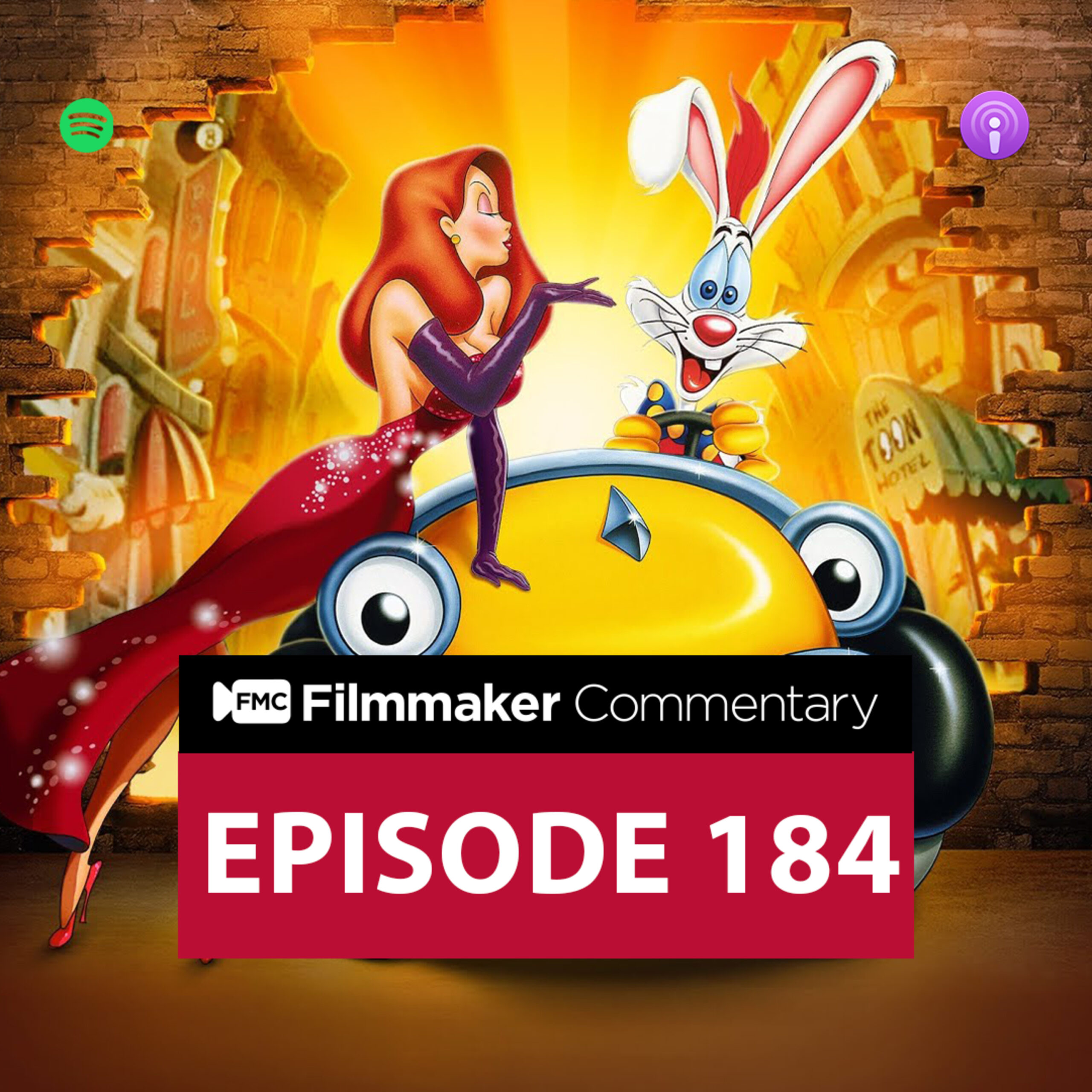
FMC 184: Who Framed Roger Rabbit Directed by Robert Zemeckis

December 11, 2023
Listen on Apple Spotify YouTube
Listen to this episode
Your browser does not support the audio element.
Also on Apple Spotify YouTube

Step into the vibrant, chaotic world of Toontown with Reginald Titus Jr. and Casey G. Smith as they break down the groundbreaking 1988 classic, “Who Framed Roger Rabbit.” This episode dives deep into the film’s revolutionary blend of live-action and animation, exploring the monumental technical challenges and creative genius behind Robert Zemeckis’ masterpiece.

What We Cover

  • The film’s ambitious $70 million budget for its time and its impressive box office performance.
  • The innovative techniques that combined animation, live-action, and special effects, pushing cinematic boundaries.
  • The stellar voice cast, including the legendary Mel Blanc, and the live-action performances that brought Toontown to life.
  • “Who Framed Roger Rabbit’s” multiple Academy Award nominations and wins, and the surprising snub for Best Director.
  • A look at current box office successes like “Barbie” and “Oppenheimer,” contrasting them with disappointing showings from “Indiana Jones and the Dial of Destiny” and “The Irishman.”
  • Why Who Framed Roger Rabbit effectively relaunched Disney’s animation studio.

Key Moments

  • A Groundbreaking Budget: Discover just how expensive “Who Framed Roger Rabbit” was for its era, and how it still turned a significant profit. (0:48)

  • Oscar Glory: A detailed look at the film’s Academy Award wins and nominations, including a discussion on why Robert Zemeckis missed out on a Best Director nod. (3:00)

  • The Art of Illusion: Hear about the complex process of creating characters like Roger Rabbit and Baby Herman, and the incredible detail required for the film’s unique visual style. (2:20)

  • Revisiting Classics: Reginald and Casey G. Smith re-evaluate “The Amazing Spider-Man 2” after “Spider-Man: No Way Home,” plus thoughts on “The Little Mermaid” and “Extraction 2.” (2:47:00, 3:20:00, 3:38:00)

Gear & Films Mentioned

  • Who Framed Roger Rabbit (1988)
  • The Nun 2 (2023)
  • Oppenheimer (2023)
  • Barbie (2023)
  • Indiana Jones and the Dial of Destiny (2023)
  • The Irishman (2019)
  • Top Gun (1986)
  • Tenet (2020)
  • Dunkirk (2017)
  • Once Upon a Time in Hollywood (2019)
  • The Amazing Spider-Man 2 (2014)
  • Spider-Man: No Way Home (2021)
  • The Little Mermaid (2023)
  • Extraction 2 (2023)
  • The Equalizer 3 (2023)
  • Cool World (1992)

Listener Questions

  • What were the biggest technical challenges in seamlessly blending live-action actors with cartoon characters, and how did Zemeckis achieve such convincing interaction?

  • Beyond its box office success, what was the lasting cultural impact of “Who Framed Roger Rabbit” on both the animation industry and mainstream cinema?

  • How did the distinct personalities of the voice actors, especially Mel Blanc, contribute to the film’s enduring charm and influence?

Join us on Filmmaker Commentary for more in-depth movie discussions each week!
Full Transcript

Read the full transcript

Full Episode Transcript
This episode of Filmmaker Commentary Robert Zemeckis's groundbreaking 1988 film "Who Framed Roger Rabbit," discussing its production, box office performance, critical reception, and lasting impact on cinema. The hosts also cover recent entertainment news and personal viewing experiences.

Opening Discussion and Film Details
Reginald Titus Jr.: Filmmaker Commentary episode 184. Welcome to Filmmaker Commentary, where we cover movies with commentaries from directors who take the time to record them on Blu-ray and DVDs. We also give our detailed insights, so look out for spoilers. We discuss the latest in showbiz news along with movies and TV shows that we've been watching. So, join Reginald Titus Jr., that's me, and K.C.G. Smith, that's me, every week here on Filmmaker Commentary. Welcome to another episode of Filmmaker Commentary. I'm Reginald Titus Jr., I'm joined with...
Casey G. Smith: K.C.G. Smith.
Reginald Titus Jr.: Welcome back, sir.
Casey G. Smith: Good to be back, sir.
Reginald Titus Jr.: And today we're talking about *Who Framed Roger Rabbit*, directed by Robert Zemeckis. Uh, this dropped June 22nd, 1988. It's rated PG.
Reginald Titus Jr.: How was the budget and the box office for this film?
Casey G. Smith.: So, *Who Framed Roger Rabbit* came in at a whopping $70 million for its time and grossed worldwide a total of $329 million. Released on June 22nd of 1988.
Reginald Titus Jr.: Holy smokes! They went over budget then.
Casey G. Smith.: Yeah, I'm sure they did, because they, they were kind of burning the midnight oil down to the wire to, to get this thing done.
Reginald Titus Jr.: Oh my God.
Casey G. Smith.: They, they weren't sure they'd be able to get all the animation finished in time, actually.
Reginald Titus Jr.: Dang. But, uh, yeah, that's a win, nonetheless. Uh, that's a win. $70 million, still flipping into $300, yeah, that's a good one.
Casey G. Smith.: They, they said at the time it was considered like one of the most expensive films made.
Reginald Titus Jr.: Really? I can see that 'cause that's, that's a lot now.
Casey G. Smith.: $70, $70 million. Yeah. That's a lot. This was an expensive one.
Reginald Titus Jr.: Dang. Um, because on the documentary, was it the documentary? Um, no, no, um, the, where did I read this? Let me look at it. I think it was the special features, *Who Made Roger Rabbit*. I think the budget was $50 million to get it greenlit, but they were not budging on it and so they had to bring down the budget to get it greenlit to $30 million.
Casey G. Smith.: Oh.
Reginald Titus Jr.: Yeah.
Casey G. Smith.: They, they went right back up.
Reginald Titus Jr.: Ah. Just to kind of get to the thing. $30 million, $30 million, you know, just $30 million.
Casey G. Smith.: Well, when you see how much they, how much they used in the film to, to get it done. we'll talk about this a little later on. It, I can see where that, where that ballooned up and this, and this film had to be made at this time. Like, it, between the voice talent and the, the style and the process of animation, like, it had to be made when it was made. I kind of, I kind of liken this to a Motown 25 with the, the amount of talent, both, both the animators and the actual voice actors, yeah, there are some classic, yeah, there are some classics there who would soon not be around anymore like the great Mel Blanc. Uh, who would be gone. So, this was, this was like primed to do this at the time they did it.
Reginald Titus Jr.: Almost like Eddie Murphy's *Harlem Nights*.
Reginald Titus Jr.: Um, what, um, this, this won some awards. What awards did this, this film win?
Casey G. Smith.: So, *Who Framed Roger Rabbit* was nominated for a total of one, two, three, four, five, six, seven, eight Academy Awards and won three of them.
Reginald Titus Jr.: Okay.
Casey G. Smith.: It won for, actually, you know what? I'm sorry, I'm looking at the, the wrong awards. Let me, let me do that again. *Who Framed Roger Rabbit* was nominated for, yeah, still, eight Academy Awards and won four of them. It won for Best Visual, Best Effects and Visual Effects. It won for Best Effects and Sound Effect Editing. It won for Best Film Editing and it won a special achievement award for Animation Director and Creation of the Cartoon Characters.
Reginald Titus Jr.: Oh, wow.
Casey G. Smith.: It also was nominated for Best Sound, Best Art Direction, Set Direction and Best Cinematography.
Reginald Titus Jr.: Wow.
Casey G. Smith.: I don't know why they couldn't give Zemeckis some love and nominate him for Best Director, because this is a whole lot to pull together. They say it's like three kinds of films. It's, it's, it's live-action, it's animation, and it's special effects.
Reginald Titus Jr.: He didn't even get the nod?
Casey G. Smith.: No, sir.
Reginald Titus Jr.: Dang. Makes you want to look at 1988 again. See, like, okay, what was going on in 1988? But.
Casey G. Smith.: Oh, I mean. When did *Do the Right Thing* come out?
Reginald Titus Jr.: Oh, I should know this. Uh, I don't know. Nonetheless, but yeah, it, it, it was, um, it's, it's, it's a success, right? It was critically acclaimed and, and it made money.
Reginald Titus Jr.: Absolutely. Um, I was going to look at it. I was like, what, what was, what was going on in 1988? Richard Awards. Um, yeah, internet's going slow on my phone. Um, nonetheless, well, well done. Oh, I'm on the, I'm on the web. Who was the winner, Actor in a Leading Role? Oh, *Wall Street*, Michael Douglas. Ah, sorry about that. Roger, sorry, Roger. Oh, you know what I'm saying? Actor in a Supporting Role, Sean Connery, *Untouchables*. Uh, there, there's some competition was, was fierce, out in these streets. So, Roger, James Brown ain't mad at you. You did well for yourself, just to get, to get what you got. Uh, Directing winner, *The Last Emperor*, Bernardo Bertolucci. Ooh. Cher, Best Actress for *Moonstruck*. There was some nominees, *Fatal Attraction*, *Hope and Glory*, *Moonstruck*, *My Life Is A Dog*. Have you seen *Fatal Attraction* before?
Reginald Titus Jr.: I thought we did. Didn't we? We didn't cover it?
Casey G. Smith.: No, we have not covered it. That was, what was that Michael Douglas one that we watched?
Reginald Titus Jr.: Uh, *Wall Street*?
Casey G. Smith.: No, the one where the guy's in, in bed and gets the...
Reginald Titus Jr.: Oh, *Basic Instinct*.
Casey G. Smith.: *Basic Instinct*. That's, see, that's why I get confused it.
Reginald Titus Jr.: Oh, no, *Fatal Attraction* is with Glenn Close, it's much creepier.
Casey G. Smith.: Really? From my understanding, yeah, it's, yeah, it's much creepier. There, yeah.
Reginald Titus Jr.: You might that might be worth circling back around to. 'Cause I, I've never, I've never watched the whole thing. I've never, I, yeah, I've only, I've only seen clips. It's just in, it's like in the zeitgeist, but I've never actually watched *Fatal Attraction*.
Casey G. Smith.: Really? Douglas was doing his thing in the 80s, Michael Douglas.
Reginald Titus Jr.: So, oh, so Doug, oh, oh, okay. So, that is another Michael. See, that's the thing. It's like, he, like, it seems like he plays himself in every, every movie. He's got the hair slicked back. He's the ladies' man type. He's got, he's got the Pat Riley look going on. Or maybe Pat Riley copied him. I don't know.
Reginald Titus Jr.: But, yeah, Michael Douglas was killing it in the 80s, man. He was, he, he had the look and then clearly the talent as well. He also was producing also.
Casey G. Smith.: Yeah. Okay. Ooh. *Fatal Attraction*, a married man's one-night stand comes back to haunt him when that lover begins to stalk him and his family. Yeah. Ooh. Yikes.
Reginald Titus Jr.: Whoopsie.
Casey G. Smith.: But yeah, 1988 was, uh, was kind of, kind of stacked. There's some, some stuff happening. But, all that included one, *Who Framed Roger Rabbit*. God, I love it.

News and What We've Been Watching
Reginald Titus Jr.: All right. Man, uh, but before we talk further about *Who Framed Roger Rabbit*, let's talk about TV, news and movies watched. So, we got two bits of items in the news for you all. Uh, first off, according to the, Hollywood, The LA Times, actually pulling the story from. Reginald shared with me, one Danny Masterson sentenced to 30 years to life for raping former Scientologists. After a pair of trials focused on the Church of Scientology's alleged attempts to shield one of its celebrity members from prosecution, actor Danny Masterson once was sentenced to 30 years to life in prison on Thursday morning after having been convicted of raping two former members of the church.
Casey G. Smith.: Dang, two?
Reginald Titus Jr.: Two.
Casey G. Smith.: Masterson, 47, was convicted of two counts of rape in May and a jury deadlocked on the third woman's accusations. The assault took place in the early 2000s, but Masterson's victims said they waited years to come forward because Scientology doctrine forbade them to report a fellow member to police.
Reginald Titus Jr.: Oh, that's rough.
Casey G. Smith.: Yeah.
Reginald Titus Jr.: That's rough. I, I forgot about all those, those rules from Scientology. There's an actress who was recently on the Joe Rogan podcast who had talked about like when she was in it, how she was treated and then when she got out like how those people basically don't speak to her at all as if she didn't ever exist.
Casey G. Smith.: Was it the same actress who was on, uh, *Queens and Kings*? Yeah, she had a whole docu, like a docu-series that she did on, yeah, like, it was, it was a couple years back, like, she was really blowing up Scientology and, and exposing a lot of their practices. There's also a, a documentary I saw on HBO, I think it was on HBO, where they really dove into uh, Scientology, how it was founded. And she actually, uh, Lea, oh man, is it Lea something?
Reginald Titus Jr.: I forgot her name.
Casey G. Smith.: Yeah, but, um, but yeah, she really blew the whistle on them. But yeah, it's very fascinating to see how it's formed and shaped and its, it's, uh, beliefs.
Reginald Titus Jr.: I think, I think the founder of that religion's like, you want to get rich, start a religion.
Casey G. Smith.: There's a, a docu-series on Netflix. I haven't watched it yet, but I'm thinking about it, but it's like, how to be, how to become a cult leader. Oh, okay. Yeah, that's, uh, yeah, really on there. Uh, the other bit of news, uh, according to the, uh, Hollywood's Deadline, says, "*The Nun 2* conjures $85 million plus global bow as Shah Rukh Khan's *Jawan* thrills at home and abroad. *Oppenheimer* closes in on $900 million and *Barbie* tops $1.4 billion worldwide at the international box office. Refresh for the latest. There's a lot to unpack this weekend at the international box office, including a flying start of Warner Bros. new lines *The Nun 2*, Indian superstar Shah Rukh Khan continuing to outdo himself and a major milestone afoot for Christopher Nolan's *Oppenheimer*. Meanwhile, *Barbie* has danced once again to $1.4 billion worldwide. Nice. Yeah, so, yeah, the box, the box office for the summer seems to continue to be humming along and doing, doing well. Theaters are certainly back in, in full effect. Right. And, uh, and, and doing well.
Reginald Titus Jr.: Yeah. Have there, have there been any flops for the summer?
Casey G. Smith.: *The Flash*.
Reginald Titus Jr.: *The Flash*. Did the, how did, what about, uh, what's our boy? Indiana Jones. How did that perform, I wonder? Hmm. 'Cause I was hearing rumblings of it and I think, I don't know if we had talked about it or, oh, this was online. This was online. Uh, there's a marketer, when, when Twitter had switched over to the X. Um, no, no, no, it wasn't that. It was Instagram Threads. When Instagram released Threads and there was a thread and, uh, one of these marketers were talking about *Indiana Jones*. And I was like, what, what did it say?
Casey G. Smith.: So, the budget for *Indiana Jones and the Dial of Destiny*, $294 million.
Reginald Titus Jr.: How much did it?
Casey G. Smith.: Worldwide gross, $382.
Reginald Titus Jr.: Oh, how much was the budget?
Casey G. Smith.: $294 million, made $382 million.
Reginald Titus Jr.: Uh, yuck.
Casey G. Smith.: Yeah.
Reginald Titus Jr.: So, they lost money basically.
Casey G. Smith.: Yeah, once you account for marketing, 'cause that, 'cause that one's already beginning to hit, it's going to be hitting streaming real soon.
Reginald Titus Jr.: My theory on that one, I was like, you know, it sounds bad, but like my theory is nobody wants to see like old people like do stuff.
Reginald Titus Jr.: Think about, you juxtapose that with *Barbie*. You know what I mean? It's like...
Casey G. Smith.: My, my, my only counter to that, *Top Gun*.
Reginald Titus Jr.: No, like, he was, it, still believable, but like...
Casey G. Smith.: He didn't, he doesn't, he doesn't look old, you're right.
Reginald Titus Jr.: Yeah. Like Tom Cruise, he, they acknowledge he's older and like the things you got to fight being older, but you're still an active person versus like, you're just, you're, you're real old and this is unbelievable. Like I don't, we don't believe you, kind of thing.
Casey G. Smith.: But also, I, it depends on, oh man.
Reginald Titus Jr.: People vote with their dollars. Like that's my theory. Like my theory is nobody wanted to see this older person do that. And as harsh as it sounds, I believe it's true. They want to see young, hot actresses and they want to see, um, somewhat fit guys do things. And, and preferably, really fit guys. And then if you're at it, take your shirt off. Yeah. Nobody wants to really see that's just my theory, you know, is just that.
Casey G. Smith.: I think, I think by and large you are, you are correct. Um, I, I think, I think it's the, the, I think it, the genre matters. And I think in this particular genre where Indy is again, is, is an action, action franchise. And even though he's a, he's a professor in these films, I, I'll be honest, the marketing for the film never, never caught my attention. I didn't see anything in the marketing that made me want to say, oh, I want to, I want to see this film. Because I'll, I'll make an exception to go and see it for an older person if, if the film was good. But this didn't look, there was nothing about the marketing that made me say, I need to go see *Indiana Jones and the Dial of Destiny*.
Reginald Titus Jr.: First off, how old is Harrison Ford?
Casey G. Smith.: He's in his 80s.
Reginald Titus Jr.: So, what movie do you remember that you went specifically for and this person that was leading was in their 80s?
Casey G. Smith.: Hmm. Uh, that's a specific question.
Reginald Titus Jr.: It is. Uh, you, we'll go 70s to 80s. We, we'll give a range.
Casey G. Smith.: Where I had to, where I went to see a film and I knew that, that actor was, uh, how old is Denzel?
Reginald Titus Jr.: He's not, he's still killing people in this one. By the way, *Equalizer* is doing great this past weekend.
Casey G. Smith.: Yeah, I know *Equalizer* did very well, but Denzel's Denzel's not...
Reginald Titus Jr.: *Equalizer 3*.
Casey G. Smith.: Denzel's in his 60s.
Reginald Titus Jr.: Yeah. So, you still got a little juice in the tank. And so...
Casey G. Smith.: Yeah. Uh, you know, it, it would have to almost be like a, I don't know how old Pacino is, but Pacino is kind of one of those guys. But it, but I don't know.
Reginald Titus Jr.: It's been a long time since there was he was leading a film where, you know, he was doing a lot of stuff.
Casey G. Smith.: Yeah. I'm not saying it's not possible, but yeah, it would have to be, I don't know, it's gotta, the film has to look like really good, really attractive. And again, *The Dial of Destiny* did not look like that. It looked like it was okay. They were trying to make it work, but and again, I wasn't a huge *Indiana Jones* fan. I have gone back recently and watched some of the older ones for nostalgia's sake, but there was nothing about this film that made me say, I need to see.
Reginald Titus Jr.: Here, here's one, here's one, a proof of concept, *The Irishman*. They had to do a lot, it was a lot of older guys in there. They had to do a lot of CGI and I heard it was and body doubles. You know, and so like people catch on to that stuff and then some people saying that, didn't really like the way it looked or...
Casey G. Smith.: But also, I, I'll be honest, I, I, I, I like a lot of films by, by our guy, but he was talking trash.
Reginald Titus Jr.: Which one?
Casey G. Smith.: Uh, Harrison Ford. No, the director of *The Irishman*. Oh, Martin Scorsese. Yeah, I like a lot of Scorsese's stuff. We've reviewed a lot of Scorsese's stuff, but he was talking trash about Marvel leading up to it. So, I was like, you know what? Just for that, I'm not going to, I'm not going to support your film. Yeah, like, come on. Come on, Scorsese. Anyway, I was like, I didn't appreciate that. So, but, but also, yeah, it didn't seem like, but it was, it was that was like a Netflix.
Reginald Titus Jr.: Yeah, it went to Netflix and it had a limited, I think it may have limited, limited theatrical release so it can qualify for certain things, but yeah, and it was on Netflix. But , it wouldn't so hyped up to where you were like, okay. Um, you know, I'm not, I don't, you know, I think, I feel you on the political standpoint, you know, politics with the studio. But, um, you know, I heard that he, you know, was talking certain crap, you know, about stuff. And I was like, yeah, you know.
Casey G. Smith.: But sometimes that's used in reverse psychology. Like, okay, if I can generate press just to get my name out there, people become more aware that I'm doing something over here. I think, I think different directors do that at times, take shots at either superhero movies, Marvel, or whatever, specifically to say, oh, just get their name out there. You know, maybe that's a, that's a, I think it's a PR thing. Absolutely. It worked.
Reginald Titus Jr.: You know, any press you say, you know, it's like, you got attention now, this movie better be good. Congratulations.
Casey G. Smith.: Yes, sir.
Reginald Titus Jr.: But, but even in, uh, with, with *The Irishman*, that was one, it was like, uh, I'll pass. You know, just from looking at the trailer. Just looking at the trailer, I'm like, and then I heard it was like super long like, nah, maybe on the day where, I don't know, maybe we're studying it or something. I, but I didn't go out of my way. That that's another example of, you know, some older guys, it's a hard sale.
Casey G. Smith.: It's, it's, yeah, it can be tough. There's a lot of, there's a lot of noise out there and it has to, again, it has to, it has to look like an amazing movie. Again, I, yeah.
Reginald Titus Jr.: And it probably is. The thing is, it probably is. I just probably don't, I'm just not interested. Yeah. That's, for me, I'm just not interested. Um, not in this time of my life, but maybe next year I would be.
Casey G. Smith.: Not at this time of my life. Why didn't you see the movie? It just wasn't the right time in my life. Yeah. I just wasn't into it.
Reginald Titus Jr.: That's, that's, that's, that's real talk though. That's real talk. How do we get on Harrison Ford?
Casey G. Smith.: Uh, just my theory is that nobody wants to watch old people and the box office numbers reflect that. Um, in the movies I just mentioned and, oh yeah, 'cause you were talking about the box office for, um, uh, *Barbie*.
Reginald Titus Jr.: What about *Oppenheimer*? I mean, that's a, so...
Casey G. Smith.: So, *Oppenheimer*, um, is doing good.
Reginald Titus Jr.: It's done very well. Again, it's, uh, approaching $900 million. Yeah. And again, for that kind of film, a period piece based on the creation of the atomic bomb, that's interesting.
Casey G. Smith.: But, you know, with Nolan, Nolan, he has his, it's kind of like Quentin Tarantino in a way where certain people are going to watch a Nolan film no matter what. And but so did Scorsese as well. I don't, I don't know. I don't think people went out to just to go see *Irishman*. But I'm saying, Scorsese has a, he, he has a, he has a following. It's, it's, I don't know how, how did *Irishman* do at the box office? I, I thought it did terribly. Like, and it was, it's going to be, it's not, it's not going to look good because it was a limited release. But let's see what *The Irishman* did. Oh man, I know it was expensive too with all that. Mhm. CGI. So, and, and most of, um, I don't know, it feels like when, and I'm fans of both, both directors.
Reginald Titus Jr.: No, it can't be right.
Casey G. Smith.: You said it can't be right.
Reginald Titus Jr.: Yeah. So, you, that's, that's terrible. Okay, $159 million budget. Uh-huh. $968,000 worldwide. I believe it. I believe it. Especially with limited. Maybe it was just a weekend or something. Maybe it was only like 10 theaters. Um, I believe it, dude, just 'cause it just seemed boring. You know, um, uh, but again, like with, uh, Scorsese, I take extra consideration if he's directed something. But I'm not going to go out of my way to see it just because it's Martin Scorsese. Now, if it's Tarantino or Christopher Nolan, I'm going out of my way to see it. Even if I don't, I don't know what the heck it is that I'm watching. Perfect example is *Tenet*. Like, I saw I was like, okay.
Casey G. Smith.: But *Tenet*, *Tenet* looked interesting. I'm, I'm, I'm going to watch it.
Reginald Titus Jr.: I didn't see the one he did before *Tenet*. The, uh, the World War, *Dunkirk*. Uh-huh. Even though *Dunkirk* garnered much praise and awards and maybe eventually I'll watch it, but there was something about it in the trailers. I was like, and I'm, I'm cool with watching World War 1, World War 2 stuff, but something about that I was like, I, I have no interest in this. Uh, with that one, I didn't go, I didn't go out of my way to watch that one. Most of his stuff, yeah, I'll make sure I watch it.
Casey G. Smith.: I still want to see *Oppenheimer*. I don't know if I'll see it. I probably won't see it in theaters, but I do want to see *Oppenheimer*. I'm, I'm always fascinated by the atomic bomb and its creation and its...
Reginald Titus Jr.: And he spent so much time and meticulous, he's like one of those auteurs that's spending a lot of time with his projects that you're like, you know what? I, I think it, it'll be appreciated more in the theater. Um, *Once Upon a Time in Hollywood*, all the other films, you know, it's like, yeah, I'm going because of Tarantino. The director, Jordan Peele, same thing. You know, I'm going regardless.
Reginald Titus Jr.: Um, anyhow. But I think, uh, I think the subject matter, uh, outside of those directors, the subject matter is, is probably going to trump, uh, the director.
Casey G. Smith.: Fair enough. I mean, that's, that's, that's, that's what they say, in general, that shift has happened, uh, over time where sometimes it's not so much the, the, the actor, the, the name of the actor. Um, it's kind of, or sometimes not always the name of the director. Like, it, it's kind of changed, the audiences have kind of changed like what, what's going to bring them to the movie. Like, sometimes his name alone isn't, isn't, isn't enough. So...
Reginald Titus Jr.: It's not. Yeah. Um, not every time. But *Equalizer* and, and Denzel, you know what you're getting. And that director, Antoine Fuqua did that one.
Casey G. Smith.: Pretty sure, pretty sure it was.
Reginald Titus Jr.: You know what you're getting, you know what I mean? Hopefully it's got a, a, a fresher approach to it. You know what you're getting. You're going to be satisfied coming out of there.
Casey G. Smith.: What have you been watching, sir?
Reginald Titus Jr.: Oh, the only thing that I watched, that I remember that I watched was on Saturday, uh, was the T, no, the Nebraska and Colorado, uh, game. Colorado Buffs featuring Deion's kids and father. And they won again. That was a great, great thing to watch. I was watching that while editing. That was, that one was a little weird. I couldn't like sit there and like just truly enjoy it. I kind of had that playing while I was editing 'cause I had a timeline for a TV show. So.
Casey G. Smith.: Uh-huh.
Reginald Titus Jr.: I, I missed the game, but I watched the highlights actually this morning. I pulled up on YouTube and watched the highlights of the, of the game. And, uh, yeah, they kind of had a slow start. Yeah, yeah, they did.
Casey G. Smith.: But then they got rolling.
Reginald Titus Jr.: It was looking like, uh, I was like, what's going on, guys? But I, again, I kind of liked to see the overcoming of the, of the adversity, you know, to see, you know, to see them tested a little bit, but they, yeah, they pulled it out.
Casey G. Smith.: Dude, it would have been, what was it? Like 30 something to 14. Like it was very, the last play and, you know, they scored kind of like the last. It was like kind of, you know, you kind of got off the gas and just let 'em score or whatever, but they I was like, I wanted to dominate. I just, you know, if you let stuff go. You wanted it to be like, you look at the score like, dang, dang, that's what you want.
Reginald Titus Jr.: Definitive. Yeah. Absolutely. But even then it was still like 20 something point spread. Um, the, the cool thing about seeing them, uh, Deion, um, kind of take over like college has, that's been more popular than the NFL stuff. Like what's been going on over the last few weeks. Yeah. Again, we both had both said that we normally don't watch college ball. Yeah. And I didn't, you know, realizing there's all these different divisions of football. I was like, what is this? Yeah. That's why I don't watch them. Like, this is confusing. Yeah, but I, I, I genuinely want to follow this team. Yeah. Like, I don't, I don't really care about other teams, no offense. But, absolutely same. But yeah, I'm interested in following this, this, this narrative. Write it, write it, it's a narrative. It is. The, the funniest thing that's going is like, a lot of coaches talked a lot of crap. They got that are in his, that are in his division. They were just like, what, what has he won? You know, like, 'cause they're unaware, you know, they haven't really been studying the HBCU stuff, seeing like how dominant they were and the two years they were there and they were unaware of his coaching prior to that, that he's been doing this like 20 something years. So, they think he's came out of nowhere. He decided to coach a team. Oh, you're just a celebrity. So, like, people have said like all kinds of stuff about the portals and stuff like that. So, it was funny to, and it's documented, like, it's online and people are like starting to do mashups like how they talked before and then like now on the day of game, that the guy's like, yeah, man, he's, he's, he's always been a competitor. He's always been a winner. Like all the bullet points that everybody so that he, so that they can look good in front of the media. So, the journalist can kind of spin, see, he was a good sport, you know. What, what blows me away is the power of his brand because I remember during the first game, they showed a commercial for Colorado University. And, and everything was prime. You're going to get prime education. That was great. Had a prime facility with prime instructors. But, most of all, a prime football program. I was like, what the hell?
Casey G. Smith.: It was well done too. It looked good.
Reginald Titus Jr.: Yo, I was, I'm like, man, this dude's brand is so strong. They call him the Prime Effect. And again, even the commentators, and there was, there was one commentator, he was, he, he, he used, he calls him Coach Sanders like once or twice, but by and large, Coach Prime. Coach Prime. That is, that is incredible. That is incredible branding. But, uh, I saw that commercial. I was like, wow. Just seeing how, but, you know, shout out to Colorado because they've had, um, they've had at least two or three other black coaches before. And so, it's not a new thing for them. They're like, go back. You're just kidding. That's good. So, so they're open. Is what I'm saying. All right. Anyhow, that's all I've been watching, football, and son's football and I just been the football world. So.
Casey G. Smith.: All right. So, I got a couple things I've been watching. Number one is a, a slightly older thing. I actually went back yesterday and I watched *The Amazing Spider-Man 2*.
Reginald Titus Jr.: Toby?
Casey G. Smith.: Andrew.
Reginald Titus Jr.: Oh, my bad.
Casey G. Smith.: Which I watched in the theaters, um, when it came out. I, I really liked the first *Amazing Spider-Man* with Andrew Garfield. I've, I've got that. Is this the one with Jamie Foxx in it?
Reginald Titus Jr.: Yeah. Oh, interesting.
Casey G. Smith.: It is interesting because right now we've got this, again, you know, it's, it's so interesting how a, a movie that comes out later on can contextually change how you feel about another movie. And the, *Spider-Man*, the last *Spider-Man*, *No Way Home*.
Reginald Titus Jr.: *No Way Home*, *No Way Back*.
Casey G. Smith.: Yeah, I think it's *No Way Home*. Yeah. Okay. So, yeah. Find another route.
Reginald Titus Jr.: *Spider-Man*, *No Way*, *Spider-Man No Way Home*, oh, which is such a freaking awesome film, right? Gives us spoiler alert. Yeah. All three *Spider-Man* in one film. I've watched them all. So, I appreciate it.
Casey G. Smith.: Oh, dude, that moment, I was in the theater with my, with my family watching that and, oh man, when I saw, anyway. So, but seeing that and then see kind of like the redemption of even Jamie Foxx's Electro, uh, one of my favorite lines from the film is like, how did you get your powers? And he's like, oh, I fell into a, a super collider. And he's like, I fell into this. He's like, I fell into a, man, I fell into a vat of electric eels. Damn, you gotta be careful where you fall. Like, I, it's a similar line for that. I'm going to be dying. I was like, ah, okay. But, so going back and watching *The Amazing Spider-Man 2*, it, it is a very well done film. It, it landed at a, at a, a very unique time when the expectations for superhero movies was, was just ratcheting up. Yeah. And it didn't, it, it did well, but it didn't do like Sony expected. They were, I think they were expecting like a billion dollars and it did maybe, I don't know, maybe 7-$800 million or something like that. Anywhere between 600-$800 million, I want to say is where it landed. And so, it was considered not a success. And that's that's when they, they cut the franchise off and eventually they rebooting. But man, going back and watching, I'm like, this is freaking solid, man. The, the chemistry, hands down, is the best chemistry. Again, Zendaya and, um, and Tom Holland. All right, that's, that's cute, but she's kind of made it to be kind of quirky and a little, little stand-offish and then it's kind of, and then, you know, uh, Tobey and, uh, our girl, uh, who played Mary Jane. Kirsten Dunst. Yeah, like that, okay, that's all right. Always think of the shot when he shoots up into the rain and he's just like, oh, after the upside-down kiss? Yes. Yo, okay, yeah, no shade there. But, Emma Stone and Andrew Garfield, their chemistry is fantastic in this film. Oh, okay. And yeah, and you know, Dane DeHaan as as Harry, and even, again, now I can look back at Jamie's performance and like, all right, it, it, it doesn't seem as, I don't, it doesn't seem as extreme now. And maybe some of the things once you actually see the film, your, your expectations are managed. But, I can, I can, I enjoyed it, uh, a lot more. There's some things that are still kind of silly, you know, the, the guy Paul Giamatti as Rhino. Okay, that's whatever, but they were clearly trying to build up to a Sinister Six spin-off eventually. Huh. Okay. But, *Amazing Spider-Man 2*, even some of the, the effects and like, yo, Andrew Garfield is Spider-Man.
Reginald Titus Jr.: Andrew Garfield's a good actor.
Casey G. Smith.: He is. It's, it's solid. You haven't seen it in a while, it's on, it's on streaming on, on Disney Plus. Like Disney's doing their thing with Sony where they've got now like all the *Spider-Man* movies. Which is like, sometimes you just need a whole place for all your movies.
Reginald Titus Jr.: It'll be great if all movies could live on one location and you can just choose to buy, rent, or stream it.
Casey G. Smith.: Hmm. Just saying. Just an idea for the future, AI.
Reginald Titus Jr.: I hear you, Reginald. Thank you. Yep. But yeah, *Amazing Spider-Man 2* is on Disney Plus. Worth a revisit. 'Cause I hadn't watched it since I saw it in theaters, but, yeah, it was.
Casey G. Smith.: Oh, okay. Okay. It's, it's, it's a nice revisit. Solid.
Reginald Titus Jr.: Oh, another film I watched on Disney Plus, the new *Little Mermaid*.
Casey G. Smith.: Oh, okay. Yeah. Watched, watched the whole thing.
Reginald Titus Jr.: My daughter still doesn't want to watch it. I turned the, I like, I flipped on the banner for the Little Mermaid. I said, don't you want to watch it, girl? She's like, no.
Casey G. Smith.: I thought it was, again, I like musicals. Yeah. So, but, I remember being in the theater, she's like, why are they singing? I was all right, I was all right with it. Uh, it was, it was, it was enjoyable. Again, a nice, you know, homage to the original, takes, takes a lot of similar tropes. I wasn't sure how, you know, how I would feel about the, the Sebastian the crab and the CGI. It was all right. Even though, in addition to under the sea, it was all right. Again, not, again, it's not as good as the first one, but they did their thing. There was one little song that was kind of new that they sang, this, this song called "Scuttlebutt" that kind of had the crab and had Awkwafina. That was kind of fun. That was something new that they added in. Uh, had a little Lin-Manuel Miranda flavor going on with that. But, uh, but no, I actually, I, I thought it was all right. I was like, okay. I was like, that's actually better than I expected. I was like, huh, All right, it did its thing. But yeah, *Little Mermaid*, Disney Plus. But my favorite thing that I watched this week was on Netflix. Oh. It's got series.
Reginald Titus Jr.: What did you watch?
Casey G. Smith.: *Extraction 2*. Uh, gotta man, Chris Hemsworth. Oh, yeah. I'm meant to watch that one. First one, solid. Yeah. The first one was good, right?
Reginald Titus Jr.: Yeah. Yeah. First one was, dude, it from a, a action movie. And this is where I think, man, this should be seen in theaters. This thing should be in theaters. Netflix has a couple of action films that should be in theaters. Like, it's like, it's like that. This, *Extraction 2*, they have some incredible stunts in this thing that just from car chases, just to like gun fights, like, they're doing some, I'm like, I've never seen that before. Yeah. Hemsworth. Yeah. It's funny listening to the, what you just said about Little Mermaid, Little Mermaid. It's good. *Extraction*, solid. Should be seen in theaters. Yeah. I can feel the difference. I can feel it. Yeah. There, there is, there is a difference. *Extraction 2*. Yeah. Again, *Little Mermaid*, it had me, it's like, whoa, whoa, that was amazing. Look at these lights. But also, *Little Mermaid*, again, I knew what to expect. I wasn't expecting a, a big difference in the story. I was like, okay, I know where this is going. I know where this is going. This is going to end in marriage. Yeah. And her ultimately getting her way. She's kind of in the day, kind of a, she's a spoiled teenager, yeah, who rebels against her father. Yeah. And leaves home, is a runaway. It's a, this is a story about a runaway. Dang. Yeah. She's a runaway. You know, and, um, ends up coming back home, makes, makes some bad decisions. Yeah. And, you know, daddy fixes it. 'Cause he's, he's technically a rich girl. Yeah. So, it's kind of a spoiled brat. Yeah. At the end of the day. This is we're breaking it down. Yeah. Spoiled brat with flippers. You know, gets involved with some black magic. Run away. Heartbreak. Swims away. Yeah, swims away. And eventually runs away. Gets her legs. Yeah. But, uh, but, uh, yeah, ultimately daddy fixes everything and gives him, gives his blessing to his rebellious child. And, uh, she sells off with a prince happily ever after. Dang. Teenager. *Extraction 2*. Solid. Okay. Solid. Good action. It's good old fashioned blood and guts. But no, the action is, is, is really, really good. I was, I was very impressed with the action and, and some of the cinematography shots as well.
Casey G. Smith.: Younger guy, I'm assuming. Probably in shape. Uh, that's what I'm assuming. Probably. This is Chris Hemsworth. So. Aside from playing fat, people that don't know who that is. If you don't know who Chris Hemsworth is, where have you been? I only can listen to podcasts. They don't have movies. Listen up. You listen up good. They don't have movies where I live. We've covered multiple episodes of, of multiple movies of the MCU. Chris Hemsworth, played Thor. This is my first episode. Well, welcome to Filmmaker Commentary. Please know that there will be spoilers. You've been forwarned. Good day, sir. Good day. *Extraction 2*, solid. Check it out. Yeah, it does not, does not disappoint. I, I kind of held off 'cause I was like, nah, was it going to be as good as the first one? Yeah. No, it, you know, yes. One of the, one of the, uh, most enjoyable action films I've seen this year. Okay. I can dig it. Man, it should be in theaters. I mean, they made an exception for *The Irishman*. Put in *Extraction*. Yeah. If they were trying to get awards or something for that one. Anything else you've been watching?
Reginald Titus Jr.: No, sir.
Casey G. Smith.: Today's show sponsored by *Natural Hair*, the movie by Gray and the Matter Films, available to stream, on demand, on Tubi, on Roku and on YouTube. Please check it out and leave a review. Now, let's jump back into the show.

Synopsis and Cast
Reginald Titus Jr.: Thank you for tuning in to Filmmaker Commentary. We're talking about *Who Framed Roger Rabbit*, directed by Robert Zemeckis. Let's jump into the synopsis. It's 1947 Hollywood and Eddie Valiant, a down on his luck detective, is hired to find the proof that Marvin Acme, Gag Factory mogul and owner of Toontown, is planning hanky-panky with femme fatale Jessica Rabbit, wife of Maroon Cartoon superstar Roger Rabbit. When Acme is found murdered, all fingers point to Roger, who begs the Toon Hated Valiant to find the real evil doer. *Who Framed Roger Rabbit*? Rated PG. And if this is your first time listening to Filmmaker Commentary, once again, there will be spoilers. You've been forewarned. Who is in our cast for *Roger Rabbit*?
Casey G. Smith.: So, this film features a multitude of, well, a couple of live-action actors and a litany of famed voice actors. So, we have one Bob Hoskins playing lead role of Eddie Valiant. We have the, uh, often connected with one, uh, Robert Zemeckis, Christopher Lloyd playing Judge Doom. We have Joanna Cassidy playing the very appropriate Dolores, who's the bar owner. We have the energetic Charles Fleischer, who voices both Roger Rabbit, Benny the cab, Greasy and Psycho, who I believe were two of the weasels. Uh, uh-huh. We have, get into some more kind of significant ones. We have from a voice acting standpoint, we have the, the late great Mel Blanc, voicing both Bugs Bunny, Tweety Bird, Sylvester the Cat, um, someone else that he voiced as well. But I mean, Mel Blanc is just, just genius voice actor-wise. Uh, we also have, oh yeah, also, of course, Daffy Duck. That's who else I was missing. I's like, oh, somebody missing on here. Uh, we had the, the late great June Foray, who played, uh, the, the crazy woman says, oh man, and and chases after Eddie. Oh, yeah, yeah, yeah. Uh, she, she used to voice, uh, Smurfette back in the day and also Jokey Smurf, but she's, she's, she's done a lot of, she's also the voice of Rocky from *Rocky and Bullwinkle*. How about that? Yes, sir. Um, I want, I wanted to get the guy who voiced Mickey Mouse. Uh, anyway, there's a, uh, there we go. Wayne Allwine. There's been a lot of people who have voiced Mickey Mouse over the years, but Wayne Allwine voiced him in this film. He did, he did Mickey in the 80s. Uh, Frank Sinatra has a real quick cameo with his voice. Uh, Jack Angel, who may not be that, that well known, but he is, he's done a lot of VO, especially in the 80s. Same with Corey Burton, who's voiced Spider-Man and multiple things. Nancy Cartwright is in here. I didn't realize that. She's the voice of Bart Simpson. Um, yeah, just a, a litany of, of vocal talent in this movie. Sounds good. How did you watch this film in the past and this time around? How did you watch it?
Reginald Titus Jr.: First time I watched this was, I didn't see it in theaters, but I watched it maybe we rented it or I watched it maybe on HBO. Uh-huh. Or maybe at a friend's house. I don't, I don't remember where I was when I first watched it, to be frank. But I know, I know I enjoyed it. Um, oh, it was, I know, I was at home when I watched it. 'Cause I, 'cause I always, the, the scene that stood out to me was, was just kind of my mind being blown a little bit seeing Bugs and Mickey in the same frame. I'm like, what is going on? These two together? I, I didn't know much about Disney. I mean, I knew of Disney, but I, I didn't see Disney a whole lot, but Bugs was everywhere, right? Warner Brothers was like, was super accessible stuff. You'd see Merrie Melodies and all kind of stuff, Looney Tunes all the time. You know, Bugs, Bugs is like active, where Mickey is like, yeah, he just shows up and stuff. So, seeing those two together, I was like, wait, what? And Mickey's like just super nice. With Bugs, Bugs was a bit of a bastard. Bugs will, Bugs will try to blow you up. Oh, yeah. Um, but yeah, that's when I first saw it. And then I, then I rewatched this about maybe 10 years ago during my Netflix when I was, when I was renting various DVDs and Blu-rays from Netflix and I remember rewatched it then. How about yourself, sir?
Reginald Titus Jr.: I watched it on VHS. I think that's the cover that was in our house, the VHS cover. Um, it's Roger Rabbit kissing the detective on the cheek. You see the little heart, the little heart symbols coming out. I think, or butterflies. I think those are hearts. Look, stars. See? Um, but, um, that was at home. It was, it was a copy that we owned. Like, we just had a library of VHSs, a little container and this is one that we would always go to. Probably for a year we were watching this over and over again. It's kind of crazy because it's been a long time since I've ever watched this film. I think since being a child. And then as soon as I put it in, I knew the lines to to certain things. I was like, what? How do I know? I still know the lines, bro. You programmed yourself. Like, it's like a song, basically. Yeah, man. Like, oh, I know this. I've been here. I was like, I live in this place. Like, it was very nostalgic. I was like, oh, wow.
Casey G. Smith.: I think that's so cool when that happens. Even when it's been a minute and like you just know and it's like just booming, it comes, when it comes back to you, that memory comes back.

Likes, Dislikes, Themes and Memorable Scenes
Reginald Titus Jr.: Specifically when, and this time around I just watched it on Disney. Shout out to Disney for having it there. How about that?
Casey G. Smith.: We own it.
Reginald Titus Jr.: All right. It's like, oh, touchscreen Disney. Okay. Yeah, I didn't realize. Once I saw it, I was like, oh, okay. 'Cause I was, I was, I was trying to figure out like, okay, who owns this thing? In order to have both these different brands, the Warner Brothers and the Disney, okay, okay, who owns this and how did they get the deal to be cut to get there other to have their characters featured in it? That's, that's just. And we'll talk about that. Yes. Trivia and stuff like that. Um, but yeah, so it's Disney, so I watched it on Disney and then on YouTube they had the actual commentary. But the commentary was getting real good. And I was like, you know what? I probably have to watch this because they're actually reacting to the things that's happening on screen where usually Robert Zemeckis, he's just, they're just doing their own thing and the movie doesn't even matter. Yeah, the commentary on this one is, is solid and it's, and it's, again, I don't always like when there's a lot of people doing commentary, but on this one, we have quite a few people. There's about five to six people who helped make the film from special effects directors to, uh, Robert himself. And they are going in and they are, they are following the film along. They're, they're, they are enjoying it. Like, they, they loved what they've created in *Roger Rabbit*. And so, it's, it's actually a really good time. Uh, we have Robert Zemeckis, Frank Marshall, Jeffrey Price, Peter Seaman, Steve Starkey and Ken Ralston all on the commentary. And they, they, they crush it. Like, these guys do a fantastic job. It's one of the better group commentaries that I've heard.
Reginald Titus Jr.: Um, yeah, what, what did you like this, this time around? What did you like or not like about the film?
Casey G. Smith.: What I liked about *Who Framed Roger Rabbit*? The voice talent, um, number one. I mean, first off, shout out to Charles Fleischer. He does an incredible job in creating this brand new character in Roger Rabbit, who is memorable. Like, you, you know, and, and, in a, in a animated character, there has to be something in the voice, right? That makes them stand out. That's going to make him different from a, say a Bugs Bunny. And Fleischer found that with, you know, doing that, that thing, that thing. You gotta have some kind of speech impediment. Exactly. And, but it's, it's, it sticks. And, you know, he's super over the top. And then, and, and, and Roger can be a bit much, but the, the screenplay is, is pretty brilliant. The, the humor in this. It's as now as an older adult, let's tell him like, oh, wow, this is, this is a very smart film and the way they use double entendre and it's like, wow, I mean, there's of course the slapstick stuff for the kids, but as an adult, there's a lot of underlining things and some things that are overt. It's like, wow, this is, this is a smart, smart film. And so, I watched it. Oh, go ahead. Yeah, so, I, I, I appreciated that and just how, how he was played. Again, with, with Fleischer as, as Roger from the big old the top and then he gets, when he finds out that, you know, that he thinks his wife's been cheating on him. Yeah. And he, and he's, and he's, he's super sad and he comes down. He's by himself. They, they pull you in. You kind of you begin to feel for Roger. He's crying. Yeah. It's like, man, he's taking you on this emotional swing, but the voice talent is, is solid. It's great. And our main actor, um, when you see behind the scenes and you see how much pantomiming he had to do and reacting to nobody being there, that's, it's, it's pretty incredible. Now, again, I guess this happens quite a bit now with green screen now. But, yeah, it, it, it, it, it seems like, like an extra level of just kind of special, uh, because, yeah, I mean, he has to interact with Roger like, like he's grabbing him, but there's really like, no, nothing there. But yeah, so shout out to Bob Hoskins for his performance and the, the way the animators are able to match everything up. It's British. They're both British actors, man. They're trained. Yeah. They were, they were somebody said in the commentary, they're like, okay, Bob, look, you're going to have to react to nothing. He's like, oh, I, I've, I've, I've acted enough times. That's not anything new. There's some actors I've worked with that's, it's, that's, that's, that's what I do anyway. Oh, man. But that's, there's some reality, there's some, some realness to that because you do have actors that give you nothing and you're trying to bounce off of them. Exactly. It was, it was hilarious. Like they, they were cracking up at Bob. But yeah, I enjoyed those elements of this. Um, only dislike is one of those old tropes of seeing Negroes portrayed as crows. Oh, yeah. Oh, the band that plays behind Jessica Rabbit when she's singing her song. Oh. That's all crows, all crows. I'm like, good catch. And that's terrible. But it kind of goes with the Warner Brothers and everything they got going on.
Reginald Titus Jr.: The Disney Juice.
Casey G. Smith.: Yeah. Dumbo. Oh. *Song of the South*. Yeah. No, there's, there's, oh man. Oh, Disney. Yeah. Last time they had done a live action there. Keep that one in the vault. Yeah. They had Dumbo there. I see you in the butterfly. Uh-huh. Man. But yeah, he gets flattened and you're like, oh, wait a minute. Yeah. He's not human. He's a, he's a freaking Toon. Yeah. Big reveal. Oh, that one was good. That was good. But I'm like, man, this actually is pretty solid, guys. I don't know. Everybody was calling it a wrap. And so, we saw that in *Goonies*. I just thought about that when he was like, Boobie Trapped. Yeah. So, at the end of *Goonies*, the same thing. The capitalists, we ripped, remember they ripped up the, the contract and they, they get to stay in their town because they were supposed to sell all their homes. That's right. And get out of town. But they ripped it up. Yeah, they ripped it up. 'Cause they had the money too to pay 'em out. Um, nice. Nice. That's nice. That's all I have for quotes. Do you have any questions for our filmmakers? I've got, yeah, I've got several more. Oh, okay. No worries. Let's run it. Roger Zemeckis was originally turned down as a director. Um, mechanical devices were used to move things around and then covered up by the animation later. Oh, that one was good. That was that was specifically the little stogie. Yeah. Um, the production couldn't track down Bill Murray. He was going to, they wanted him to play the detective. But they couldn't track him down. 'Cause you know it's hard to get Bill Murray. You get, you call his landline. You I think it would have been a different film. It would have felt very different. Yeah. He says that. Oh, yeah. Right. Hey, ain't nothing changed. Nothing new on the sun. Yeah. The game needed to change. Yeah. Sometimes you got to be the cashier. Right. Now, I'm not saying no. Not back then. Not today. Before it, before it, uh, kind of popped out. Now, I mean, there's so many kids growing up with the anime. Yeah, man. Oh, my man. That's pretty funny. Oh, man. That's pretty funny. That's pretty funny. Oh, man. Yeah. That's what I got. That's what I got too. What do we jump into next time?
Casey G. Smith.: Oh, man. That was pretty funny. That was pretty funny. Um, once again, this is, this is Roger, when he's in the office both with Eddie and with Mr. Maroon, and Roger's, Roger's like very poetic, right? And he likes, he likes to say things in threes and he likes to take those, the, the three things that mean the same thing, but he just says 'em different ways. And he's talking about how much he loves Jessica. He says, she's the sugar in my coffee. Yeah. And he says, Eddie says, you better start drinking it black. Yeah, that's right. He said, you better start drinking it black. I was like, oh man. Yeah. Dude, cynical way. And of course, you know, Roger's kind of keen catchphrase was like. Ah. Just that. Man, it's just, it's just so that's all I got, brother. It's all I got too. What, what would you, uh, rate this film? Man, I would give this a solid seven and a half to eight. I was, I was pleasantly surprised with, uh, how much I enjoyed it and how much the the humor hit for me. Yeah. Uh, yeah, I thought I'd be more sometimes a little more annoyed with Roger, but I, I really wasn't. They really, as I've gotten older, I, I, I, I appreciate this film. Yeah. Yeah. I might have might make it a little higher, like nine or ten. Like there's a reason why this one won so many Oscars. Um, it was entertaining as a kid watching it and it's still entertaining. And that's hard to say for a film that was done in 1988. Not too many films can say that. This, this film is special. Again, uh, again, when I, when I, when I see it again, all the voice talent that is not with us anymore that's in this film. It was special then to see that, but even more so now that they've passed, I was like, man, that's, this was just a, you know, just landed at just the right time. Indeed. What are we jumping into next time?

Ratings and Outro
Reginald Titus Jr.: Next time, we are diving into our Halloween run of films. So, prepare for the scares as we take a trip to *The Creep Show*. And you can catch us where?
Casey G. Smith.: Facebook.com/filmmaker commentary. We're also on iTunes, Soundcloud, and Spotify. Please like and subscribe. You can reach us on Twitter. He is at Reggie Titus. I'm at KC G Smith 32. And we are on the Gram at Filmmaker Commentary. He is at Reginald Titus Jr., that's JR. I'm at KC G Smith 32. Until next time, peace, respect.

About Filmmaker Commentary

Reginald Titus Jr.

Apple Spotify YouTube Subscribe Free
Continue Listening

FMC 253 : It Follows Directed by David Robert Mitchell

November 7, 2026

FMC 252 : Talk to Me Directed by Danny Philippou and Michael Philippou

October 25, 2026

FMC 251 : Weapons Directed by Zachary Michael Cregger

October 24, 2026

Leave a Response Cancel reply

Never Miss an Episode

New episodes every week — free.

Listen on Spotify Apple Podcasts

Recent Episodes

  • FMC 253 : It Follows Directed by David Robert Mitchell
  • FMC 252 : Talk to Me Directed by Danny Philippou and Michael Philippou
  • FMC 251 : Weapons Directed by Zachary Michael Cregger
  • FMC 250 : Obsession Written and Directed by Curry Barker

Archives

  • November 2026
  • October 2026
  • September 2026
  • June 2026
  • May 2026
  • April 2026
  • March 2026
  • February 2026
  • January 2026
  • November 2025
  • September 2025
  • January 2024
  • December 2023
  • November 2023
  • October 2023
  • September 2023
  • August 2023
  • July 2023
  • June 2023
  • May 2023
  • April 2023
  • March 2023
  • February 2023
  • January 2023
  • December 2022
  • November 2022
  • October 2022
  • August 2022
  • July 2022
  • June 2022
  • May 2022
  • April 2022
  • September 2021
  • August 2021
  • July 2021
  • March 2021
  • November 2020
  • October 2020
  • September 2020
  • August 2020
  • July 2020
  • May 2020
  • April 2020
  • March 2020
  • February 2020
  • January 2020
  • November 2019
  • October 2019
  • September 2019
  • August 2019
  • July 2019
  • June 2019
  • May 2019
  • April 2019
  • March 2019
  • February 2019
  • January 2019
  • December 2018
  • October 2018
  • September 2018
  • August 2018
  • July 2018
  • June 2018
  • May 2018
  • April 2018
  • March 2018
  • February 2018
  • January 2018
  • December 2017

Categories

  • Film
  • Podcast
  • TV
© 2026 Filmmaker Commentary. All rights reserved.
  • About
  • Episodes
  • Privacy Policy
  • Disclaimer
  • Terms of Service