July 1, 2026
F
Filmmaker Commentary
  • Home
  • About
  • Episodes
  • Film
  • TV
  • Home
  • About
  • Episodes
  • Film
  • TV
Podcast

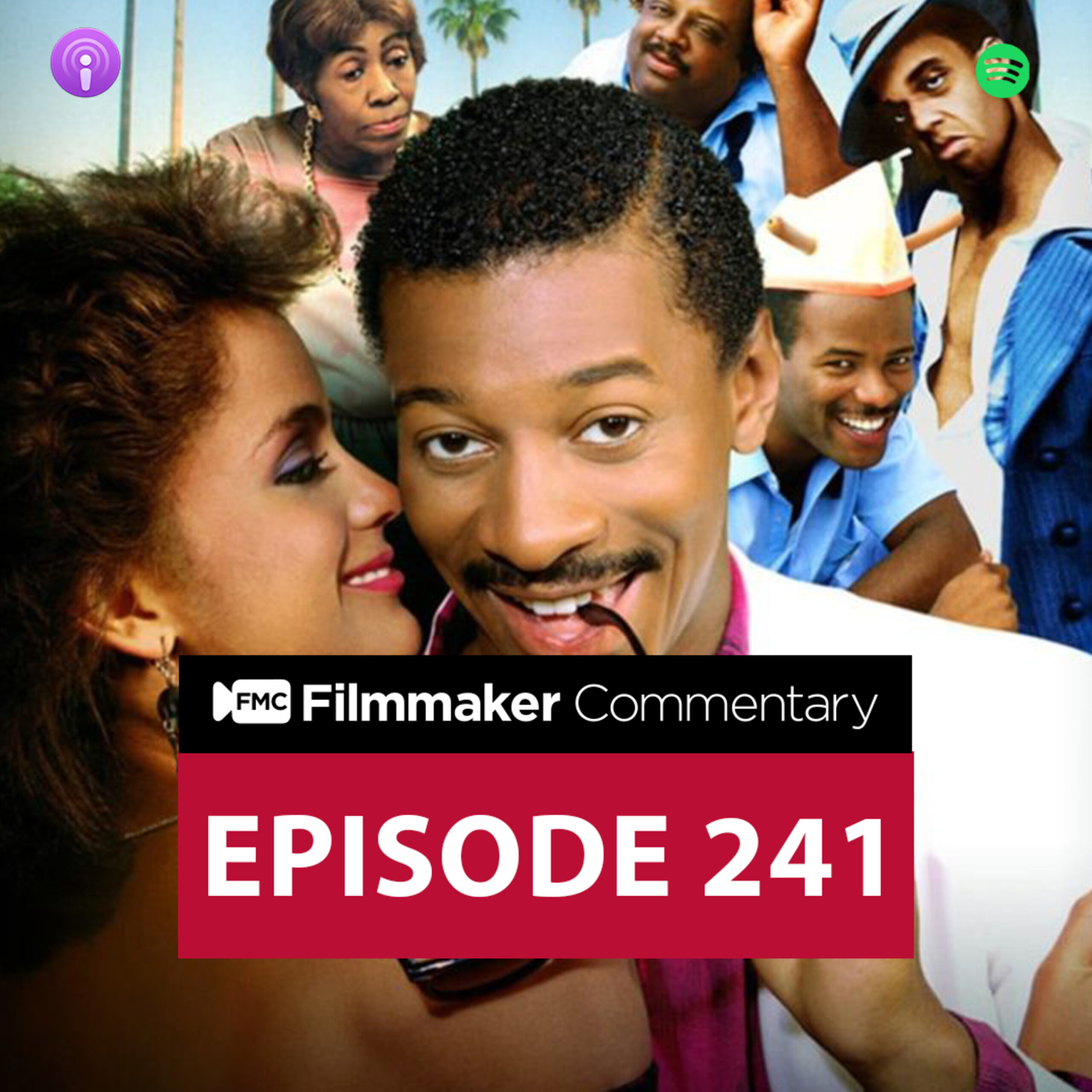
FMC 241 : Hollywood Shuffle Written and Directed by Robert Townsend

April 23, 2026
Listen on Apple Spotify YouTube
Listen to this episode
Your browser does not support the audio element.
Also on Apple Spotify YouTube

The latest episode of Filmmaker Commentary shines a spotlight on Robert Townsend’s influential 1987 film, “Hollywood Shuffle.” We uncover how Townsend, wearing multiple hats as writer, director, and star, managed to turn a mere $100,000 budget into a global box office success, grossing over $5 million. Tune in to understand why this film remains relevant and how it shaped the career of a true independent visionary.

What We Cover

  • The astonishing budget-to-box-office success of “Hollywood Shuffle.”
  • Robert Townsend’s multifaceted role as writer, director, and star.
  • The film’s pivotal impact as a pioneering piece of independent satire.
  • How “Hollywood Shuffle” courageously addressed racial stereotypes in Hollywood.
  • Townsend’s unique directorial style, emphasizing improv and actor freedom.
  • The lasting cultural relevance of the film decades after its release.

Key Moments

  • 0:48 – Unpacking “Hollywood Shuffle”‘s incredible financial triumph from a $100k budget.
  • 2:21 – Examining the film’s critical reception and its biting critique of the industry.
  • 40:15 – Discussion on Robert Townsend’s approach as an “actor’s director” and the use of improv.
  • 53:30 – Robert Townsend shares personal anecdotes about his struggles and the film’s impact on his career.

Gear & Films Mentioned

  • Films:
    • The Five Heartbeats
    • Meteor Man
    • Love Jones
    • Love & Basketball
    • Hill Street Blues
    • In the Heat of the Night
    • Men on Film
    • Living Single
    • Friends
    • A Soldier’s Story
    • Eddie Murphy: Raw
    • Ratboy
    • House Party
    • Good Times
    • A Different World
    • The Cosby Show
    • Mad Men
    • Breaking Bad
    • Dexter
    • Super Mario Galaxy
    • Your Friends and Neighbors
    • Shrinking
    • Lethal Weapon
    • The Color Purple
    • Low Down Dirty Shame
    • Beverly Hills Cop
    • 48 Hours
    • Trading Places
    • Tales from the Hood

Listener Questions

  • How did Robert Townsend successfully fund and produce “Hollywood Shuffle” on such a minimal budget?
  • What enduring messages does “Hollywood Shuffle” offer regarding representation and the pursuit of dreams in the entertainment industry?
  • What insights does the episode provide into Robert Townsend’s unique creative process and his influence on independent filmmaking?

Full Transcript

Read the full transcript

Full Episode Transcript
This episode of Filmmaker Commentary Robert Townsend's "Hollywood Shuffle," exploring its cultural impact, production challenges, and enduring relevance for Black actors in Hollywood.

Introduction and Film Overview
Reginald Titus Jr.: Filmmaker Commentary, episode 241.
Reginald Titus Jr.: Welcome to Filmmaker Commentary, where we cover movies with commentaries from directors who take the time to record them on Blu-ray and DVDs. We also give our detailed insights, so look out for spoilers. We discuss the latest in showbiz news along with movies and TV shows that we've been watching. So join Reginald Titus Jr., that's me, and Casey G. Smith, that's me, every week here on Filmmaker Commentary.
Reginald Titus Jr.: Welcome, welcome, welcome to another episode of Filmmaker Commentary. I'm Reginald Titus Jr., I'm joined with.
Casey G. Smith: Casey G. Smith.
Reginald Titus Jr.: Welcome back, sir.
Casey G. Smith: Good to be back, sir.
Reginald Titus Jr.: And today we're talking about Hollywood Shuffle, 1987, directed and co-written by Robert Townsend. What was the budget and box office for this film?
Casey G. Smith: So Hollywood Shuffle, on an estimated budget of $100,000, went on to globally gross $5,228,000.
Reginald Titus Jr.: What? Yes, sir. That's a win.
Casey G. Smith.: Absolute win.
Reginald Titus Jr.: Oh my god, that company was probably like, hey, what else you got?
Casey G. Smith: Exactly. Funny you ask.
Reginald Titus Jr.: Um, was that just all American money or was that, did they show any international? I know that was kind of early on, so who knows?
Casey G. Smith: So from what this is showing, it's saying this is, yeah, at least from what I'm seeing on IMDb, this was U.S. and Canada, comprising of the world. But this did have, I know from when we talk about like awards, it did win an award at a, a French film festival. Robert actually talked about that in some of the features that were on the Criterion Collection version.
Reginald Titus Jr.: I wonder if it was Cannes in the film festival?
Casey G. Smith: No, this was a, this was like a, well, no, I don't, I don't think so, because I, I looked at the award names and it, it didn't say Cannes. It was the, either it's the Amiens International Film Festival or the Deauville Film Festival. I think that's the one because the award was "Coup de Coeur." Please forgive my terrible French pronunciation. And also, it won a Critics Award at that same festival, so I think that was the one.
Reginald Titus Jr.: I can dig it. What was the sentiment at the time?
Casey G. Smith: So for Hollywood Shuffle, according to my Google AI overview, it says, "Hollywood Shuffle was received as a critically acclaimed pioneering piece of independent satire that, despite its tiny budget and uneven sketch structure, offered a vital, biting critique of Hollywood's treatment of Black actors. It was both a commercial success, grossing over 5 million, as we discussed before, on a roughly $100,000 budget, and a career-defining calling card for writer, director, and star, Robert Townsend." One of the things I wanted to mention from this overview was, where is it at? Some of the, yeah, so yeah, those are some other takeaways from it. But I'll mention these three real quick. It was praised for its satire. Critics lauded the film for its sharp, imaginative, and courageous take on racial stereotypes. Roger Ebert called it an artistic compromise but a logistical triumph. Uneven format. Many reviewers described it as a ragged, uneven series of sketches, rather than a cohesive narrative, but noted that the best moments, like the Black school, Black acting school, were brilliant and explosively funny. And then relevance. It was ascribed as a poignant film that remains relevant decades later, holding up a mirror to the limitations placed on Black talent.
Reginald Titus Jr.: Wow. To this day. To this day. Mhm. Um, okay, that's interesting. Okay.

News and "What We've Been Watching"
Reginald Titus Jr.: But before we talk further about Hollywood Shuffle, let's talk about TV, news and movies watched.
Casey G. Smith: So in the news, according to Deadline, Bryan Cranston sticks up for Breaking Bad's Anna Gunn after actress got a lot of blowback for sexist fans, uh, people have died, and she's the bleep.
Reginald Titus Jr.: What?
Casey G. Smith: So, did you ever watch the show Breaking Bad?
Reginald Titus Jr.: No. Everybody's told me to watch. It was either that or Dexter, and I had to make a choice. And so I've been watching Dexter.
Casey G. Smith: Well, we live in this wonderful world of streaming, Titus. You could choose Breaking Bad as well now. It's the series has come to its completion many years ago.
Reginald Titus Jr.: Yeah, it was, when I watched Dexter, it was, it was done. Both of them were done when I watched it, and I was like, so I was like, okay, what's it gonna be? Because it, in order to watch Dexter, I think it had about the same amount of seasons, like six or seven, it was like a long. So this, it took a month of my life to, I remember when you, when you and your wife got into it, you said, y'all, y'all got sucked in.
Casey G. Smith: Um, I, I enjoyed Breaking Bad. I, I was watching it while it was current. Yeah, it was, it was, it was, it was Mad Men and Breaking Bad. And then eventually, at the time, even Walking Dead. So it, like AMC was winning. They were killing it. And it was literally, uh, what do they call, water cooler, like talk where you just couldn't wait to talk to people about it. Hey, did you see that episode? You see, me and my brother, we were both watching Breaking Bad. It was, a lot of good conversations, good good cinematogr.
Reginald Titus Jr.: A lot of good cinematography too, 'cause I've seen clips of the, of the show.
Casey G. Smith: I tried to go back and, and, and watch them now. I, I was, I got my, I had gotten my mom into it and she was watching something one day, and I was like, I don't remember being this slow. It, it felt very, very slow. I mean, it's been in a mood, but it, it felt. I was like, this feels like it's, like dragging along. But it could just be a, you know, at the time.
Reginald Titus Jr.: And the key art. And the key art, too. Like, so, think about, I, you know, people, yeah, you should watch it. This is after it's ended in glorious series. But at the time, you see a man in his briefs, um, looking at the screen, I'm like, pass. Um, but then you see Dexter, right? And he's just looking at, he's doing the same thing looking, but he has a hand on his cheek and his blood dripping. I was like, oh, that's interesting. Let's look further.
Casey G. Smith: You're not interested in a man in tighty-whities sitting in front of a Winnebago?
Reginald Titus Jr.: Not today. Not today.
Casey G. Smith: Give it a shot, man. Keep an open mind.
Reginald Titus Jr.: So, um,
Casey G. Smith: So, one of the things that happened within Breaking Bad, right, is the main character literally breaks bad and becomes, uh, from a chemistry teacher to a drug dealer, in essence. Uh, his wife is, is very like curious what's happening and she's, she's more and more becoming frustrated with him, why he always is disappearing, and sometimes why he's going days at a time, and she's also, like later in the season, becomes pregnant. And her character is a little bit dislikable. But she's got, the character-wise, she's got every right to be angry and upset and all these, all these feelings based on who her husband is.
Reginald Titus Jr.: He's a teacher and you're disappearing for nights on, looks like you're cheating or something.
Casey G. Smith: Yeah. Like he's, he's, he's, he's not being, he's not doing a good job in, in his role as a husband. So she's got every right to be, well, it's the way that she, she plays the role very well. But so, she started getting backlash. So, uh, Cranston was on, I think, like the Hot Ones. And, uh, he kind of addressed some of that blowback that she had been getting. And so he says, uh, he says, "Back when the show first aired, Skyler was, was roundly disliked." Gilligan told the New York, the New Yorker in 2022. He goes, "I think that was always troubled, and has always troubled Anna. And I can tell you, it has always troubled me. Because Skyler, the character, did nothing to deserve that. And Anna certainly didn't do anything to deserve that. She played the part beautifully."
Reginald Titus Jr.: She didn't deserve what? Like, I don't understand what's happening. I'm sorry.
Casey G. Smith: Sure. Uh, just that the, the actress was getting like blowback and, and kind of hatred because of her.
Reginald Titus Jr.: From an old show? Yeah.
Casey G. Smith: Yeah. You know what? Guess who got it the worst?
Reginald Titus Jr.: Danny Glover.
Casey G. Smith: Mm.
Reginald Titus Jr.: He said, I think he said because he played, what was the name of the character he played in The Color Purple?
Casey G. Smith: Oh, good god. Uh,
Reginald Titus Jr.: Um, Harpo. Was it Harpo?
Casey G. Smith: No. Not Harpo.
Reginald Titus Jr.: You gon have me. Okay, my bad. I didn't mean to go on a tangent.
Casey G. Smith: It's all good. It's all good. Let's, let's, let's get the deets on this. But go ahead, start. Start out.
Reginald Titus Jr.: So, uh, he said for years, specifically Black women hated him, hate, cap, capital letters, hated him, straight up. Uh, for playing that character. I mean, he played it too well. And, and even like, me, I didn't really like the movie, but I understood,
Casey G. Smith: Albert was his name.
Reginald Titus Jr.: Albert. Okay. Wow. Okay, Albert. Um, so him playing that, that character. I thought it was, who was Harpo in that film? Um, wasn't there a line, you told Harpo to beat me or something like that?
Casey G. Smith: Harpo was, who's this guy? He's another, he's another guy in there, but it wasn't him.
Reginald Titus Jr.: Okay, okay, it wasn't him. Okay, my bad.
Casey G. Smith: He was, I don't know. But there was a Harpo in it, though.
Reginald Titus Jr.: Sorry, y'all. I'm not. So, um, but I do remember people talking about the film a lot. And I remember the scenes that made him the villain. So, you know, beating on the woman and stuff like that. And it took him decades. Literally decades. He talked about in Lethal Weapon. Uh, to get people back on his side. And part of that was in Lethal Weapon. Remember, he had the good family and was doing the right thing in Lethal Weapon. So, uh, anyhow, I was just trying to show, share another story of how people, you know, they can't separate, you know, their person from the character.
Casey G. Smith: Yeah. And again, obviously, so, so, so, okay, to that point, right, you get a guy who's, who's, who's clearly abusing and all these, like horrible things. And so, in, in this scenario, when we talk about Breaking Bad, you know, Cranston even had a quote where she was like, wait a minute, let me understand. Her husband leaves without any explanation, she's pregnant, he's making crystal methamphetamine, and people have died, and she's the, and she's the problem? And it's like, oh, wow, you know, it's, uh, it's interesting to see that.
Reginald Titus Jr.: It's like a double standard, uh, flip, yeah.
Casey G. Smith: Yeah. But it's also again, these are, you know, the, the more so, I'm assuming more so, more so male fans, uh, that are, because there's been, there's, there's, there's a problem, you know, with, uh, a certain degree of, of, of, of fans and how they come at, come at women. Absolutely. Uh, specifically dudes. So, fellas, uh, we got to, yeah, we got to be better. We have, we have to be better.
Reginald Titus Jr.: Get off the gas.
Casey G. Smith: Now, I'm off that soapbox. All right. So that, that's one, one, one bit of news. Uh, the other is just a little box office. So this is, as of this recording, this is the second week that Super Mario Galaxy, the movie has been out. And it has added another $17.5 million, I think, bringing the total closer to $68 million domestically. And I want to say like worldwide, it's,
Reginald Titus Jr.: And this is its, uh, second week?
Casey G. Smith: Yeah. Not too bad. It is, what's it, where's it at worldwide?
Reginald Titus Jr.: Excuse me. Try not to sneeze.
Casey G. Smith: Super Mario and you, bless you.
Reginald Titus Jr.: You said you watched that one, right?
Casey G. Smith: No, I didn't see the sequel. I've watched the first one. Uh-huh. I haven't seen the, uh, the second.
Reginald Titus Jr.: Okay.
Casey G. Smith: Yeah, this is the, the Galaxy is the sequel to the Super Mario Bros. Yeah. But it's, it's doing very well. It's, I think it had the largest opening, uh, this year so far. Okay.
Reginald Titus Jr.: Keep these movie exhibitions alive. Bless you.
Casey G. Smith: Okay, okay. Uh, any more news?
Reginald Titus Jr.: That's it, sir.
Casey G. Smith: Uh, what have you been watching?
Reginald Titus Jr.: I have been watching a number of things, but I'm going to say most of those for our next episode of What We've Been Watching. Make sure to check that out.
Reginald Titus Jr.: Uh, so one of the things that I'll mention is I, I started watching this show on Apple TV called Your Friends and Neighbors, starring one Jon Hamm. Basic premise is that you have a, a hedge fund manager who is recently divorced, who all of a sudden begins to, begins to kind of become disillusioned with life, and finds out he's been fired unceremoniously, uh, under, under false pretenses. And he lives in a very, very affluent part of his city, in, in the suburbs, but just like upper middle class, kind of style. And begins to literally rob his neighbors' houses. Like, take, take items that he, he knows they won't miss. Yeah. And it's again, very basic premise. But all the supporting characters, it gets very good, very quick. I, I was surprised how much I, I, I got sucked into it and began to really enjoy it. I was like, wow, this is, this is way better than I thought it was going to be. Again, the, don't let that simple premise, like, fool you. Like, all the surrounding characters and the stuff that's happening and the, the, the internal things. He's, he's got a wife, he's got two kids that are in high school.
Casey G. Smith: Does he have a wife that's divorced? Did he have a divorced wife? Is he, is he, He's divorced from his wife. So she's, she's his ex. And she's with somebody else currently.
Reginald Titus Jr.: I think I've seen this. It's just one season, right?
Casey G. Smith: No, it's two seasons. I, I just started the second season.
Reginald Titus Jr.: Okay. And the second season just recently dropped?
Casey G. Smith: Yeah, I think it just recently, it just recently dropped. He's got James Marsden in the second season. Olivia Munn is also in the show. She's in the first season. And there's some, there's some, there's some cool like twists and turns that happen throughout the season. So I was, it's, it's very well done.
Reginald Titus Jr.: I, um, I've seen a couple of these episodes with my sister. I didn't know, this was like months ago. I didn't know what the name of the show was. But her, um, Netflix feed looks different than mine. I was like, this is a girl Netflix, uh, feed. She's got all these rom-coms and stuff like that. But this is on, it's on Apple, right?
Casey G. Smith: Apple TV.
Reginald Titus Jr.: Apple. Um, so she always has like these rom-coms and things up. And so I'm like, okay. All right, what are you watching now? I just assumed it was with Netflix, uh, because she just had it playing one day. And I, the scenes that pop in my head is him rolling up like some artwork. Yeah. And then another scene is somebody's house is like burning down, or like a, uh, I think it's a house, like a guest house or something like that?
Casey G. Smith: Oh, man, that's, that's later. That's, that's like, yeah, later in the season. That's, that's some kind of a random thing that happens with, with his, the guy who's like his, uh, like money manager, like his best friend. Yeah, he has his in-laws in town and they've been working. And they've been treating him like trash.
Reginald Titus Jr.: I remember this.
Casey G. Smith: Because he doesn't, yeah, because he doesn't speak Korean and they're, they're kind of dogging him, and he, he knows it. And his mother-in-law really insults him by, by, uh, saying that the house is not safe with all this stuff and they should, they should, they should have rented another house while these repairs were being done. Yeah. And she literally like writes him a check for like a million dollars. That's like, they got good, they got the money. And so that's what he's setting on fire was that check. But he said, all this lumber around and then he's drunk. He was like, oh, he has to put the fire out.
Reginald Titus Jr.: He got lit up. So that's what I remember. I was like, okay. Yeah, it was, it was getting very interesting. Different world, different world. Um, so, Yes, sir. Okay. Um, I just recently watched on, uh, YouTube. I usually don't like, um, plugging other podcasts, but it is what it is. YouTube is becoming the network, you know, there's literally channels on there now. So, I mean, you know, it is what it is. Um, but I was watching the podcast, had Arsenio Hall on it. Uh, the Joe Rogan podcast. Three hours of them just talking, because Joe Rogan's a comedian, you know, they kind of share that and the history of the comedy store with Polly Shore's, uh, mom. Mit, Mit, Mitzi, I think it's Mitzi. Mitzi Shore. So like, just a staple in the comedy world. And it was just real enticing to listen to Arsenio. He's 70 years old. When you look at him, he's, I don't know what he's on, but juicing or just getting good sleep. He said he's the happiest he's ever been right now.
Casey G. Smith: Good, Black.
Reginald Titus Jr.: Yeah, and it's just like, wow. And then, uh, Joe was like, man, you look good. For seven, you look like you're, if I wouldn't guess, you're, you're like, you're mid to late 40s. He's like, I appreciate it. Always smiling, you know, the Arsenio Hall smile, and just always entertaining. Yeah, man. Just always entertaining. So it was just like a good conversation. He has a book that's coming out. Yeah. And so, so he's making his rounds.
Casey G. Smith: Making his, yeah, because I saw him on another show the other day. I was like, okay, and yeah, he, he was plugging, plugging his book. Or, or something. It doesn't matter what show was. But yeah, but yeah, he's, he's doing his thing.
Reginald Titus Jr.: Yeah, so that was, that was what I recently been watching.
Casey G. Smith: All right. I will mention one other thing, just because it, it, I finished the, the latest season of, uh, Shrinking, also on Apple TV. That's a, a show I've mentioned before with Jason Segel, with, um, Harrison Ford. And, uh, what's the other actress? Jesse, Jesse Williams.
Reginald Titus Jr.: Is it, is it a, is it a limited series or is this gonna keep going?
Casey G. Smith: This is like season four or five that I watched. Oh, wow. Of Shrinking. Yeah, it's been, it's been, it's been, it's been going. It is. Wow. It's, it's always one of the top shows on Apple TV. Mhm. It's, it's very, very well done and it's pretty, again, I find it to be pretty, pretty funny. But yeah, so yeah, and it's also, it's also heartfelt. They bring in some, just really good, just good, um, what can I say? Good storylines.
Reginald Titus Jr.: Is it, is it more drama or is it comedy?
Casey G. Smith: Oh, it's absolutely a comedy. Okay. But there's, there's some heartfelt slash kind of dramatic moments. But it's, it's a sitcom. Okay. Yeah, it's, uh, Do they have a laugh track? Is it the?
Reginald Titus Jr.: No. No, no, no, no, no, no, no, no, no. No one does anymore. I don't think. Maybe.
Casey G. Smith: Yeah, it's, it's pretty, it's probably a thing of the past. Yeah, it's just, it doesn't seem like, I mean, the style, style of TV is, has changed enough where they, yeah, it's just not recorded in a studio. But it's got, it's got a great cast and it's, yeah, pretty, pretty funny to me. All right. I can dig it.
Reginald Titus Jr.: And today's show's sponsored by,
Casey G. Smith: Natural Hair The Movie by Grind Over Matter Films, available on YouTube, Tubi, Vizio on Demand, Zumo. And, yeah, that's all the platforms there. Please check it out and leave a review.

Hollywood Shuffle: Synopsis, Cast, Watching Experience
Reginald Titus Jr.: And now let's jump back into the show.
Reginald Titus Jr.: Thank you for tuning in to Filmmaker Commentary. We're talking about Hollywood Shuffle, 1987, directed and co-written and produced by Robert Townsend. Let's jump into a quick synopsis.
Reginald Titus Jr.: Hollywood Shuffle, the hilarious tale of a struggling actor attempting to break into an industry where the only roles available to Black performers seem to be hustlers, butlers, and slaves, forcing him to choose between selling out and maintaining his self-respect. Hollywood Shuffle. And if this is your first time listening to Filmmaker Commentary, please know that there will be spoilers. You've been forewarned. And did you want to introduce our cast?
Casey G. Smith: I would love to introduce the riveting cast of one Hollywood Shuffle, starting, of course, with our aforementioned actor, writer, director, and producer, the very talented Robert Townsend. We also have a bevy of, of actors that have gone on to play various roles, but also take various roles behind the camera within the Hollywood studios. So we have, uh, Craig Johnson, we have Helen Martin, the late great Helen Martin. We have, uh, Starletta DuPois. Let me get to a couple of names that may be a little more familiar. Uh, Brad Sanders, David McKnight, Keenen Ivory Wayans, Wayans. Um, we also have John, the late great John Witherspoon, who we know as Johnny Witherspoon. Don Reed, Kim Wayans in a very, very brief cameo in a, uh, uh, beauty salon chair. We also have, sometimes the listing on IMDb are, are just kind of all over the place. That's true. I'm trying to, I'm trying to find our main actor. Just like puzzles, like they just like, she's, she's not, she's not high, she's not, I don't know if they do it like in order of appearance or what not, but it does sometimes seem like out of order. Yeah, they definitely don't, 'cause the main actress, there she is, uh, Ann Marie Johnson, as well. Of course. One of the leads. Yes, we have, uh, Lisa Mende, uh, Don Yesso, uh, Eugene Robert Glazer, who they, they played, you know, so many roles. Uh, Jesse Aragon, Carl Craig, Tony Edwards, Bobby Mardis, Bobby McGee, Richard McGregor, EJ Murray, Grant L. Bush, Richard Cummings Jr., Frank Ajaye, Damon Wayans. There we go. So many names. Yeah. That's one I recognize. Yeah, there's, there's, there's a, a lot of them out here. So again, apologies for not listing them all, but this, this, this film had a, a bevy of, of cast members.
Reginald Titus Jr.: It's a lot. Absolutely. How did you watch this film? This came out in 1987. So, how did you watch it?
Casey G. Smith: I may have caught some clips on HBO back in the day, but I didn't know what it was or remember it. And then I watched it for the first time, I may have borrowed your copy. Did you have, do you have this on DVD?
Reginald Titus Jr.: I have on Blu-ray.
Casey G. Smith: I may have borrowed your copy, I think. And I think that's when I first watched it. Uh, or I may have gone through Netflix and physically gotten like a, a disc of it. And then this time, of course, I actually purchased the Criterion Collection 4K disc and, or is it just a Blu-ray, I assume?
Reginald Titus Jr.: Yeah. Yeah.
Casey G. Smith: It's 4K Blu-ray and, and watched it that way. How about yourself, sir?
Reginald Titus Jr.: I only watch, I just realized, this is my first time watching it all the way through. Like, I've, there's always been clips. I remember the Winky Dinky Dog like setting because my parents were watching it, you know, I'm going, what is this? This isn't Teenage Mutant Ninja Turtles. Of course, that doesn't happen for another few years. But, uh, that doesn't mean anything. It was in development. That's right. 87, for sure. So yeah, it wasn't like on my radar like that. But I remember seeing like certain scenes. I remember the Jerry Curl scene. I remember, yeah. Do the Jerry Curl, 'cause my brother, my older brother, uh, four years older, was tapped in to like, just being just an older, you know, wanted to be older and things like that. So he used to be, do the Jerry Curl, Jerry, Jerry Curl. I was like, what are you talking about? Like, what's the reference? Uh, but anyhow, so this is my first time watching it all the way through about your copy. Thank you. Yes, sir. And, um, looks well. They transferred this and it looks nice. Um, usually you don't get a good transfer. They were able to keep this preserved well. Um, so yeah, that's, that's how I saw it. What did you like or not like about the film?

Hollywood Shuffle: Likes, Dislikes, Commentary
Casey G. Smith: Man, I, I love the cast for this film. It's, it's a who's who of what we would later see in, in, in Hollywood, in TV. Like, just great openings and beginnings. Robert Townsend, man, I, I love Robert Townsend. And when we go back to films like this and realize how powerful and poignant and impactful this film is, and of course, again, two of our favorite films, or one of our favorite films of all time, The Five Heartbeats.
Reginald Titus Jr.: Top ten, for sure.
Casey G. Smith: Man, the fact that, you know, he directed that, it's like, you know, this is, this is, this is my guy. Like, and, and he deserves more flowers. So,
Reginald Titus Jr.: Yeah, he doesn't get the respect. I believe that he deserves.
Casey G. Smith: Yeah. And just the, the humor, there's, there's, it's, the message behind it all and it's, and it's poignant, but the, the humor and how it's executed is, it's, it's very well done.
Reginald Titus Jr.: Yeah, and he's versatile, you know, to go from making something like this to being able to make something that's so dramatic like The Five Heartbeats. Like, people probably, probably thought like, how are you gonna pull this off? You're the funny guy. Exactly. You know, so they were to jump genres like that.
Casey G. Smith: And the fact that he was, you know, doing stand-up comedy as well. And has chops as, as a comedian, him and Keenen, both. Yep. But then, uh, like I, I don't think, I don't think Townsend gets enough credit for his talent. Like the, the versatility of the voices he can do. He's, he's got some range, anyway. But I think, yeah, he's, he was a, he was a powerhouse in the 1990s. He was, really blew up.
Reginald Titus Jr.: And he was on that, uh, positive image and, um, just showing, uh, representation well and giving something, you know, different to what was already available. And it was like, you know, now it's hard to say, you know, Bill Cosby, without going, oh my god. Uh, I was talking about Arsenio Hall earlier. He even brought up like the good comedians and why people like, the intelligent comedians can, you know, are, um, uh, like I, I forgot what, what, what the analogy was. But basically, showing the depth of certain comedians because they're intelligent. And then he brought up Bill Cosby. Joe was like, and then Arsenio was like, yeah, I see how you're looking at him. But it doesn't, it doesn't, uh, negate the fact that this guy's a genius and was showing like positive images. So like, having The Cosby Show, The work itself. Yeah, the work that he did. Again, the, the Cosby Show was still one of the greatest shows of all time. And they, and Different World. Oh, yes. Which spun out, out of that. Which made me wanna go to an HBCU. Like, specifically that show. And how, I didn't know how important it was because they weren't telling me anything at, at the elementary and high school that I was going to. So, like, to see that image, I'm like, oh, I didn't even know. You know, here's how, like, naive I was. When I would watch, uh, basketball teams, uh, play for colleges, like, if I'm watching like Duke or I'm watching like Georgia Tech, is that the one that Allen Iverson played for? Georgia Tech? What's the gray, the, the gray jerseys? Well, I know it's Georgia. Um, I just assumed they was a Black school, right? Because, because they played, oh, always Black players on the court. Oh, yeah. So it was Black. It was Black. Because it, it kind of, like, in high school, kind of made, it, it kind of does in a way reflect what your school looks like. So, if you go to like a school that's like, straight up, straight up in the hood, like, 100%. If you go to like a diverse, 100%, every player. Uh, but if you go to like a diverse school, you'll see like, we had like an Indian guy on the team. We had like an Asian guy on the team. They were good. And then, we had a few brothers here and there, like, on our basketball team. So, like, all right, you know. Um, so, it was like a reflection of what your school looked like. It could be. It could be. But then, as more competition, depending on what kind of school you're going to, you like, oh, these people, they wouldn't be here if they couldn't play basketball. They're, there's, there's definitely plenty of, plenty of that. Like, they, that, that, Shout out to those guys getting paid now, because, dear god, what a mess. Okay. Anyhow, I don't know where I was going with that. What else did you like about the film, Reginald?

Hollywood Shuffle: Stylistic Choices, Themes, Director's POV
Reginald Titus Jr.: Um, I enjoyed the, uh, I just thought it was fun. Like, the satire that he would do for like the different film. So, like, Rambo, First Young Blood. First Young Blood. Or, or, uh, the movie that he got the role in. It's called Jive Time, Jimmy's Revenge. Jive Time? Oh, god. And then, uh, and I just like the positive image, you know, that's, that's very important. So, there was a message, you know, there was something he was trying to say.
Casey G. Smith: I'll also say this, I, I didn't realize it at the time, but just the portrayal of a, even though they don't have that many scenes together, but, uh, a young Black couple. Yes. Was, again, they, they were saying at the time, like, you rarely saw that with just like two, you know, young, fairly well put together Black couple just, you know,
Reginald Titus Jr.: Just being regular.
Casey G. Smith: Yes. Supporting each other. Yeah. You know, not, not, not like crazy, crazy fighting, but just, just, just positive for, you know, the scenes that they were in. I'm like, yeah, okay. That was important. Um, we covered Love Jones, you know, a lot of drama in that. But the movie that comes to my brain is Love & Basketball. Mm. And that's actually a Criterion. That's on Criterion.
Reginald Titus Jr.: Uh-oh.
Casey G. Smith: Yeah, Gina Prince-Bythewood's the director.
Reginald Titus Jr.: I think I may have seen that one in the theater.
Casey G. Smith: Oh. That is a classic. That is like one of the staples for like positive Black films and that like that's on that shelf there.
Reginald Titus Jr.: Put it on the list.
Casey G. Smith: It's on the list. All right. All right. Any dislikes?
Reginald Titus Jr.: Um, so, I didn't write any dislikes, but before watching it now, I don't think I really appreciated it as much. Be, yeah, because like some of the skits jumped around and things like that. I was like, what, what is this, you know? And then, but this is my first time actually sitting through the whole thing. And I was like, I will almost say that it seems like it's almost ahead of its time because that concept of that person kind of, excuse me, going into their mind, like, we've seen that emulated in other films later on. But I think, like, maybe Robert was ahead of his time in, in, in doing that. The person, oh, you know, kind of lost in their, in their thoughts.
Casey G. Smith: He was daydreaming hard. Like, I like, yeah, fleshed out details with his daydreaming.
Reginald Titus Jr.: Yeah. It, uh, but I think that's just the curse of the artist, you know, I do that sometimes.
Casey G. Smith: But it was also poignant to whatever kind of situation he was facing, whatever someone was saying and then kind of where it takes his, takes his imagination off to. Oh, man.
Reginald Titus Jr.: So, so that'll probably be, it's not a dislike now, but it was a dislike before watching the whole film. Is because I couldn't just appreciate the whole body of what it's been, probably because I didn't see the whole thing from the beginning. Um, so yeah, so really, there's really no dislikes, honestly. All right.
Casey G. Smith: I did commentary. The commentary is good delivery. Robert Townsend, what I knows, what I've noticed, listen to his interviews like from years ago to the current interviews, he's told this story probably a thousand times. And but what I've, what I've seen is that he'll deliver it differently depending on who he's talking to. So, when he's delivering these stories on this commentary, he can add a little bit of emotion to it. So, when he talks about like Keenan, uh, him going to Keenan's place, he's like, oh yeah, you had the casting, you know, Cock and Balls, right, yeah. You know, it's a little bit more like sad. But when he was on a podcast with, uh, The Roots, they have, they have a podcast, um, uh, Questlove. Questlove. He has a podcast, and Robert Townsend was talking to him, and he did the same story, but it was like played up for comedy. And they were like, like, Cock and Balls, right. So, I was like, oh, he's, he's a master at this thing. And it's also worked into his comedy special because I, I went from, from seeing this, it, it took me to YouTube and I, I found, I again, I didn't know the name at the time, but I remember watching it as a kid, who was Robert Townsend and his Partners in Crime. Yes. And it was three separate HBO comedy specials with Robert Townsend and various comedians, like the late great Robin Harris. And, and again, the skit, the Bold and the Black and the Beautiful. But, while he's doing a little bit of stand-up, he kind of, he talks about how he was, he was, he played extra roles for seven years and just talks about kind of how he got the start in Hollywood Shuffle. And he shared some of those stories that, that I, I kinda heard him tell multiple times with interviews with, with, with, with, with Elvis. Mitchell. I was wanna say Bishop for whatever reason. But yeah, Elvis Mitchell. It just, it's like, oh, okay, I've now I've heard him say these things a few times. But it was that, that is interesting to hear how he, how he puts a spin on it depending on his audience. Yeah, he's a master at that stuff, man. And he's always, and he's mastered how to, like, make some money in this game. Because, as a stand-up comedian, you can get on the road and get you some money. As an actor, he can do some commercial work and get some, that's really where the real money's made because you're only there for like a day or two, uh, doing that work. Especially if it's a national commercial. Mhm. Um, and then, uh, directing TV shows, then in between the movies, because, you know, movies take years to develop. But when you're on a TV show, the, the role of a director is different. And you can kind of just jump from like series to series. That's true. And he had, he had a couple, he's had a couple of shows. You mean he had the Robert Townsend show for a while on, I want to say it was on Fox. Mhm. It was on Sunday, like, I want to say like Sunday nights, maybe, or Saturday nights. I don't think I watched that one, but I did watch the one when he had the family. Yeah. The, the, you had the little, little, the little kid, the little chubby kid that was on, uh, Beverly Hills Cop 3. Um, apparent, Parenthood. Parenthood slash hood. Yeah. I, I didn't really watch that show, but I'd heard of it. My kids love that show. Okay. That it's, um, saying like, saying, like Will Smith in, in like, uh, Fresh Prince. Is it, is it, every single, the, uh, which one? Thea? You remember Thea back in the day? Thea? Well, who's Thea? Um, more heavy set Black woman had several sons. One was Jason Weaver who played Michael in the American Dream. That was the name of the show? Thea? Yeah. I'm pretty sure I've seen it, but I can't no image is popping up in my head. I do remember Jason, who else? Jason Weaver. There's some other actors. I don't remember their names. I forgot about that show. It was called Thea. Yeah, late. Oh my god. Mid, mid, mid-late 90s. Wow. Yeah. We did watch. I just can't, the, the image isn't popping up. We had, we had, we had quite, man, we had quite a bit of shows going in the, in the 90s. It was like, We out here. Yeah. It, uh, who was listening to this the other day? I can't remember. Oh, my mom was watching it. It was Living Single with Queen Latifah. That show was. Jackie, Jackie, Jackie, Jackie. That is a good show. It had Heavy D on there. They were talking, some say, uh-oh. You're right. Oh. Some say, yep, that Living Single, go preach, brother. Was the prototype for what would become the oh so popular show Friends on NBC. Mhm. But just a little less. Yeah. It's nothing new in this game. Yeah. You just, you know, and it goes, like, kind of both ways, right? You can have, Barba, bring it in the horsemanship. We got soul. And, and, you know, I'm sorry. Oh, man. It goes both ways, right? They come in and do that thing. And it blows up. And but on the flip side, sometimes to make something more edgy, just put a Black person in it and it, you can make it edgy. You, you know how they do. You know how they do. Woo. Oh, man. But the, yeah, the commentary on this is, is solid. I, I, I enjoyed Robert's enthusiasm and all the details, all the names he remembers. That always impressed me when, and they, they may have notes, but He, so, now, not, not to discredit anything, but he came prepared in this commentary, and I appreciate it. It seemed like he had, yeah, let me make sure I get this right. So, it, it felt like he had stuff prepared, ready to rock and roll, which I can appreciate. And, and I like the, I like the, the connections that he had because so many of these actors that we see in this, we see later on in The Five Heartbeats. We see, we see some in Meteor Man as well. And we see just the, we see some of the same people. Remember, 'cause Reginald Hudlin talked about the DP. So, the same DP from this movie is the DP for House Party. Oh, Less What's his name, or something like that? Jimmer, Jimmer. Uh-oh. Uh, Peter Deming. Deming. That's, excuse me. Uh, Peter Deming. And so, so, they, so you got, You're right. And, and you see some of the same characters in here that are in, uh, House Party. So, you see when, when the tall brother is, is jogging outside, he was one of the guys in the bathroom. Who's the showrunner? Uh-huh. For the Jamie Foxx show, when all that stuff. Yes, sir. Uh, they made sure that they point out because he's like, he's made a name for himself as being a TV showrunner. Um, and then one, I think one of the short guys, I can't think, light-skinned short dude, he was in House Party, but I, I can't put his face. I know he's in there, but I just can't put his face in what scene because he didn't really steal the scene like that, but he was in there when like Robert, uh, Harris, Robin Harris was, uh, walking around and like talking to people, he was like, one of the Dearing Headlight guys. That's so, man, it's so cool to see these, these connections amongst the honestly, amongst like the Black comedians. Yeah. In, in the brotherhood of these crew members. Yeah. The brotherhood of actors. And, um, and then also with the casting, and then just how people are trying to find work. And it's just a shortcut. It just becomes more obvious because they're Black. Right. To me, it becomes more obvious. Like, oh yeah, of course, you would do that. Which other cultures do for their, for their culture as well. Right. Um, so you'll see, you know, you'll see in other cultures, them bringing their people along, too. So, and it was also, it was also fighting against, again, at that time, and again, Robert addresses this in, in, in the skit that he has of "There could be only one." Oh, god. And at the time, we, we know how big Eddie Murphy, uh, was at the time. He was, he was the guy. He wasn't just the biggest Black star, he was the biggest star in movies. Yeah. 48 Hours, Trading Places, Beverly Hills Cop. I think may have dropped by this time. But, nonetheless, he was the guy. But then, all of a sudden, you know, again, Hollywood loves to replicate Mhm. formulas of what they think's successful. So, you know, we want to, you know, we'll, we'll get into more kind of what the skit says, but Yeah. Uh, you know, the fact that there could only be one. And Kat Williams talks about that when he was talking to Shannon Sharpe, and he was basically referring to Kevin Hart being the one that represents all the Black comedians that's getting all the roles. It's all going. All that stuff is going to Kevin Hart. He gets first dibs on it. Okay. Stylistically. Um, what did you get from a stylistic standpoint? So, knowing how this was shot, like, stealing shots, very quickly, no, no permits. There's a, a lot of the shots are, are static. Yeah. There's, there's, there's, very little movement. But that's out of, out of necessity. Like, we got, we got like one chance to get this shot. Yeah. And then, and then, okay, there's no cops around here. Okay, then we move on to the next. Yeah. But it's still well lit, well shot, a lot, a lot of natural light, Yeah. Absolutely. Being, being utilized. There was only one shot that I saw, and I think it was maybe in the detective skit. Mhm. Where I noticed one shot that was a little, a little out of focus. Yeah, there was a, there was a couple like that where it's, the rack focus. When they're racking, it just, it probably should have been cut a few seconds, uh, before, uh, before it came into focus. What is rack focus, Reginald? Rack focus is basically, whenever you have a, a movie camera, you have someone called a focus puller. Their job is to mark the camera and they should know the length of where you're trying to put in focus. And when, when somebody steps into frame, where to rotate the dial to get them in focus. So, it's called rack focusing. So, if you have a subject and you want them to be out of focus, that rack, the, the focus puller would turn the knob to make them out of focus. And then, on the signal of the director or DP, uh, he'll pull the dial so that it pulls them into focus. Perfect. Okay, it makes sense. Yep. So, somebody was sleeping. I don't know who that was, you know. It could have been a number of people. It's a team sport. True, true. Um, I got that he, uh, him being Robert Townsend, he's an actor-director. Yes. And because of that, um, it allows the actors to kind of play a little bit more. And to, to be creative, you know. Uh, some directors, they want their actors in the box. Don't add no in the words. The words are the word, and what I want you to do is what I want you to do. Not, this is not the case. Um, he allowed his people to play. And, and Robert grew up in the theater. Like, he was a part of a, a, a local Black performing group in Chicago. Mhm. And at times, before they would start shoots, he would bring his actors together and would run through like exercises with them. Like, um, yeah, like theater exercises to kind of warm up. And he would encourage a lot of, there's a lot of improv in, in this film. Yeah. But it's, it's brilliantly executed. And it, it, it works so, Yeah. Kudos to, to, to the whole team for that. And another style is have, again, Peter Deming. Just having to rely on the DP. The DP was probably doing more, probably like direction visually. Especially with scenes like the pimp, what were they called, the, the, the pimp's from, not, uh, the Return of the Pimps. No, not the Return of the Pimps. The Attack of the Pimps. Yeah, yeah, yeah. You're right. Yeah, yeah. They were playing like zombies, basically. Yeah, I know what you mean. But I'm like, oh man, what, what was it called? So, it was, it was a parody of like these pimps that are like zombies and they're chasing all the prostitutes. But, as the women, as the women are running around, uh, Peter is like, kind of, they're rack focusing, they're moving. I was like, I'm pretty sure that Robert Townsend relied heavily on Peter Deming to make sure that that stuff is doing. He said, he, and he even said he's relying on his eye, you know, 'cause he hadn't directed anything before. Exactly. First time. And, and the fact that these were, again, a total of only 12 days worth of shooting. Yeah. To accomplish this. But, over a two-year, I want to say, a two-year period, two and a half years. So, he'd have to stop, go on the road, do some more comedy, make some more money, come back, all right, now we're ready to shoot this. And, you know, pick up his actors in a white van, drive them on to location on set. They'd fix their hair, their makeup, their, their, their own wardrobe, their own vehicles, when nobody, like, use your own vehicles for shots. But, yes, what they, what they, what they would do. It's just, man, just it's fun stuff. Indie filmmaking. Yeah. Yeah. And, and like, currently in our local, um, in our, local community of filmmakers, there, they do that every weekend. They're shooting stuff. So, here in this, in this town, it's not a film town. So, most of the actors that are working, have jobs. And because of that, you have to work around that. So, you're either gonna be shooting in the evenings, late into the evenings. Uh, but most people are shooting Friday nights, Saturday, and Sunday. Weekend warriors. Absolutely. So, we know that all too well. I skipped tone. So, from a tone standpoint, I, and, uh, Robert Townsend literally says, we're setting the tone. He says this in the commentary. And the tone was the absurdity of the life of a Black actor. That's the tone that he's doing. And how he's reaching that tone is when the movie comes on, we're in the, it's still all Black. And we just hear somebody talking at Jive Time. What's up, man? Jimmy, what's up? He's like, I'm like, what is, I was like, oh, this is gonna be dumb. He's like, that's what, in my brain. You know, not saying it out loud, but just kind of thinking it. And I'm, and I'm watching this with my sister. I was like, oh no. And, and that's, and it's, it's brilliant because it, it, it gives you that sense of, of dread early on, like, oh, man, what do we, and you, and you, and, and we, when we actually get into the scene of seeing him in the bathroom in front of the mirror with his, his little brother, you know, helping like, feed the lines to him or redo lines with him. And you went, oh, he's practicing for a role. Yeah. And you see some of the reactions of his, his brother's face as he's going over these lines. You're like, oh, man, this is kind of ridiculous. And then the world begins to open up and we can kind of see how his, you know, family might kind of, they're trying to support him but how they may feel about him. Like, oh, all right. Yeah. All right. Okay. Yeah. All right, let's go. We're, we're, we're, where are we going? We're here. Yeah. So, tonally, I think they, he knocked it out of the park right away. Ultimately, this, this movie, it's, it's, it is a comedic satire of exactly what you said, of the life of a Black actor. The absurdity of it. Oh, man. In the 80s trying to land roles. And kind of to, to piggyback off that, that tone, it's reinforced when, when I, when I, when I see, I always forget the actor's name. But when I see Ann Marie, oh, Ann Marie Johnson. Ann Marie Johnson. When I see her knowing she had been on Hill Street, Hill Street Blues in the Heat of the Night, but Hill Street Blues specifically. And I've, I've made references to this before, but when you watch Hill Street Blues, you will see so many now very famous Black actors in roles as thug number one, thug number two, street gang members. Oh, no. From, from Blair Underwood to to Lorne Tate. No. The list goes on and on, so many. Uh, I saw James Avery, the late great James Avery in, uh, a scene. He wasn't playing a thug, but he was just playing a angry, a angry patron who was in a car jam and got out of his car and was ready to fight somebody. But you'll, you'll see our people in many of those roles. And I'm like, oh, so I know that Ann Marie was seeing it firsthand just from being on that show. Absolutely. So, yeah, that was, that was seeing her, I'm like, oh, man, she definitely has, has, has seen this and all those. And, and of course, coupled with that, just the different women who had to play, you know, prostitutes and, et cetera, et cetera. Yeah. I know that the, the actors had fun because they got to play and jump between all the genres. So, like, the one lady may be a prostitute in this, in this skit, but then she gets to play the, the woman that has the money to pay for the detective to, to solve a murder. That's right. So, it's interesting how it's like, oh, man, you get to see everybody's range, basically. She wanted me to do the nasty. And not like, doing the nasty. Oh, my god. Oh, man. So, I'm sorry. Oh, man. It goes both ways, right? They come in and do that thing. And it blows up. And but on the flip side, sometimes to make something more edgy, just put a Black person in it and it, you can make it edgy. You, you know how they do. You know how they do. Woo. Oh, man. But the, yeah, the commentary on this is, is solid. I, I, I enjoyed Robert's enthusiasm and all the details, all the names he remembers. That always impressed me when, and they, they may have notes, but He, so, now, not, not to discredit anything, but he came prepared in this commentary, and I appreciate it. It seemed like he had, yeah, let me make sure I get this right. So, it, it felt like he had stuff prepared, ready to rock and roll, which I can appreciate. And, and I like the, I like the, the connections that he had because so many of these actors that we see in this, we see later on in The Five Heartbeats. We see, we see some in Meteor Man as well. And we see just the, we see some of the same people. Remember, 'cause Reginald Hudlin talked about the DP. So, the same DP from this movie is the DP for House Party. Oh, Less What's his name, or something like that? Jimmer, Jimmer. Uh-oh. Uh, Peter Deming. Deming. That's, excuse me. Uh, Peter Deming. And so, so, they, so you got, You're right. And, and you see some of the same characters in here that are in, uh, House Party. So, you see when, when the tall brother is, is jogging outside, he was one of the guys in the bathroom. Who's the showrunner? Uh-huh. For the Jamie Foxx show, when all that stuff. Yes, sir. Uh, they made sure that they point out because he's like, he's made a name for himself as being a TV showrunner. Um, and then one, I think one of the short guys, I can't think, light-skinned short dude, he was in House Party, but I, I can't put his face. I know he's in there, but I just can't put his face in what scene because he didn't really steal the scene like that, but he was in there when like Robert, uh, Harris, Robin Harris was, uh, walking around and like talking to people, he was like, one of the Dearing Headlight guys. That's so, man, it's so cool to see these, these connections amongst the honestly, amongst like the Black comedians. Yeah. In, in the brotherhood of these crew members. Yeah. The brotherhood of actors. And, um, and then also with the casting, and then just how people are trying to find work. And it's just a shortcut. It just becomes more obvious because they're Black. Right. To me, it becomes more obvious. Like, oh yeah, of course, you would do that. Which other cultures do for their, for their culture as well. Right. Um, so you'll see, you know, you'll see in other cultures, them bringing their people along, too. So, and it was also, it was also fighting against, again, at that time, and again, Robert addresses this in, in, in the skit that he has of "There could be only one." Oh, god. And at the time, we, we know how big Eddie Murphy, uh, was at the time. He was, he was the guy. He wasn't just the biggest Black star, he was the biggest star in movies. Yeah. 48 Hours, Trading Places, Beverly Hills Cop. I think may have dropped by this time. But, nonetheless, he was the guy. But then, all of a sudden, you know, again, Hollywood loves to replicate Mhm. formulas of what they think's successful. So, you know, we want to, you know, we'll, we'll get into more kind of what the skit says, but Yeah. Uh, you know, the fact that there could only be one. And Kat Williams talks about that when he was talking to Shannon Sharpe, and he was basically referring to Kevin Hart being the one that represents all the Black comedians that's getting all the roles. It's all going. All that stuff is going to Kevin Hart. He gets first dibs on it. Okay. Stylistically. Um, what did you get from a stylistic standpoint? So, knowing how this was shot, like, stealing shots, very quickly, no, no permits. There's a, a lot of the shots are, are static. Yeah. There's, there's, there's, very little movement. But that's out of, out of necessity. Like, we got, we got like one chance to get this shot. Yeah. And then, and then, okay, there's no cops around here. Okay, then we move on to the next. Yeah. But it's still well lit, well shot, a lot, a lot of natural light, Yeah. Absolutely. Being, being utilized. There was only one shot that I saw, and I think it was maybe in the detective skit. Mhm. Where I noticed one shot that was a little, a little out of focus. Yeah, there was a, there was a couple like that where it's, the rack focus. When they're racking, it just, it probably should have been cut a few seconds, uh, before, uh, before it came into focus. What is rack focus, Reginald? Rack focus is basically, whenever you have a, a movie camera, you have someone called a focus puller. Their job is to mark the camera and they should know the length of where you're trying to put in focus. And when, when somebody steps into frame, where to rotate the dial to get them in focus. So, it's called rack focusing. So, if you have a subject and you want them to be out of focus, that rack, the, the focus puller would turn the knob to make them out of focus. And then, on the signal of the director or DP, uh, he'll pull the dial so that it pulls them into focus. Perfect. Okay, it makes sense. Yep. So, somebody was sleeping. I don't know who that was, you know. It could have been a number of people. It's a team sport. True, true. Um, I got that he, uh, him being Robert Townsend, he's an actor-director. Yes. And because of that, um, it allows the actors to kind of play a little bit more. And to, to be creative, you know. Uh, some directors, they want their actors in the box. Don't add no in the words. The words are the word, and what I want you to do is what I want you to do. Not, this is not the case. Um, he allowed his people to play. And, and Robert grew up in the theater. Like, he was a part of a, a, a local Black performing group in Chicago. Mhm. And at times, before they would start shoots, he would bring his actors together and would run through like exercises with them. Like, um, yeah, like theater exercises to kind of warm up. And he would encourage a lot of, there's a lot of improv in, in this film. Yeah. But it's, it's brilliantly executed. And it, it, it works so, Yeah. Kudos to, to, to the whole team for that. And another style is have, again, Peter Deming. Just having to rely on the DP. The DP was probably doing more, probably like direction visually. Especially with scenes like the pimp, what were they called, the, the, the pimp's from, not, uh, the Return of the Pimps. No, not the Return of the Pimps. The Attack of the Pimps. Yeah, yeah, yeah. You're right. Yeah, yeah. They were playing like zombies, basically. Yeah, I know what you mean. But I'm like, oh man, what, what was it called? So, it was, it was a parody of like these pimps that are like zombies and they're chasing all the prostitutes. But, as the women, as the women are running around, uh, Peter is like, kind of, they're rack focusing, they're moving. I was like, I'm pretty sure that Robert Townsend relied heavily on Peter Deming to make sure that that stuff is doing. He said, he, and he even said he's relying on his eye, you know, 'cause he hadn't directed anything before. Exactly. First time. And, and the fact that these were, again, a total of only 12 days worth of shooting. Yeah. To accomplish this. But, over a two-year, I want to say, a two-year period, two and a half years. So, he'd have to stop, go on the road, do some more comedy, make some more money, come back, all right, now we're ready to shoot this. And, you know, pick up his actors in a white van, drive them on to location on set. They'd fix their hair, their makeup, their, their, their own wardrobe, their own vehicles, when nobody, like, use your own vehicles for shots. But, yes, what they, what they, what they would do. It's just, man, just it's fun stuff. Indie filmmaking. Yeah. Yeah. And, and like, currently in our local, um, in our, local community of filmmakers, there, they do that every weekend. They're shooting stuff. So, here in this, in this town, it's not a film town. So, most of the actors that are working, have jobs. And because of that, you have to work around that. So, you're either gonna be shooting in the evenings, late into the evenings. Uh, but most people are shooting Friday nights, Saturday, and Sunday. Weekend warriors. Absolutely. So, we know that all too well. I skipped tone. So, from a tone standpoint, I, and, uh, Robert Townsend literally says, we're setting the tone. He says this in the commentary. And the tone was the absurdity of the life of a Black actor. That's the tone that he's doing. And how he's reaching that tone is when the movie comes on, we're in the, it's still all Black. And we just hear somebody talking at Jive Time. What's up, man? Jimmy, what's up? He's like, I'm like, what is, I was like, oh, this is gonna be dumb. He's like, that's what, in my brain. You know, not saying it out loud, but just kind of thinking it. And I'm, and I'm watching this with my sister. I was like, oh no. And, and that's, and it's, it's brilliant because it, it, it gives you that sense of, of dread early on, like, oh, man, what do we, and you, and you, and, and we, when we actually get into the scene of seeing him in the bathroom in front of the mirror with his, his little brother, you know, helping like, feed the lines to him or redo lines with him. And you went, oh, he's practicing for a role. Yeah. And you see some of the reactions of his, his brother's face as he's going over these lines. You're like, oh, man, this is kind of ridiculous. And then the world begins to open up and we can kind of see how his, you know, family might kind of, they're trying to support him but how they may feel about him. Like, oh, all right. Yeah. All right. Okay. Yeah. All right, let's go. We're, we're, we're, where are we going? We're here. Yeah. So, tonally, I think they, he knocked it out of the park right away. Ultimately, this, this movie, it's, it's, it is a comedic satire of exactly what you said, of the life of a Black actor. The absurdity of it. Oh, man. In the 80s trying to land roles. And kinda to, to piggyback off that, that tone, it's reinforced when, when I, when I, when I see, I always forget the actor's name. But when I see Ann Marie, oh, Ann Marie Johnson. Ann Marie Johnson. When I see her knowing she had been on Hill Street, Hill Street Blues in the Heat of the Night, but Hill Street Blues specifically. And I've, I've made references to this before, but when you watch Hill Street Blues, you will see so many now very famous Black actors in roles as thug number one, thug number two, street gang members. Oh, no. From, from Blair Underwood to to Lorne Tate. No. The list goes on and on, so many. Uh, I saw James Avery, the late great James Avery in, uh, a scene. He wasn't playing a thug, but he was just playing a angry, a angry patron who was in a car jam and got out of his car and was ready to fight somebody. But you'll, you'll see our people in many of those roles. And I'm like, oh, so I know that Ann Marie was seeing it firsthand just from being on that show. Absolutely. So, yeah, that was, that was seeing her, I'm like, oh, man, she definitely has, has, has seen this and all those. And, and of course, coupled with that, just the different women who had to play, you know, prostitutes and, et cetera, et cetera. Yeah. I know that the, the actors had fun because they got to play and jump between all the genres. So, like, the one lady may be a prostitute in this, in this skit, but then she gets to play the, the woman that has the money to pay for the detective to, to solve a murder. That's right. So, it's interesting how it's like, oh, man, you get to see everybody's range, basically. She wanted me to do the nasty. And not like, doing the nasty. Oh, my god. Oh, man. So, I'm sorry. Oh, man. It goes both ways, right? They come in and do that thing. And it blows up. And but on the flip side, sometimes to make something more edgy, just put a Black person in it and it, you can make it edgy. You, you know how they do. You know how they do. Woo. Oh, man. But the, yeah, the commentary on this is, is solid. I, I, I enjoyed Robert's enthusiasm and all the details, all the names he remembers. That always impressed me when, and they, they may have notes, but He, so, now, not, not to discredit anything, but he came prepared in this commentary, and I appreciate it. It seemed like he had, yeah, let me make sure I get this right. So, it, it felt like he had stuff prepared, ready to rock and roll, which I can appreciate. And, and I like the, I like the, the connections that he had because so many of these actors that we see in this, we see later on in The Five Heartbeats. We see, we see some in Meteor Man as well. And we see just the, we see some of the same people. Remember, 'cause Reginald Hudlin talked about the DP. So, the same DP from this movie is the DP for House Party. Oh, Less What's his name, or something like that? Jimmer, Jimmer. Uh-oh. Uh, Peter Deming. Deming. That's, excuse me. Uh, Peter Deming. And so, so, they, so you got, You're right. And, and you see some of the same characters in here that are in, uh, House Party. So, you see when, when the tall brother is, is jogging outside, he was one of the guys in the bathroom. Who's the showrunner? Uh-huh. For the Jamie Foxx show, when all that stuff. Yes, sir. Uh, they made sure that they point out because he's like, he's made a name for himself as being a TV showrunner. Um, and then one, I think one of the short guys, I can't think, light-skinned short dude, he was in House Party, but I, I can't put his face. I know he's in there, but I just can't put his face in what scene because he didn't really steal the scene like that, but he was in there when like Robert, uh, Harris, Robin Harris was, uh, walking around and like talking to people, he was like, one of the Dearing Headlight guys. That's so, man, it's so cool to see these, these connections amongst the honestly, amongst like the Black comedians. Yeah. In, in the brotherhood of these crew members. Yeah. The brotherhood of actors. And, um, and then also with the casting, and then just how people are trying to find work. And it's just a shortcut. It just becomes more obvious because they're Black. Right. To me, it becomes more obvious. Like, oh yeah, of course, you would do that. Which other cultures do for their, for their culture as well. Right. Um, so you'll see, you know, you'll see in other cultures, them bringing their people along, too. So, and it was also, it was also fighting against, again, at that time, and again, Robert addresses this in, in, in the skit that he has of "There could be only one." Oh, god. And at the time, we, we know how big Eddie Murphy, uh, was at the time. He was, he was the guy. He wasn't just the biggest Black star, he was the biggest star in movies. Yeah. 48 Hours, Trading Places, Beverly Hills Cop. I think may have dropped by this time. But, nonetheless, he was the guy. But then, all of a sudden, you know, again, Hollywood loves to replicate Mhm. formulas of what they think's successful. So, you know, we want to, you know, we'll, we'll get into more kind of what the skit says, but Yeah. Uh, you know, the fact that there could only be one. And Kat Williams talks about that when he was talking to Shannon Sharpe, and he was basically referring to Kevin Hart being the one that represents all the Black comedians that's getting all the roles. It's all going. All that stuff is going to Kevin Hart. He gets first dibs on it. Okay. Stylistically. Um, what did you get from a stylistic standpoint? So, knowing how this was shot, like, stealing shots, very quickly, no, no permits. There's a, a lot of the shots are, are static. Yeah. There's, there's, there's, very little movement. But that's out of, out of necessity. Like, we got, we got like one chance to get this shot. Yeah. And then, and then, okay, there's no cops around here. Okay, then we move on to the next. Yeah. But it's still well lit, well shot, a lot, a lot of natural light, Yeah. Absolutely. Being, being utilized. There was only one shot that I saw, and I think it was maybe in the detective skit. Mhm. Where I noticed one shot that was a little, a little out of focus. Yeah, there was a, there was a couple like that where it's, the rack focus. When they're racking, it just, it probably should have been cut a few seconds, uh, before, uh, before it came into focus. What is rack focus, Reginald? Rack focus is basically, whenever you have a, a movie camera, you have someone called a focus puller. Their job is to mark the camera and they should know the length of where you're trying to put in focus. And when, when somebody steps into frame, where to rotate the dial to get them in focus. So, it's called rack focusing. So, if you have a subject and you want them to be out of focus, that rack, the, the focus puller would turn the knob to make them out of focus. And then, on the signal of the director or DP, uh, he'll pull the dial so that it pulls them into focus. Perfect. Okay, it makes sense. Yep. So, somebody was sleeping. I don't know who that was, you know. It could have been a number of people. It's a team sport. True, true. Um, I got that he, uh, him being Robert Townsend, he's an actor-director. Yes. And because of that, um, it allows the actors to kind of play a little bit more. And to, to be creative, you know. Uh, some directors, they want their actors in the box. Don't add no in the words. The words are the word, and what I want you to do is what I want you to do. Not, this is not the case. Um, he allowed his people to play. And, and Robert grew up in the theater. Like, he was a part of a, a, a local Black performing group in Chicago. Mhm. And at times, before they would start shoots, he would bring his actors together and would run through like exercises with them. Like, um, yeah, like theater exercises to kind of warm up. And he would encourage a lot of, there's a lot of improv in, in this film. Yeah. But it's, it's brilliantly executed. And it, it, it works so, Yeah. Kudos to, to, to the whole team for that. And another style is have, again, Peter Deming. Just having to rely on the DP. The DP was probably doing more, probably like direction visually. Especially with scenes like the pimp, what were they called, the, the, the pimp's from, not, uh, the Return of the Pimps. No, not the Return of the Pimps. The Attack of the Pimps. Yeah, yeah, yeah. You're right. Yeah, yeah. They were playing like zombies, basically. Yeah, I know what you mean. But I'm like, oh man, what, what was it called? So, it was, it was a parody of like these pimps that are like zombies and they're chasing all the prostitutes. But, as the women, as the women are running around, uh, Peter is like, kind of, they're rack focusing, they're moving. I was like, I'm pretty sure that Robert Townsend relied heavily on Peter Deming to make sure that that stuff is doing. He said, he, and he even said he's relying on his eye, you know, 'cause he hadn't directed anything before. Exactly. First time. And, and the fact that these were, again, a total of only 12 days worth of shooting. Yeah. To accomplish this. But, over a two-year, I want to say, a two-year period, two and a half years. So, he'd have to stop, go on the road, do some more comedy, make some more money, come back, all right, now we're ready to shoot this. And, you know, pick up his actors in a white van, drive them on to location on set. They'd fix their hair, their makeup, their, their, their own wardrobe, their own vehicles, when nobody, like, use your own vehicles for shots. But, yes, what they, what they, what they would do. It's just, man, just it's fun stuff. Indie filmmaking. Yeah. Yeah. And, and like, currently in our local, um, in our, local community of filmmakers, there, they do that every weekend. They're shooting stuff. So, here in this, in this town, it's not a film town. So, most of the actors that are working, have jobs. And because of that, you have to work around that. So, you're either gonna be shooting in the evenings, late into the evenings. Uh, but most people are shooting Friday nights, Saturday, and Sunday. Weekend warriors. Absolutely. So, we know that all too well. I skipped tone. So, from a tone standpoint, I, and, uh, Robert Townsend literally says, we're setting the tone. He says this in the commentary. And the tone was the absurdity of the life of a Black actor. That's the tone that he's doing. And how he's reaching that tone is when the movie comes on, we're in the, it's still all Black. And we just hear somebody talking at Jive Time. What's up, man? Jimmy, what's up? He's like, I'm like, what is, I was like, oh, this is gonna be dumb. He's like, that's what, in my brain. You know, not saying it out loud, but just kind of thinking it. And I'm, and I'm watching this with my sister. I was like, oh no. And, and that's, and it's, it's brilliant because it, it, it gives you that sense of, of dread early on, like, oh, man, what do we, and you, and you, and, and we, when we actually get into the scene of seeing him in the bathroom in front of the mirror with his, his little brother, you know, helping like, feed the lines to him or redo lines with him. And you went, oh, he's practicing for a role. Yeah. And you see some of the reactions of his, his brother's face as he's going over these lines. You're like, oh, man, this is kind of ridiculous. And then the world begins to open up and we can kind of see how his, you know, family might kind of, they're trying to support him but how they may feel about him. Like, oh, all right. Yeah. All right. Okay. Yeah. All right, let's go. We're, we're, we're, where are we going? We're here. Yeah. So, tonally, I think they, he knocked it out of the park right away. Ultimately, this, this movie, it's, it's, it is a comedic satire of exactly what you said, of the life of a Black actor. The absurdity of it. Oh, man. In the 80s trying to land roles. And kinda to, to piggyback off that, that tone, it's reinforced when, when I, when I, when I see, I always forget the actor's name. But when I see Ann Marie, oh, Ann Marie Johnson. Ann Marie Johnson. When I see her knowing she had been on Hill Street, Hill Street Blues in the Heat of the Night, but Hill Street Blues specifically. And I've, I've made references to this before, but when you watch Hill Street Blues, you will see so many now very famous Black actors in roles as thug number one, thug number two, street gang members. Oh, no. From, from Blair Underwood to to Lorne Tate. No. The list goes on and on, so many. Uh, I saw James Avery, the late great James Avery in, uh, a scene. He wasn't playing a thug, but he was just playing a angry, a angry patron who was in a car jam and got out of his car and was ready to fight somebody. But you'll, you'll see our people in many of those roles. And I'm like, oh, so I know that Ann Marie was seeing it firsthand just from being on that show. Absolutely. So, yeah, that was, that was seeing her, I'm like, oh, man, she definitely has, has, has seen this and all those. And, and of course, coupled with that, just the different women who had to play, you know, prostitutes and, et cetera, et cetera. Yeah. I know that the, the actors had fun because they got to play and jump between all the genres. So, like, the one lady may be a prostitute in this, in this skit, but then she gets to play the, the woman that has the money to pay for the detective to, to solve a murder. That's right. So, it's interesting how it's like, oh, man, you get to see everybody's range, basically. She wanted me to do the nasty. And not like, doing the nasty. Oh, my god. Oh, man. So, I'm sorry. Oh, man. It goes both ways, right? They come in and do that thing. And it blows up. And but on the flip side, sometimes to make something more edgy, just put a Black person in it and it, you can make it edgy. You, you know how they do. You know how they do. Woo. Oh, man. But the, yeah, the commentary on this is, is solid. I, I, I enjoyed Robert's enthusiasm and all the details, all the names he remembers. That always impressed me when, and they, they may have notes, but He, so, now, not, not to discredit anything, but he came prepared in this commentary, and I appreciate it. It seemed like he had, yeah, let me make sure I get this right. So, it, it felt like he had stuff prepared, ready to rock and roll, which I can appreciate. And, and I like the, I like the, the connections that he had because so many of these actors that we see in this, we see later on in The Five Heartbeats. We see, we see some in Meteor Man as well. And we see just the, we see some of the same people. Remember, 'cause Reginald Hudlin talked about the DP. So, the same DP from this movie is the DP for House Party. Oh, Less What's his name, or something like that? Jimmer, Jimmer. Uh-oh. Uh, Peter Deming. Deming. That's, excuse me. Uh, Peter Deming. And so, so, they, so you got, You're right. And, and you see some of the same characters in here that are in, uh, House Party. So, you see when, when the tall brother is, is jogging outside, he was one of the guys in the bathroom. Who's the showrunner? Uh-huh. For the Jamie Foxx show, when all that stuff. Yes, sir. Uh, they made sure that they point out because he's like, he's made a name for himself as being a TV showrunner. Um, and then one, I think one of the short guys, I can't think, light-skinned short dude, he was in House Party, but I, I can't put his face. I know he's in there, but I just can't put his face in what scene because he didn't really steal the scene like that, but he was in there when like Robert, uh, Harris, Robin Harris was, uh, walking around and like talking to people, he was like, one of the Dearing Headlight guys. That's so, man, it's so cool to see these, these connections amongst the honestly, amongst like the Black comedians. Yeah. In, in the brotherhood of these crew members. Yeah. The brotherhood of actors. And, um, and then also with the casting, and then just how people are trying to find work. And it's just a shortcut. It just becomes more obvious because they're Black. Right. To me, it becomes more obvious. Like, oh yeah, of course, you would do that. Which other cultures do for their, for their culture as well. Right. Um, so you'll see, you know, you'll see in other cultures, them bringing their people along, too. So, and it was also, it was also fighting against, again, at that time, and again, Robert addresses this in, in, in the skit that he has of "There could be only one." Oh, god. And at the time, we, we know how big Eddie Murphy, uh, was at the time. He was, he was the guy. He wasn't just the biggest Black star, he was the biggest star in movies. Yeah. 48 Hours, Trading Places, Beverly Hills Cop. I think may have dropped by this time. But, nonetheless, he was the guy. But then, all of a sudden, you know, again, Hollywood loves to replicate Mhm. formulas of what they think's successful. So, you know, we want to, you know, we'll, we'll get into more kind of what the skit says, but Yeah. Uh, you know, the fact that there could only be one. And Kat Williams talks about that when he was talking to Shannon Sharpe, and he was basically referring to Kevin Hart being the one that represents all the Black comedians that's getting all the roles. It's all going. All that stuff is going to Kevin Hart. He gets first nibs on it. Okay. Stylistically. Um, what did you get from a stylistic standpoint? So, knowing how this was shot, like, stealing shots, very quickly, no, no permits. There's a, a lot of the shots are, are static. Yeah. There's, there's, there's, very little movement. But that's out of, out of necessity. Like, we got, we got like one chance to get this shot. Yeah. And then, and then, okay, there's no cops around here. Okay, then we move on to the next. Yeah. But it's still well lit, well shot, a lot, a lot of natural light, Yeah. Absolutely. Being, being utilized. There was only one shot that I saw, and I think it was maybe in the detective skit. Mhm. Where I noticed one shot that was a little, a little out of focus. Yeah, there was a, there was a couple like that where it's, the rack focus. When they're racking, it just, it probably should have been cut a few seconds, uh, before, uh, before it came into focus. What is rack focus, Reginald? Rack focus is basically, whenever you have a, a movie camera, you have someone called a focus puller. Their job is to mark the camera and they should know the length of where you're trying to put in focus. And when, when somebody steps into frame, where to rotate the dial to get them in focus. So, it's called rack focusing. So, if you have a subject and you want them to be out of focus, that rack, the, the focus puller would turn the knob to make them out of focus. And then, on the signal of the director or DP, uh, he'll pull the dial so that it pulls them into focus. Perfect. Okay, it makes sense. Yep. So, somebody was sleeping. I don't know who that was, you know. It could have been a number of people. It's a team sport. True, true. Um, I got that he, uh, him being Robert Townsend, he's an actor-director. Yes. And because of that, um, it allows the actors to kind of play a little bit more. And to, to be creative, you know. Uh, some directors, they want their actors in the box. Don't add no in the words. The words are the word, and what I want you to do is what I want you to do. Not, this is not the case. Um, he allowed his people to play. And, and Robert grew up in the theater. Like, he was a part of a, a, a local Black performing group in Chicago. Mhm. And at times, before they would start shoots, he would bring his actors together and would run through like exercises with them. Like, um, yeah, like theater exercises to kind of warm up. And he would encourage a lot of, there's a lot of improv in, in this film. Yeah. But it's, it's brilliantly executed. And it, it, it works so, Yeah. Kudos to, to, to the whole team for that. And another style is have, again, Peter Deming. Just having to rely on the DP. The DP was probably doing more, probably like direction visually. Especially with scenes like the pimp, what were they called, the, the, the pimp's from, not, uh, the Return of the Pimps. No, not the Return of the Pimps. The Attack of the Pimps. Yeah, yeah, yeah. You're right. Yeah, yeah. They were playing like zombies, basically. Yeah, I know what you mean. But I'm like, oh man, what, what was it called? So, it was, it was a parody of like these pimps that are like zombies and they're chasing all the prostitutes. But, as the women, as the women are running around, uh, Peter is like, kind of, they're rack focusing, they're moving. I was like, I'm pretty sure that Robert Townsend relied heavily on Peter Deming to make sure that that stuff is doing. He said, he, and he even said he's relying on his eye, you know, 'cause he hadn't directed anything before. Exactly. First time. And, and the fact that these were, again, a total of only 12 days worth of shooting. Yeah. To accomplish this. But, over a two-year, I want to say, a two-year period, two and a half years. So, he'd have to stop, go on the road, do some more comedy, make some more money, come back, all right, now we're ready to shoot this. And, you know, pick up his actors in a white van, drive them on to location on set. They'd fix their hair, their makeup, their, their, their own wardrobe, their own vehicles, when nobody, like, use your own vehicles for shots. But, yes, what they, what they, what they would do. It's just, man, just it's fun stuff. Indie filmmaking. Yeah. Yeah. And, and like, currently in our local, um, in our, local community of filmmakers, there, they do that every weekend. They're shooting stuff. So, here in this, in this town, it's not a film town. So, most of the actors that are working, have jobs. And because of that, you have to work around that. So, you're either gonna be shooting in the evenings, late into the evenings. Uh, but most people are shooting Friday nights, Saturday, and Sunday. Weekend warriors. Absolutely. So, we know that all too well. I skipped tone. So, from a tone standpoint, I, and, uh, Robert Townsend literally says, we're setting the tone. He says this in the commentary. And the tone was the absurdity of the life of a Black actor. That's the tone that he's doing. And how he's reaching that tone is when the movie comes on, we're in the, it's still all Black. And we just hear somebody talking at Jive Time. What's up, man? Jimmy, what's up? He's like, I'm like, what is, I was like, oh, this is gonna be dumb. He's like, that's what, in my brain. You know, not saying it out loud, but just kind of thinking it. And I'm, and I'm watching this with my sister. I was like, oh no. And, and that's, and it's, it's brilliant because it, it, it gives you that sense of, of dread early on, like, oh, man, what do we, and you, and you, and, and we, when we actually get into the scene of seeing him in the bathroom in front of the mirror with his, his little brother, you know, helping like, feed the lines to him or redo lines with him. And you went, oh, he's practicing for a role. Yeah. And you see some of the reactions of his, his brother's face as he's going over these lines. You're like, oh, man, this is kind of ridiculous. And then the world begins to open up and we can kind of see how his, you know, family might kind of, they're trying to support him but how they may feel about him. Like, oh, all right. Yeah. All right. Okay. Yeah. All right, let's go. We're, we're, we're, where are we going? We're here. Yeah. So, tonally, I think they, he knocked it out of the park right away. Ultimately, this, this movie, it's, it's, it is a comedic satire of exactly what you said, of the life of a Black actor. The absurdity of it. Oh, man. In the 80s trying to land roles. And kinda to, to piggyback off that, that tone, it's reinforced when, when I, when I, when I see, I always forget the actor's name. But when I see Ann Marie, oh, Ann Marie Johnson. Ann Marie Johnson. When I see her knowing she had been on Hill Street, Hill Street Blues in the Heat of the Night, but Hill Street Blues specifically. And I've, I've made references to this before, but when you watch Hill Street Blues, you will see so many now very famous Black actors in roles as thug number one, thug number two, street gang members. Oh, no. From, from Blair Underwood to to Lorne Tate. No. The list goes on and on, so many. Uh, I saw James Avery, the late great James Avery in, uh, a scene. He wasn't playing a thug, but he was just playing a angry, a angry patron who was in a car jam and got out of his car and was ready to fight somebody. But you'll, you'll see our people in many of those roles. And I'm like, oh, so I know that Ann Marie was seeing it firsthand just from being on that show. Absolutely. So, yeah, that was, that was seeing her, I'm like, oh, man, she definitely has, has, has seen this and all those. And, and of course, coupled with that, just the different women who had to play, you know, prostitutes and, et cetera, et cetera. Yeah. I know that the, the actors had fun because they got to play and jump between all the genres. So, like, the one lady may be a prostitute in this, in this skit, but then she gets to play the, the woman that has the money to pay for the detective to, to solve a murder. That's right. So, it's interesting how it's like, oh, man, you get to see everybody's range, basically. She wanted me to do the nasty. And not like, doing the nasty. Oh, my god. Oh, man. So, I'm sorry. Oh, man. It goes both ways, right? They come in and do that thing. And it blows up. And but on the flip side, sometimes to make something more edgy, just put a Black person in it and it, you can make it edgy. You, you know how they do. You know how they do. Woo. Oh, man. But the, yeah, the commentary on this is, is solid. I, I, I enjoyed Robert's enthusiasm and all the details, all the names he remembers. That always impressed me when, and they, they may have notes, but He, so, now, not, not to discredit anything, but he came prepared in this commentary, and I appreciate it. It seemed like he had, yeah, let me make sure I get this right. So, it, it felt like he had stuff prepared, ready to rock and roll, which I can appreciate. And, and I like the, I like the, the connections that he had because so many of these actors that we see in this, we see later on in The Five Heartbeats. We see, we see some in Meteor Man as well. And we see just the, we see some of the same people. Remember, 'cause Reginald Hudlin talked about the DP. So, the same DP from this movie is the DP for House Party. Oh, Less What's his name, or something like that? Jimmer, Jimmer. Uh-oh. Uh, Peter Deming. Deming. That's, excuse me. Uh, Peter Deming. And so, so, they, so you got, You're right. And, and you see some of the same characters in here that are in, uh, House Party. So, you see when, when the tall brother is, is jogging outside, he was one of the guys in the bathroom. Who's the showrunner? Uh-huh. For the Jamie Foxx show, when all that stuff. Yes, sir. Uh, they made sure that they point out because he's like, he's made a name for himself as being a TV showrunner. Um, and then one, I think one of the short guys, I can't think, light-skinned short dude, he was in House Party, but I, I can't put his face. I know he's in there, but I just can't put his face in what scene because he didn't really steal the scene like that, but he was in there when like Robert, uh, Harris, Robin Harris was, uh, walking around and like talking to people, he was like, one of the Dearing Headlight guys. That's so, man, it's so cool to see these, these connections amongst the honestly, amongst like the Black comedians. Yeah. In, in the brotherhood of these crew members. Yeah. The brotherhood of actors. And, um, and then also with the casting, and then just how people are trying to find work. And it's just a shortcut. It just becomes more obvious because they're Black. Right. To me, it becomes more obvious. Like, oh yeah, of course, you would do that. Which other cultures do for their, for their culture as well. Right. Um, so you'll see, you know, you'll see in other cultures, them bringing their people along, too. So, and it was also, it was also fighting against, again, at that time, and again, Robert addresses this in, in, in the skit that he has of "There could be only one." Oh, god. And at the time, we, we know how big Eddie Murphy, uh, was at the time. He was, he was the guy. He wasn't just the biggest Black star, he was the biggest star in movies. Yeah. 48 Hours, Trading Places, Beverly Hills Cop. I think may have dropped by this time. But, nonetheless, he was the guy. But then, all of a sudden, you know, again, Hollywood loves to replicate Mhm. formulas of what they think's successful. So, you know, we want to, you know, we'll, we'll get into more kind of what the skit says, but Yeah. Uh, you know, the fact that there could only be one. And Kat Williams talks about that when he was talking to Shannon Sharpe, and he was basically referring to Kevin Hart being the one that represents all the Black comedians that's getting all the roles. It's all going. All that stuff is going to Kevin Hart. He gets first nibs on it. Okay. Stylistically. Um, what did you get from a stylistic standpoint? So, knowing how this was shot, like, stealing shots, very quickly, no, no permits. There's a, a lot of the shots are, are static. Yeah. There's, there's, there's, very little movement. But that's out of, out of necessity. Like, we got, we got like one chance to get this shot. Yeah. And then, and then, okay, there's no cops around here. Okay, then we move on to the next. Yeah. But it's still well lit, well shot, a lot, a lot of natural light, Yeah. Absolutely. Being, being utilized. There was only one shot that I saw, and I think it was maybe in the detective skit. Mhm. Where I noticed one shot that was a little, a little out of focus. Yeah, there was a, there was a couple like that where it's, the rack focus. When they're racking, it just, it probably should have been cut a few seconds, uh, before, uh, before it came into focus. What is rack focus, Reginald? Rack focus is basically, whenever you have a, a movie camera, you have someone called a focus puller. Their job is to mark the camera and they should know the length of where you're trying to put in focus. And when, when somebody steps into frame, where to rotate the dial to get them in focus. So, it's called rack focusing. So, if you have a subject and you want them to be out of focus, that rack, the, the focus puller would turn the knob to make them out of focus. And then, on the signal of the director or DP, uh, he'll pull the dial so that it pulls them into focus. Perfect. Okay, it makes sense. Yep. So, somebody was sleeping. I don't know who that was, you know. It could have been a number of people. It's a team sport. True, true. Um, I got that he, uh, him being Robert Townsend, he's an actor-director. Yes. And because of that, um, it allows the actors to kind of play a little bit more. And to, to be creative, you know. Uh, some directors, they want their actors in the box. Don't add no in the words. The words are the word, and what I want you to do is what I want you to do. Not, this is not the case. Um, he allowed his people to play. And, and Robert grew up in the theater. Like, he was a part of a, a, a local Black performing group in Chicago. Mhm. And at times, before they would start shoots, he would bring his actors together and would run through like exercises with them. Like, um, yeah, like theater exercises to kind of warm up. And he would encourage a lot of, there's a lot of improv in, in this film. Yeah. But it's, it's brilliantly executed. And it, it, it works so, Yeah. Kudos to, to, to the whole team for that. And another style is have, again, Peter Deming. Just having to rely on the DP. The DP was probably doing more, probably like direction visually. Especially with scenes like the pimp, what were they called, the, the, the pimp's from, not, uh, the Return of the Pimps. No, not the Return of the Pimps. The Attack of the Pimps. Yeah, yeah, yeah. You're right. Yeah, yeah. They were playing like zombies, basically. Yeah, I know what you mean. But I'm like, oh man, what, what was it called? So, it was, it was a parody of like these pimps that are like zombies and they're chasing all the prostitutes. But, as the women, as the women are running around, uh, Peter is like, kind of, they're rack focusing, they're moving. I was like, I'm pretty sure that Robert Townsend relied heavily on Peter Deming to make sure that that stuff is doing. He said, he, and he even said he's relying on his eye, you know, 'cause he hadn't directed anything before. Exactly. First time. And, and the fact that these were, again, a total of only 12 days worth of shooting. Yeah. To accomplish this. But, over a two-year, I want to say, a two-year period, two and a half years. So, he'd have to stop, go on the road, do some more comedy, make some more money, come back, all right, now we're ready to shoot this. And, you know, pick up his actors in a white van, drive them on to location on set. They'd fix their hair, their makeup, their, their, their own wardrobe, their own vehicles, when nobody, like, use your own vehicles for shots. But, yes, what they, what they, what they would do. It's just, man, just it's fun stuff. Indie filmmaking. Yeah. Yeah. And, and like, currently in our local, um, in our, local community of filmmakers, there, they do that every weekend. They're shooting stuff. So, here in this, in this town, it's not a film town. So, most of the actors that are working, have jobs. And because of that, you have to work around that. So, you're either gonna be shooting in the evenings, late into the evenings. Uh, but most people are shooting Friday nights, Saturday, and Sunday. Weekend warriors. Absolutely. So, we know that all too well. I skipped tone. So, from a tone standpoint, I, and, uh, Robert Townsend literally says, we're setting the tone. He says this in the commentary. And the tone was the absurdity of the life of a Black actor. That's the tone that he's doing. And how he's reaching that tone is when the movie comes on, we're in the, it's still all Black. And we just hear somebody talking at Jive Time. What's up, man? Jimmy, what's up? He's like, I'm like, what is, I was like, oh, this is gonna be dumb. He's like, that's what, in my brain. You know, not saying it out loud, but just kind of thinking it. And I'm, and I'm watching this with my sister. I was like, oh no. And, and that's, and it's, it's brilliant because it, it, it gives you that sense of, of dread early on, like, oh, man, what do we, and you, and you, and, and we, when we actually get into the scene of seeing him in the bathroom in front of the mirror with his, his little brother, you know, helping like, feed the lines to him or redo lines with him. And you went, oh, he's practicing for a role. Yeah. And you see some of the reactions of his, his brother's face as he's going over these lines. You're like, oh, man, this is kind of ridiculous. And then the world begins to open up and we can kind of see how his, you know, family might kind of, they're trying to support him but how they may feel about him. Like, oh, all right. Yeah. All right. Okay. Yeah. All right, let's go. We're, we're, we're, where are we going? We're here. Yeah. So, tonally, I think they, he knocked it out of the park right away. Ultimately, this, this movie, it's, it's, it is a comedic satire of exactly what you said, of the life of a Black actor. The absurdity of it. Oh, man. In the 80s trying to land roles. And kinda to, to piggyback off that, that tone, it's reinforced when, when I, when I, when I see, I always forget the actor's name. But when I see Ann Marie, oh, Ann Marie Johnson. Ann Marie Johnson. When I see her knowing she had been on Hill Street, Hill Street Blues in the Heat of the Night, but Hill Street Blues specifically. And I've, I've made references to this before, but when you watch Hill Street Blues, you will see so many now very famous Black actors in roles as thug number one, thug number two, street gang members. Oh, no. From, from Blair Underwood to to Lorne Tate. No. The list goes on and on, so many. Uh, I saw James Avery, the late great James Avery in, uh, a scene. He wasn't playing a thug, but he was just playing a angry, a angry patron who was in a car jam and got out of his car and was ready to fight somebody. But you'll, you'll see our people in many of those roles. And I'm like, oh, so I know that Ann Marie was seeing it firsthand just from being on that show. Absolutely. So, yeah, that was, that was seeing her, I'm like, oh, man, she definitely has, has, has seen this and all those. And, and of course, coupled with that, just the different women who had to play, you know, prostitutes and, et cetera, et cetera. Yeah. I know that the, the actors had fun because they got to play and jump between all the genres. So, like, the one lady may be a prostitute in this, in this skit, but then she gets to play the, the woman that has the money to pay for the detective to, to solve a murder. That's right. So, it's interesting how it's like, oh, man, you get to see everybody's range, basically. She wanted me to do the nasty. And not like, doing the nasty. Oh, my god. Oh, man. So, I'm sorry. Oh, man. It goes both ways, right? They come in and do that thing. And it blows up. And but on the flip side, sometimes to make something more edgy, just put a Black person in it and it, you can make it edgy. You, you know how they do. You know how they do. Woo. Oh, man. But the, yeah, the commentary on this is, is solid. I, I, I enjoyed Robert's enthusiasm and all the details, all the names he remembers. That always impressed me when, and they, they may have notes, but He, so, now, not, not to discredit anything, but he came prepared in this commentary, and I appreciate it. It seemed like he had, yeah, let me make sure I get this right. So, it, it felt like he had stuff prepared, ready to rock and roll, which I can appreciate. And, and I like the, I like the, the connections that he had because so many of these actors that we see in this, we see later on in The Five Heartbeats. We see, we see some in Meteor Man as well. And we see just the, we see some of the same people. Remember, 'cause Reginald Hudlin talked about the DP. So, the same DP from this movie is the DP for House Party. Oh, Less What's his name, or something like that? Jimmer, Jimmer. Uh-oh. Uh, Peter Deming. Deming. That's, excuse me. Uh, Peter Deming. And so, so, they, so you got, You're right. And, and you see some of the same characters in here that are in, uh, House Party. So, you see when, when the tall brother is, is jogging outside, he was one of the guys in the bathroom. Who's the showrunner? Uh-huh. For the Jamie Foxx show, when all that stuff. Yes, sir. Uh, they made sure that they point out because he's like, he's made a name for himself as being a TV showrunner. Um, and then one, I think one of the short guys, I can't think, light-skinned short dude, he was in House Party, but I, I can't put his face. I know he's in there, but I just can't put his face in what scene because he didn't really steal the scene like that, but he was in there when like Robert, uh, Harris, Robin Harris was, uh, walking around and like talking to people, he was like, one of the Dearing Headlight guys. That's so, man, it's so cool to see these, these connections amongst the honestly, amongst like the Black comedians. Yeah. In, in the brotherhood of these crew members. Yeah. The brotherhood of actors. And, um, and then also with the casting, and then just how people are trying to find work. And it's just a shortcut. It just becomes more obvious because they're Black. Right. To me, it becomes more obvious. Like, oh yeah, of course, you would do that. Which other cultures do for their, for their culture as well. Right. Um, so you'll see, you know, you'll see in other cultures, them bringing their people along, too. So, and it was also, it was also fighting against, again, at that time, and again, Robert addresses this in, in, in the skit that he has of "There could be only one." Oh, god. And at the time, we, we know how big Eddie Murphy, uh, was at the time. He was, he was the guy. He wasn't just the biggest Black star, he was the biggest star in movies. Yeah. 48 Hours, Trading Places, Beverly Hills Cop. I think may have dropped by this time. But, nonetheless, he was the guy. But then, all of a sudden, you know, again, Hollywood loves to replicate Mhm. formulas of what they think's successful. So, you know, we want to, you know, we'll, we'll get into more kind of what the skit says, but Yeah. Uh, you know, the fact that there could only be one. And Kat Williams talks about that when he was talking to Shannon Sharpe, and he was basically referring to Kevin Hart being the one that represents all the Black comedians that's getting all the roles. It's all going. All that stuff is going to Kevin Hart. He gets first nibs on it. Okay. Stylistically. Um, what did you get from a stylistic standpoint? So, knowing how this was shot, like, stealing shots, very quickly, no, no permits. There's a, a lot of the shots are, are static. Yeah. There's, there's, there's, very little movement. But that's out of, out of necessity. Like, we got, we got like one chance to get this shot. Yeah. And then, and then, okay, there's no cops around here. Okay, then we move on to the next. Yeah. But it's still well lit, well shot, a lot, a lot of natural light, Yeah. Absolutely. Being, being utilized. There was only one shot that I saw, and I think it was maybe in the detective skit. Mhm. Where I noticed one shot that was a little, a little out of focus. Yeah, there was a, there was a couple like that where it's, the rack focus. When they're racking, it just, it probably should have been cut a few seconds, uh, before, uh, before it came into focus. What is rack focus, Reginald? Rack focus is basically, whenever you have a, a movie camera, you have someone called a focus puller. Their job is to mark the camera and they should know the length of where you're trying to put in focus. And when, when somebody steps into frame, where to rotate the dial to get them in focus. So, it's called rack focusing. So, if you have a subject and you want them to be out of focus, that rack, the, the focus puller would turn the knob to make them out of focus. And then, on the signal of the director or DP, uh, he'll pull the dial so that it pulls them into focus. Perfect. Okay, it makes sense. Yep. So, somebody was sleeping. I don't know who that was, you know. It could have been a number of people. It's a team sport. True, true. Um, I got that he, uh, him being Robert Townsend, he's an actor-director. Yes. And because of that, um, it allows the actors to kind of play a little bit more. And to, to be creative, you know. Uh, some directors, they want their actors in the box. Don't add no in the words. The words are the word, and what I want you to do is what I want you to do. Not, this is not the case. Um, he allowed his people to play. And, and Robert grew up in the theater. Like, he was a part of a, a, a local Black performing group in Chicago. Mhm. And at times, before they would start shoots, he would bring his actors together and would run through like exercises with them. Like, um, yeah, like theater exercises to kind of warm up. And he would encourage a lot of, there's a lot of improv in, in this film. Yeah. But it's, it's brilliantly executed. And it, it, it works so, Yeah. Kudos to, to, to the whole team for that. And another style is have, again, Peter Deming. Just having to rely on the DP. The DP was probably doing more, probably like direction visually. Especially with scenes like the pimp, what were they called, the, the, the pimp's from, not, uh, the Return of the Pimps. No, not the Return of the Pimps. The Attack of the Pimps. Yeah, yeah, yeah. You're right. Yeah, yeah. They were playing like zombies, basically. Yeah, I know what you mean. But I'm like, oh man, what, what was it called? So, it was, it was a parody of like these pimps that are like zombies and they're chasing all the prostitutes. But, as the women, as the women are running around, uh, Peter is like, kind of, they're rack focusing, they're moving. I was like, I'm pretty sure that Robert Townsend relied heavily on Peter Deming to make sure that that stuff is doing. He said, he, and he even said he's relying on his eye, you know, 'cause he hadn't directed anything before. Exactly. First time. And, and the fact that these were, again, a total of only 12 days worth of shooting. Yeah. To accomplish this. But, over a two-year, I want to say, a two-year period, two and a half years. So, he'd have to stop, go on the road, do some more comedy, make some more money, come back, all right, now we're ready to shoot this. And, you know, pick up his actors in a white van, drive them on to location on set. They'd fix their hair, their makeup, their, their, their own wardrobe, their own vehicles, when nobody, like, use your own vehicles for shots. But, yes, what they, what they, what they would do. It's just, man, just it's fun stuff. Indie filmmaking. Yeah. Yeah. And, and like, currently in our local, um, in our, local community of filmmakers, there, they do that every weekend. They're shooting stuff. So, here in this, in this town, it's not a film town. So, most of the actors that are working, have jobs. And because of that, you have to work around that. So, you're either gonna be shooting in the evenings, late into the evenings. Uh, but most people are shooting Friday nights, Saturday, and Sunday. Weekend warriors. Absolutely. So, we know that all too well. I skipped tone. So, from a tone standpoint, I, and, uh, Robert Townsend literally says, we're setting the tone. He says this in the commentary. And the tone was the absurdity of the life of a Black actor. That's the tone that he's doing. And how he's reaching that tone is when the movie comes on, we're in the, it's still all Black. And we just hear somebody talking at Jive Time. What's up, man? Jimmy, what's up? He's like, I'm like, what is, I was like, oh, this is gonna be dumb. He's like, that's what, in my brain. You know, not saying it out loud, but just kind of thinking it. And I'm, and I'm watching this with my sister. I was like, oh no. And, and that's, and it's, it's brilliant because it, it, it gives you that sense of, of dread early on, like, oh, man, what do we, and you, and you, and, and we, when we actually get into the scene of seeing him in the bathroom in front of the mirror with his, his little brother, you know, helping like, feed the lines to him or redo lines with him. And you went, oh, he's practicing for a role. Yeah. And you see some of the reactions of his, his brother's face as he's going over these lines. You're like, oh, man, this is kind of ridiculous. And then the world begins to open up and we can kind of see how his, you know, family might kind of, they're trying to support him but how they may feel about him. Like, oh, all right. Yeah. All right. Okay. Yeah. All right, let's go. We're, we're, we're, where are we going? We're here. Yeah. So, tonally, I think they, he knocked it out of the park right away. Ultimately, this, this movie, it's, it's, it is a comedic satire of exactly what you said, of the life of a Black actor. The absurdity of it. Oh, man. In the 80s trying to land roles. And kinda to, to piggyback off that, that tone, it's reinforced when, when I, when I, when I see, I always forget the actor's name. But when I see Ann Marie, oh, Ann Marie Johnson. Ann Marie Johnson. When I see her knowing she had been on Hill Street, Hill Street Blues in the Heat of the Night, but Hill Street Blues specifically. And I've, I've made references to this before, but when you watch Hill Street Blues, you will see so many now very famous Black actors in roles as thug number one, thug number two, street gang members. Oh, no. From, from Blair Underwood to to Lorne Tate. No. The list goes on and on, so many. Uh, I saw James Avery, the late great James Avery in, uh, a scene. He wasn't playing a thug, but he was just playing a angry, a angry patron who was in a car jam and got out of his car and was ready to fight somebody. But you'll, you'll see our people in many of those roles. And I'm like, oh, so I know that Ann Marie was seeing it firsthand just from being on that show. Absolutely. So, yeah, that was, that was seeing her, I'm like, oh, man, she definitely has, has, has seen this and all those. And, and of course, coupled with that, just the different women who had to play, you know, prostitutes and, et cetera, et cetera. Yeah. I know that the, the actors had fun because they got to play and jump between all the genres. So, like, the one lady may be a prostitute in this, in this skit, but then she gets to play the, the woman that has the money to pay for the detective to, to solve a murder. That's right. So, it's interesting how it's like, oh, man, you get to see everybody's range, basically. She wanted me to do the nasty. And not like, doing the nasty. Oh, my god. Oh, man. So, I'm sorry. Oh, man. It goes both ways, right? They come in and do that thing. And it blows up. And but on the flip side, sometimes to make something more edgy, just put a Black person in it and it, you can make it edgy. You, you know how they do. You know how they do. Woo. Oh, man. But the, yeah, the commentary on this is, is solid. I, I, I enjoyed Robert's enthusiasm and all the details, all the names he remembers. That always impressed me when, and they, they may have notes, but He, so, now, not, not to discredit anything, but he came prepared in this commentary, and I appreciate it. It seemed like he had, yeah, let me make sure I get this right. So, it, it felt like he had stuff prepared, ready to rock and roll, which I can appreciate. And, and I like the, I like the, the connections that he had because so many of these actors that we see in this, we see later on in The Five Heartbeats. We see, we see some in Meteor Man as well. And we see just the, we see some of the same people. Remember, 'cause Reginald Hudlin talked about the DP. So, the same DP from this movie is the DP for House Party. Oh, Less What's his name, or something like that? Jimmer, Jimmer. Uh-oh. Uh, Peter Deming. Deming. That's, excuse me. Uh, Peter Deming. And so, so, they, so you got, You're right. And, and you see some of the same characters in here that are in, uh, House Party. So, you see when, when the tall brother is, is jogging outside, he was one of the guys in the bathroom. Who's the showrunner? Uh-huh. For the Jamie Foxx show, when all that stuff. Yes, sir. Uh, they made sure that they point out because he's like, he's made a name for himself as being a TV showrunner. Um, and then one, I think one of the short guys, I can't think, light-skinned short dude, he was in House Party, but I, I can't put his face. I know he's in there, but I just can't put his face in what scene because he didn't really steal the scene like that, but he was in there when like Robert, uh, Harris, Robin Harris was, uh, walking around and like talking to people, he was like, one of the Dearing Headlight guys. That's so, man, it's so cool to see these, these connections amongst the honestly, amongst like the Black comedians. Yeah. In, in the brotherhood of these crew members. Yeah. The brotherhood of actors. And, um, and then also with the casting, and then just how people are trying to find work. And it's just a shortcut. It just becomes more obvious because they're Black. Right. To me, it becomes more obvious. Like, oh yeah, of course, you would do that. Which other cultures do for their, for their culture as well. Right. Um, so you'll see, you know, you'll see in other cultures, them bringing their people along, too. So, and it was also, it was also fighting against, again, at that time, and again, Robert addresses this in, in, in the skit that he has of "There could be only one." Oh, god. And at the time, we, we know how big Eddie Murphy, uh, was at the time. He was, he was the guy. He wasn't just the biggest Black star, he was the biggest star in movies. Yeah. 48 Hours, Trading Places, Beverly Hills Cop. I think may have dropped by this time. But, nonetheless, he was the guy. But then, all of a sudden, you know, again, Hollywood loves to replicate Mhm. formulas of what they think's successful. So, you know, we want to, you know, we'll, we'll get into more kind of what the skit says, but Yeah. Uh, you know, the fact that there could only be one. And Kat Williams talks about that when he was talking to Shannon Sharpe, and he was basically referring to Kevin Hart being the one that represents all the Black comedians that's getting all the roles. It's all going. All that stuff is going to Kevin Hart. He gets first nibs on it. Okay. Stylistically. Um, what did you get from a stylistic standpoint? So, knowing how this was shot, like, stealing shots, very quickly, no, no permits. There's a, a lot of the shots are, are static. Yeah. There's, there's, there's, very little movement. But that's out of, out of necessity. Like, we got, we got like one chance to get this shot. Yeah. And then, and then, okay, there's no cops around here. Okay, then we move on to the next. Yeah. But it's still well lit, well shot, a lot, a lot of natural light, Yeah. Absolutely. Being, being utilized. There was only one shot that I saw, and I think it was maybe in the detective skit. Mhm. Where I noticed one shot that was a little, a little out of focus. Yeah, there was a, there was a couple like that where it's, the rack focus. When they're racking, it just, it probably should have been cut a few seconds, uh, before, uh, before it came into focus. What is rack focus, Reginald? Rack focus is basically, whenever you have a, a movie camera, you have someone called a focus puller. Their job is to mark the camera and they should know the length of where you're trying to put in focus. And when, when somebody steps into frame, where to rotate the dial to get them in focus. So, it's called rack focusing. So, if you have a subject and you want them to be out of focus, that rack, the, the focus puller would turn the knob to make them out of focus. And then, on the signal of the director or DP, uh, he'll pull the dial so that it pulls them into focus. Perfect. Okay, it makes sense. Yep. So, somebody was sleeping. I don't know who that was, you know. It could have been a number of people. It's a team sport. True, true. Um, I got that he, uh, him being Robert Townsend, he's an actor-director. Yes. And because of that, um, it allows the actors to kind to play a little bit more. And to, to be creative, you know. Uh, some directors, they want their actors in the box. Don't add no in the words. The words are the word, and what I want you to do is what I want you to do. Not, this is not the case. Um, he allowed his people to play. And, and Robert grew up in the theater. Like, he was a part of a, a, a local Black performing group in Chicago. Mhm. And at times, before they would start shoots, he would bring his actors together and would run through like exercises with them. Like, um, yeah, like theater exercises to kind of warm up. And he would encourage a lot of, there's a lot of improv in, in this film. Yeah. But it's, it's brilliantly executed. And it, it, it works so, Yeah. Kudos to, to, to the whole team for that. And another style is have, again, Peter Deming. Just having to rely on the DP. The DP was probably doing more, probably like direction visually. Especially with scenes like the pimp, what were they called, the, the, the pimp's from, not, uh, the Return of the Pimps. No, not the Return of the Pimps. The Attack of the Pimps. Yeah, yeah, yeah. You're right. Yeah, yeah. They were playing like zombies, basically. Yeah, I know what you mean. But I'm like, oh man, what, what was it called? So, it was, it was a parody of like these pimps that are like zombies and they're chasing all the prostitutes. But, as the women, as the women are running around, uh, Peter is like, kind of, they're rack focusing, they're moving. I was like, I'm pretty sure that Robert Townsend relied heavily on Peter Deming to make sure that that stuff is doing. He said, he, and he even said he's relying on his eye, you know, 'cause he hadn't directed anything before. Exactly. First time. And, and the fact that these were, again, a total of only 12 days worth of shooting. Yeah. To accomplish this. But, over a two-year, I want to say, a two-year period, two and a half years. So, he'd have to stop, go on the road, do some more comedy, make some more money, come back, all right, now we're ready to shoot this. And, you know, pick up his actors in a white van, drive them on to location on set. They'd fix their hair, their makeup, their, their, their own wardrobe, their own vehicles, when nobody, like, use your own vehicles for shots. But, yes, what they, what they, what they would do. It's just, man, just it's fun stuff. Indie filmmaking. Yeah. Yeah. And, and like, currently in our local, um, in our, local community of filmmakers, there, they do that every weekend. They're shooting stuff. So, here in this, in this town, it's not a film town. So, most of the actors that are working, have jobs. And because of that, you have to work around that. So, you're either gonna be shooting in the evenings, late into the evenings. Uh, but most people are shooting Friday nights, Saturday, and Sunday. Weekend warriors. Absolutely. So, we know that all too well. I skipped tone. So, from a tone standpoint, I, and, uh, Robert Townsend literally says, we're setting the tone. He says this in the commentary. And the tone was the absurdity of the life of a Black actor. That's the tone that he's doing. And how he's reaching that tone is when the movie comes on, we're in the, it's still all Black. And we just hear somebody talking at Jive Time. What's up, man? Jimmy, what's up? He's like, I'm like, what is, I was like, oh, this is gonna be dumb. He's like, that's what, in my brain. You know, not saying it out loud, but just kind of thinking it. And I'm, and I'm watching this with my sister. I was like, oh no. And, and that's, and it's, it's brilliant because it, it, it gives you that sense of, of dread early on, like, oh, man, what do we, and you, and you, and, and we, when we actually get into the scene of seeing him in the bathroom in front of the mirror with his, his little brother, you know, helping like, feed the lines to him or redo lines with him. And you went, oh, he's practicing for a role. Yeah. And you see some of the reactions of his, his brother's face as he's going over these lines. You're like, oh, man, this is kind of ridiculous. And then the world begins to open up and we can kind of see how his, you know, family might kind of, they're trying to support him but how they may feel about him. Like, oh, all right. Yeah. All right. Okay. Yeah. All right, let's go. We're, we're, we're, where are we going? We're here. Yeah. So, tonally, I think they, he knocked it out of the park right away. Ultimately, this, this movie, it's, it's, it is a comedic satire of exactly what you said, of the life of a Black actor. The absurdity of it. Oh, man. In the 80s trying to land roles. And kinda to, to piggyback off that, that tone, it's reinforced when, when I, when I, when I see, I always forget the actor's name. But when I see Ann Marie, oh, Ann Marie Johnson. Ann Marie Johnson. When I see her knowing she had been on Hill Street, Hill Street Blues in the Heat of the Night, but Hill Street Blues specifically. And I've, I've made references to this before, but when you watch Hill Street Blues, you will see so many now very famous Black actors in roles as thug number one, thug number two, street gang members. Oh, no. From, from Blair Underwood to to Lorne Tate. No. The list goes on and on, so many. Uh, I saw James Avery, the late great James Avery in, uh, a scene. He wasn't playing a thug, but he was just playing a angry, a angry patron who was in a car jam and got out of his car and was ready to fight somebody. But you'll, you'll see our people in many of those roles. And I'm like, oh, so I know that Ann Marie was seeing it firsthand just from being on that show. Absolutely. So, yeah, that was, that was seeing her, I'm like, oh, man, she definitely has, has, has seen this and all those. And, and of course, coupled with that, just the different women who had to play, you know, prostitutes and, et cetera, et cetera. Yeah. I know that the, the actors had fun because they got to play and jump between all the genres. So, like, the one lady may be a prostitute in this, in this skit, but then she gets to play the, the woman that has the money to pay for the detective to, to solve a murder. That's right. So, it's interesting how it's like, oh, man, you get to see everybody's range, basically. She wanted me to do the nasty. And not like, doing the nasty. Oh, my god. Oh, man. So, I'm sorry. Oh, man. It goes both ways, right? They come in and do that thing. And it blows up. And but on the flip side, sometimes to make something more edgy, just put a Black person in it and it, you can make it edgy. You, you know how they do. You know how they do. Woo. Oh, man. But the, yeah, the commentary on this is, is solid. I, I, I enjoyed Robert's enthusiasm and all the details, all the names he remembers. That always impressed me when, and they, they may have notes, but He, so, now, not, not to discredit anything, but he came prepared in this commentary, and I appreciate it. It seemed like he had, yeah, let me make sure I get this right. So, it, it felt like he had stuff prepared, ready to rock and roll, which I can appreciate. And, and I like the, I like the, the connections that he had because so many of these actors that we see in this, we see later on in The Five Heartbeats. We see, we see some in Meteor Man as well. And we see just the, we see some of the same people. Remember, 'cause Reginald Hudlin talked about the DP. So, the same DP from this movie is the DP for House Party. Oh, Less What's his name, or something like that? Jimmer, Jimmer. Uh-oh. Uh, Peter Deming. Deming. That's, excuse me. Uh, Peter Deming. And so, so, they, so you got, You're right. And, and you see some of the same characters in here that are in, uh, House Party. So, you see when, when the tall brother is, is jogging outside, he was one of the guys in the bathroom. Who's the showrunner? Uh-huh. For the Jamie Foxx show, when all that stuff. Yes, sir. Uh, they made sure that they point out because he's like, he's made a name for himself as being a TV showrunner. Um, and then one, I think one of the short guys, I can't think, light-skinned short dude, he was in House Party, but I, I can't put his face. I know he's in there, but I just can't put his face in what scene because he didn't really steal the scene like that, but he was in there when like Robert, uh, Harris, Robin Harris was, uh, walking around and like talking to people, he was like, one of the Dearing Headlight guys. That's so, man, it's so cool to see these, these connections amongst the honestly, amongst like the Black comedians. Yeah. In, in the brotherhood of these crew members. Yeah. The brotherhood of actors. And, um, and then also with the casting, and then just how people are trying to find work. And it's just a shortcut. It just becomes more obvious because they're Black. Right. To me, it becomes more obvious. Like, oh yeah, of course, you would do that. Which other cultures do for their, for their culture as well. Right. Um, so you'll see, you know, you'll see in other cultures, them bringing their people along, too. So, and it was also, it was also fighting against, again, at that time, and again, Robert addresses this in, in, in the skit that he has of "There could be only one." Oh, god. And at the time, we, we know how big Eddie Murphy, uh, was at the time. He was, he was the guy. He wasn't just the biggest Black star, he was the biggest star in movies. Yeah. 48 Hours, Trading Places, Beverly Hills Cop. I think may have dropped by this time. But, nonetheless, he was the guy. But then, all of a sudden, you know, again, Hollywood loves to replicate Mhm. formulas of what they think's successful. So, you know, we want to, you know, we'll, we'll get into more kind of what the skit says, but Yeah. Uh, you know, the fact that there could only be one. And Kat Williams talks about that when he was talking to Shannon Sharpe, and he was basically referring to Kevin Hart being the one that represents all the Black comedians that's getting all the roles. It's all going. All that stuff is going to Kevin Hart. He gets first nibs on it. Okay. Stylistically. Um, what did you get from a stylistic standpoint? So, knowing how this was shot, like, stealing shots, very quickly, no, no permits. There's a, a lot of the shots are, are static. Yeah. There's, there's, there's, very little movement. But that's out of, out of necessity. Like, we got, we got like one chance to get this shot. Yeah. And then, and then, okay, there's no cops around here. Okay, then we move on to the next. Yeah. But it's still well lit, well shot, a lot, a lot of natural light, Yeah. Absolutely. Being, being utilized. There was only one shot that I saw, and I think it was maybe in the detective skit. Mhm. Where I noticed one shot that was a little, a little out of focus. Yeah, there was a, there was a couple like that where it's, the rack focus. When they're racking, it just, it probably should have been cut a few seconds, uh, before, uh, before it came into focus. What is rack focus, Reginald? Rack focus is basically, whenever you have a, a movie camera, you have someone called a focus puller. Their job is to mark the camera and they should know the length of where you're trying to put in focus. And when, when somebody steps into frame, where to rotate the dial to get them in focus. So, it's called rack focusing. So, if you have a subject and you want them to be out of focus, that rack, the, the focus puller would turn the knob to make them out of focus. And then, on the signal of the director or DP, uh, he'll pull the dial so that it pulls them into focus. Perfect. Okay, it makes sense. Yep. So, somebody was sleeping. I don't know who that was, you know. It could have been a number of people. It's a team sport. True, true. Um, I got that he, uh, him being Robert Townsend, he's an actor-director. Yes. And because of that, um, it allows the actors to kind of play a little bit more. And to, to be creative, you know. Uh, some directors, they want their actors in the box. Don't add no in the words. The words are the word, and what I want you to do is what I want you to do. Not, this is not the case. Um, he allowed his people to play. And, and Robert grew up in the theater. Like, he was a part of a, a, a local Black performing group in Chicago. Mhm. And at times, before they would start shoots, he would bring his actors together and would run through like exercises with them. Like, um, yeah, like theater exercises to kind of warm up. And he would encourage a lot of, there's a lot of improv in, in this film. Yeah. But it's, it's brilliantly executed. And it, it, it works so, Yeah. Kudos to, to, to the whole team for that. And another style is have, again, Peter Deming. Just having to rely on the DP. The DP was probably doing more, probably like direction visually. Especially with scenes like the pimp, what were they called, the, the, the pimp's from, not, uh, the Return of the Pimps. No, not the Return of the Pimps. The Attack of the Pimps. Yeah, yeah, yeah. You're right. Yeah, yeah. They were playing like zombies, basically. Yeah, I know what you mean. But I'm like, oh man, what, what was it called? So, it was, it was a parody of like these pimps that are like zombies and they're chasing all the prostitutes. But, as the women, as the women are running around, uh, Peter is like, kind of, they're rack focusing, they're moving. I was like, I'm pretty sure that Robert Townsend relied heavily on Peter Deming to make sure that that stuff is doing. He said, he, and he even said he's relying on his eye, you know, 'cause he hadn't directed anything before. Exactly. First time. And, and the fact that these were, again, a total of only 12 days worth of shooting. Yeah. To accomplish this. But, over a two-year, I want to say, a two-year period, two and a half years. So, he'd have to stop, go on the road, do some more comedy, make some more money, come back, all right, now we're ready to shoot this. And, you know, pick up his actors in a white van, drive them on to location on set. They'd fix their hair, their makeup, their, their, their own wardrobe, their own vehicles, when nobody, like, use your own vehicles for shots. But, yes, what they, what they, what they would do. It's just, man, just it's fun stuff. Indie filmmaking. Yeah. Yeah. And, and like, currently in our local, um, in our, local community of filmmakers, there, they do that every weekend. They're shooting stuff. So, here in this, in this town, it's not a film town. So, most of the actors that are working, have jobs. And because of that, you have to work around that. So, you're either gonna be shooting in the evenings, late into the evenings. Uh, but most people are shooting Friday nights, Saturday, and Sunday. Weekend warriors. Absolutely. So, we know that all too well. I skipped tone. So, from a tone standpoint, I, and, uh, Robert Townsend literally says, we're setting the tone. He says this in the commentary. And the tone was the absurdity of the life of a Black actor. That's the tone that he's doing. And how he's reaching that tone is when the movie comes on, we're in the, it's still all Black. And we just hear somebody talking at Jive Time. What's up, man? Jimmy, what's up? He's like, I'm like, what is, I was like, oh, this is gonna be dumb. He's like, that's what, in my brain. You know, not saying it out loud, but just kind of thinking it. And I'm, and I'm watching this with my sister. I was like, oh no. And, and that's, and it's, it's brilliant because it, it, it gives you that sense of, of dread early on, like, oh, man, what do we, and you, and you, and, and we, when we actually get into the scene of seeing him in the bathroom in front of the mirror with his, his little brother, you know, helping like, feed the lines to him or redo lines with him. And you went, oh, he's practicing for a role. Yeah. And you see some of the reactions of his, his brother's face as he's going over these lines. You're like, oh, man, this is kind of ridiculous. And then the world begins to open up and we can kind of see how his, you know, family might kind of, they're trying to support him but how they may feel about him. Like, oh, all right. Yeah. All right. Okay. Yeah. All right, let's go. We're, we're, we're, where are we going? We're here. Yeah. So, tonally, I think they, he knocked it out of the park right away. Ultimately, this, this movie, it's, it's, it is a comedic satire of exactly what you said, of the life of a Black actor. The absurdity of it. Oh, man. In the 80s trying to land roles. And kinda to, to piggyback off that, that tone, it's reinforced when, when I, when I, when I see, I always forget the actor's name. But when I see Ann Marie, oh, Ann Marie Johnson. Ann Marie Johnson. When I see her knowing she had been on Hill Street, Hill Street Blues in the Heat of the Night, but Hill Street Blues specifically. And I've, I've made references to this before, but when you watch Hill Street Blues, you will see so many now very famous Black actors in roles as thug number one, thug number two, street gang members. Oh, no. From, from Blair Underwood to to Lorne Tate. No. The list goes on and on, so many. Uh, I saw James Avery, the late great James Avery in, uh, a scene. He wasn't playing a thug, but he was just playing a angry, a angry patron who was in a car jam and got out of his car and was ready to fight somebody. But you'll, you'll see our people in many of those roles. And I'm like, oh, so I know that Ann Marie was seeing it firsthand just from being on that show. Absolutely. So, yeah, that was, that was seeing her, I'm like, oh, man, she definitely has, has, has seen this and all those. And, and of course, coupled with that, just the different women who had to play, you know, prostitutes and, et cetera, et cetera. Yeah. I know that the, the actors had fun because they got to play and jump between all the genres. So, like, the one lady may be a prostitute in this, in this skit, but then she gets to play the, the woman that has the money to pay for the detective to, to solve a murder. That's right. So, it's interesting how it's like, oh, man, you get to see everybody's range, basically. She wanted me to do the nasty. And not like, doing the nasty. Oh, my god. Oh, man. So, I'm sorry. Oh, man. It goes both ways, right? They come in and do that thing. And it blows up. And but on the flip side, sometimes to make something more edgy, just put a Black person in it and it, you can make it edgy. You, you know how they do. You know how they do. Woo. Oh, man. But the, yeah, the commentary on this is, is solid. I, I, I enjoyed Robert's enthusiasm and all the details, all the names he remembers. That always impressed me when, and they, they may have notes, but He, so, now, not, not to discredit anything, but he came prepared in this commentary, and I appreciate it. It seemed like he had, yeah, let me make sure I get this right. So, it, it felt like he had stuff prepared, ready to rock and roll, which I can appreciate. And, and I like the, I like the, the connections that he had because so many of these actors that we see in this, we see later on in The Five Heartbeats. We see, we see some in Meteor Man as well. And we see just the, we see some of the same people. Remember, 'cause Reginald Hudlin talked about the DP. So, the same DP from this movie is the DP for House Party. Oh, Less What's his name, or something like that? Jimmer, Jimmer. Uh-oh. Uh, Peter Deming. Deming. That's, excuse me. Uh, Peter Deming. And so, so, they, so you got, You're right. And, and you see some of the same characters in here that are in, uh, House Party. So, you see when, when the tall brother is, is jogging outside, he was one of the guys in the bathroom. Who's the showrunner? Uh-huh. For the Jamie Foxx show, when all that stuff. Yes, sir. Uh, they made sure that they point out because he's like, he's made a name for himself as being a TV showrunner. Um, and then one, I think one of the short guys, I can't think, light-skinned short dude, he was in House Party, but I, I can't put his face. I know he's in there, but I just can't put his face in what scene because he didn't really steal the scene like that, but he was in there when like Robert, uh, Harris, Robin Harris was, uh, walking around and like talking to people, he was like, one of the Dearing Headlight guys. That's so, man, it's so cool to see these, these connections amongst the honestly, amongst like the Black comedians. Yeah. In, in the brotherhood of these crew members. Yeah. The brotherhood of actors. And, um, and then also with the casting, and then just how people are trying to find work. And it's just a shortcut. It just becomes more obvious because they're Black. Right. To me, it becomes more obvious. Like, oh yeah, of course, you would do that. Which other cultures do for their, for their culture as well. Right. Um, so you'll see, you know, you'll see in other cultures, them bringing their people along, too. So, and it was also, it was also fighting against, again, at that time, and again, Robert addresses this in, in, in the skit that he has of "There could be only one." Oh, god. And at the time, we, we know how big Eddie Murphy, uh, was at the time. He was, he was the guy. He wasn't just the biggest Black star, he was the biggest star in movies. Yeah. 48 Hours, Trading Places, Beverly Hills Cop. I think may have dropped by this time. But, nonetheless, he was the guy. But then, all of a sudden, you know, again, Hollywood loves to replicate Mhm. formulas of what they think's successful. So, you know, we want to, you know, we'll, we'll get into more kind of what the skit says, but Yeah. Uh, you know, the fact that there could only be one. And Kat Williams talks about that when he was talking to Shannon Sharpe, and he was basically referring to Kevin Hart being the one that represents all the Black comedians that's getting all the roles. It's all going. All that stuff is going to Kevin Hart. He gets first nibs on it. Okay. Stylistically. Um, what did you get from a stylistic standpoint? So, knowing how this was shot, like, stealing shots, very quickly, no, no permits. There's a, a lot of the shots are, are static. Yeah. There's, there's, there's, very little movement. But that's out of, out of necessity. Like, we got, we got like one chance to get this shot. Yeah. And then, and then, okay, there's no cops around here. Okay, then we move on to the next. Yeah. But it's still well lit, well shot, a lot, a lot of natural light, Yeah. Absolutely. Being, being utilized. There was only one shot that I saw, and I think it was maybe in the detective skit. Mhm. Where I noticed one shot that was a little, a little out of focus. Yeah, there was a, there was a couple like that where it's, the rack focus. When they're racking, it just, it probably should have been cut a few seconds, uh, before, uh, before it came into focus. What is rack focus, Reginald? Rack focus is basically, whenever you have a, a movie camera, you have someone called a focus puller. Their job is to mark the camera and they should know the length of where you're trying to put in focus. And when, when somebody steps into frame, where to rotate the dial to get them in focus. So, it's called rack focusing. So, if you have a subject and you want them to be out of focus, that rack, the, the focus puller would turn the knob to make them out of focus. And then, on the signal of the director or DP, uh, he'll pull the dial so that it pulls them into focus. Perfect. Okay, it makes sense. Yep. So, somebody was sleeping. I don't know who that was, you know. It could have been a number of people. It's a team sport. True, true. Um, I got that he, uh, him being Robert Townsend, he's an actor-director. Yes. And because of that, um, it allows the actors to kind of play a little bit more. And to, to be creative, you know. Uh, some directors, they want their actors in the box. Don't add no in the words. The words are the word, and what I want you to do is what I want you to do. Not, this is not the case. Um, he allowed his people to play. And, and Robert grew up in the theater. Like, he was a part of a, a, a local Black performing group in Chicago. Mhm. And at times, before they would start shoots, he would bring his actors together and would run through like exercises with them. Like, um, yeah, like theater exercises to kind to warm up. And he would encourage a lot of, there's a lot of improv in, in this film. Yeah. But it's, it's brilliantly executed. And it, it, it works so, Yeah. Kudos to, to, to the whole team for that. And another style is have, again, Peter Deming. Just having to rely on the DP. The DP was probably doing more, probably like direction visually. Especially with scenes like the pimp, what were they called, the, the, the pimp's from, not, uh, the Return of the Pimps. No, not the Return of the Pimps. The Attack of the Pimps. Yeah, yeah, yeah. You're right. Yeah, yeah. They were playing like zombies, basically. Yeah, I know what you mean. But I'm like, oh man, what, what was it called? So, it was, it was a parody of like these pimps that are like zombies and they're chasing all the prostitutes. But, as the women, as the women are running around, uh, Peter is like, kind of, they're rack focusing, they're moving. I was like, I'm pretty sure that Robert Townsend relied heavily on Peter Deming to make sure that that stuff is doing. He said, he, and he even said he's relying on his eye, you know, 'cause he hadn't directed anything before. Exactly. First time. And, and the fact that these were, again, a total of only 12 days worth of shooting. Yeah. To accomplish this. But, over a two-year, I want to say, a two-year period, two and a half years. So, he'd have to stop, go on the road, do some more comedy, make some more money, come back, all right, now we're ready to shoot this. And, you know, pick up his actors in a white van, drive them on to location on set. They'd fix their hair, their makeup, their, their, their own wardrobe, their own vehicles, when nobody, like, use your own vehicles for shots. But, yes, what they, what they, what they would do. It's just, man, just it's fun stuff. Indie filmmaking. Yeah. Yeah. And, and like, currently in our local, um, in our, local community of filmmakers, there, they do that every weekend. They're shooting stuff. So, here in this, in this town, it's not a film town. So, most of the actors that are working, have jobs. And because of that, you have to work around that. So, you're either gonna be shooting in the evenings, late into the evenings. Uh, but most people are shooting Friday nights, Saturday, and Sunday. Weekend warriors. Absolutely. So, we know that all too well. I skipped tone. So, from a tone standpoint, I, and, uh, Robert Townsend literally says, we're setting the tone. He says this in the commentary. And the tone was the absurdity of the life of a Black actor. That's the tone that he's doing. And how he's reaching that tone is when the movie comes on, we're in the, it's still all Black. And we just hear somebody talking at Jive Time. What's up, man? Jimmy, what's up? He's like, I'm like, what is, I was like, oh, this is gonna be dumb. He's like, that's what, in my brain. You know, not saying it out loud, but just kind of thinking it. And I'm, and I'm watching this with my sister. I was like, oh no. And, and that's, and it's, it's brilliant because it, it, it gives you that sense of, of dread early on, like, oh, man, what do we, and you, and you, and, and we, when we actually get into the scene of seeing him in the bathroom in front of the mirror with his, his little brother, you know, helping like, feed the lines to him or redo lines with him. And you went, oh, he's practicing for a role. Yeah. And you see some of the reactions of his, his brother's face as he's going over these lines. You're like, oh, man, this is kind of ridiculous. And then the world begins to open up and we can kind of see how his, you know, family might kind of, they're trying to support him but how they may feel about him. Like, oh, all right. Yeah. All right. Okay. Yeah. All right, let's go. We're, we're, we're, where are we going? We're here. Yeah. So, tonally, I think they, he knocked it out of the park right away. Ultimately, this, this movie, it's, it's, it is a comedic satire of exactly what you said, of the life of a Black actor. The absurdity of it. Oh, man. In the 80s trying to land roles. And kinda to, to piggyback off that, that tone, it's reinforced when, when I, when I, when I see, I always forget the actor's name. But when I see Ann Marie, oh, Ann Marie Johnson. Ann Marie Johnson. When I see her knowing she had been on Hill Street, Hill Street Blues in the Heat of the Night, but Hill Street Blues specifically. And I've, I've made references to this before, but when you watch Hill Street Blues, you will see so many now very famous Black actors in roles as thug number one, thug number two, street gang members. Oh, no. From, from Blair Underwood to to Lorne Tate. No. The list goes on and on, so many. Uh, I saw James Avery, the late great James Avery in, uh, a scene. He wasn't playing a thug, but he was just playing a angry, a angry patron who was in a car jam and got out of his car and was ready to fight somebody. But you'll, you'll see our people in many of those roles. And I'm like, oh, so I know that Ann Marie was seeing it firsthand just from being on that show. Absolutely. So, yeah, that was, that was seeing her, I'm like, oh, man, she definitely has, has, has seen this and all those. And, and of course, coupled with that, just the different women who had to play, you know, prostitutes and, et cetera, et cetera. Yeah. I know that the, the actors had fun because they got to play and jump between all the genres. So, like, the one lady may be a prostitute in this, in this skit, but then she gets to play the, the woman that has the money to pay for the detective to, to solve a murder. That's right. So, it's interesting how it's like, oh, man, you get to see everybody's range, basically. She wanted me to do the nasty. And not like, doing the nasty. Oh, my god. Oh, man. So, I'm sorry. Oh, man. It goes both ways, right? They come in and do that thing. And it blows up. And but on the flip side, sometimes to make something more edgy, just put a Black person in it and it, you can make it edgy. You, you know how they do. You know how they do. Woo. Oh, man. But the, yeah, the commentary on this is, is solid. I, I, I enjoyed Robert's enthusiasm and all the details, all the names he remembers. That always impressed me when, and they, they may have notes, but He, so, now, not, not to discredit anything, but he came prepared in this commentary, and I appreciate it. It seemed like he had, yeah, let me make sure I get this right. So, it, it felt like he had stuff prepared, ready to rock and roll, which I can appreciate. And, and I like the, I like the, the connections that he had because so many of these actors that we see in this, we see later on in The Five Heartbeats. We see, we see some in Meteor Man as well. And we see just the, we see some of the same people. Remember, 'cause Reginald Hudlin talked about the DP. So, the same DP from this movie is the DP for House Party. Oh, Less What's his name, or something like that? Jimmer, Jimmer. Uh-oh. Uh, Peter Deming. Deming. That's, excuse me. Uh, Peter Deming. And so, so, they, so you got, You're right. And, and you see some of the same characters in here that are in, uh, House Party. So, you see when, when the tall brother is, is jogging outside, he was one of the guys in the bathroom. Who's the showrunner? Uh-huh. For the Jamie Foxx show, when all that stuff. Yes, sir. Uh, they made sure that they point out because he's like, he's made a name for himself as being a TV showrunner. Um, and then one, I think one of the short guys, I can't think, light-skinned short dude, he was in House Party, but I, I can't put his face. I know he's in there, but I just can't put his face in what scene because he didn't really steal the scene like that, but he was in there when like Robert, uh, Harris, Robin Harris was, uh, walking around and like talking to people, he was like, one of the Dearing Headlight guys. That's so, man, it's so cool to see these, these connections amongst the honestly, amongst like the Black comedians. Yeah. In, in the brotherhood of these crew members. Yeah. The brotherhood of actors. And, um, and then also with the casting, and then just how people are trying to find work. And it's just a shortcut. It just becomes more obvious because they're Black. Right. To me, it becomes more obvious. Like, oh yeah, of course, you would do that. Which other cultures do for their, for their culture as well. Right. Um, so you'll see, you know, you'll see in other cultures, them bringing their people along, too. So, and it was also, it was also fighting against, again, at that time, and again, Robert addresses this in, in, in the skit that he has of "There could be only one." Oh, god. And at the time, we, we know how big Eddie Murphy, uh, was at the time. He was, he was the guy. He wasn't just the biggest Black star, he was the biggest star in movies. Yeah. 48 Hours, Trading Places, Beverly Hills Cop. I think may have dropped by this time. But, nonetheless, he was the guy. But then, all of a sudden, you know, again, Hollywood loves to replicate Mhm. formulas of what they think's successful. So, you know, we want to, you know, we'll, we'll get into more kind of what the skit says, but Yeah. Uh, you know, the fact that there could only be one. And Kat Williams talks about that when he was talking to Shannon Sharpe, and he was basically referring to Kevin Hart being the one that represents all the Black comedians that's getting all the roles. It's all going. All that stuff is going to Kevin Hart. He gets first nibs on it. Okay. Stylistically. Um, what did you get from a stylistic standpoint? So, knowing how this was shot, like, stealing shots, very quickly, no, no permits. There's a, a lot of the shots are, are static. Yeah. There's, there's, there's, very little movement. But that's out of, out of necessity. Like, we got, we got like one chance to get this shot. Yeah. And then, and then, okay, there's no cops around here. Okay, then we move on to the next. Yeah. But it's still well lit, well shot, a lot, a lot of natural light, Yeah. Absolutely. Being, being utilized. There was only one shot that I saw, and I think it was maybe in the detective skit. Mhm. Where I noticed one shot that was a little, a little out of focus. Yeah, there was a, there was a couple like that where it's, the rack focus. When they're racking, it just, it probably should have been cut a few seconds, uh, before, uh, before it came into focus. What is rack focus, Reginald? Rack focus is basically, whenever you have a, a movie camera, you have someone called a focus puller. Their job is to mark the camera and they should know the length of where you're trying to put in focus. And when, when somebody steps into frame, where to rotate the dial to get them in focus. So, it's called rack focusing. So, if you have a subject and you want them to be out of focus, that rack, the, the focus puller would turn the knob to make them out of focus. And then, on the signal of the director or DP, uh, he'll pull the dial so that it pulls them into focus. Perfect. Okay, it makes sense. Yep. So, somebody was sleeping. I don't know who that was, you know. It could have been a number of people. It's a team sport. True, true. Um, I got that he, uh, him being Robert Townsend, he's an actor-director. Yes. And because of that, um, it allows the actors to kind of play a little bit more. And to, to be creative, you know. Uh, some directors, they want their actors in the box. Don't add no in the words. The words are the word, and what I want you to do is what I want you to do. Not, this is not the case. Um, he allowed his people to play. And, and Robert grew up in the theater. Like, he was a part of a, a, a local Black performing group in Chicago. Mhm. And at times, before they would start shoots, he would bring his actors together and would run through like exercises with them. Like, um, yeah, like theater exercises to kind of warm up. And he would encourage a lot of, there's a lot of improv in, in this film. Yeah. But it's, it's brilliantly executed. And it, it, it works so, Yeah. Kudos to, to, to the whole team for that. And another style is have, again, Peter Deming. Just having to rely on the DP. The DP was probably doing more, probably like direction visually. Especially with scenes like the pimp, what were they called, the, the, the pimp's from, not, uh, the Return of the Pimps. No, not the Return of the Pimps. The Attack of the Pimps. Yeah, yeah, yeah. You're right. Yeah, yeah. They were playing like zombies, basically. Yeah, I know what you mean. But I'm like, oh man, what, what was it called? So, it was, it was a parody of like these pimps that are like zombies and they're chasing all the prostitutes. But, as the women, as the women are running around, uh, Peter is like, kind of, they're rack focusing, they're moving. I was like, I'm pretty sure that Robert Townsend relied heavily on Peter Deming to make sure that that stuff is doing. He said, he, and he even said he's relying on his eye, you know, 'cause he hadn't directed anything before. Exactly. First time. And, and the fact that these were, again, a total of only 12 days worth of shooting. Yeah. To accomplish this. But, over a two-year, I want to say, a two-year period, two and a half years. So, he'd have to stop, go on the road, do some more comedy, make some more money, come back, all right, now we're ready to shoot this. And, you know, pick up his actors in a white van, drive them on to location on set. They'd fix their hair, their makeup, their, their, their own wardrobe, their own vehicles, when nobody, like, use your own vehicles for shots. But, yes, what they, what they, what they would do. It's just, man, just it's fun stuff. Indie filmmaking. Yeah. Yeah. And, and like, currently in our local, um, in our, local community of filmmakers, there, they do that every weekend. They're shooting stuff. So, here in this, in this town, it's not a film town. So, most of the actors that are working, have jobs. And because of that, you have to work around that. So, you're either gonna be shooting in the evenings, late into the evenings. Uh, but most people are shooting Friday nights, Saturday, and Sunday. Weekend warriors. Absolutely. So, we know that all too well. I skipped tone. So, from a tone standpoint, I, and, uh, Robert Townsend literally says, we're setting the tone. He says this in the commentary. And the tone was the absurdity of the life of a Black actor. That's the tone that he's doing. And how he's reaching that tone is when the movie comes on, we're in the, it's still all Black. And we just hear somebody talking at Jive Time. What's up, man? Jimmy, what's up? He's like, I'm like, what is, I was like, oh, this is gonna be dumb. He's like, that's what, in my brain. You know, not saying it out loud, but just kind of thinking it. And I'm, and I'm watching this with my sister. I was like, oh no. And, and that's, and it's, it's brilliant because it, it, it gives you that sense of, of dread early on, like, oh, man, what do we, and you, and you, and, and we, when we actually get into the scene of seeing him in the bathroom in front of the mirror with his, his little brother, you know, helping like, feed the lines to him or redo lines with him. And you went, oh, he's practicing for a role. Yeah. And you see some of the reactions of his, his brother's face as he's going over these lines. You're like, oh, man, this is kind of ridiculous. And then the world begins to open up and we can kind of see how his, you know, family might kind of, they're trying to support him but how they may feel about him. Like, oh, all right. Yeah. All right. Okay. Yeah. All right, let's go. We're, we're, we're, where are we going? We're here. Yeah. So, tonally, I think they, he knocked it out of the park right away. Ultimately, this, this movie, it's, it's, it is a comedic satire of exactly what you said, of the life of a Black actor. The absurdity of it. Oh, man. In the 80s trying to land roles. And kinda to, to piggyback off that, that tone, it's reinforced when, when I, when I, when I see, I always forget the actor's name. But when I see Ann Marie, oh, Ann Marie Johnson. Ann Marie Johnson. When I see her knowing she had been on Hill Street, Hill Street Blues in the Heat of the Night, but Hill Street Blues specifically. And I've, I've made references to this before, but when you watch Hill Street Blues, you will see so many now very famous Black actors in roles as thug number one, thug number two, street gang members. Oh, no. From, from Blair Underwood to to Lorne Tate. No. The list goes on and on, so many. Uh, I saw James Avery, the late great James Avery in, uh, a scene. He wasn't playing a thug, but he was just playing a angry, a angry patron who was in a car jam and got out of his car and was ready to fight somebody. But you'll, you'll see our people in many of those roles. And I'm like, oh, so I know that Ann Marie was seeing it firsthand just from being on that show. Absolutely. So, yeah, that was, that was seeing her, I'm like, oh, man, she definitely has, has, has seen this and all those. And, and of course, coupled with that, just the different women who had to play, you know, prostitutes and, et cetera, et cetera. Yeah. I know that the, the actors had fun because they got to play and jump between all the genres. So, like, the one lady may be a prostitute in this, in this skit, but then she gets to play the, the woman that has the money to pay for the detective to, to solve a murder. That's right. So, it's interesting how it's like, oh, man, you get to see everybody's range, basically. She wanted me to do the nasty. And not like, doing the nasty. Oh, my god. Oh, man. So, I'm sorry. Oh, man. It goes both ways, right? They come in and do that thing. And it blows up. And but on the flip side, sometimes to make something more edgy, just put a Black person in it and it, you can make it edgy. You, you know how they do. You know how they do. Woo. Oh, man. But the, yeah, the commentary on this is, is solid. I, I, I enjoyed Robert's enthusiasm and all the details, all the names he remembers. That always impressed me when, and they, they may have notes, but He, so, now, not, not to discredit anything, but he came prepared in this commentary, and I appreciate it. It seemed like he had, yeah, let me make sure I get this right. So, it, it felt like he had stuff prepared, ready to rock and roll, which I can appreciate. And, and I like the, I like the, the connections that he had because so many of these actors that we see in this, we see later on in The Five Heartbeats. We see, we see some in Meteor Man as well. And we see just the, we see some of the same people. Remember, 'cause Reginald Hudlin talked about the DP. So, the same DP from this movie is the DP for House Party. Oh, Less What's his name, or something like that? Jimmer, Jimmer. Uh-oh. Uh, Peter Deming. Deming. That's, excuse me. Uh, Peter Deming. And so, so, they, so you got, You're right. And, and you see some of the same characters in here that are in, uh, House Party. So, you see when, when the tall brother is, is jogging outside, he was one of the guys in the bathroom. Who's the showrunner? Uh-huh. For the Jamie Foxx show, when all that stuff. Yes, sir. Uh, they made sure that they point out because he's like, he's made a name for himself as being a TV showrunner. Um, and then one, I think one of the short guys, I can't think, light-skinned short dude, he was in House Party, but I, I can't put his face. I know he's in there, but I just can't put his face in what scene because he didn't really steal the scene like that, but he was in there when like Robert, uh, Harris, Robin Harris was, uh, walking around and like talking to people, he was like, one of the Dearing Headlight guys. That's so, man, it's so cool to see these, these connections amongst the honestly, amongst like the Black comedians. Yeah. In, in the brotherhood of these crew members. Yeah. The brotherhood of actors. And, um, and then also with the casting, and then just how people are trying to find work. And it's just a shortcut. It just becomes more obvious because they're Black. Right. To me, it becomes more obvious. Like, oh yeah, of course, you would do that. Which other cultures do for their, for their culture as well. Right. Um, so you'll see, you'll see in other cultures, them bringing their people along, too. So, and it was also, it was also fighting against, again, at that time, and again, Robert addresses this in, in, in the skit that he has of "There could be only one." Oh, god. And at the time, we, we know how big Eddie Murphy, uh, was at the time. He was, he was the guy. He wasn't just the biggest Black star, he was the biggest star in movies. Yeah. 48 Hours, Trading Places, Beverly Hills Cop. I think may have dropped by this time. But, nonetheless, he was the guy. But then, all of a sudden, you know, again, Hollywood loves to replicate Mhm. formulas of what they think's successful. So, you know, we want to, you know, we'll, we'll get into more kind of what the skit says, but Yeah. Uh, you know, the fact that there could only be one. And Kat Williams talks about that when he was talking to Shannon Sharpe, and he was basically referring to Kevin Hart being the one that represents all the Black comedians that's getting all the roles. It's all going. All that stuff is going to Kevin Hart. He gets first nibs on it. Okay. Stylistically. Um, what did you get from a stylistic standpoint? So, knowing how this was shot, like, stealing shots, very quickly, no, no permits. There's a, a lot of the shots are, are static. Yeah. There's, there's, there's, very little movement. But that's out of, out of necessity. Like, we got, we got like one chance to get this shot. Yeah. And then, and then, okay, there's no cops around here. Okay, then we move on to the next. Yeah. But it's still well lit, well shot, a lot, a lot of natural light, Yeah. Absolutely. Being, being utilized. There was only one shot that I saw, and I think it was maybe in the detective skit. Mhm. Where I noticed one shot that was a little, a little out of focus. Yeah, there was a, there was a couple like that where it's, the rack focus. When they're racking, it just, it probably should have been cut a few seconds, uh, before, uh, before it came into focus. What is rack focus, Reginald? Rack focus is basically, whenever you have a, a movie camera, you have someone called a focus puller. Their job is to mark the camera and they should know the length of where you're trying to put in focus. And when, when somebody steps into frame, where to rotate the dial to get them in focus. So, it's called rack focusing. So, if you have a subject and you want them to be out of focus, that rack, the, the focus puller would turn the knob to make them out of focus. And then, on the signal of the director or DP, uh, he'll pull the dial so that it pulls them into focus. Perfect. Okay, it makes sense. Yep. So, somebody was sleeping. I don't know who that was, you know. It could have been a number of people. It's a team sport. True, true. Um, I got that he, uh, him being Robert Townsend, he's an actor-director. Yes. And because of that, um, it allows the actors to kind of play a little bit more. And to, to be creative, you know. Uh, some directors, they want their actors in the box. Don't add no in the words. The words are the word, and what I want you to do is what I want you to do. Not, this is not the case. Um, he allowed his people to play. And, and Robert grew up in the theater. Like, he was a part of a, a, a local Black performing group in Chicago. Mhm. And at times, before they would start shoots, he would bring his actors together and would run through like exercises with them. Like, um, yeah, like theater exercises to kind of warm up. And he would encourage a lot of, there's a lot of improv in, in this film. Yeah. But it's, it's brilliantly executed. And it, it, it works so, Yeah. Kudos to, to, to the whole team for that. And another style is have, again, Peter Deming. Just having to rely on the DP. The DP was probably doing more, probably like direction visually. Especially with scenes like the pimp, what were they called, the, the, the pimp's from, not, uh, the Return of the Pimps. No, not the Return of the Pimps. The Attack of the Pimps. Yeah, yeah, yeah. You're right. Yeah, yeah. They were playing like zombies, basically. Yeah, I know what you mean. But I'm like, oh man, what, what was it called? So, it was, it was a parody of like these pimps that are like zombies and they're chasing all the prostitutes. But, as the women, as the women are running around, uh, Peter is like, kind of, they're rack focusing, they're moving. I was like, I'm pretty sure that Robert Townsend relied heavily on Peter Deming to make sure that that stuff is doing. He said, he, and he even said he's relying on his eye, you know, 'cause he hadn't directed anything before. Exactly. First time. And, and the fact that these were, again, a total of only 12 days worth of shooting. Yeah. To accomplish this. But, over a two-year, I want to say, a two-year period, two and a half years. So, he'd have to stop, go on the road, do some more comedy, make some more money, come back, all right, now we're ready to shoot this. And, you know, pick up his actors in a white van, drive them on to location on set. They'd fix their hair, their makeup, their, their, their own wardrobe, their own vehicles, when nobody, like, use your own vehicles for shots. But, yes, what they, what they, what they would do. It's just, man, just it's fun stuff. Indie filmmaking. Yeah. Yeah. And, and like, currently in our local, um, in our, local community of filmmakers, there, they do that every weekend. They're shooting stuff. So, here in this, in this town, it's not a film town. So, most of the actors that are working, have jobs. And because of that, you have to work around that. So, you're either gonna be shooting in the evenings, late into the evenings. Uh, but most people are shooting Friday nights, Saturday, and Sunday. Weekend warriors. Absolutely. So, we know that all too well. I skipped tone. So, from a tone standpoint, I, and, uh, Robert Townsend literally says, we're setting the tone. He says this in the commentary. And the tone was the absurdity of the life of a Black actor. That's the tone that he's doing. And how he's reaching that tone is when the movie comes on, we're in the, it's still all Black. And we just hear somebody talking at Jive Time. What's up, man? Jimmy, what's up? He's like, I'm like, what is, I was like, oh, this is gonna be dumb. He's like, that's what, in my brain. You know, not saying it out loud, but just kind of thinking it. And I'm, and I'm watching this with my sister. I was like, oh no. And, and that's, and it's, it's brilliant because it, it, it gives you that sense of, of dread early on, like, oh, man, what do we, and you, and you, and, and we, when we actually get into the scene of seeing him in the bathroom in front of the mirror with his, his little brother, you know, helping like, feed the lines to him or redo lines with him. And you went, oh, he's practicing for a role. Yeah. And you see some of the reactions of his, his brother's face as he's going over these lines. You're like, oh, man, this is kind of ridiculous. And then the world begins to open up and we can kind of see how his, you know, family might kind of, they're trying to support him but how they may feel about him. Like, oh, all right. Yeah. All right. Okay. Yeah. All right, let's go. We're, we're, we're, where are we going? We're here. Yeah. So, tonally, I think they, he knocked it out of the park right away. Ultimately, this, this movie, it's, it's, it is a comedic satire of exactly what you said, of the life of a Black actor. The absurdity of it. Oh, man. In the 80s trying to land roles. And kinda to, to piggyback off that, that tone, it's reinforced when, when I, when I, when I see, I always forget the actor's name. But when I see Ann Marie, oh, Ann Marie Johnson. Ann Marie Johnson. When I see her knowing she had been on Hill Street, Hill Street Blues in the Heat of the Night, but Hill Street Blues specifically. And I've, I've made references to this before, but when you watch Hill Street Blues, you will see so many now very famous Black actors in roles as thug number one, thug number two, street gang members. Oh, no. From, from Blair Underwood to to Lorne Tate. No. The list goes on and on, so many. Uh, I saw James Avery, the late great James Avery in, uh, a scene. He wasn't playing a thug, but he was just playing a angry, a angry patron who was in a car jam and got out of his car and was ready to fight somebody. But you'll, you'll see our people in many of those roles. And I'm like, oh, so I know that Ann Marie was seeing it firsthand just from being on that show. Absolutely. So, yeah, that was, that was seeing her, I'm like, oh, man, she definitely has, has, has seen this and all those. And, and of course, coupled with that, just the different women who had to play, you know, prostitutes and, et cetera, et cetera. Yeah. I know that the, the actors had fun because they got to play and jump between all the genres. So, like, the one lady may be a prostitute in this, in this skit, but then she gets to play the, the woman that has the money to pay for the detective to, to solve a murder. That's right. So, it's interesting how it's like, oh, man, you get to see everybody's range, basically. She wanted me to do the nasty. And not like, doing the nasty. Oh, my god. Oh, man. So, I'm sorry. Oh, man. It goes both ways, right? They come in and do that thing. And it blows up. And but on the flip side, sometimes to make something more edgy, just put a Black person in it and it, you can make it edgy. You, you know how they do. You know how they do. Woo. Oh, man. But the, yeah, the commentary on this is, is solid. I, I, I enjoyed Robert's enthusiasm and all the details, all the names he remembers. That always impressed me when, and they, they may have notes, but He, so, now, not, not to discredit anything, but he came prepared in this commentary, and I appreciate it. It seemed like he had, yeah, let me make sure I get this right. So, it, it felt like he had stuff prepared, ready to rock and roll, which I can appreciate. And, and I like the, I like the, the connections that he had because so many of these actors that we see in this, we see later on in The Five Heartbeats. We see, we see some in Meteor Man as well. And we see just the, we see some of the same people. Remember, 'cause Reginald Hudlin talked about the DP. So, the same DP from this movie is the DP for House Party. Oh, Less What's his name, or something like that? Jimmer, Jimmer. Uh-oh. Uh, Peter Deming. Deming. That's, excuse me. Uh, Peter Deming. And so, so, they, so you got, You're right. And, and you see some of the same characters in here that are in, uh, House Party. So, you see when, when the tall brother is, is jogging outside, he was one of the guys in the bathroom. Who's the showrunner? Uh-huh. For the Jamie Foxx show, when all that stuff. Yes, sir. Uh, they made sure that they point out because he's like, he's made a name for himself as being a TV showrunner. Um, and then one, I think one of the short guys, I can't think, light-skinned short dude, he was in House Party, but I, I can't put his face. I know he's in there, but I just can't put his face in what scene because he didn't really steal the scene like that, but he was in there when like Robert, uh, Harris, Robin Harris was, uh, walking around and like talking to people, he was like, one of the Dearing Headlight guys. That's so, man, it's so cool to see these, these connections amongst the honestly, amongst like the Black comedians. Yeah. In, in the brotherhood of these crew members. Yeah. The brotherhood of actors. And, um, and then also with the casting, and then just how people are trying to find work. And it's just a shortcut. It just becomes more obvious because they're Black. Right. To me, it becomes more obvious. Like, oh yeah, of course, you would do that. Which other cultures do for their, for their culture as well. Right. Um, so you'll see, you'll see in other cultures, them bringing their people along, too. So, and it was also, it was also fighting against, again, at that time, and again, Robert addresses this in, in, in the skit that he has of "There could be only one." Oh, god. And at the time, we, we know how big Eddie Murphy, uh, was at the time. He was, he was the guy. He wasn't just the biggest Black star, he was the biggest star in movies. Yeah. 48 Hours, Trading Places, Beverly Hills Cop. I think may have dropped by this time. But, nonetheless, he was the guy. But then, all of a sudden, you know, again, Hollywood loves to replicate Mhm. formulas of what they think's successful. So, you know, we want to, you know, we'll, we'll get into more kind of what the skit says, but Yeah. Uh, you know, the fact that there could only be one. And Kat Williams talks about that when he was talking to Shannon Sharpe, and he was basically referring to Kevin Hart being the one that represents all the Black comedians that's getting all the roles. It's all going. All that stuff is going to Kevin Hart. He gets first nibs on it. Okay. Stylistically. Um, what did you get from a stylistic standpoint? So, knowing how this was shot, like, stealing shots, very quickly, no, no permits. There's a, a lot of the shots are, are static. Yeah. There's, there's, there's, very little movement. But that's out of, out of necessity. Like, we got, we got like one chance to get this shot. Yeah. And then, and then, okay, there's no cops around here. Okay, then we move on to the next. Yeah. But it's still well lit, well shot, a lot, a lot of natural light, Yeah. Absolutely. Being, being utilized. There was only one shot that I saw, and I think it was maybe in the detective skit. Mhm. Where I noticed one shot that was a little, a little out of focus. Yeah, there was a, there was a couple like that where it's, the rack focus. When they're racking, it just, it probably should have been cut a few seconds, uh, before, uh, before it came into focus. What is rack focus, Reginald? Rack focus is basically, whenever you have a, a movie camera, you have someone called a focus puller. Their job is to mark the camera and they should know the length of where you're trying to put in focus. And when, when somebody steps into frame, where to rotate the dial to get them in focus. So, it's called rack focusing. So, if you have a subject and you want them to be out of focus, that rack, the, the focus puller would turn the knob to make them out of focus. And then, on the signal of the director or DP, uh, he'll pull the dial so that it pulls them into focus. Perfect. Okay, it makes sense. Yep. So, somebody was sleeping. I don't know who that was, you know. It could have been a number of people. It's a team sport. True, true. Um, I got that he, uh, him being Robert Townsend, he's an actor-director. Yes. And because of that, um, it allows the actors to kind of play a little bit more. And to, to be creative, you know. Uh, some directors, they want their actors in the box. Don't add no in the words. The words are the word, and what I want you to do is what I want you to do. Not, this is not the case. Um, he allowed his people to play. And, and Robert grew up in the theater. Like, he was a part of a, a, a local Black performing group in Chicago. Mhm. And at times, before they would start shoots, he would bring his actors together and would run through like exercises with them. Like, um, yeah, like theater exercises to kind of warm up. And he would encourage a lot of, there's a lot of improv in, in this film. Yeah. But it's, it's brilliantly executed. And it, it, it works so, Yeah. Kudos to, to, to the whole team for that. And another style is have, again, Peter Deming. Just having to rely on the DP. The DP was probably doing more, probably like direction visually. Especially with scenes like the pimp, what were they called, the, the, the pimp's from, not, uh, the Return of the Pimps. No, not the Return of the Pimps. The Attack of the Pimps. Yeah, yeah, yeah. You're right. Yeah, yeah. They were playing like zombies, basically. Yeah, I know what you mean. But I'm like, oh man, what, what was it called? So, it was, it was a parody of like these pimps that are like zombies and they're chasing all the prostitutes. But, as the women, as the women are running around, uh, Peter is like, kind of, they're rack focusing, they're moving. I was like, I'm pretty sure that Robert Townsend relied heavily on Peter Deming to make sure that that stuff is doing. He said, he, and he even said he's relying on his eye, you know, 'cause he hadn't directed anything before. Exactly. First time. And, and the fact that these were, again, a total of only 12 days worth of shooting. Yeah. To accomplish this. But, over a two-year, I want to say, a two-year period, two and a half years. So, he'd have to stop, go on the road, do some more comedy, make some more money, come back, all right, now we're ready to shoot this. And, you know, pick up his actors in a white van, drive them on to location on set. They'd fix their hair, their makeup, their, their, their own wardrobe, their own vehicles, when nobody, like, use your own vehicles for shots. But, yes, what they, what they, what they would do. It's just, man, just it's fun stuff. Indie filmmaking. Yeah. Yeah. And, and like, currently in our local, um, in our, local community of filmmakers, there, they do that every weekend. They're shooting stuff. So, here in this, in this town, it's not a film town. So, most of the actors that are working, have jobs. And because of that, you have to work around that. So, you're either gonna be shooting in the evenings, late into the evenings. Uh, but most people are shooting Friday nights, Saturday, and Sunday. Weekend warriors. Absolutely. So, we know that all too well. I skipped tone. So, from a tone standpoint, I, and, uh, Robert Townsend literally says, we're setting the tone. He says this in the commentary. And the tone was the absurdity of the life of a Black actor. That's the tone that he's doing. And how he's reaching that tone is when the movie comes on, we're in the, it's still all Black. And we just hear somebody talking at Jive Time. What's up, man? Jimmy, what's up? He's like, I'm like, what is, I was like, oh, this is gonna be dumb. He's like, that's what, in my brain. You know, not saying it out loud, but just kind of thinking it. And I'm, and I'm watching this with my sister. I was like, oh no. And, and that's, and it's, it's brilliant because it, it, it gives you that sense of, of dread early on, like, oh, man, what do we, and you, and you, and, and we, when we actually get into the scene of seeing him in the bathroom in front of the mirror with his, his little brother, you know, helping like, feed the lines to him or redo lines with him. And you went, oh, he's practicing for a role. Yeah. And you see some of the reactions of his, his brother's face as he's going over these lines. You're like, oh, man, this is kind of ridiculous. And then the world begins to open up and we can kind of see how his, you know, family might kind of, they're trying to support him but how they may feel about him. Like, oh, all right. Yeah. All right. Okay. Yeah. All right, let's go. We're, we're, we're, where are we going? We're here. Yeah. So, tonally, I think they, he knocked it out of the park right away. Ultimately, this, this movie, it's, it's, it is a comedic satire of exactly what you said, of the life of a Black actor. The absurdity of it. Oh, man. In the 80s trying to land roles. And kinda to, to piggyback off that, that tone, it's reinforced when, when I, when I, when I see, I always forget the actor's name. But when I see Ann Marie, oh, Ann Marie Johnson. Ann Marie Johnson. When I see her knowing she had been on Hill Street, Hill Street Blues in the Heat of the Night, but Hill Street Blues specifically. And I've, I've made references to this before, but when you watch Hill Street Blues, you will see so many now very famous Black actors in roles as thug number one, thug number two, street gang members. Oh, no. From, from Blair Underwood to to Lorne Tate. No. The list goes on and on, so many. Uh, I saw James Avery, the late great James Avery in, uh, a scene. He wasn't playing a thug, but he was just playing a angry, a angry patron who was in a car jam and got out of his car and was ready to fight somebody. But you'll, you'll see our people in many of those roles. And I'm like, oh, so I know that Ann Marie was seeing it firsthand just from being on that show. Absolutely. So, yeah, that was, that was seeing her, I'm like, oh, man, she definitely has, has, has seen this and all those. And, and of course, coupled with that, just the different women who had to play, you know, prostitutes and, et cetera, et cetera. Yeah. I know that the, the actors had fun because they got to play and jump between all the genres. So, like, the one lady may be a prostitute in this, in this skit, but then she gets to play the, the woman that has the money to pay for the detective to, to solve a murder. That's right. So, it's interesting how it's like, oh, man, you get to see everybody's range, basically. She wanted me to do the nasty. And not like, doing the nasty. Oh, my god. Oh, man. So, I'm sorry. Oh, man. It goes both ways, right? They come in and do that thing. And it blows up. And but on the flip side, sometimes to make something more edgy, just put a Black person in it and it, you can make it edgy. You, you know how they do. You know how they do. Woo. Oh, man. But the, yeah, the commentary on this is, is solid. I, I, I enjoyed Robert's enthusiasm and all the details, all the names he remembers. That always impressed me when, and they, they may have notes, but He, so, now, not, not to discredit anything, but he came prepared in this commentary, and I appreciate it. It seemed like he had, yeah, let me make sure I get this right. So, it, it felt like he had stuff prepared, ready to rock and roll, which I can appreciate. And, and I like the, I like the, the connections that he had because so many of these actors that we see in this, we see later on in The Five Heartbeats. We see, we see some in Meteor Man as well. And we see just the, we see some of the same people. Remember, 'cause Reginald Hudlin talked about the DP. So, the same DP from this movie is the DP for House Party. Oh, Less What's his name, or something like that? Jimmer, Jimmer. Uh-oh. Uh, Peter Deming. Deming. That's, excuse me. Uh, Peter Deming. And so, so, they, so you got, You're right. And, and you see some of the same characters in here that are in, uh, House Party. So, you see when, when the tall brother is, is jogging outside, he was one of the guys in the bathroom. Who's the showrunner? Uh-huh. For the Jamie Foxx show, when all that stuff. Yes, sir. Uh, they made sure that they point out because he's like, he's made a name for himself as being a TV showrunner. Um, and then one, I think one of the short guys, I can't think, light-skinned short dude, he was in House Party, but I, I can't put his face. I know he's in there, but I just can't put his face in what scene because he didn't really steal the scene like that, but he was in there when like Robert, uh, Harris, Robin Harris was, uh, walking around and like talking to people, he was like, one of the Dearing Headlight guys. That's so, man, it's so cool to see these, these connections amongst the honestly, amongst like the Black comedians. Yeah. In, in the brotherhood of these crew members. Yeah. The brotherhood of actors. And, um, and then also with the casting, and then just how people are trying to find work. And it's just a shortcut. It just becomes more obvious because they're Black. Right. To me, it becomes more obvious. Like, oh yeah, of course, you would do that. Which other cultures do for their, for their culture as well. Right. Um, so you'll see, you'll see in other cultures, them bringing their people along, too. So, and it was also, it was also fighting against, again, at that time, and again, Robert addresses this in, in, in the skit that he has of "There could be only one." Oh, god. And at the time, we, we know how big Eddie Murphy, uh, was at the time. He was, he was the guy. He wasn't just the biggest Black star, he was the biggest star in movies. Yeah. 48 Hours, Trading Places, Beverly Hills Cop. I think may have dropped by this time. But, nonetheless, he was the guy. But then, all of a sudden, you know, again, Hollywood loves to replicate Mhm. formulas of what they think's successful. So, you know, we want to, you know, we'll, we'll get into more kind of what the skit says, but Yeah. Uh, you know, the fact that there could only be one. And Kat Williams talks about that when he was talking to Shannon Sharpe, and he was basically referring to Kevin Hart being the one that represents all the Black comedians that's getting all the roles. It's all going. All that stuff is going to Kevin Hart. He gets first nibs on it. Okay. Stylistically. Um, what did you get from a stylistic standpoint? So, knowing how this was shot, like, stealing shots, very quickly, no, no permits. There's a, a lot of the shots are, are static. Yeah. There's, there's, there's, very little movement. But that's out of, out of necessity. Like, we got, we got like one chance to get this shot. Yeah. And then, and then, okay, there's no cops around here. Okay, then we move on to the next. Yeah. But it's still well lit, well shot, a lot, a lot of natural light, Yeah. Absolutely. Being, being utilized. There was only one shot that I saw, and I think it was maybe in the detective skit. Mhm. Where I noticed one shot that was a little, a little out of focus. Yeah, there was a, there was a couple like that where it's, the rack focus. When they're racking, it just, it probably should have been cut a few seconds, uh, before, uh, before it came into focus. What is rack focus, Reginald? Rack focus is basically, whenever you have a, a movie camera, you have someone called a focus puller. Their job is to mark the camera and they should know the length of where you're trying to put in focus. And when, when somebody steps into frame, where to rotate the dial to get them in focus. So, it's called rack focusing. So, if you have a subject and you want them to be out of focus, that rack, the, the focus puller would turn the knob to make them out of focus. And then, on the signal of the director or DP, uh, he'll pull the dial so that it pulls them into focus. Perfect. Okay, it makes sense. Yep. So, somebody was sleeping. I don't know who that was, you know. It could have been a number of people. It's a team sport. True, true. Um, I got that he, uh, him being Robert Townsend, he's an actor-director. Yes. And because of that, um, it allows the actors to kind of play a little bit more. And to, to be creative, you know. Uh, some directors, they want their actors in the box. Don't add no in the words. The words are the word, and what I want you to do is what I want you to do. Not, this is not the case. Um, he allowed his people to play. And, and Robert grew up in the theater. Like, he was a part of a, a, a local Black performing group in Chicago. Mhm. And at times, before they would start shoots, he would bring his actors together and would run through like exercises with them. Like, um, yeah, like theater exercises to kind of warm up. And he would encourage a lot of, there's a lot of improv in, in this film. Yeah. But it's, it's brilliantly executed. And it, it, it works so, Yeah. Kudos to, to, to the whole team for that. And another style is have, again, Peter Deming. Just having to rely on the DP. The DP was probably doing more, probably like direction visually. Especially with scenes like the pimp, what were they called, the, the, the pimp's from, not, uh, the Return of the Pimps. No, not the Return of the Pimps. The Attack of the Pimps. Yeah, yeah, yeah. You're right. Yeah, yeah. They were playing like zombies, basically. Yeah, I know what you mean. But I'm like, oh man, what, what was it called? So, it was, it was a parody of like these pimps that are like zombies and they're chasing all the prostitutes. But, as the women, as the women are running around, uh, Peter is like, kind of, they're rack focusing, they're moving. I was like, I'm pretty sure that Robert Townsend relied heavily on Peter Deming to make sure that that stuff is doing. He said, he, and he even said he's relying on his eye, you know, 'cause he hadn't directed anything before. Exactly. First time. And, and the fact that these were, again, a total of only 12 days worth of shooting. Yeah. To accomplish this. But, over a two-year, I want to say, a two-year period, two and a half years. So, he'd have to stop, go on the road, do some more comedy, make some more money, come back, all right, now we're ready to shoot this. And, you know, pick up his actors in a white van, drive them on to location on set. They'd fix their hair, their makeup, their, their, their own wardrobe, their own vehicles, when nobody, like, use your own vehicles for shots. But, yes, what they, what they, what they would do. It's just, man, just it's fun stuff. Indie filmmaking. Yeah. Yeah. And, and like, currently in our local, um, in our, local community of filmmakers, there, they do that every weekend. They're shooting stuff. So, here in this, in this town, it's not a film town. So, most of the actors that are working, have jobs. And because of that, you have to work around that. So, you're either gonna be shooting in the evenings, late into the evenings. Uh, but most people are shooting Friday nights, Saturday, and Sunday. Weekend warriors. Absolutely. So, we know that all too well. I skipped tone. So, from a tone standpoint, I, and, uh, Robert Townsend literally says, we're setting the tone. He says this in the commentary. And the tone was the absurdity of the life of a Black actor. That's the tone that he's doing. And how he's reaching that tone is when the movie comes on, we're in the, it's still all Black. And we just hear somebody talking at Jive Time. What's up, man? Jimmy, what's up? He's like, I'm like, what is, I was like, oh, this is gonna be dumb. He's like, that's what, in my brain. You know, not saying it out loud, but just kind of thinking it. And I'm, and I'm watching this with my sister. I was like, oh no. And, and that's, and it's, it's brilliant because it, it, it gives you that sense of, of dread early on, like, oh, man, what do we, and you, and you, and, and we, when we actually get into the scene of seeing him in the bathroom in front of the mirror with his, his little brother, you know, helping like, feed the lines to him or redo lines with him. And you went, oh, he's practicing for a role. Yeah. And you see some of the reactions of his, his brother's face as he's going over these lines. You're like, oh, man, this is kind of ridiculous. And then the world begins to open up and we can kind of see how his, you know, family might kind of, they're trying to support him but how they may feel about him. Like, oh, all right. Yeah. All right. Okay. Yeah. All right, let's go. We're, we're, we're, where are we going? We're here. Yeah. So, tonally, I think they, he knocked it out of the park right away. Ultimately, this, this movie, it's, it's, it is a comedic satire of exactly what you said, of the life of a Black actor. The absurdity of it. Oh, man. In the 80s trying to land roles. And kinda to, to piggyback off that, that tone, it's reinforced when, when I, when I, when I see, I always forget the actor's name. But when I see Ann Marie, oh, Ann Marie Johnson. Ann Marie Johnson. When I see her knowing she had been on Hill Street, Hill Street Blues in the Heat of the Night, but Hill Street Blues specifically. And I've, I've made references to this before, but when you watch Hill Street Blues, you will see so many now very famous Black actors in roles as thug number one, thug number two, street gang members. Oh, no. From, from Blair Underwood to to Lorne Tate. No. The list goes on and on, so many. Uh, I saw James Avery, the late great James Avery in, uh, a scene. He wasn't playing a thug, but he was just playing a angry, a angry patron who was in a car jam and got out of his car and was ready to fight somebody. But you'll, you'll see our people in many of those roles. And I'm like, oh, so I know that Ann Marie was seeing it firsthand just from being on that show. Absolutely. So, yeah, that was, that was seeing her, I'm like, oh, man, she definitely has, has, has seen this and all those. And, and of course, coupled with that, just the different women who had to play, you know, prostitutes and, et cetera, et cetera. Yeah. I know that the, the actors had fun because they got to play and jump between all the genres. So, like, the one lady may be a prostitute in this, in this skit, but then she gets to play the, the woman that has the money to pay for the detective to, to solve a murder. That's right. So, it's interesting how it's like, oh, man, you get to see everybody's range, basically. She wanted me to do the nasty. And not like, doing the nasty. Oh, my god. Oh, man. So, I'm sorry. Oh, man. It goes both ways, right? They come in and do that thing. And it blows up. And but on the flip side, sometimes to make something more edgy, just put a Black person in it and it, you can make it edgy. You, you know how they do. You know how they do. Woo. Oh, man. But the, yeah, the commentary on this is, is solid. I, I, I enjoyed Robert's enthusiasm and all the details, all the names he remembers. That always impressed me when, and they, they may have notes, but He, so, now, not, not to discredit anything, but he came prepared in this commentary, and I appreciate it. It seemed like he had, yeah, let me make sure I get this right. So, it, it felt like he had stuff prepared, ready to rock and roll, which I can appreciate. And, and I like the, I like the, the connections that he had because so many of these actors that we see in this, we see later on in The Five Heartbeats. We see, we see some in Meteor Man as well. And we see just the, we see some of the same people. Remember, 'cause Reginald Hudlin talked about the DP. So, the same DP from this movie is the DP for House Party. Oh, Less What's his name, or something like that? Jimmer, Jimmer. Uh-oh. Uh, Peter Deming. Deming. That's, excuse me. Uh, Peter Deming. And so, so, they, so you got, You're right. And, and you see some of the same characters in here that are in, uh, House Party. So, you see when, when the tall brother is, is jogging outside, he was one of the guys in the bathroom. Who's the showrunner? Uh-huh. For the Jamie Foxx show, when all that stuff. Yes, sir. Uh, they made sure that they point out because he's like, he's made a name for himself as being a TV showrunner. Um, and then one, I think one of the short guys, I can't think, light-skinned short dude, he was in House Party, but I, I can't put his face. I know he's in there, but I just can't put his face in what scene because he didn't really steal the scene like that, but he was in there when like Robert, uh, Harris, Robin Harris was, uh, walking around and like talking to people, he was like, one of the Dearing Headlight guys. That's so, man, it's so cool to see these, these connections amongst the honestly, amongst like the Black comedians. Yeah. In, in the brotherhood of these crew members. Yeah. The brotherhood of actors. And, um, and then also with the casting, and then just how people are trying to find work. And it's just a shortcut. It just becomes more obvious because they're Black. Right. To me, it becomes more obvious. Like, oh yeah, of course, you would do that. Which other cultures do for their, for their culture as well. Right. Um, so you'll see, you'll see in other cultures, them bringing their people along, too. So, and it was also, it was also fighting against, again, at that time, and again, Robert addresses this in, in, in the skit that he has of "There could be only one." Oh, god. And at the time, we, we know how big Eddie Murphy, uh, was at the time. He was, he was the guy. He wasn't just the biggest Black star, he was the biggest star in movies. Yeah. 48 Hours, Trading Places, Beverly Hills Cop. I think may have dropped by this time. But, nonetheless, he was the guy. But then, all of a sudden, you know, again, Hollywood loves to replicate Mhm. formulas of what they think's successful. So, you know, we want to, you know, we'll, we'll get into more kind of what the skit says, but Yeah. Uh, you know, the fact that there could only be one. And Kat Williams talks about that when he was talking to Shannon Sharpe, and he was basically referring to Kevin Hart being the one that represents all the Black comedians that's getting all the roles. It's all going. All that stuff is going to Kevin Hart. He gets first nibs on it. Okay. Stylistically. Um, what did you get from a stylistic standpoint? So, knowing how this was shot, like, stealing shots, very quickly, no, no permits. There's a, a lot of the shots are, are static. Yeah. There's, there's, there's, very little movement. But that's out of, out of necessity. Like, we got, we got like one chance to get this shot. Yeah. And then, and then, okay, there's no cops around here. Okay, then we move on to the next. Yeah. But it's still well lit, well shot, a lot, a lot of natural light, Yeah. Absolutely. Being, being utilized. There was only one shot that I saw, and I think it was maybe in the detective skit. Mhm. Where I noticed one shot that was a little, a little out of focus. Yeah, there was a, there was a couple like that where it's, the rack focus. When they're racking, it just, it probably should have been cut a few seconds, uh, before, uh, before it came into focus. What is rack focus, Reginald? Rack focus is basically, whenever you have a, a movie camera, you have someone called a focus puller. Their job is to mark the camera and they should know the length of where you're trying to put in focus. And when, when somebody steps into frame, where to rotate the dial to get them in focus. So, it's called rack focusing. So, if you have a subject and you want them to be out of focus, that rack, the, the focus puller would turn the knob to make them out of focus. And then, on the signal of the director or DP, uh, he'll pull the dial so that it pulls them into focus. Perfect. Okay, it makes sense. Yep. So, somebody was sleeping. I don't know who that was, you know. It could have been a number of people. It's a team sport. True, true. Um, I got that he, uh, him being Robert Townsend, he's an actor-director. Yes. And because of that, um, it allows the actors to kind of play a little bit more. And to, to be creative, you know. Uh, some directors, they want their actors in the box. Don't add no in the words. The words are the word, and what I want you to do is what I want you to do. Not, this is not the case. Um, he allowed his people to play. And, and Robert grew up in the theater. Like, he was a part of a, a, a local Black performing group in Chicago. Mhm. And at times, before they would start shoots, he would bring his actors together and would run through like exercises with them. Like, um, yeah, like theater exercises to kind of warm up. And he would encourage a lot of, there's a lot of improv in, in this film. Yeah. But it's, it's brilliantly executed. And it, it, it works so, Yeah. Kudos to, to, to the whole team for that. And another style is have, again, Peter Deming. Just having to rely on the DP. The DP was probably doing more, probably like direction visually. Especially with scenes like the pimp, what were they called, the, the, the pimp's from, not, uh, the Return of the Pimps. No, not the Return of the Pimps. The Attack of the Pimps. Yeah, yeah, yeah. You're right. Yeah, yeah. They were playing like zombies, basically. Yeah, I know what you mean. But I'm like, oh man, what, what was it called? So, it was, it was a parody of like these pimps that are like zombies and they're chasing all the prostitutes. But, as the women, as the women are running around, uh, Peter is like, kind of, they're rack focusing, they're moving. I was like, I'm pretty sure that Robert Townsend relied heavily on Peter Deming to make sure that that stuff is doing. He said, he, and he even said he's relying on his eye, you know, 'cause he hadn't directed anything before. Exactly. First time. And, and the fact that these were, again, a total of only 12 days worth of shooting. Yeah. To accomplish this. But, over a two-year, I want to say, a two-year period, two and a half years. So, he'd have to stop, go on the road, do some more comedy, make some more money, come back, all right, now we're ready to shoot this. And, you know, pick up his actors in a white van, drive them on to location on set. They'd fix their hair, their makeup, their, their, their own wardrobe, their own vehicles, when nobody, like, use your own vehicles for shots. But, yes, what they, what they, what they would do. It's just, man, just it's fun stuff. Indie filmmaking. Yeah. Yeah. And, and like, currently in our local, um, in our, local community of filmmakers, there, they do that every weekend. They're shooting stuff. So, here in this, in this town, it's not a film town. So, most of the actors that are working, have jobs. And because of that, you have to work around that. So, you're either gonna be shooting in the evenings, late into the evenings. Uh, but most people are shooting Friday nights, Saturday, and Sunday. Weekend warriors. Absolutely. So, we know that all too well. I skipped tone. So, from a tone standpoint, I, and, uh, Robert Townsend literally says, we're setting the tone. He says this in the commentary. And the tone was the absurdity of the life of a Black actor. That's the tone that he's doing. And how he's reaching that tone is when the movie comes on, we're in the, it's still all Black. And we just hear somebody talking at Jive Time. What's up, man? Jimmy, what's up? He's like, I'm like, what is, I was like, oh, this is gonna be dumb. He's like, that's what, in my brain. You know, not saying it out loud, but just kind of thinking it. And I'm, and I'm watching this with my sister. I was like, oh no. And, and that's, and it's, it's brilliant because it, it, it gives you that sense of, of dread early on, like, oh, man, what do we, and you, and you, and, and we, when we actually get into the scene of seeing him in the bathroom in front of the mirror with his, his little brother, you know, helping like, feed the lines to him or redo lines with him. And you went, oh, he's practicing for a role. Yeah. And you see some of the reactions of his, his brother's face as he's going over these lines. You're like, oh, man, this is kind of ridiculous. And then the world begins to open up and we can kind of see how his, you know, family might kind of, they're trying to support him but how they may feel about him. Like, oh, all right. Yeah. All right. Okay. Yeah. All right, let's go. We're, we're, we're, where are we going? We're here. Yeah. So, tonally, I think they, he knocked it out of the park right away. Ultimately, this, this movie, it's, it's, it is a comedic satire of exactly what you said, of the life of a Black actor. The absurdity of it. Oh, man. In the 80s trying to land roles. And kinda to, to piggyback off that, that tone, it's reinforced when, when I, when I, when I see, I always forget the actor's name. But when I see Ann Marie, oh, Ann Marie Johnson. Ann Marie Johnson. When I see her knowing she had been on Hill Street, Hill Street Blues in the Heat of the Night, but Hill Street Blues specifically. And I've, I've made references to this before, but when you watch Hill Street Blues, you will see so many now very famous Black actors in roles as thug number one, thug number two, street gang members. Oh, no. From, from Blair Underwood to to Lorne Tate. No. The list goes on and on, so many. Uh, I saw James Avery, the late great James Avery in, uh, a scene. He wasn't playing a thug, but he was just playing a angry, a angry patron who was in a car jam and got out of his car and was ready to fight somebody. But you'll, you'll see our people in many of those roles. And I'm like, oh, so I know that Ann Marie was seeing it firsthand just from being on that show. Absolutely. So, yeah, that was, that was seeing her, I'm like, oh, man, she definitely has, has, has seen this and all those. And, and of course, coupled with that, just the different women who had to play, you know, prostitutes and, et cetera, et cetera. Yeah. I know that the, the actors had fun because they got to play and jump between all the genres. So, like, the one lady may be a prostitute in this, in this skit, but then she gets to play the, the woman that has the money to pay for the detective to, to solve a murder. That's right. So, it's interesting how it's like, oh, man, you get to see everybody's range, basically. She wanted me to do the nasty. And not like, doing the nasty. Oh, my god. Oh, man. So, I'm sorry. Oh, man. It goes both ways, right? They come in and do that thing. And it blows up. And but on the flip side, sometimes to make something more edgy, just put a Black person in it and it, you can make it edgy. You, you know how they do. You know how they do. Woo. Oh, man. But the, yeah, the commentary on this is, is solid. I, I, I enjoyed Robert's enthusiasm and all the details, all the names he remembers. That always impressed me when, and they, they may have notes, but He, so, now, not, not to discredit anything, but he came prepared in this commentary, and I appreciate it. It seemed like he had, yeah, let me make sure I get this right. So, it, it felt like he had stuff prepared, ready to rock and roll, which I can appreciate. And, and I like the, I like the, the connections that he had because so many of these actors that we see in this, we see later on in The Five Heartbeats. We see, we see some in Meteor Man as well. And we see just the, we see some of the same people. Remember, 'cause Reginald Hudlin talked about the DP. So, the same DP from this movie is the DP for House Party. Oh, Less What's his name, or something like that? Jimmer, Jimmer. Uh-oh. Uh, Peter Deming. Deming. That's, excuse me. Uh, Peter Deming. And so, so, they, so you got, You're right. And, and you see some of the same characters in here that are in, uh, House Party. So, you see when, when the tall brother is, is jogging outside, he was one of the guys in the bathroom. Who's the showrunner? Uh-huh. For the Jamie Foxx show, when all that stuff. Yes, sir. Uh, they made sure that they point out because he's like, he's made a name for himself as being a TV showrunner. Um, and then one, I think one of the short guys, I can't think, light-skinned short dude, he was in House Party, but I, I can't put his face. I know he's in there, but I just can't put his face in what scene because he didn't really steal the scene like that, but he was in there when like Robert, uh, Harris, Robin Harris was, uh, walking around and like talking to people, he was like, one of the Dearing Headlight guys. That's so, man, it's so cool to see these, these connections amongst the honestly, amongst like the Black comedians. Yeah. In, in the brotherhood of these crew members. Yeah. The brotherhood of actors. And, um, and then also with the casting, and then just how people are trying to find work. And it's just a shortcut. It just becomes more obvious because they're Black. Right. To me, it becomes more obvious. Like, oh yeah, of course, you would do that. Which other cultures do for their, for their culture as well. Right. Um, so you'll see, you'll see in other cultures, them bringing their people along, too. So, and it was also, it was also fighting against, again, at that time, and again, Robert addresses this in, in, in the skit that he has of "There could be only one." Oh, god. And at the time, we, we know how big Eddie Murphy, uh, was at the time. He was, he was the guy. He wasn't just the biggest Black star, he was the biggest star in movies. Yeah. 48 Hours, Trading Places, Beverly Hills Cop. I think may have dropped by this time. But, nonetheless, he was the guy. But then, all of a sudden, you know, again, Hollywood loves to replicate Mhm. formulas of what they think's successful. So, you know, we want to, you know, we'll, we'll get into more kind of what the skit says, but Yeah. Uh, you know, the fact that there could only be one. And Kat Williams talks about that when he was talking to Shannon Sharpe, and he was basically referring to Kevin Hart being the one that represents all the Black comedians that's getting all the roles. It's all going. All that stuff is going to Kevin Hart. He gets first nibs on it. Okay. Stylistically. Um, what did you get from a stylistic standpoint? So, knowing how this was shot, like, stealing shots, very quickly, no, no permits. There's a, a lot of the shots are, are static. Yeah. There's, there's, there's, very little movement. But that's out of, out of necessity. Like, we got, we got like one chance to get this shot. Yeah. And then, and then, okay, there's no cops around here. Okay, then we move on to the next. Yeah. But it's still well lit, well shot, a lot, a lot of natural light, Yeah. Absolutely. Being, being utilized. There was only one shot that I saw, and I think it was maybe in the detective skit. Mhm. Where I noticed one shot that was a little, a little out of focus. Yeah, there was a, there was a couple like that where it's, the rack focus. When they're racking, it just, it probably should have been cut a few seconds, uh, before, uh, before it came into focus. What is rack focus, Reginald? Rack focus is basically, whenever you have a, a movie camera, you have someone called a focus puller. Their job is to mark the camera and they should know the length of where you're trying to put in focus. And when, when somebody steps into frame, where to rotate the dial to get them in focus. So, it's called rack focusing. So, if you have a subject and you want them to be out of focus, that rack, the, the focus puller would turn the knob to make them out of focus. And then, on the signal of the director or DP, uh, he'll pull the dial so that it pulls them into focus. Perfect. Okay, it makes sense. Yep. So, somebody was sleeping. I don't know who that was, you know. It could have been a number of people. It's a team sport. True, true. Um, I got that he, uh, him being Robert Townsend, he's an actor-director. Yes. And because of that, um, it allows the actors to kind of play a little bit more. And to, to be creative, you know. Uh, some directors, they want their actors in the box. Don't add no in the words. The words are the word, and what I want you to do is what I want you to do. Not, this is not the case. Um, he allowed his people to play. And, and Robert grew up in the theater. Like, he was a part of a, a, a local Black performing group in Chicago. Mhm. And at times, before they would start shoots, he would bring his actors together and would run through like exercises with them with them. Like, um, yeah, like theater exercises to kind of warm up. And he would encourage a lot of, there's a lot of improv in, in this film. Yeah. But it's, it's brilliantly executed. And it, it, it works so, Yeah. Kudos to, to, to the whole team for that. And another style is have, again, Peter Deming. Just having to rely on the DP. The DP was probably doing more, probably like direction visually. Especially with scenes like the pimp, what were they called, the, the, the pimp's from, not, uh, the Return of the Pimps. No, not the Return of the Pimps. The Attack of the Pimps. Yeah, yeah, yeah. You're right. Yeah, yeah. They were playing like zombies, basically. Yeah, I know what you mean. But I'm like, oh man, what, what was it called? So, it was, it was a parody of like these pimps that are like zombies and they're chasing all the prostitutes. But, as the women, as the women are running around, uh, Peter is like, kind of, they're rack focusing, they're moving. I was like, I'm pretty sure that Robert Townsend relied heavily on Peter Deming to make sure that that stuff is doing. He said, he, and he even said he's relying on his eye, you know, 'cause he hadn't directed anything before. Exactly. First time. And, and the fact that these were, again, a total of only 12 days worth of shooting. Yeah. To accomplish this. But, over a two-year, I want to say, a two-year period, two and a half years. So, he'd have to stop, go on the road, do some more comedy, make some more money, come back, all right, now we're ready to shoot this. And, you know, pick up his actors in a white van, drive them on to location on set. They'd fix their hair, their makeup, their, their, their own wardrobe, their own vehicles, when nobody, like, use your own vehicles for shots. But, yes, what they, what they, what they would do. It's just, man, just it's fun stuff. Indie filmmaking. Yeah. Yeah. And, and like, currently in our local, um, in our, local community of filmmakers, there, they do that every weekend. They're shooting stuff. So, here in this, in this town, it's not a film town. So, most of the actors that are working, have jobs. And because of that, you have to work around that. So, you're either gonna be shooting in the evenings, late into the evenings. Uh, but most people are shooting Friday nights, Saturday, and Sunday. Weekend warriors. Absolutely. So, we know that all too well. I skipped tone. So, from a tone standpoint, I, and, uh, Robert Townsend literally says, we're setting the tone. He says this in the commentary. And the tone was the absurdity of the life of a Black actor. That's the tone that he's doing. And how he's reaching that tone is when the movie comes on, we're in the, it's still all Black. And we just hear somebody talking at Jive Time. What's up, man? Jimmy, what's up? He's like, I'm like, what is, I was like, oh, this is gonna be dumb. He's like, that's what, in my brain. You know, not saying it out loud, but just kind of thinking it. And I'm, and I'm watching this with my sister. I was like, oh no. And, and that's, and it's, it's brilliant because it, it, it gives you that sense of, of dread early on, like, oh, man, what do we, and you, and you, and, and we, when we actually get into the scene of seeing him in the bathroom in front of the mirror with his, his little brother, you know, helping like, feed the lines to him or redo lines with him. And you went, oh, he's practicing for a role. Yeah. And you see some of the reactions of his, his brother's face as he's going over these lines. You're like, oh, man, this is kind of ridiculous. And then the world begins to open up and we can kind of see how his, you know, family might kind of, they're trying to support him but how they may feel about him. Like, oh, all right. Yeah. All right. Okay. Yeah. All right, let's go. We're, we're, we're, where are we going? We're here. Yeah. So, tonally, I think they, he knocked it out of the park right away. Ultimately, this, this movie, it's, it's, it is a comedic satire of exactly what you said, of the life of a Black actor. The absurdity of it. Oh, man. In the 80s trying to land roles. And kinda to, to piggyback off that, that tone, it's reinforced when, when I, when I, when I see, I always forget the actor's name. But when I see Ann Marie, oh, Ann Marie Johnson. Ann Marie Johnson. When I see her knowing she had been on Hill Street, Hill Street Blues in the Heat of the Night, but Hill Street Blues specifically. And I've, I've made references to this before, but when you watch Hill Street Blues, you will see so many now very famous Black actors in roles as thug number one, thug number two, street gang members. Oh, no. From, from Blair Underwood to to Lorne Tate. No. The list goes on and on, so many. Uh, I saw James Avery, the late great James Avery in, uh, a scene. He wasn't playing a thug, but he was just playing a angry, a angry patron who was in a car jam and got out of his car and was ready to fight somebody. But you'll, you'll see our people in many of those roles. And I'm like, oh, so I know that Ann Marie was seeing it firsthand just from being on that show. Absolutely. So, yeah, that was, that was seeing her, I'm like, oh, man, she definitely has, has, has seen this and all those. And, and of course, coupled with that, just the different women who had to play, you know, prostitutes and, et cetera, et cetera. Yeah. I know that the, the actors had fun because they got to play and jump between all the genres. So, like, the one lady may be a prostitute in this, in this skit, but then she gets to play the, the woman that has the money to pay for the detective to, to solve a murder. That's right. So, it's interesting how it's like, oh, man, you get to see everybody's range, basically. She wanted me to do the nasty. And not like, doing the nasty. Oh, my god. Oh, man. So, I'm sorry. Oh, man. It goes both ways, right? They come in and do that thing. And it blows up. And but on the flip side, sometimes to make something more edgy, just put a Black person in it and it, you can make it edgy. You, you know how they do. You know how they do. Woo. Oh, man. But the, yeah, the commentary on this is, is solid. I, I, I enjoyed Robert's enthusiasm and all the details, all the names he remembers. That always impressed me when, and they, they may have notes, but He, so, now, not, not to discredit anything, but he came prepared in this commentary, and I appreciate it. It seemed like he had, yeah, let me make sure I get this right. So, it, it felt like he had stuff prepared, ready to rock and roll, which I can appreciate. And, and I like the, I like the, the connections that he had because so many of these actors that we see in this, we see later on in The Five Heartbeats. We see, we see some in Meteor Man as well. And we see just the, we see some of the same people. Remember, 'cause Reginald Hudlin talked about the DP. So, the same DP from this movie is the DP for House Party. Oh, Less What's his name, or something like that? Jimmer, Jimmer. Uh-oh. Uh, Peter Deming. Deming. That's, excuse me. Uh, Peter Deming. And so, so, they, so you got, You're right. And, and you see some of the same characters in here that are in, uh, House Party. So, you see when, when the tall brother is, is jogging outside, he was one of the guys in the bathroom. Who's the showrunner? Uh-huh. For the Jamie Foxx show, when all that stuff. Yes, sir. Uh, they made sure that they point out because he's like, he's made a name for himself as being a TV showrunner. Um, and then one, I think one of the short guys, I can't think, light-skinned short dude, he was in House Party, but I, I can't put his face. I know he's in there, but I just can't put his face in what scene because he didn't really steal the scene like that, but he was in there when like Robert, uh, Harris, Robin Harris was, uh, walking around and like talking to people, he was like, one of the Dearing Headlight guys. That's so, man, it's so cool to see these, these connections amongst the honestly, amongst like the Black comedians. Yeah. In, in the brotherhood of these crew members. Yeah. The brotherhood of actors. And, um, and then also with the casting, and then just how people are trying to find work. And it's just a shortcut. It just becomes more obvious because they're Black. Right. To me, it becomes more obvious. Like, oh yeah, of course, you would do that. Which other cultures do for their, for their culture as well. Right. Um, so you'll see, you'll see in other cultures, them bringing their people along, too. So, and it was also, it was also fighting against, again, at that time, and again, Robert addresses this in, in, in the skit that he has of "There could be only one." Oh, god. And at the time, we, we know how big Eddie Murphy, uh, was at the time. He was, he was the guy. He wasn't just the biggest Black star, he was the biggest star in movies. Yeah. 48 Hours, Trading Places, Beverly Hills Cop. I think may have dropped by this time. But, nonetheless, he was the guy. But then, all of a sudden, you know, again, Hollywood loves to replicate Mhm. formulas of what they think's successful. So, you know, we want to, you know, we'll, we'll get into more kind of what the skit says, but Yeah. Uh, you know, the fact that there could only be one. And Kat Williams talks about that when he was talking to Shannon Sharpe, and he was basically referring to Kevin Hart being the one that represents all the Black comedians that's getting all the roles. It's all going. All that stuff is going to Kevin Hart. He gets first nibs on it. Okay. Stylistically. Um, what did you get from a stylistic standpoint? So, knowing how this was shot, like, stealing shots, very quickly, no, no permits. There's a, a lot of the shots are, are static. Yeah. There's, there's, there's, very little movement. But that's out of, out of necessity. Like, we got, we got like one chance to get this shot. Yeah. And then, and then, okay, there's no cops around here. Okay, then we move on to the next. Yeah. But it's still well lit, well shot, a lot, a lot of natural light, Yeah. Absolutely. Being, being utilized. There was only one shot that I saw, and I think it was maybe in the detective skit. Mhm. Where I noticed one shot that was a little, a little out of focus. Yeah, there was a, there was a couple like that where it's, the rack focus. When they're racking, it just, it probably should have been cut a few seconds, uh, before, uh, before it came into focus. What is rack focus, Reginald? Rack focus is basically, whenever you have a, a movie camera, you have someone called a focus puller. Their job is to mark the camera and they should know the length of where you're trying to put in focus. And when, when somebody steps into frame, where to rotate the dial to get them in focus. So, it's called rack focusing. So, if you have a subject and you want them to be out of focus, that rack, the, the focus puller would turn the knob to make them out of focus. And then, on the signal of the director or DP, uh, he'll pull the dial so that it pulls them into focus. Perfect. Okay, it makes sense. Yep. So, somebody was sleeping. I don't know who that was, you know. It could have been a number of people. It's a team sport. True, true. Um, I got that he, uh, him being Robert Townsend, he's an actor-director. Yes. And because of that, um, it allows the actors to kind of play a little bit more. And to, to be creative, you know. Uh, some directors, they want their actors in the box. Don't add no in the words. The words are the word, and what I want you to do is what I want you to do. Not, this is not the case. Um, he allowed his people to play. And, and Robert grew up in the theater. Like, he was a part of a, a, a local Black performing group in Chicago. Mhm. And at times, before they would start shoots, he would bring his actors together and would run through like exercises with them. Like, um, yeah, like theater exercises to kind of warm up. And he would encourage a lot of, there's a lot of improv in, in this film. Yeah. But it's, it's brilliantly executed. And it, it, it works so, Yeah. Kudos to, to, to the whole team for that. And another style is have, again, Peter Deming. Just having to rely on the DP. The DP was probably doing more, probably like direction visually. Especially with scenes like the pimp, what were they called, the, the, the pimp's from, not, uh, the Return of the Pimps. No, not the Return of the Pimps. The Attack of the Pimps. Yeah, yeah, yeah. You're right. Yeah, yeah. They were playing like zombies, basically. Yeah, I know what you mean. But I'm like, oh man, what, what was it called? So, it was, it was a parody of like these pimps that are like zombies and they're chasing all the prostitutes. But, as the women, as the women are running around, uh, Peter is like, kind of, they're rack focusing, they're moving. I was like, I'm pretty sure that Robert Townsend relied heavily on Peter Deming to make sure that that stuff is doing. He said, he, and he even said he's relying on his eye, you know, 'cause he hadn't directed anything before. Exactly. First time. And, and the fact that these were, again, a total of only 12 days worth of shooting. Yeah. To accomplish this. But, over a two-year, I want to say, a two-year period, two and a half years. So, he'd have to stop, go on the road, do some more comedy, make some more money, come back, all right, now we're ready to shoot this. And, you know, pick up his actors in a white van, drive them on to location on set. They'd fix their hair, their makeup, their, their, their own wardrobe, their own vehicles, when nobody, like, use your own vehicles for shots. But, yes, what they, what they, what they would do. It's just, man, just it's fun stuff. Indie filmmaking. Yeah. Yeah. And, and like, currently in our local, um, in our, local community of filmmakers, there, they do that every weekend. They're shooting stuff. So, here in this, in this town, it's not a film town. So, most of the actors that are working, have jobs. And because of that, you have to work around that. So, you're either gonna be shooting in the evenings, late into the evenings. Uh, but most people are shooting Friday nights, Saturday, and Sunday. Weekend warriors. Absolutely. So, we know that all too well. I skipped tone. So, from a tone standpoint, I, and, uh, Robert Townsend literally says, we're setting the tone. He says this in the commentary. And the tone was the absurdity of the life of a Black actor. That's the tone that he's doing. And how he's reaching that tone is when the movie comes on, we're in the, it's still all Black. And we just hear somebody talking at Jive Time. What's up, man? Jimmy, what's up? He's like, I'm like, what is, I was like, oh, this is gonna be dumb. He's like, that's what, in my brain. You know, not saying it out loud, but just kind of thinking it. And I'm, and I'm watching this with my sister. I was like, oh no. And, and that's, and it's, it's brilliant because it, it, it gives you that sense of, of dread early on, like, oh, man, what do we, and you, and you, and, and we, when we actually get into the scene of seeing him in the bathroom in front of the mirror with his, his little brother, you know, helping like, feed the lines to him or redo lines with him. And you went, oh, he's practicing for a role. Yeah. And you see some of the reactions of his, his brother's face as he's going over these lines. You're like, oh, man, this is kind of ridiculous. And then the world begins to open up and we can kind of see how his, you know, family might kind of, they're trying to support him but how they may feel about him. Like, oh, all right. Yeah. All right. Okay. Yeah. All right, let's go. We're, we're, we're, where are we going? We're here. Yeah. So, tonally, I think they, he knocked it out of the park right away. Ultimately, this, this movie, it's, it's, it is a comedic satire of exactly what you said, of the life of a Black actor. The absurdity of it. Oh, man. In the 80s trying to land roles. And kinda to, to piggyback off that, that tone, it's reinforced when, when I, when I, when I see, I always forget the actor's name. But when I see Ann Marie, oh, Ann Marie Johnson. Ann Marie Johnson. When I see her knowing she had been on Hill Street, Hill Street Blues in the Heat of the Night, but Hill Street Blues specifically. And I've, I've made references to this before, but when you watch Hill Street Blues, you will see so many now very famous Black actors in roles as thug number one, thug number two, street gang members. Oh, no. From, from Blair Underwood to to Lorne Tate. No. The list goes on and on, so many. Uh, I saw James Avery, the late great James Avery in, uh, a scene. He wasn't playing a thug, but he was just playing a angry, a angry patron who was in a car jam and got out of his car and was ready to fight somebody. But you'll, you'll see our people in many of those roles. And I'm like, oh, so I know that Ann Marie was seeing it firsthand just from being on that show. Absolutely. So, yeah, that was, that was seeing her, I'm like, oh, man, she definitely has, has, has seen this and all those. And, and of course, coupled with that, just the different women who had to play, you know, prostitutes and, et cetera, et cetera. Yeah. I know that the, the actors had fun because they got to play and jump between all the genres. So, like, the one lady may be a prostitute in this, in this skit, but then she gets to play the, the woman that has the money to pay for the detective to, to solve a murder. That's right. So, it's interesting how it's like, oh, man, you get to see everybody's range, basically. She wanted me to do the nasty. And not like, doing the nasty. Oh, my god. Oh, man. So, I'm sorry. Oh, man. It goes both ways, right? They come in and do that thing. And it blows up. And but on the flip side, sometimes to make something more edgy, just put a Black person in it and it, you can make it edgy. You, you know how they do. You know how they do. Woo. Oh, man. But the, yeah, the commentary on this is, is solid. I, I, I enjoyed Robert's enthusiasm and all the details, all the names he remembers. That always impressed me when, and they, they may have notes, but He, so, now, not, not to discredit anything, but he came prepared in this commentary, and I appreciate it. It seemed like he had, yeah, let me make sure I get this right. So, it, it felt like he had stuff prepared, ready to rock and roll, which I can appreciate. And, and I like the, I like the, the connections that he had because so many of these actors that we see in this, we see later on in The Five Heartbeats. We see, we see some in Meteor Man as well. And we see just the, we see some of the same people. Remember, 'cause Reginald Hudlin talked about the DP. So, the same DP from this movie is the DP for House Party. Oh, Less What's his name, or something like that? Jimmer, Jimmer. Uh-oh. Uh, Peter Deming. Deming. That's, excuse me. Uh, Peter Deming. And so, so, they, so you got, You're right. And, and you see some of the same characters in here that are in, uh, House Party. So, you see when, when the tall brother is, is jogging outside, he was one of the guys in the bathroom. Who's the showrunner? Uh-huh. For the Jamie Foxx show, when all that stuff. Yes, sir. Uh, they made sure that they point out because he's like, he's made a name for himself as being a TV showrunner. Um, and then one, I think one of the short guys, I can't think, light-skinned short dude, he was in House Party, but I, I can't put his face. I know he's in there, but I just can't put his face in what scene because he didn't really steal the scene like that, but he was in there when like Robert, uh, Harris, Robin Harris was, uh, walking around and like talking to people, he was like, one of the Dearing Headlight guys. That's so, man, it's so cool to see these, these connections amongst the honestly, amongst like the Black comedians. Yeah. In, in the brotherhood of these crew members. Yeah. The brotherhood of actors. And, um, and then also with the casting, and then just how people are trying to find work. And it's just a shortcut. It just becomes more obvious because they're Black. Right. To me, it becomes more obvious. Like, oh yeah, of course, you would do that. Which other cultures do for their, for their culture as well. Right. Um, so you'll see, you'll see in other cultures, them bringing their people along, too. So, and it was also, it was also fighting against, again, at that time, and again, Robert addresses this in, in

About Filmmaker Commentary

Reginald Titus Jr.

Apple Spotify YouTube Subscribe Free
Continue Listening

FMC 244 : The Karate Kid Directed by John G. Avildsen

June 20, 2026

What We’ve Been Watching Episode 008

June 12, 2026

FMC 243 : Love and Basketball Written and Directed by Gina Prince Bythewood

June 9, 2026

Leave a Response Cancel reply

This site uses Akismet to reduce spam. Learn how your comment data is processed.

Never Miss an Episode

New episodes every week — free.

Listen on Spotify Apple Podcasts

Recent Episodes

  • FMC 244 : The Karate Kid Directed by John G. Avildsen
  • What We’ve Been Watching Episode 008
  • FMC 243 : Love and Basketball Written and Directed by Gina Prince Bythewood
  • What We’ve Been Watching Episode 007

Archives

  • June 2026
  • May 2026
  • April 2026
  • March 2026
  • February 2026
  • January 2026
  • September 2019
  • August 2019
  • July 2019
  • June 2019
  • May 2019
  • April 2019
  • March 2019
  • February 2019
  • January 2019
  • December 2018
  • October 2018
  • September 2018
  • August 2018
  • July 2018
  • June 2018
  • May 2018
  • April 2018
  • March 2018
  • February 2018
  • January 2018
  • December 2017

Categories

  • Film
  • Podcast
  • TV
© 2026 Filmmaker Commentary. All rights reserved.
  • About
  • Episodes
  • Privacy Policy
  • Disclaimer
  • Terms of Service