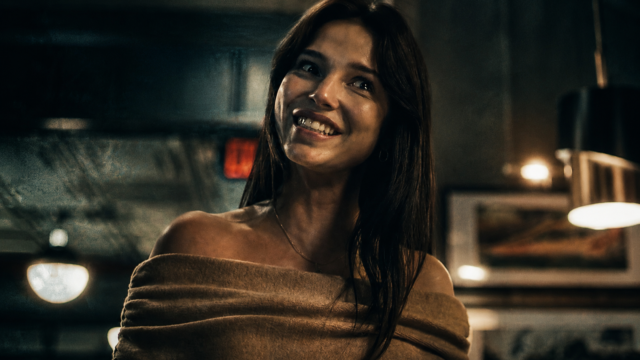
“Sinners”: Ryan Coogler’s Blood-Soaked Blues Opera and the Craft of Hybrid Genre Filmmaking
From the opening notes that reverberate through the shadowy delta landscape, Ryan Coogler’s “Sinners” (2025), the subject of Filmmaker Commentary’s recent episode FMC 237, immediately signals its audacious ambition: to weave a visceral horror narrative from the rich, complex fabric of 1930s Southern Gothic and the soulful, lamenting spirit of the blues. The film’s early moments, particularly the haunting introduction of the twin brothers Smoke and Stack, cast a spell, drawing viewers into a world where the supernatural is as palpable as the oppressive racial tension and economic hardship of its Mississippi setting. It’s a journey into a cinematic blues opera, audacious in its genre fusion and meticulous in its execution.
Crafting Dualities: Performance and Visual Storytelling
At the heart of “Sinners” lies the remarkable dual performance of Michael B. Jordan as the estranged twin brothers, Smoke and Stack. As discussed in our analysis, Jordan doesn’t merely play two roles; he embodies two distinct facets of a shared soul, a feat of acting made seamless by cutting-edge visual effects and painstaking attention to physical detail. The film avoids the pitfalls of digital trickery feeling hollow by grounding the twins in subtle, yet profound, differentiations. Ruth E. Carter’s costume design, for instance, extends beyond period accuracy, reportedly incorporating distinct footwear choices for each brother—Stack, always on the move, wore shoes a half-size too large, contributing to a looser gait, while Smoke’s fit was precise, reflecting his more grounded, perhaps haunted, demeanor. These seemingly minor details, though often subconscious to the viewer, build a nuanced portrayal of brotherhood and diverging paths, made all the more impressive by Jordan’s ability to maintain these distinctions across every frame.
Cinematographer Autumn Durald Arkapaw’s work elevates this exploration of duality and environment. The film’s use of a super-wide format, particularly in the establishing shots of the Mississippi delta and the town of Clarksdale, immediately immerses the audience in the vast, yet claustrophobic, atmosphere of the Southern Gothic. Arkapaw’s lens frequently frames characters against sweeping, melancholic landscapes or within the confines of segregated storefronts, visually reinforcing both the narrative’s expansive scope and its characters’ constrained realities. The technical marvel of presenting both twins in a single, uncompromised shot, especially evident in their initial reunion by the car, speaks volumes about the film’s commitment to immersive storytelling over flashy effects. Such moments are not just showcases of technical prowess; they are pivotal narrative tools, allowing the audience to truly believe in the presence and interaction of these two distinct, yet identical, beings. The dynamic camera work, often employing intricate robotics for specific movements, further enhances the sense of a meticulously choreographed visual narrative, ensuring that the film’s genre-bending elements—from the grounded drama to the sudden horror—land with maximum impact.
The Sonic Soul of the South: Music, Mythology, and Mississippi
Beyond its visual grandeur and compelling performances, “Sinners” finds its deepest resonance in its extraordinary sonic landscape, masterfully orchestrated by composer Ludwig Göransson. The podcast highlighted the film’s unique categorization as a “Cinematic Blues Opera,” a descriptor wholly earned through Göransson’s innovative approach. Rather than composing a traditional score after principal photography, Coogler and Göransson chose to craft the film’s core musical themes—deeply rooted in African and Louisiana blues traditions—*before* shooting began. This allowed the music to be played on set, an ambient yet guiding force that shaped the actors’ performances and the very rhythm of the scenes. This method ensures that the blues is not merely atmospheric window dressing but an integral, breathing character in the film, narrating the characters’ inner turmoil and external struggles.
The score’s ability to weave itself into the historical and mythological fabric of the film is particularly potent. The stark racial segregation of 1930s Mississippi is not just depicted; it’s felt in the mournful strains of Göransson’s compositions, which echo the cries and resilience of a community enduring systemic oppression. The film’s vampires are not generic monsters; they are creatures born of the land’s history, their supernatural menace amplified by the very music that speaks of human suffering and spiritual yearning. This unique blend of horror and blues mythology is brilliantly encapsulated in songs like the cryptic “Pic Poor Robin Clean,” whose layers of meaning contribute to the film’s rich, often unsettling, texture. The choice to integrate music so deeply into the production process speaks to Coogler’s vision of creating a truly cohesive artistic statement, where every element, from a haunting guitar riff to a character’s subtle glance, serves the overarching narrative of choice, fate, and the enduring human spirit against an encroaching darkness. The way the score can shift from a raw, primal energy to an almost spiritual lament mirrors the film’s own bold transitions between its diverse genres, proving that in “Sinners,” sound is as fundamental to its soul as sight.
Further Viewing & Reading
* **Black Panther (2018):** Directed by Ryan Coogler with score by Ludwig Göransson. An essential companion piece to “Sinners” for understanding Coogler and Göransson’s collaborative style, their dedication to cultural immersion in their sonic landscapes, and the crafting of nuanced, character-driven narratives within genre frameworks.
* **Get Out (2017):** Directed by Jordan Peele. This film offers a powerful example of modern horror steeped in social commentary and racial tension, utilizing atmospheric dread and a unique genre blend to explore profound societal issues, much like “Sinners.”
* **The Social Network (2010):** Directed by David Fincher. An excellent demonstration of filmmaking using advanced technology (particularly in subtle face manipulation to create the Winklevoss twins) that serves storytelling rather than overshadowing it, a technique also key to Michael B. Jordan’s dual performance in “Sinners.”
* **O Brother, Where Art Thou? (2000):** Directed by the Coen Brothers. A quintessential Southern Gothic film where music is not just a soundtrack but a driving force of the narrative, deeply intertwined with the characters’ journey and the cultural landscape of the American South.
* **True Grit (2010):** Directed by the Coen Brothers. This film showcases a formidable performance by Hailee Steinfeld in a Western setting, demonstrating the kind of nuanced character work amidst a period backdrop that resonates with the depth seen in “Sinners.”