April 1, 2026
F
Filmmaker Commentary
  • Home
  • Film
  • TV
Podcast

FMC 006: Red State by Kevin Smith Part 1

March 27, 2026
Listen on Apple Spotify YouTube
Listen to this episode
Your browser does not support the audio element.
Also on Apple Spotify YouTube

Join us as we plunge into the gritty, unexpected depths of Kevin Smith’s Red State, a stark departure from his comedic oeuvre. This episode dissects the filmmaker’s audacious independent spirit and the groundbreaking creative choices that forged a visceral horror experience, alongside a truly unconventional “commentary” strategy. Discover how Smith defied expectations, embracing a guerrilla approach to both production and distribution that resonates with every indie filmmaker.

What We Cover

  • A profound examination of Kevin Smith’s seismic genre shift with Red State, shedding the cloak of his signature raunchy comedies for a chilling dive into fundamentalist horror, an act that bewildered both loyal fans and prospective financiers.
  • The genesis of Red State‘s singular independent journey, revealing Smith’s unprecedented decision to self-finance and then provocatively acquire his own film at Sundance for a solitary dollar.
  • Unearth producer John Gordon’s candid revelations on the arduous path to funding a film that defied Smith’s brand, underscoring the vital ethos of comprehensive industry knowledge for success.
  • Delve into the visual architect David Klein’s inventive cinematography, detailing how he navigated restrictive union mandates to achieve a distinctive handheld aesthetic, all while cultivating an exceptional, high-morale atmosphere amidst budget constraints.
  • An intricate dissection of Red State‘s raw, unvarnished visual signature, highlighting the technical mastery of shooting on the RED MX sensor and Canon 7D, alongside the unsettling psychological impact of the “skinny shutter” technique.
  • The innovative, grassroots marketing woven by Smith, from his groundbreaking podcast “commentary” episodes that doubled as pre-release promotional tours to ingenious charity poster auctions designed to galvanize community engagement.

Key Moments

  • [0:44] Kevin Smith’s audacious pivot: The host recounts his astonishment discovering Smith’s foray into horror, a stark departure from the quick-witted, often crude comedies that defined his earlier work.
  • [2:03] The Sundance self-auction: Witness the moment Kevin Smith took to the stage, not to sell Red State to distributors, but to buy it himself for $1, reclaiming his independent vision and control.
  • [9:34] Producer John Gordon’s financial quest: Learn how Gordon navigated the challenging landscape of funding a film that no traditional financier would touch, ultimately securing the crucial capital to bring Smith’s vision to life.
  • [13:00] DP David Klein’s union challenge: Discover how the cinematographer creatively circumvented restrictive union rules to personally operate the camera, essential for achieving the film’s intimate, handheld aesthetic.

Gear & Films Mentioned

  • Cameras: RED MX sensor, Canon 7D
  • Films: Rogue One: A Star Wars Story, Saving Private Ryan, Alien, Alien Covenant

Listener Questions

  • How did Kevin Smith, renowned for his comedies, manage to create such a jarringly different and impactful horror film like Red State?
  • What radical steps did Kevin Smith take to ensure Red State maintained its independent spirit, from financing to distribution and even its unique “commentary” track?
  • What key lessons can independent filmmakers learn about navigating industry expectations, funding challenges, and fostering creative freedom from the making of Red State?

Full Transcript

Read the full transcript

Full Episode Transcript
This episode of Filmmaker Commentary introduces Kevin Smith's film "Red State," discussing its unique independent distribution, analyzing current film industry trends, and extracting production insights from the film's commentary by producer John Gordon and cinematographer David Klein.

Introduction to Filmmaker Commentary & Red State
Reginald Titus Jr.: Filmmaker Commentary episode six. Welcome to Filmmaker Commentary, where we give you insights from our favorite filmmaking commentaries. These commentaries can be heard on your DVD and Blu-rays of your favorite movies. We'll show you how you can use these commentaries and apply them to improve your video production and filmmaking techniques. All of this here on Filmmaker Commentary. I'm your host, Reginald Titus Jr.
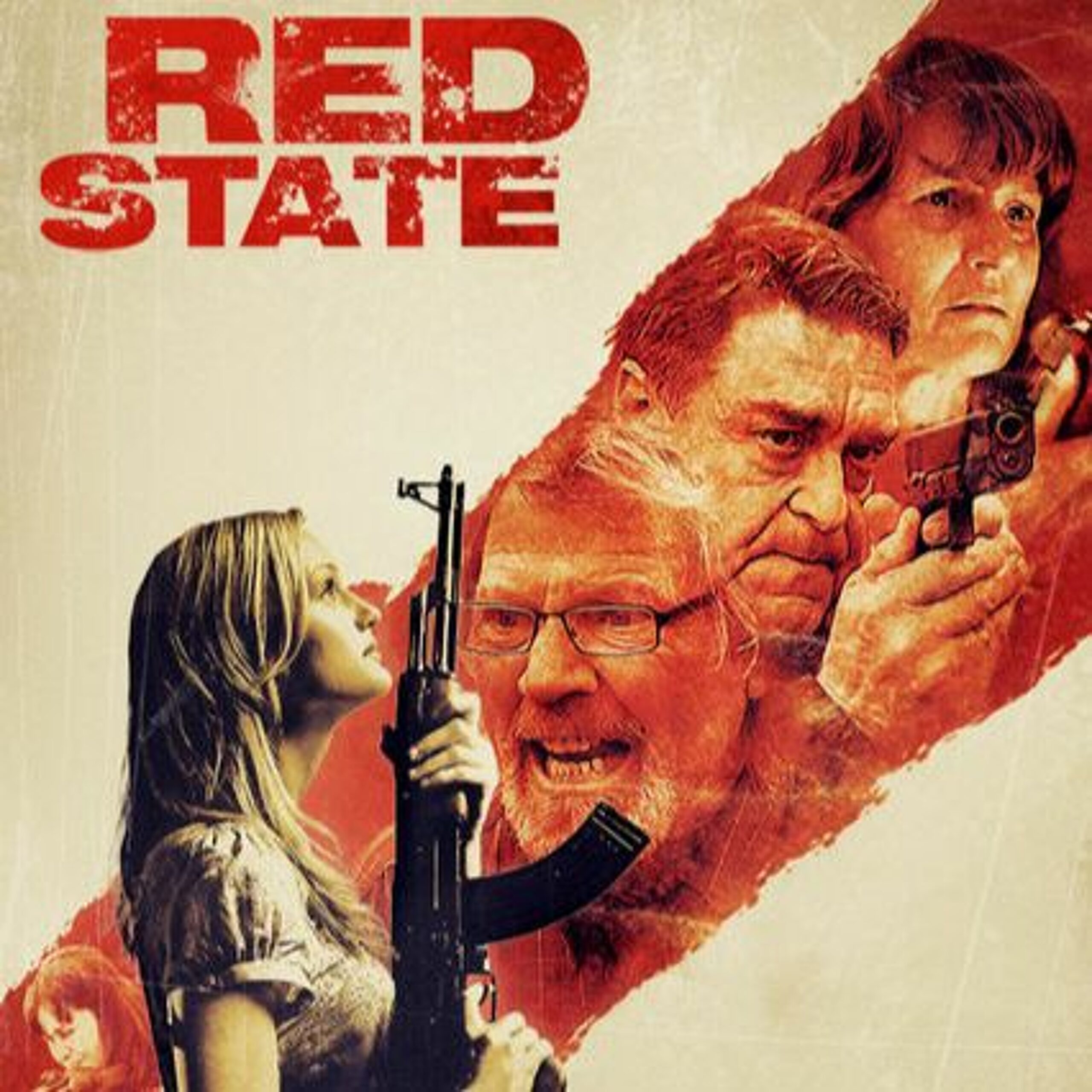
Today, we're going to speak about Red State, directed by Kevin Smith. Red State came out in 2011, directed and written by Kevin Smith. And here's the synopsis: it's set in Middle America, a group of teenagers receive an online invitation to have sex with a woman. They soon encounter fundamentalists who have a more sinister agenda. I'm very familiar with Kevin Smith's work. A lot of his work is raunchy comedy, rated R, tongue-in-cheek, and the thing that really sells Kevin Smith's work is not necessarily his style behind the camera, it's more about the dialogue. A lot of his dialogue carries the story. So when I saw, heard of Red State, it was in the Red Box. And I'm like, Kevin Smith did this movie? Because even just looking at the poster art, you get the vibe that this is not a typical Kevin Smith film. And at the time, I wasn't really following along with what Kevin Smith was doing just in regular life. So this film actually caught me by surprise. And I decided to go ahead and check it out. At the time, I wasn't really watching a lot of horror films, but I did watch it because Kevin Smith directed it, and I'm like, okay, I got to see how he's going to approach this. And when I put that DVD in, I rented it from the Red Box, checked it out. I was blown away because it was, it was done so well that I'm like, Kevin Smith didn't direct this, it's impossible because it's just totally different. They totally did an awesome job with this film. I was surprised. Even Kevin Smith talks about how he he looks at it like it's not his film. I think it's also the and also what intrigued me about this film is that he decided to raise the money to produce the film independently. And then also, when it got into Sundance, he had people that wanted to purchase the film. But what he decided to do, because he he told everybody that he was going to auction this movie off. So he actually had buyers there at Sundance wanting to buy this film. And he he got on stage, was about to do the auction, but sold it to himself for $1, kind of pissed some of the people off. However, he did like a 30-minute speech afterwards and he was basically saying that he wants to go back to his roots, be independent, and he wanted to distribute this thing independently. And so for domestic rights in America, what he did is he toured with the film like he would normally do for his kind of like stand-up routines, as he does his podcast and hangs out with other comedians and some of his friends on a tour, because he has a lot of fans. He would do a Q&A session following the film. And he did enough of those tours to earn the money back for the film, for the financiers. The budget for the film was $4 million, and I think, if I'm not mistaken, they received a tax credit for $4 million. If I'm not mistaken, you might have to check that out. So on this podcast today, we're going to go through the commentary, but the the unique thing about the commentary on Red State is, he did a lot of Q&As because he was marketing the heck out of this film even before it came out. He would go to a theater, host one of his podcasts, and do and show his fans like a 10-minute trailer or 5-minute teaser of the film, get their feedback, and got everybody excited. And he released on iTunes like 11 to 12 different episodes specifically for Red State. And that was a way that he could market the film and kind of get his fan base involved on how he was approaching this thing. The the the Blu-ray, the DVD commentary isn't your typical commentary. What it is is different episodes from the podcast and they're played on the DVD. So it's kind of weird because you're they're not playing at the same time that the whatever scene is happening in the film, they're not necessarily talking about that. It's just a podcast laid on top of the movie. So it made it for like a weird experience. So what I'm going to do is I'm going to break down a couple of episodes of the podcast, get the nuggets out of there, tell you about them, and then this podcast will be broken into several episodes, because I don't want to each podcast is probably about 30 minutes to an hour. So I'm going to break down two podcasts, get the nuggets out of there, and then we'll just break this whole commentary up into about four or five parts. But before we do that, let's get into the news.

Film Industry Trends and the Moviegoing Experience
Reginald Titus Jr.: According to Breitbart.com, movie attendance is at a 24-year low. There was no good news for the film business in 2017. For two decades, the movie business has not been a growth business. This year might be remembered as the year the film business finally began to contract. Hollywood will try and hide behind the fact that this is the third year in a row that ticket sales have grossed $11 billion in North America. But you see, ticket prices has increased nearly 4% in just one year to reach that number. 20 years ago, the average production cost of a movie was about $20 million. In 2002, they jumped to $59 million. Today, marketing alone, this does not even include production, can cost around $200 million. On top of that, you have the home video business barely making a dent. For example, in 2017, home video sales only added $76 million to the bottom line of Rogue One: A Star Wars Story. In a country with nearly 130 million households, only around 5 million wanted to own the new Star Wars movie, and Rogue One was one of the 2017's biggest home video sellers. So what does this mean for everybody? The way I look at it, I'm a little bit older now, I'm in my 30s, so I very rarely these days go to the theater unless it is something I truly, truly just want to watch. And I think a big reason is because there's so many options available at home. You don't have to spend a lot of money, you don't have to go, I mean, it can get expensive to go to the theater. There's very, again, there's very few films that I just want to spend a lot of money to go see. A lot of times I'll wait for them to come to, believe it or not, I still rent movies at a a place called Family Video. So I can get a lot of my Blu-rays and DVDs and I rent them. That store does pretty well. There's always people in there and the and it seems like business is doing pretty well. So I usually wait for the movie to come on Blu-ray DVD. I don't think that the that movies are necessarily drying up, meaning that that's no longer a good business. I just think the money went somewhere else. So I think the subscription fees with Netflix, I think it it devalues because you're subscribed to a movie streaming service, it kind of devalues the value of one movie. So if you're going to a movie theater and you're paying 20 bucks to watch one movie, you can take that same 20 bucks, get a Netflix subscription and you have access to thousands of movies. So I don't know, I think in a way it it devalues it, it it makes you look at movies in a different way. And on top of that, movies should not be escalating in price like this. They honestly, the prices should be going down, the production prices should be going down because of the availability of so much product in the marketplace. And I I believe that's part of the reason why there's so many people that are actually watching TV, because TV's awesome these days. So why not just stream a lot and you can hang out with the characters a lot longer? So I I still enjoy movies. I still like the one-off projects. However, people have to be, I think production companies, distribution companies have to be smarter in how they spend their money for movies and understand that a lot of that money's going to be coming from their own streaming services, i.e. Disney, and realize that's what you're going to have to do in this new marketplace. People still want to be entertained, still people want to watch good movies and good TV, but the way they consume it is entirely different. And so me as a filmmaker, I'm not necessarily concerned about a movie being in a theater and it's not I don't romanticize about it like I used to in the past just because it's just not a reality anymore. It's it's not that important. What's important is to make a movie that makes money so that you can go on to your next project. Tell us what your thoughts are. Leave them in the comments and let's get back to the show.

Producer's Perspective: John Gordon's Insights
Reginald Titus Jr.: We're going to break down two episodes. One is the second episode of Red State in which we have the commentary of John Gordon. Then we have episode three, which is David Klein, who was a cinematographer on Red State. The next time we do a Red State commentary, we'll go over episode one and we'll go over episode four. So in John Gordon's episode, I I pulled away three points from his podcast. And basically, John Gordon, he was a producer and he was he is a producer and he's he's also the Harvey Weinstein's assistant at Miramax at the time. He ended up leaving Miramax around 2005, but he really got uh a chance to see how the movie business works. He started out as an assistant and got up the ranks and to to the point where he understood a lot about what was going on in the business. Be the producer that can raise money. Thing is with this film, nobody wanted to finance Red State. Kevin Smith broke out independently to raise money for this film. Now, he had financiers that wanted to give him money, but they wanted to give him money for his comedies, like and his comedies again are rated R, raunchy films. And they were expecting more of a Jay and Silent Bob type of film that Kevin Smith makes. And him being like a comedy guy and wanting to all of a sudden go into the horror genre, they weren't the finance people that said they would finance this film were not sold on that. So, John Gordon found the cash for Red State, and it took it was like a three-year run to find the money for it. Basically, if John did not find this money, Red State wouldn't have been made. Point number two, you have to know everything. John Gordon, when he was an assistant for Harvey Weinstein, sometimes Harvey Weinstein, he he talks about his personality will come into Miramax and ask everybody questions. And he would ask John Gordon like, hey, what's up with these distribution numbers? And John Gordon was more like, I I don't know, I'm that's not my department. But Harvey Weinstein never took that as a good excuse because he told him, if you want to be somebody in this industry, you're going to have to know everything. You got to know a little bit about manufacturing, distribution, marketing, advertising, direction, all the technical stuff. You have to learn everything and you have to understand it so that you can communicate to people that do understand these things and you know where everything is going. The reason that was important for Miramax, which was different than a lot of the other studios, is because they were independe kind of independent, but they were a real gorilla about how they market. They didn't they didn't waste a lot of cash. Whenever they took on a film, it was there was like a passion project. Being able to advertise and be real savvy on how to market was very crucial in the in the success in Miramax. Last point, point number three, freedom is relief. John, he spoke about how the film was it was awesome because John, being a producer, he had crew members that he would bring on to all of his projects, usually big studio films. The crew had to take a pay cut to work on Red State. However, it wasn't as stressful and they got a freedom to do their job. He said, sometimes when you're working with the studios, you're used to working with people that are real, real anal, they tell you how to do the job, et cetera. But on Kevin's film, they had Kevin gave them the freedom to just do their job. Kevin, his attitude was like, I'm not going to tell you how to do your job, you already know how to do your job, just do it. John mentioned that when you tell somebody that, they really don't know how to react, like, are you serious? You really want me just to do my job? Because they're so used to being told what to do. And because of that, the stress levels was low and they were willing to go the extra mile because of that.

Cinematographer's Perspective: David Klein's Insights
Reginald Titus Jr.: Red State episode three, featuring David Klein, who was a cinematographer for Red State. David Klein and Kevin Smith met at Vancouver Film School. Now I have five points that I pulled away from this episode. Point number one, union rules. Know, know them so you can bend to them. Because David Klein is a cinematographer and he belongs to a union, as a cinematographer, he's not allowed to operate his own camera because of the union rules. So in order to be allowed to operate the camera, he had to write a letter to the union that allowed him to be the DP and camera operator, because the unions they're there so they make sure that the people that are part of this union have their jobs and they get paid what they're supposed to be paid and they get insurance. So they allowed him to do that, the union allowed him to be the camera operator because it was important, because the look they were going for was more of a handheld look. So it was very important for David to be one with the camera. Point number two, have a good environment. David Klein was on a Tier 1 contract. Tier 1 means that you're paid a lot less than normal. And he had a crew that he worked with on two previous projects. He was able to bring those that crew to that current project. And he said it was different working on the set because they had it was a friendly environment and they had a shorthand because they worked on previous projects and they were all very appreciative because Kevin was so appreciative for the work they were doing. Of course, they took a pay cut, so it's interesting that they got paid less but enjoyed the work even more. Point number three, it was shot on Red. They shot Red State on the Red with the MX sensor 80% of the time, and they shot on the Canon 7D for a lot of the wild stuff, when you see the kid running out of the out of the uh building and the camera's like right in his face, they used the Canon 7D for that. I really do appreciate that Red look. Red has its own look, but when you see it, we're used to seeing it now. At first, when we first started seeing the Red, it had a kind of video quality, I think, but now people are used to seeing the Red camera that when you see it, you're like, okay, this is a movie. Point number four, uh this is more like a definition, it's called skinny shutter. All right, let me try to break this down. A skinny shutter is a a slender shutter angle which gives you a high shutter speed. Normally, you're shooting at 24 frames per second and your shutter is a 48th of a second. Now, when you go to a faster shutter speed, your frame is sharper and this gives you an illusion of motion being disintegrated. And it gives you a sense of uneasiness and makes you feel like you're really there at the place. Um a perfect example of this high shutter speed in a movie could be like Saving the movie Saving Private Ryan, when all the action is going on and it's real sharp and jarring. So having a skinny shutter, that's the style that they were looking for in this particular film and a lot of those cut scenes. Here's also another um technological point. Gaffer. Um a gaffer is the head of the electrical department. And he's responsible for the lighting on the set and he's the right-hand man to the DP. Now, because they were shooting with the Red, they had a tent set up so that they can do the DIT. And Kevin made a comment that he noticed in the department that they were bringing in the they had to light for the sun because it was like cloudy outside, so they had to bring some lights coming through the window that substituted the sun. And Kevin would make comments like, man, you did a good job lighting and making the sun. And the DP crew was like, yeah, that's what we do. But they again, they were very appreciative that Kevin Smith mentioned this, that they were doing a good job. This is very important for the morale of your crew. Also, one of the last points is that the marketing on this film was a grassroots, it was a very grassroots and personal feel. Kevin Smith in the in the um doc in the DVD commentary, he mentioned that he created a series of posters that he sent out to different blogs. And basically what he did was, he would auction off, he would auction off the poster so that it can be exclusive to that blog or whatever website it was. And he was able to raise money, and the money that he raised from that, he he put it to charity. And this um raised the awareness of the film, it was for a good deal, and it got a lot of people involved and a lot of people rose to the occasion.

Concluding Thoughts and Next Episode Preview
Reginald Titus Jr.: So that's it for today, guys. Thanks for tuning in. That was Red State. We went over episode two and episode three. Next week, we are going to review we're going to we're going to bring Casey G. Smith back on the podcast and we're going to go over Alien, directed by Ridley Scott. That's going to be good. I just recently watched Alien Covenant, I really liked it, but I never really I never got a chance to see the original Alien, and it's kind of interesting going back to watch Alien. Some stuff holds up, some stuff looks dated, but it's actually pretty awesome to go back and see like this world that Ridley Scott created. So we're going to dive into the first Alien next week. Thank you guys for tuning in. See you next time. Peace.

About Filmmaker Commentary

Reginald Titus Jr.

Apple Spotify YouTube Subscribe Free
Continue Listening

FMC 012: The Movie Casino directed by Martin Scorsese

April 1, 2026

FMC 011: GoodFellas Directed by Martin Scorsese

March 30, 2026

FMC 010: Alien Covenant by Ridley Scott

March 29, 2026

Leave a Response Cancel reply

Never Miss an Episode

New episodes every week — free.

Listen on Spotify Apple Podcasts

Recent Episodes

  • FMC 012: The Movie Casino directed by Martin Scorsese
  • FMC 011: GoodFellas Directed by Martin Scorsese
  • FMC 010: Alien Covenant by Ridley Scott
  • FMC 009: Prometheus by Ridley Scott with guest co-host Casey G. Smith

Archives

  • April 2026
  • March 2026
  • January 2026

Categories

  • Film
  • Podcast
  • TV
© 2026 Filmmaker Commentary. All rights reserved.
  • Privacy Policy
  • Disclaimer
  • Terms of Service