April 1, 2026
F
Filmmaker Commentary
  • Home
  • Film
  • TV
Podcast

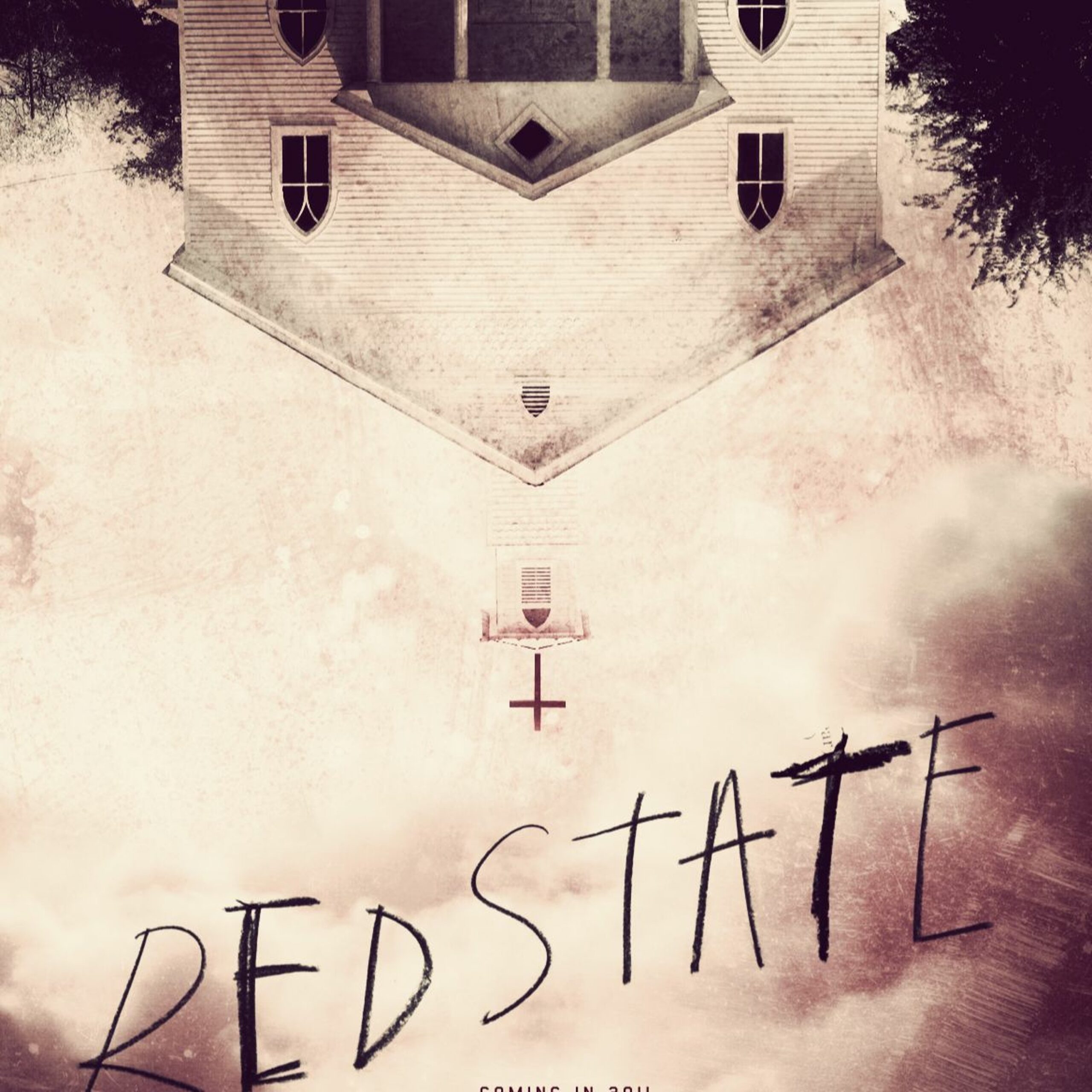
FMC 008: Red State by Kevin Smith Part 2

March 28, 2026
Listen on Apple Spotify YouTube
Listen to this episode
Your browser does not support the audio element.
Also on Apple Spotify YouTube

Episode 008 of Filmmaker Commentary offers a deep analysis of Kevin Smith’s groundbreaking, independent filmmaking strategies, focusing on his 2011 horror film, Red State. This installment dissects Smith’s audacious production and distribution methodology, largely derived from his accompanying “State of the Union” podcast commentary. Smith’s approach fundamentally challenges conventional Hollywood models, emphasizing direct-to-audience engagement and resourcefulness over large studio budgets and extensive marketing campaigns.

The discussion highlights Smith’s commitment to producing films economically, notably with Red State’s modest $4 million budget. This contrasts starkly with the often exorbitant marketing expenditures of traditional distributors like Harvey Weinstein, which could double a film’s production cost. Smith argues that a deep understanding of one’s audience negates the need for vast promotional spending, empowering creators to retain ownership and control by distributing directly to their dedicated fanbase. This independent ethos is further supported by the evolving landscape of filmmaking technology.

The episode also explores the rise of smartphone cinematography, referencing Steven Soderbergh’s Unsane and Sean Baker’s critically acclaimed Tangerine, both shot entirely on iPhones. This democratized access to production tools permits a focus on directorial vision and compelling storytelling, rather than dependence on high-end equipment. Furthermore, the podcast examines how adversity can be transformed into strategic advantage. Kevin Smith’s infamous Southwest Airlines incident, which garnered negative media attention, is presented as a pivotal moment. This personal setback spurred Smith to innovate, leading to a touring model where he screened films directly, followed by Q&A sessions and live podcast recordings, turning bad press into a powerful marketing tool.

The episode unpacks Smith’s unique “cutting while you work” methodology, where he views himself primarily as an editor who directs. This hands-on, iterative process allows for rapid prototyping and refinement during production, demonstrating an efficient workflow that diverges from traditional post-production timelines. Smith’s directorial style prioritizes raw performance, trusting experienced actors like John Goodman to elevate even expositional dialogue, thus streamlining the creative process and maximizing impact. Ultimately, the episode champions a filmmaking paradigm where authenticity, audience connection, and adaptive innovation drive success, rather than adherence to industry norms.

What We Cover

  • Kevin Smith’s innovative direct-to-audience distribution model for Red State, challenging traditional studio marketing.
  • The evolving landscape of filmmaking technology, exemplified by acclaimed films shot entirely on iPhones.
  • The profound impact of strong acting on dialogue delivery and narrative depth, illustrated through John Goodman’s performances.
  • Strategies for re-framing negative press into new opportunities for audience connection and project funding.
  • Kevin Smith’s unique “cutting while you work” editing philosophy and his self-identification as an editor who directs.
  • How prioritizing passion and audience connection can lead to organic monetization, as seen with the SModcast network.

Key Moments

  • [01:05] The transformative power of iPhone filmmaking, discussing Steven Soderbergh’s Unsane and Sean Baker’s Tangerine.
  • [08:10] Kevin Smith details his subversion of traditional marketing for Red State, focusing on direct audience sales.
  • [10:05] How Kevin Smith converted a personal negative experience (Southwest Airlines incident) into a groundbreaking direct-to-fan tour model.
  • [12:07] Insight into Kevin Smith’s “cutting while you work” editing philosophy, where he views directing primarily as an extension of the editorial process.

Gear & Films Mentioned

  • Films: Red State, Black Panther, Unsane, Tangerine, Isle of Dogs, Prometheus, Blade Runner 2049, Anne, Alias Grace, Travelers, Frontier.
  • Gear: iPhone, iPhone 5S.

Listener Questions

  • How does a director’s understanding of their audience influence their budgeting and marketing decisions?
  • What innovative distribution strategies can independent filmmakers employ to reach their audience directly?
  • In what ways can a director optimize their production workflow by integrating editing throughout the shooting process?


Full Transcript

Read the full transcript

Full Episode Transcript
This episode of Filmmaker Commentary dives into Kevin Smith's "Red State" by exploring his filmmaking philosophy, the impact of bad press, unique directing styles, and current film industry news including Netflix's investments in Canada and advancements in iPhoneography.

Introduction and Podcast Updates
Reginald Titus Jr.: Filmmaker Commentary episode eight. Welcome to Filmmaker Commentary where we give you insights from our favorite filmmaking commentaries. These commentaries can be heard on your DVD and Blu-rays of your favorite movies. We'll show you how you can use these commentaries and apply them to improve your video production and filmmaking techniques, all of this here on Filmmaker Commentary. I'm your host, Reginald Titus Jr.
Welcome to Filmmaker Commentary episode eight. I am your host, Reginald Titus, and today we are going to be diving back into the state of the union, which is the podcast for Kevin Smith's Red State. Later on in the podcast today, there may be a few cuss words here and there, so I'll give you a heads up with on that if you're listening to this publicly, you're at the office or whatever, just to let you know. Again, Red State is one of those movies I wish more people knew about. In my opinion, it's one of Kevin Smith's better works. Even though his work has like an acquired taste, this film has more of a crossover appeal to it. But before we dive into the movie, let's dive into news and movies to watch.

Filmmaking Insights: iPhoneography and Storytelling
Reginald Titus Jr.: Okay, here are some movies that I'm going to be watching pretty soon. Number one, Black Panther. I think that's enough said for that. Another one that popped up on my YouTube timeline, I was watching some video and this movie popped up, it's called UnSane, like insane but it's UnSane, starring Claire Foy with Steven Soderbergh. He's the director of this movie. And the reason it it jumped out to me is because there was a movie that came out in 2015 called Tangerine by Sean Baker. I believe it won at Sundance, and it it's become like a critically acclaimed movie, but what made it so unique is that he shot the whole movie on his iPhone, which I think was the 5S at the time.
This movie with Steven Soderbergh, UnSane, he shot the whole movie on an iPhone as well. And he is saying that this is going to be, he's going to start approaching more of his films shooting on iPhone. Now we'll see if that happens or not, but after watching the trailer, I was actually kind of surprised. And it's coming down to just being, technology has allowed it to where you have to just be a good director, a good storyteller. It's no longer about how technical or what camera you're using, because sometimes you can you can fall into that feeling that you need better film and all these things and then you'll be an accomplished director, when really it just comes down to just telling a good story. So I'll be definitely interesting seeing how he approaches that. Which also made me think, I'm like, you know what? When Sean Baker was the talk of the town, he went on a lot of podcasts, he did a lot of publicity for the film. And so I am actually going to look at the movie Tangerine. Also, Sean Baker has a new movie that just recently came out. I'm going to be looking into that as well, just to get a feel for how he approaches making movies. Also, his iPhone that he used in Tangerine has been donated to the Academy Museum of Motion Picture. He shot it with three iPhones and he laughed because, you know, being broke, a broke filmmaker, he actually had to pawn off one of his or sell one of his iPhones in order to pay rent that month. Majority of the Tangerine film was shot in Santa Monica.
Reginald Titus Jr.: Also, another film that jumped out to me a trailer is called Isle of Dogs by Wes Anderson. Wes Anderson has a very unique style and he he casts a lot of the same people in his films. And he that's coming out March 23rd just like UnSane, that's coming out March 23rd as well. What I like about his film is that it's stop motion. It's about dogs. It's a stop motion film and I'm really, really starting to dig stop motion animation. Recently, I started getting back into drawing. If you listen to the last podcast, we kind of talk about how Ridley Scott, how he likes to draw his storyboards, and that has actually inspired me to draw as well. So I picked up a sketch pad, had some pencils, got a few graphic novels and some comic books. And so just doing that by itself has sent me on a kind of different path, you know, I I just recently started looking up different comic book artists, looking at comic book labels like the Image label. I kind of like the work that that that whole story with Image, that's just a whole another story. But anyway, so some quick news.

Netflix's Canadian Strategy and Content Creation Debate
Reginald Titus Jr.: Now, according to the globalmail.com, which is a Canadian publication, Netflix has bought a Quebec zombie movie, and apparently the tension is over the federal government has come under fire in recent months for refusing to impose a sales tax on Netflix and other foreign-based internet services. It went up a notch especially in Quebec when Heritage Minister Melanie Joly announced Netflix's five-year, $500 million investment in Canada last September. In eyes of many critics, Netflix has obtained a tax-free status in Canada in exchange for its investment. There was actually nothing in the deal related to sales tax, but the criticism stuck hurting Miss Joly's standing in her home province. After a disastrous media tour in September and October, she adopted a low profile for a few weeks in in order to move around the negative media coverage. Let's hear a quick clip in which Miss Joly is trying to approach, you know, this situation with, you know, Netflix going over to Canada and how some of the residents feel about it.
[Audio Clip: Canadian Parliament Debate]
Under this agreement, Netflix will create Netflix Canada, a permanent film and television production presence here in Canada. The first time that the company has done so outside the United States.
And building on the strong track record of investing in shows like Anne and Alias Grace with the CBC.
Travelers, which showcase, and Frontier with Discovery.
They have agreed to invest a minimum of $500 million in original productions in Canada in both official languages over the next five years.
Mr. Speaker, it almost sounds like this government plays favorites with our friends to the south. The Canadian media industry asks for a level playing field on publicity, yet in the announcement today, the minister failed to mention anything about Google, Facebook, Twitter, or YouTube. And worse, this government spent $13.7 million on ads on those platforms. So while our industry is in danger, the government is giving money to foreign companies without asking them to pay their fair share. When will this minister protect Canadian content and jobs? Honorable Prime Minister, Canadians have world-class content creators and creative industries, and we know that investing in them and supporting our creators is the best way to ensure not just the Canadians hear our stories, but the people around the world understand the story and understand and hear the stories that Canadians have to tell. We're incredibly proud of the innovative work that our Minister of Heritage has done to look at the future of broadcasting, of creativity, and recognize that we can move forward with strength and pride relying on the extraordinary capacity of our creators to create great content for the world.
Reginald Titus Jr.: It's definitely interesting to see, you know, how Netflix handles its relations whenever it goes into a new country. It has it definitely has the money to invest, so it's it's hard for a government or a province or whatever, it's hard for a government to turn down some of that money, you know, they're willing to invest into a country to to make productions and things like that. So navigating that political climate can be difficult, but I believe Netflix is that company that'll figure out how to do it correctly and $500 million of course, doesn't hurt. All right, now let's get back into Red State.

Kevin Smith's Independent Approach to Filmmaking
Reginald Titus Jr.: I was going to listen to two of the podcasts, but just stuck to one this time, episode zero. So, again, he made the movie for about $4 million, which according to Kevin Smith and he's talking to his crowd is is relatively cheap. And because it's it's cheap, he used an example of Harvey Weinstein when when he used to make movies, you know, for Harvey Weinstein, you know, they would put films they would make their films and they would put like $10 million. So say say a budget was $10 million, they'd put twice that into the marketing. And it became like so astronomical that it's like, why are we putting so much money into the marketing? You know, I know my audience, I'm tapped into my audience, you don't need to spend that much money. You know, I mean, why even produce these films for such a cheap price and then you're going to spend two or three times that just to market the the thing. And Harvey Weinstein used to always come back to him like, well, we're trying to reach people outside of your market. But Kevin Smith was very adamant saying like, no, like my audience is my audience, I know who they are, they keep tabs on me. My Twitter account is filled, my people know what I'm doing. I have a podcast, I have a fan base, and I know how to reach them.
Reginald Titus Jr.: So, because he can make movies so cheaply, he know and he's dialed into his audience, it really empowered him to start owning his own film and selling directly to his audience. Another point that he talked about was having great actors can make the job easier and he used an example of, you know, he writes his dialogue, he writes it a certain way. And when he was younger, he would tell the actors how, you know, how to say this, how to say that and that's that's because a lot of them weren't really trained to be actors, you know, a lot of times they were friends. But when he used an example of John Goodman. When John Goodman performed his dialogue, even though the dialogue was like exposition, which basically is telling you what's going on in the story, to kind of make sure that you you follow along with the plot. He said the the words when it's coming when the word when the dialogue is coming out of a good actor, it just brings the story to life. So when you have a a great actor, it makes the job a lot easier.
Reginald Titus Jr.: Bad press will change you. There was a story, I don't know if you know the story or not, but there was a story back I can't I can't think of the year, but Kevin Smith at the time he was a lot heavier than he is these days, he's lost a lot of weight since then. He couldn't fit into a Southwest Airline seat. They basically forced him to buy another seat because he was, you know, he's he was overweight. He says it was very embarrassing, a lot of news, a lot of media covered it. They wanted to put him on TV shows like, man, here's this fat guy that didn't had to buy two tickets for one flight and all that stuff. And he said it was very embarrassing and he, you know, he tried to write Southwest and all that stuff, but it kind of backfired. But he said, it forced him to one, he didn't fly anymore and he started traveling around with his producer Scott Mosier and they began renting theaters and producing this podcast. And they invited people to come to the shows and they were making money with the live they were making money with the live show and they would put the tours on the road. And this kind of built his audience up to the point where now if he was to release a film, he can just go on the road like he did with his podcast. And this time, it would be the show, the movie, the Q&A afterwards, and sometimes they would record a podcast. And so this gave him, this empowered him even more. So it's like even though it was bad press, he was able to flip it and turn it to something more positive.

Kevin Smith's Directing and Editing Philosophy
Reginald Titus Jr.: And he also, Kevin Smith talked about monetizing something when you're trying to monetize something, don't always look at like the dollar signs, just keep doing the thing that you want to do and eventually the money will begin to follow you. And an example that he used was the SmartCast, was the which is his podcast platform where has more than 8, 9, 10 podcasts on there. This is something that he did to connect to his audience, he was having fun, they were just doing it, and it led to the audience asking him like, hey, we need more of these, we would like more, you know, where can we get more? Y'all should add this person on. Y'all should add one of your other friends on there and it it began to grow and they began to get those advertising dollars. One of the last points that he talked about was cutting while you work. Cutting mean editing. So after a day of shooting Kevin would edit at night, he would wake up early, cut some more and begin shooting again. He would have basically have the scene ready in about two days. Kevin realized that he isn't the standard director, he feels more like an editor that so happens to direct. So here's a quick clip on his way of directing, which I think I'm going to implement into some of my projects.
[Audio Clip: Kevin Smith discussing his directing process]
I shoot something on a Monday, I'm cutting it by Tuesday night, Wednesday morning. So all those choices and all those things I remembered about fine points about performance. I just sit there and go, I don't really direct, that's the thing I've realized in almost 20 years in, I'm not a standard director or a traditional director. I'm just an editor who happens to direct his own movies. So when I sit on a set, I don't walk up to people and be like, you gotta find a deep inside, you gotta emote, this reminds you of the time your uncle touched you. Like I don't do shit like that. I just kinda go like, um, oh there's the mark, man, let's see what happens. And then I'll go in and be like, just say this instead, say this line, throw this in or something like that. But really when I sit there and watch the scene, I'm just going, okay, there's my one beat, there's that line, there's that line. Don't have that line yet. We gotta go again. Got that line, got that line. Go the next take and then basically I'm just looking for those two moments I didn't have before. Sometimes you get to gild the lily where it's like the actor gets a second run at it and they do some great stuff with the material you already felt you had. Like we're shooting this scene this week with Carrie, this chick Carrie-B, she fucking acted her ass off. Dropped a clinic on performance. So, two takes I did with her and since we're $4 million bucks, I don't roll. Like basically I get what I want, we move the fuck on. So we got, first half of her take was very, very strong and then we did another take and second half of that take was very, very strong. So I was like, beautiful, between those two, two, two takes, I'm completely covered. She's she's golden, we can move on. And so I was like, check it, and then I was like, unless you wanna go again, Carrie and she was looking at me like, uh like she didn't want to say yes, but she wanted to say yes. And I was like, this is it, it's your moment, man. You'll never get to this monologue again. So if you want to do it, say it. And she's like, can we do one more? I was like, yeah. She went one more and dropped a fucking science clinic, man. Just fucking from beginning to end, it was a flawless fucking take. And I was like, wow, we thank god, we went more one more take. But even if we hadn't, I was covered with my other shit. So even afterwards, I was like, that was a really beautiful piece of work and fucking I only needed this much but you gave me this much and shit. But I keep telling all the kids, because, you know, some of them are younger and then some of the actors are older too. But just reminding them I am not here to fucking pork you like a puppet. I'm literally you make your own choices, you're the author of your own performance. You gotta live with it forever. If it falls far from what I'm trying to accomplish on the page, I'll let you know. But up until then I've hired you because I believe in you. You're the person I wrote for, you're the person I believe to do this role. So I'm gonna let you fucking do that. And that's what I do. I just kinda hang back and edit the movie on set.

Conclusion and Future Episodes
Reginald Titus Jr.: Well, that's it for today everybody. Tune in next week. We're going to go over Prometheus with Ridley Scott. I know I said we were going to be doing Blade Runner 2049, but Blade Runner does not have a commentary. So we're going to go into Prometheus directed by Ridley Scott. We're going to invite Casey G. Smith back on the podcast and after that, I'll go into the next episode of Red State. I appreciate it and y'all have a good one.

About Filmmaker Commentary

Reginald Titus Jr.

Apple Spotify YouTube Subscribe Free
Continue Listening

FMC 012: The Movie Casino directed by Martin Scorsese

April 1, 2026

FMC 011: GoodFellas Directed by Martin Scorsese

March 30, 2026

FMC 010: Alien Covenant by Ridley Scott

March 29, 2026

Leave a Response Cancel reply

Never Miss an Episode

New episodes every week — free.

Listen on Spotify Apple Podcasts

Recent Episodes

  • FMC 012: The Movie Casino directed by Martin Scorsese
  • FMC 011: GoodFellas Directed by Martin Scorsese
  • FMC 010: Alien Covenant by Ridley Scott
  • FMC 009: Prometheus by Ridley Scott with guest co-host Casey G. Smith

Archives

  • April 2026
  • March 2026
  • January 2026

Categories

  • Film
  • Podcast
  • TV
© 2026 Filmmaker Commentary. All rights reserved.
  • Privacy Policy
  • Disclaimer
  • Terms of Service