April 16, 2026
F
Filmmaker Commentary
  • Home
  • About
  • Film
  • TV
  • Home
  • About
  • Film
  • TV
Podcast

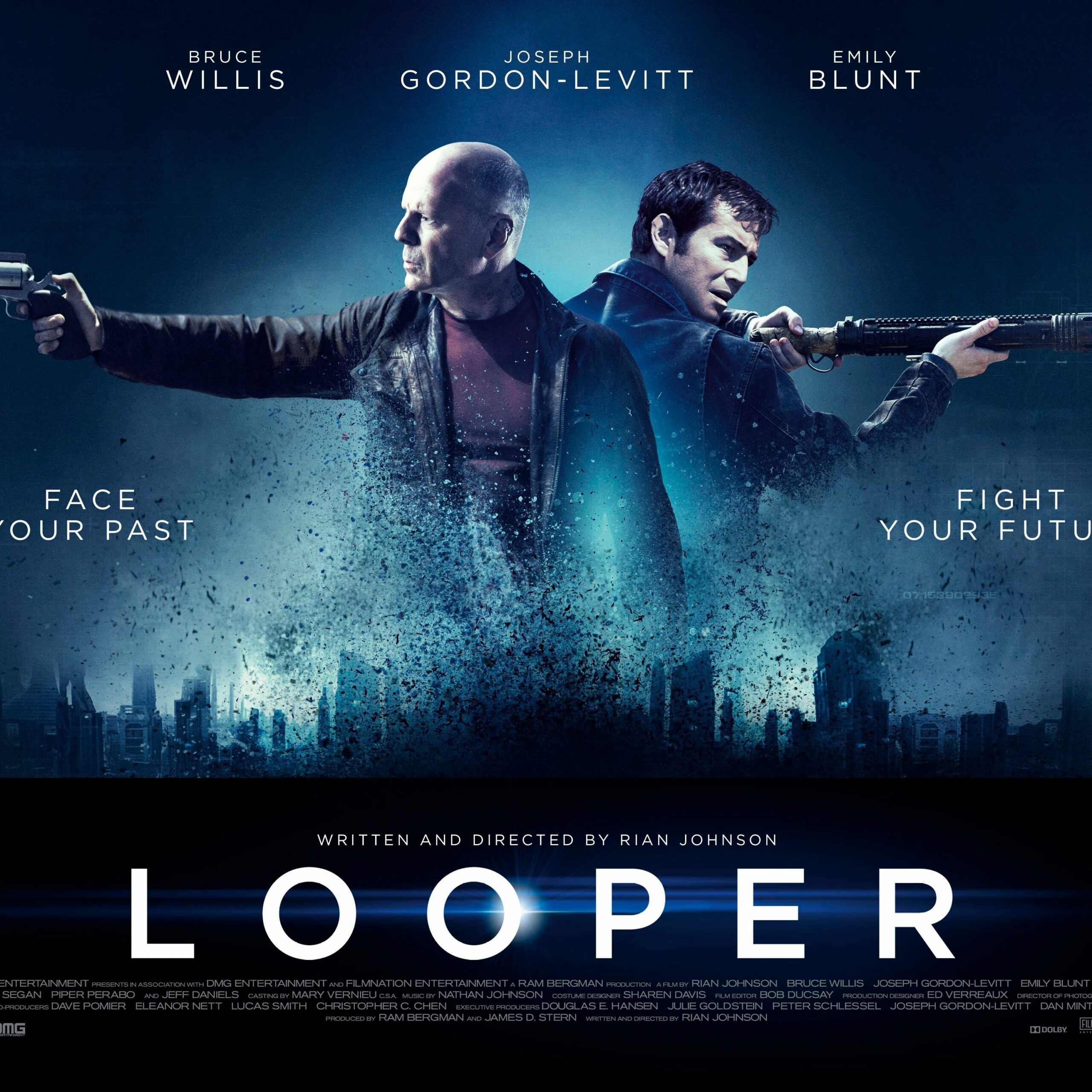
FMC 016: Looper Written and Directed by Rian Johnson

April 11, 2026
Listen on Apple Spotify YouTube
Listen to this episode
Your browser does not support the audio element.
Also on Apple Spotify YouTube

Step into the intricate, brutal future of Rian Johnson’s *Looper*, a film that marries time-travel intrigue with raw, emotional depth. This episode pulls back the curtain on Johnson’s singular vision, exploring how his dual role as writer-director allowed for a cohesiveness rarely seen, where every frame and sonic detail serves a potent narrative.

Join us as we dissect the craft behind this modern neo-noir, uncovering the deliberate choices that shape its visual language, its character’s routines, and the very fabric of its dystopian world. From the tactile grit of practical effects to the philosophy of a truly disciplined edit, this commentary offers invaluable insights for filmmakers navigating complex storytelling.

What We Cover

  • The unique synergy and distinct advantages of a writer-director at the helm of a complex narrative.
  • Rian Johnson’s steadfast commitment to practical effects and physical makeup over CGI for character transformations.
  • How character routines and visual cues subtly convey essential backstory and emotional states, deepening audience understanding.
  • The unsung heroes of the film crew, from the focus puller to the sound designer, and their critical role in shaping the film’s atmosphere.
  • The philosophy of “being harsh in the edit room” and prioritizing the film’s impact above individual scenes.
  • The ongoing debate between shooting on film versus digital, touching on archival importance and creative discipline.

Key Moments

  • [01:06] The Streaming Shift: An intriguing discussion on the evolving landscape of content consumption, highlighting the transition from traditional cable to streaming platforms and its impact on the industry.
  • [08:58] The Accidental Punchline: Discover how a genuine on-set mistake with Kid Blue’s gun became a perfectly timed comedic beat and a character-defining moment.
  • [39:18] Sid’s Blood Scene: A look into the careful considerations and creative workarounds required when directing a young actor through challenging, messy scenes, ensuring both performance and comfort.
  • [48:40] Film vs. Digital: Dive into the pros and cons of shooting on film, exploring its archival advantages, the discipline it instills, and its unique visual texture compared to digital formats.

Gear & Films Mentioned

  • Anamorphic Lenses
  • Field Recorder
  • Red Digital Cinema Camera
  • Looper (2012)
  • Brick (2005)
  • Blade Runner (1982)
  • Blade Runner 2049 (2017)
  • Pulp Fiction (1994)
  • Back to the Future (1985)
  • There Will Be Blood (2007)
  • Lady Bird (2017)
  • Cop Out (2010)

Listener Questions

  • What are the hidden advantages of a writer-director, particularly when crafting a narrative as intricate as *Looper*?
  • How did Rian Johnson achieve the film’s distinctive visual style and character transformations without relying heavily on digital effects?
  • What insights does *Looper*’s commentary offer about the delicate balance between creative vision and the practicalities of filmmaking, especially during the editing process?

Full Transcript

Read the full transcript

Full Episode Transcript
This episode of Filmmaker Commentary Rian Johnson's 2012 film "Looper," with hosts Reginald Titus Jr. and Casey G. Smith discussing insights from the director's commentary, current trends in streaming services, and various filmmaking techniques.

Opening and Industry News
Reginald Titus Jr.: Filmmaker Commentary, episode 16. Welcome to Filmmaker Commentary, where we give you insights from our favorite filmmaking commentaries. These commentaries can be heard on your DVD and Blu-rays of your favorite movies. We'll show you how you can use these commentaries and apply them to improve your video production and filmmaking techniques. All of this here on Filmmaker Commentary. I'm your host, Reginald Titus Jr.
Reginald Titus Jr.: Welcome to Filmmaker Commentary. I'm Reginald Titus Jr. I'm joined with...
Casey G. Smith: Casey G. Smith.
Reginald Titus Jr.: Welcome.
Casey G. Smith: Thank you, sir.
Reginald Titus Jr.: So today we are going to be talking about the movie Looper, made in 2012. This podcast is for producers, filmmakers, writers, people that are interested in the filmmaking process and want to make their process better. We're here to help you do that by listening to DVDs and Blu-rays with filmmaker commentaries on them, and we take those little treasures from the commentaries and pass them on to you. Before we dive into the movie today, we are going to take a clip of the news. So here's our news segment. According to MarketWatch, more people turn their backs on cable TV for Netflix and other streaming services. According to Shalani Ramachandran , they're saying, "More customers are dropping cable TV as they turn towards streaming services like Netflix. It's a fundamental shift in consumer behavior that was on display this week in painful earnings reports from cable and telecommunication companies. Charter Communications, the third largest US pay TV provider by subscribers, said on Friday it lost 122,000 video customers in the first quarter." And this is a worse outcome than they roughly thought at 40,000 subscribers, that's 40,000 subscribers what Wall Street expected, but it's far beyond that.
Casey G. Smith: Wow.
Reginald Titus Jr.: So, the results triggered a selloff that sent Charter shares down by 12%. I think this is something that's going to be continuing for years to come. What are your, what are your thoughts on that?
Casey G. Smith: This is the paradigm shift. Now, I think I heard the other day that maybe uh, Direct TV is maybe trying to bundle in Netflix with their services.
Reginald Titus Jr.: Wow. That's what I, that's what I would say.
Casey G. Smith: I don't, I don't know.
Reginald Titus Jr.: Interesting.
Casey G. Smith: But, I mean, at the end of the day, between Netflix, Hulu, HBO, uh, now, you can, you can get quite a bit of content uh for a little bit less. Now, I've, I still have cable now, but I've gone through periods without cable. It's, it's one of those things that really until the football season comes, you know, I like to, I, you know, I don't have to have it, but uh, yeah, and there's so much content out there that you don't have to watch things necessarily live, unless it's, unless it's sports, but even now, there's other ways to work around that too. I mean, YouTube is offering opportunities for watching things live. If you have uh, you know, PlayStation has their own system. It's really a kind of a cable model, but uh if you just want to stream and get content, you got so many options. Just don't steal it. All right, I just wanted to throw that in. Don't steal it. People work hard to create content. A lot of you out there are content creators. So don't steal the content. You want people to buy yours, you know, buy theirs. If you want to downgrade, then downgrade, right? You've got, you've got so many options. There's, you know, I don't, I don't really see the, the, I know why people steal, don't get me wrong. But, you know, they say the first thing when something comes out, there, people are going, the first thing they look for is the free version of it. If they can't find the free version of it, then they're going to look to see if they can find it on YouTube, well, YouTube, I guess it can be considered free. But these are places that are looking for it for free. If they don't have it, then they'll go to like a Netflix or something like that. If it's not on there, and they still can't get it for free, then they might do like a transactional, like an iTunes or something like that.
Reginald Titus Jr.: Yeah. They say the first thing when something comes out, there, people are going, the first thing they look for is the free version of it. If they can't find the free version of it, then they're going to look to see if they can find it on YouTube, well, YouTube, I guess it can be considered free. But these are places that are looking for it for free. If they don't have it, then they'll go to like a Netflix or something like that. If it's not on there, and they still can't get it for free, then they might do like a transactional, like an iTunes or something like that.
Casey G. Smith: Sure. And I, I wonder when that kind of paradigm shifted. You know, was it, is it the digital age? Is it the internet, information/digital age that caused that shift in mindset? Was it, was it Napster? You know, when that kind of first dropped? Was that mindset created then that I could just download this potentially for free without paying for it? And has it just persisted? Was it, I don't know, I just really wonder, did it, did it start when we started uh recording things on a VCR? I don't know, it's, it's fascinating to me and it's how maybe that has grown, expanded, and, and persisted. Where's the value of the media go?
Reginald Titus Jr.: When I, sometimes I use myself as a case study. There was a movie that came out with Keanu Reeves, it was a um, a documentary talking about editing and films and things like that, and he was also narrating it. And I was like, "Where is this movie?" Like, I had to find it. And I was looking, I was looking everywhere for it and they had it, I think they had it on sell on iTunes. I was like, "Nah, I don't really, like I want to buy it, but I, I wasn't there yet." I was like, "It's got to be somewhere."
Casey G. Smith: Sure, sure.
Reginald Titus Jr.: And so I was looking for a version that was streaming, but eventually it came on, I don't know if it was on Netflix, it ended up coming somewhere, right when I was about to purchase it, it popped up on a streaming platform and that's how I ended up consuming it.
Casey G. Smith: And there's nothing wrong with that, because you, you know, you pay for that service and so, you know, the, I like the fact that the, the variety changes. Now it could be frustrating when you can't find something, but when it does pop up, especially when you're thinking about it and it pops up, that's like the best. You're like, "Yes!" And so it's a win. Um, I think I know that documentary you're talking about, it's, it's, it deals specifically with like film. Is it, yeah, yeah, I, I watched that on Netflix a couple years ago when it was on there with Keanu Reeves, but man, this trend though, it's, it's, people are going to continue to cut cable. Uh, it's, it's not, you know, it's like all of you have all these options, but everything is still not at one location. So you, you know, we have Netflix, then we share, you know, we, we watch it via a friend's subscription, but then we also have uh Amazon Prime that we, that we purchase and that we share with a family member, and then we have a family member that has Hulu, who shares it with us, because we're sharing this, you know, so we're like all like kind of exchanging it, because one platform doesn't have everything that you, that you want and you end up paying a lot of money for all these platforms and you have like HBO Play. You know, you have all these different platforms that you end up paying if you like legitimately play for all these, you're going to be paying the same amount anyway that you would be paying for cable.
Reginald Titus Jr.: And I see, and it's like all of, you have all these options, but everything is still not at one location. So you, you know, we have Netflix, did we share, you know, we, we watch it via a friend's subscription, but then we also have uh Amazon Prime that we, that we purchase and that we share with a family member, and then we have a family member that has Hulu, who shares it with us, because we're sharing this, you know, so we're like all like kind of exchanging it, because one platform doesn't have everything that you, that you want and you end up paying a lot of money for all these platforms and you have like HBO Play. You know, you have all these different platforms that you end up paying if you like legitimately play for all these, you're going to be paying the same amount anyway that you would be paying for cable.
Casey G. Smith: For cable. Yeah. Now when we look at other expenses that we have, like when I think about, I don't know how much, how much people used to pay for their phone back in the day, just for, you know, a regular phone bill and all that kind of stuff, but most of us have cell phones now, but when you think about the data plans that we have and, you know, unlimited text messaging and all that, I'm curious we're just paying way more than people used to pay just to have a regular phone back in the day. So like your monthly expenses, you know, how much more in terms of monthly expenses do we have than maybe back in the day, because we also have internet, right? You, you, you almost have to have internet, you know, I work a job where I've got some autonomy, but I've got to be able to work from home at times and I got to have internet at home. And we want to stream at home. So, I, I really wonder just how much more are we paying on those kinds of expenses and it's not like wages have just gone up in, in, and dramatically over the past 20 years or whatever. So, it's interesting, but yes, this trend will continue. Plus, you know, there's a big difference when I DVR something versus when I watch something on demand through my cable box. So my DVR I can fast forward through commercials, with on demand, I'm, I'm forced to watch, you know, the same couple commercials. Now some channels are better than others, some will give me just one real quick commercial, it's not really an inconvenience, some will give me maybe one or two. Um, but when I'm on Netflix, I'm paying directly for the content.
Reginald Titus Jr.: I love it.
Casey G. Smith: Which is fascinating, you know, I'm paying directly for the content, same, you know, TV shows and movies, no commercials there. And so why, I don't know, so why is it so much with, with cable when it's on demand? Why do I still have to watch commercials?
Reginald Titus Jr.: I don't like that. I noticed that with um, well, you know, if we watch like The Flash on CWTV, whatever. Okay, it's free. It's streaming on their platform, we're not paying to see it.
Casey G. Smith: I'm on my paid cable service and I, if I want to watch, you know, something that's on demand now, I still have to watch commercials. I'm like, I, yeah, you know what, you're right, because we're using a friend's um, login for that, or for the subscription service.
Reginald Titus Jr.: I, yeah, you know what, you're right, because we're using a friend's um, login for that, or for the subscription service.
Casey G. Smith: You give me all the game, Reginald.
Reginald Titus Jr.: Hey, you know, I keep it real here. Come on. I know y'all are doing it too, so hey, I could be the person that ain't great. Um, but so we were watching Atlanta and this is already paid for. Somebody's paying their cable bill in order for this to happen. And in between each like there's like four segments, it says "limited commercials."
Casey G. Smith: Yeah, it is limited.
Reginald Titus Jr.: It's limited, but still frustrating. It's like, why do we still, why?
Casey G. Smith: It's got to break it up and, hey.
Reginald Titus Jr.: Maybe this part of the deal, because, you know, on cable there are commercials and maybe they're just trying to emulate that same platform streaming, but when you're so used to watching like Amazon Prime and Netflix, HBO, commercials can piss you off a little bit. It's, it's, it's.
Casey G. Smith: Yeah, I, the thought really, it really, honestly, I may have been watching an episode of Atlanta. Yeah. Uh, most, anyway, I won't, I could tangent on Atlanta. Um, but, I think I was watching an episode of that and, yeah, I saw, you know, the commercial pop up, I'm like, "Man, come on, let me get back to Paper Boi. What's going on?"
Reginald Titus Jr.: Here's a trick though. If y'all are watching CWTV, I don't know if y'all do, when you're streaming it, you, when it goes to commercial, you just refresh your page and then hit continue and you'll skip the commercial. Just saying.
Casey G. Smith: Dropping knowledge on you.
Reginald Titus Jr.: There you go. It doesn't work though for Atlanta. They got it, they got that mastered.
Casey G. Smith: Hmm.
Reginald Titus Jr.: All right, so that's it for our news segments, let's get back to the show.
Deep Dive into "Looper" and Rian Johnson's Vision
Reginald Titus Jr.: We have Looper, it came out 2012, written and directed by Rian Johnson. I have a special affinity towards writer-directors. I feel like there's more of their soul on the screen whenever they're writing and directing it. Kind of like the Black Panther movie that just came out, you know, Coogler, he wrote a portion of that screenplay. I don't know if he wrote the whole thing, but he or he teamed up with a writer, but, you know, he helped write that screenplay and it just felt like more of that soul is there. And so I feel like sometimes there's more care when someone's writing and directing it.
Casey G. Smith: I think it's a, I think it's a great combination when you have the, the writer and director. Obviously, that's conflict as well. Uh, and I think maybe the decision making process and that instant understanding of what did the writer mean when they, when they wrote this out? They, they know, and even as you're writing, I'm assuming you're already beginning to think about maybe how you want to frame certain shots and, and able to convey those things to the other members of your team. So, yes, I'm a definitely a fan of writer-directors.
Reginald Titus Jr.: There was a budget of 30 million. It made domestically 66 million, and internationally 110 million. And of course, I rounded those off. And to make a total of 176 million. So, definitely a win for Rian Johnson in his career.
Casey G. Smith: For sure. I think that budget of 30 million, that's like the good budget for like some of these sci-fi movies, you know, we talked about Ridley keeping his budgets a little bit smaller, um, in this realm and even if you missed the mark and it's not like a complete hit, uh, the, the studio could still make their money back. So I, but when you really make a hit and you made it on 30 million dollars, they will appreciate that and you will have a lot more opportunities when you can do that.
Reginald Titus Jr.: I think that budget of 30 million, that's like the good budget for like some of these sci-fi movies, you know, we talked about Ridley keeping his budgets a little bit smaller, um, in this realm and even if you missed the mark and it's not like a complete hit, uh, the, the studio could still make their money back. So I, but when you really make a hit and you made it on 30 million dollars, they will appreciate that and you will have a lot more opportunities when you can do that.
Casey G. Smith: Well, clearly, because I mean, obviously, now Rian Johnson doing Star Wars films and going to do a whole another spin-off of, of Star Wars after The Last Jedi, clearly it's worked in his favor.
Reginald Titus Jr.: The feel of this commentary, I've, it was a relief. I actually enjoyed listening to them talk about their movie. In the commentary, it's Rian Johnson, Joseph Levitt, Gordon-Levitt, uh Emily Blunt. Yeah, it just felt like, it was enjoyable.
Casey G. Smith: It really was. It, like you said earlier before we, we started recording, I felt like you were just sitting in with some, with some friends. Yeah. Just having a conversation. And I, I came out of this liking them even more, like, "Man, I, I'd like to, I'd like to, to meet them someday." Yeah. You know, any, any of them, they all just seemed so down to earth, they had a good time. Uh even, and even, I like when people can talk about even the difficult parts of shooting. Be honest about it, but still be, you know, professional and, professional, nice, and, and cordial about it. I was, I was very, I was very impressed. It was, it was a very enjoyable commentary.
Reginald Titus Jr.: And you can tell that Rian Johnson has kind of like that shorthand with Joseph Gordon-Levitt. Um because they did a film called Brick together. And, you know, when directors are already comfortable with an actor, especially the leading man, it, it just makes things so much more smoother and then you can kind of catch, you know, them taking jabs at each other, making fun or maybe correcting each other on certain things. It's, it's, it's kind of interesting to see and it makes for a better relationship.
Casey G. Smith: You know what's fascinating with, with some of the commentaries that we've covered before, we, we're seeing kind of two things. One, we mentioned earlier the, the writer-director hybrid. And then secondly, the kind of working with, with a familiar actor. So we, we've seen this with Scorsese uh and, you know, working with De Niro. We've also seen this, though we haven't covered Ryan Coogler, any of his stuff, but we see him and Michael B. Jordan. Also that, that combination as well. And of course, there are, there are plenty of, of directors who have, who have done the same. Yeah, it, it's fascinating, but also what's fascinating when a director writes a piece and a character with a specific actor in mind, because he wrote this film for JGL to play the role of, of Joe. I mean, the main character's name is even called Joe.
Reginald Titus Jr.: And it's cool when uh director can do that because they actually know this person's voice and I know Kevin Smith talks about that when he's writing characters for some people, he was like, "I already know how this person speaks. I can write it in their language for them."
Casey G. Smith: Mhm.
Reginald Titus Jr.: And it's flattering, but at the same time, it makes it easier for your writing process because you don't have to find this actor to, to get the nose, like
Casey G. Smith: Tryna find their voice. Yeah.
Reginald Titus Jr.: It just makes it flow out a lot better when you already have that muse there. David Fincher, I think he talks about Brad Pitt a lot. He's like, "Yeah, Brad Pitt can do it." Yeah, Brad Pitt, how many times have they linked up to do stuff?
Casey G. Smith: True, true.
Reginald Titus Jr.: Yeah, so, I agree. This commentary was, it was enjoyable. I probably missed a few points just from just listening to them, just hanging out, watching the movie again with these guys.
Casey G. Smith: Right. And gal.
Reginald Titus Jr.: And gal.
Filmmaking Techniques and Creative Choices
Reginald Titus Jr.: So, one of the first points is that practical effects are better. In this movie, Looper, Joseph Gordon-Levitt has like these, he has a lot of makeup to make himself look like Bruce Willis. What do they call the little?
Casey G. Smith: Prosthetics.
Reginald Titus Jr.: Prosthetics. And they could have got that wrong, like it could have been terrible. It could have looked bad. And Rian Johnson mentioned something that they didn't, he was not going to do any kind of CGI on a person's face. Which automatically made me think about Superman with the fake mustache.
Casey G. Smith: Yes. And they, they talked about it. Him and, and Joseph talked about it, also briefly, and both came, came to the decision that it would be better to go, to go practical. And I forgot the gentleman that they, that they pulled from what else he had, he had worked on. I don't remember what it was, but they obviously pulled him in, you know, when I first initially saw because I, I knew who JGL was, I'd heard of him before, but I wasn't really, really familiar with him, familiar with him. And so when I saw him initially on the, the key art and was as the film started, the first time I saw it a couple years ago, I was like, he looks different. You know, I was like Emily Blunt. He looks way different than I, than I remember. Something's different about him.
Reginald Titus Jr.: Like he got, like he got lipo suction or something like that. Right.
Casey G. Smith: He has some work done. But I couldn't figure it out. And then finally, as we play, then I, then I watched some of the special features after the fact. I'm like, "Ah, okay, those are, they worked." Yeah, they do. They really, really do. It was a lot of work to not only apply, but of course to keep it up. They had to retouch it quite a bit, but, yeah, it does, uh, it does pay off.
Reginald Titus Jr.: Yes, it does. I remember him from Angels in the Outfield. It could happen!
Casey G. Smith: Mhm.
Reginald Titus Jr.: Do you know if y'all remember that movie when he was a little kid.
Casey G. Smith: Third Rock from the Sun, he was on that, that series as well.
Reginald Titus Jr.: Well, he's been busy.
Casey G. Smith: Yeah, he's been around, man. JGL has been around. Um, another point is, so there's a, there's a scene with this character named Kid Blue. Do you know the actor that plays him off top?
Reginald Titus Jr.: Um, another point is, so there's a, there's a scene with this character named Kid Blue. Do you know the actor that plays him off top?
Casey G. Smith: Kid Blue is actually played by an amazing actor by the name of of Noah Segan. Noah Segan. Yeah, he was in um, There Will Be Blood. Yeah, he plays the, he plays the, the twin who, yeah, he's uh, he's, he's a phenomenal actor.
Reginald Titus Jr.: I'm familiar with the movie, but I haven't seen it.
Reginald Titus Jr.: That when that movie came out, they got a lot of praise.
Casey G. Smith: Oh, he's, yeah, totally worth seeing. Daniel Day-Lewis.
Reginald Titus Jr.: Well, when you, when you, when you hear about him being the truth, that was, that was.
Casey G. Smith: Yeah, when you, when you, when you hear about him being the truth, that was, that was.
Reginald Titus Jr.: He's the truth. He's the actor's actor. Like, like Joe Rogan say, he's not really acting, he's just becoming different people.
Casey G. Smith: He's shapeshifting. Yeah, but that, yeah, it's Noah, Noah Segan, he plays Kid Blue and he's, yeah, fun, fun guy.
Reginald Titus Jr.: So in his character is like the comedy relief. You see him, he's just like, the idiot. And you've probably seen people like this in real life. It may be a little bit over the top, but you've probably run into this character before. But there's a shot where Kid Blue is right next to a door and he has his gun out pointed at Joseph Gordon-Levitt. What do you call him?
Casey G. Smith: JGL.
Reginald Titus Jr.: Uh, JGL, pointing the gun at him and then out of nowhere, the door swings up and slaps him upside his head and it's like hilarious. It's like Bugs Bunny or something like that. But this shot is done by, you know, putting a long lens on on the character and the door's not actually hitting him. It swings by his head and he just moves in the same direction with the door.
Casey G. Smith: Timing, rehearsal, practice.
Reginald Titus Jr.: Man, and I was like, how would I do the shot before listening to the commentary?
Casey G. Smith: Yeah.
Reginald Titus Jr.: Yeah, we just use, you know, a soft door or something like that and slap him upside the head. I was like, yeah, that's probably been a little bit more dangerous.
Casey G. Smith: Not getting his actor around.
Reginald Titus Jr.: Right. Take 20.
Reginald Titus Jr.: And that's, that's why you have to learn from these people. They've already done it.
Casey G. Smith: Yes. Keep, keep those actors safe. Keep those heads intact.
Reginald Titus Jr.: And they mentioned in the commentary that that actor was playing, learning how to flip that gun around, because it's a big old gun. They say the gun's like seven pounds.
Casey G. Smith: Yeah. And he was working it and flipping it like a, like a pro. He, he clearly put in a lot of time practicing with that gun.
Reginald Titus Jr.: And he's flipping around and when he first comes out and he's, uh, flipping his gun around, he's like, in my brain, like, man, this dude's pretty good with it. And then out of nowhere it kind of slipped.
Casey G. Smith: Yeah. And then they cut to uh, Joseph's character and he kind of smirks.
Reginald Titus Jr.: Yeah. And then out of nowhere it kind of slipped.
Casey G. Smith: Yeah. He, he gives a look like, "This fool." You know, like, "This guy thinks he's hot stuff." But what you find out though, in the commentary is that that slip wasn't supposed to happen. Like, in that scene where he's working the gun around, he's going back and forth between both hands, it's supposed to be just like smooth, like, "Oh, I'm so good at this."
Reginald Titus Jr.: Right.
Casey G. Smith: And I don't know, the plan was still to cut to JGL and, and that, and that look or not. It, it could it would have worked either way, because either, either it's like, you know, this guy thinks he's hot stuff. Or it could be looked like, "Oh, this guy thinks he's hot stuff," and clearly he's, he's not as good as he thinks he is. Either, either way, the response still would have worked, but the fact that that slip up happened, and they said that, you know, that probably Segan was, was pretty pissed about making that mistake. But, you know, sometimes you work with what you have and sometimes the, the accidents that happen can, can work out perfectly. And it, it does, it works for that scene, because within it, you're building up the fact that the whole thing with Kid Blue is, he's not as good as he thinks he is.
Reginald Titus Jr.: Yeah.
Casey G. Smith: He's, he's good, sometimes. You know, and he, and he does have this, he, he, he gets clowned a lot, you know, because even JGL says to him, "You better be careful with that thing, you might shoot off your other foot." Or you, you know. And uh, and once, once that door opens up, when Abe opens the door and it hits him in the head and he looks down at him and he's like, "You better be careful with that thing, before you shoot off your, you shoot off your other foot," you know, it's like, "Wow." This guy's trying to.
Reginald Titus Jr.: Because soon as he gets hit in the head, then the gun goes off.
Casey G. Smith: Oh, it does, yeah. Everybody runs in there like, "What the, what's going on?"
Reginald Titus Jr.: Perfect, man. He plays that guy. He plays that idiot, the local idiot perfectly.
Casey G. Smith: Yeah. He plays scared. He plays petrified, terror, and fear. He plays that so well. Definitely check out There Will Be Blood, bro. It, it, he, he plays, he plays that really well.
Reginald Titus Jr.: Another point is, you can visually tell what's going on with a character just by like the routines of a character. So, for example, um with uh Joseph's character, you know, he's a killer, you know, somebody comes in through the loop, he kills him. He's doing it so much that it becomes routine to him. He's just like, "Oh, it's another day at the job. Shoot somebody, blood splash everywhere." All right. This is just another day at the job.
Casey G. Smith: Yeah, drop him in the furnace.
Reginald Titus Jr.: Yeah, yeah, drop him in the furnace. And he's not getting, you don't see any emotion from him when this is happening. Somebody else, you're like, "Oh my God, I don't want to kill anybody. I don't," you know, but it's telling you more about his character. Same thing with the woman that he pays to have sex with.
Casey G. Smith: Mhm.
Reginald Titus Jr.: She's.
Casey G. Smith: Suzie.
Reginald Titus Jr.: Suzie. She's just walking around in the nude, just, it's just another day at the office. Now, for another woman, another character, like to be, she might cover up a little bit or like, wear a robe or, but but her just being so comfortable being naked and walking around says something about her character. It's just a job to her.
Casey G. Smith: We see it really kind of come to a, a head where, you know, Joseph has clearly, Joe clearly has been seeing her as a, as a paying customer for a while to where he arrives and he wants to, you know, see her and, and, and pay for her services and, you know, really he wants her time. And she already has another customer. And she's not sad about it that she can't see him. She's not in love with him. She, he's a, he's a customer to her. "Hey, you know, I'm sorry, but I've, I've already, you know, bought for the night." And then when he does see her later on, then, you know, days later, you know, and she's, she's one to get down to business, you know, get down to, to sexy starts, you know, getting ready to, you know, undo his pants and he's like, "Nah, you know, I just give up, you know, one of my closest friends."
Reginald Titus Jr.: Uh-huh.
Casey G. Smith: And uh, and she starts running her hands through his hair and she's like, "Is that what you want?" And and then he offers to like pay, you know, give, give some of his silver, half his silver to her. So she can raise her son, or her, her, her, her daughter, her kid, whatever. And then she just says, "Oh, you know," she goes, "Let's, you know," she goes, "Silver comes with strings attached. Let's just stick to services rendered." Like, she wants to keep it a business relationship. And even as she's running her fingers through his hair, she looks up at the clock and it's like ticking, you know, it's like she's on the clock. One of the interesting deleted scenes is of her actually after he leaves, she goes up to the front counter and she's like, and she talks to one of the girls there, she says, "Did you tell Joe that I had a daughter?"
Reginald Titus Jr.: Oh.
Casey G. Smith: And the lady behind the counter is like, "No." And she was like, "Okay, well the next time he shows up, tell him, tell him I'm, I'm indisposed." So she didn't even like the fact that he knew that much about her. He really was just business.
Reginald Titus Jr.: Wow, that's insightful.
Casey G. Smith: Yeah, yeah.
Reginald Titus Jr.: Also, there's another point is, you know, knowing the jargon. First AC. They, they give loved in this commentary, Ryan Johnson talks about a focus puller. A focus puller is basically the person that's in charge of turning this knob that's on the side of the camera to make sure the actor is in focus. In critical focus, make sure it's sharp. If they're not in focus, no matter how good the performance is, you're done. You have to throw the scene away. But when the, when the camera is moving or an actor is moving towards the camera, a person is actually rotating this device to keep them in focus. This is not automatic. Somebody has to manually do that.
Casey G. Smith: Mhm.
Reginald Titus Jr.: It's basically everybody has to be on the same accord and it's an art within itself. It's awesome that, you know, Rian and them are kind of giving their respects to a focus puller.
Casey G. Smith: That is great, because most people don't even think about that. Don't even think twice about it. Uh, just like sometimes with the, with those who write the scripts, sometimes the screenwriters don't get enough. Uh, we often will remember, remember the directors and the actors, but sometimes we forget the cinematographers.
Reginald Titus Jr.: Yeah.
Casey G. Smith: You know, those who are working on the focus, those who are working on the sound, the sound design. So, kudos to Rian Johnson for giving a shout out to the, was it the First AC?
Reginald Titus Jr.: Yes.
Casey G. Smith: The First AC, assistant camera.
Reginald Titus Jr.: Assistant camera. Speaking of sound, there's a section in the special features where the person that's, well, I can't think of his name, that was responsible for the score.
Casey G. Smith: Yes.
Reginald Titus Jr.: He actually went out to create sounds.
Casey G. Smith: Nathan Johnson.
Reginald Titus Jr.: Nathan Johnson actually went on location to record sounds with a field recorder. And from that field recorder, they were able to make little drum kits from these sounds and put them inside the movie.
Casey G. Smith: Mhm.
Reginald Titus Jr.: Yep. Made sequences, made the score with these sound effects and then on top of that, I think they had like an orchestra to make it feel more grounded and not as industrial and but it gives it a different vibe.
Casey G. Smith: It does, it really does. that, that, that kind of dedication, and once again, you talk about, you know, working together, he had worked with Nathan before. I think, I don't know if he worked with him in Brick or not. Um, but I'm also looking on, on IMDb, uh, he also had worked with uh, Noah Segan. He's also in, in, in Brick as well. I need to go back and check out Brick. But, yeah, the sound design and the, the, the score in the film does have its own vibe to it. Uh, that but that's, that's very much so appropriate for the film. It, it just fits.
Reginald Titus Jr.: Because they could have, they talk about how they could have went cliché sci-fi with it.
Casey G. Smith: Mhm. Lot of synth.
Reginald Titus Jr.: Yeah, I'm glad they didn't.
Casey G. Smith: Yeah. Blade Runner has enough of that. It was the 80s.
Reginald Titus Jr.: No, even the new one. 2049.
Casey G. Smith: Oh. Yeah, yeah, but I, you know, it's, it's updated. It's updated. It's updated, it's synth.
Reginald Titus Jr.: No, even the new one. 2049. Yeah, it's updated. It's updated.
Casey G. Smith: Get the phasers in there.
Reginald Titus Jr.: Which leaves me to my next point. Rian Johnson actually pulls from the Blade Runner DVD commentary, which we talk about here on Filmmaker Commentary in a previous episode. So, he went in the, yeah, the episode that we have, um, but there, uh, Ridley Scott talks about flares, using flares to cover up opticals.
Casey G. Smith: Like headlights on cars, right?
Reginald Titus Jr.: Yeah, yeah. So you use those flares because without that flare or that smoke, you can tell that it's a miniature or it's like, something ain't right, it ain't real. But when you have like a flare that can go on top of it, it covers it up. And he mentioned in uh Blade Runner commentary, Rian Johnson, hey, he listens to commentaries as well. So hey guys, you're in good company.
Casey G. Smith: There you go. Validation.
Reginald Titus Jr.: Next point. Frame warp. So there's this effect that when Joseph's character, you know, he's getting high off this drug that they drop in their eye. You know, to get high or whatever. And he's holding his nose and closing his eyes and why he's doing it, the screen is like bulging. They shot this film with anamorphic lenses. Anamorphic, if you're familiar with movie, of course we're all familiar with movies, but some movies have like the black horizontal lines at the top and at the bottom. Um, a lot of times that's from an anamorphic lens. So anamorphic lens is shot square and then they squeeze it down so it has that horizontal and it leaves a little bit of room at the top and the bottom, but that allows you to put more things into a frame.
Casey G. Smith: Is that where the widescreen kind of effect originated from?
Reginald Titus Jr.: Yeah. The widescreen, I think that's what 16x9. So yeah.
Casey G. Smith: Okay.
Reginald Titus Jr.: I guess, yeah, because it has the.
Casey G. Smith: It has the bars, almost always has the bars on there. Yeah.
Reginald Titus Jr.: So yeah, so widescreen, anamorphic or like the full screen, it could be shot anamorphic, but they'll format it so it'll fill up the whole screen. Um, but with, with it, so like whenever you see lens flares, they're like these little lines that go across the screen, these horizontal lines, that's caused by the anamorphic lens. So sometimes when you're rack focusing, and when you're rack focusing, you're putting one character in focus, it could be in the background, then you focus to another character that's in the foreground. Uh that's called rack focusing. But when you have an anamorphic lens, when you switch between the rack focus, it makes the screen bulge a little bit or pulsate. But if you do it real quick, it, it the whole screen, you, it's actually more noticeable. And so they use that effect in here whenever he was like getting high and on these drugs and stuff like that.
Casey G. Smith: Speaking of, of, of this, the, the camera work and the sequence where he get, where he's getting high, when he first does it and he's walking through the club. Yeah. There's a scene where the, where the camera does like a, a rotation around him. And I think they said where they shot that, uh, they, yeah, they shot it full frame and they cropped it and then they did a, what they call a digital spin to, to pull off that effect.
Reginald Titus Jr.: Yeah.
Reginald Titus Jr.: I wonder, I was wondering how they did that. I was like, "Don, did they do that in camera with like a little arm?" That's cool they did it digitally. I wonder why, what his reasoning was for that. Yeah, that was one of those points I actually missed.
Casey G. Smith: Yeah, but it was cool, it was a cool effect. It was, was a, you know, you notice it. And even, um, the scene where uh JGL is falling out of the window, when he, when he, yeah, when he falls out of the window, the way that they, I'm trying to remember how they, they said they shot that, but.
Reginald Titus Jr.: That, that one was with the crane. That was with the, the crane.
Casey G. Smith: Yeah, and there was, and then it was, it was, but it was actually falling, he actually was like falling. Yeah. And the camera was like just going down there with him like, "Oh wow, that's, that's something else." And then when, when they kind of re-show that and Bruce Willis is there kind of behind the car. Right. You know, they, they paint out a lot of cables, wires, and even people at times when they, when they go back through and do the, do the effects and in this, in this film. But like the guy that hits initially is one guy and then Bruce moves closer and then they, when he, when he moves and the camera moves, they switch out and put JGL there and then, you know, Bruce is there and he literally grabs him off the, the car, drags him off with one arm, like, "Wow, that's cool."
Reginald Titus Jr.: Yeah.
Reginald Titus Jr.: And then it's cool that they were able to pull it off because it's all in like the same take.
Casey G. Smith: Yeah, that's what really made it stand out to me. I'm like, "Okay." Just the smart things that you do when you just really can, I mean, you, you really have to, have to plan and how will we suspend belief, or suspend disbelief?
Reginald Titus Jr.: Made me think of, that part made me think of Back to the Future when Michael J. Fox comes back and he's behind the door and he's watching the scene play out again.
Casey G. Smith: Yeah.
Reginald Titus Jr.: Of his mom getting pushed down and Biff is about to punch, what's his name?
Casey G. Smith: Punch.
Reginald Titus Jr.: So yeah, yeah.
Casey G. Smith: McFly. George. Hello McFly.
Reginald Titus Jr.: Close up on the, on the hand.
Casey G. Smith: Right. Forming the fist.
Reginald Titus Jr.: Oh yeah, fan, yeah, one of my top films all time as well, Back to the Future. Come on.
Casey G. Smith: Yeah, seen that poster in the, in the dungeon.
Reginald Titus Jr.: That's right. So, also with anamorphic lenses, you can get these really tight close-ups. So there's a shot with uh Emily Blunt, um she's not trying to let one of the guys in, that work for the bad guys. And there's a close-up on her, her face and you can just get more into the frame with these anamorphic lenses. You can see her blue eyes and just piercing through. So you can get some really beautiful close-up shots with the anamorphic lens. Then another point is dealing with kids. You have a kid, Sid, is that his name? Or is that the character's name?
Casey G. Smith: His name was um, yeah, Sid, yeah, Sid was his name in the movie, but uh Pierce Gag, Gagnon. Pierce Gagnon was the actor's name.
Reginald Titus Jr.: So, you have a kid that's like as precocious as him, that is just like, I don't want to do this. I, Rian Johnson talks about he was giving bad, he could have gave like bad direction like, act scared. I don't know how to do that.
Casey G. Smith: Yeah, can you give me an example of where you want me to do that in the script?
Reginald Titus Jr.: But he said he could give, he could give this, this kid like, he, he was able to, Sid could do a monologue. Rian could give him a specific, notes on a specific part of the monologue, like pages into it. And when he would get to that part, he'd make the adjustment. Like, the kid could act. Like, legit act. But he was still five years old, you know. Ability and maturity aren't the same thing. And so even at times, you know, doing certain scenes, even though Sid may nail a scene and think that, okay, you, you've got it, right, I did it right, that's enough. But understanding the nature of filmmaking, it's not about just having a good take, it's about having at times options, you know, because as, as other parts of the film come together, that one take that's good and right and correct and lines were nailed and hit may not be the right take in comparison to another take, that was uh, that could be selected. And uh, we'll talk a little bit more about the whole of the, of the film versus the individual scene.
Reginald Titus Jr.: I catch myself watching him when, when he's introduced, like, this guy's good.
Casey G. Smith: He is.
Reginald Titus Jr.: And then hearing him in the commentary, how good he was, well, okay, that makes sense. It's hard to find talented kids like that. They're just ready to work so young.
Casey G. Smith: Yes. Yes. And it was, yeah, the commentary really, that, that, that's a real treat in the commentary to, to hear them talk about, uh, about this kid, because they said even in the audition, he auditioned and read maybe like five or six times. And then I think they said, I think like the last time, um, Ryan was asking him to read some things and he was like, "I don't want to do this anymore." You know, if you say, "I'll read it if you give me the part." Like this kid was cold. He was like, "Look, I've had enough. I've, I've known. I've been strong along, look. You give me this part, I'll read this." Like he was ready like, "Okay, let's, let's move forward already in this process. You wouldn't be me back this many times. I know you want me."
Reginald Titus Jr.: It's, it's actually interesting because I wonder how it was working with Bruce Willis. Because if you listen to Kevin Smith in his commentary, especially like on his podcast and on, I don't even know, on the commentary of Cop Out. So Kevin Smith worked on the movie Cop Out with Bruce Willis, and he, he went on internet and explains like how horrible it was working with Bruce Willis.
Casey G. Smith: Yeah. It's actually interesting because I wonder how it was working with Bruce Willis. Because if you listen to Kevin Smith in his commentary, especially like on his podcast and on, I don't even know, on the commentary of Cop Out. So Kevin Smith worked on the movie Cop Out with Bruce Willis, and he, he went on internet and explains like how horrible it was working with Bruce Willis.
Reginald Titus Jr.: Yeah.
Casey G. Smith: Yeah, that's from a professional standpoint. You can always not have a good experience with any quote unquote professional. Right. So, and I, I know Kevin Smith's known for being outspoken, he's going to speak his mind. Right. And a lot of people love that about him. And however, you know, Bruce Willis acted or or didn't act at the end of the day, does that, does, does Kevin Smith talking about it, like publicly on the internet, like, does that really help him out? Does it, maybe does it bring them more viewers?
Reginald Titus Jr.: Yeah, that's from a professional standpoint. You can always not have a good experience with any quote unquote professional. Right. So, and I, I know Kevin Smith's known for being outspoken, he's going to speak his mind. Right. And a lot of people love that about him. And however, you know, Bruce Willis acted or or didn't act at the end of the day, does that, does, does Kevin Smith talking about it, like publicly on the internet, like, does that really help him out? Does it, maybe does it bring them more viewers?
Reginald Titus Jr.: That's the weird thing. Like it did help him out because people in the industry know how difficult it is working with him. They just don't say anything.
Casey G. Smith: So, but again, how, how did it help him out? Like other people agreeing and already knowing, that's okay. It's that's, are they going to, you know, have an intervention with Bruce Willis and stand up and say, "Hey, Mr. Willis, you know, this or that." No, of course not. Basically it was like, if you can make a movie with Bruce Willis and come out alive and not get fired or anything like that, you're able to get it done, complete it, and it's out in the market, you're going to have jobs lined up, because people know how, how difficult it was. So he had more offers after that.
Reginald Titus Jr.: That's the weird thing. Like it did help him out because people in the industry know how difficult it is working with him. They just don't say anything.
Casey G. Smith: So, but again, how, how did it help him out? Like other people agreeing and already knowing, that's okay. It's that's, are they going to, you know, have an intervention with Bruce Willis and stand up and say, "Hey, Mr. Willis, you know, this or that." No, of course not. Basically it was like, if you can make a movie with Bruce Willis and come out alive and not get fired or anything like that, you're able to get it done, complete it, and it's out in the market, you're going to have jobs lined up, because people know how, how difficult it was. So he had more offers after that.
Casey G. Smith: But here's the thing though. The movie being completed doesn't, doesn't, doesn't include him having to say how difficult it was, because people knew that already. So again, does him actually going on a pod, you know, talking about how difficult it was, does that make the change or just getting it done, which he did? He got it out there. It was what, him and Tracy Morgan? Yes. Are the two? I, I never actually, did you, did you see the film?
Reginald Titus Jr.: Nah, that wasn't. I saw the trailer, I was like, nope.
Casey G. Smith: No. I saw the trailer. I was like, "Nope."
Reginald Titus Jr.: I think there was, I think the one he was originally was it called Two Dicks or something like that. And they changed the name. It was a long story. But um, it just didn't pan out. To say the least.
Casey G. Smith: It looked, I remember seeing the trailer in the theaters, and I thought, oh, it looked pretty funny. But, you know, in this commentary, when they, whenever they talk about Bruce Willis, it just seemed and they all seemed very sincere. Right. In this particular, particular podcast. Podcast, what am I saying? On this podcast, in relation to this commentary, they all seemed very sincere.
Reginald Titus Jr.: I think there was, I think the one he was originally was it called Two Dicks or something like that. And they changed the name. It was a long story. But um, it just didn't pan out. To say the least.
Casey G. Smith: It looked, I remember seeing the trailer in the theaters, and I thought, oh, it looked pretty funny. But, you know, in this commentary, when they, whenever they talk about Bruce Willis, it just seemed and they all seemed very sincere. Right. In this particular, particular podcast. Podcast, what am I saying? On this podcast, in relation to this commentary, they all seemed very sincere.
Reginald Titus Jr.: Hey, they ain't going to mess up their money. Like, Bruce Willis is an icon, he's earned his stripes. He's probably been in so many, he's been in so many movies, TV shows that he's jaded, he's a jaded older guy. Like, he's like, "Come on man, come on with your A game, let's get this thing done."
Casey G. Smith: And that's what I've, I've heard sometimes that sometimes that you see some of his performances and some films that I felt, I felt like maybe he's like mailing it in somewhat. This one he seemed dialed in. He seemed, and he's one of those actors that can mail it in. Yeah.
Reginald Titus Jr.: And still have okay, enough performance.
Casey G. Smith: Yeah, this one he seemed dialed in. Like from, what from, from the scene where he, you know, shoots the kid to seeing his wife die, just, you know, his interactions with JGL. Um, him, yeah, he seemed really dialed in. I, I enjoyed his performance throughout. Uh, and again, hearing them talk about him in the commentary, they, they seemed like all right. And even like, they even talked about, uh, during that, that scene where he's going through and he's killing all of Abe's crew that, uh, when he shows up at, at the end he's got all the blood on his face, he actually had Rian Johnson actually put it on his face like, like poured on his face and he was like just ready to go. And, yeah, I, I thought about that. Yeah, I thought about those things and things I've heard in the past. I'm like, well, you know, they didn't have anything negative, or even even a hint, not even an undertone, because some people might slip some in. It was, yeah, maybe it was just a, a good experience. Maybe they didn't want to say anything. I don't know, but it was, uh, they, they spoke, they spoke well of, of Bruce. And even talked about him recording, he recorded some of the, some of, uh, JGL's lines so he could listen to his speech pattern, so for him to study, to be able to, to study. And they got to a point where they were doing, you know, a scene and he actually told him, he like, "You actually sound like me." Just from a speech pattern standpoint. And JGL was like, he said he played it cool at the time like, "Oh, thank you, sir." But he was like, "Hell yeah." He was like, he got by himself.
Reginald Titus Jr.: And that's cool. Yeah, I, I thought about that. I, you know, I was like, maybe they, hopefully he treated Ryan all right.
Casey G. Smith: He, Rian Johnson seems like a legit nice guy. Like he seems like a, just a, he, he's a, clearly he's a fan of, of film and, yeah, he seems like just cool, just somebody just sit down and have a conversation with. You see how much of his family is in the film as well. Which is, which is cool. Like just being able to call upon your people and. Dad was a, what, bodyguard in the, the film, one of the bad guys. Yeah, yeah. Yeah, he, he has some other members of his family as well and, uh, yeah, it's cool that he can call, call upon his, his people to come through and help out.
Reginald Titus Jr.: Yeah, that's what he was talking about in the Keanu Reeves film that we were talking about, was specifically this change. You know, the film and archiving versus this digital. Like, you know, we're at that point where we're going to be making some tough decisions. But, you know, and people are starting to um digest the, the old films and converting those over to like 4K formats, because the thing about film is like, it's better than HD, the quality of it. If you're seeing like a film negative, you can see there's so much detail in it. That's why you can blow it up to 4K or wherever you need to blow it up to. Wow. Who knows? Man. Man, oh man. That's all I got. That's all I got, everybody. This was a good movie.
Casey G. Smith: Yeah, he, he has some other members of his family as well and, uh, yeah, it's cool that he can call, call upon his, his people to come through and help out.
Working with Actors and Harsh Editing
Reginald Titus Jr.: Back to dealing with kids. So there's, there's a shot with Sid and he has the blood all over his face. But the actor didn't want the blood all over his face. Yeah. And Rian Johnson had to be like, it's okay or, now, just, you know, this one time. And just kind of going the extra step to make the kid feel good, but they cut around, they didn't have the blood on him the whole time. They had to cut around him because that would come through. You know, if the actor is feeling a certain way about being paid, he's like, hey, we can't shoot, the scene's not going to be usable anyway. So he's very careful on how he shot, you know, like the, the cutaway shots with Emily Blunt and all that in order to just get the shots when the blood needed to be on the kid and they were done with that scene.
Casey G. Smith: Sure. And they even used it at the very, very end of the film when after he's been shot in the cheek, and he had, he has, he has a little bit on, on the cheek. And he said, you know, that, and he, but he has to like, cry as he sees his mom again. He's trying to calm down from using his crazy, you know, telekinetic powers. He said, you know, but part of that of the, the emotion in the scene came out also because he had that blood on his face again and didn't want it there. And so he was able to use it that time to help with the scene. So, kudos to Rian Johnson, way to work, work with your talent and, and, and get exactly what you need. And that's cool that he's willing to, you know, be flexible. You know, he could be a director like, you're going to do this and this is how it's going to be. You know, trying to be more aggressive or whatever. And still not get anything out of it.
Reginald Titus Jr.: And they even used it at the very, very end of the film when after he's been shot in the cheek, and he had, he has, he has a little bit on, on the cheek. And he said, you know, that, and he, but he has to like, cry as he sees his mom again. He's trying to calm down from using his crazy, you know, telekinetic powers. He said, you know, but part of that of the, the emotion in the scene came out also because he had that blood on his face again and didn't want it there. And so he was able to use it that time to help with the scene. So, kudos to Rian Johnson, way to work, work with your talent and, and, and get exactly what you need. And that's cool that he's willing to, you know, be flexible. You know, he could be a director like, you're going to do this and this is how it's going to be. You know, trying to be more aggressive or whatever. And still not get anything out of it.
Casey G. Smith: Right.
Reginald Titus Jr.: And if you, and I imagine if you're that way trying to be that way with Bruce Willis, just trying to throw your rank around or whatever, he, he's going to give you hell, I assume.
Casey G. Smith: For real?
Reginald Titus Jr.: Through his performance.
Casey G. Smith: Oh man, yeah. I, yeah. He's one of the guys you don't want to mess with.
Reginald Titus Jr.: There's another point that you had mentioned about, uh, editing being harsh, or being harsh in the edit.
Casey G. Smith: Yeah, so, uh, Rian Johnson, you know, a lot of times during the commentary, in a lot of the scenes and I, I went to, I watched the, the deleted scenes, there are quite a few. There was a lot, at least 12 deleted scenes. And a lot of times in the commentary, he's talking about how, why he took out a scene or why he shortened this scene or that scene. He really helps bring home, again, for a lot of, uh, you filmmakers out there, that it's not about the scene. It's about the film as a whole, it's about the whole story, the whole feeling, the audience's journey. Some things he took out because of maybe how another scene played out later on. Some scenes he took out because he felt the audience would, would understand or be focused on something else or he wanted them to focus on something else, so he took that scene out. And there were some scenes that were well acted and flushed out characters more, but again, beyond the characters, it really is about the, the film, which is a combination of all these things having to come together and having to, you know, have, have the impact, uh, that, that he would want it to have for the audience's. And so he said, sometimes you have to be harsh in the editing room and make tough decisions. And he, he made some tough cuts. And there were scenes, there were scenes, there were some things that he loved. He said, "I loved this scene, but," after some back and forth, in conversation, and a lot of thinking and fighting, felt that, you know, we didn't, we didn't have to have it, we didn't have to explain this. I, I, I respected him saying that and, and sharing that, and it was very, very enlightening.
Reginald Titus Jr.: Sometimes when you're shooting these scenes, you spend days doing it, preparing, learning lines, special effects. Even if they've, if they've gone all the way through the whole process of, you know, putting in the effects and everything like that, like, do I have to cut this? Or, what's going on? I remember, uh, Tarantino in, uh, Pulp Fiction, the scene where John Travolta is going with Uma Thurman to her place and, I think that's, yeah, yeah, before. When he goes to pick her up, when he goes to pick her up and they're about to go to the restaurant. There's like a whole scene there where she's like on the microphone, like giving him like test questions. You seen that? And then, he was like, he, I mean, it's a cool scene, but after a while, he's like, you know, you play with it, you live with it for a while, and he's like, okay, I've lived with this long enough, let me go ahead and cut it.
Casey G. Smith: Yeah. Yeah, I watched that scene.
Reginald Titus Jr.: Yeah, that's true. You could, you could have a great scene, you could have a great performance, but again, it's not about the performance, it's about the film. Does it ultimately serve the film from a story standpoint, from a pacing standpoint? All these factors you have to take into consideration. And, and again, Rian Johnson was just, said, "Yes, sometimes you've got to be harsh." At the beginning of the film, you know, the way, the way they started off, they, they make it very clear about, you know, with the voiceover that they add in. They're very, very clear of what the setting, the time and what he does. There could have been more to that, that they might have shot and used to try to bring up the speed, but nope, just going in, the voiceover, you're like, oh, that's pretty clear. Okay. Here we go. And you jump into it and you're, you're off to the races. And uh, yeah, I just, uh, appreciate that. And again, that's what deleted scenes are for. You want that supplemental stuff, then, it's nice to be able to go back and see it, but. And I can imagine, because we were talking about Tarantino, him also being a writer-director, like how much more painful it is for them to cut these things out, because they've written these characters, they live with it, and they are more attached to these characters. So if they cut that part out, it's like, that doesn't necessarily push the visual medium of movies along, but I just like it for the character. I don't know.
Casey G. Smith: Yeah, that's true. You could, you could have a great scene, you could have a great performance, but again, it's not about the performance, it's about the film. Does it ultimately serve the film from a story standpoint, from a pacing standpoint? All these factors you have to take into consideration. And, and again, Rian Johnson was just, said, "Yes, sometimes you've got to be harsh." At the beginning of the film, you know, the way, the way they started off, they, they make it very clear about, you know, with the voiceover that they add in. They're very, very clear of what the setting, the time and what he does. There could have been more to that, that they might have shot and used to try to bring up the speed, but nope, just going in, the voiceover, you're like, oh, that's pretty clear. Okay. Here we go. And you jump into it and you're, you're off to the races. And uh, yeah, I just, uh, appreciate that. And again, that's what deleted scenes are for. You want that supplemental stuff, then, it's nice to be able to go back and see it, but. And I can imagine, because we were talking about Tarantino, him also being a writer-director, like how much more painful it is for them to cut these things out, because they've written these characters, they live with it, and they are more attached to these characters. So if they cut that part out, it's like, that doesn't necessarily push the visual medium of movies along, but I just like it for the character. I don't know.
Casey G. Smith: Yeah. You know, and that's that whole thing about, you know, there being, you know, almost three different films, right? What's written, what's shot, and then what's edited. Yeah. Um, and for some actors, again, I think definitely for actors, they've got to just, you've got to understand that as an actor, that you may have, you may have delivered a great scene and, and, it could be wonderful. It could be Oscar worthy. But if it doesn't serve the story, it, it doesn't serve the story. And it's the name of the game. So, sometimes you've got to be harsh in the editing room. So if you're a filmmaker, especially if you're a writer-director, don't be afraid to cut those pretty scenes up.
Reginald Titus Jr.: So if you're a filmmaker, especially if you're a writer-director, don't be afraid to cut those pretty scenes up.
Film vs. Digital, Time Travel, and Final Thoughts
Reginald Titus Jr.: So you mentioned also, um, another point, um, there's a fear of film going around.
Casey G. Smith: So that's something that, that, that Rian Johnson mentioned towards the end, um, that he said he, he feels that there is, again, this is back in 2012 when he mentioned this. Um, maybe even propagated even more now. He said he felt that there was a, a fear of film or of using film and that sometimes people automatically think that film is going to be more expensive. And again, when you get, get to the level of, you know, working with a 30 million dollar budget, to be on the kind of camera you're shooting on, depending on the, the length of your shoot and, and what kind of shot or camera you want to use, all these factors will come into consideration. But he said, sometimes it can be actually more budgetarily feasible to shoot on film. I think, but this particular film, he had to, he weighed his options and it, it seemed to make more sense financially to shoot on film. And at the time, he said he still felt that it was the best way to, to portray the medium, uh, was through film. He was a fan of it. I'm very curious at, at the recording of this commentary, or podcast on commentaries, um, in 2018. Lord, 2018. Six, some six years later, by the time he shot it, it was probably, he probably shot it back in 2010. Um, so let's just say eight years later. Um, I'm curious with Star Wars: The Force Awakens, if he shot that on film. I bet it was film, knowing him, I'm, I'm going to assume it was film, but who knows? I'm, I'm curious to see what's changed for him. If anything has between then and, and between now. I definitely like the look of the film. Like film, in general, I just like the feeling that it gives you when you see it. It's like you've been there before, can't really tell why, but you just like it. It has its own look. And even with digital, like you shoot digital, sometimes it's so clean, especially when you're shooting with the Red, Red has its own look that they actually put a film filter over it just to emulate. I've heard some people say that with film, also because it, literally works in frames or when it's like running through, yeah, yeah. That there's something within that even that, that has an effect to it, or can have an effect to it, or messages that can be put into it, and, and changes that you can make based on that technology, the way that it, um, the film works. I, I, I found that interesting when I've heard those kinds of comments. I mean, I'm not partial either way. Um, I like, I just want a good, I want a good movie, you know, at the end of the day, that's done well, shot well, good acting, good story, good plot, all of that. Um, and even, I mean, there's so many digital effects that are used nowadays to move things, or replace things, see David Fincher. And, yeah, it's, it's all very interesting to see what, uh, shakes out.
Reginald Titus Jr.: I definitely like the look of the film. Like film, in general, I just like the feeling that it gives you when you see it. It's like you've been there before, can't really tell why, but you just like it. It has its own look. And even with digital, like you shoot digital, sometimes it's so clean, especially when you're shooting with the Red, Red has its own look that they actually put a film filter over it just to emulate.
Casey G. Smith: I've heard some people say that with film, also because it, literally works in frames or when it's like running through, yeah, yeah. That there's something within that even that, that has an effect to it, or can have an effect to it, or messages that can be put into it, and, and changes that you can make based on that technology, the way that it, um, the film works. I, I, I found that interesting when I've heard those kinds of comments. I mean, I'm not partial either way. Um, I like, I just want a good, I want a good movie, you know, at the end of the day, that's done well, shot well, good acting, good story, good plot, all of that. Um, and even, I mean, there's so many digital effects that are used nowadays to move things, or replace things, see David Fincher. And, yeah, it's, it's all very interesting to see what, uh, shakes out.
Reginald Titus Jr.: I know, I know filmmakers are definitely scared to shoot on film, just because, but it makes you be more disciplined. You can't just do a thousand takes, because that's, that's literally you're wasting money. That's currency going through and you'll, you'll waste your money if you're doing that many takes. So you got to get it right. And make, you got to make decisions. Also, you know, to pro, you know, you're buying these cans of film, that costs money to buy these cans of film. Then to take it and to get it processed, that costs a whole another, for a certain amount of feet. So, I know for, like a music video that I'm, you know, I was thinking about shooting in film, I was like, man, for about 20 minutes or something like that, it was going to cost me a few hundred bucks just for like the, the film that I wanted. And then to process it, it was similar. And, and with that, I was like, okay, I'm just going to use this one can, I'm just going to use it, but I'm going to have to be very, very specific and I have to storyboard the heck out of it because the stuff that I'm going to shoot is that's what I'm going to use and that's all I have. Just because I want the experience of shooting on film. And so, you know, you're talking about roughly anywhere from a thousand to two thousand dollars to get the film and to get the camera that can shoot it. Um, but it made me be more disciplined in the craft of movie making, because, you know, I'm restricted. And I think sometimes with digital, we get so loose with it that we're just like, we'll just do another take. Nah, we'll just do another one. Nah, we can just shoot forever.
Casey G. Smith: Right. And, and that's the way it used to be even with, um, you know, digital photography. Same, same principle. That you had to make sure you've got the shot right. Uh, even when you think about post-production things, now, again, with, you know, film, you still have some post-action going on, but like with digital photography, sometimes people rely on, oh, I'll just get shot after shot after shot and I'll just fix it in post. But when you really learn the discipline of photography, you, you want to get the image right in the camera. And post is a, no, not an afterthought, but as is necessary, you rock out the post-production, but your goal is to get a great shot. And like wise, if you're going to shoot film, you want to capture a great scene and, and plan for it and block it and storyboard it in practice and rehearse, all right? Lights, sound, camera, action.
Reginald Titus Jr.: I think film is still important from an archival standpoint. Just because, you know, you shoot the film, you process it, you can watch it and it's also being archived at the same time.
Casey G. Smith: True.
Reginald Titus Jr.: Whereas in digital, God knows, you know, you keep it on a hard drive, it can burn out in a few years or who knows, you know, might get too hot or something like that and just burn out, you know, if you're archiving on a digital format. That's what makes digital so scary. But what you burn it out to a DVD, maybe then, but, you know, again, who knows?
Casey G. Smith: We also got the cloud. Cloud now. It's, it's, it's an interesting, you know, non-tangible, you know, medium, physical medium kind of going away vibe. It's, it's big, this big shift, you know, like we talk, you know, on, you know, on the news with, you know, moving away from one thing to something else. And, yeah, man. I, I, who knows, man. 10 years from now, what are we going to be looking at, you know, will there be, uh, some kind of retro change?
Reginald Titus Jr.: Yeah. Yeah, man. I, I, who knows, man. 10 years from now, what are we going to be looking at, you know, will there be, uh, some kind of retro change?
Reginald Titus Jr.: Yeah, that's what they were talking about in the Keanu Reeves film that we were talking about, was specifically this change. You know, the film and archiving versus this digital. Like, you know, we're at that point where we're going to be making some tough decisions. But, you know, and people are starting to um digest the, the old films and converting those over to like 4K formats, because the thing about film is like, it's better than HD, the quality of it. If you're seeing like a film negative, you can see there's so much detail in it. That's why you can blow it up to 4K or wherever you need to blow it up to. Wow. Who knows? Man. Man, oh man. That's all I got. That's all I got, everybody. This was a good movie.
Casey G. Smith: Yeah, that's what they were talking about in the Keanu Reeves film that we were talking about, was specifically this change. You know, the film and archiving versus this digital. Like, you know, we're at that point where we're going to be making some tough decisions. But, you know, and people are starting to um digest the, the old films and converting those over to like 4K formats, because the thing about film is like, it's better than HD, the quality of it. If you're seeing like a film negative, you can see there's so much detail in it. That's why you can blow it up to 4K or wherever you need to blow it up to. Wow. Who knows? Man. Man, oh man. That's all I got. That's all I got, everybody. This was a good movie.
Reginald Titus Jr.: Looper, everybody. Check it out. Definitely get yourself a copy of this film. It's awesome and it will definitely help you out. Next week we are going to look, so we we started, we talked, we had a couple conversations about watching films um that are nominated for Oscars and, you know, for different years. Uh we decided to look at some films from 2018. Films that were nominated for Oscars. And one of the films was Lady Bird by director Greta Gerwig. And also another theme is, you know, checking out films that are either shot by uh women DPs or women directors. Films that have women heavily involved in it. And that's one of them.
Casey G. Smith: Lady Bird by director Greta Gerwig.
Reginald Titus Jr.: And also another theme is, you know, checking out films that are either shot by uh women DPs or women directors. Films that have women heavily involved in it. And that's one of them.
Reginald Titus Jr.: Yes indeed. From 2018. So, check it in next year. I mean, next episode, we are going to check out Lady Bird. Is it Lady Bird?
Casey G. Smith: Yes indeed. From 2018. So, check it in next year. I mean, next episode, we are going to check out Lady Bird. Is it Lady Bird?
Reginald Titus Jr.: It's Lady Bird.
Casey G. Smith: It's Lady Bird.
Reginald Titus Jr.: Okay. What, what is the premise?
Casey G. Smith: Um, it's a coming of age story, um, with a, a main character who has a kind of a little bit of a tumultuous relationship with with her mother. They kind of go back and forth a bit. From what I've heard from other, like women talking about it, when they see the relationship that the main character has with her mother, a lot of them can kind of relate to that sometimes, you know, women can go sometimes back and forth with each other, especially the mother-daughter dynamic. Um, but she's, the character literally has has, the character literally calls herself Lady Bird. And wants to be referred to as Lady Bird. And there's nothing to do with, um, who was it, was it Eleanor Roosevelt, who maybe was known as Lady Bird? There was some, there was some other woman within the course of history in America who, who had the nickname Lady Bird. Nothing to do with that.
Reginald Titus Jr.: Nothing to do with that.
Casey G. Smith: Nothing to do with that. So, but apparently it's a really good coming of age story, a lot of heart, a lot of character. And I'm sure it's a good story and plot.
Reginald Titus Jr.: I saw the trailer, it reminds me of Rushmore in some weird way. Don't know why.
Casey G. Smith: I don't think I've seen Rushmore. Heard of it, but.
Reginald Titus Jr.: That was one of those films I looked at in high school, I was just like, I don't, it was weirdly rewatching that one. Fight Club was a couple other ones like that. Just weird little time loop.
Casey G. Smith: Loop!
Reginald Titus Jr.: Appreciate it, guys. Y'all take care, see you next time. Peace.

About Filmmaker Commentary

Reginald Titus Jr.

Apple Spotify YouTube Subscribe Free
Continue Listening

FMC 020: Cadillac Records Directed and Written By Darnell Martin

April 11, 2026

FMC 019: Monster Directed and Written by Patty Jenkins

April 11, 2026

FMC 018: Sin City Directed by Robert Rodriguez and co-directed by Frank Miller

April 11, 2026

Leave a Response Cancel reply

Never Miss an Episode

New episodes every week — free.

Listen on Spotify Apple Podcasts

Recent Episodes

  • FMC 020: Cadillac Records Directed and Written By Darnell Martin
  • FMC 019: Monster Directed and Written by Patty Jenkins
  • FMC 018: Sin City Directed by Robert Rodriguez and co-directed by Frank Miller
  • FMC 017: Lady Bird Written and Directed by Greta Gerwig

Archives

  • April 2026
  • March 2026
  • January 2026

Categories

  • Film
  • Podcast
  • TV
© 2026 Filmmaker Commentary. All rights reserved.
  • Privacy Policy
  • Disclaimer
  • Terms of Service