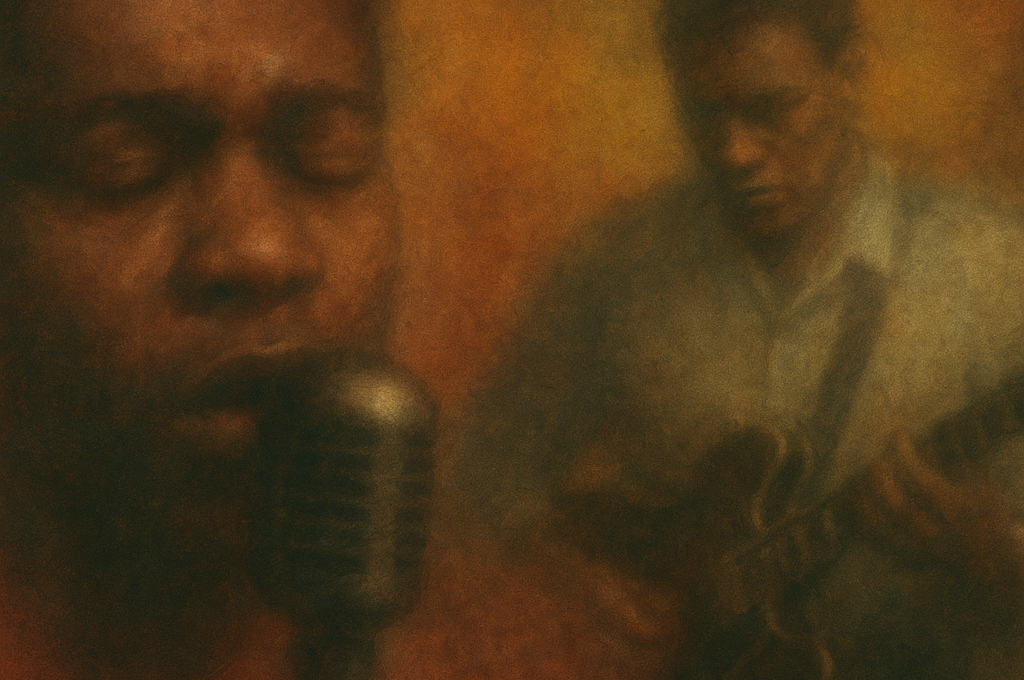
The shadow of commercial comparison can obscure true cinematic intent. Darnell Martin’s “Cadillac Records” entered a marketplace already saturated by the blockbuster success of “Dreamgirls,” but to view it merely as a similar offering is to fundamentally misinterpret its distinct, resonant achievement. This film, explored with insight in the FMC 020: Cadillac Records Directed and Written By Darnell Martin podcast, never aimed for the soaring theatricality of a musical; instead, it meticulously constructs a raw, grounded drama rooted in the gritty birth of the blues. It offers nuanced character study and historical recontextualization, peeling back layers of myth to reveal the human cost of cultural revolution.
Martin’s direction, characterized by a soft yet authoritative voice in the commentary, navigates the complexities of this narrative with a sincerity that resonates. Her artistic vision prioritizes an immersive realism, demanding more than superficial mimicry from her cast. This commitment to authenticity is most vividly embodied in Jeffrey Wright’s portrayal of Muddy Waters. Wright does not just perform; he fully inhabits the character, learning the guitar (2:05) and internalizing the essence of a man who rose from sharecropping to define a genre. The commentary highlights the raw power in his performance, particularly the scene following Little Walter’s death (1:03). Wright’s movements in that moment—hesitant, tender, yet burdened—articulate an inner turmoil that transcends dialogue, his eyes darting with a silent eloquence that suggests a mind wrestling with profound loss and guilt (1:34, 3:20).
Columbus Short’s transformation into Little Walter is equally compelling, charting a tragic descent fueled by addiction and unchecked ambition. Martin’s decision to shoot tight on these performances, forcing a proximity that disallows any artifice, extracts every ounce of raw emotion. It’s a directorial choice that foregrounds vulnerability, making the character arcs, especially Walter’s, viscerally felt. The film’s dramatic power rests heavily on these unflinching depictions, crafted not through grand gestures, but through intimate, lived-in details that speak volumes about the period and the individual struggles within it.
The Calculated Fusion of History and Artistry
“Cadillac Records” is a period piece deeply concerned with historical context, but it operates under the practical constraints of filmmaking. The podcast discusses the film’s modest $12 million budget (6:42), a surprisingly tight figure for the scope of the narrative. This reality necessitated creative decisions that balanced historical fidelity with narrative economy. Darnell Martin’s background in television (6:56) likely afforded her the discipline to maximize every dollar, enabling the production team to craft a rich world without extravagance.
A prime example of this calculated approach is the fusion of characters. Faced with a 150-page script (3:15), Martin made the strategic choice to combine Muddy Waters’ real-life wife, Geneva, with Howlin’ Wolf’s wife (2:49). This wasn’t merely a simplification; it created a composite character, portrayed by Gabrielle Union, who served a dual narrative function. Such creative licensing, while altering factual minutiae, served the larger truth of the story, allowing for a more focused exploration of themes relevant to the era. The film acknowledges that stories “based on a true story” are interpretations (2:35), allowing dramatic necessity to shape details while preserving the emotional and cultural core. The very distinction between the gritty, dusty Mississippi, depicted in scenes shot at Angola Prison in Louisiana (2:34), and the gleaming, hopeful Chicago record label is a visual manifestation of this careful design. This purposeful contrast signals not just geography, but psychological and social transformation.
Critical Insight
The perceived commercial failure of “Cadillac Records” upon its theatrical release, largely attributed to unfortunate timing relative to “Dreamgirls” (2:20, 5:33), inadvertently preserved its distinct artistic identity. This initial underperformance shielded the film from the pressures to conform to a more mainstream, broadly appealing musical aesthetic, allowing Martin’s vision of raw, dramatic truth to fully take root. The film’s budgetary constraints and the necessity of creative license in its historical adaptations, rather than being weaknesses, became catalysts for its profound authenticity. By forcing a focus on intimate performances and precise visual storytelling over sprawling spectacle, the film achieves a grounded realism that often eludes larger biopics. This confluence of pragmatic limitation and artistic intention yielded a work. While not initially a box office hit, it offers a deeper, more enduring exploration of its subjects than a more commercially-driven production might have. Its ultimate success in the home entertainment market (5:10) shows that its true resonance required a more deliberate, less hyped viewing experience, free from the shadow of immediate comparison.
Key Takeaways
- Authentic performances, especially from Jeffrey Wright and Columbus Short, anchor the film’s dramatic weight. Wright’s nuanced portrayal of Muddy Waters, from his expressive eyes to his physical transformation, demonstrates a deep commitment to character (1:34, 2:05, 3:20).
- Darnell Martin’s direction prioritizes realism, using tight close-ups to enhance emotional impact and demanding full immersion from her actors, rather than relying on superficial theatricality (4:20).
- The film uses visual contrasts, such as the gritty Mississippi delta versus urban Chicago, to mirror character journeys and historical shifts within the narrative (1:36, 2:03).
- Budgetary constraints influenced creative decisions, such as combining historical figures for narrative efficiency. This forced focus resulted in a more concise and impactful storytelling approach (2:49, 3:10).
- “Cadillac Records” subverts expectations of a typical music biopic by being a drama about musical history, not a musical. This distinction was crucial to its storytelling but may have contributed to its initial market confusion (3:54, 4:12).
- The film’s use of color, particularly red for Chuck Berry and blue for Muddy Waters, is a deliberate design choice that enhances thematic representation and signals evolving musical eras (3:58, 4:09).
Questions Worth Asking
- How might “Cadillac Records” have been received differently if “Dreamgirls” had not been released two years prior, and what does this reveal about audience expectations for genre films?
- Given Darnell Martin’s extensive background in television directing, how did her experience in that medium influence her approach to managing a tight budget for a feature film, particularly a period piece?
- In what ways did the film’s creative license, such as combining historical characters, ultimately serve or detract from its mission of portraying the birth of the blues and its key figures?
- Considering the film’s strong performances and critical acclaim, what specific marketing strategies could have better positioned “Cadillac Records” to find its audience theatrically, beyond simply being compared to other music-themed films?
Further Viewing & Reading
Ray (2004): For another powerful musical biopic that explores the life of a transformative Black artist, Ray Charles. Jamie Foxx’s Academy Award-winning performance is an embodiment.
Dreamgirls (2006): To understand the commercial context and stylistic differences that initially overshadowed “Cadillac Records,” offering a direct comparison between drama and musical biopics.
I’m Not There (2007): A highly unconventional Bob Dylan biopic that uses multiple actors and narratives to explore the multifaceted identity of an artist, showcasing alternative approaches to biographical filmmaking.
The Social Network (2010): A contemporary film discussed in the podcast (3:32) that demonstrates the ethical complexities and dramatic opportunities of taking creative license with real-life figures, especially when performances are incredibly convincing.
Back to the Future (1985): A surprising recommendation, but the podcast highlights its accidental role in reintroducing Chuck Berry to new audiences through Johnny B. Goode (1:43). It showcases how films can inadvertently become historical touchstones.