June 29, 2026
F
Filmmaker Commentary
  • Home
  • About
  • Episodes
  • Film
  • TV
  • Home
  • About
  • Episodes
  • Film
  • TV
Podcast

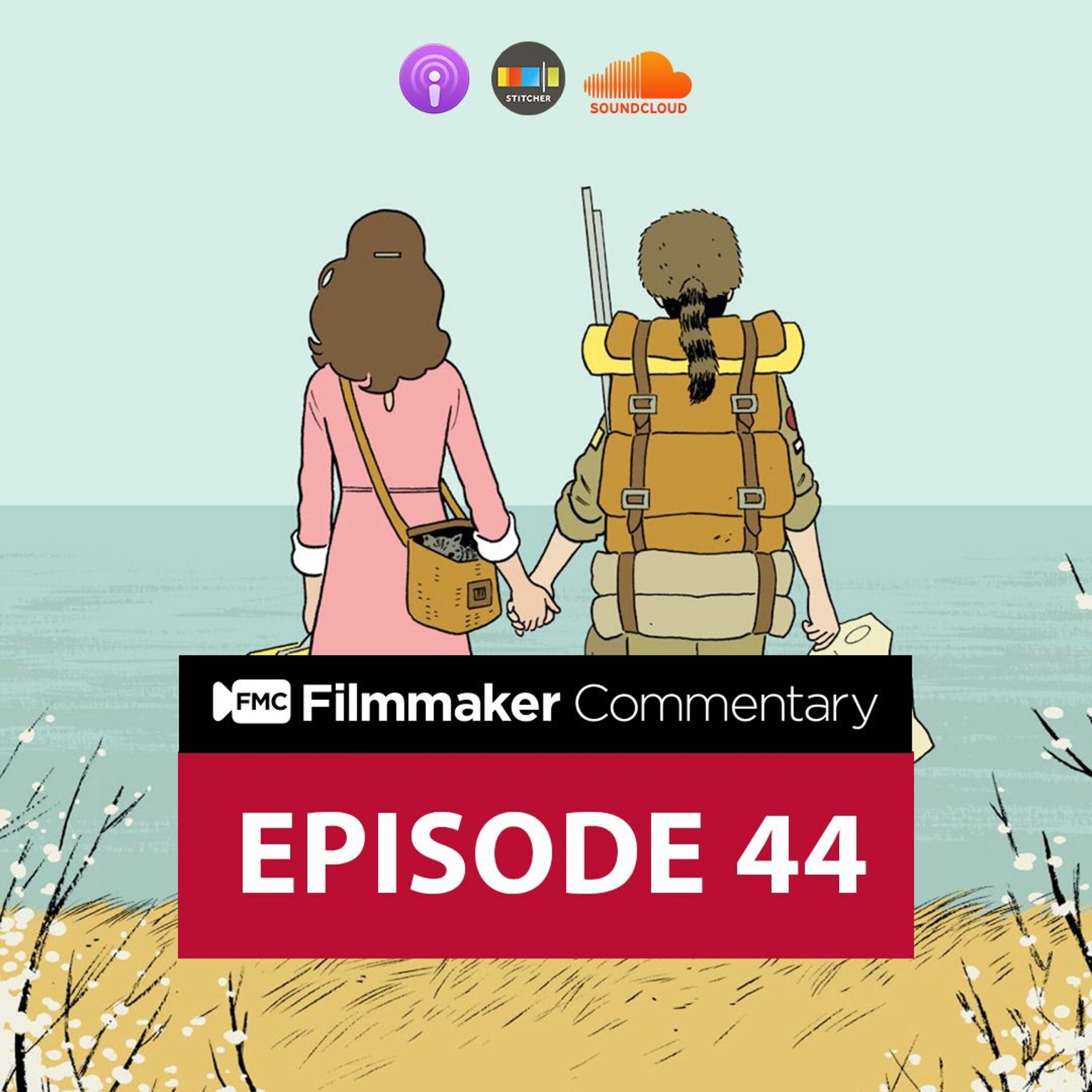
FMC 044: Moonrise Kingdom Directed and Co-Written by Wes Anderson

January 5, 2019
Listen on Apple Spotify YouTube
Listen to this episode
Your browser does not support the audio element.
Also on Apple Spotify YouTube

“Moonrise Kingdom,” Wes Anderson’s beloved 2012 film, captures the enchanting escape of two young lovers into the New England wilderness. In this episode of Filmmaker Commentary, Reginald Titus Jr. and Casey G. Smith dive into the movie’s distinct visual style, quirky dialogue, and profound themes, making it a must-listen for fans of Anderson’s unique artistry. The discussion explores Anderson’s mastery of symmetrical compositions and “dollhouse” aesthetic, highlighting how these choices contribute to the film’s whimsical yet deeply emotional narrative. Casey G. Smith shares his initial impressions of the film’s charming simplicity, finding himself drawn in by its unique approach to storytelling.

Our hosts unpack the nuanced character portrayals, especially from the talented young actors, and how the film sensitively addresses topics like childhood innocence, feelings of abandonment, and the search for belonging. Reginald specifically breaks down Anderson’s unique technical execution, from the meticulous production design and vibrant coloring to his signature static camera shots that let characters drive the movement. They examine Anderson’s unique writing style, particularly his meticulous approach to dialogue that demands precise delivery from his cast, including seasoned actors like Bruce Willis and Edward Norton. A significant portion of the conversation is dedicated to Anderson’s use of “material synecdoche”—his clever method of defining personalities and relationships through specific objects, clothing, and environments. This technique allows for subtle character insights without overt exposition, whether it’s the scoutmaster’s knife or Suzy’s binoculars.

Reginald and Casey G. Smith also draw comparisons between “Moonrise Kingdom” and other standout Wes Anderson works such as “Rushmore” and “The Grand Budapest Hotel,” revealing recurring thematic threads and stylistic signatures across his filmography. While praising the film’s artistic brilliance, the hosts offer a candid review of the Criterion Collection commentary track, detailing why it ultimately fell short of their expectations despite the film’s many strengths. This episode is a deep dive into the creative choices that make “Moonrise Kingdom” a standout in modern independent cinema.

What We Cover

  • Wes Anderson’s signature visual style, including his use of symmetrical compositions and “dollhouse” camera shots.
  • The film’s nuanced portrayal of childhood innocence, mental illness, and finding family in unexpected places.
  • A deep dive into “material synecdoche” – how Anderson uses objects, clothing, and locations to define characters and their relationships.
  • The challenging nature of directing child actors and animals, and Anderson’s specific approach to dialogue delivery.
  • Contrasting “Moonrise Kingdom” with other Wes Anderson films like “Rushmore” and “The Grand Budapest Hotel.”
  • The disappointing Criterion Collection commentary track, despite the film’s artistic merit.

Key Moments

  • 01:58 – Casey G. Smith’s first impressions of “Moonrise Kingdom” and his appreciation for its charming simplicity.
  • 05:50 – Reginald Titus Jr. breaks down Wes Anderson’s unique technical execution, focusing on production design, coloring, and static camera compositions.
  • 06:17 – The hosts discuss Wes Anderson’s use of “material synecdoche” and how he employs objects and clothing to tell character stories.
  • 10:07 – Thoughts on the standout performances, particularly from the young leads and Bruce Willis, and the film’s unique adult/child dynamic.

Gear & Films Mentioned

  • Aaton A-Minima 16mm camera
  • Kodak 16mm film stock
  • Rushmore
  • The Fantastic Mr. Fox
  • Isle of Dogs
  • The Grand Budapest Hotel
  • Bram Stoker’s Dracula
  • Constantine
  • Bumblebee
  • Justice League Dark
  • The Lion, the Witch and the Wardrobe
  • Zodiac
  • Snowpiercer
  • Doctor Strange
  • Black Mirror (series and interactive film)
  • Aquaman
  • Napoleon Dynamite
  • Room 104 (series)
  • Legends of Tomorrow (series)
  • Justice League Action (series)

Listener Questions

  • How does Wes Anderson’s filmmaking style stand out, and what specific techniques define his work?
  • What themes are explored in “Moonrise Kingdom,” particularly regarding childhood, family, and individuality?
  • Is the Criterion Collection commentary for “Moonrise Kingdom” worth seeking out for aspiring filmmakers?
Full Transcript

Read the full transcript

Full Episode Transcript
This episode of Filmmaker Commentary Wes Anderson's 2012 film, "Moonrise Kingdom," exploring its unique visual style, thematic depth, and the creative decisions behind its production.

Opening Discussion: Moonrise Kingdom Overview
Reginald Titus Jr.: Filmmaker Commentary episode 44. Welcome to Filmmaker Commentary, where we give you insights from our favorite filmmaking commentaries. These commentaries can be heard on your DVD and Blu-rays of your favorite movies. We'll show you how you can use these commentaries and apply them to improve your video production and filmmaking techniques, all of this here on Filmmaker Commentary. I'm your host, Reginald Titus Jr.
Reginald Titus Jr.: Welcome back to Filmmaker Commentary. I'm Reginald Titus Jr. I'm joined with Casey G. Smith.
Casey G. Smith: Welcome back, sir.
Reginald Titus Jr.: Good to be back, sir.
Reginald Titus Jr.: All right. So today we're talking about Moonrise Kingdom, 2012, co-written and directed by Wes Anderson. Got a budget of 16 million, and at the box office, 45 million domestically, 22.8 million foreign for a worldwide 68.2 million.
Casey G. Smith: That's a win.
Reginald Titus Jr.: That, that is a win. Nominated for an Academy Award for Best Original Screenplay in 2012.
Casey G. Smith: Rightfully so.
Reginald Titus Jr.: Yes, yes.
Casey G. Smith: For Wes Anderson and his writing partner Roman Coppola.
Reginald Titus Jr.: Is that Francis Coppola's son?
Casey G. Smith: Yep, who also helped out on Bram Stoker's Dracula.
Reginald Titus Jr.: Okay. So I'm going to jump into the synopsis real quick. An island off the New England coast, summer of 1965. Two 12-year-olds, Sam and Suzy, fall in love, make a secret pact, and run away together into the wilderness. As local authorities try to hunt them down, a violent storm is brewing offshore. Moonrise Kingdom. What are your initial thoughts on the film? You know, how were you introduced to this, everything?
Casey G. Smith: I was initially introduced to Moonrise Kingdom, I found it streaming. And I think I had heard from some podcast I was listening to that it was that it was a good film. And I saw it there. I'd seen the trailers for it, and it looked it looked unique and interesting. And I hadn't at that point, I don't think I'd watched a lot of Wes Anderson's films. Put it on, watched it, and it's a charming film, and it deals with some topics in such a way that it just kind of drawn in and the dialogue, the dialogue cracks me up just throughout, just the lines that they're saying. And Wes Anderson is very specific when he works with the actors about them nailing that dialogue. But I don't use the word 'adore' a lot, but I kind of adore I kind of adore this this film just for its it's got a degree of simplicity to it, and a we're talking about this earlier, this this fine line of of innocence and dealing with some of the subject matter that they're that they're touching on, which we'll dive in a little bit deeper. But yeah, I was happy I was happy to to revisit the film. Yeah, I think it's a I think it's a a gem. A gem of a of a film and uh, yeah. How about you?
Reginald Titus Jr.: This film has never been on my radar. Like, the Wes Anderson film that I did watch that I really enjoyed was Rushmore. That was back in the day. I think that was like his second film. I can't remember what year that was, but I think I was still in high school at the time when that came out. The boy scouts, when they when they go to the other island and the guy is leading over the other boy scouts on the other island, he was like the main character in Rushmore.
Casey G. Smith: Oh, Harvey Keitel?
Reginald Titus Jr.: Not Harvey Keitel. Young, younger brother, younger guy. He's probably like in his late 20s.
Casey G. Smith: The one who performs the marriage ceremony?
Reginald Titus Jr.: Yes.
Casey G. Smith: Oh.
Reginald Titus Jr.: He was the main character.
Casey G. Smith: Jason Schwartzman.
Reginald Titus Jr.: That's the name. Jason Schwartzman.
Casey G. Smith: Yeah, Jason Schwartzman. Yep, his credit on IMDb for Rushmore.
Reginald Titus Jr.: What year was that?
Casey G. Smith: Back in '98.
Reginald Titus Jr.: '98, yeah. So, still in high school and everything like that. Rushmore, for whatever reason, like we watched it over and over again. Like that film, I don't know why it's this film reminds me of that film, the way that it's set up and everything, the overachiever, the stage play within the film. It feels like the film is a stage play. That's how Rushmore is. So that's the one that I do remember. I was like, okay, Wes Anderson, okay, let me let me dive back into that world. But this film hasn't really been on my radar like that. I remember seeing the trailer once, seeing the guys in the in the in the boy scout uniform. I'm like, what is this? Edward Norton's like crazy. So I'm like, maybe. This is back in, you know, when it was still new. So I'm like, okay, one day I'm pretty sure I'll come back to it, but I don't have a reason to. Well, apparently, you know, that major box office success. I didn't expect that. I was I was actually surprised by that. I'm like, who is the demographic of the people that are watching this film? Or maybe they're just fans, you know, are they fans of Wes Anderson? First, like what is it about his movies and like what kind of demographic is he drawing to his films because you got like the Isle of Dogs and all these other films that people still come out to see his films.
Casey G. Smith: Yeah. You know, that's, oh, you know what? So it it's fascinating because as I watched this, I instantly thought, man, you know what? This reminds me of The Fantastic Mr. Fox. And I was like, I bet he directed that. And sure enough, I went and looked. Yep, he directed that. Yeah. And and and, you know, George Clooney. And then you mention Isle of Dogs, which I hadn't seen, and I'm like, yeah, just from thinking about the trailers, I'm like, yeah, it makes perfect sense that he would have directed that too, which is getting good, good buzz. Just just something about his his writing style and delivery and the execution, but there are a lot of similarities in the the kind of he loves to do like the kind of house cut in half looking inside and moving along. Yeah, the dollhouse. Yeah, it's like dollhouse shots. He loves to to do that and and show things kind of moving along and dropping down. It's it's it's interesting the camera movements that he likes to incorporate and then again, the dialogue.
Reginald Titus Jr.: So the story in this one, it didn't really like on initial, and I watched it late at night, so forgive me, I might have a different opinion. But like the story right away didn't really captivate me. I'm just like, I was just trudging along like, I'm I'm on this journey. I'm, you know, hey, I'm here. Take me wherever y'all are going. But the thing that did captivate me was how he executed technically. And the production design, the coloring, the the composition of the shots because he likes to keep his compositions sometimes just still, and the characters move into the frame. They're doing most of the movement. Outside of the title sequence where it's moving from room to room. Outside of that, usually his his camera shots are stationary. He might do a swish pan here and there, but they're stationary and the characters are entering or exiting out of the frame. So he's keeping movement going that way. There's a word that somebody used when I was looking up Wes Anderson, it's S Y N E C D O C H E, synecdoche, synecdoche. Synecdoche?
Casey G. Smith: Synecdoche.
Reginald Titus Jr.: Oh, uh, can you Google that one real quick? Because I want to say it right. I want to say synecdoche.
Casey G. Smith: Synecdoche.
Reginald Titus Jr.: Synecdoche. Okay. So somebody said that Wes Anderson uses material synecdoche. So basically, he showcases objects, clothing, and locations as a way of defining personalities, relationships, and conflict. So it could be like the out of the three boys, the older boy always has like the robe on and you can tell like he's the leader. Objects, could be like the patches or the um, the binoculars, yes. The record player for the for the oldest son. For the boy scout for Edward Norton's character was a knife, the little knife set that he had that had the mascot on it.
Casey G. Smith: The record, the record player for the for the oldest son. For the boy scout for Edward Norton's character, was a knife, the little knife set that he had. Right, that he had the mascot on it.
Reginald Titus Jr.: Right. that he has to to give up at at one point. Yeah, yeah. Um, so anyhow, that was just a word that came across as I was kind of looking up more Wes Anderson stuff. What kind of what separates him from other people or things that he may pay attention to that other filmmakers, you know, do not and vice versa, like things that, you know, because he it seems like he's kind of he he's telling the same story.
Casey G. Smith: Edward Norton mentioned that in the commentary that he he thinks that, you know, some directors, he's he's kind of drawn maybe to projects where he feels like a director is in essence telling the same story. And he does call back to several of his other projects. And so he felt like he's like telling the same stories and even thematically he talks about having the people with families that let them down because they can't choose their families, but then they ultimately end up basically building the family that they need to to meet their their needs.
Reginald Titus Jr.: Yes, yes. And with Rushmore, you know, you're you have that kind of like the line where the kids are talking to the adults and there's like this relationship, you think it's going to happen between the the high school student and an adult. Um, so like those lines are kind of crossed. Then in this one, yeah, like Bill wait, it was Bruce Willis's character giving the kid beer, I don't know if that was real beer or if that was cream soda, I don't know.
Casey G. Smith: I'm I'm sure it was cream soda for the
Reginald Titus Jr.: Not in real life, but like in the world, in the world.
Casey G. Smith: That was beer. He was giving him beer. Because he wouldn't have like just so like carefully just poured a little bit. If it was just cream soda, he would have he would have poured it like a normal portion of any other kind of beverage instead of like just, you know, rationing it. Yeah.
Reginald Titus Jr.: Rationing it out. So, you know, just like little stuff like that where they're like adults and the way that they're talking. And the only three films that I have is this film, Rushmore, and The Grand Budapest Hotel to kind of compare it to.
Casey G. Smith: Grand Budapest.
Reginald Titus Jr.: Uh-huh.
Casey G. Smith: Yeah, Grand Budapest was pretty good too.
Reginald Titus Jr.: People trying to escape, kind of that same theme, you know, trying to escape and I was like, okay, he's kind of telling the same story, just in like different locations and times. It feels like. Any rate. So, yeah, so that's what I got out of, you know, initially from this film. So I'm intrigued, but like the story didn't captivate me that much, but I'm intrigued on how he does his thing.
Casey G. Smith: So you the technical aspect pulled you in. Yeah. For me, the technical was was was great, well shot. Even even in the menus of the the Blu-ray and DVD, how like when you just there, it's just like the environments. You know, and just some of the, you know, the wilderness. I'm like, that's nice. That's real nice. And it's beautifully shot. I'm like, this is a nice menu. You know, it's a nice menu. This is very serene and tranquil. Um, but for me, yeah, for me, it's the performances that come out of these actors. Some are to some degree playing against against type. So Bruce Willis is playing a cop, shocker. But the kind of cop he's playing, you know, this sad, you know, like the like uh Suzy, I know what you I know what you do with the with the sad cop. Just that sad fat cop. He's like, I supposed to, yes.
Reginald Titus Jr.: No, she said dumb sad.
Casey G. Smith: Oh, dumb sad. You know, he's like, oh, he's not he's not he's not dumb, but I guess he is sad. Um, but yeah, and again, the two, the two kids, man, I I I can't say enough about their their performance. And even the younger kids, even though like from point of view.
Reginald Titus Jr.: I enjoyed the little trio, the little, or the uh, the whole cub scouts. Yeah, the cub scouts. They are hilarious. Yeah, man. The lines that they had and how they delivered them. I was just that that got me like, man, they're they're uh, but like somebody in the commentary mentioned that in a lot of Wes's films that there are a lot of kids who are acting more grown up or acting like adults. And then the adults are kind of acting more like kids. And then they kind of mention that again within within dynamics and relationships if at times if one doesn't feel like they're getting what they need or in certain situations, kids will tend to grow up faster in certain situations or feel they have to grow up faster or act more grown. And sometimes in some situations with certain adults, based upon their experiences, they might, you know, maybe have some arrested development or digress or regress or act a little more immature.
Reginald Titus Jr.: I'm going to go chop down a tree.
Casey G. Smith: Yeah. I was like, are you trying to prove your masculinity, you know, to to your woman that you know is cheating on you? Yeah. Or is your way of getting out aggression? And you've got, you know, Yeah. With you. That's that's safe. Yes, I'm going to work an axe with alcohol. Great combination there. Warrior. Oh, man.

Recent Watches & Industry News
Reginald Titus Jr.: Let's uh, let's dive into uh, movies watched. So, uh, what are some movies you watched this past week? I think we've we've had some time, good about a week and a half or so, right? Since last time we recorded it?
Casey G. Smith: No, it hasn't been that long.
Reginald Titus Jr.: Hasn't been that long. It's been a week.
Casey G. Smith: Today's Sunday.
Reginald Titus Jr.: We recorded last Sunday?
Casey G. Smith: We did.
Reginald Titus Jr.: Wow.
Casey G. Smith: Yeah. I don't know.
Reginald Titus Jr.: I don't know what's going on.
Casey G. Smith: Seems seems a little longer, but no, it's just been it's just been a week. Yeah, yeah, yeah.
Reginald Titus Jr.: Okay. Okay.
Casey G. Smith: No, that's not right. Cuz I flew out. We recorded last Yeah, it is a week and a half. We recorded last Thursday.
Reginald Titus Jr.: Thursday. Cuz we couldn't record on Sunday.
Casey G. Smith: Cuz I flew out. I flew out on Sunday.
Reginald Titus Jr.: I know I wouldn't trippin.
Casey G. Smith: okay, I give you that one. I give you that one. Gimme some slack. Gimme some slack. check.
Reginald Titus Jr.: Yeah.
Casey G. Smith: Uh, so I saw uh Bumblebee.
Reginald Titus Jr.: Oh, how was that? PG, PG-13?
Casey G. Smith: PG. No, maybe PG-13 because it's for some of the robot violence. Yeah, man, this is G1 love all the way. When I say G1, for those who don't know, Resident Nerd here. Uh, Transformers, we talk about the the original 1980s cartoon and toy line. Uh, that's often known and referred to as Generation One or G1 for short. The Michael Bay films had a uh a modernized take on a lot of the G1 characters, but what Travis Knight does in Bumblebee literally takes us back into the past. The movie takes place in the early '80s and you can see this in the trailers, there's there are scenes on Cybertron and it's very reminiscent of the original cartoon. Even the designs of the Autobots and Decepticons are straight out of the cartoon. And this is the Transformer film. This is the Transformer look that I wanted. Uh, I'm not a big fan of a lot of the of the of the Transformer films, uh, personally, but this one, I was a fan of. I love the look, love the feel. Uh, this film, it felt like a Steven Spielberg movie because it has that heart. It has a uh a girl, the the kid and her alien or the kid and his alien or or or the kid and his dog, whatever, you know, you want analogy you want to use, it had that vibe going on. There's some nice bits of humor. Bumblebee is I I you know, I I didn't really care for him in the movies again previously, like, hey, he's all right, whatever. But yeah, he's pretty awesome in this one. Really, really funny. And they have reason, you know, why he you find out why he can't, you know, talk. Uh, it was it was it was enjoyable. And uh, if you got kids, yeah, it's a fun movie to to take them to and and enjoy. Bumblebee.
Reginald Titus Jr.: Bumblebee.
Casey G. Smith: So hey, not directed by Michael Bay, but Travis Knight of Kubo and the Two Strings.
Reginald Titus Jr.: Michael Bay, he did all the other ones, right? He do every single one.
Casey G. Smith: Mhm.
Reginald Titus Jr.: Wow.
Casey G. Smith: And again, he Bay makes money. You know, I can't I can't front on him. He makes money.
Reginald Titus Jr.: It was one dude, I think it was maybe part, how many is it? Like three or four?
Casey G. Smith: It's like five of them.
Reginald Titus Jr.: Are you kidding me? So I think this might have been part three. It actually it just kept going on and on. And I'm in the theater, I'm like, when is this over?
Casey G. Smith: That's to me, I think I think it's number two, when they're in the desert, it's just like
Reginald Titus Jr.: No, it wasn't in the desert. They were going they were in the city and they were just busting through buildings. I'm like,
Casey G. Smith: That was three. I I felt I felt that way about two. I was like, they're still in the desert, they're still fighting. Let me go.
Reginald Titus Jr.: It's too much. All right. So movies, um, I'm going to watch three, actually two films and started a series. So the first film was Constantine, uh, starring Keanu Reeves. Uh, that one's streaming on HBO.
Casey G. Smith: Were you familiar with Constantine prior to?
Reginald Titus Jr.: No.
Casey G. Smith: Okay.
Reginald Titus Jr.: No, not at all, man. I've I've seen the movie before.
Casey G. Smith: Okay.
Reginald Titus Jr.: Um, but I just wanted to come back to it. It's been a long time since I'd seen the film and I saw it on there. I'm like, let me stream this. It's been a while. Um, I like the the characters that can see into the other worlds. And um, nobody else can kind of, you know, see that world and the struggles they go through when they're trying to juggle between both realities. Um, so Constantine, it's a supernatural detective. John Constantine helps a policewoman prove her sister's death was not a suicide, but something more. Tilda Swinton is in the film. She plays Gabriel.
Casey G. Smith: Mm.
Reginald Titus Jr.: And I started looking cuz she has a very distinct look.
Casey G. Smith: Oh, she does.
Reginald Titus Jr.: And it kind of sent me down a rabbit hole and then I realized she was in The Grand Budapest Hotel.
Casey G. Smith: And she's in this as well. She's also in Wes Anderson. I mean, you know, they work with a lot of the same people. Bring them on back.
Reginald Titus Jr.: Yeah, so that I think that kind of sent me down that that whole of
Casey G. Smith: She's also in Snowpiercer, she's also in Doctor Strange. I mean, she gets she gets work continuously. She has yeah, she has such unique looks. She can look very like in in in this in this film, she looked she looked pretty, you know. She didn't look like weird. But at times, she can go the route and she can look very weird and eccentric. If she wants to, but or she can look or she can look very andro- Androgynous.
Reginald Titus Jr.: That's true. That's true.
Casey G. Smith: Oh, she can look and she can look she can look very old. Androgynous.
Reginald Titus Jr.: Yeah. Cuz she has that androgynous. That's how it was in Constantine cuz she played Gabriel, the Angel. Like, a very androgynous look. He's like, what is this? It wasn't too feminine, wasn't too masculine. Like, what's going on?
Casey G. Smith: She's also, I didn't even know it was her. She's in The Lion, the Witch and the Wardrobe.
Reginald Titus Jr.: I haven't seen that one.
Casey G. Smith: No. Oh, that's a that's a classic. Uh, but the Disney the Disney uh remake of that she plays the the the Ice Queen. And I didn't know that was her, man. I was like,
Reginald Titus Jr.: She can hide. She can hide.
Casey G. Smith: What? Yeah, she's got She's yeah, she she she does and she can and she does.
Reginald Titus Jr.: And she did.
Casey G. Smith: It is done.
Reginald Titus Jr.: So be it. Um, next was The Grand Budapest Hotel, which I hoped had commentary cuz that's what we would have been talking about today. And I really enjoyed that film. Um, Wes Anderson, uh, we follow the adventures of a legendary concierge at a famous hotel from the fictional Republic of Zubrowka, Zubrowka, between the First and Second World War. And uh, we have the lobby boy who becomes his most trusted friend. I really dug that. I was surprised that I liked the film as much as I did. Had some of the same tropes that we see in Moonrise Kingdom, and the humor really is, you know, that one. There's some laugh out loud stuff in there.
Casey G. Smith: Yeah, it's been a couple years since I watched that. But I remember I mean when it came out, a lot of great buzz around it. That that did, I know it got nominated for a couple Academy Awards. I think it took away maybe one or two.
Reginald Titus Jr.: Uh, Original Screenplay, I believe. Okay.
Casey G. Smith: Yes, Original Screenplay.
Reginald Titus Jr.: I know it won like a, I think it's a BAFTA Award, but is the BAFTA the one that's the European award?
Casey G. Smith: BAFTA. BAFTA. British. That's the British Actors Film and TV. Radio. Won four Oscars. There you go.
Reginald Titus Jr.: Production Design. They won for Production Design and probably Original Screenplay. And I can't guess that.
Casey G. Smith: Production Design. Oh, I'm sorry. So maybe maybe, maybe
Reginald Titus Jr.: Nominated for four and got one.
Casey G. Smith: No, okay, one for Costume Design, one for Best Achievement in Make-up and Hairstyling, one for Best Achievement in Music in uh in Music Written for Motion Picture and Original Score. And then Best Achievement in Production Design. Wow, okay. But also nominated for Best Picture of the Year, nominated for Best Achievement in Directing, nominated for Cinematography, nominated for Editing, nominated for Screenplay. Yikes.
Reginald Titus Jr.: I can see why. I didn't expect to like the film. But, you know, that was going to be the one we were talking about and I dove right into it and really dug it.
Casey G. Smith: Old Ray Fiennes in the mix as well.
Reginald Titus Jr.: Yeah. And then the other film um was a series. It's called Room 104. It's streaming on HBO. Uh-huh.
Casey G. Smith: HBO. Mhm. It's uh On the second season, right?
Reginald Titus Jr.: Uh-huh. It's a uh Duplass Brothers. That that's who directed, created it. It's set in a single room of an average American hotel, and they basically just tell a different story each each episode. It's like 25 minutes. It's like an anthology series.
Casey G. Smith: Yeah, like Black Mirror but in one room.
Reginald Titus Jr.: Mm. There you go.
Casey G. Smith: One Mirror.
Reginald Titus Jr.: Speaking of Black Mirror, there's a Black Mirror movie on Netflix.
Casey G. Smith: Yeah, it just dropped.
Reginald Titus Jr.: I haven't seen it though.
Casey G. Smith: And it I I saw the caption literally right before we came to, I was kind of looking through to see if there was anything on I watch on Netflix. Um, as far as recent stuff. And I'd saw the trailer for it, and it said an interactive experience.
Reginald Titus Jr.: You can choose the ending.
Casey G. Smith: Wow, that's something new. I've now I I I saw the trailer didn't interest me. When I first saw the trailer, I was like, man.
Reginald Titus Jr.: Anything Black Mirror, I'm in.
Casey G. Smith: Yeah, but the trailer did not grab me. It looked I was like, ah, what is this? But now that it's an interactive experience, I'm like,
Reginald Titus Jr.: And I think it's like set in the '80s and everything, so.
Casey G. Smith: Now I got to see what ending will I choose. Um, going back to Constantine, um, wait, so, so you hadn't watched it yet. Or had you?
Reginald Titus Jr.: Watch what?
Casey G. Smith: The uh, oh, you know, you were saying it was like Black Mirror. Never mind. This is my train of thought.
Reginald Titus Jr.: Oh, the Room 104 reminded me Yeah. It's like Black I was just doing the pitch. Yeah, yeah, I was like, how did we get to Black Mirror?
Casey G. Smith: Yeah, yeah. Room in one room.
Reginald Titus Jr.: Black Mirror in one room. So, yeah.
Casey G. Smith: Um, going back to Constantine, you know, that that he's a comic book character, right?
Reginald Titus Jr.: Right. Yeah, yeah. So he's he's he's gained some steam and notoriety over the past couple of years.
Casey G. Smith: Really?
Reginald Titus Jr.: Yeah. He had his own show on NBC about three years ago. I mean, two to three years ago.
Casey G. Smith: Not animated, just a regular.
Reginald Titus Jr.: No, it was a live action series. Yeah. Live action series that those who watched it really, really enjoyed it. And then he got unceremoniously canceled like, you know, things happen on on on cable networks. Um, so it got canceled, but the same actor, he he now has shown up on a couple of episodes of Legends of Tomorrow on the CW. Mhmm. Which is pretty cool that they they brought back the same actor because he was, you know, did a good job and um, Playing the same character. Yeah, he got he got to be recast as Constantine because I mean, you know, we use him in here, so they say, hey, come on, let's use you here. Keep it going. Uh, also they had an animated they did an animated feature of uh Justice League Dark where they had Constantine in that. But yeah, he's he's got he's got he's got a little bit of shine for John Constantine. He was on he was on episode of Justice League Action, I do believe. Yeah, he know he was. He was on episode of Justice League Action as well. So he's been popping up different places. John Constantine, a hell of Blazer.
Reginald Titus Jr.: Yeah. I like it.
Casey G. Smith: We use him elsewhere, so they say, hey, come on, let's use you here. Keep it going.
Reginald Titus Jr.: Lovely, lovely. Um, so yeah, so Room 104, I would all these things I would recommend. Uh, probably Constantine, Grand Budapest Hotel first, Constantine, then Room 104. Room 104, depending on the episode, can be hit or miss.
Casey G. Smith: Mm.
Reginald Titus Jr.: Yeah. Some some episodes are better and, you know, we're only what we're only four in. Uh, but thank God it's only 25 minutes. So, ain't got that much time. Any news or anything like that? I know there's been creepy stuff like the the creepers like Weinstein going to the court and did you see the uh, the video that dropped of Kevin Kevin Spacey?
Casey G. Smith: Kevin Spacey. I I I heard about the highlights of it, him him rocking it out as as Frank. Oh, why?
Reginald Titus Jr.: Oh, why?
Casey G. Smith: Man, that's just
Reginald Titus Jr.: Have you seen it?
Casey G. Smith: Uh, no, I didn't watch the whole thing. I just I saw some highlights.
Reginald Titus Jr.: Oh, man, it's creepy. He was in character.
Casey G. Smith: He was in character. I'm like,
Reginald Titus Jr.: That's it's weird because, um, I saw I listened to Joe Rogan's podcast and they like cut to it and it's like he's the Frank Underwood character, but it's not all the way Frank Underwood. It's like a little bit of Kevin Spacey in it and it's like weird. It's like, is it like some undercover message or something like that? Because I think it dropped what, Christmas Eve or something like that? There was like, I don't know, it was like some hit and miss, but it was weird.
Casey G. Smith: That's it's weird because um, I saw I listened to Joe Rogan's podcast and they like cut to it and it's like he's the Frank Underwood character, but it's not all the way Frank Underwood. It's like a little bit of Kevin Spacey in it and it's like weird. It's like, is it like some undercover message or something like that? Because I think it dropped what, Christmas Eve or something like that? There was like, I don't know, it was like some hit and miss, but it was weird. Yeah, that's that that's the consistency of what most people are saying. It was just weird, man.
Reginald Titus Jr.: Yeah, that's that's the consistency of what most people are saying. It was just weird, man. I don't know. I don't know. I don't know. That's I don't know what goes through that pedophile's mind. It's smart. Some of the memes, they they showed like Kevin Spacey directed pedophile directed by Brian Singer or something like that. Yeah, yeah. So I'm like, wow. Well, you know, I mean, they've got like if if if the dude's guilty, then they got to bring all the evidence forward, take him to court, like do do the thing, you know. Take him through the process. Take him through the process and present all the evidence and do it. Yeah.
Casey G. Smith: I don't know. I don't know. I don't know. That's
Reginald Titus Jr.: I don't know what goes through that pedophile's mind. It's smart. Some of the memes, they they showed like Kevin Spacey directed pedophile directed by Brian Singer or something like that. Yeah, yeah. So I'm like, wow. Well, you know, I mean, they've got like if if if the dude's guilty, then they got to bring all the evidence forward, take him to court, like do do the thing, you know. Take him through the process. Take him through the process and present all the evidence and do it. Yeah.
Casey G. Smith: I don't know. I don't know. I don't know. That's
Reginald Titus Jr.: Anyway, yeah, that was creepy. Any other news though?
Casey G. Smith: Again, the Disney and Fox merger draws closer and closer to to completion. I mean, uh, I think by the end of January, okay. Might be a wrap. And that's a game changer. You know, this time of year, right around the holidays, things slow down substantially. Aquaman is doing gangbusters at the box office.
Reginald Titus Jr.: Wow. Have you seen it yet?
Casey G. Smith: I haven't. That's that's on my on my radar. I might uh, I might check it out within the next couple of days. I think I still have a but for the year, one of my buddies went and saw it and he he really enjoyed it. He didn't expect to enjoy it as much as he did. He said he would go back and watch it again.
Reginald Titus Jr.: Damn.
Casey G. Smith: That's what he said. He said he said it visually was really nice. Really, really nice. And uh, yeah, so.
Reginald Titus Jr.: What he said. He said it visually was really nice. Really, really nice. And uh, yeah, so. All right. Prove him wrong. Okay. So, back to the show. All right, so we're back. Um, if you listen to this, it's the new year. So, you know, Happy New Year's.
Casey G. Smith: Happy New Year. Welcome to 2019.

Themes and Subtext
Reginald Titus Jr.: Themes. I just got a couple quick ones. Um, I just had childhood, adventure, freedom.
Casey G. Smith: Mm. Okay. Uh, I'll see your childhood adventure and freedom and raise you um, potentially mental illness. Okay. Um, being with the one you love against all odds. Yeah. Age versus maturity. And uh, creating the family that you need. Only say mental illness because, you know, when Suzy, one of the reasons why she runs off is when she finds the book from her parents that says, you know, dealing with a troubled child. The young boy, Sammy, they constantly say that, oh, he's troubled. You know, he's an orphan, he's troubled. He's troubled. Uh, and so like, you know, do these and and and the fact that Suzy goes off on the those other khaki khaki scouts. Uh, you know, I love the way that that scene kind of just plays out, you know. They all are getting ready.
Reginald Titus Jr.: Yeah. Yeah.
Casey G. Smith: Yeah, man. They all are getting ready. They all run off. They all got their weapons. Well, what cracked me up is that the kid with the with the lazy eye, he has the patch on his eye, he's got the bow and arrow, right?
Reginald Titus Jr.: Yeah.
Casey G. Smith: But then when that when that scene is done, and they go to the dog, the dog got shot by the kid with the one eye. I'm like, he shouldn't have had the bow and arrow in the first place.
Reginald Titus Jr.: He's lazy eye.
Casey G. Smith: Lazy eye. Man.
Reginald Titus Jr.: His name was Lazy Eye. Lazy Eye. Like, when they introduce his character, they say, hey, lazy eye, and then he turns his head then reveals the patch.
Casey G. Smith: Yeah, man. Um, but the fact that, you know, she's like, I I told you sometimes I just I just lose it. And she's got the she's got her lucky she calls her lucky scissors because she's left-handed and they got the blood on them. She's like, she stabbed the kid in the back, man.
Reginald Titus Jr.: Yeah.
Casey G. Smith: Her kidney.
Reginald Titus Jr.: Her kidney.
Casey G. Smith: Like, wow.
Reginald Titus Jr.: Like, wow. They all run out of there. His motorcycle's in the tree. Beautiful.
Casey G. Smith: Yeah. The carnage.
Reginald Titus Jr.: But that's how she handles her problems and he handles his problems how he handles his problems.
Casey G. Smith: And again, it's cute as they as they were together. I'm like, ah, you know, is there Yeah, you know, is there is there something going on that that's that's a bit more, a bit uh, a bit much? Cuz even him when like they they flash to to a scene with him where he's sitting down and he's uh, whatever, and he says something to some kid. And then he like punches the kid in the nuts and then like takes off running. And it's like,
Reginald Titus Jr.: Yeah.
Casey G. Smith: This kid is just getting into stuff, man. Uh, and and maybe it's just troubled adjusting or adapting or, you know, it could be something mental. Um,
Reginald Titus Jr.: Yeah, cuz they said what, his parents are killed, right? And that's why he was in the orphanage. And if you're going from home to home, you don't feel wanted. So the only way you're going to get attention is by doing your thing. And I can see how Suzy how she can be looked over because they have so many kids and then they're caught up in their world of being, they're doctors, right? The psychologist. Oh, they're lawyers. So they're caught up in their world, which they show through the title sequence. And the brothers are always together. They're doing their thing, they're always having fun, but the girl's all in her own world, you know, just
Casey G. Smith: They even say that she doesn't have any friends. Cuz like when they're talking about, oh, you know, they say, you know, most of them, most of them run away, we usually within the first six hours they come back home. She's probably staying over at a friend's house. And Bill Murray's character says, she doesn't have any friends. I's like, wow. But that's also, you know, a telling thing. Like, it's one thing to have troubles at home, but then to not have friends. And then for Sammy that to be seen as the most unpopular amongst his fellow khaki scouts. That's also something else going on there. And even the way that he he finds her, he literally sneaks into the the dressing room, you know, and and and the or some of behind the costumes. And he's like, what kind of bird are you? You? You're not supposed to be here.
Reginald Titus Jr.: You? You're not supposed to be here.
Casey G. Smith: he he rolls in there with some serious swag. I I was like, I I love the way that that was uh done and delivered. But yeah, so I was like, uh, you know,
Reginald Titus Jr.: That shot reminded me of like Black Swan. I don't know why. It's the birds. That's what it is. It's the birds.
Casey G. Smith: Hmm.
Reginald Titus Jr.: What was I going to talk about? Um,
Casey G. Smith: Themes.
Reginald Titus Jr.: Themes. Oh, yeah. That that's all I got, you know, the childhood, adventure, freedom, and um and what you added.
Casey G. Smith: Mental illness, being with the one you love against all odds, because we see a kind of contradiction of that with with Suzy's mom and um and the the officer, um, played by Willis, Captain Sharp. That's so funny. As it seems the opposite of that. Not not very sharp. Um, but when Mrs. Bishop, you know, and and Captain Sharp have their fling or whatever going on, you kind of see that it's it's not true. And and and when Suzy gets taken away and she's in the tub and her mom's kind of, you know, washing her hair and all that kind of stuff, and she's like, we just want we love each other and we just want to be together. What's wrong with that? And she says it with such like innocent conviction. And it and it kind of contrasts to what her mom is doing. And I almost seems like to make her mom realize that what she has going on with Captain Sharp isn't real love. You know, it's just a flame, maybe to escape or not address whatever she has or doesn't have going on with her own husband. But yeah, it it's fascinating to to see that and yeah, yeah, these two love each other. And it's not quite Romeo and Juliet, but it's uh, but it's it's got a little maybe a little little twinge, little twinge of that. It's like them against against the world, you know, star-crossed lovers kind of thing.
Reginald Titus Jr.: Yeah. Uh, that's so funny. As it seems the opposite of that. Not not very sharp. Um, but when Mrs. Bishop, you know, and and Captain Sharp have their fling or whatever going on, you kind of see that it's it's not true. And and and when Suzy gets taken away and she's in the tub and her mom's kind of, you know, washing her hair and all that kind of stuff, and she's like, we just want we love each other and we just want to be together. What's wrong with that? And she says it with such like innocent conviction. And it and it kind of contrasts to what her mom is doing. And I almost seems like to make her mom realize that what she has going on with Captain Sharp isn't real love. You know, it's just a flame, maybe to escape or not address whatever she has or doesn't have going on with her own husband. But yeah, it it's fascinating to to see that and yeah, yeah, these two love each other. And it's not quite Romeo and Juliet, but it's uh, but it's it's got a little maybe a little little twinge, little twinge of that. It's like them against against the world, you know, star-crossed lovers kind of thing. Got to love it. Got to love it.
Reginald Titus Jr.: Got to love it. Got to love it.
Casey G. Smith: Yeah.

Critique of Commentary and Filmmaking Tips
Reginald Titus Jr.: And the special features. All right, so if you so if you have the All right, let's talk about this commentary, first off. Okay, so if you have like the just the regular DVD or regular Blu-ray, there's no commentary.
Casey G. Smith: No commentary.
Reginald Titus Jr.: No commentary. So apparently Wes Anderson has some kind of deal with Criterion where they always release a Criterion version, which has commentary, behind the scenes, special features and like paraphernalia from the film. And um, so we had to get a Criterion Collection version of the film in order to listen to the commentary.
Casey G. Smith: Dedication, ladies and gentlemen. Dedication. This is for you.
Reginald Titus Jr.: So, uh, yeah, so we took one for the team on this one. Yeah.
Casey G. Smith: We took one for the team on this one, yo. In 2019 in the new year. This commentary, um,
Reginald Titus Jr.: We took one for the team on this one. Yeah.
Casey G. Smith: So, it's it's Wes Anderson, uh, along with one of the uh young actors that was cast in the film,
Reginald Titus Jr.: One that was playing Joel?
Casey G. Smith: Yeah, one of the I guess the oldest brother. Um, And, you know, this was, I think, done in 2015.
Reginald Titus Jr.: Lionel, he played Lionel.
Casey G. Smith: He played Lionel. Uh, he's kind of, he's somewhat moderating the the Oh, no, he's calling people and asking questions. It's bad.
Reginald Titus Jr.: Oh, no, he's calling people and asking questions. It's bad. Yeah.
Casey G. Smith: Yeah, yeah. He's moderating. Um, and then it also has the the head of Criterion, uh, Mr. Peter. I didn't write I didn't write down his last name. Uh, but he's he's there. Uh, and then they're like calling, yeah, Edward Norton dials in and he makes some comments and then dials out and then they bring him back and then Bill Murray comes in. He chats a little bit. Uh, then Roman uh Coppola pops on for a while. It's it's it's well-meaning in in terms of it being planned, but unfortunately, it just the execution doesn't come across well at all. It feels disjointed, it feels crowded, it feels impersonal. And what I've come to realize that when I listen to commentaries, I want the director, maybe one or two other people, I want them to talk to me. Yep. When there's too many people and they're just talking with each other, if it's if it's if it's like with the actors and there's a real good chemistry and they're still addressing what's happening on screen, that can still be enjoyable. Yeah. I can still I can still jog with that. But when you just tangent off and you're just, you start talking about, um, it's like they're in their own world and they just so happen to be recording.
Reginald Titus Jr.: Yeah. Yeah.
Casey G. Smith: Yeah, it's bad.
Reginald Titus Jr.: Yeah, they're in their own world and they just so happen to be recording. Yeah. That's a fail.
Casey G. Smith: Yeah. So it feels like. Yeah, I don't care about that. Like I I came here for tell me about how you how you you shot this complicated scene. How you got the performances out of the actors. Like there's there's a scene, again, you know, there's a scene where they're shooting the two young actors and it's where they're they they've gotten to this little aisle and, you know, they've jumped into the water, they've swam, and now the camera is panning across, their clothes are, you know, hung up on a line drying and, you know, the girl is sitting there in her underwear with a little cat posing, while, you know, Sammy is is doing a watercolor picture. Yeah. You know, these are 12-year-old and and this is one of those things with the movie, I I think does so well is that it takes this, you know, this this this this innocence, if you will, and and and it handles it so well. These kids genuinely liking each other and doing this thing and and pulling it off. And I and I wanted to hear, how the heck did you do this? How did you handle this so well to to shoot this, to have the trust of the actors, their parents, and and communicate this. Yeah. And walk this fine line. But instead, Bill Murray is doing, and hey, I love you, Bill Murray. You're you're great. You're a legend. Yeah. But he's talking about something totally different, um, from, I think, from another movie while that scene is like playing out. And I'm just like, that's a fail. Yeah. Yeah. That is a fail.
Reginald Titus Jr.: Yeah, these are 12-year-old. Yeah, important times. Yeah.
Casey G. Smith: Yeah. Important times. Yeah.
Reginald Titus Jr.: Yeah. I was interested in that as well.
Casey G. Smith: Yeah.
Reginald Titus Jr.: Usually, I'm watching the video while the commentary is playing, everything. I'm more like re-watching the movie again. Uh, just to catch up different visual things I might not have seen. But this is like one of the first times where I I have the audio playing. I know another time. Uh, what's that David Fincher film? Oh, Scorpion. Was it Scorpion? Zodiac. Dear God. Okay. So that's probably the other time I did that. Where the the movie's playing in the background and I'm not even watching it and I'm just like trudging through the commentary and kind of doing something else at the same time.
Casey G. Smith: Oh, David Fincher film. Oh, Zodiac.
Reginald Titus Jr.: Zodiac. Dear God. Okay. So that's probably the other time I did that. Where the the movie's playing in the background and I'm not even watching it and I'm just like trudging through the commentary and kind of doing something else at the same time. Oh, I was definitely I was definitely doing that. I had I was angry. Like, cuz you feel like you're wasting time. Like, you feel like and you are in a way, you know, if if nothing's coming out of this.
Casey G. Smith: Oh, I was definitely I was definitely doing that. I had I was angry. Like,
Reginald Titus Jr.: Oh, man, I was angry. Like, cuz you feel like you're wasting time. Like, you feel like and you are in a way, you know, if if nothing's coming out of this.
Casey G. Smith: Oh, man. I was
Reginald Titus Jr.: Yeah.
Casey G. Smith: Yeah, it.
Reginald Titus Jr.: So, yeah, so for for a film that is done so well, it's unfortunate that the commentary, uh, didn't take as much care and the approach. We want to hear more from the director, honestly.
Casey G. Smith: Yeah. And again, go ahead. Oh, no. Sorry. Go ahead.
Reginald Titus Jr.: Go ahead. Even the guy from the Criterion Collection, cuz Wes Anderson's like, so y'all do this, you know, y'all do what do y'all do at Criterion? He's like, it's not about us. It's about your film. He's trying to pitch it to him. He's like, trying to hand it to him, but no, we got young man doing breaking out and doing piano. Like,
Casey G. Smith: So why'd you hire me?
Reginald Titus Jr.: Yes. I don't know. I wonder if like the actors, like Ed Norton when they're calling all them, like, do they really want to talk about like the film and what they went through? Or are they kind of annoyed a little bit that, you know, so and so is calling and
Casey G. Smith: I I think that uh, I think even with the whole calling thing, even though like when they first tried to call Ed Norton, it it goes through to his like his voicemail or something like that and they edit out his his his number. Um, I think that uh, I think even with the whole calling thing, even though like when they first tried to call Ed Norton, it it goes through to his like his voicemail or something like that and they edit out his his his number. Um, but I think the other times when they were calling back, I think they literally had him on the line and they just kind of faked like they were calling him back. They just kind of said, oh, we use the dialing effect and you know, oh, they'll bring him back to bring him back in, quote unquote. Yeah, just, oh, man, I can't I can't I can't recommend the commentary. And even And even.
Reginald Titus Jr.: Yeah. Yeah.
Casey G. Smith: But I think the other times when they were calling back, I think they literally had him on the line and they just kind of faked like they were calling him back. They just kind of said, oh, we use the dialing effect and you know, oh, they'll bring him back to bring him back in, quote unquote. Yeah, just, oh, man, I can't I can't I can't recommend the commentary. And even And even.
Reginald Titus Jr.: No, the commentary. I recommend the movie, but not the commentary.
Casey G. Smith: Yes, absolutely recommend recommend the movie. But I recommend just the regular DVD or Blu-ray. I don't I don't I don't think the Criterion is is worth the extra cost even, man.
Reginald Titus Jr.: It's expensive. It's 20 hey, 20 bucks for the DVD Criterion and if it was Blu-ray, it would have been 30 bucks.
Casey G. Smith: Yeah, I rented it. Uh, because I was like, it's my first first Criterion to bring to bring to the cast. I was like, let me rent it, check it out, see what's going on here. Uh, because I I I had I don't know my Spidey sense was tingling about the commentary. Yeah, it was. And it proved correct. This was I was
Reginald Titus Jr.: Yeah, where it came from. Yeah. Yeah. I was like, oh, this is my first first Criterion to bring to bring to the cast. I was like, let me rent it, check it out, see what's going on here. Uh, because I I I had I don't know my Spidey sense was tingling about the commentary. Yeah, it was. And it proved correct. This was I was
Casey G. Smith: Yeah, I was like, oh, this is my first first Criterion to bring to bring to the cast. I was like, let me rent it, check it out, see what's going on here. Uh, because I I I had I don't know my Spidey sense was tingling about the commentary. Yeah, it was. And it proved correct. This was I was
Reginald Titus Jr.: I was nah. Sucka punched. So yes, that's the commentary. Um, but anyhow, so it does have some special features. I think the special features, if you can rent this film, uh, we have a company here in the Dallas area called Movie Trading Company where you can rent these films.
Casey G. Smith: Also known as Filmstock in uh, in some other location. Yeah, Filmstock. Uh, maybe I'm I might not be saying I think it is. No, Vintage Stock. There you go.
Reginald Titus Jr.: Oh, really?
Casey G. Smith: Yeah, Filmstock. Uh, maybe I'm I might not be saying I think it is. No, Vintage Stock. There you go.
Reginald Titus Jr.: Vintage Stock. Okay. Vintage Stock. In other locations across the country.
Casey G. Smith: Vintage Stock. There you go. Vintage Stock. Uh, in other location across the country.
Reginald Titus Jr.: So I would recommend looking at the like the special features because they do have like a not a of course they got the commentary. Uh, but they have like behind the scenes of the special effects and like how they do on the miniatures. So I did watch the miniatures. Um, Edward Norton has like his iPhone, he was like taking um video diaries. Yeah. Like 11, like 11 iPhone videos. And he used the like an 8-millimeter filter app. Right. And that kind of brings you in a little bit and kind of seeing what was going on and um, how excited he seemed to be about this process because Wes Anderson likes to, he's doing his own thing, you know, he's OCD, he's he has a certain way he wants to do things. So, um, a lot of actors liked that about him.
Casey G. Smith: Oh, yeah. Like 11, like 11 iPhone videos. And he used the like an 8-millimeter filter app.
Reginald Titus Jr.: Right.
Casey G. Smith: And that kind of brings you in a little bit and kind of seeing what was going on and um, how excited he seemed to be about this process because Wes Anderson likes to, he's doing his own thing, you know, he's OCD, he's he has a certain way he wants to do things. So, um, a lot of actors liked that about him. I think I was after the commentary, I was ready to be like, I I I watched some of it. I watched I watched the the the first documentary portion of it, and I'm just like, I'm just done with this. I I I hate I hate that it took me out like that, but the commentary really just
Reginald Titus Jr.: I think I was after the commentary, I was ready to be like, I I I watched some of it. I watched I watched the the the first documentary portion of it, and I'm just like, I'm just done with this. I I I hate I hate that it took me out like that, but the commentary really just I watched like, uh, some of those special features before getting to the commentary.
Casey G. Smith: Oh, good for you.
Reginald Titus Jr.: And then uh,
Casey G. Smith: Lucky you.
Reginald Titus Jr.: And then I was like, why? Like the commentary, yeah. I don't know, that's dis-disheartening. But hey, we're watching this so you don't have to.
Casey G. Smith: Oh, man.
Reginald Titus Jr.: Oh, man.
Casey G. Smith: Oh, man. It can only go up from here, ladies and gentlemen. It can only go up from here.
Reginald Titus Jr.: Oh, man. Oh, man. It can only go up from here, ladies and gentlemen. It can only go up from here. But I am waiting for The Grand Budapest Hotel to come out on Criterion Collection. I'm definitely going to get that. Um, hopefully they do better.
Casey G. Smith: I will check out a review of the commentary. Cuz Wes, you can't do this to us, man. Yeah.
Reginald Titus Jr.: Yeah, for real. But you know, speaking of like you mentioned you watched the behind the scenes of the visual effects. Yes. Uh, one of the things they did say in the commentary that was uh interesting and helpful was that Wes loves to, he loves he loves to use visual effects. And how so much of the film, like he said about 80% of the film has visual effects in it. And he loves being able that now you can composite so many things into a a shot that you can't tell. Mhmm. And it really is trippy, man. Like when he talked about the uh, especially when you get to the the uh, the khaki troop and they're the khaki scouts and they're and then the one kid has he's trying to work on his knots that he's tying or whatever. Mhmm. And so I thought, oh, that tables need to be messing. How things going? That table need to be messier and all that was composited in. Or when they first open the when he first when he when Edward Norton opens those curtains and a little some little thing is working on this little yellow sign pops it says next, like that was composited in. It's just uh, yeah, just so many things. 80% of the film is like, wow, and you, you know, what seems like a very simple film, you you can't even tell all that's there.
Casey G. Smith: But you know, speaking of like you mentioned you watched the behind the scenes of the visual effects. Yes. Uh, one of the things they did say in the commentary that was uh interesting and helpful was that Wes loves to, he loves he loves to use visual effects. And how so much of the film, like he said about 80% of the film has visual effects in it. And he loves being able that now you can composite so many things into a a shot that you can't tell. Mhmm. And it really is trippy, man. Like when he talked about the uh, especially when you get to the the uh, the khaki troop and they're the khaki scouts and they're and then the one kid has he's trying to work on his knots that he's tying or whatever. Mhmm. And so I thought, oh, that tables need to be messing. How things going? That table need to be messier and all that was composited in. Or when they first open the when he first when he when Edward Norton opens those curtains and a little some little thing is working on this little yellow sign pops it says next, like that was composited in. It's just uh, yeah, just so many things. 80% of the film is like, wow, and you, you know, what seems like a very simple film, you you can't even tell all that's there.
Reginald Titus Jr.: Yeah, that's what it says. So, no, if it doesn't say language, then no. They don't. They really don't. No. They they they do not. Which makes me think about Wes Anderson as a person. I'm like, interesting.
Casey G. Smith: True. Oh, well.
Reginald Titus Jr.: That's true. That's why he reminds me of David Fincher because of how they use their digital effects, special effects. Um, it's more for composition. I can see him using for composition so he can get that perfect composition. So they're, you know, zooming out, zooming in or adding signage to things. Uh, so they can get it lined up perfectly where they couldn't do in camera. And, you know, they transferred it to uh 2K. They shot it on film. Um, we'll get to that in in these tips here in a second. I think that was it for like the special features. So, I mean, there's some good special features on there, but I don't know if it's worth necessarily purchasing the whole thing. Rent it if you can and check out those special features.
Casey G. Smith: Nice. Right away. So I think they were using like a 2K digital image. Um, you know, so like, so you know, they're zooming in, zooming out, they're they're doing all this stuff like so they can get that perfect composition. That's a that's a good tip. I'd say rent it first. Yeah. Rent it first, see if it's something you'd want to purchase and then if so, then purchase it. Yeah.
Reginald Titus Jr.: I concur. But definitely check out the film. The film is Yeah.
Casey G. Smith: Yeah. The film for sure.
Reginald Titus Jr.: For sure. All right, let's get into some tips that you can take away and it'll make you a better filmmaker, producer, in films. Like you were saying, the digital effects, you know, allowed him to composite, reposition, and make things look perfect. So we, you know, quickly talked about that. Another tip is shooting during the pre-production stage. So there was a there were um some scenes where our lead character, what's our protagonist's name?
Casey G. Smith: Sam.
Reginald Titus Jr.: Sam. Yeah. So Sam is what is Sam doing in the forest, uh, by himself? Uh, there's these like pickup shots. Uh, basically Wes Anderson is just doing taking shots of Sam in the forest doing his thing. I don't know I forgot what it was. Um, but they did this before the film was actually, this is day one on the production. They did this like weeks before that, just to get those pickup shots.
Casey G. Smith: Didn't they do something they did something like that also in I Spit on Your Grave as well, right? They went up to the area and they got they captured some or maybe that while they were going in between sets, they just got the camera out and they captured some shots of kind of traveling on the road.
Reginald Titus Jr.: Yeah, they had lost a day, so um, so they shot that instead. I forgot why they had lost a day. And I don't know if the I don't know if it was a director or second unit that shot the shots of the camera, of the car and the camera on top of the camera showing the road, them driving. I had to assume. But capturing it beforehand, before official production kicks off, Yeah, that's that's a really good idea.
Casey G. Smith: I don't know.
Reginald Titus Jr.: He said it's uh, it's it's more enjoyable as a filmmaker. He says it's more enjoyable, more freeing, and the thing about day one is everybody wants to be there on day one. Like everybody's going to be there on day one. So, uh, he yeah, he just sees it is more freeing and you can be creative during that time. Also, they shot it 6mm, 16mm on a Aaton A-Minima 16mm camera on Kodak stock. And the thing about it is instead of like processing it where it can be in film, now they can just transfer it to a to a digital. Like right away. So I think there was like a 2K uh digital image. Nice. And from that, they transferred that to the DVD cuz back in the day you just go from 16mm and you blow up to 35mm. And the thing about it is when you blow it up to 35mm, it introduces even more grain to the film, which kind of it can devalue the look of 16mm. Now when you're using 16mm and going to a digital intermediate, you get the true quality of a 16mm 16mm film. After watching this film, I definitely want to test shooting on 16mm, something. Music video, commercial, something on film, straight up. But um, another tip is, which I think as filmmakers, we all do, is we watch movies for research. And uh, in particular, I think uh Roman Coppola was talking about how um, Wes Anderson was watching movies to kind of recall memories like from childhood, to kind of get the feeling of what does it feel to be young, like, how old were they? About 12 years old. How did what's that feeling? What's that like? You know, cuz I remember the feeling of my first girlfriend and like similar to what these people what these two kids are going through, like you're you're finding your first loves, like it's like 100% just innocent, you know, and holding hands and all that stuff and this is my girl.
Casey G. Smith: Nice. Right away. So I think they were using like a 2K digital image. Um, you know, so like, so you know, they're zooming in, zooming out, they're they're doing all this stuff like so they can get that perfect composition. That's a that's a good tip. I'd say rent it first. Yeah. Rent it first, see if it's something you'd want to purchase and then if so, then purchase it. Yeah. I concur. But definitely check out the film. The film is Yeah. The film for sure. All right, let's get into some tips that you can take away and it'll make you a better filmmaker, producer, in films. Like you were saying, the digital effects, you know, allowed him to composite, reposition, and make things look perfect. So we, you know, quickly talked about that. Another tip is shooting during the pre-production stage. So there was a there were um some scenes where our lead character, what's our protagonist's name?
Reginald Titus Jr.: Sam. Yeah. So Sam is what is Sam doing in the forest, uh, by himself? Uh, there's these like pickup shots. Uh, basically Wes Anderson is just doing taking shots of Sam in the forest doing his thing. I don't know I forgot what it was. Um, but they did this before the film was actually, this is day one on the production. They did this like weeks before that, just to get those pickup shots.
Casey G. Smith: Didn't they do something they did something like that also in I Spit on Your Grave as well, right? They went up to the area and they got they captured some or maybe that while they were going in between sets, they just got the camera out and they captured some shots of kind of traveling on the road.
Reginald Titus Jr.: Yeah, they had lost a day, so um, so they shot that instead. I forgot why they had lost a day. And I don't know if the I don't know if it was a director or second unit that shot the shots of the camera, of the car and the camera on top of the camera showing the road, them driving. I had to assume. But capturing it beforehand, before official production kicks off, Yeah, that's that's a really good idea.
Casey G. Smith: I don't know.
Reginald Titus Jr.: He said it's uh, it's it's more enjoyable as a filmmaker. He says it's more enjoyable, more freeing, and the thing about day one is everybody wants to be there on day one. Like everybody's going to be there on day one. So, uh, he yeah, he just sees it is more freeing and you can be creative during that time. Also, they shot it 6mm, 16mm on a Aaton A-Minima 16mm camera on Kodak stock. And the thing about it is instead of like processing it where it can be in film, now they can just transfer it to a to a digital. Like right away. So I think there was like a 2K uh digital image. Nice. And from that, they transferred that to the DVD cuz back in the day you just go from 16mm and you blow to 35mm. And the thing about it is when you blow it up to 35mm, it introduces even more grain to the film, which kind of it can devalue the look of 16mm. Now when you're using 16mm and going to a digital intermediate, you get the true quality of a 16mm 16mm film. After watching this film, I definitely want to test shooting on 16mm, something. Music video, commercial, something on film, straight up. But um, another tip is, which I think as filmmakers, we all do, is we watch movies for research. And uh, in particular, I think uh Roman Coppola was talking about how um, Wes Anderson was watching movies to kind of recall memories like from childhood, to kind of get the feeling of what does it feel to be young, like, how old were they? About 12 years old. How did what's that feeling? What's that like? You know, cuz I remember the feeling of my first girlfriend and like similar to what these people what these two kids are going through, like you're you're finding your first loves, like it's like 100% just innocent, you know, and holding hands and all that stuff and this is my girl.
Casey G. Smith: Nice. Right away. So I think they were using like a 2K digital image. Um, you know, so like, so you know, they're zooming in, zooming out, they're they're doing all this stuff like so they can get that perfect composition. That's a that's a good tip. I'd say rent it first. Yeah. Rent it first, see if it's something you'd want to purchase and then if so, then purchase it. Yeah. I concur. But definitely check out the film. The film is Yeah. The film for sure. All right, let's get into some tips that you can take away and it'll make you a better filmmaker, producer, in films. Like you were saying, the digital effects, you know, allowed him to composite, reposition, and make things look perfect. So we, you know, quickly talked about that. Another tip is shooting during the pre-production stage. So there was a there were um some scenes where our lead character, what's our protagonist's name?
Reginald Titus Jr.: Sam. Yeah. So Sam is what is Sam doing in the forest, uh, by himself? Uh, there's these like pickup shots. Uh, basically Wes Anderson is just doing taking shots of Sam in the forest doing his thing. I don't know I forgot what it was. Um, but they did this before the film was actually, this is day one on the production. They did this like weeks before that, just to get those pickup shots.
Casey G. Smith: Didn't they do something they did something like that also in I Spit on Your Grave as well, right? They went up to the area and they got they captured some or maybe that while they were going in between sets, they just got the camera out and they captured some shots of kind of traveling on the road.
Reginald Titus Jr.: Yeah, they had lost a day, so um, so they shot that instead. I forgot why they had lost a day. And I don't know if the I don't know if it was a director or second unit that shot the shots of the camera, of the car and the camera on top of the camera showing the road, them driving. I had to assume. But capturing it beforehand, before official production kicks off, Yeah, that's that's a really good idea.
Casey G. Smith: I don't know.
Reginald Titus Jr.: He said it's uh, it's it's more enjoyable as a filmmaker. He says it's more enjoyable, more freeing, and the thing about day one is everybody wants to be there on day one. Like everybody's going to be there on day one. So, uh, he yeah, he just sees it is more freeing and you can be creative during that time. Also, they shot it 6mm, 16mm on a Aaton A-Minima 16mm camera on Kodak stock. And the thing about it is instead of like processing it where it can be in film, now they can just transfer it to a to a digital. Like right away. So I think there was like a 2K uh digital image. Nice. And from that, they transferred that to the DVD cuz back in the day you just go from 16mm and you blow to 35mm. And the thing about it is when you blow it up to 35mm, it introduces even more grain to the film, which kind of it can devalue the look of 16mm. Now when you're using 16mm and going to a digital intermediate, you get the true quality of a 16mm 16mm film. After watching this film, I definitely want to test shooting on 16mm, something. Music video, commercial, something on film, straight up. But um, another tip is, which I think as filmmakers, we all do, is we watch movies for research. And uh, in particular, I think uh Roman Coppola was talking about how um, Wes Anderson was watching movies to kind of recall memories like from childhood, to kind of get the feeling of what does it feel to be young, like, how old were they? About 12 years old. How did what's that feeling? What's that like? You know, cuz I remember the feeling of my first girlfriend and like similar to what these people what these two kids are going through, like you're you're finding your first loves, like it's like 100% just innocent, you know, and holding hands and all that stuff and this is my girl.
Casey G. Smith: Nice. Right away. So I think they were using like a 2K digital image. Um, you know, so like, so you know, they're zooming in, zooming out, they're they're doing all this stuff like so they can get that perfect composition. That's a that's a good tip. I'd say rent it first. Yeah. Rent it first, see if it's something you'd want to purchase and then if so, then purchase it. Yeah. I concur. But definitely check out the film. The film is Yeah. The film for sure. All right, let's get into some tips that you can take away and it'll make you a better filmmaker, producer, in films. Like you were saying, the digital effects, you know, allowed him to composite, reposition, and make things look perfect. So we, you know, quickly talked about that. Another tip is shooting during the pre-production stage. So there was a there were um some scenes where our lead character, what's our protagonist's name?
Reginald Titus Jr.: Sam. Yeah. So Sam is what is Sam doing in the forest, uh, by himself? Uh, there's these like pickup shots. Uh, basically Wes Anderson is just doing taking shots of Sam in the forest doing his thing. I don't know I forgot what it was. Um, but they did this before the film was actually, this is day one on the production. They did this like weeks before that, just to get those pickup shots.
Casey G. Smith: Didn't they do something they did something like that also in I Spit on Your Grave as well, right? They went up to the area and they got they captured some or maybe that while they were going in between sets, they just got the camera out and they captured some shots of kind of traveling on the road.
Reginald Titus Jr.: Yeah, they had lost a day, so um, so they shot that instead. I forgot why they had lost a day. And I don't know if the I don't know if it was a director or second unit that shot the shots of the camera, of the car and the camera on top of the camera showing the road, them driving. I had to assume. But capturing it beforehand, before official production kicks off, Yeah, that's that's a really good idea.
Casey G. Smith: I don't know.
Reginald Titus Jr.: He said it's uh, it's it's more enjoyable as a filmmaker. He says it's more enjoyable, more freeing, and the thing about day one is everybody wants to be there on day one. Like everybody's going to be there on day one. So, uh, he yeah, he just sees it is more freeing and you can be creative during that time. Also, they shot it 6mm, 16mm on a Aaton A-Minima 16mm camera on Kodak stock. And the thing about it is instead of like processing it where it can be in film, now they can just transfer it to a to a digital. Like right away. So I think there was like a 2K uh digital image. Nice. And from that, they transferred that to the DVD cuz back in the day you just go from 16mm and you blow to 35mm. And the thing about it is when you blow it up to 35mm, it introduces even more grain to the film, which kind of it can devalue the look of 16mm. Now when you're using 16mm and going to a digital intermediate, you get the true quality of a 16mm 16mm film. After watching this film, I definitely want to test shooting on 16mm, something. Music video, commercial, something on film, straight up. But um, another tip is, which I think as filmmakers, we all do, is we watch movies for research. And uh, in particular, I think uh Roman Coppola was talking about how um, Wes Anderson was watching movies to kind of recall memories like from childhood, to kind of get the feeling of what does it feel to be young, like, how old were they? About 12 years old. How did what's that feeling? What's that like? You know, cuz I remember the feeling of my first girlfriend and like similar to what these people what these two kids are going through, like you're you're finding your first loves, like it's like 100% just innocent, you know, and holding hands and all that stuff and this is my girl.
Casey G. Smith: Nice. Right away. So I think they were using like a 2K digital image. Um, you know, so like, so you know, they're zooming in, zooming out, they're they're doing all this stuff like so they can get that perfect composition. That's a that's a good tip. I'd say rent it first. Yeah. Rent it first, see if it's something you'd want to purchase and then if so, then purchase it. Yeah. I concur. But definitely check out the film. The film is Yeah. The film for sure. All right, let's get into some tips that you can take away and it'll make you a better filmmaker, producer, in films. Like you were saying, the digital effects, you know, allowed him to composite, reposition, and make things look perfect. So we, you know, quickly talked about that. Another tip is shooting during the pre-production stage. So there was a there were um some scenes where our lead character, what's our protagonist's name?
Reginald Titus Jr.: Sam. Yeah. So Sam is what is Sam doing in the forest, uh, by himself? Uh, there's these like pickup shots. Uh, basically Wes Anderson is just doing taking shots of Sam in the forest doing his thing. I don't know I forgot what it was. Um, but they did this before the film was actually, this is day one on the production. They did this like weeks before that, just to get those pickup shots.
Casey G. Smith: Didn't they do something they did something like that also in I Spit on Your Grave as well, right? They went up to the area and they got they captured some or maybe that while they were going in between sets, they just got the camera out and they captured some shots of kind of traveling on the road.
Reginald Titus Jr.: Yeah, they had lost a day, so um, so they shot that instead. I forgot why they had lost a day. And I don't know if the I don't know if it was a director or second unit that shot the shots of the camera, of the car and the camera on top of the camera showing the road, them driving. I had to assume. But capturing it beforehand, before official production kicks off, Yeah, that's that's a really good idea.
Casey G. Smith: I don't know.
Reginald Titus Jr.: He said it's uh, it's it's more enjoyable as a filmmaker. He says it's more enjoyable, more freeing, and the thing about day one is everybody wants to be there on day one. Like everybody's going to be there on day one. So, uh, he yeah, he just sees it is more freeing and you can be creative during that time. Also, they shot it 6mm, 16mm on a Aaton A-Minima 16mm camera on Kodak stock. And the thing about it is instead of like processing it where it can be in film, now they can just transfer it to a to a digital. Like right away. So I think there was like a 2K uh digital image. Nice. And from that, they transferred that to the DVD cuz back in the day you just go from 16mm and you blow to 35mm. And the thing about it is when you blow it up to 35mm, it introduces even more grain to the film, which kind of it can devalue the look of 16mm. Now when you're using 16mm and going to a digital intermediate, you get the true quality of a 16mm 16mm film. After watching this film, I definitely want to test shooting on 16mm, something. Music video, commercial, something on film, straight up. But um, another tip is, which I think as filmmakers, we all do, is we watch movies for research. And uh, in particular, I think uh Roman Coppola was talking about how um, Wes Anderson was watching movies to kind of recall memories like from childhood, to kind of get the feeling of what does it feel to be young, like, how old were they? About 12 years old. How did what's that feeling? What's that like? You know, cuz I remember the feeling of my first girlfriend and like similar to what these people what these two kids are going through, like you're you're finding your first loves, like it's like 100% just innocent, you know, and holding hands and all that stuff and this is my girl.
Casey G. Smith: Nice. Right away. So I think they were using like a 2K digital image. Um, you know, so like, so you know, they're zooming in, zooming out, they're they're doing all this stuff like so they can get that perfect composition. That's a that's a good tip. I'd say rent it first. Yeah. Rent it first, see if it's something you'd want to purchase and then if so, then purchase it. Yeah. I concur. But definitely check out the film. The film is Yeah. The film for sure. All right, let's get into some tips that you can take away and it'll make you a better filmmaker, producer, in films. Like you were saying, the digital effects, you know, allowed him to composite, reposition, and make things look perfect. So we, you know, quickly talked about that. Another tip is shooting during the pre-production stage. So there was a there were um some scenes where our lead character, what's our protagonist's name?
Reginald Titus Jr.: Sam. Yeah. So Sam is what is Sam doing in the forest, uh, by himself? Uh, there's these like pickup shots. Uh, basically Wes Anderson is just doing taking shots of Sam in the forest doing his thing. I don't know I forgot what it was. Um, but they did this before the film was actually, this is day one on the production. They did this like weeks before that, just to get those pickup shots.
Casey G. Smith: Didn't they do something they did something like that also in I Spit on Your Grave as well, right? They went up to the area and they got they captured some or maybe that while they were going in between sets, they just got the camera out and they captured some shots of kind of traveling on the road.
Reginald Titus Jr.: Yeah, they had lost a day, so um, so they shot that instead. I forgot why they had lost a day. And I don't know if the I don't know if it was a director or second unit that shot the shots of the camera, of the car and the camera on top of the camera showing the road, them driving. I had to assume. But capturing it beforehand, before official production kicks off, Yeah, that's that's a really good idea.
Casey G. Smith: I don't know.
Reginald Titus Jr.: He said it's uh, it's it's more enjoyable as a filmmaker. He says it's more enjoyable, more freeing, and the thing about day one is everybody wants to be there on day one. Like everybody's going to be there on day one. So, uh, he yeah, he just sees it is more freeing and you can be creative during that time. Also, they shot it 6mm, 16mm on a Aaton A-Minima 16mm camera on Kodak stock. And the thing about it is instead of like processing it where it can be in film, now they can just transfer it to a to a digital. Like right away. So I think there was like a 2K uh digital image. Nice. And from that, they transferred that to the DVD cuz back in the day you just go from 16mm and you blow to 35mm. And the thing about it is when you blow it up to 35mm, it introduces even more grain to the film, which kind of it can devalue the look of 16mm. Now when you're using 16mm and going to a digital intermediate, you get the true quality of a 16mm 16mm film. After watching this film, I definitely want to test shooting on 16mm, something. Music video, commercial, something on film, straight up. But um, another tip is, which I think as filmmakers, we all do, is we watch movies for research. And uh, in particular, I think uh Roman Coppola was talking about how um, Wes Anderson was watching movies to kind of recall memories like from childhood, to kind of get the feeling of what does it feel to be young, like, how old were they? About 12 years old. How did what's that feeling? What's that like? You know, cuz I remember the feeling of my first girlfriend and like similar to what these people what these two kids are going through, like you're you're finding your first loves, like it's like 100% just innocent, you know, and holding hands and all that stuff and this is my girl.
Casey G. Smith: Nice. Right away. So I think they were using like a 2K digital image. Um, you know, so like, so you know, they're zooming in, zooming out, they're they're doing all this stuff like so they can get that perfect composition. That's a that's a good tip. I'd say rent it first. Yeah. Rent it first, see if it's something you'd want to purchase and then if so, then purchase it. Yeah. I concur. But definitely check out the film. The film is Yeah. The film for sure. All right, let's get into some tips that you can take away and it'll make you a better filmmaker, producer, in films. Like you were saying, the digital effects, you know, allowed him to composite, reposition, and make things look perfect. So we, you know, quickly talked about that. Another tip is shooting during the pre-production stage. So there was a there were um some scenes where our lead character, what's our protagonist's name?
Reginald Titus Jr.: Sam. Yeah. So Sam is what is Sam doing in the forest, uh, by himself? Uh, there's these like pickup shots. Uh, basically Wes Anderson is just doing taking shots of Sam in the forest doing his thing. I don't know I forgot what it was. Um, but they did this before the film was actually, this is day one on the production. They did this like weeks before that, just to get those pickup shots.
Casey G. Smith: Didn't they do something they did something like that also in I Spit on Your Grave as well, right? They went up to the area and they got they captured some or maybe that while they were going in between sets, they just got the camera out and they captured some shots of kind of traveling on the road.
Reginald Titus Jr.: Yeah, they had lost a day, so um, so they shot that instead. I forgot why they had lost a day. And I don't know if the I don't know if it was a director or second unit that shot the shots of the camera, of the car and the camera on top of the camera showing the road, them driving. I had to assume. But capturing it beforehand, before official production kicks off, Yeah, that's that's a really good idea.
Casey G. Smith: I don't know.
Reginald Titus Jr.: He said it's uh, it's it's more enjoyable as a filmmaker. He says it's more enjoyable, more freeing, and the thing about day one is everybody wants to be there on day one. Like everybody's going to be there on day one. So, uh, he yeah, he just sees it is more freeing and you can be creative during that time. Also, they shot it 6mm, 16mm on a Aaton A-Minima 16mm camera on Kodak stock. And the thing about it is instead of like processing it where it can be in film, now they can just transfer it to a to a digital. Like right away. So I think there was like a 2K uh digital image. Nice. And from that, they transferred that to the DVD cuz back in the day you just go from 16mm and you blow to 35mm. And the thing about it is when you blow it up to 35mm, it introduces even more grain to the film, which kind of it can devalue the look of 16mm. Now when you're using 16mm and going to a digital intermediate, you get the true quality of a 16mm 16mm film. After watching this film, I definitely want to test shooting on 16mm, something. Music video, commercial, something on film, straight up. But um, another tip is, which I think as filmmakers, we all do, is we watch movies for research. And uh, in particular, I think uh Roman Coppola was talking about how um, Wes Anderson was watching movies to kind of recall memories like from childhood, to kind of get the feeling of what does it feel to be young, like, how old were they? About 12 years old. How did what's that feeling? What's that like? You know, cuz I remember the feeling of my first girlfriend and like similar to what these people what these two kids are going through, like you're you're finding your first loves, like it's like 100% just innocent, you know, and holding hands and all that stuff and this is my girl.
Casey G. Smith: Nice. Right away. So I think they were using like a 2K digital image. Um, you know, so like, so you know, they're zooming in, zooming out, they're they're doing all this stuff like so they can get that perfect composition. That's a that's a good tip. I'd say rent it first. Yeah. Rent it first, see if it's something you'd want to purchase and then if so, then purchase it. Yeah. I concur. But definitely check out the film. The film is Yeah. The film for sure. All right, let's get into some tips that you can take away and it'll make you a better filmmaker, producer, in films. Like you were saying, the digital effects, you know, allowed him to composite, reposition, and make things look perfect. So we, you know, quickly talked about that. Another tip is shooting during the pre-production stage. So there was a there were um some scenes where our lead character, what's our protagonist's name?
Reginald Titus Jr.: Sam. Yeah. So Sam is what is Sam doing in the forest, uh, by himself? Uh, there's these like pickup shots. Uh, basically Wes Anderson is just doing taking shots of Sam in the forest doing his thing. I don't know I forgot what it was. Um, but they did this before the film was actually, this is day one on the production. They did this like weeks before that, just to get those pickup shots.
Casey G. Smith: Didn't they do something they did something like that also in I Spit on Your Grave as well, right? They went up to the area and they got they captured some or maybe that while they were going in between sets, they just got the camera out and they captured some shots of kind of traveling on the road.
Reginald Titus Jr.: Yeah, they had lost a day, so um, so they shot that instead. I forgot why they had lost a day. And I don't know if the I don't know if it was a director or second unit that shot the shots of the camera, of the car and the camera on top of the camera showing the road, them driving. I had to assume. But capturing it beforehand, before official production kicks off, Yeah, that's that's a really good idea.
Casey G. Smith: I don't know.
Reginald Titus Jr.: He said it's uh, it's it's more enjoyable as a filmmaker. He says it's more enjoyable, more freeing, and the thing about day one is everybody wants to be there on day one. Like everybody's going to be there on day one. So, uh, he yeah, he just sees it is more freeing and you can be creative during that time. Also, they shot it 6mm, 16mm on a Aaton A-Minima 16mm camera on Kodak stock. And the thing about it is instead of like processing it where it can be in film, now they can just transfer it to a to a digital. Like right away. So I think there was like a 2K uh digital image. Nice. And from that, they transferred that to the DVD cuz back in the day you just go from 16mm and you blow to 35mm. And the thing about it is when you blow it up to 35mm, it introduces even more grain to the film, which kind of it can devalue the look of 16mm. Now when you're using 16mm and going to a digital intermediate, you get the true quality of a 16mm 16mm film. After watching this film, I definitely want to test shooting on 16mm, something. Music video, commercial, something on film, straight up. But um, another tip is, which I think as filmmakers, we all do, is we watch movies for research. And uh, in particular, I think uh Roman Coppola was talking about how um, Wes Anderson was watching movies to kind of recall memories like from childhood, to kind of get the feeling of what does it feel to be young, like, how old were they? About 12 years old. How did what's that feeling? What's that like? You know, cuz I remember the feeling of my first girlfriend and like similar to what these people what these two kids are going through, like you're you're finding your first loves, like it's like 100% just innocent, you know, and holding hands and all that stuff and this is my girl.
Casey G. Smith: Nice. Right away. So I think they were using like a 2K digital image. Um, you know, so like, so you know, they're zooming in, zooming out, they're they're doing all this stuff like so they can get that perfect composition. That's a that's a good tip. I'd say rent it first. Yeah. Rent it first, see if it's something you'd want to purchase and then if so, then purchase it. Yeah. I concur. But definitely check out the film. The film is Yeah. The film for sure. All right, let's get into some tips that you can take away and it'll make you a better filmmaker, producer, in films. Like you were saying, the digital effects, you know, allowed him to composite, reposition, and make things look perfect. So we, you know, quickly talked about that. Another tip is shooting during the pre-production stage. So there was a there were um some scenes where our lead character, what's our protagonist's name?
Reginald Titus Jr.: Sam. Yeah. So Sam is what is Sam doing in the forest, uh, by himself? Uh, there's these like pickup shots. Uh, basically Wes Anderson is just doing taking shots of Sam in the forest doing his thing. I don't know I forgot what it was. Um, but they did this before the film was actually, this is day one on the production. They did this like weeks before that, just to get those pickup shots.
Casey G. Smith: Didn't they do something they did something like that also in I Spit on Your Grave as well, right? They went up to the area and they got they captured some or maybe that while they were going in between sets, they just got the camera out and they captured some shots of kind of traveling on the road.
Reginald Titus Jr.: Yeah, they had lost a day, so um, so they shot that instead. I forgot why they had lost a day. And I don't know if the I don't know if it was a director or second unit that shot the shots of the camera, of the car and the camera on top of the camera showing the road, them driving. I had to assume. But capturing it beforehand, before official production kicks off, Yeah, that's that's a really good idea.
Casey G. Smith: I don't know.
Reginald Titus Jr.: He said it's uh, it's it's more enjoyable as a filmmaker. He says it's more enjoyable, more freeing, and the thing about day one is everybody wants to be there on day one. Like everybody's going to be there on day one. So, uh, he yeah, he just sees it is more freeing and you can be creative during that time. Also, they shot it 6mm, 16mm on a Aaton A-Minima 16mm camera on Kodak stock. And the thing about it is instead of like processing it where it can be in film, now they can just transfer it to a to a digital. Like right away. So I think there was like a 2K uh digital image. Nice. And from that, they transferred that to the DVD cuz back in the day you just go from 16mm and you blow to 35mm. And the thing about it is when you blow it up to 35mm, it introduces even more grain to the film, which kind of it can devalue the look of 16mm. Now when you're using 16mm and going to a digital intermediate, you get the true quality of a 16mm 16mm film. After watching this film, I definitely want to test shooting on 16mm, something. Music video, commercial, something on film, straight up. But um, another tip is, which I think as filmmakers, we all do, is we watch movies for research. And uh, in particular, I think uh Roman Coppola was talking about how um, Wes Anderson was watching movies to kind of recall memories like from childhood, to kind of get the feeling of what does it feel to be young, like, how old were they? About 12 years old. How did what's that feeling? What's that like? You know, cuz I remember the feeling of my first girlfriend and like similar to what these people what these two kids are going through, like you're you're finding your first loves, like it's like 100% just innocent, you know, and holding hands and all that stuff and this is my girl.
Casey G. Smith: Nice. Right away. So I think they were using like a 2K digital image. Um, you know, so like, so you know, they're zooming in, zooming out, they're they're doing all this stuff like so they can get that perfect composition. That's a that's a good tip. I'd say rent it first. Yeah. Rent it first, see if it's something you'd want to purchase and then if so, then purchase it. Yeah. I concur. But definitely check out the film. The film is Yeah. The film for sure. All right, let's get into some tips that you can take away and it'll make you a better filmmaker, producer, in films. Like you were saying, the digital effects, you know, allowed him to composite, reposition, and make things look perfect. So we, you know, quickly talked about that. Another tip is shooting during the pre-production stage. So there was a there were um some scenes where our lead character, what's our protagonist's name?
Reginald Titus Jr.: Sam. Yeah. So Sam is what is Sam doing in the forest, uh, by himself? Uh, there's these like pickup shots. Uh, basically Wes Anderson is just doing taking shots of Sam in the forest doing his thing. I don't know I forgot what it was. Um, but they did this before the film was actually, this is day one on the production. They did this like weeks before that, just to get those pickup shots.
Casey G. Smith: Didn't they do something they did something like that also in I Spit on Your Grave as well, right? They went up to the area and they got they captured some or maybe that while they were going in between sets, they just got the camera out and they captured some shots of kind of traveling on the road.
Reginald Titus Jr.: Yeah, they had lost a day, so um, so they shot that instead. I forgot why they had lost a day. And I don't know if the I don't know if it was a director or second unit that shot the shots of the camera, of the car and the camera on top of the camera showing the road, them driving. I had to assume. But capturing it beforehand, before official production kicks off, Yeah, that's that's a really good idea.
Casey G. Smith: I don't know.
Reginald Titus Jr.: He said it's uh, it's it's more enjoyable as a filmmaker. He says it's more enjoyable, more freeing, and the thing about day one is everybody wants to be there on day one. Like everybody's going to be there on day one. So, uh, he yeah, he just sees it is more freeing and you can be creative during that time. Also, they shot it 6mm, 16mm on a Aaton A-Minima 16mm camera on Kodak stock. And the thing about it is instead of like processing it where it can be in film, now they can just transfer it to a to a digital. Like right away. So I think there was like a 2K uh digital image. Nice. And from that, they transferred that to the DVD cuz back in the day you just go from 16mm and you blow to 35mm. And the thing about it is when you blow it up to 35mm, it introduces even more grain to the film, which kind of it can devalue the look of 16mm. Now when you're using 16mm and going to a digital intermediate, you get the true quality of a 16mm 16mm film. After watching this film, I definitely want to test shooting on 16mm, something. Music video, commercial, something on film, straight up. But um, another tip is, which I think as filmmakers, we all do, is we watch movies for research. And uh, in particular, I think uh Roman Coppola was talking about how um, Wes Anderson was watching movies to kind of recall memories like from childhood, to kind of get the feeling of what does it feel to be young, like, how old were they? About 12 years old. How did what's that feeling? What's that like? You know, cuz I remember the feeling of my first girlfriend and like similar to what these people what these two kids are going through, like you're you're finding your first loves, like it's like 100% just innocent, you know, and holding hands and all that stuff and this is my girl.
Casey G. Smith: Nice. Right away. So I think they were using like a 2K digital image. Um, you know, so like, so you know, they're zooming in, zooming out, they're they're doing all this stuff like so they can get that perfect composition. That's a that's a good tip. I'd say rent it first. Yeah. Rent it first, see if it's something you'd want to purchase and then if so, then purchase it. Yeah. I concur. But definitely check out the film. The film is Yeah. The film for sure. All right, let's get into some tips that you can take away and it'll make you a better filmmaker, producer, in films. Like you were saying, the digital effects, you know, allowed him to composite, reposition, and make things look perfect. So we, you know, quickly talked about that. Another tip is shooting during the pre-production stage. So there was a there were um some scenes where our lead character, what's our protagonist's name?
Reginald Titus Jr.: Sam. Yeah. So Sam is what is Sam doing in the forest, uh, by himself? Uh, there's these like pickup shots. Uh, basically Wes Anderson is just doing taking shots of Sam in the forest doing his thing. I don't know I forgot what it was. Um, but they did this before the film was actually, this is day one on the production. They did this like weeks before that, just to get those pickup shots.
Casey G. Smith: Didn't they do something they did something like that also in I Spit on Your Grave as well, right? They went up to the area and they got they captured some or maybe that while they were going in between sets, they just got the camera out and they captured some shots of kind of traveling on the road.
Reginald Titus Jr.: Yeah, they had lost a day, so um, so they shot that instead. I forgot why they had lost a day. And I don't know if the I don't know if it was a director or second unit that shot the shots of the camera, of the car and the camera on top of the camera showing the road, them driving. I had to assume. But capturing it beforehand, before official production kicks off, Yeah, that's that's a really good idea.
Casey G. Smith: I don't know.
Reginald Titus Jr.: He said it's uh, it's it's more enjoyable as a filmmaker. He says it's more enjoyable, more freeing, and the thing about day one is everybody wants to be there on day one. Like everybody's going to be there on day one. So, uh, he yeah, he just sees it is more freeing and you can be creative during that time. Also, they shot it 6mm, 16mm on a Aaton A-Minima 16mm camera on Kodak stock. And the thing about it is instead of like processing it where it can be in film, now they can just transfer it to a to a digital. Like right away. So I think there was like a 2K uh digital image. Nice. And from that, they transferred that to the DVD cuz back in the day you just go from 16mm and you blow to 35mm. And the thing about it is when you blow it up to 35mm, it introduces even more grain to the film, which kind of it can devalue the look of 16mm. Now when you're using 16mm and going to a digital intermediate, you get the true quality of a 16mm 16mm film. After watching this film, I definitely want to test shooting on 16mm, something. Music video, commercial, something on film, straight up. But um, another tip is, which I think as filmmakers, we all do, is we watch movies for research. And uh, in particular, I think uh Roman Coppola was talking about how um, Wes Anderson was watching movies to kind of recall memories like from childhood, to kind of get the feeling of what does it feel to be young, like, how old were they? About 12 years old. How did what's that feeling? What's that like? You know, cuz I remember the feeling of my first girlfriend and like similar to what these people what these two kids are going through, like you're you're finding your first loves, like it's like 100% just innocent, you know, and holding hands and all that stuff and this is my girl.
Casey G. Smith: Nice. Right away. So I think they were using like a 2K digital image. Um, you know, so like, so you know, they're zooming in, zooming out, they're they're doing all this stuff like so they can get that perfect composition. That's a that's a good tip. I'd say rent it first. Yeah. Rent it first, see if it's something you'd want to purchase and then if so, then purchase it. Yeah. I concur. But definitely check out the film. The film is Yeah. The film for sure. All right, let's get into some tips that you can take away and it'll make you a better filmmaker, producer, in films. Like you were saying, the digital effects, you know, allowed him to composite, reposition, and make things look perfect. So we, you know, quickly talked about that. Another tip is shooting during the pre-production stage. So there was a there were um some scenes where our lead character, what's our protagonist's name?
Reginald Titus Jr.: Sam. Yeah. So Sam is what is Sam doing in the forest, uh, by himself? Uh, there's these like pickup shots. Uh, basically Wes Anderson is just doing taking shots of Sam in the forest doing his thing. I don't know I forgot what it was. Um, but they did this before the film was actually, this is day one on the production. They did this like weeks before that, just to get those pickup shots.
Casey G. Smith: Didn't they do something they did something like that also in I Spit on Your Grave as well, right? They went up to the area and they got they captured some or maybe that while they were going in between sets, they just got the camera out and they captured some shots of kind of traveling on the road.
Reginald Titus Jr.: Yeah, they had lost a day, so um, so they shot that instead. I forgot why they had lost a day. And I don't know if the I don't know if it was a director or second unit that shot the shots of the camera, of the car and the camera on top of the camera showing the road, them driving. I had to assume. But capturing it beforehand, before official production kicks off, Yeah, that's that's a really good idea.
Casey G. Smith: I don't know.
Reginald Titus Jr.: He said it's uh, it's it's more enjoyable as a filmmaker. He says it's more enjoyable, more freeing, and the thing about day one is everybody wants to be there on day one. Like everybody's going to be there on day one. So, uh, he yeah, he just sees it is more freeing and you can be creative during that time. Also, they shot it 6mm, 16mm on a Aaton A-Minima 16mm camera on Kodak stock. And the thing about it is instead of like processing it where it can be in film, now they can just transfer it to a to a digital. Like right away. So I think there was like a 2K uh digital image. Nice. And from that, they transferred that to the DVD cuz back in the day you just go from 16mm and you blow to 35mm. And the thing about it is when you blow it up to 35mm, it introduces even more grain to the film, which kind of it can devalue the look of 16mm. Now when you're using 16mm and going to a digital intermediate, you get the true quality of a 16mm 16mm film. After watching this film, I definitely want to test shooting on 16mm, something. Music video, commercial, something on film, straight up. But um, another tip is, which I think as filmmakers, we all do, is we watch movies for research. And uh, in particular, I think uh Roman Coppola was talking about how um, Wes Anderson was watching movies to kind of recall memories like from childhood, to kind of get the feeling of what does it feel to be young, like, how old were they? About 12 years old. How did what's that feeling? What's that like? You know, cuz I remember the feeling of my first girlfriend and like similar to what these people what these two kids are going through, like you're you're finding your first loves, like it's like 100% just innocent, you know, and holding hands and all that stuff and this is my girl.
Casey G. Smith: Nice. Right away. So I think they were using like a 2K digital image. Um, you know, so like, so you know, they're zooming in, zooming out, they're they're doing all this stuff like so they can get that perfect composition. That's a that's a good tip. I'd say rent it first. Yeah. Rent it first, see if it's something you'd want to purchase and then if so, then purchase it. Yeah. I concur. But definitely check out the film. The film is Yeah. The film for sure. All right, let's get into some tips that you can take away and it'll make you a better filmmaker, producer, in films. Like you were saying, the digital effects, you know, allowed him to composite, reposition, and make things look perfect. So we, you know, quickly talked about that. Another tip is shooting during the pre-production stage. So there was a there were um some scenes where our lead character, what's our protagonist's name?
Reginald Titus Jr.: Sam. Yeah. So Sam is what is Sam doing in the forest, uh, by himself? Uh, there's these like pickup shots. Uh, basically Wes Anderson is just doing taking shots of Sam in the forest doing his thing. I don't know I forgot what it was. Um, but they did this before the film was actually, this is day one on the production. They did this like weeks before that, just to get those pickup shots.
Casey G. Smith: Didn't they do something they did something like that also in I Spit on Your Grave as well, right? They went up to the area and they got they captured some or maybe that while they were going in between sets, they just got the camera out and they captured some shots of kind of traveling on the road.
Reginald Titus Jr.: Yeah, they had lost a day, so um, so they shot that instead. I forgot why they had lost a day. And I don't know if the I don't know if it was a director or second unit that shot the shots of the camera, of the car and the camera on top of the camera showing the road, them driving. I had to assume. But capturing it beforehand, before official production kicks off, Yeah, that's that's a really good idea.
Casey G. Smith: I don't know.
Reginald Titus Jr.: He said it's uh, it's it's more enjoyable as a filmmaker. He says it's more enjoyable, more freeing, and the thing about day one is everybody wants to be there on day one. Like everybody's going to be there on day one. So, uh, he yeah, he just sees it is more freeing and you can be creative during that time. Also, they shot it 6mm, 16mm on a Aaton A-Minima 16mm camera on Kodak stock. And the thing about it is instead of like processing it where it can be in film, now they can just transfer it to a to a digital. Like right away. So I think there was like a 2K uh digital image. Nice. And from that, they transferred that to the DVD cuz back in the day you just go from 16mm and you blow to 35mm. And the thing about it is when you blow it up to 35mm, it introduces even more grain to the film, which kind of it can devalue the look of 16mm. Now when you're using 16mm and going to a digital intermediate, you get the true quality of a 16mm 16mm film. After watching this film, I definitely want to test shooting on 16mm, something. Music video, commercial, something on film, straight up. But um, another tip is, which I think as filmmakers, we all do, is we watch movies for research. And uh, in particular, I think uh Roman Coppola was talking about how um, Wes Anderson was watching movies to kind of recall memories like from childhood, to kind of get the feeling of what does it feel to be young, like, how old were they? About 12 years old. How did what's that feeling? What's that like? You know, cuz I remember the feeling of my first girlfriend and like similar to what these people what these two kids are going through, like you're you're finding your first loves, like it's like 100% just innocent, you know, and holding hands and all that stuff and this is my girl.
Casey G. Smith: Nice. Right away. So I think they were using like a 2K digital image. Um, you know, so like, so you know, they're zooming in, zooming out, they're they're doing all this stuff like so they can get that perfect composition. That's a that's a good tip. I'd say rent it first. Yeah. Rent it first, see if it's something you'd want to purchase and then if so, then purchase it. Yeah. I concur. But definitely check out the film. The film is Yeah. The film for sure. All right, let's get into some tips that you can take away and it'll make you a better filmmaker, producer, in films. Like you were saying, the digital effects, you know, allowed him to composite, reposition, and make things look perfect. So we, you know, quickly talked about that. Another tip is shooting during the pre-production stage. So there was a there were um some scenes where our lead character, what's our protagonist's name?
Reginald Titus Jr.: Sam. Yeah. So Sam is what is Sam doing in the forest, uh, by himself? Uh, there's these like pickup shots. Uh, basically Wes Anderson is just doing taking shots of Sam in the forest doing his thing. I don't know I forgot what it was. Um, but they did this before the film was actually, this is day one on the production. They did this like weeks before that, just to get those pickup shots.
Casey G. Smith: Didn't they do something they did something like that also in I Spit on Your Grave as well, right? They went up to the area and they got they captured some or maybe that while they were going in between sets, they just got the camera out and they captured some shots of kind of traveling on the road.
Reginald Titus Jr.: Yeah, they had lost a day, so um, so they shot that instead. I forgot why they had lost a day. And I don't know if the I don't know if it was a director or second unit that shot the shots of the camera, of the car and the camera on top of the camera showing the road, them driving. I had to assume. But capturing it beforehand, before official production kicks off, Yeah, that's that's a really good idea.
Casey G. Smith: I don't know.
Reginald Titus Jr.: He said it's uh, it's it's more enjoyable as a filmmaker. He says it's more enjoyable, more freeing, and the thing about day one is everybody wants to be there on day one. Like everybody's going to be there on day one. So, uh, he yeah, he just sees it is more freeing and you can be creative during that time. Also, they shot it 6mm, 16mm on a Aaton A-Minima 16mm camera on Kodak stock. And the thing about it is instead of like processing it where it can be in film, now they can just transfer it to a to a digital. Like right away. So I think there was like a 2K uh digital image. Nice. And from that, they transferred that to the DVD cuz back in the day you just go from 16mm and you blow to 35mm. And the thing about it is when you blow it up to 35mm, it introduces even more grain to the film, which kind of it can devalue the look of 16mm. Now when you're using 16mm and going to a digital intermediate, you get the true quality of a 16mm 16mm film. After watching this film, I definitely want to test shooting on 16mm, something. Music video, commercial, something on film, straight up. But um, another tip is, which I think as filmmakers, we all do, is we watch movies for research. And uh, in particular, I think uh Roman Coppola was talking about how um, Wes Anderson was watching movies to kind of recall memories like from childhood, to kind of get the feeling of what does it feel to be young, like, how old were they? About 12 years old. How did what's that feeling? What's that like? You know, cuz I remember the feeling of my first girlfriend and like similar to what these people what these two kids are going through, like you're you're finding your first loves, like it's like 100% just innocent, you know, and holding hands and all that stuff and this is my girl.
Casey G. Smith: Nice. Right away. So I think they were using like a 2K digital image. Um, you know, so like, so you know, they're zooming in, zooming out, they're they're doing all this stuff like so they can get that perfect composition. That's a that's a good tip. I'd say rent it first. Yeah. Rent it first, see if it's something you'd want to purchase and then if so, then purchase it. Yeah. I concur. But definitely check out the film. The film is Yeah. The film for sure. All right, let's get into some tips that you can take away and it'll make you a better filmmaker, producer, in films. Like you were saying, the digital effects, you know, allowed him to composite, reposition, and make things look perfect. So we, you know, quickly talked about that. Another tip is shooting during the pre-production stage. So there was a there were um some scenes where our lead character, what's our protagonist's name?
Reginald Titus Jr.: Sam. Yeah. So Sam is what is Sam doing in the forest, uh, by himself? Uh, there's these like pickup shots. Uh, basically Wes Anderson is just doing taking shots of Sam in the forest doing his thing. I don't know I forgot what it was. Um, but they did this before the film was actually, this is day one on the production. They did this like weeks before that, just to get those pickup shots.
Casey G. Smith: Didn't they do something they did something like that also in I Spit on Your Grave as well, right? They went up to the area and they got they captured some or maybe that while they were going in between sets, they just got the camera out and they captured some shots of kind of traveling on the road.
Reginald Titus Jr.: Yeah, they had lost a day, so um, so they shot that instead. I forgot why they had lost a day. And I don't know if the I don't know if it was a director or second unit that shot the shots of the camera, of the car and the camera on top of the camera showing the road, them driving. I had to assume. But capturing it beforehand, before official production kicks off, Yeah, that's that's a really good idea.
Casey G. Smith: I don't know.
Reginald Titus Jr.: He said it's uh, it's it's more enjoyable as a filmmaker. He says it's more enjoyable, more freeing, and the thing about day one is everybody wants to be there on day one. Like everybody's going to be there on day one. So, uh, he yeah, he just sees it is more freeing and you can be creative during that time. Also, they shot it 6mm, 16mm on a Aaton A-Minima 16mm camera on Kodak stock. And the thing about it is instead of like processing it where it can be in film, now they can just transfer it to a to a digital. Like right away. So I think there was like a 2K uh digital image. Nice. And from that, they transferred that to the DVD cuz back in the day you just go from 16mm and you blow to 35mm. And the thing about it is when you blow it up to 35mm, it introduces even more grain to the film, which kind of it can devalue the look of 16mm. Now when you're using 16mm and going to a digital intermediate, you get the true quality of a 16mm 16mm film. After watching this film, I definitely want to test shooting on 16mm, something. Music video, commercial, something on film, straight up. But um, another tip is, which I think as filmmakers, we all do, is we watch movies for research. And uh, in particular, I think uh Roman Coppola was talking about how um, Wes Anderson was watching movies to kind of recall memories like from childhood, to kind to get the feeling of what does it feel to be young, like, how old were they? About 12 years old. How did what's that feeling? What's that like? You know, cuz I remember the feeling of my first girlfriend and like similar to what these people what these two kids are going through, like you're you're finding your first loves, like it's like 100% just innocent, you know, and holding hands and all that stuff and this is my girl.
Casey G. Smith: Nice. Right away. So I think they were using like a 2K digital image. Um, you know, so like, so you know, they're zooming in, zooming out, they're they're doing all this stuff like so they can get that perfect composition. That's a that's a good tip. I'd say rent it first. Yeah. Rent it first, see if it's something you'd want to purchase and then if so, then purchase it. Yeah. I concur. But definitely check out the film. The film is Yeah. The film for sure. All right, let's get into some tips that you can take away and it'll make you a better filmmaker, producer, in films. Like you were saying, the digital effects, you know, allowed him to composite, reposition, and make things look perfect. So we, you know, quickly talked about that. Another tip is shooting during the pre-production stage. So there was a there were um some scenes where our lead character, what's our protagonist's name?
Reginald Titus Jr.: Sam. Yeah. So Sam is what is Sam doing in the forest, uh, by himself? Uh, there's these like pickup shots. Uh, basically Wes Anderson is just doing taking shots of Sam in the forest doing his thing. I don't know I forgot what it was. Um, but they did this before the film was actually, this is day one on the production. They did this like weeks before that, just to get those pickup shots.
Casey G. Smith: Didn't they do something they did something like that also in I Spit on Your Grave as well, right? They went up to the area and they got they captured some or maybe that while they were going in between sets, they just got the camera out and they captured some shots of kind of traveling on the road.
Reginald Titus Jr.: Yeah, they had lost a day, so um, so they shot that instead. I forgot why they had lost a day. And I don't know if the I don't know if it was a director or second unit that shot the shots of the camera, of the car and the camera on top of the camera showing the road, them driving. I had to assume. But capturing it beforehand, before official production kicks off, Yeah, that's that's a really good idea.
Casey G. Smith: I don't know.
Reginald Titus Jr.: He said it's uh, it's it's more enjoyable as a filmmaker. He says it's more enjoyable, more freeing, and the thing about day one is everybody wants to be there on day one. Like everybody's going to be there on day one. So, uh, he yeah, he just sees it is more freeing and you can be creative during that time. Also, they shot it 6mm, 16mm on a Aaton A-Minima 16mm camera on Kodak stock. And the thing about it is instead of like processing it where it can be in film, now they can just transfer it to a to a digital. Like right away. So I think there was like a 2K uh digital image. Nice. And from that, they transferred that to the DVD cuz back in the day you just go from 16mm and you blow to 35mm. And the thing about it is when you blow it up to 35mm, it introduces even more grain to the film, which kind of it can devalue the look of 16mm. Now when you're using 16mm and going to a digital intermediate, you get the true quality of a 16mm 16mm film. After watching this film, I definitely want to test shooting on 16mm, something. Music video, commercial, something on film, straight up. But um, another tip is, which I think as filmmakers, we all do, is we watch movies for research. And uh, in particular, I think uh Roman Coppola was talking about how um, Wes Anderson was watching movies to kind of recall memories like from childhood, to kind of get the feeling of what does it feel to be young, like, how old were they? About 12 years old. How did what's that feeling? What's that like? You know, cuz I remember the feeling of my first girlfriend and like similar to what these people what these two kids are going through, like you're you're finding your first loves, like it's like 100% just innocent, you know, and holding hands and all that stuff and this is my girl.
Casey G. Smith: Nice. Right away. So I think they were using like a 2K digital image. Um, you know, so like, so you know, they're zooming in, zooming out, they're they're doing all this stuff like so they can get that perfect composition. That's a that's a good tip. I'd say rent it first. Yeah. Rent it first, see if it's something you'd want to purchase and then if so, then purchase it. Yeah. I concur. But definitely check out the film. The film is Yeah. The film for sure. All right, let's get into some tips that you can take away and it'll make you a better filmmaker, producer, in films. Like you were saying, the digital effects, you know, allowed him to composite, reposition, and make things look perfect. So we, you know, quickly talked about that. Another tip is shooting during the pre-production stage. So there was a there were um some scenes where our lead character, what's our protagonist's name?
Reginald Titus Jr.: Sam. Yeah. So Sam is what is Sam doing in the forest, uh, by himself? Uh, there's these like pickup shots. Uh, basically Wes Anderson is just doing taking shots of Sam in the forest doing his thing. I don't know I forgot what it was. Um, but they did this before the film was actually, this is day one on the production. They did this like weeks before that, just to get those pickup shots.
Casey G. Smith: Didn't they do something they did something like that also in I Spit on Your Grave as well, right? They went up to the area and they got they captured some or maybe that while they were going in between sets, they just got the camera out and they captured some shots of kind of traveling on the road.
Reginald Titus Jr.: Yeah, they had lost a day, so um, so they shot that instead. I forgot why they had lost a day. And I don't know if the I don't know if it was a director or second unit that shot the shots of the camera, of the car and the camera on top of the camera showing the road, them driving. I had to assume. But capturing it beforehand, before official production kicks off, Yeah, that's that's a really good idea.
Casey G. Smith: I don't know.
Reginald Titus Jr.: He said it's uh, it's it's more enjoyable as a filmmaker. He says it's more enjoyable, more freeing, and the thing about day one is everybody wants to be there on day one. Like everybody's going to be there on day one. So, uh, he yeah, he just sees it is more freeing and you can be creative during that time. Also, they shot it 6mm, 16mm on a Aaton A-Minima 16mm camera on Kodak stock. And the thing about it is instead of like processing it where it can be in film, now they can just transfer it to a to a digital. Like right away. So I think there was like a 2K uh digital image. Nice. And from that, they transferred that to the DVD cuz back in the day you just go from 16mm and you blow to 35mm. And the thing about it is when you blow it up to 35mm, it introduces even more grain to the film, which kind of it can devalue the look of 16mm. Now when you're using 16mm and going to a digital intermediate, you get the true quality of a 16mm 16mm film. After watching this film, I definitely want to test shooting on 16mm, something. Music video, commercial, something on film, straight up. But um, another tip is, which I think as filmmakers, we all do, is we watch movies for research. And uh, in particular, I think uh Roman Coppola was talking about how um, Wes Anderson was watching movies to kind of recall memories like from childhood, to kind of get the feeling of what does it feel to be young, like, how old were they? About 12 years old. How did what's that feeling? What's that like? You know, cuz I remember the feeling of my first girlfriend and like similar to what these people what these two kids are going through, like you're you're finding your first loves, like it's like 100% just innocent, you know, and holding hands and all that stuff and this is my girl.
Casey G. Smith: Nice. Right away. So I think they were using like a 2K digital image. Um, you know, so like, so you know, they're zooming in, zooming out, they're they're doing all this stuff like so they can get that perfect composition. That's a that's a good tip. I'd say rent it first. Yeah. Rent it first, see if it's something you'd want to purchase and then if so, then purchase it. Yeah. I concur. But definitely check out the film. The film is Yeah. The film for sure. All right, let's get into some tips that you can take away and it'll make you a better filmmaker, producer, in films. Like you were saying, the digital effects, you know, allowed him to composite, reposition, and make things look perfect. So we, you know, quickly talked about that. Another tip is shooting during the pre-production stage. So there was a there were um some scenes where our lead character, what's our protagonist's name?
Reginald Titus Jr.: Sam. Yeah. So Sam is what is Sam doing in the forest, uh, by himself? Uh, there's these like pickup shots. Uh, basically Wes Anderson is just doing taking shots of Sam in the forest doing his thing. I don't know I forgot what it was. Um, but they did this before the film was actually, this is day one on the production. They did this like weeks before that, just to get those pickup shots.
Casey G. Smith: Didn't they do something they did something like that also in I Spit on Your Grave as well, right? They went up to the area and they got they captured some or maybe that while they were going in between sets, they just got the camera out and they captured some shots of kind of traveling on the road.
Reginald Titus Jr.: Yeah, they had lost a day, so um, so they shot that instead. I forgot why they had lost a day. And I don't know if the I don't know if it was a director or second unit that shot the shots of the camera, of the car and the camera on top of the camera showing the road, them driving. I had to assume. But capturing it beforehand, before official production kicks off, Yeah, that's that's a really good idea.
Casey G. Smith: I don't know.
Reginald Titus Jr.: He said it's uh, it's it's more enjoyable as a filmmaker. He says it's more enjoyable, more freeing, and the thing about day one is everybody wants to be there on day one. Like everybody's going to be there on day one. So, uh, he yeah, he just sees it is more freeing and you can be creative during that time. Also, they shot it 6mm, 16mm on a Aaton A-Minima 16mm camera on Kodak stock. And the thing about it is instead of like processing it where it can be in film, now they can just transfer it to a to a digital. Like right away. So I think there was like a 2K uh digital image. Nice. And from that, they transferred that to the DVD cuz back in the day you just go from 16mm and you blow to 35mm. And the thing about it is when you blow it up to 35mm, it introduces even more grain to the film, which kind of it can devalue the look of 16mm. Now when you're using 16mm and going to a digital intermediate, you get the true quality of a 16mm 16mm film. After watching this film, I definitely want to test shooting on 16mm, something. Music video, commercial, something on film, straight up. But um, another tip is, which I think as filmmakers, we all do, is we watch movies for research. And uh, in particular, I think uh Roman Coppola was talking about how um, Wes Anderson was watching movies to kind of recall memories like from childhood, to kind to get the feeling of what does it feel to be young, like, how old were they? About 12 years old. How did what's that feeling? What's that like? You know, cuz I remember the feeling of my first girlfriend and like similar to what these people what these two kids are going through, like you're you're finding your first loves, like it's like 100% just innocent, you know, and holding hands and all that stuff and this is my girl.
Casey G. Smith: Nice. Right away. So I think they were using like a 2K digital image. Um, you know, so like, so you know, they're zooming in, zooming out, they're they're doing all this stuff like so they can get that perfect composition. That's a that's a good tip. I'd say rent it first. Yeah. Rent it first, see if it's something you'd want to purchase and then if so, then purchase it. Yeah. I concur. But definitely check out the film. The film is Yeah. The film for sure. All right, let's get into some tips that you can take away and it'll make you a better filmmaker, producer, in films. Like you were saying, the digital effects, you know, allowed him to composite, reposition, and make things look perfect. So we, you know, quickly talked about that. Another tip is shooting during the pre-production stage. So there was a there were um some scenes where our lead character, what's our protagonist's name?
Reginald Titus Jr.: Sam. Yeah. So Sam is what is Sam doing in the forest, uh, by himself? Uh, there's these like pickup shots. Uh, basically Wes Anderson is just doing taking shots of Sam in the forest doing his thing. I don't know I forgot what it was. Um, but they did this before the film was actually, this is day one on the production. They did this like weeks before that, just to get those pickup shots.
Casey G. Smith: Didn't they do something they did something like that also in I Spit on Your Grave as well, right? They went up to the area and they got they captured some or maybe that while they were going in between sets, they just got the camera out and they captured some shots of kind of traveling on the road.
Reginald Titus Jr.: Yeah, they had lost a day, so um, so they shot that instead. I forgot why they had lost a day. And I don't know if the I don't know if it was a director or second unit that shot the shots of the camera, of the car and the camera on top of the camera showing the road, them driving. I had to assume. But capturing it beforehand, before official production kicks off, Yeah, that's that's a really good idea.
Casey G. Smith: I don't know.
Reginald Titus Jr.: He said it's uh, it's it's more enjoyable as a filmmaker. He says it's more enjoyable, more freeing, and the thing about day one is everybody wants to be there on day one. Like everybody's going to be there on day one. So, uh, he yeah, he just sees it is more freeing and you can be creative during that time. Also, they shot it 6mm, 16mm on a Aaton A-Minima 16mm camera on Kodak stock. And the thing about it is instead of like processing it where it can be in film, now they can just transfer it to a to a digital. Like right away. So I think there was like a 2K uh digital image. Nice. And from that, they transferred that to the DVD cuz back in the day you just go from 16mm and you blow to 35mm. And the thing about it is when you blow it up to 35mm, it introduces even more grain to the film, which kind of it can devalue the look of 16mm. Now when you're using 16mm and going to a digital intermediate, you get the true quality of a 16mm 16mm film. After watching this film, I definitely want to test shooting on 16mm, something. Music video, commercial, something on film, straight up. But um, another tip is, which I think as filmmakers, we all do, is we watch movies for research. And uh, in particular, I think uh Roman Coppola was talking about how um, Wes Anderson was watching movies to kind of recall memories like from childhood, to kind of get the feeling of what does it feel to be young, like, how old were they? About 12 years old. How did what's that feeling? What's that like? You know, cuz I remember the feeling of my first girlfriend and like similar to what these people what these two kids are going through, like you're you're finding your first loves, like it's like 100% just innocent, you know, and holding hands and all that stuff and this is my girl.
Casey G. Smith: Nice. Right away. So I think they were using like a 2K digital image. Um, you know, so like, so you know, they're zooming in, zooming out, they're they're doing all all this stuff like so they can get that perfect composition. That's a that's a good tip. I'd say rent it first. Yeah. Rent it first, see if it's something you'd want to purchase and then if so, then purchase it. Yeah. I concur. But definitely check out the film. The film is Yeah. The film for sure. All right, let's get into some tips that you can take away and it'll make you a better filmmaker, producer, in films. Like you were saying, the digital effects, you know, allowed him to composite, reposition, and make things look perfect. So we, you know, quickly talked about that. Another tip is shooting during the pre-production stage. So there was a there were um some scenes where our lead character, what's our protagonist's name?
Reginald Titus Jr.: Sam. Yeah. So Sam is what is Sam doing in the forest, uh, by himself? Uh, there's these like pickup shots. Uh, basically Wes Anderson is just doing taking shots of Sam in the forest doing his thing. I don't know I forgot what it was. Um, but they did this before the film was actually, this is day one on the production. They did this like weeks before that, just to get those pickup shots.
Casey G. Smith: Didn't they do something they did something like that also in I Spit on Your Grave as well, right? They went up to the area and they got they captured some or maybe that while they were going in between sets, they just got the camera out and they captured some shots of kind of traveling on the road.
Reginald Titus Jr.: Yeah, they had lost a day, so um, so they shot that instead. I forgot why they had lost a day. And I don't know if the I don't know if it was a director or second unit that shot the shots of the camera, of the car and the camera on top of the camera showing the road, them driving. I had to assume. But capturing it beforehand, before official production kicks off, Yeah, that's that's a really good idea.
Casey G. Smith: I don't know.
Reginald Titus Jr.: He said it's uh, it's it's more enjoyable as a filmmaker. He says it's more enjoyable, more freeing, and the thing about day one is everybody wants to be there on day one. Like everybody's going to be there on day one. So, uh, he yeah, he just sees it is more freeing and you can be creative during that time. Also, they shot it 6mm, 16mm on a Aaton A-Minima 16mm camera on Kodak stock. And the thing about it is instead of like processing it where it can be in film, now they can just transfer it to a to a digital. Like right away. So I think there was like a 2K uh digital image. Nice. And from that, they transferred that to the DVD cuz back in the day you just go from 16mm and you blow to 35mm. And the thing about it is when you blow it up to 35mm, it introduces even more grain to the film, which kind of it can devalue the look of 16mm. Now when you're using 16mm and going to a digital intermediate, you get the true quality of a 16mm 16mm film. After watching this film, I definitely want to test shooting on 16mm, something. Music video, commercial, something on film, straight up. But um, another tip is, which I think as filmmakers, we all do, is we watch movies for research. And uh, in particular, I think uh Roman Coppola was talking about how um, Wes Anderson was watching movies to kind of recall memories like from childhood, to kind of get the feeling of what does it feel to be young, like, how old were they? About 12 years old. How did what's that feeling? What's that like? You know, cuz I remember the feeling of my first girlfriend and like similar to what these people what these two kids are going through, like you're you're finding your first loves, like it's like 100% just innocent, you know, and holding hands and all that stuff and this is my girl.
Casey G. Smith: Nice. Right away. So I think they were using like a 2K digital image. Um, you know, so like, so you know, they're zooming in, zooming out, they're they're doing all this stuff like so they can get that perfect composition. That's a that's a good tip. I'd say rent it first. Yeah. Rent it first, see if it's something you'd want to purchase and then if so, then purchase it. Yeah. I concur. But definitely check out the film. The film is Yeah. The film for sure. All right, let's get into some tips that you can take away and it'll make you a better filmmaker, producer, in films. Like you were saying, the digital effects, you know, allowed him to composite, reposition, and make things look perfect. So we, you know, quickly talked about that. Another tip is shooting during the pre-production stage. So there was a there were um some scenes where our lead character, what's our protagonist's name?
Reginald Titus Jr.: Sam. Yeah. So Sam is what is Sam doing in the forest, uh, by himself? Uh, there's these like pickup shots. Uh, basically Wes Anderson is just doing taking shots of Sam in the forest doing his thing. I don't know I forgot what it was. Um, but they did this before the film was actually, this is day one on the production. They did this like weeks before that, just to get those pickup shots.
Casey G. Smith: Didn't they do something they did something like that also in I Spit on Your Grave as well, right? They went up to the area and they got they captured some or maybe that while they were going in between sets, they just got the camera out and they captured some shots of kind of traveling on the road.
Reginald Titus Jr.: Yeah, they had lost a day, so um, so they shot that instead. I forgot why they had lost a day. And I don't know if the I don't know if it was a director or second unit that shot the shots of the camera, of the car and the camera on top of the camera showing the road, them driving. I had to assume. But capturing it beforehand, before official production kicks off, Yeah, that's that's a really good idea.
Casey G. Smith: I don't know.
Reginald Titus Jr.: He said it's uh, it's it's more enjoyable as a filmmaker. He says it's more enjoyable, more freeing, and the thing about day one is everybody wants to be there on day one. Like everybody's going to be there on day one. So, uh, he yeah, he just sees it is more freeing and you can be creative during that time. Also, they shot it 6mm, 16mm on a Aaton A-Minima 16mm camera on Kodak stock. And the thing about it is instead of like processing it where it can be in film, now they can just transfer it to a to a digital. Like right away. So I think there was like a 2K uh digital image. Nice. And from that, they transferred that to the DVD cuz back in the day you just go from 16mm and you blow to 35mm. And the thing about it is when you blow it up to 35mm, it introduces even more grain to the film, which kind of it can devalue the look of 16mm. Now when you're using 16mm and going to a digital intermediate, you get the true quality of a 16mm 16mm film. After watching this film, I definitely want to test shooting on 16mm, something. Music video, commercial, something on film, straight up. But um, another tip is, which I think as filmmakers, we all do, is we watch movies for research. And uh, in particular, I think uh Roman Coppola was talking about how um, Wes Anderson was watching movies to kind of recall memories like from childhood, to kind of get the feeling of what does it feel to be young, like, how old were they? About 12 years old. How did what's that feeling? What's that like? You know, cuz I remember the feeling of my first girlfriend and like similar to what these people what these two kids are going through, like you're you're finding your first loves, like it's like 100% just innocent, you know, and holding hands and all that stuff and this is my girl.
Casey G. Smith: Nice. Right away. So I think they were using like a 2K digital image. Um, you know, so like, so you know, they're zooming in, zooming out, they're they're doing all this stuff like so they can get that perfect composition. That's a that's a good tip. I'd say rent it first. Yeah. Rent it first, see if it's something you'd want to purchase and then if so, then purchase it. Yeah. I concur. But definitely check out the film. The film is Yeah. The film for sure. All right, let's get into some tips that you can take away and it'll make you a better filmmaker, producer, in films. Like you were saying, the digital effects, you know, allowed him to composite, reposition, and make things look perfect. So we, you know, quickly talked about that. Another tip is shooting during the pre-production stage. So there was a there were um some scenes where our lead character, what's our protagonist's name?
Reginald Titus Jr.: Sam. Yeah. So Sam is what is Sam doing in the forest, uh, by himself? Uh, there's these like pickup shots. Uh, basically Wes Anderson is just doing taking shots of Sam in the forest doing his thing. I don't know I forgot what it was. Um, but they did this before the film was actually, this is day one on the production. They did this like weeks before that, just to get those pickup shots.
Casey G. Smith: Didn't they do something they did something like that also in I Spit on Your Grave as well, right? They went up to the area and they got they captured some or maybe that while they were going in between sets, they just got the camera out and they captured some shots of kind of traveling on the road.
Reginald Titus Jr.: Yeah, they had lost a day, so um, so they shot that instead. I forgot why they had lost a day. And I don't know if the I don't know if it was a director or second unit that shot the shots of the camera, of the car and the camera on top of the camera showing the road, them driving. I had to assume. But capturing it beforehand, before official production kicks off, Yeah, that's that's a really good idea.
Casey G. Smith: I don't know.
Reginald Titus Jr.: He said it's uh, it's it's more enjoyable as a filmmaker. He says it's more enjoyable, more freeing, and the thing about day one is everybody wants to be there on day one. Like everybody's going to be there on day one. So, uh, he yeah, he just sees it is more freeing and you can be creative during that time. Also, they shot it 6mm, 16mm on a Aaton A-Minima 16mm camera on Kodak stock. And the thing about it is instead of like processing it where it can be in film, now they can just transfer it to a to a digital. Like right away. So I think there was like a 2K uh digital image. Nice. And from that, they transferred that to the DVD cuz back in the day you just go from 16mm and you blow to 35mm. And the thing about it is when you blow it up to 35mm, it introduces even more grain to the film, which kind of it can devalue the look of 16mm. Now when you're using 16mm and going to a digital intermediate, you get the true quality of a 16mm 16mm film. After watching this film, I definitely want to test shooting on 16mm, something. Music video, commercial, something on film, straight up. But um, another tip is, which I think as filmmakers, we all do, is we watch movies for research. And uh, in particular, I think uh Roman Coppola was talking about how um, Wes Anderson was watching movies to kind of recall memories like from childhood, to kind of get the feeling of what does it feel to be young, like, how old were they? About 12 years old. How did what's that feeling? What's that like? You know, cuz I remember the feeling of my first girlfriend and like similar to what these people what these two kids are going through, like you're you're finding your first loves, like it's like 100% just innocent, you know, and holding hands and all that stuff and this is my girl.
Casey G. Smith: Nice. Right away. So I think they were using like a 2K digital image. Um, you know, so like, so you know, they're zooming in, zooming out, they're they're doing all this stuff like so they can get that perfect composition. That's a that's a good tip. I'd say rent it first. Yeah. Rent it first, see if it's something you'd want to purchase and then if so, then purchase it. Yeah. I concur. But definitely check out the film. The film is Yeah. The film for sure. All right, let's get into some tips that you can take away and it'll make you a better filmmaker, producer, in films. Like you were saying, the digital effects, you know, allowed him to composite, reposition, and make things look perfect. So we, you know, quickly talked about that. Another tip is shooting during the pre-production stage. So there was a there were um some scenes where our lead character, what's our protagonist's name?
Reginald Titus Jr.: Sam. Yeah. So Sam is what is Sam doing in the forest, uh, by himself? Uh, there's these like pickup shots. Uh, basically Wes Anderson is just doing taking shots of Sam in the forest doing his thing. I don't know I forgot what it was. Um, but they did this before the film was actually, this is day one on the production. They did this like weeks before that, just to get those pickup shots.
Casey G. Smith: Didn't they do something they did something like that also in I Spit on Your Grave as well, right? They went up to the area and they got they captured some or maybe that while they were going in between sets, they just got the camera out and they captured some shots of kind of traveling on the road.
Reginald Titus Jr.: Yeah, they had lost a day, so um, so they shot that instead. I forgot why they had lost a day. And I don't know if the I don't know if it was a director or second unit that shot the shots of the camera, of the car and the camera on top of the camera showing the road, them driving. I had to assume. But capturing it beforehand, before official production kicks off, Yeah, that's that's a really good idea.
Casey G. Smith: I don't know.
Reginald Titus Jr.: He said it's uh, it's it's more enjoyable as a filmmaker. He says it's more enjoyable, more freeing, and the thing about day one is everybody wants to be there on day one. Like everybody's going to be there on day one. So, uh, he yeah, he just sees it is more freeing and you can be creative during that time. Also, they shot it 6mm, 16mm on a Aaton A-Minima 16mm camera on Kodak stock. And the thing about it is instead of like processing it where it can be in film, now they can just transfer it to a to a digital. Like right away. So I think there was like a 2K uh digital image. Nice. And from that, they transferred that to the DVD cuz back in the day you just go from 16mm and you blow to 35mm. And the thing about it is when you blow it up to 35mm, it introduces even more grain to the film, which kind of it can devalue the look of 16mm. Now when you're using 16mm and going to a digital intermediate, you get the true quality of a 16mm 16mm film. After watching this film, I definitely want to test shooting on 16mm, something. Music video, commercial, something on film, straight up. But um, another tip is, which I think as filmmakers, we all do, is we watch movies for research. And uh, in particular, I think uh Roman Coppola was talking about how um, Wes Anderson was watching movies to kind of recall memories like from childhood, to kind of get the feeling of what does it feel to be young, like, how old were they? About 12 years old. How did what's that feeling? What's that like? You know, cuz I remember the feeling of my first girlfriend and like similar to what these people what these two kids are going through, like you're you're finding your first loves, like it's like 100% just innocent, you know, and holding hands and all that stuff and this is my girl.
Casey G. Smith: Nice. Right away. So I think they were using like a 2K digital image. Um, you know, so like, so you know, they're zooming in, zooming out, they're they're doing all this stuff like so they can get that perfect composition. That's a that's a good tip. I'd say rent it first. Yeah. Rent it first, see if it's something you'd want to purchase and then if so, then purchase it. Yeah. I concur. But definitely check out the film. The film is Yeah. The film for sure. All right, let's get into some tips that you can take away and it'll make you a better filmmaker, producer, in films. Like you were saying, the digital effects, you know, allowed him to composite, reposition, and make things look perfect. So we, you know, quickly talked about that. Another tip is shooting during the pre-production stage. So there was a there were um some scenes where our lead character, what's our protagonist's name?
Reginald Titus Jr.: Sam. Yeah. So Sam is what is Sam doing in the forest, uh, by himself? Uh, there's these like pickup shots. Uh, basically Wes Anderson is just doing taking shots of Sam in the forest doing his thing. I don't know I forgot what it was. Um, but they did this before the film was actually, this is day one on the production. They did this like weeks before that, just to get those pickup shots.
Casey G. Smith: Didn't they do something they did something like that also in I Spit on Your Grave as well, right? They went up to the area and they got they captured some or maybe that while they were going in between sets, they just got the camera out and they captured some shots of kind of traveling on the road.
Reginald Titus Jr.: Yeah, they had lost a day, so um, so they shot that instead. I forgot why they had lost a day. And I don't know if the I don't know if it was a director or second unit that shot the shots of the camera, of the car and the camera on top of the camera showing the road, them driving. I had to assume. But capturing it beforehand, before official production kicks off, Yeah, that's that's a really good idea.
Casey G. Smith: I don't know.
Reginald Titus Jr.: He said it's uh, it's it's more enjoyable as a filmmaker. He says it's more enjoyable, more freeing, and the thing about day one is everybody wants to be there on day one. Like everybody's going to be there on day one. So, uh, he yeah, he just sees it is more freeing and you can be creative during that time. Also, they shot it 6mm, 16mm on a Aaton A-Minima 16mm camera on Kodak stock. And the thing about it is instead of like processing it where it can be in film, now they can just transfer it to a to a digital. Like right away. So I think there was like a 2K uh digital image. Nice. And from that, they transferred that to the DVD cuz back in the day you just go from 16mm and you blow to 35mm. And the thing about it is when you blow it up to 35mm, it introduces even more grain to the film, which kind of it can devalue the look of 16mm. Now when you're using 16mm and going to a digital intermediate, you get the true quality of a 16mm 16mm film. After watching this film, I definitely want to test shooting on 16mm, something. Music video, commercial, something on film, straight up. But um, another tip is, which I think as filmmakers, we all do, is we watch movies for research. And uh, in particular, I think uh Roman Coppola was talking about how um, Wes Anderson was watching movies to kind of recall memories like from childhood, to kind of get the feeling of what does it feel to be young, like, how old were they? About 12 years old. How did what's that feeling? What's that like? You know, cuz I remember the feeling of my first girlfriend and like similar to what these people what these two kids are going through, like you're you're finding your first loves, like it's like 100% just innocent, you know, and holding hands and all that stuff and this is my girl.
Casey G. Smith: Nice. Right away. So I think they were using like a 2K digital image. Um, you know, so like, so you know, they're zooming in, zooming out, they're they're doing all this stuff like so they can get that perfect composition. That's a that's a good tip. I'd say rent it first. Yeah. Rent it first, see if it's something you'd want to purchase and then if so, then purchase it. Yeah. I concur. But definitely check out the film. The film is Yeah. The film for sure. All right, let's get into some tips that you can take away and it'll make you a better filmmaker, producer, in films. Like you were saying, the digital effects, you know, allowed him to composite, reposition, and make things look perfect. So we, you know, quickly talked about that. Another tip is shooting during the pre-production stage. So there was a there were um some scenes where our lead character, what's our protagonist's name?
Reginald Titus Jr.: Sam. Yeah. So Sam is what is Sam doing in the forest, uh, by himself? Uh, there's these like pickup shots. Uh, basically Wes Anderson is just doing taking shots of Sam in the forest doing his thing. I don't know I forgot what it was. Um, but they did this before the film was actually, this is day one on the production. They did this like weeks before that, just to get those pickup shots.
Casey G. Smith: Didn't they do something they did something like that also in I Spit on Your Grave as well, right? They went up to the area and they got they captured some or maybe that while they were going in between sets, they just got the camera out and they captured some shots of kind of traveling on the road.
Reginald Titus Jr.: Yeah, they had lost a day, so um, so they shot that instead. I forgot why they had lost a day. And I don't know if the I don't know if it was a director or second unit that shot the shots of the camera, of the car and the camera on top of the camera showing the road, them driving. I had to assume. But capturing it beforehand, before official production kicks off, Yeah, that's that's a really good idea.
Casey G. Smith: I don't know.
Reginald Titus Jr.: He said it's uh, it's it's more enjoyable as a filmmaker. He says it's more enjoyable, more freeing, and the thing about day one is everybody wants to be there on day one. Like everybody's going to be there on day one. So, uh, he yeah, he just sees it is more freeing and you can be creative during that time. Also, they shot it 6mm, 16mm on a Aaton A-Minima 16mm camera on Kodak stock. And the thing about it is instead of like processing it where it can be in film, now they can just transfer it to a to a digital. Like right away. So I think there was like a 2K uh digital image. Nice. And from that, they transferred that to the DVD cuz back in the day you just go from 16mm and you blow to 35mm. And the thing about it is when you blow it up to 35mm, it introduces even more grain to the film, which kind of it can devalue the look of 16mm. Now when you're using 16mm and going to a digital intermediate, you get the true quality of a 16mm 16mm film. After watching this film, I definitely want to test shooting on 16mm, something. Music video, commercial, something on film, straight up. But um, another tip is, which I think as filmmakers, we all do, is we watch movies for research. And uh, in particular, I think uh Roman Coppola was talking about how um, Wes Anderson was watching movies to kind of recall memories like from childhood, to kind of get the feeling of what does it feel to be young, like, how old were they? About 12 years old. How did what's that feeling? What's that like? You know, cuz I remember the feeling of my first girlfriend and like similar to what these people what these two kids are going through, like you're you're finding your first loves, like it's like 100% just innocent, you know, and holding hands and all that stuff and this is my girl.
Casey G. Smith: Nice. Right away. So I think they were using like a 2K digital image. Um, you know, so like, so you know, they're zooming in, zooming out, they're they're doing all this stuff like so they can get that perfect composition. That's a that's a good tip. I'd say rent it first. Yeah. Rent it first, see if it's something you'd want to purchase and then if so, then purchase it. Yeah. I concur. But definitely check out the film. The film is Yeah. The film for sure. All right, let's get into some tips that you can take away and it'll make you a better filmmaker, producer, in films. Like you were saying, the digital effects, you know, allowed him to composite, reposition, and make things look perfect. So we, you know, quickly talked about that. Another tip is shooting during the pre-production stage. So there was a there were um some scenes where our lead character, what's our protagonist's name?
Reginald Titus Jr.: Sam. Yeah. So Sam is what is Sam doing in the forest, uh, by himself? Uh, there's these like pickup shots. Uh, basically Wes Anderson is just doing taking shots of Sam in the forest doing his thing. I don't know I forgot what it was. Um, but they did this before the film was actually, this is day one on the production. They did this like weeks before that, just to get those pickup shots.
Casey G. Smith: Didn't they do something they did something like that also in I Spit on Your Grave as well, right? They went up to the area and they got they captured some or maybe that while they were going in between sets, they just got the camera out and they captured some shots of kind of traveling on the road.
Reginald Titus Jr.: Yeah, they had lost a day, so um, so they shot that instead. I forgot why they had lost a day. And I don't know if the I don't know if it was a director or second unit that shot the shots of the camera, of the car and the camera on top of the camera showing the road, them driving. I had to assume. But capturing it beforehand, before official production kicks off, Yeah, that's that's a really good idea.
Casey G. Smith: I don't know.
Reginald Titus Jr.: He said it's uh, it's it's more enjoyable as a filmmaker. He says it's more enjoyable, more freeing, and the thing about day one is everybody wants to be there on day one. Like everybody's going to be there on day one. So, uh, he yeah, he just sees it is more freeing and you can be creative during that time. Also, they shot it 6mm, 16mm on a Aaton A-Minima 16mm camera on Kodak stock. And the thing about it is instead of like processing it where it can be in film, now they can just transfer it to a to a digital. Like right away. So I think there was like a 2K uh digital image. Nice. And from that, they transferred that to the DVD cuz back in the day you just go from 16mm and you blow to 35mm. And the thing about it is when you blow it up to 35mm, it introduces even more grain to the film, which kind of it can devalue the look of 16mm. Now when you're using 16mm and going to a digital intermediate, you get the true quality of a 16mm 16mm film. After watching this film, I definitely want to test shooting on 16mm, something. Music video, commercial, something on film, straight up. But um, another tip is, which I think as filmmakers, we all do, is we watch movies for research. And uh, in particular, I think uh Roman Coppola was talking about how um, Wes Anderson was watching movies to kind of recall memories like from childhood, to kind of get the feeling of what does it feel to be young, like, how old were they? About 12 years old. How did what's that feeling? What's that like? You know, cuz I remember the feeling of my first girlfriend and like similar to what these people what these two kids are going through, like you're you're finding your first loves, like it's like 100% just innocent, you know, and holding hands and all that stuff and this is my girl.
Casey G. Smith: Nice. Right away. So I think they were using like a 2K digital image. Um, you know, so like, so you know, they're zooming in, zooming out, they're they're doing all this stuff like so they can get that perfect composition. That's a that's a good tip. I'd say rent it first. Yeah. Rent it first, see if it's something you'd want to purchase and then if so, then purchase it. Yeah. I concur. But definitely check out the film. The film is Yeah. The film for sure. All right, let's get into some tips that you can take away and it'll make you a better filmmaker, producer, in films. Like you were saying, the digital effects, you know, allowed him to composite, reposition, and make things look perfect. So we, you know, quickly talked about that. Another tip is shooting during the pre-production stage. So there was a there were um some scenes where our lead character, what's our protagonist's name?
Reginald Titus Jr.: Sam. Yeah. So Sam is what is Sam doing in the forest, uh, by himself? Uh, there's these like pickup shots. Uh, basically Wes Anderson is just doing taking shots of Sam in the forest doing his thing. I don't know I forgot what it was. Um, but they did this before the film was actually, this is day one on the production. They did this like weeks before that, just to get those pickup shots.
Casey G. Smith: Didn't they do something they did something like that also in I Spit on Your Grave as well, right? They went up to the area and they got they captured some or maybe that while they were going in between sets, they just got the camera out and they captured some shots of kind of traveling on the road.
Reginald Titus Jr.: Yeah, they had lost a day, so um, so they shot that instead. I forgot why they had lost a day. And I don't know if the I don't know if it was a director or second unit that shot the shots of the camera, of the car and the camera on top of the camera showing the road, them driving. I had to assume. But capturing it beforehand, before official production kicks off, Yeah, that's that's a really good idea.
Casey G. Smith: I don't know.
Reginald Titus Jr.: He said it's uh, it's it's more enjoyable as a filmmaker. He says it's more enjoyable, more freeing, and the thing about day one is everybody wants to be there on day one. Like everybody's going to be there on day one. So, uh, he yeah, he just sees it is more freeing and you can be creative during that time. Also, they shot it 6mm, 16mm on a Aaton A-Minima 16mm camera on Kodak stock. And the thing about it is instead of like processing it where it can be in film, now they can just transfer it to a to a digital. Like right away. So I think there was like a 2K uh digital image. Nice. And from that, they transferred that to the DVD cuz back in the day you just go from 16mm and you blow to 35mm. And the thing about it is when you blow it up to 35mm, it introduces even more grain to the film, which kind of it can devalue the look of 16mm. Now when you're using 16mm and going to a digital intermediate, you get the true quality of a 16mm 16mm film. After watching this film, I definitely want to test shooting on 16mm, something. Music video, commercial, something on film, straight up. But um, another tip is, which I think as filmmakers, we all do, is we watch movies for research. And uh, in particular, I think uh Roman Coppola was talking about how um, Wes Anderson was watching movies to kind of recall memories like from childhood, to kind of get the feeling of what does it feel to be young, like, how old were they? About 12 years old. How did what's that feeling? What's that like? You know, cuz I remember the feeling of my first girlfriend and like similar to what these people what these two kids are going through, like you're you're finding your first loves, like it's like 100% just innocent, you know, and holding hands and all that stuff and this is my girl.
Casey G. Smith: Nice. Right away. So I think they were using like a 2K digital image. Um, you know, so like, so you know, they're zooming in, zooming out, they're they're doing all this stuff like so they can get that perfect composition. That's a that's a good tip. I'd say rent it first. Yeah. Rent it first, see if it's something you'd want to purchase and then if so, then purchase it. Yeah. I concur. But definitely check out the film. The film is Yeah. The film for sure. All right, let's get into some tips that you can take away and it'll make you a better filmmaker, producer, in films. Like you were saying, the digital effects, you know, allowed him to composite, reposition, and make things look perfect. So we, you know, quickly talked about that. Another tip is shooting during the pre-production stage. So there was a there were um some scenes where our lead character, what's our protagonist's name?
Reginald Titus Jr.: Sam. Yeah. So Sam is what is Sam doing in the forest, uh, by himself? Uh, there's these like pickup shots. Uh, basically Wes Anderson is just doing taking shots of Sam in the forest doing his thing. I don't know I forgot what it was. Um, but they did this before the film was actually, this is day one on the production. They did this like weeks before that, just to get those pickup shots.
Casey G. Smith: Didn't they do something they did something like that also in I Spit on Your Grave as well, right? They went up to the area and they got they captured some or maybe that while they were going in between sets, they just got the camera out and they captured some shots of kind of traveling on the road.
Reginald Titus Jr.: Yeah, they had lost a day, so um, so they shot that instead. I forgot why they had lost a day. And I don't know if the I don't know if it was a director or second unit that shot the shots of the camera, of the car and the camera on top of the camera showing the road, them driving. I had to assume. But capturing it beforehand, before official production kicks off, Yeah, that's that's a really good idea.
Casey G. Smith: I don't know.
Reginald Titus Jr.: He said it's uh, it's it's more enjoyable as a filmmaker. He says it's more enjoyable, more freeing, and the thing about day one is everybody wants to be there on day one. Like everybody's going to be there on day one. So, uh, he yeah, he just sees it is more freeing and you can be creative during that time. Also, they shot it 6mm, 16mm on a Aaton A-Minima 16mm camera on Kodak stock. And the thing about it is instead of like processing it where it can be in film, now they can just transfer it to a to a digital. Like right away. So I think there was like a 2K uh digital image. Nice. And from that, they transferred that to the DVD cuz back in the day you just go from 16mm and you blow to 35mm. And the thing about it is when you blow it up to 35mm, it introduces even more grain to the film, which kind of it can devalue the look of 16mm. Now when you're using 16mm and going to a digital intermediate, you get the true quality of a 16mm 16mm film. After watching this film, I definitely want to test shooting on 16mm, something. Music video, commercial, something on film, straight up. But um, another tip is, which I think as filmmakers, we all do, is we watch movies for research. And uh, in particular, I think uh Roman Coppola was talking about how um, Wes Anderson was watching movies to kind of recall memories like from childhood, to kind of get the feeling of what does it feel to be young, like, how old were they? About 12 years old. How did what's that feeling? What's that like? You know, cuz I remember the feeling of my first girlfriend and like similar to what these people what these two kids are going through, like you're you're finding your first loves, like it's like 100% just innocent, you know, and holding hands and all that stuff and this is my girl.
Casey G. Smith: Nice. Right away. So I think they were using like a 2K digital image. Um, you know, so like, so you know, they're zooming in, zooming out, they're they're doing all this stuff like so they can get that perfect composition. That's a that's a good tip. I'd say rent it first. Yeah. Rent it first, see if it's something you'd want to purchase and then if so, then purchase it. Yeah. I concur. But definitely check out the film. The film is Yeah. The film for sure. All right, let's get into some tips that you can take away and it'll make you a better filmmaker, producer, in films. Like you were saying, the digital effects, you know, allowed him to composite, reposition, and make things look perfect. So we, you know, quickly talked about that. Another tip is shooting during the pre-production stage. So there was a there were um some scenes where our lead character, what's our protagonist's name?
Reginald Titus Jr.: Sam. Yeah. So Sam is what is Sam doing in the forest, uh, by himself? Uh, there's these like pickup shots. Uh, basically Wes Anderson is just doing taking shots of Sam in the forest doing his thing. I don't know I forgot what it was. Um, but they did this before the film was actually, this is day one on the production. They did this like weeks before that, just to get those pickup shots.
Casey G. Smith: Didn't they do something they did something like that also in I Spit on Your Grave as well, right? They went up to the area and they got they captured some or maybe that while they were going in between sets, they just got the camera out and they captured some shots of kind of traveling on the road.
Reginald Titus Jr.: Yeah, they had lost a day, so um, so they shot that instead. I forgot why they had lost a day. And I don't know if the I don't know if it was a director or second unit that shot the shots of the camera, of the car and the camera on top of the camera showing the road, them driving. I had to assume. But capturing it beforehand, before official production kicks off, Yeah, that's that's a really good idea.
Casey G. Smith: I don't know.
Reginald Titus Jr.: He said it's uh, it's it's more enjoyable as a filmmaker. He says it's more enjoyable, more freeing, and the thing about day one is everybody wants to be there on day one. Like everybody's going to be there on day one. So, uh, he yeah, he just sees it is more freeing and you can be creative during that time. Also, they shot it 6mm, 16mm on a Aaton A-Minima 16mm camera on Kodak stock. And the thing about it is instead of like processing it where it can be in film, now they can just transfer it to a to a digital. Like right away. So I think there was like a 2K uh digital image. Nice. And from that, they transferred that to the DVD cuz back in the day you just go from 16mm and you blow to 35mm. And the thing about it is when you blow it up to 35mm, it introduces even more grain to the film, which kind of it can devalue the look of 16mm. Now when you're using 16mm and going to a digital intermediate, you get the true quality of a 16mm 16mm film. After watching this film, I definitely want to test shooting on 16mm, something. Music video, commercial, something on film, straight up. But um, another tip is, which I think as filmmakers, we all do, is we watch movies for research. And uh, in particular, I think uh Roman Coppola was talking about how um, Wes Anderson was watching movies to kind of recall memories like from childhood, to kind to get the feeling of what does it feel to be young, like, how old were they? About 12 years old. How did what's that feeling? What's that like? You know, cuz I remember the feeling of my first girlfriend and like similar to what these people what these two kids are going through, like you're you're finding your first loves, like it's like 100% just innocent, you know, and holding hands and all that stuff and this is my girl.
Casey G. Smith: Nice. Right away. So I think they were using like a 2K digital image. Um, you know, so like, so you know, they're zooming in, zooming out, they're they're doing all this stuff like so they can get that perfect composition. That's a that's a good tip. I'd say rent it first. Yeah. Rent it first, see if it's something you'd want to purchase and then if so, then purchase it. Yeah. I concur. But definitely check out the film. The film is Yeah. The film for sure. All right, let's get into some tips that you can take away and it'll make you a better filmmaker, producer, in films. Like you were saying, the digital effects, you know, allowed him to composite, reposition, and make things look perfect. So we, you know, quickly talked about that. Another tip is shooting during the pre-production stage. So there was a there were um some scenes where our lead character, what's our protagonist's name?
Reginald Titus Jr.: Sam. Yeah. So Sam is what is Sam doing in the forest, uh, by himself? Uh, there's these like pickup shots. Uh, basically Wes Anderson is just doing taking shots of Sam in the forest doing his thing. I don't know I forgot what it was. Um, but they did this before the film was actually, this is day one on the production. They did this like weeks before that, just to get those pickup shots.
Casey G. Smith: Didn't they do something they did something like that also in I Spit on Your Grave as well, right? They went up to the area and they got they captured some or maybe that while they were going in between sets, they just got the camera out and they captured some shots of kind of traveling on the road.
Reginald Titus Jr.: Yeah, they had lost a day, so um, so they shot that instead. I forgot why they had lost a day. And I don't know if the I don't know if it was a director or second unit that shot the shots of the camera, of the car and the camera on top of the camera showing the road, them driving. I had to assume. But capturing it beforehand, before official production kicks off, Yeah, that's that's a really good idea.
Casey G. Smith: I don't know.
Reginald Titus Jr.: He said it's uh, it's it's more enjoyable as a filmmaker. He says it's more enjoyable, more freeing, and the thing about day one is everybody wants to be there on day one. Like everybody's going to be there on day one. So, uh, he yeah, he just sees it is more freeing and you can be creative during that time. Also, they shot it 6mm, 16mm on a Aaton A-Minima 16mm camera on Kodak stock. And the thing about it is instead of like processing it where it can be in film, now they can just transfer it to a to a digital. Like right away. So I think there was like a 2K uh digital image. Nice. And from that, they transferred that to the DVD cuz back in the day you just go from 16mm and you blow to 35mm. And the thing about it is when you blow it up to 35mm, it introduces even more grain to the film, which kind of it can devalue the look of 16mm. Now when you're using 16mm and going to a digital intermediate, you get the true quality of a 16mm 16mm film. After watching this film, I definitely want to test shooting on 16mm, something. Music video, commercial, something on film, straight up. But um, another tip is, which I think as filmmakers, we all do, is we watch movies for research. And uh, in particular, I think uh Roman Coppola was talking about how um, Wes Anderson was watching movies to kind of recall memories like from childhood, to kind to get the feeling of what does it feel to be young, like, how old were they? About 12 years old. How did what's that feeling? What's that like? You know, cuz I remember the feeling of my first girlfriend and like similar to what these people what these two kids are going through, like you're you're finding your first loves, like it's like 100% just innocent, you know, and holding hands and all that stuff and this is my girl.
Casey G. Smith: Nice. Right away. So I think they were using like a 2K digital image. Um, you know, so like, so you know, they're zooming in, zooming out, they're they're doing all this stuff like so they can get that perfect composition. That's a that's a good tip. I'd say rent it first. Yeah. Rent it first, see if it's something you'd want to purchase and then if so, then purchase it. Yeah. I concur. But definitely check out the film. The film is Yeah. The film for sure. All right, let's get into some tips that you can take away and it'll make you a better filmmaker, producer, in films. Like you were saying, the digital effects, you know, allowed him to composite, reposition, and make things look perfect. So we, you know, quickly talked about that. Another tip is shooting during the pre-production stage. So there was a there were um some scenes where our lead character, what's our protagonist's name?
Reginald Titus Jr.: Sam. Yeah. So Sam is what is Sam doing in the forest, uh, by himself? Uh, there's these like pickup shots. Uh, basically Wes Anderson is just doing taking shots of Sam in the forest doing his thing. I don't know I forgot what it was. Um, but they did this before the film was actually, this is day one on the production. They did this like weeks before that, just to get those pickup shots.
Casey G. Smith: Didn't they do something they did something like that also in I Spit on Your Grave as well, right? They went up to the area and they got they captured some or maybe that while they were going in between sets, they just got the camera out and they captured some shots of kind of traveling on the road.
Reginald Titus Jr.: Yeah, they had lost a day, so um, so they shot that instead. I forgot why they had lost a day. And I don't know if the I don't know if it was a director or second unit that shot the shots of the camera, of the car and the camera on top of the camera showing the road, them driving. I had to assume. But capturing it beforehand, before official production kicks off, Yeah, that's that's a really good idea.
Casey G. Smith: I don't know.
Reginald Titus Jr.: He said it's uh, it's it's more enjoyable as a filmmaker. He says it's more enjoyable, more freeing, and the thing about day one is everybody wants to be there on day one. Like everybody's going to be there on day one. So, uh, he yeah, he just sees it is more freeing and you can be creative during that time. Also, they shot it 6mm, 16mm on a Aaton A-Minima 16mm camera on Kodak stock. And the thing about it is instead of like processing it where it can be in film, now they can just transfer it to a to a digital. Like right away. So I think there was like a 2K uh digital image. Nice. And from that, they transferred that to the DVD cuz back in the day you just go from 16mm and you blow to 35mm. And the thing about it is when you blow it up to 35mm, it introduces even more grain to the film, which kind of it can devalue the look of 16mm. Now when you're using 16mm and going to a digital intermediate, you get the true quality of a 16mm 16mm film. After watching this film, I definitely want to test shooting on 16mm, something. Music video, commercial, something on film, straight up. But um, another tip is, which I think as filmmakers, we all do, is we watch movies for research. And uh, in particular, I think uh Roman Coppola was talking about how um, Wes Anderson was watching movies to kind of recall memories like from childhood, to kind to get the feeling of what does it feel to be young, like, how old were they? About 12 years old. How did what's that feeling? What's that like? You know, cuz I remember the feeling of my first girlfriend and like similar to what these people what these two kids are going through, like you're you're finding your first loves, like it's like 100% just innocent, you know, and holding hands and all that stuff and this is my girl.
Casey G. Smith: Nice. Right away. So I think they were using like a 2K digital image. Um, you know, so like, so you know, they're zooming in, zooming out, they're they're doing all this stuff like so they can get that perfect composition. That's a that's a good tip. I'd say rent it first. Yeah. Rent it first, see if it's something you'd want to purchase and then if so, then purchase it. Yeah. I concur. But definitely check out the film. The film is Yeah. The film for sure. All right, let's get into some tips that you can take away and it'll make you a better filmmaker, producer, in films. Like you were saying, the digital effects, you know, allowed him to composite, reposition, and make things look perfect. So we, you know, quickly talked about that. Another tip is shooting during the pre-production stage. So there was a there were um some scenes where our lead character, what's our protagonist's name?
Reginald Titus Jr.: Sam. Yeah. So Sam is what is Sam doing in the forest, uh, by himself? Uh, there's these like pickup shots. Uh, basically Wes Anderson is just doing taking shots of Sam in the forest doing his thing. I don't know I forgot what it was. Um, but they did this before the film was actually, this is day one on the production. They did this like weeks before that, just to get those pickup shots.
Casey G. Smith: Didn't they do something they did something like that also in I Spit on Your Grave as well, right? They went up to the area and they got they captured some or maybe that while they were going in between sets, they just got the camera out and they captured some shots of kind of traveling on the road.
Reginald Titus Jr.: Yeah, they had lost a day, so um, so they shot that instead. I forgot why they had lost a day. And I don't know if the I don't know if it was a director or second unit that shot the shots of the camera, of the car and the camera on top of the camera showing the road, them driving. I had to assume. But capturing it beforehand, before official production kicks off, Yeah, that's that's a really good idea.
Casey G. Smith: I don't know.
Reginald Titus Jr.: He said it's uh, it's it's more enjoyable as a filmmaker. He says it's more enjoyable, more freeing, and the thing about day one is everybody wants to be there on day one. Like everybody's going to be there on day one. So, uh, he yeah, he just sees it is more freeing and you can be creative during that time. Also, they shot it 6mm, 16mm on a Aaton A-Minima 16mm camera on Kodak stock. And the thing about it is instead of like processing it where it can be in film, now they can just transfer it to a to a digital. Like right away. So I think there was like a 2K uh digital image. Nice. And from that, they transferred that to the DVD cuz back in the day you just go from 16mm and you blow to 35mm. And the thing about it is when you blow it up to 35mm, it introduces even more grain to the film, which kind of it can devalue the look of 16mm. Now when you're using 16mm and going to a digital intermediate, you get the true quality of a 16mm 16mm film. After watching this film, I definitely want to test shooting on 16mm, something. Music video, commercial, something on film, straight up. But um, another tip is, which I think as filmmakers, we all do, is we watch movies for research. And uh, in particular, I think uh Roman Coppola was talking about how um, Wes Anderson was watching movies to kind of recall memories like from childhood, to kind to get the feeling of what does it feel to be young, like, how old were they? About 12 years old. How did what's that feeling? What's that like? You know, cuz I remember the feeling of my first girlfriend and like similar to what these people what these two kids are going through, like you're you're finding your first loves, like it's like 100% just innocent, you know, and holding hands and all that stuff and this is my girl.
Casey G. Smith: Nice. Right away. So I think they were using like a 2K digital image. Um, you know, so like, so you know, they're zooming in, zooming out, they're they're doing all this stuff like so they can get that perfect composition. That's a that's a good tip. I'd say rent it first. Yeah. Rent it first, see if it's something you'd want to purchase and then if so, then purchase it. Yeah. I concur. But definitely check out the film. The film is Yeah. The film for sure. All right, let's get into some tips that you can take away and it'll make you a better filmmaker, producer, in films. Like you were saying, the digital effects, you know, allowed him to composite, reposition, and make things look perfect. So we, you know, quickly talked about that. Another tip is shooting during the pre-production stage. So there was a there were um some scenes where our lead character, what's our protagonist's name?
Reginald Titus Jr.: Sam. Yeah. So Sam is what is Sam doing in the forest, uh, by himself? Uh, there's these like pickup shots. Uh, basically Wes Anderson is just doing taking shots of Sam in the forest doing his thing. I don't know I forgot what it was. Um, but they did this before the film was actually, this is day one on the production. They did this like weeks before that, just to get those pickup shots.
Casey G. Smith: Didn't they do something they did something like that also in I Spit on Your Grave as well, right? They went up to the area and they got they captured some or maybe that while they were going in between sets, they just got the camera out and they captured some shots of kind of traveling on the road.
Reginald Titus Jr.: Yeah, they had lost a day, so um, so they shot that instead. I forgot why they had lost a day. And I don't know if the I don't know if it was a director or second unit that shot the shots of the camera, of the car and the camera on top of the camera showing the road, them driving. I had to assume. But capturing it beforehand, before official production kicks off, Yeah, that's that's a really good idea.
Casey G. Smith: I don't know.
Reginald Titus Jr.: He said it's uh, it's it's more enjoyable as a filmmaker. He says it's more enjoyable, more freeing, and the thing about day one is everybody wants to be there on day one. Like everybody's going to be there on day one. So, uh, he yeah, he just sees it is more freeing and you can be creative during that time. Also, they shot it 6mm, 16mm on a Aaton A-Minima 16mm camera on Kodak stock. And the thing about it is instead of like processing it where it can be in film, now they can just transfer it to a to a digital. Like right away. So I think there was like a 2K uh digital image. Nice. And from that, they transferred that to the DVD cuz back in the day you just go from 16mm and you blow to 35mm. And the thing about it is when you blow it up to 35mm, it introduces even more grain to the film, which kind of it can devalue the look of 16mm. Now when you're using 16mm and going to a digital intermediate, you get the true quality of a 16mm 16mm film. After watching this film, I definitely want to test shooting on 16mm, something. Music video, commercial, something on film, straight up. But um, another tip is, which I think as filmmakers, we all do, is we watch movies for research. And uh, in particular, I think uh Roman Coppola was talking about how um, Wes Anderson was watching movies to kind of recall memories like from childhood, to kind to get the feeling of what does it feel to be young, like, how old were they? About 12 years old. How did what's that feeling? What's that like? You know, cuz I remember the feeling of my first girlfriend and like similar to what these people what these two kids are going through, like you're you're finding your first loves, like it's like 100% just innocent, you know, and holding hands and all that stuff and this is my girl.
Casey G. Smith: Nice. Right away. So I think they were using like a 2K digital image. Um, you know, so like, so you know, they're zooming in, zooming out, they're they're doing all this stuff like so they can get that perfect composition. That's a that's a good tip. I'd say rent it first. Yeah. Rent it first, see if it's something you'd want to purchase and then if so, then purchase it. Yeah. I concur. But definitely check out the film. The film is Yeah. The film for sure. All right, let's get into some tips that you can take away and it'll make you a better filmmaker, producer, in films. Like you were saying, the digital effects, you know, allowed him to composite, reposition, and make things look perfect. So we, you know, quickly talked about that. Another tip is shooting during the pre-production stage. So there was a there were um some scenes where our lead character, what's our protagonist's name?
Reginald Titus Jr.: Sam. Yeah. So Sam is what is Sam doing in the forest, uh, by himself? Uh, there's these like pickup shots. Uh, basically Wes Anderson is just doing taking shots of Sam in the forest doing his thing. I don't know I forgot what it was. Um, but they did this before the film was actually, this is day one on the production. They did this like weeks before that, just to get those pickup shots.
Casey G. Smith: Didn't they do something they did something like that also in I Spit on Your Grave as well, right? They went up to the area and they got they captured some or maybe that while they were going in between sets, they just got the camera out and they captured some shots of kind of traveling on the road.
Reginald Titus Jr.: Yeah, they had lost a day, so um, so they shot that instead. I forgot why they had lost a day. And I don't know if the I don't know if it was a director or second unit that shot the shots of the camera, of the car and the camera on top of the camera showing the road, them driving. I had to assume. But capturing it beforehand, before official production kicks off, Yeah, that's that's a really good idea.
Casey G. Smith: I don't know.
Reginald Titus Jr.: He said it's uh, it's it's more enjoyable as a filmmaker. He says it's more enjoyable, more freeing, and the thing about day one is everybody wants to be there on day one. Like everybody's going to be there on day one. So, uh, he yeah, he just sees it is more freeing and you can be creative during that time. Also, they shot it 6mm, 16mm on a Aaton A-Minima 16mm camera on Kodak stock. And the thing about it is instead of like processing it where it can be in film, now they can just transfer it to a to a digital. Like right away. So I think there was like a 2K uh digital image. Nice. And from that, they transferred that to the DVD cuz back in the day you just go from 16mm and you blow to 35mm. And the thing about it is when you blow it up to 35mm, it introduces even more grain to the film, which kind of it can devalue the look of 16mm. Now when you're using 16mm and going to a digital intermediate, you get the true quality of a 16mm 16mm film. After watching this film, I definitely want to test shooting on 16mm, something. Music video, commercial, something on film, straight up. But um, another tip is, which I think as filmmakers, we all do, is we watch movies for research. And uh, in particular, I think uh Roman Coppola was talking about how um, Wes Anderson was watching movies to kind of recall memories like from childhood, to kind to get the feeling of what does it feel to be young, like, how old were they? About 12 years old. How did what's that feeling? What's that like? You know, cuz I remember the feeling of my first girlfriend and like similar to what these people what these two kids are going through, like you're you're finding your first loves, like it's like 100% just innocent, you know, and holding hands and all that stuff and this is my girl.
Casey G. Smith: Nice. Right away. So I think they were using like a 2K digital image. Um, you know, so like, so you know, they're zooming in, zooming out, they're they're doing all this stuff like so they can get that perfect composition. That's a that's a good tip. I'd say rent it first. Yeah. Rent it first, see if it's something you'd want to purchase and then if so, then purchase it. Yeah. I concur. But definitely check out the film. The film is Yeah. The film for sure. All right, let's get into some tips that you can take away and it'll make you a better filmmaker, producer, in films. Like you were saying, the digital effects, you know, allowed him to composite, reposition, and make things look perfect. So we, you know, quickly talked about that. Another tip is shooting during the pre-production stage. So there was a there were um some scenes where our lead character, what's our protagonist's name?
Reginald Titus Jr.: Sam. Yeah. So Sam is what is Sam doing in the forest, uh, by himself? Uh, there's these like pickup shots. Uh, basically Wes Anderson is just doing taking shots of Sam in the forest doing his thing. I don't know I forgot what it was. Um, but they did this before the film was actually, this is day one on the production. They did this like weeks before that, just to get those pickup shots.
Casey G. Smith: Didn't they do something they did something like that also in I Spit on Your Grave as well, right? They went up to the area and they got they captured some or maybe that while they were going in between sets, they just got the camera out and they captured some shots of kind of traveling on the road.
Reginald Titus Jr.: Yeah, they had lost a day, so um, so they shot that instead. I forgot why they had lost a day. And I don't know if the I don't know if it was a director or second unit that shot the shots of the camera, of the car and the camera on top of the camera showing the road, them driving. I had to assume. But capturing it beforehand, before official production kicks off, Yeah, that's that's a really good idea.
Casey G. Smith: I don't know.
Reginald Titus Jr.: He said it's uh, it's it's more enjoyable as a filmmaker. He says it's more enjoyable, more freeing, and the thing about day one is everybody wants to be there on day one. Like everybody's going to be there on day one. So, uh, he yeah, he just sees it is more freeing and you can be creative during that time. Also, they shot it 6mm, 16mm on a Aaton A-Minima 16mm camera on Kodak stock. And the thing about it is instead of like processing it where it can be in film, now they can just transfer it to a to a digital. Like right away. So I think there was like a 2K uh digital image. Nice. And from that, they transferred that to the DVD cuz back in the day you just go from 16mm and you blow to 35mm. And the thing about it is when you blow it up to 35mm, it introduces even more grain to the film, which kind of it can devalue the look of 16mm. Now when you're using 16mm and going to a digital intermediate, you get the true quality of a 16mm 16mm film. After watching this film, I definitely want to test shooting on 16mm, something. Music video, commercial, something on film, straight up. But um, another tip is, which I think as filmmakers, we all do, is we watch movies for research. And uh, in particular, I think uh Roman Coppola was talking about how um, Wes Anderson was watching movies to kind of recall memories like from childhood, to kind to get the feeling of what does it feel to be young, like, how old were they? About 12 years old. How did what's that feeling? What's that like? You know, cuz I remember the feeling of my first girlfriend and like similar to what these people what these two kids are going through, like you're you're finding your first loves, like it's like 100% just innocent, you know, and holding hands and all that stuff and this is my girl.
Casey G. Smith: Nice. Right away. So I think they were using like a 2K digital image. Um, you know, so like, so you know, they're zooming in, zooming out, they're they're doing all this stuff like so they can get that perfect composition. That's a that's a good tip. I'd say rent it first. Yeah. Rent it first, see if it's something you'd want to purchase and then if so, then purchase it. Yeah. I concur. But definitely check out the film. The film is Yeah. The film for sure. All right, let's get into some tips that you can take away and it'll make you a better filmmaker, producer, in films. Like you were saying, the digital effects, you know, allowed him to composite, reposition, and make things look perfect. So we, you know, quickly talked about that. Another tip is shooting during the pre-production stage. So there was a there were um some scenes where our lead character, what's our protagonist's name?
Reginald Titus Jr.: Sam. Yeah. So Sam is what is Sam doing in the forest, uh, by himself? Uh, there's these like pickup shots. Uh, basically Wes Anderson is just doing taking shots of Sam in the forest doing his thing. I don't know I forgot what it was. Um, but they did this before the film was actually, this is day one on the production. They did this like weeks before that, just to get those pickup shots.
Casey G. Smith: Didn't they do something they did something like that also in I Spit on Your Grave as well, right? They went up to the area and they got they captured some or maybe that while they were going in between sets, they just got the camera out and they captured some shots of kind of traveling on the road.
Reginald Titus Jr.: Yeah, they had lost a day, so um, so they shot that instead. I forgot why they had lost a day. And I don't know if the I don't know if it was a director or second unit that shot the shots of the camera, of the car and the camera on top of the camera showing the road, them driving. I had to assume. But capturing it beforehand, before official production kicks off, Yeah, that's that's a really good idea.
Casey G. Smith: I don't know.
Reginald Titus Jr.: He said it's uh, it's it's more enjoyable as a filmmaker. He says it's more enjoyable, more freeing, and the thing about day one is everybody wants to be there on day one. Like everybody's going to be there on day one. So, uh, he yeah, he just sees it is more freeing and you can be creative during that time. Also, they shot it 6mm, 16mm on a Aaton A-Minima 16mm camera on Kodak stock. And the thing about it is instead of like processing it where it can be in film, now they can just transfer it to a to a digital. Like right away. So I think there was like a 2K uh digital image. Nice. And from that, they transferred that to the DVD cuz back in the day you just go from 16mm and you blow to 35mm. And the thing about it is when you blow it up to 35mm, it introduces even more grain to the film, which kind of it can devalue the look of 16mm. Now when you're using 16mm and going to a digital intermediate, you get the true quality of a 16mm 16mm film. After watching this film, I definitely want to test shooting on 16mm, something. Music video, commercial, something on film, straight up. But um, another tip is, which I think as filmmakers, we all do, is we watch movies for research. And uh, in particular, I think uh Roman Coppola was talking about how um, Wes Anderson was watching movies to kind of recall memories like from childhood, to kind to get the feeling of what does it feel to be young, like, how old were they? About 12 years old. How did what's that feeling? What's that like? You know, cuz I remember the feeling of my first girlfriend and like similar to what these people what these two kids are going through, like you're you're finding your first loves, like it's like 100% just innocent, you know, and holding hands and all that stuff and this is my girl.
Casey G. Smith: Nice. Right away. So I think they were using like a 2K digital image. Um, you know, so like, so you know, they're zooming in, zooming out, they're they're doing all this stuff like so they can get that perfect composition. That's a that's a good tip. I'd say rent it first. Yeah. Rent it first, see if it's something you'd want to purchase and then if so, then purchase it. Yeah. I concur. But definitely check out the film. The film is Yeah. The film for sure. All right, let's get into some tips that you can take away and it'll make you a better filmmaker, producer, in films. Like you were saying, the digital effects, you know, allowed him to composite, reposition, and make things look perfect. So we, you know, quickly talked about that. Another tip is shooting during the pre-production stage. So there was a there were um some scenes where our lead character, what's our protagonist's name?
Reginald Titus Jr.: Sam. Yeah. So Sam is what is Sam doing in the forest, uh, by himself? Uh, there's these like pickup shots. Uh, basically Wes Anderson is just doing taking shots of Sam in the forest doing his thing. I don't know I forgot what it was. Um, but they did this before the film was actually, this is day one on the production. They did this like weeks before that, just to get those pickup shots.
Casey G. Smith: Didn't they do something they did something like that also in I Spit on Your Grave as well, right? They went up to the area and they got they captured some or maybe that while they were going in between sets, they just got the camera out and they captured some shots of kind of traveling on the road.
Reginald Titus Jr.: Yeah, they had lost a day, so um, so they shot that instead. I forgot why they had lost a day. And I don't know if the I don't know if it was a director or second unit that shot the shots of the camera, of the car and the camera on top of the camera showing the road, them driving. I had to assume. But capturing it beforehand, before official production kicks off, Yeah, that's that's a really good idea.
Casey G. Smith: I don't know.
Reginald Titus Jr.: He said it's uh, it's it's more enjoyable as a filmmaker. He says it's more enjoyable, more freeing, and the thing about day one is everybody wants to be there on day one. Like everybody's going to be there on day one. So, uh, he yeah, he just sees it is more freeing and you can be creative during that time. Also, they shot it 6mm, 16mm on a Aaton A-Minima 16mm camera on Kodak stock. And the thing about it is instead of like processing it where it can be in film, now they can just transfer it to a to a digital. Like right away. So I think there was like a 2K uh digital image. Nice. And from that, they transferred that to the DVD cuz back in the day you just go from 16mm and you blow to 35mm. And the thing about it is when you blow it up to 35mm, it introduces even more grain to the film, which kind of it can devalue the look of 16mm. Now when you're using 16mm and going to a digital intermediate, you get the true quality of a 16mm 16mm film. After watching this film, I definitely want to test shooting on 16mm, something. Music video, commercial, something on film, straight up. But um, another tip is, which I think as filmmakers, we all do, is we watch movies for research. And uh, in particular, I think uh Roman Coppola was talking about how um, Wes Anderson was watching movies to kind of recall memories like from childhood, to kind to get the feeling of what does it feel to be young, like, how old were they? About 12 years old. How did what's that feeling? What's that like? You know, cuz I remember the feeling of my first girlfriend and like similar to what these people what these two kids are going through, like you're you're finding your first loves, like it's like 100% just innocent, you know, and holding hands and all that stuff and this is my girl.
Casey G. Smith: Nice. Right away. So I think they were using like a 2K digital image. Um, you know, so like, so you know, they're zooming in, zooming out, they're they're doing all this stuff like so they can get that perfect composition. That's a that's a good tip. I'd say rent it first. Yeah. Rent it first, see if it's something you'd want to purchase and then if so, then purchase it. Yeah. I concur. But definitely check out the film. The film is Yeah. The film for sure. All right, let's get into some tips that you can take away and it'll make you a better filmmaker, producer, in films. Like you were saying, the digital effects, you know, allowed him to composite, reposition, and make things look perfect. So we, you know, quickly talked about that. Another tip is shooting during the pre-production stage. So there was a there were um some scenes where our lead character, what's our protagonist's name?
Reginald Titus Jr.: Sam. Yeah. So Sam is what is Sam doing in the forest, uh, by himself? Uh, there's these like pickup shots. Uh, basically Wes Anderson is just doing taking shots of Sam in the forest doing his thing. I don't know I forgot what it was. Um, but they did this before the film was actually, this is day one on the production. They did this like weeks before that, just to get those pickup shots.
Casey G. Smith: Didn't they do something they did something like that also in I Spit on Your Grave as well, right? They went up to the area and they got they captured some or maybe that while they were going in between sets, they just got the camera out and they captured some shots of kind of traveling on the road.
Reginald Titus Jr.: Yeah, they had lost a day, so um, so they shot that instead. I forgot why they had lost a day. And I don't know if the I don't know if it was a director or second unit that shot the shots of the camera, of the car and the camera on top of the camera showing the road, them driving. I had to assume. But capturing it beforehand, before official production kicks off, Yeah, that's that's a really good idea.
Casey G. Smith: I don't know.
Reginald Titus Jr.: He said it's uh, it's it's more enjoyable as a filmmaker. He says it's more enjoyable, more freeing, and the thing about day one is everybody wants to be there on day one. Like everybody's going to be there on day one. So, uh, he yeah, he just sees it is more freeing and you can be creative during that time. Also, they shot it 6mm, 16mm on a Aaton A-Minima 16mm camera on Kodak stock. And the thing about it is instead of like processing it where it can be in film, now they can just transfer it to a to a digital. Like right away. So I think there was like a 2K uh digital image. Nice. And from that, they transferred that to the DVD cuz back in the day you just go from 16mm and you blow to 35mm. And the thing about it is when you blow it up to 35mm, it introduces even more grain to the film, which kind of it can devalue the look of 16mm. Now when you're using 16mm and going to a digital intermediate, you get the true quality of a 16mm 16mm film. After watching this film, I definitely want to test shooting on 16mm, something. Music video, commercial, something on film, straight up. But um, another tip is, which I think as filmmakers, we all do, is we watch movies for research. And uh, in particular, I think uh Roman Coppola was talking about how um, Wes Anderson was watching movies to kind of recall memories like from childhood, to kind to get the feeling of what does it feel to be young, like, how old were they? About 12 years old. How did what's that feeling? What's that like? You know, cuz I remember the feeling of my first girlfriend and like similar to what these people what these two kids are going through, like you're you're finding your first loves, like it's like 100% just innocent, you know, and holding hands and all that stuff and this is my girl.
Casey G. Smith: Nice. Right away. So I think they were using like a 2K digital image. Um, you know, so like, so you know, they're zooming in, zooming out, they're they're doing all this stuff like so they can get that perfect composition. That's a that's a good tip. I'd say rent it first. Yeah. Rent it first, see if it's something you'd want to purchase and then if so, then purchase it. Yeah. I concur. But definitely check out the film. The film is Yeah. The film for sure. All right, let's get into some tips that you can take away and it'll make you a better filmmaker, producer, in films. Like you were saying, the digital effects, you know, allowed him to composite, reposition, and make things look perfect. So we, you know, quickly talked about that. Another tip is shooting during the pre-production stage. So there was a there were um some scenes where our lead character, what's our protagonist's name?
Reginald Titus Jr.: Sam. Yeah. So Sam is what is Sam doing in the forest, uh, by himself? Uh, there's these like pickup shots. Uh, basically Wes Anderson is just doing taking shots of Sam in the forest doing his thing. I don't know I forgot what it was. Um, but they did this before the film was actually, this is day one on the production. They did this like weeks before that, just to get those pickup shots.
Casey G. Smith: Didn't they do something they did something like that also in I Spit on Your Grave as well, right? They went up to the area and they got they captured some or maybe that while they were going in between sets, they just got the camera out and they captured some shots of kind of traveling on the road.
Reginald Titus Jr.: Yeah, they had lost a day, so um, so they shot that instead. I forgot why they had lost a day. And I don't know if the I don't know if it was a director or second unit that shot the shots of the camera, of the car and the camera on top of the camera showing the road, them driving. I had to assume. But capturing it beforehand, before official production kicks off, Yeah, that's that's a really good idea.
Casey G. Smith: I don't know.
Reginald Titus Jr.: He said it's uh, it's it's more enjoyable as a filmmaker. He says it's more enjoyable, more freeing, and the thing about day one is everybody wants to be there on day one. Like everybody's going to be there on day one. So, uh, he yeah, he just sees it is more freeing and you can be creative during that time. Also, they shot it 6mm, 16mm on a Aaton A-Minima 16mm camera on Kodak stock. And the thing about it is instead of like processing it where it can be in film, now they can just transfer it to a to a digital. Like right away. So I think there was like a 2K uh digital image. Nice. And from that, they transferred that to the DVD cuz back in the day you just go from 16mm and you blow to 35mm. And the thing about it is when you blow it up to 35mm, it introduces even more grain to the film, which kind of it can devalue the look of 16mm. Now when you're using 16mm and going to a digital intermediate, you get the true quality of a 16mm 16mm film. After watching this film, I definitely want to test shooting on 16mm, something. Music video, commercial, something on film, straight up. But um, another tip is, which I think as filmmakers, we all do, is we watch movies for research. And uh, in particular, I think uh Roman Coppola was talking about how um, Wes Anderson was watching movies to kind of recall memories like from childhood, to kind to get the feeling of what does it feel to be young, like, how old were they? About 12 years old. How did what's that feeling? What's that like? You know, cuz I remember the feeling of my first girlfriend and like similar to what these people what these two kids are going through, like you're you're finding your first loves, like it's like 100% just innocent, you know, and holding hands and all that stuff and this is my girl.
Casey G. Smith: Nice. Right away. So I think they were using like a 2K digital image. Um, you know, so like, so you know, they're zooming in, zooming out, they're they're doing all this stuff like so they can get that perfect composition. That's a that's a good tip. I'd say rent it first. Yeah. Rent it first, see if it's something you'd want to purchase and then if so, then purchase it. Yeah. I concur. But definitely check out the film. The film is Yeah. The film for sure. All right, let's get into some tips that you can take away and it'll make you a better filmmaker, producer, in films. Like you were saying, the digital effects, you know, allowed him to composite, reposition, and make things look perfect. So we, you know, quickly talked about that. Another tip is shooting during the pre-production stage. So there was a there were um some scenes where our lead character, what's our protagonist's name?
Reginald Titus Jr.: Sam. Yeah. So Sam is what is Sam doing in the forest, uh, by himself? Uh, there's these like pickup shots. Uh, basically Wes Anderson is just doing taking shots of Sam in the forest doing his thing. I don't know I forgot what it was. Um, but they did this before the film was actually, this is day one on the production. They did this like weeks before that, just to get those pickup shots.
Casey G. Smith: Didn't they do something they did something like that also in I Spit on Your Grave as well, right? They went up to the area and they got they captured some or maybe that while they were going in between sets, they just got the camera out and they captured some shots of kind of traveling on the road.
Reginald Titus Jr.: Yeah, they had lost a day, so um, so they shot that instead. I forgot why they had lost a day. And I don't know if the I don't know if it was a director or second unit that shot the shots of the camera, of the car and the camera on top of the camera showing the road, them driving. I had to assume. But capturing it beforehand, before official production kicks off, Yeah, that's that's a really good idea.
Casey G. Smith: I don't know.
Reginald Titus Jr.: He said it's uh, it's it's more enjoyable as a filmmaker. He says it's more enjoyable, more freeing, and the thing about day one is everybody wants to be there on day one. Like everybody's going to be there on day one. So, uh, he yeah, he just sees it is more freeing and you can be creative during that time. Also, they shot it 6mm, 16mm on a Aaton A-Minima 16mm camera on Kodak stock. And the thing about it is instead of like processing it where it can be in film, now they can just transfer it to a to a digital. Like right away. So I think there was like a 2K uh digital image. Nice. And from that, they transferred that to the DVD cuz back in the day you just go from 16mm and you blow to 35mm. And the thing about it is when you blow it up to 35mm, it introduces even more grain to the film, which kind of it can devalue the look of 16mm. Now when you're using 16mm and going to a digital intermediate, you get the true quality of a 16mm 16mm film. After watching this film, I definitely want to test shooting on 16mm, something. Music video, commercial, something on film, straight up. But um, another tip is, which I think as filmmakers, we all do, is we watch movies for research. And uh, in particular, I think uh Roman Coppola was talking about how um, Wes Anderson was watching movies to kind of recall memories like from childhood, to kind to get the feeling of what does it feel to be young, like, how old were they? About 12 years old. How did what's that feeling? What's that like? You know, cuz I remember the feeling of my first girlfriend and like similar to what these people what these two kids are going through, like you're you're finding your first loves, like it's like 100% just innocent, you know, and holding hands and all that stuff and this is my girl.
Casey G. Smith: Nice. Right away. So I think they were using like a 2K digital image. Um, you know, so like, so you know, they're zooming in, zooming out, they're they're doing all this stuff like so they can get that perfect composition. That's a that's a good tip. I'd say rent it first. Yeah. Rent it first, see if it's something you'd want to purchase and then if so, then purchase it. Yeah. I concur. But definitely check out the film. The film is Yeah. The film for sure. All right, let's get into some tips that you can take away and it'll make you a better filmmaker, producer, in films. Like you were saying, the digital effects, you know, allowed him to composite, reposition, and make things look perfect. So we, you know, quickly talked about that. Another tip is shooting during the pre-production stage. So there was a there were um some scenes where our lead character, what's our protagonist's name?
Reginald Titus Jr.: Sam. Yeah. So Sam is what is Sam doing in the forest, uh, by himself? Uh, there's these like pickup shots. Uh, basically Wes Anderson is just doing taking shots of Sam in the forest doing his thing. I don't know I forgot what it was. Um, but they did this before the film was actually, this is day one on the production. They did this like weeks before that, just to get those pickup shots.
Casey G. Smith: Didn't they do something they did something like that also in I Spit on Your Grave as well, right? They went up to the area and they got they captured some or maybe that while they were going in between sets, they just got the camera out and they captured some shots of kind of traveling on the road.
Reginald Titus Jr.: Yeah, they had lost a day, so um, so they shot that instead. I forgot why they had lost a day. And I don't know if the I don't know if it was a director or second unit that shot the shots of the camera, of the car and the camera on top of the camera showing the road, them driving. I had to assume. But capturing it beforehand, before official production kicks off, Yeah, that's that's a really good idea.
Casey G. Smith: I don't know.
Reginald Titus Jr.: He said it's uh, it's it's more enjoyable as a filmmaker. He says it's more enjoyable, more freeing, and the thing about day one is everybody wants to be there on day one. Like everybody's going to be there on day one. So, uh, he yeah, he just sees it is more freeing and you can be creative during that time. Also, they shot it 6mm, 16mm on a Aaton A-Minima 16mm camera on Kodak stock. And the thing about it is instead of like processing it where it can be in film, now they can just transfer it to a to a digital. Like right away. So I think there was like a 2K uh digital image. Nice. And from that, they transferred that to the DVD cuz back in the day you just go from 16mm and you blow to 35mm. And the thing about it is when you blow it up to 35mm, it introduces even more grain to the film, which kind of it can devalue the look of 16mm. Now when you're using 16mm and going to a digital intermediate, you get the true quality of a 16mm 16mm film. After watching this film, I definitely want to test shooting on 16mm, something. Music video, commercial, something on film, straight up. But um, another tip is, which I think as filmmakers, we all do, is we watch movies for research. And uh, in particular, I think uh Roman Coppola was talking about how um, Wes Anderson was watching movies to kind of recall memories like from childhood, to kind to get the feeling of what does it feel to be young, like, how old were they? About 12 years old. How did what's that feeling? What's that like? You know, cuz I remember the feeling of my first girlfriend and like similar to what these people what these two kids are going through, like you're you're finding your first loves, like it's like 100% just innocent, you know, and holding hands and all that stuff and this is my girl.
Casey G. Smith: Nice. Right away. So I think they were using like a 2K digital image. Um, you know, so like, so you know, they're zooming in, zooming out, they're they're doing all this stuff like so they can get that perfect composition. That's a that's a good tip. I'd say rent it first. Yeah. Rent it first, see if it's something you'd want to purchase and then if so, then purchase it. Yeah. I concur. But definitely check out the film. The film is Yeah. The film for sure. All right, let's get into some tips that you can take away and it'll make you a better filmmaker, producer, in films. Like you were saying, the digital effects, you know, allowed him to composite, reposition, and make things look perfect. So we, you know, quickly talked about that. Another tip is shooting during the pre-production stage. So there was a there were um some scenes where our lead character, what's our protagonist's name?
Reginald Titus Jr.: Sam. Yeah. So Sam is what is Sam doing in the forest, uh, by himself? Uh, there's these like pickup shots. Uh, basically Wes Anderson is just doing taking shots of Sam in the forest doing his thing. I don't know I forgot what it was. Um, but they did this before the film was actually, this is day one on the production. They did this like weeks before that, just to get those pickup shots.
Casey G. Smith: Didn't they do something they did something like that also in I Spit on Your Grave as well, right? They went up to the area and they got they captured some or maybe that while they were going in between sets, they just got the camera out and they captured some shots of kind of traveling on the road.
Reginald Titus Jr.: Yeah, they had lost a day, so um, so they shot that instead. I forgot why they had lost a day. And I don't know if the I don't know if it was a director or second unit that shot the shots of the camera, of the car and the camera on top of the camera showing the road, them driving. I had to assume. But capturing it beforehand, before official production kicks off, Yeah, that's that's a really good idea.
Casey G. Smith: I don't know.
Reginald Titus Jr.: He said it's uh, it's it's more enjoyable as a filmmaker. He says it's more enjoyable, more freeing, and the thing about day one is everybody wants to be there on day one. Like everybody's going to be there on day one. So, uh, he yeah, he just sees it is more freeing and you can be creative during that time. Also, they shot it 6mm, 16mm on a Aaton A-Minima 16mm camera on Kodak stock. And the thing about it is instead of like processing it where it can be in film, now they can just transfer it to a to a digital. Like right away. So I think there was like a 2K uh digital image. Nice. And from that, they transferred that to the DVD cuz back in the day you just go from 16mm and you blow to 35mm. And the thing about it is when you blow it up to 35mm, it introduces even more grain to the film, which kind of it can devalue the look of 16mm. Now when you're using 16mm and going to a digital intermediate, you get the true quality of a 16mm 16mm film. After watching this film, I definitely want to test shooting on 16mm, something. Music video, commercial, something on film, straight up. But um, another tip is, which I think as filmmakers, we all do, is we watch movies for research. And uh, in particular, I think uh Roman Coppola was talking about how um, Wes Anderson was watching movies to kind of recall memories like from childhood, to kind to get the feeling of what does it feel to be young, like, how old were they? About 12 years old. How did what's that feeling? What's that like? You know, cuz I remember the feeling of my first girlfriend and like similar to what these people what these two kids are going through, like you're you're finding your first loves, like it's like 100% just innocent, you know, and holding hands and all that stuff and this is my girl.
Casey G. Smith: Nice. Right away. So I think they were using like a 2K digital image. Um, you know, so like, so you know, they're zooming in, zooming out, they're they're doing all this stuff like so they can get that perfect composition. That's a that's a good tip. I'd say rent it first. Yeah. Rent it first, see if it's something you'd want to purchase and then if so, then purchase it. Yeah. I concur. But definitely check out the film. The film is Yeah. The film for sure. All right, let's get into some tips that you can take away and it'll make you a better filmmaker, producer, in films. Like you were saying, the digital effects, you know, allowed him to composite, reposition, and make things look perfect. So we, you know, quickly talked about that. Another tip is shooting during the pre-production stage. So there was a there were um some scenes where our lead character, what's our protagonist's name?
Reginald Titus Jr.: Sam. Yeah. So Sam is what is Sam doing in the forest, uh, by himself? Uh, there's these like pickup shots. Uh, basically Wes Anderson is just doing taking shots of Sam in the forest doing his thing. I don't know I forgot what it was. Um, but they did this before the film was actually, this is day one on the production. They did this like weeks before that, just to get those pickup shots.
Casey G. Smith: Didn't they do something they did something like that also in I Spit on Your Grave as well, right? They went up to the area and they got they captured some or maybe that while they were going in between sets, they just got the camera out and they captured some shots of kind of traveling on the road.
Reginald Titus Jr.: Yeah, they had lost a day, so um, so they shot that instead. I forgot why they had lost a day. And I don't know if the I don't know if it was a director or second unit that shot the shots of the camera, of the car and the camera on top of the camera showing the road, them driving. I had to assume. But capturing it beforehand, before official production kicks off, Yeah, that's that's a really good idea.
Casey G. Smith: I don't know.
Reginald Titus Jr.: He said it's uh, it's it's more enjoyable as a filmmaker. He says it's more enjoyable, more freeing, and the thing about day one is everybody wants to be there on day one. Like everybody's going to be there on day one. So, uh, he yeah, he just sees it is more freeing and you can be creative during that time. Also, they shot it 6mm, 16mm on a Aaton A-Minima 16mm camera on Kodak stock. And the thing about it is instead of like processing it where it can be in film, now they can just transfer it to a to a digital. Like right away. So I think there was like a 2K uh digital image. Nice. And from that, they transferred that to the DVD cuz back in the day you just go from 16mm and you blow to 35mm. And the thing about it is when you blow it up to 35mm, it introduces even more grain to the film, which kind of it can devalue the look of 16mm. Now when you're using 16mm and going to a digital intermediate, you get the true quality of a 16mm 16mm film. After watching this film, I definitely want to test shooting on 16mm, something. Music video, commercial, something on film, straight up. But um, another tip is, which I think as filmmakers, we all do, is we watch movies for research. And uh, in particular, I think uh Roman Coppola was talking about how um, Wes Anderson was watching movies to kind of recall memories like from childhood, to kind to get the feeling of what does it feel to be young, like, how old were they? About 12 years old. How did what's that feeling? What's that like? You know, cuz I remember the feeling of my first girlfriend and like similar to what these people what these two kids are going through, like you're you're finding your first loves, like it's like 100% just innocent, you know, and holding hands and all that stuff and this is my girl.
Casey G. Smith: Nice. Right away. So I think they were using like a 2K digital image. Um, you know, so like, so you know, they're zooming in, zooming out, they're they're doing all this stuff like so they can get that perfect composition. That's a that's a good tip. I'd say rent it first. Yeah. Rent it first, see if it's something you'd want to purchase and then if so, then purchase it. Yeah. I concur. But definitely check out the film. The film is Yeah. The film for sure. All right, let's get into some tips that you can take away and it'll make you a better filmmaker, producer, in films. Like you were saying, the digital effects, you know, allowed him to composite, reposition, and make things look perfect. So we, you know, quickly talked about that. Another tip is shooting during the pre-production stage. So there was a there were um some scenes where our lead character, what's our protagonist's name?
Reginald Titus Jr.: Sam. Yeah. So Sam is what is Sam doing in the forest, uh, by himself? Uh, there's these like pickup shots. Uh, basically Wes Anderson is just doing taking shots of Sam in the forest doing his thing. I don't know I forgot what it was. Um, but they did this before the film was actually, this is day one on the production. They did this like weeks before that, just to get those pickup shots.
Casey G. Smith: Didn't they do something they did something like that also in I Spit on Your Grave as well, right? They went up to the area and they got they captured some or maybe that while they were going in between sets, they just got the camera out and they captured some shots of kind of traveling on the road.
Reginald Titus Jr.: Yeah, they had lost a day, so um, so they shot that instead. I forgot why they had lost a day. And I don't know if the I don't know if it was a director or second unit that shot the shots of the camera, of the car and the camera on top of the camera showing the road, them driving. I had to assume. But capturing it beforehand, before official production kicks off, Yeah, that's that's a really good idea.
Casey G. Smith: I don't know.
Reginald Titus Jr.: He said it's uh, it's it's more enjoyable as a filmmaker. He says it's more enjoyable, more freeing, and the thing about day one is everybody wants to be there on day one. Like everybody's going to be there on day one. So, uh, he yeah, he just sees it is more freeing and you can be creative during that time. Also, they shot it 6mm, 16mm on a Aaton A-Minima 16mm camera on Kodak stock. And the thing about it is instead of like processing it where it can be in film, now they can just transfer it to a to a digital. Like right away. So I think there was like a 2K uh digital image. Nice. And from that, they transferred that to the DVD cuz back in the day you just go from 16mm and you blow to 35mm. And the thing about it is when you blow it up to 35mm, it introduces even more grain to the film, which kind of it can devalue the look of 16mm. Now when you're using 16mm and going to a digital intermediate, you get the true quality of a 16mm 16mm film. After watching this film, I definitely want to test shooting on 16mm, something. Music video, commercial, something on film, straight up. But um, another tip is, which I think as filmmakers, we all do, is we watch movies for research. And uh, in particular, I think uh Roman Coppola was talking about how um, Wes Anderson was watching movies to kind of recall memories like from childhood, to kind to get the feeling of what does it feel to be young, like, how old were they? About 12 years old. How did what's that feeling? What's that like? You know, cuz I remember the feeling of my first girlfriend and like similar to what these people what these two kids are going through, like you're you're finding your first loves, like it's like 100% just innocent, you know, and holding hands and all that stuff and this is my girl.
Casey G. Smith: Nice. Right away. So I think they were using like a 2K digital image. Um, you know, so like, so you know, they're zooming in, zooming out, they're they're doing all this stuff like so they can get that perfect composition. That's a that's a good tip. I'd say rent it first. Yeah. Rent it first, see if it's something you'd want to purchase and then if so, then purchase it. Yeah. I concur. But definitely check out the film. The film is Yeah. The film for sure. All right, let's get into some tips that you can take away and it'll make you a better filmmaker, producer, in films. Like you were saying, the digital effects, you know, allowed him to composite, reposition, and make things look perfect. So we, you know, quickly talked about that. Another tip is shooting during the pre-production stage. So there was a there were um some scenes where our lead character, what's our protagonist's name?
Reginald Titus Jr.: Sam. Yeah. So Sam is what is Sam doing in the forest, uh, by himself? Uh, there's these like pickup shots. Uh, basically Wes Anderson is just doing taking shots of Sam in the forest doing his thing. I don't know I forgot what it was. Um, but they did this before the film was actually, this is day one on the production. They did this like weeks before that, just to get those pickup shots.
Casey G. Smith: Didn't they do something they did something like that also in I Spit on Your Grave as well, right? They went up to the area and they got they captured some or maybe that while they were going in between sets, they just got the camera out and they captured some shots of kind of traveling on the road.
Reginald Titus Jr.: Yeah, they had lost a day, so um, so they shot that instead. I forgot why they had lost a day. And I don't know if the I don't know if it was a director or second unit that shot the shots of the camera, of the car and the camera on top of the camera showing the road, them driving. I had to assume. But capturing it beforehand, before official production kicks off, Yeah, that's that's a really good idea.
Casey G. Smith: I don't know.
Reginald Titus Jr.: He said it's uh, it's it's more enjoyable as a filmmaker. He says it's more enjoyable, more freeing, and the thing about day one is everybody wants to be there on day one. Like everybody's going to be there on day one. So, uh, he yeah, he just sees it is more freeing and you can be creative during that time. Also, they shot it 6mm, 16mm on a Aaton A-Minima 16mm camera on Kodak stock. And the thing about it is instead of like processing it where it can be in film, now they can just transfer it to a to a digital. Like right away. So I think there was like a 2K uh digital image. Nice. And from that, they transferred that to the DVD cuz back in the day you just go from 16mm and you blow to 35mm. And the thing about it is when you blow it up to 35mm, it introduces even more grain to the film, which kind of it can devalue the look of 16mm. Now when you're using 16mm and going to a digital intermediate, you get the true quality of a 16mm 16mm film. After watching this film, I definitely want to test shooting on 16mm, something. Music video, commercial, something on film, straight up. But um, another tip is, which I think as filmmakers, we all do, is we watch movies for research. And uh, in particular, I think uh Roman Coppola was talking about how um, Wes Anderson was watching movies to kind of recall memories like from childhood, to kind to get the feeling of what does it feel to be young, like, how old were they? About 12 years old. How did what's that feeling? What's that like? You know, cuz I remember the feeling of my first girlfriend and like similar to what these people what these two kids are going through, like you're you're finding your first loves, like it's like 100% just innocent, you know, and holding hands and all that stuff and this is my girl.
Casey G. Smith: Nice. Right away. So I think they were using like a 2K digital image. Um, you know, so like, so you know, they're zooming in, zooming out, they're they're doing all this stuff like so they can get that perfect composition. That's a that's a good tip. I'd say rent it first. Yeah. Rent it first, see if it's something you'd want to purchase and then if so, then purchase it. Yeah. I concur. But definitely check out the film. The film is Yeah. The film for sure. All right, let's get into some tips that you can take away and it'll make you a better filmmaker, producer, in films. Like you were saying, the digital effects, you know, allowed him to composite, reposition, and make things look perfect. So we, you know, quickly talked about that. Another tip is shooting during the pre-production stage. So there was a there were um some scenes where our lead character, what's our protagonist's name?
Reginald Titus Jr.: Sam. Yeah. So Sam is what is Sam doing in the forest, uh, by himself? Uh, there's these like pickup shots. Uh, basically Wes Anderson is just doing taking shots of Sam in the forest doing his thing. I don't know I forgot what it was. Um, but they did this before the film was actually, this is day one on the production. They did this like weeks before that, just to get those pickup shots.
Casey G. Smith: Didn't they do something they did something like that also in I Spit on Your Grave as well, right? They went up to the area and they got they captured some or maybe that while they were going in between sets, they just got the camera out and they captured some shots of kind of traveling on the road.
Reginald Titus Jr.: Yeah, they had lost a day, so um, so they shot that instead. I forgot why they had lost a day. And I don't know if the I don't know if it was a director or second unit that shot the shots of the camera, of the car and the camera on top of the camera showing the road, them driving. I had to assume. But capturing it beforehand, before official production kicks off, Yeah, that's that's a really good idea.
Casey G. Smith: I don't know.
Reginald Titus Jr.: He said it's uh, it's it's more enjoyable as a filmmaker. He says it's more enjoyable, more freeing, and the thing about day one is everybody wants to be there on day one. Like everybody's going to be there on day one. So, uh, he yeah, he just sees it is more freeing and you can be creative during that time. Also, they shot it 6mm, 16mm on a Aaton A-Minima 16mm camera on Kodak stock. And the thing about it is instead of like processing it where it can be in film, now they can just transfer it to a to a digital. Like right away. So I think there was like a 2K uh digital image. Nice. And from that, they transferred that to the DVD cuz back in the day you just go from 16mm and you blow to 35mm. And the thing about it is when you blow it up to 35mm, it introduces even more grain to the film, which kind of it can devalue the look of 16mm. Now when you're using 16mm and going to a digital intermediate, you get the true quality of a 16mm 16mm film. After watching this film, I definitely want to test shooting on 16mm, something. Music video, commercial, something on film, straight up. But um, another tip is, which I think as filmmakers, we all do, is we watch movies for research. And uh, in particular, I think uh Roman Coppola was talking about how um, Wes Anderson was watching movies to kind of recall memories like from childhood, to kind to get the feeling of what does it feel to be young, like, how old were they? About 12 years old. How did what's that feeling? What's that like? You know, cuz I remember the feeling of my first girlfriend and like similar to what these people what these two kids are going through, like you're you're finding your first loves, like it's like 100% just innocent, you know, and holding hands and all that stuff and this is my girl.
Casey G. Smith: Nice. Right away. So I think they were using like a 2K digital image. Um, you know, so like, so you know, they're zooming in, zooming out, they're they're doing all this stuff like so they can get that perfect composition. That's a that's a good tip. I'd say rent it first. Yeah. Rent it first, see if it's something you'd want to purchase and then if so, then purchase it

About Filmmaker Commentary

Reginald Titus Jr.

Apple Spotify YouTube Subscribe Free
Continue Listening

FMC 244 : The Karate Kid Directed by John G. Avildsen

June 20, 2026

What We’ve Been Watching Episode 008

June 12, 2026

FMC 243 : Love and Basketball Written and Directed by Gina Prince Bythewood

June 9, 2026

Leave a Response Cancel reply

This site uses Akismet to reduce spam. Learn how your comment data is processed.

Never Miss an Episode

New episodes every week — free.

Listen on Spotify Apple Podcasts

Recent Episodes

  • FMC 244 : The Karate Kid Directed by John G. Avildsen
  • What We’ve Been Watching Episode 008
  • FMC 243 : Love and Basketball Written and Directed by Gina Prince Bythewood
  • What We’ve Been Watching Episode 007

Archives

  • June 2026
  • May 2026
  • April 2026
  • March 2026
  • February 2026
  • January 2026
  • September 2019
  • August 2019
  • July 2019
  • June 2019
  • May 2019
  • April 2019
  • March 2019
  • February 2019
  • January 2019
  • December 2018
  • October 2018
  • September 2018
  • August 2018
  • July 2018
  • June 2018
  • May 2018
  • April 2018
  • March 2018
  • February 2018
  • January 2018
  • December 2017

Categories

  • Film
  • Podcast
  • TV
© 2026 Filmmaker Commentary. All rights reserved.
  • About
  • Episodes
  • Privacy Policy
  • Disclaimer
  • Terms of Service