July 1, 2026
F
Filmmaker Commentary
  • Home
  • About
  • Episodes
  • Film
  • TV
  • Home
  • About
  • Episodes
  • Film
  • TV
Podcast

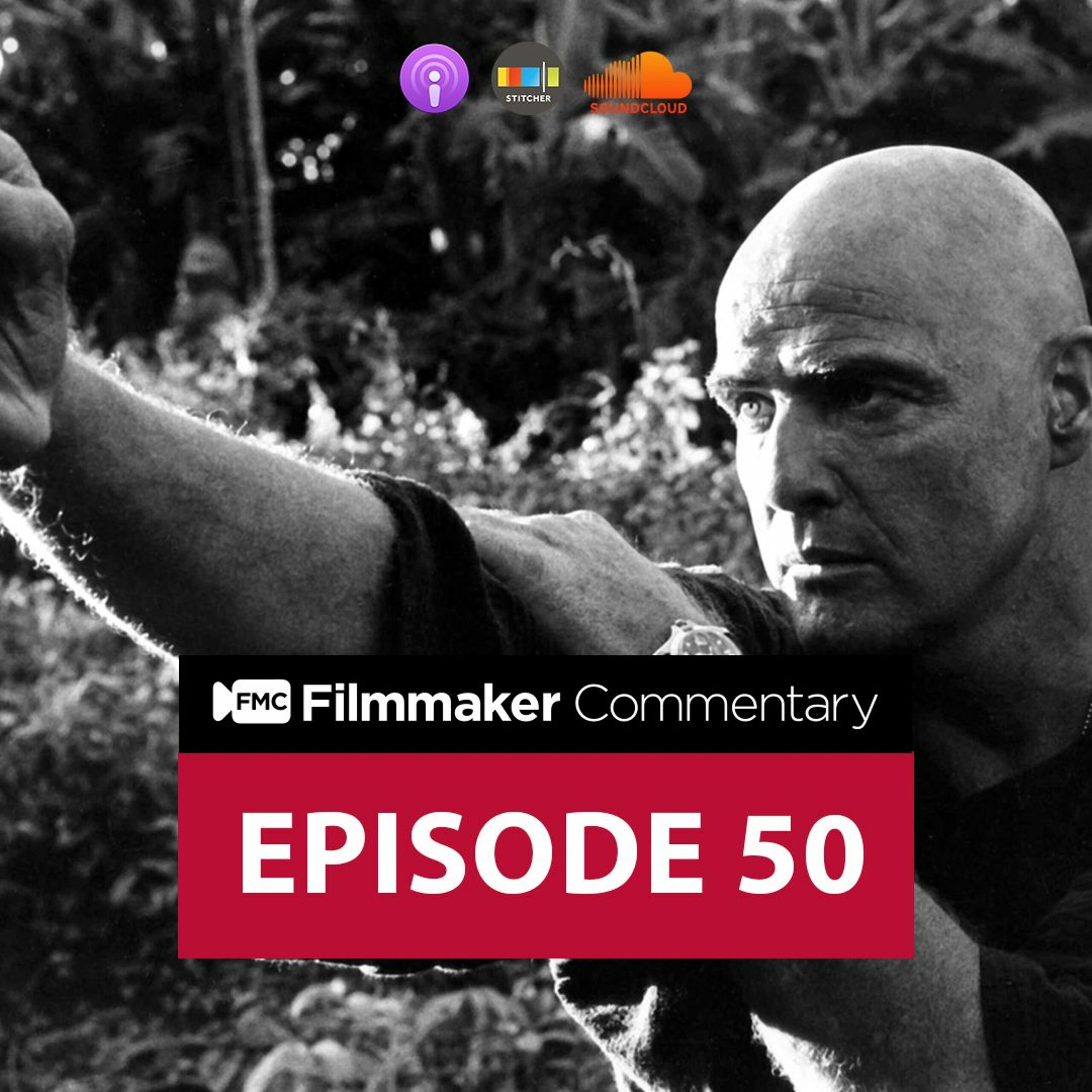
FMC 050: Apocalypse Now Produced and Directed by Francis Ford Coppola

March 22, 2019
Listen on Apple Spotify YouTube
Listen to this episode
Your browser does not support the audio element.
Also on Apple Spotify YouTube

Get ready for a deep dive into Francis Ford Coppola’s epic, Apocalypse Now! This episode brings you an immersive breakdown of the film’s legendary production challenges, Coppola’s audacious creative vision, and the innovative techniques that redefined cinema. Discover how the director navigated an ambitious and often chaotic shoot, leveraging every setback to fuel a masterpiece that continues to resonate with filmmakers and audiences alike.

Join Reginald Titus Jr. and Casey G. Smith as they dissect the film’s groundbreaking sound design, its psychological depths, and the profound impact of its unforgettable characters. Whether you’re a seasoned filmmaker or a passionate film enthusiast, this episode offers invaluable insights into creative perseverance and the art of storytelling under extreme pressure.

What We Cover

  • The film’s notoriously difficult production and Francis Ford Coppola’s unique directorial approach.
  • How Apocalypse Now pioneered sound design, including the introduction of 5.1 surround sound.
  • Differences between the theatrical and Redux cuts, and the director’s evolving vision for the film.
  • The psychological depth of characters like Captain Willard, Colonel Kurtz, and Colonel Kilgore, and the film’s core themes.
  • Insights into Coppola’s financial commitment and creative control over the project.
  • Specific scenes and narrative techniques that convey the “horror of war” and its lasting impact.

Key Moments

  • 12:11 The hosts discuss Apocalypse Now’s groundbreaking sound design and cinematography, revealing how these elements were revolutionary for their time.
  • 16:48 An exploration of the film’s central themes, including the psychological impact of war and power’s corrupting influence, as seen through Coppola’s eyes.
  • 22:58 A deep dive into Colonel Kilgore’s iconic, surfing-obsessed character, exploring his memorable quotes and the scene’s chaotic brilliance.
  • 39:15 Filmmaking tips directly from the commentary, covering everything from working with actors to financing projects when facing unexpected challenges.

Gear & Films Mentioned

  • Films Watched: Monty Python and the Holy Grail, Alita: Battle Angel
  • Films Referenced: The Godfather, True Romance, Entourage (TV series), Stoker, Gladiator, Watchmen, Rambo films, Moonrise Kingdom
  • Companies/Tech: American Zoetrope, THX, ILM (Industrial Light & Magic), 5.1 Surround Sound

Listener Questions

This episode tackles several key questions for filmmakers and film lovers:

  • What were the unique production challenges Francis Ford Coppola faced while making Apocalypse Now, and how did he overcome them through sheer creative will and personal financial risk?
  • How did Apocalypse Now pioneer sound design, and what specific techniques did the filmmakers use to create its immersive audio experience, including the introduction of 5.1 surround sound?
  • What are the key differences between the theatrical and Redux versions of the film, and which one offers the more authentic or complete viewing experience according to the director’s evolving vision?

Full Transcript

Read the full transcript

Full Episode Transcript
Reginald Titus Jr. and Casey G. Smith dive into Francis Ford Coppola's "Apocalypse Now," discussing its ambitious production, cinematic impact, and unique directorial commentary.

Opening Discussion & Film Overview
Reginald Titus Jr.: Filmmaker Commentary episode 50. Welcome to Filmmaker Commentary, where we give you insights from our favorite filmmaker commentaries. These commentaries can be heard on your DVD and Blu-rays of your favorite movies. We'll show you how you can use these commentaries and apply them to improve your video production and filmmaking techniques. All of this here on Filmmaker Commentary. I'm your host, Reginald Titus Jr.
Reginald Titus Jr.: Welcome to Filmmaker Commentary. I'm Reginald Titus Jr. I'm joined with Casey G. Smith. Welcome back, sir.
Casey G. Smith: Good to be back, sir.
Reginald Titus Jr.: So today we're talking about, and we're diving into the film, Apocalypse Now, directed by Francis Ford Coppola, 1979, written by John Milius, and Francis Ford Coppola and Michael Herr, who wrote the narration, and of course, the novel by Joseph Conrad. It was nominated for eight Oscars, winning two for Best Cinematography and Best Sound.
Reginald Titus Jr.: What about that budget?
Casey G. Smith: So, it had a budget of 31 and a half million. And and actually, Francis Ford Coppola was the principal financier of this film. So he had definitely some some pressure. As far as the box office went, within the US and Canada, it had a domestic gross of 83 million, 471,511. Worldwide, uh, 91 million and almost a half, worldwide gross at the box office.
Reginald Titus Jr.: So, that's a win.
Casey G. Smith.: It is a win.
Reginald Titus Jr.: Especially if you're financing it yourself. Dear God, where did he get this money from?
Casey G. Smith: He had had his he had had his his vineyard going by by this point and originally he was just going to finance the film. And originally, uh, George Lucas was going to direct it, but then he landed a small film called Star Wars.
Reginald Titus Jr.: Yeah, very small.
Casey G. Smith: And yeah. And um, so yeah, so then he ended up stepping in and and and rolling.
Reginald Titus Jr.: Rock and rolling. And their company is what? Uh, Zoetrope, American Zoetrope. Zoetrope.
Casey G. Smith: Zoetrope.
Reginald Titus Jr.: Zoetrope. So that's like a partnership with him. Zoetrope, man.
Casey G. Smith: Zoetrope. Yeah, Z O E T R O P E. Zoetrope, I guess it was.
Reginald Titus Jr.: Zoetrope. So true. So true. Uh, is that a partnership with him and George Lucas? I think it was George Lucas or Spielberg. It's one of the one of those guys, one of his friends.
Casey G. Smith: Uh.
Reginald Titus Jr.: I would probably say the other guy, the Star Wars guy, George Lucas.
Casey G. Smith: George Lucas, yeah.
Reginald Titus Jr.: Because those guys were like, they were all about that money and and financing their own thing, creating the budget, and then making sure that they cashed out on the back end. That's why he's so stressed out. But anyhow, before we dive into the aspects of the film, we're going to talk about Movies Watched.

Movies Watched & Initial Reactions to Apocalypse Now
Reginald Titus Jr.: All right. Welcome to Movies Watched. What did you watch this past week?
Casey G. Smith: So, I I finally got around to watching Monty Python, The Holy Grail. I've been waiting to see this for a while. I had seen part of it in college a long, long time ago. I didn't really know what it what it was. So I finally had a chance to watch the whole thing, sat down, watched the whole thing, and it was good. I I'll be honest, I was expecting a little bit more. There were moments that I thought that I
Reginald Titus Jr.: Been built up over the years?
Casey G. Smith: It has. There were moments where I I chuckled and giggled. Some some moments where I laughed out loud like, oh man, this is crazy. Cause it it is just a crazy film. Like it's fourth wall breaking and, uh, yeah, it's a period piece, but all kinds of stuff is happening. Uh, but the ending was was, uh, I won't I won't spoil it, but yeah, I wasn't I wasn't I wasn't, uh, I didn't care for the ending. Uh, I think that kind of hurt it, definitely hurt it a little bit in my in my eyes.
Reginald Titus Jr.: Was there a scene where there's a um, a man running I guess he's running towards a guard and he's like far away. He's like he's like looking through binoculars, he's running towards him. He's like, it's far away. Then like out of nowhere. He's like close up on him.
Casey G. Smith: Spoiler alert. Yes.
Reginald Titus Jr.: Oh. Yes.
Casey G. Smith: Oh. Yes, yes, there is.
Reginald Titus Jr.: When I, uh, I had seen that scene before and I was like, I'll think about you because he goes, "Ha ha!" and he like he's up on him.
Casey G. Smith: That that that actual scenario with with that, that whole scene that unfolds next is actually maybe maybe that's one of my favorite scenes in the movie. Of what what precedes after. It's it's just, yeah, I'll tell I'll tell you about that. That that one is that that was a pretty funny scene.
Reginald Titus Jr.: Okay, okay.
Casey G. Smith: They're they're, you know what? There was there was some pretty good laugh out loud moments that I'm thinking in retrospect. It's the ending. You know, sometimes you watch something and you're like, alright, this is pretty good, pretty good, but when you get an ending that you're not happy with, you can kind of like, it spoils it. It kind of yeah, it kind of tanks things. And sometimes you got to go back and watch again and like, okay, now that my expectations are managed, I can appreciate it this for what it is. And I and I I you know, I didn't rent it this time, I I own it. So I'll uh, I I I actually might have to revisit because there were some pretty funny moments. And it's a it's a it's a clear commentary, because they're making some very clear statements about things going in within society, um, and government things at that time, very specific. These guys are very, very smart. Smart witty guys. So, if you've never seen the film before, I I still recommend checking it out. It is um, you know, within its own right of a bit of a a classic and, um, yeah.
Reginald Titus Jr.: Yeah, a lot of references, pop culture. Um, I had a friend, an associate from one of my jobs, like just skim through certain parts of the film. Like, watch this part, watch this part. And that's why I know about that one scene. I'm like, that is hilarious. Just for that scene, it's hilarious.
Casey G. Smith: Yeah, there's some yeah, there's some ridiculous. Ridiculous is is is yeah, there's some ridiculous stuff happening within this within this film. Um, but yeah, so, yeah, Monty Python, the Holy Grail.
Reginald Titus Jr.: Okay. Get it on Blu-ray. And it's like supply and demand. So like I'm pretty sure it's expensive to purchase these days. Was it wasn't expensive?
Casey G. Smith: Not at all. No. I found it used and, uh.
Reginald Titus Jr.: Oh, okay. Okay.
Casey G. Smith: Yeah, it was like, uh, what the heck, five or seven bucks or something.
Reginald Titus Jr.: Oh, well, shoot. Blu-ray? Blu-ray. Okay. I stand corrected. It's cheap. Uh, any other movies?
Casey G. Smith: Now, that was it. We had a quick you know, a quick turn. So. That's true. That's true. Yeah. I I previously on on a previous episode, I listed quite a few quite a few things I've been going in, but yeah, only could squeeze one other end in our our current feature.
Reginald Titus Jr.: Okay, okay. Uh, for me, I watched, uh, took the son out and we watched Alita: Battle Angel.
Casey G. Smith: Oh, really? How was that?
Reginald Titus Jr.: It was pretty good. I'd give it about a strong seven.
Casey G. Smith: Okay, strong seven. Okay, all right. I I heard that the visuals are good, the performance is good. Storyline is, uh.
Reginald Titus Jr.: Fan. You've the storyline, you've seen it before.
Casey G. Smith: Gotcha.
Reginald Titus Jr.: Yeah, the one, basically.
Casey G. Smith: Sure.
Reginald Titus Jr.: Yeah, so you follow that journey. And a little bit of a love story, so I'm not going to spoil it, but yeah, it was decent. I was wondering how they were going to pull off the whole CG person and that was like, ah.
Casey G. Smith: With the big eyes.
Reginald Titus Jr.: Yeah, man. It's, uh, but they do a lot of cutaways. So.
Casey G. Smith: Okay.
Reginald Titus Jr.: That's how they were able to pull that off. Um, that that was it. That's all I've seen this past week. Let's jump back into the show.

Visuals, Sound & Commentary Insights
Reginald Titus Jr.: All right. If you are tuning in, Filmmaker Commentary. We are talking about Apocalypse Now, directed by Francis Ford Coppola, 1979. Let's jump into the synopsis.
Reginald Titus Jr.: In Vietnam, in 1970, Captain Willard, played by Martin Sheen, takes a perilous and increasingly hallucinatory journey upriver to find and terminate Colonel Kurtz, played by Marlon Brando, a once promising officer who has reportedly gone completely mad. In the company of a navy patrol boat, filled with street smart kids, a surfing obsessed Air Cavalry officer, played by Robert Duvall, and a crazed freelance photographer, played by Dennis Hopper. Willard travels further and further into the Heart of Darkness. Apocalypse Now.
Casey G. Smith: And if this is your first time listening to Filmmaker Commentary, please know that there will be spoilers.
Reginald Titus Jr.: How how were you introduced to this film? What did you think watching it this time around, etc. What were your thoughts?
Casey G. Smith: So, uh, I had never previously seen Apocalypse Now. I'll heard about it and seen images here and there. I attempted to watch it one time, I think on Netflix and, uh, fell asleep.
Reginald Titus Jr.: Keep it real.
Casey G. Smith: Yeah, it happens, right? It happens. And so, this was my, um, my first time watching the the film. It was fascinating. Uh, , uh, I I enjoyed it. It really deals with, you know, the uh, the kind of the atrocities of of war. And there are, you know, there's there's plenty of movies that are based on, you know, Vietnam. But this takes a different kind of a a different route and in the the journey is very different. And then it's more slightly more psychedelic and and psychological. And so, uh, especially when I went back to watch the commentary, seeing some of the imagery at the end, right there at the beginning, and I'm like, oh, okay, I didn't I didn't yeah, I didn't catch that, you know, initially. And this movie did some pioneering things too, finding out after the fact, but , I I I enjoyed the film, and, uh, I think it can spark some some some good conversation. And I think it has some things that are still like relevant, uh, today.
Reginald Titus Jr.: Sure. So, how about you?
Casey G. Smith: Yeah, this is one that's a blind spot. Um, it's one that's always referenced. I think it was referenced in, um, True Romance. I think it's ref is uh referenced in like Entourage, you know, when they're talking about these are the directors they're trying to do these big scenes and like, I think James Cameron was doing a war one of those like directors was doing a war film inside Entourage, the series. And so they always refer back to Apocalypse Now. Um, but it was one of those films that it was just like, to me it was like, it's a olden days, you know, Is this like a Is it in black and white? It's one of those films that I knew I had to watch as a filmmaker, but it's a good thing that we have this podcast. So it was like, okay, this is a good opportunity to watch it. And you brought it up. So, yeah. But, um, watching this time around, I, um, I know we said we're going to do the Apocalypse Now, uh, because they had the Redux version, right? That's a little bit longer. And I was like, I was not in the mood to watch another long film. But I for whatever reason, I had a little bit of room, so I was just like, you know what? I'm going to watch it.
Casey G. Smith: Go on.
Reginald Titus Jr.: Yeah, let me let me, you know. This is probably the only time I had some free time. So I was like, you know what, let me go ahead and watch this version. And so, and because I had read, I was like, should I dive into this version? So I started reading online and then I didn't mind it being spoiled or anything like that, but I wanted to see like, why, why is there a Redux version versus just having Apocalypse Now just be the end all be all? Yeah. And I think Francis Ford, he has like sometimes sometimes issues with trying to get that edit down. And I think they said like the first version he had was like five hours or something like that of the film. Like five hours. And then, uh, he had a version that was at Sundance. Was it Sundance or Cannes? One of those big festivals.
Casey G. Smith: I think it was Cannes.
Reginald Titus Jr.: Was it Cannes? I think behind the scenes there was something like them at Cannes.
Casey G. Smith: Okay.
Reginald Titus Jr.: And that was a different edit than what Apocalypse Now is. And then the Redux version is him, you know, changing some things in sound, color correcting, and then he just wanted to add some more things into the film. But after watching the Redux version, I'm glad I did watch that. And then going back to watch Apocalypse Now on the commentary, I see the difference. You feel the difference. Yeah, but I think the Apocalypse Now version is probably the more appropriate version for the theat for the theatrical experience.
Casey G. Smith: Fascinating. Okay.
Reginald Titus Jr.: From a style, how did you feel like from a style standpoint? How did how did it look? How did it feel to you when you you were in this world of Apocalypse Now?
Casey G. Smith: So, I I enjoyed the the look of the of the film. I enjoyed the editing and the lighting, as well. Especially especially once they finally do introduce Marlon Brando's character. And then and then finding out why they did that. But even without knowing that, it's it's it's it has a very powerful effect because you literally just get these slivers of of this character. And it makes him seem not only ominous, but it makes him seem more powerful and mythic. Uh, you've been waiting this whole time to see him and then when he does it's like he's never quite fully in the light. He he's always kind of partially hidden. And so, uh, I I love how they how they did that. Um, the visual effects, uh, I think are are really, really well done. Um, again, especially considering the time frame was made, it came out in '79. Um, but yeah, and sound design is is pretty good as well. No, it's it's well shot. I mean, it's it's really well actually it won an Academy Award for cinematography, if I'm not mistaken.
Reginald Titus Jr.: Yep. Yep. And and sound.
Casey G. Smith: And sound. Yeah, and they they did some some breakthrough things with with with sound. Uh, I don't know if you saw any of the features.
Reginald Titus Jr.: Dude, I have no time after that.
Casey G. Smith: So real quick, I glanced at a couple of features. Apparently, this is the film that that introduced 5.1.
Reginald Titus Jr.: Okay.
Casey G. Smith: Yeah, surround sound. Like this is the film that pushed that. And they and they have a nice little feature on there where they talk about sound originating in film and how it started off, you know, how it was mono and you had just kind of two speakers in the in the back just for the left and the right channel. And then how it began to progress and they had the kind of how they added more channels and and even showing on the film the magnetic tracks on the film for the film. I was like, ah.
Reginald Titus Jr.: Was Francis, did he talk about that a little bit where, um, he wanted to use some type of sound technology, but there was like a large licensing fee or something like that. So they had to kind of recreate it.
Casey G. Smith: It was kind of yeah, yeah, yeah. It was a new theater that that had come out that specifically could offer that kind of a more immersive and it was actually it was a thing where the seats even like moved. It was a really specialized kind of theater. Uh, and eventually they figured out how to actually uh, replicate and kind of get another another patent, use a different patent to replicate that that kind of surround sound. Uh, and at one point he was talking about just showing it at a theater that they would build a theater in Kansas. And this would be like a almost like going to an IMAX. You know, like in in a specific area that that's just, you know, this is what we're featuring. It would be like a theater that would just specifically feature this thing. So people could come from all over. And it would be an event kind of thing. And it would and it was going to maybe show there for like 10 years. Um, yeah, but eventually they, you know, were able to get it into multiple theaters and and make it a more traditional .
Reginald Titus Jr.: So smart guys, man. Him and George Lucas, and George Lucas creating THX, basically.
Casey G. Smith: Yeah, pioneers, man.
Reginald Titus Jr.: They are top of their game. Yeah.
Casey G. Smith: I mean, you know, Skywalker Ranch and, you know, with the, um, oh man, what's the name of this company that that handles the light light and?
Reginald Titus Jr.: Oh, uh, ILM?
Casey G. Smith: Yeah, yeah, yeah. Yeah. So, I mean, they're just pioneers.
Reginald Titus Jr.: True. Facts, people, facts. Um, what did you think about the the commentary this time around?
Casey G. Smith: So this time around this this commentary, it's not as technical, uh, as some of his other ones. But it also plays to the kind of the the struggles, the way this film was shot, where the script wasn't really set, and, and then they had they had a script, don't get me wrong. Uh, they had a script again, the one that was, um, written by Mr. Mr. Milius, um, or Milius, Milius?
Reginald Titus Jr.: Milius.
Casey G. Smith: Milius, yes, John Milius. But also, Francis Ford Coppola used, uh, the book Heart of Darkness. He references that multiple times and literally lifts things out of that book, characterizations and and uses them in, uh, in the film. So, he's literally, um, doing things like on the on the on the fly and and rewriting parts a new part to the script at night. He didn't when they started, he didn't know he wanted to end this thing. So.
Reginald Titus Jr.: That's crazy. Especially when you got $30 million on the line.
Casey G. Smith: Yeah, of your own money. Yeah, so he felt that that pinch. So, , , I enjoyed the commentary. Uh, again, it wasn't as super technical, I know, you know, you you dig that. But yeah, it was it was it was a little repetitive a couple times. I think he kind of reached some things, you know, multiple times. But, um, but , no, I I I dug it, but different from some of his other ones. How about you?
Reginald Titus Jr.: Yeah, well Francis Ford Coppola, uh, it's like, to me, I say it's like going to your your favorite professor's classroom. Somedays it's hit or miss, but usually it's hits, you know. Um, so I enjoy, um, how he's always full of information. This time around, it seemed a little bit more trivial than more technical. The fact that his wife did a documentary about the about the movie. So I'm sure that's some more information there. And then the special feature. So I'd say I guess anybody that gets his film, you know, dive into the special features. The I haven't seen the documentary, but I'm assuming it'd be awesome.
Casey G. Smith: So, there are a lot of special features on on the the Blu-ray that I that I rented. Uh, and I I now when I'm thinking about it, like, man, I almost wish I had purchased it, uh, because there was a lot of stuff I want to get into. And eventually I would like to see the Redux, um, version, but yeah, there was a lot in the special features. Some of it is just stuff that he captured and kind of let play out and and that are and that are pieces from other publications. Like there's one of of of Marlon Brando reading portions out of the, um, I don't know if it was a short story or book called Hollow Hollow Man, which Coppola makes reference to over like a a voiceover of him kind of reading from that and cutting into some other footage. But there's some that are kind of more in depth, especially especially with the sounds. Quite a few on on on sound and and sound design. So, there's definitely some technical stuff there for you.

Themes and Character Analysis
Reginald Titus Jr.: Themes, yeah, that's what we're talking about. Themes.
Casey G. Smith: Yeah, that's the ticket. Yeah, themes. Yeah.
Reginald Titus Jr.: I've just got a couple. Um, Journey into the Surreal. And, uh, and that could sum it up, but some that and that's because he said that in the commentary. Um, but one that kind of came back to me is like, you know, going he did say this as well, like kind of going back in time, which kind of can kind of coincide with the journey into the surreal. But also again, uh, Power Corrupts, which is a theme in, uh, Godfather, and it seems like he some of the themes he's he's really into, he's filmmaking.
Casey G. Smith: Same in Bram Stoker.
Reginald Titus Jr.: Yeah, yeah. Yeah.
Casey G. Smith: You reach that ultimate level of of power, become the Prince of Darkness and it it it consumes.
Reginald Titus Jr.: Yes. Yeah. Fascinating.
Casey G. Smith: Um, yeah, uh, definitely that that that, uh, tying into what he was saying about, you know, going back in the time, you know, the the path of the river is going back through time. Uh, I had one just based on the the horror, the horror of war. You know, we even get the phrase at the end, the horror.
Reginald Titus Jr.: The horror.
Casey G. Smith: The horror, you know, famous famous quote. Um, but also, you know, trying to make it home out of hell.
Reginald Titus Jr.: Man.
Casey G. Smith: You know, because well, somebody all these soldiers, I mean, they're so young, you know, like Laurence Fishburne's character. He was he was literally 14 years old.
Reginald Titus Jr.: Yeah. Yeah.
Casey G. Smith: Yeah, and so that works, but he but he looks, you know, he looks a little a little old, like he could be, you know, 17 or 18. He's pretty tall for for a 14-year-old. Um, lying to ourselves.
Reginald Titus Jr.: And.
Casey G. Smith: Which is also not you know, it seems like that's a theme with Francis Ford Coppola with his films, you know, when we're talking about lying in Godfather and the lies you tell to kind of convince or manipulate or the lies you tell yourself.
Reginald Titus Jr.: Yeah.
Casey G. Smith: Cause even towards the end, um, with Martin Sheen's character, Willard, you know, he has the mission to obviously to to kill this this colonel, but he seems conflicted about it. And and towards the end when he's doing the voiceover and he's like, you know, you know, I know they would want me to kill him. It's like almost like he's trying to convince himself. And ultimately at the end, I guess it is for the best because you do see that the guy really was just straight crazy. He's off his off his rocker, mentally disturbed. Um, and it's the time where, you know, people didn't know about like PTSD and things of that nature. Um, but you even see with with Willis' character at the beginning, I mean, he's off.
Reginald Titus Jr.: They're out there getting stronger. I mean, here getting soft.
Casey G. Smith: Yeah, it's fascinating to see, um, that's there's this conflict within that's kind of continually going on. But so with that, it's concept of morality. And they talk about, you know, have people who who have morality, but are able to kill without hesitation.
Reginald Titus Jr.: Right. Which is, you know, it's a weird dichotomy.
Casey G. Smith: Um, I mean Coppola talks about, you know, them, you know, people in the army not being able to write the F word on on clothing or gear or or equipment or vehicles. But yet, you know, being sent into villages to slaughter men, women, or children, uh, depending on what the mission calls for. Uh, and then, uh, lastly my I had was one of the the the killer becomes the king and um, birth birth and death. Uh, they talk about that at the end when he when he kills Brando's character. He kind of had to happen, but within that came like a a a new dawn for those people when he when he sets his knife down. And everybody else starts setting down their weapons, laying down their weapons. Um, and that had to happen. Brando's death had to happen in order for a new birth or a new a new time for for those people.
Reginald Titus Jr.: Yeah, I was on edge on that scene. I was like, man, what's going to happen?
Casey G. Smith: Yeah.
Reginald Titus Jr.: You're like, what what dude's like hacking up the bull. Like, that's real.
Casey G. Smith: Yeah, for real. It was something I was like, that's not a visual effect.
Reginald Titus Jr.: That's not a visual effect.
Casey G. Smith: You can't do that these days, dude. Like you're done.
Reginald Titus Jr.: You're done.
Casey G. Smith: MBA would riot.
Reginald Titus Jr.: That's a Yeah, he pulled that off in Godfather too. Always these freaking animals.
Casey G. Smith: Oh, yeah. But, you know, but but he but he but it but it's he does it the right right way. You know, okay, that horse was was was was either already dead. He got the head from and then with this one, you know, I I I appreciate it how respectful he was of the the people.
Reginald Titus Jr.: Yeah, the story behind it, yeah.
Casey G. Smith: Yeah, I was like, that's really fascinating. And you want to get all this stuff shot and then have that ritual happen at the very, very end and literally fighting against daylight to to.
Reginald Titus Jr.: I know all about that fun stuff.
Casey G. Smith: Daylight.

Memorable Scenes, Quotes & Production Challenges
Reginald Titus Jr.: Um, do you have any favorite scenes? That's kind of weird in a military movie, uh, but I do have a couple. Go ahead and kick it off then. One at least. Um, so I like Robert Duvall's character, Colonel Kilgore. This dude is nuts. Like, he's.
Casey G. Smith: Yes.
Reginald Titus Jr.: But, uh, so he's like into surfing, you know, and then he finds out that is it Lance, who's a professional surf, uh, surf guy. Uh, so he, you know, because he's a professional thing and he's like kind of like a fan of of surfing. And so, one of the scenes is
Casey G. Smith: Kind of a fan. He's a fanatic. You're right.
Reginald Titus Jr.: He's nuts, yeah, you're right. Nuts. So, um, and this is this part of the Redux or she Yeah, this is kind of part of the Redux, uh, version. Um, Martin Sheen's character, this is in the regular version, is asking, is kind of telling, uh, Kilgore where they can go, what will be the best place where they can, he can go to continue his mission. But he's not really into it. But then Lance talks about the tides and how it looks awesome and all this stuff and it'll be great. So now his motivation is to go there because of the tides, not because anything else. And then, uh, well, I'll talk about that on my my favorite quotes. But, they go there, they after that's done, uh, Martin Sheen grabs Lance and they leave Kilgore. Like he basically like takes Lance. Do you want to hang out with him or you want to come with me? And so he basically takes Lance and they run to the boat and they burn off. While they're doing this, they steal the surfboard. So the two big red surfboards on the side, they steal one of the surfboards. And Kilgore's pissed about this.
Casey G. Smith: I bet he's ready to shoot somebody.
Reginald Titus Jr.: And so they jump in their boat and they burn off. So that's why there's a surfboard when they're driving around earlier on down the river. You see like a surfboard. like why is there a surfboard? It's because it was a scene that them stealing it from Kilgore. And so, there's a in the regular version, the Apocalypse Now, there's a the boat is hanging like on the side of the river, like over some trees, so it's kind of hidden a little bit. In the next scene, Kil Kilgore is in a in one of the helicopters with the microphone. Hey, I need that surfboard. I need that. You know how hard it is to get a surfboard around here? I need that back. So.
Casey G. Smith: So you need that back, boss.
Reginald Titus Jr.: So he's like just giving them giving up their whole coordinates. like where y'all at? I need that surfboard.
Casey G. Smith: Oh, man.
Reginald Titus Jr.: That dude, that dude was just he was twisted, man. He was just twisted. He he again, he speaks to that that theme of, okay, Willard even says at one point, you know, the more they try to make this place comfortable or like home, you know, the worse they make it. You know, they feel the worse they make it for these soldiers. Like, it's for him, like, it's making making people soft. You know.
Casey G. Smith: Oh, man.
Reginald Titus Jr.: Hilarious. And then he's just, um, the bombs are going off. He's just standing there with his hat on. Like literally a bomb goes off beside him. He just looks at it like, yeah.
Casey G. Smith: Like, are you sure it's safe? He like, it's safe. It's safe.
Reginald Titus Jr.: Yeah, it's pretty hairy out there. But yeah, that's one of my favorite scenes though. Colonel Kilgore.
Casey G. Smith: Colonel Kilgore.
Reginald Titus Jr.: For me, the scene where they where they board the the boat and he's having Chef check through the stuff, um, you know, Laurence Fishburne's character is is there and has his rifle trained trained on them. And the girl runs as as Chef is opening up one of the baskets and and then Fishburne just kind of just hair triggers and just starts shooting them.
Casey G. Smith: Trigger happy.
Reginald Titus Jr.: Yeah, and yeah, and then the other guy starts shooting and everybody's just shooting and you know, there's a puppy that was inside the case. It's just like, it just speaks to the just the the the the darkness of of war because they do that based on the on the previous scene of when they when they're at that one spot and they're they're by where the school is at. And that one helicopter, yeah, that helicopter lands and the one girl runs out and literally like detonates a grenade. Yeah, she had it in her hat. Yeah, that was And then the Yeah, and then that's just like, so they're on edge. Oh, yeah, man. Check, check this, check that. But, you know, but then there's but there's life inside, you know, a little a little puppy. And then the girl is still alive and that's when Willard's character is like, you know, it's about the mission and then say, no, they're they're morally obligated to take her to a place where he can drop her off, but that's going to stray from the mission. And he just in cold blood. He caps her.
Casey G. Smith: I told you not to stop.
Reginald Titus Jr.: Yeah. And they move on and and it's like, it's a dark place, man. It's a dark place. You can only imagine how how that changes you. But I thought but also for Francis Ford Coppola says that once you introduce killing, then it's like a descent from there. Because that's like the first kill that this group makes that we see them make on screen is these these innocent people. And then from there, one by one, they start to die. And and really it's Fishburne's character who's the one that fired the first shot, he's the first to die within that group. Boom. And it's just.
Casey G. Smith: That's crazy.
Reginald Titus Jr.: Whittles whittles down. Speaking of that scene, uh, I think that was a great scene having when Laurence Fishburne his character is dying and he's playing his mother's, uh, voice.
Casey G. Smith: Yeah.
Reginald Titus Jr.: Oh, man, that was crazy. So like, you hear her voice like, hey, is everything okay, you know, come back home. And he's literally.
Casey G. Smith: Avoid the bullets.
Reginald Titus Jr.: Avoid the bullets. Yeah, he's like literally dying as her voice plays over this whole soundtrack. It's like, man, that's a brilliant scene. The way he was able to put that together.
Casey G. Smith: Speaking of that, I I really I really enjoyed Martin Sheen's voiceover throughout the film. It it gave it to me, it kind of gave it a almost like a Noir kind of feeling to it. Uh, having him just like lay lay the voiceover, um, throughout.
Reginald Titus Jr.: Yeah, that was a good that was good narration. And it brought us into the head of this crazy guy. Because he's he's losing it too. He's already lost it, but he's, uh, he's trying to hold on.
Casey G. Smith: You know, I'll be honest, like as as as the film was progressing, I wondered I wondered if if it was going to be some kind of weird twist where he actually was the guy. For some reason, I thought that okay, maybe he going to get there and he's going to find that. He is the guy and we're just kind of, I don't know, in some weird kind of loop, uh, but he's going to actually be the guy who who
Reginald Titus Jr.: Shyamalan.
Casey G. Smith: You know, yeah, I thought that might be some weird some weird twist to it where he didn't realize that, you know, this actually is me and I just see myself differently. Um, and even because there's a time where he's reading one of the letters from this colonel. But it's it's before, you know, he's he's the voiceover is going, you don't realize that he's that he's actually, you know, reading something that pertains to the colonel. And I'm like, oh, no, no, okay, that's that's just somebody else. But yeah, I didn't know. I I didn't I didn't fully know how it was going to unfold and and who or what was what.
Reginald Titus Jr.: So, yeah, so that was a great scene. Also, another scene was just like some of the stunts, man. Uh, the scene when the the girls, the Playboy girls are coming out and they're all having a good time dancing and stuff like that. But then the guys get out of hand and they want to just jump over there. Oh, sign my magazine, my Playboy magazine and all these girls, they've been seeing all year on the magazine. So like, they're famous. And, uh, they get back to the helicopter and the guys are literally hanging on.
Casey G. Smith: One guy's one guy's holding on to another guy's pants that are told down around his waist. And they another guy's holding holding on to another guy by his pants. And, uh, and I was like, what are these guys going to do? They get just
Reginald Titus Jr.: Yeah. And this is like all real. Like this is all real. I was like, I'm afraid. Like as a director, I'm afraid watching all of this. I'm like, I'm surprised no one died. Because while they were surfing too, there's bombs going off in the water. Boom. Boom. And then the Apocalypse Now version, you don't see it, but for like a quick second, the guys are like on the surf in their little surfboards and the bomb goes off like right next to them. It's like, boom. You like.
Casey G. Smith: What? I know they were scared for real.
Reginald Titus Jr.: There are a couple of like dangerous moments that that happened where but but when Francis Ford kind of pushes through, Martin Sheen literally when he punches the mirror in the very opening scene, he literally does cut himself. And Ford, he kind of said, you know, he knew how hard Sheen worked to get to that moment. And so he kind of just let him keep going. Um, the scene where Sheen and Chef come across the tiger. That tiger was a is a trained tiger. It has an actual name. I forget what the name is. But.
Casey G. Smith: Go go, go go, something weird.
Reginald Titus Jr.: Yeah, but apparently couple mentions later on that that tiger in another production actually killed somebody and had to be put down.
Casey G. Smith: That is horrible.
Reginald Titus Jr.: I'm not a fan of like animals that really can kill you for real that you're like keeping them just on a chain. Like.
Casey G. Smith: You want to keep it really method for your actors?
Reginald Titus Jr.: No, man. I think we learned a lesson from, uh, what was the other film? Tiger in it. Uh, Gladiator. People actually got bit.
Casey G. Smith: No fun.
Reginald Titus Jr.: No.
Casey G. Smith: It's not sound like fun.
Reginald Titus Jr.: Not a fan. I don't want to put people in that situation, but hey, somebody's got to do it.
Casey G. Smith: But the back those two guys in the helicopter, luckily they they they, you know, both fell into the water.
Reginald Titus Jr.: Yeah, they're stunt guys. So I thought they were regular guys, but thank God they were stunt guys.
Casey G. Smith: It was convincing though, right? He's like, those guys.
Reginald Titus Jr.: Yeah, they're like the dude's pants come down a little bit, so it looked like a mistake. Yeah, yeah, I'm like, they're not on, there are no cables there. They're free. I was like, dude, they are, oh. Anyway, so like yeah, so that was a good scene. So also a continuation of that scene, uh, that's not in the regular version. So as those guys, as they get in the boat and they're still floa they stop along the way to get fuel. There's there's this place and like there's just random soldiers everywhere just doing dumb stuff. Like, they're like, who's in command here? They just saying whatever.
Casey G. Smith: I saw that. It's the black mainly black soldiers like on a on a.
Reginald Titus Jr.: No, not that one. This was during the day. And it was raining. And, uh, you see a helicopter that's down. And it's the helicopter where the girls were in. So that helicopter's down. And the guys, uh, the girls and the guys there. And the guy's like, hey, uh, come here, come here. He tells Martin Sheen's character to come here. And he had the girls there. And they work out a deal to trade fuel for time with the girls. So they're rationing out prostitution for gas. And so Martin Sheen gives them gas for whatever they needed for. And in exchange, they get to hang out with the girls for a while. And the girls are like just like crazy. They've been there so long that they just lost their minds. They're like crying, they're playing with birds and crap. They're having sex with the girls. And there's like a dead body in the helicopter. It's like, it's pretty terrible.
Casey G. Smith: Whoa.
Reginald Titus Jr.: Yeah. So but it kind of illustrates like how nuts this whole Vietnam crap is.
Casey G. Smith: Yeah. I mean, oh, man.
Reginald Titus Jr.: Yeah, so that was like dark. But, uh, yeah, so you see what happened to the girls later. Like, dang.
Casey G. Smith: It is. Wow. Okay. That's I thought they had a happy ending.
Reginald Titus Jr.: Nope.
Casey G. Smith: Kind of like Boogie Nights. I thought that I thought those girls got away and we're like, bye-bye.
Reginald Titus Jr.: Bye into the sunset.
Casey G. Smith: Those those alternate scenes, man. That's why they cut them sometimes, right? Cause it's just Yeah. I mean, the film's pretty dark as it is.
Reginald Titus Jr.: Yeah. It's, uh, that scene, I think it actually helped illustrate like just how nuts it is. Uh, but there I could talk about this scene on after Laurence Fishburne gets shot. There's a scene called like the plantation scene. So basically, they go to another location where it's been shot down. Martin Sheen gets out and they run into like an army of French people. And it's a plantation that's owned by, uh, a bunch of French people. And they bring in Charlie Sheen and all the people because they're basically allies. And, uh, they bury, uh, Laurence Fishburne's character. Oh. But, um, it's it's very unnecessary. That's just like 25, 30 minutes long. Them hanging on this plantation and Martin Sheen stays at night. It's it's really unnecessary, but they talk a lot about politics. The French politics and what Americans are doing, what they shouldn't be doing. It changed it really, really messes up with the, uh.
Casey G. Smith: The pace.
Reginald Titus Jr.: The pace. Yeah, the rhythm because you're like, you're waiting to meet the Marlon Brando's character and then out of nowhere this random plantation scene happens. And it's like, they could have did without that one. It messes up with the pace big time.
Casey G. Smith: I'm glad they left it out because Yeah, because, you know, once Fishburne dies, like the death it it it it accelerates, you know, because then you get the the, um, is it Captain? Uh, the other brother that was on the ship with him.
Reginald Titus Jr.: Oh, Chief, um, I don't remember his name.
Casey G. Smith: I need him why. But but, you know, he him him going next is just like, okay, things will Chief Phillips.
Reginald Titus Jr.: Chief Phillips. Yeah, yeah.
Casey G. Smith: Chief Phillips. Uh, when he goes next and so yeah, it's just it becomes so quick. And I was curious. I was like, okay. Did they put Fishburne's body in the water because you see them putting the Chief's body in the water. So you explain that actually, you know, that that that other scene. I'm like, ah, and I was wondering why won't they show him, you know, putting Fishburne's body, you know, in the water. So.
Reginald Titus Jr.: Cut it up.
Casey G. Smith: Yeah, makes sense.
Reginald Titus Jr.: Filling in blanks, filling in. Um, but yeah, but going back and watching the Apocalypse Now version, it was like, okay, this is this is probably the more appropriate version just because it's the pace is right. It's it's like, yeah, I can see the difference. But, uh, but the scene with the surfboard and then the girls, I think those probably should have been kept in, just gives you a little bit of humor, but then also shows you how crazy things are. The horror. The horror.
Reginald Titus Jr.: Uh, do you have any quotes?
Casey G. Smith: I do. And there's a couple of I mean, the horror, the horror. Obviously, you said it a couple times. Uh, but there is one, uh, it says, uh, at the beginning, uh, Terminate with extreme prejudice. I've heard that line used multiple times. Um, I love the smell of napalm in the morning. Right? Um, and I going back to like actually favorite scenes when the helicopters are are flying in, uh, earlier on and they're playing they're playing Flight of the Valkyrie. And they talk about that being a military track.
Reginald Titus Jr.: That is a great scene.
Casey G. Smith: So, that music and there's a callback to that in in the movie Watchmen. Specifically when cuz you know, spoiler alert about Watchmen. Uh, in Watchmen, they have America actually wins the Vietnam War. And it's because they have Doctor Manhattan. And specifically, they show Doctor Manhattan literally giant sized, yeah, and just vaporizing people and they're playing Flight of the Valkyrie.
Reginald Titus Jr.: Oh, nice. Homage.
Casey G. Smith: Yes, yes, yes. So, yeah. How about you, man? You got any any any quotes?
Reginald Titus Jr.: Uh, my favorite one is is back to Colonel Kilgore. And, uh, he's going he's convinced everybody to go to that that part where there's a lot of Charlie there to to surf the tides. And then one of the guys like, you sure Colonel? It's hairy out there. Lots of Charlie. Charlie don't surf.
Casey G. Smith: Right, right. He said that. Charlie don't surf.
Reginald Titus Jr.: I was like, oh, man, I love it. Okay. Dude is serious, man. He's out there surviving.
Casey G. Smith: He is, man. No. No fear. And Robert Duvall is just, I mean, literally, he is fearless in that role. The way he's got his head is perfect. He's got the the stance and he just goes. Bombs blowing up. Like, who is this guy? He just avoiding death. Like, he's.
Reginald Titus Jr.: Thinks he's invincible.

Filmmaker Tips and Concluding Thoughts
Reginald Titus Jr.: He is. So, yeah, that's pretty much all I have for quotes. Um, let's have some tips for filmmakers out there. If you're a producer on the film, we have some tips that we pulled away from this film that can help you on your production. One thing that, uh, Francis Ford Coppola did was at the he used discarded film that, you know, that was just by accident. He was just going through some footage and it was on the day that he probably wasn't supposed to be there. I can't remember the whole story behind that, but he was just looking through this footage and he saw just a plain shot, which is the opening scene of the movie of all the shrubbery and all the trees and everything. And the smoke coming into the frame. And while this is playing, there's a song called The End that's starts by the Doors that starts at the beginning. So he thought that was kind of funny. But, uh, happy accidents happen.
Casey G. Smith: Small trivia fact. He mentions that the the Doors, he actually met them at UCLA. Um, and that all of them were film students. No idea. I'm like, Jim Morrison and the Doors are film students.
Reginald Titus Jr.: Like, who could give me a song?
Casey G. Smith: Like, we got you, man. We got you. Um, one tip that I have is to to try to figure out what a character is about early on, uh, to help your actors do so. Uh, when he was working with Martin Sheen, especially in the open sequence when he's inside of the room, he was able to to help Martin Sheen tap into, um, kind of like vanity. I think is the term that he used. Uh, you know, how do you feel when people are are are are are are complimenting you and and and and it allowed Martin to tap into like the kind of a darker side of himself, um, for when people are like giving you compliments. Oh, you look so good, this and that. He was able to kind of take that. So when he looked in the mirror, it it brought up something in him. Again, leading him to punch the mirror and and kind of just go to this different place emotionally. And then the weird kind of dance, Martin started kind of like dance stuff he was doing. And, uh, but yeah, so trying to figure out how who a character is earlier, what they're what they're about, uh, can really help you bring out some better performances from your actors. And on the contrast of that with with Brando's character, that's that was a hot.
Reginald Titus Jr.: Man, Marlon Brando, his reputation proceeds him as a difficult actor to work with. Dear God, I don't see how this guy does it.
Casey G. Smith: Shows up shows up way overweight for the role.
Reginald Titus Jr.: That's unprofessional. That's just keep it what it is. Like, never mind if you're just eccentric, that's unprofessional.
Casey G. Smith: Yeah.
Reginald Titus Jr.: Especially when you're not supposed to look like that.
Casey G. Smith: Yeah, not not looking like any kind of military.
Reginald Titus Jr.: Francis Ford Coppola was just like, I'm I'm done. I'm done. Yeah, he was he was crapping bricks. Like, what am I going to do? I'm going to lose my vineyard. He was prepared to take a big L.
Casey G. Smith: Take a mortgage out on his vineyard to finance his film.
Reginald Titus Jr.: Man. And then he so he's talking with Coppola, I mean, he's talking with Brando about some potential ideas, okay, if if, uh, how about if we if we have you shave your head and and and do like the character in Heart of Darkness? And and Brando's like, no, I don't want to I don't want to do like they did in Heart of Darkness. And they're going back and forth and and Coppola like several nights in a row, racking his brain. And then finally, one morning he wakes up and he goes to to see, um, Marlon Brando, and Brando has his head shaved. And he's like, what what what's going on? And he's like, look, uh, I lied to you. I've I I've I've never read Heart of Darkness. But I read it last night. And yeah, I want to go with some of your some of your ideas. And it's like, dude, uh, and then on top of that, he was embarrassed about being about the size that he was. And then they then had to bring in a a double and and then that's why he's so hidden in light as well, you know, because of his the size.
Casey G. Smith: I like snacks. I'm sorry.
Reginald Titus Jr.: It's terrible, man. That's bad.
Casey G. Smith: Yeah, I've heard I've heard other stuff, even like on the Superman movie, when he plays Jor-El, that at one point I heard he may have mentioned he wanted to be represented as a as a a vegetable or something like that. And just just yeah, heard all kinds of stuff.
Reginald Titus Jr.: I'm done. Like that's like, that's terrible. Like, yeah, it's not worth it in my opinion.
Casey G. Smith: I mean, he's got multiple Academy Awards, but yeah, he's got he's got that right.
Reginald Titus Jr.: You're going to age a whole lot working with that guy. Um, use sound to link memories to a character. So there's a famous shot with, uh, Martin Sheen looking up at the, um, fan. And as the fan is going around, it has the helicopter sounds coming from. Uh, kind of like just linking up his memories to him still being in the war and things like that. And, uh, I stole that that scene and it's complicated. I exactly what I thought about. I'm like, I saw that. He's exactly what I thought about.
Casey G. Smith: This is a very famous scene. And you know, I haven't seen the film. I've had seen that sequence before.
Reginald Titus Jr.: There's also the the the sequence of at the end when Sheen comes up out of the water.
Casey G. Smith: Oh, yeah.
Reginald Titus Jr.: Opens his eyes.
Casey G. Smith: That's that's a predator. Yeah. Or or even Stallone in Rambo. Some of the Rambo films. It's exactly what it made me it made me think of. That's a that's a that's a awesome shot. Like that's my first time like seeing I'm like, that's bad, man. That's that's really bad.
Reginald Titus Jr.: Um, another tip is you can use the nervousness of an actor or whatever the actor is giving you, flip that to make it part of the scene. So, uh, Harrison Ford was he was coming off, maybe he was nervous or maybe that was just the way that he chose to go with his character. And, um, Francis Ford Coppola decided just to use it. You know, he was like, okay, drop the images out of the folder of the the photographs out of the folder onto the ground, you know, cuz he's so nervous and, uh, he decided to take it that way. So, whatever the actor is giving you, try to have some flexibility to go that way with them.
Casey G. Smith: Also, uh, Coppola mentions, uh, stupidity of the director can sometimes work in their favor. Uh, and just talking in terms of sometimes what you don't know, um, can kind of give you a boldness to go for things or to push for things that you just don't know. Maybe you shouldn't push for, but can come out to be a a, you know, a happy mistake or a major triumph in in the end. Um, there there was a a stage that they had built, uh, that was for, uh, the fat. It was something fat. For the was it like kind of talking about Americans? But it was a part it was a scene where the playboys come in and do all the whole dancing and stuff like that.
Reginald Titus Jr.: No, there was another another area they built that was kind of like a base or something like that.
Casey G. Smith: Yeah, it was the, um, the night, um, when Martin Sheen, it's the, um, that portal where all the lights are. It's like the stage for the play for the play girls and all that stuff and where they're stopping there to purchase beer and do all that stuff. That gets knocked out by a, uh, what you call?
Reginald Titus Jr.: Typhoon.
Casey G. Smith: Typhoon. Right, right. And then they had, you know, some insurance money, always make sure you're insured. It's a good tip. And then use that so they can finally then rebuild and it can just be a better spot. And actually be used during the day.
Reginald Titus Jr.: Yeah, so that shot, um, because I have that as a tip as well. It's like, make sure that you're insured, of course. Um, but it can give you a second chance. So, originally, he wanted to shoot it at night. But because of whatever, you know, they were going to shoot it during the day. Uh, but because the typhoon came and knocked it out, he had a second chance to actually rebuild the set and do it the way he wanted to do it anyway. That's right. That's right. Because they already spent money on it. So, if you already spent money on the set, um, he just he said he just couldn't communicate or whatever happened, there was a miscommunication and the set wasn't how he envisioned it to be. Um, so that typhoon allowed that second chance to happen. So, hey, man, it's I guess it was meant to be. And it definitely shows in the film when they pullin' up and all those lights are there and it's like a big show. You're like, what is this? A show in the middle of nowhere.
Casey G. Smith: Yeah, seriously.
Reginald Titus Jr.: That's a trip. Also, know your business. Now, Francis Ford Coppola, you know, he talks about business. He was stressed out this whole film. Cause there's so much going on. And on top of that, not knowing how the film was going to end. Like, he was just producer, director, helping right. That's a lot of stress to be holding on. His company, uh, had paid for the screenplay to be written. And, uh, because of like how ownership works and you said you had mentioned earlier, another director was going to possibly direct it, George Lucas, right?
Casey G. Smith: Yeah, George Lucas was on top.
Reginald Titus Jr.: But he went and did Star Wars. So because of how ownership works, it landed in the lap of Francis Ford Coppola because they together had purchased that screenplay. So, it was up to him to go ahead and, I'm going to go ahead and take a crack at it and direct it.
Casey G. Smith: Yeah, and his his take on it was going to be very different from George Lucas's take. Lucas wanted to go with something a little more simpler, more kind of a documentary style, uh, which would have been fascinating, but Coppola wanted to make it a, you know, a big movie-going experience.
Reginald Titus Jr.: Mhm. Uh, one last tip that I have was just to to know your know the the culture of your extras. Uh, again, the the people that they used towards the end that were kind of part of part of, uh, Marlon Brando's followers, children if you will. They had this huge ritual that they wanted to do. Uh, that would involve the the sacrificing of a of a water buffalo. Francis Ford, he he he respected the process so much. He he made sure that it didn't happen until they were done with the the actual project. Uh, and then on top of that, the space he had built was actually rigged with, uh, explosives. Uh, that was going to play into a different way of the movie ending. And then people like, well, you you you spent 100 I think I think a hundred thousand dollars in in explosives to rig this place with explosives. And so eventually they did. And I think that actually on the special features, there's actually a version of of of the credits going and that and that place exploding. Wow.
Casey G. Smith: A lot of money and a lot of work.
Reginald Titus Jr.: That doesn't get on the screen.
Casey G. Smith: Yeah, oh, speaking of not on the screen and credits, it it it that just blew me away. There were no credits. Opening no closing credits.
Reginald Titus Jr.: That's true. That's true. Yeah.
Casey G. Smith: Hey.
Reginald Titus Jr.: And you don't know what movie you're watching. It's just trees. Seriously.
Casey G. Smith: That's scary.
Reginald Titus Jr.: The only time you see your that's weird. Like then Apocalypse Now just shows up in the like paint. It was like painted on one of the little tone little steps. I didn't even pay attention to that until you brought it up. I was like, yeah, no credits, weird.
Casey G. Smith: Yeah, it's still, but it's it's it's different. Don't be afraid to shoot somewhere else. So there they got after the Department of Defense in America read the script, they was like, they ain't helping you. And so he ain't getting no helicopters, he ain't getting nothing from us. And it's probably because some of the, uh, political stuff they're talking about in that plantation scene. It's real political. Um, so they had to go to the Philippines. And the Philippines helped them out with getting helicopters and gear and everything.
Reginald Titus Jr.: Everything they needed, man. And even a lot of the pilots, uh, for the helicopters are are Filipino pilots, uh, who are.
Casey G. Smith: Super interesting, man. It's like, uh, irony.
Reginald Titus Jr.: The horror.
Casey G. Smith: The horror.
Reginald Titus Jr.: Also, if if for filmmaker out there, you can use documentaries for information and inspiration. So, he used a documentary called A Face of War by Eugene Jones. And he was able to, you know, be inspired by that film. And, um, sometimes you have to be the financier. And we were talking about how Francis Ford Coppola did not have a ending to the film. He didn't know how it was going to end. He was just getting people to roll with him. Like, uh, just, hey, we'll try this. We'll try that. So, when you're when you're doing stuff like that, financiers don't like to hear that. Uh, studios, they want to know that you have a script that's complete and this is how you're going to shoot it. Yeah, so, uh, he had to take the helm and go ahead and finance this film.
Casey G. Smith: But you know, I mean, consider he had just done The Godfather. Um, I don't know if that had released yet or or not. So. Yeah, I mean, you would assume he would have some leverage, but.
Reginald Titus Jr.: Go to show you. Yeah.
Casey G. Smith: What have you done for me lately?
Reginald Titus Jr.: Yeah. Speaking of scripts, so Harvey Keitel was originally tapped to play the role of Willard.
Casey G. Smith: That's right.
Reginald Titus Jr.: Uh, but eventually, you know, Martin Sheen got it, which I think, you know, I mean, Keitel would, you know, he could have been, uh, fine, but, um, this is Martin Sheen's role. He he does his thing. Yeah, if we see Harvey Keitel as a boy scout in, um, Wes Anderson's film, what was that? What was?
Casey G. Smith: Moonrise.
Reginald Titus Jr.: Moonrise Kingdom. Wasn't that Harvey Keitel in it? And he was like on the back of Ed Norton. Ed Norton was carrying him around. Yeah.
Casey G. Smith: That's after the yeah, after the fire, he rescued him from the fire.
Reginald Titus Jr.: That's all I got, everybody.
Casey G. Smith: Yeah, that's all I got too.
Reginald Titus Jr.: Okay. Rock and roll. So, tune in this, um, the reason we cover this film, of course, it's, uh, episode 50, but it's films that were nominated and or won an Oscar. And of course, this one best cinematography and best sound. We, of course, are in Oscar season. The Oscars have come and gone. And, uh, it's been a, I think, awesome award season.
Casey G. Smith: Yes, there are a couple films that I still need to get out and see and and, uh, and check out. There are some that I have seen and enjoyed. But, yeah, there are some great films out there. Treat yourself, uh, and take them in, um, yeah, and hopefully, hope you find some with some good commentaries. And if you do, let us know.
Reginald Titus Jr.: Yes, indeed. So, tune in next week. We are going to be covering Social Network by David Fincher. And you can catch us on
Casey G. Smith: Facebook.com/Filmmaker Commentary. You can also like, subscribe, and comment and review us on iTunes. Uh, you can also reach out to Reginald @ReggieTitus on Twitter and @ReginaldTitusJr, that's J R, on Instagram. You can also find us and follow us on Instagram, uh, as we post, uh, episodes. You can also find me at both Instagram and Twitter at simply Casey G. Smith 32.
Reginald Titus Jr.: Until next time, peace.
Casey G. Smith: Peace.

About Filmmaker Commentary

Reginald Titus Jr.

Apple Spotify YouTube Subscribe Free
Continue Listening

FMC 244 : The Karate Kid Directed by John G. Avildsen

June 20, 2026

What We’ve Been Watching Episode 008

June 12, 2026

FMC 243 : Love and Basketball Written and Directed by Gina Prince Bythewood

June 9, 2026

Leave a Response Cancel reply

This site uses Akismet to reduce spam. Learn how your comment data is processed.

Never Miss an Episode

New episodes every week — free.

Listen on Spotify Apple Podcasts

Recent Episodes

  • FMC 244 : The Karate Kid Directed by John G. Avildsen
  • What We’ve Been Watching Episode 008
  • FMC 243 : Love and Basketball Written and Directed by Gina Prince Bythewood
  • What We’ve Been Watching Episode 007

Archives

  • June 2026
  • May 2026
  • April 2026
  • March 2026
  • February 2026
  • January 2026
  • September 2019
  • August 2019
  • July 2019
  • June 2019
  • May 2019
  • April 2019
  • March 2019
  • February 2019
  • January 2019
  • December 2018
  • October 2018
  • September 2018
  • August 2018
  • July 2018
  • June 2018
  • May 2018
  • April 2018
  • March 2018
  • February 2018
  • January 2018
  • December 2017

Categories

  • Film
  • Podcast
  • TV
© 2026 Filmmaker Commentary. All rights reserved.
  • About
  • Episodes
  • Privacy Policy
  • Disclaimer
  • Terms of Service