July 9, 2026
F
Filmmaker Commentary
  • Home
  • About
  • Episodes
  • Film
  • TV
  • Home
  • About
  • Episodes
  • Film
  • TV
Podcast

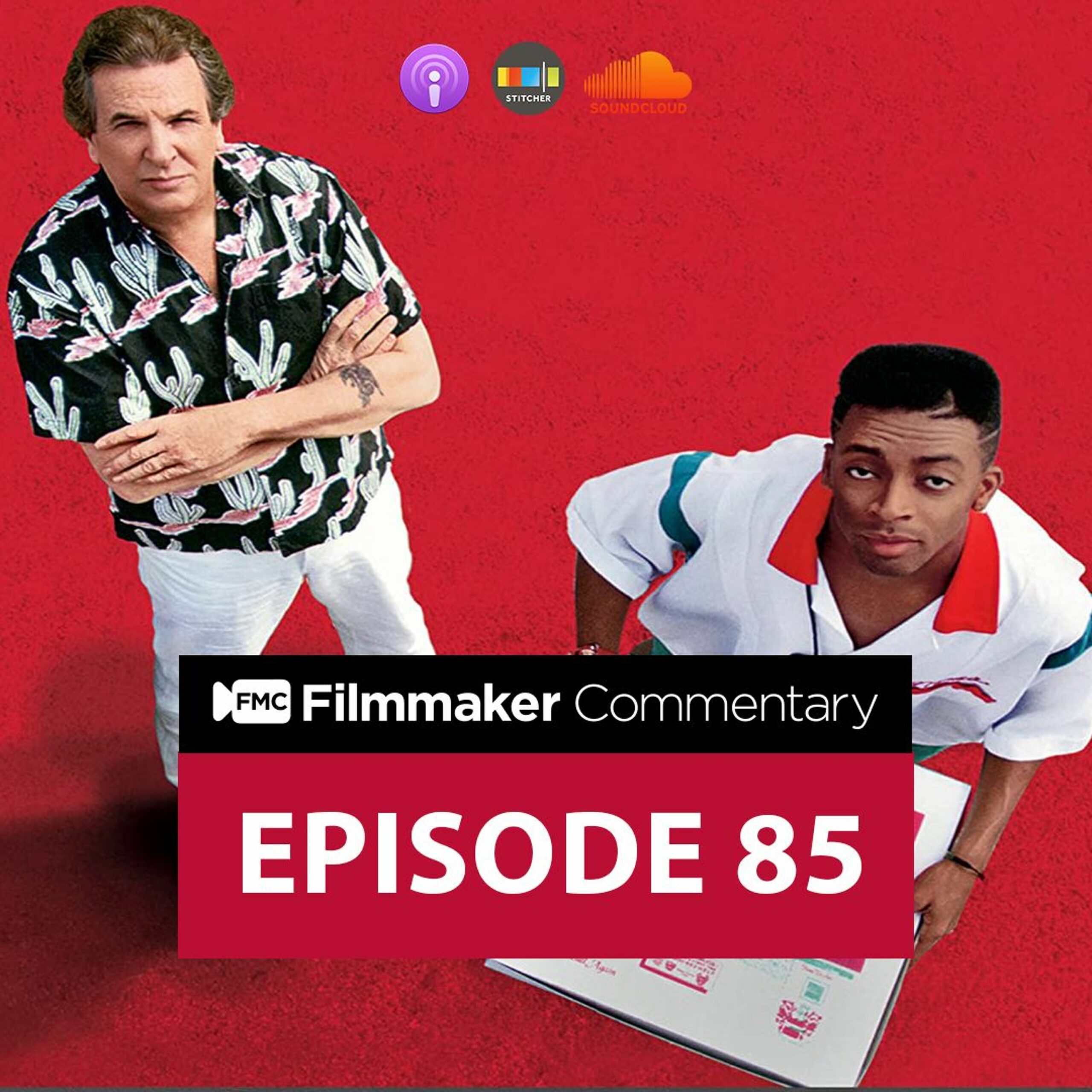
FMC 085: Do The Right Thing Written Directed and Produced by Spike Lee

May 2, 2020
Listen on Apple Spotify YouTube
Listen to this episode
Your browser does not support the audio element.
Also on Apple Spotify YouTube

On this episode of Filmmaker Commentary, hosts Reginald Titus Junior and Casey G. Smith meticulously explore Spike Lee’s groundbreaking 1989 masterpiece, “Do the Right Thing.” The conversation unpacks the film’s vibrant portrayal of a scorching summer day in Bedford-Stuyvesant, Brooklyn, where racial tensions simmer beneath the surface of a seemingly ordinary neighborhood. Discover how a seemingly simple complaint at Sal’s Pizzeria escalates into a powerful commentary on community, prejudice, and the explosive consequences of unresolved conflict. The hosts analyze Spike Lee’s bold artistic vision and cinematography by Ernest Dickerson, highlighting how the film served as a pivotal moment in Lee’s evolution as a director, as he finally felt “fully comfortable” behind the camera. They discuss the film’s enduring cultural and thematic relevance, from its early insights into gentrification to the powerful “Martin vs. Malcolm” dynamic that defines its narrative, proving it’s a film that continues to provoke thought and discussion decades after its release.

What We Cover

  • The powerful themes of racism, gentrification, and social justice that remain relevant today.
  • Spike Lee’s growth as a filmmaker and Ernest Dickerson’s innovative cinematography.
  • Behind-the-scenes insights, including the film’s production challenges and the creation of its iconic set pieces.
  • Discussions on streaming platform competition and the cultural significance of Black cinema.
  • The evolution of “Do the Right Thing” from its initial release to its lasting impact and critical acclaim.
  • Unique storytelling techniques, from dynamic camera work to the strategic use of music and dialogue.

Key Moments

  • 0:58 – Budget, box office success, and initial critical reception.
  • 14:05 – Kim Basinger’s bold statement at the Oscars about the film’s snub.
  • 20:10 – Spike Lee feeling fully comfortable as a filmmaker on his third feature.
  • 31:50 – The “Martin vs. Malcolm” dynamic woven into the film’s opening and closing.

Gear & Films Mentioned

  • The Matrix (film & Animatrix)
  • The Lovebirds
  • Parasite
  • Glory
  • The Hateful Eight
  • Once Upon a Time in Hollywood
  • Five Heartbeats
  • School Daze
  • She’s Gotta Have It
  • Blood Diamond
  • Eve’s Bayou (next episode)
  • Friends (TV series)
  • Living Single (TV series)
  • They Gotta Have Us (Netflix series)
  • Marvel’s The Runaways (TV series)
  • Breaking Bad (TV series)
  • Dear White People (TV series)
  • In Living Color (TV series)
  • Netflix
  • Amazon Prime Video
  • Disney+
  • Hulu
  • HBO Max
  • Vimeo On Demand
  • IndyWire
  • Cinépolis (theater chain)
  • Nation of Islam
  • NAACP
  • Paramount Pictures
  • Universal Pictures
  • Criterion Collection
  • Spike Lee (Director/Writer/Producer)
  • Ernest Dickerson (Cinematographer)
  • Public Enemy (Music)
  • Wynton Marsalis (Music)

Listener Questions

  • How did “Do the Right Thing” tackle themes of gentrification and racial tension in the late 1980s, and how do they resonate today?
  • What unique filmmaking techniques and artistic choices did Spike Lee employ in this film, and how did they mark a significant point in his career?
  • What were the behind-the-scenes challenges and triumphs during the production of “Do the Right Thing,” including budget constraints and community engagement?

Full Transcript

Read the full transcript

Full Episode Transcript
This episode of Filmmaker Commentary Spike Lee's iconic 1989 film "Do The Right Thing," exploring its themes, production insights, and lasting cultural relevance.

Opening and Entertainment News
Reginald Titus Jr.: Filmmaker Commentary, episode 85. Welcome to Filmmaker Commentary, where we give you insights from our favorite filmmaker commentaries. These commentaries can be heard on your DVD and Blu-rays of your favorite movies. We'll show you how you can use these commentaries and apply them to improve your video production and filmmaking techniques. All of this here on Filmmaker Commentary. I'm your host, Reginald Titus Jr.
Reginald Titus Jr.: Welcome to Filmmaker Commentary. I'm Reginald Titus Jr. I'm joined with...
Casey G. Smith: Casey G. Smith.
Reginald Titus Jr.: Welcome back, sir.
Casey G. Smith: Good to be back, sir.
Reginald Titus Jr.: And today we're talking about Do The Right Thing, 1989, written, produced, and directed by Spike Lee. With Eric Dickerson on the cinematography. We have a budget of 6.5 million. We have a box office of 27.5 million domestically, with 9.7 million internationally, together for 37.3 million worldwide. Yeah. Win. That's a win.
Casey G. Smith: That is a win.
Reginald Titus Jr.: Before we dive further into Do The Right Thing, let's talk about news and movies watched.
Casey G. Smith.: Just a quick update. We had made mention of, we refer to as the streaming wars a couple of episodes previously. So I jumped on to IndyWire and they had a just some kind of updates on things that are happening with different streaming services. You know, we often mention the the Netflix and the the Amazon Primes and the Disney Plus of the world, but of course there's also Hulu. Now you have HBO/HBO Max, which is a full-blown service with additional streaming content. You've also have CBS All Access, you've got Apple TV Plus.
Reginald Titus Jr.: That's right.
Casey G. Smith: There are a plethora of options out there, ladies and gentlemen, in the streaming wars. But so IndyWire came up with a top five power rankings.
Reginald Titus Jr.: Oh, good.
Casey G. Smith: As of February 23rd, 2020. Number one is Netflix.
Reginald Titus Jr.: Of course.
Casey G. Smith: Number two being Amazon Prime.
Reginald Titus Jr.: Yep, yep.
Casey G. Smith: Disney Plus coming in third, Hulu coming in fourth, and HBO Max brings up the the fifth slot. So, yeah, which is about what I expected. Those all have been around for for quite some time, for yeah, most definitely proven. I think it'll be fascinating to see how those positions hold because I know that it mentioned that Friends, of course, which was on Netflix for a number of years, that was a big deal.
Reginald Titus Jr.: Right. And it was a big deal, wasn't it? Like, the amount they paid for it.
Casey G. Smith: Apparently. Yeah, I think, yeah, it was a very big deal. But that now was scooped up. Warner Brothers, they put the money down and they scooped it up. So now it's going to be exclusive to HBO Max, and they're doing some kind of special, like a reunion special. It's not a it's not a movie, it's not it's not a continuation of the series, but just a special where they're bringing back all the original actors and actresses to like come to the set or whatever and and kind of reflect. But were you really a big fan of Friends?
Reginald Titus Jr.: Nope. But I was a fan of Living Single. Check, check, check it out. Check, check, check it out.
Casey G. Smith: Yeah, I never got I never got, I mean, I've seen episodes like kind of randomly here and there, but I've never got into Friends. I'm sure I'm sure, you know, I think anybody if you got into it, it'd be entertaining enough to go that many seasons. I think it has to have a, oh yeah, it definitely has a fan base. Appeal. Yeah, oh, oh man. Yeah, people live and die by it. But so, yeah, but the streaming wars is real.
Reginald Titus Jr.: Yes, it is. It's going on.
Casey G. Smith: What you got, Reginald?
Reginald Titus Jr.: Um, Matrix 4 is in production.
Casey G. Smith: Say what?
Reginald Titus Jr.: Yes. There's some pictures showing Neo, Keanu, on the back of a motorcycle. It's going down.
Casey G. Smith: Well, well, well.
Reginald Titus Jr.: Matrix 4. Matrix is like my my Star Wars, just the first film. We'll just pretend like number two and three didn't happen.
Casey G. Smith: Oh. Did you ever see the Matrix?
Reginald Titus Jr.: Yes.
Casey G. Smith: The animated one?
Reginald Titus Jr.: Of course.
Casey G. Smith: Yeah, man. That was
Reginald Titus Jr.: That was solid.
Casey G. Smith: That was really cool. How about trailers? Seen any good trailers?
Reginald Titus Jr.: Um, no. I didn't watch I didn't watch any trailers. I haven't seen any.
Casey G. Smith: I was in the theater on Friday and I'd seen this trailer before. I didn't mention it previously, but there's a trailer called The Lovebirds with, of course, Miss Issa Rae herself along with her co-lead in the film, Mr. Kumail Nanjiani, who's been, I mean, he's just popping up everywhere left and right. You know, also known for The Big Sick. But they're, you know, a couple together, so, you know, kind of a romantic comedy, if you will. But not so much with them like separate, like they're together the whole time and they've kind of gotten into a situation where it seems like they're kind of being framed up for a murder and they're kind of on the run. But they're, you know, upper upper middle class people. It looks it looks situational comedy. It's more it's more appropriate, situational romantic comedy. It looks it looks it could be pretty funny and they're they're paired together real nice. So yeah, so that's a trailer that I saw and it's it's I've seen it a couple of times now. It's intrigued me.
Reginald Titus Jr.: Okay. Will they get your money?
Casey G. Smith: I don't know for sure.
Reginald Titus Jr.: Yeah.
Casey G. Smith: Yeah, if I if I find a date to take a lady to take, then maybe if I don't want to stroll solo. Even though I'm I'm fine with that for for going to the movies. But something like this, I'm like, yeah, it seems like it could be a date movie.
Reginald Titus Jr.: True.
Casey G. Smith: So, we shall see.
Reginald Titus Jr.: What did you watch?
Casey G. Smith: So, while I was at the movies, I, you know what? I want to see this movie Parasite.
Reginald Titus Jr.: Where are they showing it at?
Casey G. Smith: Uh, it is showing at the Cinépolis.
Reginald Titus Jr.: Okay.
Casey G. Smith: It's showing at a couple of different theaters, but I went to Cinépolis in Hurst to to go and check it out.
Reginald Titus Jr.: It's kind of cool that they're, you know, seen at a theater or they even got it on video on demand, you just go on Amazon and purchase it. It's everywhere.
Casey G. Smith: Makes sense. I mean, especially, you know, that it has that Oscar bump.
Reginald Titus Jr.: Yep, right.
Casey G. Smith: I mean, I had seen a trailer for it right before the Oscars and, you know, it had obviously good buzz around it. So, went and saw it for myself and it's really good.
Reginald Titus Jr.: Okay.
Casey G. Smith: It's a good film. It I mean, it's it's kind of sticks with you. At at least with me, it kind of stuck with me every now and then, I'm thinking about like, man, what a scenario. It's and and it's something that could be remade in any country, any language. Like the story the story could be pulled off in any any country because it's basically, you know, the the haves.
Reginald Titus Jr.: I don't want to know.
Casey G. Smith: No, it's just it's just about the haves and the have-nots. Okay. That's a classic story. Yep, the haves and the have-nots. And yeah, so plenty of conflict there. For sure. And yeah, so I was I was I was impressed. It's it was a really, really good movie. Now I want to see some of the other Oscar contenders. I just didn't I didn't catch a lot of them this year. I kind of was off my off my Oscar game this year. But I want to go back and catch catch some of those. That way I can have a, you know, a point of comparison. But but yeah, I I enjoyed Parasite. If you're into films, you like movies, go and see it. Yes, it's subtitled, but get over yourself. Go and see it.
Reginald Titus Jr.: Learn another language.
Casey G. Smith: Reading reading is fundamental.
Reginald Titus Jr.: Yeah. How about you, man? What you been watching?
Reginald Titus Jr.: The only thing that I watched um was uh episode two of They Gotta Have Us, which is a streaming series on uh Netflix. Talking about black films, black, you know, a little bit of black history with the black films because it goes together. And uh really enjoyed this one, you know, talking about the black exploitation. You know, I watched it with my with my pops and my wife and uh just got to kind of a kick, you know, out of him watching it. He was like, yeah, that's when a man was a man.
Casey G. Smith: Yeah, I finished up that the third episode. I finally got a chance to to sit down and watch that this weekend as well. Really enjoyed it. I mean, it leaves you wanting more. You're like, I I need more of this.
Reginald Titus Jr.: Where are they?
Casey G. Smith: I need more. And just seeing all this just wonderful black talent just there and just speaking to what it is. And you could tell that this was done a little bit earlier, right? This was done a couple years back, especially when you when you see John Singleton, when you see, yeah, Jesse Smollett on there. You're like, wait a minute, what?
Reginald Titus Jr.: John Singleton like looks at the camera like creepily and like, uh.
Casey G. Smith: He does it at the at the first episode before it goes to credits. He just looks at the camera like
Reginald Titus Jr.: He hasn't been looking at the camera the whole time and then he turns, looks at the camera, then it goes to credits. I'm like, oh, that was creepy.
Casey G. Smith: Oh, man.
Reginald Titus Jr.: Yeah, but it's it's uh it's really well done. Yeah. And it's worth checking out.
Casey G. Smith: You know, I kind of picked I picked back up on Marvel's The Runaways. A couple episodes back, I'd mentioned I'd I'd watched two episodes. I was halfway into the third one, and so today I jumped back in. Now I'm sure be like six episodes in, but really really enjoying it. It's continuing to to build the suspense. So I think it's going to be my my show I'll rock with for a little while.
Reginald Titus Jr.: Okay. I know we were looking at Briar Patch, but we haven't gone back to that one yet. Um, but I downloaded like a, those Oscar all the all the films that were nominated for Oscars, uh, those screenplays were available. So I had downloaded a lot of those. Only one that wasn't available, of course, is the Tarantino screenplay.
Casey G. Smith: Because there was like a whole buzz about how he was letting the actors read the script. They had to come to his place, read it, they couldn't take it with him, you know, because he was still kind of pissed about, um, Hateful Eight.
Reginald Titus Jr.: Yes, where that leaked out.
Casey G. Smith: Yeah.
Reginald Titus Jr.: Yeah. Almost he was almost not gonna do it for a while and then decided to.
Casey G. Smith: But I think enough people do not read scripts that the percentage is so small of those that do read scripts. Very, very, very small.
Reginald Titus Jr.: Exactly.
Reginald Titus Jr.: But, you know, you live in that Hollywood world, you think everybody knows.
Casey G. Smith: That's true. But they could give up some good plot points and that part sucks. Especially if you're trying to keep things under wrap.
Casey G. Smith: I think if you have a YouTube channel and you're going to go and report it, or even a news outlet, which I think would be slightly responsible, know they want the scoop. But really it's the everyday person talking about it. Again, let's say, I don't know.
Reginald Titus Jr.: I enjoy screenplays. It's uh it gives a lot more information in the screenplay than it's on screen.
Casey G. Smith: Which makes sense with this style of directing is so detailed. There's so much in it. He's such a historian. I would imagine his his screenplays are loaded. Loaded with info.
Reginald Titus Jr.: So, this episode of Filmmaker Commentary is being brought to you by Natural Hair The Movie by Grind Every Matter Films. Now available for purchase and rent on both Amazon Prime Video and Vimeo On Demand.
Reginald Titus Jr.: Now, let's jump back into the show.

Film Synopsis and Initial Reactions
Reginald Titus Jr.: Thank you for tuning in to Filmmaker Commentary. We're talking about Do The Right Thing 1989, written, produced, and directed by Spike Lee. Now let's jump into the synopsis.
Reginald Titus Jr.: This film looks at the life in the Bedford-Stuyvesant district of Brooklyn on a hot summer Sunday. As he does everyday, Sal Fragione opens the pizza parlor he's owned for 25 years. The neighborhood has changed considerably in the time he's been there and is now comprised primarily of African Americans and Hispanics. His son Pino hates it there and would like nothing better than to relocate the eatery to their own neighborhood. For Sal, however, the restaurant represents something that is part of his life and sees it as part of the community. What begins as a simple complaint by one of his customers, Buggin' Out, who wonders why he has only pictures of famous Italian Americans on the wall when most of the customers are black. Eventually, it disintegrates into violence as frustration seemingly brings out the worse in everyone. Do The Right Thing. That was written by Gary KMCD.
Casey G. Smith: So, a question with that synopsis. I noticed it said on a Sunday.
Reginald Titus Jr.: Did it?
Casey G. Smith: I would be under the impression that this took place on a Saturday.
Reginald Titus Jr.: I don't even know what day.
Casey G. Smith: Just because, number one, you have all these people who are who are just out and about. Nobody no no kids are at school, no no nobody's at work. Like, I would assume these people would be either work or school to be out that much all day long. A, it has to be a weekend. Two, at the very end of the film, as the camera is is is is panning up, you actually see a group of sisters, I noticed this at the end of the commentary, who are dressed like they're going to church. They got their Sunday best on. So, I would assume that this took place on a Saturday and that the next day was Sunday. Just my that's just my observation.
Reginald Titus Jr.: Mhm.
Casey G. Smith: Cause again, the kids don't come kids aren't coming home from school. They're out out and about all day long. Now it also is the it is the summertime as well though. So they wouldn't be in school as is. But again, just from seeing those sisters in the in the in the in the morning, the next morning in their Sunday best, I assume it was a Saturday.
Reginald Titus Jr.: Who was that? Who was in their Sunday best? Who was it?
Casey G. Smith: Uh, just some some extras. Who you you see them at the the very end as as the two guys are kind of throwing the basketball around in the middle of the street. If you look at the corner, you see some sisters walking, they got their Sunday dresses on and they're going to service.
Reginald Titus Jr.: Oh, okay.
Reginald Titus Jr.: Have something to say about those two sisters? That'll be later on.
Reginald Titus Jr.: Well, so how did you watch this movie? Well, can we move on for the synopsis or?
Casey G. Smith: Yes.
Reginald Titus Jr.: Okay.
Casey G. Smith: I wanted to linger a little bit, Reginald. Let's just settle in there. No, I'm good.
Reginald Titus Jr.: Is it safe?
Reginald Titus Jr.: Uh, how did you watch this movie?
Casey G. Smith: Man, the first time, I was maybe 10? Nine or 10 years old?
Reginald Titus Jr.: 1989.
Casey G. Smith: We had it on VHS. My my dad bought it. We had it on VHS and we popped it in. I remember I remember watching it, but I just forgotten so much. And I hadn't seen it again since. And it wasn't until watching it this time around, like, you know, when you haven't seen something for a while and you start to watch, you're like, oh, yeah. I mean, there were some parts here and there that I remember. But as I watched it again, I'm like, right, right, right. All that came back and all of it makes so much more sense having lived 30 more years of life since then. It it is, I mean, it's it's a it's a hell of a movie.
Reginald Titus Jr.: Yeah.
Casey G. Smith: You always knew it had, you know, all this this great buzz. One thing I'll never forget as a kid, I remember I was watching part of the Oscars, and I remember they're doing some either they were getting set to do a category of the actual awards themselves, or there was a special segment going on, but I remember Kim Basinger was on stage. And it may have been at the very end. It may have been like, you know, for Best Best Film. But I remember her saying specifically, she said this, she goes, there's one film that's missing from this list. And that's Do The Right Thing.
Reginald Titus Jr.: Oh, yeah.
Casey G. Smith: Like, she said that. I I I was like, because I just, you know, I was Kim Basinger, I know she's in the Batman movie, right? They both came out the same and and the same year. So yeah, I would have been around nine or 10. Anyway, but that was so that was actually before I saw the movie because it wasn't wouldn't have been on VHS yet. But I remember her saying that at the Oscars and then obviously just stood out to me. But it was great to revisit it and I'm so glad that I did.
Reginald Titus Jr.: Cause who won that year? Was it Driving Miss Daisy? Was that the year that they won? Or was it Malcolm X that year? I don't remember.
Casey G. Smith: It says here it was nominated for two Oscars, according to the
Reginald Titus Jr.: It was nominated for, I think, was it Best Supporting Actor, which is the the guy who played Sal, the actor that played Sal in the film.
Casey G. Smith: That's right. Okay.
Reginald Titus Jr.: Um, that ended up going to Denzel Washington for Glory, right?
Casey G. Smith: 89, that probably would have been Glory.
Reginald Titus Jr.: I think it was. Best Writing Screenplay. Okay. So it was nominated for two Oscars, one for screenplay, one for Best Supporting Actor.
Casey G. Smith: So it was nominated for for that. I'm going to be honest. Now looking at it and thinking of of of him being being nominated for Best Supporting Actor, I'm like, okay. I mean, he he he did his thing, but it it's it just seems odd that the one
Reginald Titus Jr.: I don't want to
Casey G. Smith: Uh-uh. Yeah, I'm just saying. I'm like
Reginald Titus Jr.: After watching it.
Casey G. Smith: Well, I mean, yeah, his performance is good. Yeah, yeah, his performance is good. It it's fine. I I would almost say that, uh, Turturro, Tortorino, Tortino?
Reginald Titus Jr.: I don't know his last name.
Casey G. Smith: I'm butchering his last name. Nick.
Reginald Titus Jr.: Mhm, right?
Reginald Titus Jr.: I don't know I don't know the actor's name, but I know who you're talking about. He played the big brother, son to Sal, right?
Casey G. Smith: Mhm, who's been in the most most of Spike's films. John, there we go. John Turturro. Good grief, I'm butchering his name. Sorry, John. John Turturro. I think he would have potentially may have been better served for for his role. But either way, I mean, both of them were fine, but it's like, there were a lot of supporting. But I guess they they they did have the they had a lot of lines, a lot of screen time as well right there with with Mookie.
Reginald Titus Jr.: Mhm.
Reginald Titus Jr.: He was carrying some folks.
Casey G. Smith: That's true.
Reginald Titus Jr.: Keep it real.
Casey G. Smith: Well, even Ossie, man. Ossie is Ossie Davis is fantastic in this, man.
Reginald Titus Jr.: Oh, yeah. I'm like, oh, yeah, but yeah, you're right. Um, actually, um, with the list of like awards, I think uh, Ruby did win like Best Supporting Actress, I think it was like NAACP Image Award. This film won a lot of awards like just worldwide.
Casey G. Smith: Mhm.
Casey G. Smith: They both won at the Image Award. Ossie and Ruby?
Reginald Titus Jr.: Yeah.
Casey G. Smith: Suppo supporting actor and she won Outstanding Lead Actress.
Reginald Titus Jr.: Oh, oh, okay.
Casey G. Smith: Yeah.
Reginald Titus Jr.: It was a definitely an ensemble. But, uh, the, you know, they're veterans in the game and highly respected amongst their peers. Uh, they will steal your movie.
Casey G. Smith: Yeah, yeah, yeah, yeah.
Reginald Titus Jr.: Yeah. At any rate. Um,
Casey G. Smith: How'd you watch this film?
Reginald Titus Jr.: I watched this, I think I only saw second sections of the film growing up. I wasn't really, like, certain films that were pretty heavy, I wasn't really, I was light. You know, the the, you know, probably the most like disturbing things that I was watch, you know, was like Five Heartbeats, you know, in regards to like drama, dealing with racial things, you know, I kept it real light at a young age. Right, right. It wasn't you know, especially when, you know, you're seeing black men being, you know, killed, you know, cinematically, it's like, it's not a good thing to have in your brain.
Casey G. Smith: And if this is your first time listening to Filmmaker Commentary, we want to let you know that there will be spoilers. You've been forewarned.
Reginald Titus Jr.: Yes. So, seeing black men being, you know, murdered cinematically, uh, not good for a young black man to watch. Al all my dad was always kind of look for positive images for just, you know, to check out. Um, so yeah, so that one, this one, I saw images of it. I was like, yeah, you know, later. So this is a film I saw later on when I was studying Spike Lee in in 2000, early 2000s.
Casey G. Smith: Okay.
Reginald Titus Jr.: But yeah, but this is the first time like just watching it and just taking it all in. Every single sequence scene, just really just being in this world, you know, allow myself to, you know, go into this world. Um, so, um, I really enjoyed watching this time around.
Casey G. Smith: Same here, man. I it's and again, still relevant, right? Things that it's speaking to are still so relevant today.
Reginald Titus Jr.: Yeah. Unfortunately.

Awards, Themes, and Tone
Casey G. Smith: Two things that just stood out to me that I was that I was surprised at the mention of. Uh, one is a is a mention of analogous to global warming. And another towards gentrification. I'm like, they were talking about gentrification back in in the late 80s? I had no idea. I I thought it was a 2000 kind of thing. But nope. That was I was just caught off guard by that. I'm like, huh?
Reginald Titus Jr.: Um, some of the things I did like about the film was that, you know, just the artistic approach, you know, seeing Spike Lee's development as a filmmaker because now we we've seen School Daze. Um, I've seen She's Gotta Have It. We didn't cover She's Gotta Have It, did we?
Casey G. Smith: No, we haven't.
Reginald Titus Jr.: We haven't covered it. But um, I did see that one. So seeing his growth, seeing some of the things that, um, that he likes to put in his film, you know, kind of dealing with the title sequence and, you know, dancing, things like that. He was able to make brown people look beautiful. You know, him and Ernest Dickerson, the way that they shot. Um, they seemed very real. So, uh, that's what I did like about it. It seemed like it was some they're becoming settled into becoming real, I mean, they are real filmmakers. But you can tell they they're grasping like the artistic approach big time.
Casey G. Smith: And Spike even makes mention of that this being his third film, his third feature film. And that he said it was it was with this film that he finally felt fully comfortable as a filmmaker, even with his dealing with his with his actors. Just everything. And this was the biggest budget up until now, I mean that he that he would have would have worked with the 6.5 million. And so it allowed him to get some some toys, cranes and things of that nature. And I mean, even if you get a chance, the the Blu-ray to this, the 20th anniversary Blu-ray is wonderful. There are so many features on it. Multiple features and documentaries on how this was put together. They actually they actually had the foresight to make a documentary on how they made this and they even show you you can get to see how they how they built the pizzeria and the Korean the the Korean food store. And where they they placed those and just and and they built the uh like the kind of the facades over them. And people they said people in the neighborhood were kind they thought it was a real pizzeria. People were like at least once a day there would be people would come through trying to buy pizza from from the spot. And just seeing how they how they worked with the people in the neighborhood and all that kind of stuff. It's a really good documentary. But there was a lot of planning. He had a good sized crew to to manage all this. And it was in a real, I mean, this is a real neighborhood. He even had some like, I guess kind of the Nation of Islam brothers come through.
Reginald Titus Jr.: Oh, yeah.
Casey G. Smith: They literally went to a home that was like previously like a crack house and and said, look, we're, you know, we need you to leave. We're not going to stand for this in this neighborhood. And they got this crack house to be, you know, evacuated and and so they could yeah, use it. It's it's it's quite quite amazing. They but they were they were in the heart of it.
Reginald Titus Jr.: One thing I like about the commentary and special features that um he dates the commentary. I think it's like March 24th, 1995.
Casey G. Smith: Year of our Lord.
Reginald Titus Jr.: Yes, indeed. Year of our Lord. I appreciate him documenting when he records his commentaries. You know, he doesn't do it all the time, but, you know, usually he's kind of mindful of letting us know when he's recording this.
Casey G. Smith: Right, to also give context to the distance because he even said, you know, it's been a while since he had seen it when he did the commentary. And I I I enjoy that he enjoys his films. When he's when he's when he's talking about it, Spike is so he's lively, he's having fun. He's he's remembering and reminiscing and certain lines will pop up to him and he's like kind of saying them in tandem. He's just very complimentary of the people that he's that he works with. I I enjoy his commentary. It's it's informative. It's fun. Yeah, I dig his commentary.
Reginald Titus Jr.: Entertaining, for real.
Casey G. Smith: The the deleted scenes, there are some fun deleted scenes. There is one in particular that actually you and I just watched when when uh when when when you arrived uh about what we're moving it's the very first one where Mookie is is delivering a a pizza and and has a little issue uh and it's just his his reaction to it is just it's great. Great. There's another scene. I didn't show you. There was one where they're on the rooftop. There's there's three like Martin Lawrence and and and two the girl and and one of the other guys that he's always they're always hanging together. Yeah. But there's a scene where they're all on the rooftop trying to figure out some dances to do for going to wherever, you know, some kind of party that's coming up. They're all trying to come up with different dances and it's it's pretty funny. And because they're all like kind of, no, you do this. You know, that's stupid. No, you should do this. And they're literally making up dances and at the end like they're all doing their own thing. It's just uh it's yeah, it's it's well done. I I I enjoyed I enjoyed that too.

Style, Production, and Dialogue
Reginald Titus Jr.: What are some major themes in the film?
Casey G. Smith: So, one thing I'm just noticing thematically throughout Spike's films that we that we've looked at is that musically, you always you always find jazz, showtunes, rap, Negro hymns, and R&B, like all like all fused in and used used throughout all of all of his films uh up until this point, which is it's just a fascinating blend. I mean, it's all obviously, quote unquote, black music, but it's just it's spanning so many different genres. But yeah, but he loves them. I mean, a lot of these ones are opening up with some kind of Negro hymn or or or spiritual. And then there's always jazz mixed in throughout. I mean, even with when he talks about Fight the Power, when he had Public Enemy made that song, he has uh Wynton Marsalis playing the trumpet over it. Yeah, I'm like, huh? But yeah, just constant uh that that mix of of music throughout, which always plays a big role and always has some breakouts. I mean, to go from The Butt from School Daze to Fight the Power from Do The Right Thing. Those were those were two of the biggest hits I think, you know, from R&B hip hop standpoint of the late 80s.
Reginald Titus Jr.: Facts, man. Uh, some of the themes, um, you actually have one of the characters stating kind of what the theme is and, which is the title, you know, do the right thing. You have Ossie Davis who pulls Mookie to the side and like, hey, Mookie, come here. And he's like, what? Always do the right thing. You know, Mayor, Doctor.
Reginald Titus Jr.: Like, that's it.
Casey G. Smith: I used to have a buddy used to say that to me, he used to say that, Doctor. Now I know exactly where it's from now.
Reginald Titus Jr.: Boom.
Casey G. Smith: I thought he was just incomplementing my intelligence.
Reginald Titus Jr.: Ah, I know.
Casey G. Smith: Ah, but I understand now. So, yes, definitely, uh, Do The Right Thing. So I also had one of a theme of like imposed segregation. You can kind of see that amongst the amongst the different groups, right? People are, all right, we got Italian Americans over here. We've got, you know, one group of blacks over here. We've got the, you know, Puerto Ricans over here. But it's just like this imposed kind of segregation throughout the throughout the neighborhood.
Reginald Titus Jr.: You got the theme of time and and waking up. You know, Samuel L. Jackson's character, you wake up. You wake up, wake up, wake up! Literally right after the title sequence he does that.
Casey G. Smith: Yes, which is a fascinating continuation right out of right out of School Daze. It's very interesting that that would end with that and this opens with that.
Reginald Titus Jr.: Mhm.
Casey G. Smith: Like, I also put down a a a theme of, well, I'm going to say love and hate. You know, that that old song, there's a thin line between love and hate. You see it kind of played out in a couple of different ways. Uh, you see with with with Mayor and Mother Sister.
Reginald Titus Jr.: Yeah.
Casey G. Smith: In the beginning, it's like she like almost like she hates him. Like the way she's treating him, she treats him really pretty pretty bad. You know, you old fool. I mean, just constantly just saying stuff to this guy. And he's just, I'll I yeah, I'm just he's trying to be just so nice and and charming and all that. And he ultimately kind of wins her over just, you know, being brave, just being him really just being himself. And it goes from kind of like from from from hate to love. But then we see with the pizzeria, with Sal's pizzeria, that the people they love coming there to get their slices and all that. And he's like, oh, you know, I've watched these kids grow up, you know, and they they, you know, they they they like us. But then just like just that quick, one act of of violence and everything changes and it goes from love to just hate. And they really burned burned down the only spot even in the neighborhood, right? They burned down the pizzeria. It's like, whoa, this is this is something else. And then even like with Mookie and Tina, right? It's like this love-hate kind of relationship going on. So, so yeah, definitely, uh, Do The Right Thing.
Reginald Titus Jr.: You have Public Enemy's, you know, Fight the Power. And that kind of is, you know, as Spike Lee says, it's an anthem and also a theme of fighting, you know, you got Rosie Perez actually dancing during the title sequence, she's got boxing gloves on. You got uh Radio Raheem with his with his boombox kind of like letting people know his presence, but it's like letting people know his anger, you know, kind of in a way. You know, using his hands as fighting tools and kind of standing up for something. You know, even if maybe it's right, maybe it's wrong, but, you know, at least standing up and fighting. So yeah, fighting whatever the power is.
Casey G. Smith: Indeed. I also had a theme of selective racism. And we we we see it highlighted in in uh Pino's character directly when when Mookie pulls him aside, asking him who who's his favorite basketball player? Who's his favorite rock and roll artist? Who's his favorite movie star? And he's saying, you know, Magic Johnson, and he's saying, you know, Prince and he's saying, Eddie Murphy. He's like, you always saying, you know, nigga this, nigga that. And he's like, no, but these guys are are different. Cause they're not they're not they're not black. And I was like, well, but no, no, that's that's yeah. They're they're different. You know what I mean. So, public service announcement.
Reginald Titus Jr.: Uh-oh.
Casey G. Smith: Just because you like one, two, three, four, five athletes of a different color, or a whole damned team. But yet if in your daily life, if you slur those people or somebody of another race, that doesn't mean you are not racist. Public service announcement. Because here's my here's here's here's here's and here's a litmus test, right? Who enjoyed having black people around more than anybody else? Slavers. They loved having black people around. And you kind of see it in the whole situation with the Sal situation. It's like, they'll they'll lay up with black people. They'll have sex with black people, but in the same time, you'll kill them. Kill them. You talk about slavers. You'll kill them, hang them up, separate them from their from their family. But but at the same time, you'll have them in your house, serving you, raising your kids, you know, cutting your hair, shaving your face. But again, maybe sleeping with them. But you think you think you. But for you think for one moment you wouldn't consider slavers racist because they loved having black people around? They loved having them in their place. So if your thought is that, oh, yeah, you know, they're okay when they're in their place. Any people group. You say, oh, they're they're good when they're in their place. Yeah. Yeah, it doesn't matter if your best friend is of a different race. If you have thoughts that, you know, certain people should only, you know, be in a certain area or whatever, that's still racist. Boom. PSA. PSA.
Reginald Titus Jr.: Yeah.
Casey G. Smith: So yeah, so yeah, there's a selective racism. And again, we, I mean, Spike has a whole section where they each race is just going to town with these slurs against the other. And then of course, at the end, I love that, you know, how how, um, Mr. Senior Love, what's what's Sam's name? His of his character. But Sam's character just comes in and is like, whoa, whoa, whoa, whoa. Chill with that. I love I love how how he he he caps off that section with with him just coming in. It's like, that becomes uh kind of like a trademark of Spike Lee's, you know, in some of his later films. He does that montage of just slurring just the most racist stuff you can directly at the camera, directly at the audience.
Reginald Titus Jr.: Yes. Mr. Senior Love, Daddy.
Reginald Titus Jr.: Okay. Tone.
Reginald Titus Jr.: For the tone, kind of going back to like the opening is, you know, we have Lift Every Voice And Sing. Like, that's like off top, you're playing, like, okay, letting you know, you know, it's the black national anthem. All black folks, for the most part, know this. Yes. Should. Um, and then and then it is interrupted by just hip hop. You know, it's like, you know, because you got the Lift Every Voice is like somber, it's kind of sad, but it's kind of uplifting. It's like, you know, it's it's very emotional. But when that hip hop drops, it is, you feel it's a certain energy that is like just slapping that crap out of the way. And it's like, make room for hip hop. And so that introduce you to, you know, how you you're going to feel about this film.
Casey G. Smith: I think it I think it's it's that intro is indicative of the very end of the film. Yeah, right? It's that combination of it's it's the Malcolm and it's the Martin and Malcolm dynamic that plays throughout this that plays throughout this film, right? The protest, the non-violent protest via the any means necessary. We see it in the quotes at the end, we we see it throughout. And you mentioned that now. I'm like, yeah, that's just that's just both, right? Boom. Lift Every Voice And Sing. Fight the Power. Malcolm. I mean, Martin, Malcolm. It's like, wow, okay, yeah. So definitely Tony that's there. And again, the two tones that I mentioned that I put down were tension and fun. Like this this film kind of constantly goes back in between the two. One moment things are fun and light and the next moment things get tense. And then things are fun and then it's tense again. It's just constant just back and back and forth. It's like we're riding the riding this line.

Character Insights and Real-World Connections
Reginald Titus Jr.: Facts. Style, man. What do you think about the style of the film?
Casey G. Smith: So, there's a lot of warm and earth tones. A lot of bright colors, as you know, based upon it going us going into the the 90s. A lot of bright colors popping. A lot of Afrocentric colors being used, right, represent Africa, the black, red, and green action, multiple places, multiple spaces. And then there was some really cool camera movement throughout. Some great tracking shots throughout. Again, it was also kind of an evolution of of of Spike's style, but also Ernest Dickerson, man. Kudos to that dude because he he pulled out some amazing shots because it was it rained quite a bit when they were when they were shooting. During the eight weeks, there was rain quite a few times and he was able to to make some movie magic. Yeah, make some movie magic. Light some things.
Reginald Titus Jr.: True.
Reginald Titus Jr.: How about you? What did you see?
Reginald Titus Jr.: Man, starting out just the Dutch angles. You know, we we talk about Dutch angles before in, um, what episode with? Panic Room. Was that Panic Room?
Casey G. Smith: Specifically Mario Van Peebles was talking about Dutch angles.
Reginald Titus Jr.: That's right. New Jack. New Jack City. Yeah, in that episode. You can check that episode just to kind of go into Dutch angles as reference. But, uh, with Ossie Davis's character, you know, when he he pulled Mayor, when he pulls up, it's tilted a little bit. It's the Dutch angle. Then we look up at at Ruby. Um, it's tilted the other way. So you you can see and then, um, also with Radio Raheem when we're looking up at him, it's tilted again. Uh, so they use those Dutch angles quite a bit in here. Um, and then like just continuous uh stabilized shots with, um, uh, Rosie Perez's character. When she's introduced to us, she's arguing, she's picking up a kid, and she's just coming towards us. You know, the camera. Slams the door. Cut. We get a lot of, like you're saying, crane shots that leave people's homes, but then follow them and then it's interrupted and pan whip whip-pan to the right and we discover another character.
Casey G. Smith: Like at the very end when he comes out of, uh, where Mother Sister and Ossie are in her in her brownstone and then it just continues to to pull out and then all of a sudden it whips over to Mookie going to get paid.
Reginald Titus Jr.: Get paid. Got to get paid. So they were mastering their craft, man. Very cinematic.
Casey G. Smith: Yes, it yes. I'm I'm I'm super I'm impressed. I'm honestly, I'm like, man. This is impressive.
Reginald Titus Jr.: Yeah. Uh, do you have any tropes?
Casey G. Smith: Yes, a black neighborhood with problems.
Reginald Titus Jr.: That's true. I don't have any tropes. I like, dang. Got a couple more. Okay. American Italians working in Italian restaurant/pizzeria. That's a trope. Yeah. A black man killed by the cops. Ooh. Another trope. Boom. So.
Reginald Titus Jr.: That's pretty sad. What do you got for quotes?
Casey G. Smith: Oh, man. First, let me say kudos to to Spike with the the writing in this. There's some fantastic dialogue. Yeah. I fan fantastic dialogue. So, um, when Mookie steps out of the brownstone and he's on his way down the street on his way to work and he sees what I perceive might be maybe there's maybe there's Jehovah's Witnesses.
Reginald Titus Jr.: Yes, they are. In another movie later on, he refers to that scene. Ah. As older as a older Mookie. I think maybe it's Red Hook Summer or maybe it's Red Hook Summer.
Casey G. Smith: Okay.
Reginald Titus Jr.: That he's playing Mookie again, older Mookie. And the woman Nola Darling from She's Gotta Have It is a Jehovah Witness in the Red Hook Summer. Hopefully I'm getting the same, the right movie, but it's at the end of the movie.
Casey G. Smith: I want to go back and watch Red Hook Summer now. I've seen Red Hook Summer. Now I want to go back and watch it again now. But just, I mean, the he just says, hell no. Just going straight just like I yeah, I approach me before. I'm not interested and I'm not even trying to be nice today. Just hell no. Just keeps on walking.
Reginald Titus Jr.: Right before that, we are introduced to Sal and his sons. They're disgruntled, but he's trying to keep the peace and get his sons to work and they're, you know, just not feeling it. And, uh, when they finally open up the place and they're in there, he's like, I'm gonna kill somebody today.
Casey G. Smith: I noticed that too. I noticed that too.
Reginald Titus Jr.: Just a foreshadow, like, what? Exactly. Yes. I was like, oh, I jotted that down. I was like, hm.
Casey G. Smith: The opening scene when Doctor Senior Love, Daddy, is talking about the heat. He says, Jheri Curl Alert.
Reginald Titus Jr.: Jheri Curl Alert. Dang. You go outside, you might have a permanent helmet on.
Casey G. Smith: When Mookie finally gets into the job, the older brother's like, you're late again. You live up the block. What, your Cadillac broke? Like these little subtle little jabs that he he throws at Mookie is interesting.
Reginald Titus Jr.: Yes, sir. Racist. I'm all about that. Not interesting. It's racist.
Casey G. Smith: Yes, indeed. Uh, so there's also against Rosie Perez, right? This is her first film. Couple of actors, first films, which we'll cover in trivia. But she she tells them, because you don't effing listen, Mookie. And this is way later in the film, but it's just the way that she says it. Rosie Perez that that that voice, her her inflections and just it's it's great.
Reginald Titus Jr.: When, um, Mookie and, uh, what's the other brother's name in Sal's son? What's the older brother? Pino. Pino and Vito. Pino. Um,
Casey G. Smith: Ah, Pino is the is the older one. And then Vito is the youngest.
Reginald Titus Jr.: Yeah. So Pino and Mookie are arguing back and forth. And then Sal's like, why don't you all shut up? And then Vito's like, yeah, you tell him, Pop. And you shut up too.
Reginald Titus Jr.: Mhm.
Reginald Titus Jr.: Reminded me of Remember the Titans.
Casey G. Smith: Yes, I was trying to remember. I was like, man, where's that other movie where somebody told somebody else to shut up too? Thank you. I was trying to remember where that where that where I heard that kind of cadence. Just telling everybody to shut up.
Reginald Titus Jr.: Yeah.
Casey G. Smith: So, when Buggin' Out is is buying his slice of pizza and he's having his conversation with Sal, which, you know, John Carlos Esposito is just great. Once again, he just he just he he has his. Yes, I know. Yes, he did.
Reginald Titus Jr.: Africa.
Casey G. Smith: Africa.
Reginald Titus Jr.: He just is, man, he's amazing, man. He's he's a he's amazing actor. That's why all the more when I see him in those two roles of School Daze and this and then again, to see him later on in Breaking Bad, just so poised and controlled. It really is a credit to to the actor. Credit. But yeah, when Sal says, you know, extra cheese is $2. He's like, $2! You forget that. You can forget that. Drops that word on him. Oh, man, it's the timing. Timing.
Reginald Titus Jr.: There's a scene where, um, uh, uh, uh Sal and Pino, am I saying his name right, Pino?
Casey G. Smith: Mhm.
Reginald Titus Jr.: They're talking, and Pino is telling them why he doesn't like being there. You know, people are making fun of his friends are making fun of him, stuff like that. And and then we get, uh, uh, uh, Smiley.
Casey G. Smith: Smiley.
Reginald Titus Jr.: Smiley interrupts the conversation, knocking on the window. I was like, oh, man. Uh, Smiley's a little slow. Okay. I don't know what he's been diagnosed with.
Casey G. Smith: Right.
Reginald Titus Jr.: But he's playing a, uh, you know, a slow-minded character.
Casey G. Smith: Right. Somebody who might be on the might be on the spectrum potentially?
Reginald Titus Jr.: I don't know, yeah, he's gone. Uh, so Pino comes out and just really starts cussing him out, telling him to get the heck on and all that stuff. You hear Robin Harris in the background, y'all stop that. You know the boy ain't right.
Casey G. Smith: You know, the boy ain't right.
Reginald Titus Jr.: You know the boy ain't right. And that that whole shot is just so well done, right? It's slowly it's pulling into them. And you even see him, you see Robin Harris in the background coming out of the store, going back over to his his corner with with the other fellas. Oh, yeah, it's this is constantly constantly things going on in the neighborhood. But uh, that's a good line. So, when when Mayor, Damaiah. When he's when he's in the Korean store and he's going to get some beer, and he's he can't find High Life, the Miller High Life. And he's like, he says, you asking a man to to to change his beer. You asking too much. You know, it's like, this dude is passionate about his beer. He's just It's a big deal. You asking too much. Robin Harris is just just dropping lines throughout this thing. You can tell he was just he he had stuff just stored up just laying into people. I I can bet there's a lot of stuff that didn't make it. Oh, sure, man. Um, but he was just like, um, uh, uh Buggin' Out is trying to convince the the guys to, uh, I'm I'm going to boycott. Y'all going to come with me? And then Robin Harris is like, say, wait. He was like, you need to boycott the barber that messed up your hair. Like, dang. Cuz that that haircut was wild. Yeah, and but he likes to apparently he likes to do different stuff with his hair because specifically when they did School Daze, right? He wanted something that was going to to stand out and and just be unique. He was that. Yes, yes. Robin Harris though, I noticed he spikes the camera. Yes, he did. So much. I mean, multiple times. He's like constantly spiking, like, Spike, Spike, Spike. I see you, Robin Harris. It's like, he can't help it. He's he's delivering his lines and he's like, I got to look right at the camera and just make sure, hey, it's me. Look out for me. And they just kept it. It's like, it's hey, man. Yeah, yeah, I was like, this dude. This dude. But again, first first film, I think it's his first film also. Ah. Well, makes perfect sense. Yeah. Yeah. Oh, so Mother Sister after one of the times where Damaiah has has left. Actually it's when when when her hair is being done. She says, he reminds me of of my least favorite people, my ex and my tenants. She says, you know, give that racist old whatever she said. Mhm. When uh Sal, he's, um, he's giving, I think who what he gives a little girl some somebody's buying something from him. Is it like a ice cream or what is it? Right. A little frozen treat or something. Yeah, he he somebody's buying something from the window. And then she like disappears, the window's clear, and then out of nowhere, Buggin' Out's like, Sal! We're gonna boycott your fat pasta ass. Yeah. He scares him. I had that I had that under my under my favorite scenes. Just like the way he just I mean he like like a muppet, right? Just pops up out of out of nowhere. It's like, this dude literally like kneeled down, crouched down, and just kind of made his way along there and just waited till the girl got done with her transaction. Just when he pop up and say that. It's like, dude, who Sal! Yeah. Oh, man. Yes. Uh, once there the guy's car gets wet by the fire hydrant. And he's once the police show up and actually fast. Yeah. And they they get Damaiah and they're asking him what's going on. And he's like, Doctors, those that will tell, don't know. Those that will know, don't tell. He's like, what is that some voodoo stuff? Voodoo. Oh, man. Yeah, but he just just laying down these words of words of wisdom, just poetry. Yeah. Ossie Davis, man. He's on he's he's he's on it in this one. He is on it. True. Um, towards the end, this is my last quote. Um, towards the end, Raheem, uh, Radio Raheem and Sal, they're they're in their confrontation. Um, Radio's, you know, he's blasting the music, the same song throughout the whole film. Fight the Power. Then Sal's like, what I tell you about that music? And then, uh, Buggin' Out's like, what I tell you about them pictures? It's like, just how they're going back and forth, man. It's like you tension is just rising. John John John Carlos Esposito, his timing is is fantastic. He's just boom, boom, boom, boom, he just knows just exactly when to hit it and he's saying he's saying so much. He's succinct and just yeah, it's very, very impressive. Yeah, that was my last, uh, quote also. Favorite scenes. Speaking of John Carlo, when his shoes get stepped on. Oh, man, that was hilarious. And you know, and people yeah, go go ahead and explain the scene. So John Carlo, he's he's he's on the streets. I think he's just maybe finished talking with with with Mookie or he's just finished talking with somebody. And all of a sudden, uh, this guy on a bike literally like bumps into him. He's a white guy. Bumps into John Carlo, into Buggin' Out. And doesn't say anything. Just bumps into him. And this guy's he's sweaty, he's carrying his bike and he's going towards his brownstone. And and John, you know, Buggin' Out is is is like shocked that this guy just bumped into him, didn't say anything. And then he looks down at his shoes. Yeah. Like his his Air Jordan's. Also, to add in, um, Spike Lee hates Larry Bird. You you if you watch School Daze, you'll find this out. Hates Larry Bird. Uh, I remember one of the quotes in the uh, uh, uh in School Daze, one of the characters is talking to, what's Spike Lee's character? Uh Mars. He's playing a character called Mars. And he said, man, you know Larry Bird's one of the baddest white boys in the NBA. And then he's like, he's the ugliest mother. Damn. So when you see that that guy that ran over his Nike, his Air Jordan's is Larry Bird. It's like, you know, he's got the Larry Bird shirt on. It's like, he's saying so many things in that without saying it directly. Well, well, well. Okay, continue. It's so now Buggin' Out looks down at these these Nikes and he has he has a big scuff on him, a big black scuff on his on his brand new Nikes. He's like, hey, hey! And he, you know, yells at the guy and then he goes and approaches them and this is whole back and forth. Who told you you could, you know, my street, on my side. You know, it's just going to into this this amazing tirade. He's talking fast, but yet he's still clear. And then all of a sudden, everybody else around the block, they're gathered around him. And it's just this beautiful scene of them like just instigating. Oh, man, just just instigating. And this guy is just like, he said, you may ain't even like Martin Luther. He said, you mean he wants to throw those away. Like how bad his shoes look. Yeah, they all just instigating. This guy's like, but I live here, you know? And he's like, and at the end when he says, I was born in Brooklyn. And that theme yeah, that that that that shot where everybody just just reacting so dramatically. It's it's well all well done. That, um, Justin Simeon and Dear White People, uh, remember the scene when all the black guy, uh, the black crew is at the theater and they're talking about uh wanting to see something. And then, um, I guess it it ran out. And then they said, well, we have, I don't think I think they referred to like a Tyler Perry movie or something. Well, we we do have this. And they're like, oh. So you remember that?
Casey G. Smith: Yes, I do. I do. Nice homage. Yeah, man. It's kind of cool seeing how people like kind of borrow from their favorite movies. Totally. For me, there's a song playing and it's uh it's a raggae song and it's called it's like, you can't stand it, you can't stand it, you can't stand the heat. And while this is playing, you see Rosie Perez, she dips her face in like cold water, pulls out. Um, then you see, uh, uh uh uh Joie Lee. Hopefully I'm saying her name right. Uh, she's taking a shower uh with cold water in slow motion and it just hits her face. And this is like beautiful the way that the water's hitting her face in slow motion. And and it's kind of telling you just how freaking hot it is. Everybody's trying different things to cool off. Just beautifully shot and then you go from that to, um, uh, the Puerto Ricans drinking their Cerveza. Uh, and it's a crane shot, uh, kind of showing them doing their drinks. And then it opens up from that to the kids breaking the fire hydrant and spraying everybody with water. So everybody you see this in this montage of how everybody's trying to stay cool. And Spike said, yeah, that he wanted to show just how hot it was. Like that was like the goal. Show how hot it is. Unbearably hot. So I I enjoyed the first scene, the first time that that we see Mayor and Mother Sister interact. Again, him just walking by and she's just laying into him and he's he's telling her that, it may not be today, but she's going to be nice to him one day. Yeah. And just seeing that that plot, just that that subplot run through the whole film. But that's the setup. Uh, my favorite scene, we talked about the title sequence. I'm like, you know what, this is pretty interesting. You know, the title sequence, just how much energy that Rosie Perez has as a dancer, able to like sustain that energy through because it's like she's uh had like, I think at least three changes of wardrobe while this is playing. And then while she's dancing, like the lights are changing. It's red, it's And it's beautifully done. And there's a couple of cuts where it changes to her in a different outfit and it's almost the, I mean, the cut happens and it's almost like she's in the exact same position, exact same movement. Like it's some of the the cuts in between are seamless. I'm like, oh, wow, that is it's it's I'm I'm notice like just I think like two of them that are in there. Yeah. Dang. That's well done. Yeah, but she said eight hours. Eight hours. Eight hours of dancing to to get all of that. It's funny hearing, I would I would recommend anybody picking up some of Spike's books, you know, because they've had more time to kind of really think about what happened in these scenes. Um, in his book, This Is My Story And I'm Sticking To It. He goes through all his films and kind of lays out some of the problems they were having on set and things like that. And Rosie Perez was super young. I think she was like 19, you know, while they were shooting. And, uh, there were some issues kind of dealing with like some of the sex scenes. And then she said, you know, so Spike Lee tried to kill her, trying to have her dance for like eight hours. And, uh, and she didn't understand why, you know, until, you know, her getting older and then seeing, oh, that's why I had to do this so many times to get this iconic thing. And she reflects on it on the uh interview that she has with Spike Lee later on. One of the things that's also interesting, there's a a special feature where they are at at Cannes. It's right after the film has has premiered there. And on the panel, you have Ossie, you also have Ruby Dee, you have Spike, you have his sister. And then you have uh the guy who Richard Edson who played Vito. They're all up there and then the the press is asking them questions. But none of the cast has actually seen the film yet. They were going to see it that evening. So they haven't seen it yet. Wow. Yeah, they hadn't seen it yet. Only obviously only Spike had had seen it. But they're going through and they're they're asking them questions and ask him why he didn't put the opening title sequence, uh why he didn't use subtitles. Because Fight the Power's playing and you know, the people there didn't know what it was. He's like, he goes, the only we didn't want we didn't know if it would interfere with the actual credits themselves. But it's something that we're still thinking about and considering and, you know, in future releases, you know, we might change that and add subtitles. And and so I just got curious and I just looked on the on the Blu-ray. And it's up there there are not only I guess dubs in in French and in Spanish, but there are also subtitles in French and Spanish on the Blu-ray now. So, yeah, so they it went through and and made that change. But anyway, I don't know why that mentioning the scene with with Rosie made me think of that. That's one of the music's playing. Another favorite scene is just the fire hydrant scene, right? There there's hot. You alluded to earlier. They they crack that thing open. They take these tin cans and they use them to to make their own hose with it, right? To be able to direct the flow of the water. And there's a guy who's driving through and his Cadillac, I guess it is. And he's telling them, don't you don't you get me what? This is the classic. It's open. It's open. The top is down. Top is down. And they're like, no, man, come on. You're good. Come on through. Come on through. And they soaked the crap out of that guy's car. One of my last scenes is just uh Mookie, he's uh walking with, uh, Vito, the younger brother. Um, and they're he's dropping off pizza at the radio station. And they just get caught up in a conversation. And the radio station's in the background, and in the background, Samuel L. Jackson, who's playing the DJ can see them from cuz he has a window and he can see out into the streets. And they're he's had his pizza in his hand while he's talking to Vito. And Samuel L. Jackson's just like pointing to his face, like, I'm hungry! Like, it's just kind of funny to see him in the background trying to get his attention. Again, the neighborhood is alive, right? It's constantly moving, happening. So I already mentioned the talk between Pino and and and Mookie at the in inside Sal's. Yeah, I've been already already you mentioned when when Buggin' Out pops up and tells Sal. Sal! Stop! She's out of nowhere. He jumps too. He that's what Sal jumps back. It's hilarious. Again, it's like he pops up like a muppet, man. It's like a Sesame Street. He looks like a bug too with the glasses and bugging out for real. He knows how to make himself really really pop. Trivia, what you got?

Filmmaker Tips and Final Thoughts
Casey G. Smith: Uh, before this was an eight-week shoot, but uh six months total time from from preparation, building the sets. So they were in this neighborhood, on this one block for for half a year.
Reginald Titus Jr.: Wow.
Casey G. Smith: Even office, they even had offices inside some inside the buildings. I mean, they were they were there.
Reginald Titus Jr.: Okay.
Casey G. Smith: Uh, the title sequence was shot in post-production.
Reginald Titus Jr.: First film, Spike knew how to communicate to actors better. He used to feel intimidated by them, but not anymore. Not anymore.
Casey G. Smith: Paramount was originally going to distribute the film, but then they got scared and wanted Spike to change the ending. He refused to and at the same time he had sent it out to Universal, which the same day that Paramount backed out, Universal stepped up, distributed the film.
Reginald Titus Jr.: And Universal they were just like, it's the budget has to be 6.5 or whatever. And they can't he cannot go over. Which I find interesting, you know, how they put so many restrictions on Spike Lee, but his films make hundreds of millions of dollars over time. When I went into to to the store to uh look for this film because I have a collection of Spike Lee films. It's like it's a says a Spike Lee collection. It's like four films. And they don't really have special features on there. It's like Clockers, Mo' Better Blues, Do The Right Thing, Crooklyn. But there's there's not a Jungle, I think Jungle Fever's on there as well. Maybe I said that.
Casey G. Smith: No, you didn't. I don't think you did.
Reginald Titus Jr.: Uh, but there's no special features on on those. But the films that I do have like School Daze and whatever, School Daze, Bamboozled, and some of these other films, 25th Hour, they have special features, you know, loaded on them. So I'm going into the the Blu-rays and DVDs, I'm like, every one of his films are for sale and in stock. And even Do The Right Thing has a Criterion Collection version of it. I'm like, man, they've been making money off this film since 1988. You know, even though it may not have, or they say it may not have performed as, you know, it performed at the theater. I mean, it didn't wasn't a blockbuster. Um, but just seeing the life of how much money 6.5 million budget, how much money it's made for whoever's controlling the copyright. For sure. Very interesting. Again, you can only imagine what what they've done in home video sales. Again, we had this we have this on on VHS. Even even as a kid, you just just it's a cultural zeitgeist around Do The Right Thing. You knew it was a big deal. Something was a Spike Lee joint. You knew it was like there it was a it was a big deal. And you look at all these different careers, all these different actors that are in his films, who get their start in his films. It's quite impressive, man. The fact that we got Rosie Perez, Martin Lawrence, and the late great Robin Harris. Yeah. All in this film, as far as getting their starts. Not to mention the other ones who are who are there. I I I imagine it's a lot of pressure too, just because of he was one of the few filmmakers that kind of had to had that burden of being the black voice, you know, talking about the racism and talking about, you know, the problems. You get a chance, you have to watch that Cannes interview. That that that panel, it's it's great, man. Spike, Spike is not only dropping knowledge, but really just speaking to just so many different things. And most of the questions are directed from him, but even Ossie has some some pretty awesome answers. But but yeah, Spike is just he's just going in. He's fearless. Just going in and Okay. Okay. Yeah, I I really enjoyed that. So also, Smiley was not initially was not an initial character in the movie. It just so happens that Roger Smith just kept hounding Spike back in LA, hounding him about putting him into the film. Spike said, look, if you can find a character that can fit in and, you know, not not detract from the film, then I will see what we can do. And Roger came up with a Smiley character, which now it now it would be hard to imagine the film without him. He is so pivotal, such a Lynchpin throughout. And and could kudos to Roger Smith. He's playing this character that that's that's a little slower and has a bit of a stutter. Yeah. But when he says something, it has an impact to it. When he when he gets those words out, it has an impact. He goes, mother. Yeah. I was like, oh, you know, he he really meant that because he didn't have a, um, like seemed like he didn't have an evil like kind of bone in his body. Uh, but when he was pushed there, he was like, I'm going to find these cuss words. Yeah. He's like, dang. He's like, you know, he ain't right. For real. But it's like he but he has this yeah, you you feel this this empathy for him because even as you when you watch him, even when he's in the background, he's he's just just obviously in character, but just his expressions. You you feel because you you feel for him because people are constantly telling him, get out of here, you know? Leave. Yeah. Mookie. Yeah, and he's like, you know, you see kind of the sadness sometimes come over his face. But also just the sweetness to him, right? When when when Mookie does get some money, you know, buys buys that, you know, the the buys the the picture off of him. And he says, you know, you know, thank you. And uh there's even a deleted scene with with with him and and Jade, you know, Mookie's sister where he's he he gives her a piece of fruit or something like that. But it's just real sweet. And it's just like, oh, it's there's an endearing to him. But at the same time, you know, I'm like, man, how often have you playing with fire? Because he he showed enough set that pizzeria on fire. I'm like, what, where'd you get these matches from? And when he lights that match, it's the way that that scene is lit. He's just like, uh oh. Oh, dang. Uh, the kids that uh the kid that was uh Rosie Perez's kid in this film, what was her name? Who was that actor? Tina. Tina. Uh Tina's kid, uh those kids were triplets. Um, and as you know, in dealing with unions and things like that, you can't keep kids for a certain amount of time. So you try to get twins and triplets and as many that look the same as possible. So you can switch them out throughout the day. There you go. There you go. So Rosie Perez actually met Spike in a club during his a celebration of his birthday party where the band EU was there and they were obviously performing The Butt. And they actually had a the butt contest. And there was a girl who was dancing wild on top of one of the speakers. And Spike said, security, you got to bring her down. And he said that she cursed him out in like so many different ways. And his mind the whole time, he's thinking, I can't believe somebody actually talks like this. Sounds like this. He said people are always surprised when they meet Rosie in real life that this is how she really talks. That voice and everything. That's that's that's 100%. Rosie Perez. I will say look at the interview that Spike is having with her. He said, do you remember when we first met? And then, uh, she was like, do you remember? And then he's like, well, you tell your version. Exactly. She said, well, you know, a plate has two sides, but you can only eat on one side. Like, oh. Oh. He says she's she's quick and feisty and she has she's got one-liners and So Spike has to come back. He was like, so tell me, you know. So, uh, he was saying, so, if you don't remember, you know, you were dancing to the EU EU, right? Yeah. And then and she said, so you're saying you were, um, what's she saying? She's um, you were you were enjoying the uh, not the exploitation, but the uh objectification. Yeah, basically. She was saying, so you are admitting to that you are objectifying women. Basically is what she's trying to say. And then he and then he was like, wait a second. Aren't you the choreographer for Living Color? For the Fly Girls. For the Jennifer Lopez dancing for you. Does she not have a butt that's moving around? He got her good. And then she just started dying laughing. So you can just tell like they just have that like camaraderie with each other. But that was a that was a great exchange, man. That was a a really great exchange. So Eric Dickerson, again, he made shots where he kind of he had to make sunlight because there was so much rain happening during the the course of this shoot. It was about I think two weeks where it just rained fairly steadily kind of on and off. Um, Spike Lee said he knew the title of his next film, uh, but he didn't have the story yet. So he knew it was going to be called Do The Right Thing, but he didn't know what it was going to be about. I'm trying to think, I think earlier on he may have mentioned somewhere they mentioned like the original name of what this was going to be called, but I don't remember what it was now. But they did take six weeks to design the pizzeria and the Korean market and the DJ station within this neighborhood. So Spike Lee's first union film. The other two films were not union. They actually hired local people from around the neighborhood itself to help work. Whether it was, you know, cleaning or some some security aspects. Smart. So yeah, they were local people who got a chance to uh to put some work in. So the choke hold that they uh perform on Radio Raheem at the end of the film that kills him is a called the Michael Stewart choke hold. And when you're using, you know, the baton and really what he's doing is crushing the trachea when you do that. Uh because in martial arts, um when I was doing martial arts and doing some grappling, I put my forearm on someone's trachea and then the the teacher was telling me, hey, don't do that because you can crush the trachea. They do that, they'll never be able to catch their breath basically. Um, you block the passage, they won't be able to breathe. He's like, oh. Dear God. So that's basically what they're doing when they perform that choke hold. Yeah, that's that's it's it's sick and sad. And it sounds out loud now. Thank God. Yeah. So the actual pizzeria incident is actually based on a real life incident with a a guy by the name of a Howard Beach. Uh and they talk about in one of the the features how during that time in New York, maybe a year or two prior, there had been a group of black guys walking in a certain neighborhood that was predominantly known as a as a white neighborhood or maybe even mainly Italian Americans. And they were their car had broken down. They were trying to get to a pay phone. And some people came out and um they were, you know, these brothers were saying, hey, just please please don't kill us. You know, like they were like feared for their lives. But there was a group of like eight or nine teens that apparently like jumped these guys or they and and, you know, beat beat somebody to to death and hospitalized some. It was just it was wild, but it was yeah, it was that's where the whole Sal's pizza thing came from. Couple more quick things. So they actually built that Mike Tyson mural that's that's in the film. That was actually built by the studio. Um to as part of the production. And so for Spike, when he threw the trash can through the window of Sal's, uh, they tried five times. And he said, that's what wasn't strong enough. They had to go and had to weaken the window for Spike to be able to throw the the trash can through. Spike is Nero in this film. We, you know, props to him for for, you know, he got no shame. Like, I yeah, okay, yeah. I had to they had to weaken it for me. I I wasn't strong enough. What? Now, it's time for filmmaker tips. I do not have that many tips. Neither do I. Uh, one tip is we talked about Roger Smith. Uh, if you're an actor, campaign for your role. Find a way, don't quit. Find a way to get into a film. Especially if you're friends with the filmmakers and you think you can make your way in, they'll find a way to get you in there. They'll, you know, they'll appease you. Um, especially if you're talented. Um it made me think of uh they Gotta Have Us when uh the brother in Blood Diamond, the movie Blood Diamond, how he didn't really, uh, that character in Blood Diamond didn't really have any uh words. He didn't have anything. And then he was just he told the director like, this character needs to be saying more things. He needs to be throughout the film. And the director was like, yeah, we'll we'll see when we get there. And uh that actor ended up doing was just memorizing this manifesto. And he just started reciting the manifesto when it was time to shoot. All throughout the film. He would just he would just reciting it. And the director was like, man, where'd you get this from? Like, keep doing it. And then found a way to make him be part of the film throughout the whole entire process. So there you go. You got to be witty. Advocate. So sometimes you have to leverage your talent for the sake of your film. So Spike Lee, he doesn't say he doesn't he doesn't like to act. He doesn't really like to act on camera. But he will leverage the fact that if he shows up in his film as an actor, that all the more plays to getting people to come out to see the film, uh for him as the director. And so, you know, that's why he puts himself in the role at times because he's, you know, built up a a brand, clearly. So he knows he he knew how to to leverage it. Yeah, man. When he became when he was Mars Blackman and uh She's Gotta Have It, it was over. You know, he started doing commercials with Michael Jordan. Michael Jordan. Please, baby, baby, please, please, you know, like all his like taglines. Like it was like, oh, wow. I still haven't seen She's Gotta Have It. I thought I think I've seen a clip or two of it, but I've never seen the the whole thing. So it's on my radar. The editor suggested a reshoot of the uh the kid scene when uh Ossie Davis, his character Mayor, saves the kid from being ran over. Um and the actual, the first time they they they um they shot that. The editor was like, this doesn't look it looks fake. Yeah. And so they ended up having to uh reshoot that. But also, uh this came from a real life event that uh happened to Spike Lee when he was younger. Um he was a kid that almost got ran over. But he said he didn't even think about it. It wasn't until he was going through the writing process where these things start popping up into your head. So, um, for writers out there, you know, just start writing your project. You'll be surprised at the things that pop into your head that you can use from your life. So, Spike mentioned this in an actual in an in a at the Cannes panel. He said, you know, he said, be the best filmmaker you can be before being a black filmmaker. Learn your craft. In your filmmaking, go after the truth. Whether it's whether it is positive or negative. So, one of the members of the the Cannes Foreign Press said that they thought that Spike maybe had a a negative view towards black people and felt like he was harder on them. And he mentioned that, you know, again, as a filmmaker, he is trying to tell the story. Whether it's whether it shows, you know, some people in a negative light or a positive light. He says, it's my opportunity to get the to get the story out there. He says, I'm I'll let people make their decisions. Let them decide. But this isn't my my goal is to get it get it out there, get the truth out. Those are all the tips that I have. Boom. Uh, I've definitely been inspired by this film to go after beautiful stuff and not to be ashamed to, um, to do black material, to have to show black folks in heroic from a heroic standpoint. And not always trying to appease, you know, what's popular to the masses. Sure. You know, because your voice is by by staying true to your voice, that's what makes you unique. Uh, once you start trying to be like what's in the mainstream or trying to win over another crowd, you actually kind of dilute your voice in order to try to win somebody else over. Kind of like uh in uh they Gotta Have Us when they talk about how white directors when they're directing like black material, you know, how it how some things sometimes, not all the not all the time, just not the case all the time. But sometimes it can be kind of like diluted or something's different because it's coming from that perspective. But you have directors like, um, the director of Ray, uh, Taylor. Something Richard Taylor.

Filmmaker Tips and Final Thoughts
Reginald Titus Jr.: Um, and we talk about in the episode of uh Ray. Um, but that particular director is a white director. And he made sure that he got the information and treated it, you know, dearly and respected the voice of Ray and the family and other black individuals to really tell that story. There's a this film is definitely inspiring me to just be true to to my voice.
Casey G. Smith: I I love the way that this film allows you to just take it all in and and to see to see all the sides, right? That there's not this is not about one side being like right and the other side being wrong. It's important that you be able to look and see and think and decide. Yep. Because it's yeah, it's it's it's super important. And seeing the the end result, right? If if the police don't show up, then Radio Raheem is going to choke this guy out. Yeah. Right. But if Sal doesn't smash Radio Raheem's stereo, he's not going to attack him. But if Raheem would just, you know, turn down the music when he comes into somebody's establishment, that won't be a problem. Yep. But if they never open the locked doors to let these customers in late, then Raheem and Buggin' Out don't don't make it in. Sal was feeling good that day, you know, he got to see Joie Lee. Mhm. Um, he he was like, you know, he you could tell he was feeling good. He's like, hey, you know, y'all gonna take this over one day. And talking that good stuff as an older person. And he's like, come on. Don't let him eat another pizza. You know? He was Four slices and I'm out. Yeah. So, I made good money. Mhm. Crazy. With Spike Lee as an auteur and also being an advocate for black Americans and, you know, being knowledgeable. He'll do things like wear a Jackie Robinson jersey where it'll be just 42. But at the same time, he knows that Jackie Robinson, the name Robinson wasn't on the back in those times. So, had certain things specially made. Or um when he's talking to a sister after, um, she's talking to Sal. He takes her outside like, hey, you know, I don't want you talking to Sal. Don't be coming here no more. In the background, you have a a saying that says Tawana was right. And basically, the background of that story is, you know, you had a a lady named Tawana who said that, you know, several men had raped her and, uh, like left her in a trash can with feces and things like that. So this is a story that really happened. And they basically said that she was lying. And, you know, she's still alive this day and she actually has to pay one of those guys, uh, it's like $190,000, some of the person that was falsely accused. Um, out of her own money, you know, comes out of her check, you know, for, you know. For as they say, lying. But he was able, he's able to put statements out there to make you think, and like, what is that about? Tawana's right. You google it and you find this whole story. Like, what? So, it's like, little Easter eggs of real life. Oh, yeah. Even at the very end of the film, them dedicating the film to the five or six people who had lost their lives to the New York Police Department. At that time, and that was 1988. So, dear God. Plenty of plenty of messages. What are we going to be listening to next time?
Reginald Titus Jr.: What are we going to be listening to next time?
Casey G. Smith: Next time, we will dive into Eve's Bayou.
Reginald Titus Jr.: And you can catch us where?
Casey G. Smith: Facebook.com/FilmmakerCommentary. Also on Instagram @FilmmakerCommentary. Please feel free to like, subscribe, and leave a review on iTunes or SoundCloud or Stitcher Radio. Those are the platforms where you can find us. If there's a film you want us to check out, please number one, make sure it has commentary. And we would love to hear from you, our listeners. Thank you so much for sticking with us and for tuning in. You can reach Reginald simply @ReggieTitus on Twitter and @ReginaldTitusJr on Instagram. And you can follow me on Twitter and Instagram simply @CaseyGSmith32.
Reginald Titus Jr.: Until next time. Peace.
Casey G. Smith: Respect.

About Filmmaker Commentary

Reginald Titus Jr.

Apple Spotify YouTube Subscribe Free
Continue Listening

FMC 244 : The Karate Kid Directed by John G. Avildsen

June 20, 2026

What We’ve Been Watching Episode 008

June 12, 2026

FMC 243 : Love and Basketball Written and Directed by Gina Prince Bythewood

June 9, 2026

Leave a Response Cancel reply

This site uses Akismet to reduce spam. Learn how your comment data is processed.

Never Miss an Episode

New episodes every week — free.

Listen on Spotify Apple Podcasts

Recent Episodes

  • FMC 244 : The Karate Kid Directed by John G. Avildsen
  • What We’ve Been Watching Episode 008
  • FMC 243 : Love and Basketball Written and Directed by Gina Prince Bythewood
  • What We’ve Been Watching Episode 007

Archives

  • June 2026
  • May 2026
  • April 2026
  • March 2026
  • February 2026
  • January 2026
  • September 2021
  • August 2021
  • July 2021
  • March 2021
  • November 2020
  • October 2020
  • September 2020
  • August 2020
  • July 2020
  • May 2020
  • April 2020
  • March 2020
  • February 2020
  • January 2020
  • November 2019
  • October 2019
  • September 2019
  • August 2019
  • July 2019
  • June 2019
  • May 2019
  • April 2019
  • March 2019
  • February 2019
  • January 2019
  • December 2018
  • October 2018
  • September 2018
  • August 2018
  • July 2018
  • June 2018
  • May 2018
  • April 2018
  • March 2018
  • February 2018
  • January 2018
  • December 2017

Categories

  • Film
  • Podcast
  • TV
© 2026 Filmmaker Commentary. All rights reserved.
  • About
  • Episodes
  • Privacy Policy
  • Disclaimer
  • Terms of Service