July 15, 2026
F
Filmmaker Commentary
  • Home
  • About
  • Episodes
  • Film
  • TV
  • Home
  • About
  • Episodes
  • Film
  • TV
Podcast

FMC 092: Queen and Slim Directed by Melina Matsoukas

September 24, 2020
Listen on Apple Spotify YouTube
Listen to this episode
Your browser does not support the audio element.
Also on Apple Spotify YouTube

FMC 092: Queen and Slim Directed by Melina Matsoukas

This episode unpacks Melina Matsoukas’s powerful and thought-provoking film, Queen & Slim, with hosts Reginald Titus Jr. and Casey G. Smith. Dive deep into its nuanced storytelling, stunning cinematography, and authentic soundtrack that brought back the magic of 90s film scores. Get ready for a candid discussion on how this movie, despite its snub from mainstream awards, delivers a “real Black movie” experience that resonates on multiple levels.

What We Cover

  • The raw power of Queen & Slim’s narrative, exploring themes of race, justice, and the unexpected journey of two ordinary people.
  • Melina Matsoukas’s distinct visual style, including her use of color to chart character development and her unique shot compositions.
  • The film’s incredibly curated soundtrack, which meticulously blends underground hip-hop with classic R&B to create a truly authentic sonic landscape.
  • The collaborative dynamic between director Melina Matsoukas and writer Lena Waithe, and their uncompromising vision for the film.
  • How Queen & Slim tackled a competitive year in cinema (2019) and resonated with audiences as a commentary on pressing societal issues.
  • Behind-the-scenes insights from the special features, offering technical details and personal reflections from the filmmakers.

Key Moments

  • [8:35] Casey G. Smith shares his initial disappointment with the film’s ending, feeling it was too cliché for such a powerful story.
  • [9:15] Reginald Titus Jr. praises the film’s curated soundtrack, highlighting its blend of artists like Solange and Luther Vandross, and its homage to 90s movie soundtracks.
  • [10:00] Discussion on the striking cinematography, particularly Melina Matsoukas’s approach to lighting diverse skin tones and her signature wider compositions.
  • [10:40] A look into the film’s nuanced tropes, including the “transformation” journey of the characters, mirroring narratives like Thelma & Louise.

Gear & Films Mentioned

  • Green Book
  • Joker
  • Parasite
  • Once Upon a Time in Hollywood
  • Marriage Story
  • Knives Out
  • Us
  • Avatar 2
  • Fast & Furious: Hobbs & Shaw
  • Money Heist (and its documentary)
  • QT8: The First Eight (Tarantino documentary)
  • The Last Dance (Michael Jordan documentary)
  • Game of Zones
  • Tenet
  • Antebellum
  • Black Snake Moan
  • The Incredibles
  • Thelma & Louise
  • Mr. Robot
  • Melina Matsoukas’s music video work (for Beyoncé, Rihanna)
  • Anamorphic lenses

Listener Questions

  • How did director Melina Matsoukas and writer Lena Waithe navigate their creative differences during the filmmaking process?
  • What stylistic choices did the filmmakers use to convey the deepening relationship between Queen and Slim, from the lighting to the camera work?
  • How does the film’s carefully chosen soundtrack serve as a powerful narrative device and a reflection of Black culture?

Join us on Filmmaker Commentary each week for more in-depth discussions on your favorite film commentaries.
Full Transcript

Read the full transcript

Full Episode Transcript
This episode of Filmmaker Commentary Melina Matsoukas's 2019 film "Queen & Slim," discussing its critical reception, box office performance, and the filmmakers' commentary, alongside broader film industry news and personal movie viewing experiences.

Episode Introduction and 2019 Film Landscape
Reginald Titus Jr.: Filmmaker Commentary, episode 92. Welcome to Filmmaker Commentary, where we give you insights from our favorite filmmaking commentaries. These commentaries can be heard on your DVD and Blu-rays of your favorite movies. We'll show you how you can use these commentaries and apply them to improve your video production and filmmaking techniques. All of this here on Filmmaker Commentary. I'm your host, Reginald Titus Jr.
Reginald Titus Jr.: Welcome to Filmmaker Commentary. I'm Reginald Titus Jr. I'm joined with Casey G. Smith. Welcome back, sir.
Casey G. Smith: Good to be back, sir.
Reginald Titus Jr.: Today we're talking about Queen & Slim, 2019, directed by Melina Matsoukas, written by Lena Waithe. We had a budget of 18 million. We had a box office of 43 million domestically and 3.6 million internationally for collectively 46.6 million.
Casey G. Smith: Yeah, it's a win. They made their money back.
Reginald Titus Jr.: They did. It's hard to do in these days.
Casey G. Smith: Indeed.
Reginald Titus Jr.: Oh, did this one win any awards?
Casey G. Smith: From an awards standpoint, there were a few. So at the Black Reel Awards, Tat Radcliffe won for Outstanding Cinematography. And Lena Waithe won for Outstanding First Screenplay, as well as Melina won for Outstanding Emerging Director. Outstanding Original Score, they also won for that as well. A couple of other places, the African-American Film Critics Association, Black Film Critics Circle awards, excuse me, awards. Yeah, so those are some areas where they actually won. I don't see any major, quote-unquote, mainstream nominations, unfortunately.
Reginald Titus Jr.: Queen & Slim. You saw this one at the theater.
Casey G. Smith: I did.
Reginald Titus Jr.: At the time when this came out, because 2019 was a difficult year, like it was kind of rough, it was very competitive, wasn't it, for films? Was that the same year Green Book came out?
Casey G. Smith: No, Green Year was 2000, yeah, no, Green Year was 2000, that was the year before that. Yeah, 'cause that was people were up in arms.
Reginald Titus Jr.: Controversial.
Reginald Titus Jr.: Oh, what were they, I forgot what they were. What was controversial about?
Casey G. Smith: Just the the betrayal of the main...
Reginald Titus Jr.: Oh, you're talking about the family being...
Casey G. Smith: Yeah, yeah, with Mahershala Ali, the character he portrayed, and talks of, you know, what was the real story.
Reginald Titus Jr.: Yeah. Got that whitewash. Hey, we got that Oscar, though. That's all that matters. Never mind the story. Yeah, 2019, though, a little bit more competitive. I'm trying to remember in this category.
Casey G. Smith: Yeah, I didn't catch, I did not watch a lot of the Oscar-nominated films.
Reginald Titus Jr.: Oh, 'cause you that was the year the Joker, right? It was Joker and...
Casey G. Smith: Oh yeah.
Reginald Titus Jr.: Yeah, it was, it was a competitive year. You had Joker, Parasite, it was a lot of movies. I remember Queen & Slim, they had submitted for Best Screenplay because on, if you go to the website, they had all of the screenplays available to read. And I had, I had read like the first two pages. And I was like, oh, this, I like how the scene opens up. That was a, that was a hard year. That was a hard year to get something.
Casey G. Smith: I mean, to me it seems like every year is a hard year. There's, there's, there's stuff everywhere.
Reginald Titus Jr.: I think there it is, but it was like for whatever reason, 2019 was, I mean, how can you compete with Parasite? And then there were so many other people that, I mean, I think Hustlers was part of that crew that kind of like the snub. You had the people that were snubbed and then you had the ones where it was just like, you got to take your hats off to these people. You had Once Upon a Time in Hollywood, yeah.
Casey G. Smith: That's one I was about to say. I was like, oh, Once Upon a Time in Hollywood did also come out. Um, Marriage Story, is that the one on Netflix with, uh...
Reginald Titus Jr.: Oh yeah, about the marriage?
Casey G. Smith: Yeah, I actually watched that one. That was...
Reginald Titus Jr.: That looked depressing. I don't want to watch that.
Casey G. Smith: It's not bad. No, it's not, it's not bad. I was gonna say it seems like the kind of film that like, you know, Adam Driver is an amazing actor and talent, and he can just do such a range of of work. And but he's, he's real good on that independent scene and just like the the his emotional range and then, and then Scarlett Johansson, again, she can do everything. Just amazing character actors. And from that standpoint, it's it's very interesting to have seen, seen them, seeing them in these roles. It was enjoyable.
Reginald Titus Jr.: It was enjoyable. You had Knives Out, right? Was that 2019?
Casey G. Smith: Oh yeah. I saw that in the theaters also.
Reginald Titus Jr.: That's what I'm saying, brother. You smiled when you said that. When we talk about Marriage Story, he was like, that's different. That's different.
Casey G. Smith: Different experiences, some some some films when you talk about them, Yes, uh, some films you think about like, oh yeah, you know, it's, it's there's there's light moments in it. Uh, Marriage Story, yeah, it's not that. It's, it's kind of unrelenting to a certain degree. But it's one of those things afterwards you're like, oh man, you appreciate the performances and the and the what it takes to to go there and have those performances created that way. But Knives Out has a, has a certain degree of fun to it. And, uh, yes.
Reginald Titus Jr.: Yeah, then you had Us came out, right? Was Us, that was a 2019, early 2019, wasn't it?
Casey G. Smith: Yeah, I guess so. Feels like longer than that, but...
Reginald Titus Jr.: Yeah, the the early films that come out early you kind of forget about them.
Casey G. Smith: Always hard.
Reginald Titus Jr.: You drop something great in February and yeah, it's tough. It's real, real tough. If you're going for awards, yep. Tough year. Sorry about that. Especially with this subject matter. I mean, who wants to touch it?
Casey G. Smith: Sometimes it's hit or miss, you know. Um, yeah, sometimes it's, it's hit or miss.
Reginald Titus Jr.: Hit or miss. Well, people paid for it and they made their money back.
Casey G. Smith: Yeah, that's a good, that's a good...
Reginald Titus Jr.: Even, well, we'll talk about that in trivia. But, um, before we talk about more Queen & Slim, let's talk about News and Movies Watched.

Industry News and Movie/TV Show Updates
Casey G. Smith: All right. Well, according to Deadline, as Hollywood begins to open back up post-pandemic, the most sought-after positions that they are looking for are those who are doing things such as medics, temperature takers, coronavirus test takers, and sanitizers to make sure sets are as safe as possible in order to be places to work. So if you are around an area where something's going to be shot, some kind of production, and you feel you can do those things, yeah, you might be able to find some some work. We know there's a lot, unfortunately, you know, due to the virus, a lot of people who have been out of work. So this might be able to find some temporary work, uh, in some of these areas or if, so, yeah, something to, uh, to consider.
Reginald Titus Jr.: Also, Alamo Drafthouse in Arizona filed for bankruptcy, Chapter 11, and they were franchises, correct?
Casey G. Smith: Mhm. Yeah, just one owner of several, um, franchises there in the area, had to file for bankruptcy. Again, this doesn't impact the corporate, uh, Alamo Drafthouse out of Austin, Texas. And they're hoping that they can, you know, be able to to reopen those three, those three locations once things calm down in in Arizona.
Reginald Titus Jr.: Man. Joe Rogan's podcast, I mean, we're a podcast, so why not throw in some podcast media. Uh, Joe Rogan just recently licensed his podcast for $100 million, uh, to Spotify, which he'll be converting, uh, the video over to Spotify. They will be it's going to become like a video platform, and also his actual audio podcast will be on there. It's exclusive. I don't we don't know, I don't know how many years it's going to be, but, uh, people will no longer going to be able to go through Apple and all however they were watch listening to it, they ain't gonna be able to do that again, even on YouTube. A lot of people watch it on YouTube.
Casey G. Smith: Yeah. I would catch, I would catch clips on on YouTube here and there. I wasn't a consistent watcher, but I would every now and then see something interesting and, oh, okay, what is this about?
Reginald Titus Jr.: Yeah, the clips are pretty good. Sit down for three hours. But yeah, but this, I mean, this is, uh, this is good news for the industry of podcasting. We are in good company.
Casey G. Smith: Indeed. Indeed. Something that I, that I heard, I don't have any the official link to, but, uh, John Krasinski, who, uh, produced his own local, uh, news show called simply Good News, which he had been doing for maybe a little over a month or so, and they're just reporting about good things happening within the the country and the world.
Reginald Titus Jr.: We need that, we need that.
Casey G. Smith: Absolutely. And but he ended up ended up selling his show. Uh, something he shot literally out of his...
Reginald Titus Jr.: Did he say amount or anything? Or is it Spotify or is it to a network?
Casey G. Smith: A network. A network picked him up. Apparently a bidding war took place over getting, uh, Krasinski's Good News. And, uh...
Reginald Titus Jr.: That's good news.
Casey G. Smith: Yeah, but, let's see, do they give the amount? I'm sorry, it's officially called Some Good News. Yeah, CBS ended up making the purchase. And, and also with that, he's not gonna be, uh, even hosting it. It's kind of just...
Reginald Titus Jr.: That's what I'm talking about. Built it, packaged it and move on. Cash out.
Casey G. Smith: Yeah.
Reginald Titus Jr.: I'm with it. Also, we have Avatar 2. It's going to continue its production in New Zealand. I know you're a fan of the franchise. You can't wait for it to release.
Casey G. Smith: Oh, joy of joys. Hey, I, I will go to the theaters. I will watch it. Uh, but yeah, I hope it, I hope it does well. Yes, I hope it does well. And again, I, I will never bet against James Cameron.
Reginald Titus Jr.: Yeah.
Casey G. Smith: That man has had just again, he's one of the most successful filmmakers of all time.
Reginald Titus Jr.: I'm not really anticipating. I just it's surprising. I'm like, oh wow. Okay. Thought we were done, you know.
Casey G. Smith: Yeah, and they're putting in work. I mean, they're, this is a major investment. And now, I mean, interesting enough, I mean, now they got Disney behind it.
Reginald Titus Jr.: I, I think, um, what James Cameron, what he's doing, he's on a, I can't remember what podcast I was listening to. He's on a different level just intellectually in what he's doing. It's like beyond just storytelling. Like he's creating technology for future filmmakers. So when VR becomes a thing, he's already like kind of ahead of that curve, anticipating it. So I see what you, you know, I can, you know, he's leading the way in that. So...
Casey G. Smith: Thought leader.
Reginald Titus Jr.: Yes, indeed. James Cameron.
Reginald Titus Jr.: What about movies or trailers?
Casey G. Smith: So from a movie standpoint, uh, so I finally, uh, finished. I, I was kind of had to watch it in pieces, but, uh, uh, The Fast and Furious: Hobbs & Shaw.
Reginald Titus Jr.: Oh, that's the one with the Jay-Z, uh, music playing, right? Idris?
Casey G. Smith: Maybe. Yeah.
Reginald Titus Jr.: Is in that one? Yeah, yeah, the Jay the trailer has the Jay-Z music playing. I can't even think of the music, uh, that was playing during the trailer when Idris was like, I'm Superman. I'm black Superman. Oh yeah. So Idris Elba, Dwayne The Rock Johnson, and Jason Statham, all on screen, doing their thing. Again, just a fun action, borderline almost superhero-esque. Yeah, I mean, you say black Superman, there you go. Yeah, yeah, I mean, saw what he did. I was like, God, that's pretty cool. Yeah, it's fun, man. It's a fun, it's a fun film. And I'm looking forward to, you know, I didn't watch it in the theaters, but if this, uh, if they make a sequel, I'll go and watch in the theaters this time. I'll support it that way. But, uh, but yeah, it's just fun. Just, you know, popcorn...
Reginald Titus Jr.: I remember Roger Corman said that all of the, quote-unquote, A-movies or the tentpole movies are what they used to call the B-movies. So when you see people driving around and fighting and getting the girl and all that stuff, those were the B-movies. But now he says the B-movies have become the A-movies. Like it's kind of switched, so that's interesting. I got a chance to finish Money Heist. Yeah.
Casey G. Smith: All right.
Reginald Titus Jr.: Um, yeah, I'll be interested in talking about that once you can dive into that.
Casey G. Smith: Indeed. I give it it's, it's next in my queue, right after I finish Transformers, G1, short for Generation 1. I am, I've finished first season, second season, and then, of course, you insert the 1986 animated feature, which, of course, I I watch every year. So once that at the appropriate time, burnt through the third season. I'm now on the fourth season, which is literally only four episodes. So I'll be done tomorrow. And then it'll be time for Money Heist. But, uh, I also watched, uh, I rewatched the Batman versus the Teenage Mutant Ninja Turtles. It was a, it was an animated feature, uh, animated movie based off a comic book series that, uh, DC did, I'm assuming, in tandem with, uh, uh, IDW Comics. But anyway, they made an animated feature last year. And let me tell you, right? Because you got, you got a lot of different iterations of the Ninja Turtles. You have a lot of different iterations of Batman. And they can range from silly and campy Saturday morning to hardcore. I mean, both, both characters, uh, sets of characters in their original incarnation, they're rough. Yeah, man. Like, brutal. Like, deadly. And so Batman is a master of multiple martial arts. And the, you know, Leo, Don, Raph, and Mikey, they are ninja. This film does one of the best jobs I've seen. I've mentioned, I've mentioned this before when I watched this. Does one of the best jobs I've seen of making Shredder a legitimate martial arts threat. Like, pretty badass, I must say. So, um, yeah, if you, if you haven't seen it, I recommend it. It's still, it's, it's, it's fun. It's, it's, it I think strikes a nice tone of of of of violence. And, um, yeah, Batman versus TMNT.
Reginald Titus Jr.: What platform? HBO?
Casey G. Smith: Uh, no, this was a buddy of mine. He, he owns it and he had it on his Vudu account. And so I I watched it there. But you can, you know, purchase it, rent it somewhere. But I don't think just actively streaming. I'm waiting for it to come on the DC Universe app, which is still a thing. I'm I'm surprised it's not on there yet. I'm like, this is, this is a DC film.
Reginald Titus Jr.: A lot of things not on there. Well.
Casey G. Smith: I won't dispute that. They rotate their library, that's why. They rotate their stuff. Yes. That's exactly what it is. Rotation. Rotation.
Reginald Titus Jr.: I'll leave them alone. How dare you. Are they charging? Shots fired. Shots fired. It's free, right? It's a free platform. Well, giving their content away now. Everything must go. Well, they got So, watch it. Um, also Money Heist had a documentary. And, um, just because this was a worldwide phenomenon, I was unaware. Around 2017, it was like spiking right right in Stranger Things. Like Stranger Things was like number one, it was like right under that. So, uh, there's a good documentary to follow up, um, Part 4 of Money Heist. Well done, well done. Um, what else did I watch? Um, I watched a documentary called QT8, which is a documentary about Tarantino's first eight movies. Very well done for you nerd filmmakers. A lot of nerd filmmakers like Tarantino. Where'd you watch that?
Reginald Titus Jr.: That was, it's on Amazon. It's not stream like streaming is all video on demand. So I had to do a whole rental thing.
Casey G. Smith: Uh huh. Okay, okay.
Reginald Titus Jr.: So, uh...
Casey G. Smith: What was the name again?
Reginald Titus Jr.: It's QT8.
Casey G. Smith: QT8. All right.
Reginald Titus Jr.: Documentary on Tarantino's first eight films leading up into the Once Upon a Time in Hollywood.
Casey G. Smith: And of course, now, I guess we wrapped we wrapped The Last Dance last week. Didn't we?
Reginald Titus Jr.: Yeah, yeah, we did. Yeah, I got off Jordan's case. I was just like, you know what? He's the GOAT. I'm gonna leave it alone.
Casey G. Smith: I'm so used to talking about it. I'm like, I don't know. No. We're done. No.
Reginald Titus Jr.: I know, every Sunday. Yeah. Yeah, I wish it was more, but I mean...
Casey G. Smith: So many, so much.
Reginald Titus Jr.: It's funny how it was like kind of lingered on. And, uh, there's a little show called Game of Zones on YouTube, which is a...
Casey G. Smith: Ah, that's my next thing. Yeah, yeah.
Reginald Titus Jr.: ...parody of Game of Thrones. Did you get a chance to see it?
Casey G. Smith: I hadn't, I hadn't delved in yet. Okay.
Reginald Titus Jr.: So I think you'll dig it just 'cause it's the debate, it's a silly debate, you know, you know, saying who's better than who and this, this, that, but it's, you know, it's entertaining to talk about. But we all know. But we all know what's up, so it's like, why do we keep talking about it? But, um, it's it's cool from an entertainment standpoint to see them kind of pick fun and just enjoy. So I yeah, I think you it's called Game of Zones, which is a parody of Game of Thrones. And LeBron, the king, is proving that he is the GOAT. In order to become the GOAT, he has to beat the GOAT.
Casey G. Smith: Ah, oh, nice, nice. Sounds fun. Sounds like fun.
Reginald Titus Jr.: Um, any more movies or TV shows or trailers?
Casey G. Smith: None of the above.
Reginald Titus Jr.: Trailers for me. I know this Christopher Nolan guy was coming out with this film called Tenet. I just saw the second trailer. And I was like, I'm going to watch it in the theater. Like Christopher Nolan might save cinema for a month. Like it's that good.
Casey G. Smith: The second trailer was that good? 'Cause the first trailer was like, it was decent. Yeah, first trailer was like, okay, this is it's it's had my curiosity piqued, but I needed to see more. And I've saw, I saw the images for the new trailer, but it wasn't enough for me to click on it just yet. But now I need to check it out.
Reginald Titus Jr.: It just gives you more kind of, what it feels like to me is Inception like the the vibe. Like the, um, what's his name, Leonardo DiCaprio when they're like in the middle of the city and they're kind of explaining the plot a little bit. Uh, that's what it feels like. But I do like how Christopher Nolan in most of his films is always kind of like playing with the timeline, whether that's speeding it up. Inception is slowing it down. What's the other one? Out of space?
Casey G. Smith: Yeah, um, Interstellar.
Reginald Titus Jr.: Yeah, and like that, wow, you know.
Casey G. Smith: Time and space.
Reginald Titus Jr.: Yeah, and then freaking Memento. Oh yeah. Oh yeah. Yeah, so I, I, you know, it's interesting how he has, I didn't see Dunkirk, but it's interesting how he has themes of time in most of his films. So yeah, he might save cinema for a month, I think. At least for, yeah, I don't know. We shall see. Um, and then also another trailer, Antebellum, with, uh, featuring Janelle Monáe. Janelle, it...
Casey G. Smith: Yeah, Janelle. How does that look?
Reginald Titus Jr.: Have you seen the trailer?
Casey G. Smith: I have not.
Reginald Titus Jr.: Oh, you might have to watch that one. Yeah, you might have to watch that one real quick. Yeah. That one is, uh, yeah, I'll wait. Whoa. Whoa. Whoa. They know how to use audio. So creepy. But yeah, man, uh, what do you think about Antebellum?
Casey G. Smith: I don't know what to say. It looks, it looks definitely, totally intriguing. And, uh, Janelle Monáe, I was listening to her on, uh, NPR this week, and a lot of people think that, oh, she was doing music and decided to go into acting. No, where she went to school at, she was a theater major.
Reginald Titus Jr.: Makes sense. I mean, her performance is over the top.
Casey G. Smith: Yeah. She's done loads of, she's done loads of of of performing, theater arts performing, you know...
Reginald Titus Jr.: What she goes, did she say what she went? I don't remember.
Casey G. Smith: I don't remember the name of the school. Somewhere, I want to say somewhere in New York, though. So she is, yeah, this acting thing is not something she just picked up along the way. It is, it is at the forefront.
Reginald Titus Jr.: Give that woman her credit. You know. Like she went to like Juilliard or something like a like a prestigious kind of school like that?
Casey G. Smith: Uh, I don't remember the name of the school. It was one I wasn't, I one that I wasn't familiar with, or maybe I was, but anyway. But yeah, I want to say it was somewhere in New York. And yeah, she's been doing this acting thing. That's, that's at the forefront. Yeah.
Reginald Titus Jr.: I remember her talking about like when she used to wear the suit, the black and white suit, she said this is my uniform. I was like, oh, that's a new way of looking at it. But with that, if she that background, it makes sense why she looks at it that way.
Casey G. Smith: Oh yeah. But yeah, I'm, I'm, I can't wait, uh, to see what that's about. It's like, man, okay, again, you're you're dealing also both, both films. Black leads and time travel. Possibly.
Casey G. Smith: We're seeing her in different time periods. It's gotta be some form of time travel. Maybe. Or just or how about this reality, like warping reality?
Reginald Titus Jr.: There you go. Yeah. 'Cause I see the butterfly. Anytime I see butterfly, 'cause it on their marketing it shows a butterfly and it's like bleeding blood. I think like MK Ultra, mind control stuff like that. So I'm like, we'll see.
Casey G. Smith: Okay.
Reginald Titus Jr.: Uh, not time travel. Tenet. Tenet. There you go. One word. You're not shooting bullets. You're catching them. What? Whoa. Yeah, it has some little cliché moments in there. I was like, I'm still going to watch it. Okay. Um, anything else?
Casey G. Smith: No.
Reginald Titus Jr.: Okay, let's jump back into the show. Thank you for tuning in to Filmmaker Commentary. We're talking about Queen & Slim, 2019, directed by Melina Matsoukas, written by Lena Waithe. Let's jump into the synopsis.

Queen & Slim: Synopsis and Initial Reactions
Reginald Titus Jr.: Slim and Queen's first date takes an unexpected turn when a policeman that pulls them over for a minor traffic violation. When the situation escalates, Slim takes the officer's gun and shoots him in self-defense. Now labeled cop killers in the media, Slim and Queen feel that they have no choice but to go on the run and evade the law. When a video of the incident goes viral, the unwitting outlaws soon become a symbol of trauma, terror, grief, and pain for people all across the country. Queen & Slim. And if this is your first time listening to Filmmaker Commentary, please note that there will be spoilers. You've been forewarned. What were your thoughts on this film? How did you watch it?
Casey G. Smith: I first watched this in the theater. Uh, well, I mean, when I first saw the trailer, we we actually discussed it. I was just like, man, this looks amazing. So I went, watched it in the theater, really enjoyed it. Really enjoyed it, up until the end. I did not like the ending. I I remember that. I was like, What why not?
Casey G. Smith: It felt, it just felt cliché. Um.
Reginald Titus Jr.: Is that's a genre, though.
Casey G. Smith: Yeah, yeah, but it still felt cliché, right? I mean, we've all we we you know, it's a trope that that comes to fruition, but it doesn't mean that I have to like it. Now, um.
Reginald Titus Jr.: You know we like our happy endings.
Casey G. Smith: Yeah, of course, of course. Uh, or or the occasional, right, the occasional break, breaking away from that, right? Um, and sometimes you get that variation. So, you know, it is what it is. But I I I wasn't in love with the with the with the ending. I how it was executed was done well. You know, and it's powerful in of itself, but I was just like, oh, damn, come on, man.
Reginald Titus Jr.: Give me something. I can't even win in fake life.
Casey G. Smith: You know, I was just thinking like, you know, can, can, can the brother and sister just, you know, can they get away? Right. You know, it just that, that, that is what you don't see too often. Uh, is them getting away. But it's all, you know, about the what kind of world, you know, and this is a pretty grounded world that they're in. So in that regard, the ending makes sense. So yeah, first watched in the theaters. Second time, uh, watched it, uh, here at the crib, and it sometimes once you get past the ending of a film, you can and then you watch it again, you can appreciate other parts of it even more. And yeah, I, I, I, I enjoy it, particularly the the bits of humor that are that are worked in. And, of course, I mean, this this is a very, very relevant film with things going on within society. How about you?
Reginald Titus Jr.: Enjoyed it, man. I, I enjoyed it more than I thought it was. You know, I heard, uh, you I think you were talking about you weren't too happy about the ending. Um, I figured they were gonna die. You know, it's like, I guess. Um, but in the the way they did it, you it kind of seemed like they were gonna get away. You know.
Casey G. Smith: Oh yeah.
Reginald Titus Jr.: They kind of alluded to it. No, I'm just saying like it was like, oh, man, they might get through this. Like, you're thinking...
Casey G. Smith: That's the thing. That's what makes it sting even more.
Reginald Titus Jr.: They might, they might get through this thing. And then, uh, 'cause they allude to Assata Shakur who went to Cuba. Like, you know, she, her story is, you know, she got into with the cops, killed the cop, allegedly. And, uh, decided to go to Cuba. So I was like, that's that's the blueprint for any American. So and they talk about it. So I'm like, man. Um, but yeah, man, I thought this this is a real black movie. Like, uh...
Casey G. Smith: As opposed to that fake black movie over there.
Reginald Titus Jr.: Yeah, there are a lot of those. Hollywood, you know about it. Fake black. Fake black. This is real black. I mean, you have Solange playing, uh, when they're driving, uh, going in, uh, to Louisiana. In that scene, when they're driving to Louisiana, you hear her music coming out. Like, oh my God. Uh, you got Bilal playing while he's driving with her. Uh, it's called Soul Sista, right? That came out like in the 90s. Uh, Soul Sista with Bilal, like, man, this is like, they're hitting some deep cuts in there. Then you got the, I forgot what, I think when they got the, uh, car from Uncle Earl, then they they they're playing Still Tipping, which is like a well-known Houston song that came out with Mike Jones and Slim Thug and I was like, what? Then you go from that to Luther Vandross. Like, who touches the soul of all black folks, you know. So it was like, people that are in the culture of in the hip-hop culture understand those underground hits, but then you mix that with the R&B and that is like, we gonna get you some kind of way.
Casey G. Smith: They said one of the things they were trying to do was trying to bring back the soundtrack. They were one of my favorite things used to be is in the 90s is that when a movie came out, especially if it was, you know, it was a black movie, the soundtracks were so good in the 90s. That's true. And there were cuts that you couldn't get anywhere else except for on that soundtrack.
Reginald Titus Jr.: It was created for the movie. Yes. And there were some gems in there. Lauryn Hill.
Casey G. Smith: That's right.
Reginald Titus Jr.: 'Cause, uh, what's it like a cappella? I'm trying to remember what, uh, what she goes...
Casey G. Smith: Plays at the very end of the film.
Reginald Titus Jr.: That's right. Yeah. Yeah, yeah, yeah. Lauryn Hill, I mean, soul, soul, soulful. Um, yeah, man, it touched, uh, to me, I watched it with my wife. Like, just as a per, as a parent, as a person in the in the relationship, and as a person that, you know, cares about like legacy and other other people. Uh, yeah, they were, they hit a lot of notes. So I'm like, all right, well done. Should've I should've probably went to the theater and supported it. Sorry about that, guys. I did buy it. I didn't know y'all was real black. I didn't know it was that black. This is a triple. Oh, man. Well, good, man. I'm glad you, I'm glad you enjoyed it. Um, yeah, I I'm glad we're covering it too. I think hopefully, for those who are listening, you've, uh, had a chance to see it. And if you go and see it afterwards, tell somebody about it.
Reginald Titus Jr.: Tell somebody. The special features that came with a few featurettes. It has like three featurettes. Of course, you got the commentary with, uh, uh, uh, uh, Melina Matsoukas, Matsoukas, hope I'm saying your name right. And, uh, the writer Lena Waithe. We're and they're also producers as well on this film. So yeah, so you have the commentaries, there's just one commentary, both of them. I feel like it was kind of crowded a little bit. And, but I can appreciate it. Um, but because I know Melina is very technical and she's, she almost comes from a like a DP standpoint in how she looks at things, you know. Because of like all of her music video work that she's done for like Beyoncé and we all study Hype Williams. I can see the influences in there. I was like, man, I would like to hear more of her technical approach to these things. But because of Lena Waithe how she, you know, sometimes she can be like, and she's a showrunner for, uh, what was her name, uh, she's a show I think it's called Chicago. I think that's the name of the show that she's a showrunner.
Casey G. Smith: The Chi.
Reginald Titus Jr.: The Chi, yeah. Or Showtime. Yeah, so she's the showrunner for that and creator of that show. So it was like, I know she likes to be on top of like everything. Like if you look in the featurettes, you know, she's literally right next to Melina while she's directing. So I'm just like, okay. Showrunner all day, every day.
Casey G. Smith: Yeah, they were, they were definitely the way they talked, I'm like, okay, they were definitely partners in this. You could tell they had back and forth. Yeah, they were saying certain things. I'm like, oh, okay. Well, I didn't, I didn't really agree to that, but I'm like, oh, okay.
Reginald Titus Jr.: That's some shots fired.
Casey G. Smith: Yeah, but I'm like, all right, but they worked through it, right? At the end of the day. But...
Reginald Titus Jr.: And that's what let me believe like they had an argument, not an argument, but they were kind of butting heads about a scene where she felt like, uh, Melina felt like, uh, she needed some more takes 'cause it didn't look the way that she felt like it should look. It was the scene where with his father, we had called his father. And it was a quick, I mean, we're talking like a couple of frames. I mean, it's a couple of seconds of that shot and then. And then you're on to the next. And it's just him saying that, you know, I wouldn't, you know, ride out, you know, he's like, he's not gonna ride his son out, you know, let them track that location. But again, that cinematography mindset and I just the director, even the cinematography mindset, the way it looks in those few seconds, that's precious to to, uh, to a filmmaker.
Reginald Titus Jr.: And it seemed like, uh, what's her name, uh, Lena kind of like just killed a little bit. I was like, nah, you know, but I'm and as a producer, Lena's actually right. You know, it's if somebody flubs their line, yeah, we're gonna do that again. But if nobody notices and it's and everything's in focus. And it's and it's more a subjective thing, like, hey, we need to dim that a little bit. Nah, two seconds, you know.
Casey G. Smith: And then it almost was like, it was like almost a place of keep it or or or or like she may have wanted it out, maybe, not not to have it. But Lena was also like, it's important that the audience see his dad stand up as a, yeah, as a black hero, black superhero in that moment, that I'm not gonna give my son up to these cops, which was pretty cool.
Reginald Titus Jr.: That was good. That was a good surprise. Shout out to Lena. Hey. Substance sometimes is more important, you know, than the style. There you go. Or flash. The flash. That's out. And if you can get both, even better. Academy Awards.
Casey G. Smith: Less is more.
Reginald Titus Jr.: Um, so they had, uh, on there on the special features, there's a featurette called The Deeper Meaning. On that one, they kind of and these features these featurettes are small, a few minutes. Um, and they just kind of talk on the on the deeper meaning, just kind of talking about how, like, the kind of the reason why Lena, um, who helped write the screen who wrote the screenplay, why she didn't give us the name of the characters until the end of the movie. And, um, just kind of like the deeper meaning behind that. Um, and then they kind of talk about the alt, uh, there's another featurette called Off the Script, which, uh, is really just Lena. She's literally just reading like some pages from the script. It's powerful. And then, um, you have, uh, On the Run with Queen & Slim, which is like kind of like your your typical behind-the-scenes featurette about the making of. And then you have Melina and Lena, you know, kind of like their partnership. So, yeah, man, definitely worth the purchase, I think. Uh, it's art. This is art, honestly.
Casey G. Smith: I'll tell you what I was really impressed with, that that are the menus. The way the menus were set up when you see...
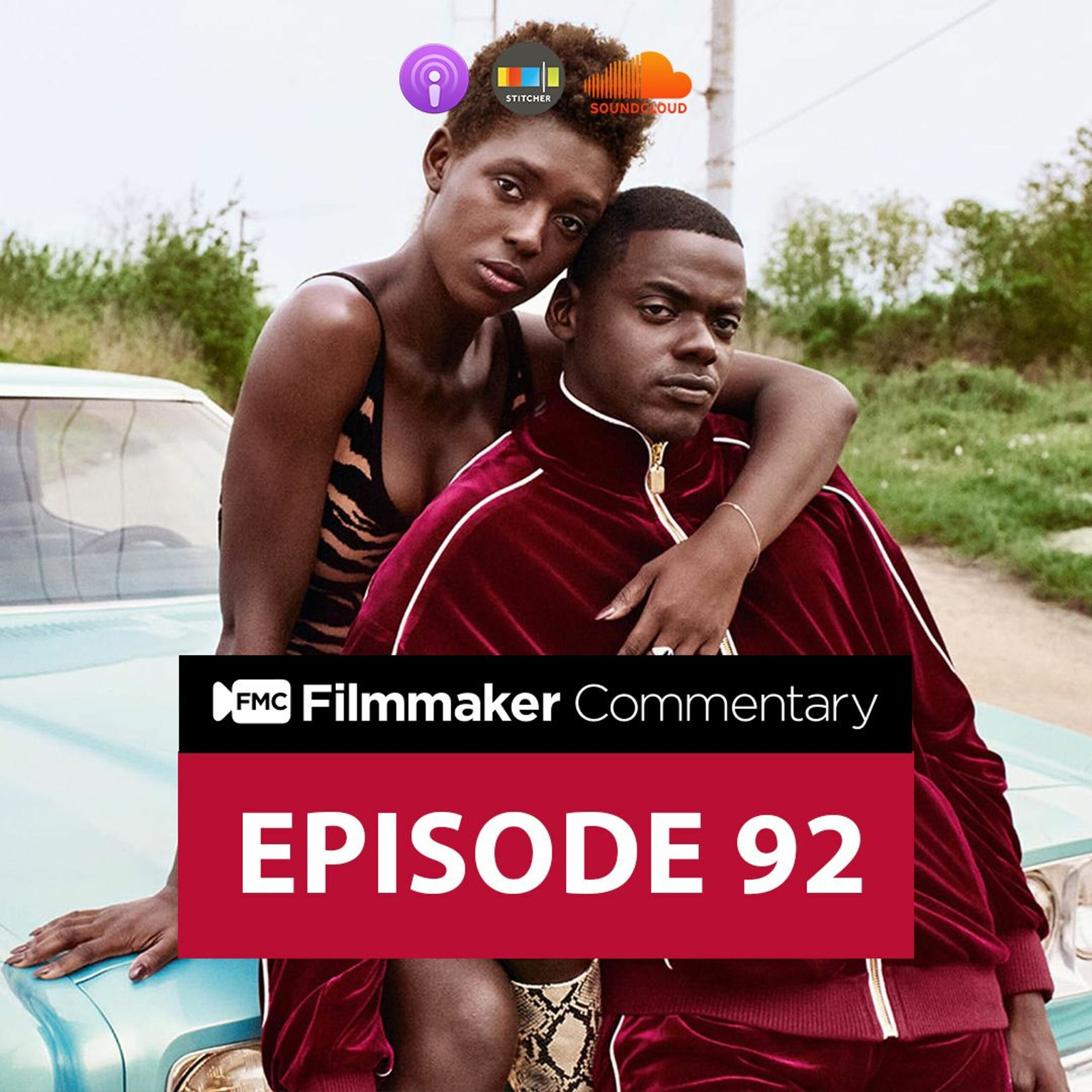
Reginald Titus Jr.: You might have to show me that one because on the I watched it on the computer, so it just kind of goes right into playing. Then I like right click if I'm gonna listen to the commentary. Well, make sure you right now. Yeah, why not. They make you it's like they want you to see the featurettes. Good stuff. Marketing. That's actually that's your, uh, your your new groove, man, like interface. UX. Yeah. I'm, I'm really liking UX, the experience and, uh, marketing. I'm really loving marketing these days. All right. How you 'cause I mean, this is the most important thing. Like just looking at that image. When I saw it, I didn't understand. I was like, it looks good. They look good with their dark skin. You know, it's just them on the and I, but I asked myself like, why is she dressed like that? You know, I before I knowing what the movie is about, they're on this car. I'm like, why is she dressed like that? This doesn't make sense. Then I'm like, man, he's got an old, uh, jumpsuit on. Like, this is like from the 90s, you know what I'm saying? So I was like, why is he dressed like that? But it came in my brain it's not like I'm I'm gonna go research it. I was just like, that's kind of interesting. Um, I was like, I wonder how they're gonna be, you know, what kind of characters they're playing because of what the clothing represents. And then this car, this kind of stereotypical car they're on. I'm just like, eh, I don't know. But after watching it, I'm like, uh, now it's more meaning. It has more meaning to it.
Casey G. Smith: I love how layered the the characters are and then who they who they become as they kind of become more free. Yeah, along the way. Again, I'm seeing echoes of tropes if you will, like, you know, Thelma & Louise. Oh yeah. Coming off that and then going into this, I'm like, oh, wow. That was a that's a nice, it's a nice follow-up. And they say it in the in the commentary. They absolutely do. I heard that I was like, hey. She pulled a lot of, uh, films that we've covered. Yeah, they were some big reference. Like, okay, they're on that game. We'll be right there with you. Be with you. Sticky move, Bob and weave. So, um, what did you think about the commentary?

Deeper Dive: Commentary, Cinematography, Themes, and Tropes
Casey G. Smith: I thought it was solid. I liked, I liked the blend of I liked when there's a blend of the technical with especially I like when writers are on it times because again, flush out, okay, this is the motivation. This is why this, this and this. And with Lena, a lot of this is, uh, to some degree autobiographical or just super super personal of either for herself or people within her family or friends. Um, real, you know, real life events, uh, to some degree. Uh, and again, I, I, I like how they play off each other. And then the stories that they told and the the social commentary. Oh yeah. Uh, that they're constantly referencing for different scenes, of different this and different that. And just the the strong stance that they take. Totally respect it and I I enjoy that.
Reginald Titus Jr.: It's like a black history class. Like if you look at this and don't understand, um, that's, yeah, I don't want to talk about legacy later, but, um, it's like a it's like a class. I would like to I think the partnership with them on the commentary, that one's good, but I would like to see, uh, the director's version that's technical. And then Lena's version from her writer, producer standpoint, and what it takes to develop something like this. Because, uh, there's a lot going on because they talk about at the very beginning when those those, um, logos that pop up at the very beginning of the film, you know, other partnerships. Like, man, a lot of people are involved when it comes to development of a movie like this, even though it's a, you know, a smaller budget. Then it takes a lot of people to do it.
Casey G. Smith: Absolutely. And the fact that again, based on the awards that they won or were nominated for, this is like their first, you know, like seemingly her first screenplay. And, um, Melina's first feature film. Yeah, yeah. So. And she did some, she did some episodes of, uh, Insecure. Uh, I was like, oh, that's cool to see. But, but yeah, I mean, for, for both of them, for this to be a first-time outing, that's, it's a it's an impressive feat. Super impressive, because they're both super talented, you know what I mean? Like, like Melina's eye just just from the beyond, like the records that she has done with Rihanna and Beyoncé, and I'm like, I was I was blown away by her visual style. Did she shoot, uh, Single Ladies? Back in the day?
Reginald Titus Jr.: Oh. You know what, I don't know, but she did the, um, you remember the the Beyoncé song when she's in the, um, on the beach. She's in the, uh, it's showing her on a cop car in Louisiana and the water's like rising and she's like just doing all her verses on. I was like, man, she's had some visuals that were like.
Casey G. Smith: Oh, wow. That, that, you know, thinking about the house and the whole like, that makes a whole lot of sense actually. I can like feel, I can feel that connection. And even the look of some of the the women that are in, uh, Uncle, uh, Uncle what's his name's house, like that curl. Uncle Earl, that kind of look. Yeah. Yeah, okay. But again, it's one thing to do, to do music videos, and then to actually do a successful film. True. A lot of people have failed. Especially if you get in a groove of only doing the music videos and kind of getting away with it, getting away with just like, all right, we're just here for a couple of days. I'm out. You know, if you get to, if you get into that groove, you're in trouble.
Reginald Titus Jr.: Yeah. It's a different level of planning. But I think I think that's where that partnership maybe really came into play. I mean, with Lena, I mean, she's, she's done a lot of shows. And, and with so many shows running an hour and some change, it's almost like making a mini-movie true. multiple times, uh. And she and Melina, uh, Issa Rae had brought Melina in to to shoot the, um, the Insecure stuff. So I knew about that. So I'm like, okay, she's that prepped her for sure. And that's a good point. And she went to NYU Film School. Like, come on. Come on. She's good. It's a good partnership. And the results are pretty stellar. Indeed. Um, cinematography.
Casey G. Smith: Man, it's beautiful. It's beautifully shot, especially again when you, you can't light everybody the same way. And especially when, well, I shouldn't say especially, but when you're working with people who are very light-skinned or somewhere in the middle, or those who have more melanin, you're gonna light them differently. Um, but they just, man, the way they shoot both Daniel and Jodie and to make their, their melanin just pop. It's beautiful. It's absolutely beautiful. But to see also the, the beginning, it seems like it's it's more desaturated. Uh, and it's darker as a whole. And then as you progress, they even made, they they I'd already jotted this down on my notes, but they mentioned it specifically in the commentary how just has as their relationship progresses, the film gets, gets, gets lighter. Yeah. Right? I mean, we start off with night-time and and you know, and then we get into the day and it just gets brighter. Even the environment around changes as they are as they're going towards more water. True. Um, yeah, it all just changes and opens up and saturate becomes more saturated and brighter along the way. True. It's like cold, it's blue, fluorescent looking lights. Yeah, but like it's like their their love as it blossoms, it, yeah, it it visually impacts the look of the film.
Reginald Titus Jr.: From like a director standpoint, just seeing how, what I've noticed with her is her compositions. So she'll have somebody even like in the the first scene in the, um, the diner, you will have, you will see the whole, instead of coming in close, like in, um, Training Day, when we meet Denzel Washington and what's that guy, Ethan Hawke. We're close in, you know, we're like over the shoulder. We like, we're in with these guys. Right. But in here, we're kind of we're back a little bit, it's a little bit more wide, we get to see a little bit more of the environment of the place. And then we'll have like, uh, the actress playing Queen, like just at the bottom left, but you see all this frame. The same thing when she does the other side, we'll see, uh, Slim, bottom right, kind of like small, instead of like coming in close. We eventually get in closer a little bit. But I noticed that with her compositions, um, sometimes it can draw, you can kind of notice it and it draws attention to itself. But I do know that with her compositions, she kind of breaks the rules a little bit. Almost like, um, if you've seen Mr. Robot. If you've seen any episodes of Mr. Robot, their composition is kind of like the same way, where they're like almost purposely breaking the rules.
Casey G. Smith: Huh. I know that I like how she handles some of the the scenes where they're in the car, especially early on, right? She often even while they're riding the same vehicle, but then you get a shot of each individual. You know, kind of showing their their separation. And then and then, you know, in moments when they're almost trying to connect, then you can get a a shot with them both in the frame. Yep. Uh, but then it kind of goes back individual and but then the more and more they connect, again, the more and more we see them in in framed together. Yeah. And she shoots film. Yep, definitely. And anamorphic lenses. Indeed. And she likes to have noise in her film. I can see the grain. I don't know what exactly stock or anything they're shooting on, but I noticed that with her music videos and her other stuff. Themes, what you got for themes?

Themes, Tropes, and Filmmaker Tips
Casey G. Smith: Themes. Once again, ride or die.
Reginald Titus Jr.: Ride or die. Um, for me, I just had one, which is legacy. You know, how are you gonna be remembered? What are you leaving behind? Are you about family? You know, what matters? What matters to you?
Casey G. Smith: Uh, I had like I had literally had legacy jotted down also.
Reginald Titus Jr.: Boom.
Casey G. Smith: Um, I got a couple more. Uh, opposites attract, uh, YOLO.
Reginald Titus Jr.: You only live once.
Casey G. Smith: There you go. Um, take the long way. 'Cause you see all the sty all the detours. I mean, detour after detour after detour. You might have to go here. Well, actually, yeah, I do, but they go there and then also it's another life experience that adds, you know, to the the totality of who they are becoming. All right, let me stop at my mother's grave. Oh, let me get on a, let me get on a horse. Oh, let me let's let's let's go into this, this, this, um, speak easy or this bar and let's and let's dance. Oh, yeah, yeah. The juke joint. Yeah, so they are taking the long way to get to, you know, Cuba. And then, uh, I guess to degree, you know, police brutality is kind of an underlying theme throughout. And even the the Genesis of this film seems to be birth out of response to true. Police brutality. True. True. Tropes.
Reginald Titus Jr.: I had a trope of transformation. And, um, we just recently covered Thelma & Louise. We see Thelma & Louise how they start changing. You know, the makeup changes on, uh, Sharon. Surandon. Susan Sarandon. Yeah. Yeah. We see her transformation, but in here you literally see a trans they're changing clothes, you know. We get that that transformation. And we see him kind of taking lead a little bit more versus. Their hair changes. Yeah, yeah, for real. So they go through a physical transformation. That's bad. I had, uh, one of the tropes I had was, um, okay. So a killing takes place and then their rational decision-making. Yeah. I'm like, okay, you're a lawyer. You defend killers. But yet you tell this guy, you gotta run. Like, uh, she knows something he don't, you know, she knows something that the audience doesn't. But she should know that they can't out they can't run forever. She didn't even have the plan to go to Cuba. That wasn't in her mind even. She was like, just, let's run. And takes the gun. Like, where where are y'all going to go? I mean, I guess she knew she could get to her uncle's. Maybe that was in the back of her mind. But, I mean, you're a lawyer. Why? I mean, I don't know why you you if you think that there are body cams and all that kind of stuff, why not stay and say, look, this was self-defense. You got the the body cams are there, you know, showing this, showing that. And even once the news came out. So anyway, I think it's a trope though that the kill, you kill, it happens. And then irrational decision-making. To me, it was, I'm all good with you being scared and afraid. Mhm. But she defends people who are accused of crimes all the time. And all of a sudden, she tells him, you gotta run. Like, where's your innocent until proven guilty? Like, why wouldn't that be in your head? Anyway, that that that stood out to me, especially the second time around. I'm like, that's, that's totally irrational for you as a lawyer to say that. Um, another trope is, uh, you know, add more crimes.
Reginald Titus Jr.: Add more crimes. Uh, for me, cop in the trunk, you know. Thelma & Louise, cop in the trunk.
Casey G. Smith: So again, rob the gas station. Well, I say add more crimes, rob the gas station. Just like Thelma & Louise, right?
Reginald Titus Jr.: Oh, stick up the store for for gas. Yeah. Because you don't have money. Yeah. Exactly. Yeah, you need you need the funds. So for you to commit more crimes, being broke.
Casey G. Smith: And then, uh, put also the the trope of of seeing and or hearing about your crime on the news.
Reginald Titus Jr.: Yeah. Uh, just right before he goes in, right, they're they're listening to the radio and they're hearing about their their crime. And then they see, then they see videos of it. One last trope is just the phone. The phone is very significant. And the phone is going to give you up some kind of way. In Thelma & Louise, it was her calling back home to her husband. And they were able to, anytime you call from somewhere, they're gonna be able to track you. Yeah. And so the phone is one of those things that's either gonna, it's gonna let you know what the location is. Um, so when he called his dad, he was about to tell him where they were going. But I wonder if the cops were able to pinpoint where they were at at the time that he called him. Oh, they're able to trace it fast enough. And then I, I have two, uh, two more. Uh, well, now, it's still what's that. Being double-crossed by someone that you trust. Yeah. You know, it just, it happens. Brad Pitt in Thelma & Louise. And in this one, it was we thought it was a stranger, though. Well, you know what, Brad Pitt was a stranger, too. Yeah. So it's just the guy off the street, you know. Yeah, for real. Got got the bounty money. And then I see, I say, uh, then die almost getting away. Yeah, that sucks. They had me. I thought in Thelma & Louise. I was like, all right, I know how this one's gonna end. Yeah. But you also heard about the ending, though, before you watched it. I did, didn't I? Yeah, yeah. You knew that that. I knew they were gonna be, yeah. Yeah. And this one, I said, there's probably no way out of this one. Yeah. You wanna hope, right? You're like, oh, man, come on. You kind of start rooting, pulling for him. And then, man, it gets down to it and you see, you're like, oh, man, come on.
Reginald Titus Jr.: Do you have any favorite scenes in this film?
Casey G. Smith: Uh, a couple. Okay, so at the very beg the beginning when they when they're in the car and they're pulled over and once the officer asks Slim to get out of the car, and he turns and looks at Queen, the look that he gives her. Daniel Kaluuya, man, just as an actor, he's so freaking good.
Reginald Titus Jr.: He's got those telling eyes. He can tell the story with his eyes.
Casey G. Smith: Yes, yes. When he turns and looks at her. Get out. You know, it's it's it's it feels like it's saying so much. Um, but it's just powerful. So yeah, that that just yeah, that's one of my favorite scenes.
Reginald Titus Jr.: I like the transformation shot once Queen has her, uh, has her hair cut, got the braids out. She just has a swag all of a sudden, you know. Like this model, like, okay, she got her swag together. That that's who she really is. Got her groove back. Yeah. Oh yeah. Um, when Queen is is when she's negotiating with her uncle at the dinner table. Just that whole scene. How that, how that unfolds and kind of just going back and forth, she's saying what she needs and...
Casey G. Smith: And for people that don't know, um, the the actor that plays her uncle is, I think, the brother in Jason's Lyric, the movie.
Reginald Titus Jr.: Absolutely. That is the brother. Oh my God. This guy, he looks the same. Like, he just same bald head, like, doesn't have any facial hair. So you don't even know what age he is. And it's just like, developed his like deeper voice and it's he's hilarious and then like, you probably know a cousin like this somewhere. They they saying that when they cast him, that they feel that they they wanted him to kind of really be like almost the same character from Jason's Lyric, but it's like it's him, but it's so many, he was older. Yeah. he had, you know, survived these years later. This is him. And, oh, he has, he has some great lines, man. He, uh, man. Yes. Uncle Earl. Uncle Earl. Yeah, that is that is a good scene. And then I like the the underground juke joint when they go in there and they're just being free in the juke joint, playing blues. You're there with companies like, hey, we know who you are, but you're safe here, you know, it's like a safe haven. Uh, that's that scene reminds me of a movie called Black Snake Moan by Craig Brewer. I was about to say that. Yeah, yeah. Willis Landerman. Samuel L. Jackson singing the blues. So along those same lines, it's to me, it's the it's the interaction they have in the car, right before they go in to the bar. Uh, when, you know, they're asking about, you know, their the the second date and and that that whole banter back and forth between them. And, uh, yeah, it's just super super fun. She's like, are you gonna, you know, seriously, you know, risk getting arrested to go and dance? He's like, oh hell yeah. You know, it's just like, yeah, I I enjoyed that whole interaction. And it's it's it's very it's flirtatious, you know what I'm saying? But also it's the the the the building of relationship. And it's also him, you know, the more and more kind of just, you know, standing up and and and and leading a little bit more. And yeah, it's very nice. Trivia. I only have one bit of trivia. When Melina and, um, and the rest of the crew, they're kind of going to the Golden Globes and all that stuff, you know, during the season, when you're trying to get all these awards, they were saying that, uh, this is in, uh, dang it, what, I'm trying to remember what, um, article I got this from. But it's called your time is over. That's what she like quoted it. And basically director Melina Matsoukas says that the Golden Globes voters refused to screen Queen & Slim. And they had like over three screenings for it. And they wouldn't screen it.
Casey G. Smith: Why is that?
Reginald Titus Jr.: Why do you think? Oh. But I mean, you you you hear so much crap about the Golden Globes and how, you know, snobby and things and how they act. And even with, uh, recently with Joaquin Phoenix coming up there and kind of like telling people, you know, it's us, you know. He's trying to change, it's not just, I also heard, I can't remember what podcast, like, it seems that to change society is you're making the people that are being marginalized by the system fix the system. That doesn't make sense. So, um, yeah, so she she yeah, a little bit of trivia, you know, she this is in an article where she says, their time's gonna be over soon. And voters refused to screen Queen & Slim. And they had over like three three opportunities for for those people to screen it.

Trivia and Closing Remarks
Casey G. Smith: Wow, to to collectively decide not to screen something. That's, uh, despicable.
Reginald Titus Jr.: That's all I have for trivia. What you got?
Casey G. Smith: A couple of them. I'm going to rattle them off. This film apparently has a, uh, uh, uh, almost like a reverse underground railroad influence upon it. Uh, they also, they used multiple photographers.
Reginald Titus Jr.: I was gonna add to what you were saying with that. So the underground railroad, basically, instead of going north, we start north and go south. Um, which is, you know, the blue cold to be warned. Nice, nice. Appreciate that that insight. Um, a couple of that they use multiple photographers and specifically, of course, with the the shot that's on the key art of the of the DVD Blu-ray. Yeah, was done by a specific photographer that they they brought in for that. And again, does a great job of capturing the look of both Queen and Slim. Uh, Flea, of course, of Red Hot Chili Pepper...
Casey G. Smith: Flea. I'm sorry.
Reginald Titus Jr.: Red Hot Chili Pepper fame, has a cameo in the film.
Casey G. Smith: I tripped out when I saw that. I was like, is that Flea?
Reginald Titus Jr.: Yeah. Yeah, but he like, what, what? But apparently he has been acting since he was a child. I I I've seen him pop up in a couple of films, but I didn't know he had been acting since childhood. So, yeah, that is trivia. There you go. Um, the look of of the Queen's dislocated shoulder, that was actually done in post. There's quite a few digital effects in this that I would not have known for real.
Reginald Titus Jr.: I like those little subtle CGI things where it's like, man, how did they do that? Forget dislocation stuff, man. Have you had something dislocated before?
Casey G. Smith: Yeah, I've had a shoulder that's dislocated multiple times. I've had to pop it back in. Oh.
Reginald Titus Jr.: Damn, just like that? Like it was hanging, then you had to lift it up that way?
Casey G. Smith: Yeah, like I've had it like, yeah, first time was playing basketball in high school when somebody was pulling a rebound out and was like, oh. Was like, oh.
Reginald Titus Jr.: That's like the worst feeling. Oh. Yeah. It's it's a terrible feeling. Yeah. I'm like, ah, once it happens, you're done. For me, I'm done for the day. Uh, I'll also I've had it happen enough where I'm like, all right, you know, I'll shake it off for it to be numb. I'm like. I'm worth nothing after that happens. Like tap out. Tap out. I'm done. Yeah, it's not not pleasant at all. But it's uh, but hers, hers, I mean, that, well, you gotta get somebody to pop it back. I've never had that. Uh, that, I don't know if that's a true dislocation. I don't know what, but that's a, uh, no, I don't want that. I don't want, I don't want what she's having. Yeah, and Lethal Weapon, remember, uh, Mel Gibson's character, his always comes out and he's gotta like slam it against the wall to put bring it back in. He's like. He's like, uh-uh. That's like, I think that's just like an extreme situation where it's basically kind of broken. You probably need surgery to get those things those ligaments tightened up. Yeah, I don't know, man. Tensions ran high. And and then when you once you did it in the moment, instantly was like, oh, plan no return. Yeah. Like nobody like again, in Thelma & Louise, in again the beginning of Queen & Slim. And even with that kid like, says once like a civilian uses a weapon, like they seem to instantly regret it. Oh yeah. Like, man, what did I just do? Just go home, kid. Get out of here. Um, and then the other one, uh, they kind of not make up for it, but kind of bring up another argument, you know, is at the end of the film when, uh, the white woman police officer shoots Queen first. Like, she's the first one to shoot. Shoot her in the chest, dead. And, uh, Lena kind of talking about how, uh, white women betrayed the black women in the feminist in the feminist movement. Like, they're just using them basically, uh, to get what they needed, but the women together didn't progress. So one of them did. And still benefited. And kind of went back to race over everything. You know. So I was like, so they they were kind of illustrating that with I was like, man, she shot first. And that doesn't ring and I mean, how true is that ring? You know, we're here in Dallas and what's the lady's name, the shot Amber Guyger. She shot the the guy that was chilling on his couch eating ice cream. Yeah. And in the heart. So it was like, wow, you know, this this is a real thing. Like polarizing. This film is crazy. Real black. It's a triple. Yeah. I'll take the blackest thing you have. Yeah, it's the black experience in America. So these, uh, films like this, they're important because you can kind of see the progress or lack of progress in society and it's reflected through the art. Yeah, and it's and it's unapologetic about it. Again, if you're listening to this, chances are we're assuming that you've watched the film. And if you haven't, well, thank you for tuning in. Either way, but yeah, definitely worth checking out. And again, I think it's important at times to watch films that will make you uncomfortable. Um, you know, we whatever your background might be, it's okay to take on things that might make you uncomfortable and you may still, you may disagree with it at the end. You may find yourself, you know, questioning yourself, um, and you might you might be moved to some kind of action. So, either way, at the end of the day, you at least saw another point of view. Boom. And there you have it. Um, next time, what are we diving into?
Casey G. Smith: Next time, we will be diving into Oliver Stone's Natural Born Killers. As we continue on the ride or die block of films. And, uh, speaking of films, we want to let you know that this episode of Filmmaker Commentary has been brought to you by Natural Hair The Movie by Grind & Matter Films, available for purchase and rent on Amazon Prime video service as well as Vimeo on Demand. And of course, again, if you are a Prime member, you can stream it right now at no additional cost. And we would encourage you to also leave a review. And where can they catch us?
Reginald Titus Jr.: Facebook.com/filmmakercommentary. You can also like, rate and subscribe on iTunes, SoundCloud and Stitcher Radio. You can follow Reginald at Twitter simply at Reggie Titus. And also on Instagram at Reginald Titus Jr., that's JR. You can also find myself at KCG Smith 32 on both Instagram and Twitter. We'd also would love to hear from you on the social media platforms. So you can also reach out to us, uh, on Instagram simply at Filmmaker Commentary. If there is a movie or film you would like for us to check out, go ahead and let us know there. Uh, let us know what episodes you have enjoyed. We appreciate you, uh, and your continued support throughout the years, which is wild to say. Almost 100 episodes. Yeah, we're approaching that, uh, that that C-note benchmark of 100 episodes. Hard to believe. Well, we're professionals. That's what we are. That's right. Until next time, peace. Respect.

About Filmmaker Commentary

Reginald Titus Jr.

Apple Spotify YouTube Subscribe Free
Continue Listening

FMC 244 : The Karate Kid Directed by John G. Avildsen

June 20, 2026

What We’ve Been Watching Episode 008

June 12, 2026

FMC 243 : Love and Basketball Written and Directed by Gina Prince Bythewood

June 9, 2026

Leave a Response Cancel reply

This site uses Akismet to reduce spam. Learn how your comment data is processed.

Never Miss an Episode

New episodes every week — free.

Listen on Spotify Apple Podcasts

Recent Episodes

  • FMC 244 : The Karate Kid Directed by John G. Avildsen
  • What We’ve Been Watching Episode 008
  • FMC 243 : Love and Basketball Written and Directed by Gina Prince Bythewood
  • What We’ve Been Watching Episode 007

Archives

  • June 2026
  • May 2026
  • April 2026
  • March 2026
  • February 2026
  • January 2026
  • September 2021
  • August 2021
  • July 2021
  • March 2021
  • November 2020
  • October 2020
  • September 2020
  • August 2020
  • July 2020
  • May 2020
  • April 2020
  • March 2020
  • February 2020
  • January 2020
  • November 2019
  • October 2019
  • September 2019
  • August 2019
  • July 2019
  • June 2019
  • May 2019
  • April 2019
  • March 2019
  • February 2019
  • January 2019
  • December 2018
  • October 2018
  • September 2018
  • August 2018
  • July 2018
  • June 2018
  • May 2018
  • April 2018
  • March 2018
  • February 2018
  • January 2018
  • December 2017

Categories

  • Film
  • Podcast
  • TV
© 2026 Filmmaker Commentary. All rights reserved.
  • About
  • Episodes
  • Privacy Policy
  • Disclaimer
  • Terms of Service