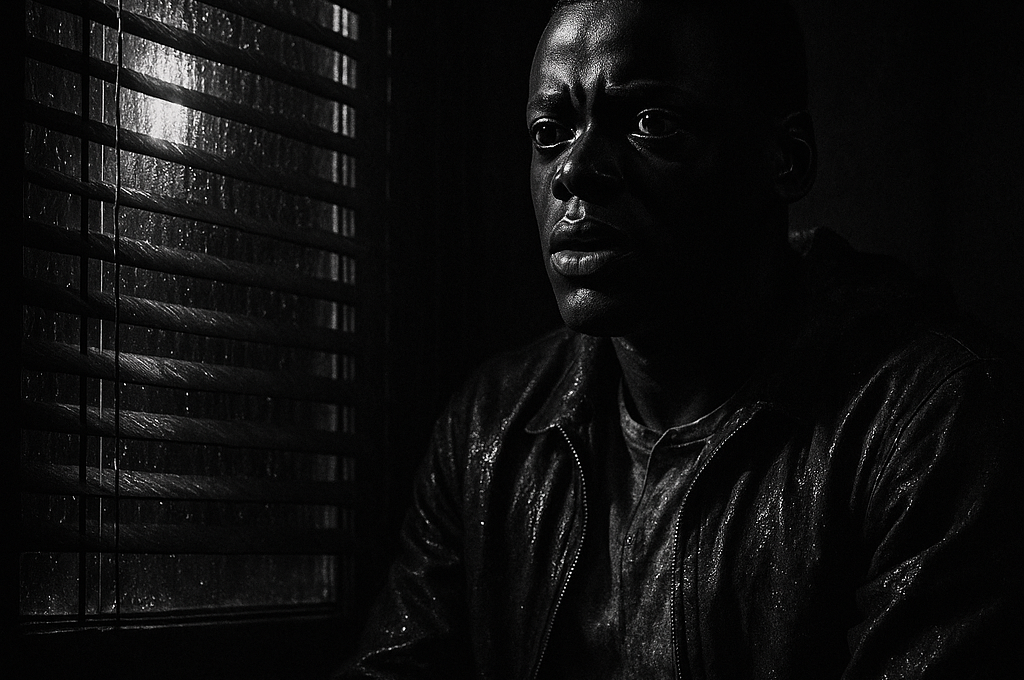
The chilling glint of a silver spoon tapping a teacup, the hypnotic whir of its stirring, and the abyss it draws Chris Washington into form one of the indelible images of modern horror. It’s a quiet, insidious descent, a gentle coercion into what Jordan Peele, in the insightful discussion of “FMC 013: Get Out Directed and Written by Jordan Peele,” describes as the “sunken place.” This seemingly innocuous act, framed with disarming domesticity, is the film’s first plunge into the psychological nightmare that Peel meticulously crafts, revealing the subtle yet terrifying undercurrents of racial othering. The podcast hosts delve into how this moment, among many, establishes a visceral connection with an audience aware of unspoken threats, a silent alarm bell that only certain ears truly hear ringing.
The Architecture of Anxiety: Crafting a Visceral Unease
From the very first frame, “Get Out” is controlled tension, a cinematic ballet of unease. Jordan Peele, wearing the hats of both writer and director, orchestrates a symphony of craft elements that makes the film’s horror not just jump-scare deep, but deeply unsettling. The cinematography, as the podcast hosts observed, plays a pivotal role in this. The film opens with a visually optimistic tone; wide-angle lenses and handheld camera work imbue Chris and Rose’s road trip with a sense of freedom and budding romance. It’s an inviting, almost airy aesthetic that gradually, almost imperceptibly, shifts. The blue and amber color palette, initially warm, slowly bleeds into colder, more suffocating hues as they approach the Armitage estate. KCG Smith noted the film’s increasing visual claustrophobia, a sensation amplified by tight shots and intimate close-ups that make the viewer feel trapped alongside Chris. This isn’t just about pretty pictures; it’s about using every visual tool to mirror Chris’s dwindling autonomy and mounting dread, pulling the audience into his spiraling anxiety.
The sound design and musical score, composed by Michael Abels, are equally instrumental in this slow-burn descent into terror. Peele articulated his desire for a score that featured Black voices, yet deliberately avoided stereotypical “voodoo” sounds. The resulting Swahili chants, whispers of “Trust your ancestors” and “Run away,” create an ominous, primal layer beneath the seemingly normal facade of the Armitage family. This is starkly contrasted with the deliberate choice to open the film with Childish Gambino’s upbeat “Redbone” — a track that was already a cultural phenomenon before the film’s release. Reginald Titus Jr. recalled the collective shock and delight when that familiar groove abruptly gave way to the film’s chilling orchestral score, signaling an an immediate and jarring tonal shift. It’s a brilliant manipulation of expectation, drawing the audience in with familiarity before yanking the rug out from under them. The effect, as the hosts discussed, is reminiscent of Stanley Kubrick’s use of unsettling, almost liturgical sounds to evoke a profound sense of dread, but re-calibrated with an “Afro-centric” sensibility that deepens its resonance within the film’s core themes.
Peele’s direction extends to the subtle details of performance and visual storytelling. The podcast highlighted the film’s meticulous foreshadowing, often hidden in plain sight. For instance, Rose’s casual joke about her father chasing Chris with a shotgun in their meet-the-parents scenario proves horrifyingly prophetic. Even the seemingly innocuous act of Chris applying white shaving cream to his face and nicking himself serves as a grim precursor to the invasive process that awaits him. The recurring motif of glass and mirrors, from Rose looking through a donut shop window to shattered car windows and images on the DVD cover, visually reinforces themes of perception, fragmentation, and the fragile barrier between worlds. These aren’t accidental flourishes; they are calculated pieces in a larger narrative puzzle, building a world that feels both unnervingly real and deeply symbolic.
Beyond the Scream: “Get Out” as a Social Rorschach Test
“Get Out” transcends mere genre exercise; it functions as a potent social Rorschach test, reflecting and challenging deep-seated anxieties about race in America. The podcast emphasized how the film, particularly in its commentary, unpacks the often-unseen layers of the Black experience, transforming everyday microaggressions into macro-horrors. Peele himself admitted making the film to subvert the tired horror trope of the “Black guy dies first,” instead offering a protagonist who is “smart” and makes intelligent, survival-driven decisions. This intentional reframing, as KCG Smith articulated, was a refreshing breath of fresh air for Black audiences, who often feel marginalized or disrespected by typical genre fare.
The film’s genius lies in its ability to tap into shared racial experiences that resonate deeply, regardless of an individual’s background. The scene where Chris, a Black man, is pulled over by a white police officer for an incident he didn’t commit, while Rose, his white girlfriend, vehemently defends him, speaks volumes. Reginald Titus Jr. and KCG Smith both shared personal anecdotes of similar encounters, underscoring the film’s authenticity in portraying the lived realities of Black men in America—a reality where a simple traffic stop can escalate into a situation fraught with peril and preconceived notions. This subtle nod to systemic injustice, woven into the fabric of the narrative, elevates the film beyond a simple scare-fest, making it a powerful commentary on racial profiling and the constant burden of proving one’s innocence.
Furthermore, “Get Out” bravely tackles the complexities of interracial relationships and the unique challenges they present. The initial awkwardness of Chris meeting Rose’s seemingly liberal, white family quickly curdles into something far more sinister. The film explores the often-unspoken biases and veiled prejudices that can lurk beneath a veneer of progressive acceptance. The podcast touched upon the common experience of Black individuals being seen as a “representative” of their entire race in mixed-race social settings, burdened by the expectation to educate or validate. The film’s masterful subversion of this dynamic, revealing the sinister intent behind the Armitage family’s apparent embrace of Black culture, turns the mirror on performative allyship and cultural appropriation. Rose’s betrayal, initially presented as a shocking twist, is meticulously foreshadowed, revealing a chilling psychological portrait of a character groomed to exploit and control, rather than genuinely connect.
Blumhouse’s production model, discussed in the podcast, inadvertently highlights this thematic depth. By granting filmmakers like Peele creative autonomy over low-budget, high-concept projects, they create a space where powerful, socially charged narratives can thrive without the interference of larger studio machines. This freedom allowed Peele to infuse “Get Out” with layers of meaning and critique that might have been diluted or censored in a more conventional production environment. The result is a film that functions not only as a suspenseful horror experience but also as a cultural touchstone, sparking necessary conversations about race, identity, and the insidious nature of systemic prejudice.
Questions Worth Asking
- How does Jordan Peele intentionally use seemingly innocuous details to foreshadow major plot points or reveal character? For example, the use of shaving cream or the dialogue about hunting deer.
- Peele masterfully plants subtle clues early on that gain chilling significance upon rewatching. Chris applying white shaving cream to his face and nicking himself foreshadows the forced “whitewashing” and bodily invasion he will endure. Rose’s casual joke about her father chasing Black people with a shotgun also hints at the violence to come. These small details transform into powerful symbolic moments, revealing the film’s intricate design.
- What unique challenges do modern horror filmmakers face with the ubiquitous presence of cell phones, and how does “Get Out” address this?
- In a world where everyone has a cell phone, it’s difficult to create genuine isolation or inability to call for help in horror. “Get Out” cleverly sidesteps this by having Georgina “accidentally” unplug Chris’s phone charger and knock it to the floor. This provides a plausible reason for Chris to be without a functional phone, maintaining the narrative’s tension without feeling contrived, as was noted in the podcast discussion.
- How does the film’s use of real-world scientific and psychological concepts, like hypnosis and brain transplants, enhance its horror?
- By grounding its fantastical elements in real science, “Get Out” makes its horror more disturbing. Hypnosis, an actual psychological phenomenon, becomes a tool for insidious control. The revelation of successful partial brain transplants in mice, though extreme, lends a chilling credibility to the Armitage family’s gruesome procedures. This blurring of lines between reality and fiction makes the horror feel eerily possible, creating a deeper, more profound sense of dread than purely fantastical elements might.
- What does Jordan Peele mean by ensuring his Black characters are “smart,” and how does this subvert traditional horror tropes?
- Peele emphasized his desire to create Black characters who are intelligent and make logical, self-preserving decisions, a stark contrast to the common horror trope where Black characters are often the first to die due to illogical choices. Chris’s quick wit, observational skills, and instinctive reactions (like grabbing the bocce ball or using cotton to block hypnosis) make him an active participant in his survival, allowing audiences to root for him without frustration, as discussed in the podcast’s exploration of representation.
Further Viewing & Reading
- “Us” (Film, 2019) directed by Jordan Peele: Peele’s follow-up to “Get Out,” exploring themes of class, doppelgängers, and collective societal guilt. Offers a fascinating continuation of his unique blend of horror and social commentary.
- “Silence of the Lambs” (Film, 1991) directed by Jonathan Demme: Referenced by Peele as an influence, particularly for its tense psychological interrogations and the unsettling introduction of its villain. An exemplary study in building dread and character psychology.
- “The Shining” (Film, 1980) directed by Stanley Kubrick: Another film mentioned in the podcast for its use of unsettling atmosphere, psychological horror, and iconic twin figures. It provides visual storytelling and pervasive dread, similar to “Get Out”‘s own slow-burn terror.
- “Black Snake Moan” (Film, 2006) directed by Craig Brewer: This film touches on themes of racial dynamics and captivity, though in a different genre and tone. It’s referenced by a host as a film that plays on racial anxieties, albeit from a different angle than Peele’s work.
- “Comedians in Cars Getting Coffee” (Web series, 2012-present) hosted by Jerry Seinfeld: A recommendation from the podcast hosts, offering candid conversations with comedians. It indirectly illuminates the “dark side” and observational skills that often feed into comedic and, as Peele shows, horror writing.