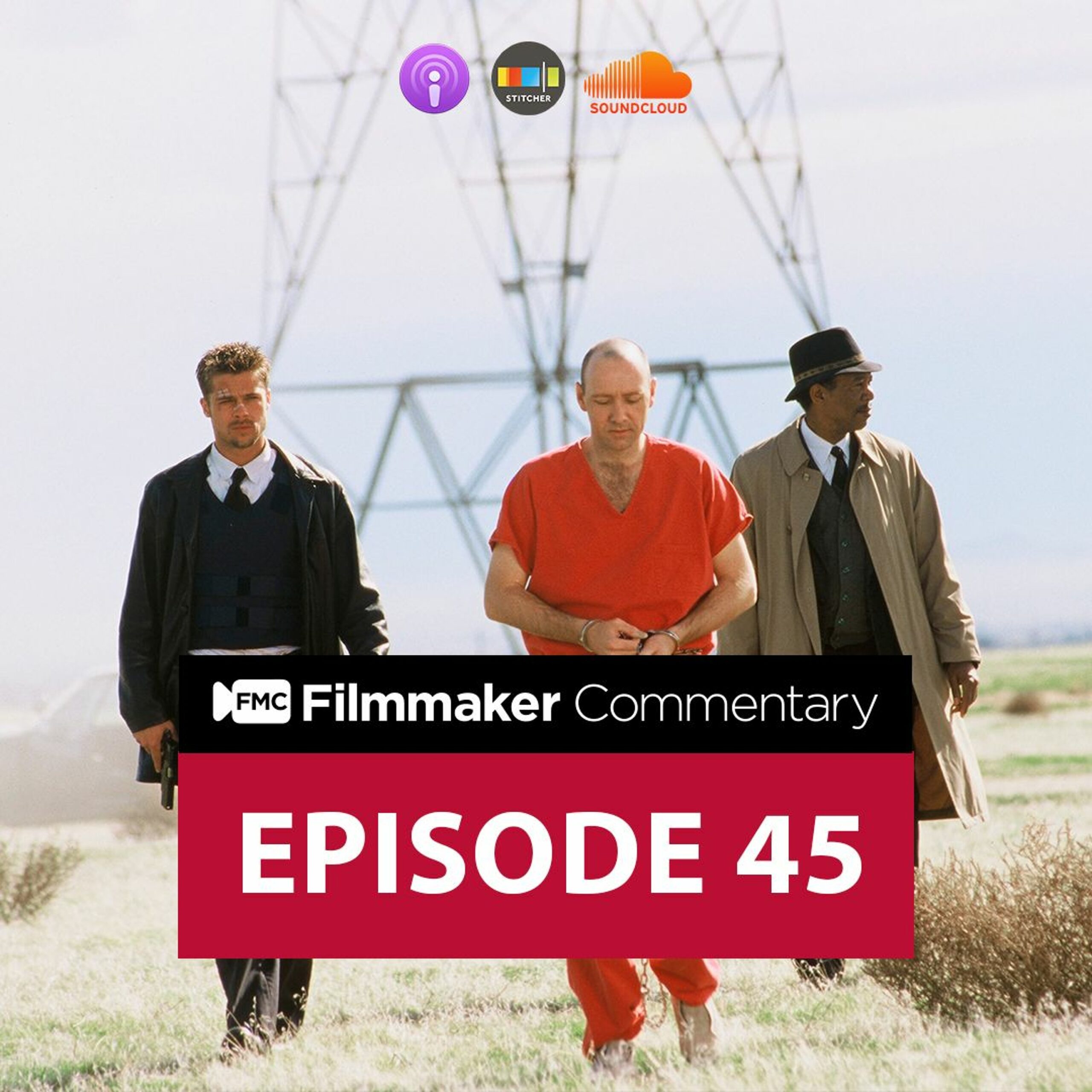
Tune in as Reginald Titus Jr. and Casey G. Smith dissect David Fincher’s chilling masterpiece, “Seven,” offering a fresh look at its iconic direction and enduring impact. This episode the film’s meticulous visual storytelling, powerful performances, and surprising technical innovations that continue to make it a standout thriller. Join us on Filmmaker Commentary for an engaging discussion that will forever change how you see this genre-defining film.
What We Cover
- How David Fincher uses visual language to define and evolve character relationships, particularly between Detectives Mills and Somerset.
- The deliberate and often uncomfortable technical decisions behind iconic scenes, like the claustrophobic “Gluttony” sequence.
- Insights from the director’s commentary on Fincher’s approach to cinematography, sound design, and his philosophy on challenging conventional filmmaking rules.
- The nuanced performances of Brad Pitt, Morgan Freeman, and Gwyneth Paltrow, and why “Seven” is considered a superior psychological thriller to films like “Saw.”
- The hosts’ personal experiences watching and re-watching the film, highlighting its lasting impact and disturbing effectiveness.
- The difference between a film’s soundtrack and its original score, exemplified by “Seven’s” impactful auditory landscape.
Key Moments
- 0:42 Casey G. Smith and Reginald discuss their initial, often surprising, first reactions to “Seven.”
- 1:26 A recap of the film’s chilling plot, setting the stage for a hunt after a serial killer obsessed with the seven deadly sins.
- 5:51 Reginald breaks down the “dirty, wet, grimy” visual style and how it immerses the viewer in the film’s dark world.
- 7:05 An in-depth look at how character traits are visually conveyed through set dressing and subtle camera techniques.
- 55:22 David Fincher’s rationale for doing numerous takes and going against traditional film coverage to achieve his precise vision.
- 1:00:20 The hosts discuss the powerful effect of the film’s original score by Howard Shore and its deliberate interplay with existing songs.
Gear & Films Mentioned
- Netflix
- Blu-ray
- “12 Monkeys” (1995)
- “Saw” (2004)
- “Lethal Weapon” (1987)
- “Bandersnatch” (2018)
- “Hard Candy” (2005)
- “Friday” (1995)
- “Young Justice” (TV series)
- “The Rock’s Titan Games” (TV series)
- “Fire Pro Wrestling World” (Video Game)
- “Sorry to Bother You” (2018)
- “Silver Linings Playbook” (2012)
- “Dead Presidents” (1995)
- “Panic Room” (2002)
- “House of Cards” (TV series)
- “Zodiac” (2007)
- “Girl with the Dragon Tattoo” (2011)
- “The Godfather” (1972)
- “Raging Bull” (1980)
Listener Questions
- How does David Fincher use visual cues to develop characters before they even speak?
- What makes the ending of “Seven” so memorable and impactful, even years after first viewing?
- How did David Fincher’s technical and stylistic choices challenge traditional filmmaking norms for its time?