A film debut, especially one that garners Academy Award nominations for Best Picture, Director, and Screenplay, typically announces a new voice. Yet, with Greta Gerwig’s Lady Bird, the term “debut” feels almost deceptive. This isn’t the story of an ingénue director stepping onto a professional set for the first time. Instead, as FMC 017: Lady Bird Written and Directed by Greta Gerwig unpacks, Gerwig arrived with a decade of accumulated knowledge, honed within the scrappy, intimate world of Mumblecore cinema. The film’s raw, unflinching authenticity, often mistaken for mere autobiography, is less a lightning strike of first-time genius and more the polished culmination of countless hours spent observing, acting, and co-creating on low-budget, character-driven projects.
This paradox—a seemingly fresh start deeply rooted in established, unconventional practice—is the engine that powers Lady Bird’s distinctive craft. The movie feels both fresh and profoundly lived-in, a testament to Gerwig’s unique journey. It’s a tightrope walk between meticulous structure and the improvisational spirit of her early career. This manifests in performances so natural they often blur the line between scripted drama and genuine human interaction, compelling the viewer to lean in and witness the messy brilliance.
The Raw Dynamic of Early Conflict
The film’s opening minutes grab attention with an almost visceral energy, an emotional whiplash few films deploy so early. One moment, mother and daughter, Marion and Christine “Lady Bird” McPherson, are weeping in unison while listening to an audiobook. The next, a casual mention of college applications ignites a full-blown parental inferno. The shift from shared vulnerability to explosive anger—culminating in Lady Bird’s defiant leap from a moving vehicle, arm dramatically cast and emblazoned with “F*** U MOM”—establishes the core dynamic of this deeply complicated relationship with potent efficiency. My co-host’s wife noted the “realness” of it all, and she’s not wrong. It’s not just a scene; it’s an immediate, unflinching character study, revealing the extreme lengths Lady Bird will go to assert her identity and capture attention.
This immediate, unvarnished portrayal of a mother-daughter bond isn’t accidental. The commentary reveals this pivotal opening scene was shot at the end of the production schedule. This strategic decision allowed lead actors Laurie Metcalf and Tracy Letts to fully inhabit their roles and build an authentic on-screen rapport. They had a pre-existing professional history in theatre, though never acted together on film. By the time they filmed the explosive car argument, their characters’ long, fraught history had deeply settled. The raw nerve of their friction feels genuinely earned. Tracy Letts, in particular, embodies a quiet, almost defeated demeanor, navigating the landmines of his home with a subtle grace that hints at deep emotional reservoirs beneath the surface. His quiet presence, often just a look or a weary sigh, provides a crucial anchor to the family’s turbulent emotional landscape. His character becomes the unspoken glue holding them together.
From Mumblecore Roots to Acclaimed Direction
Gerwig’s Mumblecore background offers profound insight into Lady Bird’s distinctive style. This movement, characterized by naturalistic acting, improvised dialogue, and a focus on everyday relationships, provided Gerwig with a unique directorial toolkit. Her time as an actor and co-director on numerous Mumblecore projects, often shot on DSLRs with minimal crews, built up what Malcolm Gladwell termed “10,000 hours” of experience. By the time she stepped onto the Lady Bird set as sole director, she felt a profound sense of familiarity, confidently realizing, “I’ve been here before.”
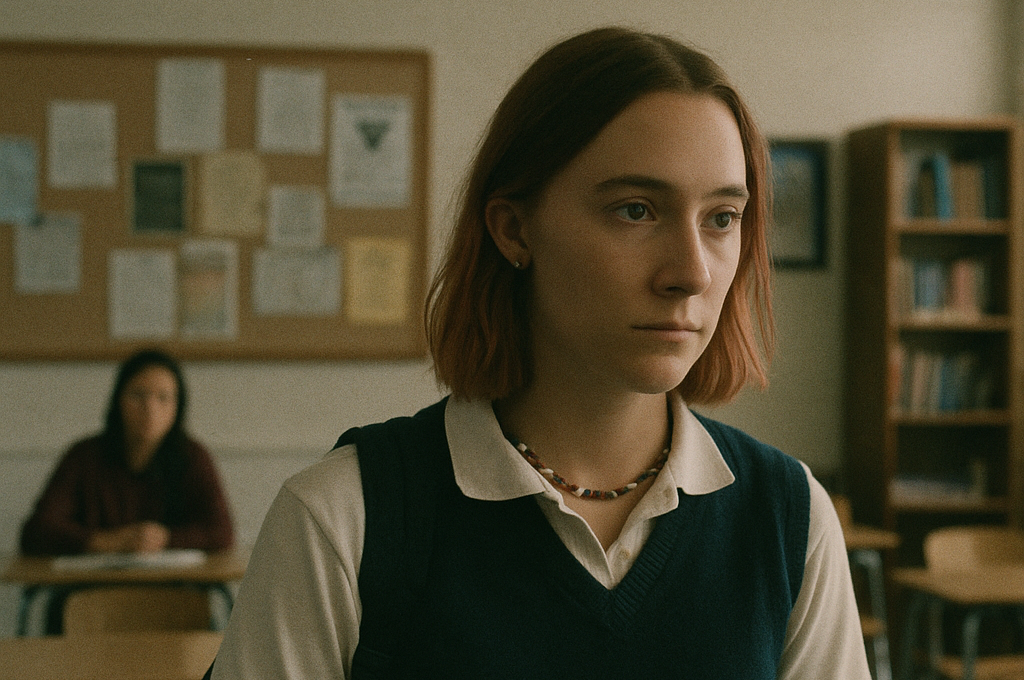
This deep experience enabled Gerwig to trust her instincts and her cast. The host noted cinematographer Sam Levy occasionally discussed characters, going beyond his usual role. This sparked a fascinating question: how much input did Gerwig encourage? Her Mumblecore training fostered an environment where authenticity was paramount, even if it meant allowing organic spontaneity within a tightly crafted script. This ethos extends to her direction of actors, demanding they play characters with “100% real” conviction, rather than leaning into comedic tropes. This commitment to truth permeates every performance, from Saoirse Ronan’s complex portrayal of Lady Bird—a stark contrast to her gentle character in Brooklyn—to Laurie Metcalf’s portrayal of Marion, the mother whose cold exterior often masks unexpressed love. Even the minor characters, like Timothy Chalamet’s detached cool kid, are given layers of depth and surprising intelligence, making them feel like genuine individuals rather than stock figures.
Critical Insight
Lady Bird is ultimately the cinematic portrayal of unexpressed love and the often-painful chasm between aspiration and reality. The film’s greatest intellectual payoff lies in its exquisite layering of emotional truth, particularly within the mother-daughter dynamic. What appears on the surface as constant bickering and mutual frustration is, in fact, a complex dance of two fiercely independent, yet remarkably similar, women struggling to articulate their profound affection for one another. Gerwig captures how love, when filtered through insecurity and pride, can manifest as criticism, judgment, and perceived rejection. The film doesn’t resolve this tension with a grand, emotional reconciliation; instead, it offers glimpses of understanding, moments where vulnerability peeks through the armor, suggesting that true connection often emerges from what remains unsaid or imperfectly communicated.
Gerwig also leverages her intimate knowledge of Sacramento—the “eyes that know it”—while benefiting from her cinematographer’s fresh, “un-knowing” perspective. This unique collaboration allows the familiar landscapes of the city to be both deeply personal and aesthetically re-imagined. The film’s visual language, from the strategic use of lighting (warm tones for home, cool hues for social scenes) to the deliberate choice of a tactile, grainy film stock, elevates the mundane into the memorable. Lady Bird invites rewatching, revealing new depths to its characters and its themes with each viewing, a testament to Gerwig’s skillful blending of personal history, Mumblecore authenticity, and sophisticated filmmaking craft. The film argues for finding the extraordinary in the ordinary, the profound in the unspoken, and a love that endures even through life’s most awkward and imperfect stages.
Key Takeaways
- Greta Gerwig’s extensive Mumblecore background cultivated a unique blend of spontaneous acting and meticulous craft, shaping Lady Bird’s authentic style.
- The deliberate scheduling of the opening scene, filmed after substantial cast bonding, allowed for deeply authentic and powerful mother-daughter performances.
- Strategic casting, notably the pre-existing theatre chemistry between Laurie Metcalf and Tracy Letts, provided a foundational layer of unspoken history for their on-screen relationship.
- The film visually communicates emotional states through distinct lighting schemes (e.g., cool purples for external social settings, warm ambers for home life).
- Gerwig’s approach to directing prioritized “100% real” performances over comedic exaggeration, enhancing the film’s believable and raw emotional core.
- Production design, meticulously crafted down to the specific dated tile, grounds the film in a tangible, lived-in reality that enhances character and theme.
Questions Worth Asking
- Q: How does Lady Bird’s seemingly straightforward coming-of-age narrative manage to defy traditional romanticization of adolescence? A: By grounding its protagonist’s journey in awkward, unglamorous realities—failed relationships, financial struggles, and intense familial conflict—the film offers a refreshingly honest and relatable portrayal of self-discovery, devoid of idealized cinematic milestones.
- Q: What specific techniques does Gerwig employ to ensure authentic performances while working within a structured script? A: Drawing on her Mumblecore origins, Gerwig encourages actors to inhabit scenarios with genuine emotional reactions, often allowing for spontaneity within precise blocking and visual cues, rather than solely relying on exact dialogue delivery.
- Q: In what ways does the film’s visual language subtly enhance its thematic exploration of identity and belonging? A: Through deliberate choices in color palettes and production design—like the distinct lighting tones for different environments, or Lady Bird’s meticulously “lived-in” bedroom—the film visually mirrors characters’ emotional connections and aspirations, revealing their internal states through external surroundings.
Further Viewing & Reading
- Frances Ha (2012): A seminal Mumblecore film co-written by and starring Greta Gerwig, offering a precursor to Lady Bird’s themes of female friendship, self-discovery, and awkward adulthood.
- 20th Century Women (2016): Explores similar themes of female identity and generational shifts, with strong performances and nuanced character studies within a distinct period setting.
- Manchester by the Sea (2016): Features Lucas Hedges (Patrick in Lady Bird) in another emotionally raw family drama, showcasing his range in portraying complex grief and familial bonds.
- Brooklyn (2015): Stars Saoirse Ronan in a powerful, character-driven immigration story, highlighting her ability to convey deep emotion through subtle performance—a stark contrast to Lady Bird’s outward rebellion.
- Transparent (TV Series, 2014-2019): While different in subject, this series is naturalistic, character-driven storytelling with nuanced familial dynamics, reflecting some of the Mumblecore sensibilities.