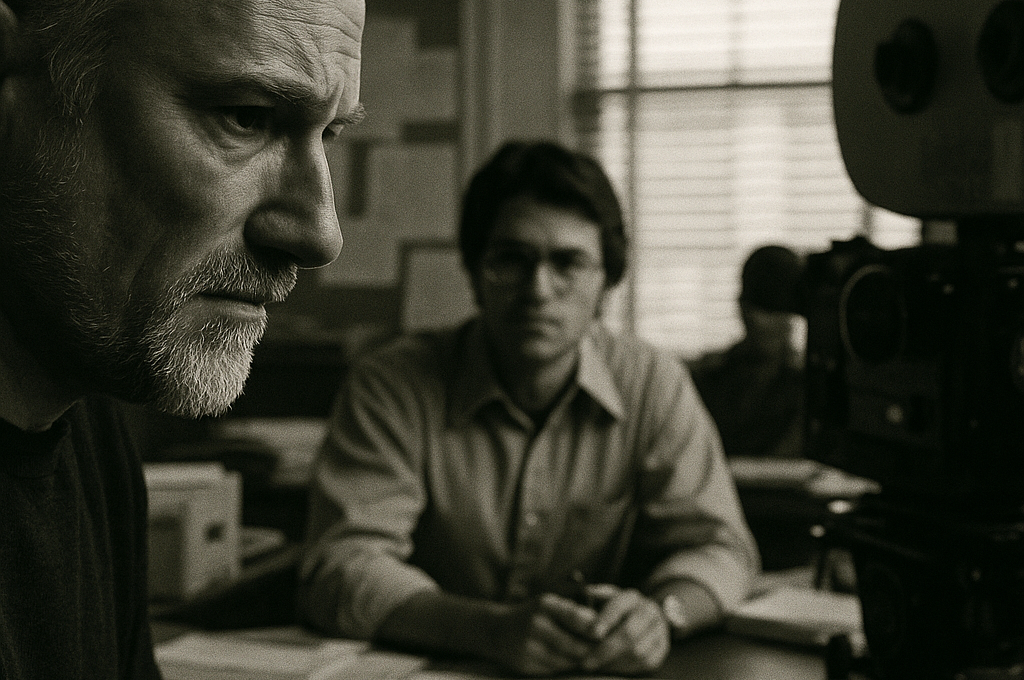
The pursuit of truth, especially in the shadow of relentless violence, can be a thankless endeavor, often culminating not in triumphant resolution but in lingering frustration. This pervasive sense of unresolved obsession forms the emotional and structural backbone of David Fincher’s 2007 procedural thriller, *Zodiac*, a film meticulously dissected in the “FMC 015: Zodiac Directed by David Fincher” podcast episode. From its very premise, the film offers a challenging, almost confrontational experience for audiences accustomed to definitive conclusions. Fincher, renowned for his exacting standards, crafts a narrative that mirrors the real-life enigma it portrays, leaving its characters—and viewers—in a state of perpetual inquiry. Yet, within this deliberate absence of a bow-tied ending lies a deeper commentary on the nature of obsession, the meticulousness of craft, and the enduring power of unresolved stories.
The Unseen Hand of Fincher: Meticulousness and the Digital Canvas
David Fincher’s reputation precedes him, often whispered in hushed tones that speak of an almost superhuman attention to detail. The discussion in “FMC 015” frequently circles back to this characteristic, often described as an “OCD” approach, which permeates every aspect of *Zodiac*’s production. This meticulousness is not merely a stylistic choice; it is foundational to the film’s very fabric, often manifesting through the invisible integration of digital effects that subtly enhance its realism. Fincher, with his formative background at Industrial Light & Magic (ILM) working on films like *Indiana Jones* and *Star Wars*, brings a profound understanding of visual effects, utilizing them not for spectacle, but for seamless atmospheric world-building.
The podcast highlights numerous examples where digital artistry is employed with such precision that it escapes conscious detection. Consider the removal of anachronistic elements, such as graffiti digitally erased from a bridge to preserve the film’s period authenticity, or the wholesale creation of entire streetscapes. A particularly striking example recounted is the cab scene, viewed from a “God’s eye” perspective, where the street, buildings, and surrounding environment are entirely digital. Such detailed digital interventions are Fincher’s trademark, rendering his visual effects so organic that they become indistinguishable from practical elements, subtly bolstering the film’s immersive quality without drawing attention to themselves. This approach, while technically brilliant, inevitably inflates production budgets, leading to speculation within the commentary about whether Fincher’s extensive use of digital work pushes costs beyond necessity. However, as noted, he has “earned that right,” with this painstaking methodology contributing directly to the distinctive “Fincher look”—a hyper-realistic, almost unnervingly perfect visual palette.
This commitment to digital perfection extends even to seemingly minor details, like the depiction of blood. The podcast reveals that much of the blood in *Zodiac*, including the brutal stabbing scenes, is entirely digital. This choice, while offering greater control and efficiency during production—allowing for more takes without the messy cleanup of practical effects—also presents a significant challenge: making digital blood appear convincing. Fincher’s ability to pull this off without sacrificing believability is a testament to his expertise. This digital freedom also underpins his infamous propensity for numerous takes. As actor Jake Gyllenhaal attests in the commentary, a simple action like picking up a coffee mug might necessitate twenty takes, and a single line of dialogue could stretch to sixty-six. This stands in stark contrast to traditional film production where the cost of film stock discourages such extensive repetition. Fincher leverages digital filmmaking to chase an elusive ideal, often pushing his actors to their limits, a point not lost on the podcast hosts, who acknowledge the actors’ occasional frustrations with the relentless pursuit of perfection.
One anecdote particularly illustrates Fincher’s exacting craft: the opening shot of the film. Initially, one might assume this intricate sequence—tracking from inside a car through a neighborhood, amidst fireworks, towards a house where a character emerges—was achieved through complex digital stabilization and tracking. However, the commentary reveals it was a marvel of practical ingenuity: the car was literally pushed along tracks. This blend of practical and digital wizardry, where simple solutions are employed alongside sophisticated visual effects, underscores Fincher’s versatile approach to achieving his precise vision. The recurring motif of his work is that every element, whether tangible or digitally rendered, is meticulously curated to serve a singular, unwavering aesthetic.
Frustration as Form: Zodiac’s Unsettling Pursuit of Truth
*Zodiac* is not designed to entertain in the conventional sense; rather, it aims to immerse the audience in a prolonged, often agonizing, quest for answers that ultimately elude its protagonists. The podcast repeatedly touches on the film’s “dramatized documentary” feel, noting that it often feels more like a reenactment than a conventional thriller. This structural choice is deeply tied to the film’s thematic core: the true story it adapts offered no neat resolution, and Fincher refuses to impose one. The deliberate lack of closure becomes a central, defining feature, leading to a sense of profound frustration for both the characters and the audience.
This frustration is amplified by the film’s narrative trajectory. *Zodiac* opens and closes with the same character, often through parallel visual framing, highlighting the transformative (or perhaps, stagnating) impact of the Zodiac investigation. We first see a youthful character, full of ambition and perhaps naiveté, and return to him years later, wounded and broken by the relentless, unyielding pursuit of a killer who was never caught. This technique, also employed by Fincher in films like *Gone Girl*, creates a powerful before-and-after contrast, allowing the audience to viscerally feel the weight of time and obsession. The characters, especially Jake Gyllenhaal’s cartoonist Robert Graysmith, descend into an all-consuming quest, and the audience is pulled along for the ride, desperately rooting for a breakthrough. Yet, it never arrives, reflecting the real-life anguish of those involved in the original case.
Fincher’s personal connection to the Zodiac killings further deepens the film’s emotional resonance. Growing up in San Francisco during the murders, the story was not just a historical event but a haunting childhood memory. This personal investment likely fueled his meticulous approach and his unwavering commitment to portraying the ambiguity and lack of resolution. It became a “duty to create,” transcending mere entertainment to become a historical chronicling of a profound communal trauma. This personal angle helps explain why, despite its challenging length and lack of traditional gratification, Fincher felt compelled to tell this story.
The podcast notes the fascinating cultural phenomenon sparked by Clint Eastwood’s 1971 film *Dirty Harry*, which was loosely based on the Zodiac killings. *Dirty Harry* offered a fictionalized, satisfying conclusion that the public desperately craved, effectively granting a sense of closure that reality denied. This highlights the powerful role film plays in shaping public perception and providing emotional catharsis, even when it diverges from truth. *Zodiac*, by refusing this convenient narrative arc, implicitly critiques the very American expectation for neat endings. As the podcasters humorously observe, Americans “don’t like movies about reading” and “closure is American,” emphasizing a cultural preference for clear answers that *Zodiac* deliberately subverts, demanding intellectual engagement rather than emotional fulfillment.
Beyond the grand narrative, Fincher also pays close attention to the smaller, often unspoken, dynamics between characters. The discussion highlights his keen ability to capture “how men talk,” particularly men of that era. Often, communication is direct, economical, or entirely unspoken, conveyed through subtle glances and pregnant pauses. An exchange between Mark Ruffalo’s character and his partner about “unfinished business” exemplifies this; the weight of unspoken expectations and frustrations is palpable, reflecting a masculine communication style that values implication over explicit emotional outpouring. This quiet realism grounds the film, ensuring that even in its most frustrating moments, the human element remains compelling.
Questions Worth Asking
- Why did David Fincher choose to film *Zodiac* digitally, and how did this impact his directorial process?
Fincher opted for digital cinematography for greater flexibility and control. This choice allowed him to execute an extensive number of takes and enabled seamless integration of visual effects, providing more options in post-production for reframing, stabilizing, and subtly altering scenes without the cost constraints of film stock. - How does Fincher’s “OCD” approach to filmmaking manifest in *Zodiac*, beyond just visual effects?
His meticulousness is evident in every detail, from the consistent branding and thematic design of the DVD/Blu-ray packaging to his unrelenting pursuit of specific performances through numerous takes, and the painstaking recreation of period details through both practical means (like pushing a car on tracks) and invisible digital alterations. - In what ways does *Zodiac* challenge conventional narrative expectations, particularly regarding resolution?
*Zodiac* deliberately foregoes a conclusive ending, mirroring the real-life unsolved nature of the case. This challenges the audience’s typical desire for narrative closure, instead immersing them in the frustration and ambiguity experienced by the investigators, making the unresolved mystery a core thematic element rather than a narrative flaw. - Considering the film’s accurate portrayal of historical events, where did Fincher and the screenwriters take creative liberties, and why?
Creative liberties were taken to condense timelines and enhance narrative flow, such as positioning Robert Downey Jr.’s character in specific editorial meetings where he might not have been historically present. These choices were made to propel the story forward and provide a more cohesive viewing experience, recognizing that a purely documentary approach might not sustain dramatic engagement.
Further Viewing & Reading
- *Se7en* (David Fincher, 1995): A quintessential Fincher film that serves as a thematic and stylistic precursor to *Zodiac*, exploring grim serial killer investigations, meticulously crafted visuals, and the psychological toll on its protagonists.
- *The Girl with the Dragon Tattoo* (David Fincher, 2011): Another showcase of Fincher’s technical prowess and commitment to atmospheric detail, featuring intricate visual effects and a dark, complex mystery that resonates with *Zodiac*’s investigative spirit.
- *Panic Room* (David Fincher, 2002): Recommended by the podcast for its insightful technical commentary, this film offers controlled suspense and innovative cinematography, providing further examples of Fincher’s detailed approach.
- *Spotlight* (Tom McCarthy, 2015): For those interested in the journalistic aspect of *Zodiac*, *Spotlight* provides a compelling, character-driven look at investigative journalism, showcasing the methodical work and ethical challenges faced by reporters uncovering a real-life scandal.
- *All the President’s Men* (Alan J. Pakula, 1976): A landmark “newspaper movie” that depicts the relentless, often unglamorous, pursuit of a complex truth by two investigative journalists. Its focus on meticulous research and process offers a fascinating comparison to the investigative efforts in *Zodiac*.